A More Personal Kind of Glamour
Review of Magda Butrym Spring 2027 Fashion Show
By Mackenzie Richard Zuckerman
Magda Butrym’s Spring 2027 collection marked a meaningful moment of arrival. Staging her first New York runway show, the Polish designer used the city not simply as a new backdrop, but as a way to connect her own story of independence with a broader history of women claiming visibility on their own terms.
Her starting point was Polish artist Natalia LL, whose time in New York in the late 1970s represented, for Butrym, a woman asserting herself within an art world that offered women limited space, while emerging from the conditions of communist Poland. The parallel was clear without being overstated. Butrym, too, has built her brand from outside the infrastructure of a major luxury group, shaping an independent house around glamour, sensuality, and a distinctly Slavic romance.
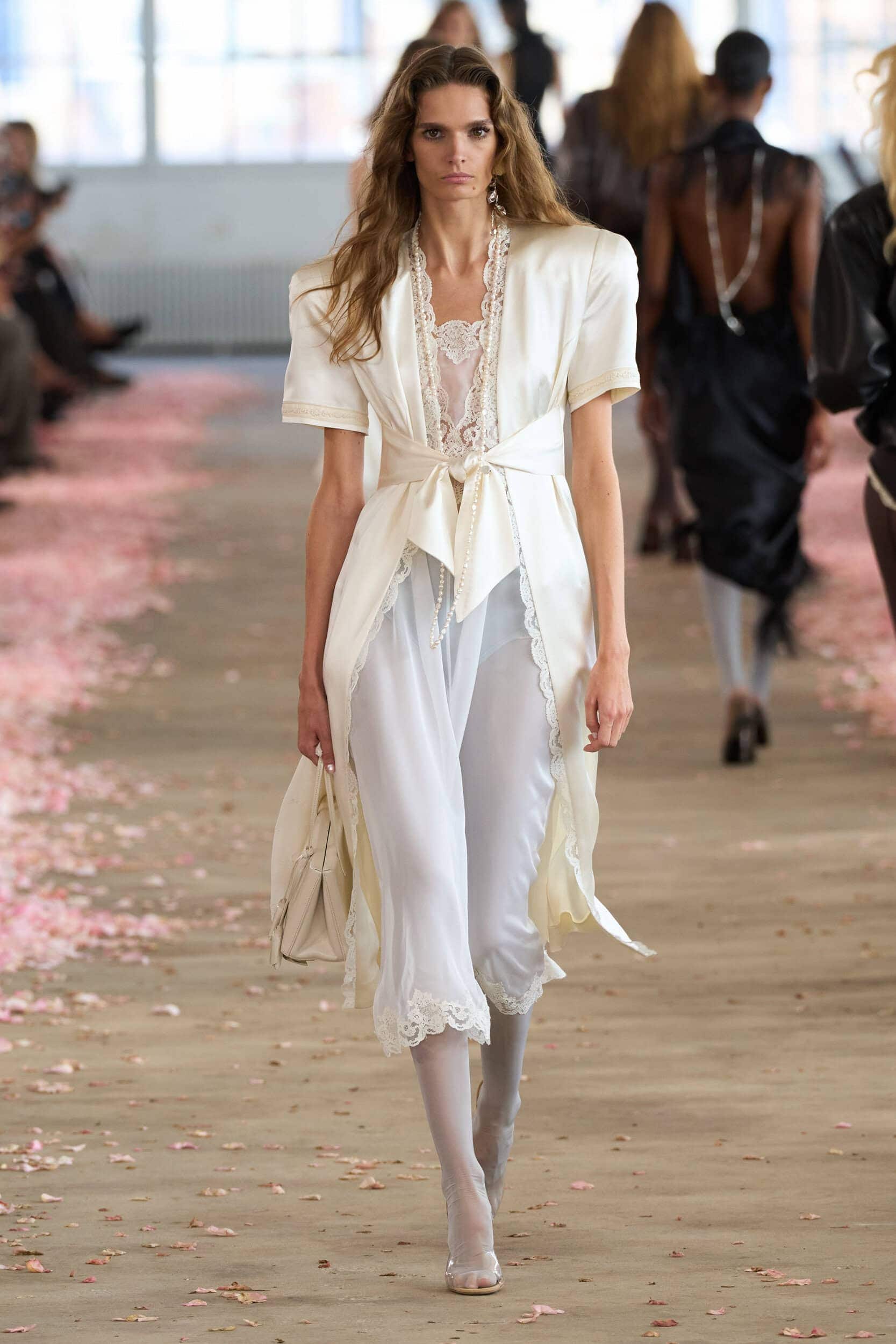
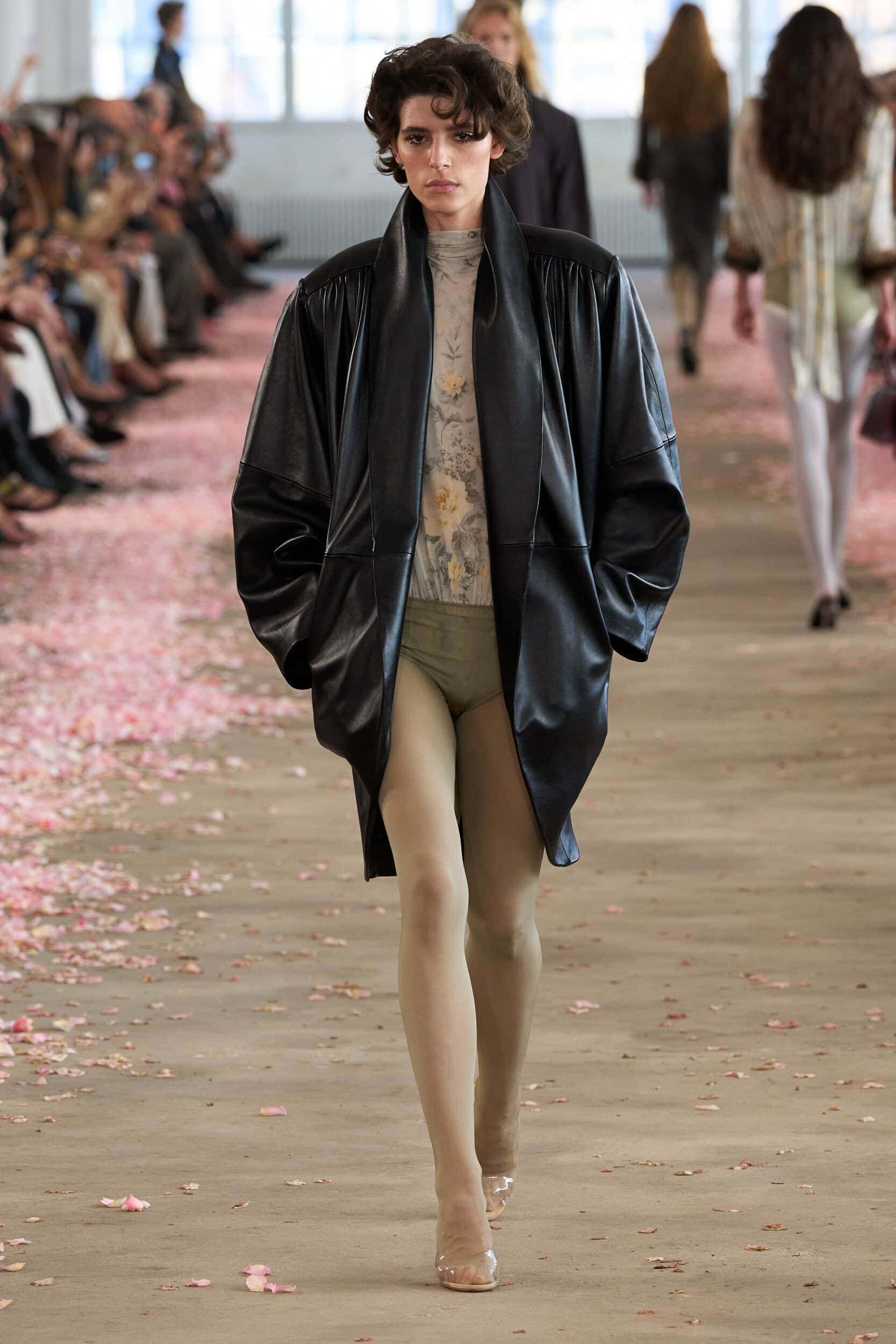
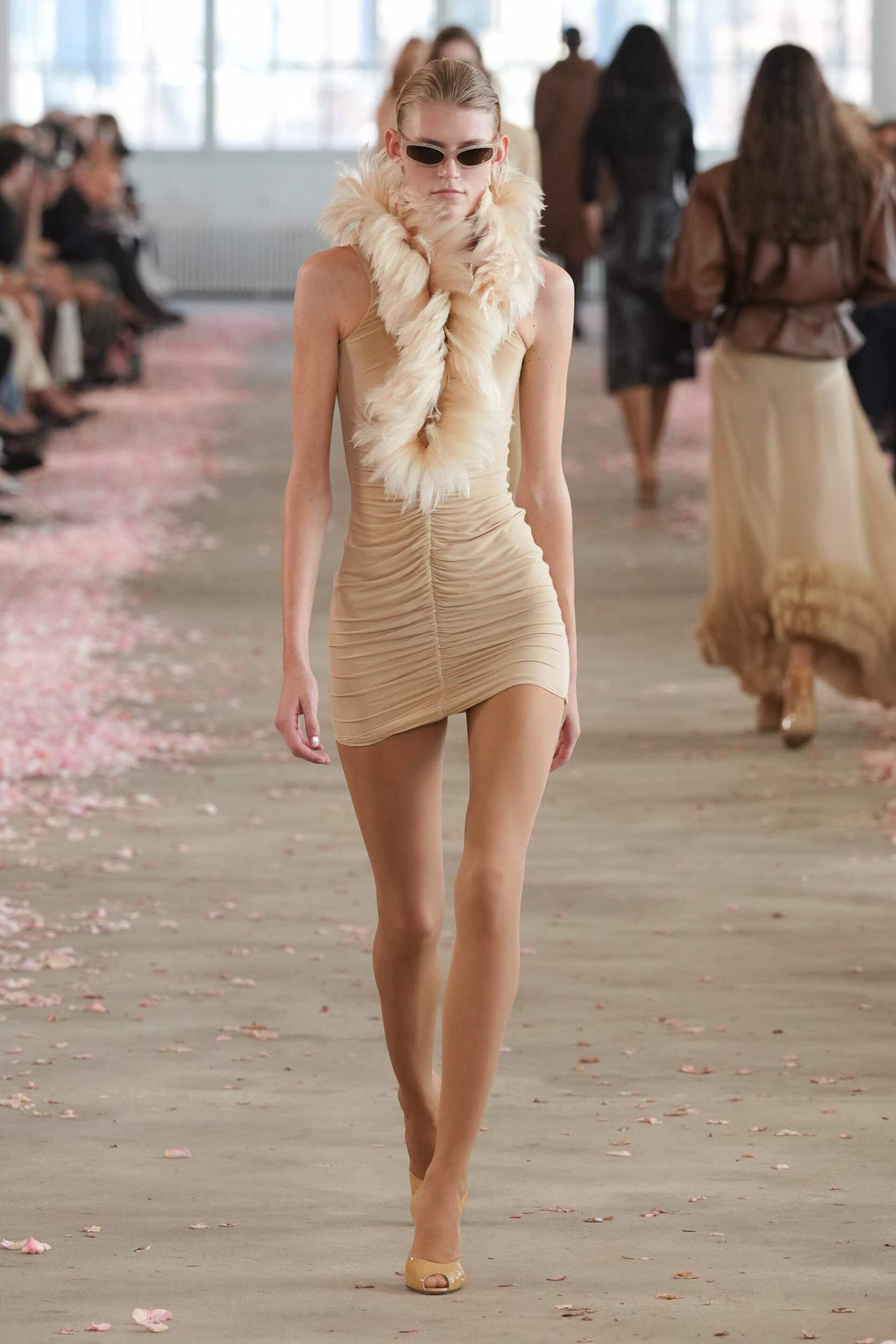
That context gave Spring 2027 its emotional charge. This was not a collection about softening Magda Butrym so much as making her glamour feel more personal. The padded shoulders, sculpted volumes, and body-conscious silhouettes that have helped define the brand remained present, but they were joined by transparency, fluidity, lingerie constructions, floral memories, and a more intimate understanding of exposure.
Rather than treating sensuality as spectacle, Butrym began to frame it as self-possession.
THE COLLECTION
THE VIBE
Sensual Self-Determination, Slavic Romance, & Intimacy Over Armor
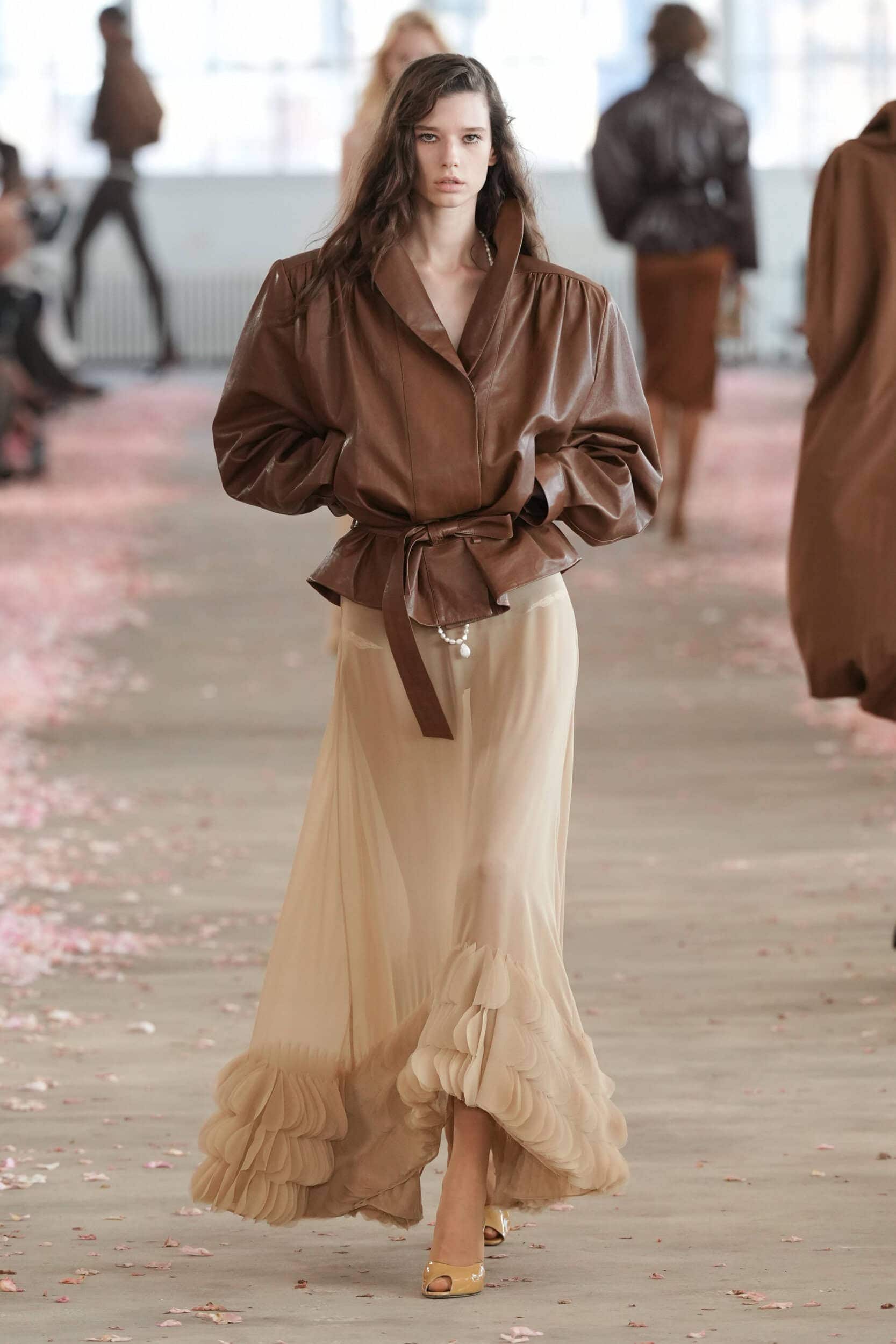
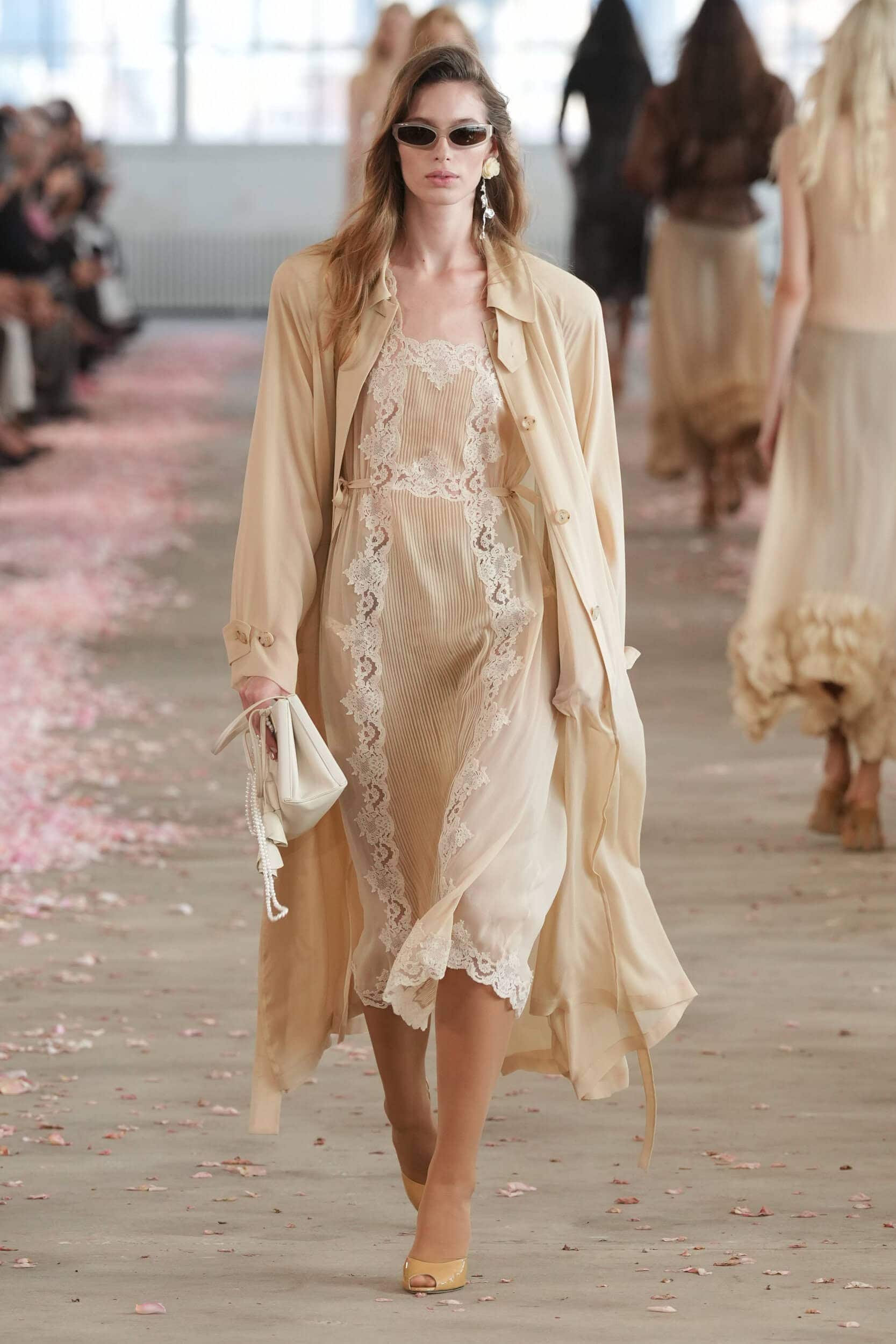
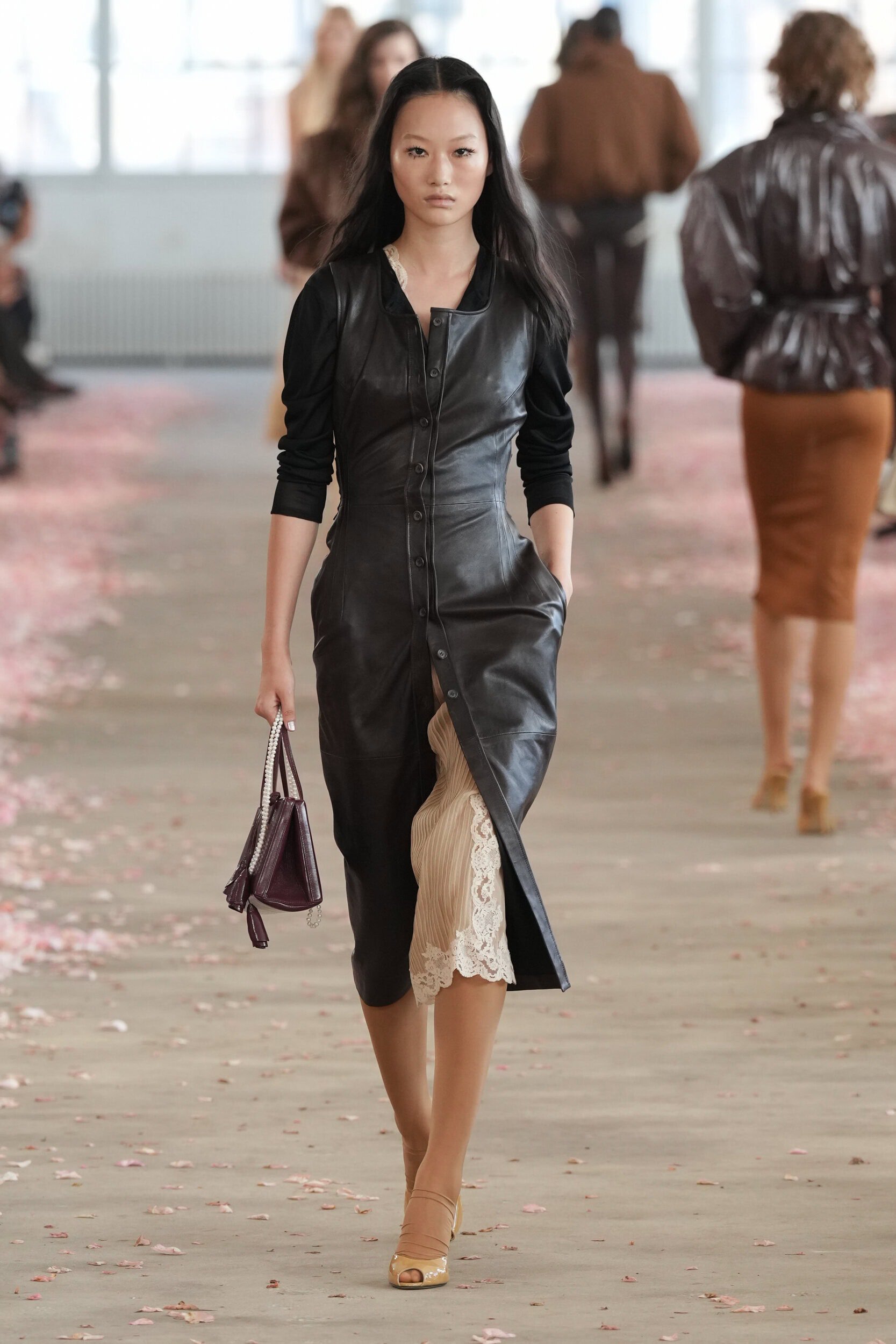
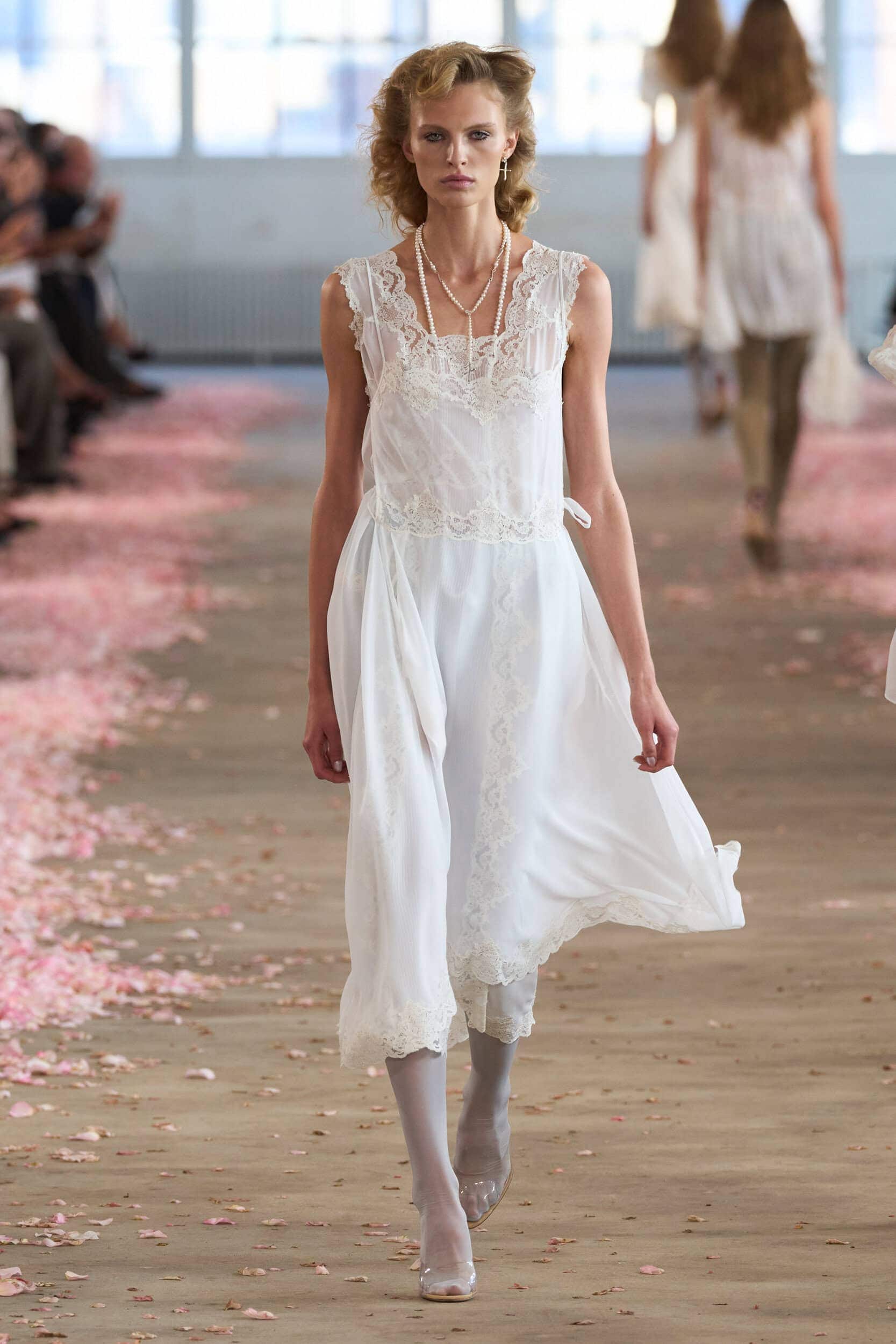
The shift was clearest in the contrast between the opening looks and what followed. Oversized leather outerwear retained the forceful proportions that have become familiar in Butrym’s work, but the collection gradually moved toward sheerness, lace, lingerie constructions, fluid skirts, and elongated layers. The feeling was less about abandoning structure than allowing another kind of confidence to enter the room.
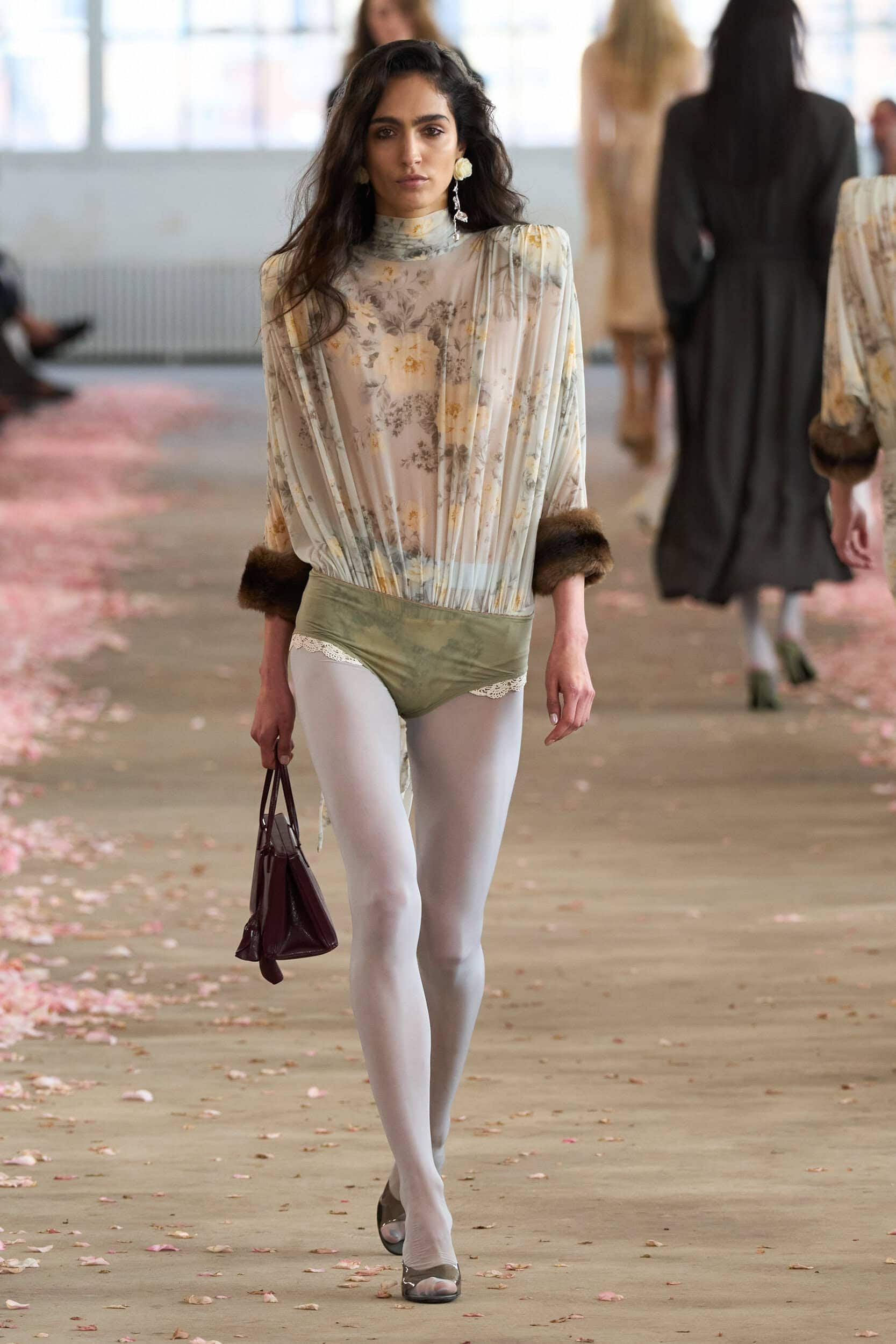
Butrym has never been shy about femininity. Her clothes embrace the body, glamour, romance, and sexuality with little apology. What changed this season was the source of that charge. The visible bras, translucent fabrics, delicate straps, and barely held layers were sensual, certainly, but they did not read only as provocation. They suggested a woman deciding for herself what exposure means.
This is where Butrym’s pragmatism becomes important. She has spoken about trying pieces on herself, considering how much of the body is actually revealed, and thinking about transparency in relation to security and layering. That practical instinct gave the collection credibility. The clothes may have looked fragile at times, but they were clearly designed around the experience of the wearer, not just the image of being seen.
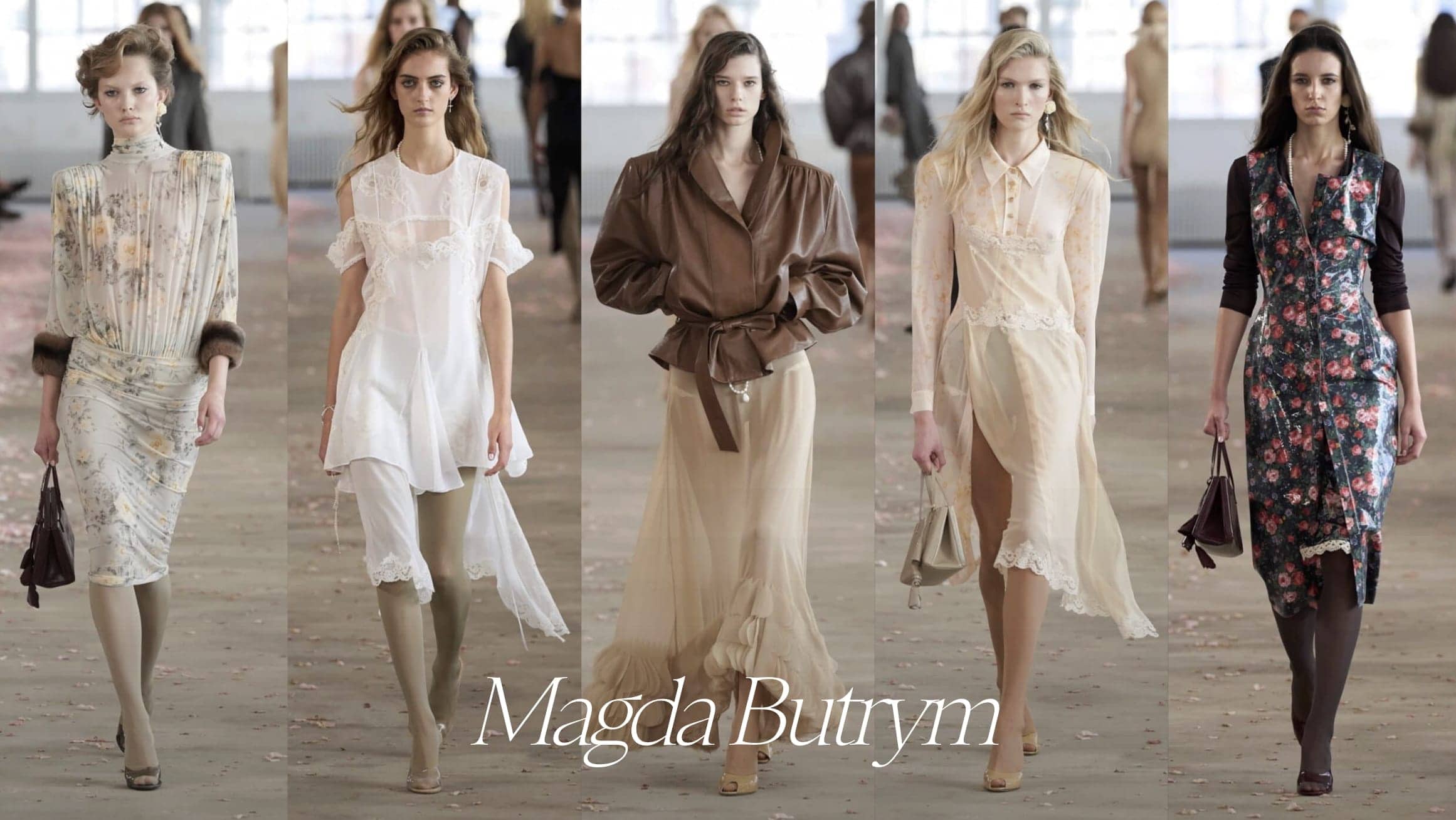
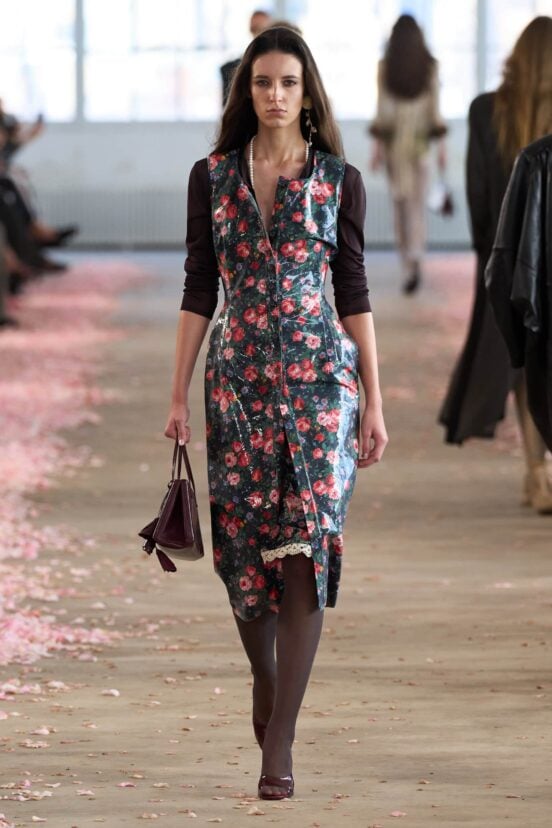
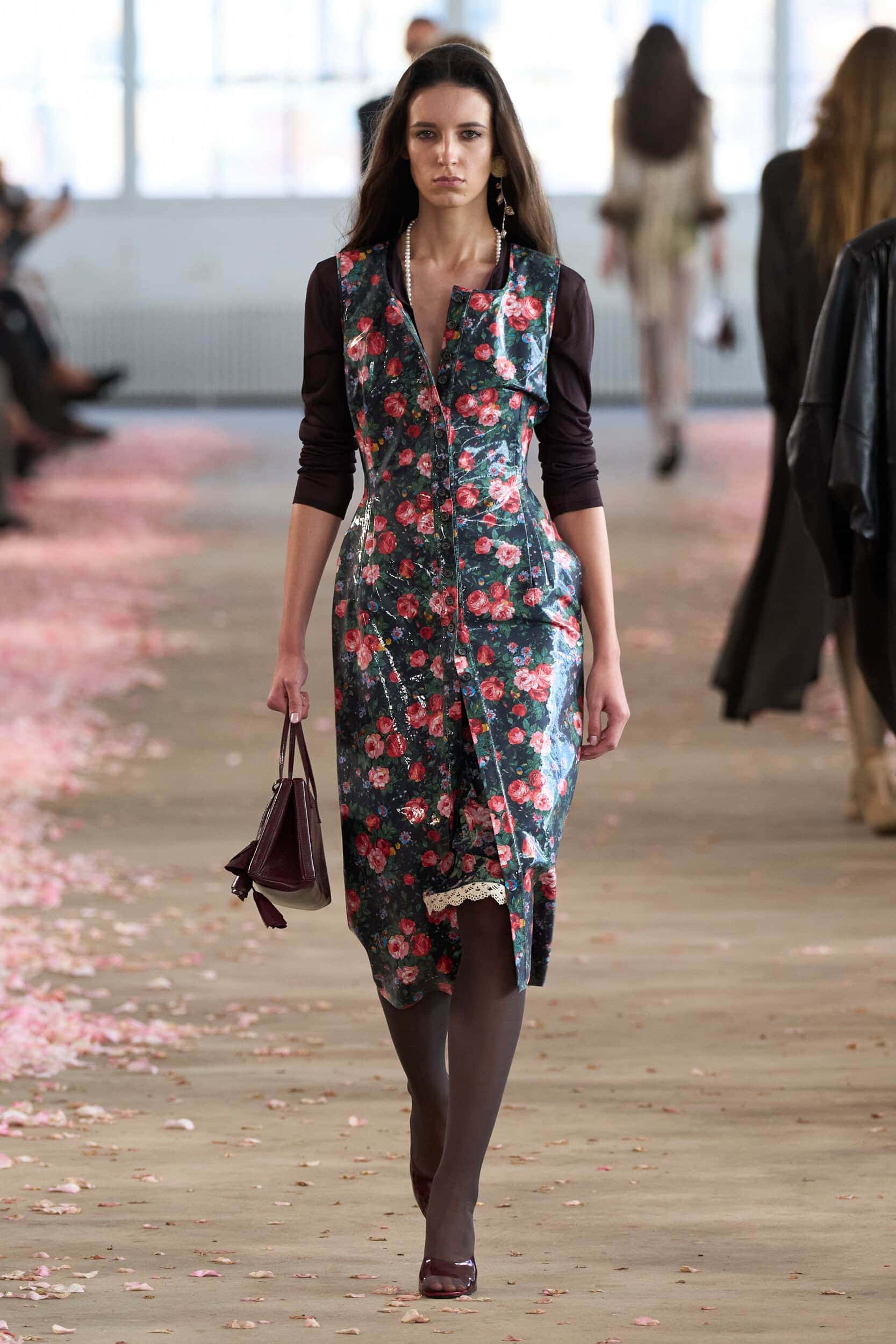
The Polish references brought another layer of specificity. Floral motifs, patterned surfaces, and the petal-strewn runway could have easily remained within familiar romantic territory, but here they were tied to Butrym’s memories of Poland. Traditional patterns were reworked through unexpected materials, including latex treatments over cotton, while the scattered petals recalled a Polish June tradition of placing flowers along the streets.
That personal grounding helped the decoration feel less generic. Butrym was not simply adding romance to the collection; she was filtering fragments of childhood, cultural memory, and Slavic femininity through the polished language of the house.
Color also broadened the mood. Florals, prints, tobacco browns, muted neutrals, and unexpected accessory shades moved the collection beyond the more contained palette Butrym has often favored. The matching of tights and shoes was especially telling, suggesting a designer increasingly interested in the whole silhouette rather than the isolated statement.
There is still room for this evolution to deepen. Butrym has expanded the way her house expresses sensuality, but the woman at its center remains glamorous, assured, and highly aware of the body. Those qualities are essential to the brand. The opportunity now is not to move away from them, but to discover how many emotional registers they can hold.
THE WRAP UP
Spring 2027 felt significant because Butrym did not try to distance herself from the qualities that built her brand. She leaned into glamour and sensuality while asking how they might become more intimate, more cultural, and more self-defined.
The collection did not rewrite Magda Butrym’s vocabulary so much as personalize it. Structure gave way to transparency, armor to exposure, and Polish memory entered the work with greater clarity. For a designer stepping onto a larger New York stage, that felt like the right kind of statement: confident, rooted, and still open to expansion.
Butrym’s next step may be less about proving that sensuality belongs to power. She has already made that case. The more interesting question is how many different forms that sensuality can take, and how far her woman can travel while still feeling unmistakably her own.