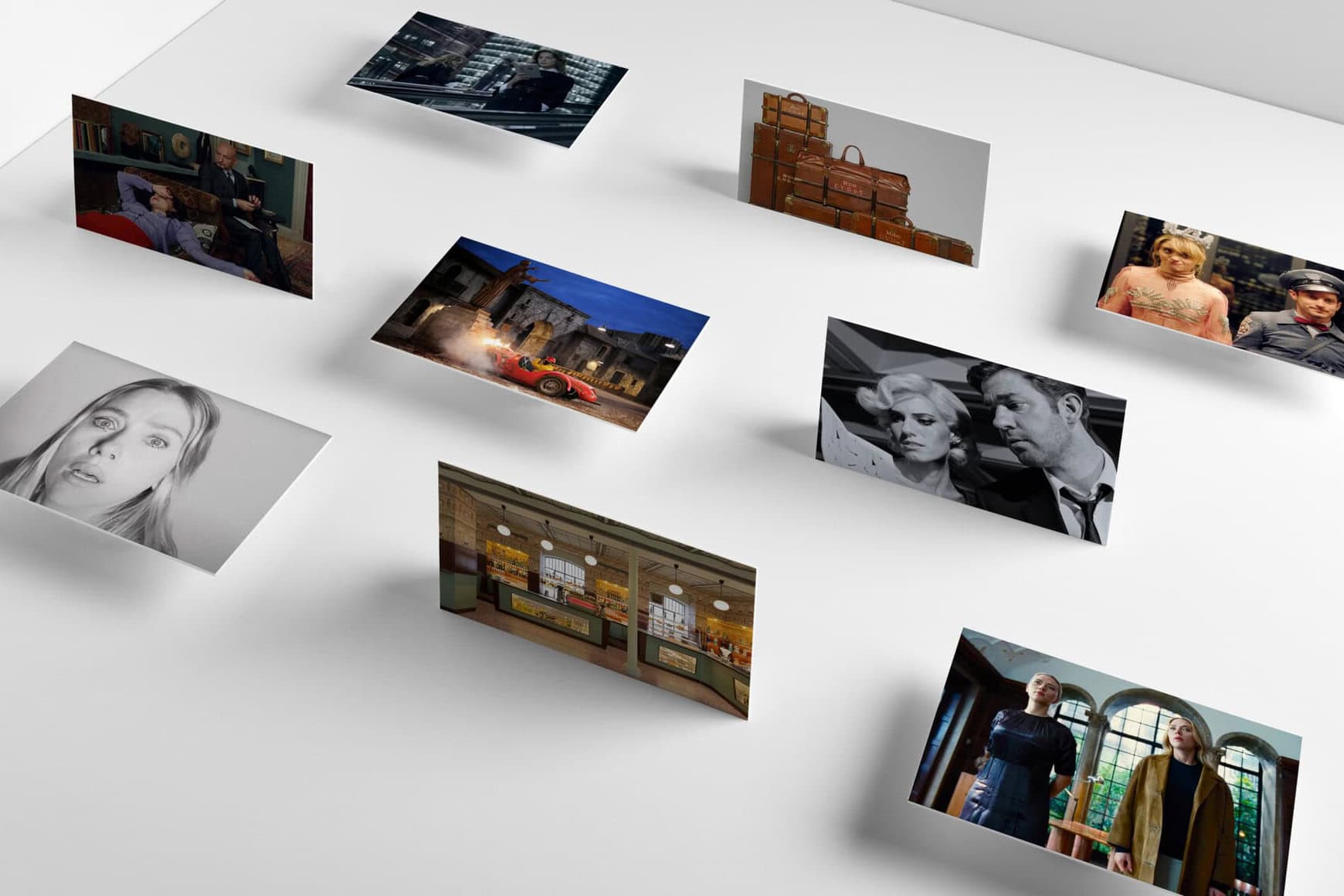
For More Than Two Decades, Prada Has Understood That The Most Memorable Way To Sell Luxury May Be To Give It A Plot, A Character, And Just Enough Mystery To Make Everyone Lean Closer
By Kenneth Richard
Prada has never seemed particularly interested in presenting luxury in the most predictable way, which is one of the reasons it has become so effective at making people want it.
The house’s new Fall campaign, directed by Barry Jenkins, brings together Hunter Schafer, Troye Sivan, Kelvin Harrison Jr., and Chen Haoyu in scenes of domestic intimacy and everyday life. The clothes move through those images as something more than wardrobe and less obvious than product. They occupy the frame with the quiet confidence of characters who know they have a good agent.

The campaign is the latest expression of one of Prada’s longest and most fruitful relationships, a connection with cinema that does not shape the way the house thinks so much as reveal it. Film gives Prada room for the qualities it has always prized: contradiction, intelligence, humor, unease, and the curious ways people construct themselves in public.
For years, fashion has spoken about storytelling with such insistence that the phrase can now mean almost anything. A model crosses a hotel lobby, someone opens a door, and narrative is declared. Prada has more often worked with people who know what to do once the door opens.
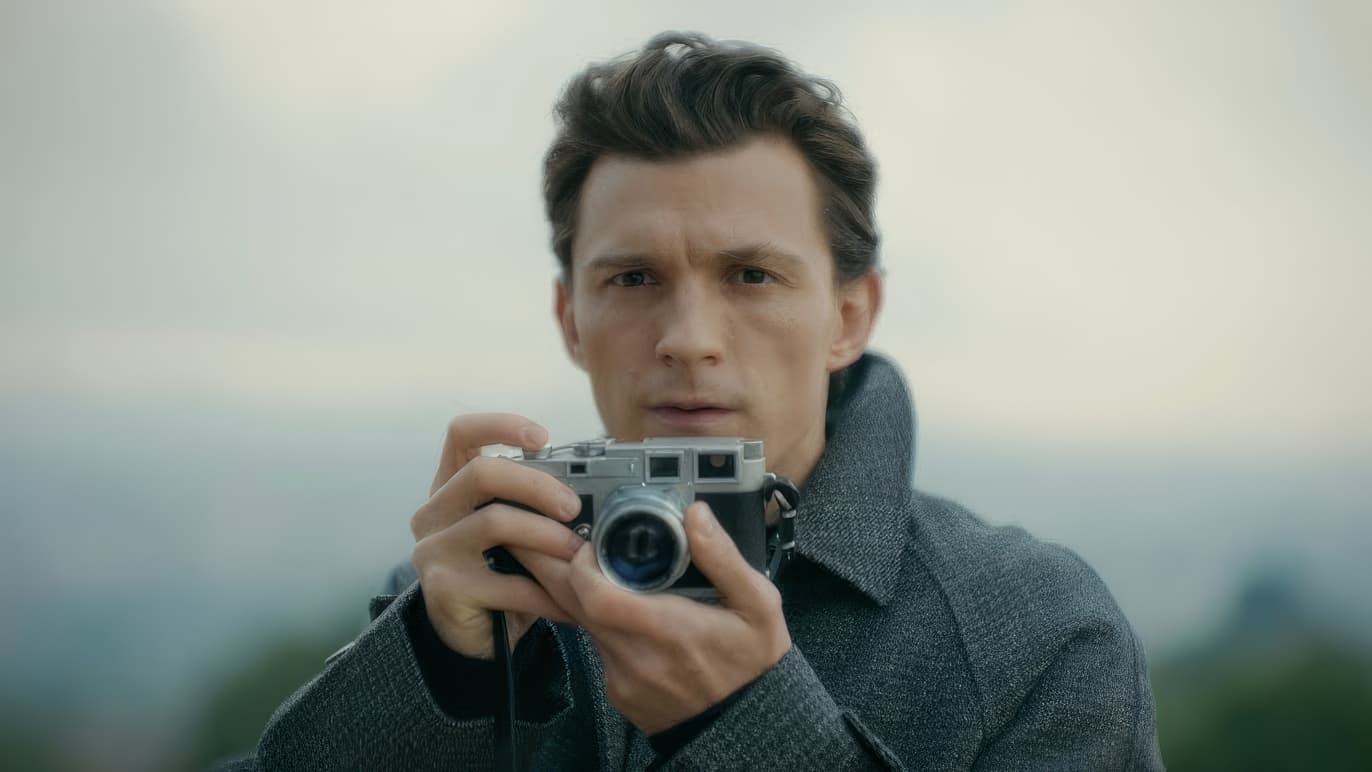
Its list of collaborators is impressive, although the prestige of the names is only part of the point. Wes Anderson, David O. Russell, Nicolas Winding Refn, Jonathan Glazer, Yorgos Lanthimos, and now Barry Jenkins all arrive with fully formed cinematic languages of their own. Thomas Vinterberg brought yet another register to the Prada Paradigme launch, placing Tom Holland inside a more intimate exploration of identity as something continually in motion, shaped by memory, curiosity, vulnerability, and reinvention. Prada’s confidence lies in not asking them to leave those languages at reception.
Many brands enjoy collaboration provided the collaborator does not disturb the cushions. Prada has generally been more willing to let someone move the furniture, dim the lights, and introduce a guest whose motives remain unclear.
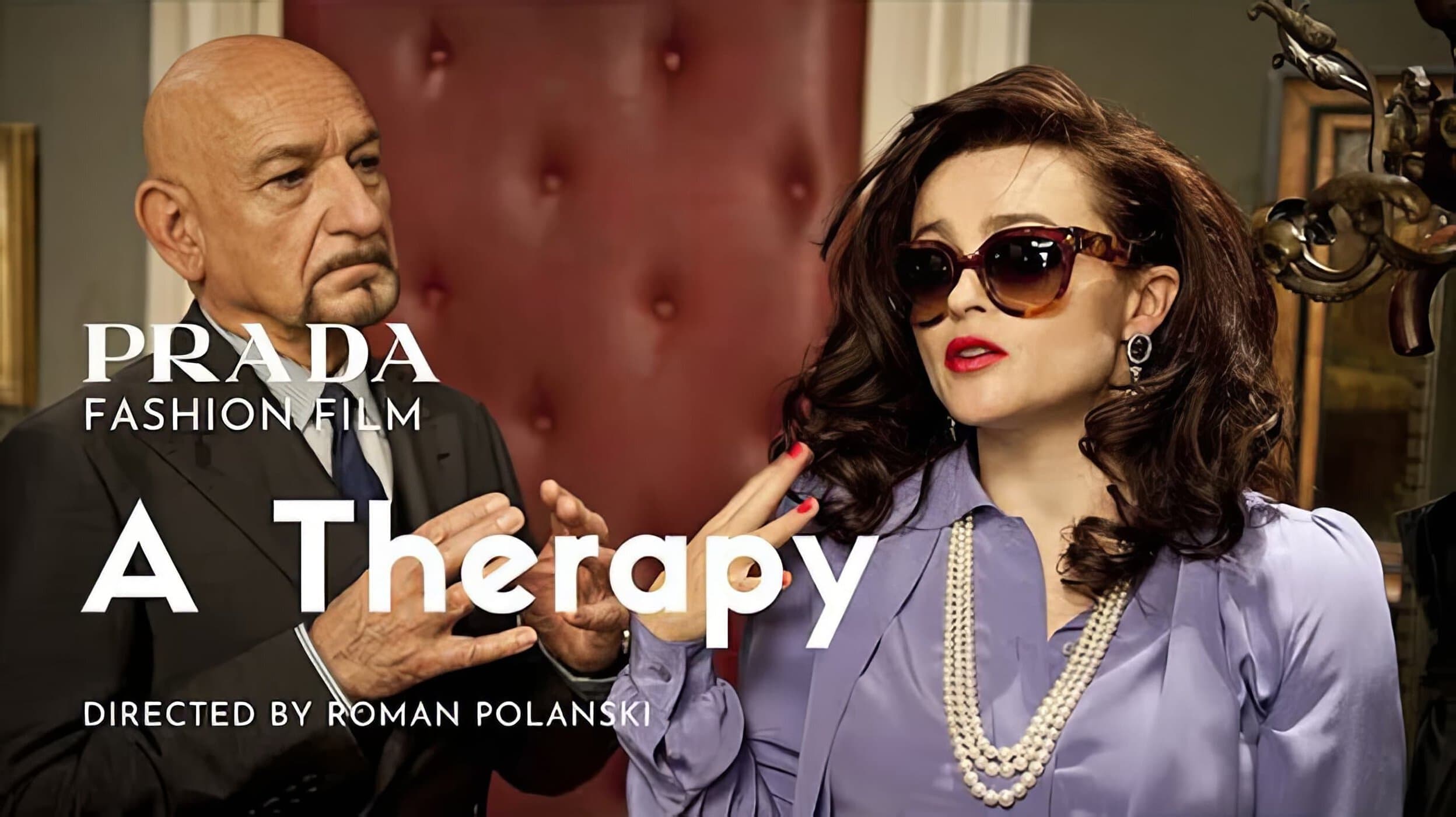
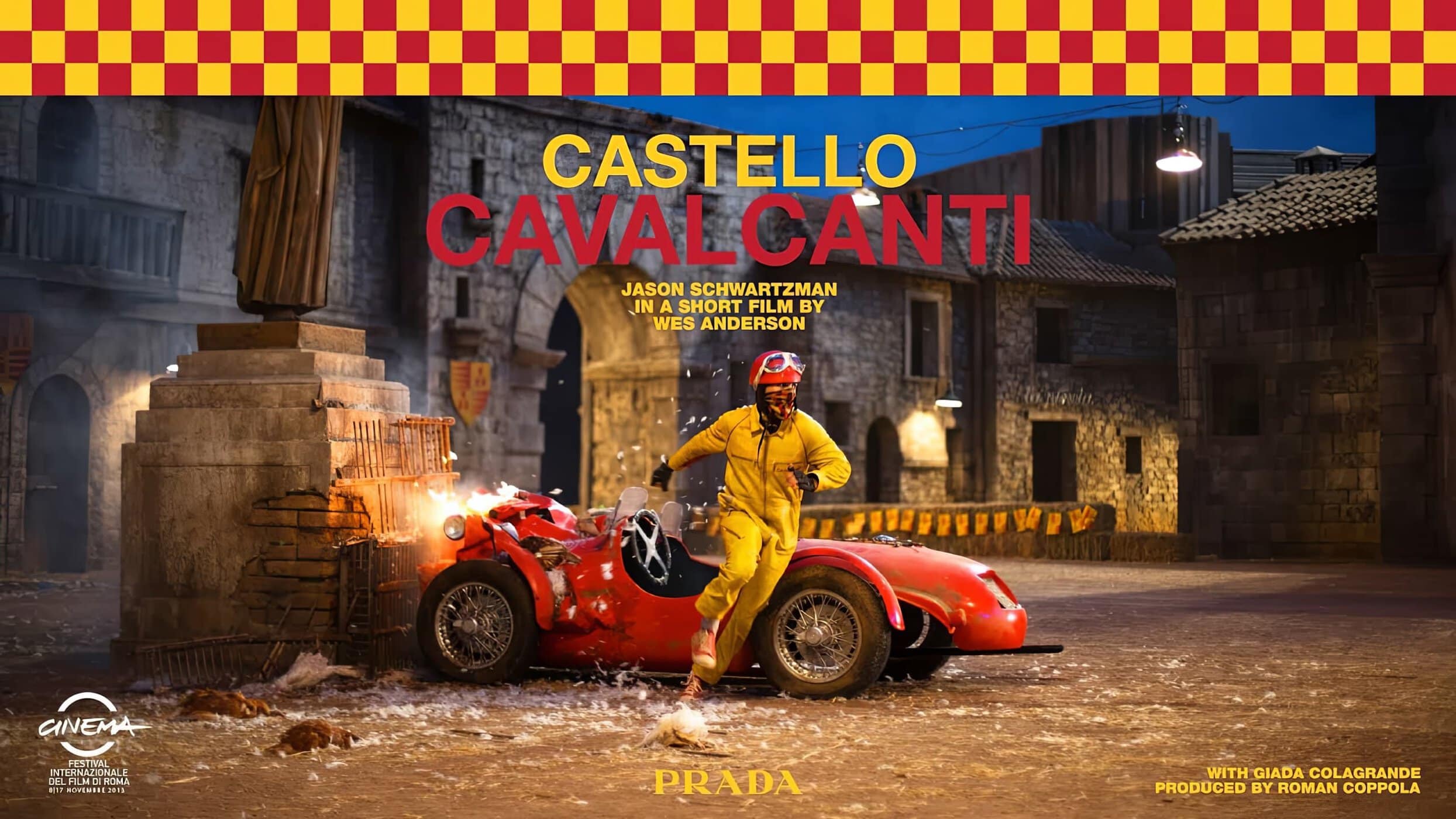
That freedom is why the strongest Prada films feel less like campaigns than fragments of larger worlds. Roman Polanski’s A Therapy turned Helena Bonham Carter’s purple coat into the great romantic distraction of Ben Kingsley’s working day. Wes Anderson’s Castello Cavalcanti allowed Prada to disappear into a small Italian comedy of fate, family, and a crashed racing car. In both, the clothes are memorable precisely because they are busy doing something.
Prada understands that an object becomes more desirable when it appears capable of changing the mood of a room.
That principle runs through the house’s film work. The clothes interrupt, disguise, provoke, or destabilize. They help construct character rather than merely decorate it. In David O. Russell’s Past Forward, shifting actors and repeated scenes made identity feel fluid and unreliable. Nicolas Winding Refn’s Touch of Crude carried clothing into a more psychologically charged world of desire and transformation. Reassurance was not offered, though reassurance has rarely been Prada’s most persuasive sales technique.
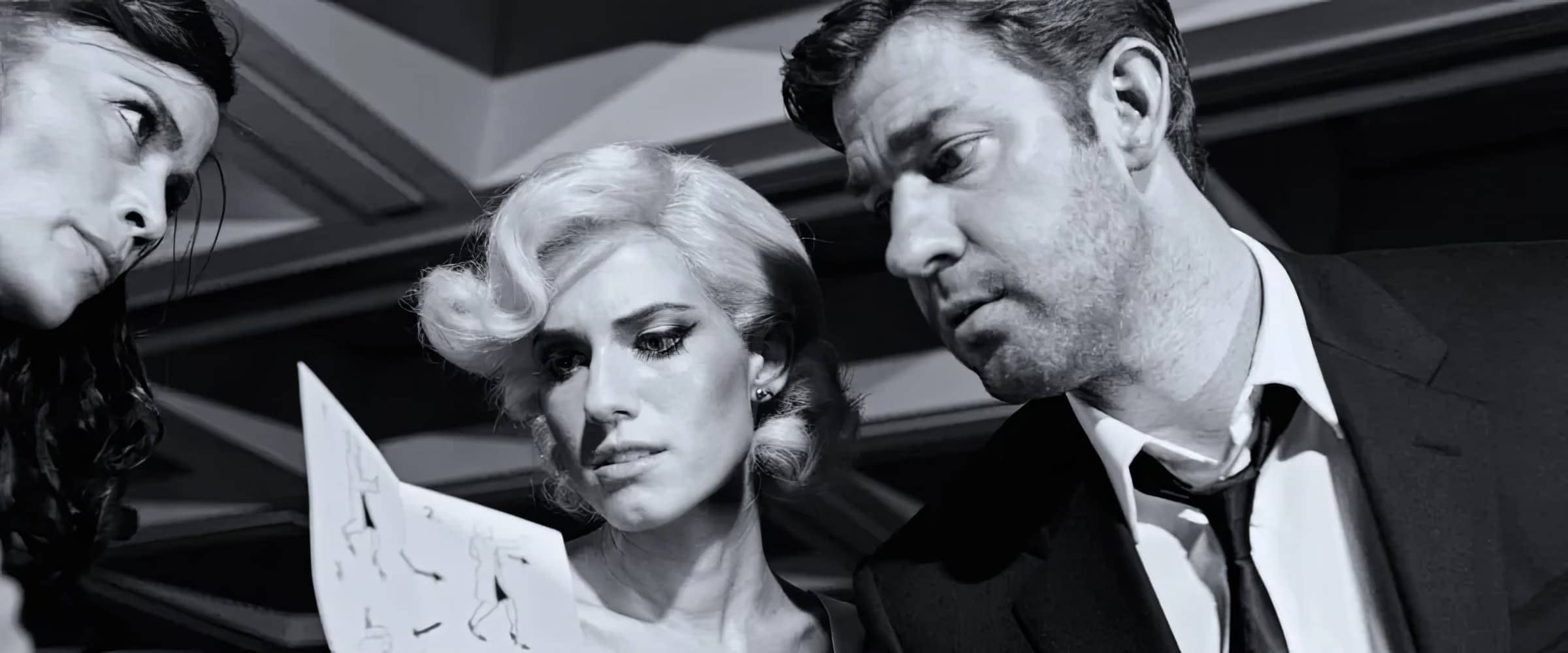
The house is better at intrigue.
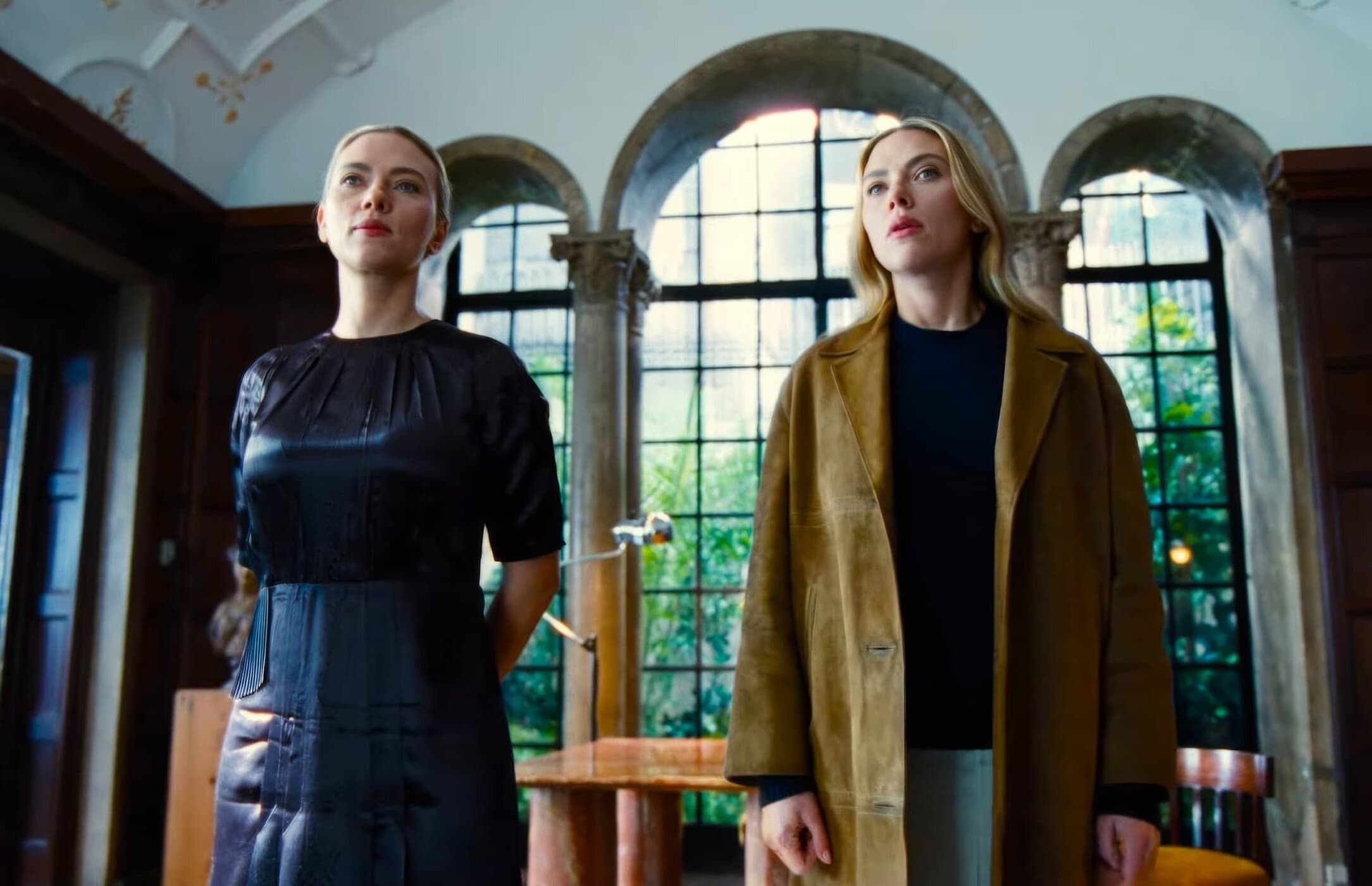
Its recent Galleria projects make that especially clear. Jonathan Glazer approached Scarlett Johansson through repetition, language, and performance, while the bag sat beside her with the composure of a seasoned co-star. Yorgos Lanthimos then moved the Galleria into his own strange territory of ritual, role-play, and social behavior. Lanthimos was an almost suspiciously good fit for Prada: both understand the comic potential of rules that seem perfectly normal to the people following them and slightly alarming to everyone else.
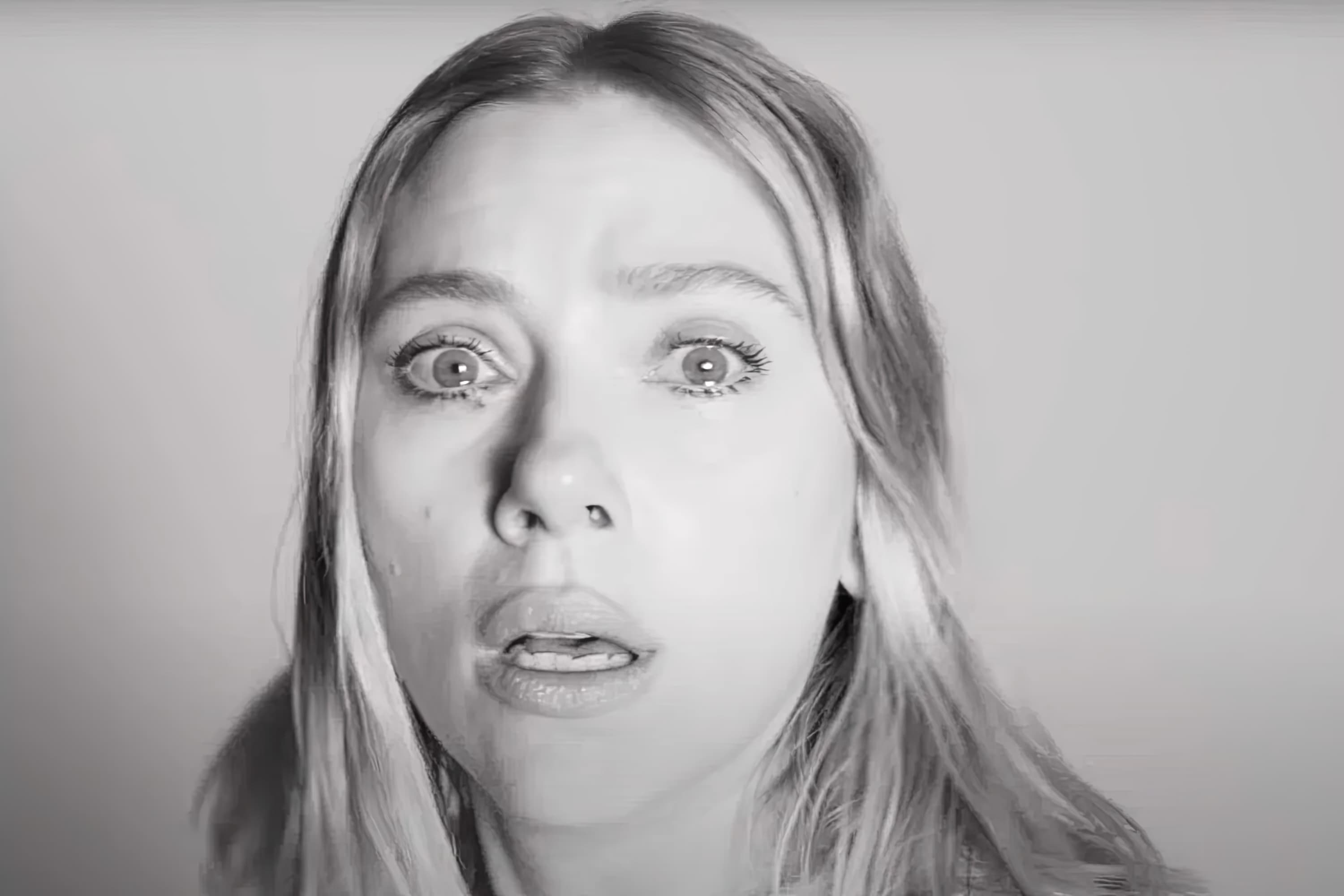
What connects these films is not a single visual style. Anderson’s immaculate nostalgia looks nothing like Refn’s unease, just as Glazer’s psychological precision differs from Lanthimos’s controlled absurdity. The consistency comes from Prada itself, a house whose identity is broad enough to welcome contradiction without losing its shape.
That is harder to achieve than hiring a famous director.
Prestige can be rented. Interpretation has to be survived.
Prada can survive it because its identity has never depended on one beauty ideal or one emotional temperature. The house has long been interested in awkwardness beside elegance, restraint beside excess, seriousness beside wit. Cinema gives those tensions time to become character.
The exchange also works in reverse, with Prada entering feature films through costume and design. Its collaborations with Baz Luhrmann and Catherine Martin on The Great Gatsby and Elvis reveal the house’s instinct for dressing myth rather than merely reproducing history. The Gatsby costumes did not pretend to be archaeological artifacts from the 1920s. They belonged to Luhrmann’s lush, accelerated memory of the period, where restraint had sensibly left the party early.
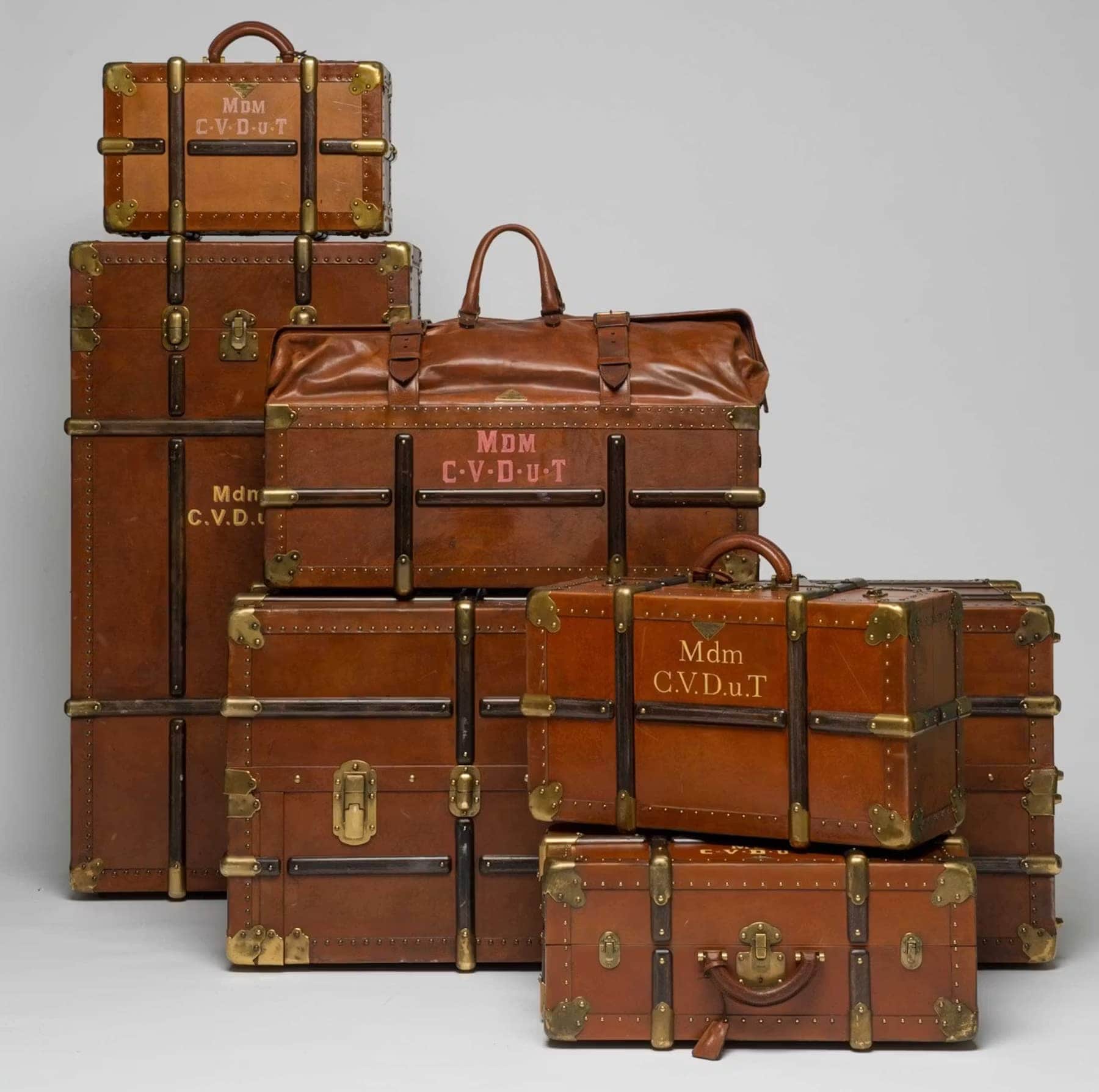
For The Grand Budapest Hotel, Prada created luggage that seemed to have survived a dynasty, a scandal, and at least one perfectly catered railway journey. In The United States vs. Billie Holiday, clothing carried more complicated weight: glamour, resistance, vulnerability, and the burden of being watched. These projects made visible something Prada has always understood—that costume is not embellishment. It is biography with buttons.
Its relationship with Wong Kar-wai extends that idea into atmosphere. Wong’s cinema is built from surfaces, pauses, reflections, corridors, and the emotional life of clothes moving through space. Prada’s involvement with Blossoms Shanghai and Mi Shang Prada Rong Zhai felt less like a branding exercise than a meeting of shared instincts.
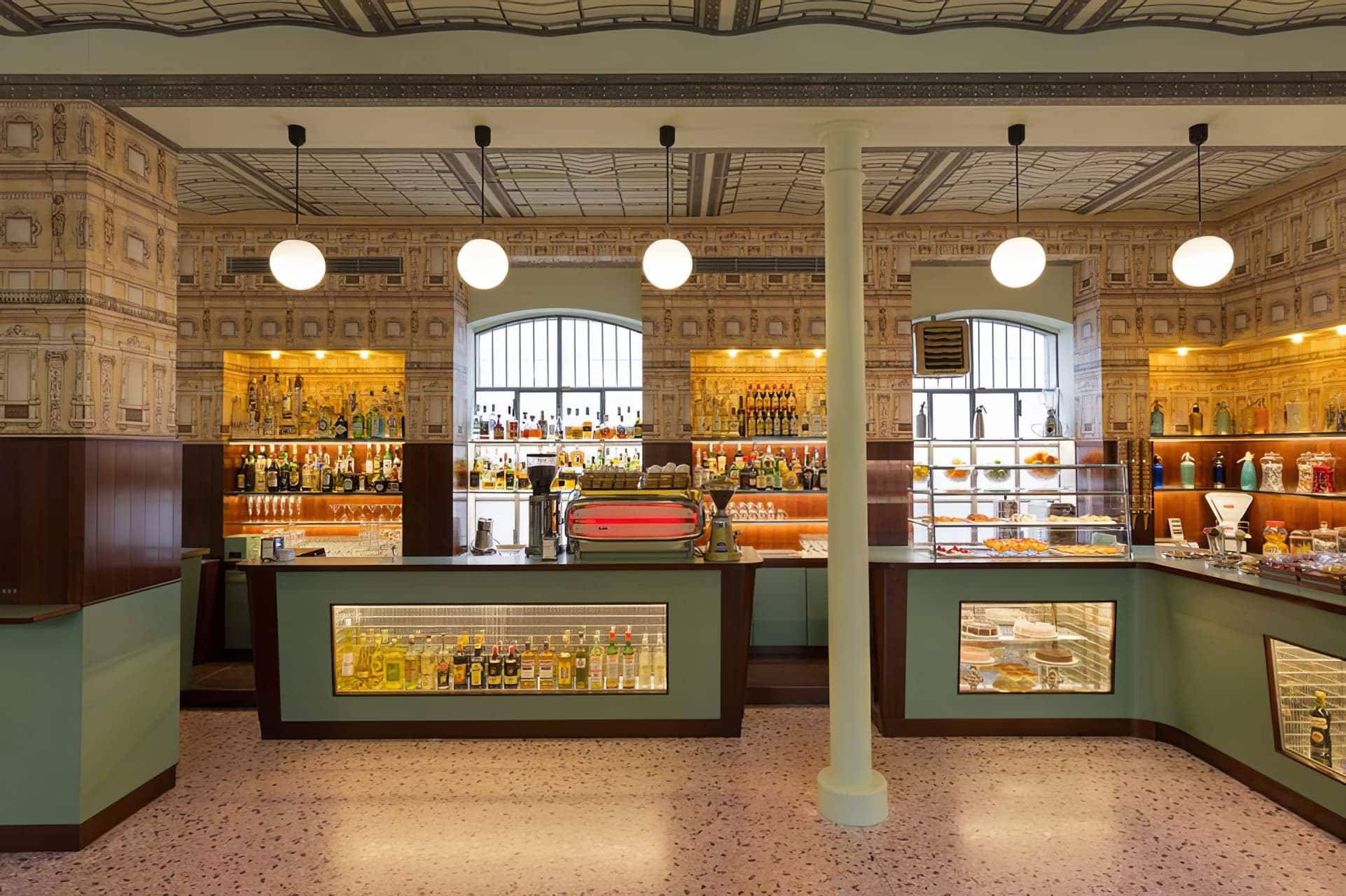
The same can be said of Bar Luce, designed by Wes Anderson at Fondazione Prada in Milan. It carries his precise nostalgia without becoming a place where one feels obliged to whisper. People drink coffee, talk, wait, and photograph the room while pretending they have simply taken out their phones to check the time.
This matters because Prada does not treat cultural collaborations as brief affairs arranged around a launch date. It allows them to recur, deepen, migrate, and occasionally acquire real estate. A filmmaker may make a short, return for another project, enter an exhibition, or design a space. The relationship develops an afterlife, which is more than can be said for many campaigns by the following Thursday.
Fashion is remarkably efficient at producing images and less reliable at producing images anyone remembers.
The calendar encourages constant replacement: a campaign arrives, circulates, gathers approval, and is quickly displaced by the next. The industry calls this momentum. At times it resembles collective amnesia with excellent lighting.
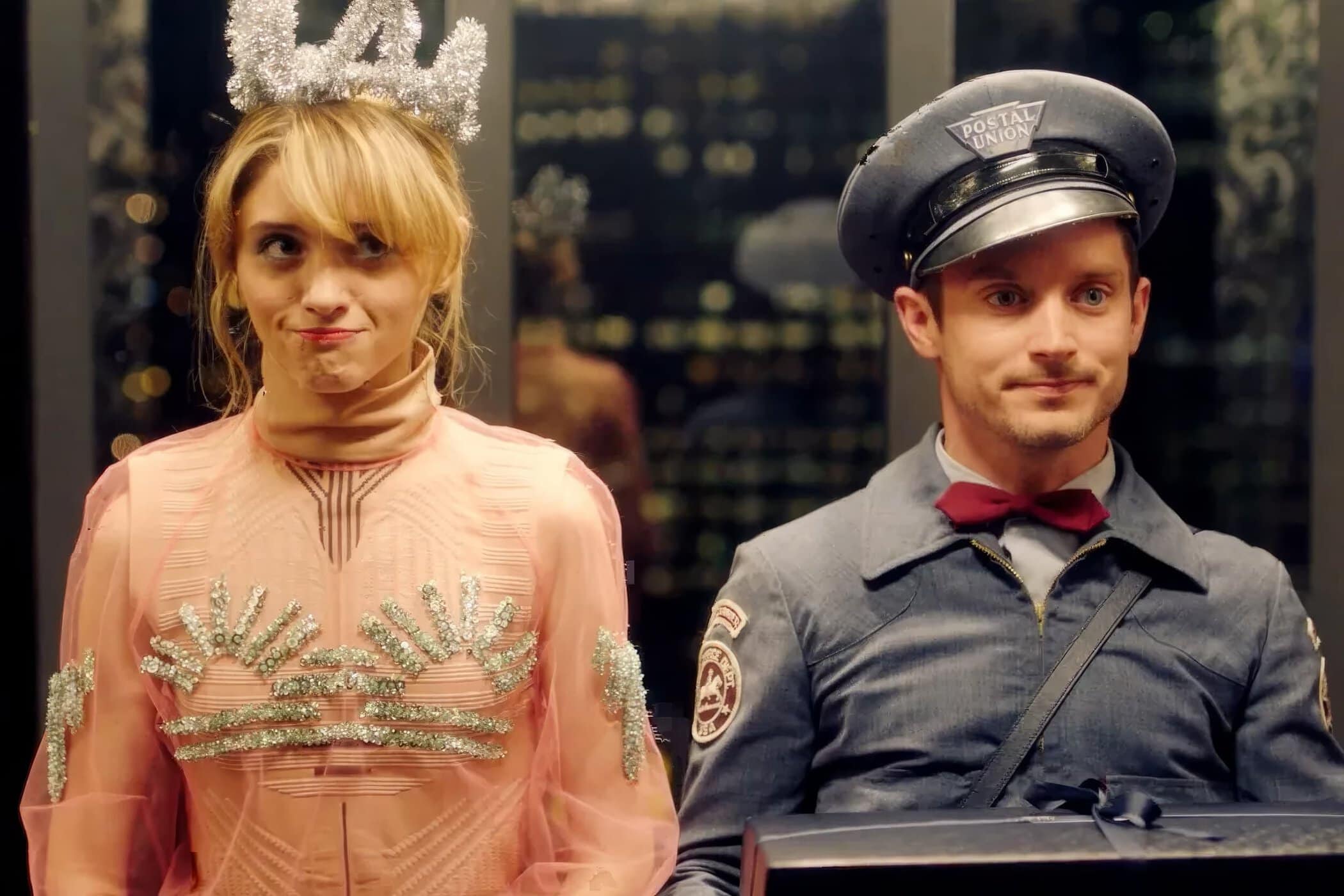
Prada’s film work moves at another rhythm. People return to Castello Cavalcanti because it is charming, remember A Therapy because it is funny, and continue discussing Past Forward because it never fully resolves itself. The films endure because they have a purpose beyond announcing the season.
That is also, quietly, very good marketing.
The smartest luxury communication rarely appears to be asking for anything. It creates a world, gives the audience a place within it, and trusts desire to arrive without being dragged onto the set.
The product is present, beautifully dressed and perfectly aware of its importance, but it is not forever clearing its throat.
Cinema also allows Prada to speak to several audiences without changing its voice. Some arrive for the director, others for the actor, the clothes, the cultural setting, or the promise of something slightly unusual. Everyone enters through a different door and somehow finds themselves in the same room.
That room feels like Prada because the house has spent decades furnishing it.
The lesson for other brands is not simply to hire an auteur and hope cultural authority transfers by contact. It is to build an identity strong enough to be interpreted, then give the collaborator enough room to make the encounter worth watching.
Miuccia Prada and Raf Simons design collections full of implied lives and unfinished biographies. Their runways are populated by people who appear to have come from somewhere and may be on their way to do something inadvisable. Cinema is a natural extension of that world because it allows those characters to keep moving after the runway ends.
Barry Jenkins now enters that history with a filmmaker’s sensitivity to intimacy, silence, gesture, and emotional life. His campaign does not need to carry the weight of Prada’s entire cinematic past. It simply benefits from a house that already understands how much can happen inside a frame.
The clothes become characters because Prada has never treated them as mute. They carry memory, social codes, desire, humor, anxiety, and the possibility of transformation. Cinema gives those qualities time to reveal themselves.
That may be the real reason the relationship has endured. Prada has never gone to film merely in search of glamour. It has gone in search of human behavior.
The glamour, fortunately, tends to show up anyway.
Prada Film Projects
2005 — Thunder Perfect Mind, directed by Jordan Scott and Ridley Scott
2008 — Trembled Blossoms, directed by James Lima
2008 — Fallen Shadows, directed by James Lima
2008 — Alchemy, directed by Pietro Scalia
2010 — First Spring, directed by Yang Fudong
2012 — A Therapy, directed by Roman Polanski
2013 — Prada Candy L’Eau, directed by Wes Anderson and Roman Coppola
2013 — Castello Cavalcanti, directed by Wes Anderson
2015 — The Postman Dreams – Prada Galleria, directed by Autumn de Wilde
2016 — Past Forward, directed by David O. Russell
2017 — The Postman Dreams 2 – Prada Galleria, directed by Autumn de Wilde
2018 — The Delivery Man – Cahier Bag, directed by Ryan Hope
2021 — Prada The Galleria, directed by Xavier Dolan
2022 — Touch of Crude, directed by Nicolas Winding Refn
2024 — Prada Galleria campaign starring Scarlett Johansson, directed by Jonathan Glazer
2025 – Prada Paradigme, directed by Thomas Vinterberg
2025 — Ritual Identities, directed by Yorgos Lanthimos
Prada Costume Collaborations for Feature Films
2008 — Australia, directed by Baz Luhrmann
2013 — The Great Gatsby, directed by Baz Luhrmann
2014 — The Grand Budapest Hotel, directed by Wes Anderson
2021 — The United States vs. Billie Holiday, directed by Lee Daniels
2022 — Elvis, directed by Baz Luhrmann
2023 — Blossoms Shanghai, directed by Wong Kar-wai