Open Secret
Review of Pucci ‘IL PALIO’ Fall 2026 Ad Campaign by Photographer/Director Carlijn Jacobs with model Grace Elisabeth
There are fashion campaigns that invite you in, and then there are those that make you wonder whether your name is actually on the list. For Fall 2026, Pucci Creative Director Camille Miceli and photographer/director Carlijn Jacobs choose the latter, transforming the House’s exuberant codes into the visual language of a nightclub and giving model Grace Elisabeth the rather enviable task of being the woman who already knows the password. Appropriately enough, that password is simple: Pucci.
The campaign accompanies Miceli’s Fall 2026 “Il Palio” collection, whose starting point is Siena’s legendary horse race and Emilio Pucci’s fascination with the city’s contrade, the historic neighborhoods distinguished by their own identities and emblems. Animal motifs, heraldic suggestions and saturated color run through the collection, but Jacobs wisely avoids attempting to recreate Siena. Instead, she takes those ideas somewhere less literal and considerably later at night. The Palio provides the vocabulary; the nightclub supplies the attitude.
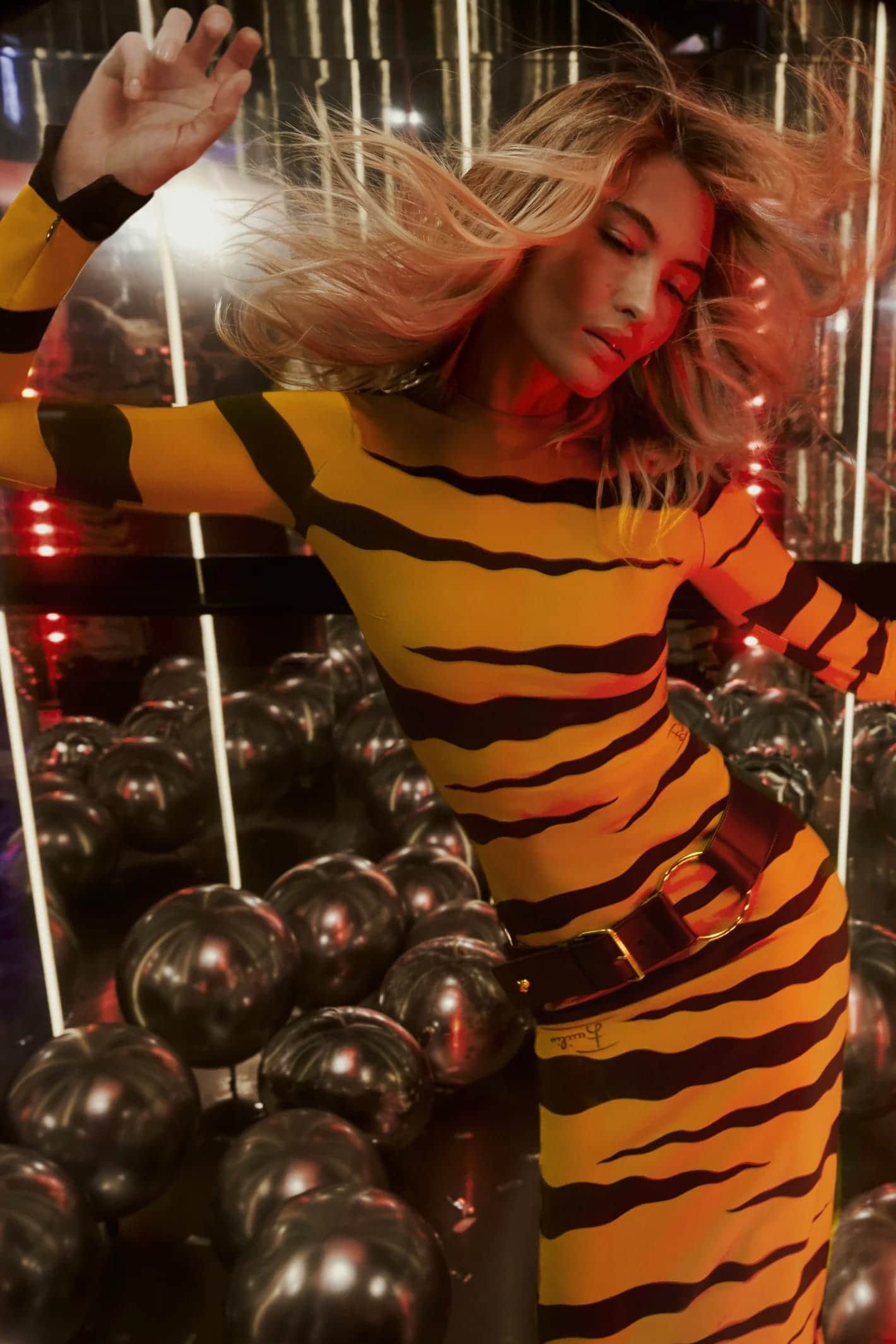
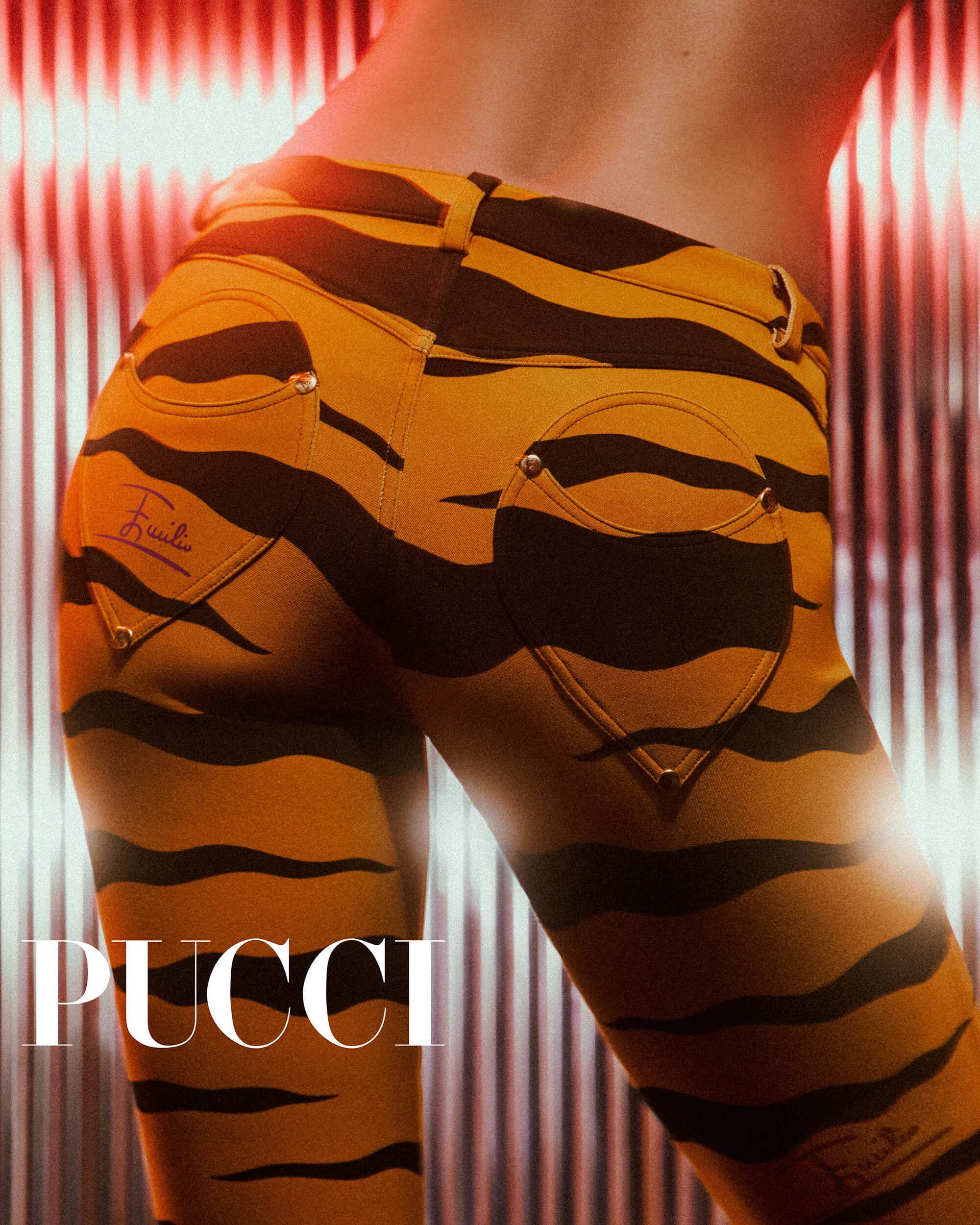
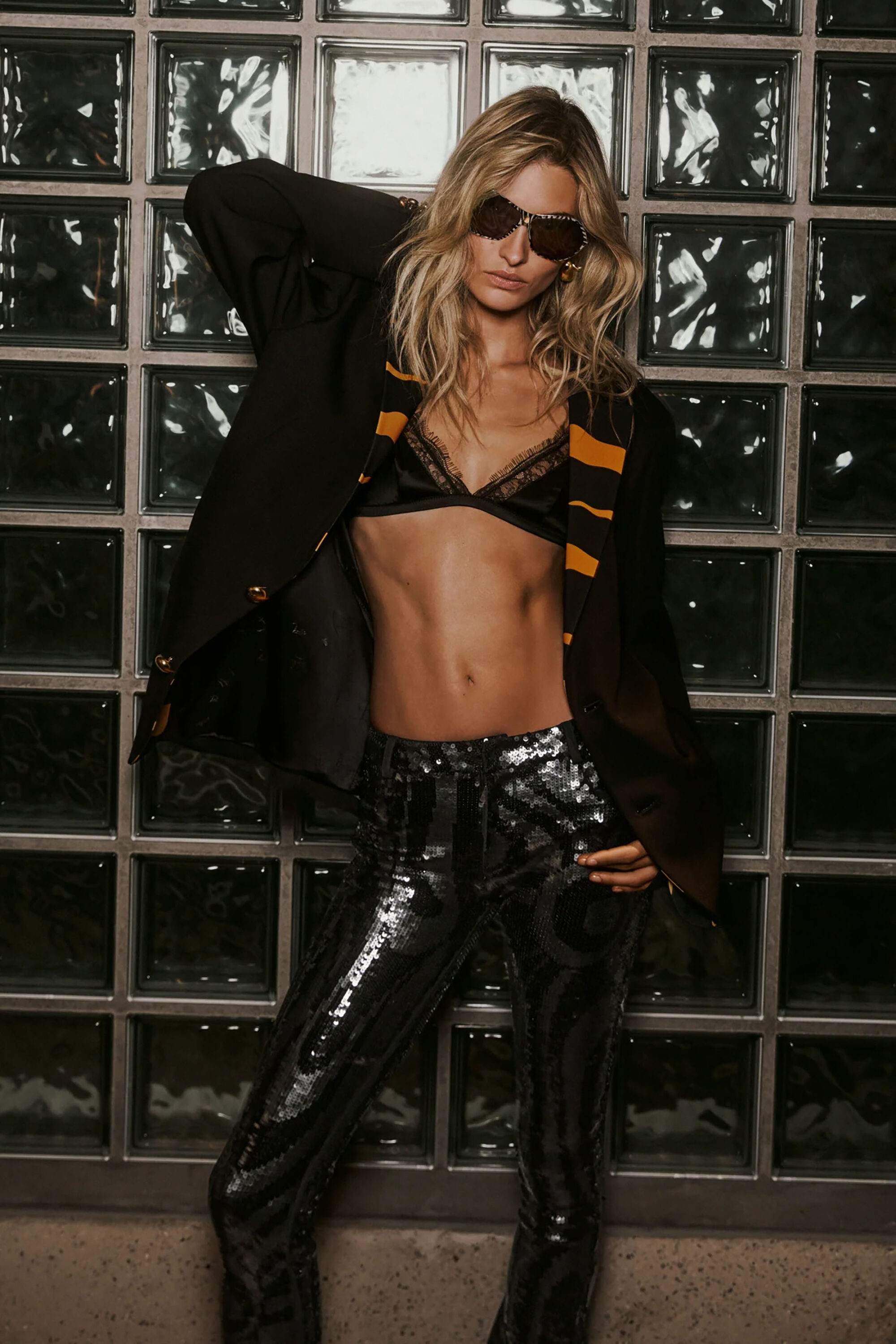
That shift is what makes the imagery work. Grace Elisabeth moves through mirrored rooms, metallic curtains, glass-block walls and pools of red light with the uninhibited confidence of someone several hours into a very good evening. Hair flies. Hips shift. Sunglasses remain on indoors, as they occasionally must. Jacobs lets reflections multiply the body while chrome surfaces and hard flashes collide with the collection’s swirling graphics. A tiger-striped yellow-and-black look becomes particularly effective: part animal skin, part racing colors, part disco uniform. Even the close crop on its sculpted rear pockets manages to turn garment construction into cheeky punctuation.
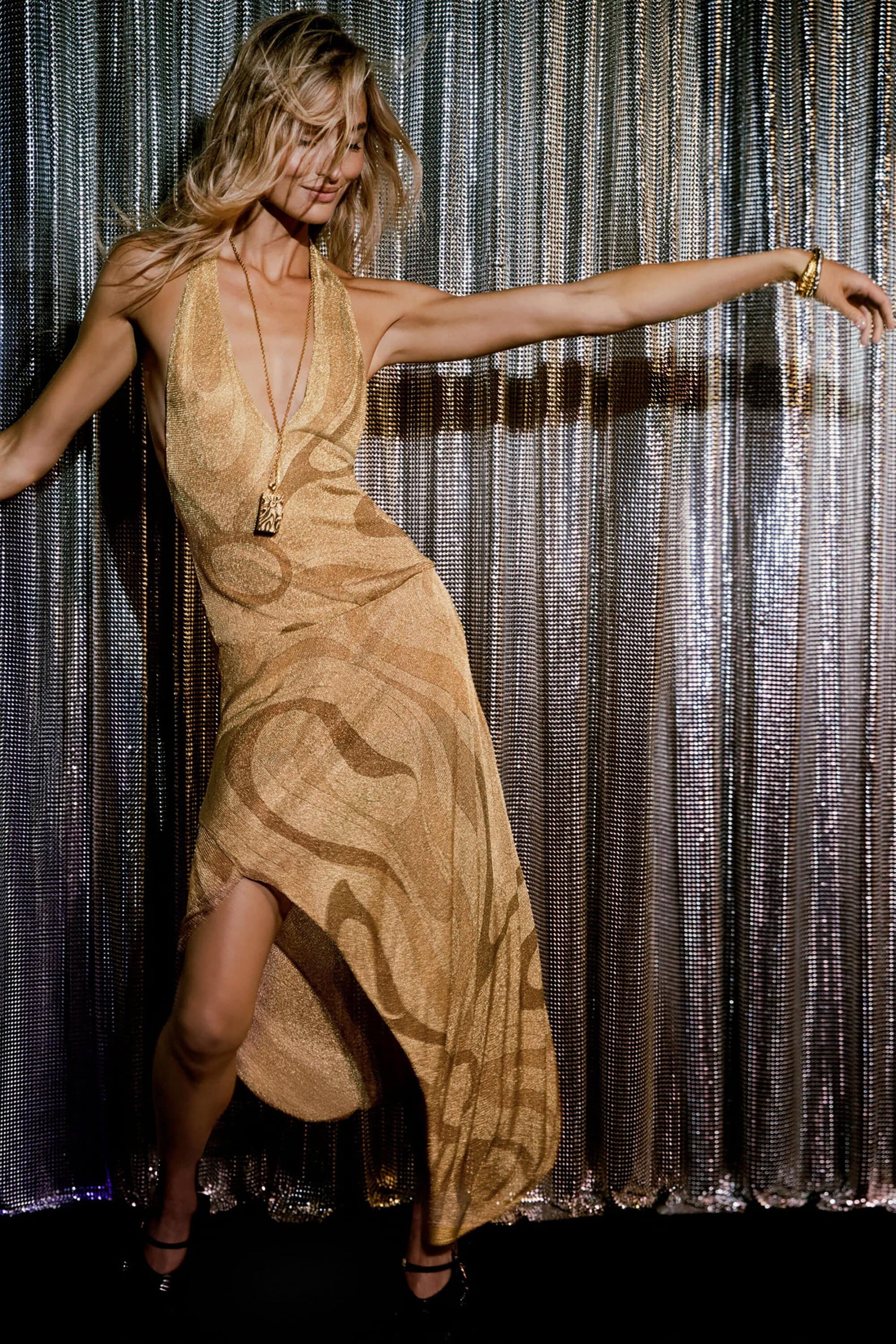
Elsewhere, a liquid gold halter dress against a metallic curtain channels a more languid strain of 1970s nightlife, while sequined trousers, lingerie and tailoring bring the fantasy closer to the dressing room after midnight than the conventional fashion studio. There are traces of the golden age of Parisian clubs here without the campaign becoming a period reenactment. That distinction matters. Pucci has enough archival color and jet-set mythology to drown itself in nostalgia if handled too reverently. Miceli’s success at the House has increasingly come from treating that heritage as something to play with rather than preserve behind glass.
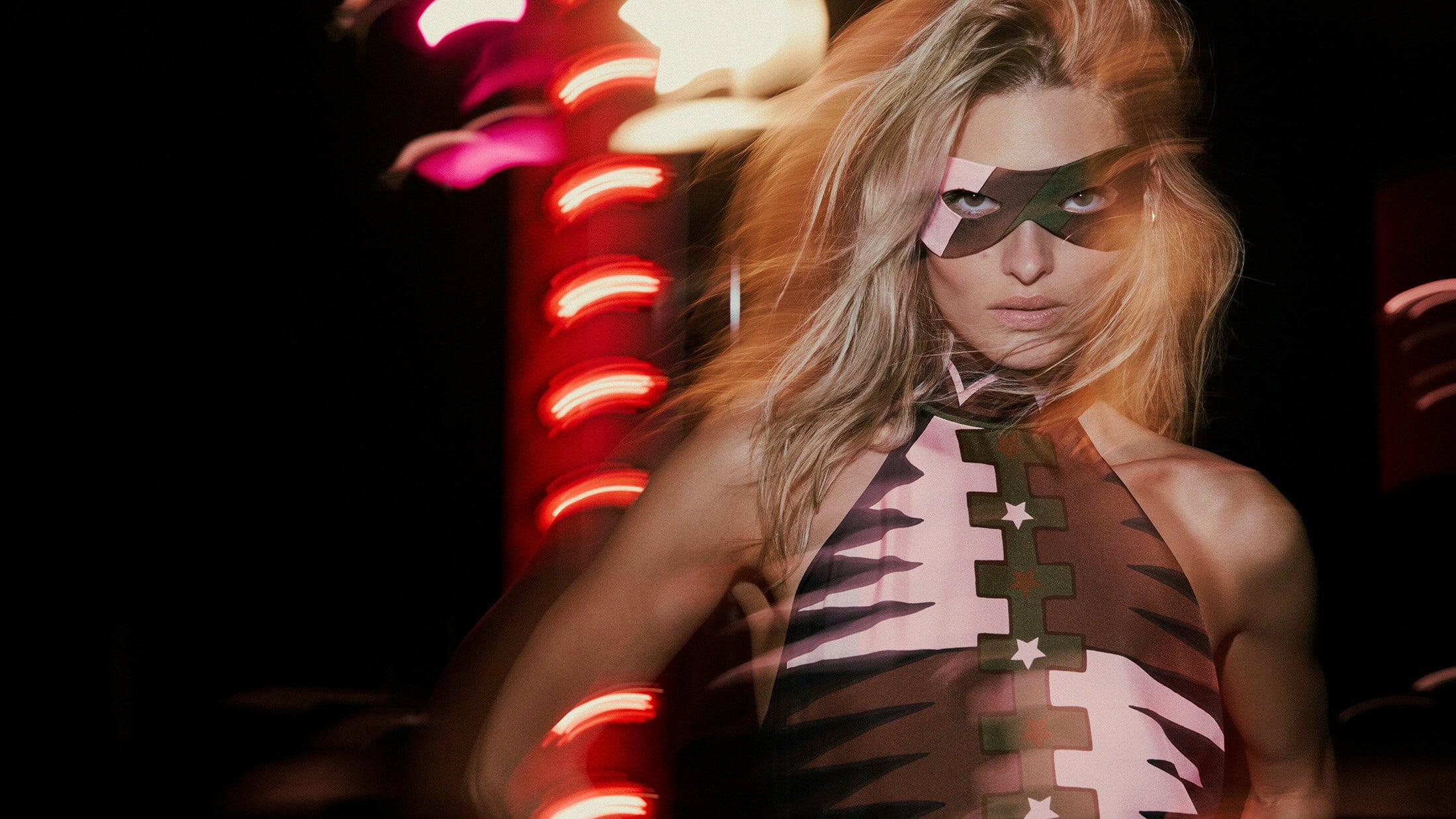
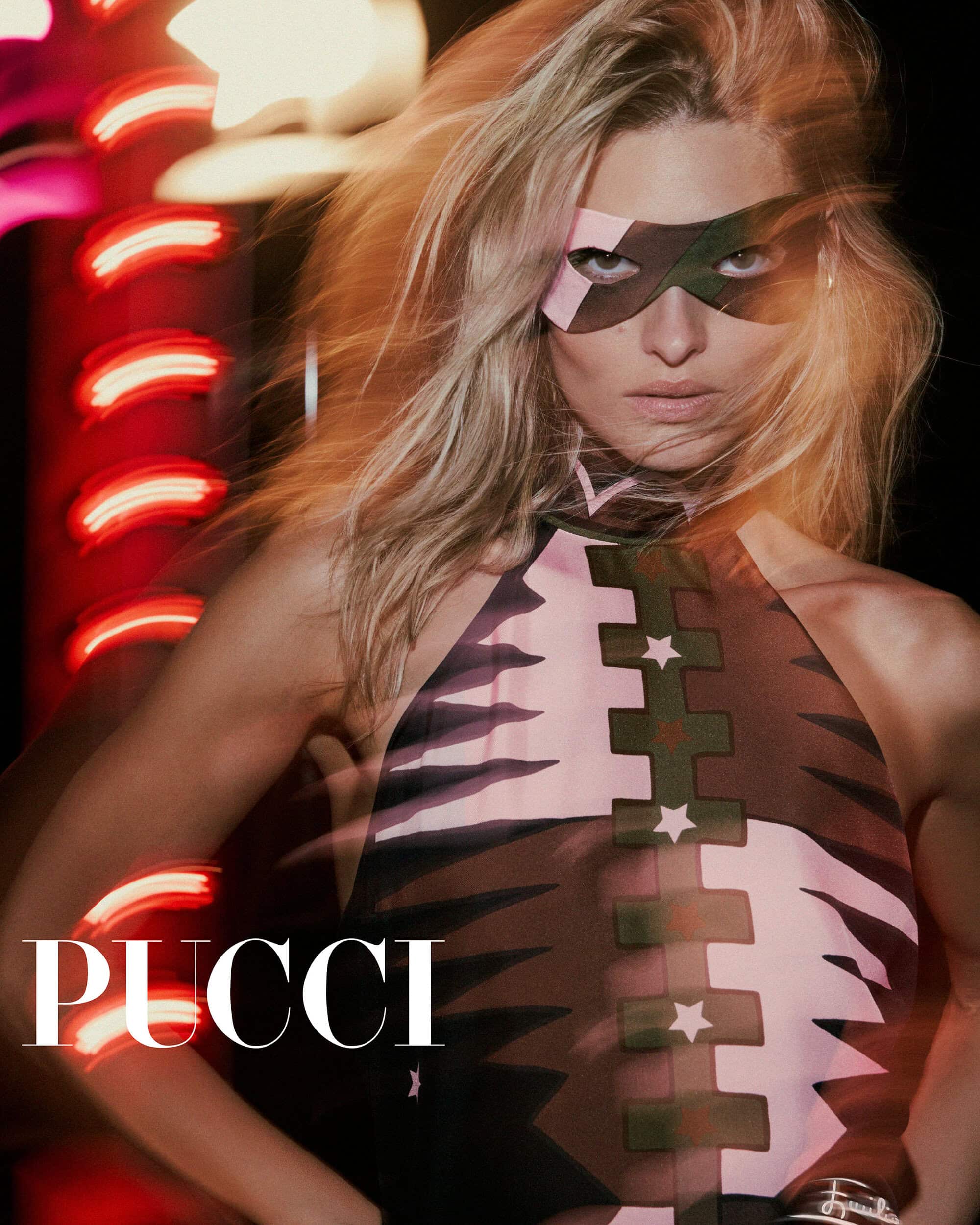
Jacobs is particularly good at understanding that Pucci needs movement. These prints were never designed to behave politely. Their curves, waves and optical repetitions come alive when the body bends, twists or crosses the frame, and the strongest photographs resist the temptation to present Grace as a static mannequin. The masked portrait is especially effective, pushing Pucci’s graphic language directly onto the face until model, garment and pattern almost collapse into one image. There is something knowingly excessive about all of it, but Pucci without excess would be rather like Studio 54 with the house lights on.
The accompanying film makes the campaign’s social proposition even clearer. A message passes down a line of partygoers: “The password is Pucci.” It is a wonderfully economical device. No complicated plot, no overwrought fashion-film mythology, just that deliciously adolescent pleasure of knowing something that somebody outside the door does not. Eventually the message leads us inside the club, turning the brand itself into admission. In marketing terms, it is a clever repositioning of exclusivity: not the chilly exclusivity of wealth and status, but the conspiratorial exclusivity of belonging.
There is, however, an interesting tension in that proposition. Pucci’s greatest asset is its immediate visual recognizability, and this campaign sometimes relies so heavily on atmosphere that the club itself risks becoming more memorable than the collection. The still imagery solves that problem better than the film, particularly when Jacobs gets close enough for print, hardware and silhouette to command the frame. Extending that same specificity through more of the moving imagery could have pushed the campaign from an excellent mood piece into an even more distinctive expression of Miceli’s evolving Pucci universe.
Still, the decision to translate Il Palio from horse race to nightlife feels unexpectedly apt. Both are ultimately about tribes, colors, allegiance, spectacle and the exhilaration of being part of something larger than oneself. Miceli and Jacobs simply exchange Siena’s piazza for the dance floor. The horses may have been left outside, but the competitive spirit has apparently made it past the velvet rope.
And really, there is only one remaining question.
What’s the password?
Pucci.
Pucci Creative Director | Camille Miceli
Photographer/Director | Carlijn Jacobs
Model | Grace Elisabeth