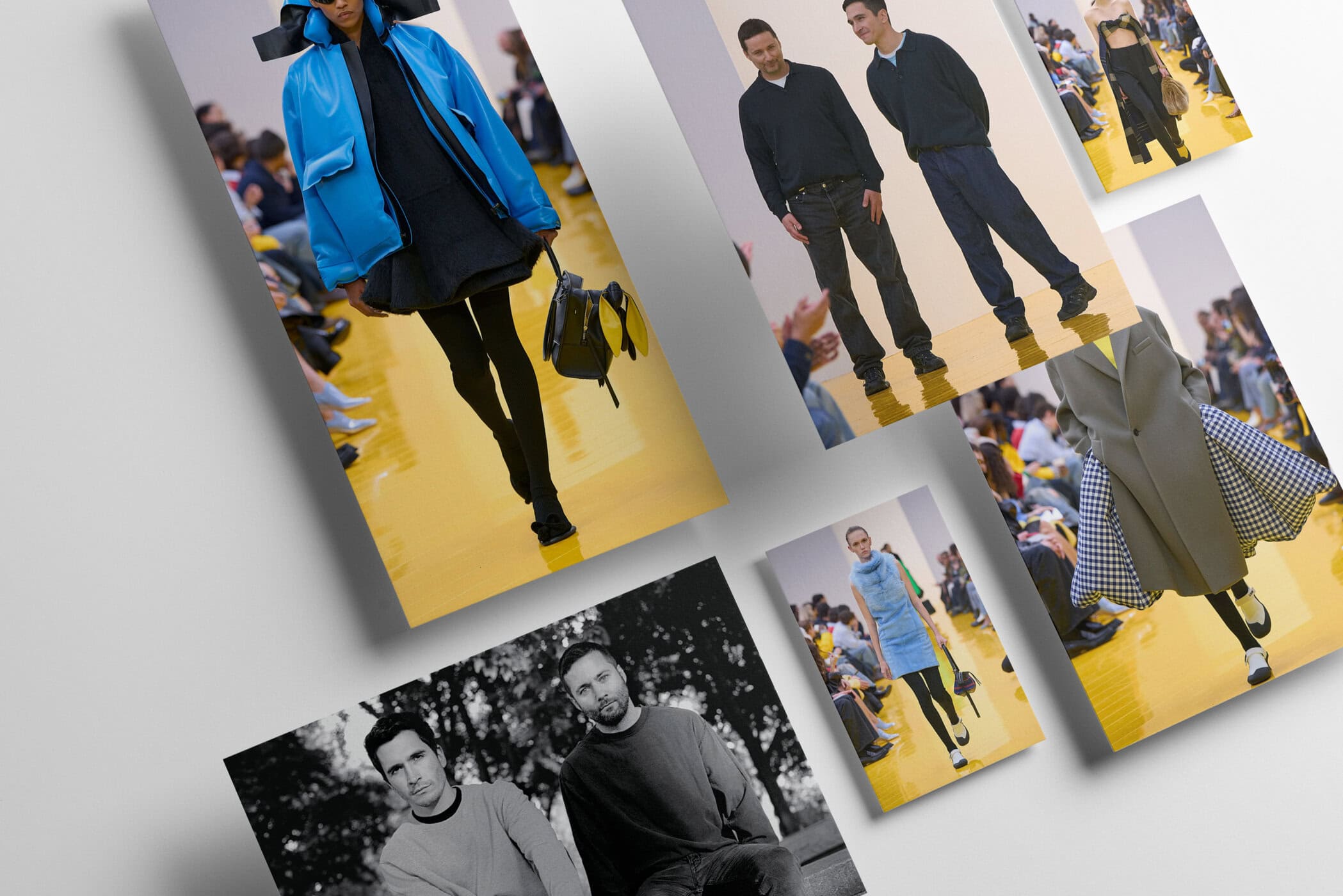
A Buoyant Sophomore Collection Expands The House’s Language Of Craft, Play, And Invention
By Kenneth Richard
Second collections are where the real story begins.
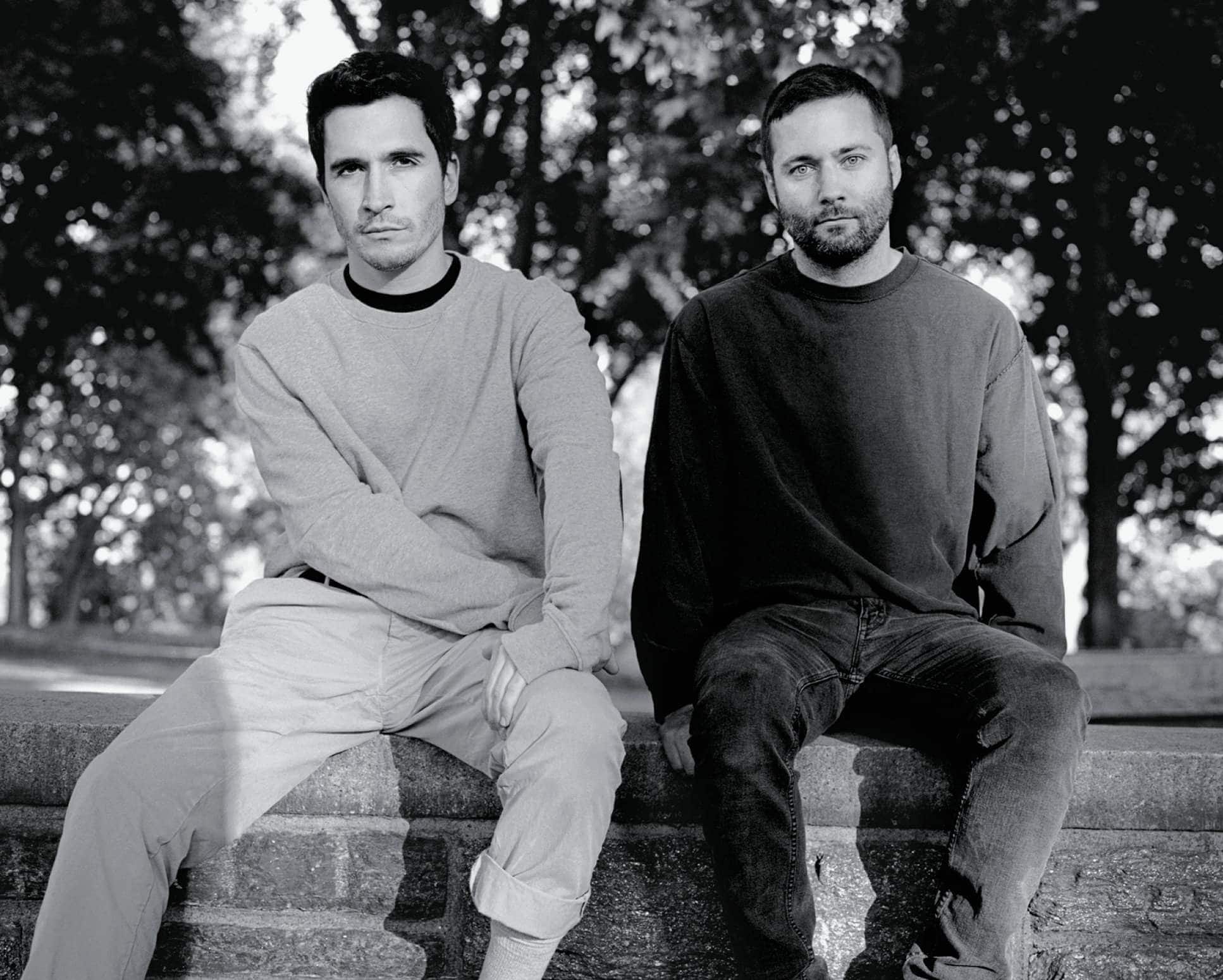
A debut carries the electricity of arrival — the weight of expectation, the scrutiny of inheritance, the emotional charge of stepping into a house whose history precedes you. But a sophomore outing is something else entirely. It is where intention replaces introduction. Where a designer’s language begins to take shape not as a statement, but as a rhythm.
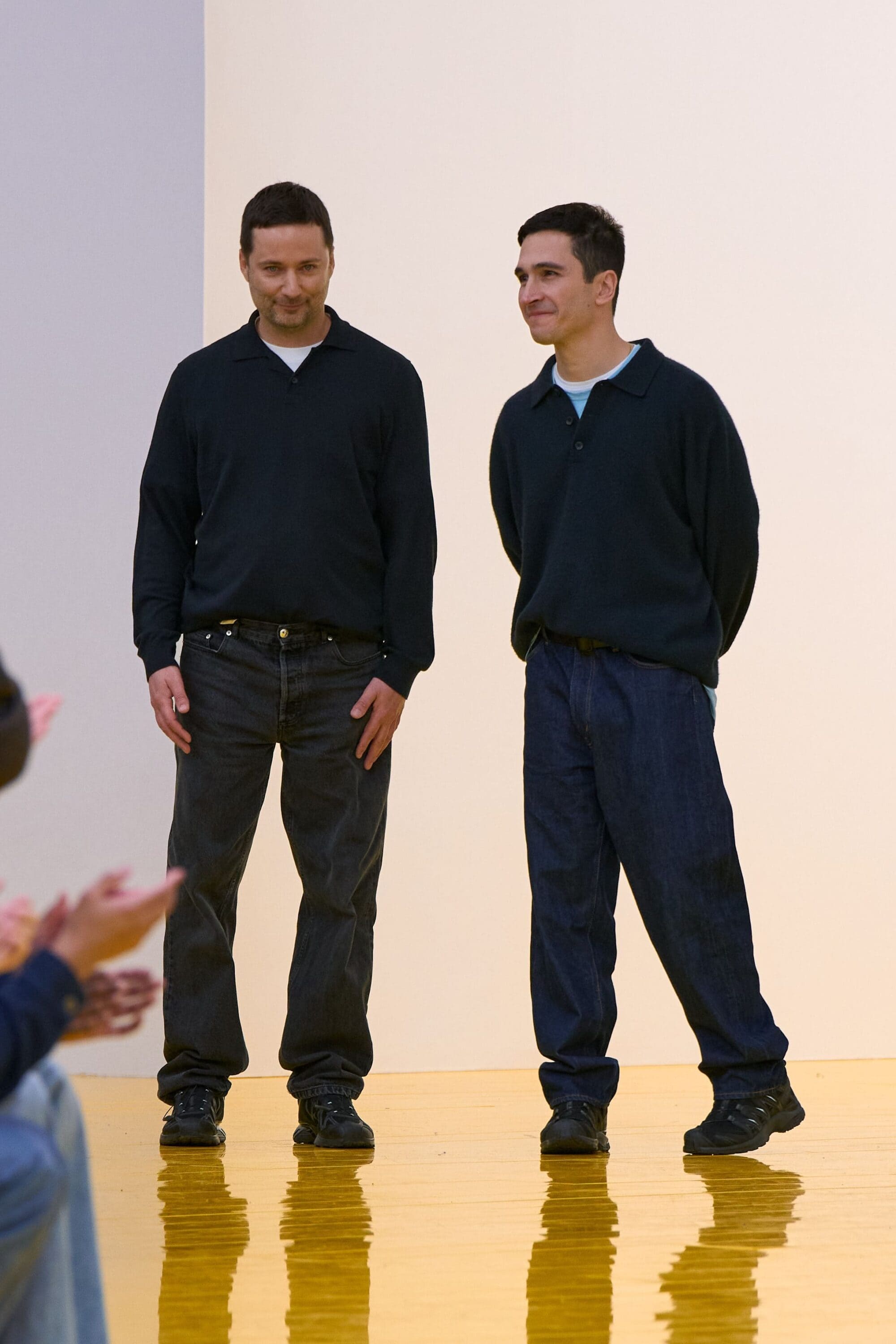
For Jack McCollough and Lazaro Hernandez, that rhythm is beginning to emerge at Loewe.
Their second collection for the house carried a palpable sense of ease and curiosity, the kind that signals designers settling into the possibilities of a place rather than announcing themselves within it. If their first show felt like an emotional opening chapter, this one felt like the moment when the conversation truly begins.
“Last season was our first show, so obviously that was super emotional,” one of them reflected afterward. “But now it feels like we’re coming to another level. It feels like a rebirth for us in many ways. We’re rediscovering ourselves as designers and what we want to say.”
What they want to say, they suggest, is best spoken through objects.
“What do we want to say with this? What you just saw — we speak in that.”
At Loewe, craft has always been the house’s foundation. Founded as a leather workshop in Madrid in the nineteenth century, the brand’s identity is inseparable from the idea of the handmade — the precision of leatherwork, the patience of technique, the quiet pride of construction.
But McCollough and Hernandez are less interested in preserving craft as heritage than in asking what it might become.
“The whole thing for us is about the idea of make,” they explained.
Craft is so important to the legacy and history of Loewe. But for us it’s about how to take that idea of making and make it completely of the moment — infusing the hand with technology.”
Their interpretation of craft rejects nostalgia. Rather than leaning on historical handicrafts, they are exploring how modern technology can amplify the human hand, allowing new kinds of objects to emerge.
“How do you modernize craft,” they said, “using the most up-to-date technology and incorporating it with the hand to create things that couldn’t have been made yesterday — only today?”
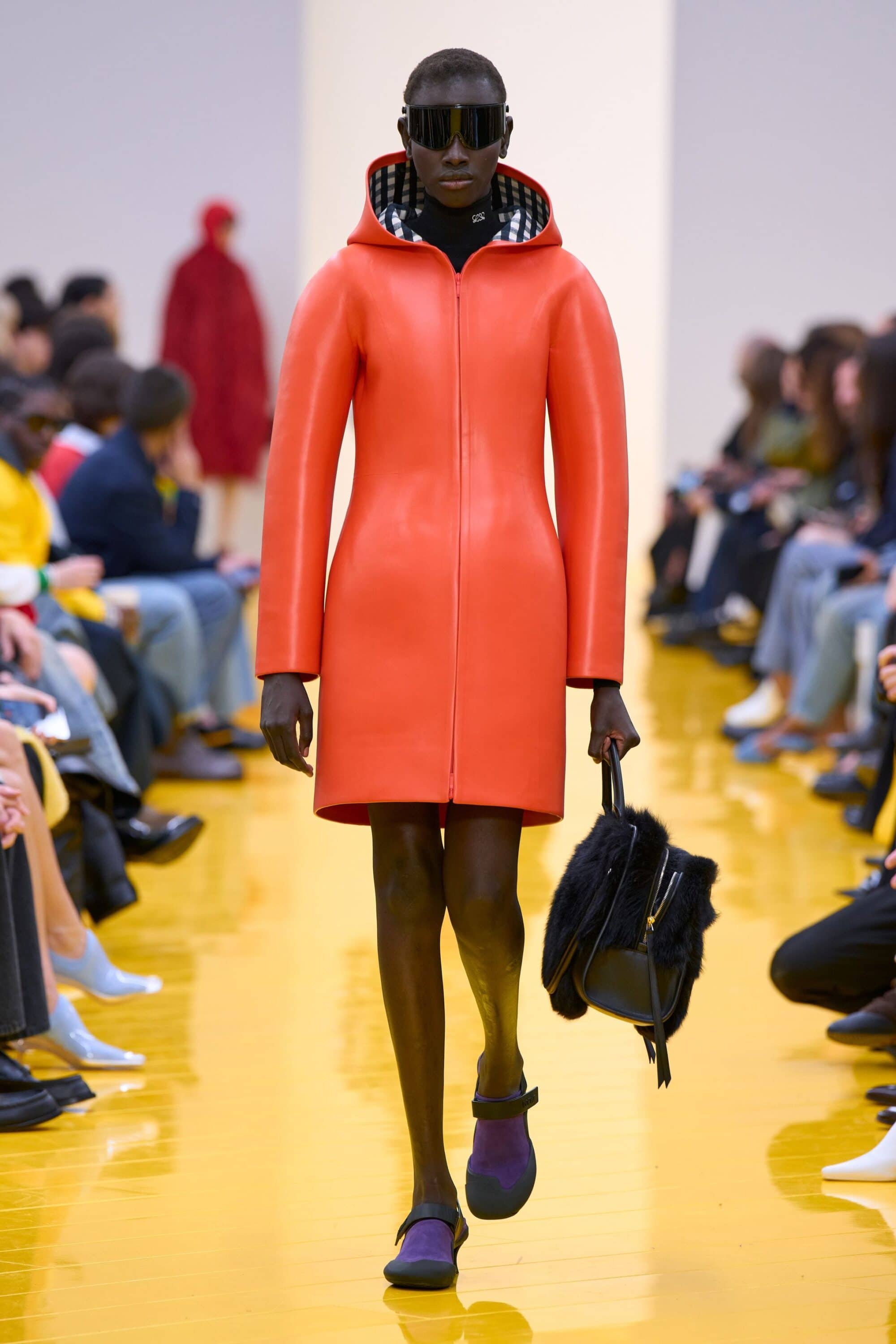
That question animated much of the collection. Inflatable linings transformed coats into buoyant sculptural forms. Scarves appeared to float upward from the body. Rubber-molded surfaces created unexpected structure.
The techniques might sound technical, but the effect was surprisingly light — both visually and emotionally.
One of the most intriguing gestures involved coats whose linings could inflate from within, subtly pushing the silhouette outward.
“The lining is detachable,” they explained. “It’s just a very simple double-breasted boiled wool coat with side vents, and then you inflate the lining. The lining has nowhere to go.”
The result was volume without weight — a silhouette literally filled with air.
“We were thinking about how to create silhouette and volume without adding weight,” they said. “What’s lighter than air?”
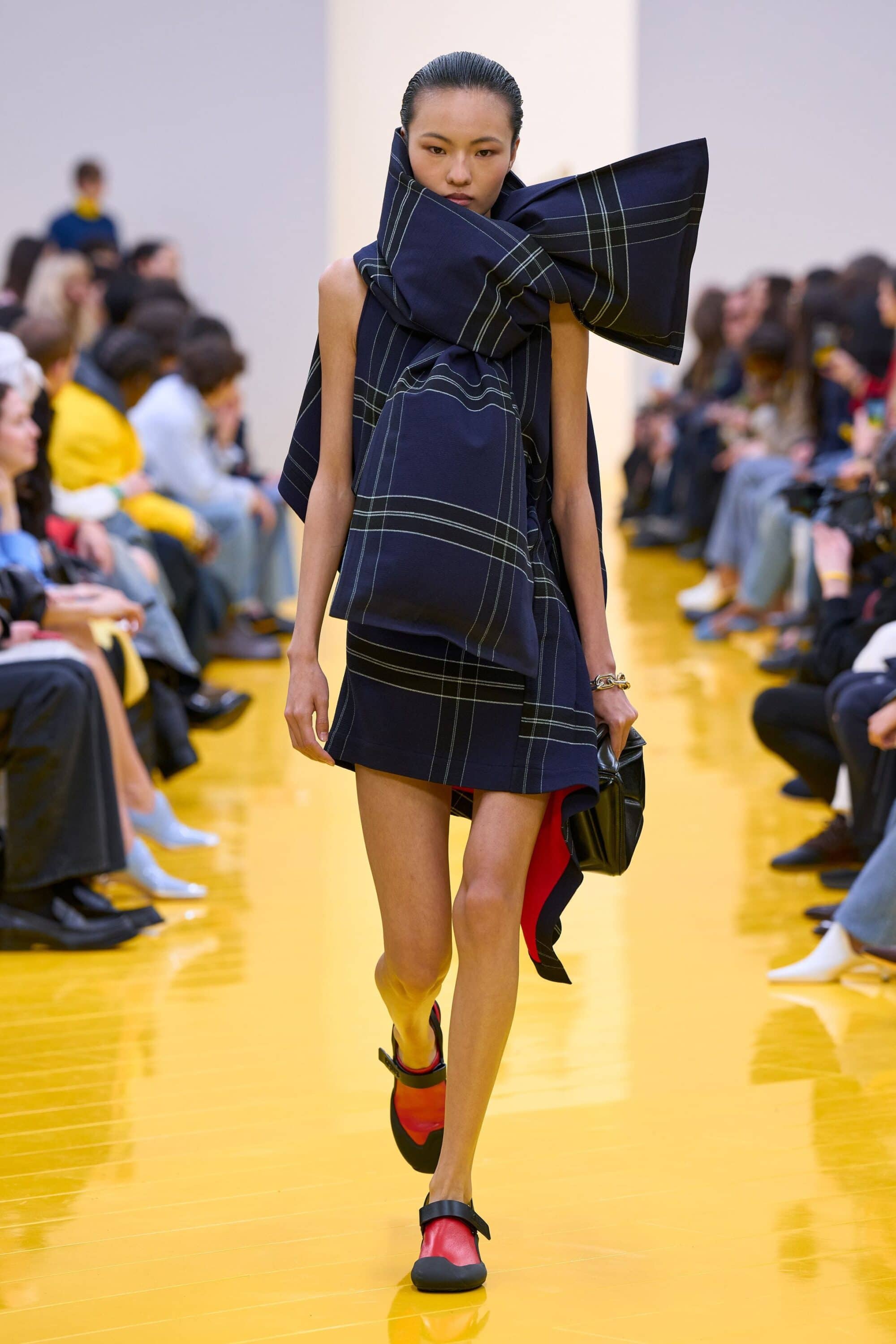
Elsewhere, scarves that appeared sculptural were in fact simply two layers of fabric discreetly inflated beneath outerwear, giving them an almost surreal lift.
“There was a sporty energy to that,” they added. “Almost like winter sports.”
The athletic reference is not accidental. McCollough and Hernandez grew up within the vocabulary of American sportswear — a language of practicality, movement, and ease that continues to inform their instincts.
“We grew up with sportswear,” they said. “It’s embedded in our DNA. To reject that seems silly.”
Instead, they allow that sensibility to intersect with Loewe’s craft heritage in quietly subversive ways.
Leggings turned out to be viscose jeans, complete with fly fronts and belt loops. Knitwear revealed itself as denim. Corduroy trousers were in fact finely shaved shearling.
“We love a corduroy pant,” they laughed. “But how do you make a corduroy Loewe?”
Their answer: shearling carefully sheared into cord-like ribs — a transformation that looks familiar at first glance but reveals itself as something far more intricate upon closer inspection.
What emerges from these experiments is not simply a collection, but the outline of a larger ambition.
“Our job is building a language,” they explained.
Through the collections, through the campaigns, through the people we’re dressing. It’s about creating a universe.”
That universe carries something notably absent from much contemporary fashion: lightness.
“The idea of craft as play was really important to us,” they said. “Craft is the joy of making things. There’s something quite joyful and playful about it.”
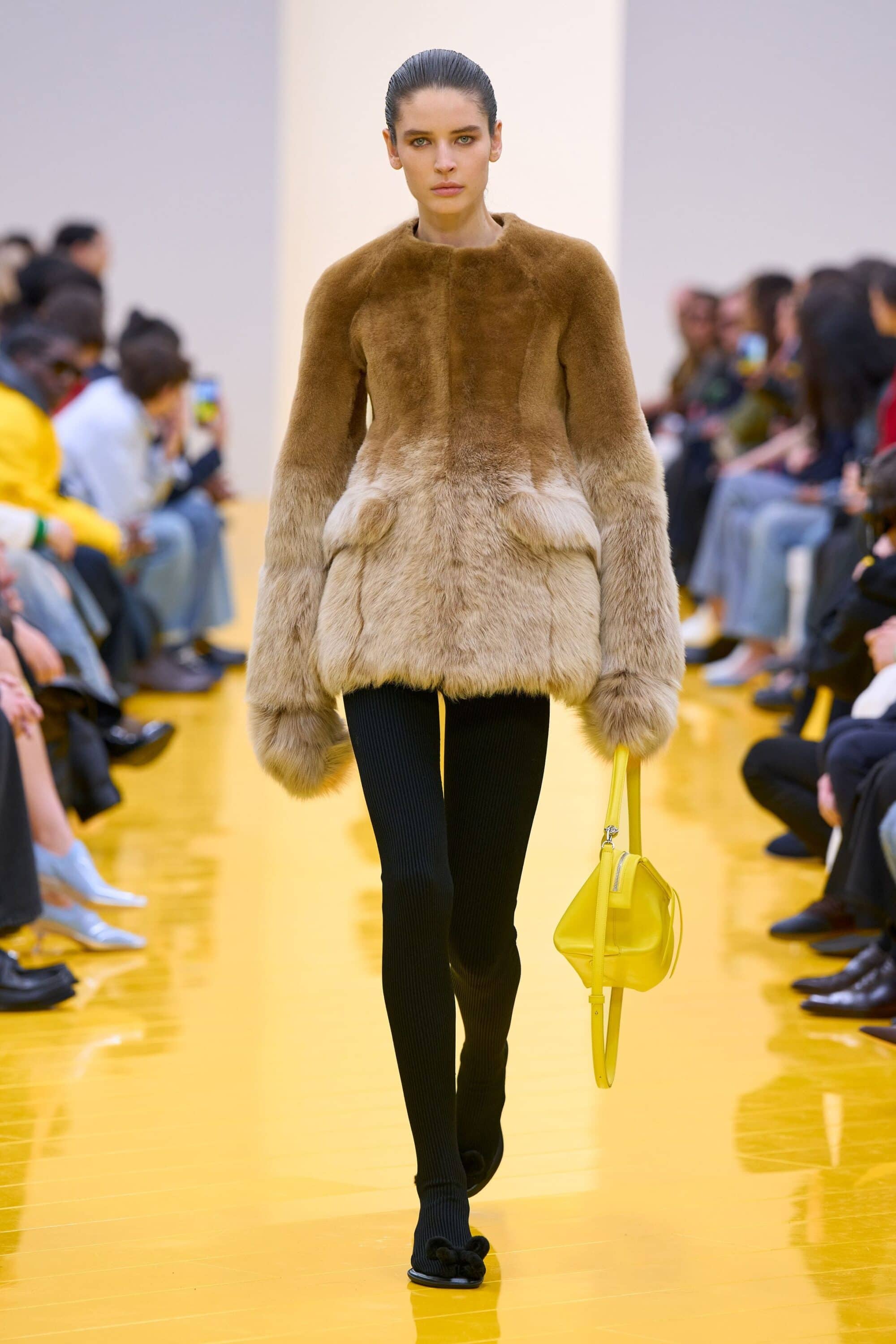
For them, craft is not reverent or solemn. It is exploratory — the pleasure of discovering what a material might do, or how a garment might behave when pushed just slightly beyond expectation.
“It’s not a chore,” they said. “It’s something you do because you enjoy it.”
That spirit of curiosity ran quietly throughout the show: silhouettes that bounced rather than weighed down the body, materials that disguised themselves as something else, garments that carried a subtle sense of humor.
“In a way,” they added, “it’s what the world needs right now. A bit more joy and playfulness, and less seriousness.”
If their first Loewe collection carried what they described as “sun-drenched optimism,” this second chapter layered that feeling with something deeper: confidence.
“We’re not trying to scrap what we did last season and start over,” they said. “We’re building a world and evolving it as the seasons go along.”
And that may ultimately be the most promising sign of all. The urgency of arrival has passed. In its place is something steadier: experimentation, curiosity, the slow formation of a voice.
For McCollough and Hernandez, Loewe is becoming less about inheriting a legacy than about extending it.
A house built on craft, now reimagined through air, technology, sportswear — and, increasingly, joy.