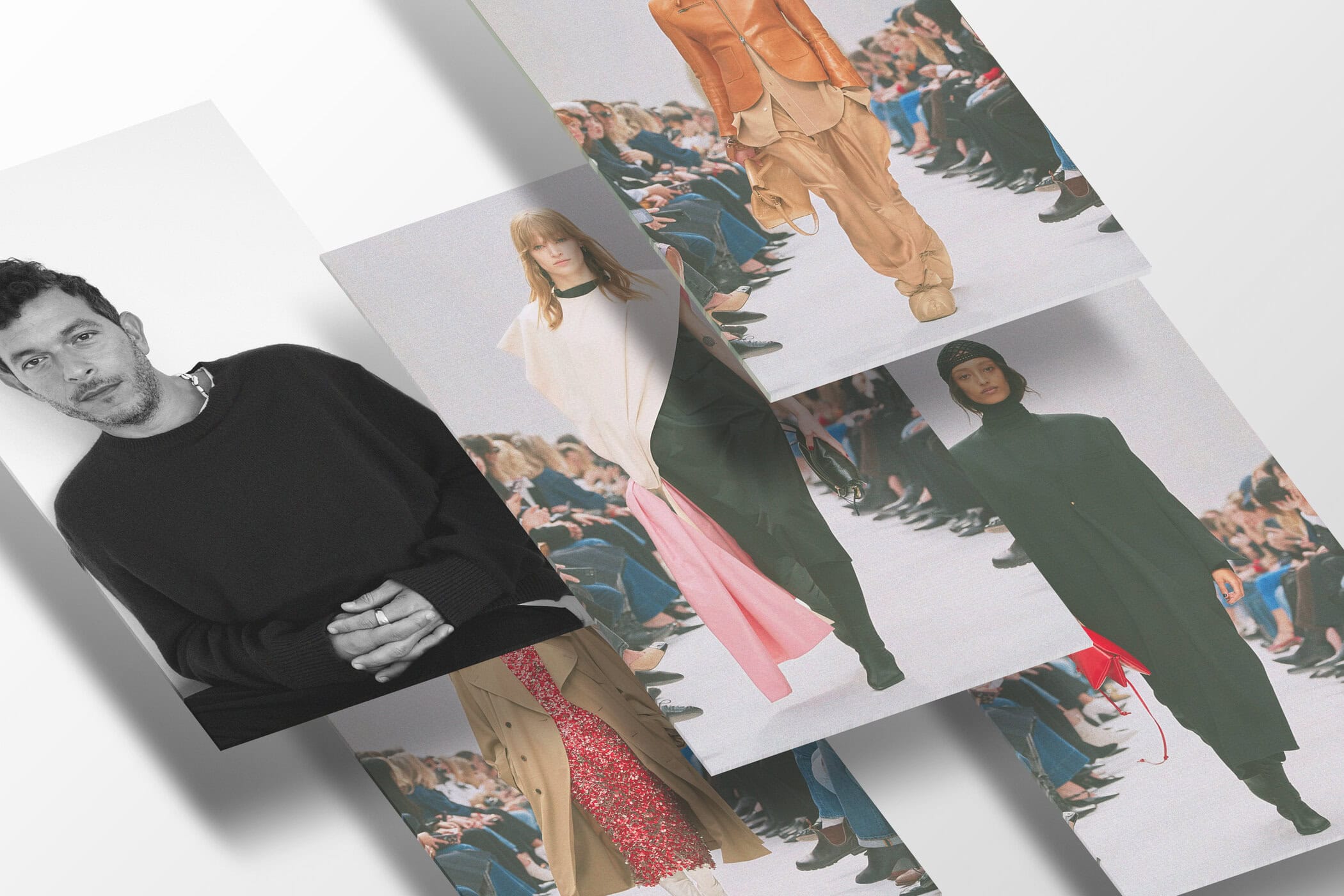
The Designer Reflects On Heritage, Music, And The Poetry Of Imperfection As He Shapes The Next Chapter Of Celine
By Kenneth Richard
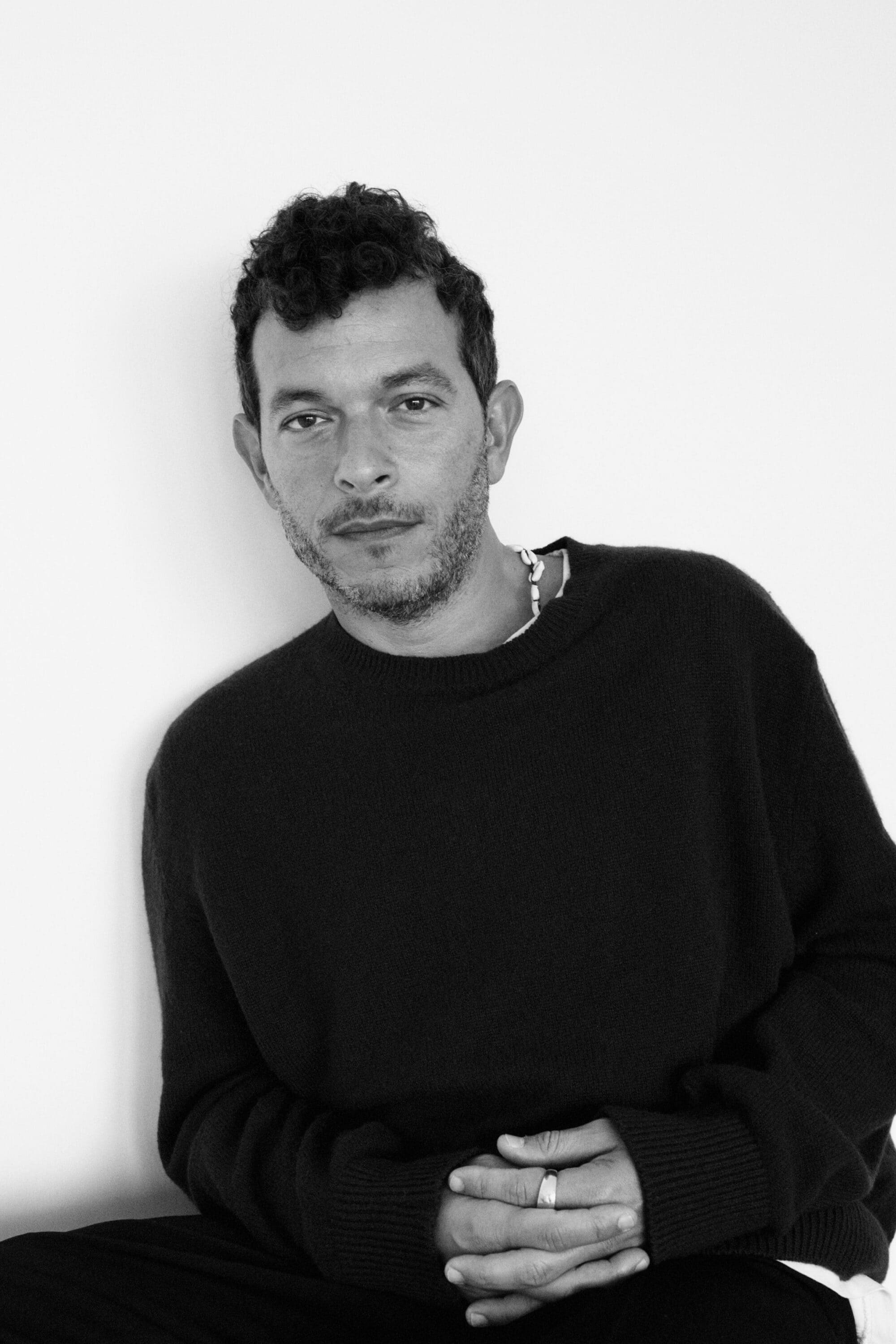
In Paris, history has a way of speaking quietly but insistently. For Michael Rider, it was not the weight of heritage that defined his thinking for Celine, but the possibility of transformation. Standing in a historic courtyard chosen for the show, he saw not a relic of the past but a frame for imagining what comes next.
The setting itself was part of the story. Rider described arriving and walking through the first courtyard, struck by the sense that the space served as “the guardian of the parts of French culture that are pretty unique to France.” Inside nearby, doctoral students worked in the Bibliothèque, continuing an intellectual lineage that stretches across centuries. The idea that fashion could enter that environment, even briefly, felt charged with meaning.
“Well, aside from wanting all of you to have an easy commute because, you know, the park was beautiful, but far and we appreciate how tough everyone’s job is,” Rider joked at first, disarming the room. But behind the humor was a deeper fascination with the contrast between past and future.
“The idea that we were going to be allowed to build a space to talk about something that will come in the future, in the second courtyard… I just loved that. Kind of taking something very old that has deep roots and they’re meaningful and using it to talk about the future, I find that really exciting. I find that really Celine.”
For Rider, fashion at Celine is not about rejecting what came before, nor about being constrained by it. Having spent years within the house earlier in his career, the archives are not distant artifacts but something lived and understood.
“I was around for one of them,” he said of the house’s past chapters. “So those archives are well known to me, and they’re part of me too, those nine years.”
His view of heritage is unusually light. Where some designers describe archives as a responsibility or burden, Rider sees them as fertile ground.
“I like—and I said this before, from when I started back again—I like… the idea that there is a kind of continuity. I don’t see it as a burden, not at all. And I do think archives and heritage can be heavy, but I don’t feel that at all here. I feel it’s very green.”
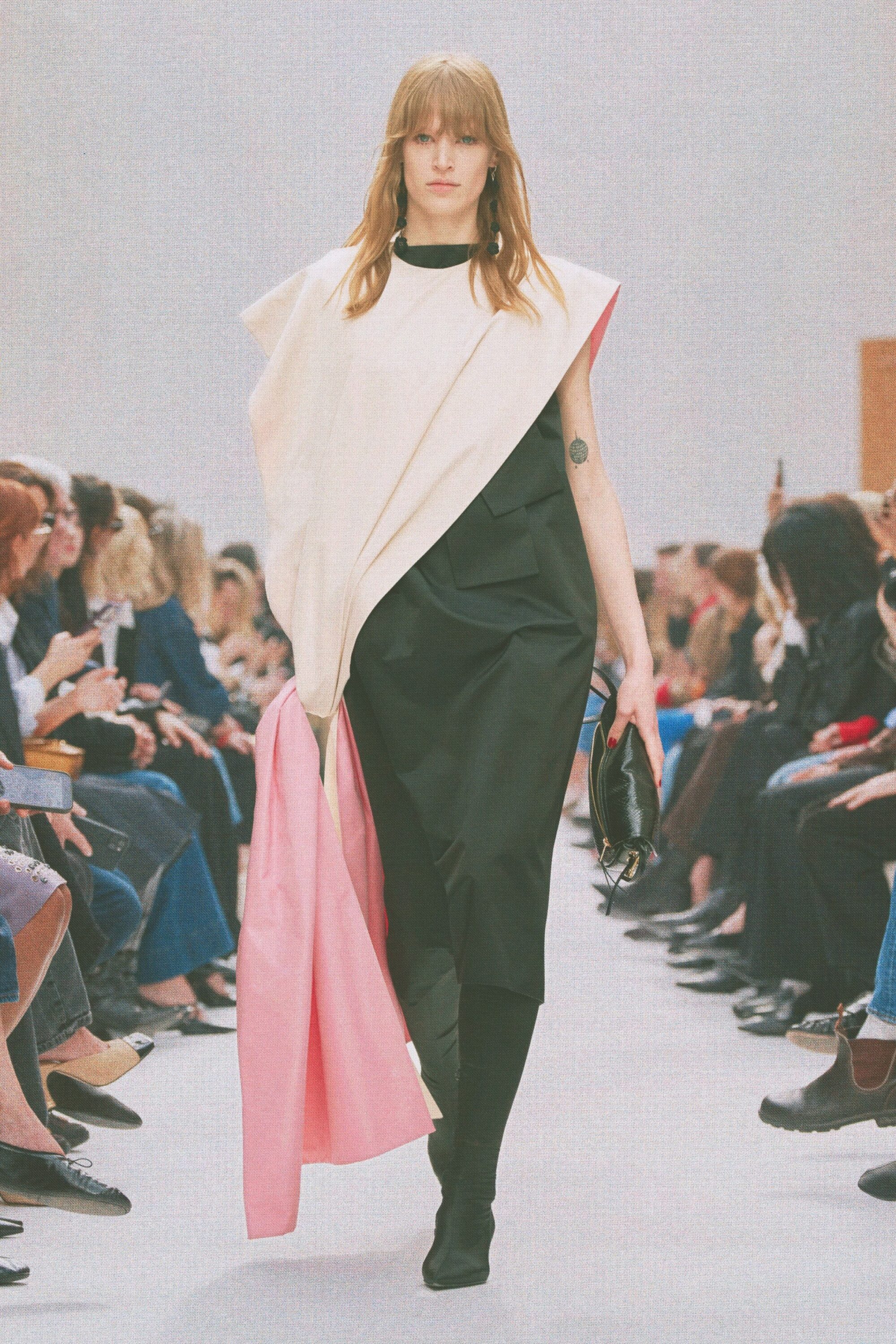
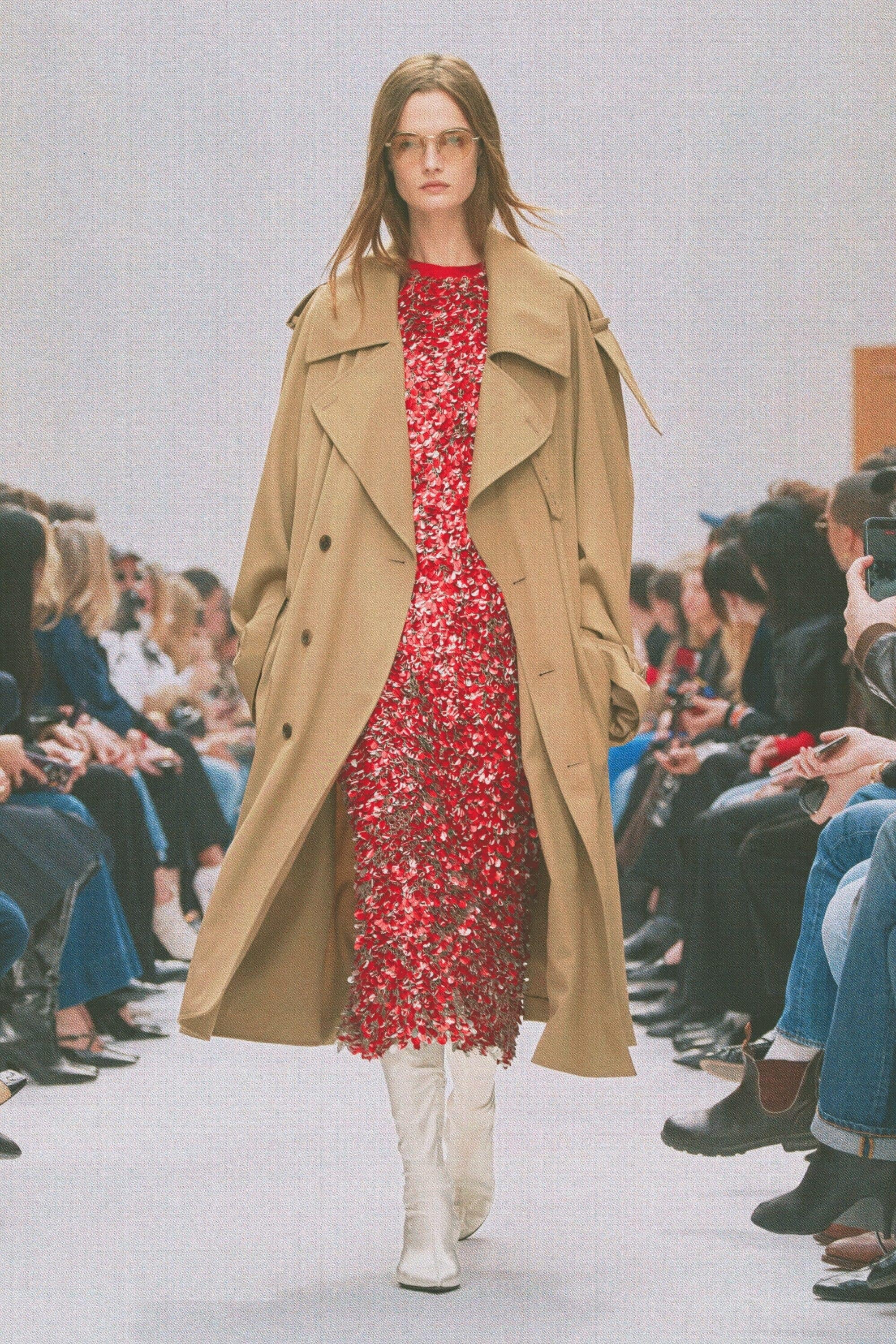
That sense of openness extended to the collection’s silhouette. Rider spoke about wanting a feeling of movement—something freer, lighter, less encumbered by excess fabric.
“We were talking about… something,” he said, searching for the right word. “I don’t know a good word for it in every language, but in America I guess I’d call it zippy.”
It was an evocative choice. For Rider, “zippy” suggested clothes that allow the wearer to move easily, with fabric controlled just enough to let light and motion come through.
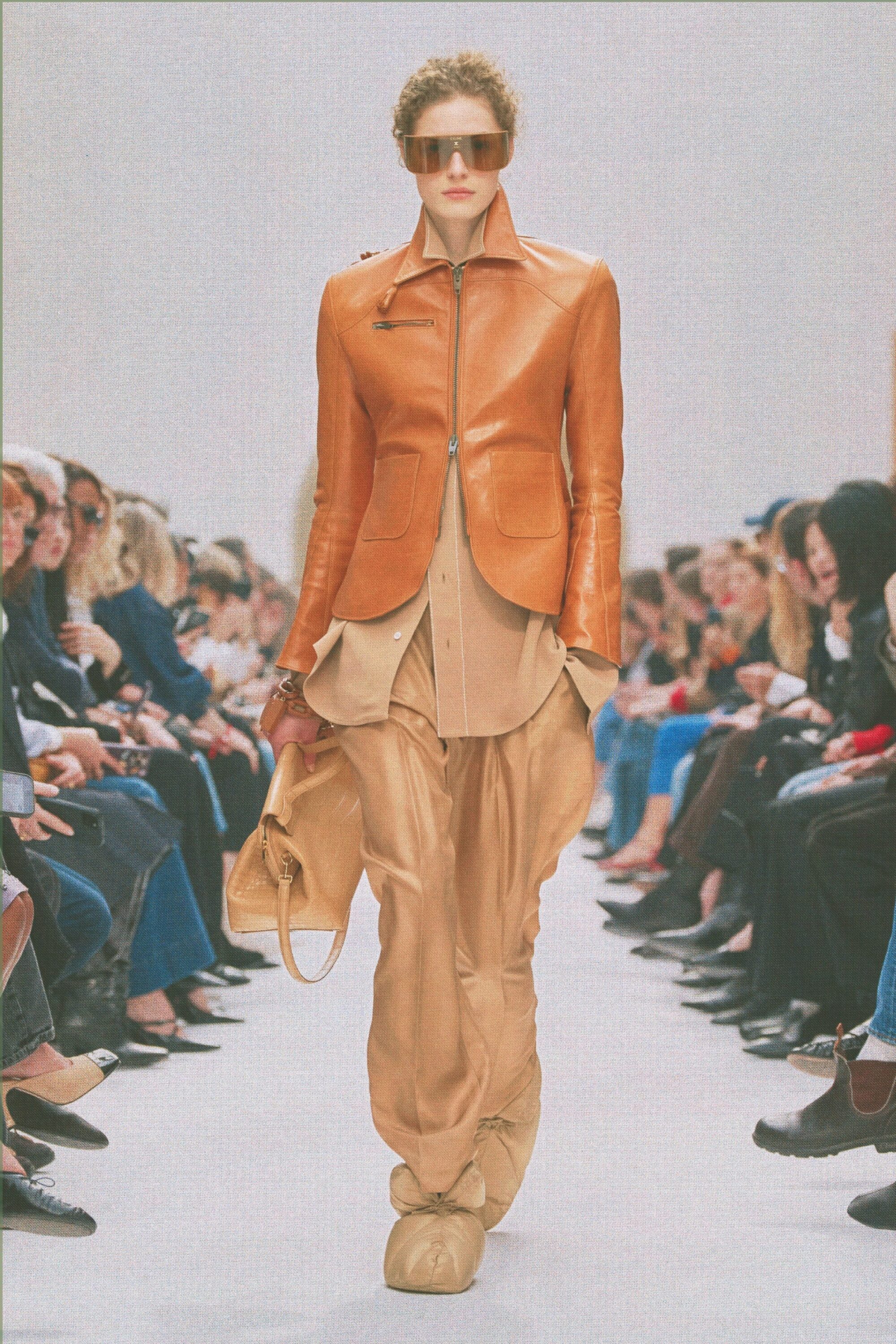
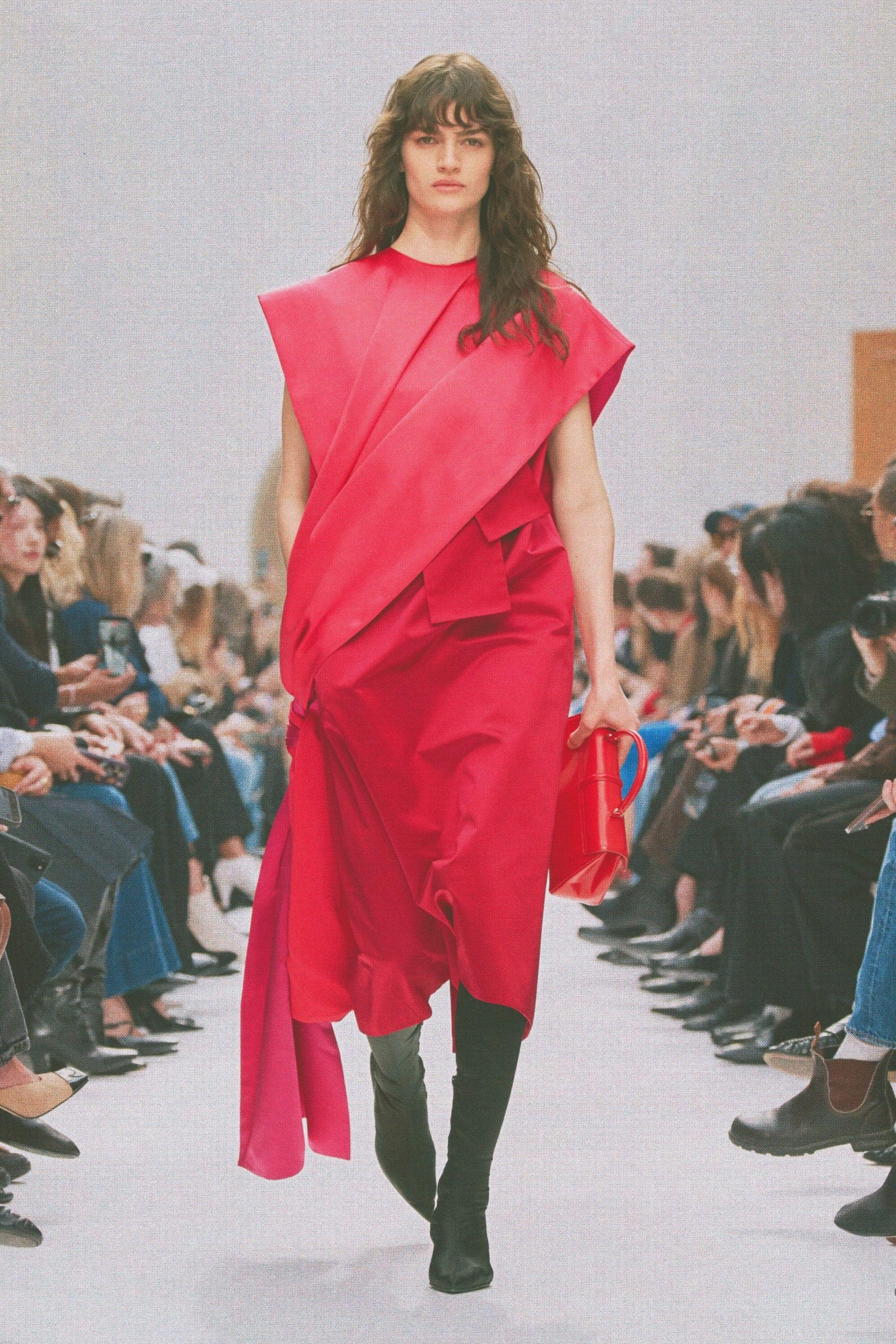
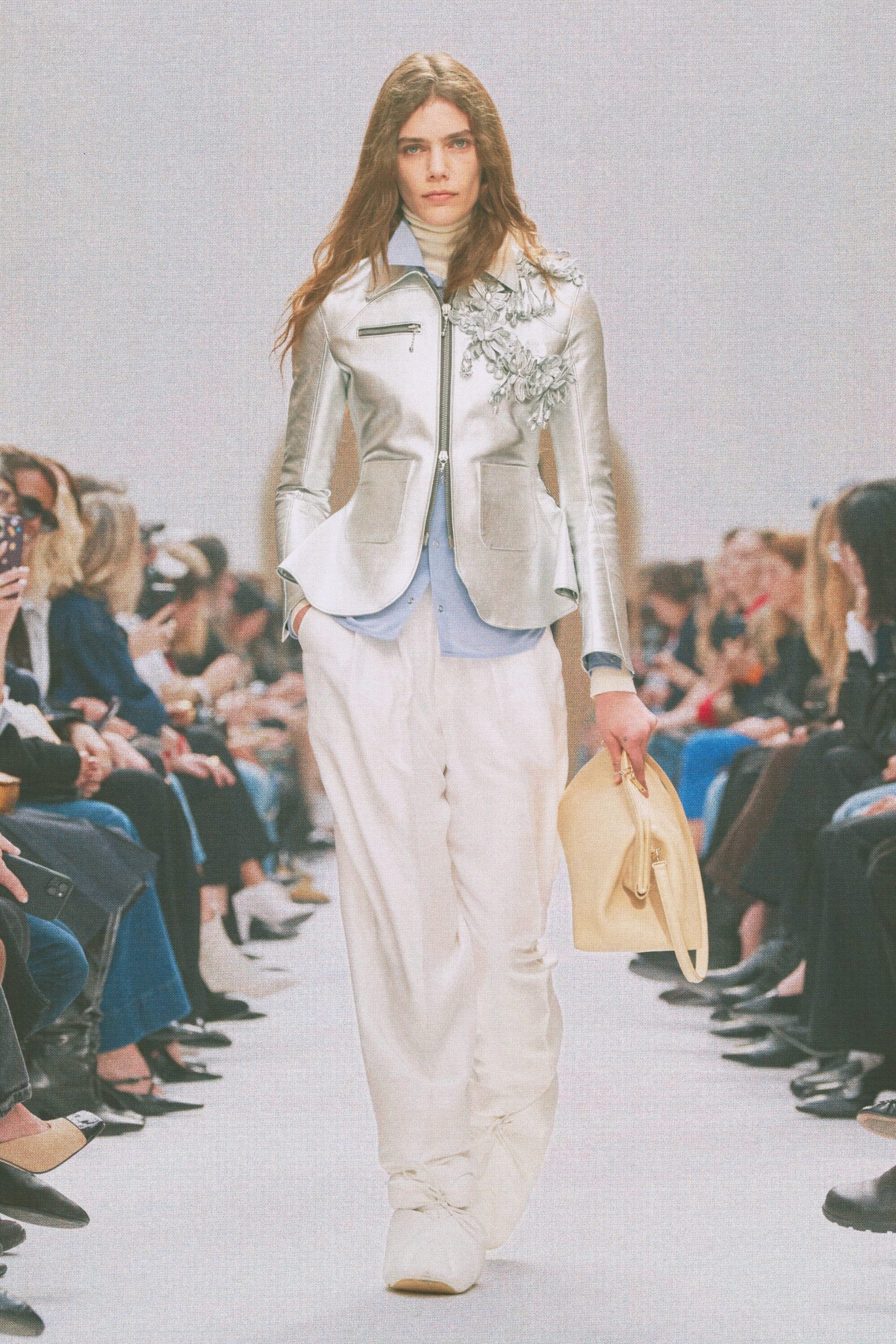
“I just think there’s a lot of fabric around,” he explained. “It felt like kind of controlling the fabric a bit more and letting the person, the walk, the light come through. Something felt like we wanted people to kind of zip around.”
There was an honesty in the admission that followed. “I would like to be a person who zips around more, who’s less swaddled,” he laughed, acknowledging his own affection for oversized coats.
Yet the pursuit of elegance, for Rider, is never about perfection. The most interesting style moments often contain a note of disruption.
We all try to perfect things. But I sometimes find the most stylish people have something slightly incorrect about what they’re wearing.
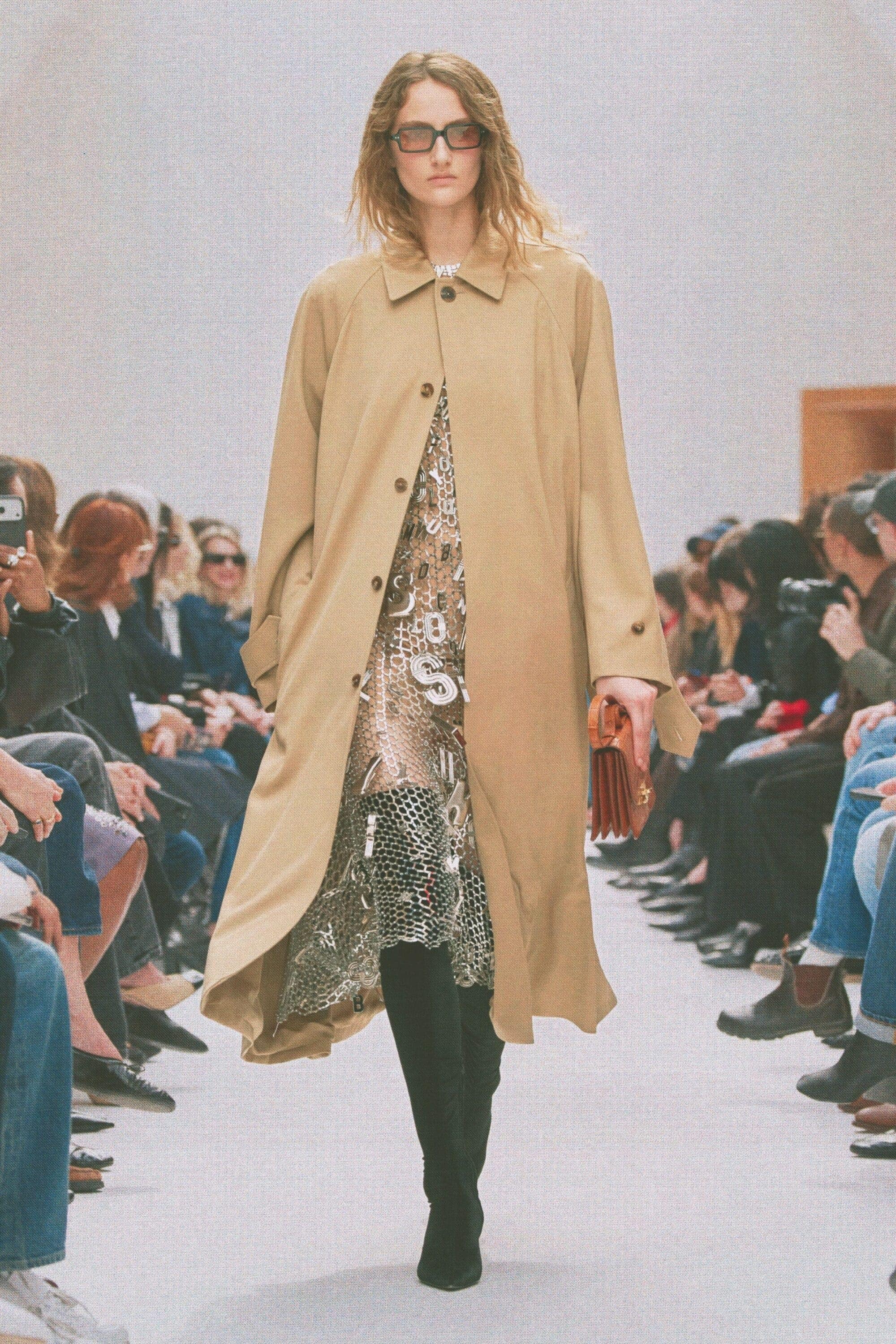
That philosophy surfaced in the show’s feathered gestures—romantic touches that felt at once playful and enigmatic. Rider connected the spirit of those details to one of music’s most singular figures.
“There was something about some of these more romantic, slightly more poetic… gestures that reminded me also of Prince,” he reflected. “I don’t want to equate him to a feathered headband—he deserves it all—but something about that gesture… thinking about him as such a singular human being, and those gestures that sometimes come from nowhere, and the meaning is just that they’re beautiful.”
Music, in fact, runs through the studio as naturally as fabric and sketches. Rider listens constantly, and the soundtrack of a show is not an afterthought but a collaborative energy.
“Yes, yes, yes,” he said with enthusiasm when asked if music fills the workspace. “We listen to music all the time. I listen to music a lot. I love music.”
The process is less about precise planning than about improvisation—something closer to musicians playing together.
“We have an amazing guy in the studio who used to own a vintage shop, who also designs denim… and he’s a musician. We work really closely, just talking constantly. It’s less like for this show we want this mix to be nine minutes, and it’s much more of a jam together.”
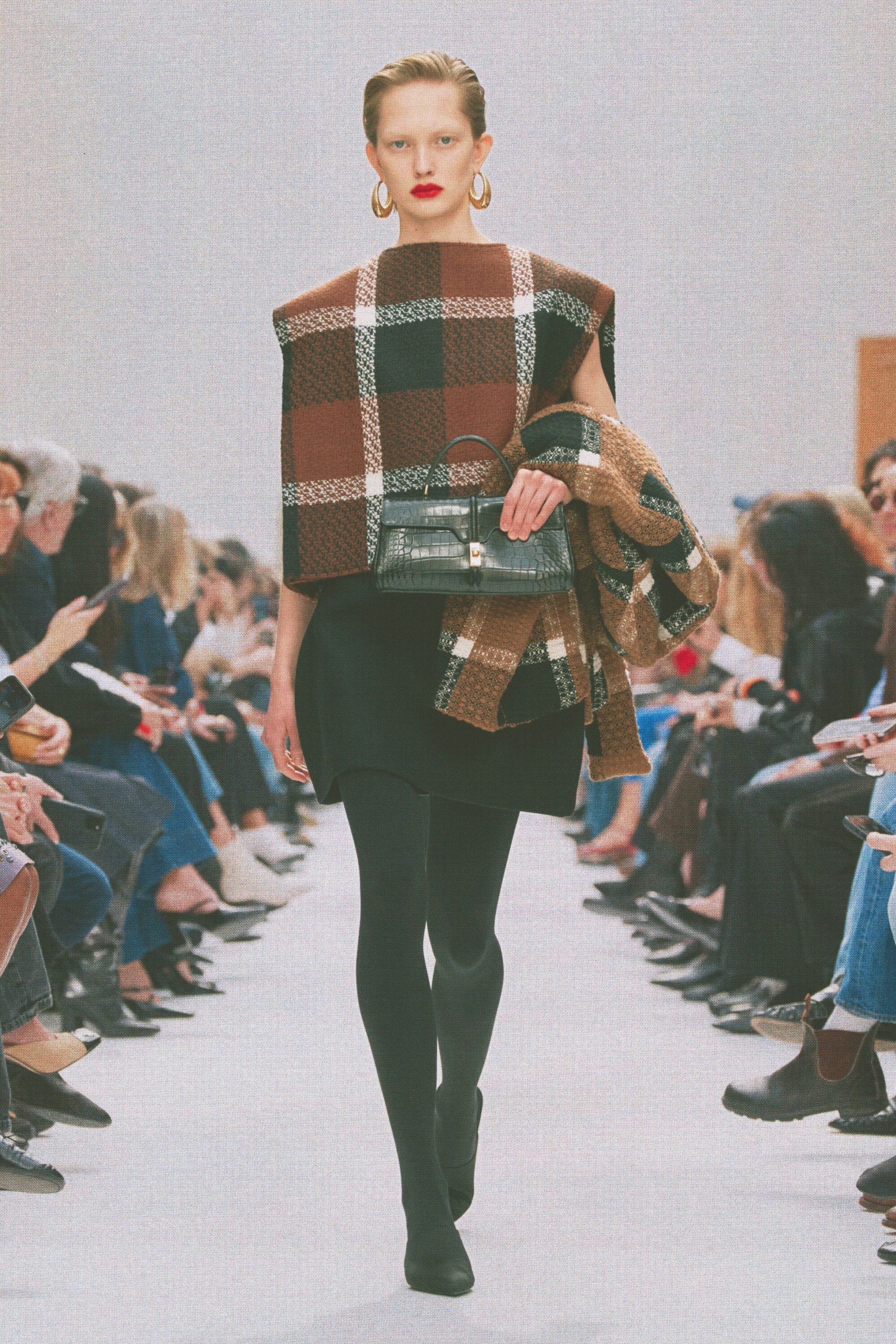
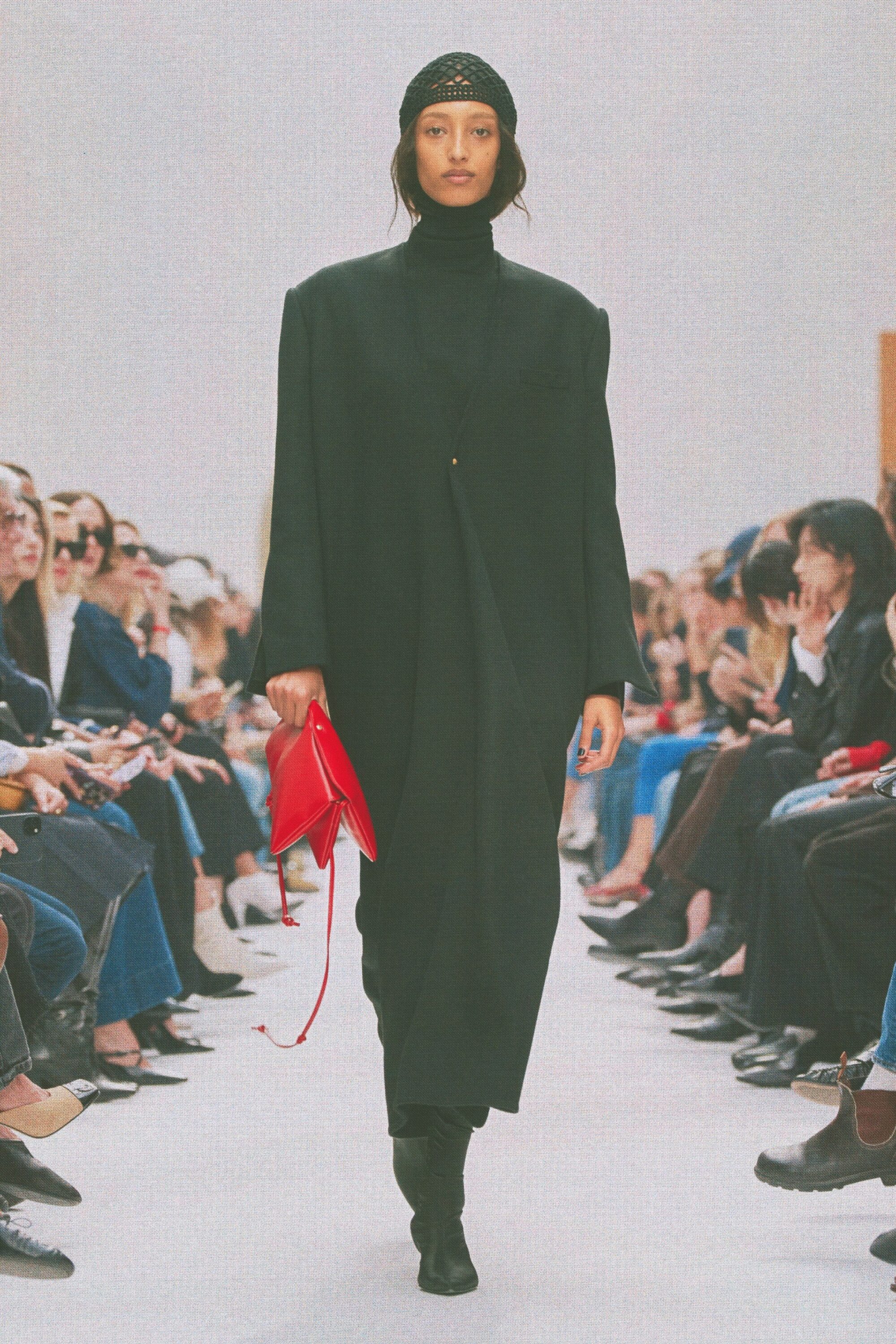
In that word—jam—lies something essential about Rider’s vision for Celine. It is not rigidly choreographed but evolving, shaped by conversation, instinct, and shared sensibility.
Fashion, like music, can thrive in those spaces between structure and spontaneity. And for Rider, standing in a centuries-old courtyard and imagining what might come next, the dialogue between past and future feels not like a tension but a rhythm.
At Celine, he suggests, history is not a weight to carry. It is simply the opening note.