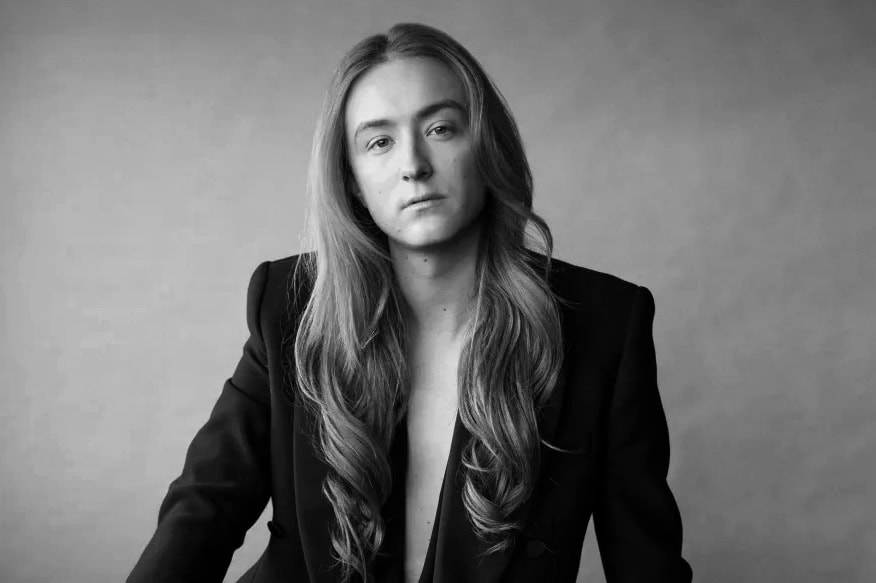
The British-American designer exits after three and a half years to focus on his namesake label as the Puig-owned house considers its next creative direction.
Harris Reed has stepped down as creative director of Nina Ricci after three and a half years, concluding a tenure that sought to inject a theatrical and inclusive sensibility into the heritage Parisian house. The designer will now focus on expanding his eponymous label. A successor has not yet been announced.
Reed joined the Puig-owned fashion and fragrance house in 2022 at age 26, becoming one of the youngest designers to lead the brand. His appointment reflected a broader strategy among established labels to recruit emerging talents with strong cultural visibility and loyal audiences. While several comparable appointments across the industry proved brief, Reed’s tenure extended beyond the typical short cycle often seen with younger designers entering heritage houses.
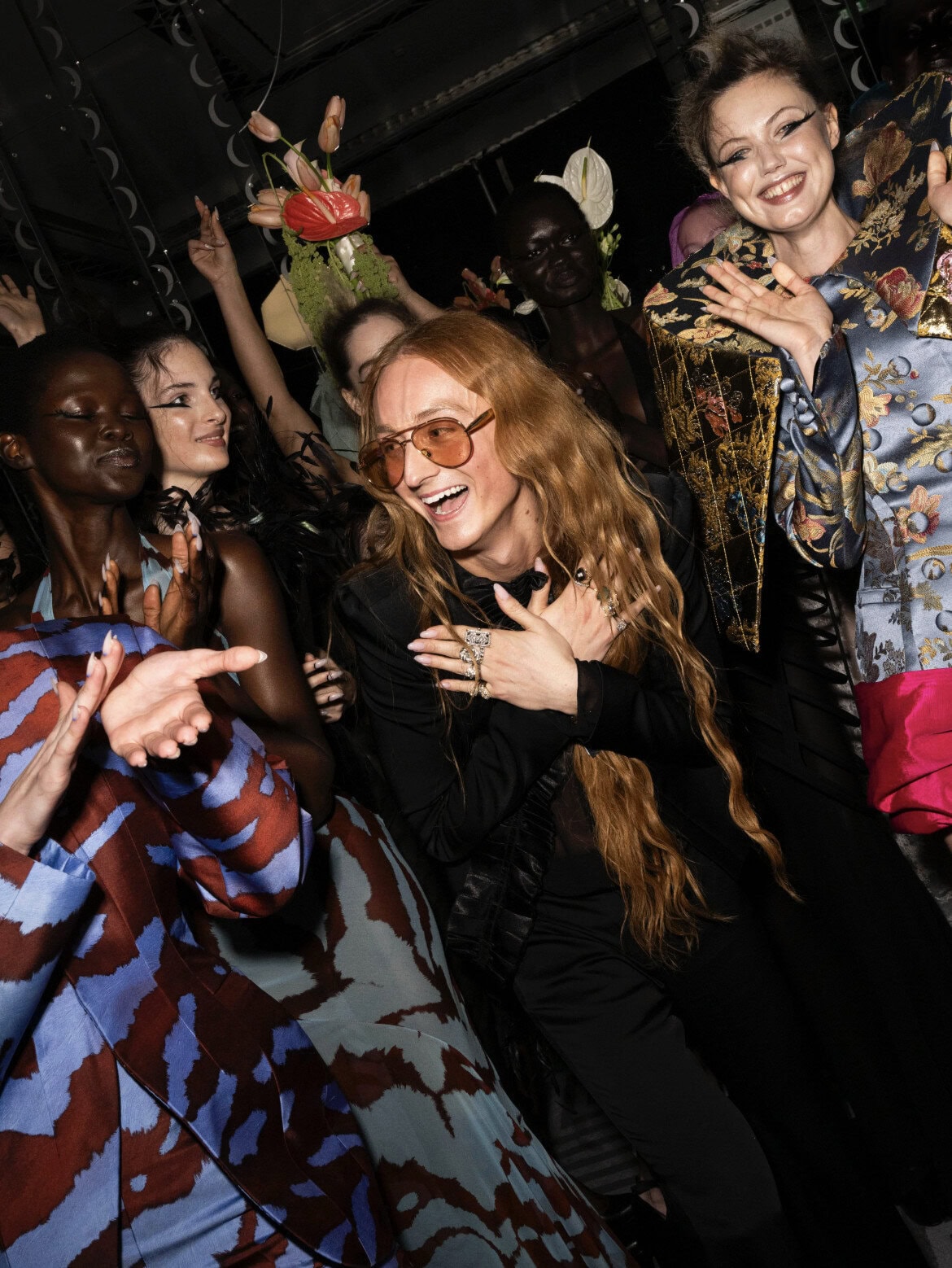
During his time at Nina Ricci, Reed introduced an expressive aesthetic built around sculptural silhouettes, corsetry, and dramatic eveningwear. The collections explored a flamboyant interpretation of femininity that blended Parisian elegance with a distinctly contemporary sense of spectacle. Reed also broadened the house’s runway casting and sizing approach and oversaw the launch of the fragrance Venus, expanding Nina Ricci’s presence within Puig’s wider beauty portfolio.
His final presentation for the house took place during the Fall/Winter 2026 season at Paris Fashion Week earlier this month. The collection drew inspiration from the exhibition Marie Antoinette Style at London’s Victoria and Albert Museum, translating historical references into sharp jacquard tailoring, corseted silhouettes, and crinoline shapes styled with casual elements.
Nina Ricci, founded in 1932, operates within the portfolio of Spanish luxury group Puig, whose stable also includes labels such as Rabanne, Jean Paul Gaultier, Carolina Herrera, and Dries Van Noten. The house has experienced frequent creative turnover in recent years, with designers including Peter Copping, Guillaume Henry, and the duo Rushemy Botter and Lisi Herrebrugh leading the brand at various points.
With Reed’s departure, Nina Ricci enters another transitional moment as it evaluates its next creative leadership and broader strategy. The company has indicated that further updates regarding the house’s future organization will follow in due course.