How Axel Dumas Frames Chaos as Strategy in a Fragmenting Luxury Market
By Kenneth Richard
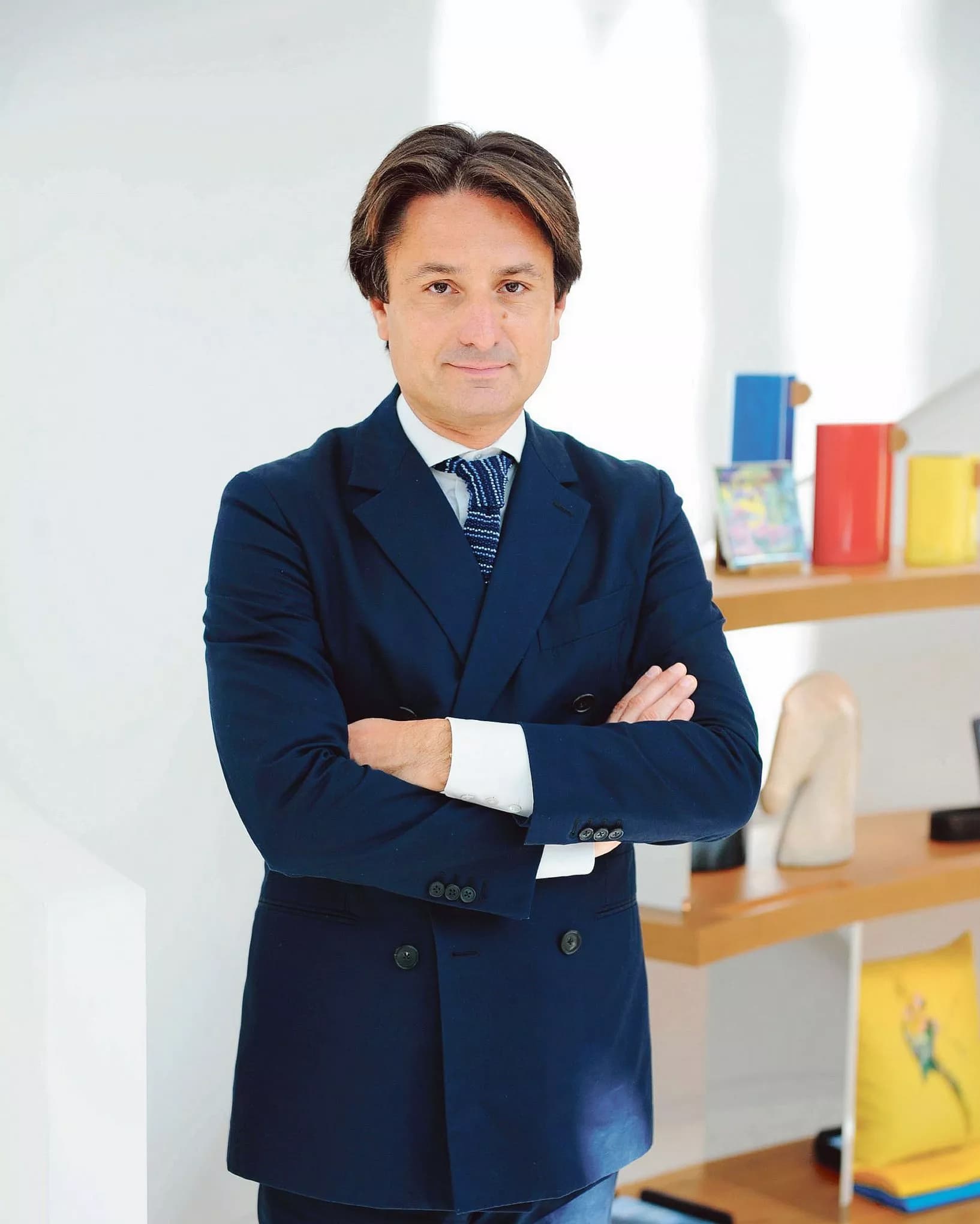
There are moments in the industry when a CEO is reacting to the market. And then there are moments when a CEO is quietly reframing it.
At Hermès’ annual meeting in Paris, Axel Dumas did something closer to the latter.
He didn’t downplay the volatility shaping the global landscape. He named it. He defined it. And then, rather calmly, he positioned Hermès within it.
“We’re living in a VUCA world,” he said, invoking the now-familiar acronym for a global environment that is volatile, uncertain, complex, and ambiguous. But the more interesting point wasn’t the diagnosis. It was the implication. For Hermès, this is not a temporary disruption to navigate. It is the new baseline.
And that subtle shift in framing changes everything.
A Model Built for Instability, Not Scale
What becomes clear, both in Dumas’ remarks and in the presentation itself, is that Hermès is not trying to outmaneuver volatility. It is designed to absorb it.
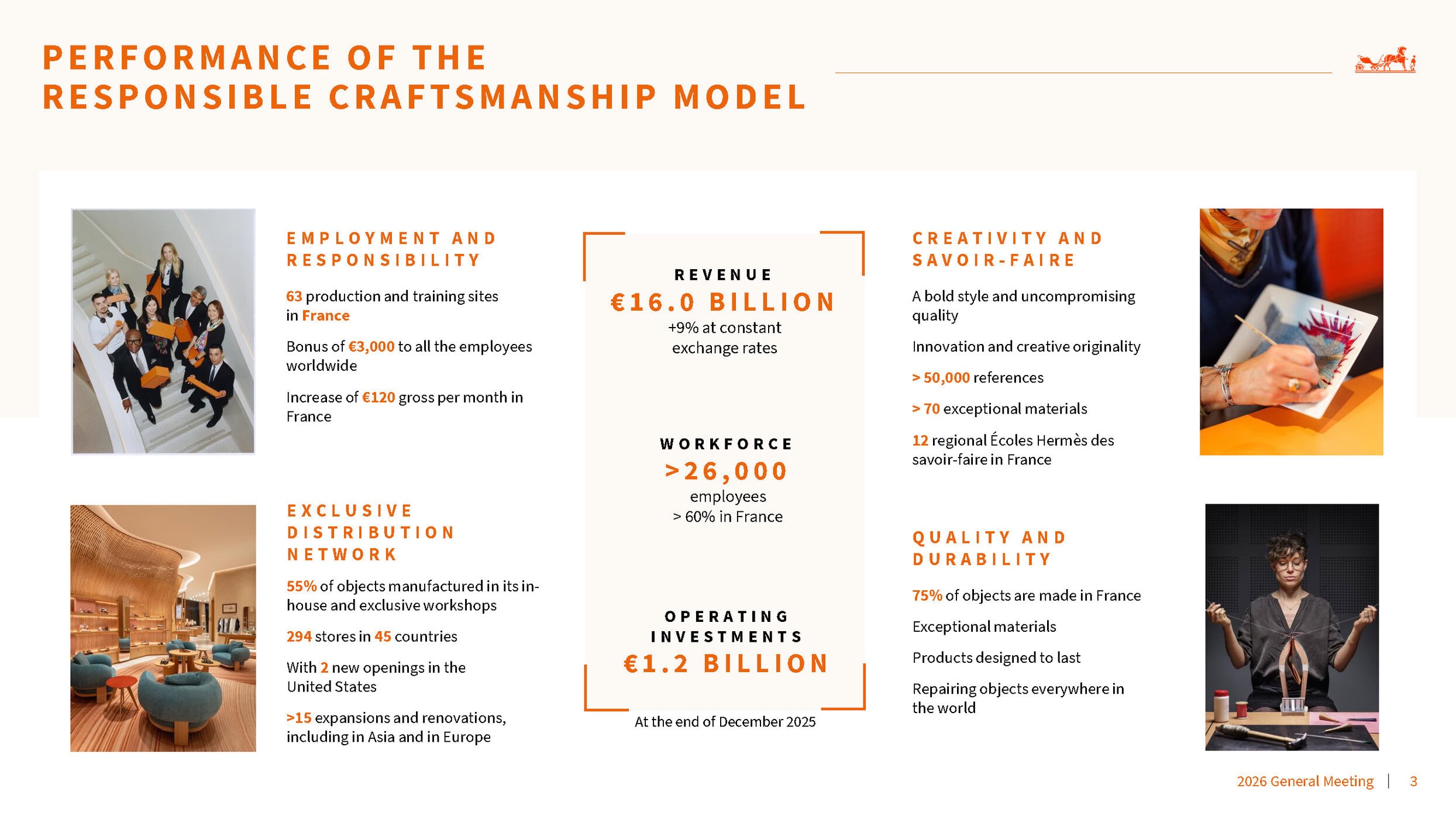
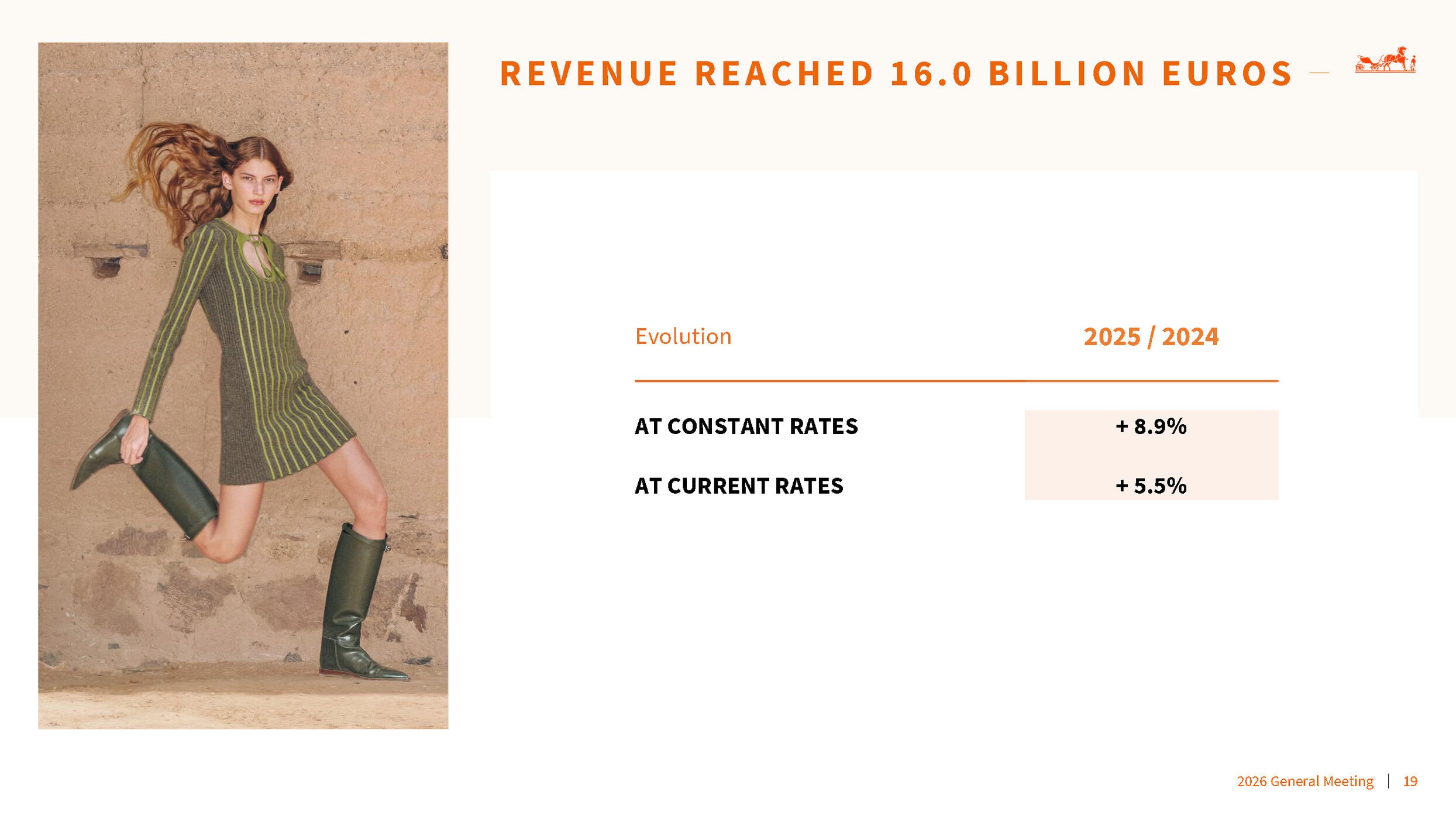
The numbers support that idea. The group closed 2025 with €16 billion in revenue, up nearly 9 percent at constant exchange rates, with growth distributed across regions rather than concentrated in any single market . The Americas, Japan, and Europe all posted strong gains, while Asia continued to normalize rather than collapse .
But the more revealing detail is structural.
Seventy-five percent of products are made in France. More than half are produced in Hermès’ own workshops. And the company continues to invest heavily in production capacity, with new leather goods workshops opening and several more planned through 2030 .
This is not a model built for speed. It is a model built for control.
In a world where demand is increasingly unpredictable, Hermès has chosen to control what it can: production, distribution, and pace.
The Shift From GDP to Wealth
One of the most telling insights from Dumas’ remarks was not about Hermès at all, but about how luxury demand itself has evolved.
For decades, GDP growth was the industry’s north star. When economies expanded, luxury followed. That relationship, he suggested, has fundamentally changed.
Today, demand tracks wealth, not income.
Stock markets. Real estate. Asset valuations. These have become the leading indicators of luxury consumption. And that shift helps explain much of what the industry has struggled to interpret over the past two years.
China is the clearest example. As property values softened, so did consumer confidence. Not because incomes disappeared, but because perceived wealth did.
It is a more psychological, more reactive model of demand. And it is inherently less predictable.
Hermès, perhaps more than most, appears comfortable with that reality.
Growth Without Dependence
If the last decade of luxury was defined by geographic concentration, this next phase is shaping up to be something else entirely.
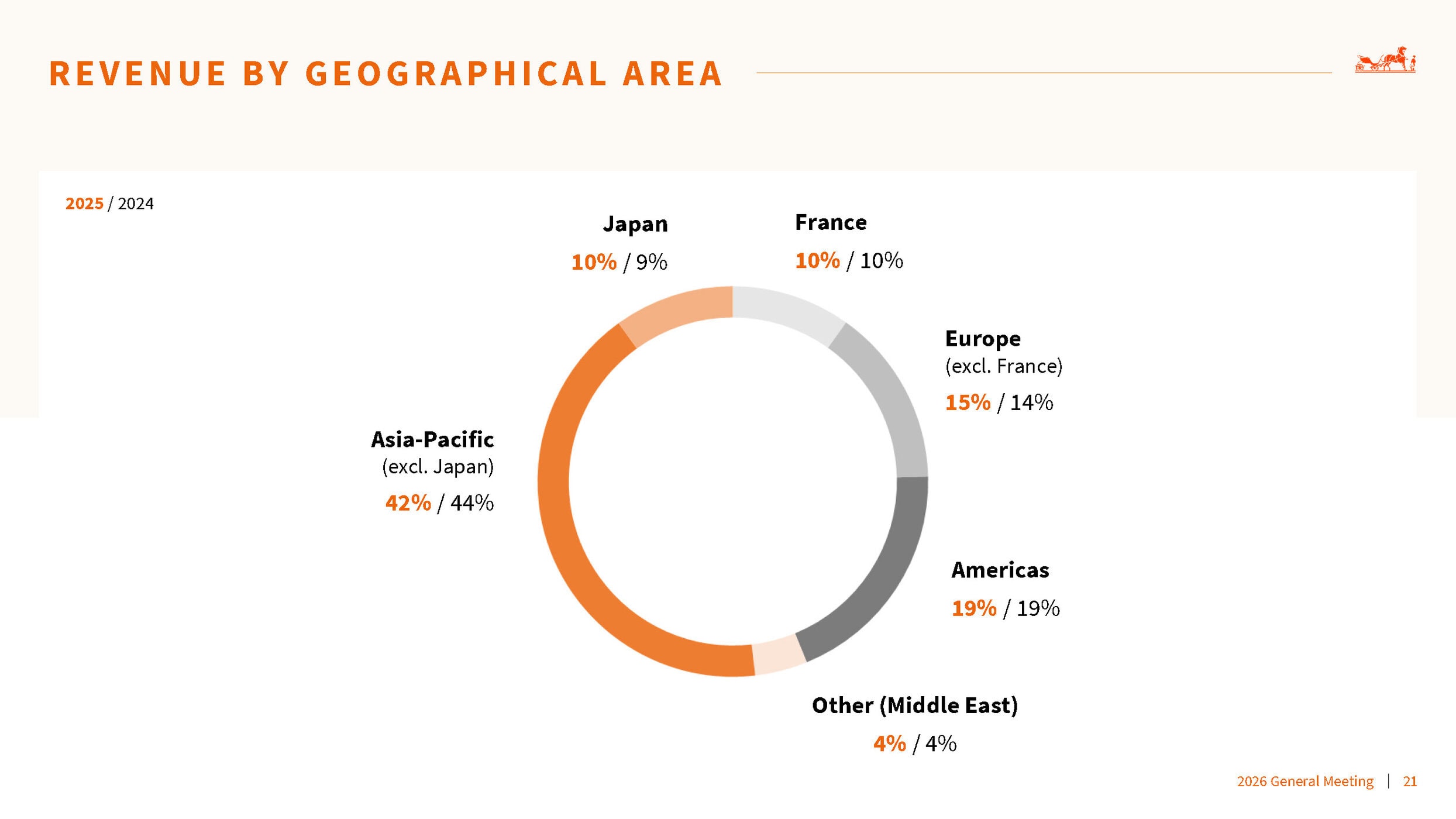
The Hermès presentation outlines a business that is intentionally diversified, both geographically and structurally. Asia still represents the largest share of revenue at 42 percent, but the Americas now contribute 19 percent, Europe 25 percent combined, and Japan continues to grow steadily .
This balance matters.
It means no single region is carrying the business. It also means no single disruption can meaningfully derail it.
Even in the Middle East, where geopolitical tensions disrupted March trading and reduced traffic across travel retail, the impact remained contained. The region accounts for roughly 4 percent of revenue, enough to matter, but not enough to define the quarter .
The effect is subtle but powerful. Hermès is not chasing growth in any one place. It is building a system where growth can come from many.
Production as Strategy
Perhaps the most underappreciated part of the Hermès story is that its growth is not driven by demand alone. It is governed by production.
Leather goods and saddlery, the core of the business, grew 13 percent last year, supported not by aggressive expansion, but by incremental increases in capacity .
That distinction matters.
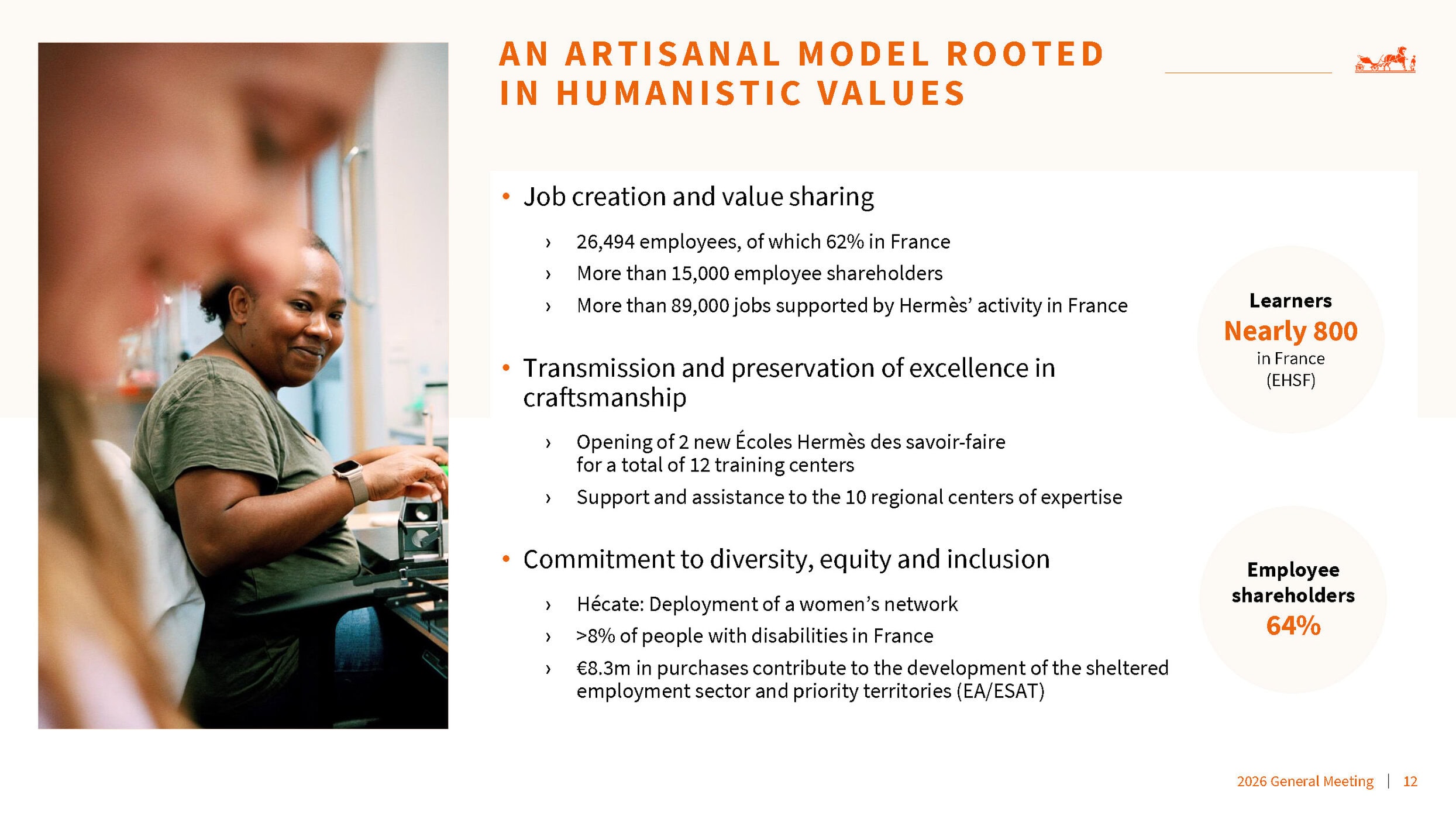
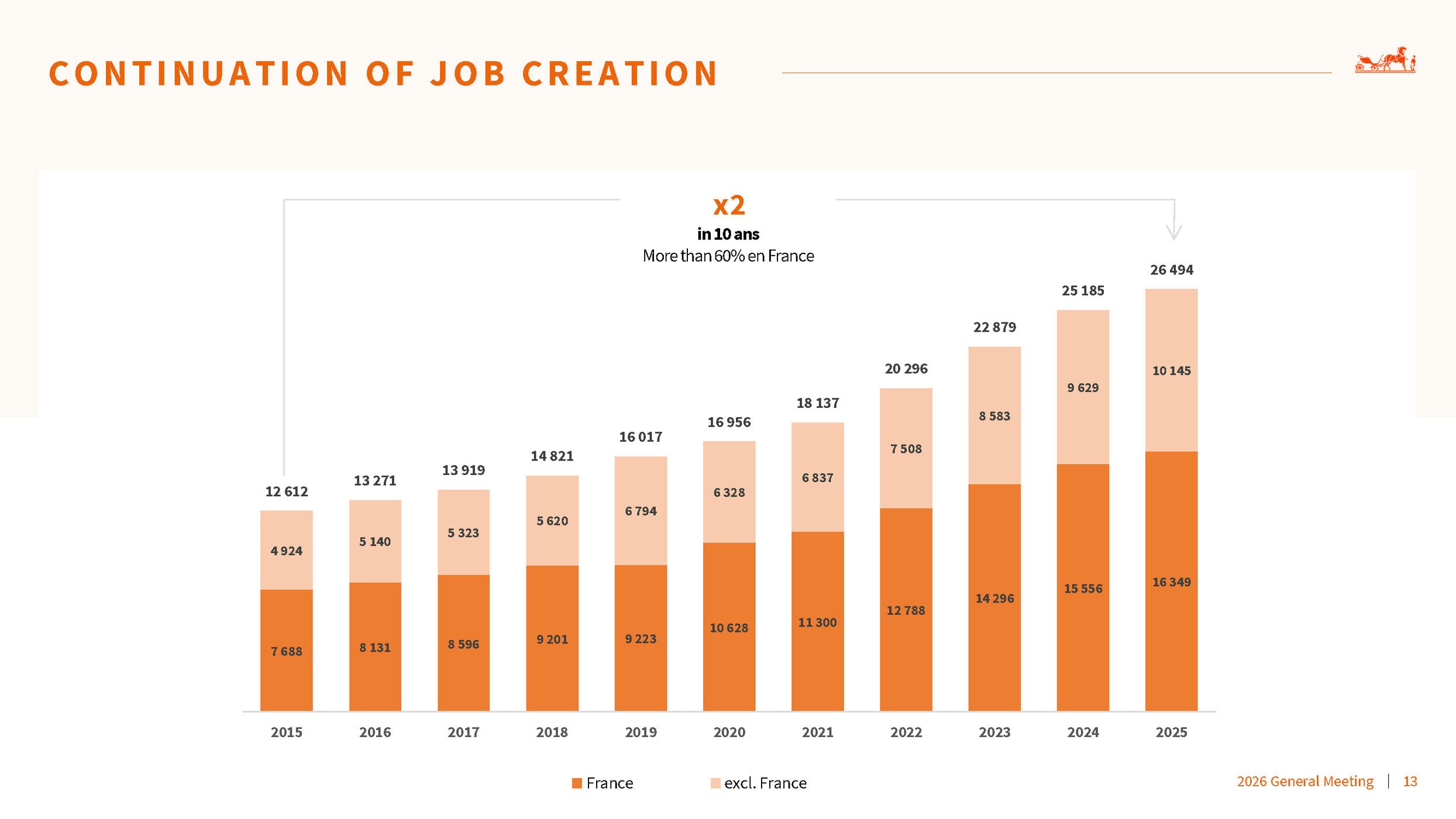
Where much of the industry scaled quickly and then recalibrated, Hermès continues to expand at a pace dictated by craftsmanship, training, and infrastructure. The company now operates 63 production and training sites in France and continues to invest in new workshops, new skills, and long-term supply security .
Even its approach to product development reflects this mindset.
“We want to create other bags, not just the Kelly and the Constance,” the finance team noted recently. Not through seasonal reinvention, but through a slower process of testing, iteration, and eventual adoption.
It is not innovation as spectacle. It is innovation as discipline.
Expansion, Carefully Considered
Geographically, Hermès remains selective, but quietly opportunistic.
Saudi Arabia is under active consideration, not as a reaction to competitors, but as a reflection of evolving regulatory frameworks that now allow more direct operations. The demand is already there. The question is timing, structure, and the right partner.
India, by contrast, remains a longer-term proposition. The clientele exists, but infrastructure, tariffs, and local dynamics complicate immediate expansion.
Africa sits further out still, constrained less by demand than by the absence of a sufficiently developed local ecosystem.
This is not hesitation. It is sequencing.
Hermès does not enter markets to test them. It enters when the conditions support its model.
Marketing Without Marketing
One of the more quietly revealing comments from Dumas was about marketing.
“Our first marketing tool is the price of the product,” he said.
It is a statement that would sound provocative anywhere else. At Hermès, it reads as a reminder.
The brand does not rely on volume to justify price. It relies on product to justify both.
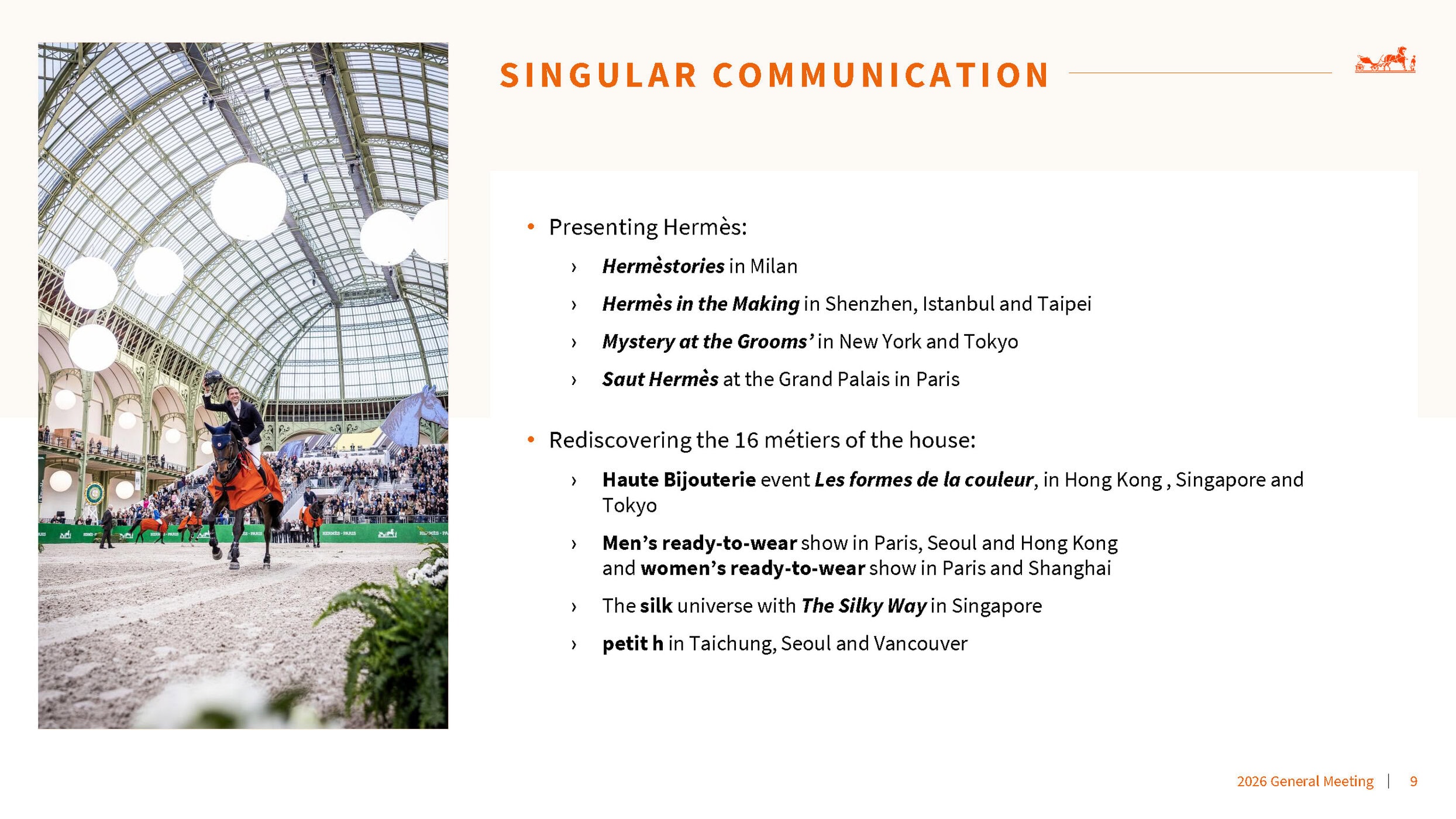
This is reflected in the numbers. Communication expenses represent less than 4 percent of revenue, far below industry norms . Instead, the company invests in product, experience, and what it calls “singular communication,” a mix of exhibitions, cultural events, and immersive storytelling that reinforces the brand without overexposing it .
It is a quieter form of visibility. But in a saturated landscape, it may also be a more effective one.
What This Really Signals
What Hermès is demonstrating right now is not just resilience. It is a different philosophy of growth.
In a market that has become more reactive, more fragmented, and more sensitive to external shocks, the company is leaning further into what it has always been.
More control, not more speed.
More structure, not more scale.
More consistency, not more noise.
Dumas spoke about chaos as the new normal. The deeper takeaway is that Hermès does not appear particularly interested in normal at all.
It is building something else entirely.