From Store Closures To Sku Cuts, The Group’s Turnaround Is Being Built Through Discipline, Not Reinvention
By Kenneth Richard
Kering did not arrive in Florence to talk about vision. Under CEO Luca de Meo, it came to reset the business.
Beneath the language of “ReconKering,” the Group’s Capital Markets Day revealed something more grounded and more revealing: a set of seven operational moves designed to rebuild the business from the inside out. Not positioning, not messaging, but structure.
At the center of it all was a line that quietly reframed the entire strategy:
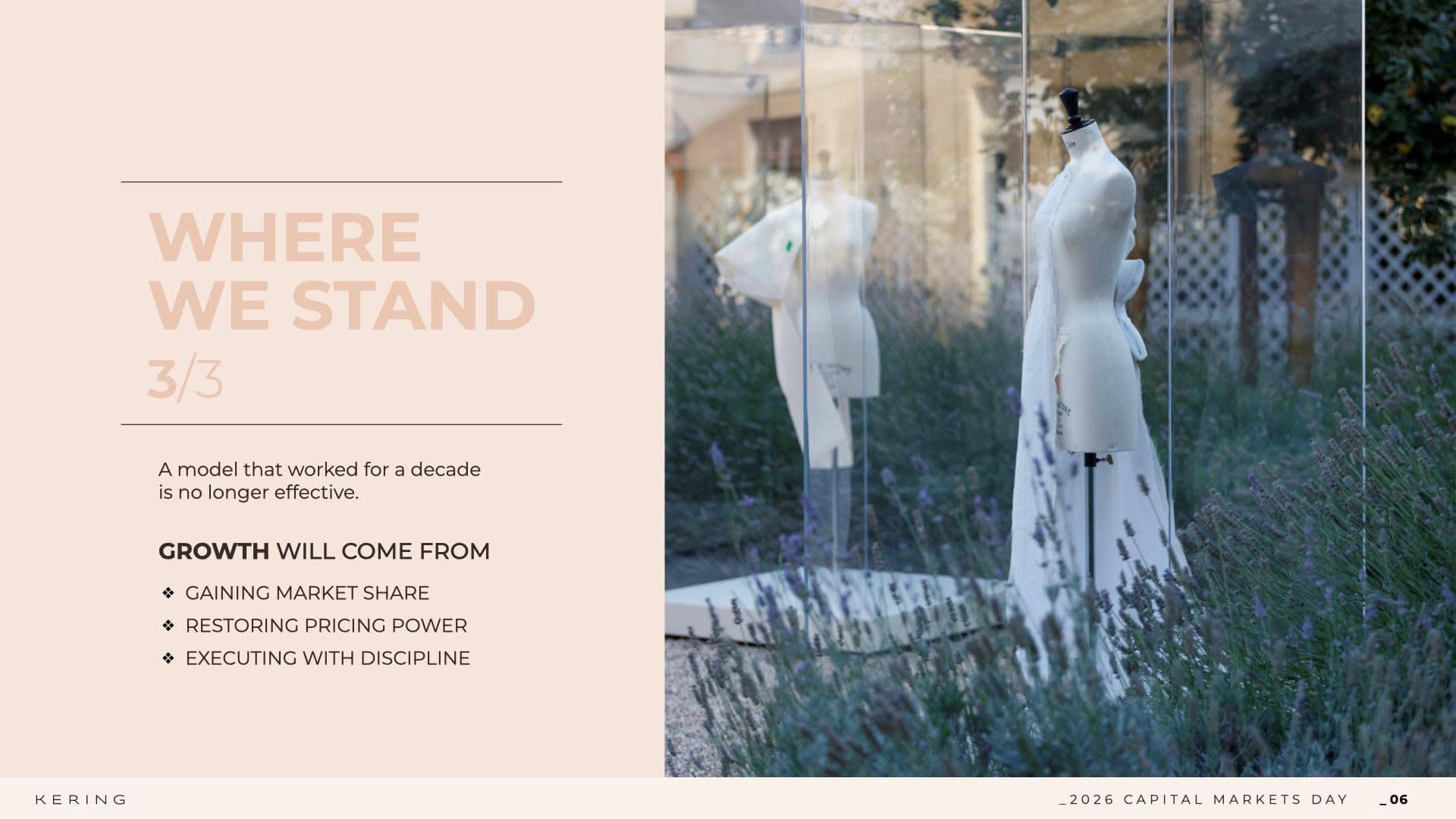
“A model that worked for a decade is no longer effective.”
It is a rare thing for a luxury group to say so plainly. And it explains why what followed felt less like a relaunch and more like a reset.
This Is About Control, Not Creativity
The seven moves outlined by Kering are striking in what they prioritize. They are not centered on design direction or brand storytelling. Instead, they focus on organization, inventory, pricing, retail footprint, and execution.
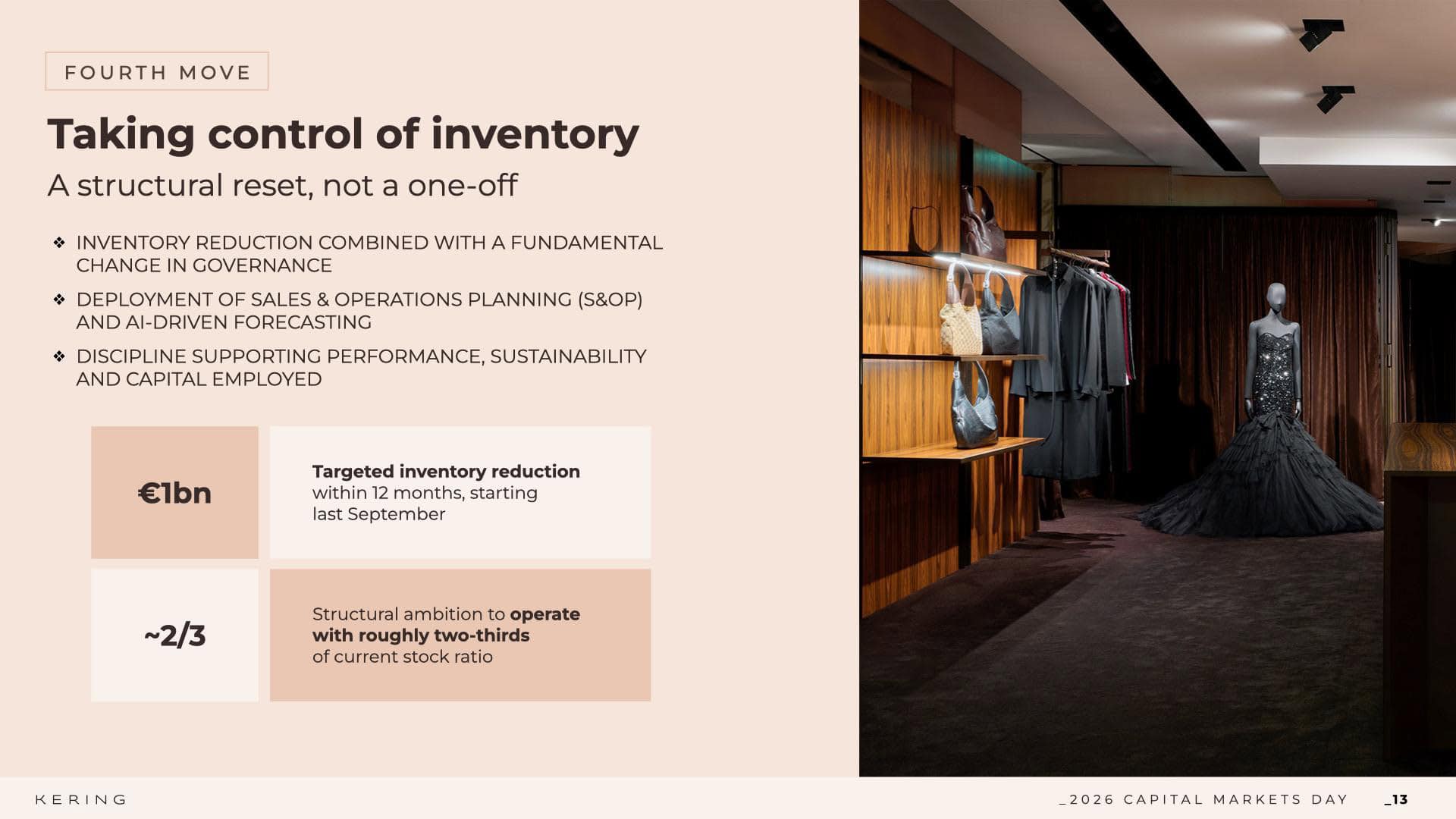
Simplifying the organization. Taking control of inventory. Rebuilding pricing structures. Strengthening marketing efficiency.
These are not creative decisions. They are operational ones.
That distinction matters. For much of the past decade, luxury growth was driven by visibility and momentum. Collections created demand, and demand justified expansion. The system worked, until it didn’t.
What Kering is signaling now is that growth will need to be managed more tightly. It will require a business that is more predictable, more disciplined, and less dependent on constant acceleration. The shift is subtle in language, but significant in implication. Control is replacing instinct as the primary driver.
The Scale of the Reset Is Bigger Than It Sounds
At a glance, the strategy reads like a series of measured adjustments. Look closer, and the scope becomes clearer.
More than 100 stores are expected to close. Two-thirds of the remaining network will be renovated. Inventory is being structurally reduced. At Gucci, SKU counts have already been cut by roughly 20 percent. Pricing architecture is being rebuilt from the ground up.
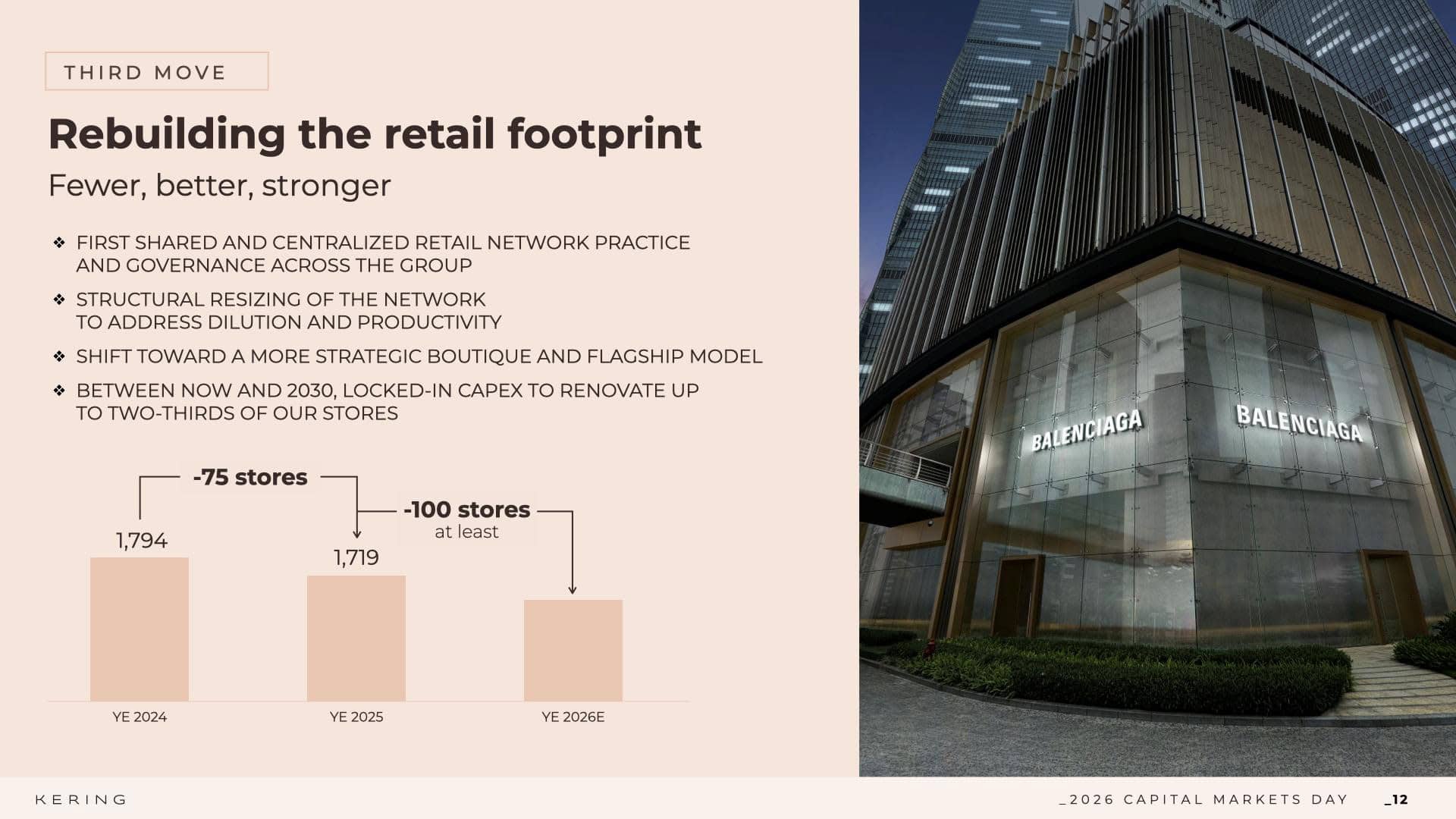
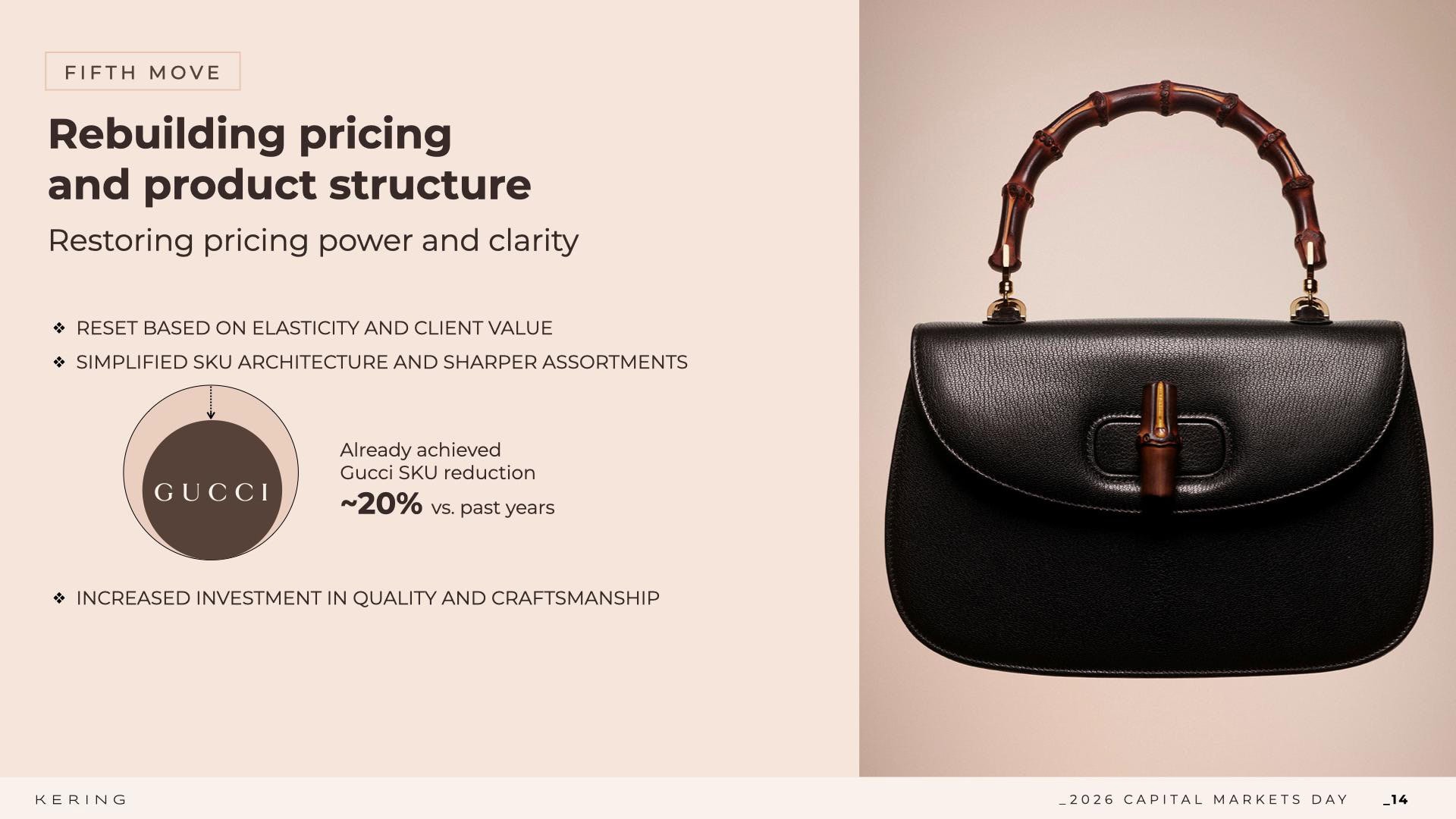
These are not refinements. They are structural changes.
Taken together, they amount to a rewiring of how the Group operates. Fewer products, fewer stores, tighter distribution, clearer positioning. It is a move away from scale for its own sake and toward a model built on productivity and precision.
That shift is not unique to Kering, but it is being executed here with unusual clarity. The Group is not simply adjusting to the market. It is acknowledging that the conditions that supported its previous growth no longer apply.
The Challenger Mindset Is Not Branding, It’s Positioning
Perhaps the most revealing element of the presentation was the language used to describe Kering itself.
The Group is positioning itself as a challenger.
On one level, it is a rhetorical shift. On another, it is a strategic one. For a company that once led the sector conversation, it signals a change in posture—from defending a position to rebuilding one.
The distinction is important. Leaders tend to protect what they have built. Challengers focus on what needs to change.
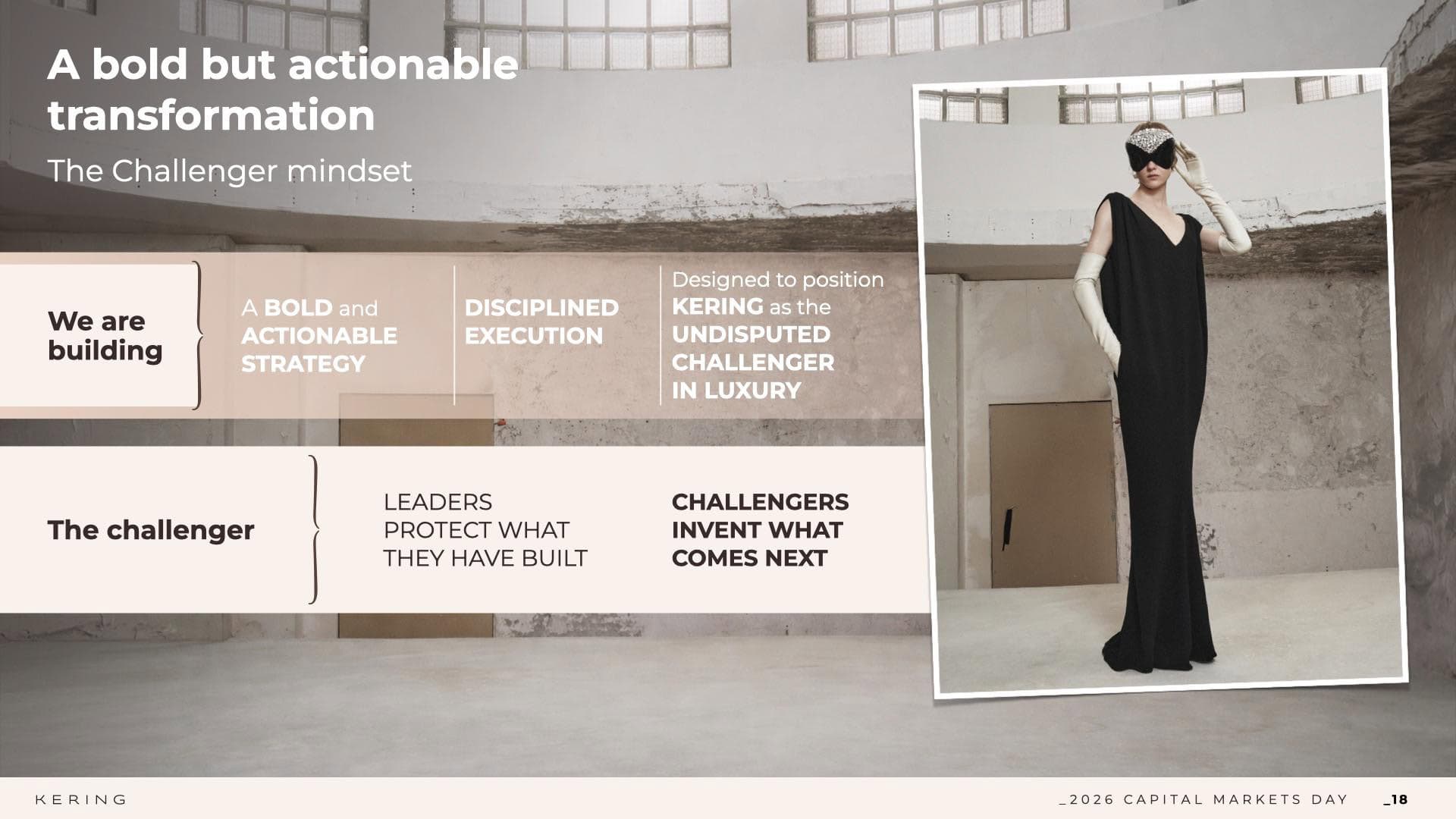
By adopting that mindset, Kering creates space for a different kind of decision-making. It allows for consolidation where there was expansion, for discipline where there was excess, and for patience where there was urgency.
It also reflects the reality of the moment. The Group is not operating from a position of strength. It is working to regain one.
The Seven Moves, Reframed
Seen through that lens, the seven moves are less a checklist and more a system.
Simplifying the organization reduces friction and accelerates decision-making. Strengthening the balance sheet creates the flexibility required for a longer recovery. Rebuilding the retail network shifts focus from presence to performance. Taking control of inventory stabilizes margins and protects brand equity. Reworking pricing and product structure restores clarity. Improving marketing productivity increases efficiency. And creating the conditions to reboot Gucci aligns all of these efforts around the Group’s most critical asset.
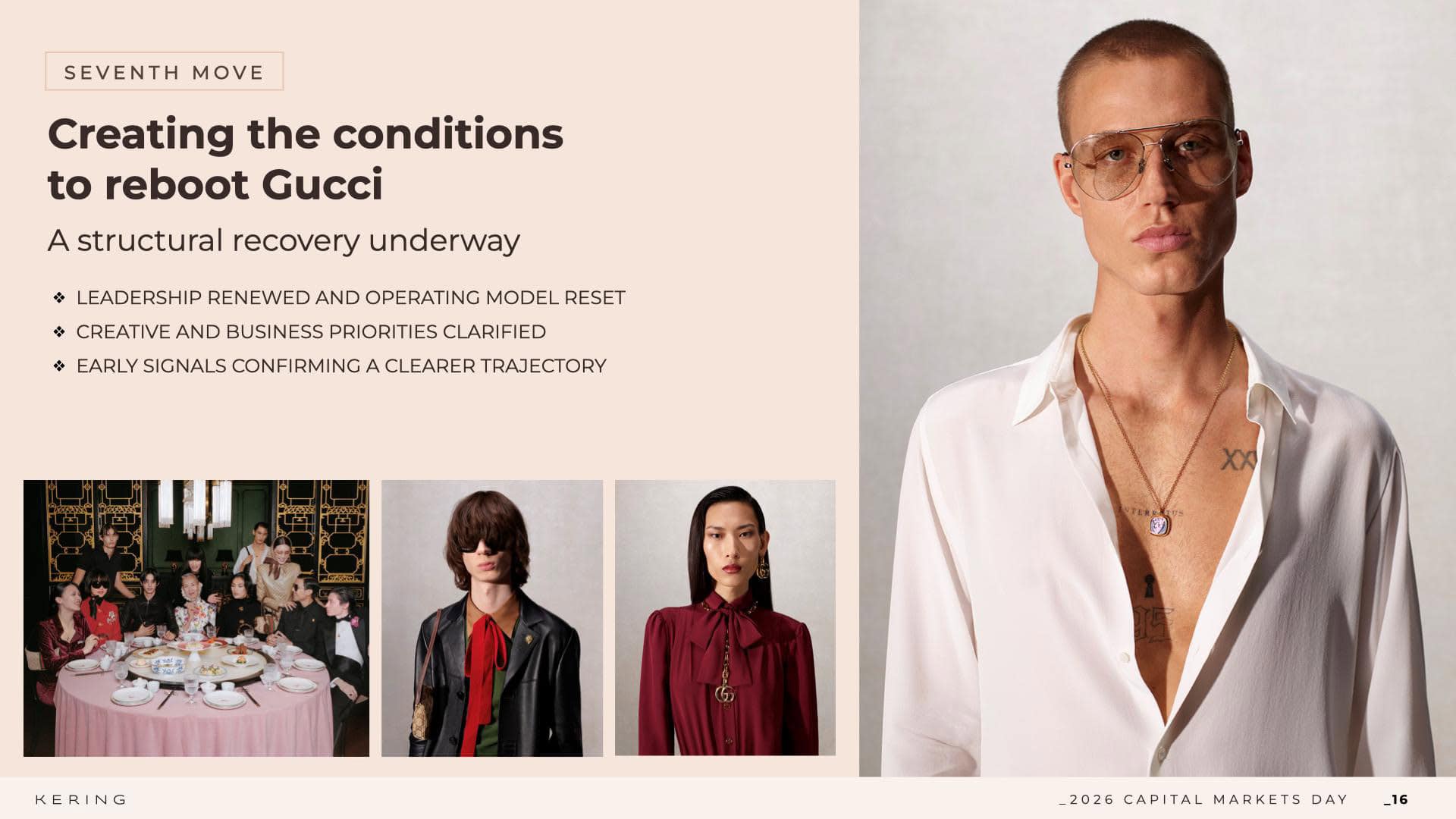
Individually, each move addresses a specific weakness. Together, they form a coordinated attempt to bring the business back under control.
What This Really Means
What Kering presented in Florence is not a reinvention of luxury, nor is it a sudden pivot toward something entirely new. It is a recognition that the environment has changed, and that the way the business was being run no longer matches the conditions it now faces. Growth has become harder to sustain, consumers more selective, and the margin for error significantly smaller. In that context, the emphasis shifts away from expansion and toward precision. The focus is no longer on how quickly a brand can grow, but on how consistently it can perform. That requires fewer variables, clearer decisions, and a model that can absorb volatility without losing direction. Kering’s response is to build that model deliberately, step by step, across every part of the organization. It is a quieter strategy than what the industry has grown accustomed to, but also a more structural one. The success of this reset will not be determined by the clarity of the plan, but by how effectively it is executed over time, and whether discipline can translate into renewed demand.
Kering’s reset is not about chasing the next cycle of growth. It is about building a business that can sustain one.
That may be the more difficult path. It is also the more necessary one.