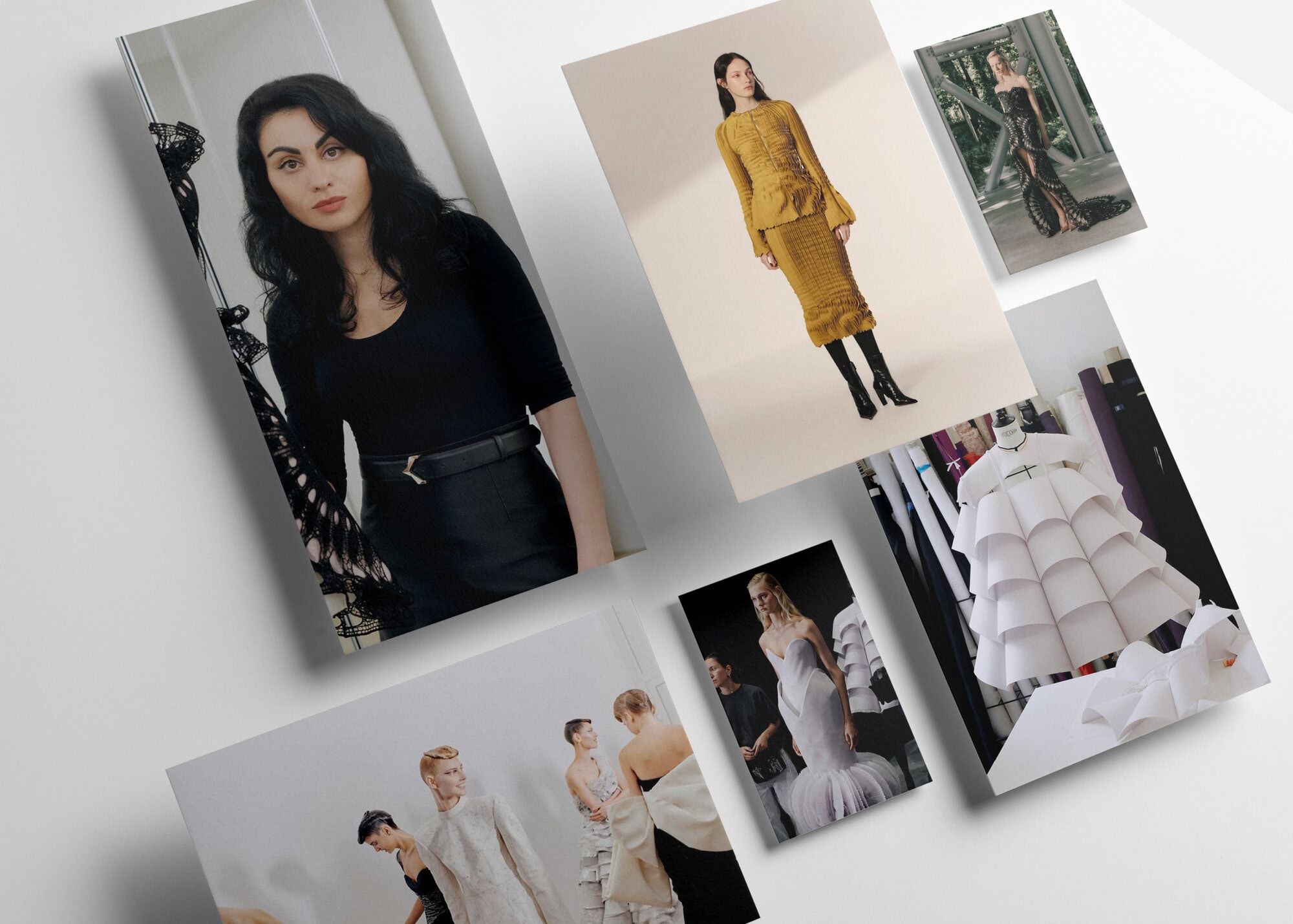
From folded seas to architectural knitwear, the ArdAzAei founder reflects on craft, conviction, and creating luxury on her own terms
By Mackenzie Richard
The first thing Bahareh Ardakani mentions when discussing her latest couture work is the ocean.
Not as metaphor, but as structure.
“The ocean, because the couture was all about the folded sea,” she explains. “I was looking into, for example, sea urchins. They have this beautiful mathematical structure, but they’re also protecting our oceans.”
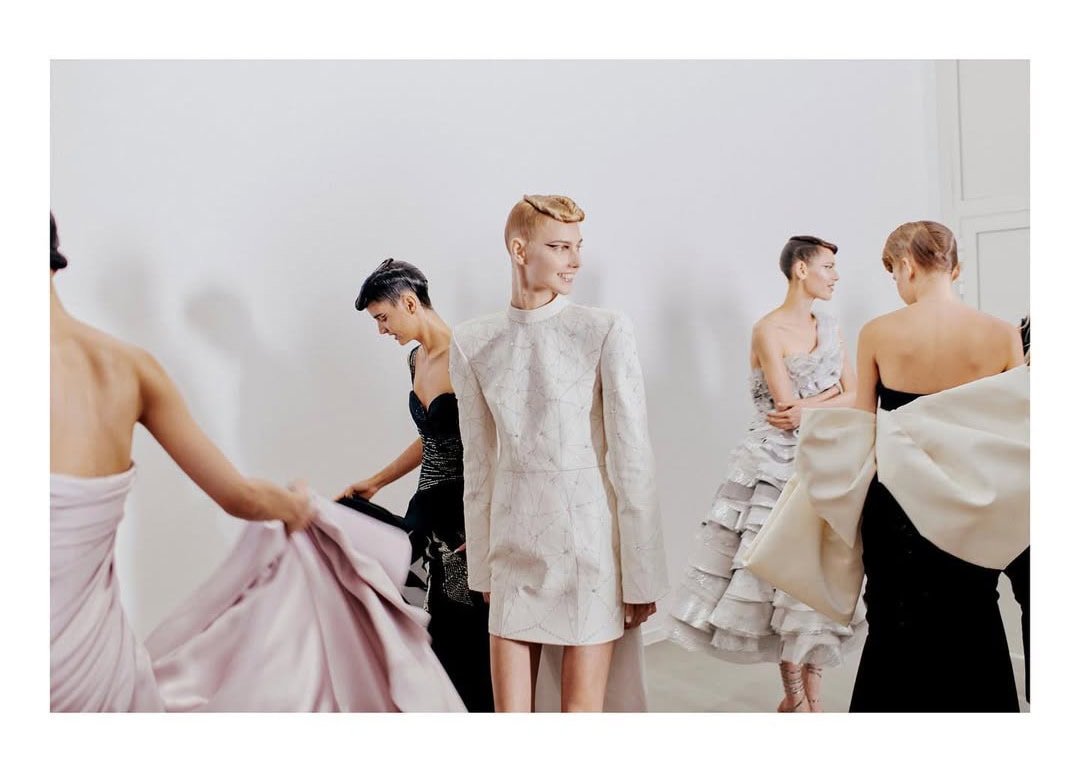
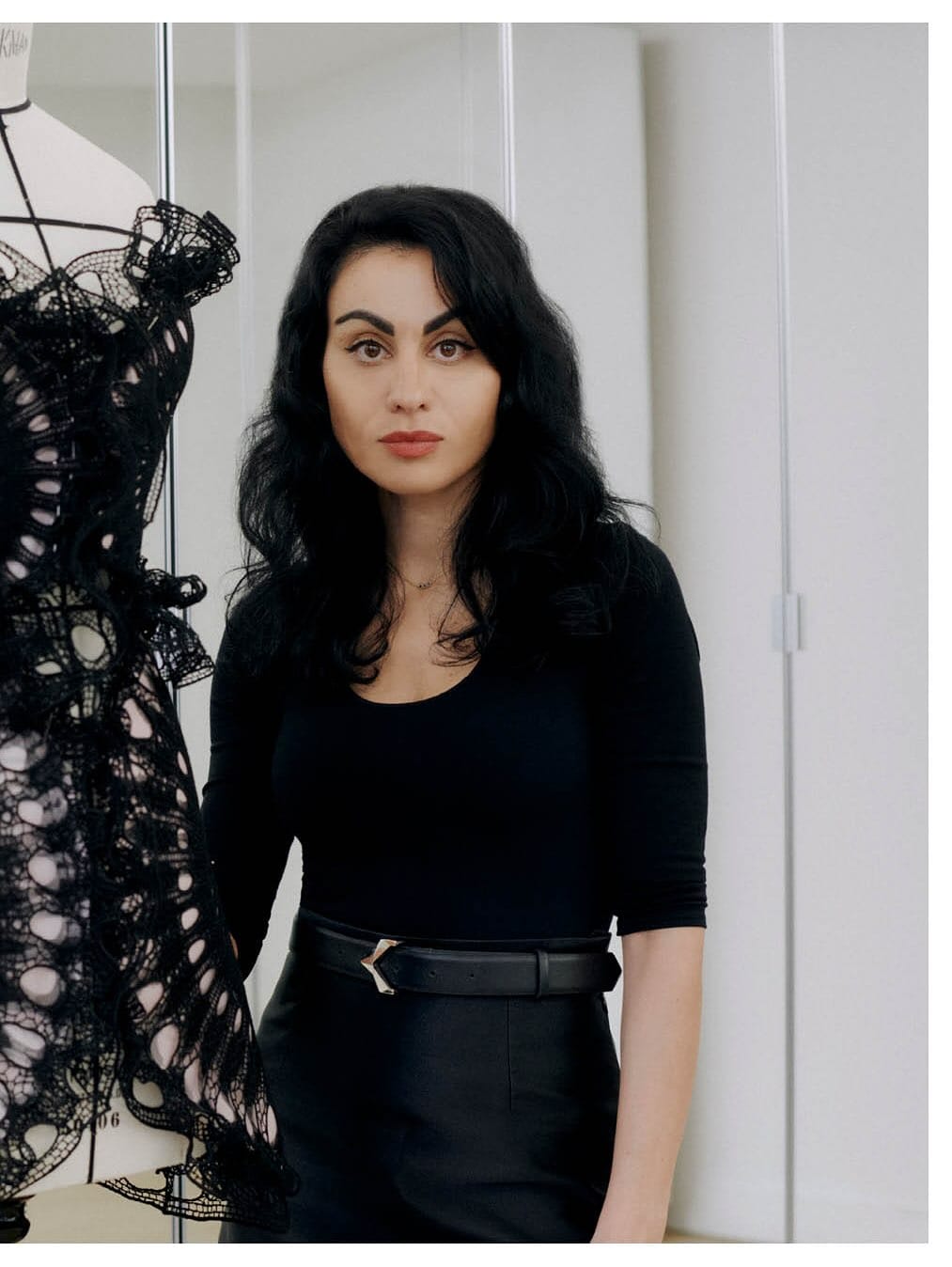
This duality — poetry and logic, nature and engineering — sits at the heart of ArdAzAei Atelier, the Paris-based house she founded with a vision of luxury built not on spectacle, but on precision. Her references move easily from marine life to mathematics, from gemstone cuts to architectural seams. It is perhaps unsurprising given her background: Ardakani entered fashion not through traditional ateliers but through engineering and gemology, disciplines that trained her eye to see form through systems and structure.
Yet what she produces is anything but mechanical.
Since day one I’ve always had this idea of how do you create quality in the right way. The organic part has always been very evident in my work.
That philosophy is becoming increasingly tangible as ArdAzAei expands. The atelier introduced ready-to-wear last year, adding seasonal collections alongside its couture practice. For Ardakani, the shift has required a recalibration of her creative instincts.
“I love it,” she says of the transition. “The process is of course kind of the same — you do the fittings — but it’s about simplifying. In ready-to-wear I really need to understand why I construct things in a certain way and how that falls on the body. You have to think about everyday situations.”
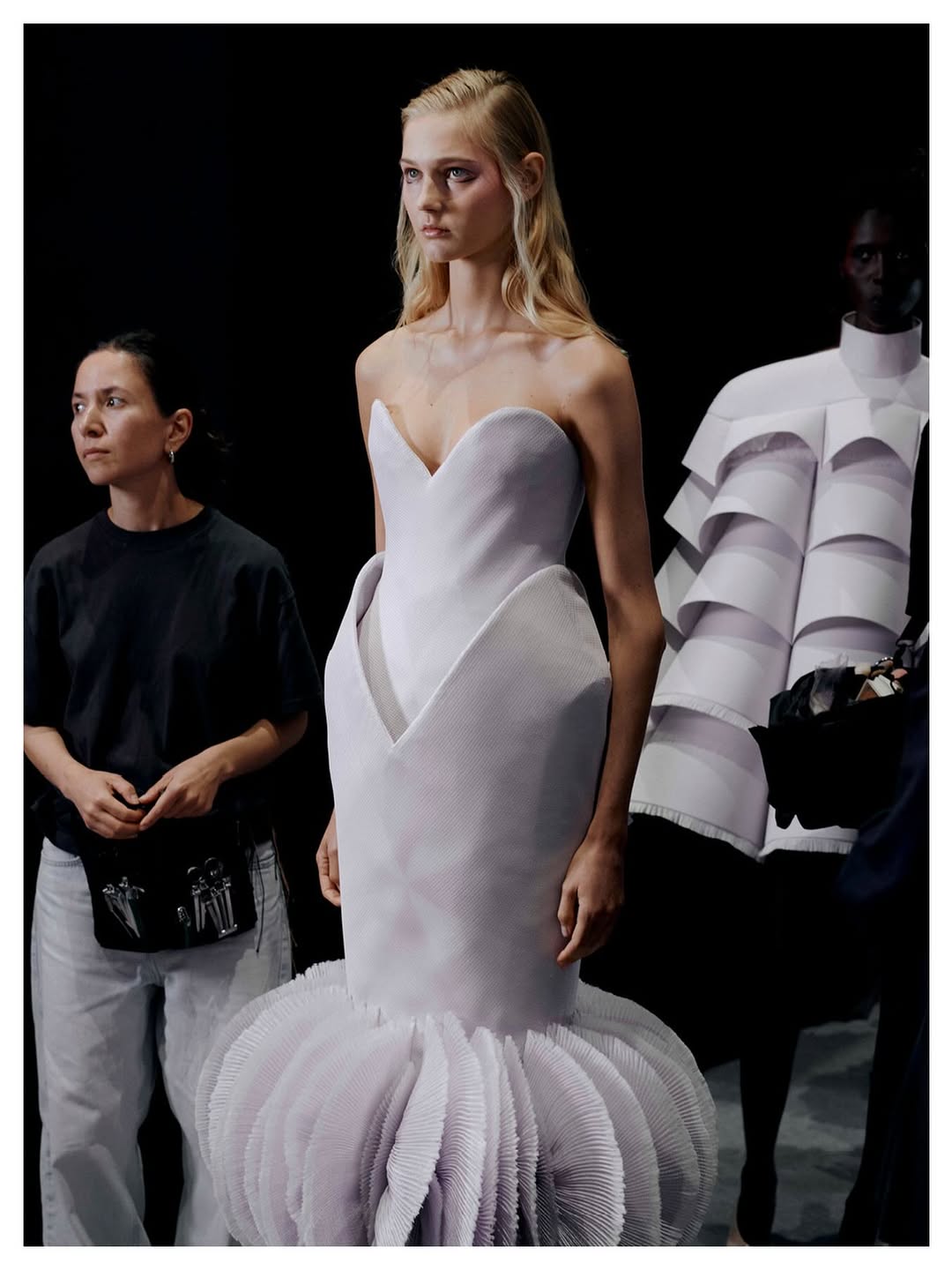
Couture, by contrast, remains a realm of pure possibility.
“Couture is a dream world where there’s no limits for what you can do,” she says. “Ready-to-wear is the reality.”
Still, the two are inseparable in her mind. The woman she once imagined in abstract terms — an idea expressed through couture volumes and experimental construction — is now becoming tangible.
“She’s been in my mind, but now she’s real,” Ardakani says. “She’s wearing the knitwear. She’s expressing this coolness with integrity. She loves quality and wants something she will cherish for a long time.”
That sense of permanence is central to ArdAzAei’s ethos. The atelier operates in a luxury landscape increasingly driven by scale and speed, yet Ardakani’s focus remains stubbornly, even deliberately, slow.
“My purpose is to stay true to myself,” she says. “That’s my biggest mission here — to not get carried away.”
Entering fashion without the traditional fashion-school pipeline gave her both freedom and perspective. She approached the industry as an outsider, exploring what her own version of luxury could look like.
“In the beginning it was like, I have to do it in my way,” she says. “And what is that way? It was an exploration. But today it’s more about sticking to the belief I have for quality.”
That belief extends well beyond aesthetics. Sustainability, for Ardakani, is not a marketing layer but a structural principle embedded in the materials and production processes themselves.
“I think the future of luxury is about the materials,” she says. “It’s about the seams. It’s about the making. But also the way we produce things.”
Her collections increasingly reflect that thinking. This season, half of the ready-to-wear collection will be certified organic — a milestone that required persistence, particularly in knitwear development.
“Last season I had quite difficulties with the knitwear to have it certified,” she says. “This season we managed, which is great.”
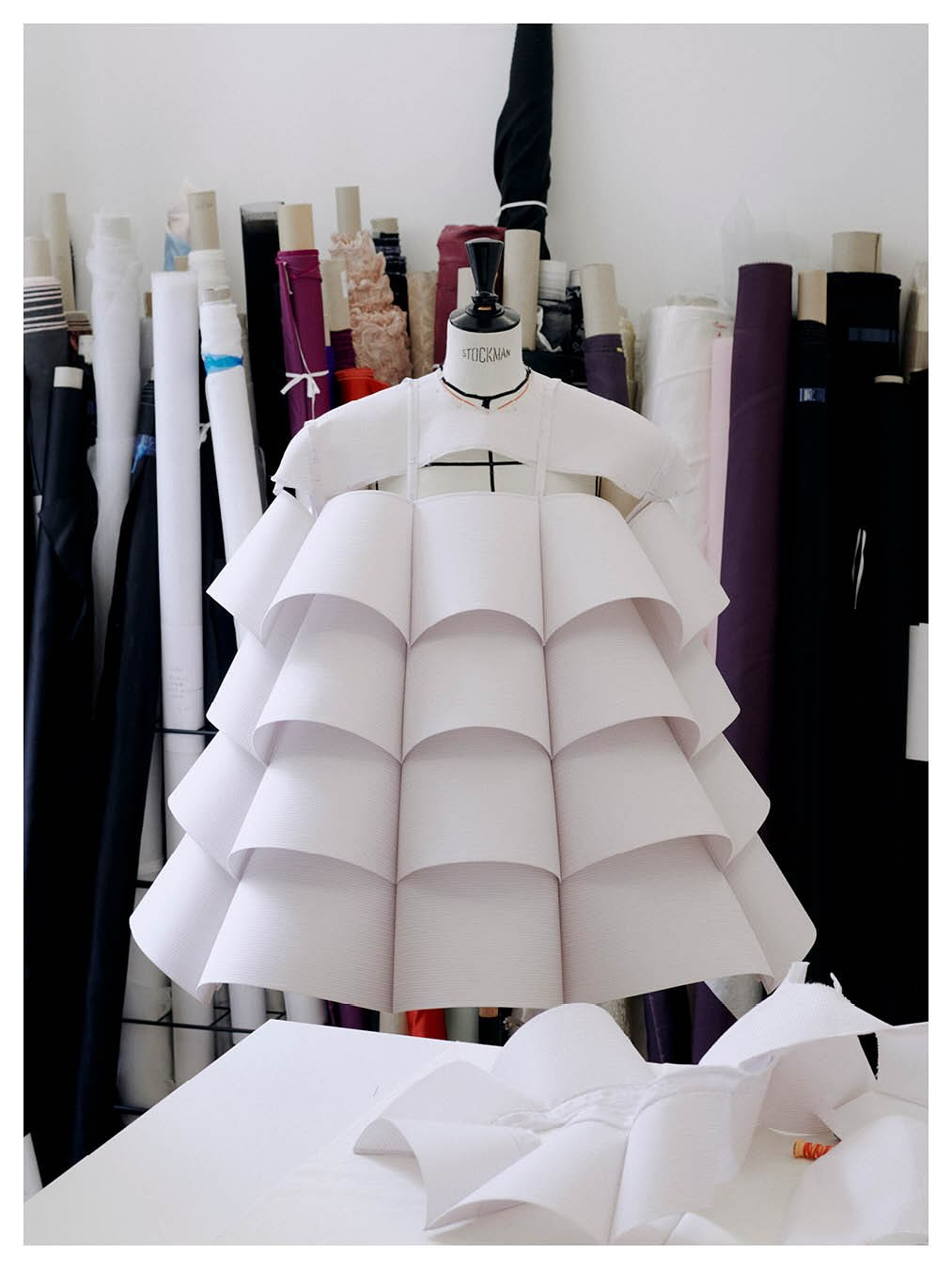
The garments themselves reflect Ardakani’s fascination with geometry and movement. Knitwear develops sculptural, almost architectural surfaces. Silk jersey dresses fold and pleat in multiple directions, gathering around the body in ways that appear spontaneous but are carefully engineered.
“It’s always this balancing of geometry,” she explains. “I love mathematics. It fascinates me.”
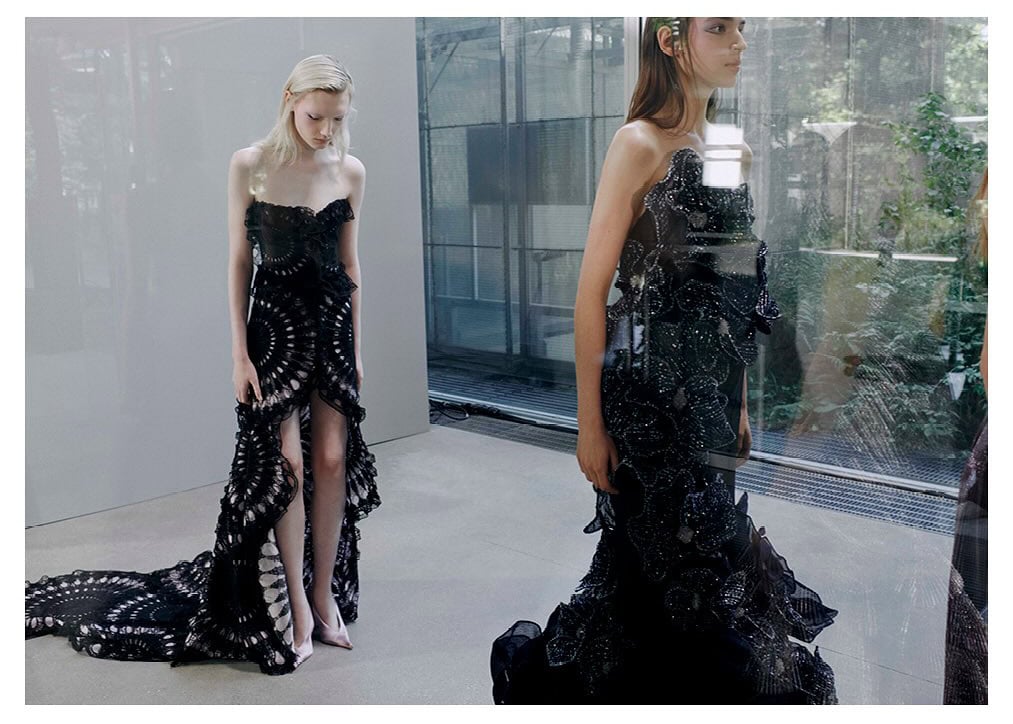
Her references move from gemstone cuts — the brand’s logo itself derived from a stone-cut geometry — to mathematical concepts such as manifolds. Patterns emerge from rotation, repetition, and structural logic, often inspired by nature’s own systems.
“Nature has a lot of repetition of patterns that is very interesting,” she says. “I always tend to go back to a kind of logical thinking — but then breaking that as well.”
That interplay between order and fluidity defines ArdAzAei’s aesthetic language. The garments are constructed with architectural precision yet softened through drape and movement, ensuring they never become overly rigid.
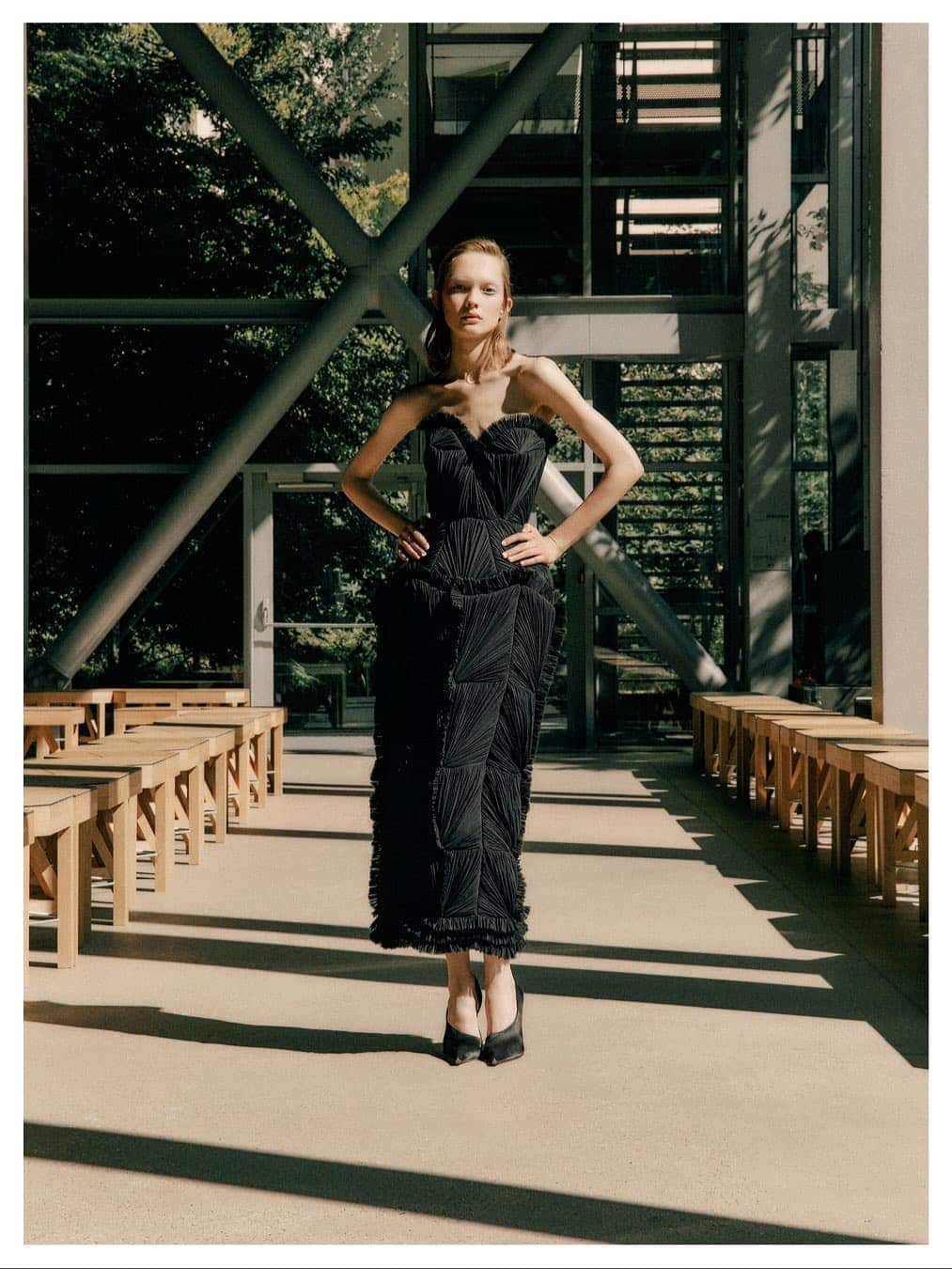
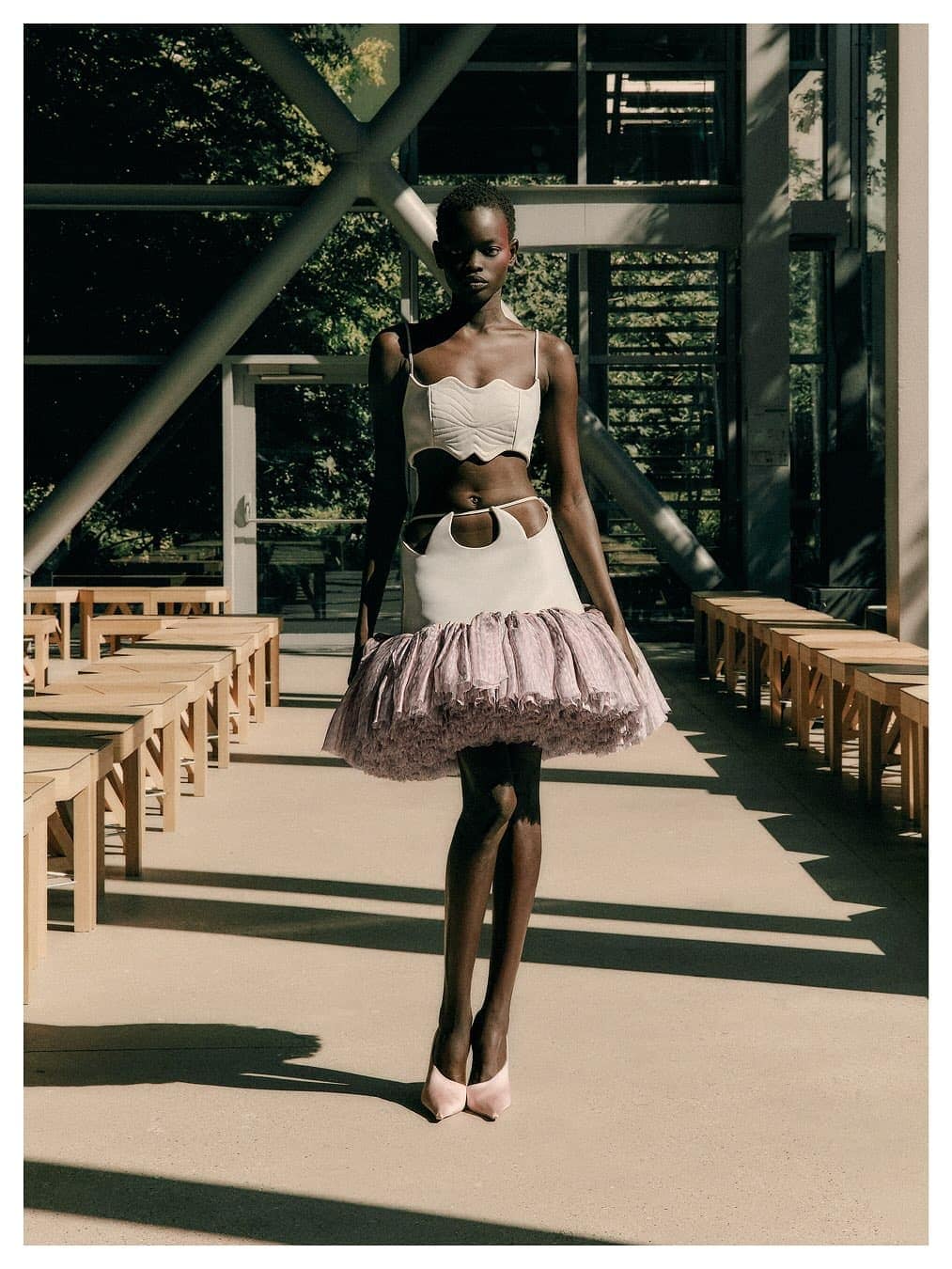
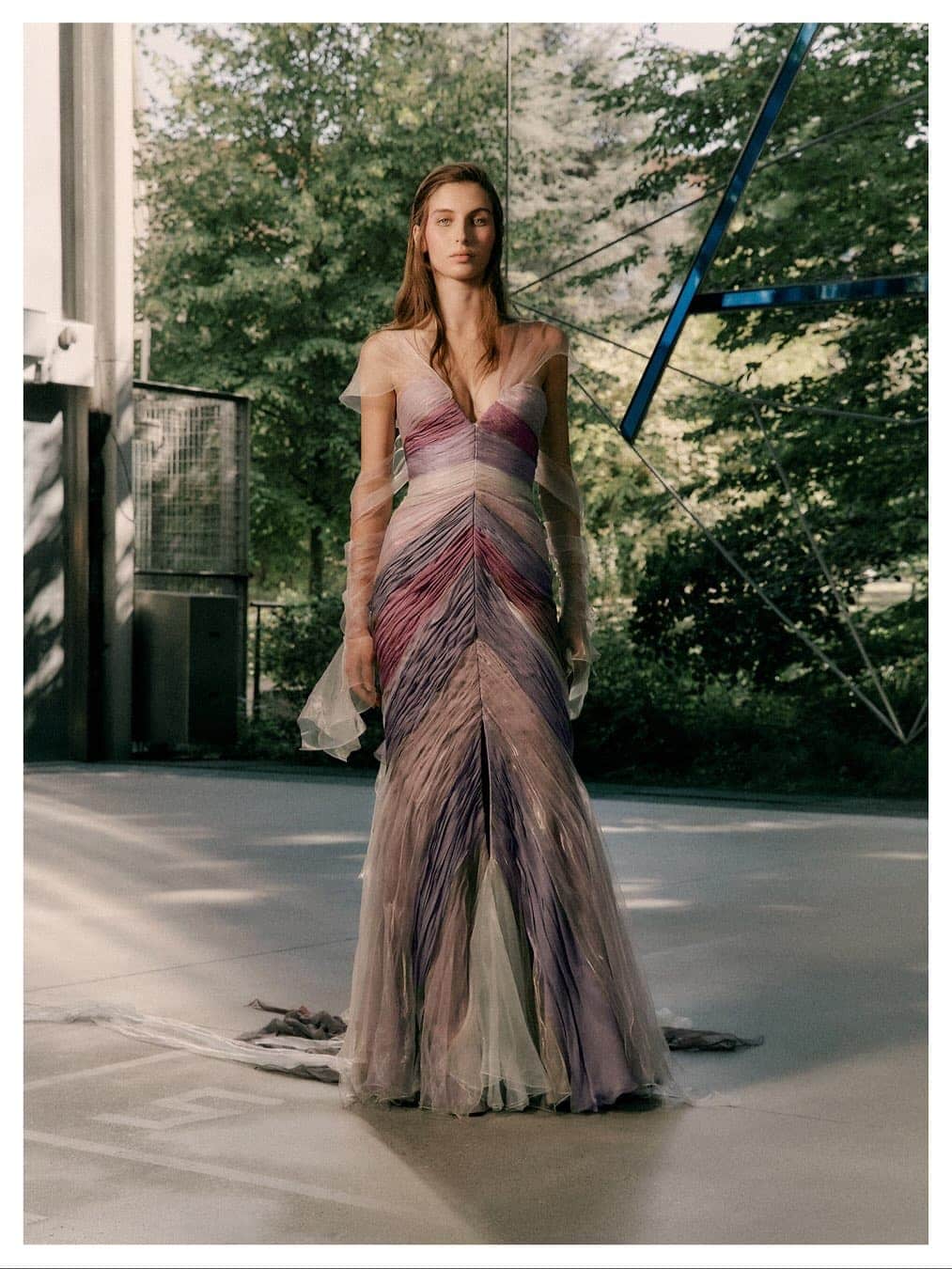
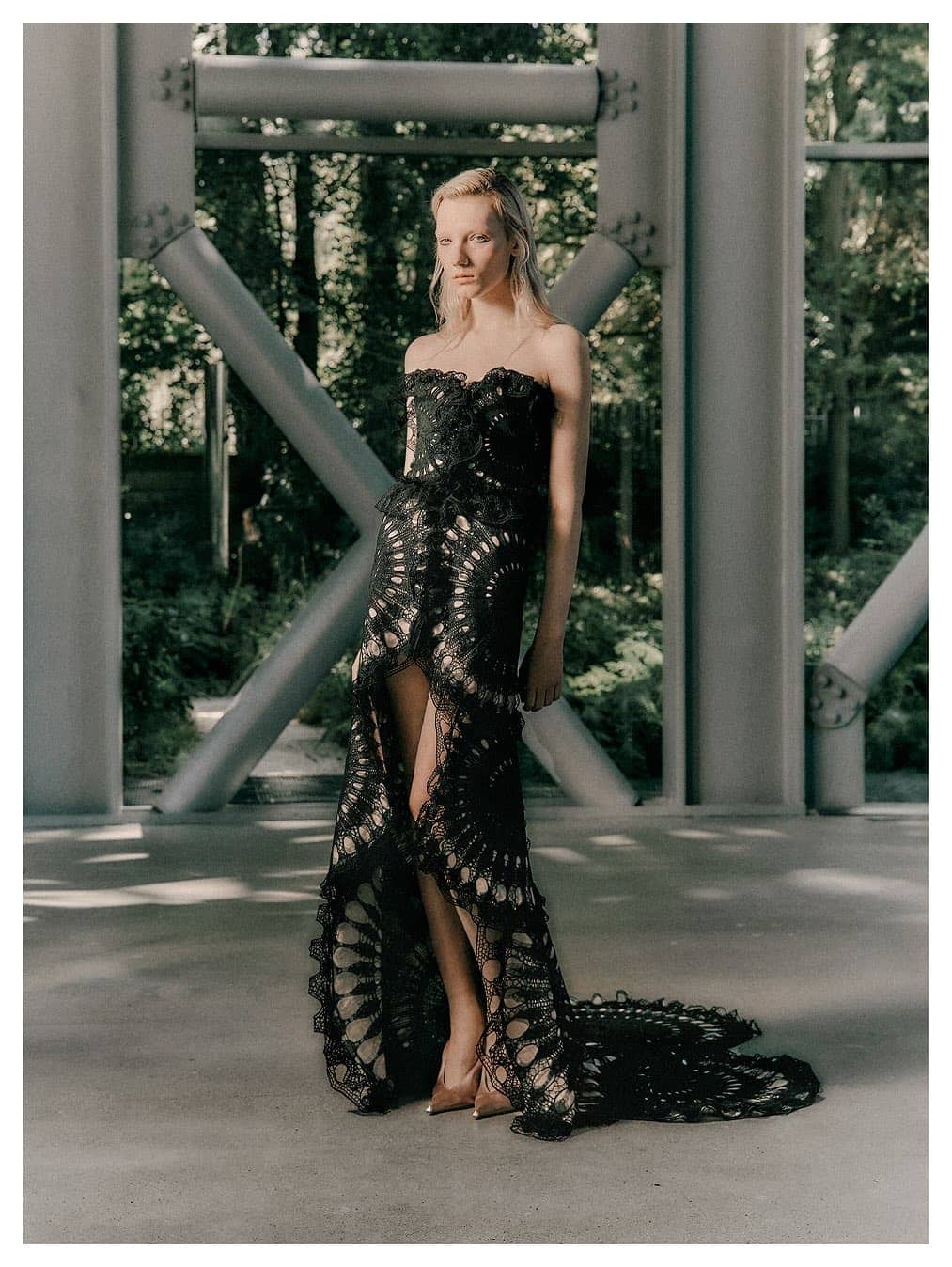
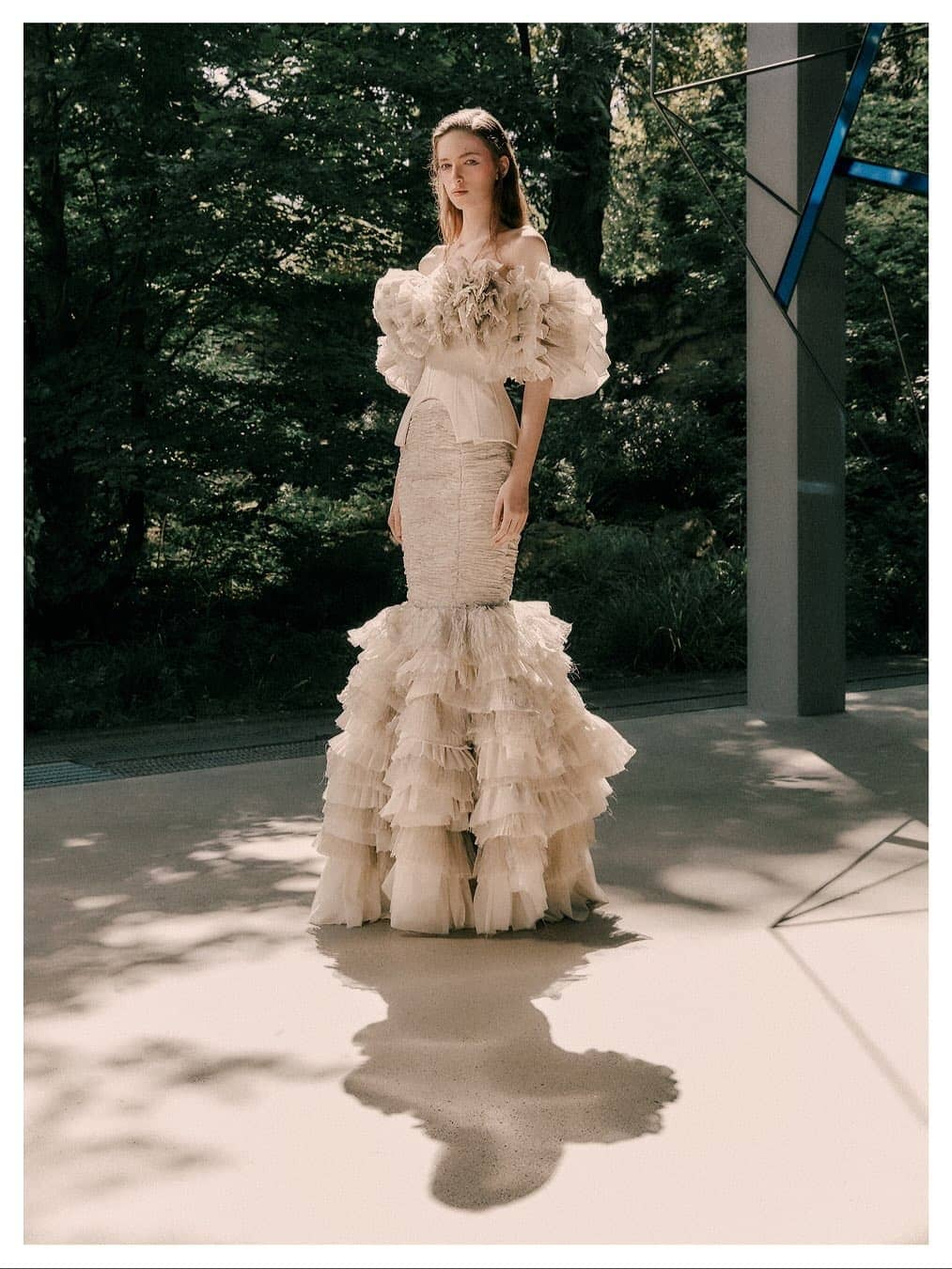
“It has to feel feminine,” she says simply.
Inside the Paris atelier, that balance unfolds room by room: draping studios, knitwear experiments, pleated jersey pieces styled to move easily between day and evening. The space itself represents a milestone for the brand. After several years of gradual expansion, Ardakani now works entirely from the Paris studio she long envisioned building.
“My dream has been to build my new studio,” she says. “And I love to be there.”
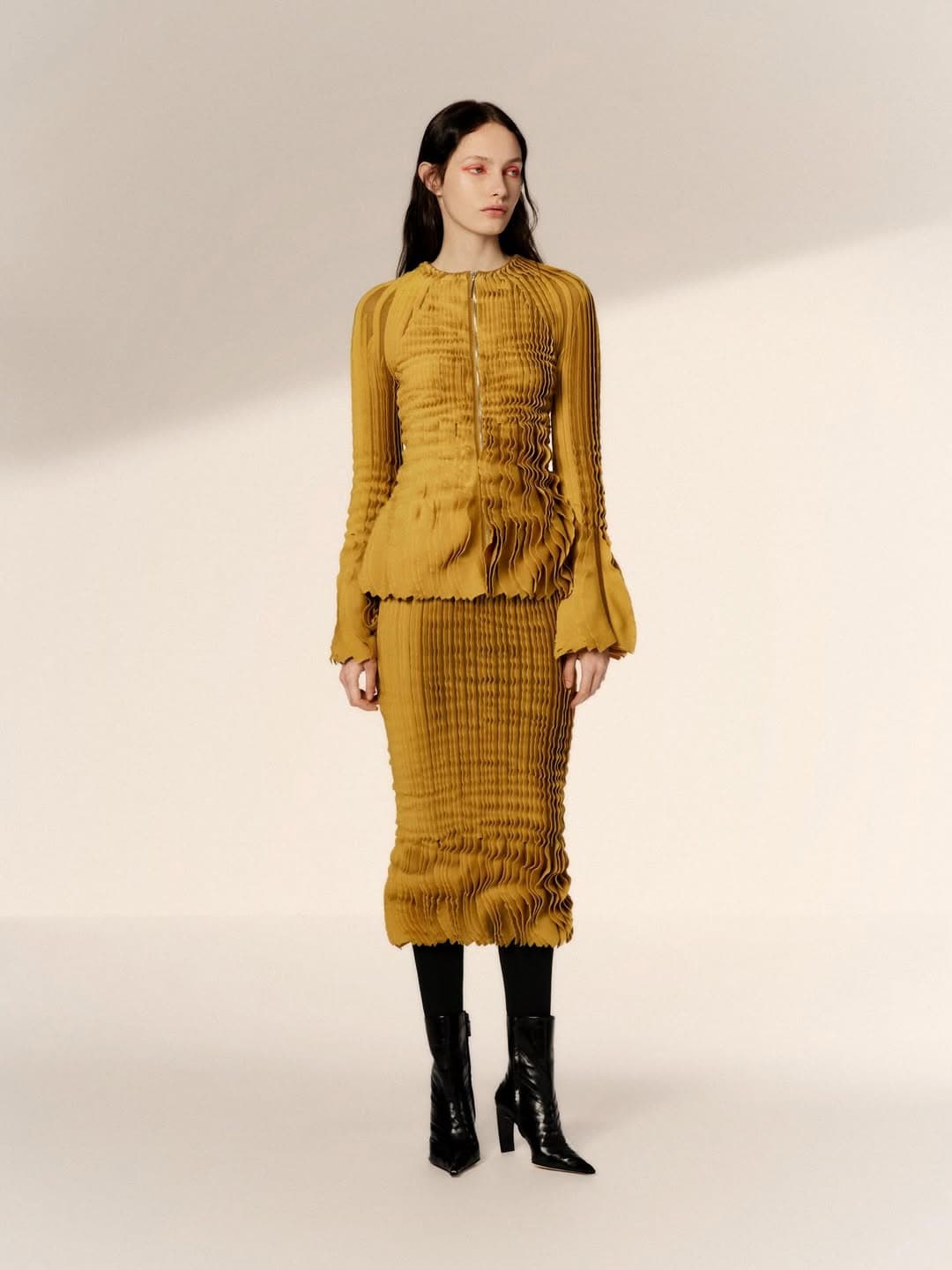
Her life has now fully relocated to the city as well. Once dividing her time between Stockholm and Paris, Ardakani now lives entirely in the French capital, closer to the atelier and the rhythms of the industry she has quietly begun to shape.
For Ardakani, however, the goal has never been visibility alone. It is something slower and more enduring.
“You need the right ingredients to create a good product,” she says. “For me the product is key.”
And in an era of fashion defined by constant acceleration, that simple statement feels almost radical.