The German Fashion Group Reaffirmed That Short-Term Revenue Pressure Is Part Of Its Repositioning Strategy While Rejecting Frasers Group’s Takeover Offer And Maintaining Its Full-Year Outlook
Hugo Boss continued to prioritize long-term brand repositioning over near-term growth in the second quarter, reporting another decline in sales while insisting its strategic reset is laying the groundwork for a stronger business.

Revenue for the three months ended June fell 10 percent to 905 million euros, or 9 percent on a currency-neutral basis, slightly below analyst expectations. The decline marked another difficult quarter for the German fashion group as it continues reshaping its distribution, product mix, and brand positioning under Chief Executive Officer Daniel Grieder.
“Sales remained impacted by our strategic realignment and a challenging external environment,” Grieder said.
The company has repeatedly characterized the current slowdown as an intentional consequence of its revised strategy, abandoning earlier ambitions of reaching 5 billion euros in annual sales in favor of a more disciplined approach focused on profitability, brand strength, and higher-quality revenue. Hugo Boss does not expect to return to sales growth until 2027.
“The strategy is already translating into tangible benefits and creating a structurally stronger Hugo Boss,” Grieder said.
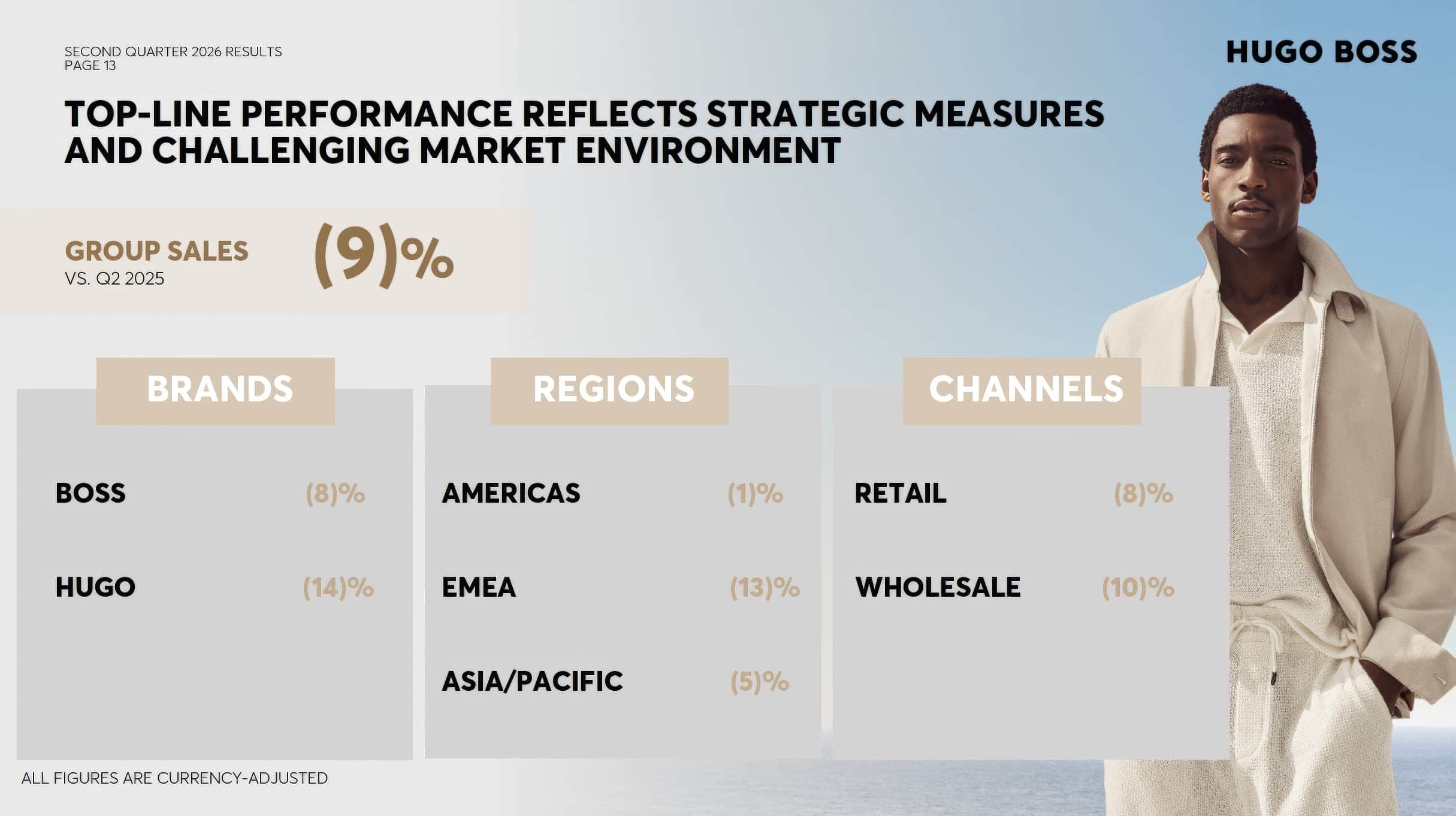
Europe, the Middle East, and Africa, the company’s largest region, remained the biggest drag on performance. Sales declined 14 percent to 532 million euros as consumer demand softened across Germany, the United Kingdom, and France. Hugo Boss also cited weaker tourist spending and disruption caused by the conflict in the Middle East.
The company said its ongoing repositioning of Boss womenswear also weighed on results. While womenswear remains a relatively small portion of the business, Hugo Boss is investing heavily in rebuilding the category as part of its broader brand evolution.
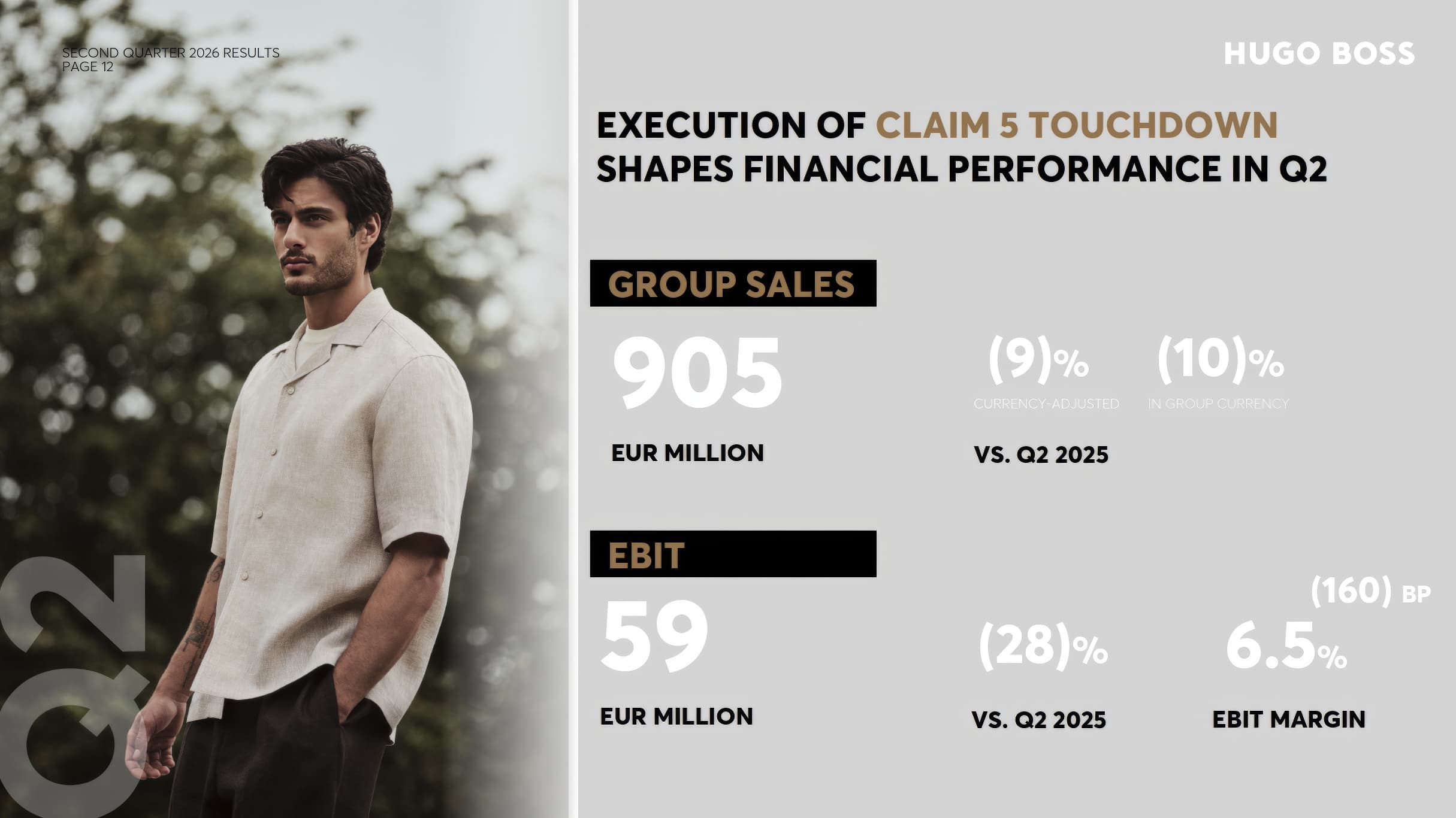
Despite continued efforts to improve efficiency through lower inventories, store optimization, and tighter cost controls, profitability declined. Earnings before interest and taxes fell 28 percent to 59 million euros from 81 million euros a year earlier, resulting in an EBIT margin of 6.5 percent compared with 8.5 percent last year.
Even so, operating profit exceeded analyst expectations, which had forecast EBIT of approximately 52 million euros.
The company maintained that the current declines reflect deliberate decisions rather than weakening brand health. Management has been reducing lower-quality sales channels while streamlining operations in an effort to strengthen long-term performance.
The turnaround is unfolding against the backdrop of an unsolicited takeover attempt by Frasers Group, already Hugo Boss’ largest shareholder. Earlier this summer, the British retail group offered shareholders 38 euros per share to acquire the company outright.
Hugo Boss rejected the proposal, arguing the offer significantly undervalues the business and its long-term potential. Shareholders have until Aug. 13 to decide whether to tender their shares.
Looking ahead, Hugo Boss reaffirmed its full-year guidance despite continued pressure on revenue. The company expects sales to decline by a mid- to high-single-digit percentage in 2026, while operating profit is projected to fall to between 300 million euros and 350 million euros.
Management also expects weakness in EMEA to persist throughout the remainder of the year, forecasting sales in the region to decline by a high-single-digit to low-double-digit percentage.
Elsewhere, performance was more resilient. Sales in the Americas were flat at 236 million euros, while Asia-Pacific revenue declined 6 percent to 116 million euros.
By brand, Hugo, the company’s younger and more casual label, recorded a 14 percent sales decline as it undergoes significant restructuring. Sales at the larger Boss brand, which continues to represent the majority of the group’s business, declined 9 percent as the repositioning strategy continued to reshape the assortment and distribution.
While investors are likely to remain focused on declining revenue, Hugo Boss continues to argue that rebuilding brand desirability and improving the quality of sales will ultimately create a healthier business, even if that means sacrificing growth in the near term.