From Prada’s proposition of possibility to Bottega Veneta’s new lightness, Milan found its strength in designers who knew exactly where to push — and when to pull back
Milan had a lot on its plate this season. New creative chapters were settling in, established designers were sharpening their point of view, and a few houses were still figuring out exactly what their next act should look like. The good news: the city rarely felt short on ideas.
What connected the strongest shows was not one dominant trend, but a willingness to rethink familiar territory without making a great fuss about it. Sometimes that meant taking something as ordinary as a skirt and finding sixty-three ways to make it interesting. Sometimes it meant making leather feel almost weightless, or allowing a house known for eccentricity to get a little more mischievous. The best collections found movement by working from within.
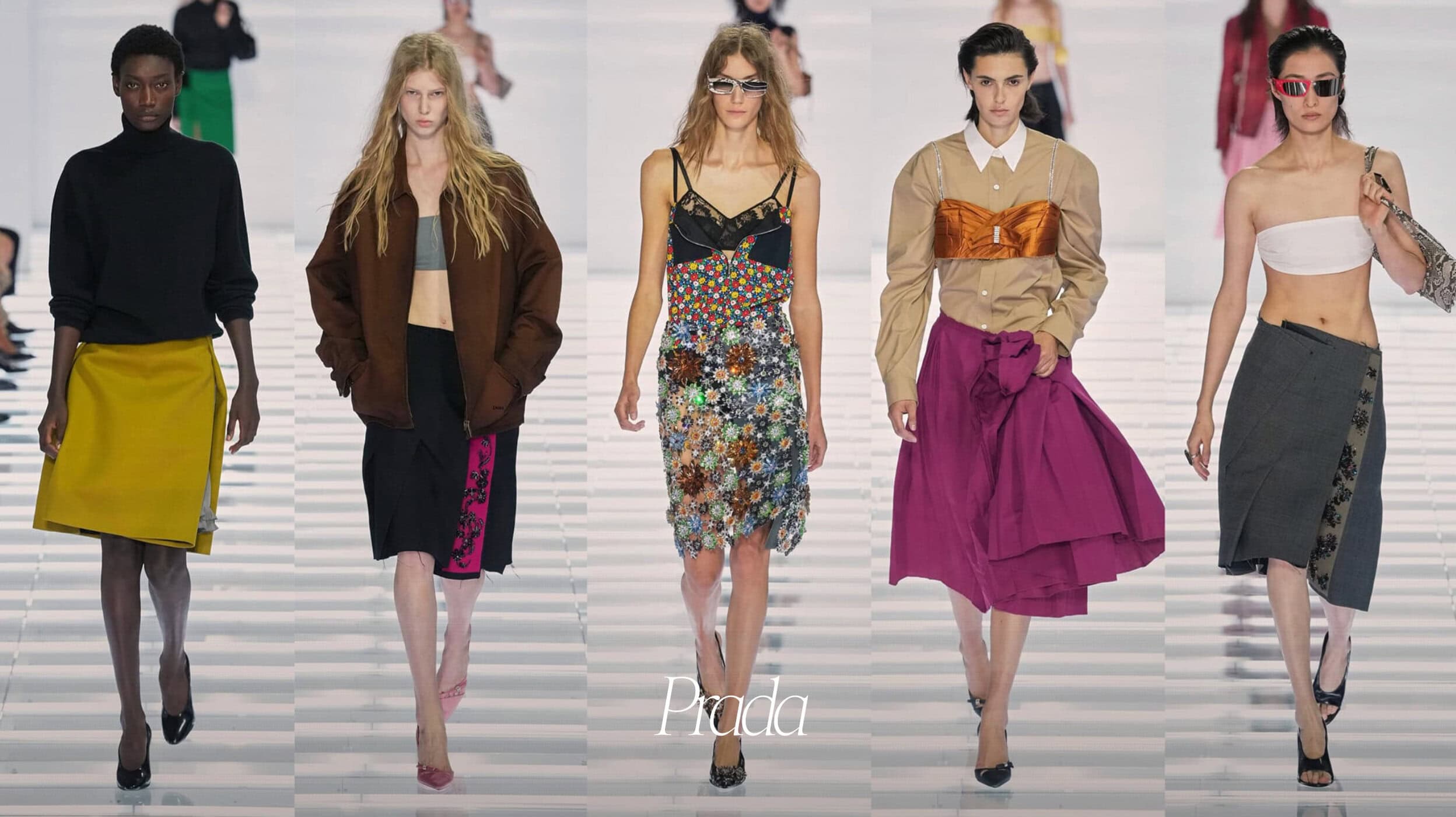
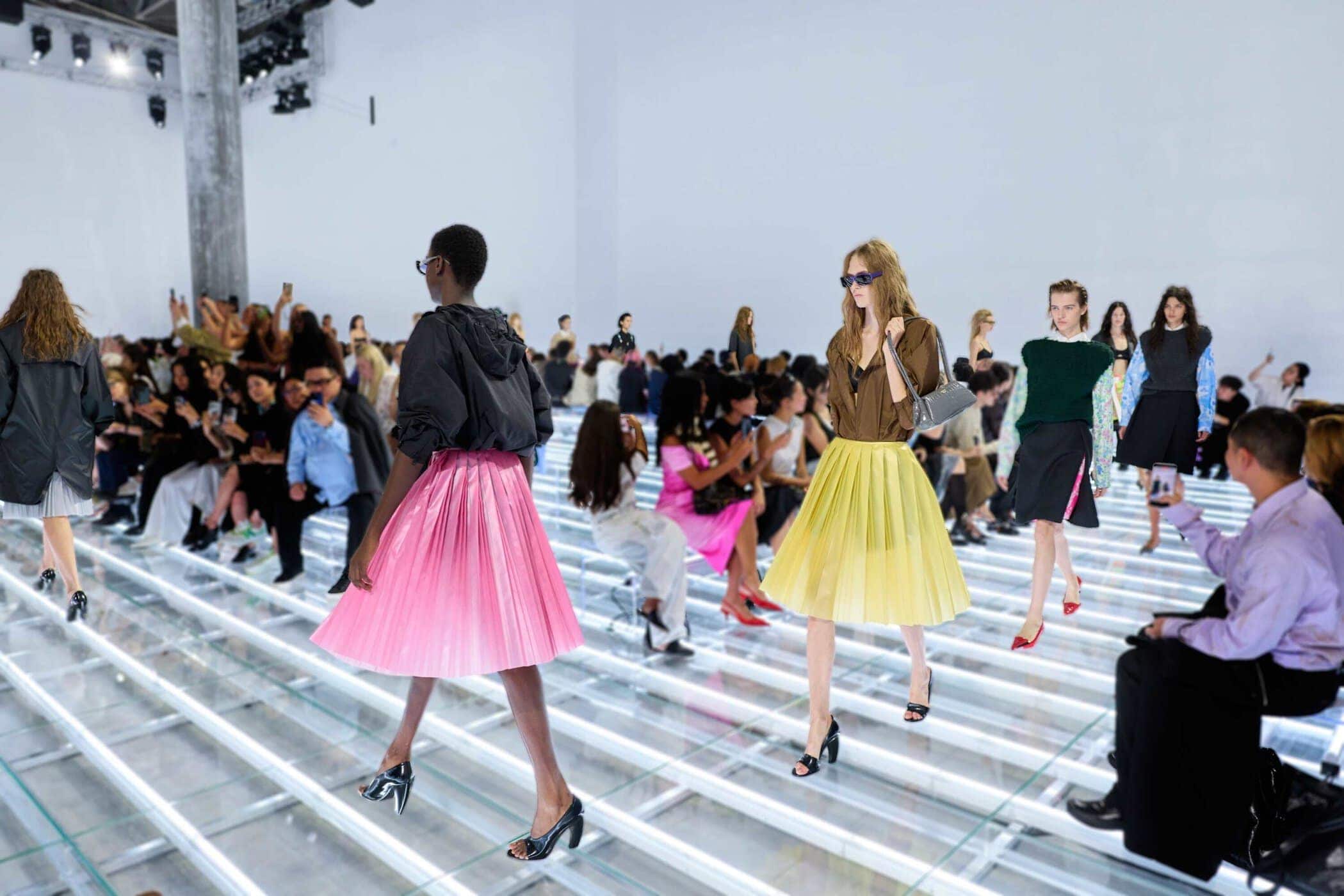
At Prada, Miuccia Prada and Raf Simons built the entire collection around one of fashion’s most familiar garments: the skirt. What could have become an academic exercise instead turned into a demonstration of possibility, with variations in proportion, surface, function, and styling making repetition feel anything but repetitive. Velcro, embroidery, tailoring, transparency, and bare simplicity all entered the conversation. Prada has long enjoyed taking the ordinary and making us reconsider it; Spring 2027 did exactly that, one skirt at a time.
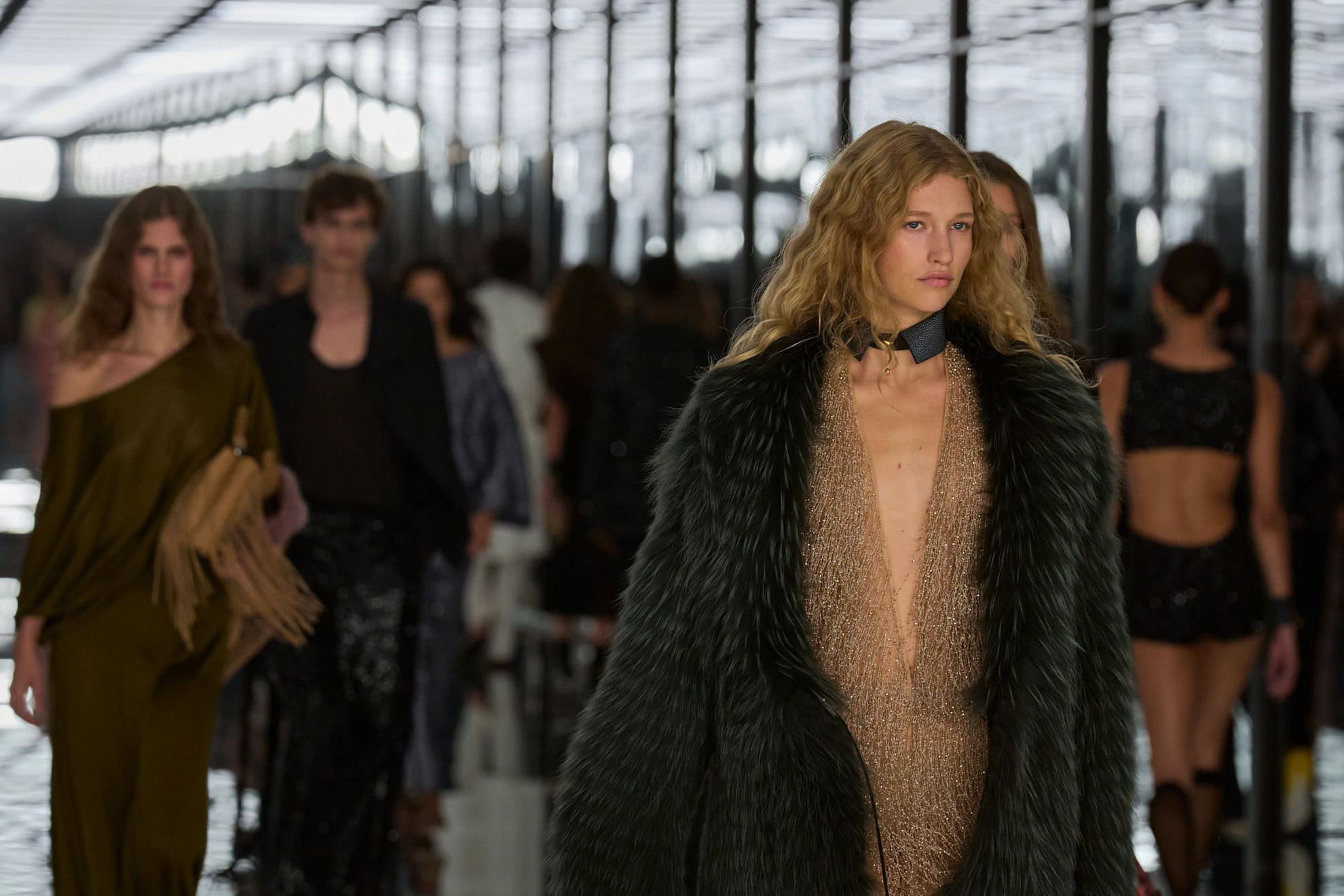
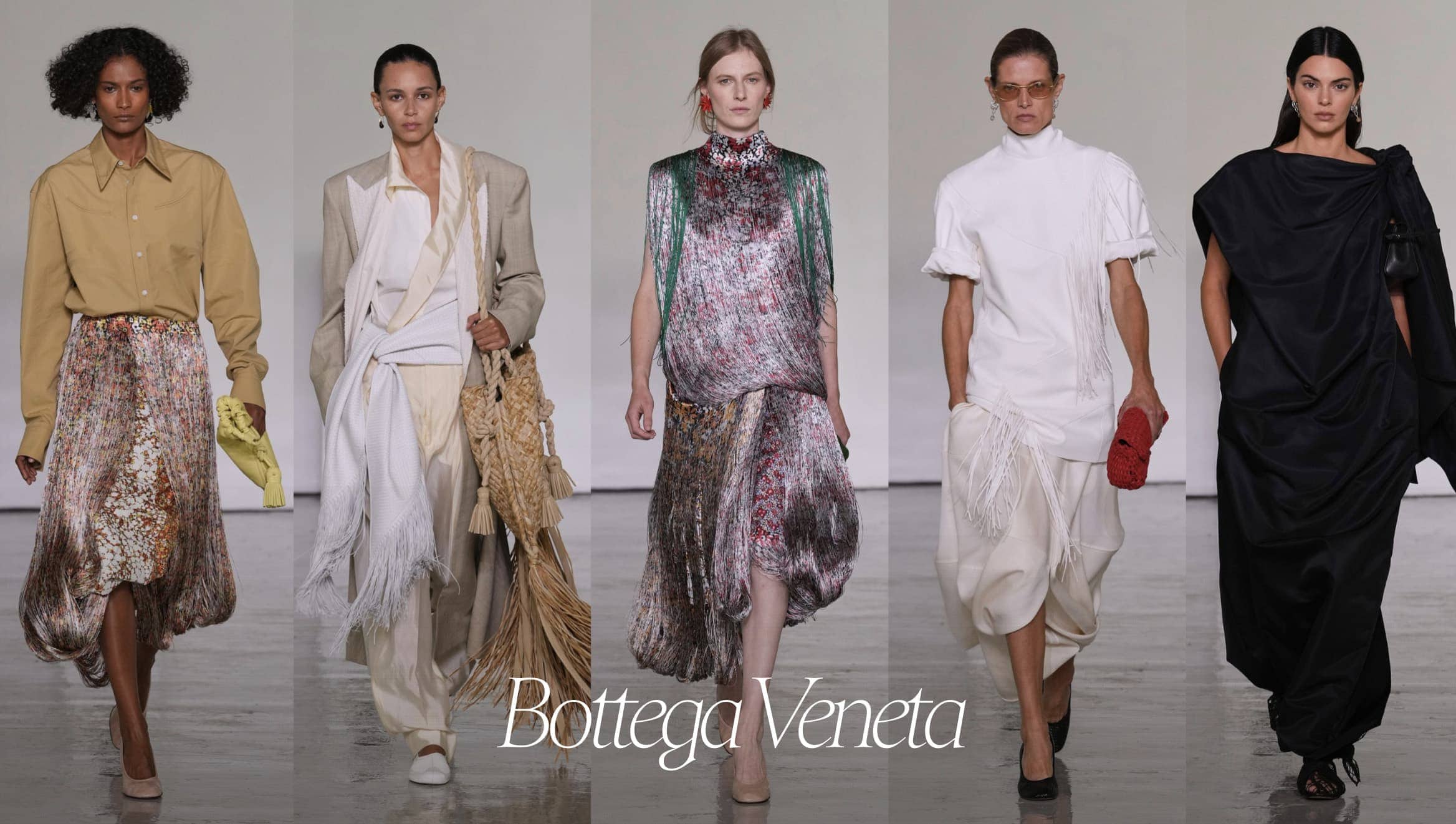
Louise Trotter took Bottega Veneta in a lighter direction, quite literally. Leather was shaved down, intrecciato opened up, and natural fibers, crochet, embroidery, and fringing softened the house’s craft vocabulary for summer. There was still plenty of technical intelligence beneath it all, but the collection felt freer and less interested in proving how difficult everything was to make. Sometimes luxury works best when all the effort looks effortless.
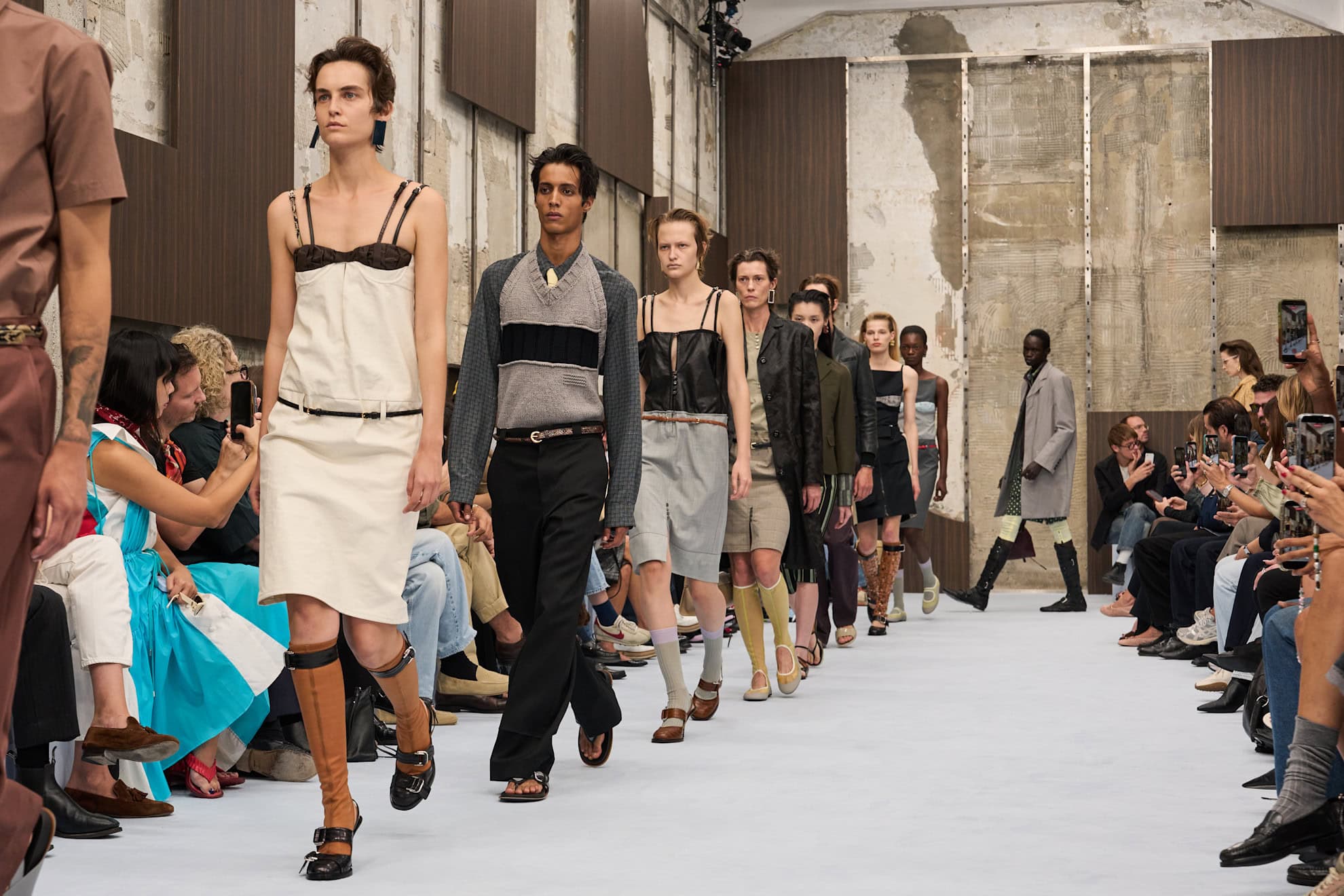
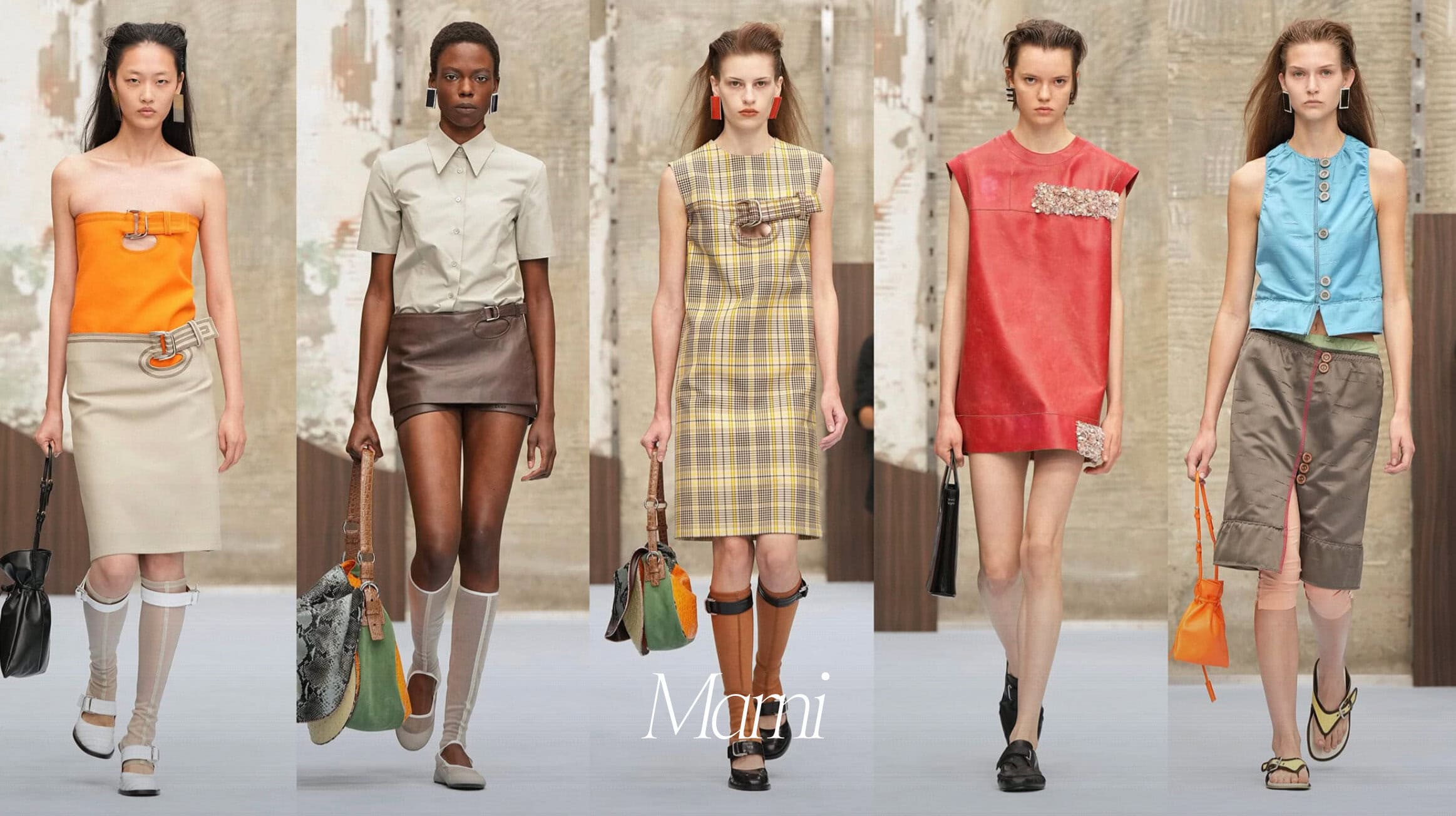
Meryll Rogge’s second season at Marni confirmed that her first was no happy accident. She seems to understand the peculiar balancing act Marni requires: eccentric but wearable, experimental without disappearing into concept, playful without becoming juvenile. Cut-outs, displaced proportions, oversized buckles, exposed inner construction, and a little well-placed mischief gave the collection character, while Rogge’s interest in dressing different ages and personalities made the whole thing feel surprisingly generous.
At Fendi, Maria Grazia Chiuri turned her attention inward — and underneath. Lingerie, exposed bras, slips, robes, folk references, and softer layers pushed the house toward a more sensual and playful femininity. The mirrored set occasionally made the clothes harder to see, but Chiuri’s larger idea came through: this was a Fendi woman increasingly comfortable deciding what she reveals, what she keeps private, and how much fun she wants to have in between.
Gucci was less interested in subtlety. For what Demna described as the first true expression of his vision for the house, he built an entire store and filled it with characters, merchandise, aspiration, excess, and plenty of Gucci. “The Store Show” made his retail instincts part of the spectacle, moving between accessible sportswear and full-throttle luxury with the confidence of someone who knows exactly how people shop — and how they dream about shopping. The foundation has been laid. Now comes the fun part: seeing how far Demna is willing to push it.
Simone Bellotti continued finding his footing at Jil Sander by loosening the expectations around minimalism. Clean tailoring and corporate codes were disturbed by crushed surfaces, shifted fastenings, exaggerated evening silhouettes, and unexpectedly sweet color. The best moments suggested that Bellotti’s Jil Sander will not be about reverence for restraint so much as finding out how much tension can live inside it.
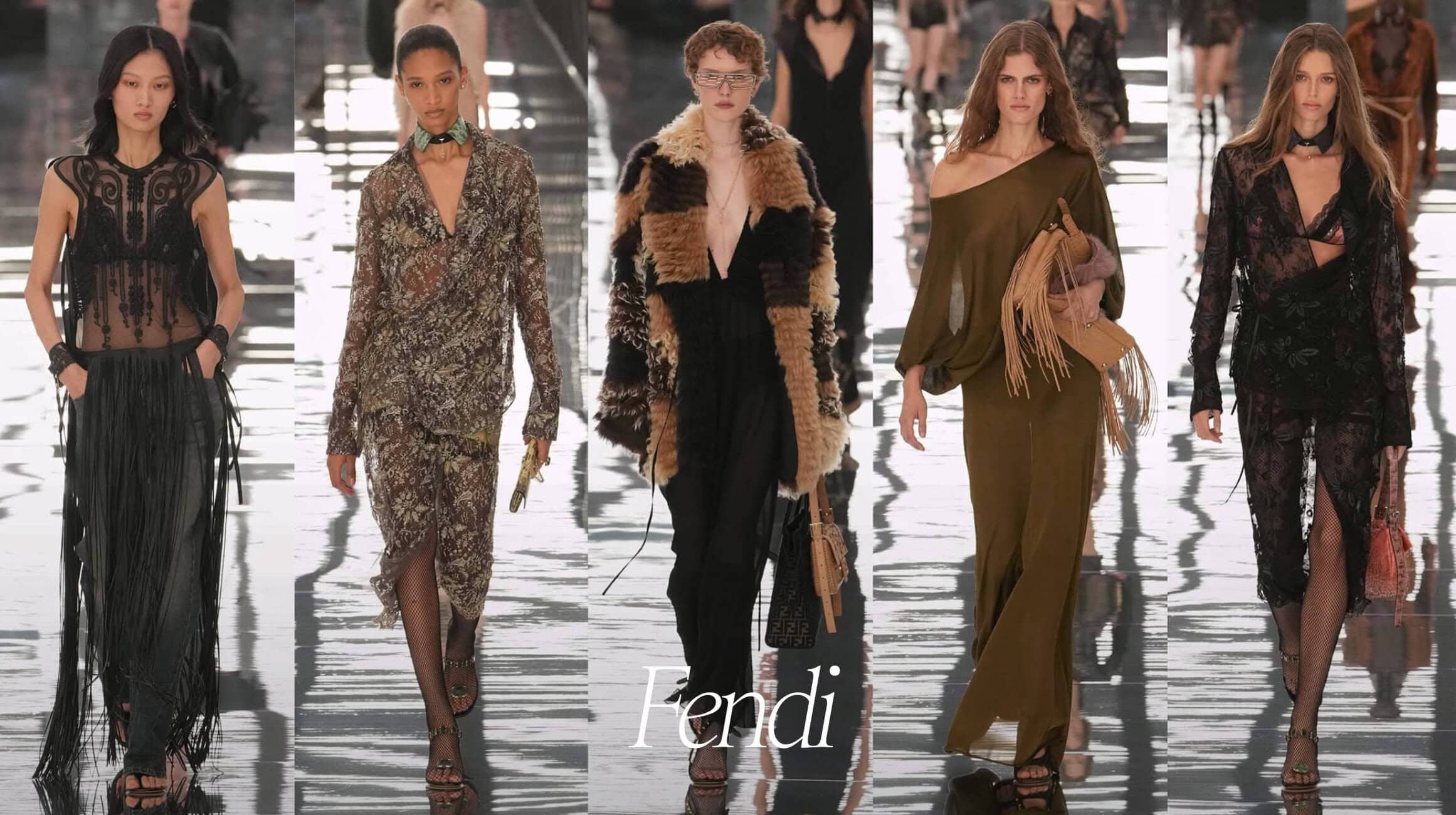
Moschino entered a new chapter under Loris Messina and Simone Rizzo, the founders of Sunnei, and their debut was tellingly less noisy than some might have expected. Rather than racing immediately toward Franco Moschino’s greatest hits, they approached the house with a more measured wit, using wearability and understatement as a way into a brand long associated with provocation. For two designers known for questioning how fashion is presented and consumed, beginning with restraint may have been the cheekiest move available.
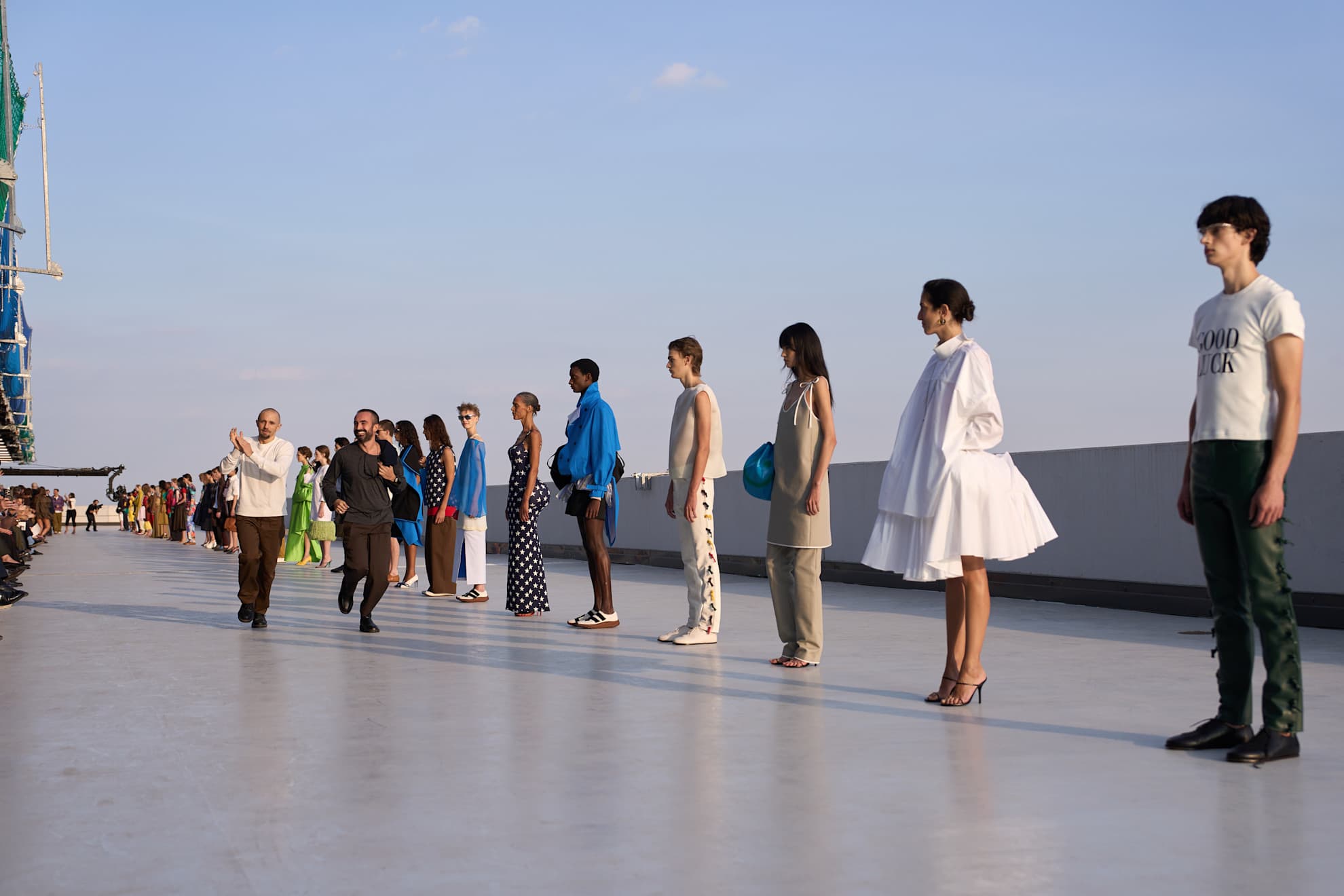
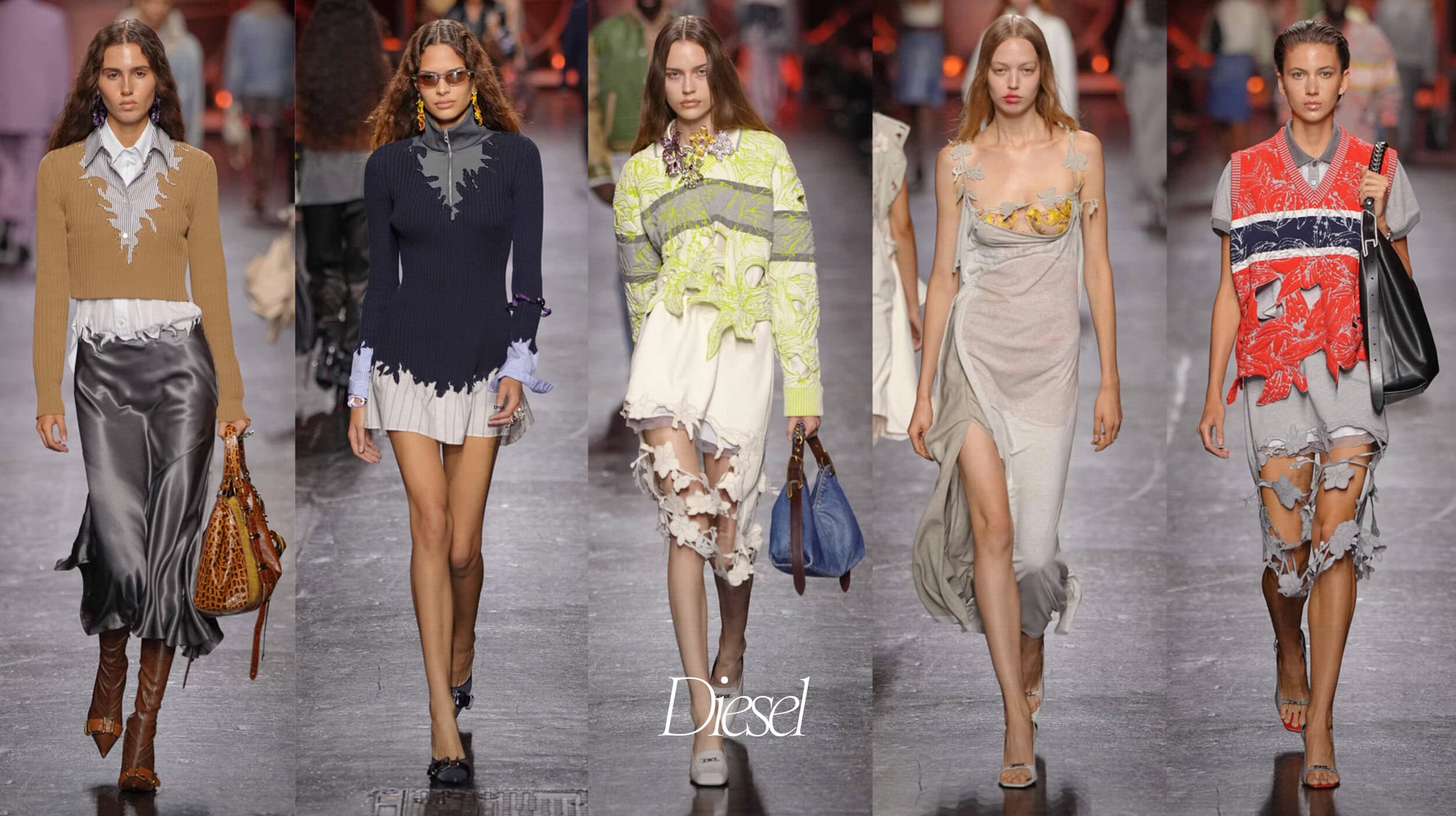
Diesel delivered a goodbye worthy of Glenn Martens’ six-year run. His tenure transformed denim into a testing ground for distressing, coating, manipulation, spectacle, and just about every indignity a pair of jeans could survive. His final collection did not play like a sentimental greatest-hits tour; it was one last reminder of how thoroughly he changed the brand’s place in Milan. Denim may recover eventually.
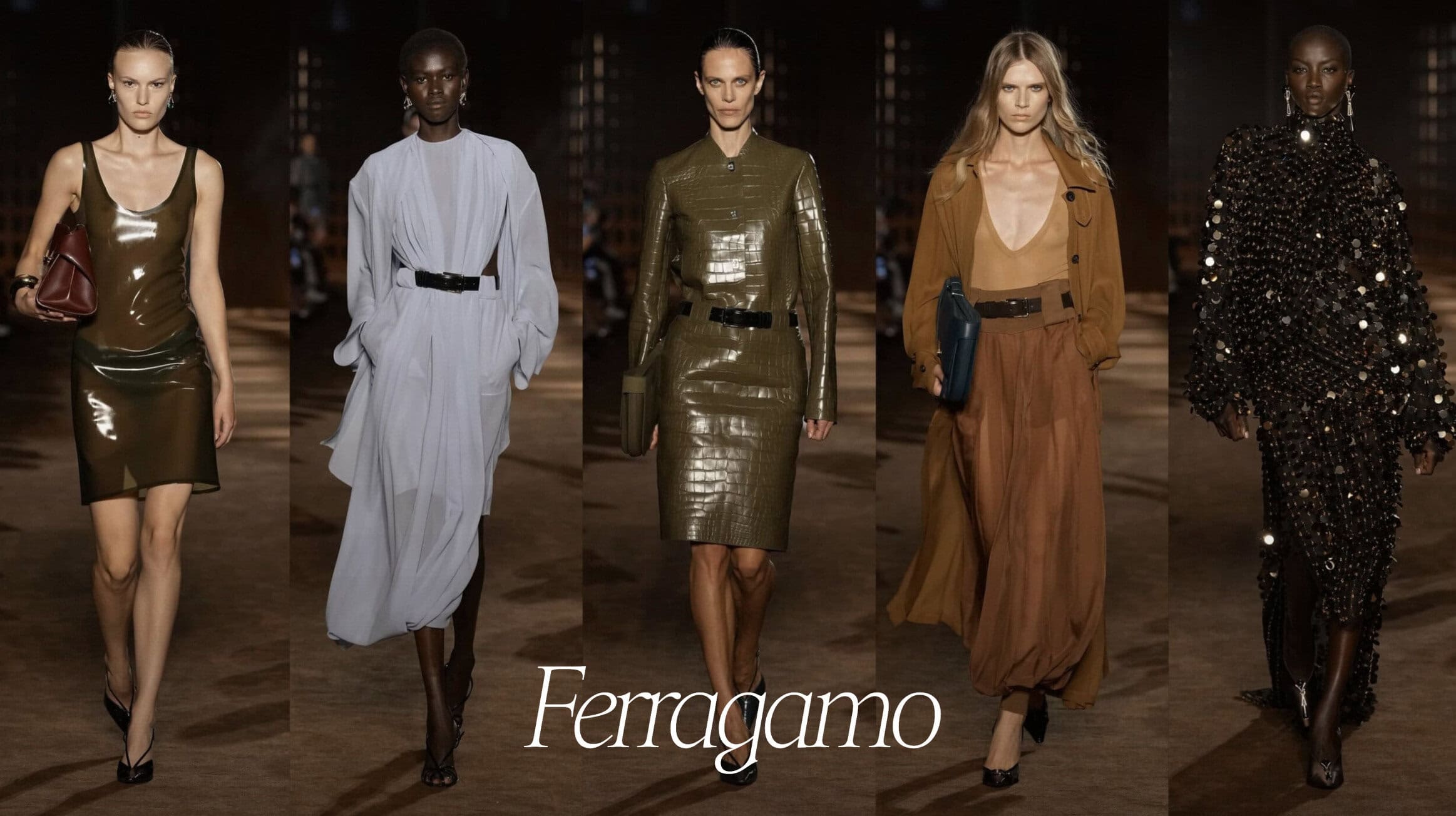
At Ferragamo, Maximilian Davis continued building one of Milan’s clearest visions of modern sensuality. Looking to Lee Miller, he moved between military structure and intimate draping, softening utility through sheer fabrics, scarf dressing, and flashes of fetishistic polish. The historical reference never swallowed the clothes, which is precisely why it worked: Miller became less a costume and more a spirit of independence running through a wardrobe Davis has made increasingly his own.
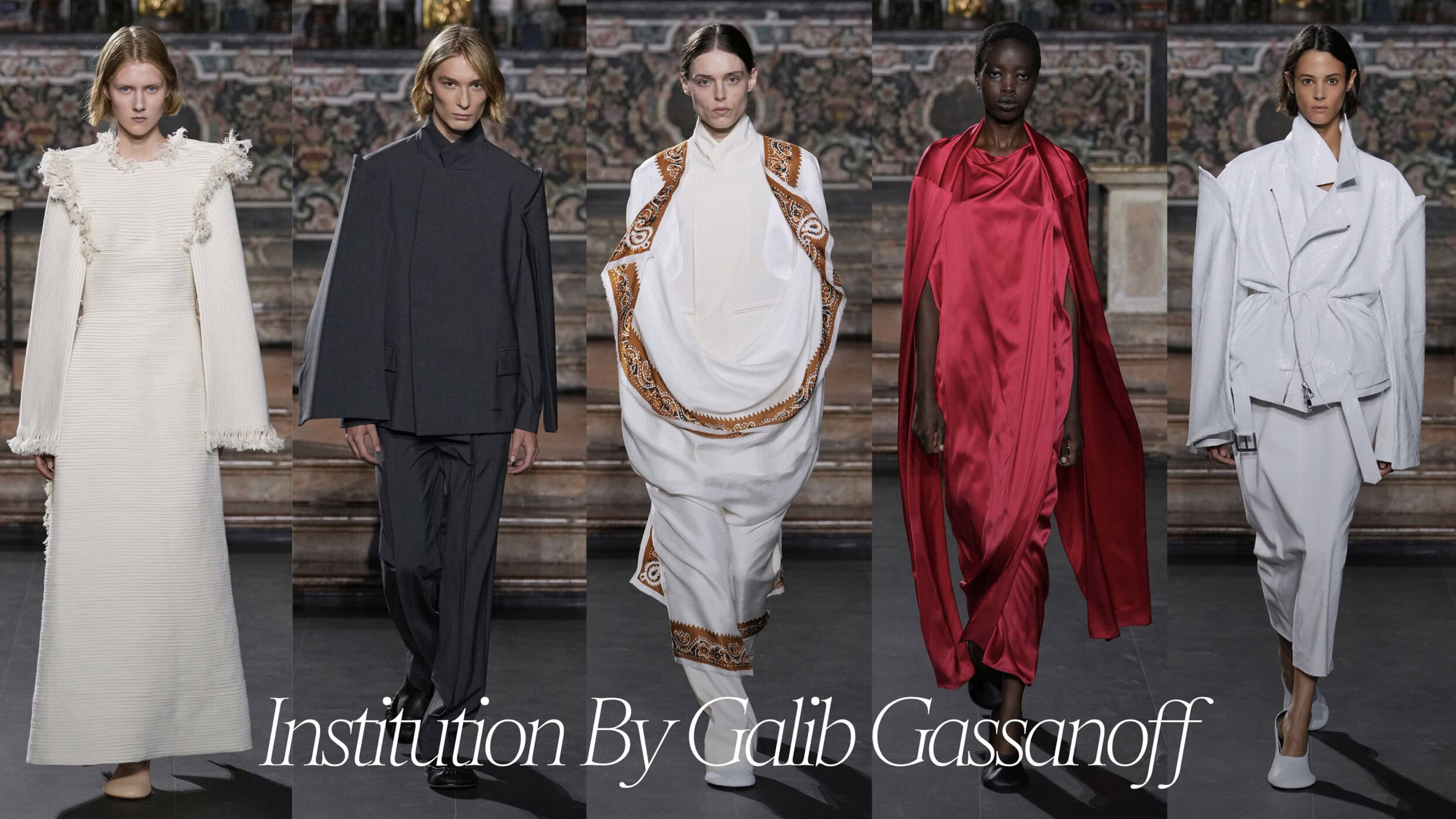
And then there was Galib Gassanoff, who made a convincing case for clothing that demands to be experienced beyond the screen. Beginning with squares of fabric, he transformed flat planes into sleeves, capes, drapes, and sculptural forms that only fully revealed themselves in motion. Against lighter georgette, bouclé, and frescolana, the architectural rigor associated with his work gained a new fluidity. The final handkerchief dresses, made from Azerbaijani kelaghayi silk scarves, brought heritage into the collection without flattening it into symbolism. In an era when so much fashion is designed to survive a phone screen, Gassanoff gave Milan something refreshingly three-dimensional.
Taken together, Milan’s best collections suggested a city increasingly comfortable with contradiction. Prada found freedom through limitation. Bottega Veneta made craft lighter. Marni made eccentricity welcoming. Fendi exposed more, Jil Sander disrupted restraint, Gucci built a store, and Diesel tore the place up on its way out.
Not a bad week at the office.
Here are The Impression’s Top 10 Fashion Shows of Milan Fashion Week Spring 2027, selected by Editor-in-Chief Kenneth Richard.
10 – Institution By Galib Gassanoff
9 – Ferragamo
8 – Diesel
7 – Moschino
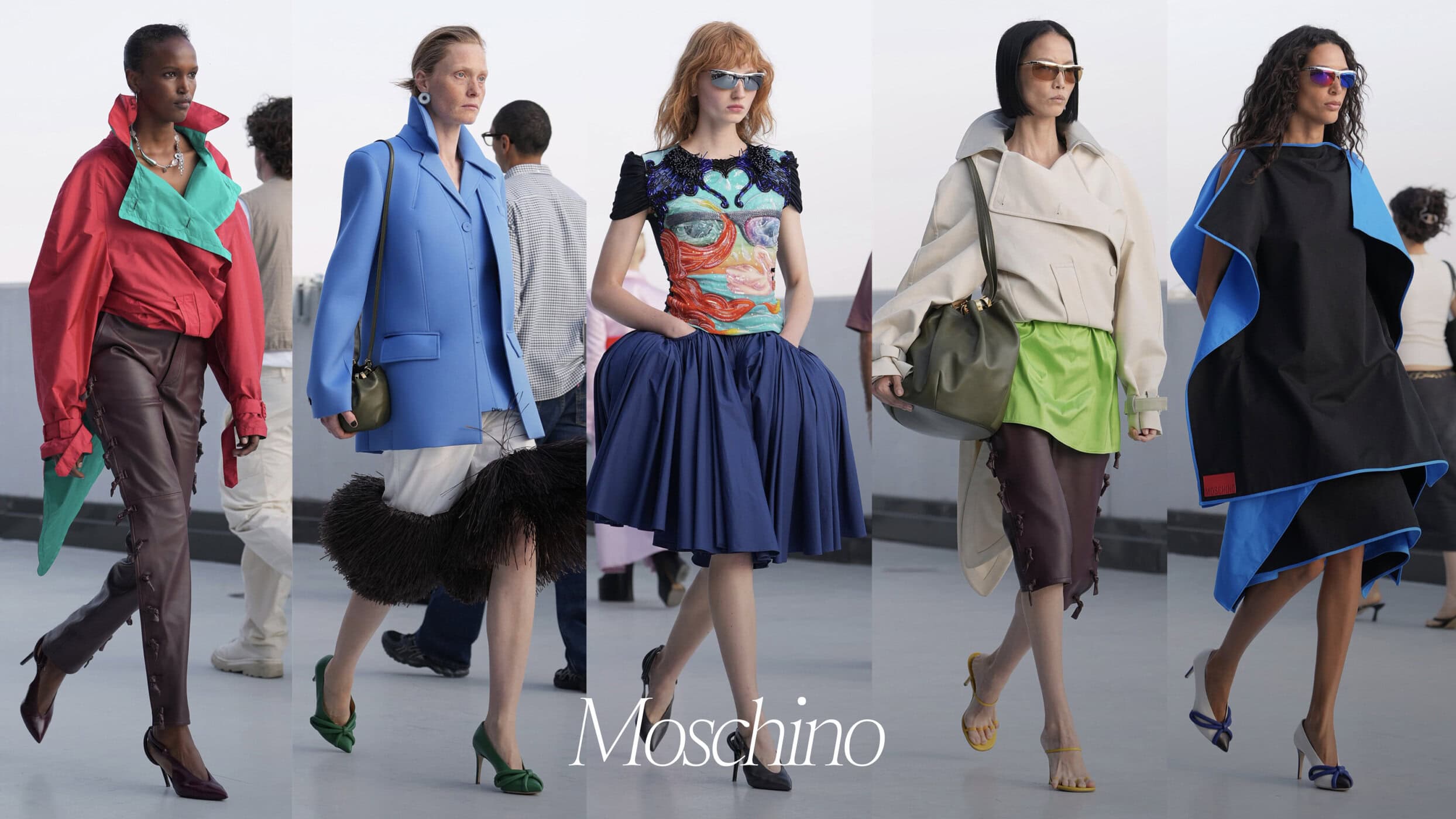
6 – Jil Sander
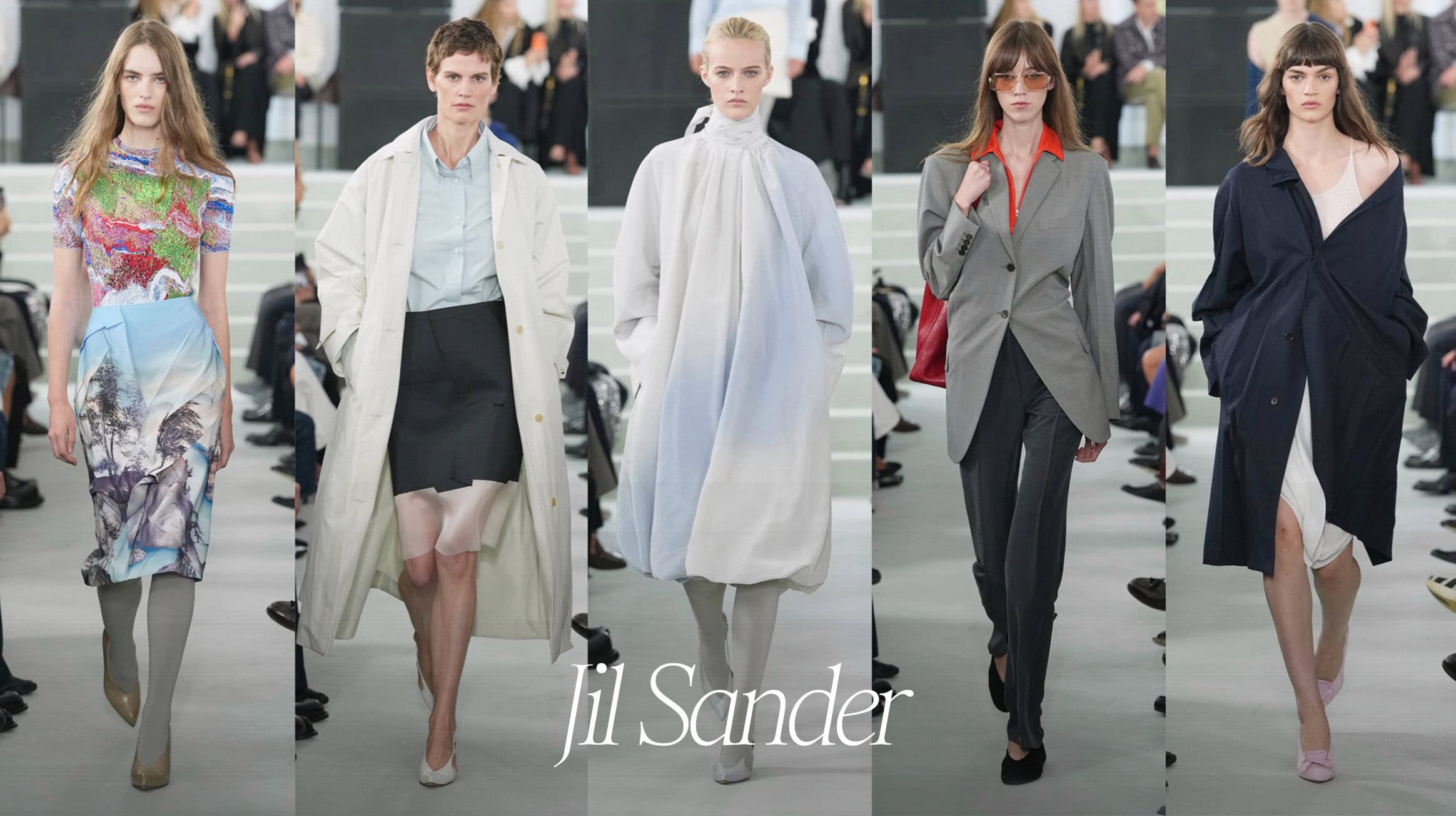
5 – Gucci
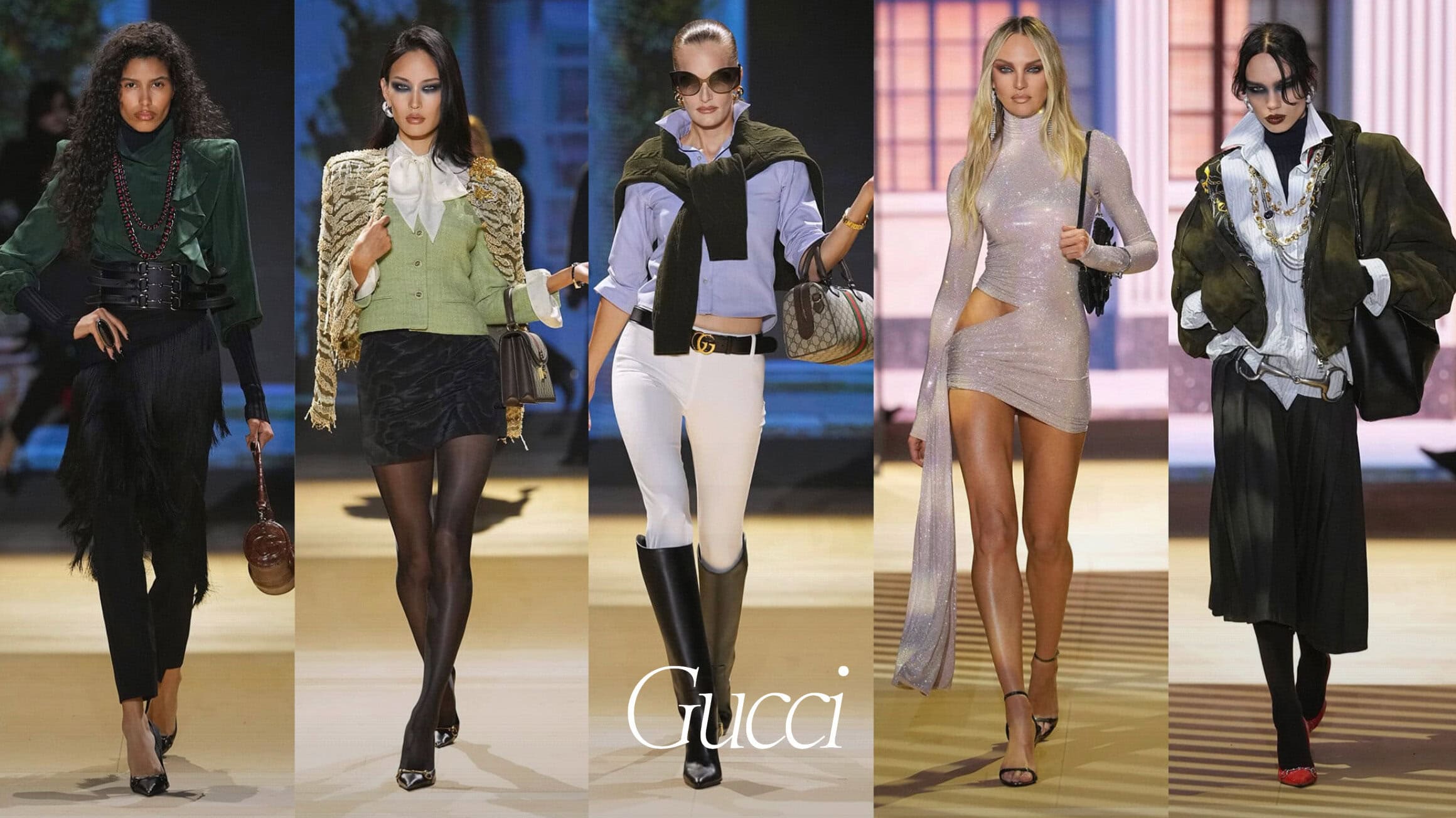
4 – Fendi
3 – Marni
2 – Bottega Veneta
1 – Prada