
A 14% increase in direct sales and continued retail expansion strengthen the brand’s growth platform after wholesale disruption pressured 2025 earnings.
Key Takeaways
- Double-digit DTC growth continued during the first half of 2026.
- Turnover declined 3% to €83.5 million as difficulties at a major U.S. wholesale partner weighed on the business.
- Direct-to-consumer sales grew 14%, helping lift gross margin by one percentage point.
- EBITDA fell 36% to €5.4 million amid store openings, distribution investments and external pressures.
Manolo Blahnik closed 2025 with lower revenue and earnings as wholesale disruption and investment in its retail network weighed on the luxury footwear brand’s performance. Early trading in 2026 points to improving momentum, led by direct-to-consumer growth.
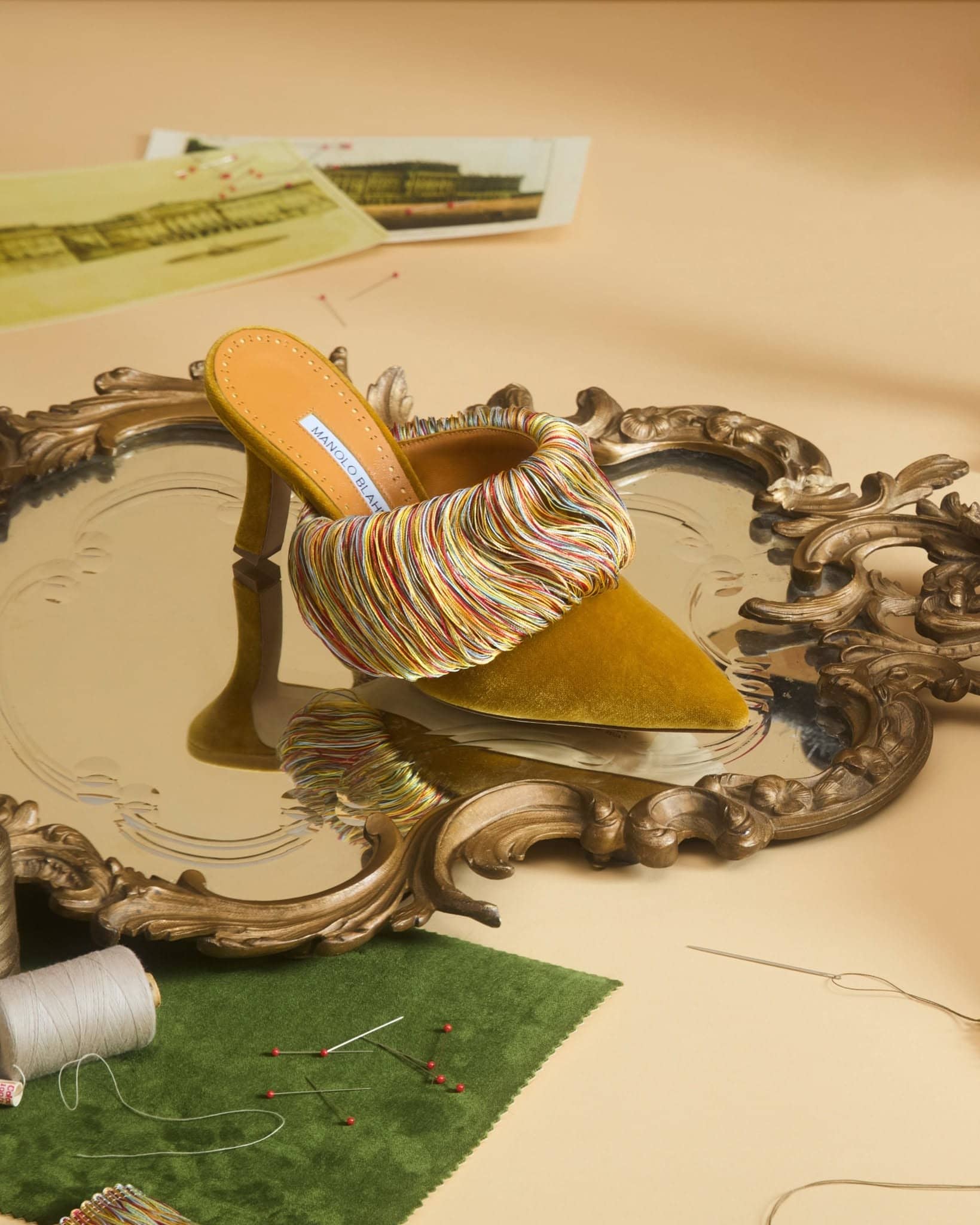
Turnover for the 12 months ended December 31 reached €83.5 million, down 3% at reported exchange rates and 1% at constant currency. Payment difficulties involving a major U.S. wholesale partner affected shipments and led to a debtor impairment.
The group recorded a pretax loss of €1.6 million, with the wholesale disruption and a weaker U.S. dollar among the principal pressures. EBITDA decreased 36% to €5.4 million, reflecting upfront costs associated with new stores and the distribution infrastructure supporting them.
Direct retail supplied a stronger operating signal. DTC sales increased 14% year over year, extending the brand’s shift toward channels that offer greater control over pricing, presentation and client relationships. The changing sales mix, combined with tighter cost management, lifted gross margin by one percentage point.
Manolo Blahnik now operates 24 stores worldwide. Fourteen are directly managed flagships, while franchise partners oversee the remaining 10. New boutiques opened in Miami, Milan and Costa Mesa, California, during 2025, followed by a Beijing location in January 2026.
China represents a central component of the expansion strategy. Alongside the Beijing opening, the group introduced e-commerce in the market and acquired the remaining shares in its Hong Kong entity. Together, the moves give Manolo Blahnik tighter control over regional distribution and a broader platform for serving Chinese clients directly.
The investment places short-term pressure on profitability while increasing the group’s exposure to retail economics. Its 14 directly operated stores now form the foundation for a larger share of full-price sales and stronger ownership of customer data, merchandising and brand experience.
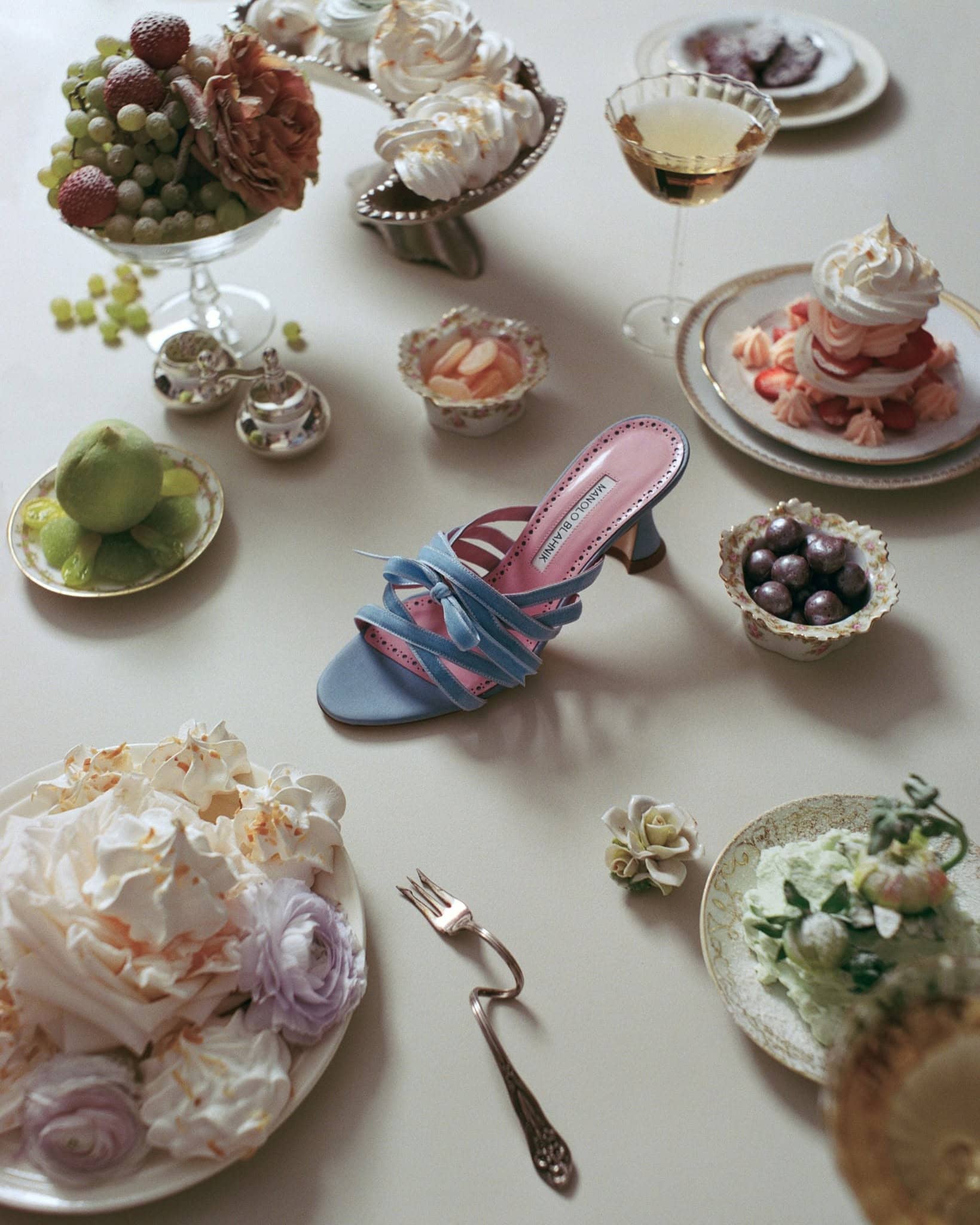
Momentum has continued into 2026, with DTC sales growing at a double-digit rate during the first half. The group also expects revenue from its key U.S. wholesale partner to recover following the completion of that company’s restructuring process.
Cultural projects remained an important part of Manolo Blahnik’s positioning during the year. The brand sponsored the Victoria and Albert Museum’s Marie Antoinette Style exhibition, supported the project with a capsule collection and staged related activations in London and Paris.
A collaboration with Balenciaga further expanded the brand’s fashion visibility. Introduced in December 2025 and released in stores in May, the project centered on crystal-embellished heels derived from Manolo Blahnik’s Nadira silhouette.
The company also increased its focus on the wedding market through its global Married in Manolos campaign. The program combined marketing, public relations, client engagement and events, contributing to a 44% year-over-year increase in wedding-product sales.
Manolo Blahnik maintained its living-wage commitments in the U.K. and U.S. and continued its foundation pledge, which allocates 10% of operating profit to mental-health initiatives, animal welfare and support for emerging talent. Employee bonuses were awarded across the organization during the year.
The strategic picture entering 2026 centers on channel control. DTC growth, China expansion and a broader store network offer a path toward higher-quality revenue, while the expected normalization of U.S. wholesale could support the near-term recovery. The next measure of progress will be the group’s ability to convert its retail investments and cultural momentum into sustained earnings growth.