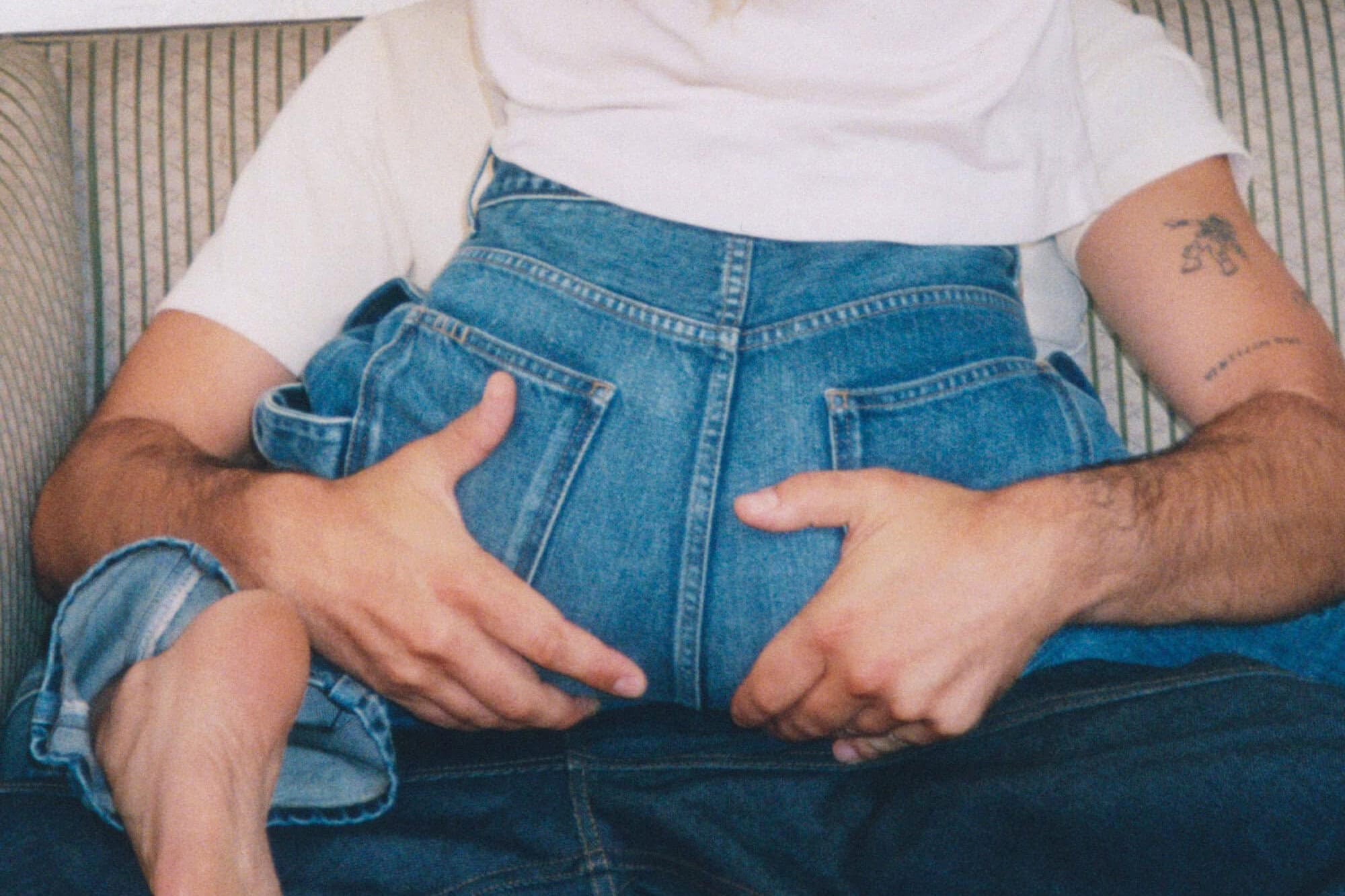
Twisted Together
Review of JW Anderson ‘Twisted Denim’ 2026 Ad Campaign by Photographer Sam Khoury with models Dree Hemingway, Nick Delli Santi
JW Anderson turns a denim launch into something closer to a flirtation with its new Twisted Denim campaign, photographed by Sam Khoury and starring Dree Hemingway alongside her partner Nick Delli Santi. The choice of Hemingway is particularly savvy. She brings the kind of fashion credibility that doesn’t require explanation, while photographing the real-life couple together for the first time gives the campaign something considerably harder to buy: believable intimacy. For a brand operating without the advertising firepower of fashion’s largest Houses, it is a clever way to play above its weight.
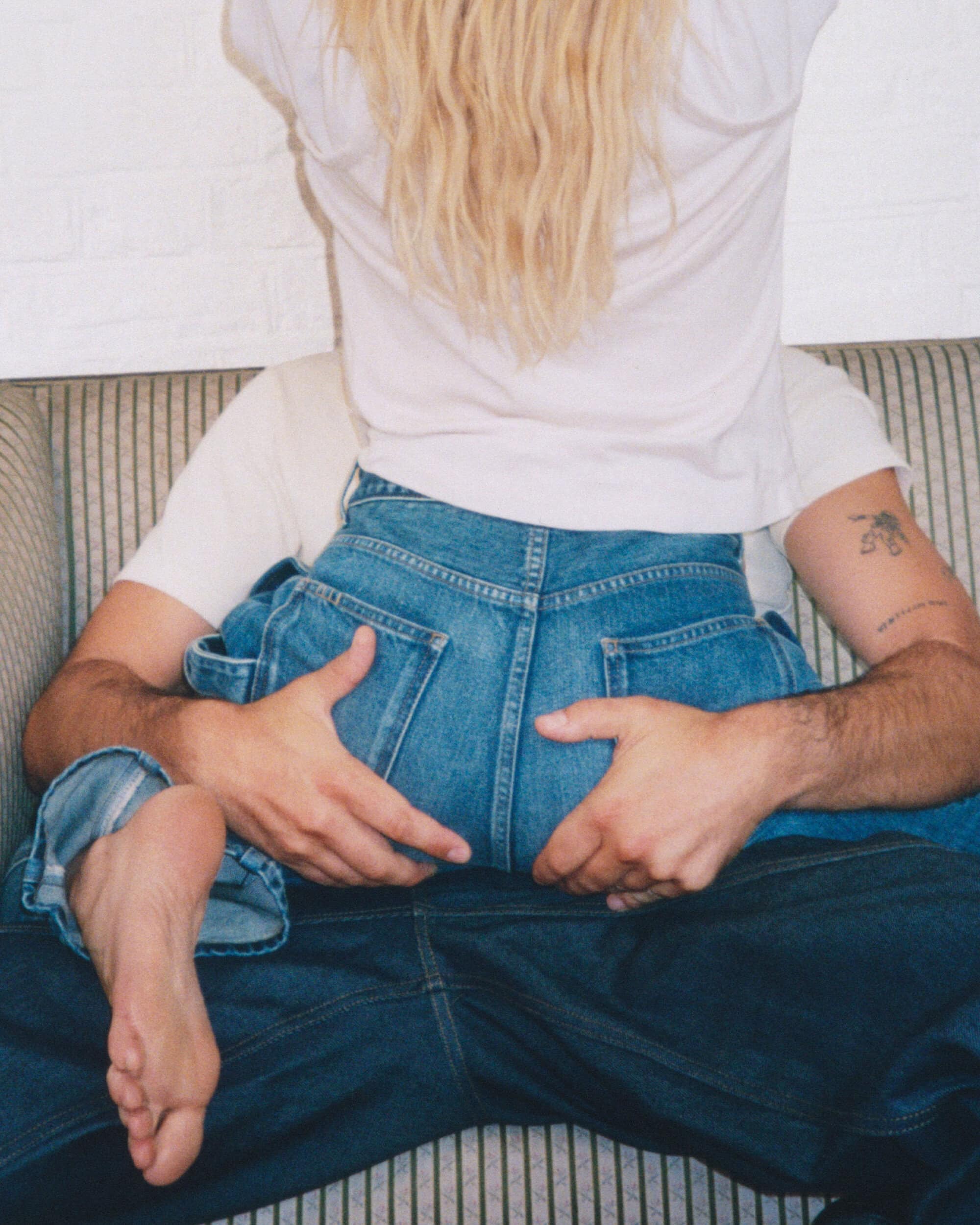
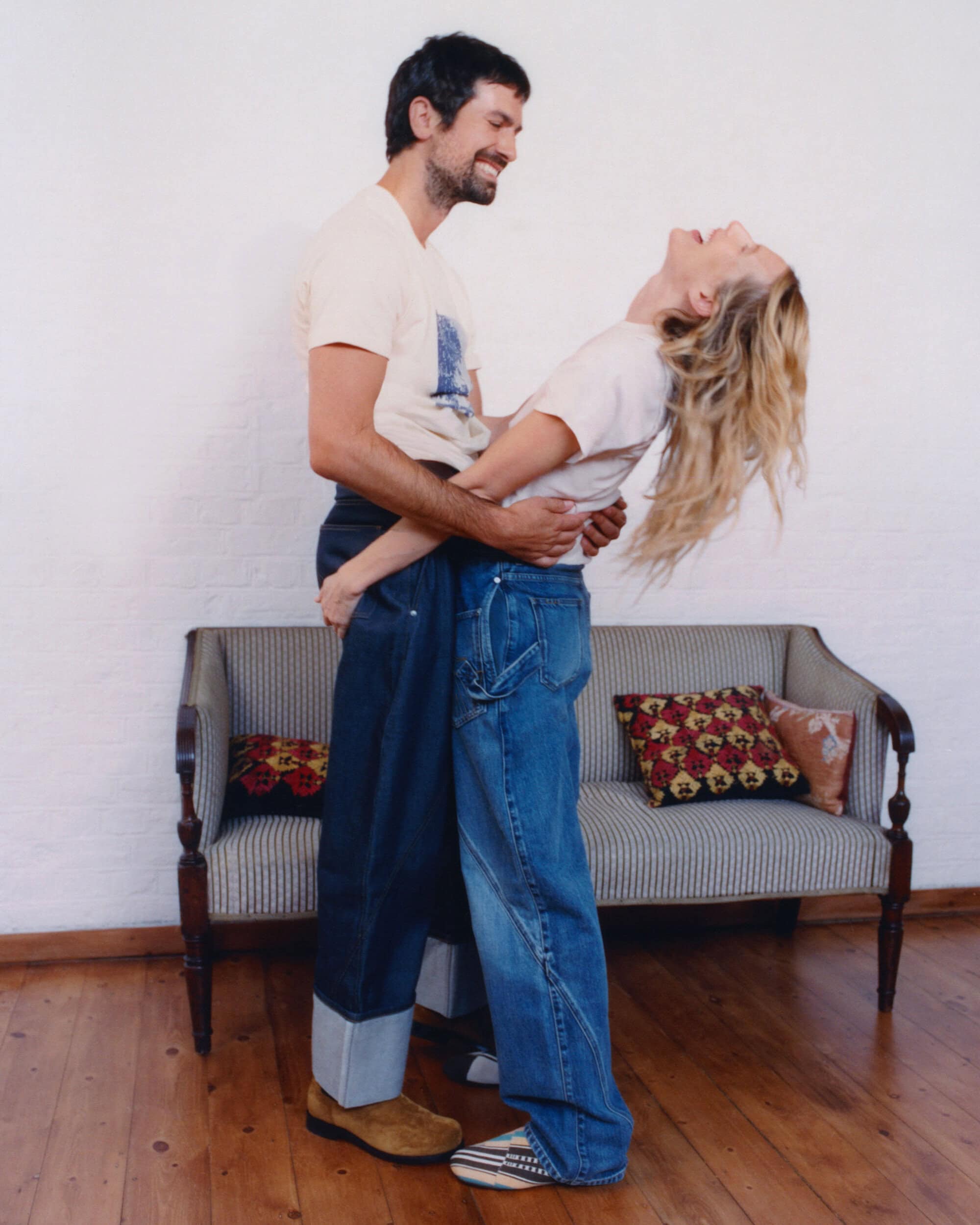
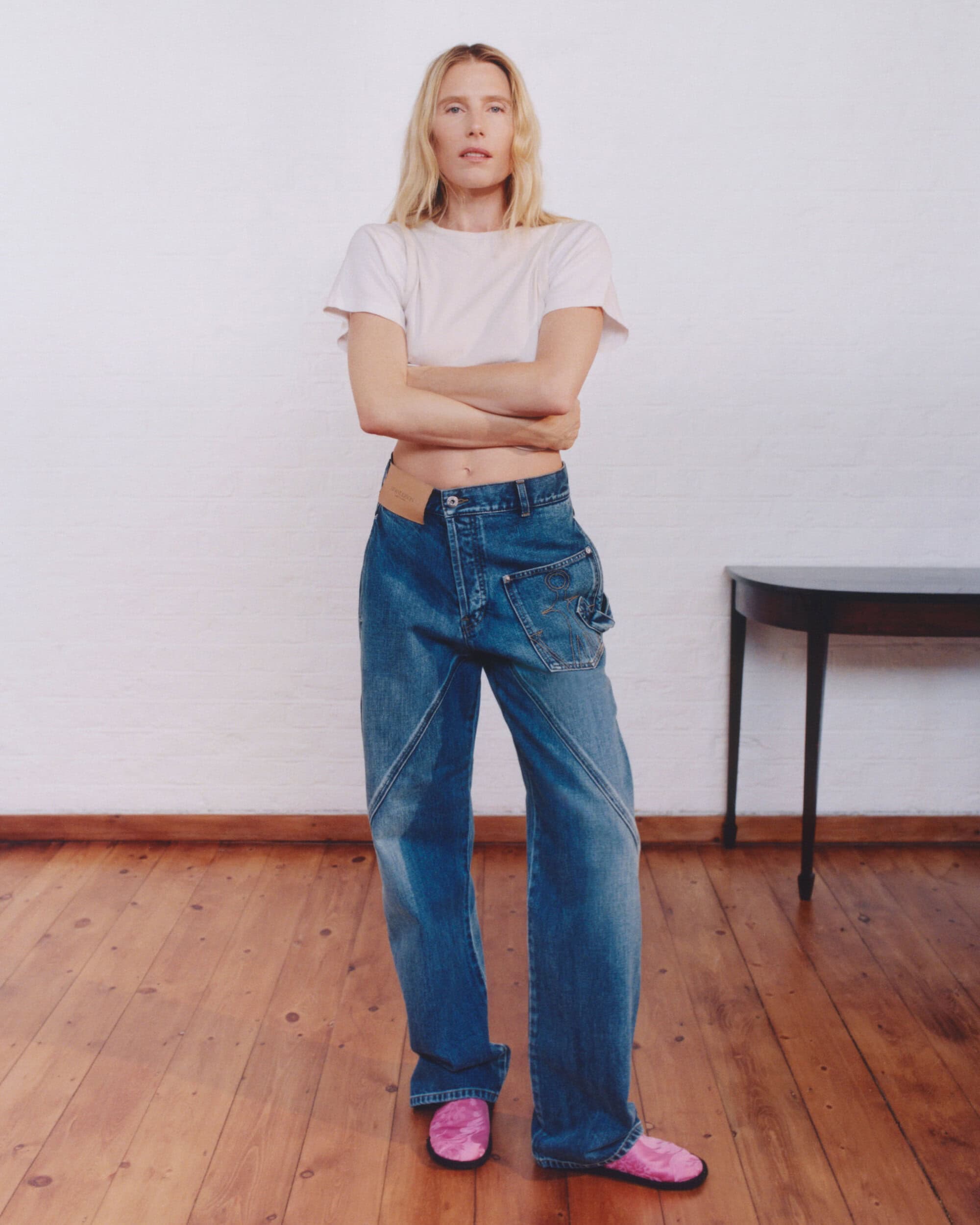
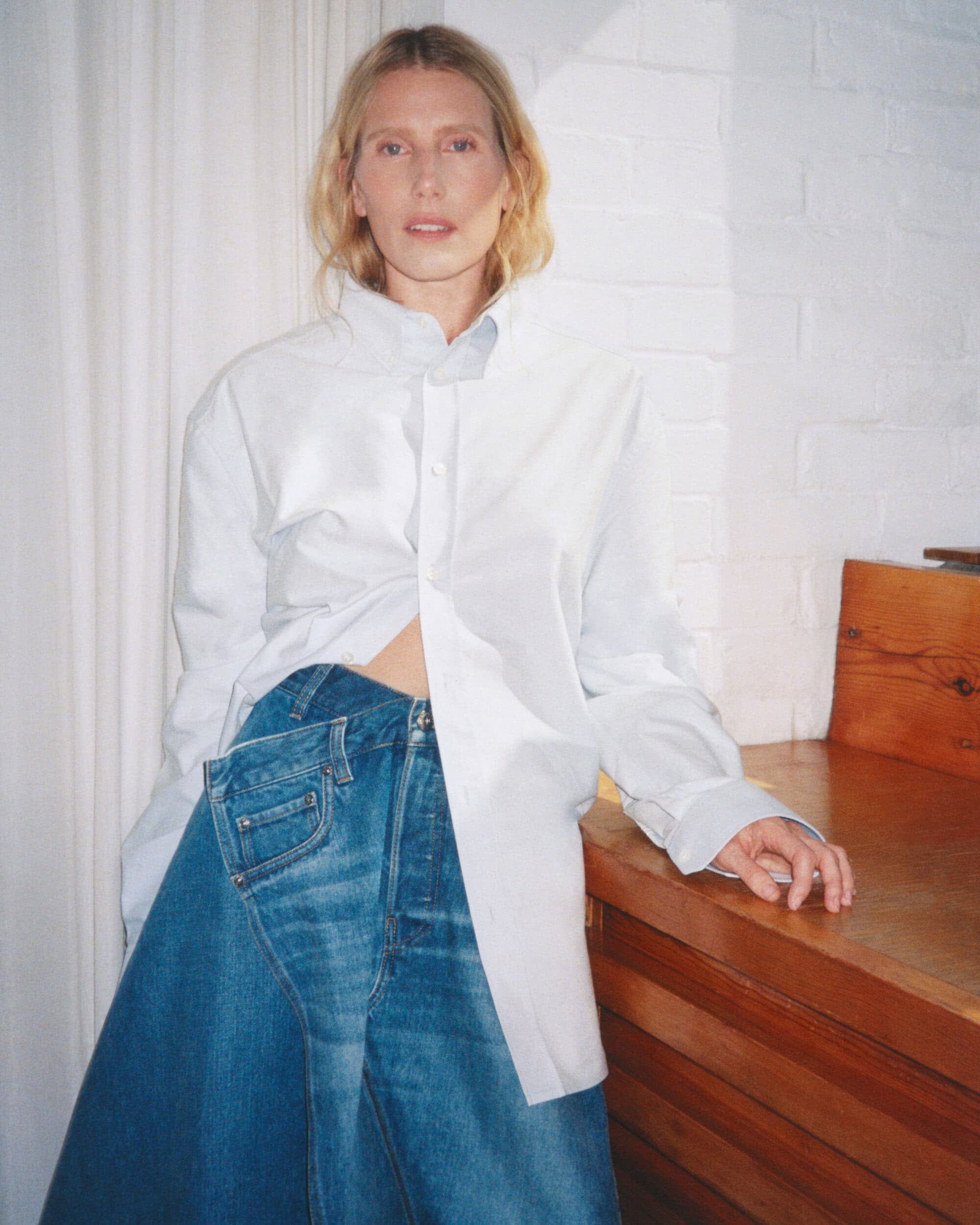
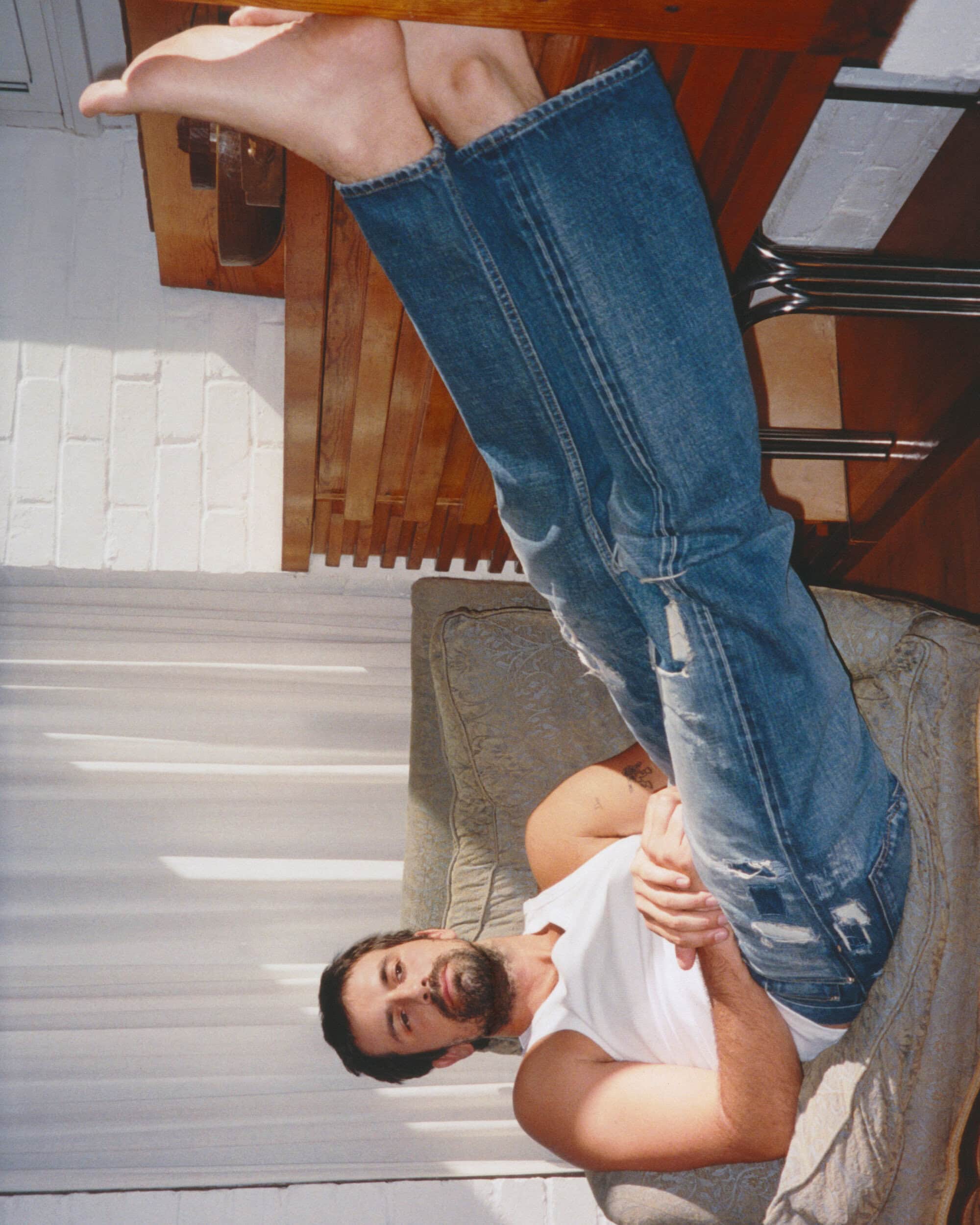
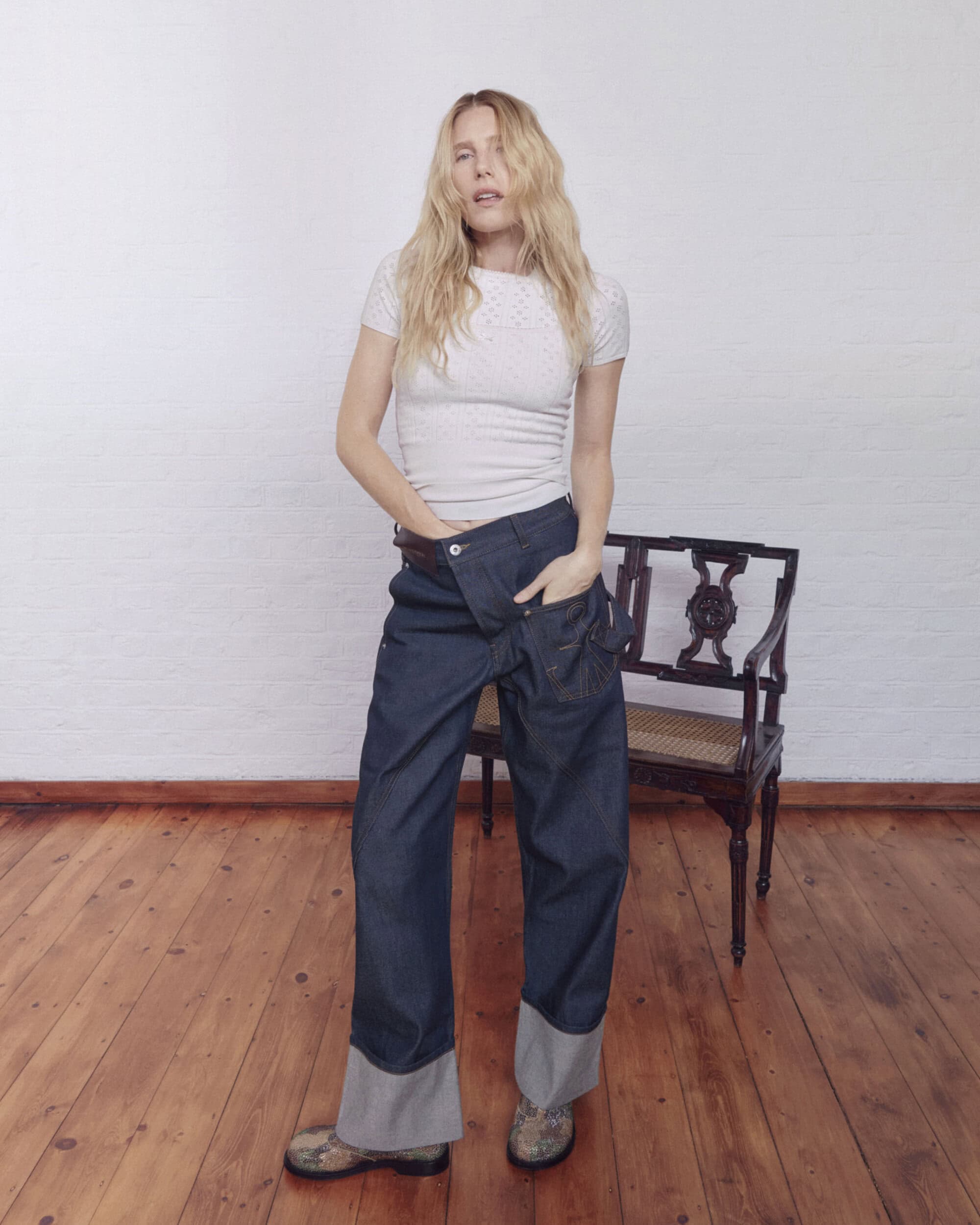
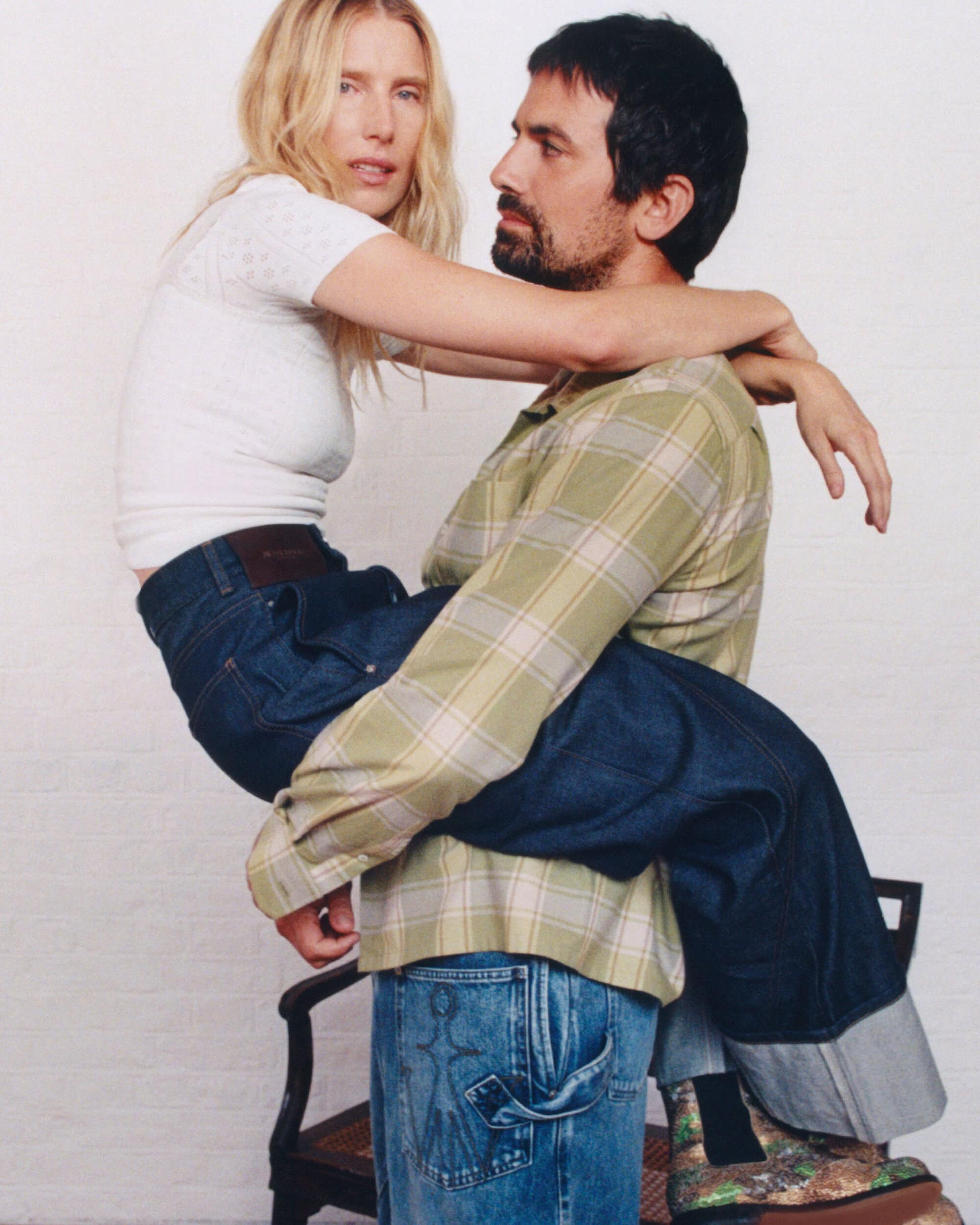
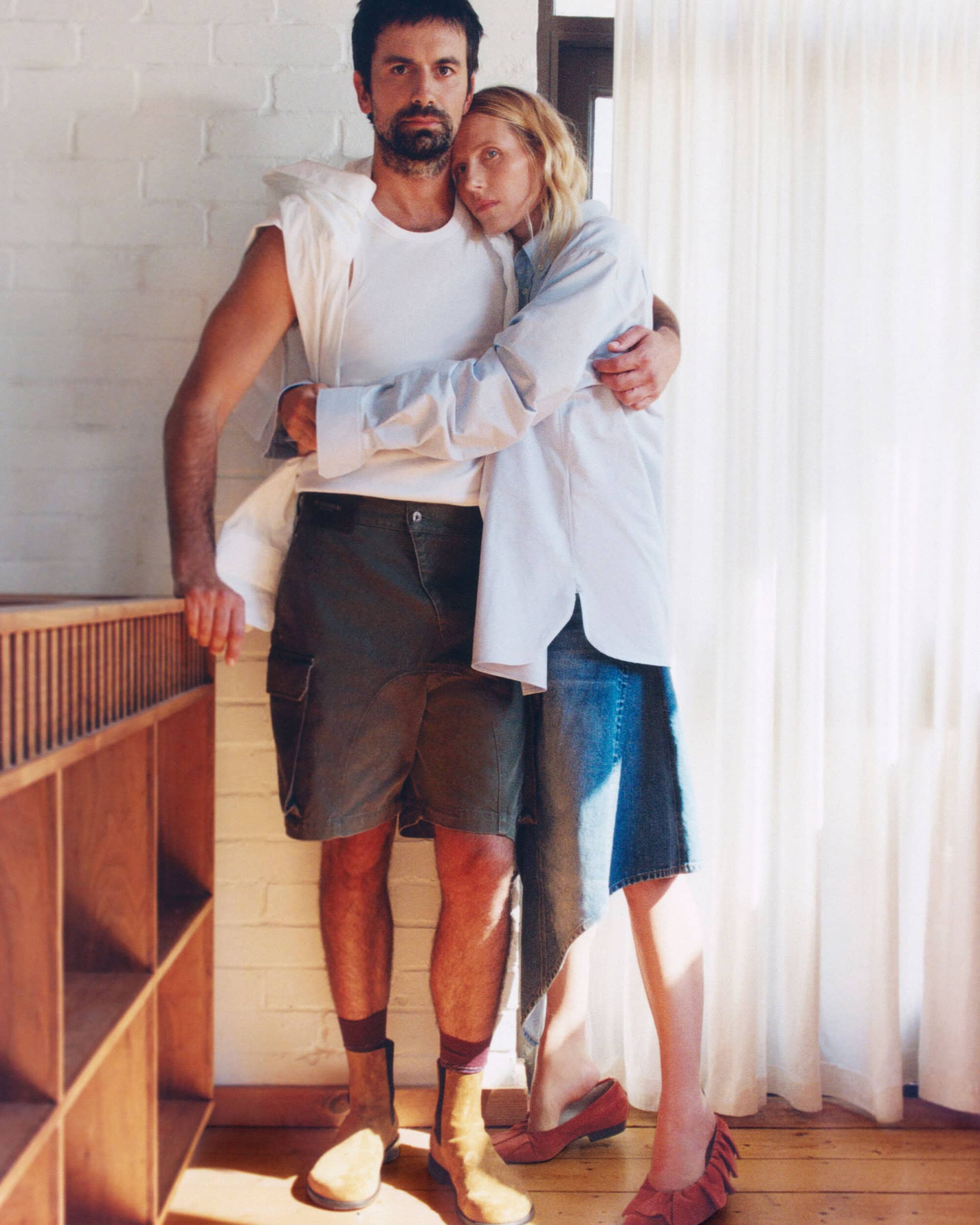
The setting could hardly be simpler. White brick walls, wooden floors, an old chair, a faded upholstered armchair and little else. Khoury photographs the couple with an appealingly loose, almost domestic immediacy. Nothing feels particularly polished, and that is precisely the point. Hemingway stands alone in some frames, slightly disheveled and self-possessed; in others she climbs onto Delli Santi, wraps herself around him, leans in for a kiss or is photographed so closely that bodies and denim begin to become one composition.
There is something smart happening in that physical entanglement. The product is called Twisted Denim, and rather than illustrate the idea with an elaborate visual conceit, the campaign lets the bodies do the twisting. Legs cross, arms wrap, torsos overlap and jeans fold into jeans. In one of the strongest images, Hemingway is carried around Delli Santi’s waist, turning the pair into an almost impossible arrangement of limbs, washes and seams. Another crops tightly onto hands gripping denim-clad hips. It is intimate, suggestive and funny without becoming overly sexualized. The campaign understands that chemistry is often more seductive than seduction itself.
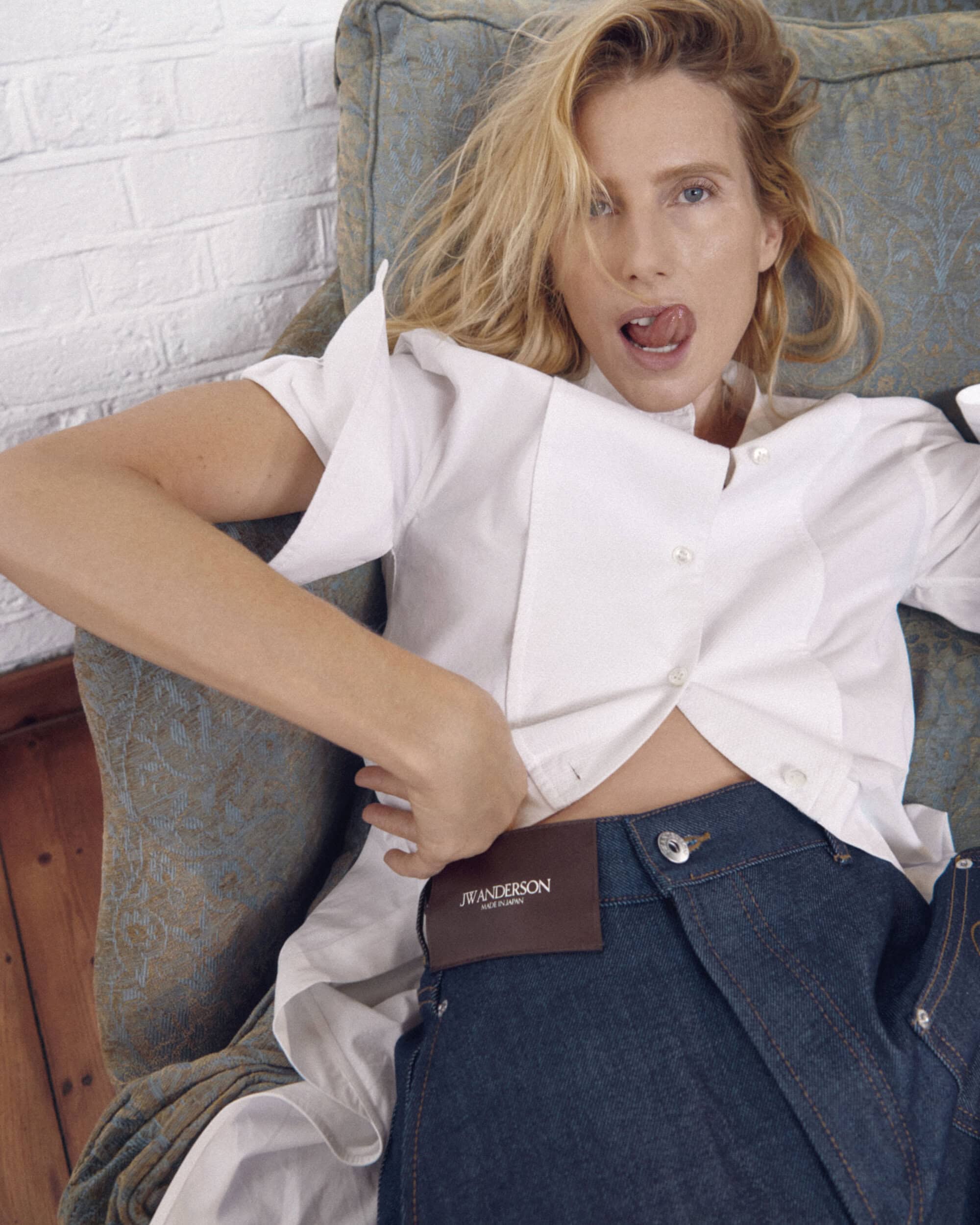
That looseness also suits the product. Jonathan Anderson’s jeans, made in Japan from Japanese cotton, take one of fashion’s most familiar garments and destabilize it through seams that migrate and curve across the body. The construction has enough eccentricity to register as Anderson without turning the jeans into a novelty exercise. The exaggerated pockets, twisted seam lines, oversized proportions and deep cuffs repeatedly pull the eye back toward the denim. Even the straightforward full-length portraits work because the unusual construction interrupts what initially appears to be a very ordinary pair of jeans.
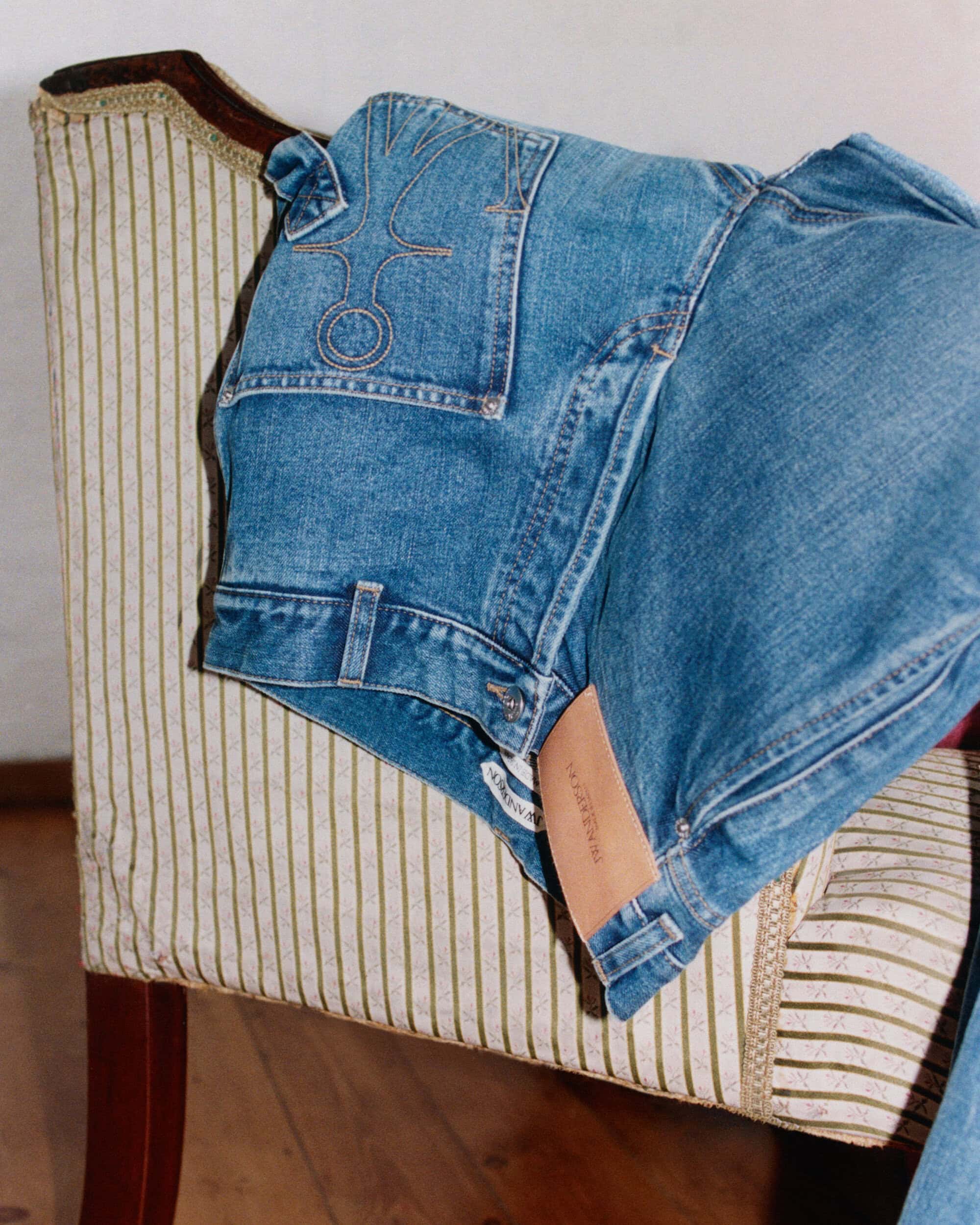
More importantly, you actually leave the campaign wanting to examine the product. That sounds like a remarkably modest achievement for advertising, but fashion campaigns increasingly become so consumed by celebrity, narrative or image-making that the merchandise winds up playing supporting actor in its own commercial. Here, Hemingway provides the invitation rather than the distraction. The close-ups of labels, pockets and seams are integrated into the visual rhythm rather than feeling like obligatory product shots. The campaign sells personality first and then quietly lets curiosity do the retail work.
There is also a useful tension between the sophistication of the casting and the modesty of the production. Hemingway carries generations of fashion mythology with her, but Khoury deliberately avoids turning that pedigree into glamour. The photographs have the slightly washed, imperfect quality of personal pictures, while Samuel Pidgen’s sparse set feels less like a constructed fashion environment than somebody’s temporarily borrowed room. It gives JW Anderson cultural currency without requiring the campaign to announce its importance. In an era when brands routinely confuse expenditure with impact, that economy feels refreshing.
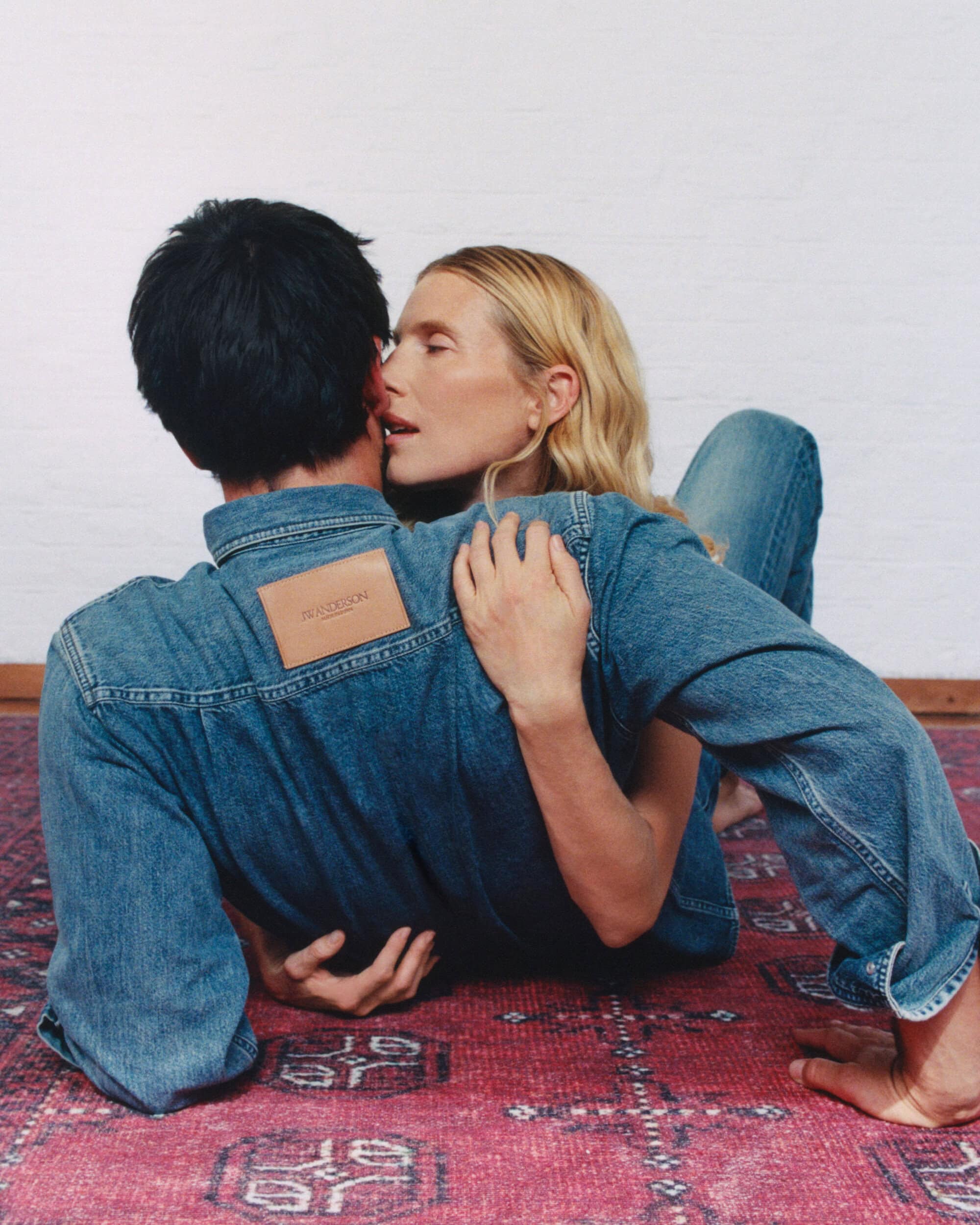
If there is a limitation, it is that the visual language is familiar territory: attractive creative people, domestic interior, analog softness, candid intimacy. Fashion has been visiting this apartment for quite some time. A stranger or more specifically JW Anderson disruption might have pushed the campaign from very good to genuinely memorable. Yet Anderson’s design interventions provide enough oddness to keep the imagery from becoming generic, and Hemingway’s playful physicality prevents the studied casualness from feeling overly studied.
Ultimately, Twisted Denim succeeds because its cleverness is worn lightly. The campaign brings together a culturally potent casting choice, genuine chemistry, economical production and a product distinctive enough to hold its own against all three. JW Anderson may be playing above its advertising budget, but nothing here feels inexpensive. Sometimes the smartest way to stretch a campaign dollar is simply to give it a good twist.
JW Anderson Creative Director | Jonathan Anderson
Photographer | Sam Khoury
Talent | Dree Hemingway, Nick Delli Santi
Hair | Tommy Stayton
Makeup | Kyle Dominic
Manicurist | Charly Avenell
Set Designer | Samuel Pidgen