Strange Tide
Review of Ann Demeulemeester Fall 2026 Ad Campaign by Creative Director Stefano Gallici with Photographer Nikolai von Bismarck with models Betsy Gaghan, Ezekiel Conteh
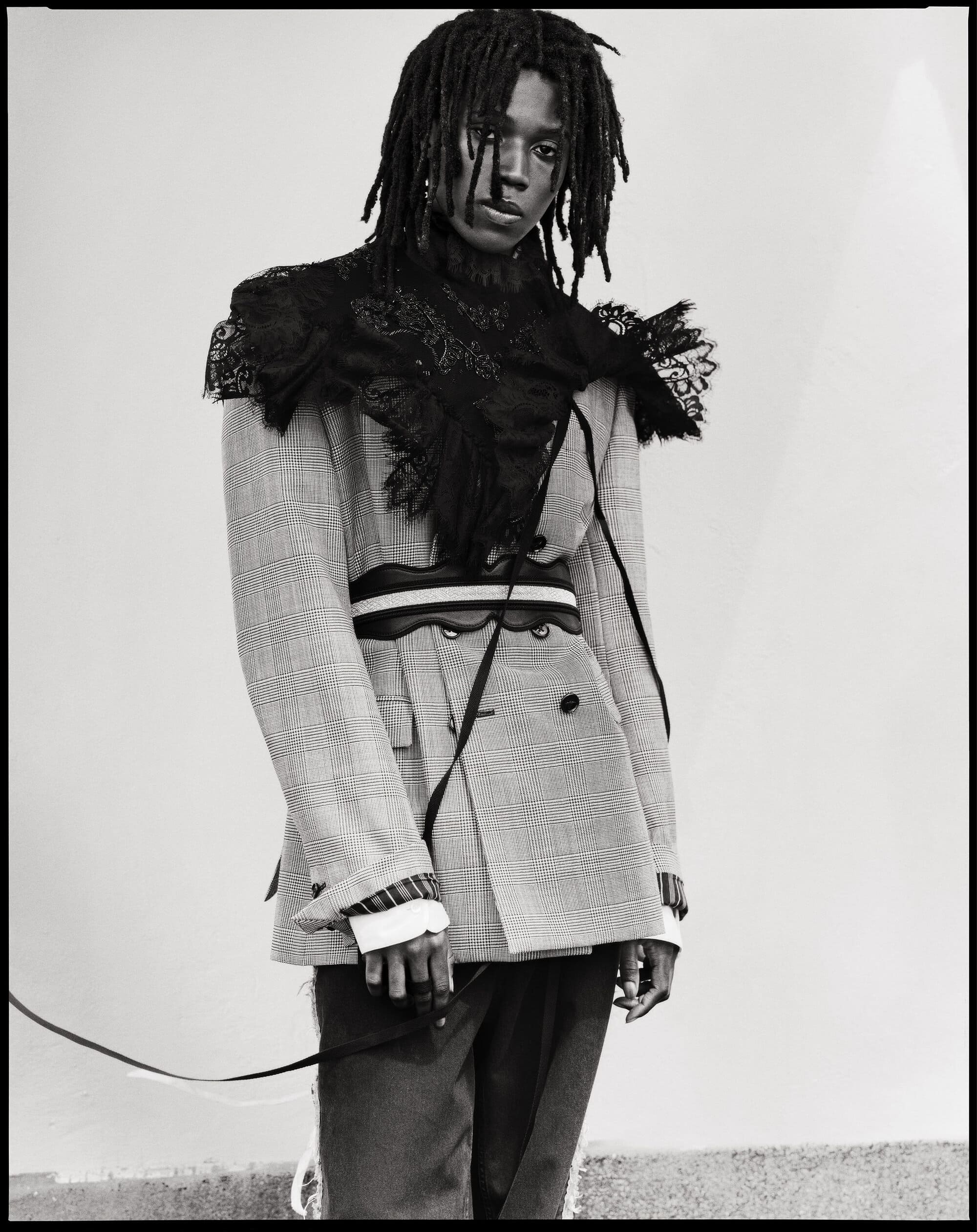
Ann Demeulemeester’s Fall 2026 campaign arrives at the English seaside like a pair of beautiful strangers who have missed their train, forgotten the destination, and decided they prefer it that way. Directed creatively by Stefano Gallici, styled by Elodie David, and photographed by Nikolai von Bismarck, the campaign follows models Betsy Gaghan and Ezekiel Conteh through Margate, where cliffs, sea, faded architecture, and empty stretches of beach become the setting for a characteristically romantic meditation on youth and displacement. The house describes them as “striding, actually; like antelopes.” It is an oddly perfect observation. These are not models walking toward the camera so much as creatures passing through its field of vision.
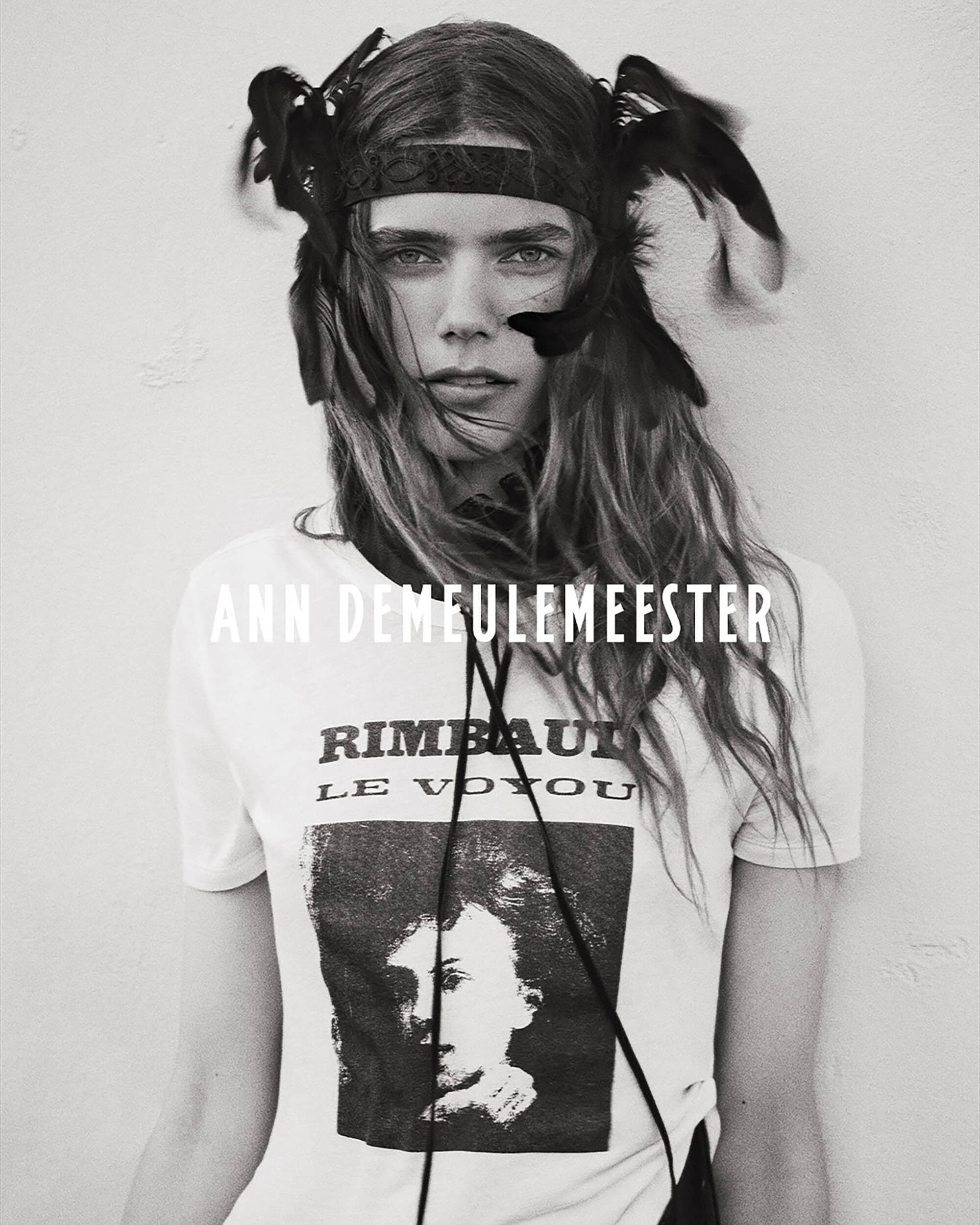
Von Bismarck photographs that passage with a looseness that feels essential to the story. Wind interferes constantly, throwing hair across faces, lifting fringe and ribbons, disturbing the careful construction of the clothes. In the strongest images, the elements almost become another stylist. A black fringed leather jacket turns into wings as Conteh walks toward the cliffs with his arms outstretched; Gaghan’s hair crosses her face until portraiture begins to verge on abstraction. Feathers hover around her head in another image, less decorative than slightly uncanny. The campaign understands that Ann Demeulemeester’s romanticism has always worked best when beauty appears to have been caught rather than arranged.
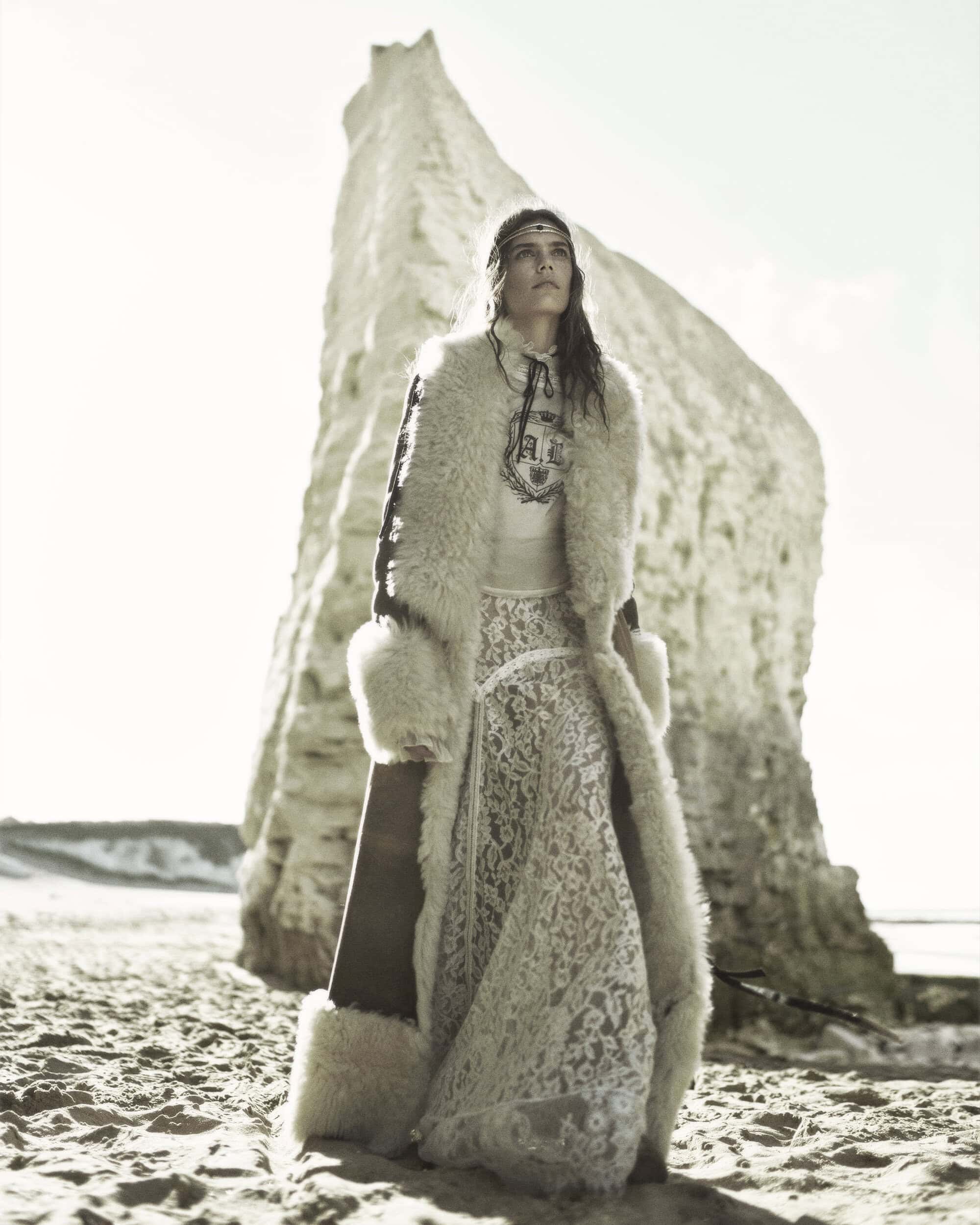
Margate is an inspired accomplice. Its seaside landscape avoids the grandeur one might expect from clothes this poetic. Instead of placing Gallici’s elongated lace, velvet, distressed denim, tailoring, and leather against some operatic Gothic backdrop, the campaign gives them weathered concrete, sand, modest streets, chalk cliffs, and the indifferent horizon. The result is romantic without becoming precious. There is an almost British post-punk sensibility to the collision: ceremonial clothes worn with the attitude of someone who might have slept in them after a concert.
That tension is particularly important for Gallici’s stewardship of Ann Demeulemeester. The house possesses such a recognizable vocabulary that reverence can easily become its own trap. Black and white, feathers, poetry, languid tailoring, elongated proportions, romantic outsiders, and rock music are powerful codes, but codes repeated too faithfully risk turning mythology into mannerism. Here, Gallici loosens the grip by introducing youthful awkwardness and abrasion. Lace is disrupted by menswear checks. Tailoring meets distressed denim. A formal military jacket appears with worn jeans. Delicacy and damage are allowed to occupy the same body.
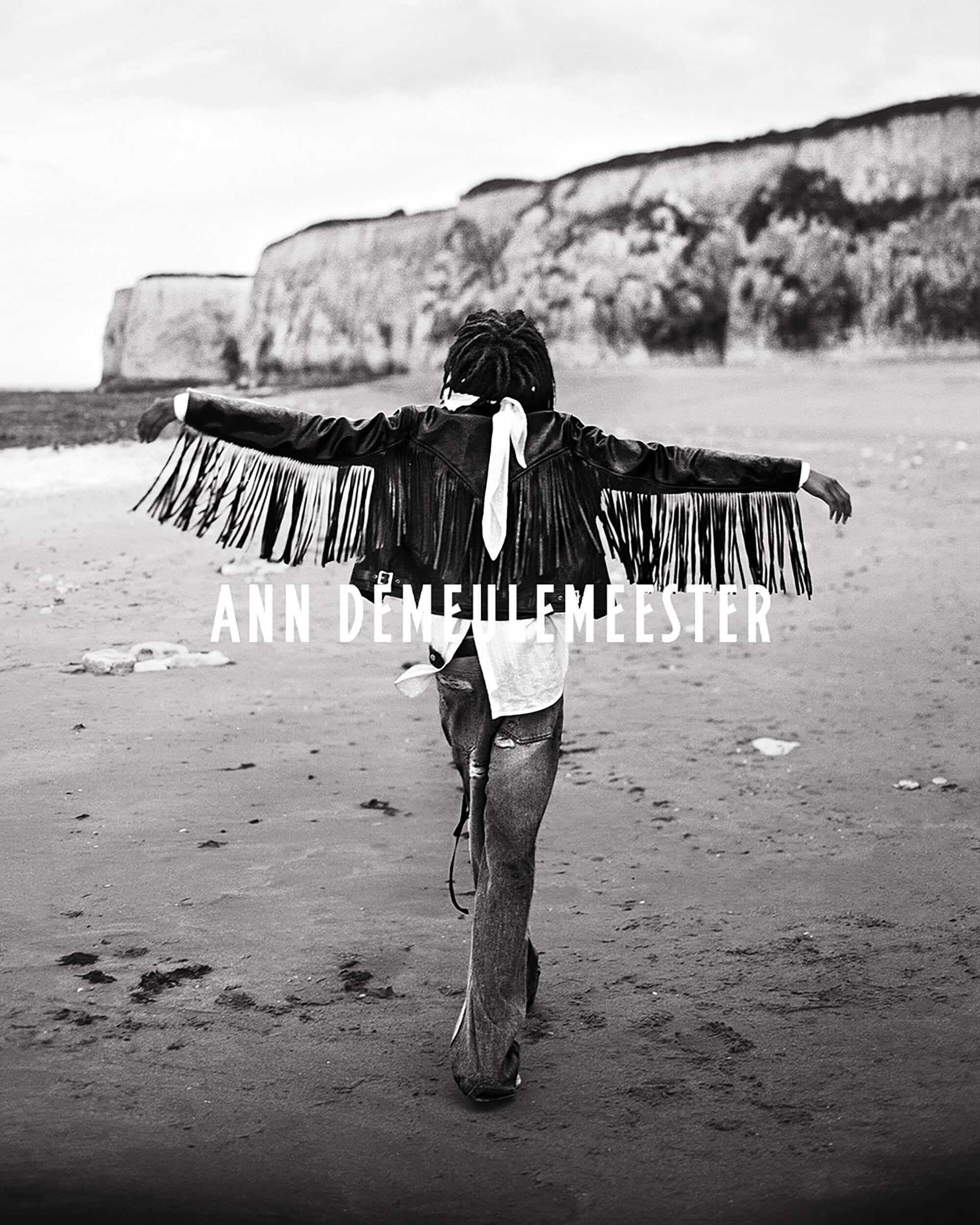
The Rimbaud T-shirt makes the literary lineage almost comically explicit, but perhaps that is part of its charm. Ann Demeulemeester has never exactly been coy about its poets. More interesting is the way these references are worn rather than revered. They are T-shirts, scarves, fragments and personal talismans, mixed into clothes rather than mounted behind glass. Gaghan and Conteh consequently feel less like custodians of the house archive than young people who have raided it, kept what they liked, and headed for the coast.
There is a beautiful emotional distance to the casting as well. Neither model gives the viewer much reassurance. Their gazes drift elsewhere; even when facing the camera they seem mentally beyond it. The campaign copy imagines former loves, future summers and lives perhaps already lived, but the photographs wisely refuse to answer those questions. That withholding gives the imagery its psychological charge. Fashion advertising often works desperately hard to manufacture intimacy. Here, distance is the seduction.
Jorge Higgins’ accompanying film extends that idea through movement, with the sea providing a natural counterpoint to the collection’s ribbons, fringe, hair and elongated silhouettes. Music by Oli Burslem further grounds the project in the musical sensibility that has always been inseparable from the Ann Demeulemeester universe. The campaign does not merely borrow the iconography of musicians and poets; its creative team understands rhythm. Bodies, fabric, wind, landscape and camera seem to move at slightly different speeds.
If there is a vulnerability, it is that none of this territory is foreign to Ann Demeulemeester. Beautiful young outsiders wandering through a monochromatic world of poetry, melancholy and romantic dishevelment could almost serve as the house’s permanent address. Yet familiarity is not necessarily repetition when the emotional temperature changes. Von Bismarck’s grain, Higgins’ movement, David’s styling and Gallici’s increasingly assured hand keep the imagery from feeling embalmed in heritage. Rather than reproducing the past, they allow it to weather.
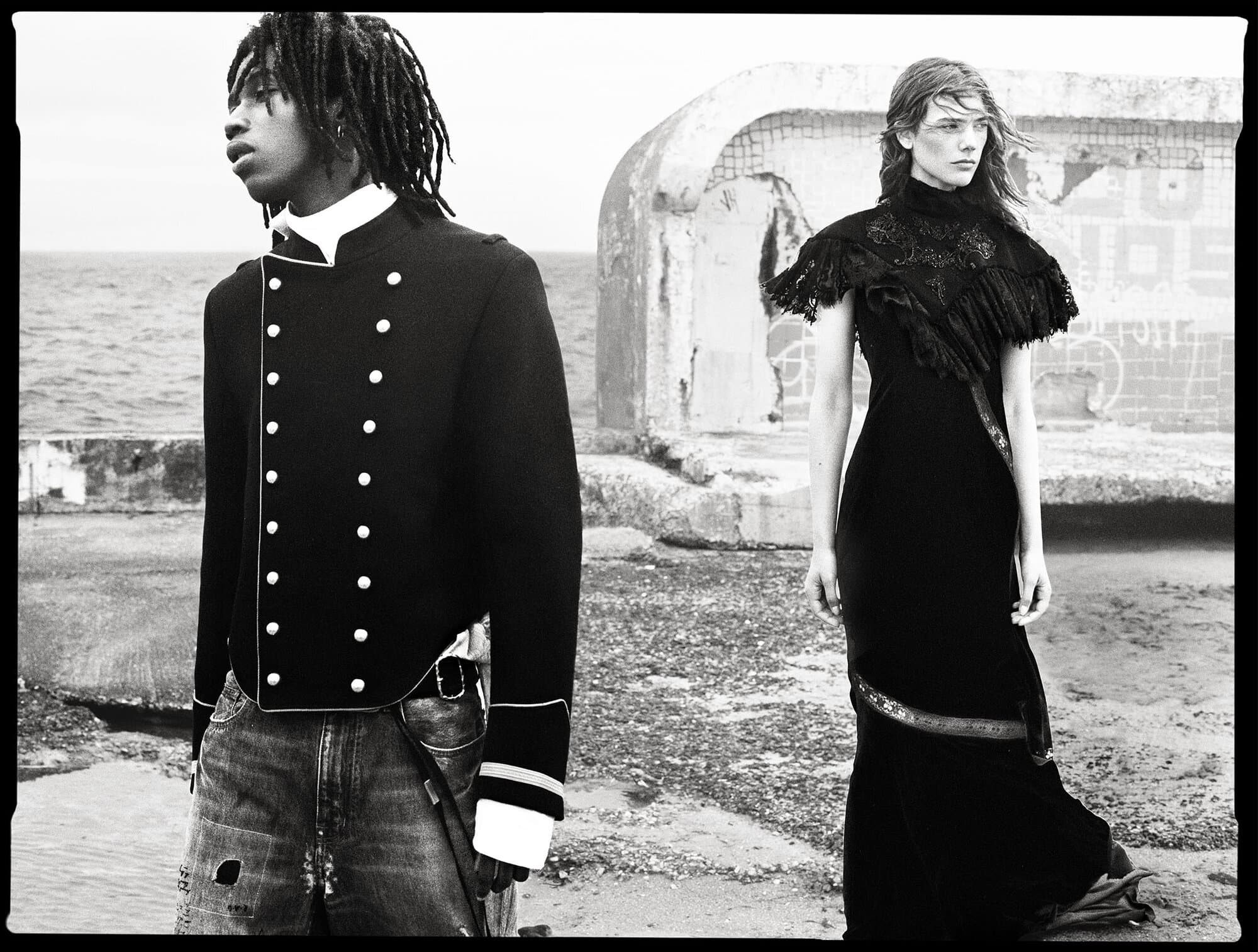
That may be why Strange Tide feels so convincing. These two figures never quite seem to arrive, because arrival was never the point. They move between seasons, between masculine and feminine, delicacy and toughness, memory and possibility, while the sea continues behind them with magnificent indifference. Ann Demeulemeester has always understood the romance of those who exist slightly outside the current. This time, Gallici simply lets the tide come to them.


Ann Demeulemeester Creative Director | Stefano Gallici
Photographer | Nikolai von Bismarck
Director / Cinematographer | Jorge Higgins
Models | Betsy Gaghan, Ezekiel Conteh
Stylist | Elodie David
Hair | Kim Rance
Makeup | Crystabel Efemena Riley
Casting Director | Ben Grimes
Production | Farago Projects
Editor | Marlon Francis
Post House | OkayStudio
Post Producers | Athene Xenia Aristocleous, Tia Duff
Grade | Dan Beddoe
Director’s Assistant | Adam Fox
Music | “Suns,” written and composed by Oli Burslem