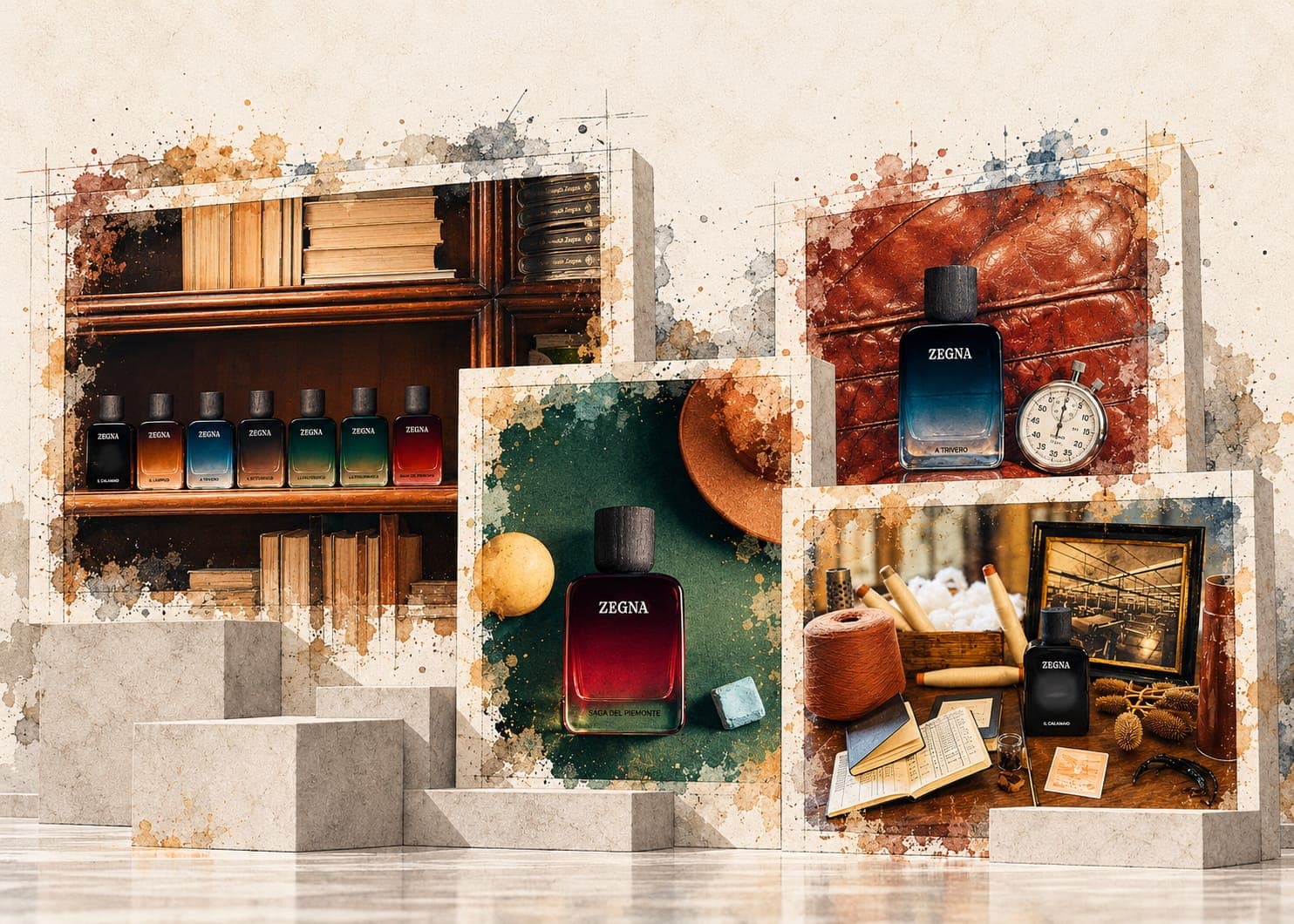
From The Morning Rituals Of Its Founder To The Forests And Wool Mills Of Oasi Zegna, Memorie Transforms Ermenegildo Zegna’s Lived Experiences Into Six Fragrances That Explore Scent As A Vessel For Memory, Emotion And Human Connection
By Angela Baidoo
The application of a fragrance can often be associated with the intention of making memories. Or of being memorable when our scent either enters a room or lingers long after we have left. But, following the launch of Zegna’s latest fragrance collection collectively titled ‘Memorie,’ in March, the Italian house founded in 1910 is disrupting the way we imbue scents with lived experiences that carry a sense of time and place.
In order to reestablish a connection with the consumer luxury brands have long been thinking multi-sensory. Sight, sound, smell, taste, touch have now become key communication tools used within collections, campaigns, wellness offers, and the expansion into the food and beverage space. At a time when the luxury perfume industry is valued at close to $30 billion and fragrance is often the first introduction to a brand, olfactory innovation has become another vehicle for leveraging the power of smell to connect us with the comforting nostalgia of our past lives.
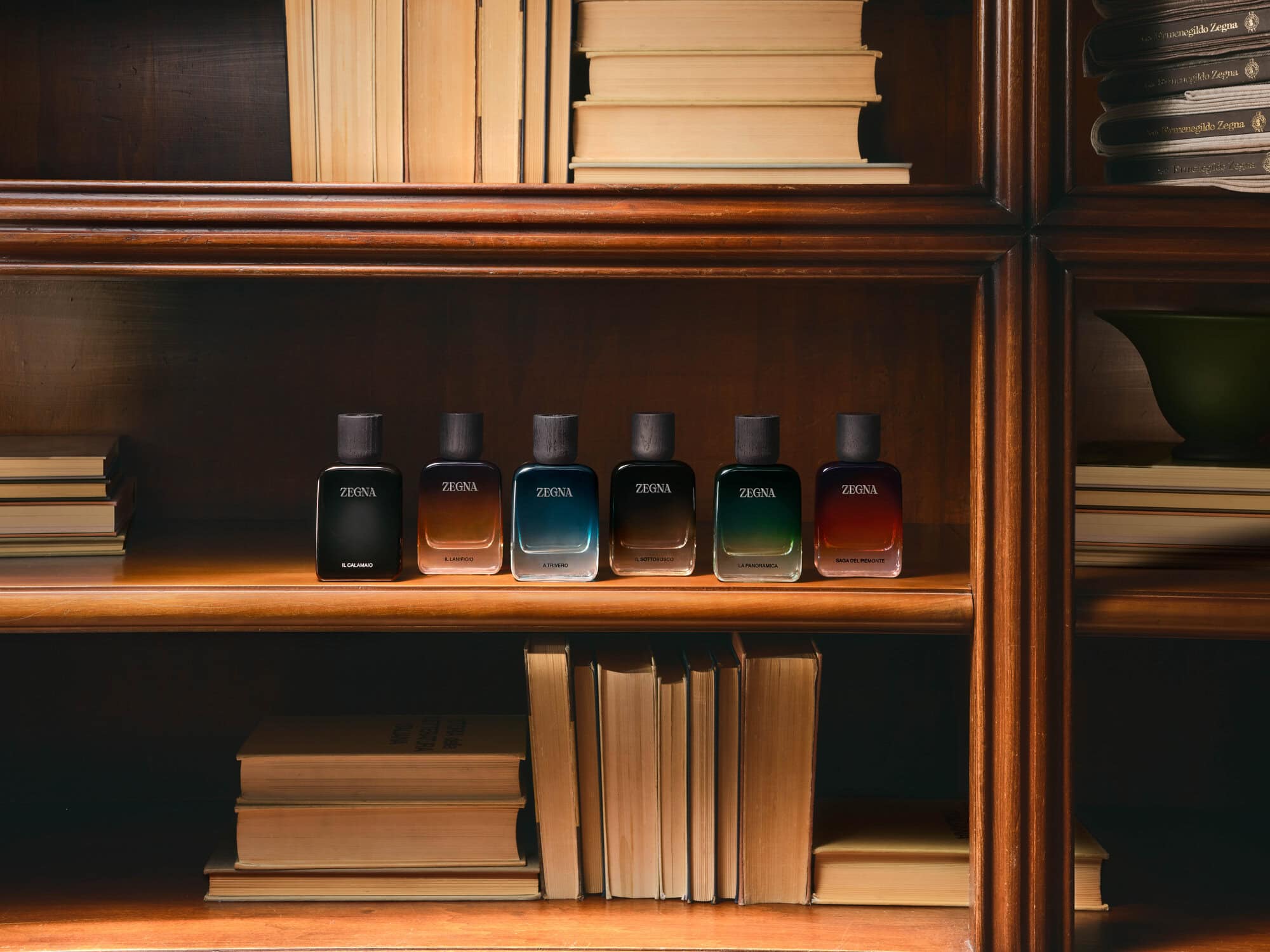
Alessandro Sartori’s fragrance collection for Zegna began with an unconventional brief. His starting point with his perfumers – selected after meeting with seven to eight ‘noses’ and making a number of trips between Paris and Oasi Zegna – was not the notes, desired projection or packaging, it was the man: Ermenegildo Zegna. “The collection was the story and memory first,” Sartori explained. The six chapters, or volumes, were created to evoke site-specific recollections. From His desk at dawn. The newspaper he read before work. The smell of the wool mill. His Lancia Aurelia heading out of Trivero. A forest after the rain. Dinner with the family at the end of the day.
It was only then that the perfume came into it. Which seems obvious until you consider how much of the modern fragrance conversation begins at the other end. In setting out the first six volumes of what Sartori confirmed will be an ongoing story, he and his team have created a sensory biography steeped in the founder’s most pivotal memories.
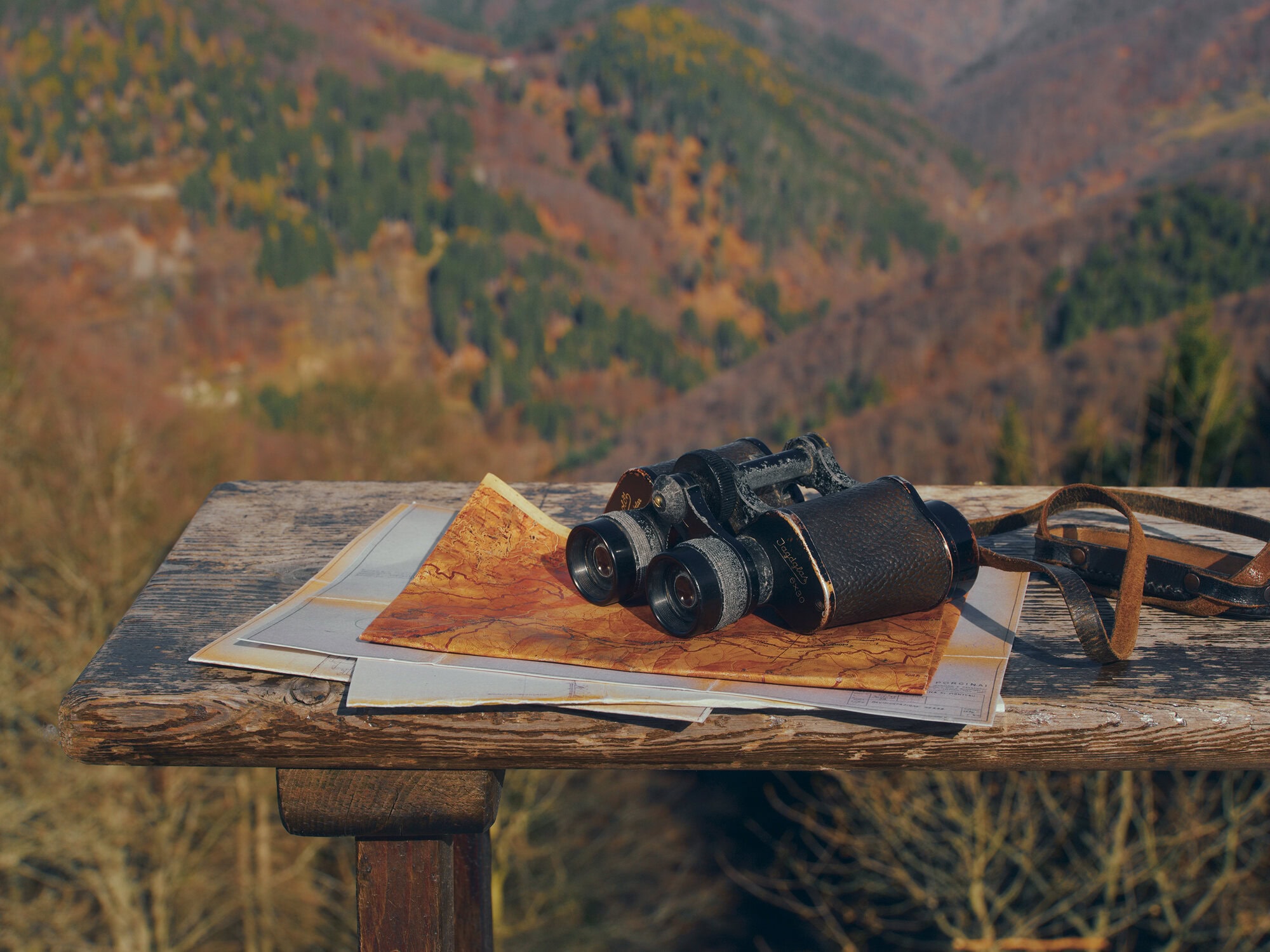
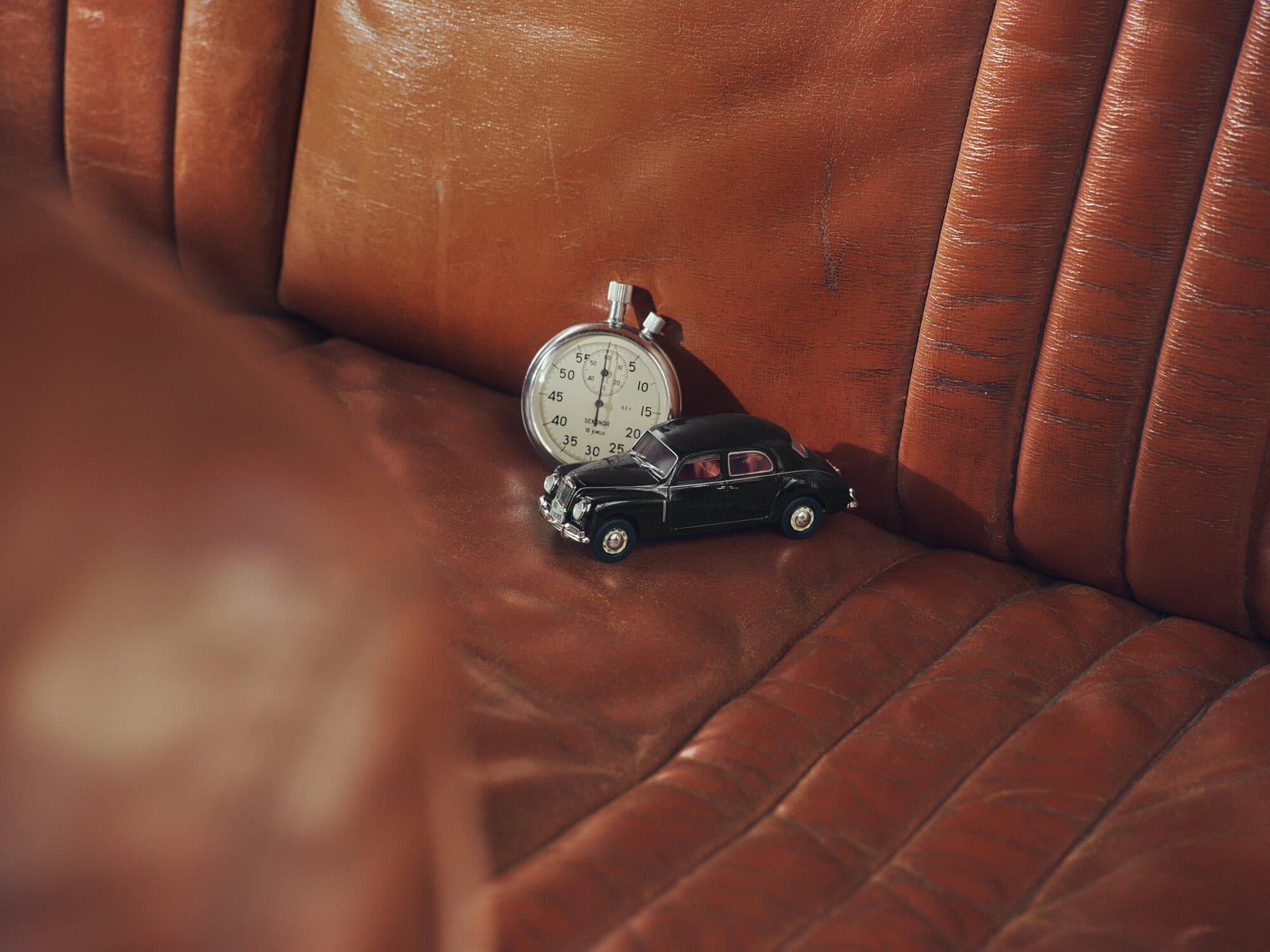
We started with the experiences before we started designing the fragrances. We knew that he [Ermenegildo Zegna] took time for himself in the morning before going to the studio. Reading magazines, reading newspapers, and thinking about new fabrics. He enjoyed time solo, but also with friends, up in the mountain with the car driving. So, we knew his story, and we narrowed it down to six important memories and chapters in the journey.
– Alessandro Sartori, Artistic Director, Zegna
Before the Notes,There Was a Life
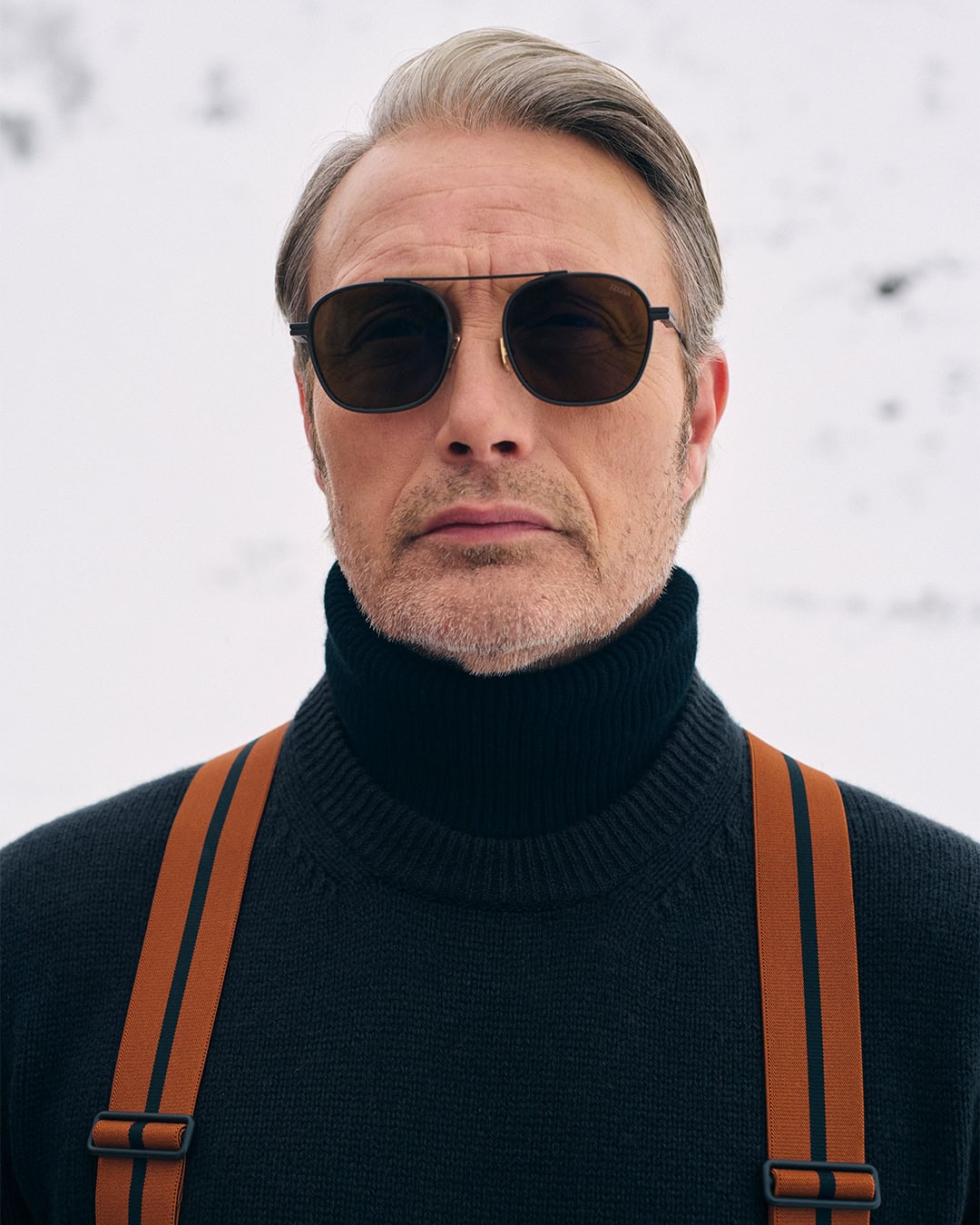
In a short campaign film tracing the life of Zegna – the man – and starring Global Ambassador Mads Mikkelsen, automobile adventures, daily rituals, the lure of the forest, and the rhythm of the factory are brought to life. Director Boramy Viguier gives the world of Casa Zegna a cinematic expansiveness grounded in whimsy. No doubt derived from writer Roman Coppola’s credits on Wes Anderson’s most popular films – Moonrise Kingdom and The French Dispatch. From whip pan shots to a wind-up miniature of the founders beloved Lancia Aurelia zooming through scenes as Mikkelsen’s animated guide.
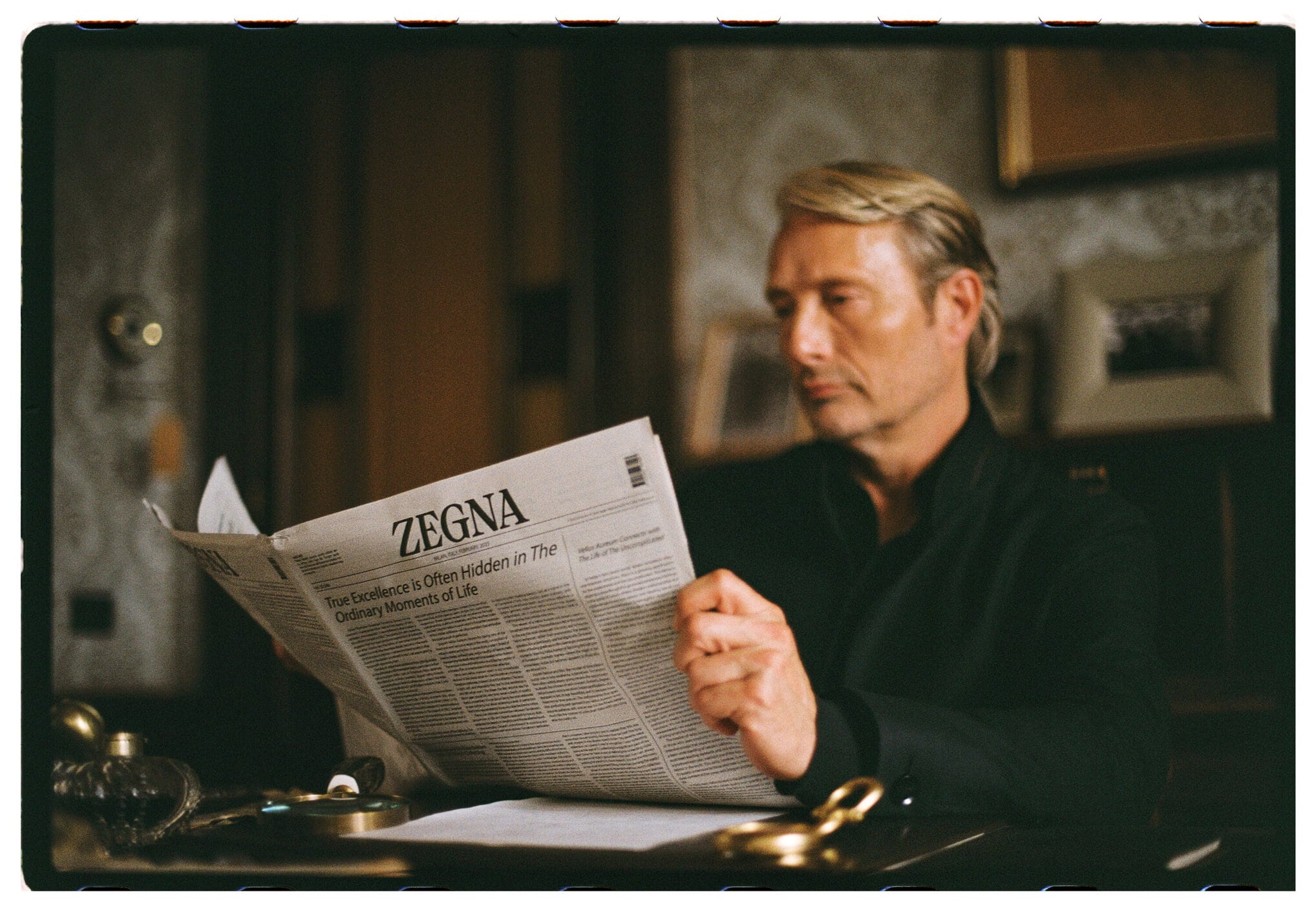
If the walls the Ambassador walked could talk, they would tell of a man of ambition called to action in 1910. Guided around the hallowed, yet very much functioning, halls of Oasi Zegna we were invited to discover the founders vision. Not simply to produce some of the world’s finest fabrics, but his realisation that there is no quality without community.
What began with a few looms saw him eventually carve his legacy into the mountainside, transforming it through the planting of over half-a-million conifer trees while investing in the community around the mill. His hundreds of artisans were provided with facilities including a swimming pool where women working in the mill brought their children to learn to swim, workshops to train upcoming textile artisans, apartments, a store that remains operational today, a theatre, ballroom and hospital where artistic director Alessandro Sartori was born.
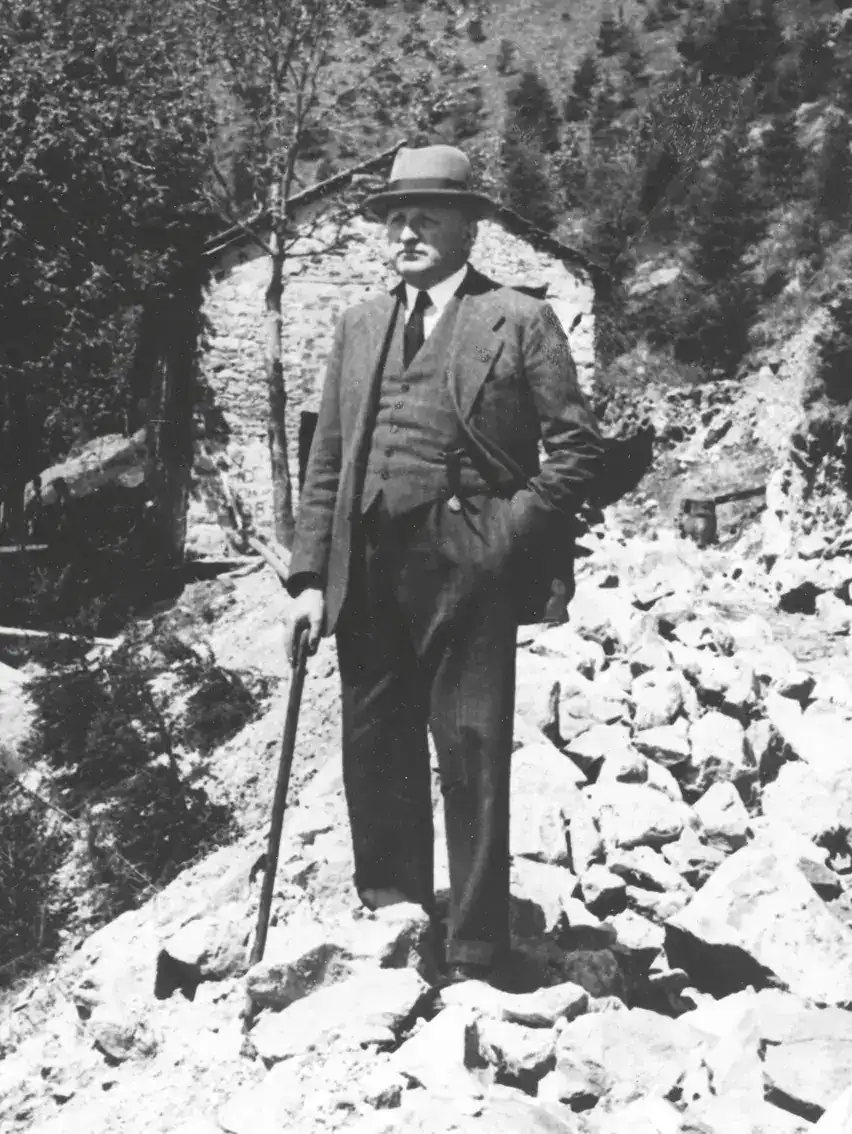
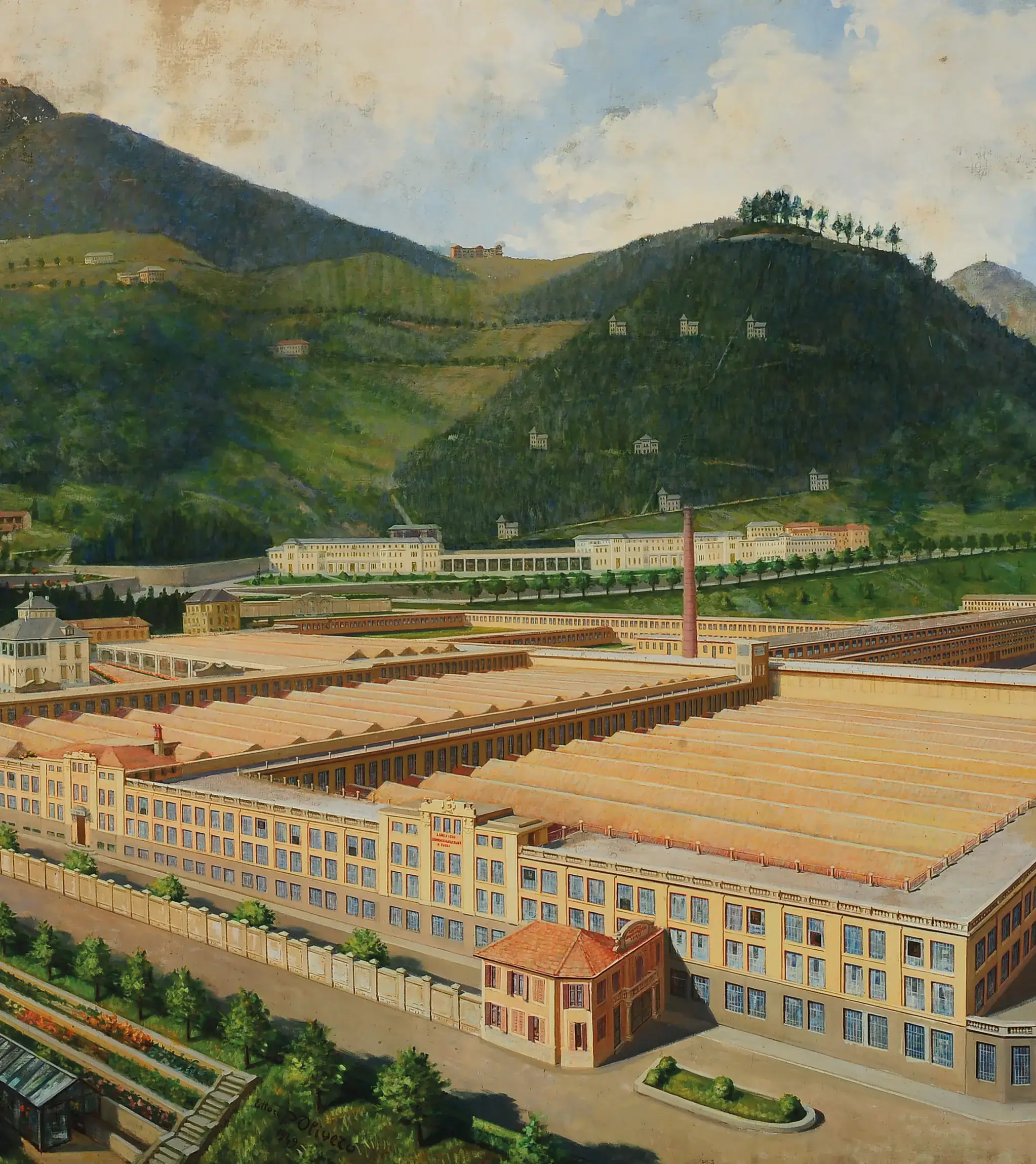
The Zegna branding, comprised of two wide stripes cut through with a thinner black stripe, symbolises that all roads lead back to Oasi Zegna (starting from Trivero to the Biella Alps in Northern Italy). The deep orange colour was derived from the forest foliage in fall and the singular black stripe represents the Panoramica mountain road – now known as the 232 – built to connect the mountain to the territory beyond it. Craftsmanship, community and quality became pillars built from the ground up, with fragrance the latest extension of a brand that continues to exalt material, place and family.
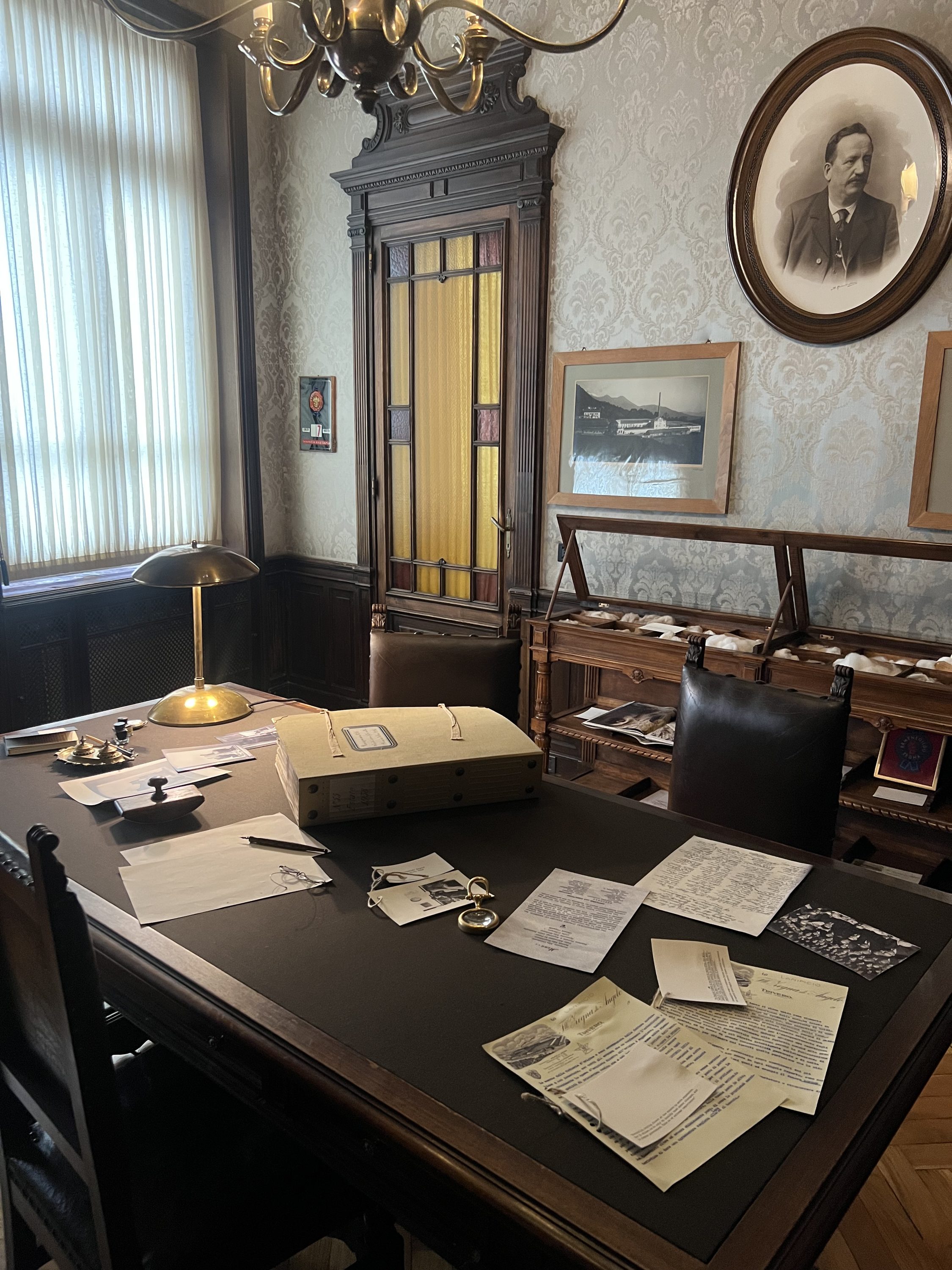
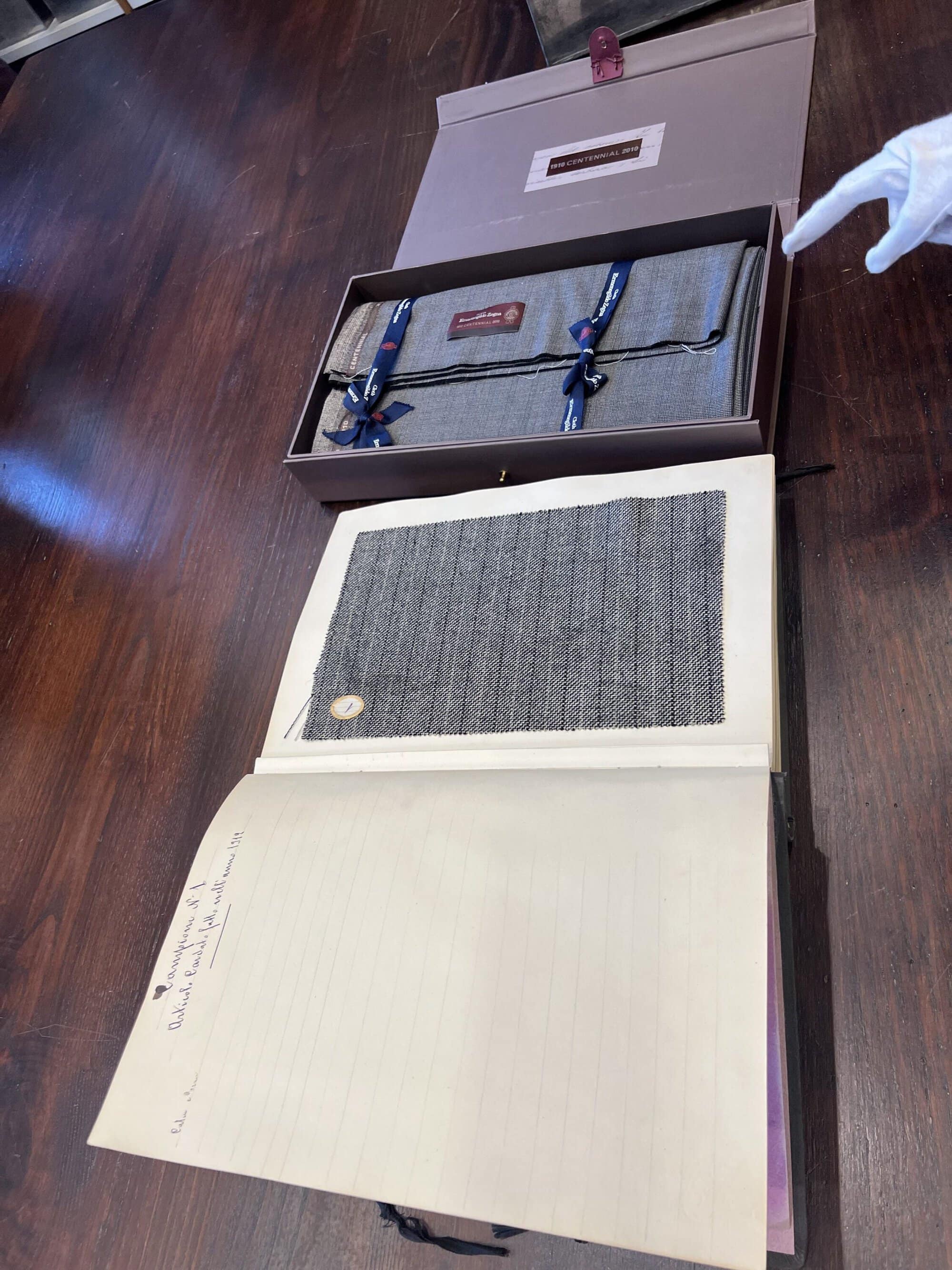
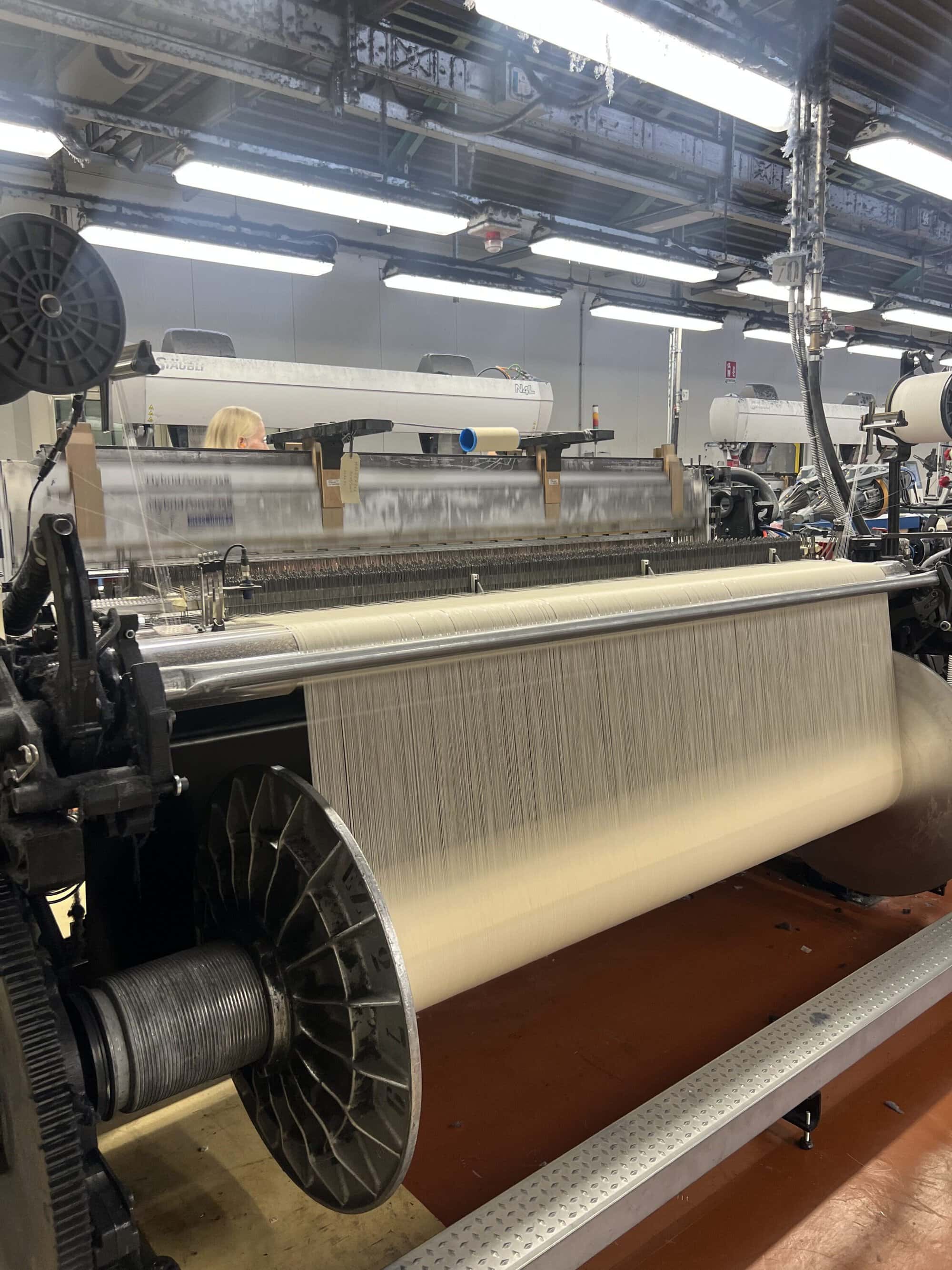
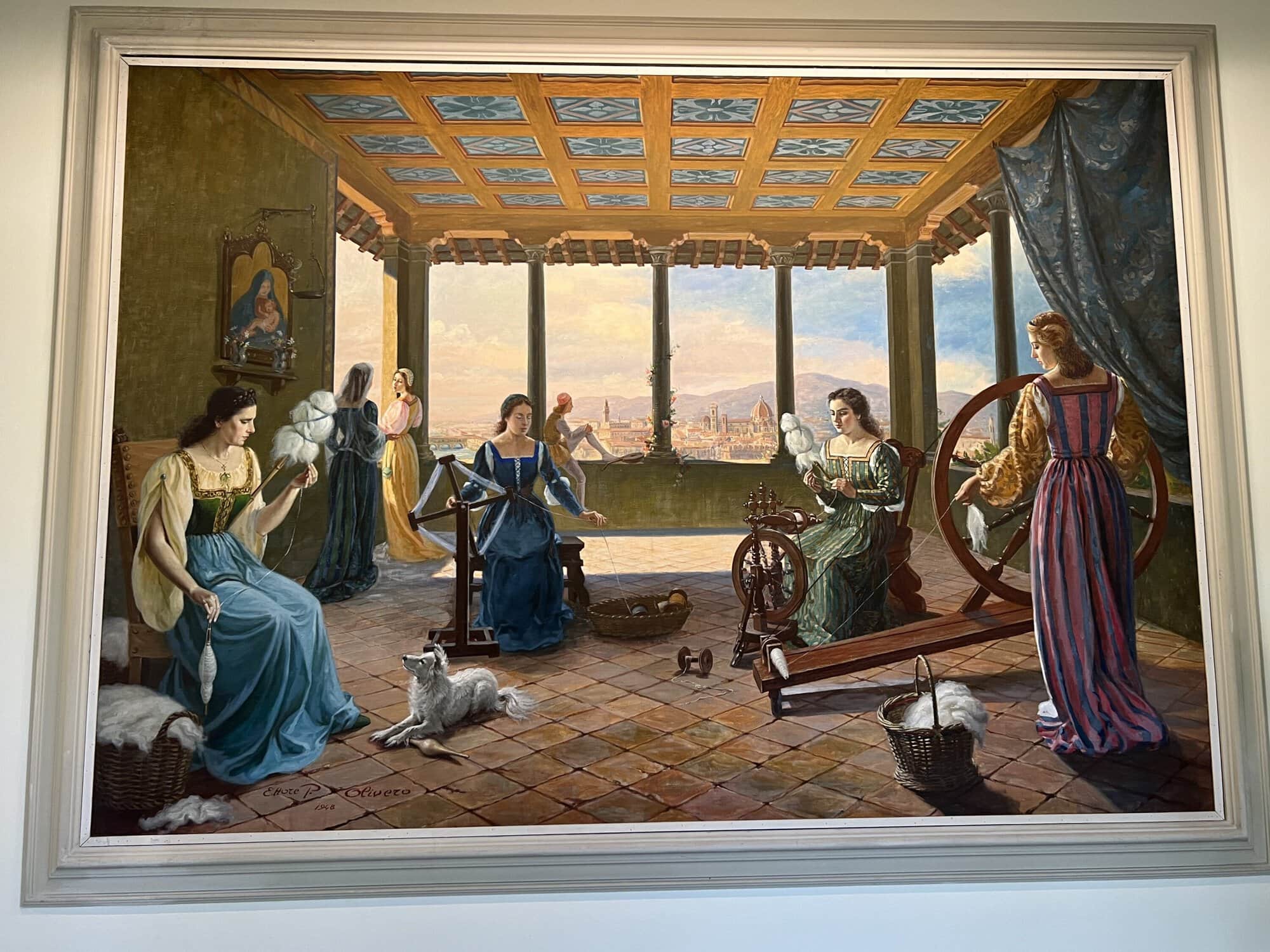
Experiencing Ermenegildo’s private office, where he kept catalogues of fabric books with each ‘recipe’ handwritten on the following page, the former showroom where Ettore Olivero Pistoletto’s paintings depict wool manufacturing through a Renaissance lens, and watching wool move through dyeing, spinning, weaving and finishing makes the distinction between heritage as a marketing tool and heritage woven into a brand’s operating system fairly clear. Old techniques remain embedded inside modern manufacturing.
Sartori’s concept of making scents from the memories held within this place is all the more meaningful, as he said, “[These] scents are part of his life, because they are attached to a certain period.”
Six Volumes, One Biography
Like the campaign film, the six fragrances of the Memorie collection trace Ermenegildo’s day almost cinematically. At the start of Sartori’s search for the best ‘nose’ to bring his vision to life, he was advised against relying on a single master perfumer: different noses would be better suited to different memories. This led to the first six volumes being crafted by Dominique Ropion, Fabrice Pellegrin and Quentin Bisch.
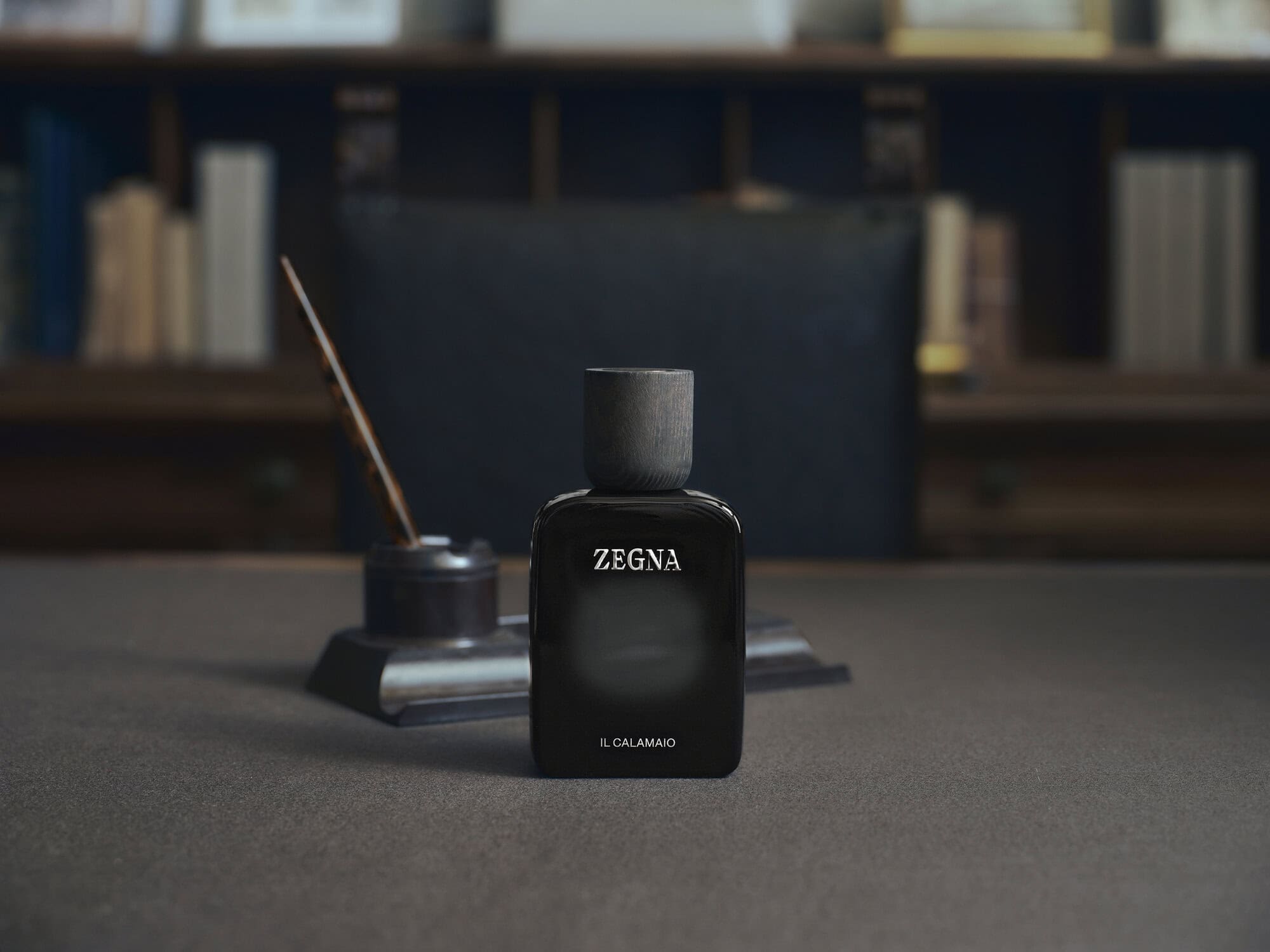
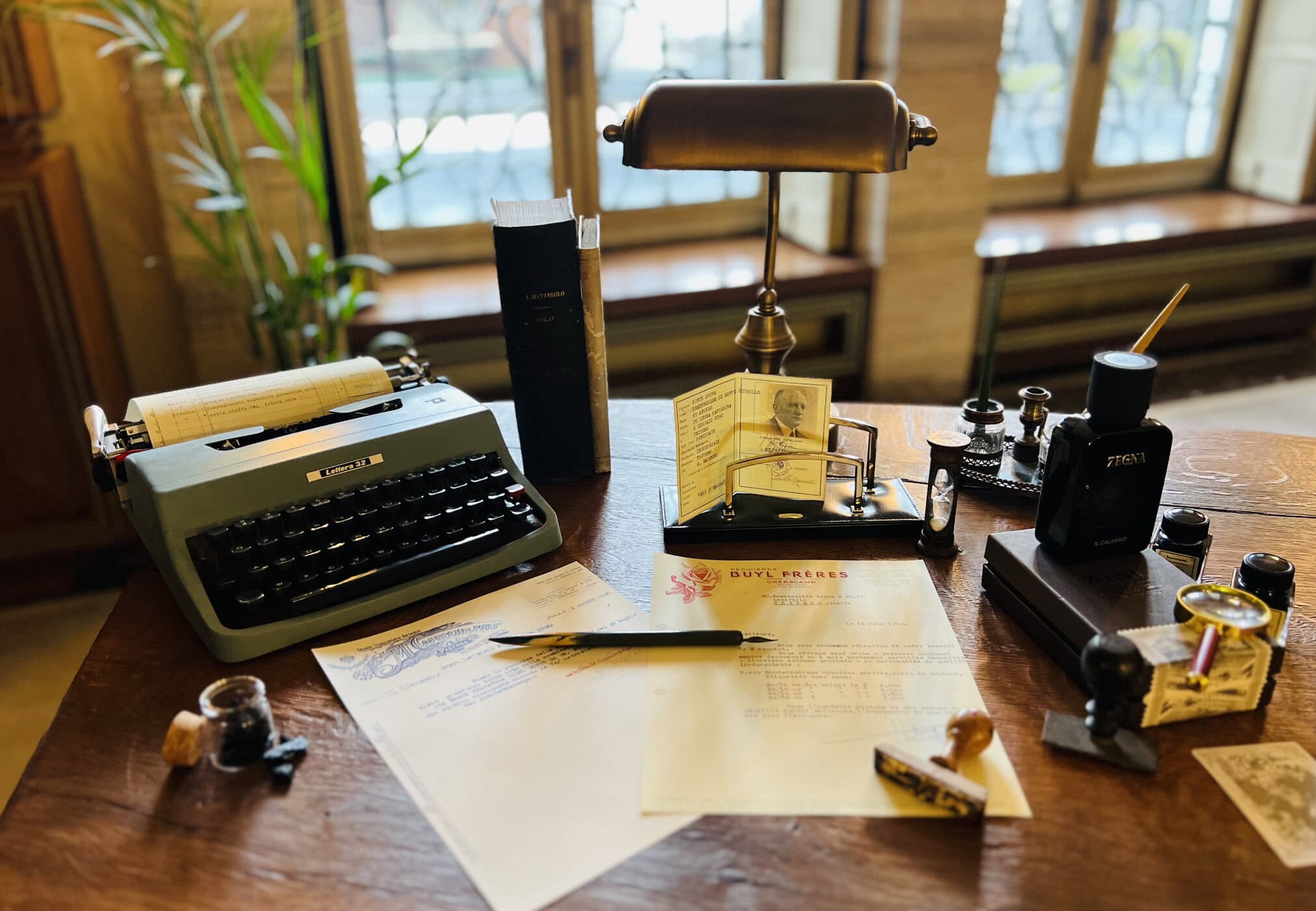
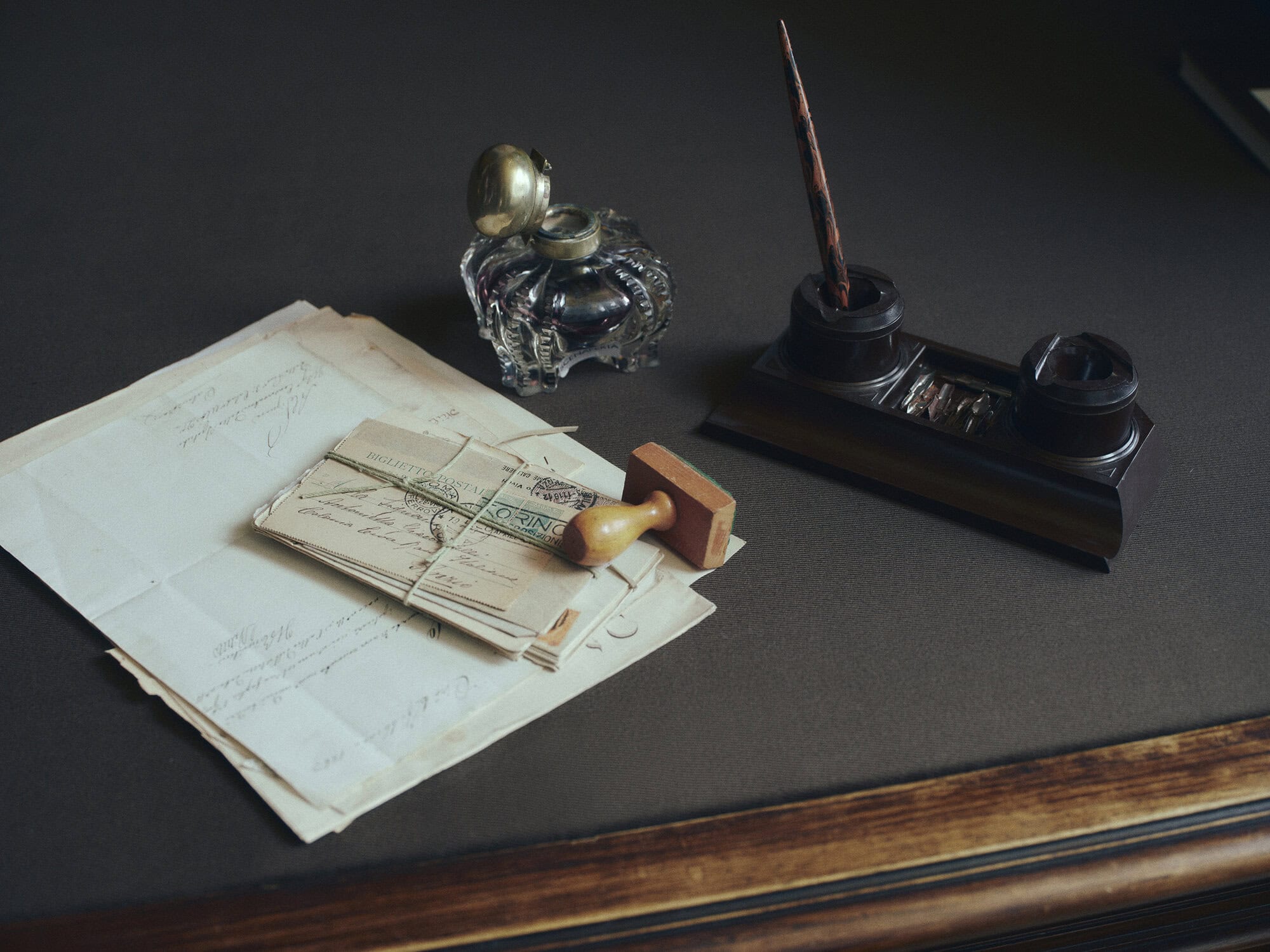
Vol. I, Il Calamaio, starts quietly. Tracing the morning ritual of Ermenegildo’s day that would often start at 6am. A prescribed moment of solitude at his desk with freshly ironed newspaper, notepad, and inkwell. The latter influenced Ropion to develop an accord around the memory its chemical smell conjured, later joined by Turkish rose absolute and oud. What may initially appear an odd opening for Volume I is exactly what gives it its significance. Ink does not immediately signify luxury or modernity. Neither does yesterday’s newspaper. Their importance comes from the founder’s daily ritual: Ermenegildo was known to spend the early morning reading and thinking before entering the mill.
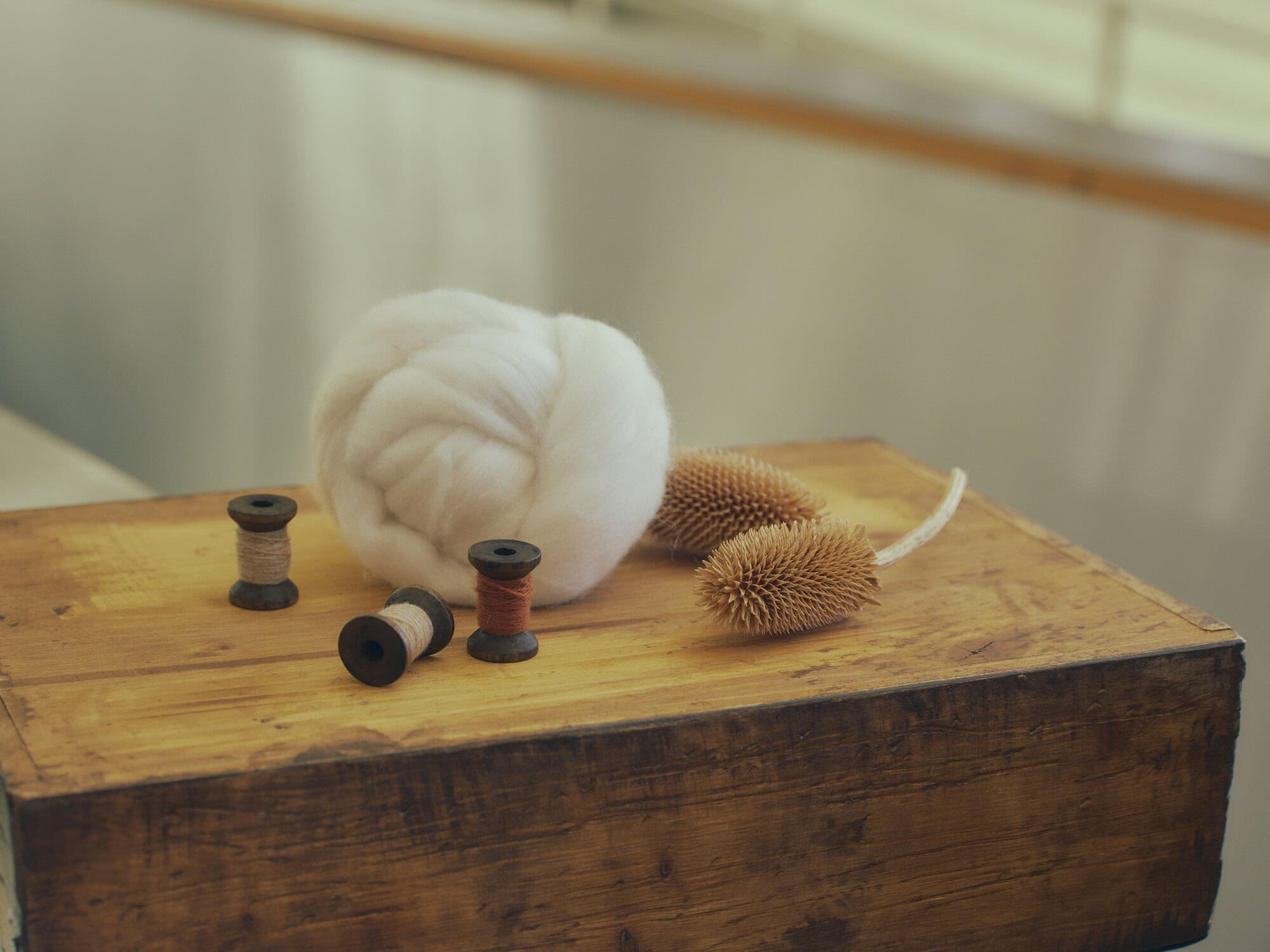
With Vol. II, Il Lanificio, Fabrice Pellegrin worked from the smell of raw wool inside the factory. Animalic and occasionally sweet, the comfort of warm bales is juxtaposed against the harder metallic rhythm of machinery. Tahitian Vanilla, suede and sandalwood translate that contrast without literally reproducing the factory floor. Sartori has his own attachment to Il Lanificio, that came second place in his ranking of the volumes, “I have a very good feel about Il Lanificio, because of being taken into the mill with that smell of wet wool during the process of fibres or fabrics being finished is very strong to me,” he said.
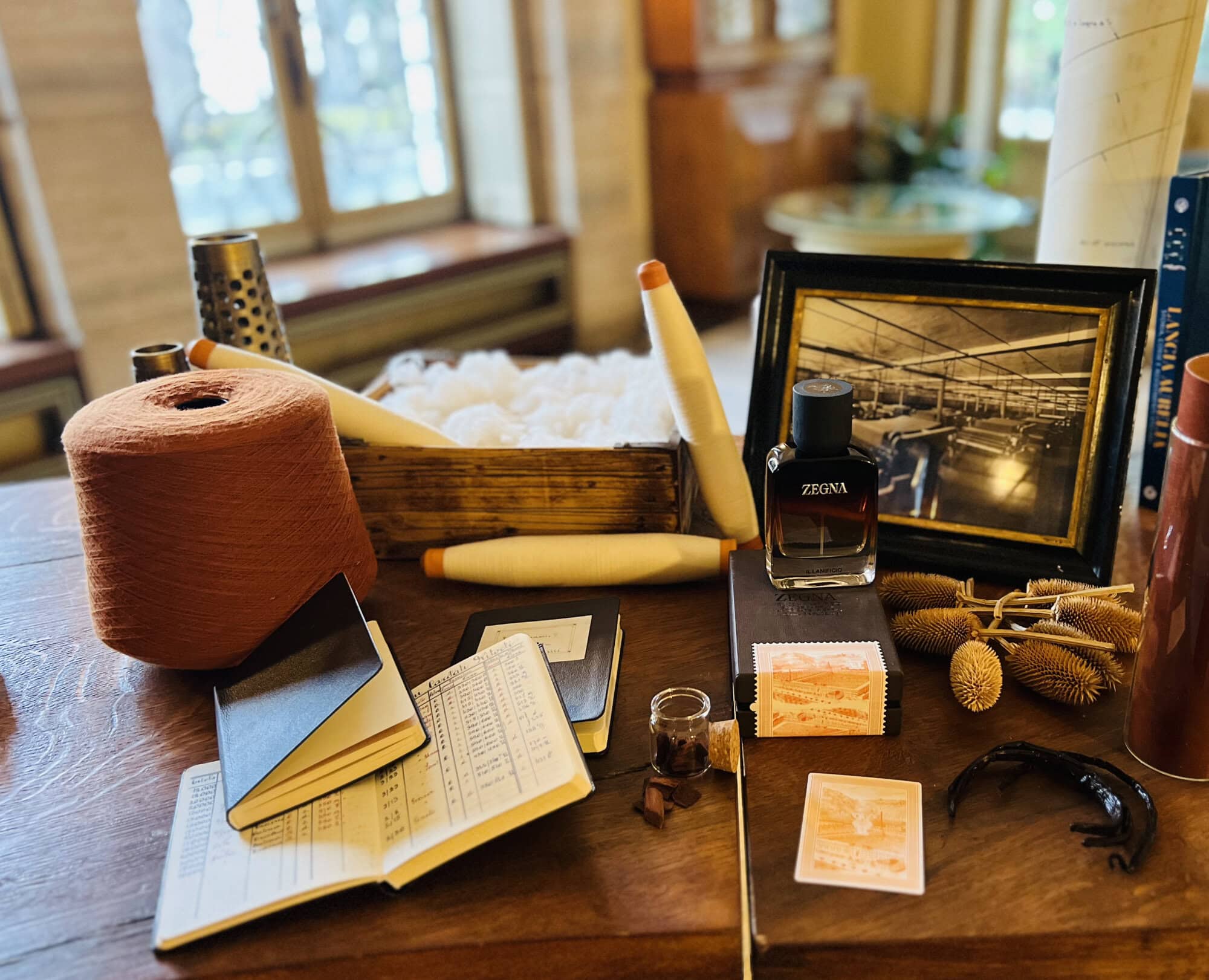
This is where Memorie starts doing something more interesting than simply reimagining Ermenegildo Zegna’s life. Sartori grew up nearby, attending school around a kilometre from Trivero and was born in the hospital established as part of the founder’s community programme. The memory of one man has already started to overlap with another.
Which goes some way toward explaining the resonance the Artistic Director felt about Saga del Piemonte. A fragrance he admitted was also a personal favourite. Specifically for its emphasis on time with family and the intimacy that comes with shared moments around the fire. Revealing his reasoning, he said “I love Saga del Piemonte because I remember that moment in my own family. In my tiny house, 3 kilometres from Trivero, we had this tradition to stop at 8pm and to have 30 minutes altogether having dinner, with my mom cooking, and then a nice 20 minutes speaking about what the day was. It was very good, so when I first met Saga del Piemonte, I again felt that particular moment.”
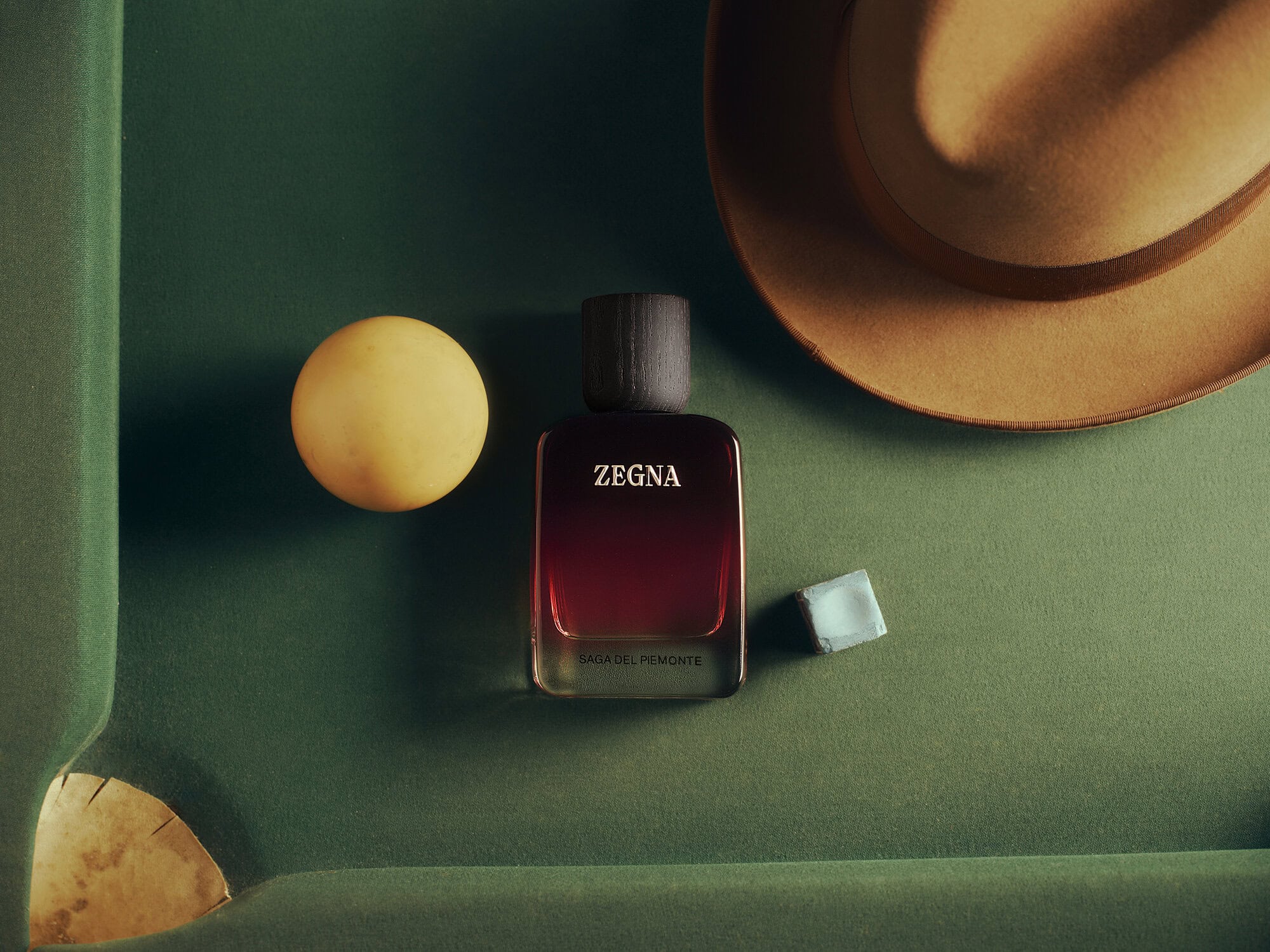
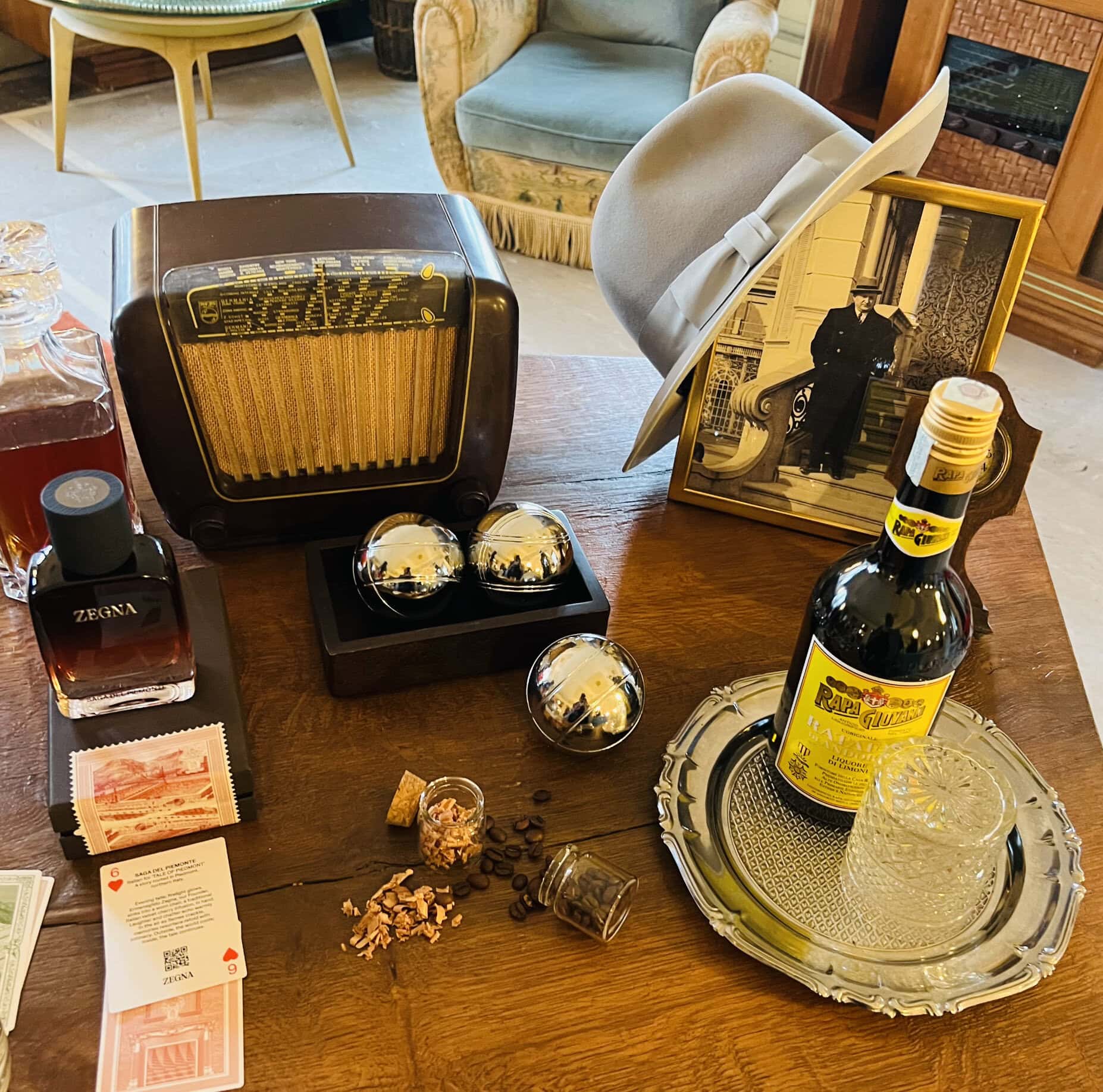
The same happens with A Trivero, built around the founder’s car, gasoline, leather and cold mountain air; Il Sottobosco, with pink pepper, carrot seed and patchouli recreating the damp undergrowth following rainfall aka geosmin; and La Panoramica, where pine needles, lavender and Haitian vetiver recall the scenic road Ermenegildo drove across to scale the mountains in the 1930s.
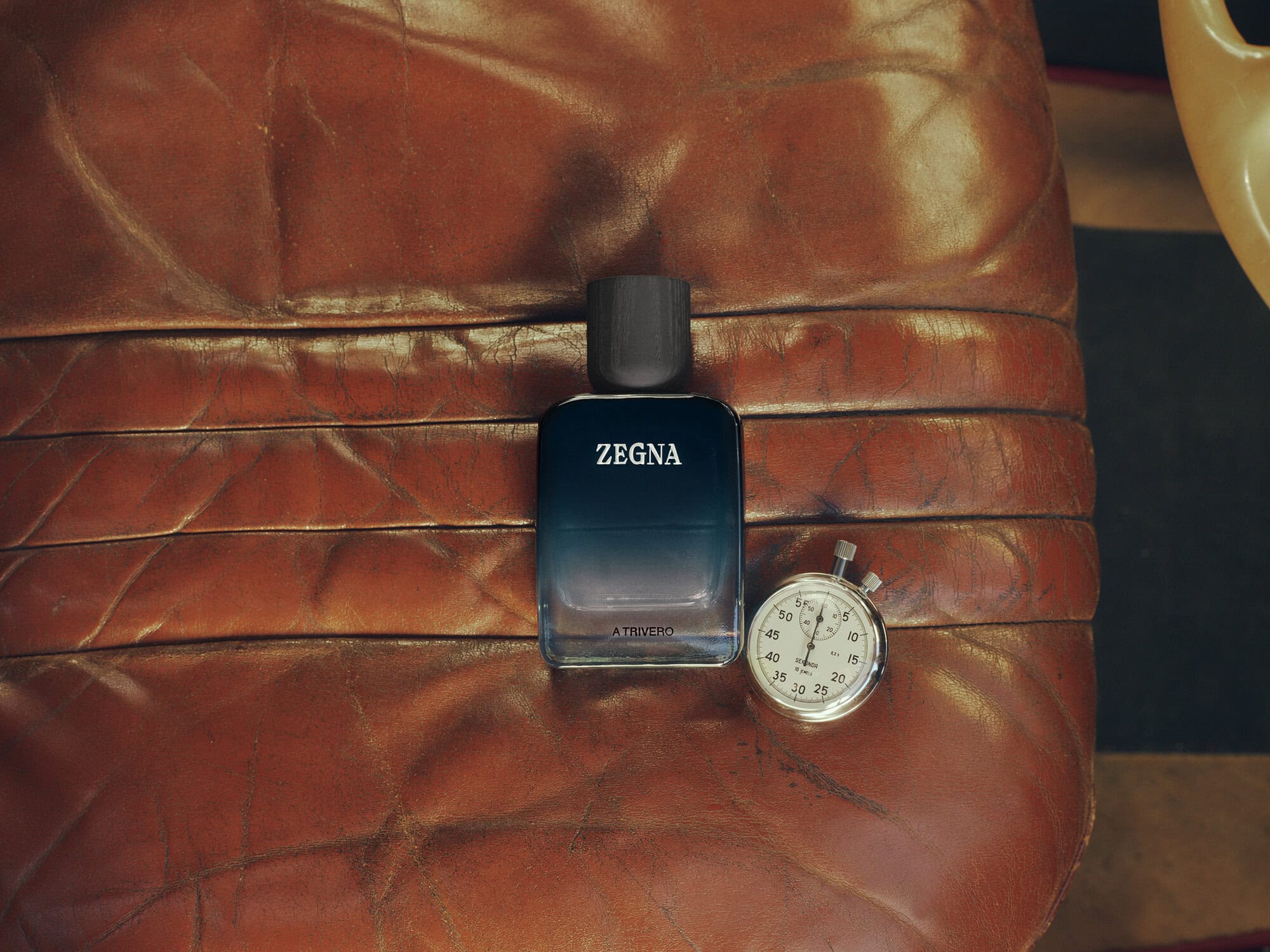
During the immersive experience at Oasi Zegna, a tablescape of Volumes I-VI was set with nostalgic elements from Ermenegildo’s life: a typewriter, inkwell and Banker’s desk lamp, leather driving gloves, floorplans, wool yarns, a game of boules, binoculars and a bottle of Rapa Giovanni lemon liqueur. Vintage photographs depicted the wool mill, the founder on the mountainside, and on the steps of Oasi Zegna. Gathered alongside their corresponding volumes, the objects visually communicated the connection between landscape, material and the memories deeply ingrained in his story.
A story that Sartori has pledged will not be lost when it is filtered down to the retail floor. As at the newly opened Harbour City store in Hong Kong, the refillable fragrances are among the first product categories to greet customers.
I went to one of the newly opened stores a month ago in Hong Kong and instead of having our fragrances within the accessories department – like eyewear or scarves – we dedicated the entrance to a huge library. Like the library that you see at Oasi Zegna, we created a huge Memoria, with the main table in oak. And a dedicated person to explain the story.”
Alessandro Sartori, Artistic Director, Zegna
The unconventional approach that shaped Memorie’s development is therefore being carried through to how the collection, and back story, will be sold.
Fragrance as the Third Dimension
The firm foundation on which the luxury industry was built – quality, craftsmanship, exclusivity – is shifting like sand. As provenance, pricing, and the virtuous traits of a good ‘make’ are questioned, luxury that exists outside the world of status symbols and mere indulgence is connecting with consumers seeking products and experiences that offer something more enduring. Fragrance is undergoing its own shift. According to Mintel, consumers in the luxury fragrance space are resonating with scents that enhance mood and can offer a heightened state of wellbeing. “Consumers are looking for fragrances that do more than smell nice. Perfumes designed to enhance mood, reduce stress, or evoke specific emotions like confidence, joy, or calm are in demand,” the report noted. It suggests an industry moving closer to the human connection.
In Sartori’s world, luxury is similarly embedded in the human touch, “The jacket that takes 72 hours to make is luxury, because someone needed to train for 20 years at least [to sew it]. And behind the fabric is the fibre. We believe luxury is the amount of craft and human work that has gone into the object. That’s our point of view.”

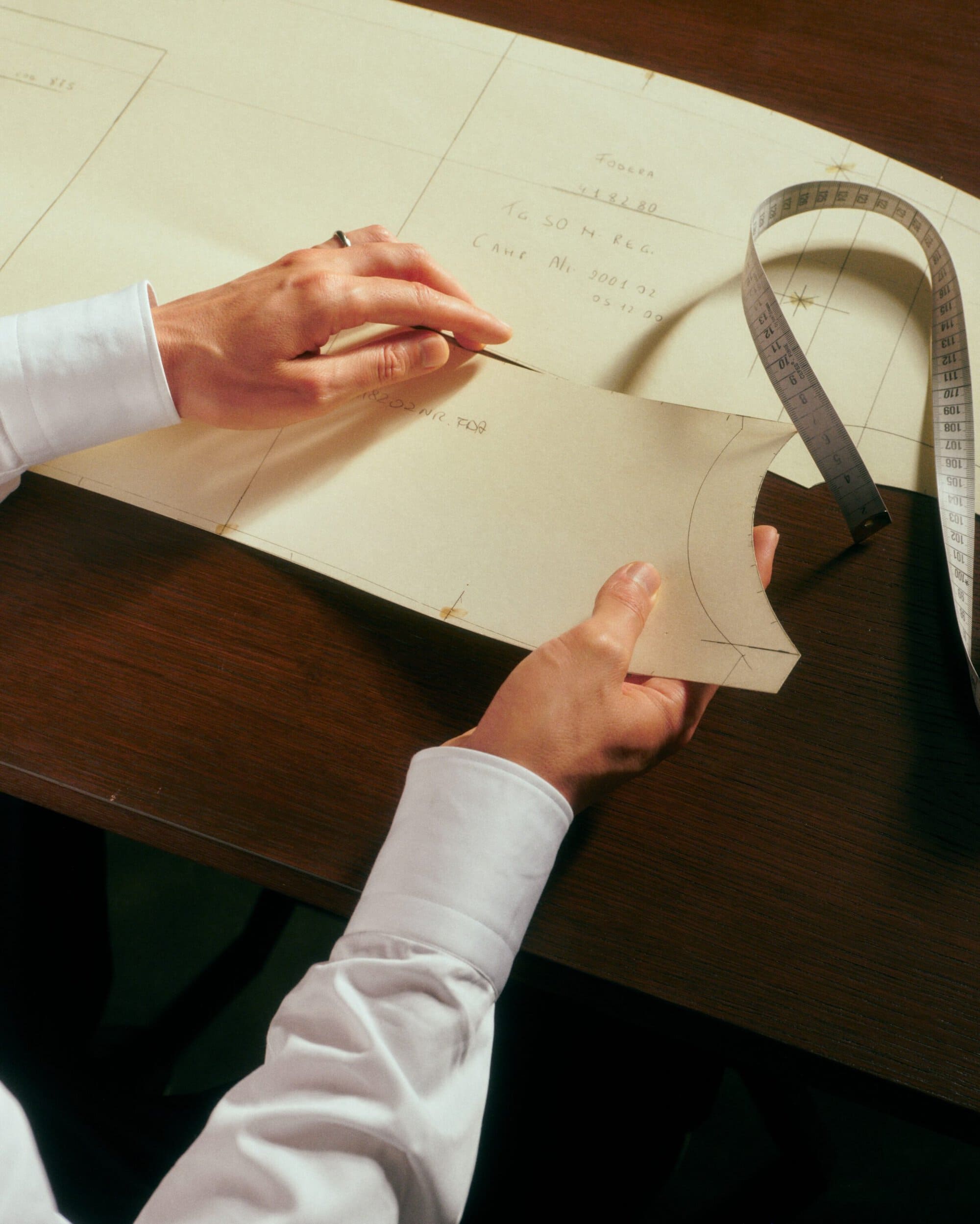
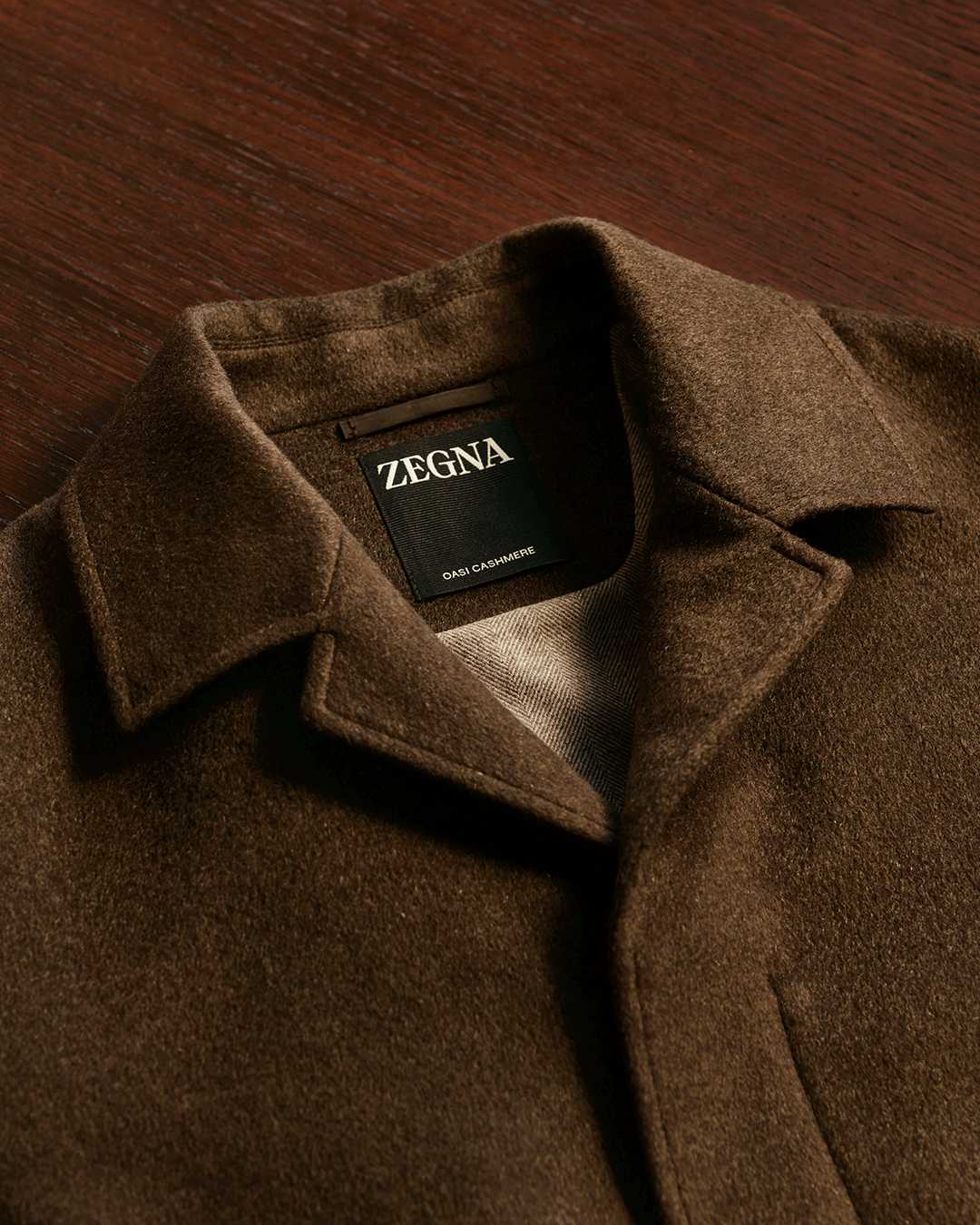
It is an idea he has carried from garment to fragrance production. Taking close to three years to bring Memorie to life, what mattered was that the layers of the founder’s life were naturally embedded in each volume rather than retrospectively applied as a marketing exercise. “We don’t want to communicate luxury with words or marketing actions, our vision of luxury is for real craft and human know-how to go into the product,” he explained. Memorie follows this line of thinking by bringing fragrance into the same Zegna system as fabric and clothing. Sartori describes scent as creating the same additional dimension as one of the brands signature Il Conte jackets “It’s like the third dimension of your silhouette.”
And when it comes to building an emotional connection with the man who will wear it, Sartori takes it to an almost spiritual realm. Referring to his desire to build the collection for men of character he said “I’m talking about very interesting men, more than a beautiful man. Men with a lot of taste, passion, and a strong aura rather than someone who is perfect.” Scent can then become part of this characters story through their ability to carry as much meaning and memory as a 20-year-old jacket.
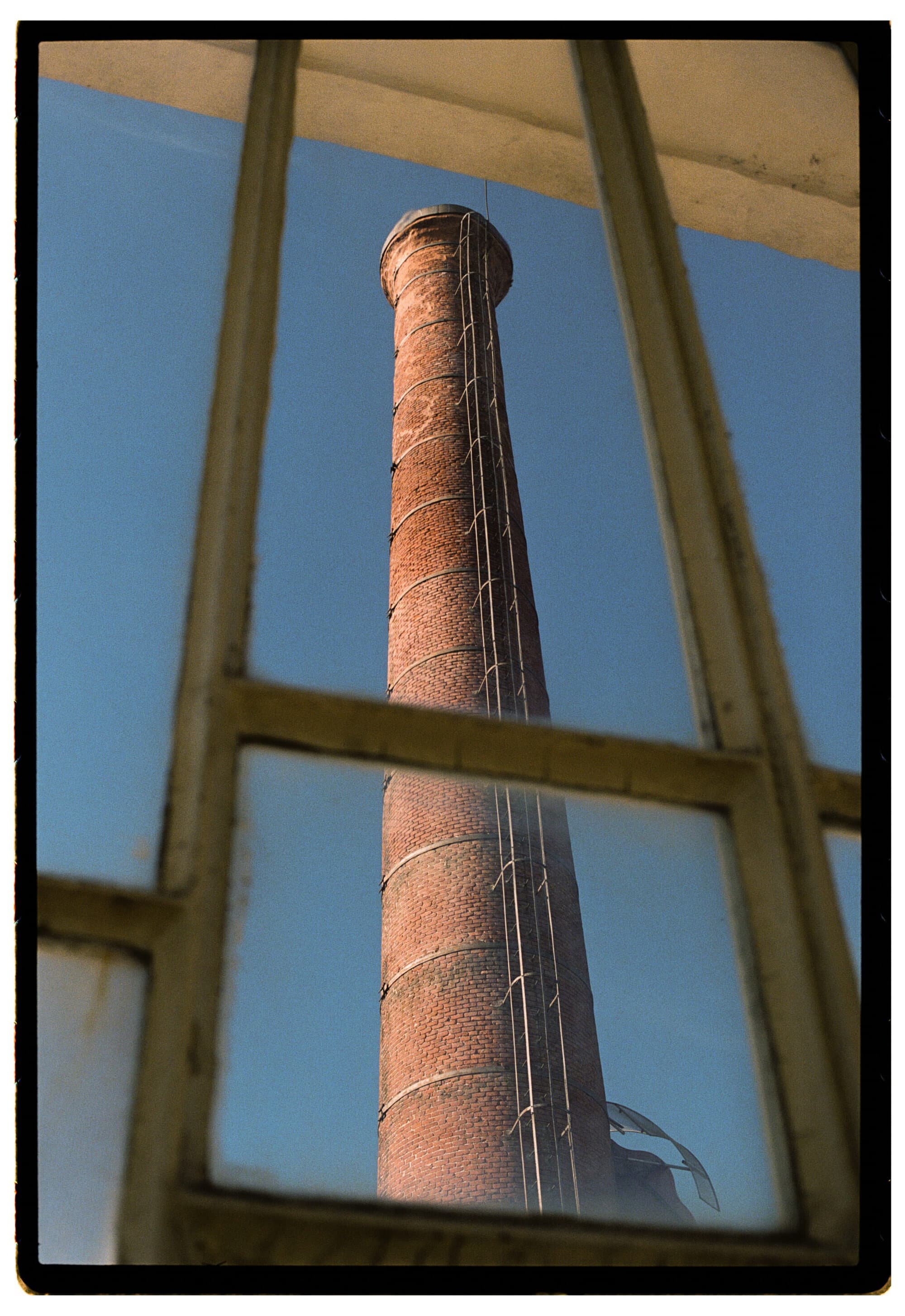

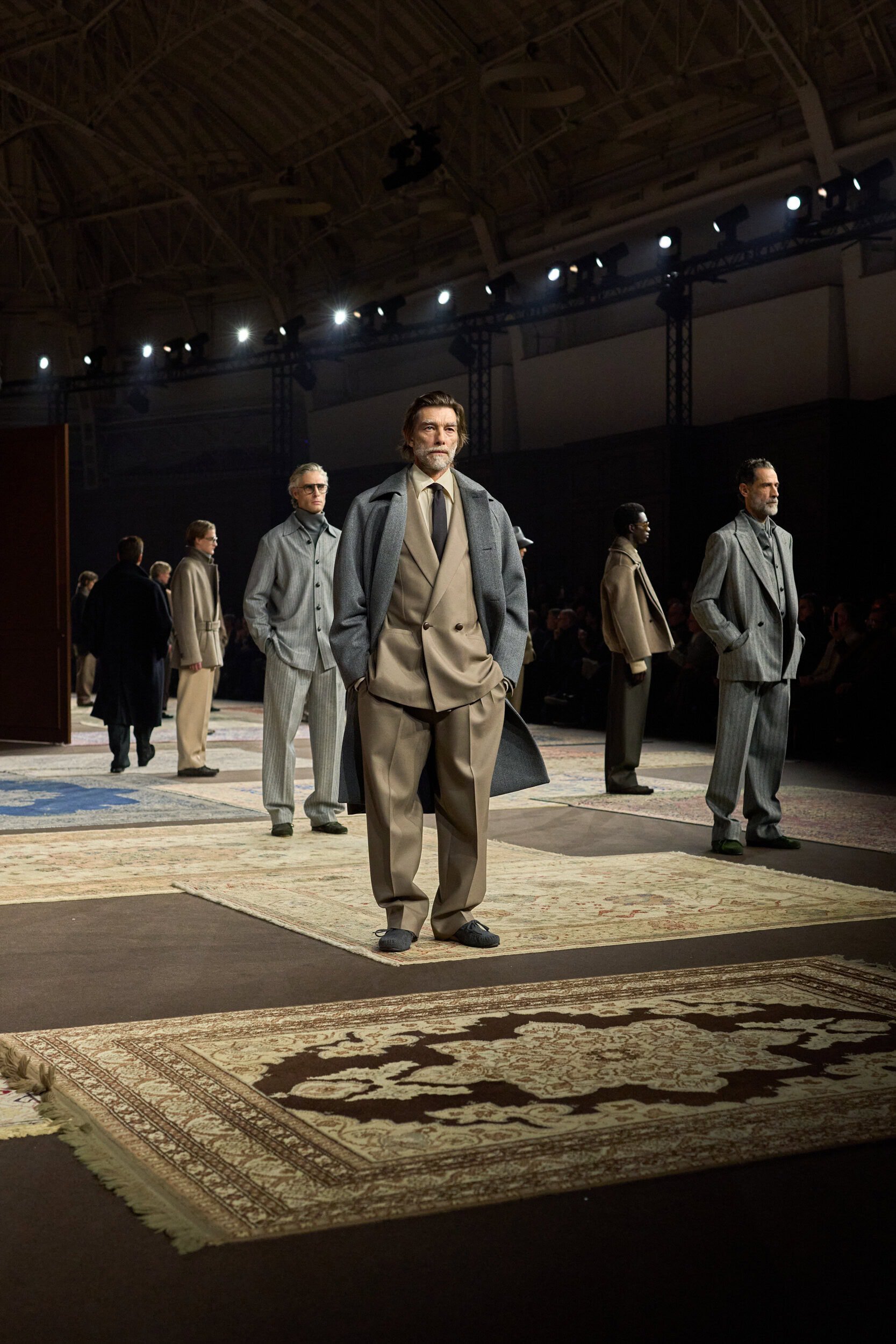
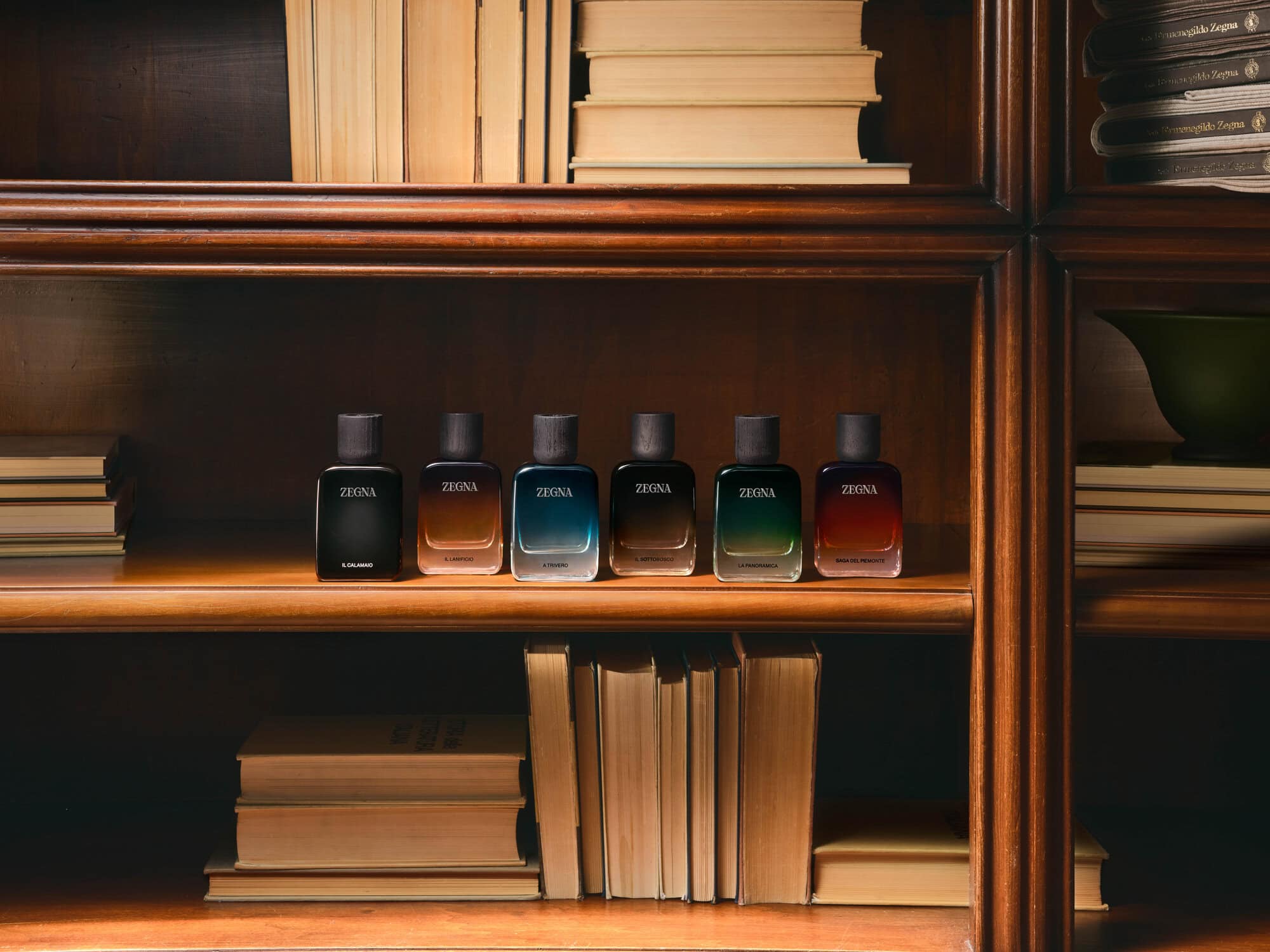
The advantage for the brand is that these six memories already belong to a larger ecosystem. The wool mill still produces fabric, the road still climbs through the Alps, the archive remains in use, its artistic director was born into the community shaped by the founders vision, and the fourth generation of the family remains heavily involved in the day-to-day running of the company. The founders original ambition around craft, community and the natural environment continues to provide the framework for Sartori’s Zegna today, with the house nurturing a contemporary identity rooted in the his belief that industry, community and nature could exist in harmony.
Ermenegildo’s memories provided the inspiration for the opening volumes in this new fragrance chapter, but the clever part of reverse-engineering the brief was in leaving enough room for more stories to be told.