The Pleasure of Getting Dressed
Review of Carolina Herrera Spring 2027 Fashion Show
By Mackenzie Richard Zuckerman
At 45, Carolina Herrera had every reason to dwell on its history. Wes Gordon chose instead to recover the feeling that made that history worth remembering.
For Spring 2027, the designer returned to the social world surrounding the house’s earliest years in New York: Mrs. Herrera, Nan Kempner, Mortimer’s, La Grenouille, Park Avenue in bloom. But the result never felt like an anniversary collection trapped inside an archive. Gordon seemed less interested in reproducing what Carolina Herrera looked like in 1981 than in recovering how it felt to get dressed then: the pleasure, ceremony, humor, and confidence of making an entrance.
Eight years into his tenure, Gordon no longer needs to prove that he understands Herrera’s codes. Color, flowers, polished femininity, dramatic proportions, and an increasingly youthful ease have become as recognizable within his own vocabulary as they are within the history he inherited. Spring 2027 showed what becomes possible when that fluency turns playful: when a designer knows the rules well enough to bend them with confidence, humor, and ease.
As Gordon put it backstage, “the world needs more joy and beauty.” Seen through that lens, the collection became a celebration not simply of Herrera’s past, but of the enduring pleasure of dressing with intention.
THE COLLECTION
THE VIBE
Joyful Polish, Society Wit, & The Pleasure of Beauty
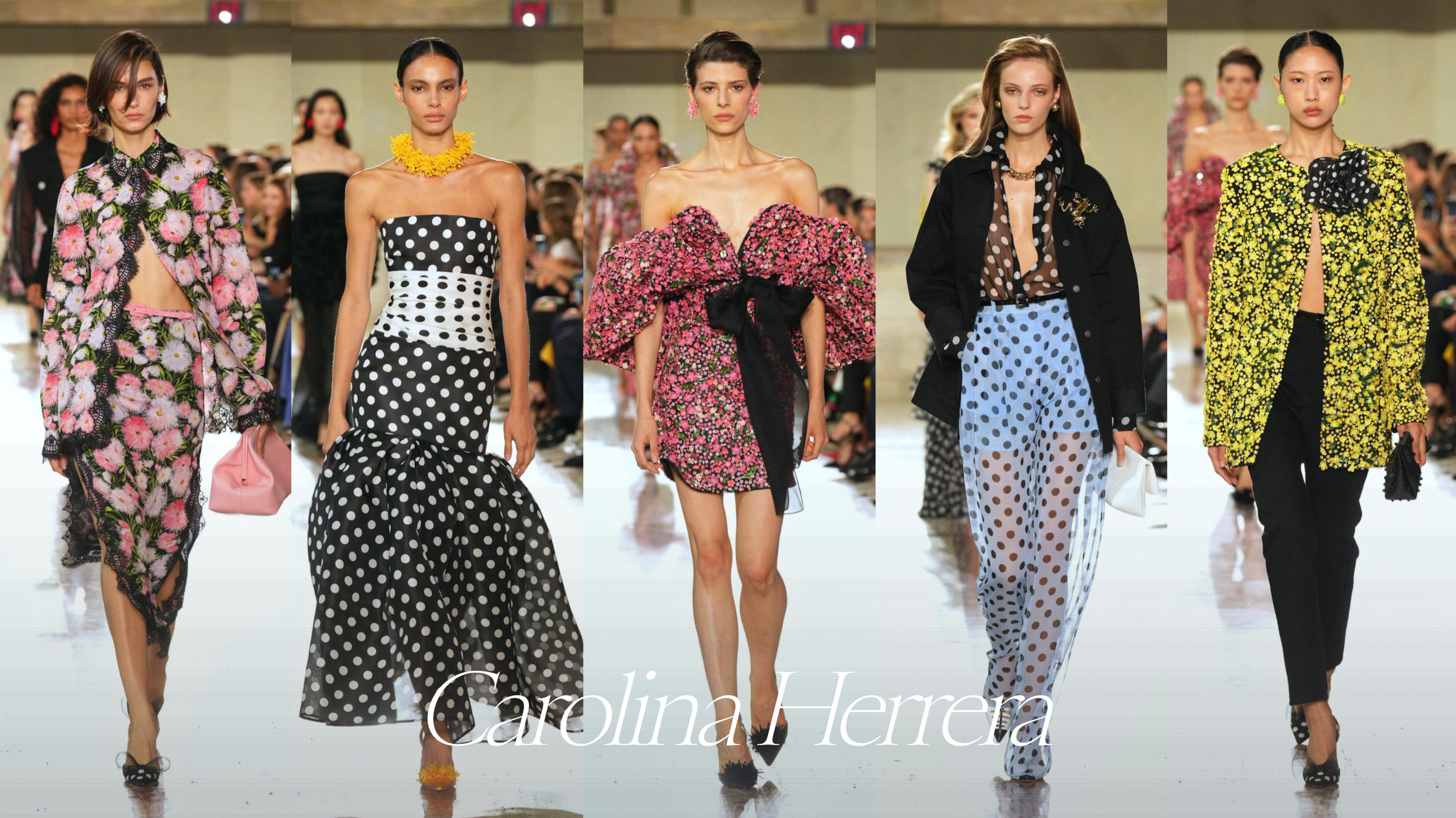
That joy came through first in character. Gordon imagined the collection around the women who populated Herrera’s world from the beginning: women who dressed with conviction, but not necessarily uniformity. Accordingly, the runway moved easily between society polish, playful daywear, abbreviated evening looks, sharp tailoring, translucent dresses, exuberant florals, and the sort of grand gestures Herrera has always done exceedingly well.
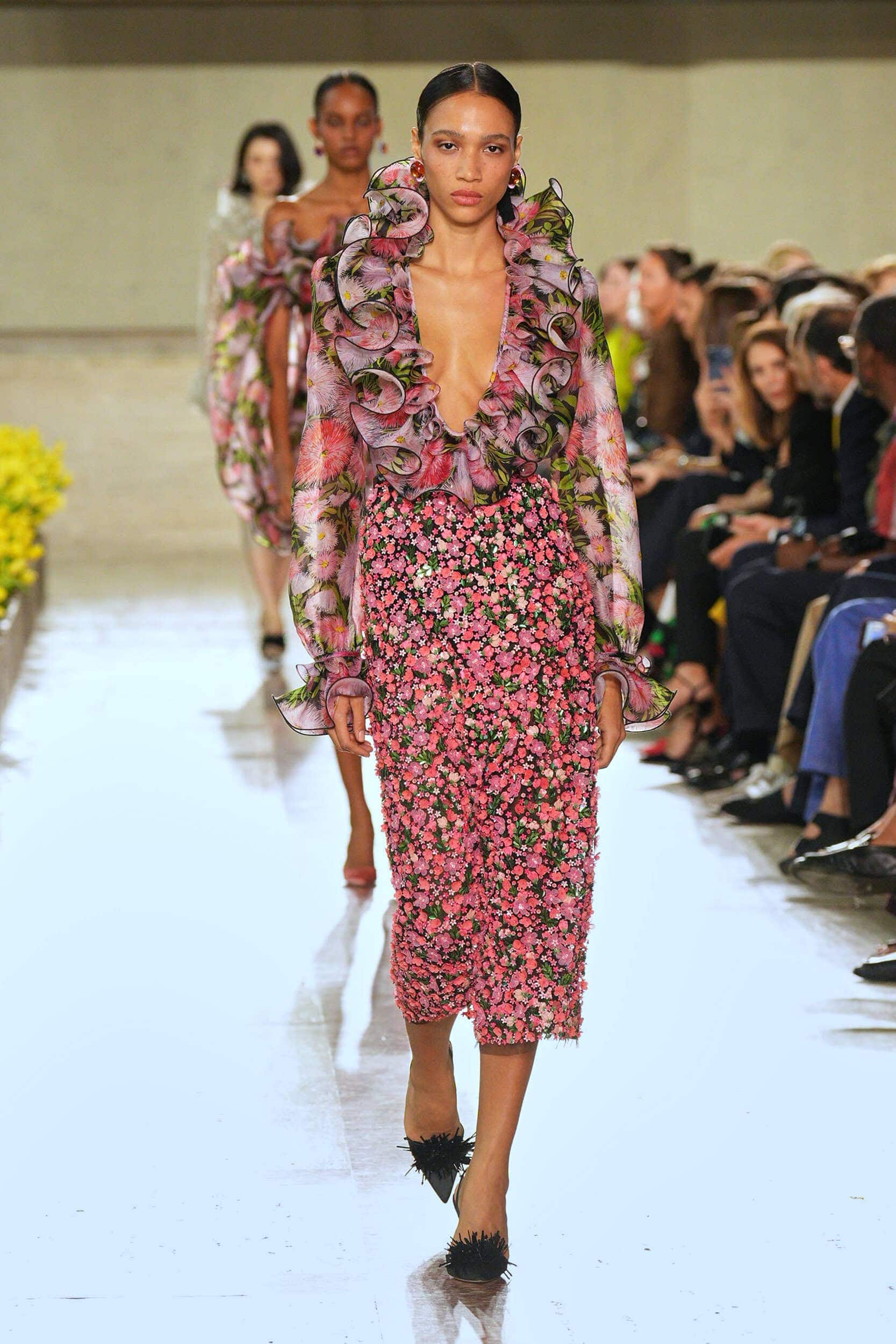
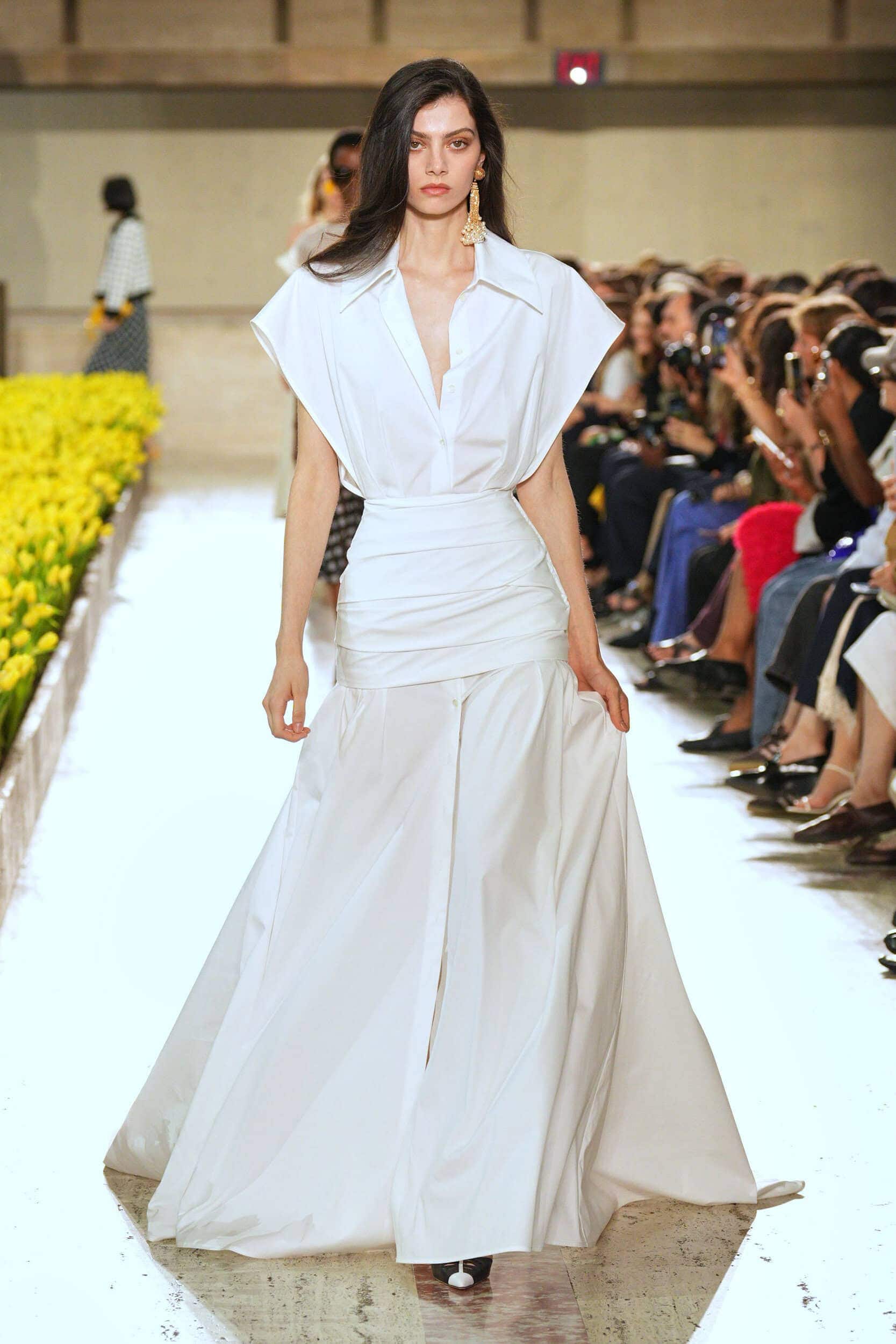
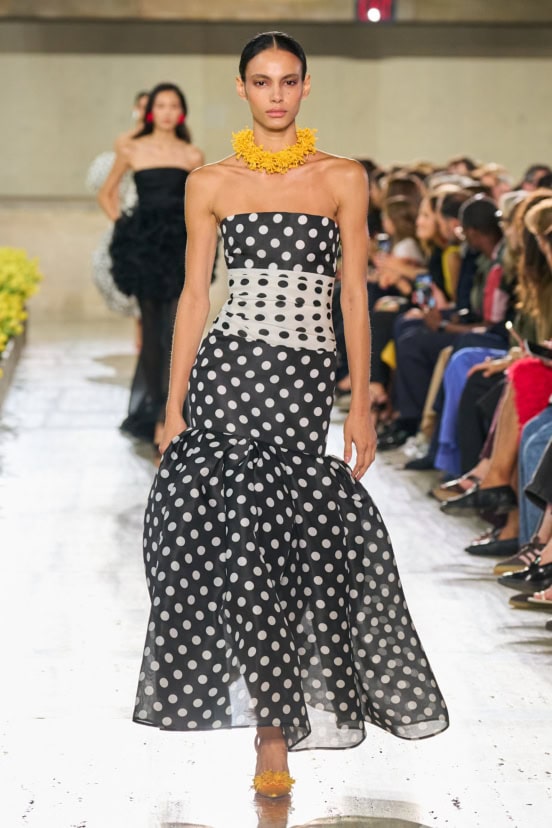
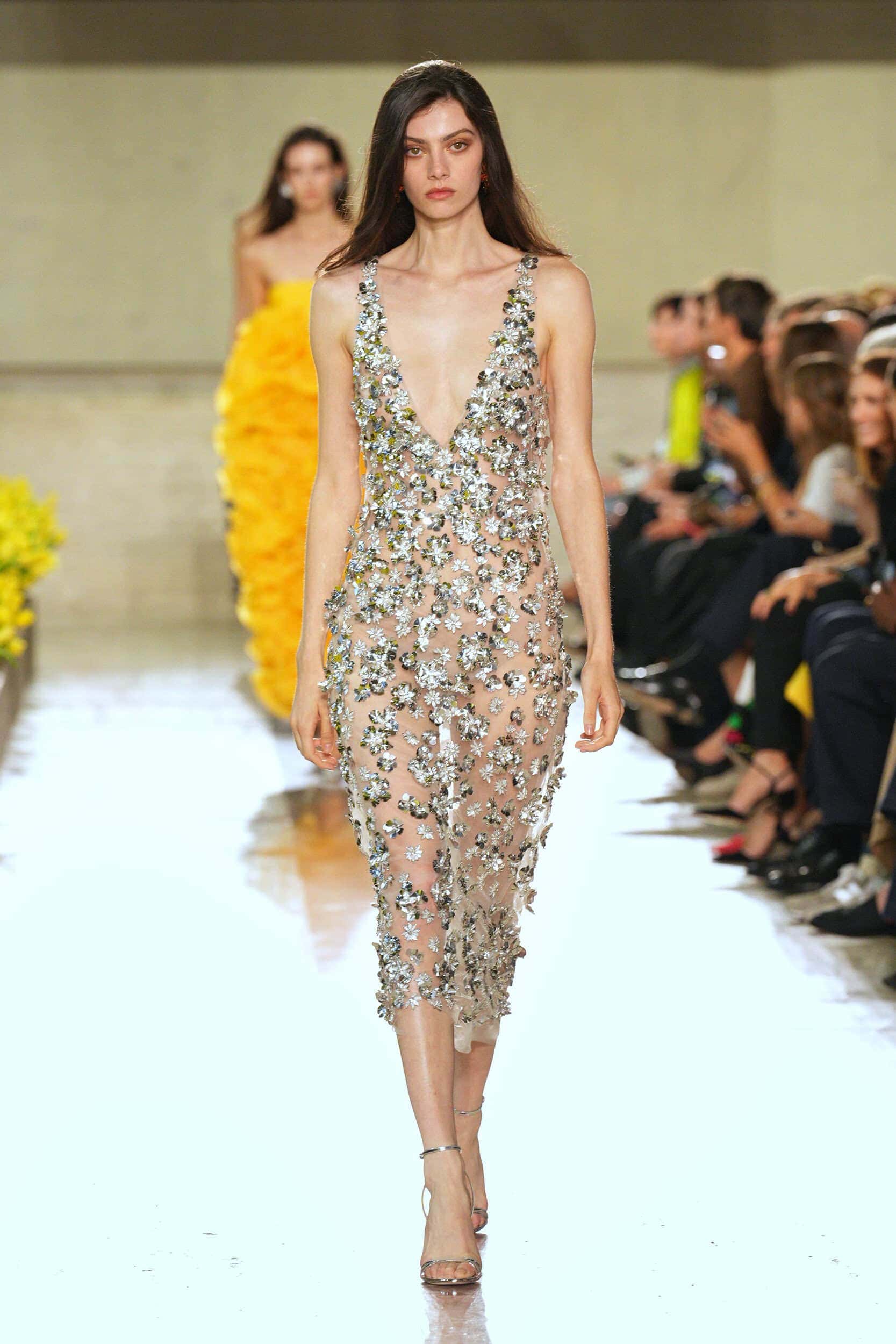
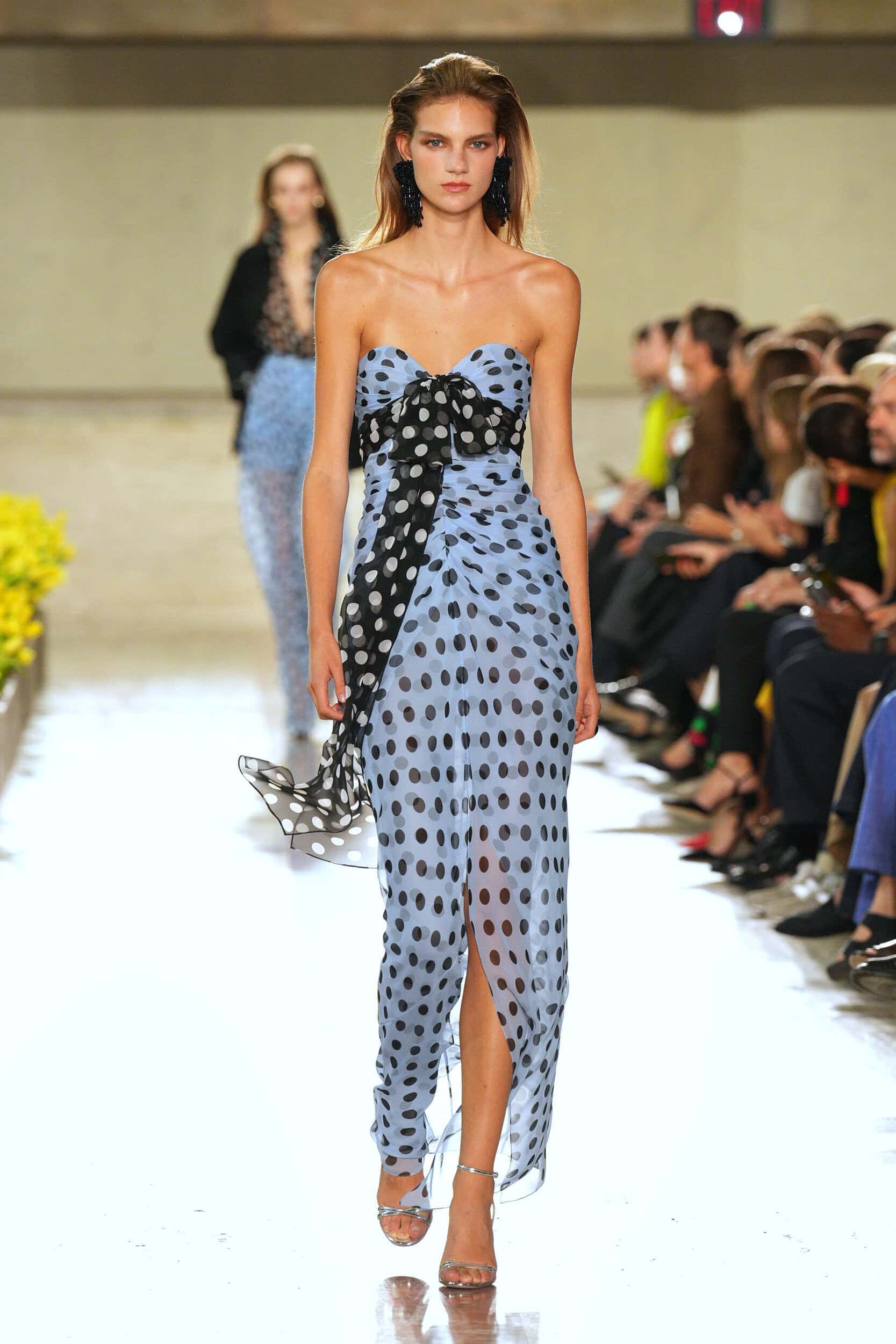
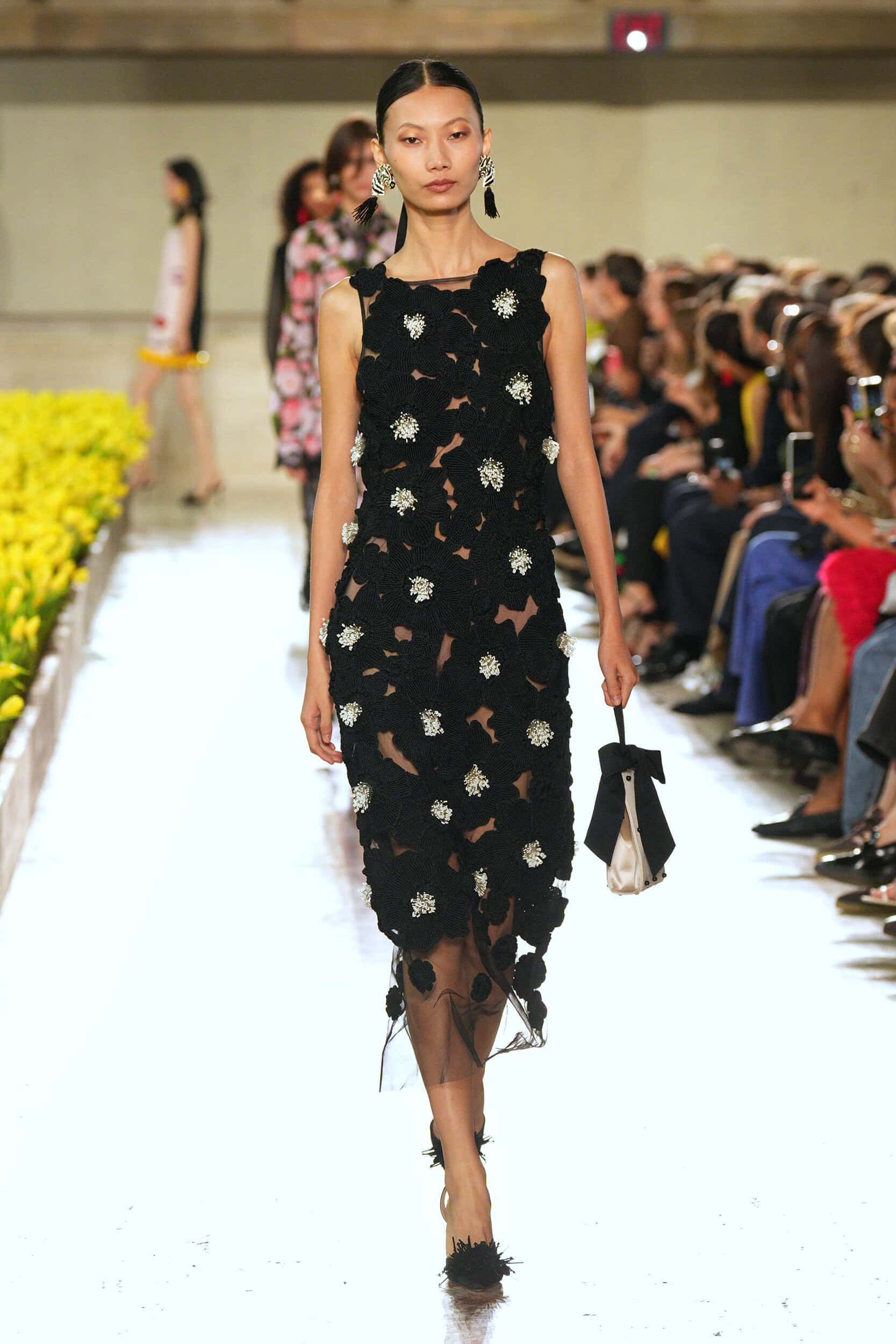
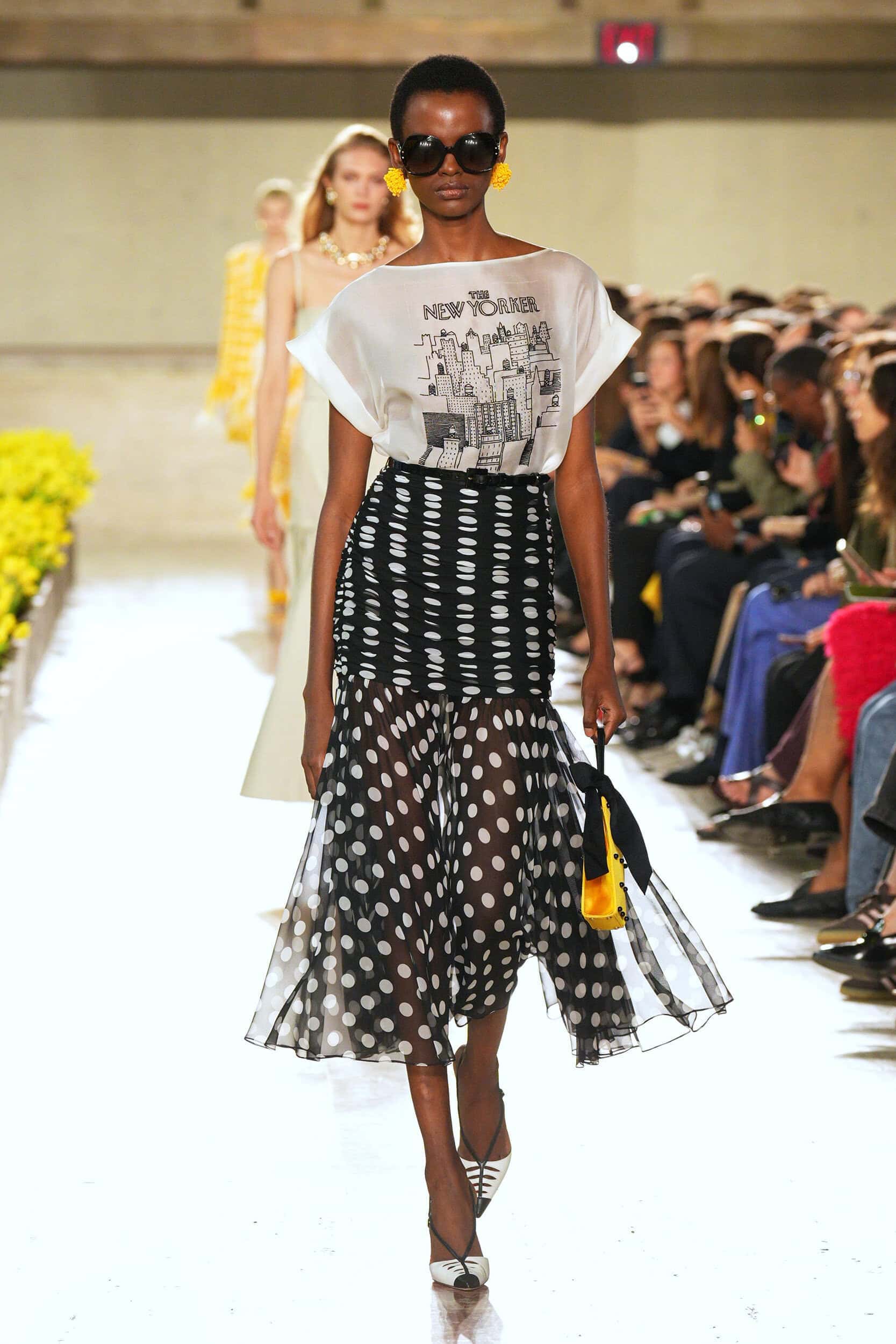
The house signatures were everywhere, but rarely left untouched. Polka dots traveled from sweeping sheer dresses to corseted silhouettes, narrow skirts, and accessories. The white shirt appeared in increasingly expressive forms, including a dramatically wrapped floor-length interpretation. Flowers shifted between print, embroidery, appliqué, and near-complete constructions, at one point swallowing a yellow column silhouette in dimensional blooms.
Color remained one of Gordon’s clearest strengths. Black, white, and yellow, drawn in part from an early Herrera fragrance, gave the collection its strongest graphic backbone, while acidic yellow, pink, red, mint, powder blue, and softer pastels kept the palette in motion. Gordon has long understood color less as decoration than as energy, and here it gave even the most familiar Herrera gestures a sense of immediacy.
But perhaps the most convincing development was the humor.
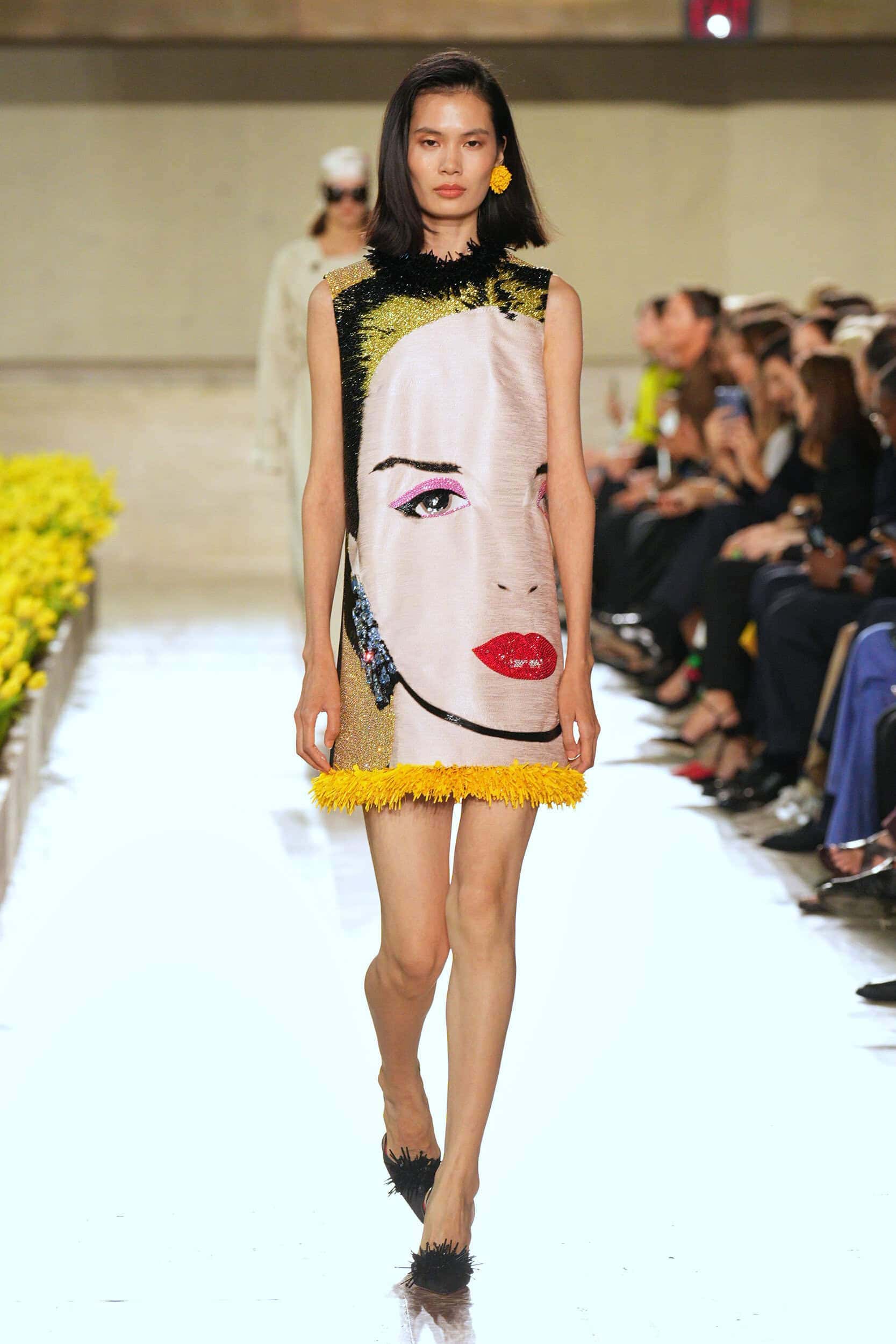
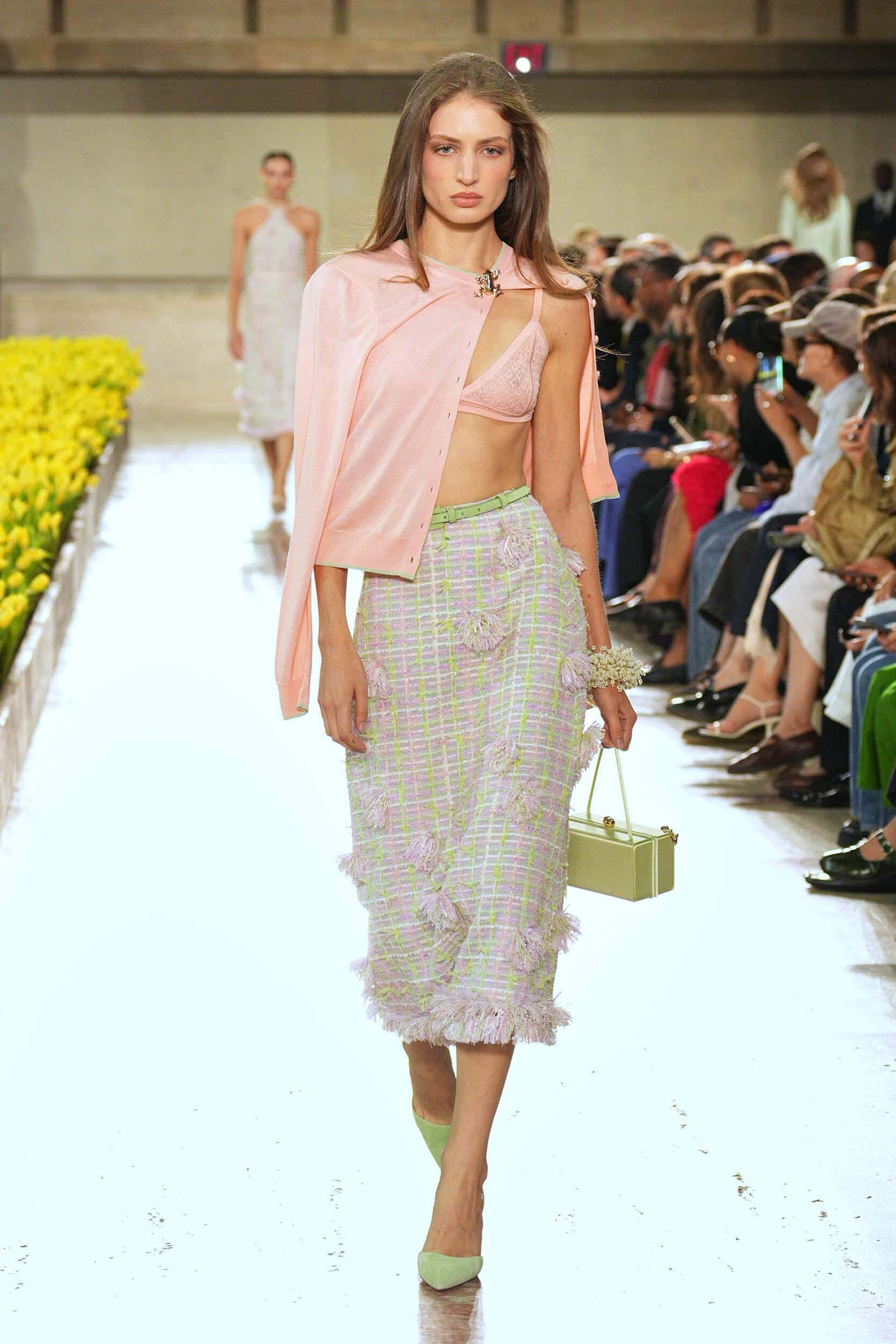
Frog brooches nodded to Mrs. Herrera’s beloved La Grenouille; black-and-white cookie earrings turned another New York reference into jewelry; a collaboration with The New Yorker drew on the magazine cover published around the time of the house’s first show; and the Warhol Foundation entered the mix as well. These details prevented the anniversary from becoming overly precious. Even when the clothes were impeccably composed, there was often something nearby willing to disrupt the seriousness.
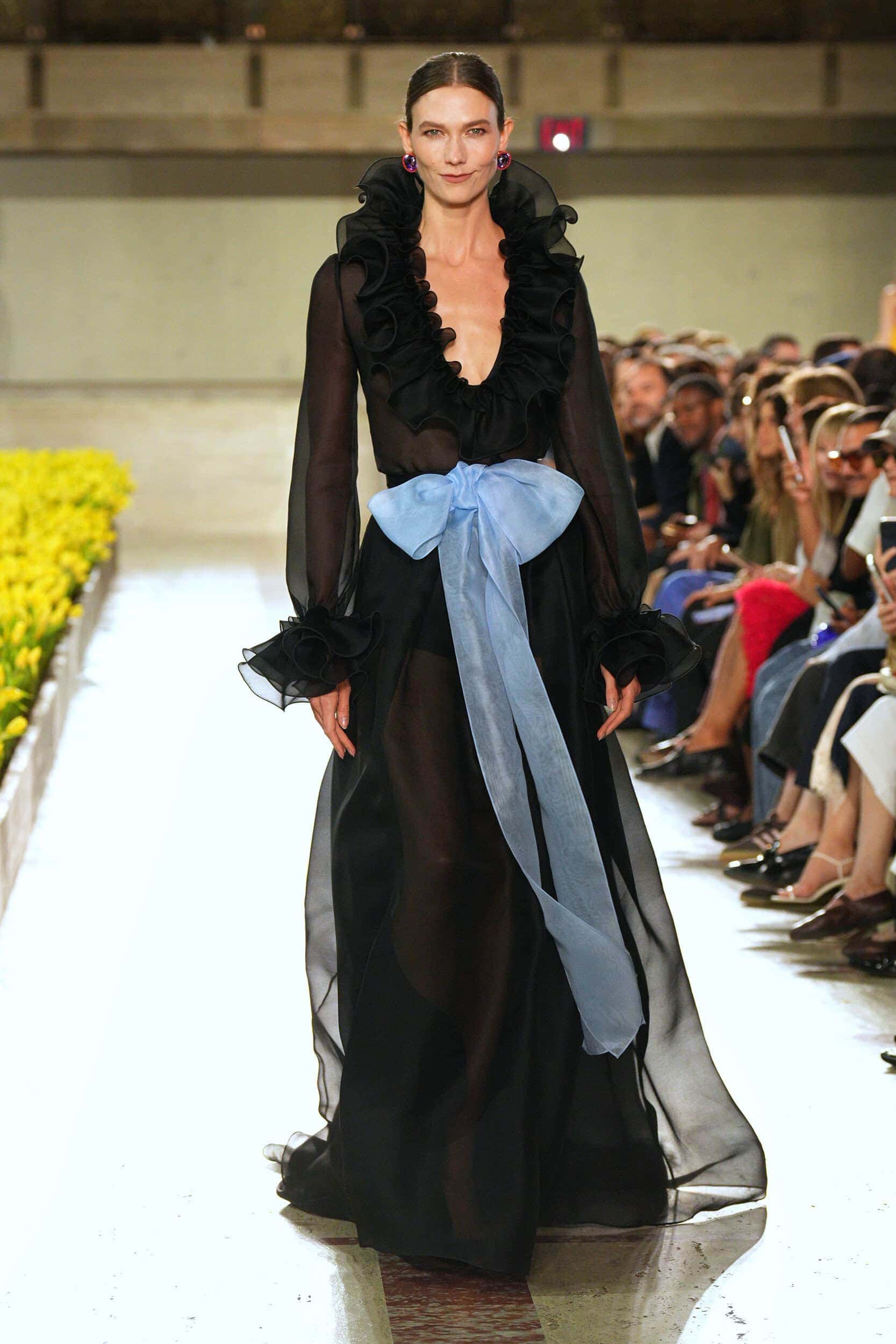
That may be Gordon’s particular version of edge. He has never needed to make Herrera darker or harder to make it contemporary. Instead, he loosens its composure. A proper skirt exposes the midriff. A society jacket comes in electric color. Lingerie slips into daywear. An enormous bow interrupts an otherwise disciplined silhouette. Elegance remains intact, but it is no longer required to behave perfectly.
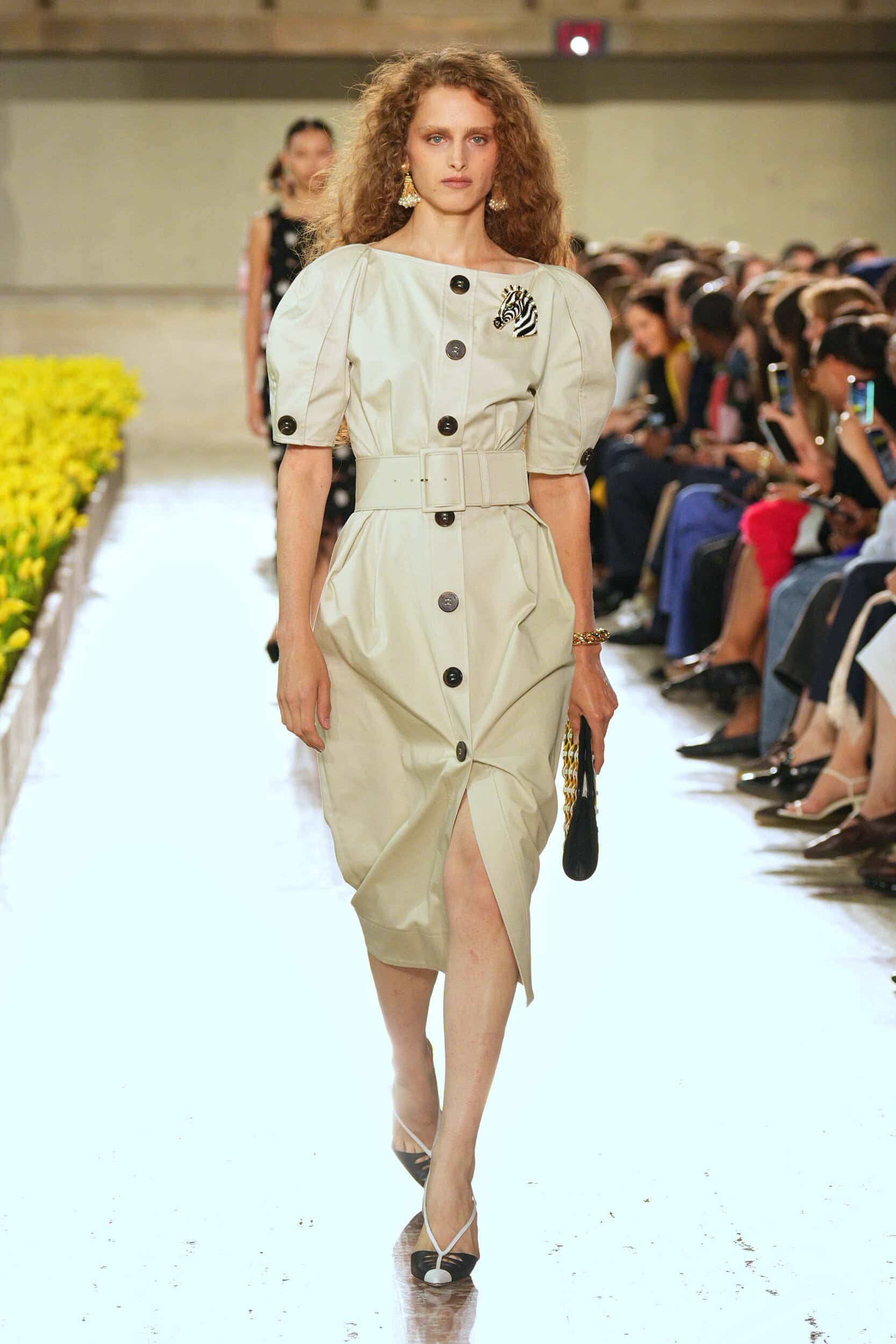
Importantly, there was a wardrobe beneath the spectacle. White shirts, slim trousers, cropped jackets, trenches, pencil skirts, knits, and straightforward separates gave the collection a useful everyday foundation. Gordon’s Herrera woman may still love a ball gown, but increasingly she has somewhere to go before the party.
THE WRAP UP
Gordon said backstage that Herrera has spent 45 years being a destination for “beautiful, pretty, wearable clothes,” adding that those should no longer be treated as derogatory terms. Spring 2027 made a persuasive argument for taking him at his word.
There is seriousness in craft, construction, proportion, and historical knowledge here, but Gordon does not seem especially interested in making beauty prove its intellectual credentials before allowing it onto the runway. His Herrera is built around the belief that pleasure has value: that women may still want clothing because it makes them feel beautiful, and that fashion can meet that desire without becoming intellectually empty.
If Gordon’s early years at the house were about injecting youth into Herrera, Spring 2027 suggested that youthfulness was never really a question of age. It was energy: the willingness to play with inherited rules, dress with enthusiasm, and refuse to become overly solemn about beauty.
At 45, Herrera did not need reinvention so much as renewed energy. Gordon gave the house a celebration that felt polished, playful, and fully alive.