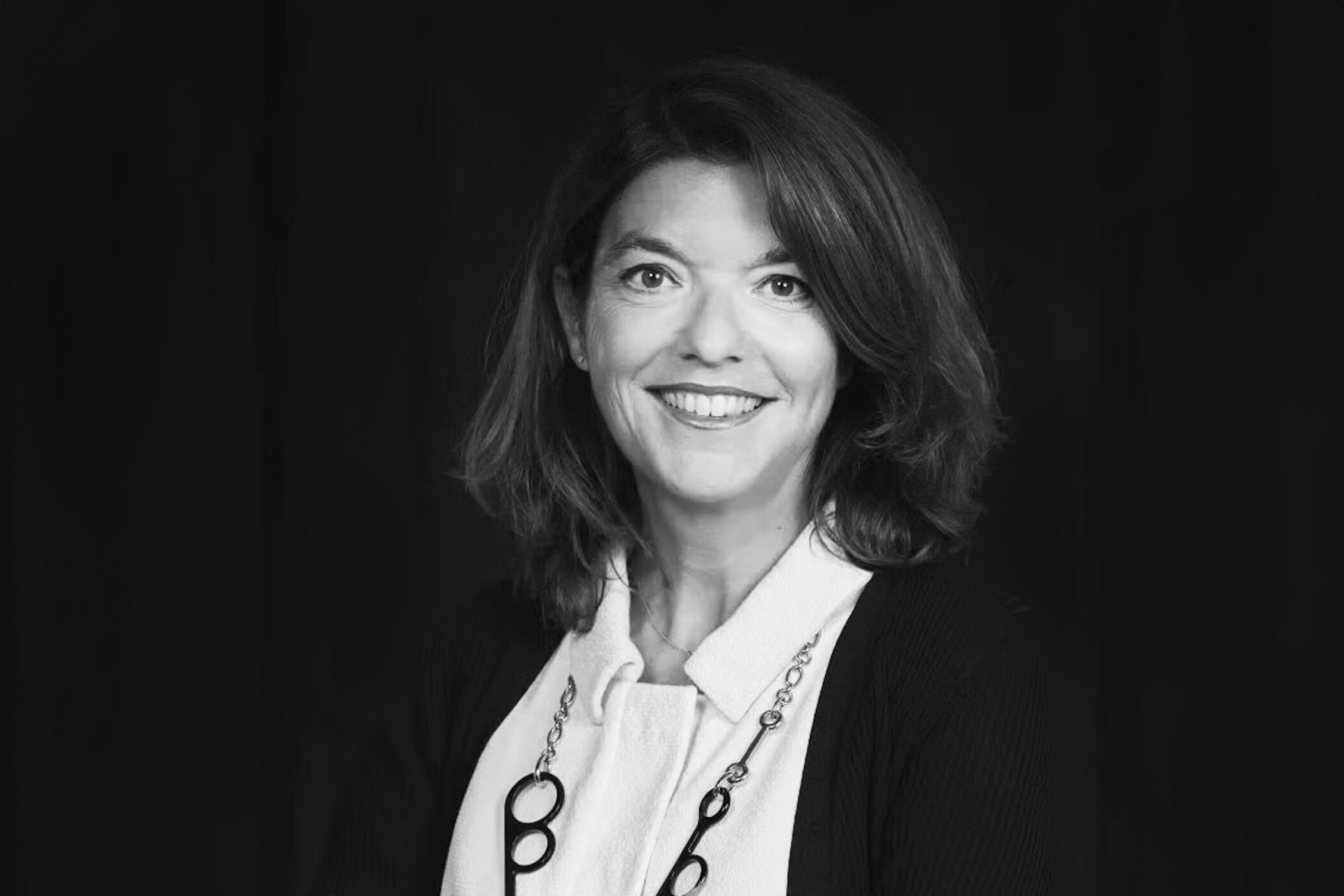
The Pernod Ricard finance-and-technology chief will succeed Philippe Blondiaux as Chanel builds on renewed momentum under Matthieu Blazy.
Key Takeaways
- Hélène de Tissot will join Chanel in October and assume full CFO responsibilities in London in January 2027, reporting to global CEO Leena Nair.
- She succeeds Philippe Blondiaux, who will retire at the end of 2026 following a 15-year tenure at the house.
- De Tissot brings 23 years of experience at Pernod Ricard, including eight years leading finance and technology and six years based in Hong Kong.
- The appointment comes as Chanel reports high-single-digit revenue momentum, supported by demand for Matthieu Blazy’s first collections.
Chanel has appointed Hélène de Tissot as global chief financial officer, bringing another senior executive from the consumer-goods sector into the house’s leadership team.
De Tissot, who has spent more than two decades at Pernod Ricard, will join Chanel in October. She will assume full CFO responsibilities in London in January 2027 and report to global chief executive officer Leena Nair.
She succeeds Philippe Blondiaux, who plans to retire at the end of 2026 following 15 years with Chanel. The transition places an experienced international finance executive in the role as the privately held house builds on renewed commercial momentum and continues a significant long-term investment program.
Chanel described the finance function as an enabler of further investment in creation, craftsmanship, client experience and its workforce. The framing gives de Tissot a mandate spanning financial stewardship and the operational resources behind Chanel’s creative and client-facing ambitions.
De Tissot joined Pernod Ricard in 2002 and has served as executive vice president of finance and technology since 2018. She is also a member of the French spirits group’s executive committee.
Her career at Pernod Ricard has included senior finance positions at group level and within its Asian operations. She spent six years based in Hong Kong, including a period overseeing finance for the region. Before joining Pernod Ricard, she worked for eight years as a tax lawyer at Arthur Andersen.
The combination of finance, technology and regional leadership experience gives de Tissot familiarity with the operational complexity of a global branded business. Pernod Ricard’s portfolio spans multiple categories, markets and distribution environments, requiring oversight of capital allocation, pricing, technology and regional performance.
Her recruitment also extends a pattern within Chanel’s senior leadership. Nair joined the house from Unilever in 2022, bringing three decades of experience at the consumer-goods group. The addition of de Tissot places another executive from a large international consumer business alongside Chanel’s established fashion and luxury leadership.
The finance transition arrives during an improving commercial period for the house. Chanel reported full-year revenue of $19.3 billion in 2025, representing growth of 3 percent at reported exchange rates and 1.8 percent on a comparable basis.
The performance marked a turnaround from 2024, when revenue declined 4.3 percent at comparable rates as a sharp slowdown in spending in mainland China weighed on the broader luxury market.
Profitability and cash generation also strengthened in 2025. Chanel reported operating profit of $4.71 billion, an increase of 5 percent, while free cash flow advanced 44 percent to $2.65 billion. The company ended the year with a positive net cash balance.
Chanel maintained a substantial level of spending alongside that recovery. Investment in brand activities reached $2.4 billion, including resources directed toward client engagement, while capital expenditure totaled $1.45 billion. The scale of those commitments underscores the importance of financial oversight as the house continues developing its retail network, creative capabilities and specialist craftsmanship.
Commercial momentum has accelerated further. Chanel said in May that revenue was increasing at a high-single-digit rate, supported by strong demand for the first collections designed by creative director Matthieu Blazy.
Blazy’s arrival has given Chanel a fresh creative narrative at a time when luxury consumers have become increasingly selective. His early collections have generated attention around the house while reinforcing the relationship between creative renewal and commercial performance.
De Tissot will enter the role with Chanel operating from a position of financial strength. Her experience overseeing finance and technology at Pernod Ricard adds expertise relevant to Chanel’s continued investment agenda and its management of a large, geographically diverse business.
The operating context she inherits combines renewed brand momentum, uneven regional demand and elevated investment. Her appointment gives Chanel a finance leader with experience navigating those priorities across a global consumer portfolio as the house advances its next stage under Nair and Blazy.