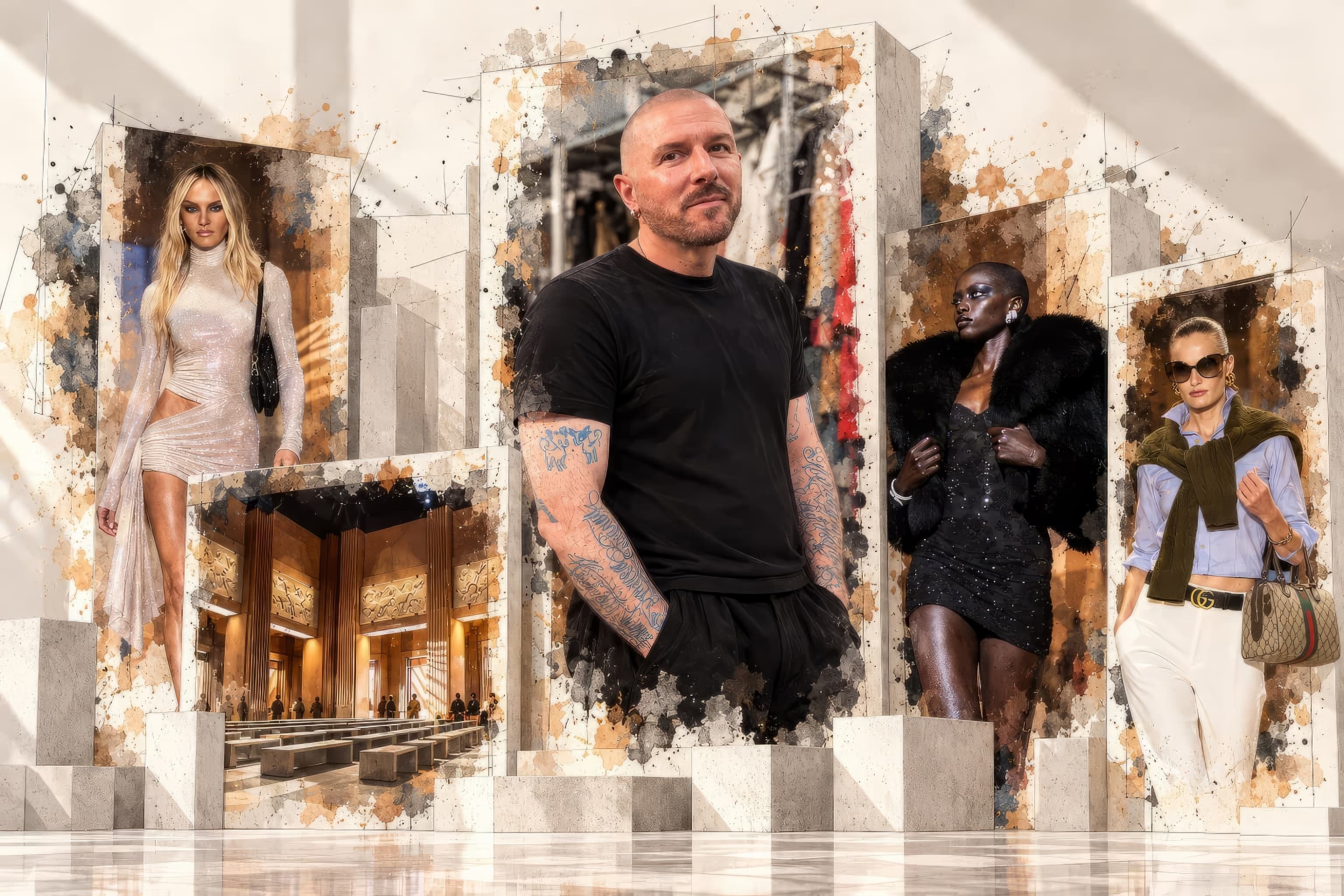
For Spring 2027, The Designer Lets Gucci’s Aristocrats, Rebels, and Everyone In Between Loose in the Same Store
By Kenneth Richard
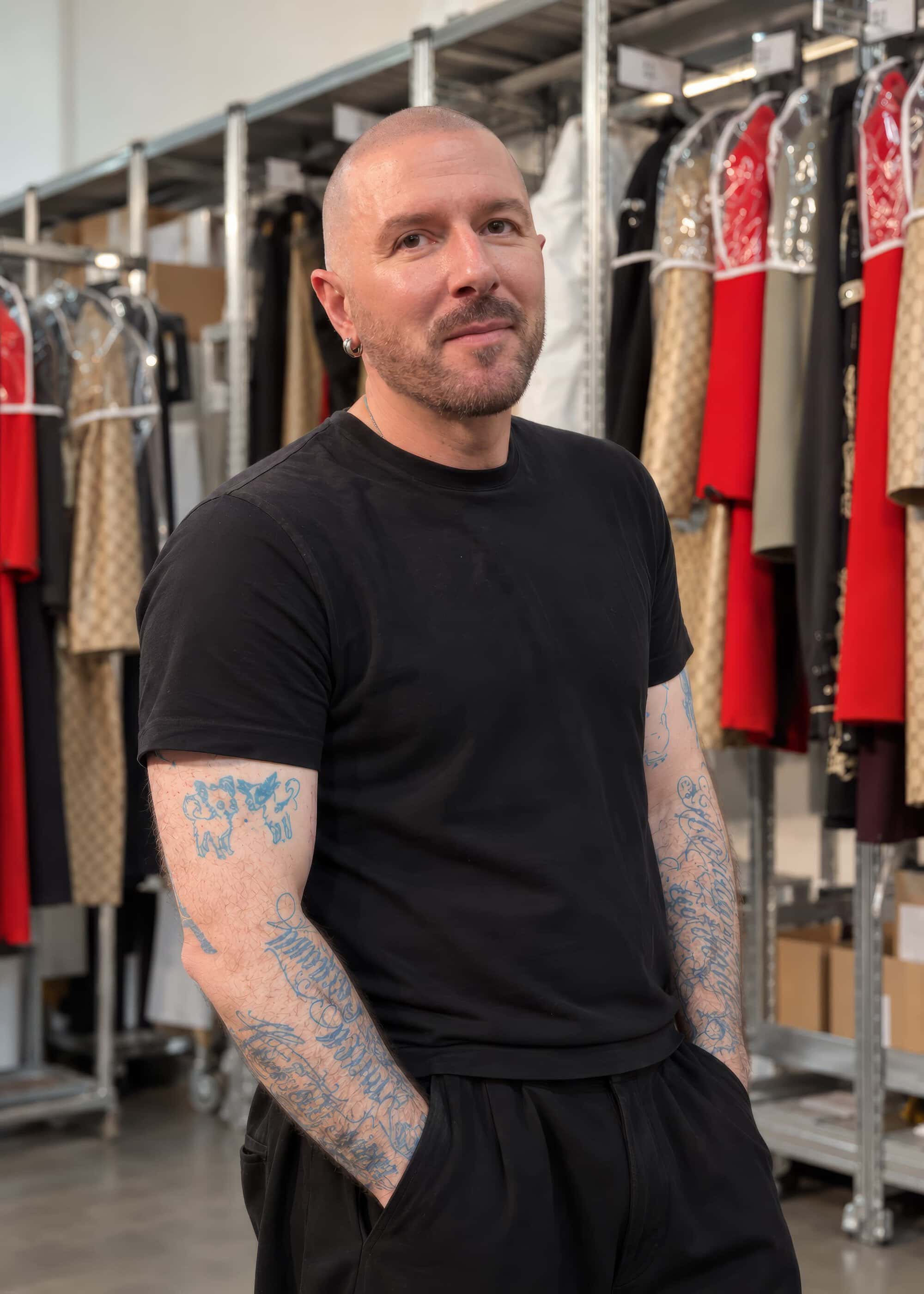
Demna has spent his first year at Gucci getting acquainted with a house that seems to change depending on who walks through its doors. One person sees the polish of Tom Ford’s 1990s. Another remembers Alessandro Michele’s eccentricity. Someone else has never thought much about the runway at all, but knows exactly which bag they want. Demna had to find his place among all those versions of Gucci without choosing just one.
He is unusually frank about how long that took. His earlier collections gave him time to explore the house, he says, while he worked out what his own vision could be. Sex appeal offered one answer. The glamour of the 1990s offered another. Both interested him; neither was enough. He kept finding himself drawn to familiar Gucci territory, then realizing he needed to move beyond it.
“I always have a hard time getting out of it,” he says of his comfort zone. There is a little humor in that admission from a designer who has made a career of unsettling everyone else’s. At Gucci, the uncomfortable move was to let more of the house in.
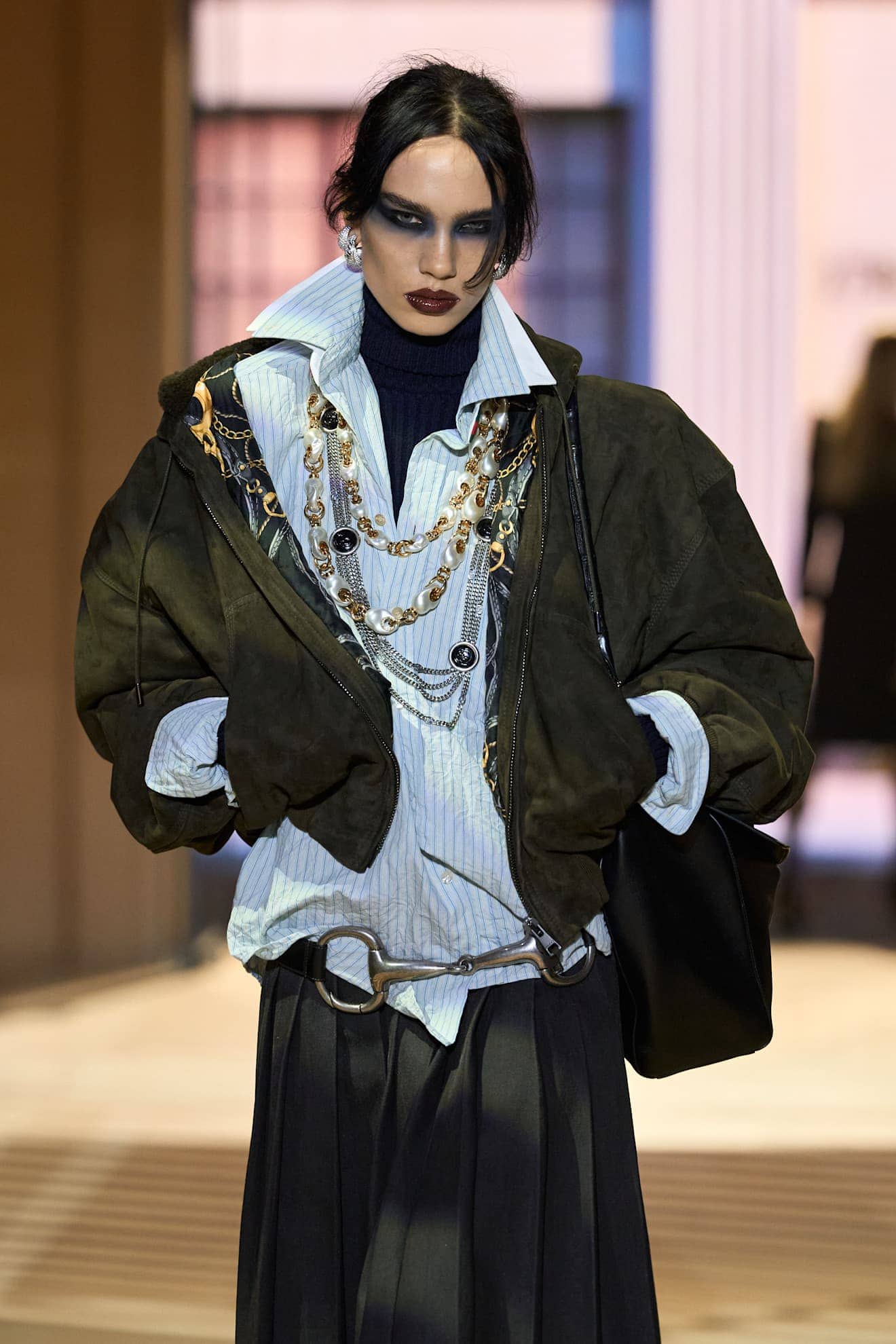
For Spring 2027, that thinking took the form of “The Store Show.” Demna staged the collection inside a make-believe Gucci boutique, where models entered through the front door and passed through rooms of merchandise. Men’s and women’s looks appeared in sequence, worn by people who seemed to have arrived with different ideas of what a Gucci customer should look like. The store gave Demna somewhere to put them all together.
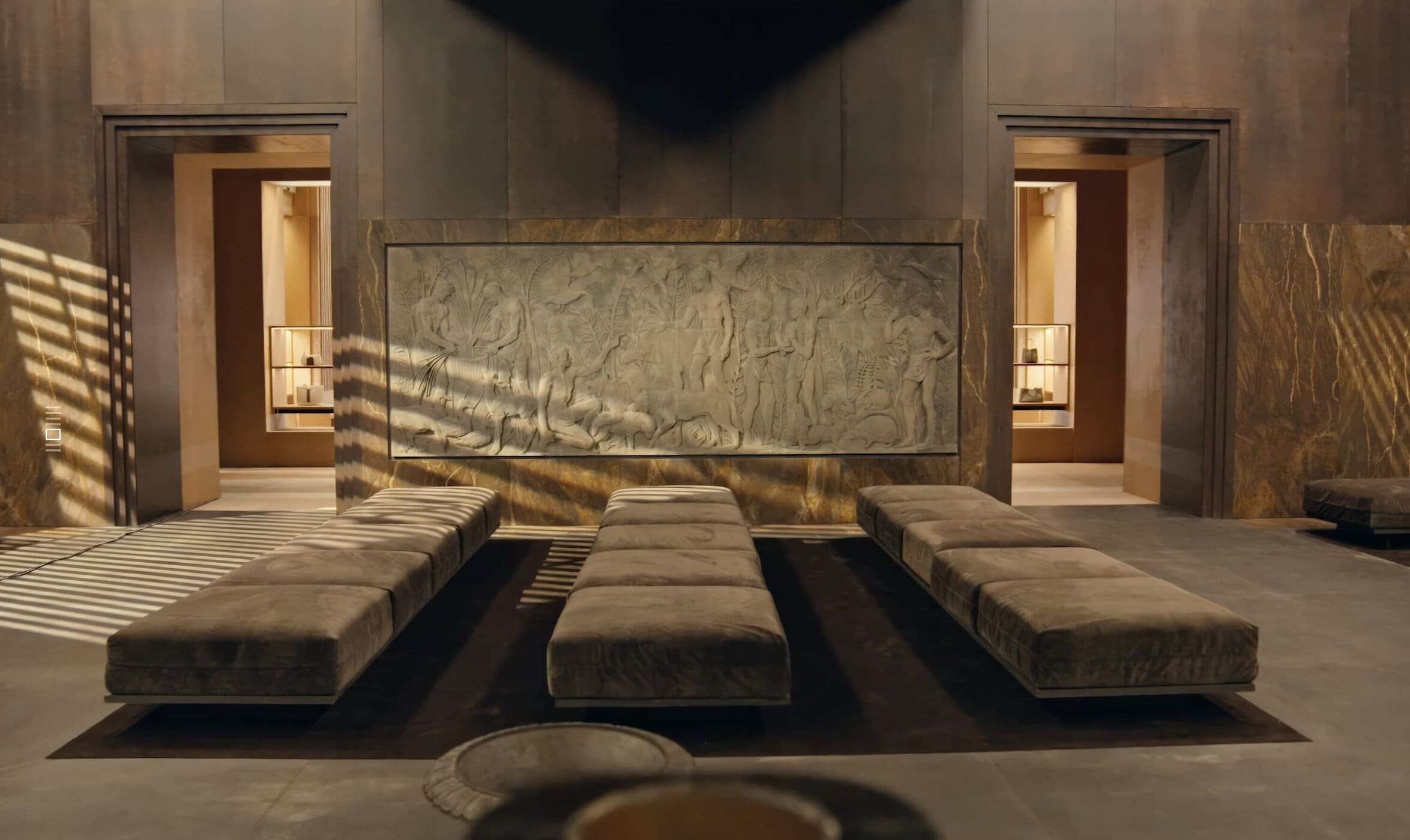
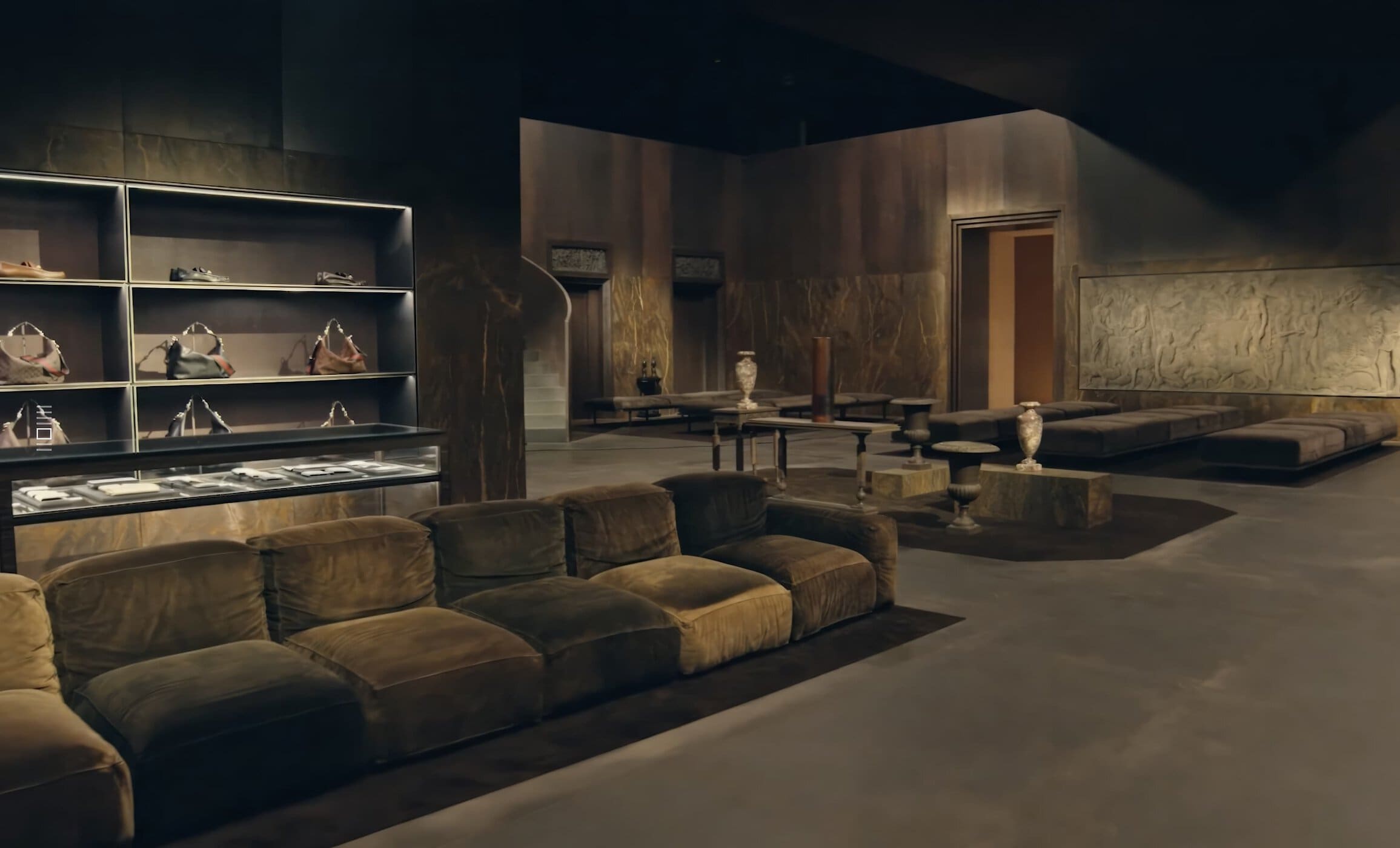
His attention had turned to the house’s aristocratic and bourgeois past, and particularly to what he calls “the idea of the broken bourgeoisie.” It is a phrase that gives the polished Gucci customer a little more life. The codes may come from a world of inherited status, but the pleasure lies in what happens when someone else gets hold of them. A coat can be worn with impeccable manners. A prep-school skirt can go out looking for trouble.
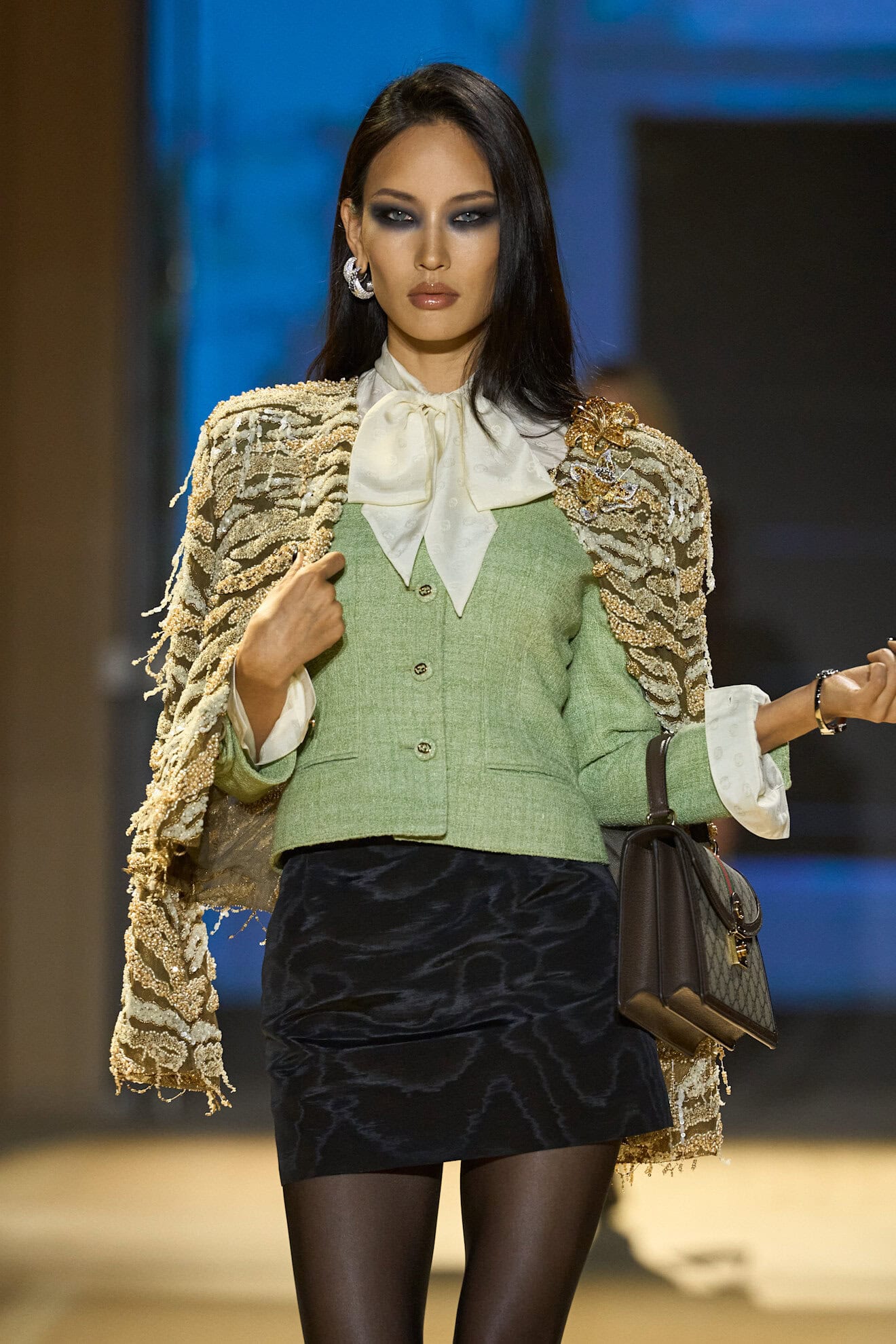
The idea of the broken bourgeoisie.
– Demna
“Those codes are not inherited,” Demna says. “You can claim them and make them your own.” The thought opens up his cast of characters. They can admire Gucci’s established world, enter it without an invitation or walk away wearing the best parts in an entirely different way. They do not have to agree on good taste. In fact, the store becomes more interesting when they don’t.
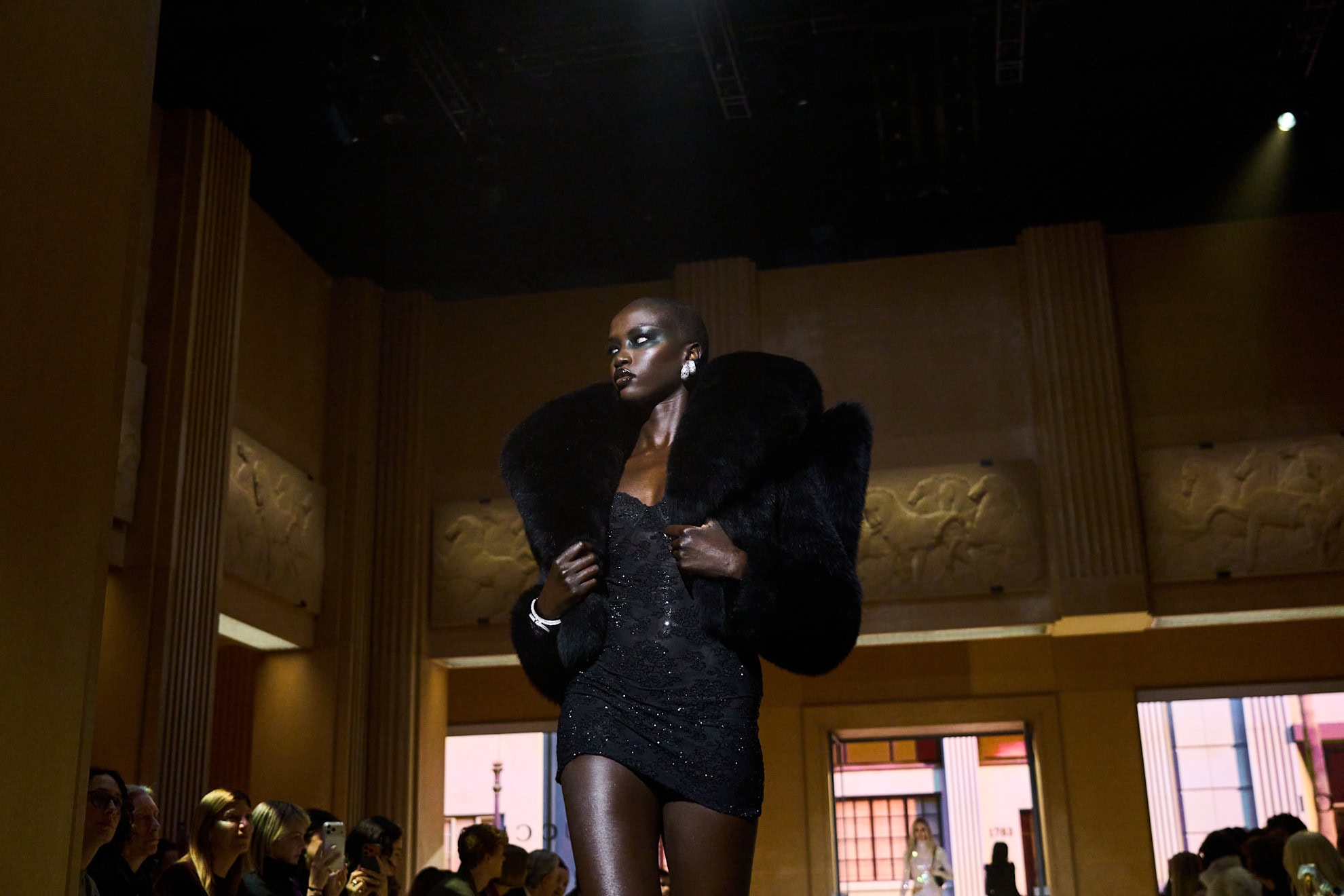
That makes “The Store Show” an apt setting for this stage of Demna’s work. A runway lets a designer present a finished image. A store is where another person decides what to do with it. Demna has spoken about Gucci as a house built around products, and this season he brought that belief into the spectacle itself. The clothes leave the runway with identities attached, then wait for someone to give them new ones.
You can claim them and make them your own.
– Demna
Demna describes this as the first show that feels like a full expression of his vision for Gucci. His choice of words leaves space for the work that came before it. He needed to try the sexy clothes and revisit the glamour he loved before he could see where those ideas stopped short. He needed the house’s many histories in front of him before he could decide which doors to open.
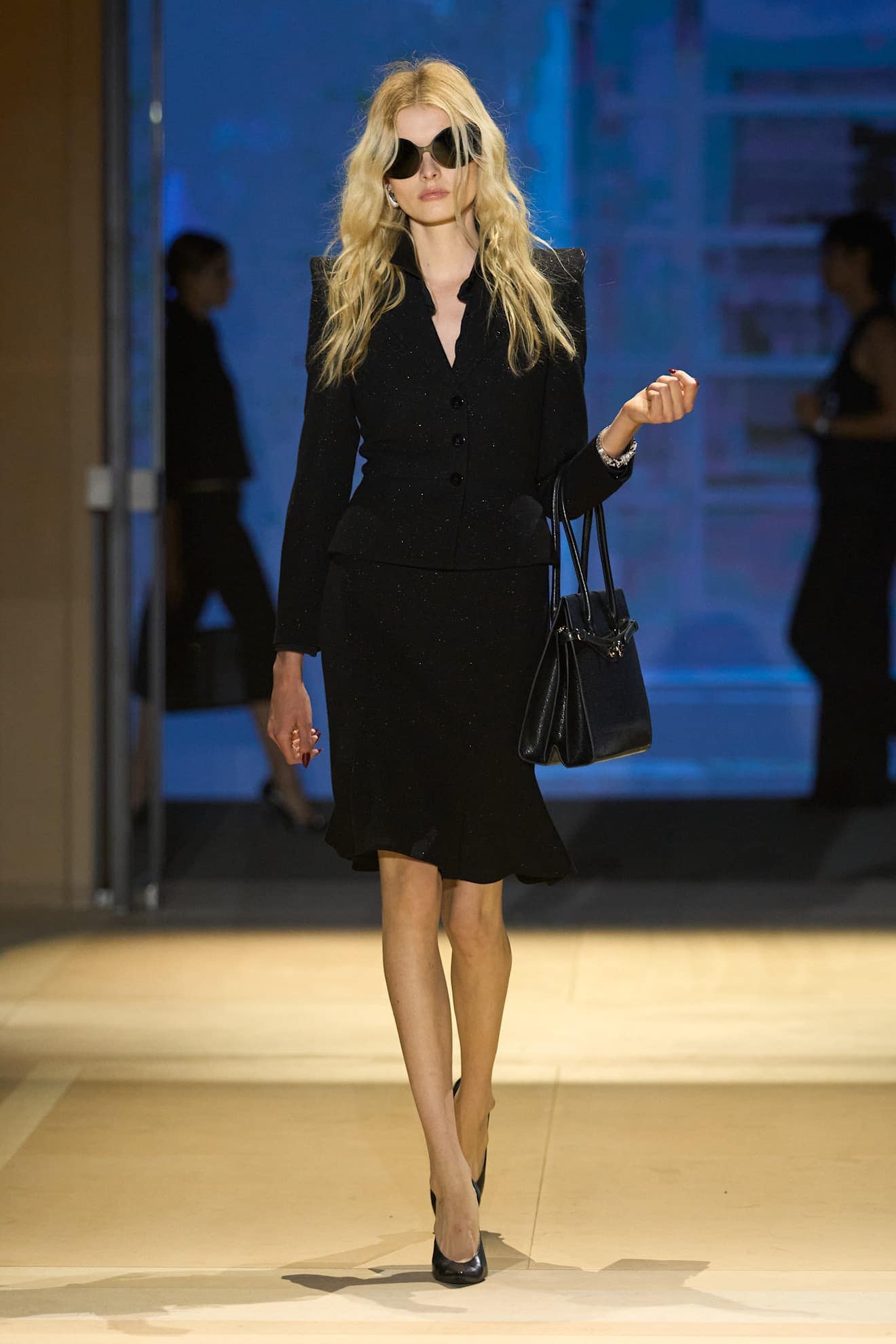
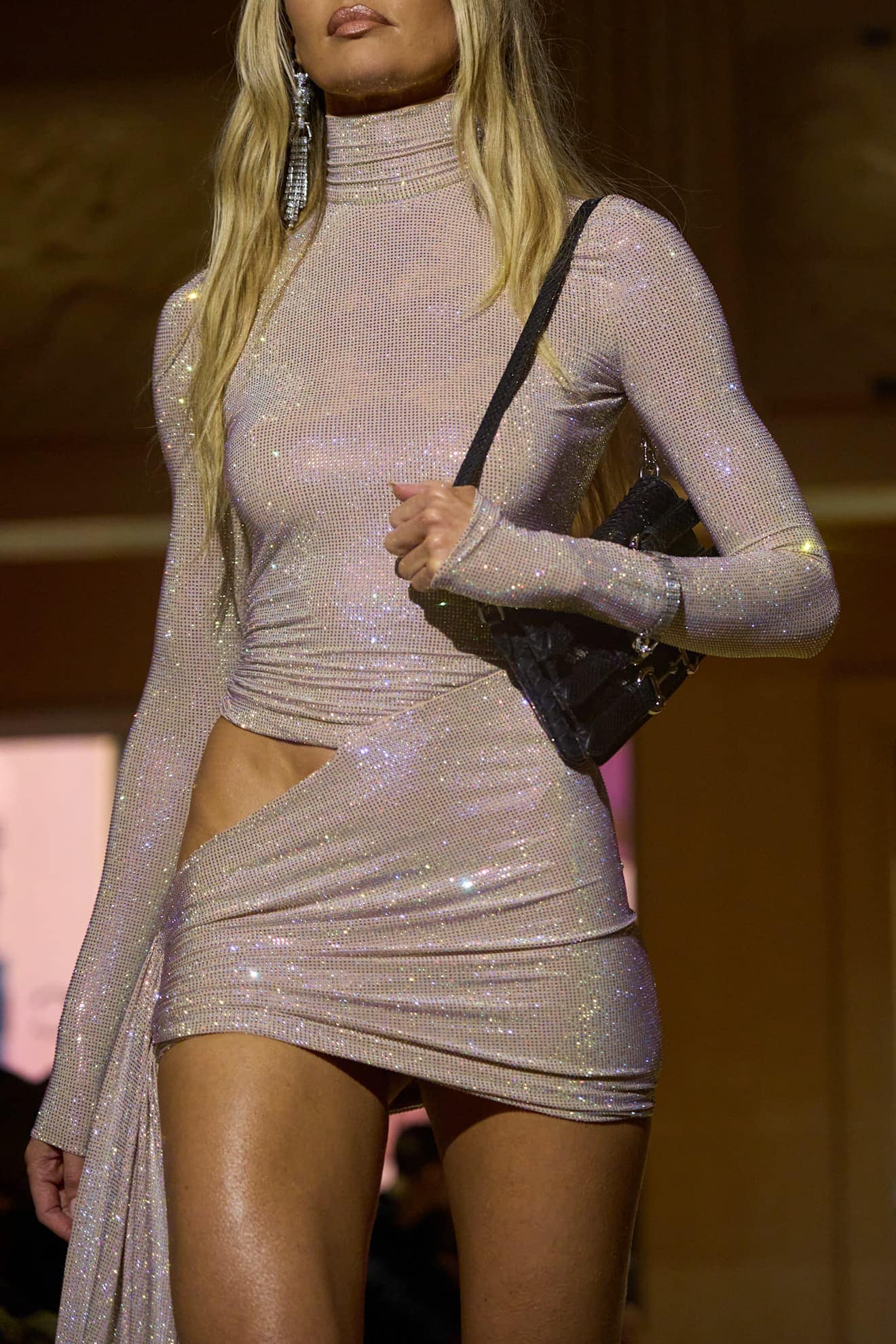
Now the aristocrats and rebels are under one roof, eyeing one another across the sales floor. Demna has made room for all of them. The next move belongs to whoever walks in.