Reaching its Climax
Review of Diesel Spring 2027 Fashion Show
By Angela Baidoo
After six years of ripping apart, distressing, lasering, coating and pushing denim beyond all reasonable expectations, Glenn Martens presented his final collection for Diesel in Milan during the Spring 2027 fashion week season.
His tenure has been defined as much by experimentation as spectacle in the form of hyperbolic set designs, transforming the brand from one that sold dependable denim into one of Milan Fashion Week’s most youthful outliers, while never losing sight of the community that helped build it to what it is today. So, for a designer who has staged shows among mountains of denim scraps, giant inflatable sculptures and a commentary on our obsession with screens, the question was never whether Martens would go quietly, but just how far he would take his final bow.
THE COLLECTION
THE VIBE
We never pretended to be a luxury fashion brand, even though we were showing at Milan fashion week. We always wanted to do alternative things and think about our community. That’s something that I tried to celebrate, while making sure the clothes had something nice to say.”
Glenn Martens, Creative Director, Diesel
The collection started off relatively sedate, which was unexpected but understandable as many designers exiting their creative director posts for pastures new have been known to present palette cleansers, rather than collections that will go down as the pinnacle of their career. In order to make the transition easier for the incoming designer.
But this was Glenn Martens after all, and in all his shows for Diesel, that have included everything from giant graffitied inflatable sculptures to runways made of denim scraps (some of which was taken as keepsakes) and the livestream of Diesel fans directly into the showspace, he was never going to go quietly into the night.
In fact, he chose to groan – and moan – his way through his finale collection. Halfway through the collection the audience grew louder and those in the crowd would have been forgiven for getting a sense of Déjà vu that a protestor had broken through the ranks. To the relief of many it was a planned performance, soundtracked by Donna Summer’s erotically charged 1975 hit “Love to Love You Baby.” While it’s unconfirmed as to whether pheromones were being pumped into the space (a distinct sensory change occurred midway) to get everyone attending in the mood, the 200-strong ‘panting audience plants’ (who were part of a collective of artists from Marseille called LA(HORDE)) riled and rolled to the lyrics of the song helping the show reach a climax that was wholly satisfying.
Along with climax, crescendo must have been on the mind of the designer, as he assembled the last statement he would make for the Diesel brand. Speaking backstage, he told of arriving at Diesel when they were just selling T-shirts and five-pockets and transforming it into a “super-experimental, fun consistent fashion company, and I have worked with the same team for 6 years”
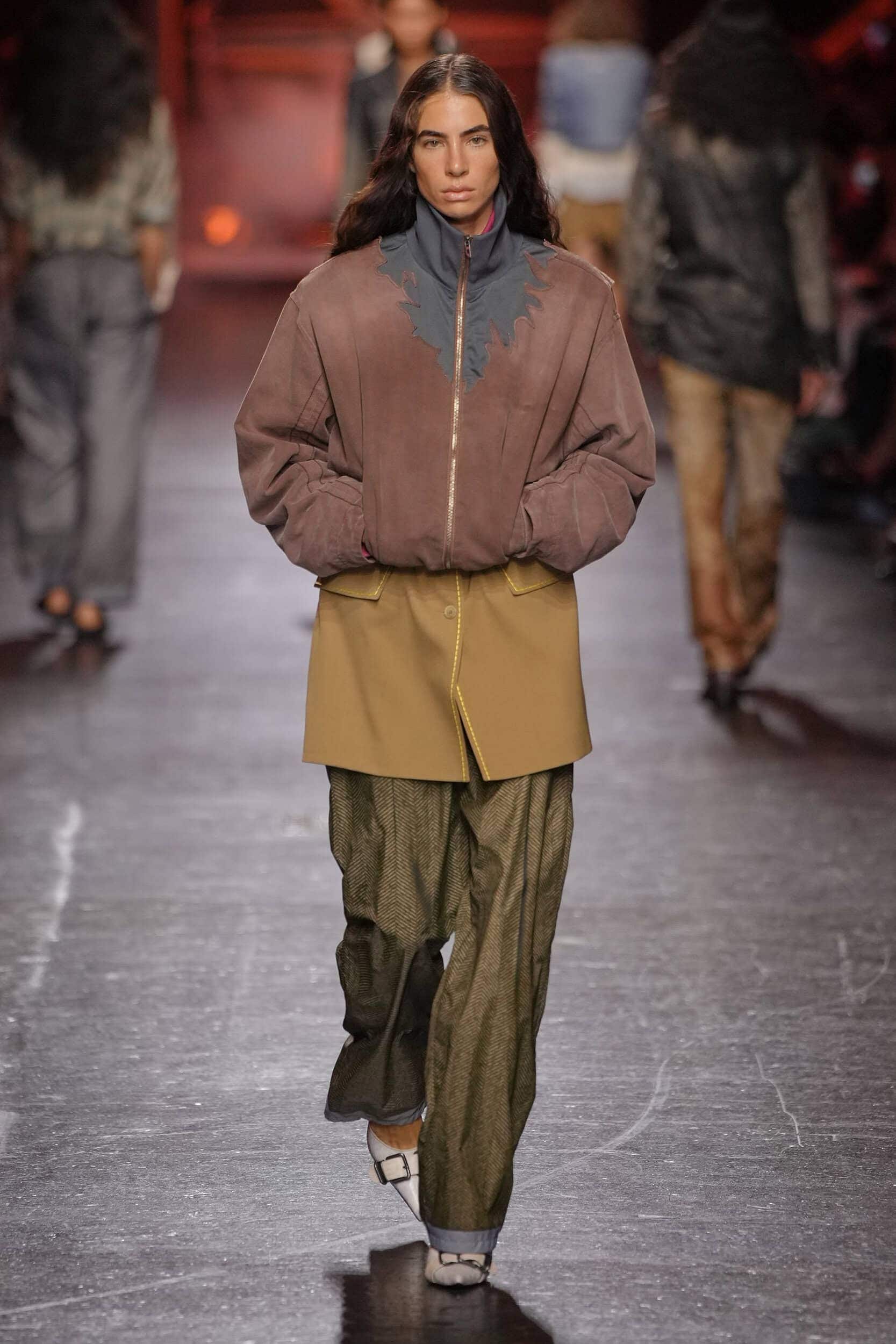
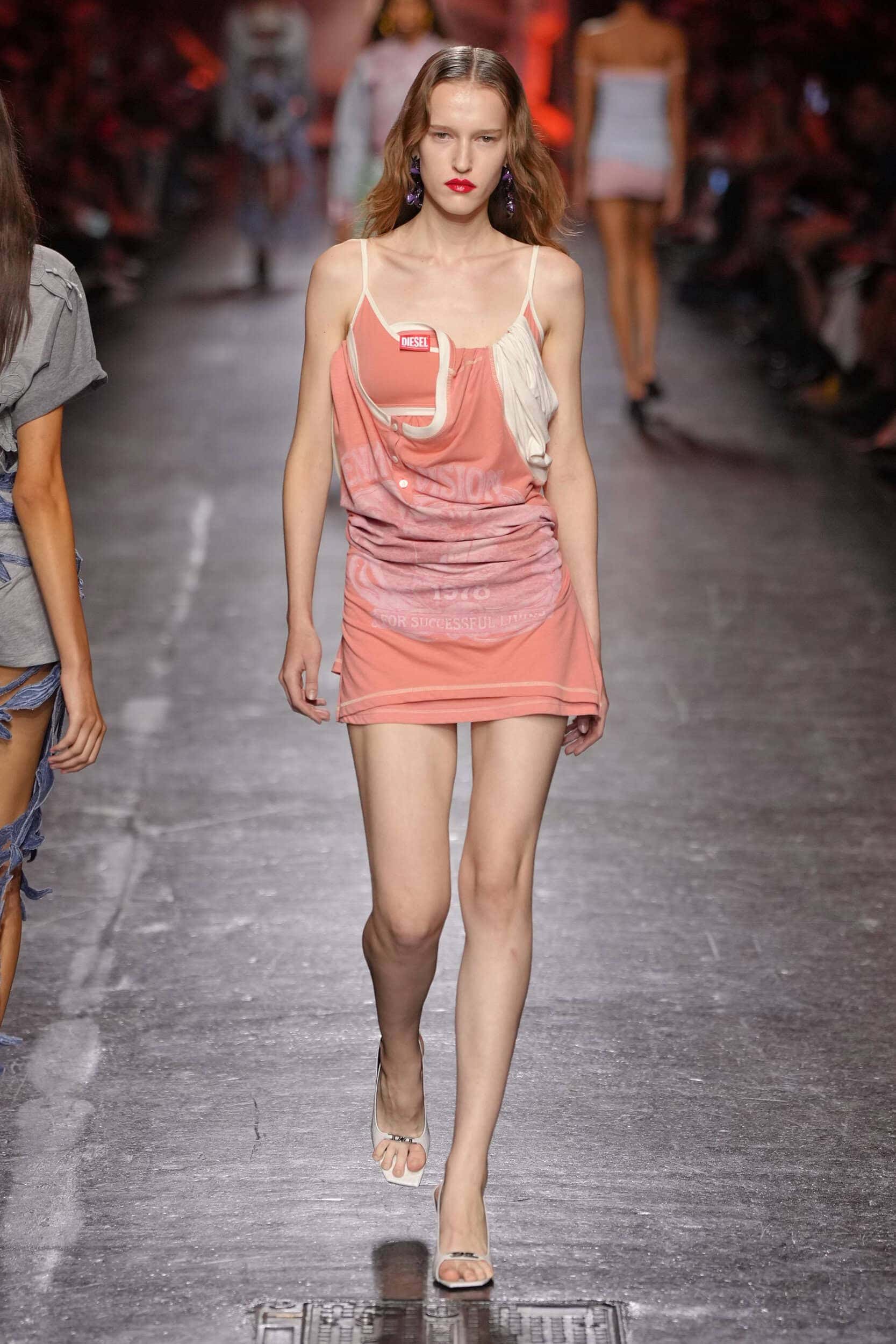
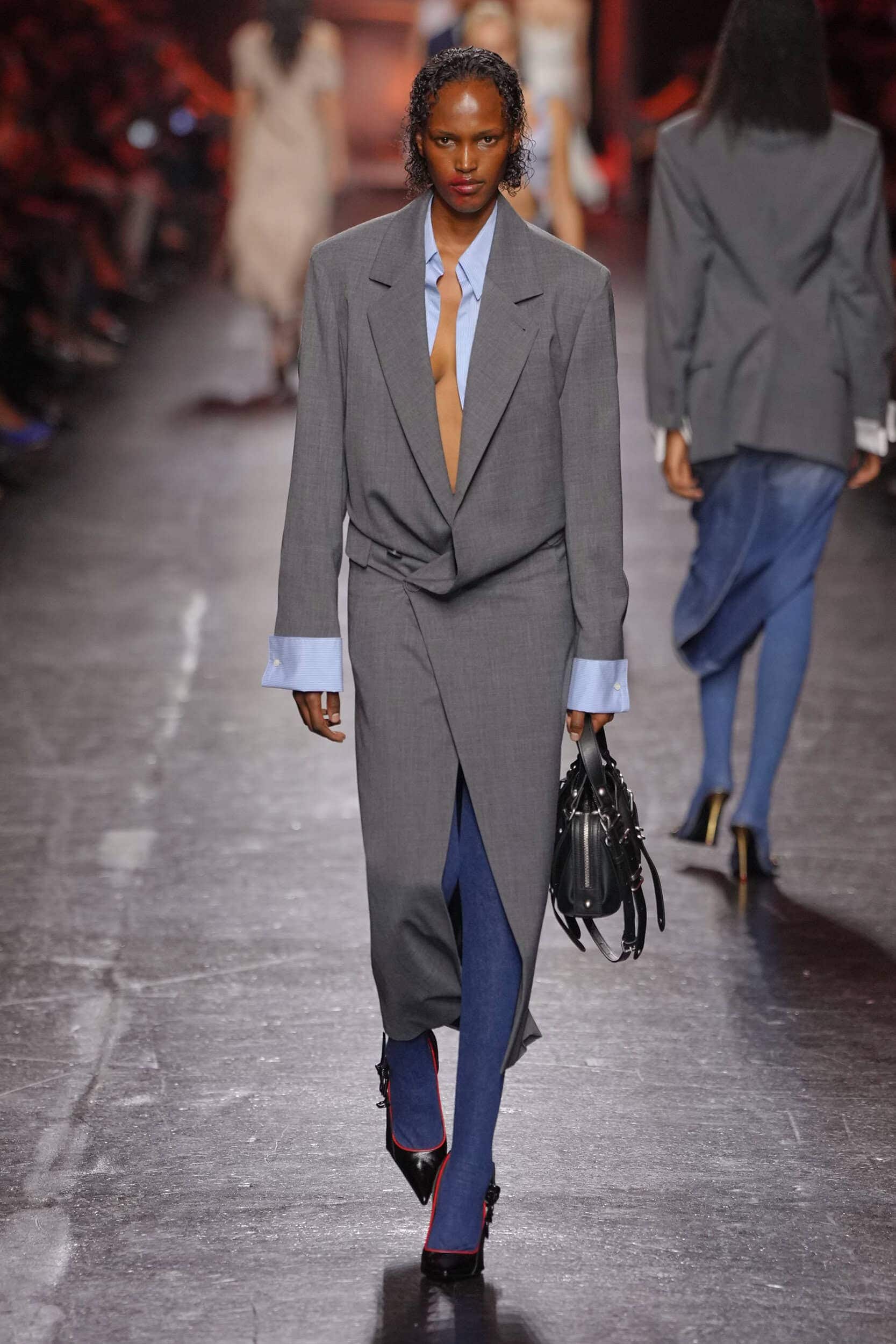
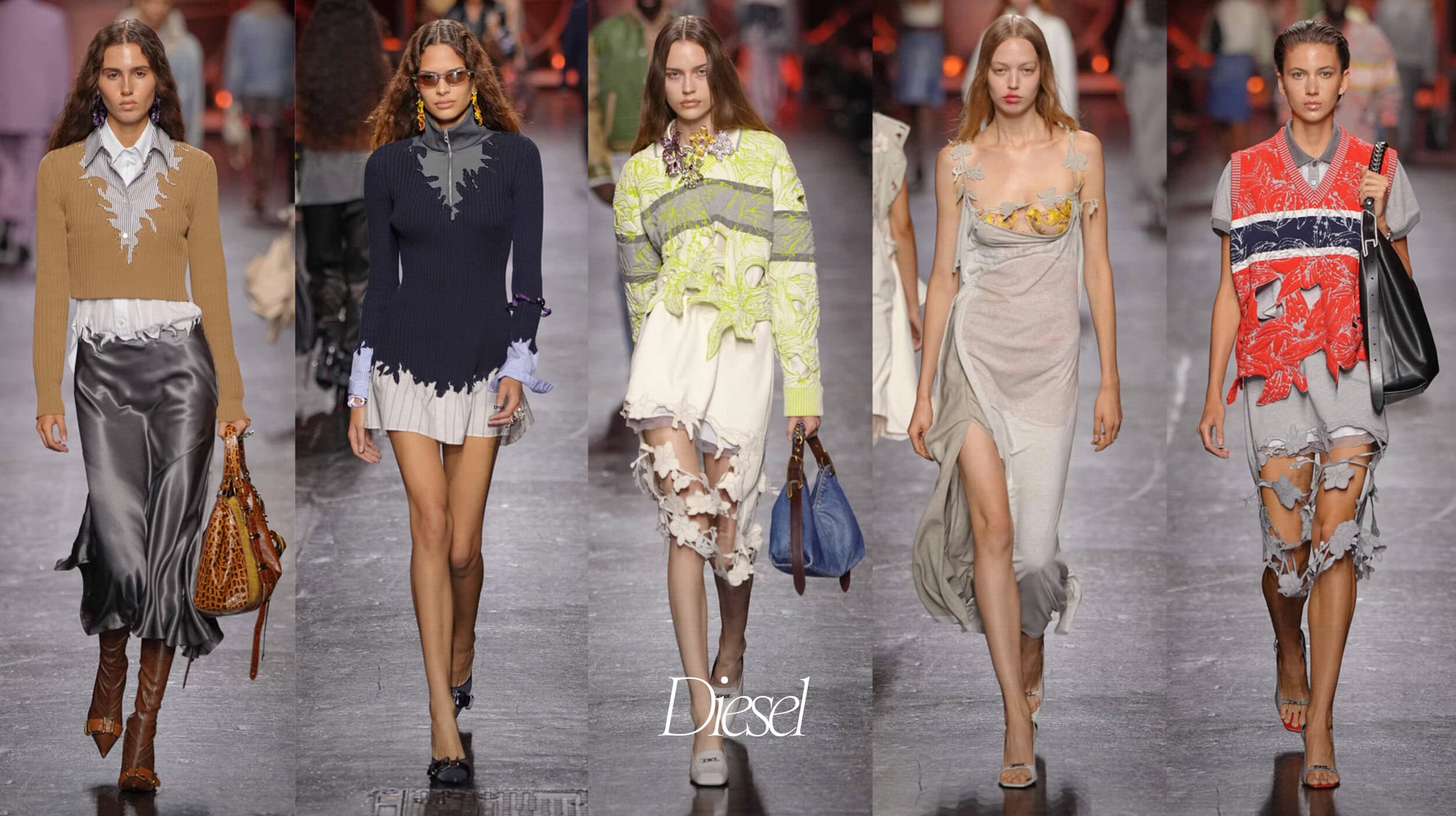
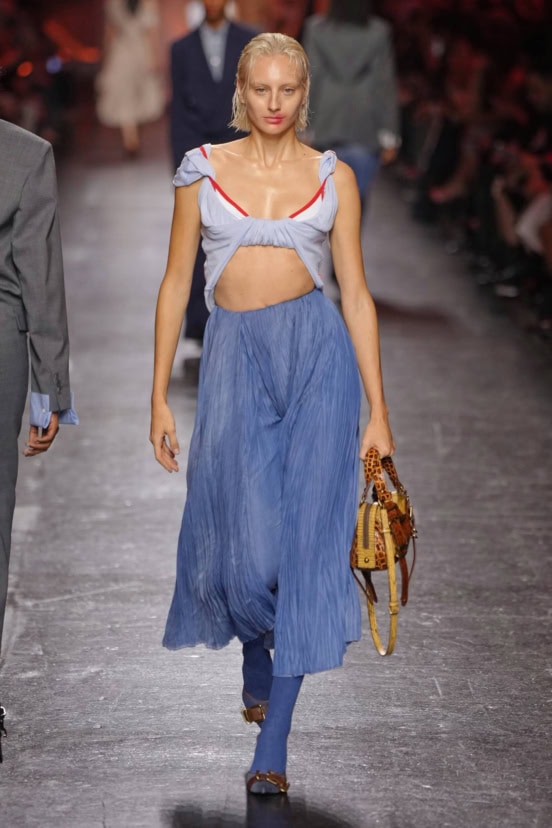
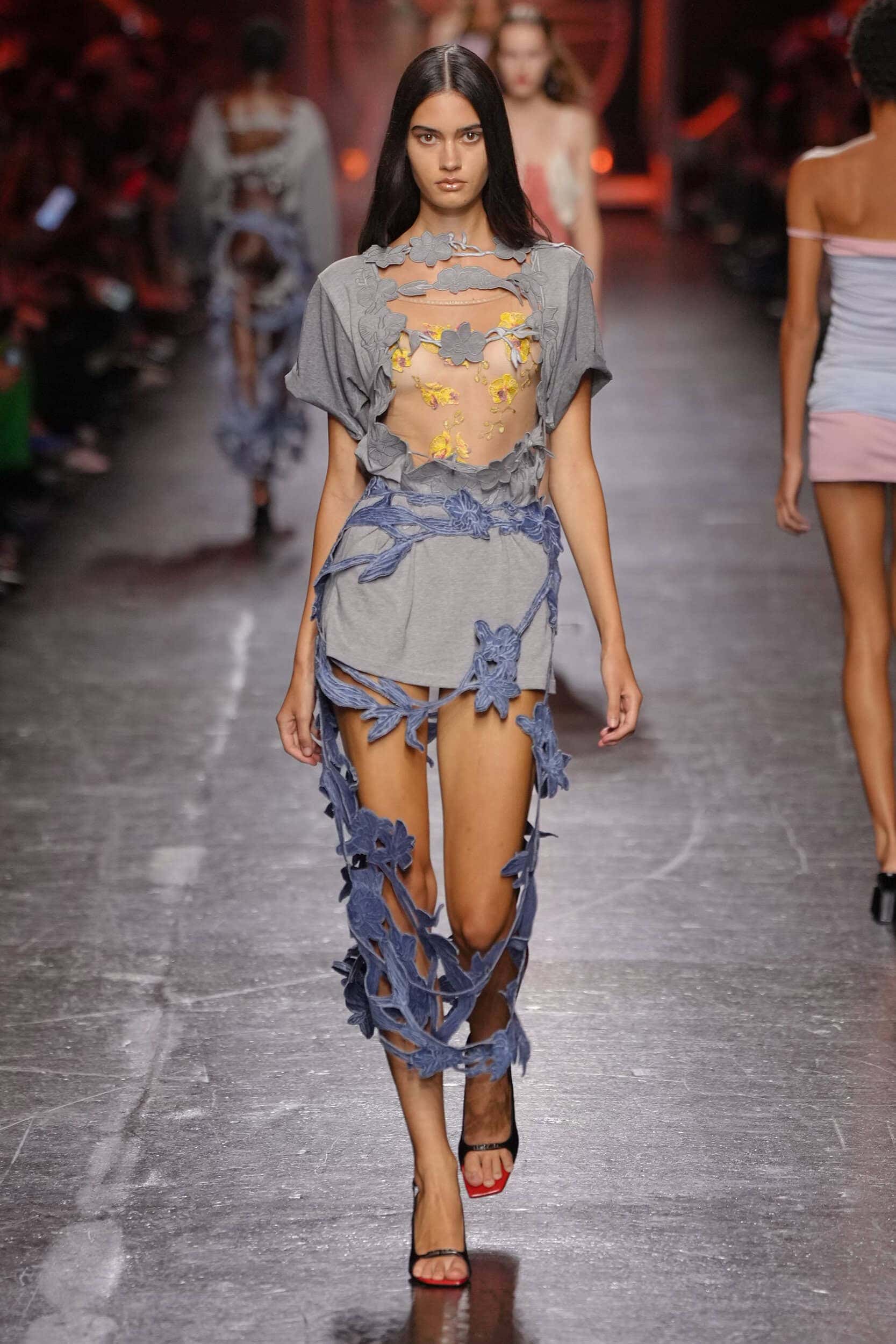
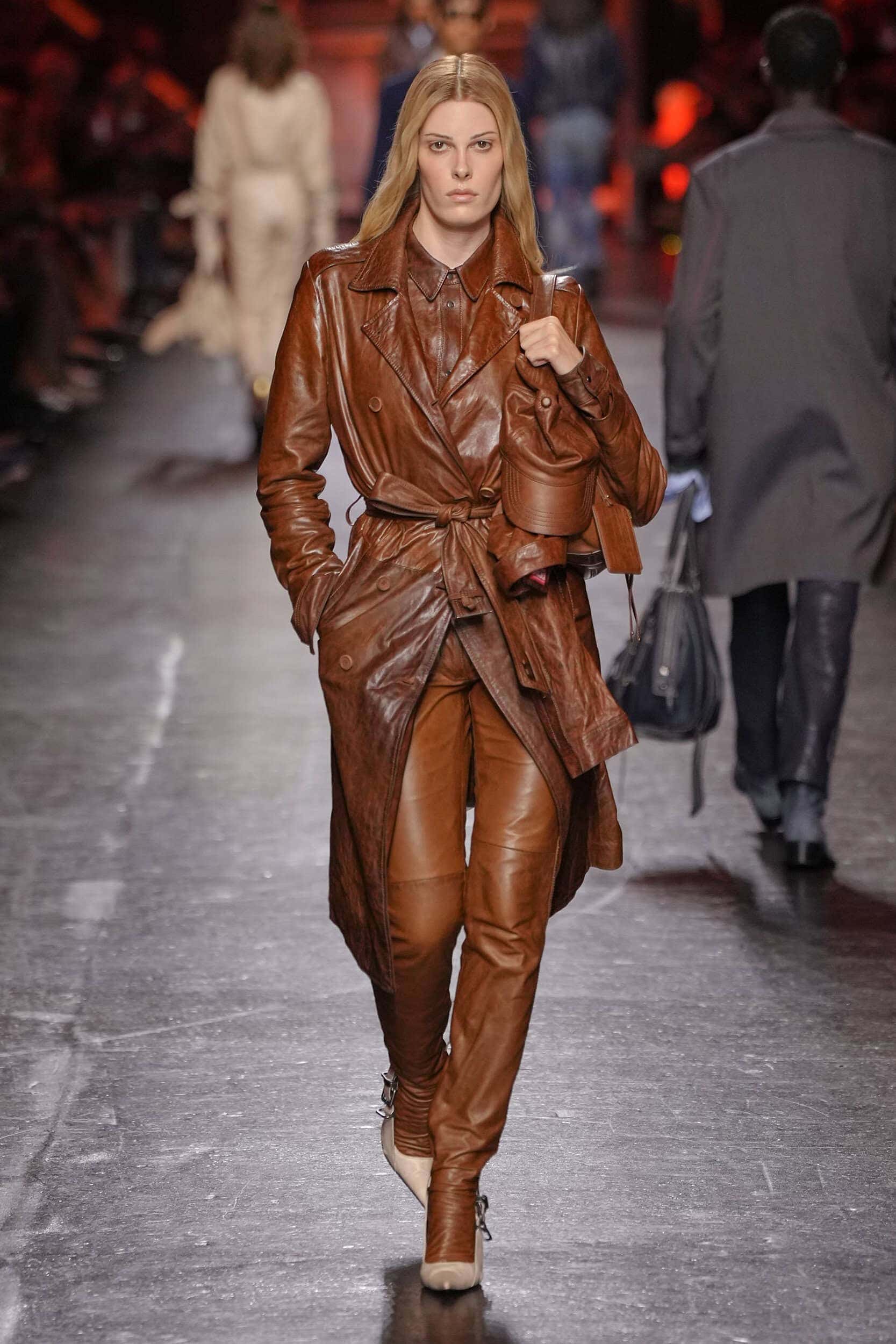
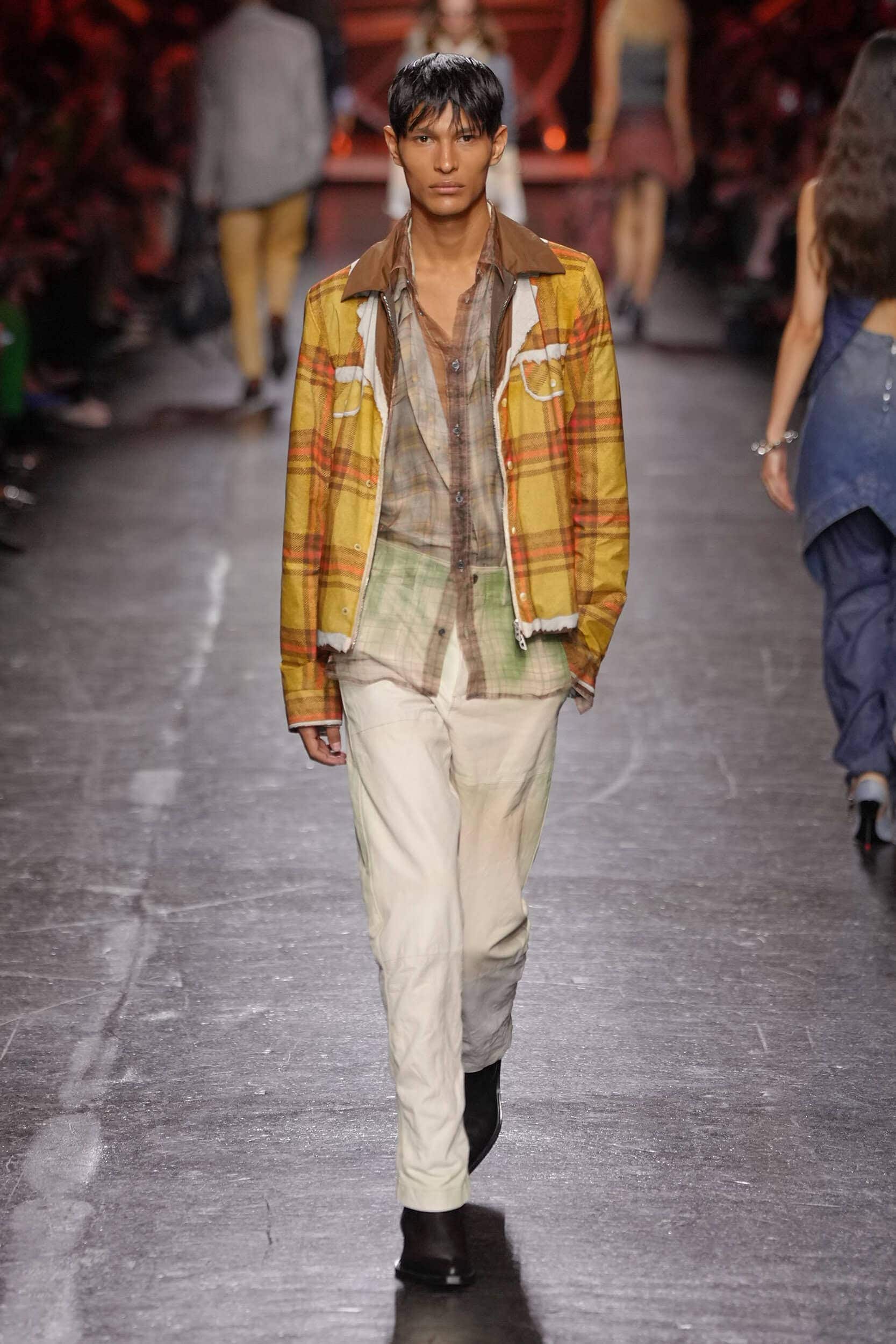
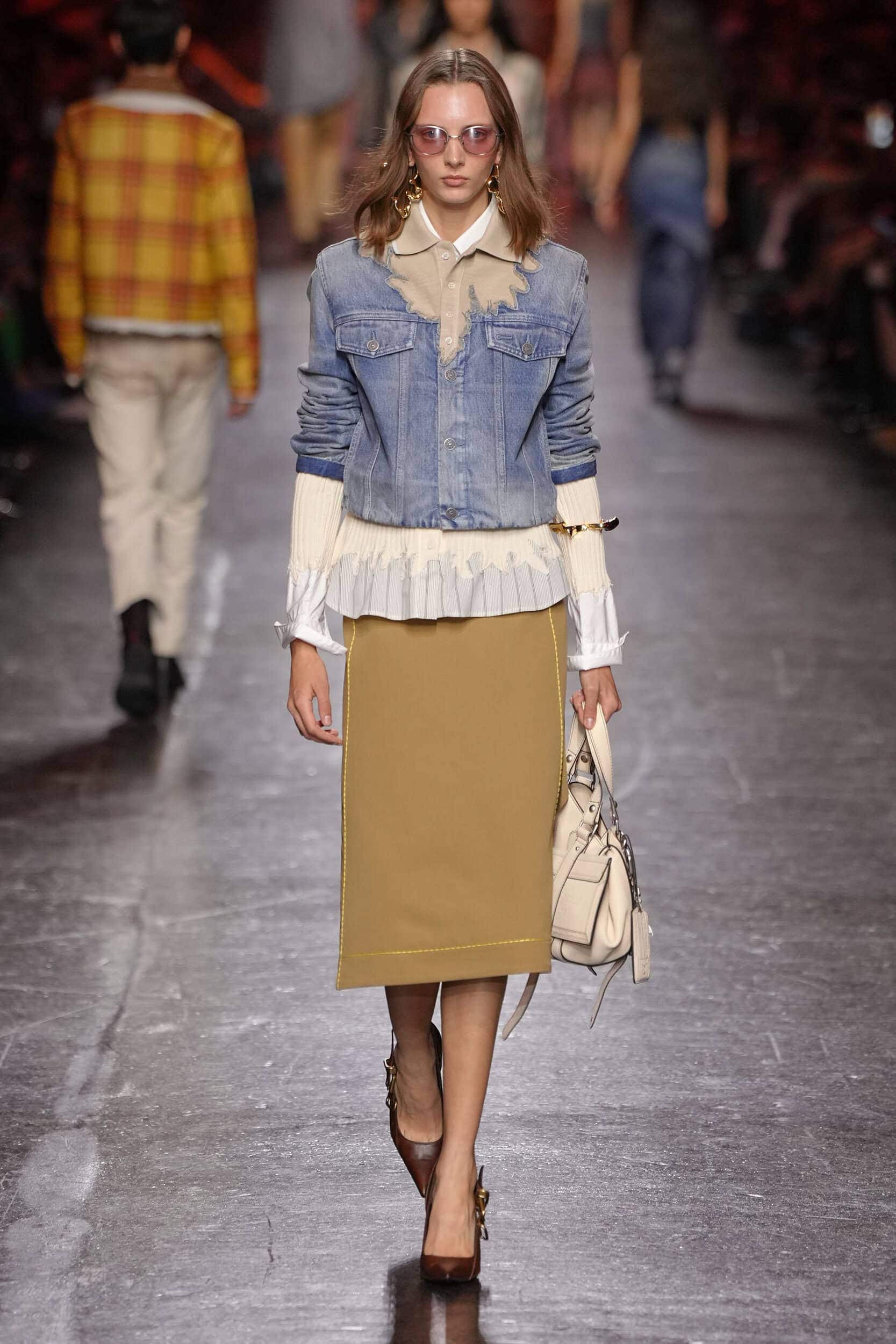
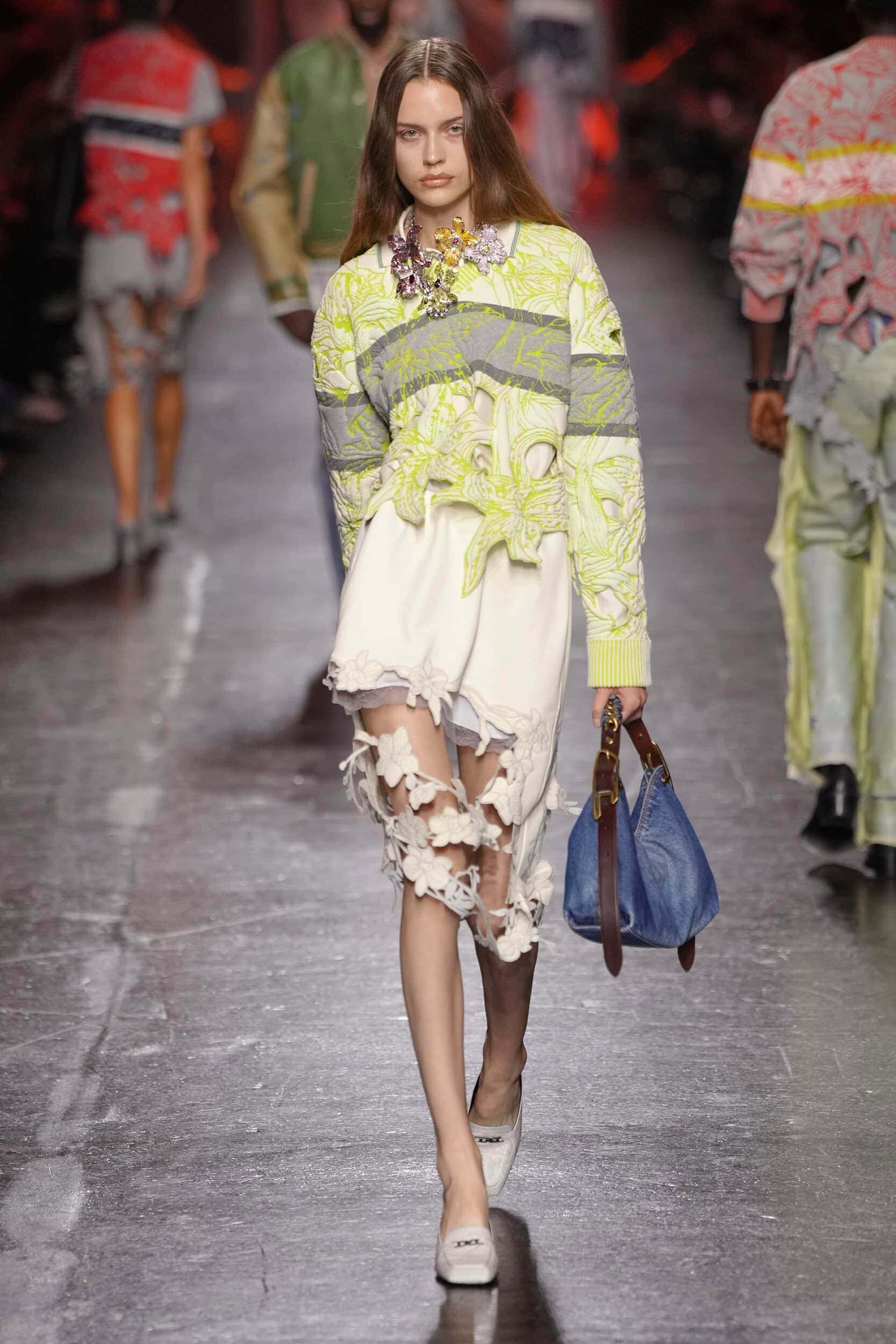
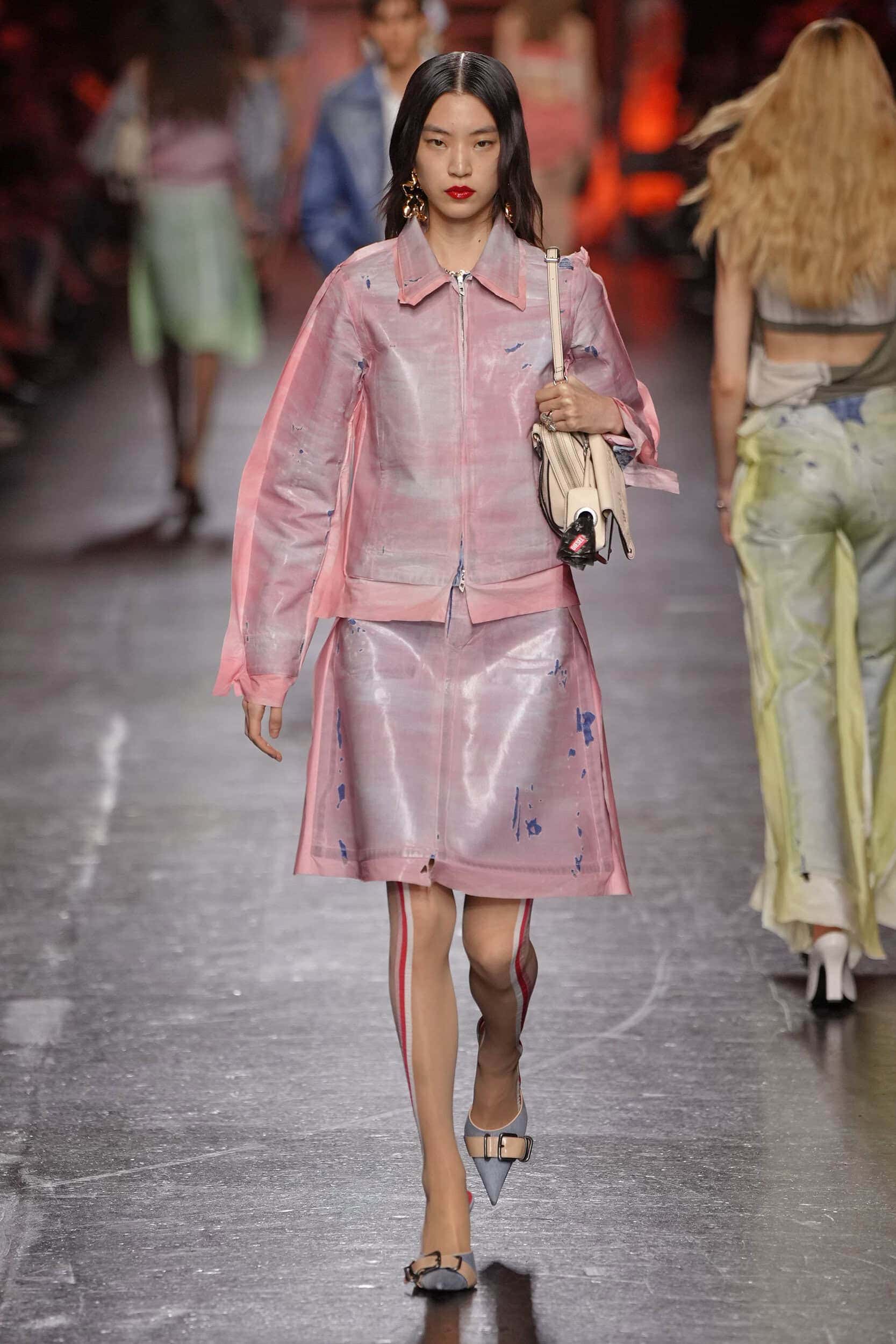
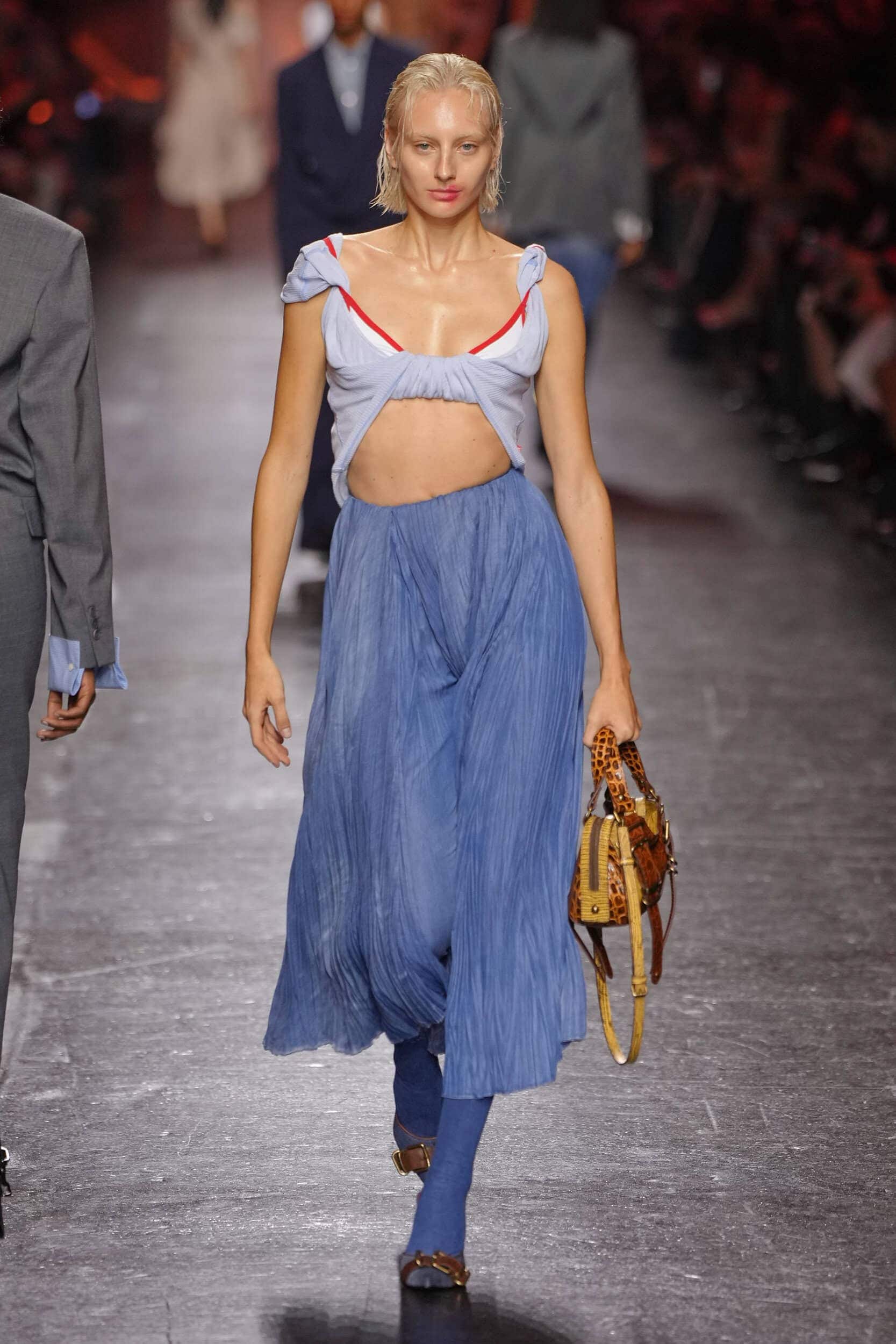
He began with the fabric collaging that defined his tenure, in what felt like a deliberate pull-back and not at all fitting with an end-of-chapter finale. Then the designer cleverly unfolded his last collection to reveal something akin to his greatest hits, describing it in part as “daywear is so desirable you want it all at once.” Trompe L’oeil prints were rendered on organza, leather, and technical nylon, leather was then artfully distressed and would have appeared grunge-like if not for the sharp construction of skinny pant and longline coat. His denim was coated then lasered to mimic leather and the fun he spoke to backstage was seen in the layered T-shirt dresses and super-mini shorts for both men and women. The designer has shown time and again that he is a master manipulator, and we can be in no doubt that his time at Diesel played some small part in opening the door for him to enter at Maison Margiela. As a fixture of the Milan fashion week calendar, whether he considered what he was doing as part of the luxury sphere or not, Diesel was a fun, youthful iteration of Italian design, and for whoever takes the reins next, that should be something that they continue to ensure the brand remains relevant for its community of dialled-in customer who consider the brand part of their way of “Successful living.”
THE WRAP UP
There were many rumours of who the incoming Diesel designers could be during London fashion week – as fashion waits for no man, and these creative director chairs are rarely empty for long – but the more relevant question is whether Martens will be content solely focussed on Maison Margiela? And could there be a further expansion of the brand in the works.
While these questions remain pending, Martens can feel confident that the innovative way he reimagined denim during his 6-year run at Diesel was a game-changer. Elevating it to couture-level status that undoubtedly influenced some of his peers who took the humble working-man’s fabric more seriously as an option.