Review of Fendi Fall 2026 Ad Campaign by Creative Director Maria Grazia Chiuri with Photographer Jo Ann Callis, Featuring Models Christian Mammana, Chu Wong, Faith Johnson, and Mansur Lefqir
For Maria Grazia Chiuri’s first Fall campaign at Fendi, photographed by Jo Ann Callis, Pina Bausch becomes a point of departure for an exploration of connection, distance, and the shifting relationship between masculine and feminine expression. It is an ambitious and intellectually fertile reference, one that places the body at the center of the campaign’s meaning. Bausch expands the conversation into movement, psychology, vulnerability, and the fragile negotiations that occur between people. Her presence sets a demanding standard, asking gesture to communicate what clothing, setting, and language alone cannot.
Bausch’s work endured because movement became a form of emotional excavation. Repetition could expose longing. Proximity could reveal estrangement. A glance, a touch, or the space separating two bodies carried the weight of a relationship. Her performers often appeared caught between the desire to connect and the instinct to protect themselves, an idea closely aligned with the campaign’s interest in intimacy, distance, and the limits of understanding another person. Chiuri’s concept of a shared wardrobe adds another thoughtful layer, allowing masculine and feminine codes to move across bodies with an ease that speaks to affinity, difference, and self-definition.
The campaign film carries much of this philosophy with genuine sensitivity. Its measured gestures, passing glances, tentative contact, and repeated movements create an emotional rhythm that gradually reveals the relationships within the rooms. Characters draw close, retreat, mirror one another, and appear momentarily suspended between intimacy and self-preservation. The movement remains restrained, yet that restraint contains feeling. The body begins to function as a language, and Bausch’s influence becomes visible through the tension between what the characters offer and what they continue to withhold.
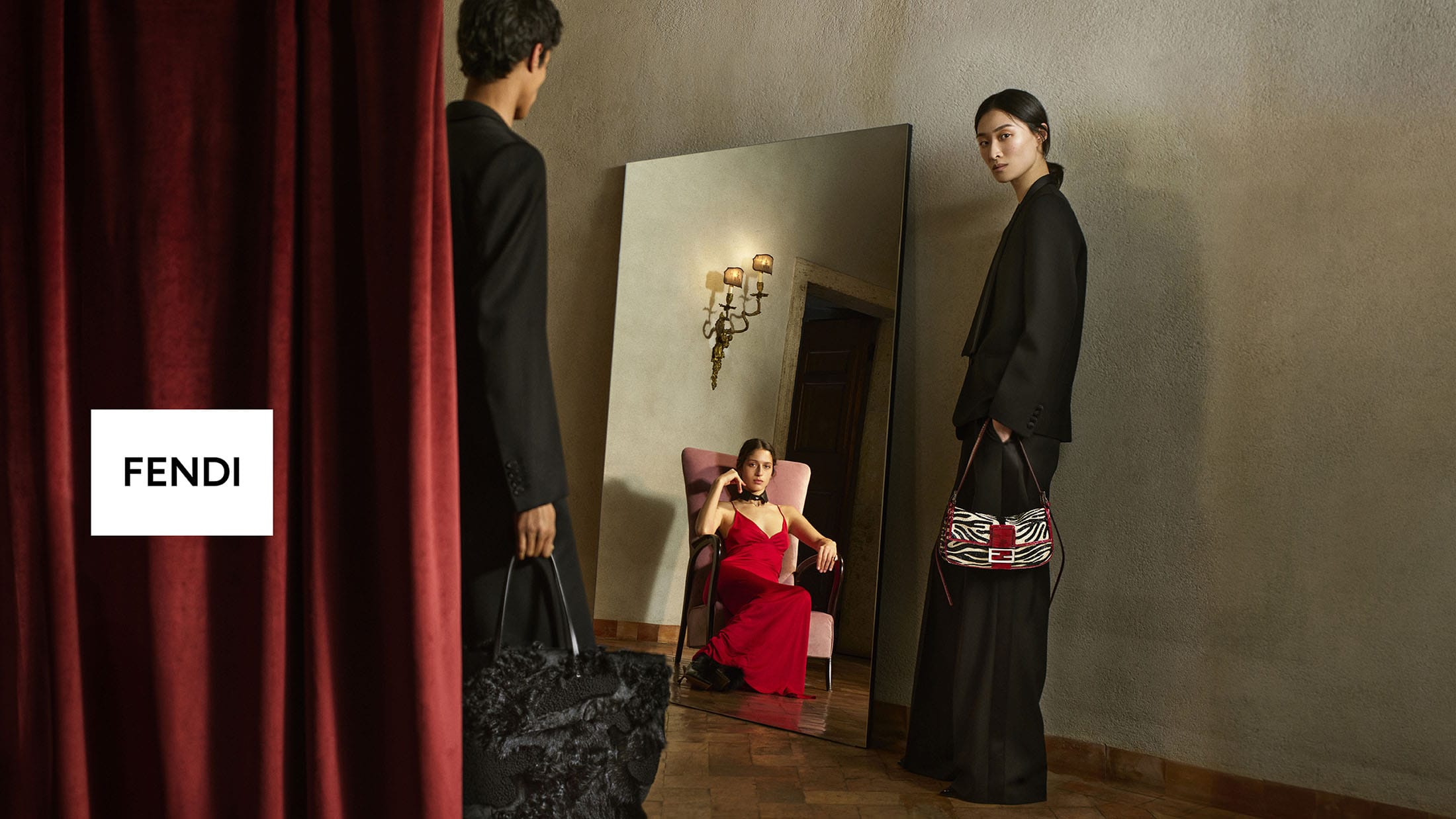
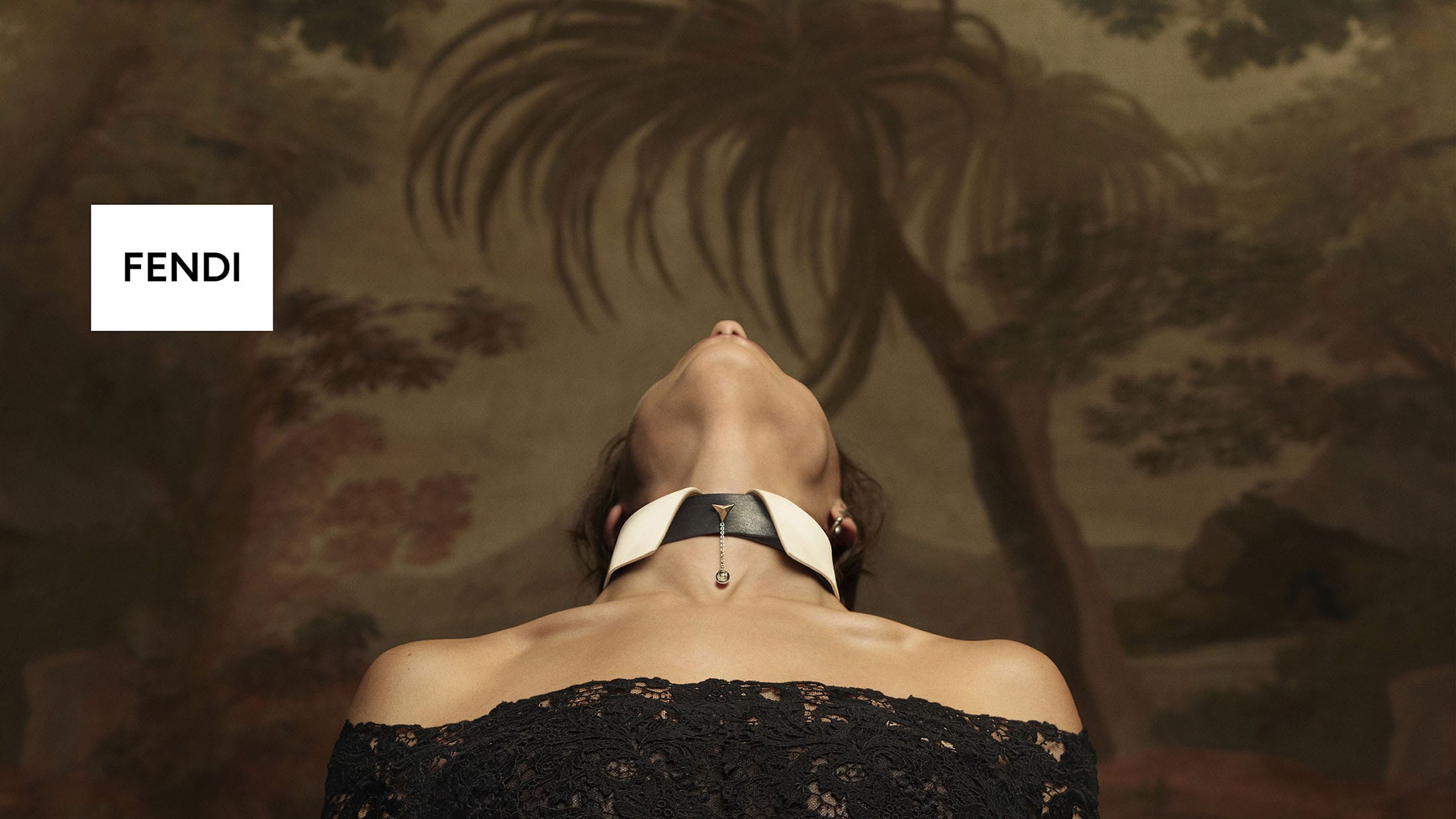
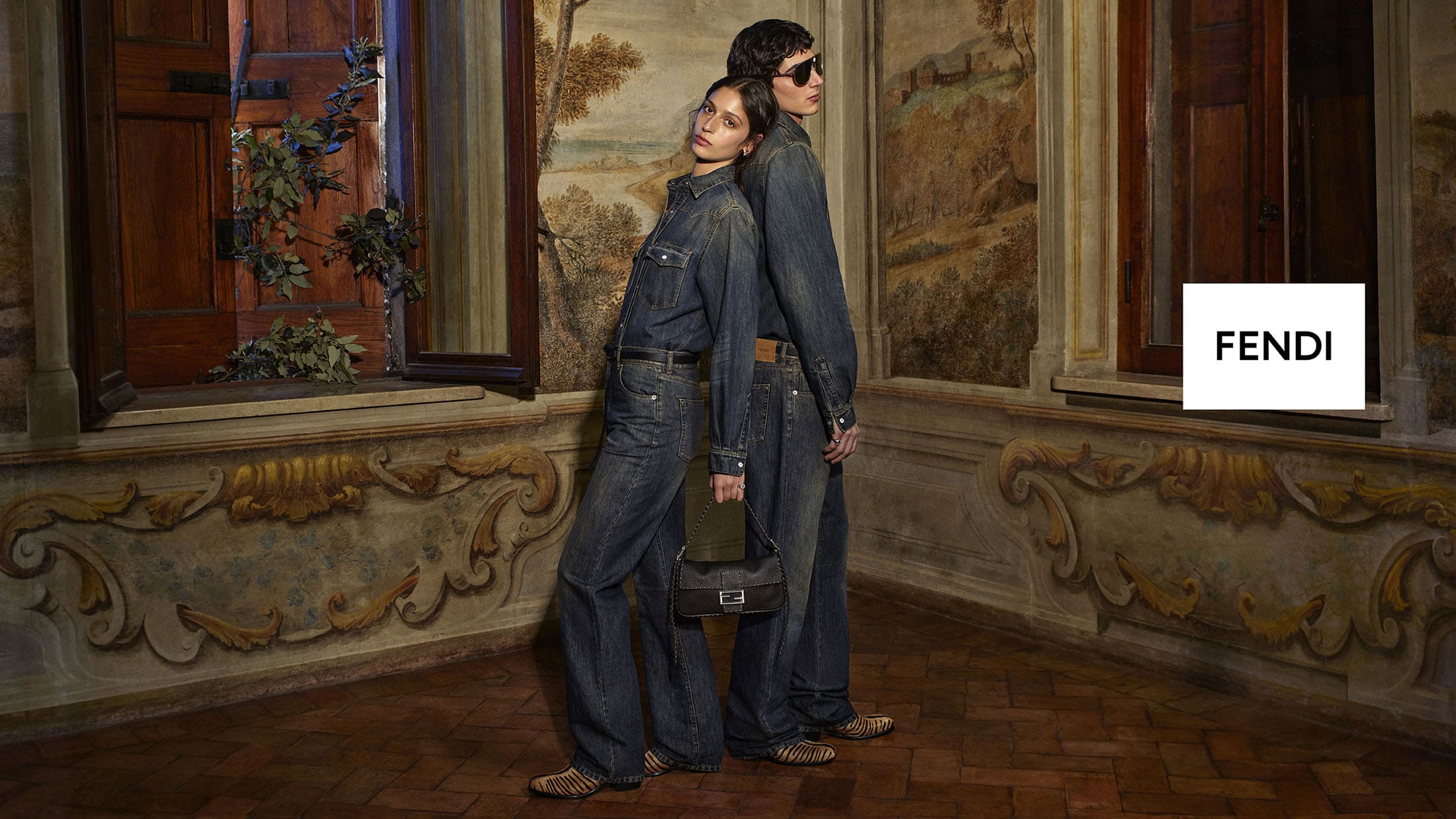
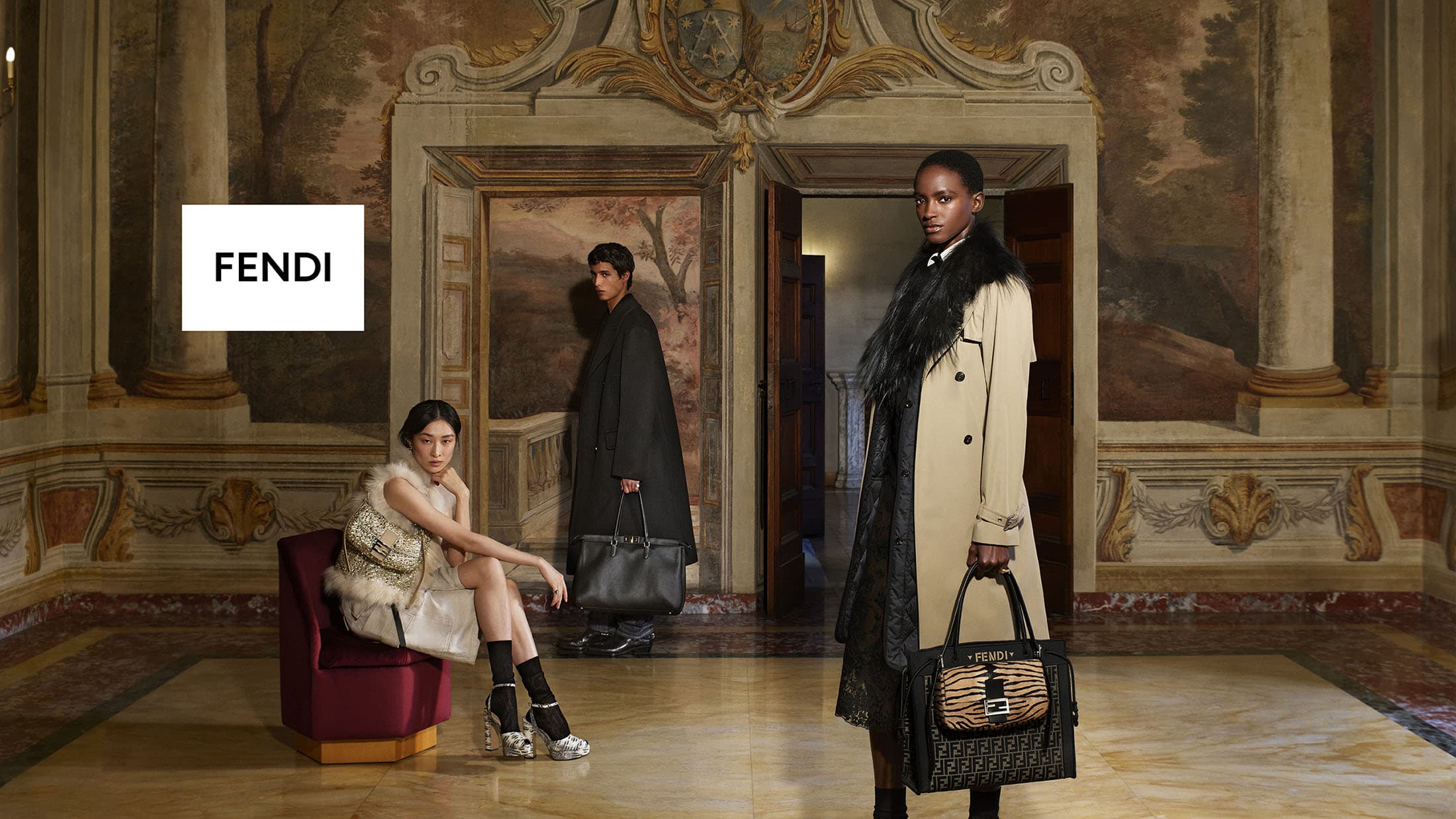
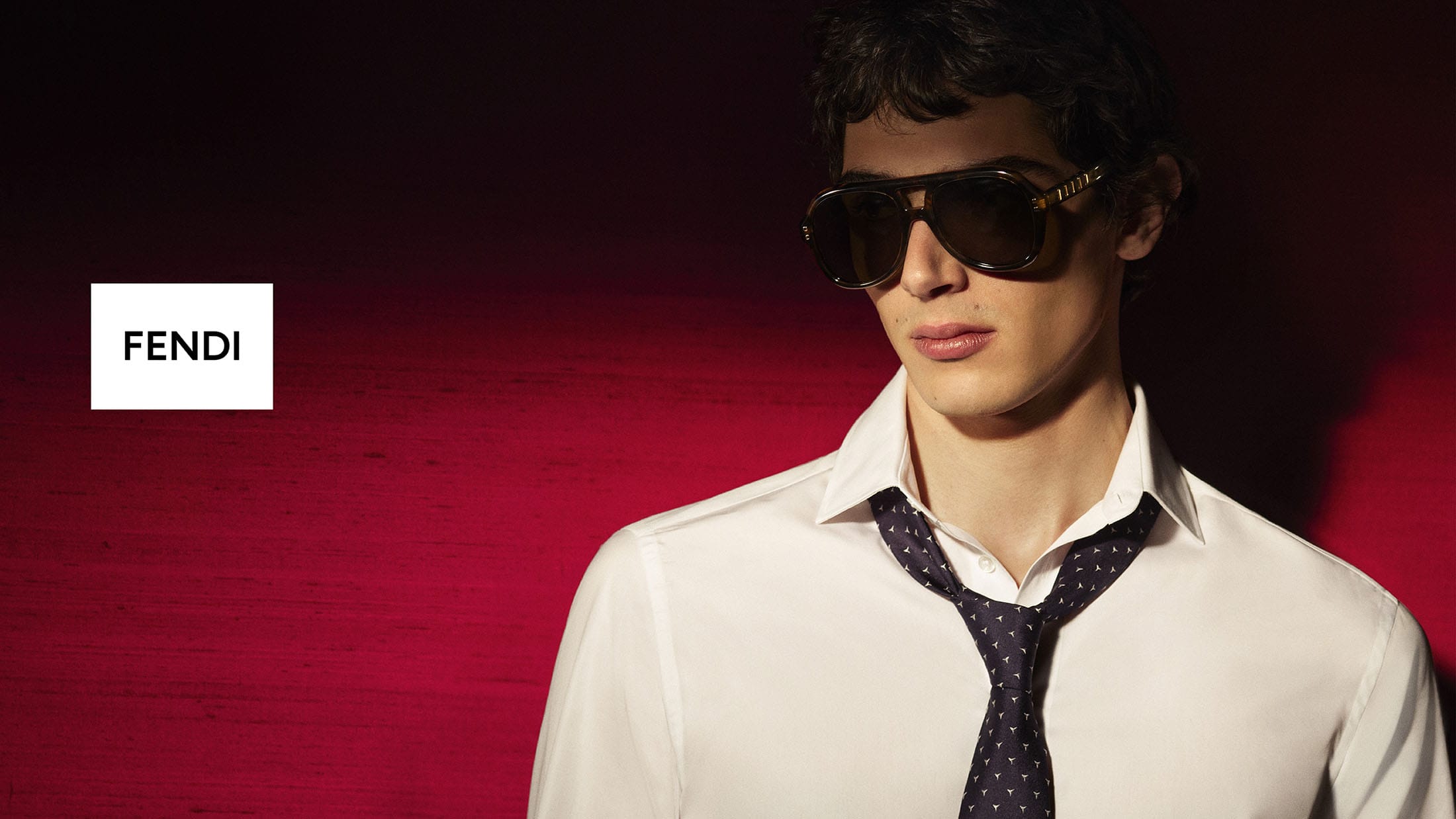
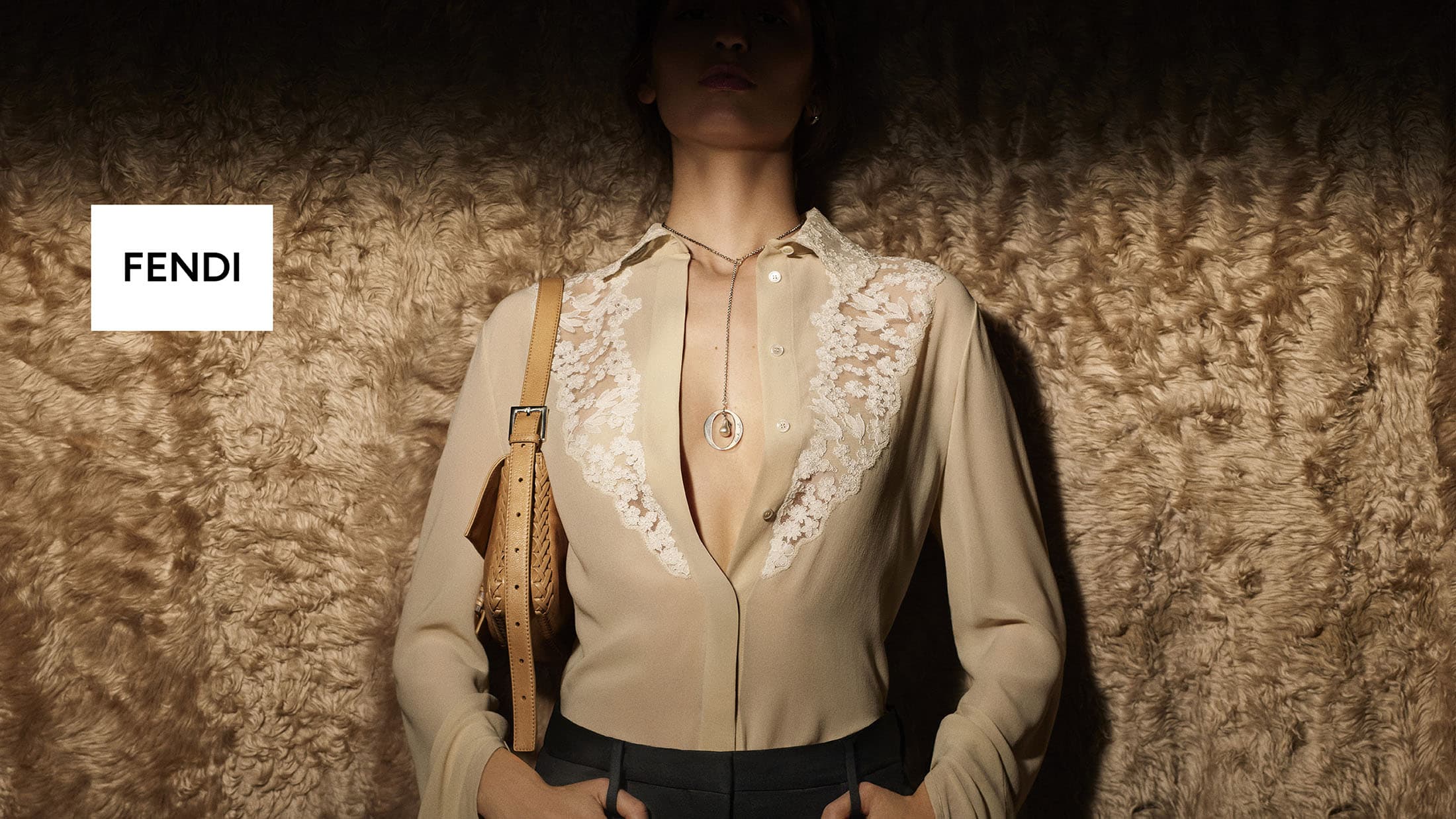
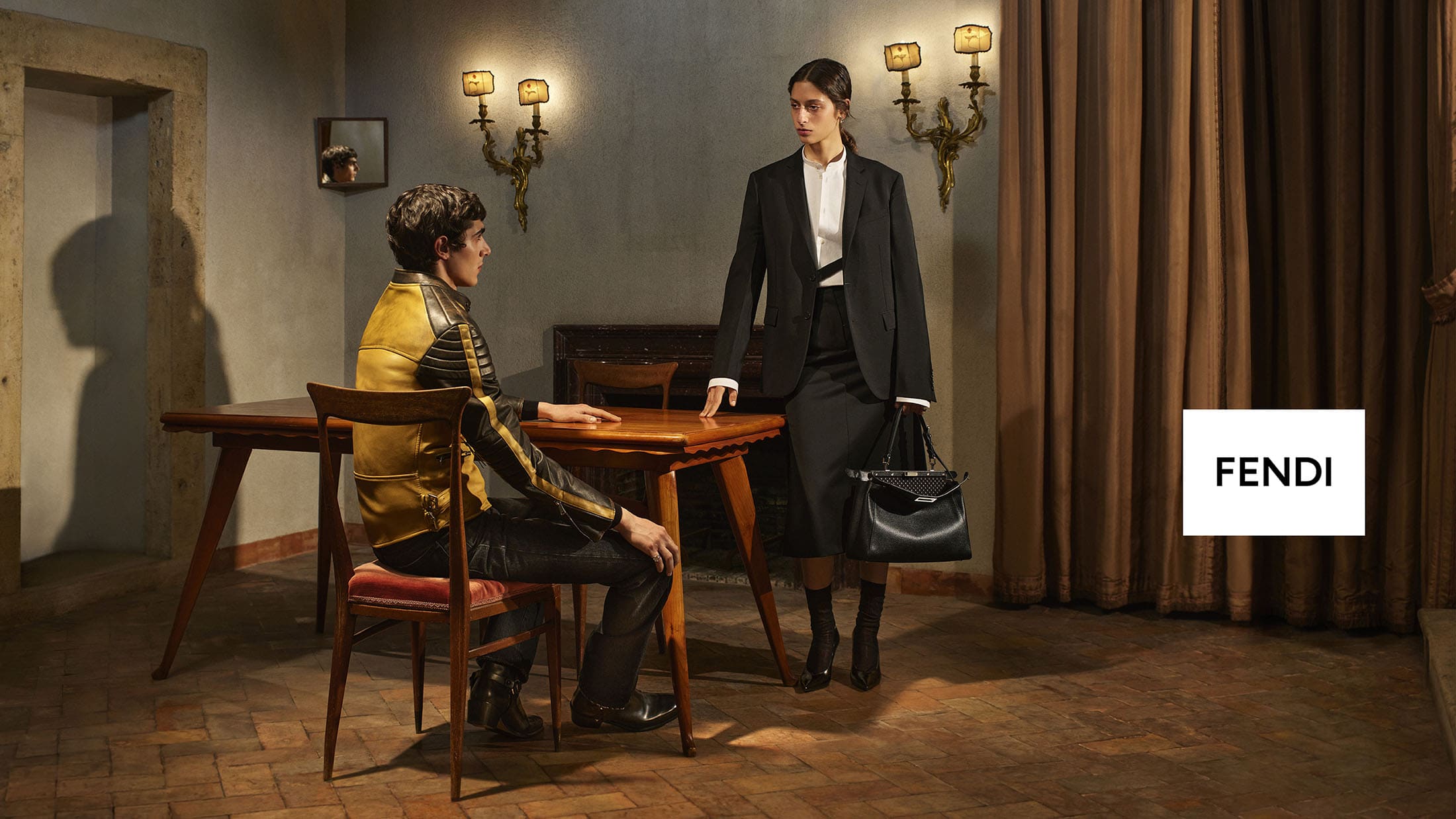
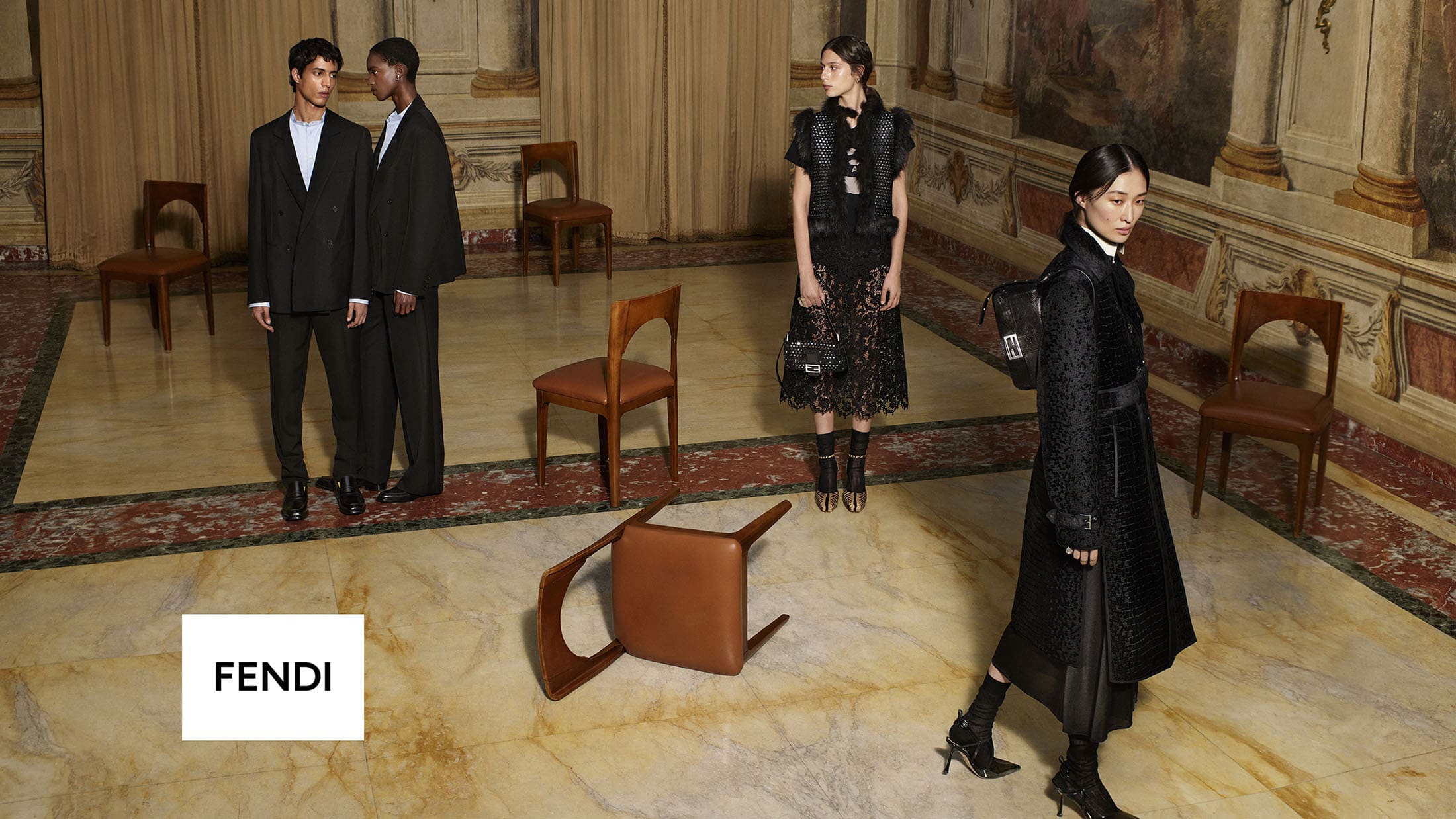
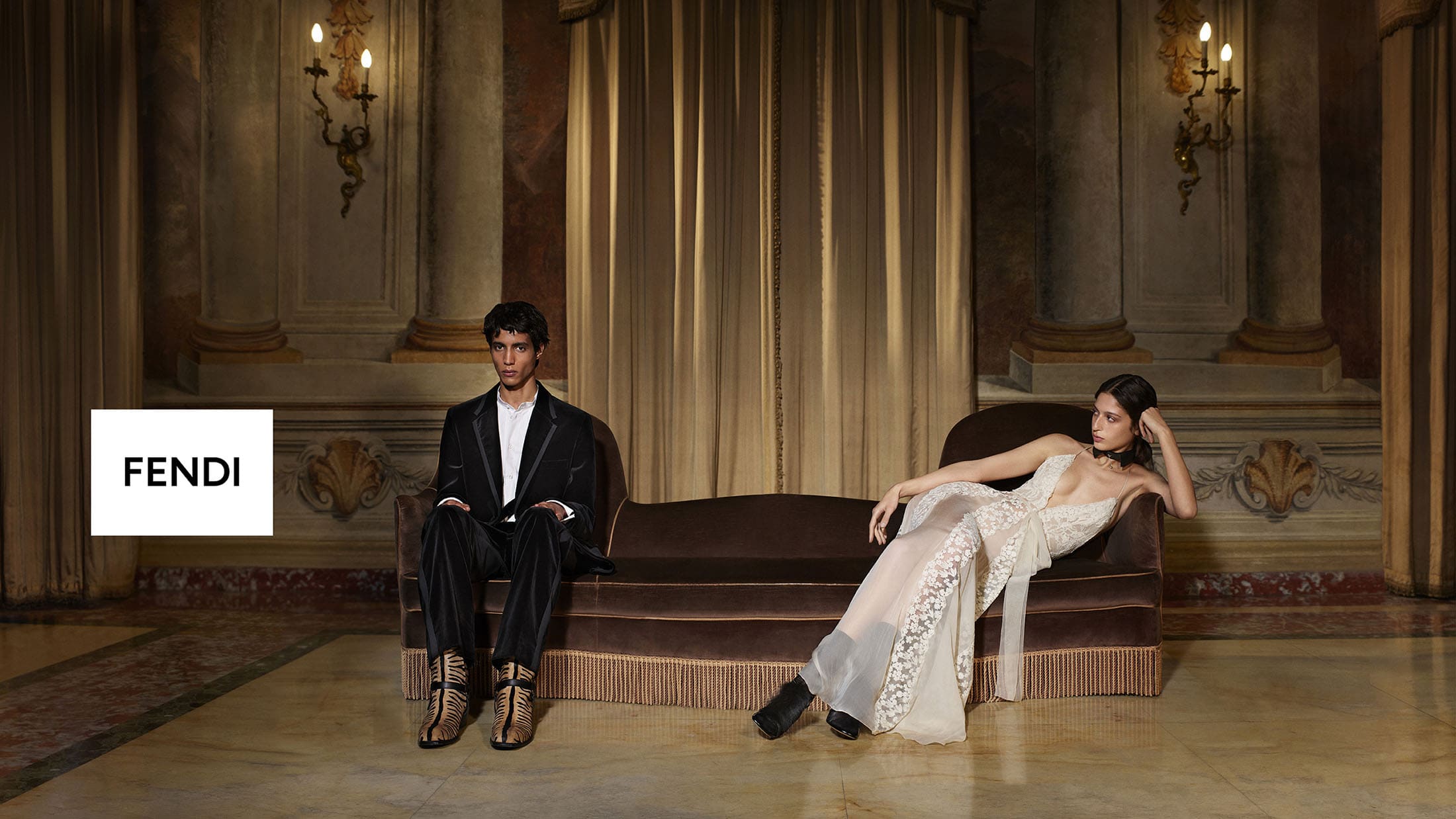
Callis surrounds this choreography with an evocative visual world. The campaign unfolds through Roman interiors layered with frescoes, marble, mirrors, antique furniture, drapery, and softened theatrical light. The collection settles naturally into these spaces. Tailoring, lace, leather, denim, jewelry, and accessories travel between masculine and feminine codes, supporting Chiuri’s broader vision for the house. Rome contributes accumulated history and cinematic resonance, giving the campaign a cultural density that feels appropriate for Fendi’s next chapter.
The still imagery preserves the elegance of that world, though much of the film’s emotional momentum recedes once movement is removed. Figures are divided by furniture, paired through reflections, or positioned within close physical range while remaining psychologically distant. An overturned chair suggests a previous disruption. A leaning mirror introduces another presence inside the frame. Bodies turn away, meet back-to-back, or pause beside one another. These choices establish atmosphere and distance with compositional intelligence, yet the relationships rarely acquire the same emotional charge they hold in motion.
This is partly a question of timing. Bausch’s language lived in accumulation, in the way an action repeated until its meaning shifted or a gesture continued long enough to reveal its emotional cost. A single photograph must locate the precise instant when tension becomes legible. Several of these frames appear to arrive before or after that decisive moment. They communicate refinement, separation, and ambiguity, though the fuller psychological exchange remains inside the film. The stills begin to resemble elegant fragments from a narrative whose most revealing passages have occurred between exposures.
That distinction matters for Fendi now. Chiuri’s first collection introduced a quieter, more somber, and intellectually inclined register for the house. Its marketing carries the responsibility of making that vision feel culturally substantial, emotionally compelling, and desirable. References such as Bausch can enrich the house enormously because they offer a framework through which audiences can understand the clothes, the characters, and the values surrounding them. Their power grows when every part of the campaign extends the idea with equal conviction.
Here, the film provides a meaningful foundation. It gives gesture consequence and allows emotional distance to shift over time. The stills offer beauty, atmosphere, and a thoughtful sense of composition, though they could draw more deeply from the film’s narrative pulse. A stronger sequence of images might capture gestures at their most vulnerable, allow relationships to evolve from frame to frame, or preserve the residue of movement after the body has gone still. That would give the photographic campaign its own emotional arc while strengthening the connection between Bausch’s philosophy and Fendi’s developing identity.
Luxury marketing ultimately asks the audience to invest in a world. Fendi has assembled many of the elements required to make that world persuasive: a compelling cultural reference, a distinctive Roman setting, Callis’ compositional intelligence, and Chiuri’s vision of clothing as a shared emotional language. The film allows that world to breathe. The next opportunity lies in carrying the same depth into the still image, where a single gesture must hold an entire history and make the viewer want to enter it.
Fendi Creative Director | Maria Grazia Chiuri
Creative Consultant | Rachele Regini
Photographer | Jo Ann Callis
Models | Christian Mammana, Chu Wong, Faith Johnson, Mansur Lefqir
Stylist | Arianne Phillips
Hair | Patti Bussa
Casting Directors | Julia Lange, Tess Wilcox
Set Designer | Stefan Beckman
Movement Director | Jacob Larsen
Location | Rome, Italy