A Woman On A Mission
Review of Ferragamo Spring 2027 Fashion Show
By Angela Baidoo
Maximilian Davis has always walked his own lane at Ferragamo and the woman he is building is becoming more clearly defined in the process. She doesn’t need to seek the limelight nor disappear into the background, but has the confidence of someone who has lived a life on her own terms.
For Spring 2027 Davis focussed on the liberation that ran throughout the life of Lee Miller – model, Surrealist artist, and respected photojournalist – and a woman who took ownership over her own narrative. The designer used this kindred spirit to loosen the structure of militarised 1940s silhouettes by building in intimacy and sensuality as only he knows how.
THE COLLECTION
THE VIBE
“I was inspired by the women of the era who were taking ownership of their own narrative: who were subjects of imagery but also travelled the world to create their own”
Maximilian Davis, Creative Director, Ferragamo
Maximilian Davis is a designer who has always chosen his own lane when it comes to the way he puts his particular point-of-view across.
The Ferragamo woman that he is building does not need, nor covets the limelight, yet neither does she fade into the background. She is the woman in the room that you seek out because you know she has lived a life in her own terms. A woman’s woman.
And there is usually a woman at the heart of each collection, driving the silhouettes that will be derived from the most pivotal moments of her life. As discovered backstage that woman was Lee Miller. A woman who lived many lives herself as a model, Surrealis artist, and most significantly a photojournalist documenting the brutal reality of World War II from the front lines – capturing events such as D-Day. In 2023 she was also the subject of a biopic on her life starring Kate Winslet, garnering Golden Globe and Bafta nominations.
The fearlessness with which Lee Miller lived could be felt within the collection, but it wasn’t in sharp-shoulder militarised tailoring that would have been an obvious choice to extract from the time period, instead Maximilian Davis chose to focus on liberation. At a time when men went to war, women were called upon to take their place in the fields and the factories. Having tasted a new economic freedom, then being forced to return to the home eventually caused a societal shift and the Women’s Liberation movement began in earnest in the 1960s.
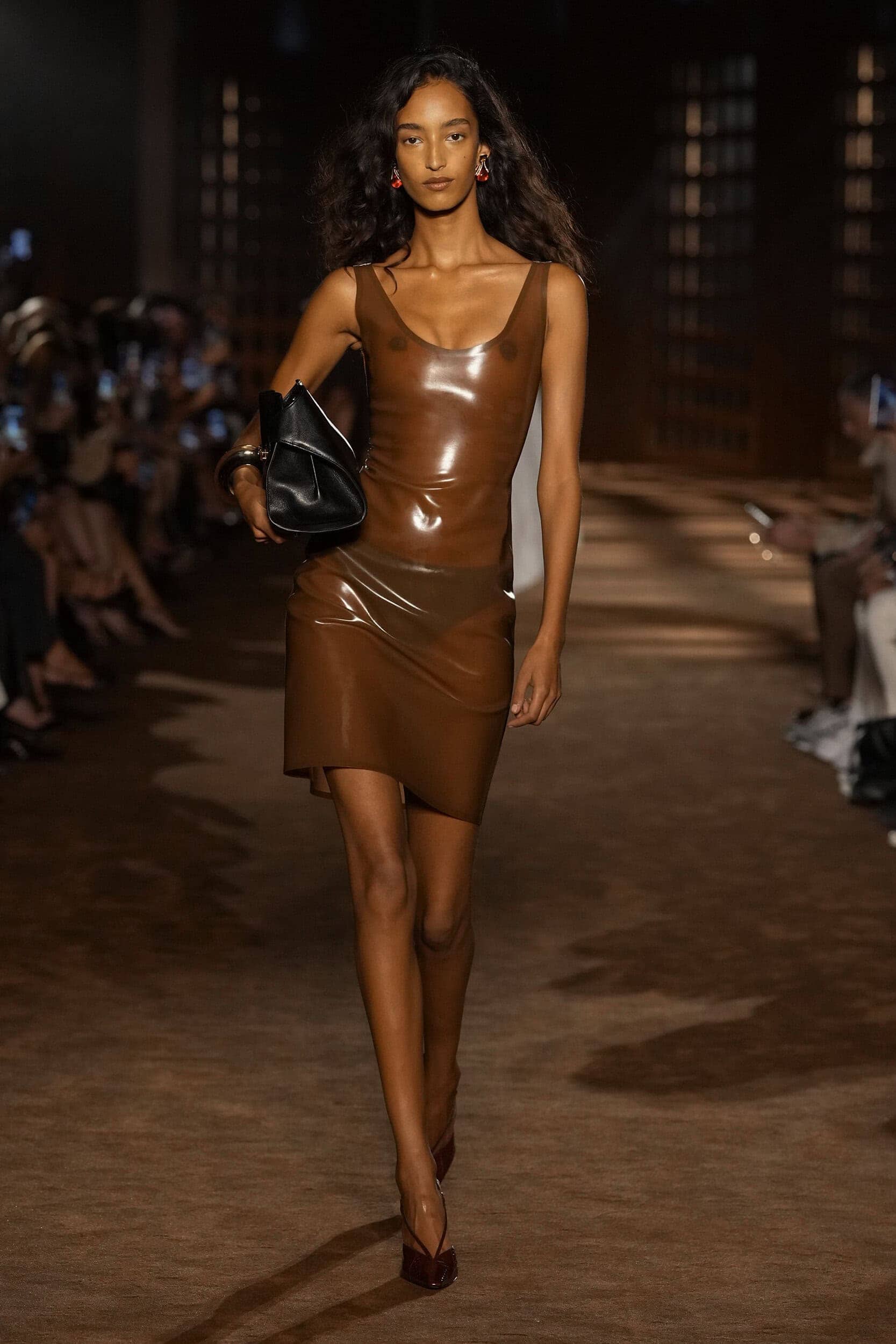
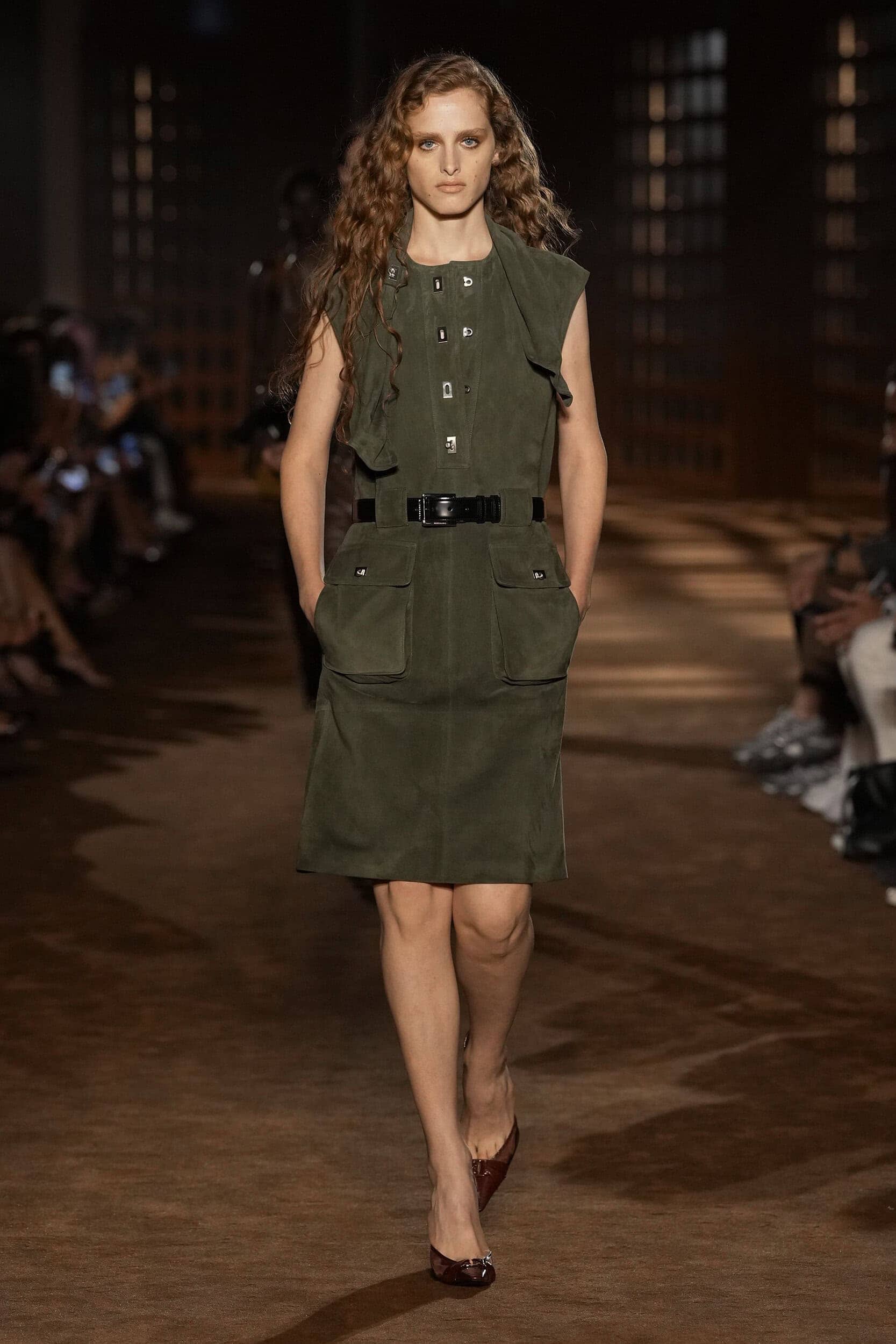
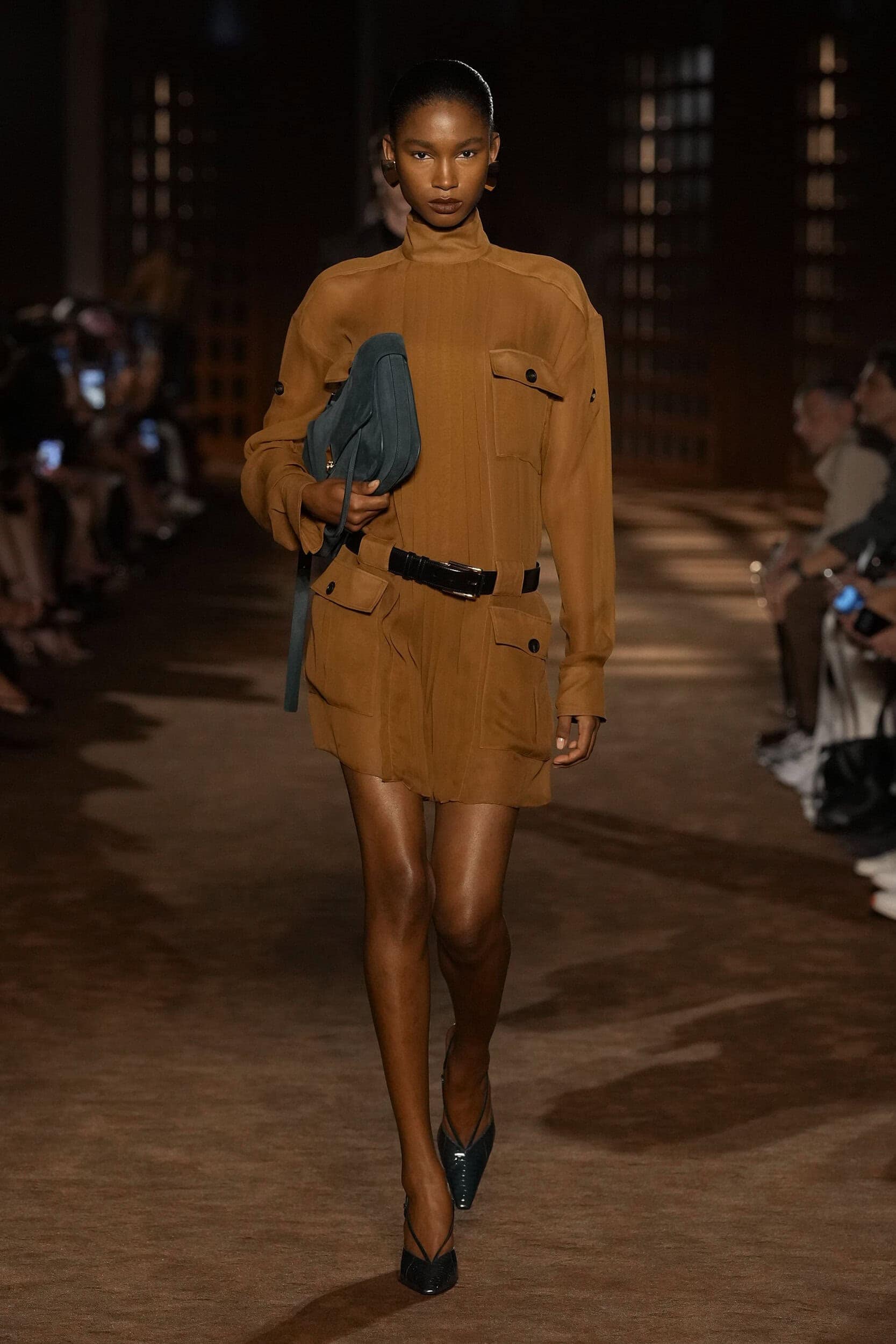
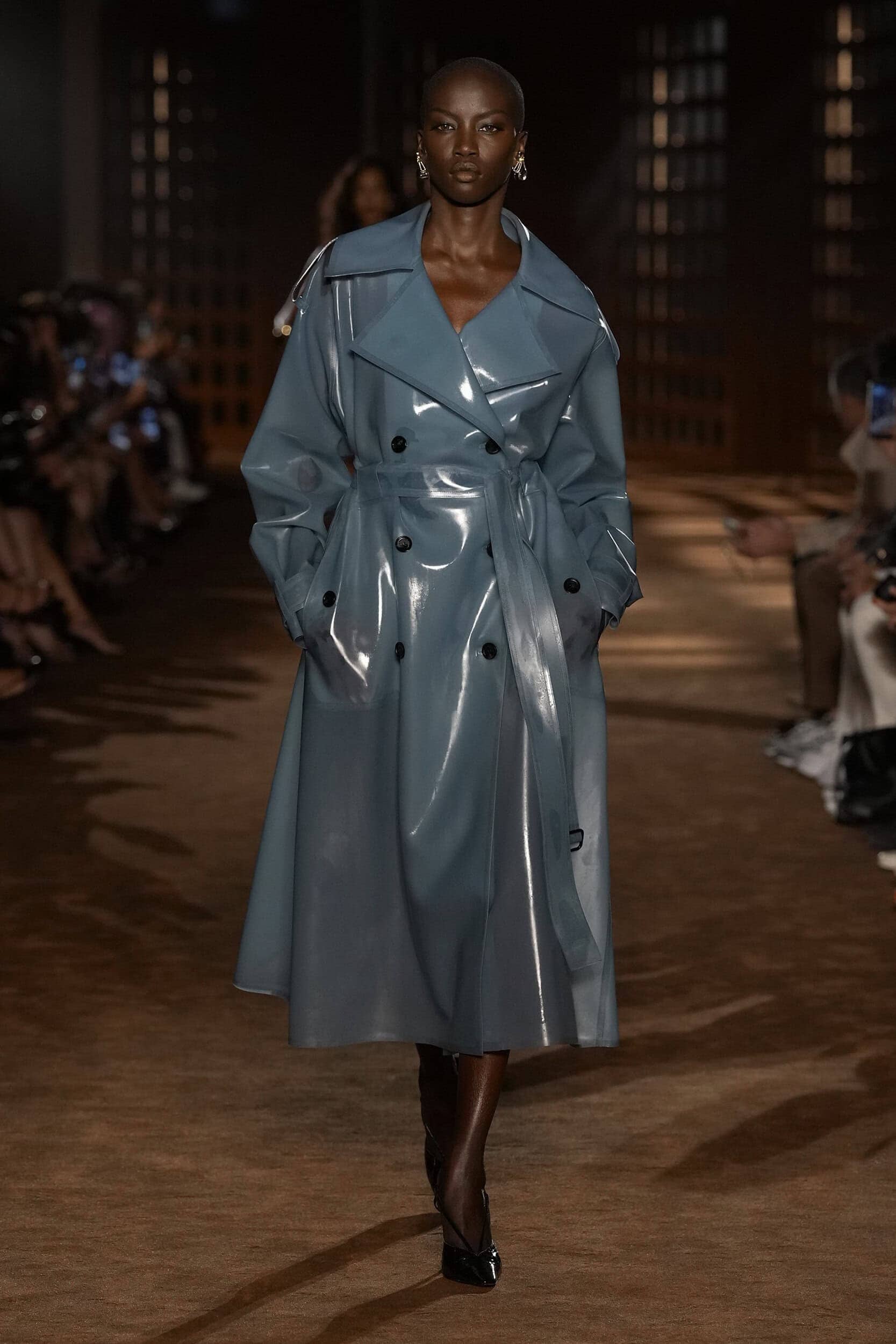
Back to Davis’ notion of liberating the formal structure from the uniforms and workwear synonymous with the time. He reduced their impact by softening sharpened shoulders and refining fabrics to express a relaxed fluidity. As he told The Impression backstage “The shoulders of the 1940s were super structured and rigid and I felt that it wasn’t modern for today. I wanted more relaxed silhouettes.” Referencing Miller’s move to Egypt after she married in the late 1930s, you could see how the military uniforms worn during the Desert War (part of a North African campaign across Egypt and Libya during the second World War), which appeared softer and were made from lightweight cottons inspired this season. A moodboard nearby revealed the different stages of Miller’s career – as model, muse, and expat – in visual diary format. As well as 80s-style “Sahariana Uniforms” on the runway, lingerie details, garment-washed shirts, and translucent rubberised clothing. The intimate nude portraits featured among the images were a nod to the relationship that Miller developed with the Surrealist artist Man Ray when she moved to Paris in the 1920s, and for whom she became a muse and co-collaborator (together they develop the photographic ‘solarization’ technique). On the inclusion of this special relationship Davis said “When I was looking at the relationship between Lee Miller and Many Ray I was looking at photographs of their intimate time together, and I wanted to ensure that intimacy and sensuality was incorporated throughout with the fabrication, lighting, embroidery and the transparency.”
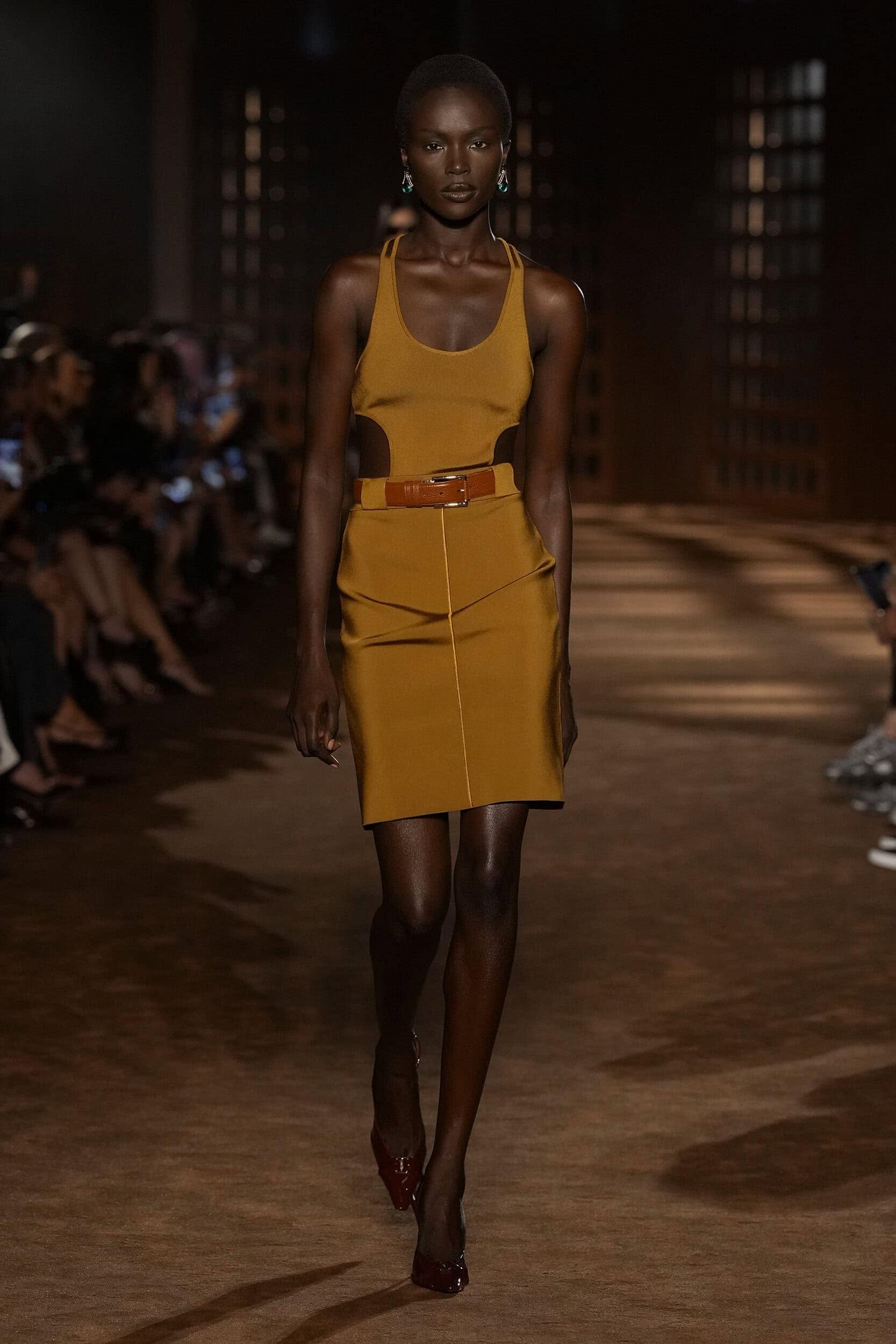
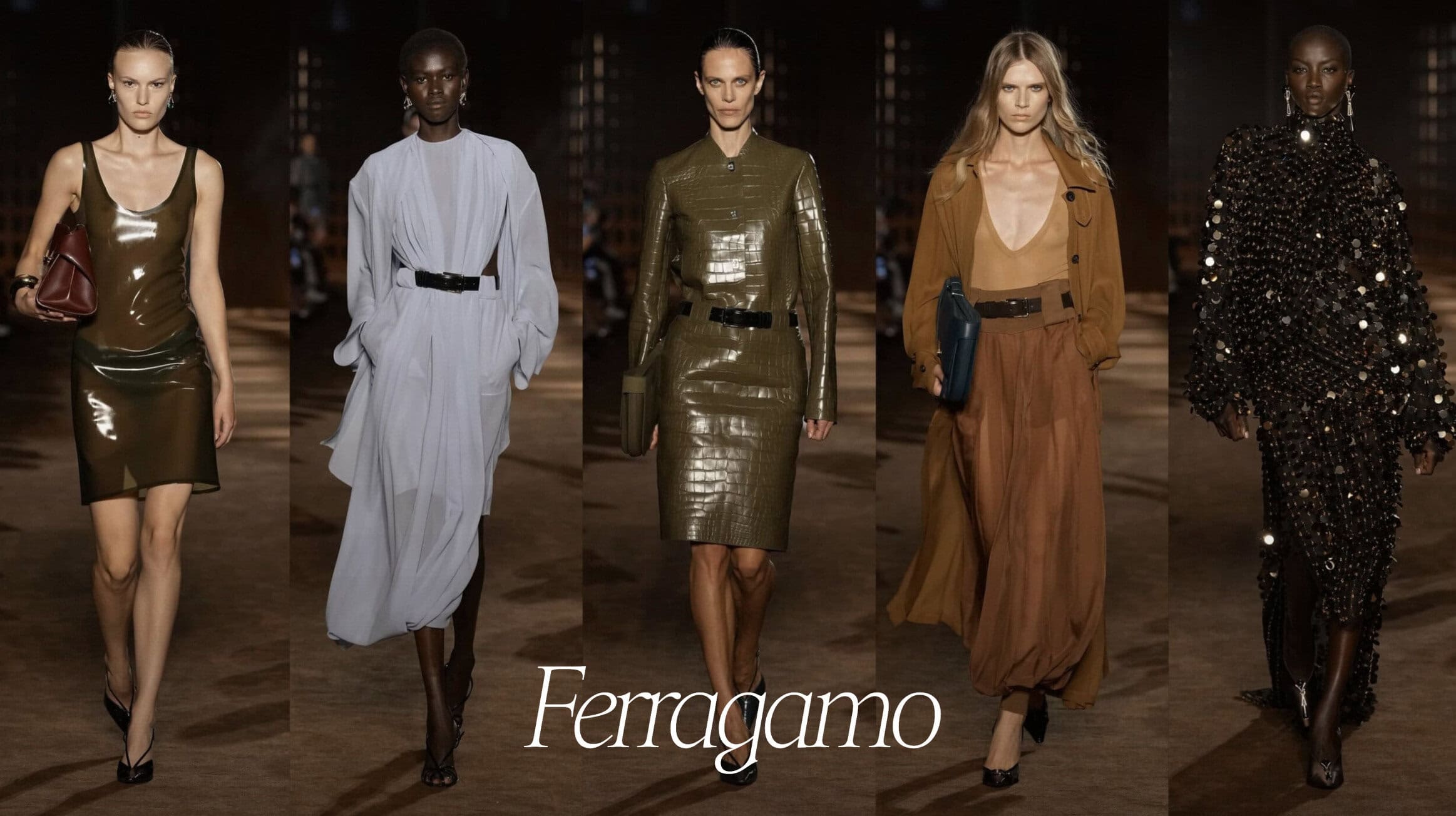
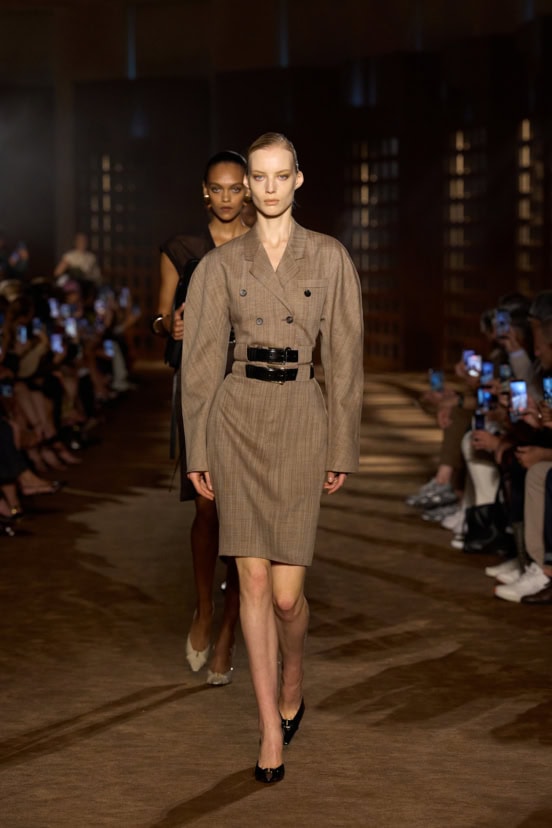
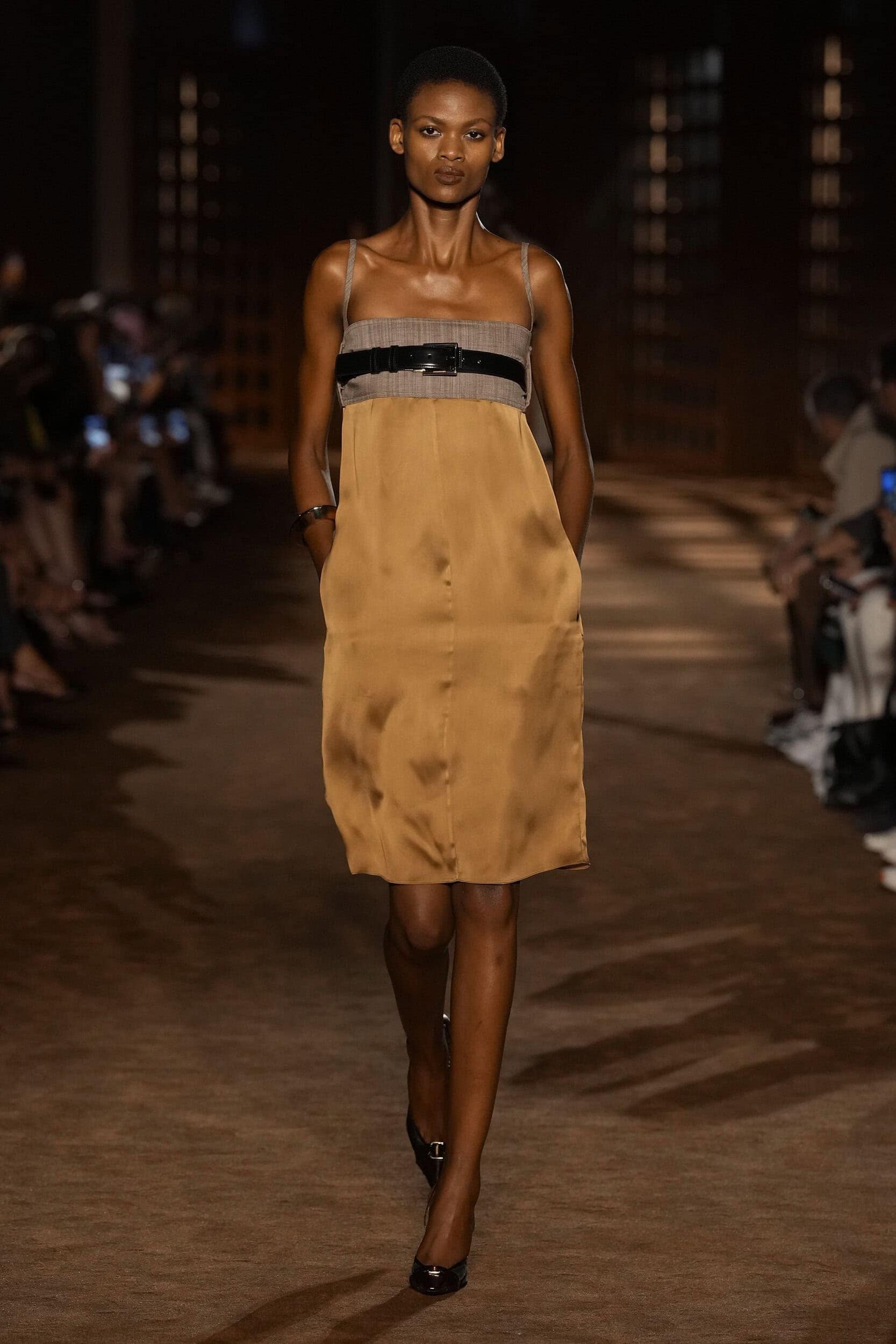
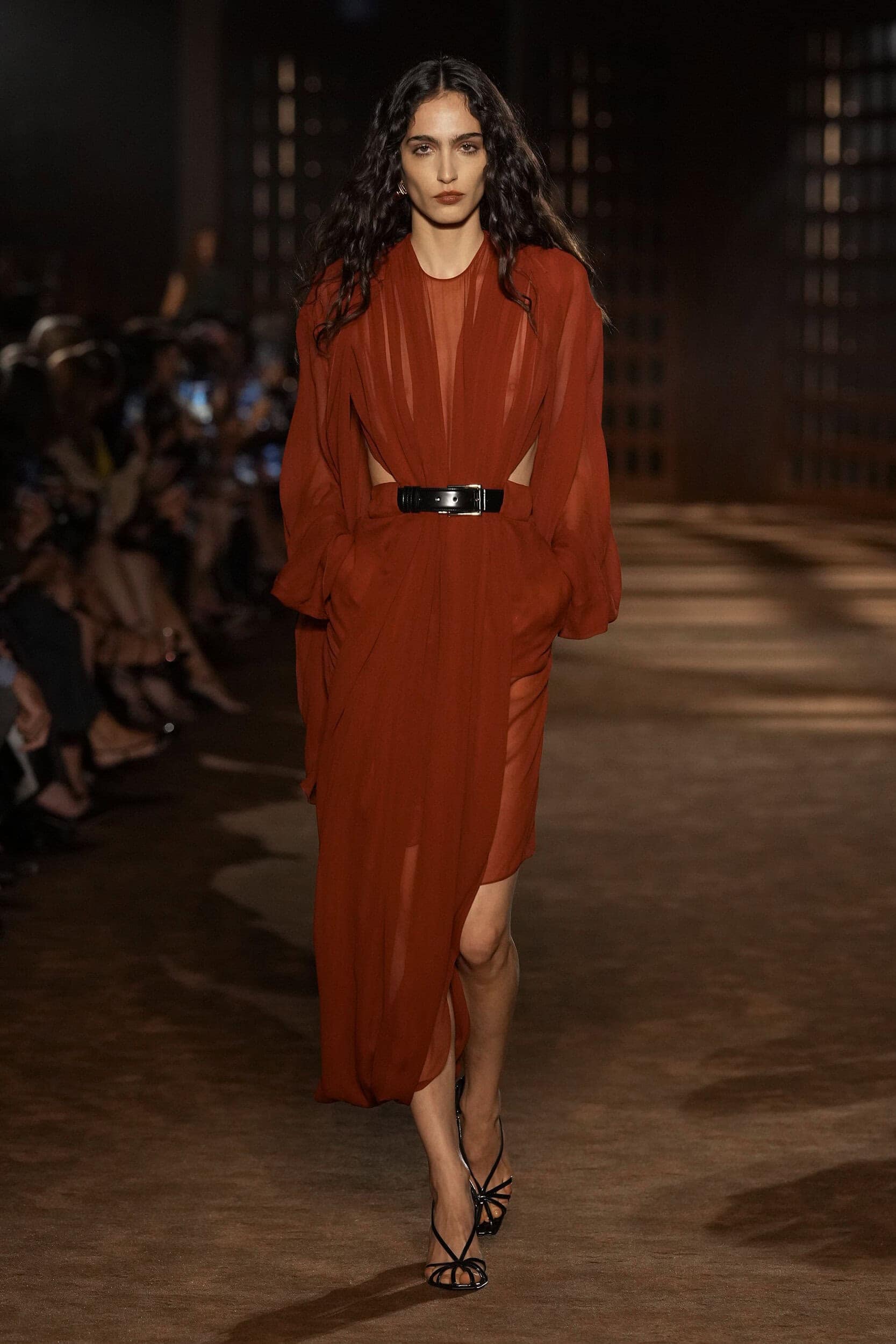
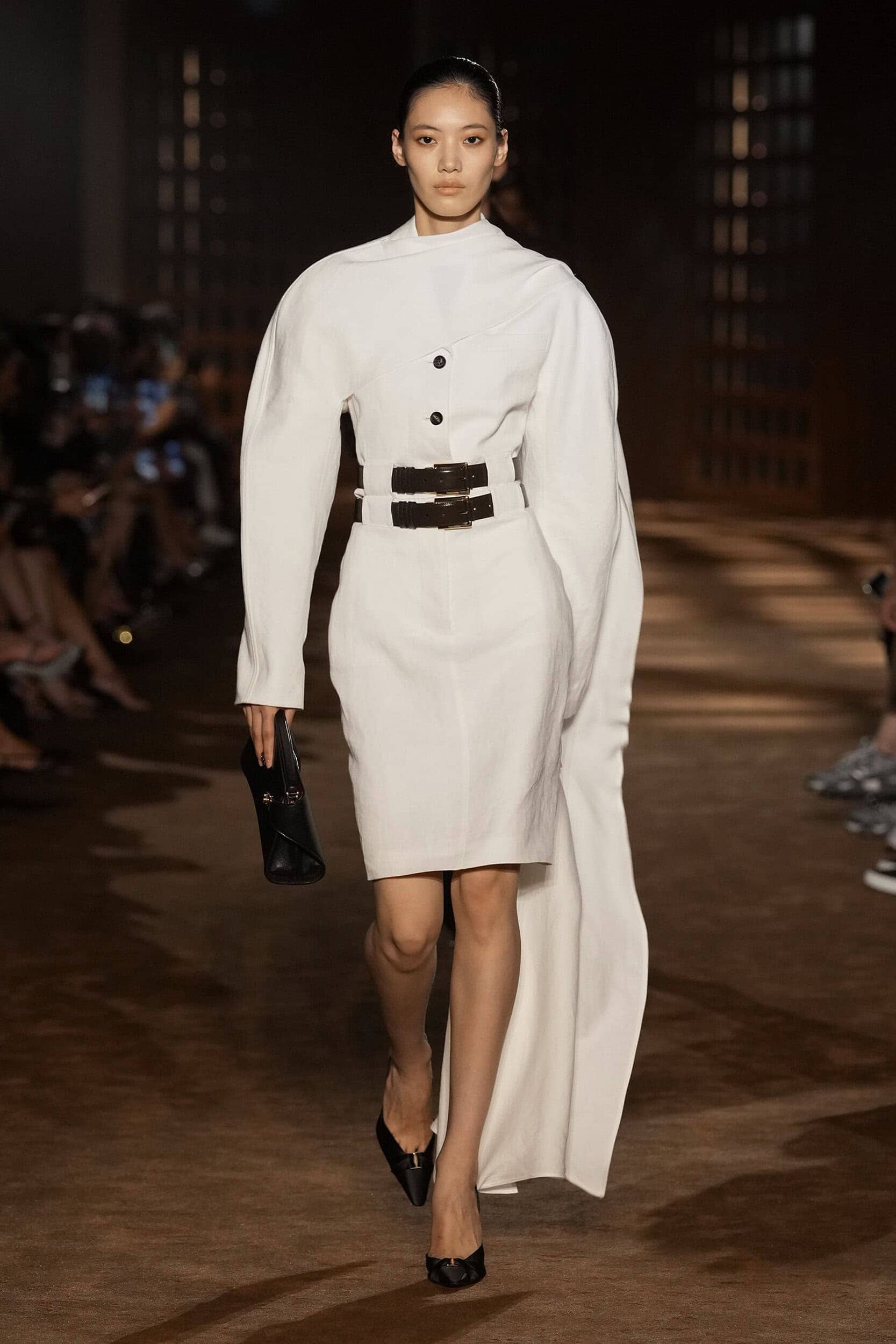
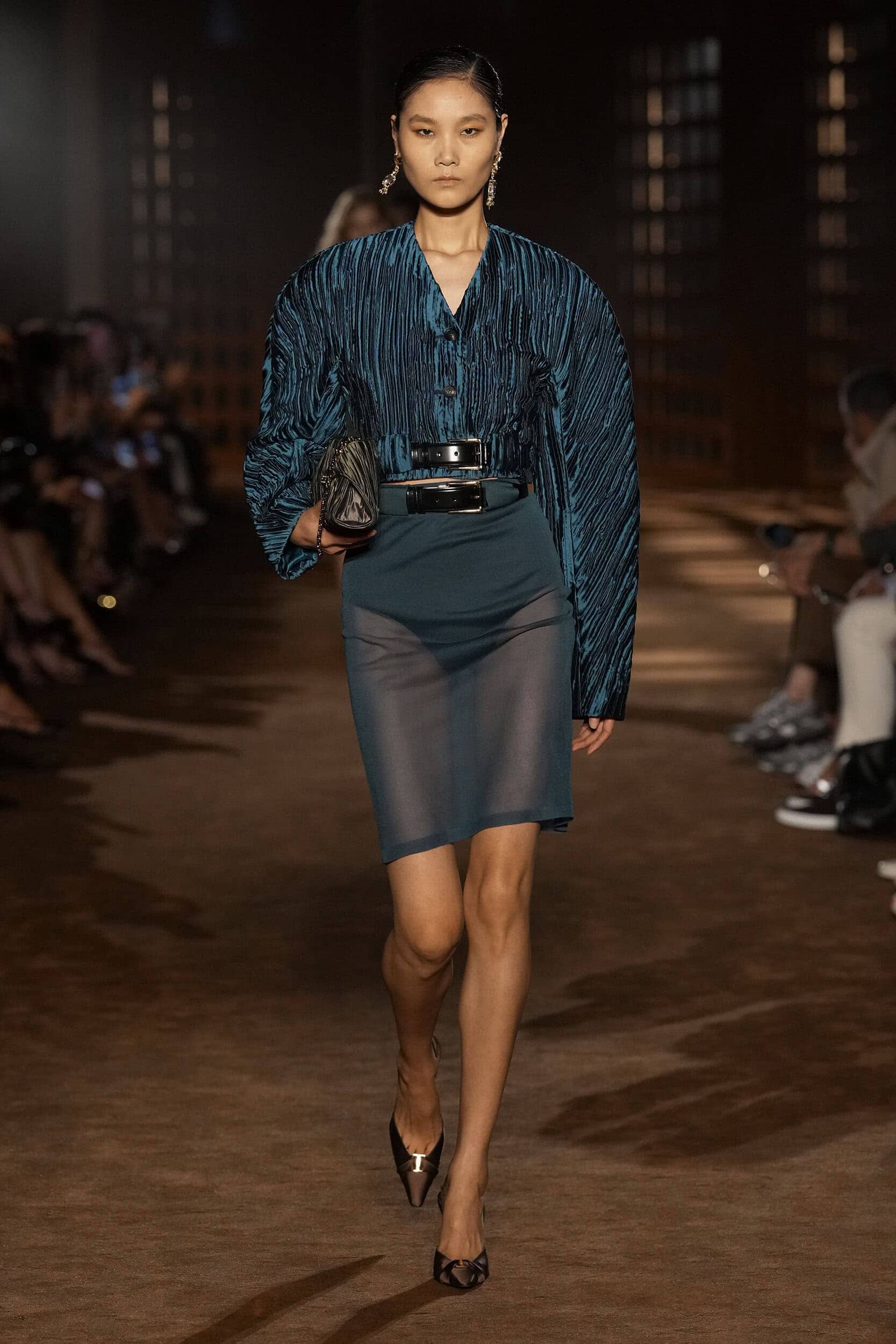
The “defined rigour of the forties silhouette” found a home in the designers revamped approach. Belts became a standout feature and were raised to be placed across busts or doubled-up to accentuate the waist of cropped jackets. Cotton drill or traditional utility canvas was replaced with chiffon, in what felt like a surrealist juxtaposition the standard functionally of a patch pocket was rendered purely decorative. Achieving the designers aim of modernising what is often seen as stiff and unyielding. The tasteful nudes from the moodboard merged with the image of the rubberised uniform and was skewed through with “flashes of fetishism.” A surprise detour but not unheard of in Davis’ work where we have seen glossy and rubberised fabrics used with a light or subversive touch.
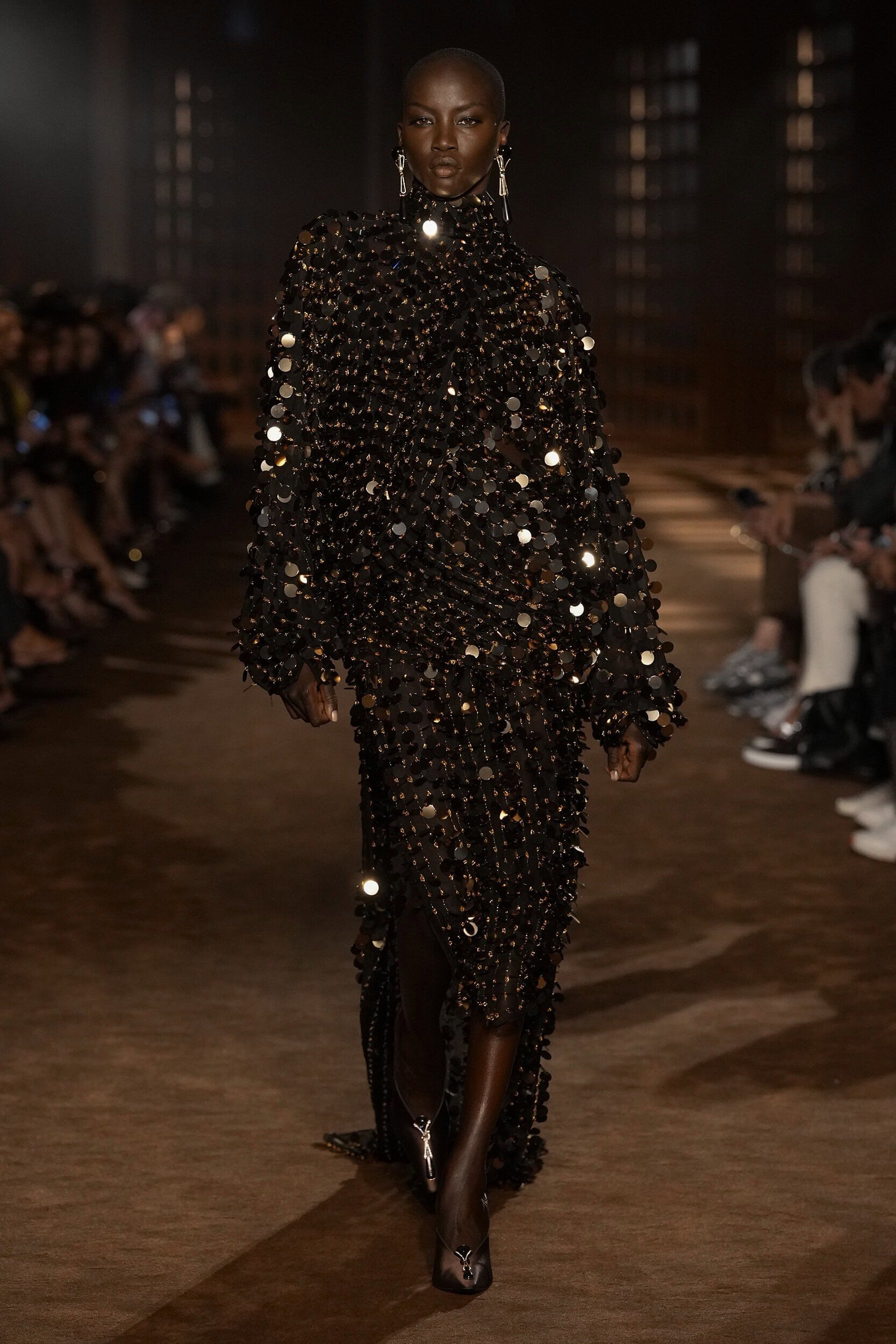
The aforementioned rigour was counter-balanced by an evolution of the designers signature style of ’scarf dressing’ where long trains hung asymmetrically over shoulders and sheer silks were sensually draped between the legs of the models in one continuous loop. And it was here that Davis’ referencing of Miller felt most aligned. In recreating her contrasting sense of personal style, he also captured the sense of freedom with which she moved throughout the world.
THE WRAP UP
There were several versions of Lee Miller that Davis could have chosen to portray, but his decision to move between model, muse, expat and war correspondent prevented the collection from becoming a literal history lesson.
Instead, uniforms were softened, utility fabrics were swapped for sheers, functional details became decorative and flashes of fetishism were introduced through transparency and rubberised finishes. Most importantly, Davis filtered these references through a now recognisable Ferragamo language that he has made his own, from scarf dressing and sensual draping to his manipulation of the waist. In Lee Miller, he found a woman who refused to be defined by one chapter of her life, and in Ferragamo, Davis continues to build a wardrobe for women who also live beyond societal boundaries.