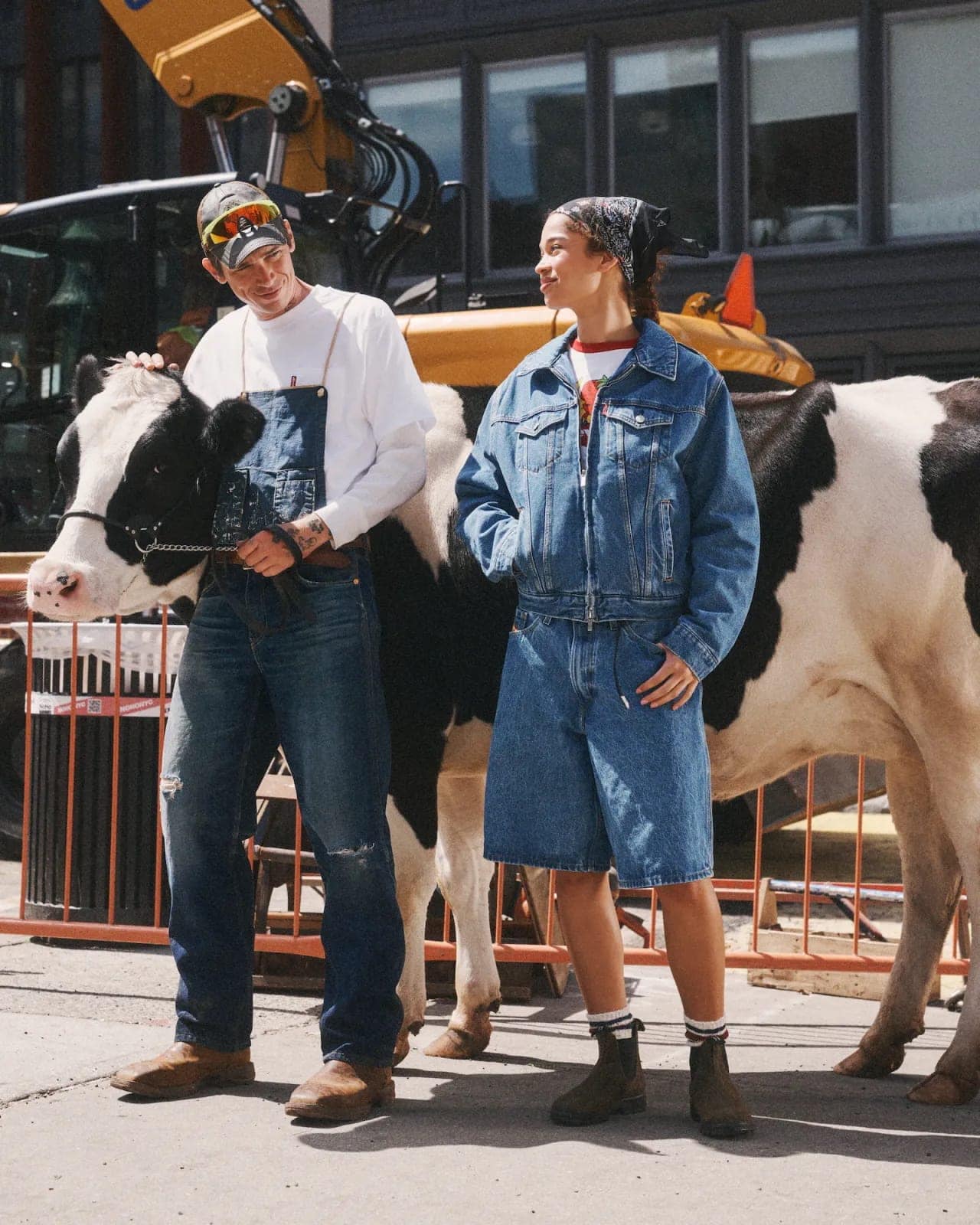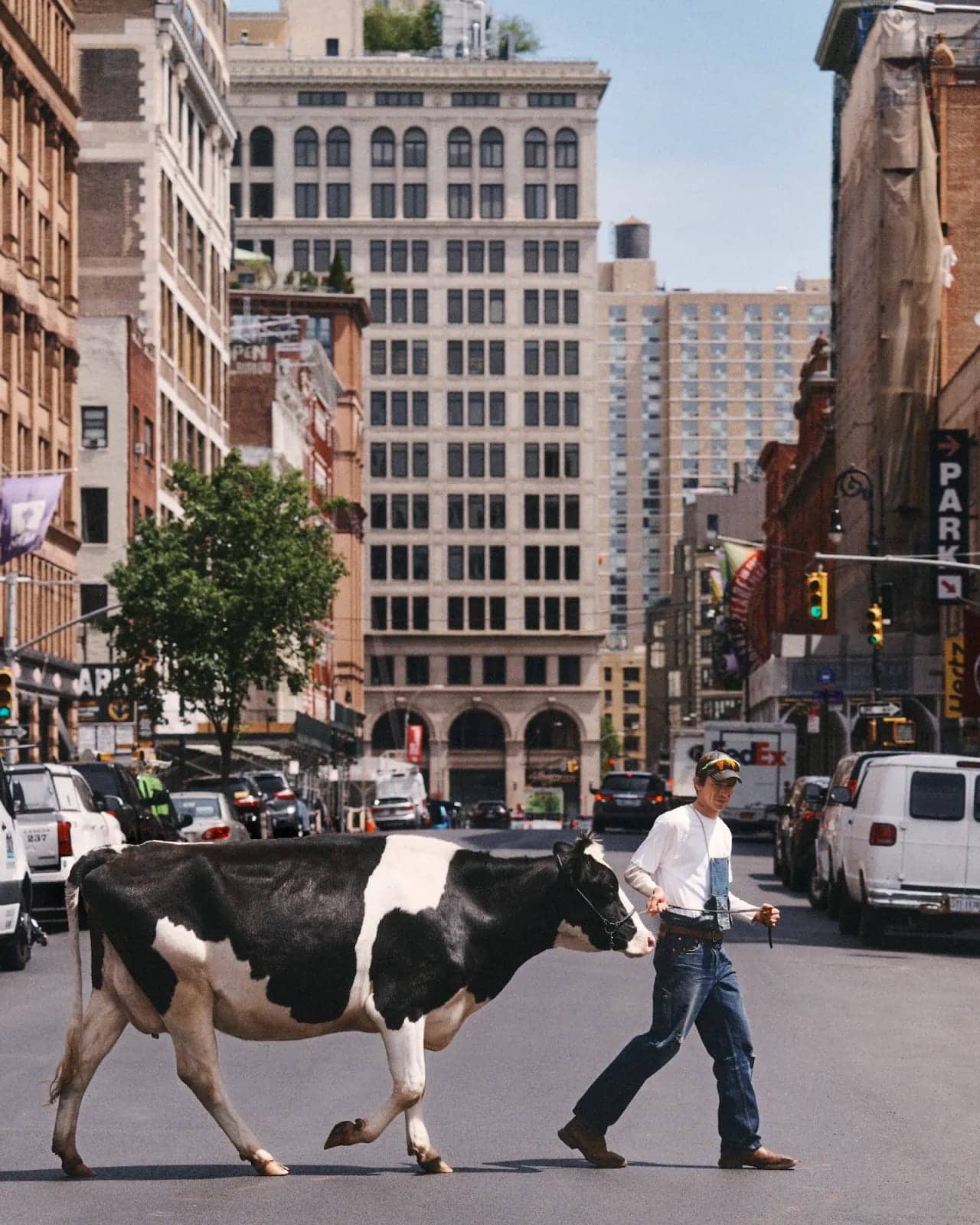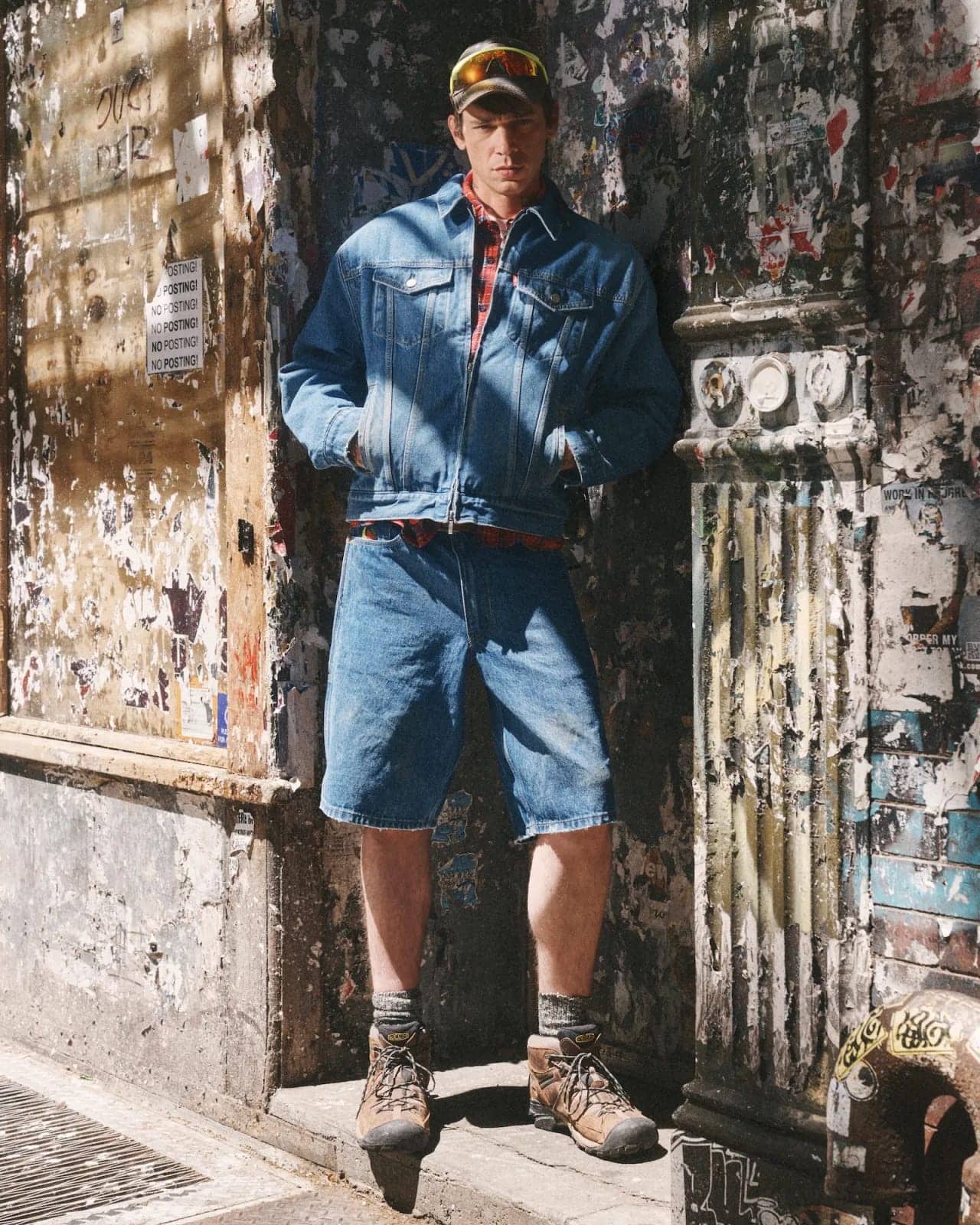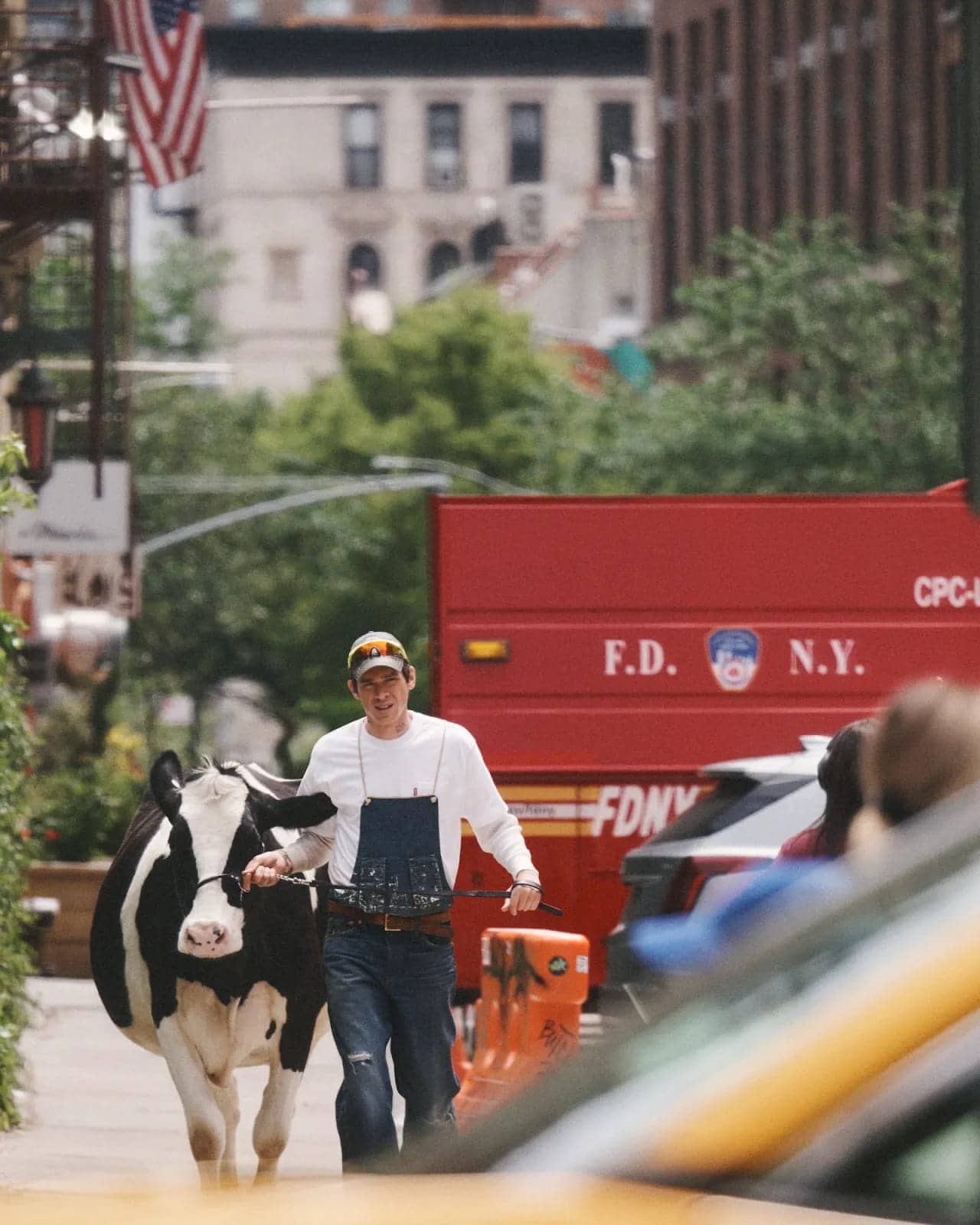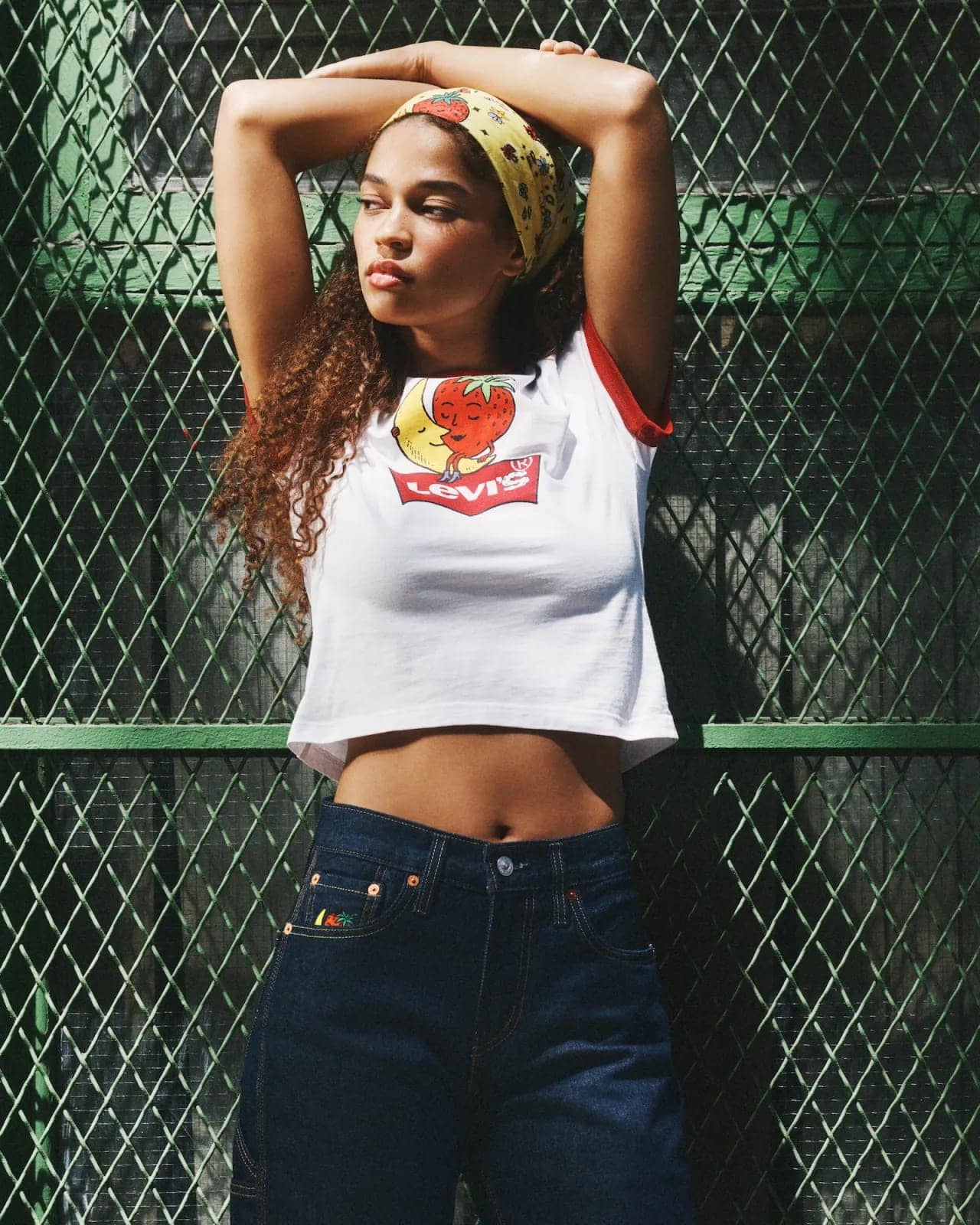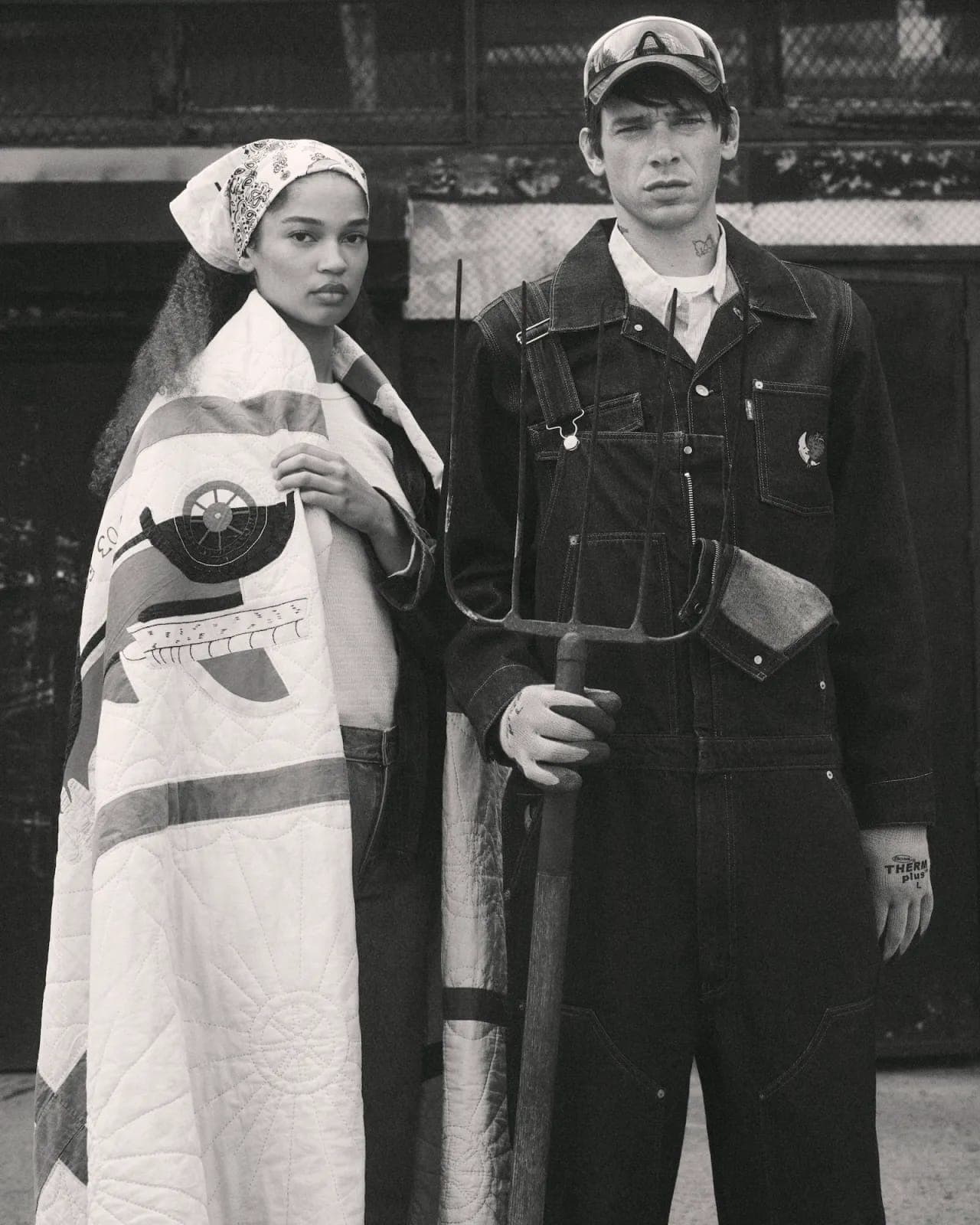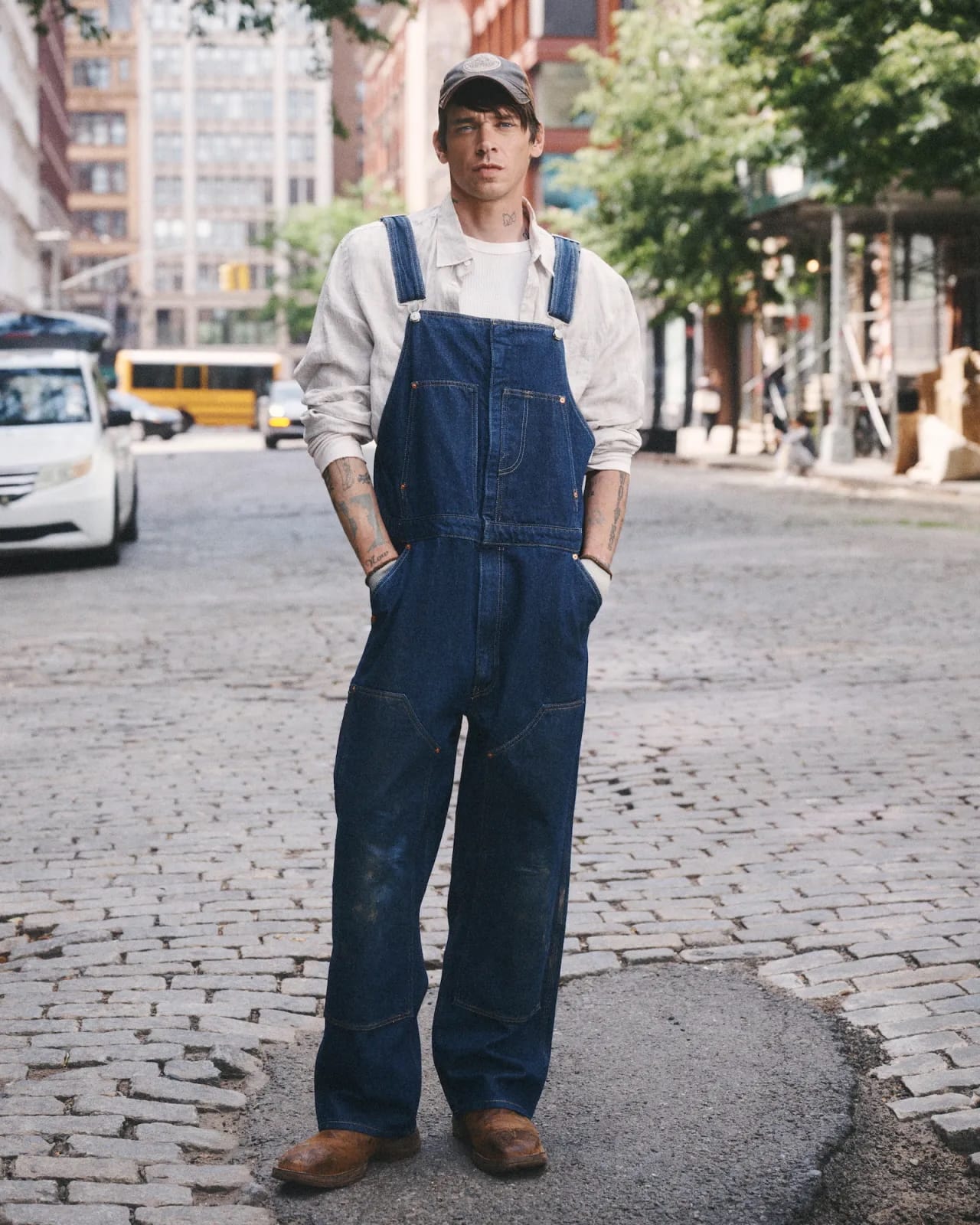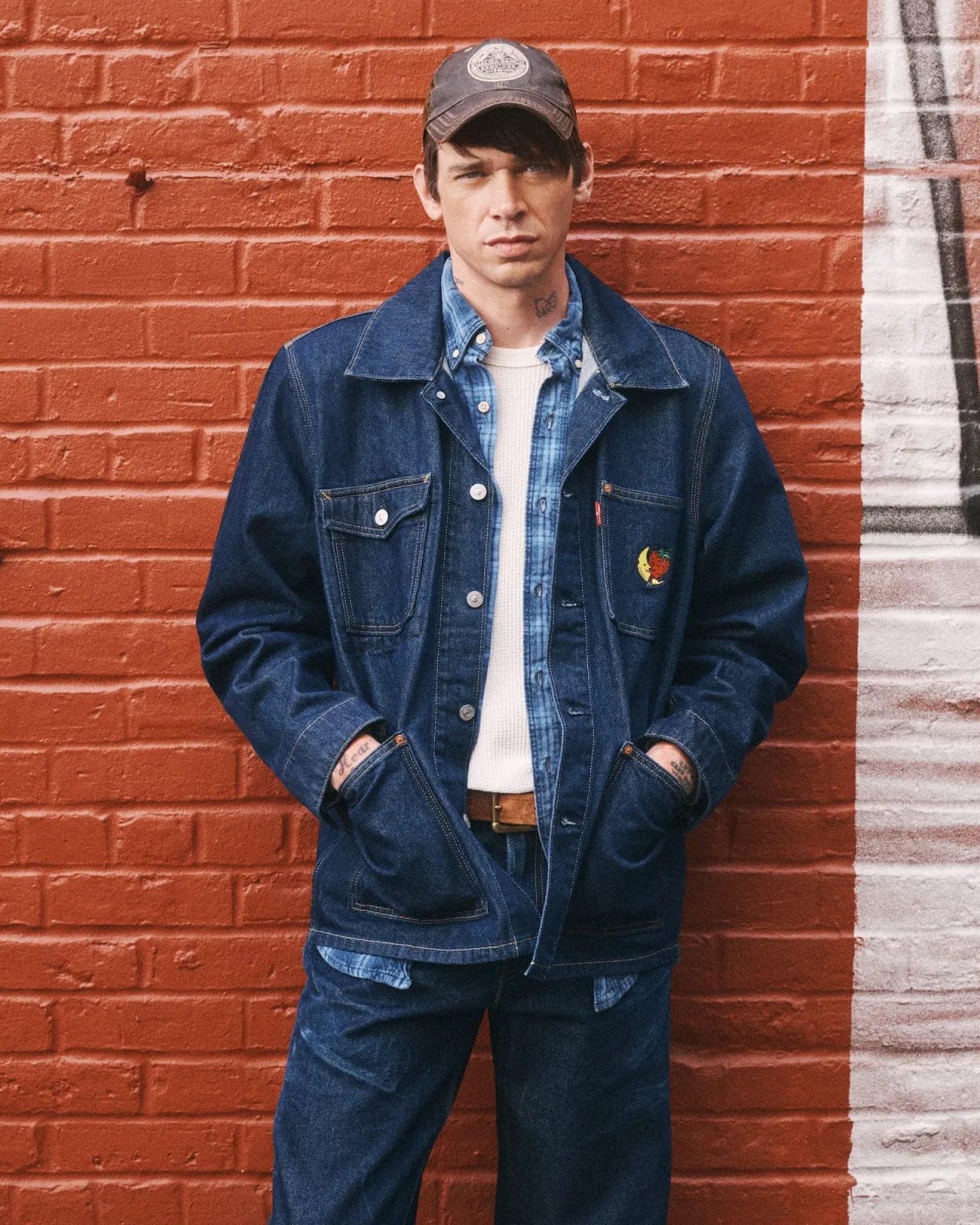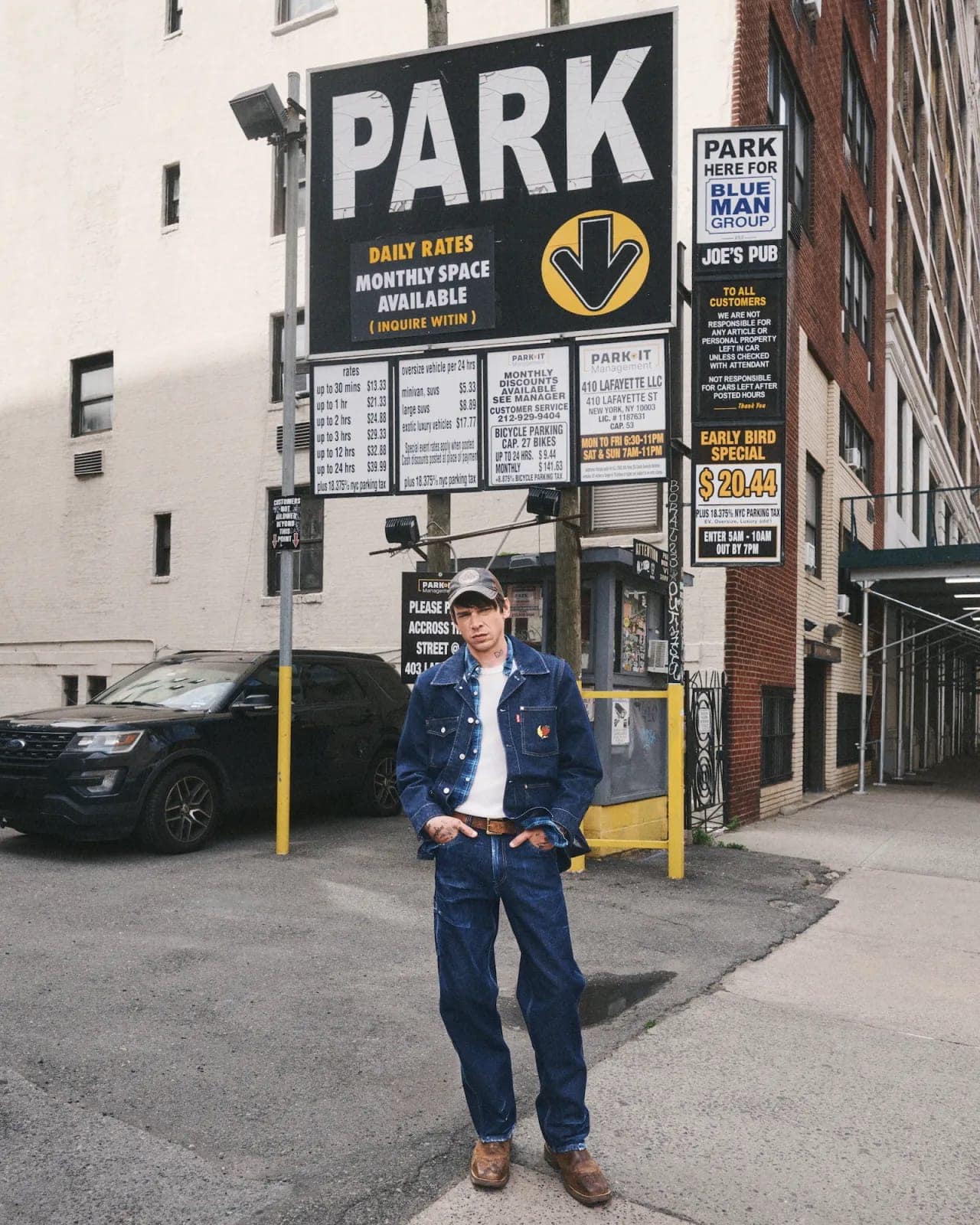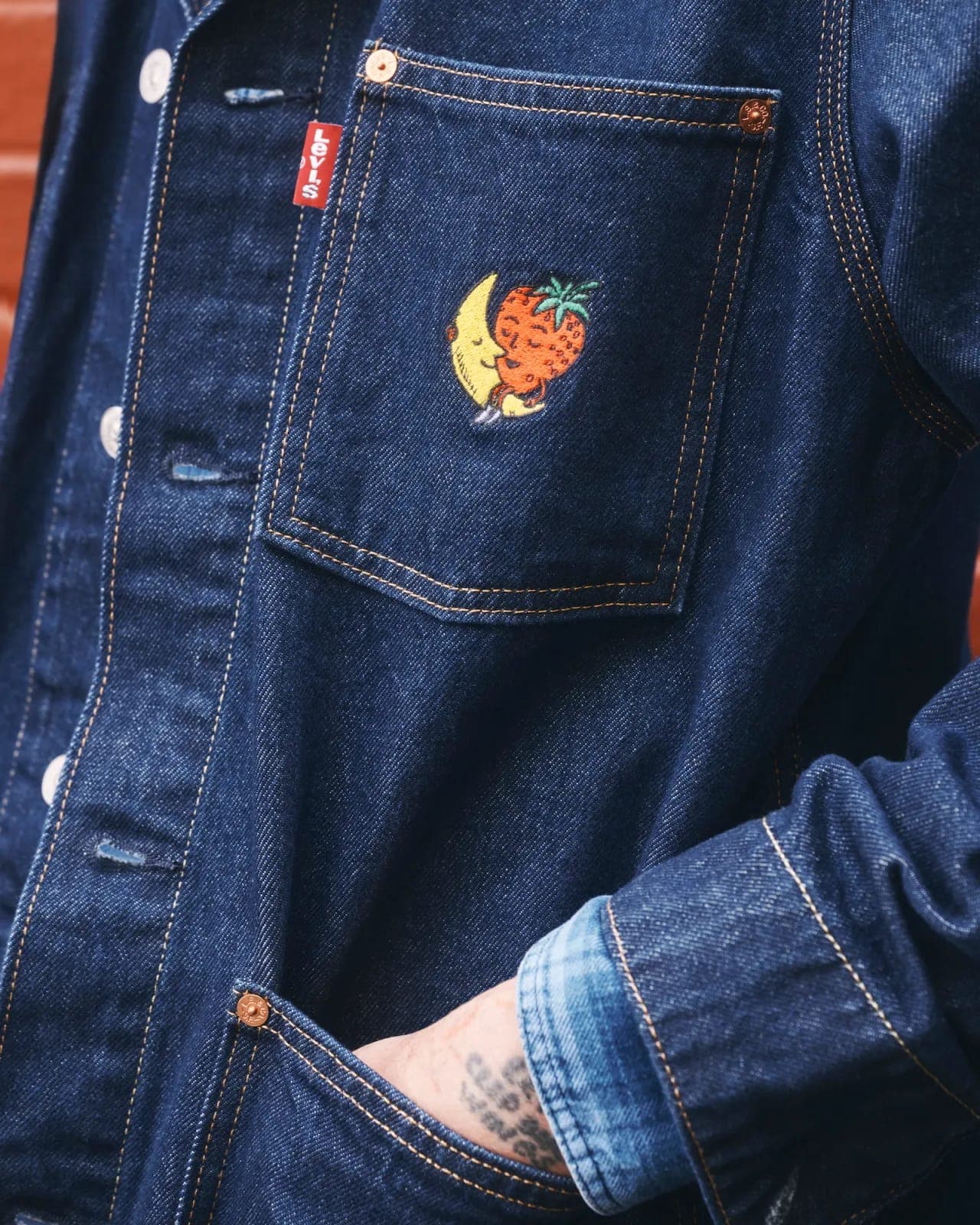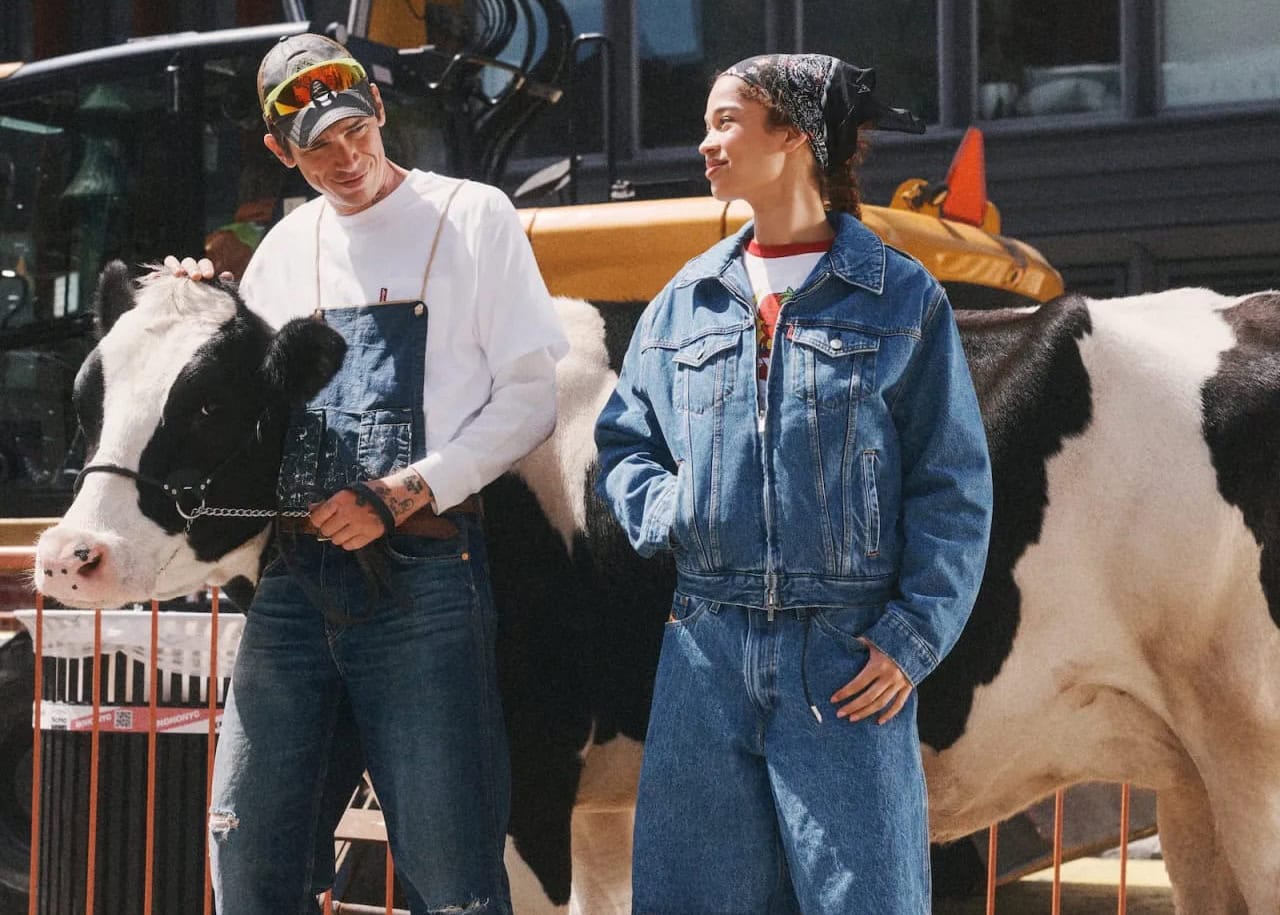
The eight-piece collection, crafted from organic and transitional cotton, debuts at a New York farmers market before its wider release
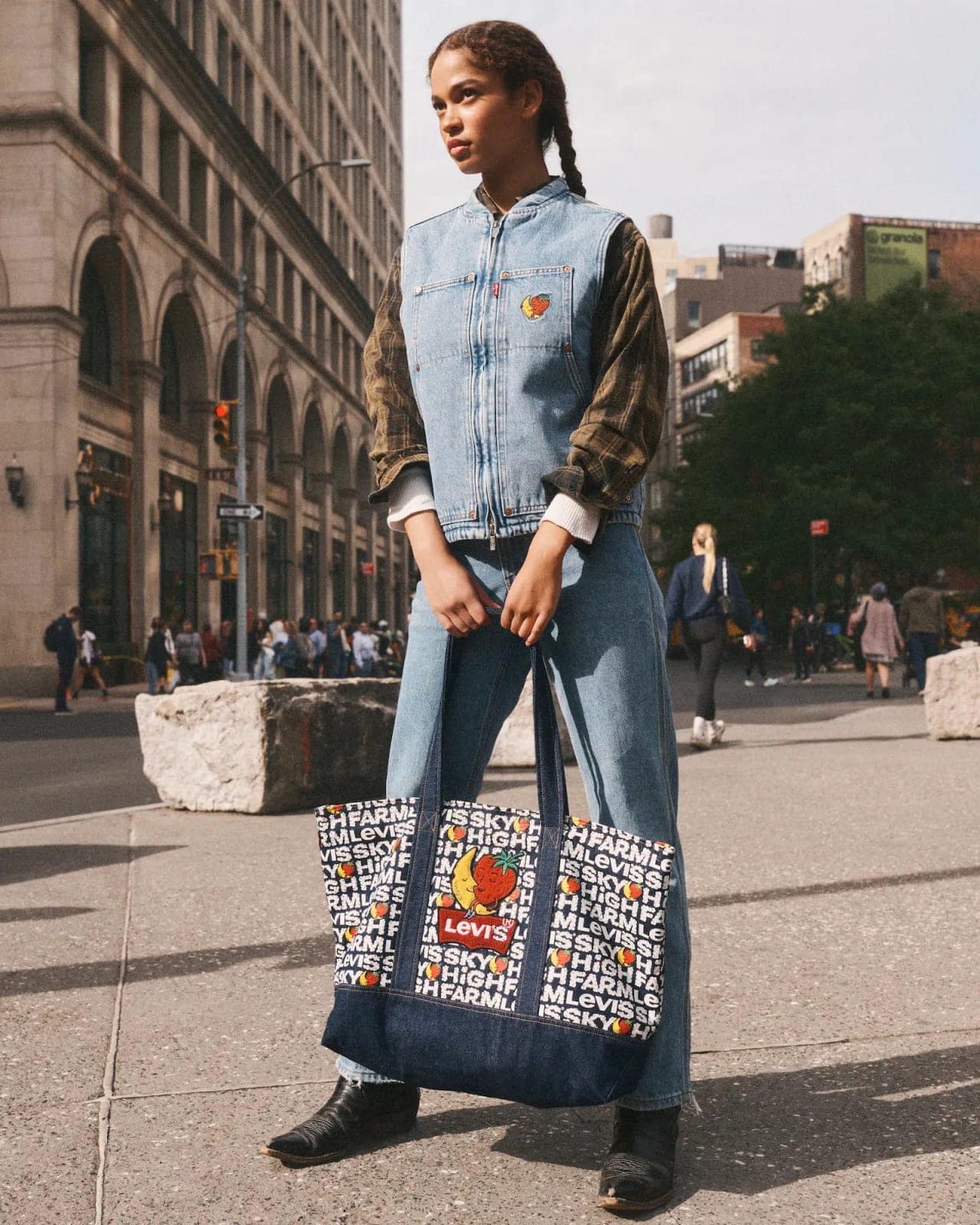
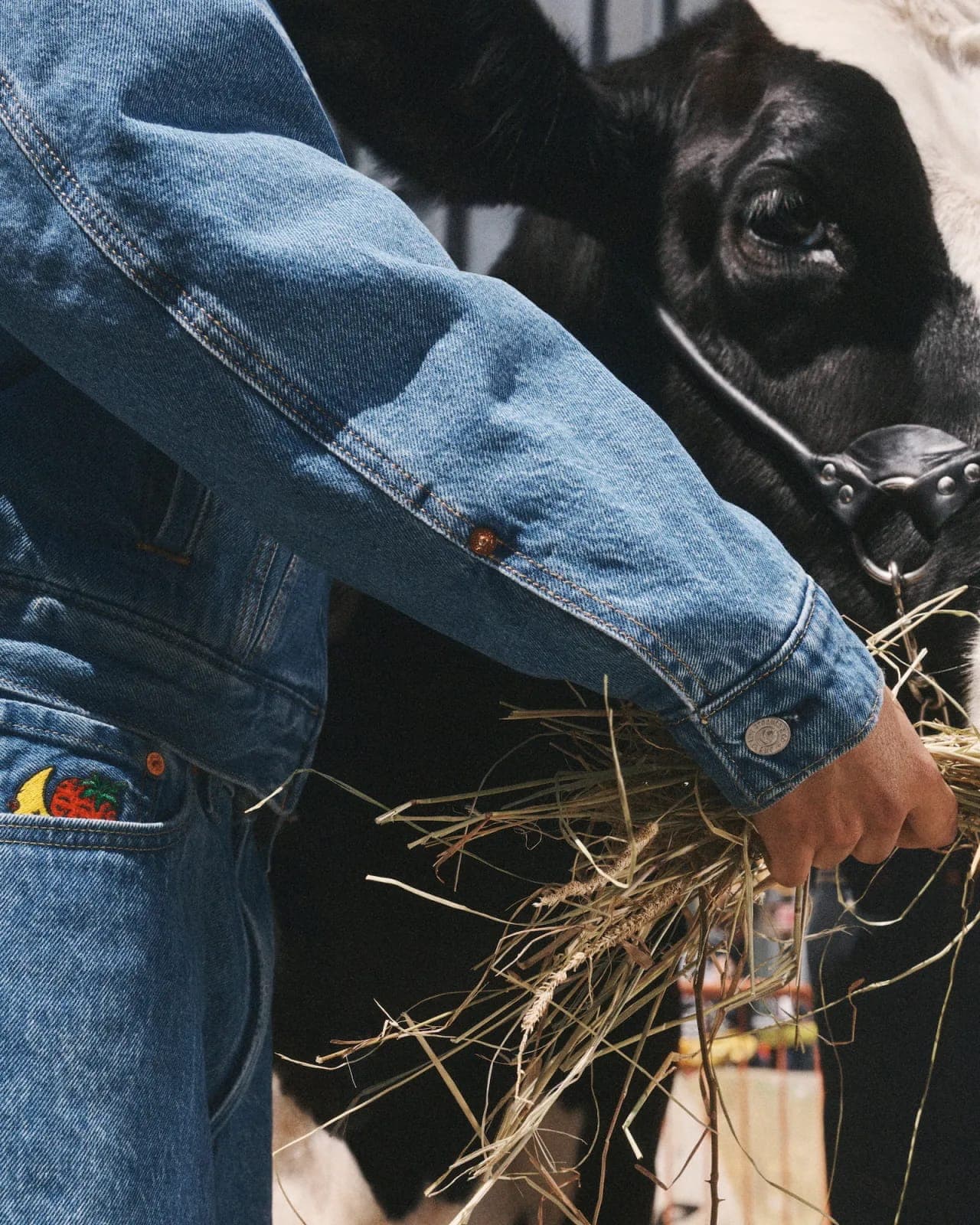
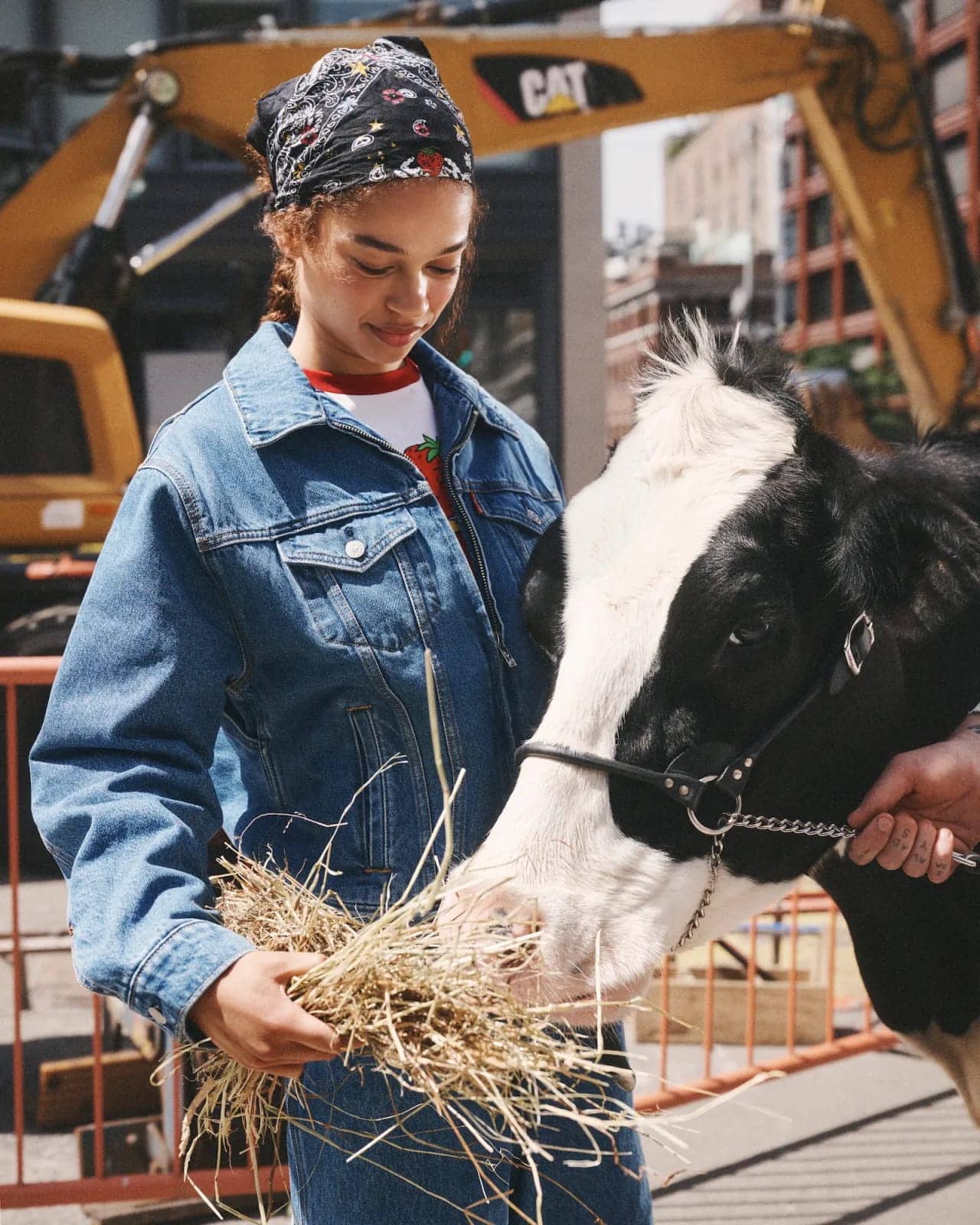
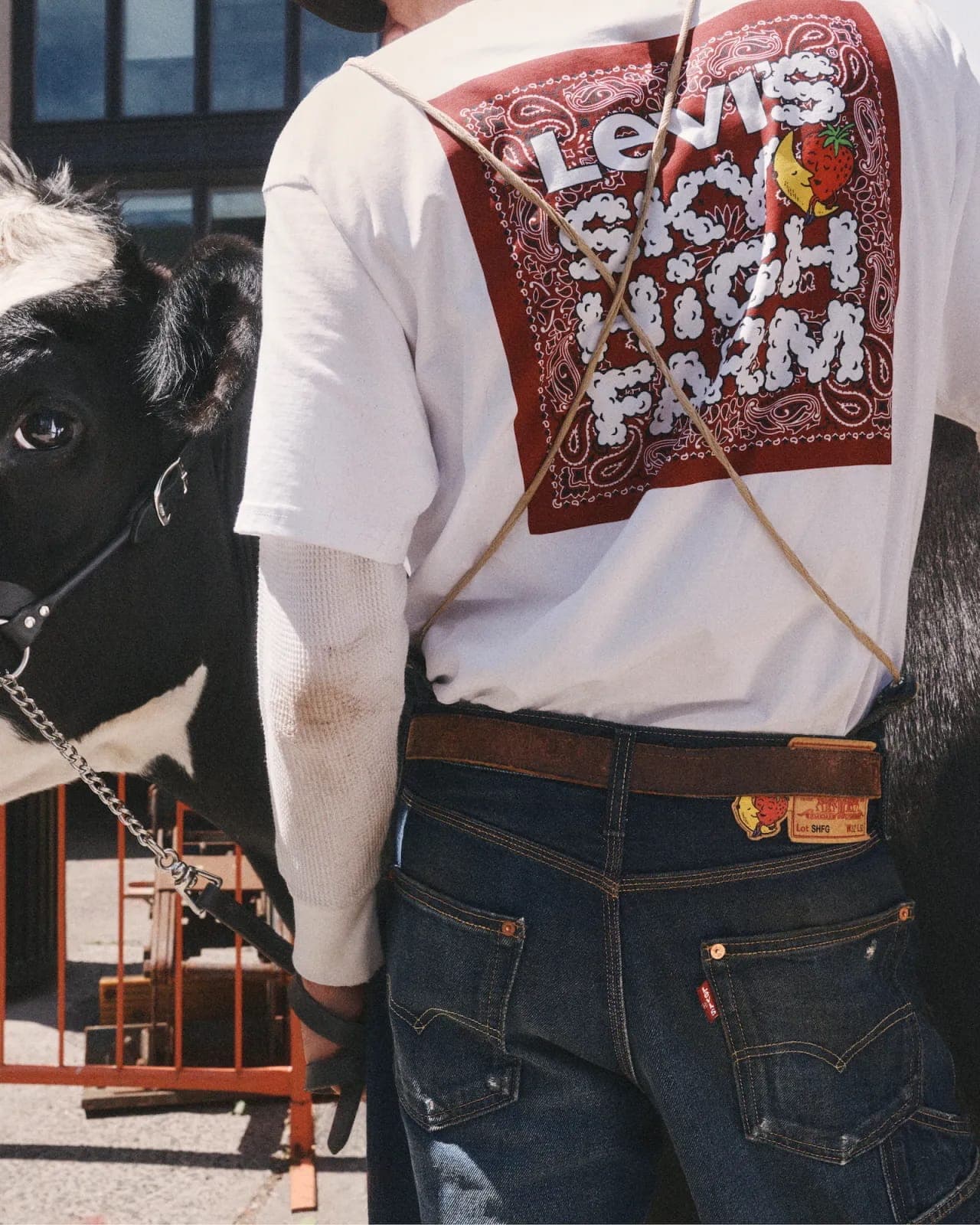
Levi’s and Sky High Farm Goods will launch an eight-piece collection on July 25 at a farmers market on Bond Street in New York, combining both brands’ design languages into new silhouettes made from organic and transitional cotton. The collaboration marks a departure from a standard product drop, opting instead for a launch venue built around food and community rather than a conventional retail setting.
Sky High Farm Goods is a mission-led brand founded in 2022 that channels revenue and cultural visibility toward Sky High Farm, a Hudson Valley nonprofit focused on food equity, and it has built a dense collaboration history in the years since launching. The brand has worked with names ranging from Balenciaga to Nike and Erewhon to Kaws, and its list of collaborators past and present includes Comme des Garçons SHIRT, Balenciaga, Converse, and Dickies. More recently, the brand entered a multi-year partnership with On, and it partnered with The North Face on a six-piece capsule called “Goodness Grows,” built around functional outdoor gear for agricultural and wet-weather work. The Levi’s project extends that pattern into denim specifically, a material category the brand has not previously used as the foundation for a full collaborative collection, distinct from past partnerships built around outerwear, footwear, or ready-to-wear.
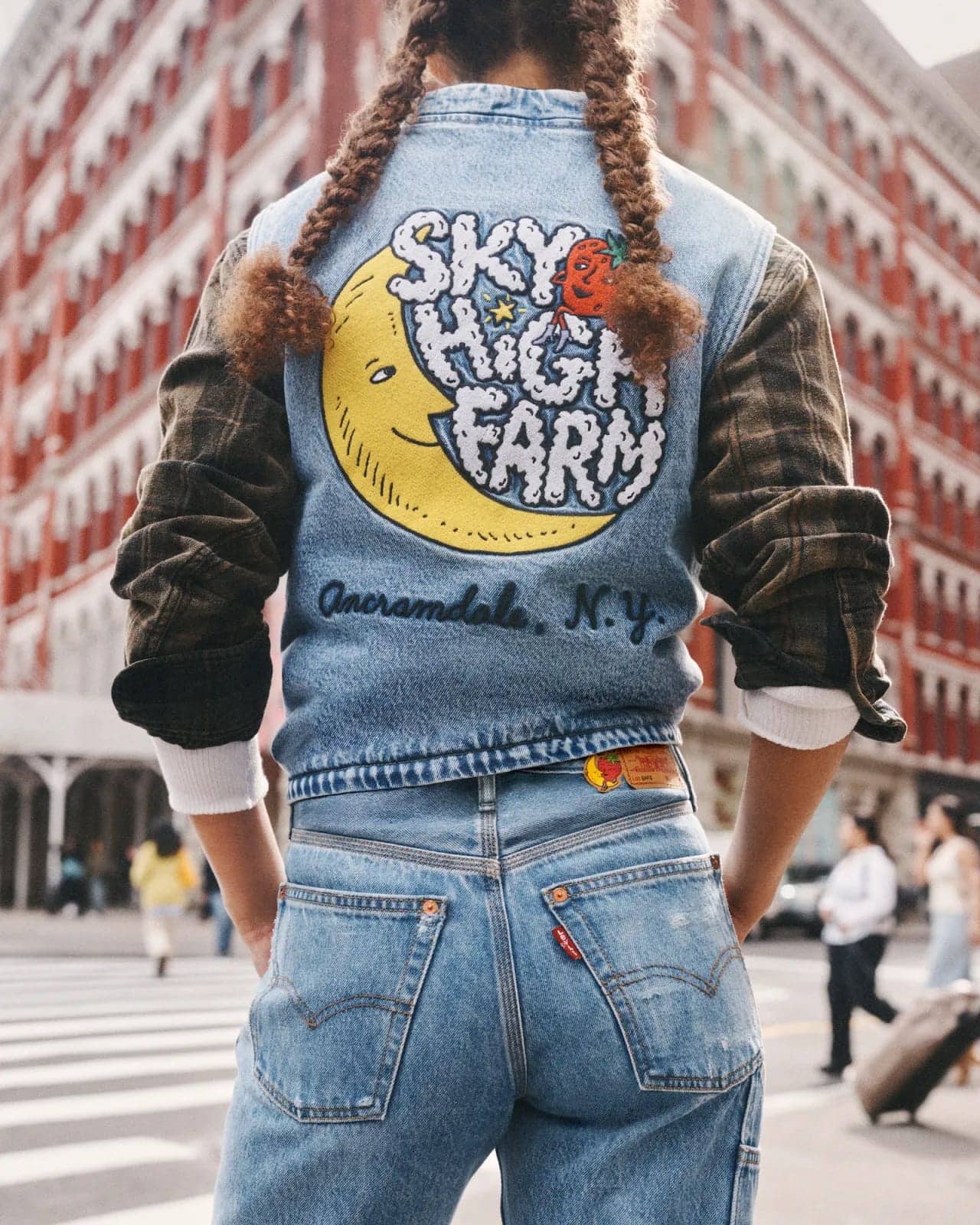
The material story here is secondary to the narrative one. Sky High Farm Goods has built its identity around food justice and regenerative agriculture, and this collaboration leans heavily on that framing to differentiate itself within a workwear collaboration category that has grown increasingly saturated. The organic and transitional cotton sourcing supports that positioning, but it functions more as supporting detail than as the collection’s central claim to innovation. The farmers market launch reinforces the same idea, positioning the collection as an extension of a values-driven ecosystem rather than a straightforward product release.
The collaboration lands within a broader industry conversation around sustainability regulation and supply-chain transparency, but the sharper relevance is strategic rather than material. As genuine differentiation grows harder to claim convincingly within workwear, brands are leaning more heavily on lifestyle and cause-driven storytelling to stand apart, and this partnership reflects exactly that shift.