A Bug’s Life, According to Thom Browne
Review of Thom Browne Spring 2027 Fashion Show
By Mackenzie Richard Zuckerman
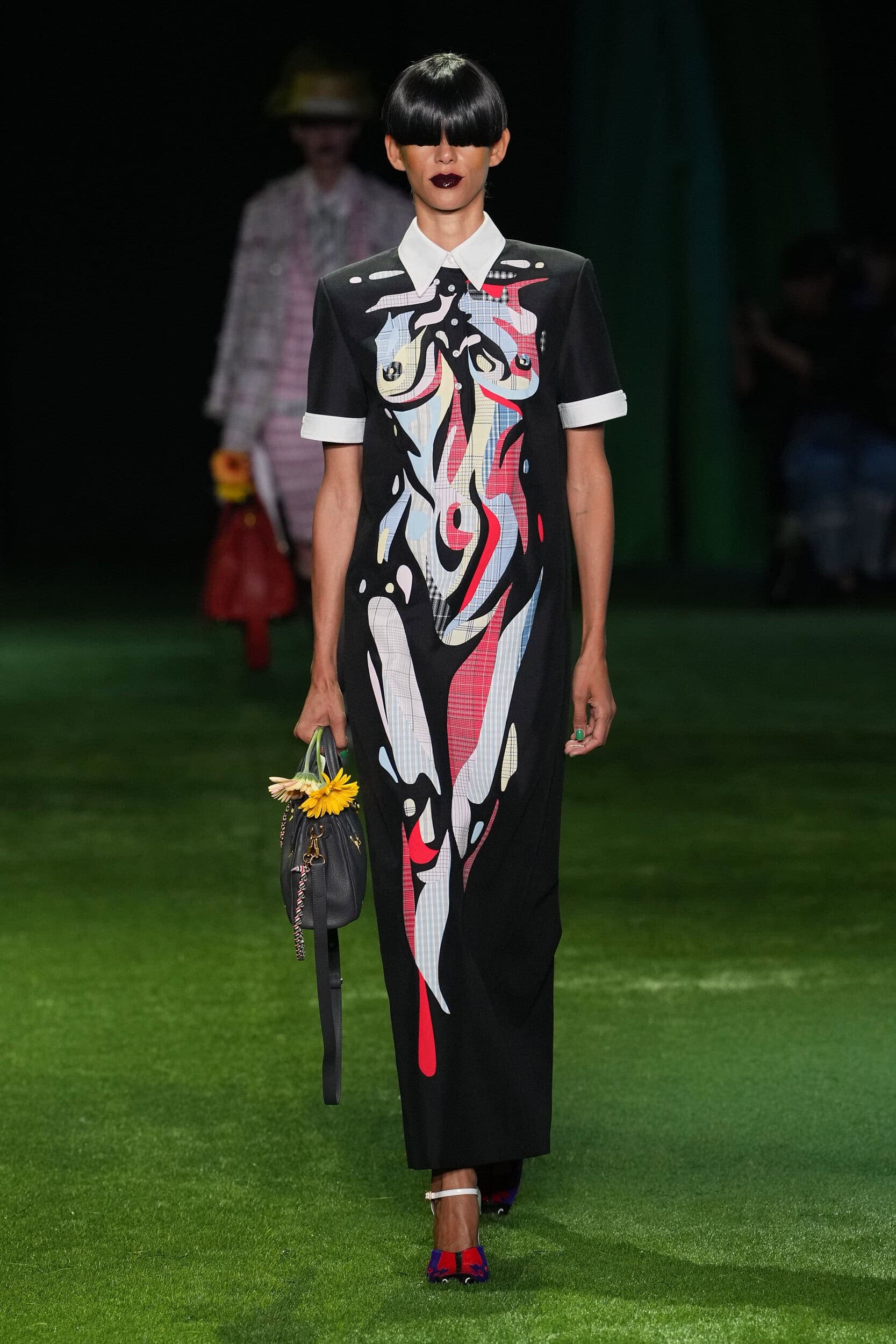
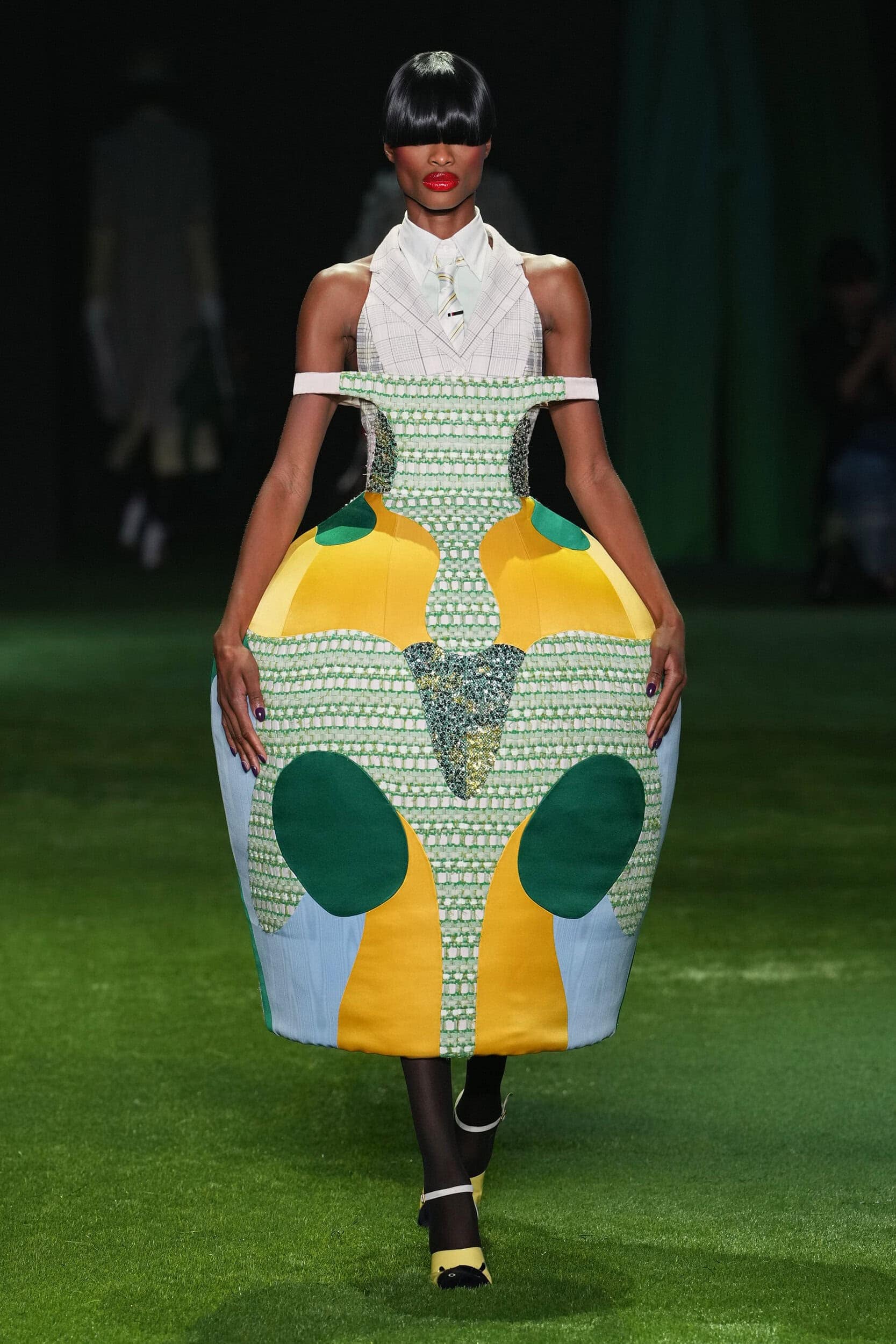
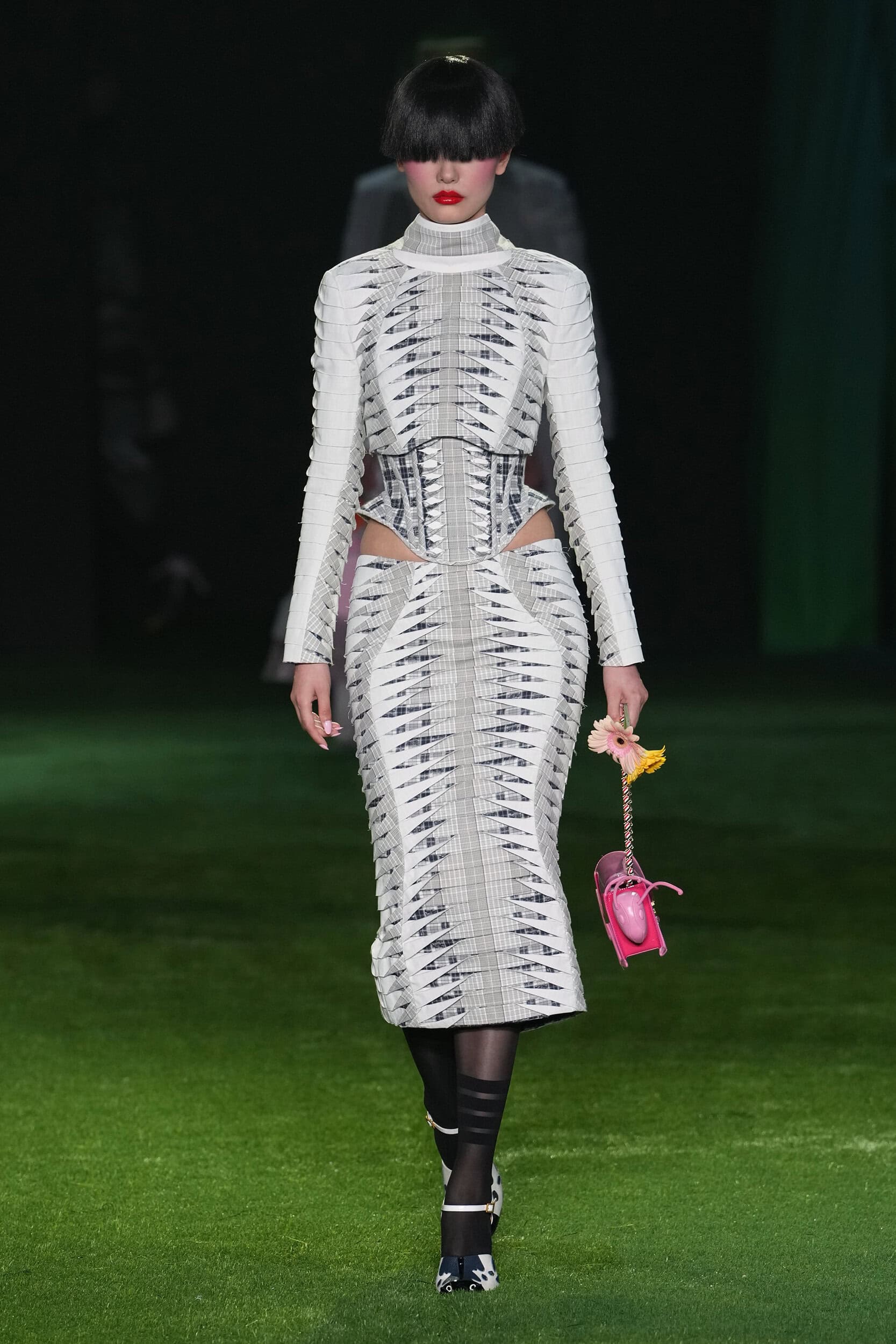
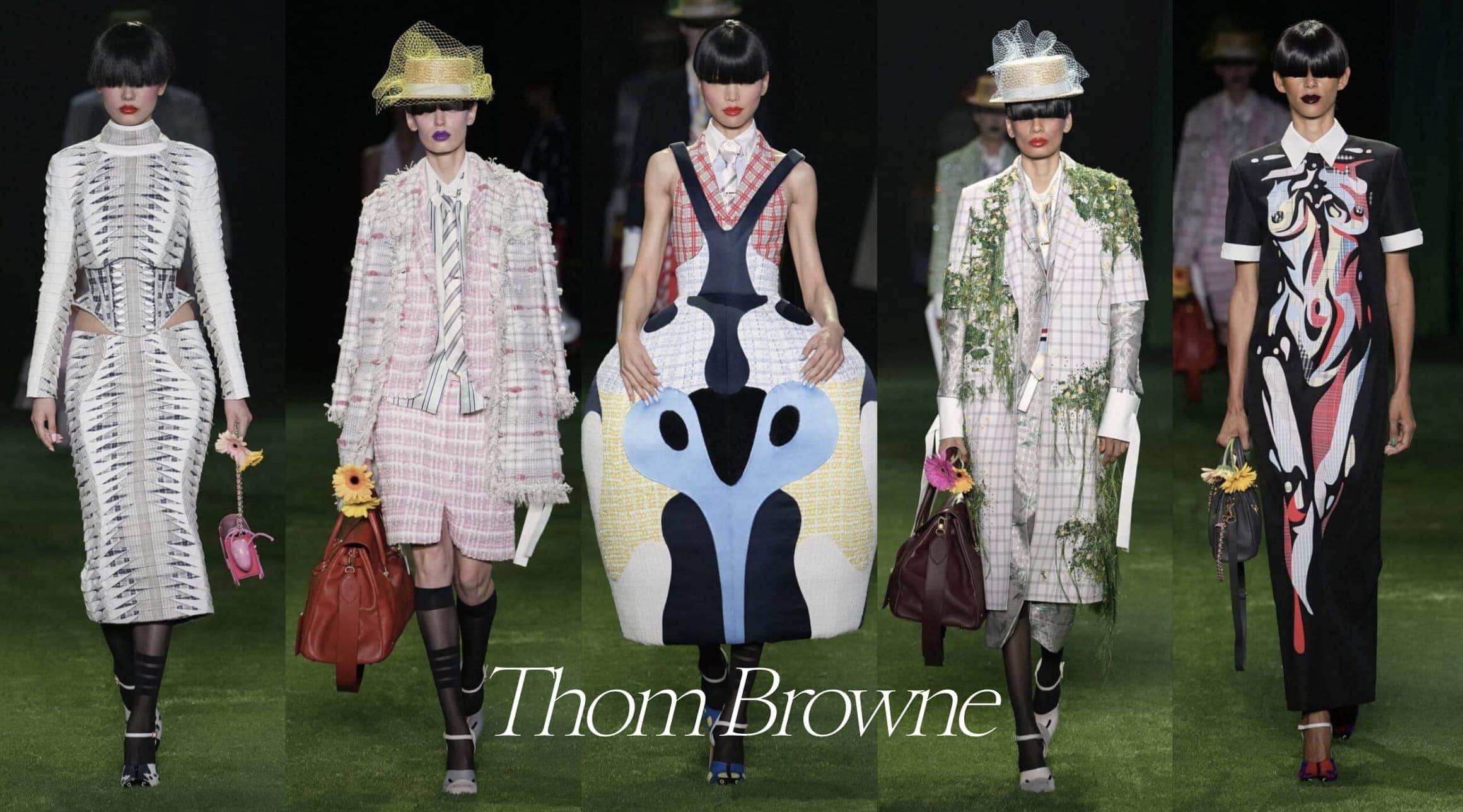
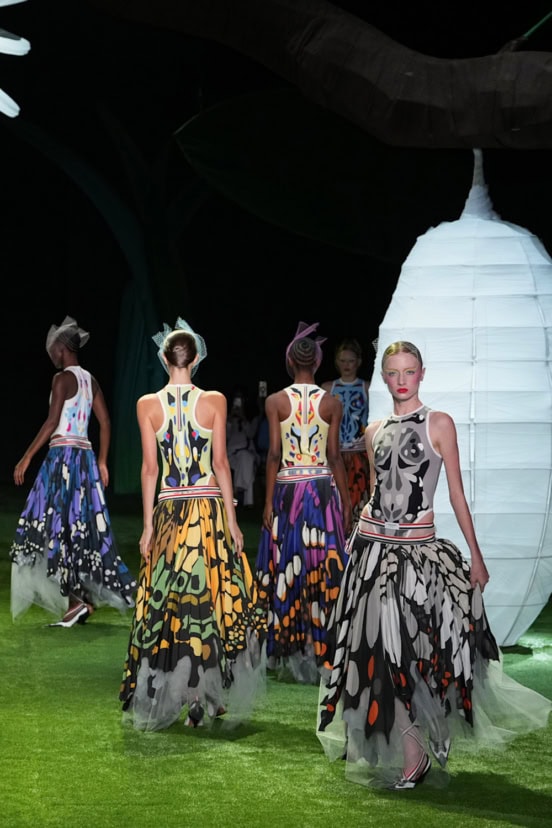
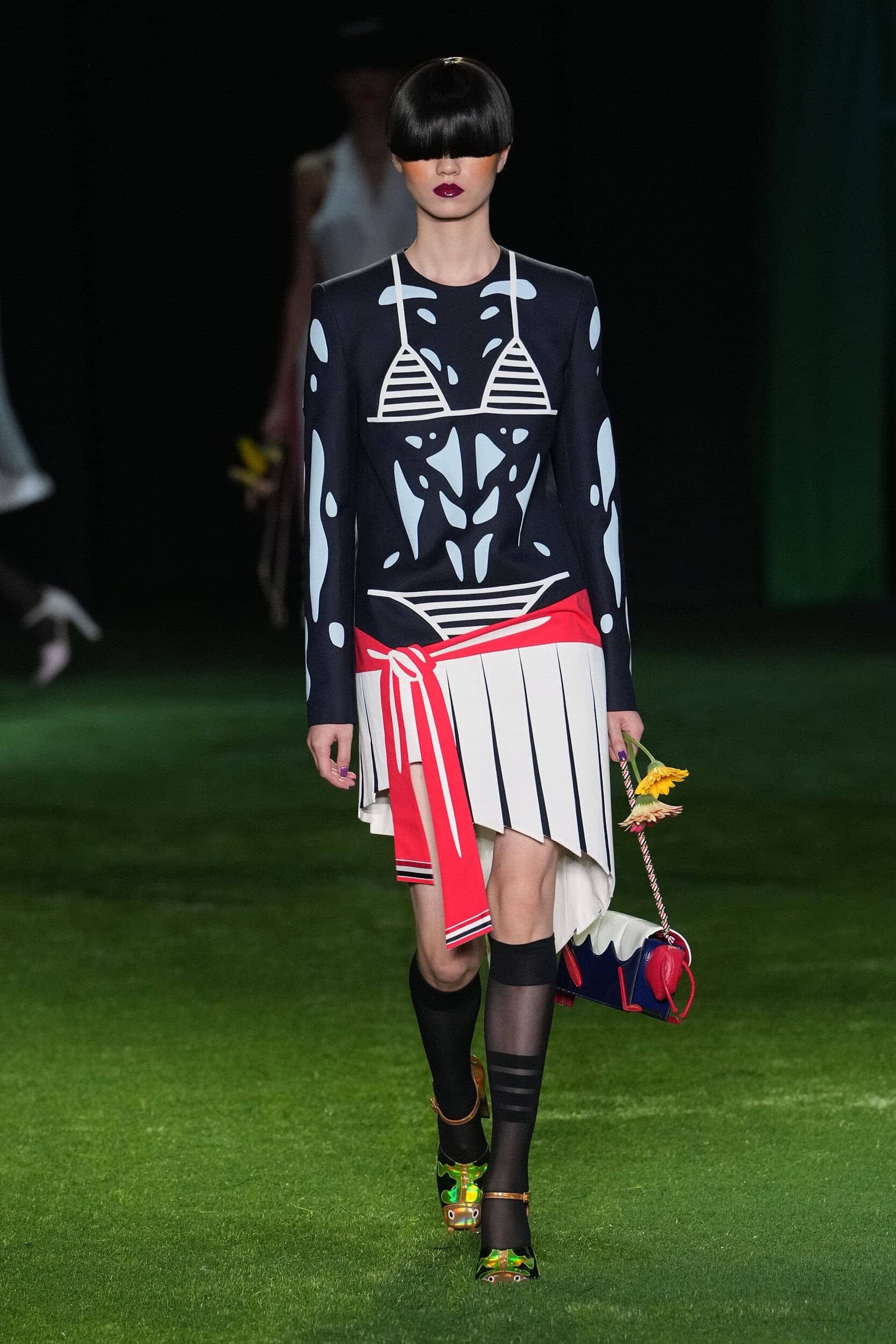
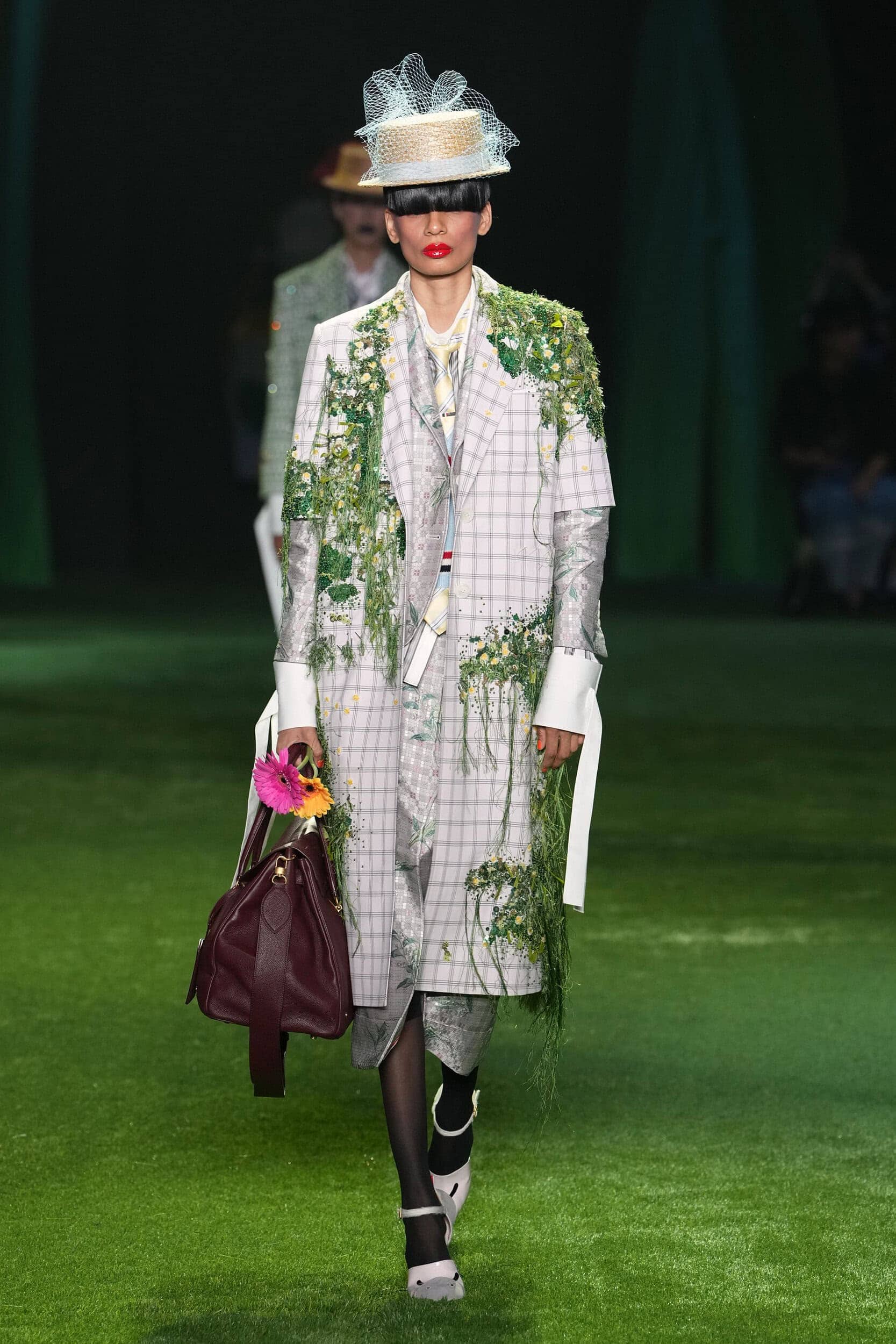
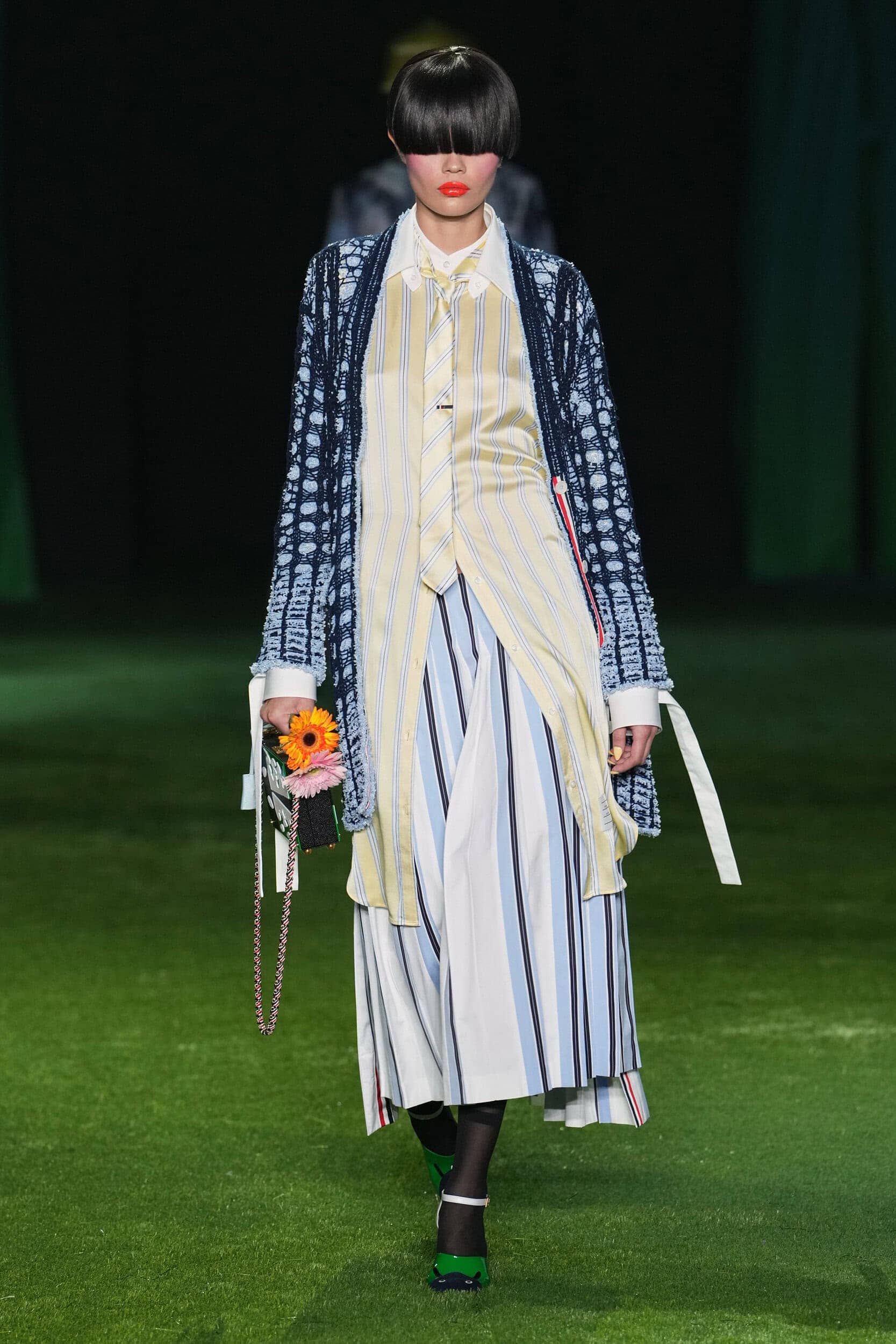
Thom Browne closed New York Fashion Week with a collection that was, in nearly every sense, classically Thom Browne. The show took the insect world as its central conceit, extending the entomological thread that had already appeared in his menswear collection and filtering it through the house’s unmistakable codes: strict tailoring, school-uniform proportions, pleated skirts, elongated coats, shrunken jackets, theatrical repetition, and the disciplined absurdity that has long defined Browne’s universe.
There is a particular rhythm to a Thom Browne show. A familiar wardrobe is established, then submitted to a narrative idea until every proportion, surface, gesture, and character seems to belong to that world. The gray suit remains the point of origin, but the collection is never simply about the suit. It is about what happens when Browne places that suit inside a fable and allows the fable to overtake it.
This collection followed that method closely. The insect theme gave the collection its imagery and atmosphere, but the deeper point was continuity. Browne is not a designer who reinvents his language season by season. He works more like a storyteller returning to the same set of characters, costumes, and rituals, changing the stage around them until the familiar begins to feel strange again.
THE COLLECTION
THE VIBE
Entomological Tailoring, Strict Whimsy, & The Ritual of the Uniform
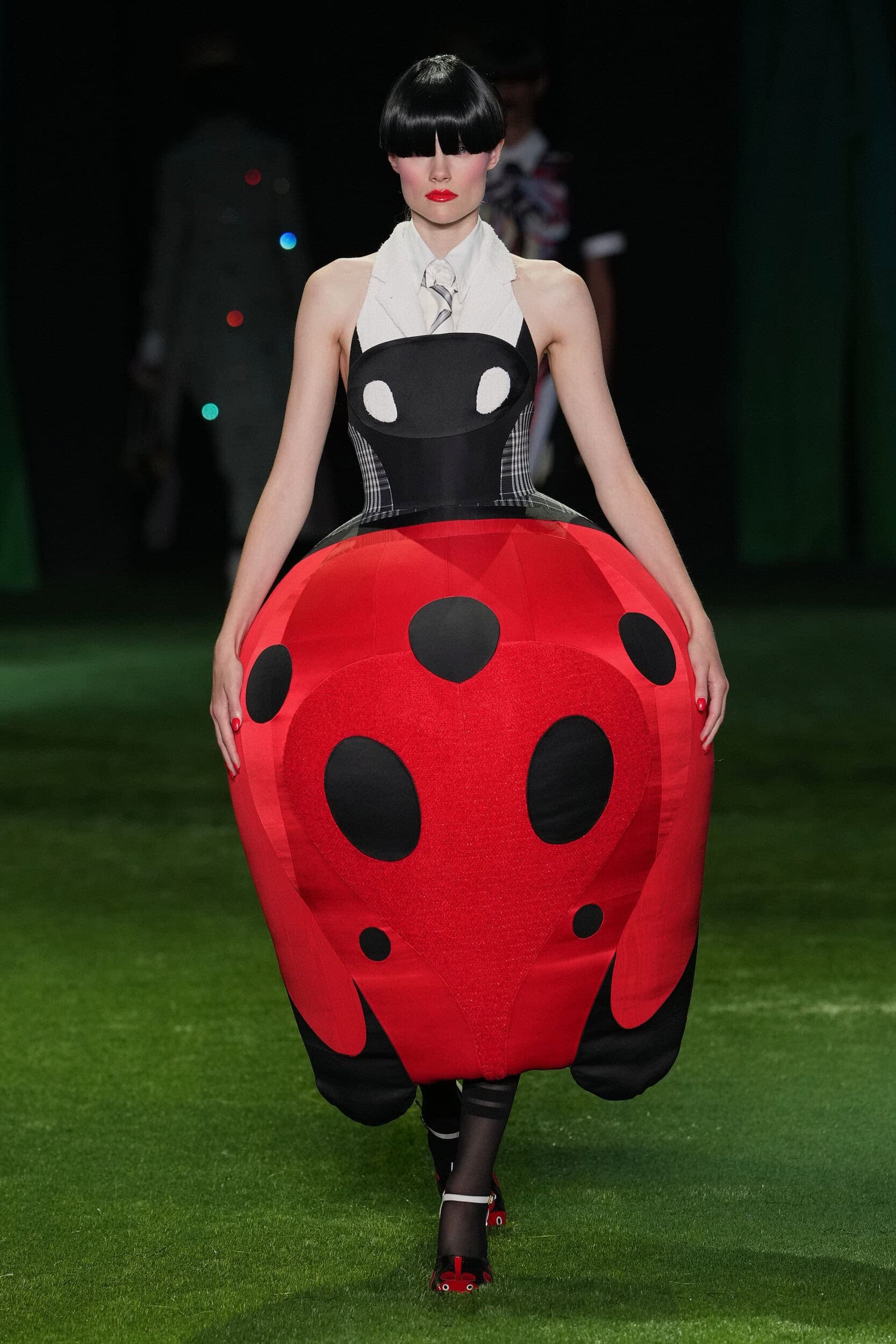
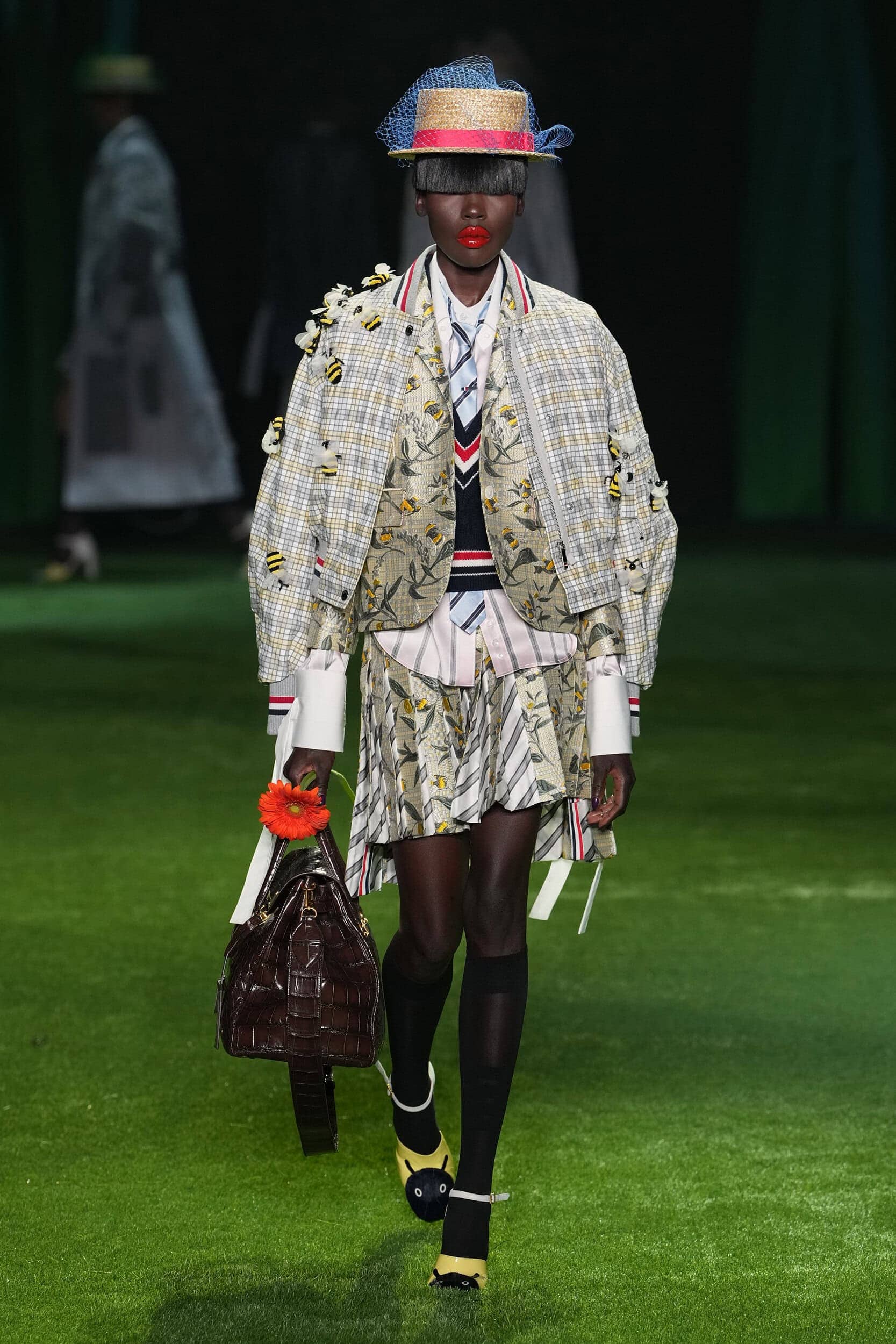
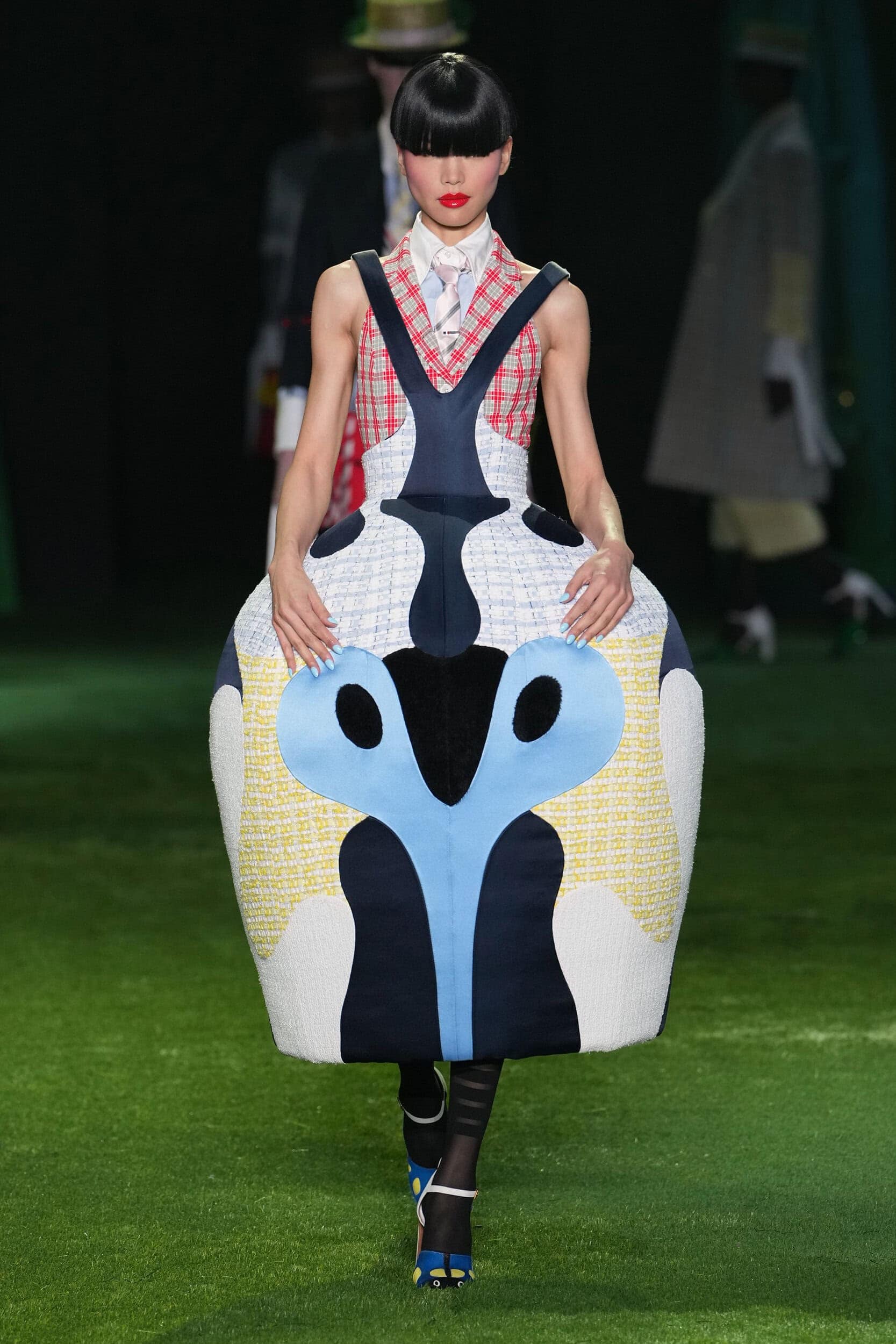
The strength of the collection was its clarity. Browne knows exactly what his world is made of: the uniform, the miniature proportion, the exaggerated gesture, the tension between discipline and fantasy. Within that framework, the insect theme gave him a new surface to explore. Wings, shells, antennae, segmented shapes, and the suggestion of swarm-like repetition all sat naturally within a language already built on order, multiplication, and transformation.
That is part of why the conceit made sense. Browne’s work has always had something almost entomological about it: a fascination with structure, exoskeleton, ritual, and small formal differences repeated until they become meaningful. His figures often appear less like ordinary runway characters than members of a highly organized species, each one marked by slight variations in proportion, styling, and behavior.
The best moments used the theme to heighten what the house already does well. Tailoring became more armored. Pleats suggested movement and segmentation. Surface decoration brought delicacy to otherwise strict forms. The disciplined grayness of Browne’s world found a natural counterpoint in the strange beauty of insects, creatures that are both ornamental and architectural, fragile and hard-shelled.
As always, the collection relied on accumulation. One Thom Browne look can sometimes feel like a complete statement, but the shows are built through insistence: the repeated jacket, the repeated skirt, the repeated tie, the repeated walk, each altered slightly until the full system comes into focus. This season operated in that mode. It was less about a single radical proposition than about watching a familiar language submit itself to a new obsession.
That consistency is both the house’s power and its limitation. Browne’s codes are so fully formed that a new theme rarely changes the fundamental architecture of the collection. Instead, the theme is pressed onto the architecture, embroidered into it, exaggerated through it, and staged around it. For those who respond to Browne’s world, that can be enormously satisfying. For those looking for a major shift, it can also feel like another chapter in a book whose grammar is already fixed.
Still, there is value in that kind of authorship. In a season full of brands negotiating identity, Browne remains almost stubbornly himself. His shows may change subject, but they rarely lose their syntax. This collection offered the pleasure of a designer who knows the rules of his own universe so completely that he can keep finding new creatures to inhabit it.
THE WRAP UP
This collection did not attempt to redefine the house, nor did it need to. It reaffirmed the system Browne has built: tailoring as ritual, uniform as fantasy, repetition as theater, and craft as the bridge between absurdity and control.
The insect theme gave the season an effective new skin, connecting naturally to the designer’s interest in structure, metamorphosis, and disciplined strangeness. It was not a radical departure, but it was a coherent and polished expression of a world that remains uniquely his.
The question with Browne is rarely whether the house codes are present. They always are. The more relevant question is whether the season’s conceit gives those codes enough new life. Here, the answer was largely yes. This collection may not have transformed Thom Browne’s language, but it animated it with enough wit, craft, and theatrical precision to close New York Fashion Week on unmistakably Browne terms.