Passion Has a Past
Review of Valentino Beauty ‘Vendetta’ 2026 Ad Campaign by Director Romain Gavras with Photographer Inez and Vinoodh with models Alexander Skarsgård, Dakota Johnson
Valentino Beauty brings Vendetta back with Dakota Johnson and Alexander Skarsgård, but the real protagonist may be director Romain Gavras. In a one-minute film that treats fragrance advertising as compressed cinema, Gavras turns the newly revived Vendetta into a feverish pursuit of attraction: part seduction, part road movie, part erotic thriller. Inez & Vinoodh provide the campaign’s print images, but it is Gavras who gives Vendetta its pulse. And for a fragrance whose name translates rather dramatically as revenge, behaving sensibly was probably never going to be part of the brief.
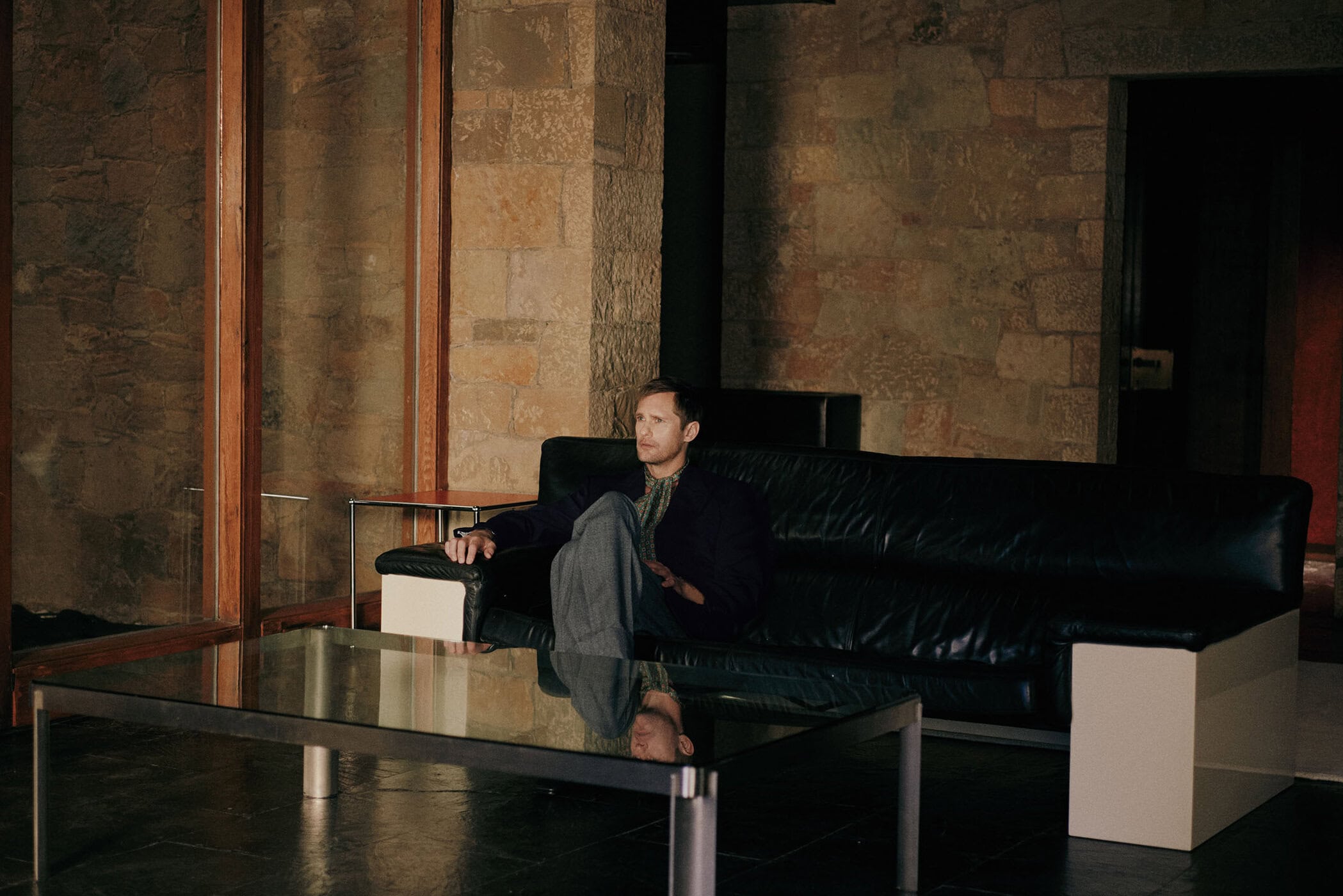
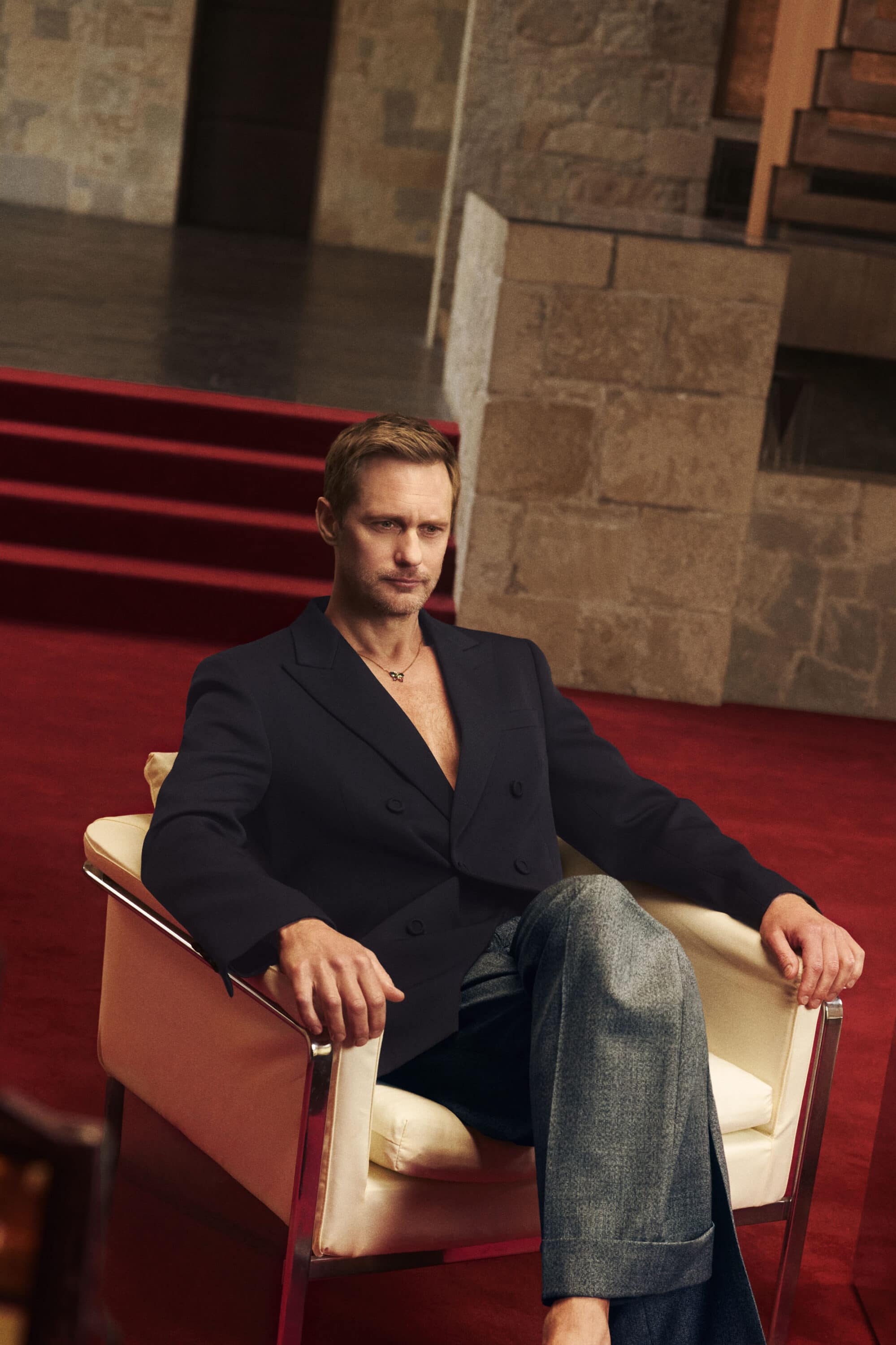
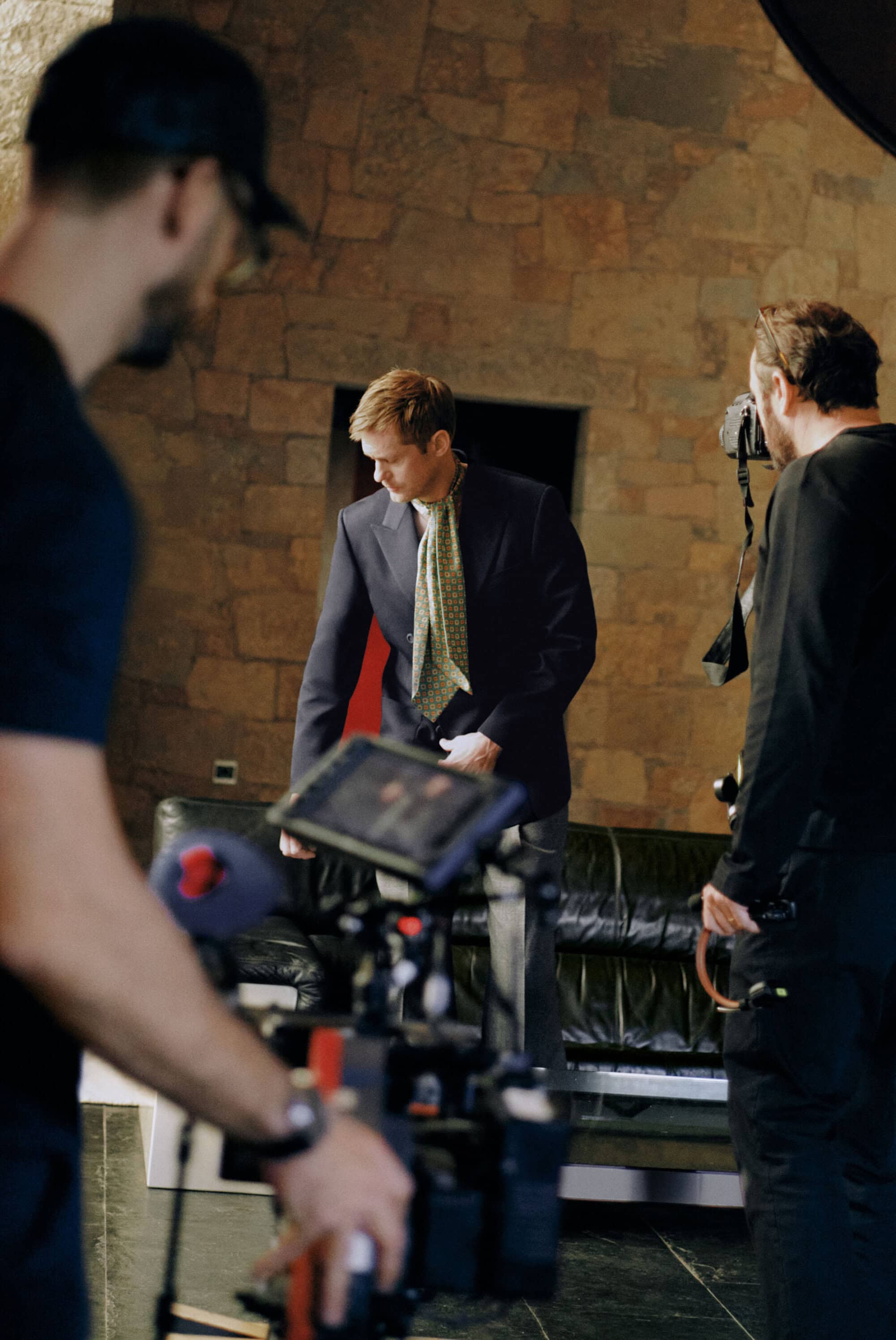
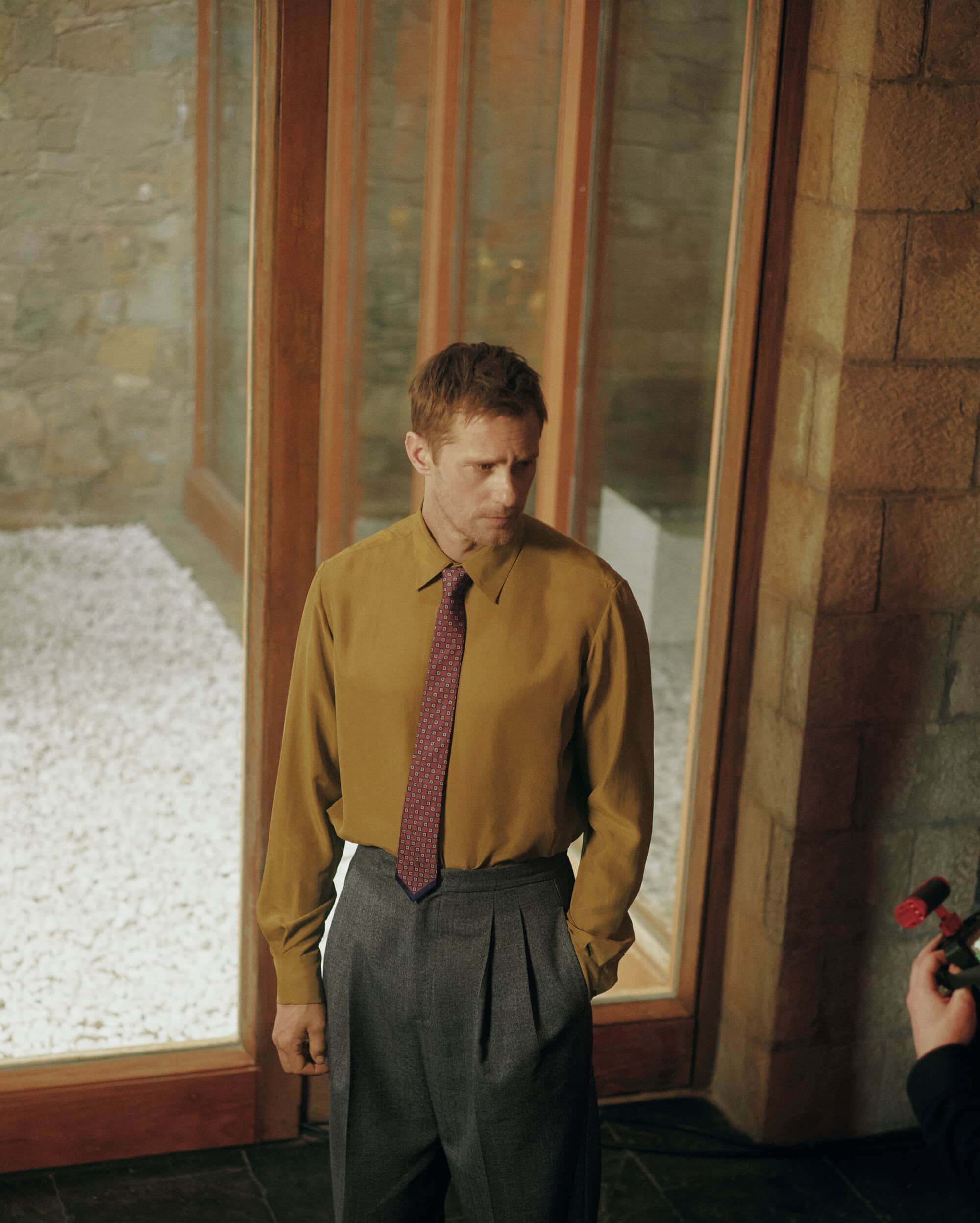
The film begins inside an extraordinary modernist interior of stone, glass, blackness, and Valentino red. Johnson and Skarsgård don’t so much meet as orbit one another. Fire interrupts our view. Bodies recline across red upholstery. A bottle is sprayed. Clothes fly. Hands move across shoulders, necks, faces, and thighs. Gavras shoots desire less as a succession of glamorous poses than as an accumulation of sensory fragments, letting the camera move between widescreen architecture and almost invasive proximity to skin. The fragrance itself becomes another physical object within that choreography.
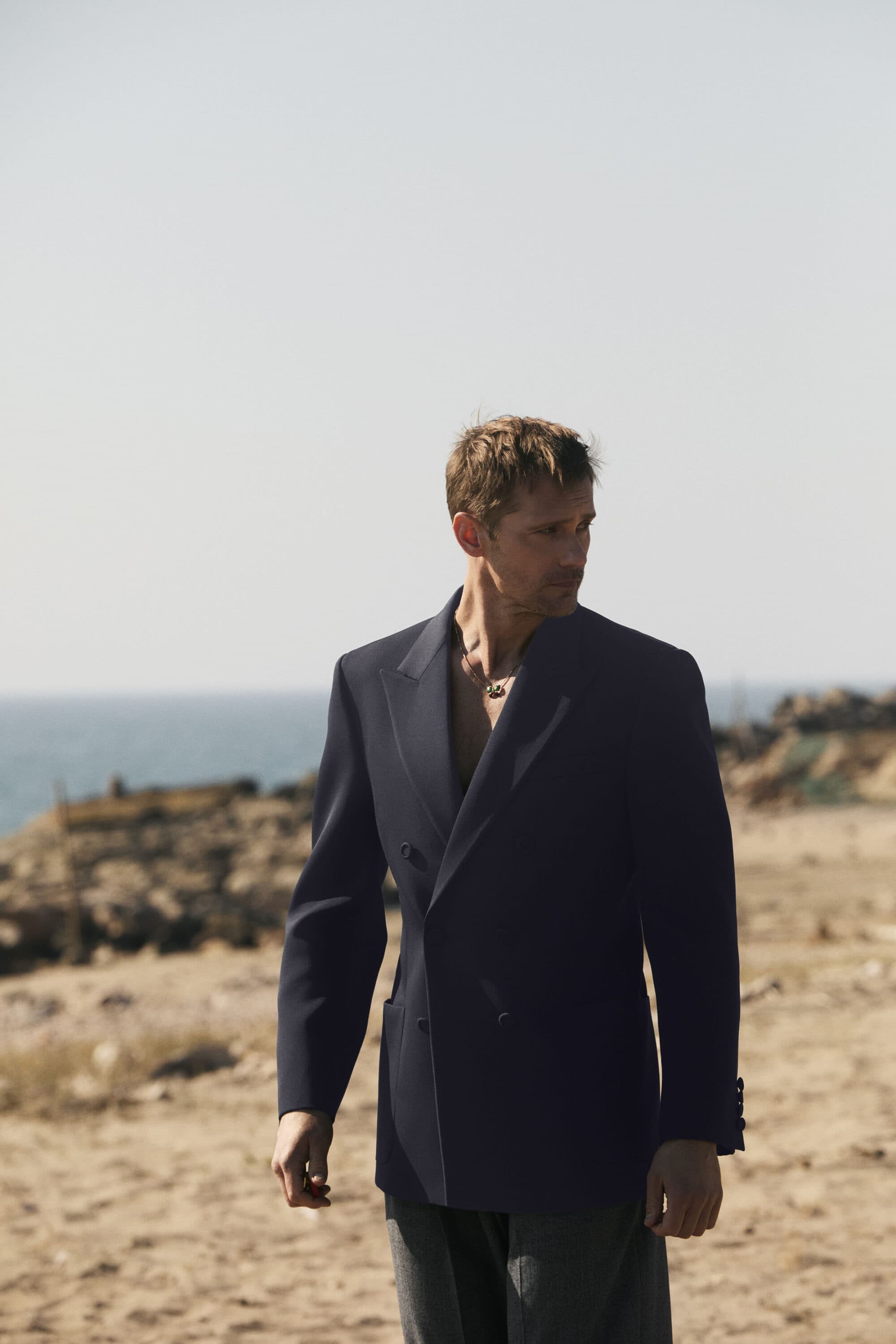
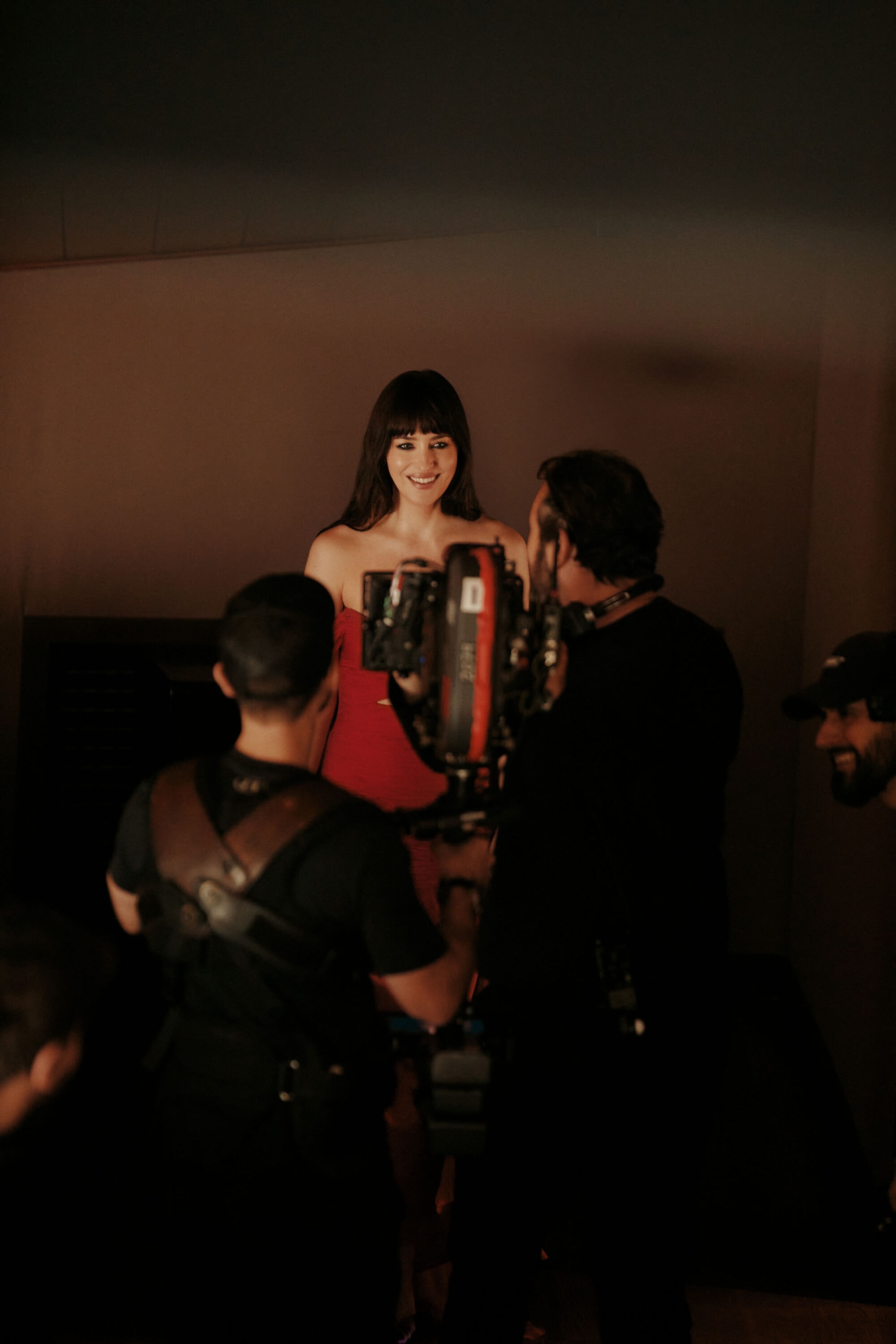
That contrast between control and abandon is where Gavras is particularly effective. The house is severe and geometric, while the people inside it increasingly are not. Skarsgård begins with the composure of a man who appears to have everything under control; Johnson spends much of the film demonstrating why that assumption was optimistic. Her red dress, the crimson interiors, and the flames steadily turn Valentino red from branding device into emotional temperature. Even the styling participates in the unraveling: tailored sophistication gradually gives way to exposed skin, discarded clothing, and bodies occupying spaces with considerably less concern for furniture etiquette.
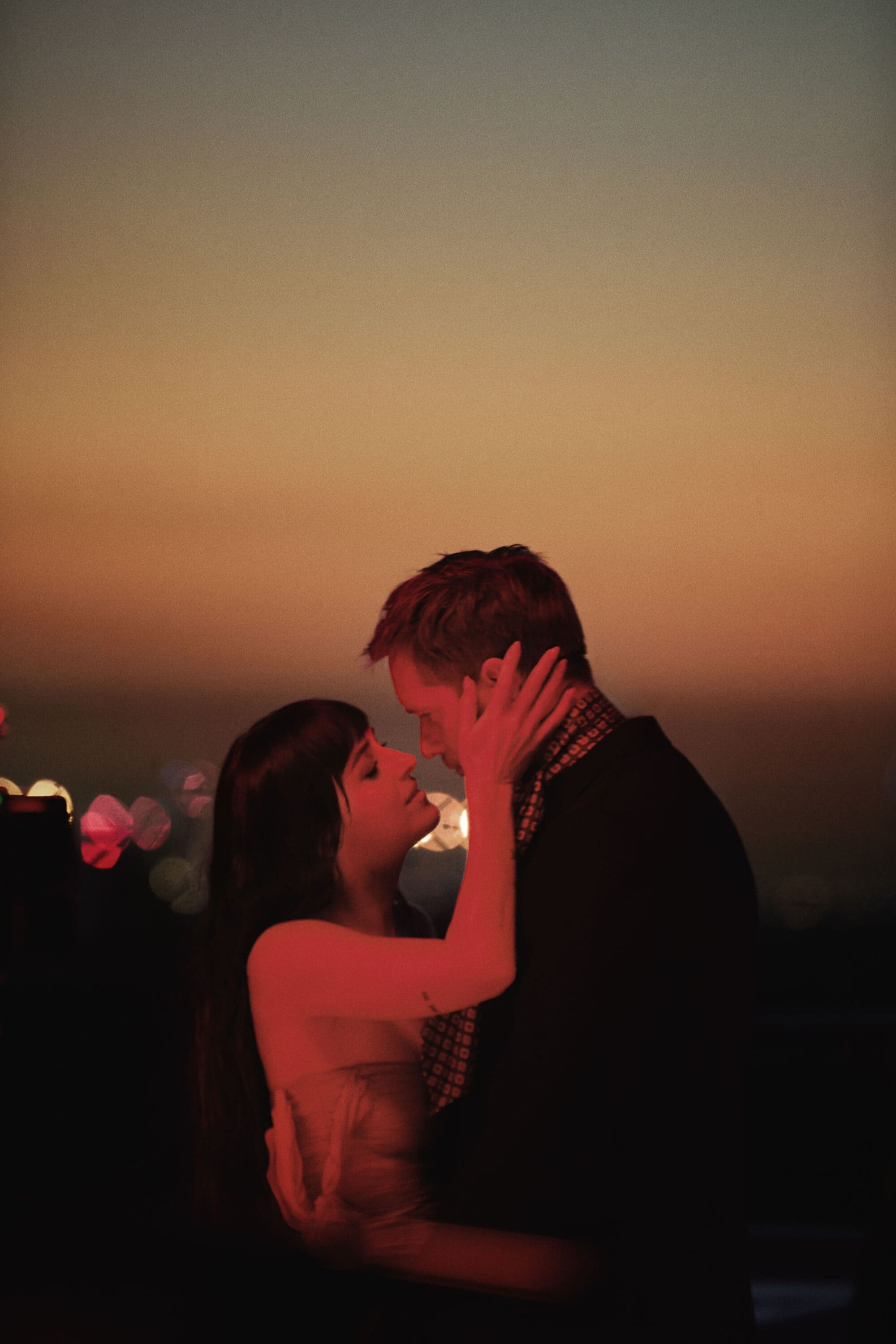
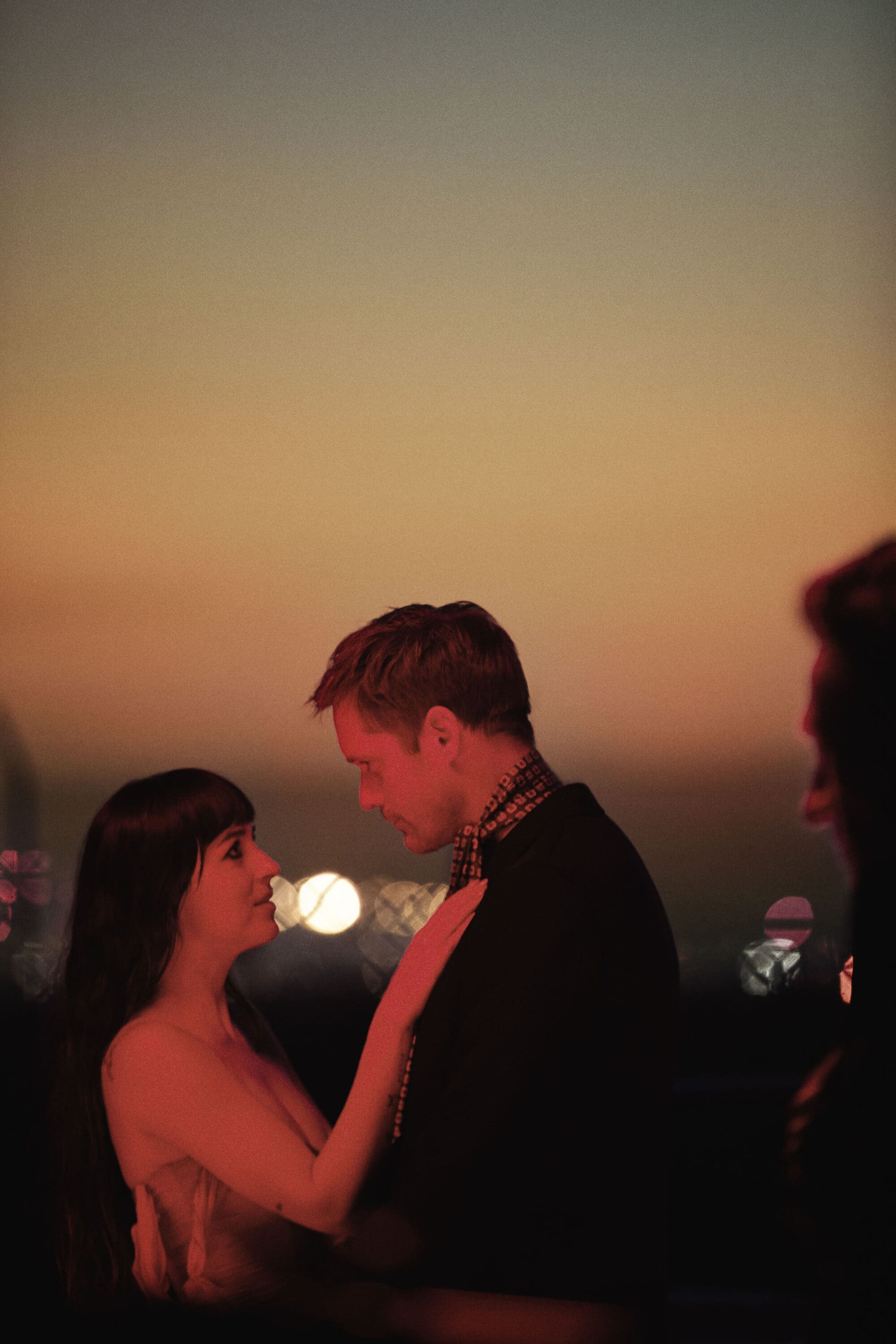
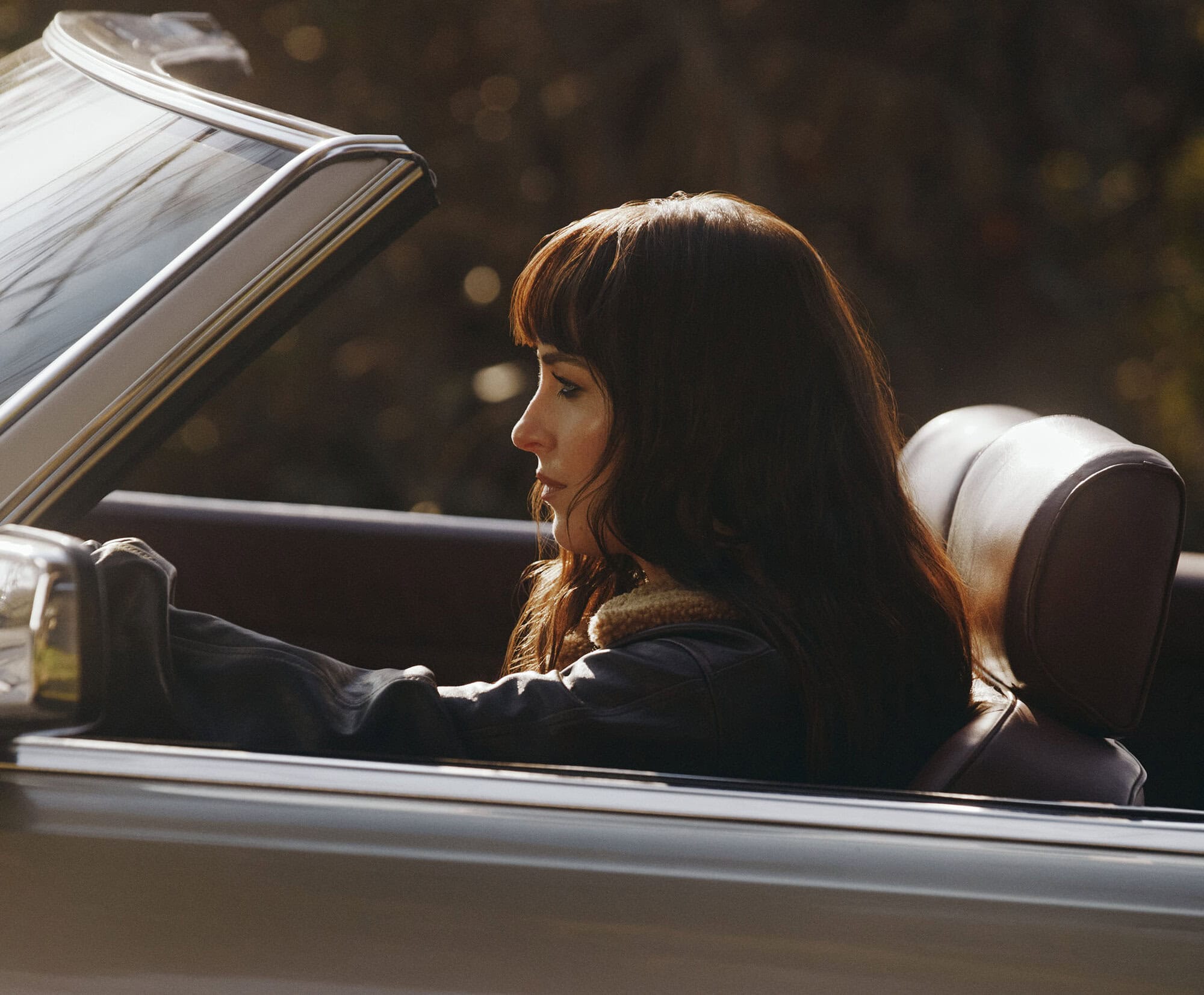
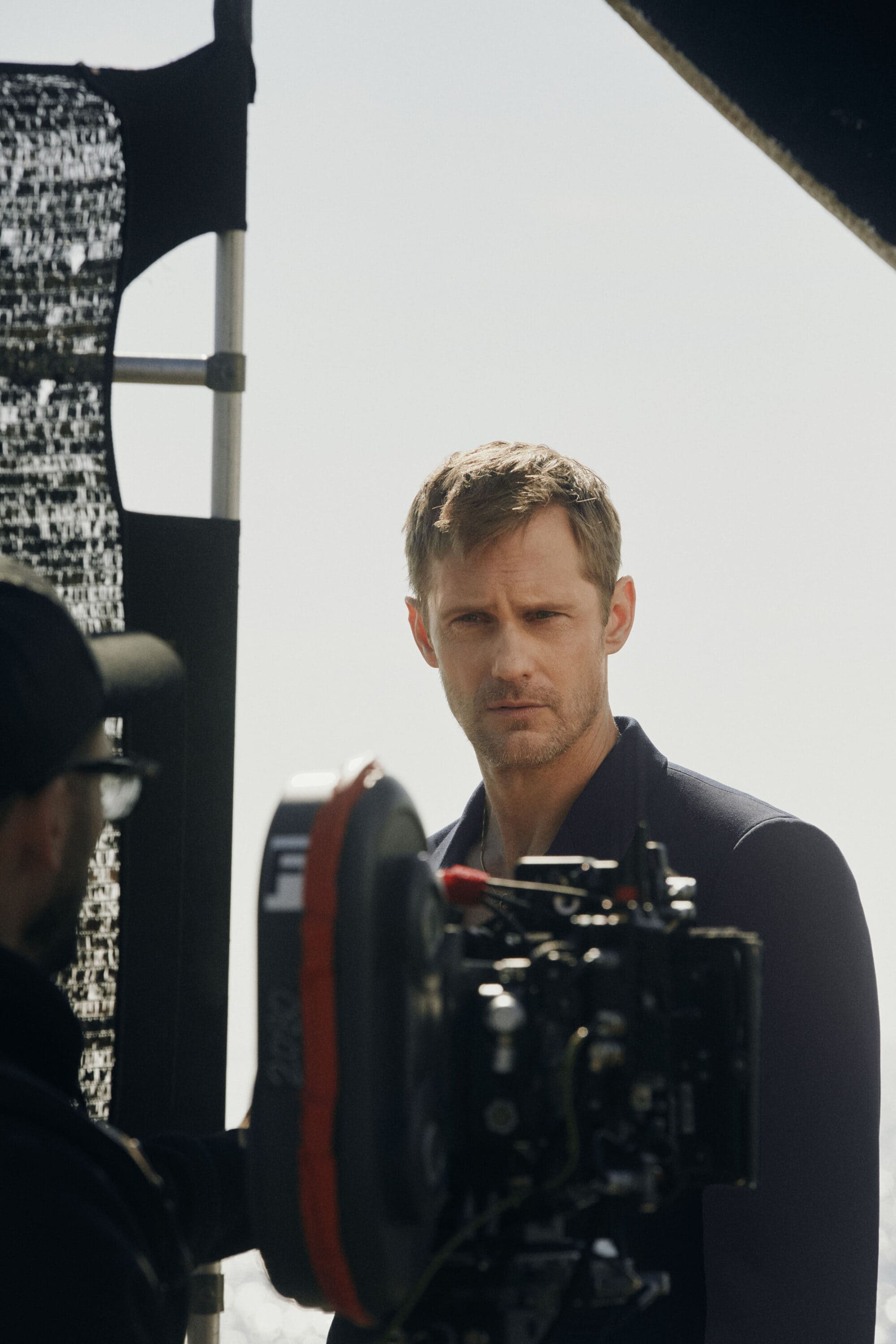
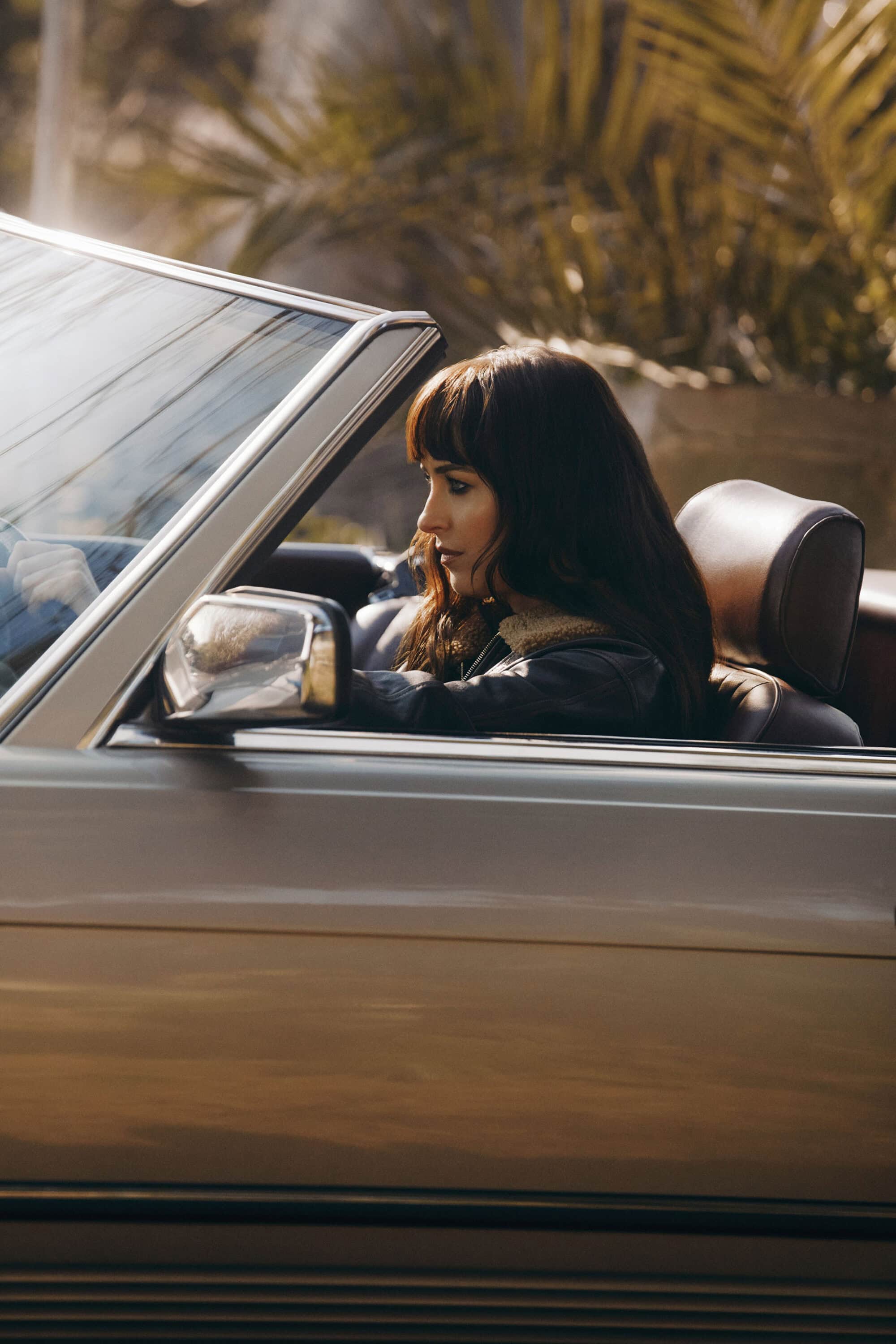
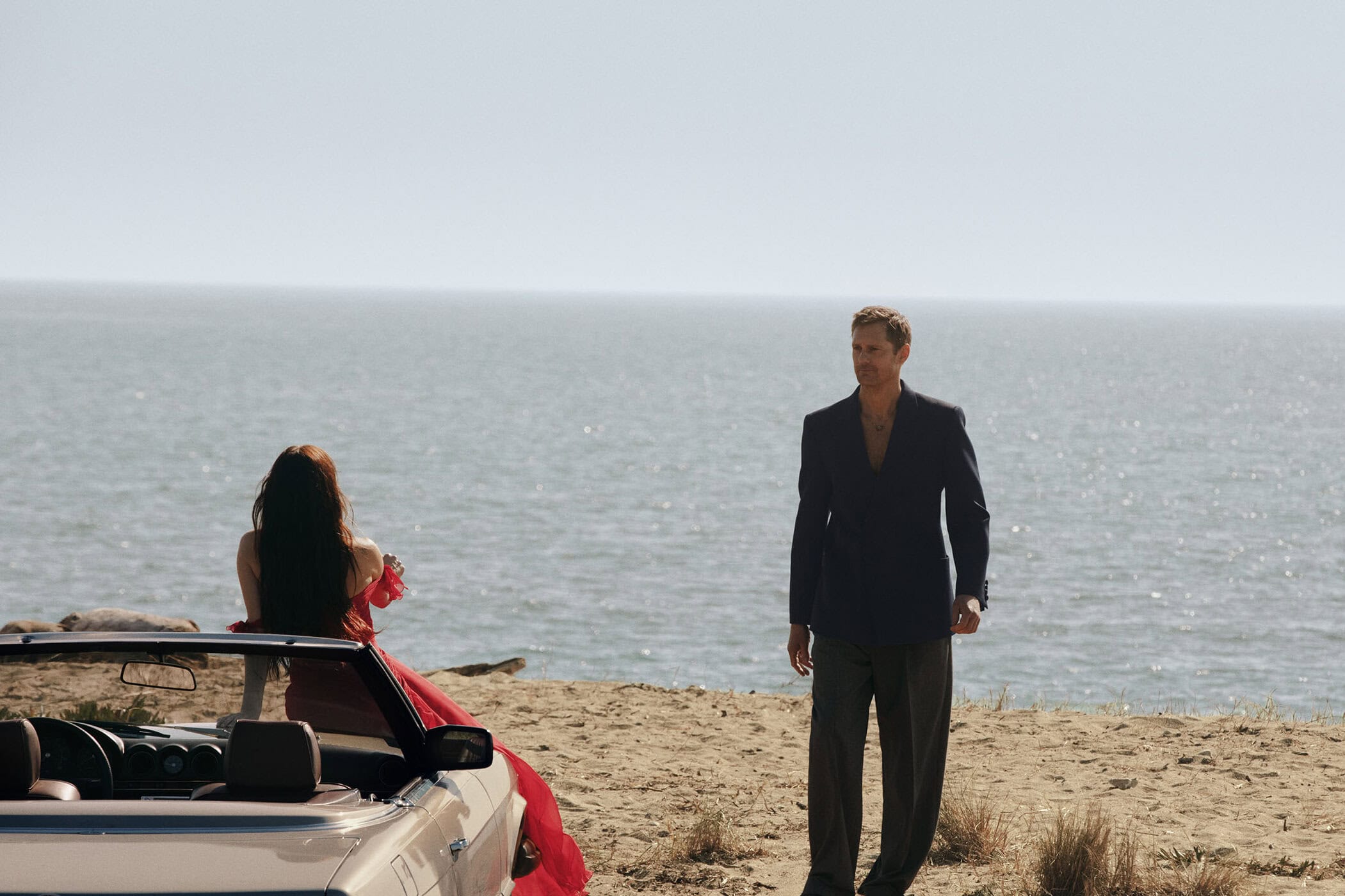
Then Gavras opens the doors. The lovers escape into a convertible, arriving at the sea before moving through landscape and toward sunset. The shift is important. What begins as claustrophobic desire becomes kinetic: interiors give way to road, beach, fields, sky. The film effectively moves from containment to release, and its editing follows the same trajectory. Vendetta isn’t simply represented by two attractive people wanting one another; it becomes the thing propelling them forward. By nightfall, bathed in almost artificial red light against a deep blue sky, romance has become something closer to compulsion.
The choice of Johnson and Skarsgård is particularly good because neither plays the material with the earnestness that can make fragrance films unintentionally amusing. Johnson brings her familiar combination of languor, intelligence, and sly provocation, while Skarsgård has the physical presence to match her without overwhelming the story. Their sexuality feels adult, and importantly, mutual. Gavras repeatedly gives Johnson agency within the seduction: her gaze, hands, movement, and decisions help drive the action rather than leaving her as the beautiful object waiting to be pursued.
And Vendetta comes to this new affair with some rather delicious baggage. The fragrance’s 1993 television campaign starring Yasmeen Ghauri was considerably stranger: Ghauri’s erotic encounter with a male mannequin culminated in her throwing the Vendetta bottle directly toward the screen. It was sexy, surreal, aggressive, humorous, and unmistakably of an era when fragrance advertising could occasionally behave as though someone had misplaced the rulebook. Seen against that predecessor, Gavras’ film feels less transgressive but considerably more cinematic. The original Vendetta weaponized fantasy; this one romanticizes its consequences.
That comparison also reveals the small opportunity left unexplored. Gavras gives the film heat, pace, physicality, and beautiful narrative escalation, but Vendetta is such a wonderfully loaded name that one longs for one additional twist of danger or perversity. Once the convertible reaches the beach and golden-hour kissing begins, the campaign briefly enters more familiar fragrance territory. The images are seductive, but perhaps almost too seductive. The earlier Vendetta had teeth. Allowing Gavras one more bite might have pushed this revival from highly accomplished luxury cinema into the genuinely strange territory that the name can support.
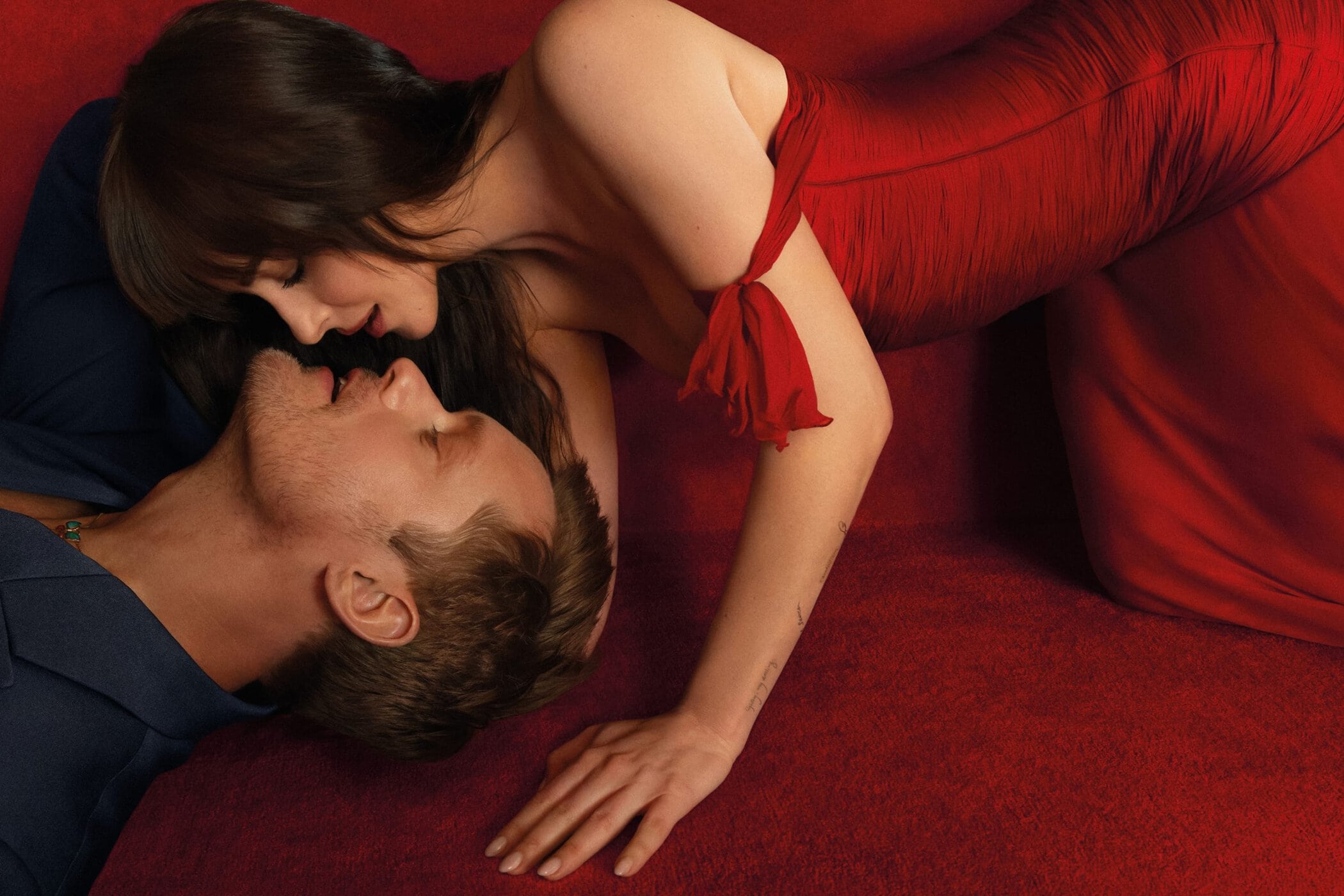
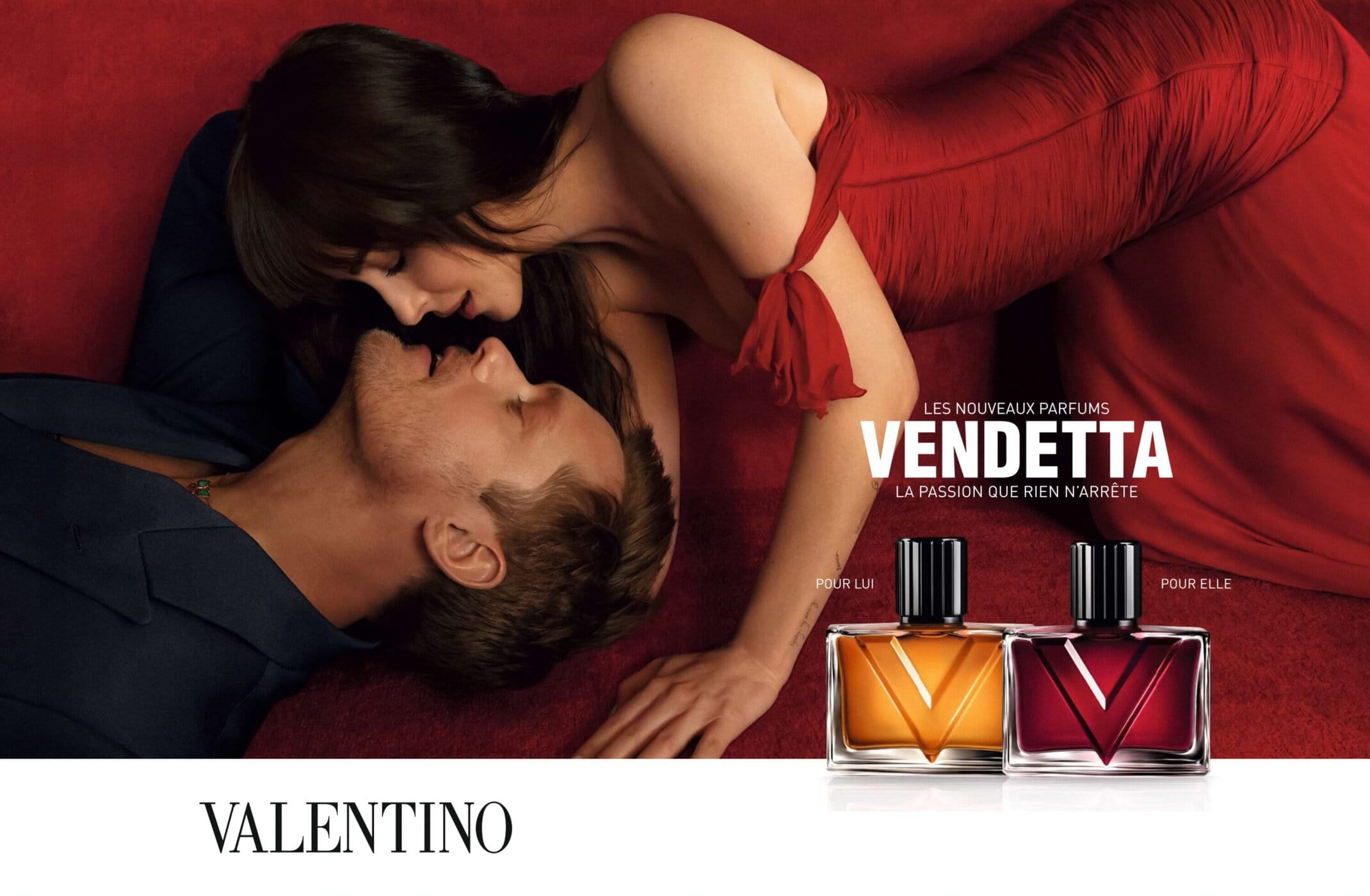
Inez & Vinoodh’s print image wisely doesn’t attempt to retell the film. Johnson stretches over Skarsgård against an uninterrupted expanse of red, capturing in a single frame the physical imbalance that Gavras spends a minute constructing. The two Vendetta bottles anchor the composition below them, turning the image into an elegant punctuation mark rather than a separate campaign idea. The photograph sells the fragrance; Gavras sells the fantasy.
And that distinction is what makes the revival work. Valentino Beauty hasn’t simply photographed two ambassadors beside two new bottles. It has given Vendetta a world, a rhythm, and most importantly, a director with enough cinematic vocabulary to make sixty seconds feel like something happened before we arrived and something potentially inadvisable will happen after we leave. In 1993, Vendetta ended with a bottle being thrown at the audience. Three decades later, Gavras doesn’t throw the bottle. He takes us along for the ride. Either way, apparently Vendetta still isn’t interested in a quiet night at home.
Valentino Creative Director | Alessandro Michele
Director | Romain Gavras
Photographer | Inez & Vinoodh
Talent | Dakota Johnson, Alexander Skarsgård
Music | ‘It’s a Sin’ – The Pet Shop Boys