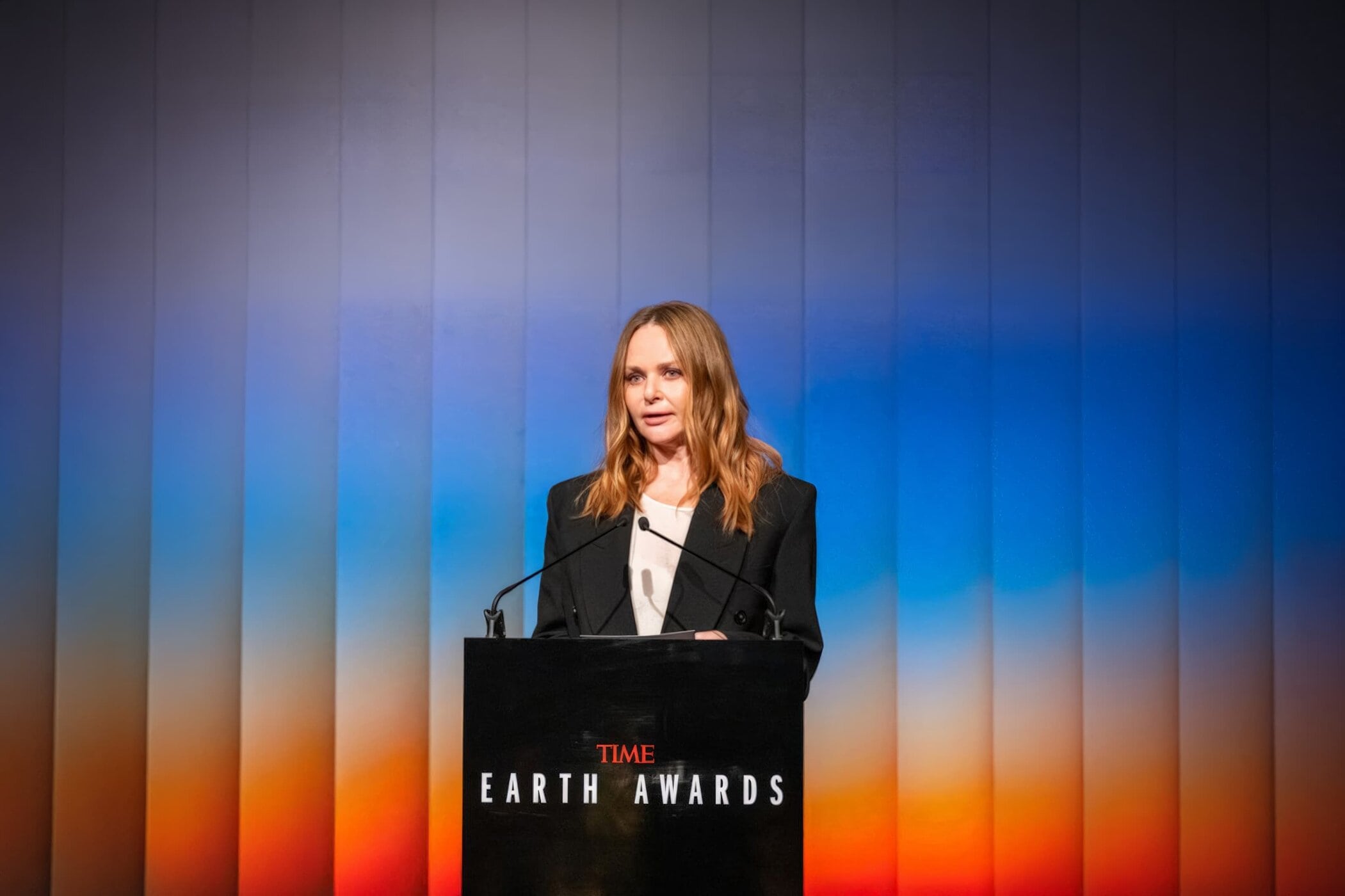
The designer is recognized for advancing sustainable innovation and systemic change across fashion
Stella McCartney has been honored with a TIME Earth Award, recognizing global leaders driving meaningful action for the planet. Presented at a ceremony in London, she was the only designer among this year’s honorees, underscoring fashion’s growing role in addressing the climate crisis.
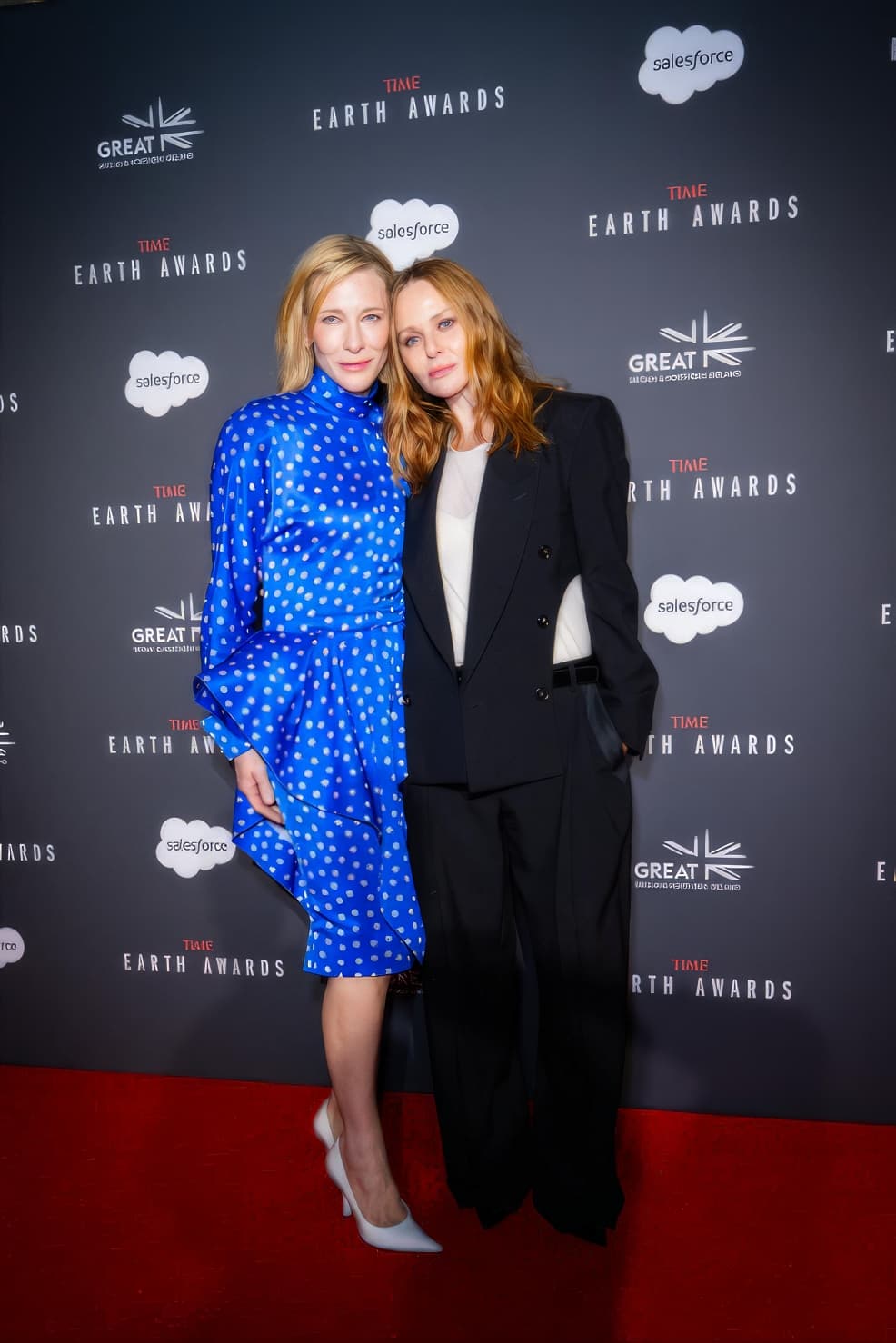
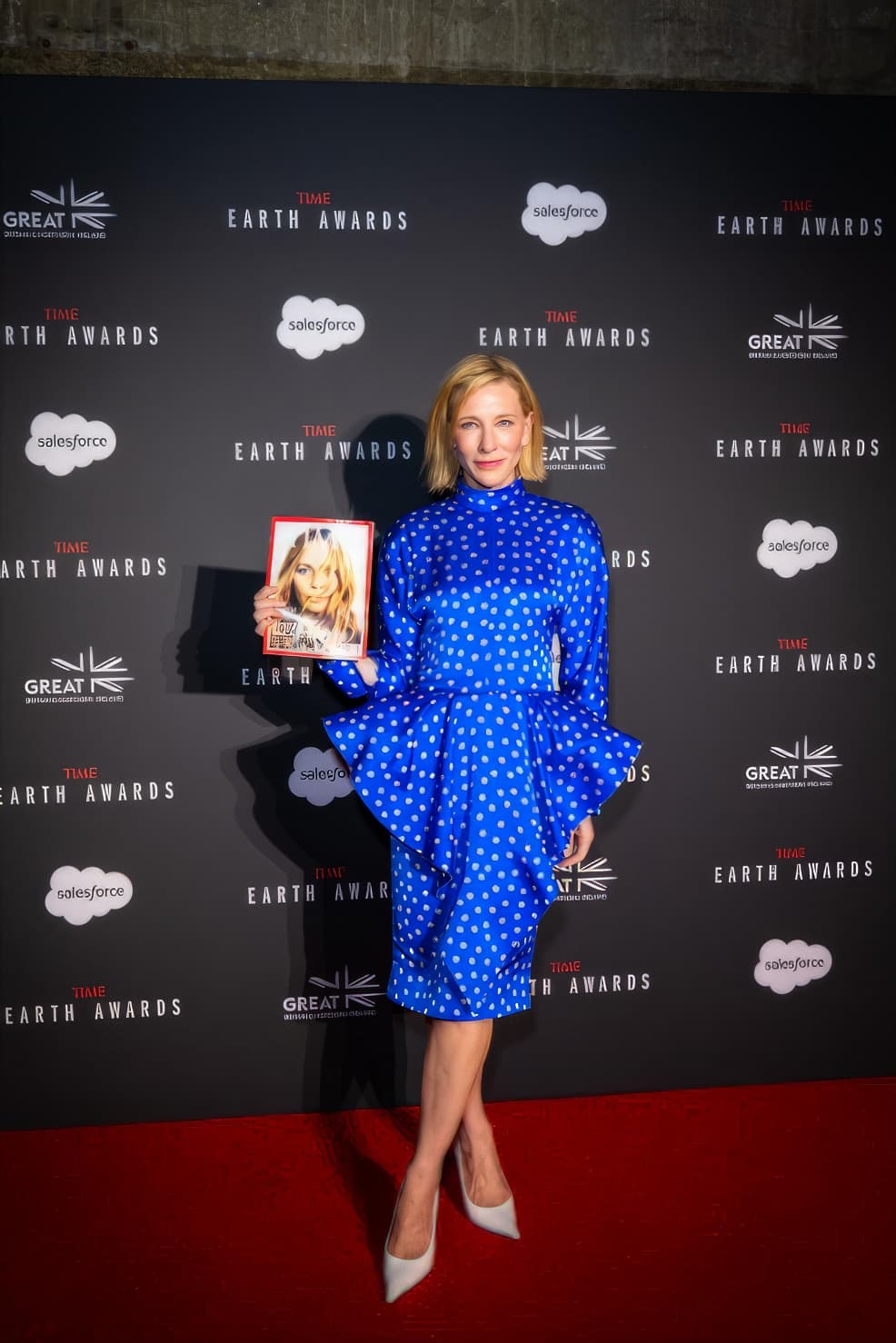
The award was presented by Actor And Producer Cate Blanchett, a longtime friend and supporter of the house, who wore a look from the Stella McCartney Winter 2026 runway collection for the occasion.
The recognition marks more than two decades of McCartney’s efforts to redefine luxury through a cruelty-free and conscious framework. Since founding her label, she has rejected the use of leather, fur, feathers, and exotic skins, positioning innovation and responsibility as central to her design ethos.
Her work has increasingly focused on material development and circular systems, collaborating with scientists, startups, and global partners to scale next-generation alternatives. These include plant-based and mycelium materials, as well as recycled and regenerative fibers, alongside a broader push for transparency and accountability across supply chains.
“We’ve worked with spider silk that’s grown in labs. We’ve made handbags out of mushrooms, and we’ve turned apple waste into shoes,” McCartney said on stage as she accepted the award.
While many of these innovations remain costly or are still emerging beyond the runway — such as Fevvers, a plant-based, naturally dyed material designed to replicate the look and movement of ostrich feathers — McCartney framed the approach as a long-term investment. “We’re investing in innovators who are reshaping the future of materials,” she said.
Beyond product, the TIME Earth Award also acknowledges McCartney’s role in shaping broader industry dialogue, spanning policy, education, and coalition-building. Through partnerships with global organizations, she has advocated for scalable solutions aimed at decarbonizing fashion from raw material sourcing to finished product.
Her influence has extended beyond the traditional boundaries of luxury fashion, with collaborations including H&M and Adidas. In 2012, she became the first fashion designer to design apparel for Team Great Britain across all competitions during the London Summer Olympics.
The daughter of musician Paul McCartney, she spent her childhood between London and a farm in Scotland, where her family embraced early organic practices. “I was blessed to grow up in a family that loved and respected the natural world,” she said, noting that this upbringing shaped her perspective on the relationship between fashion, nature, and responsibility.
McCartney also used the moment to directly address the environmental cost of the industry. “Every second, a truckload of textiles is burned or buried,” she said. “Hundreds of millions of trees are felled for clothing fibers. Toxic chemicals used in leather tanning seep into rivers and into human bodies. And billions of animals are slaughtered in the name of ‘luxury.’”
Her argument remains that ethical practices are inseparable from human impact, pointing to the broader consequences across labor, health, and ecosystems. “The same hidden industries that exploit animals also endanger workers, pollute communities, and strip away dignity,” she said.
“We can—and we must—do better.”