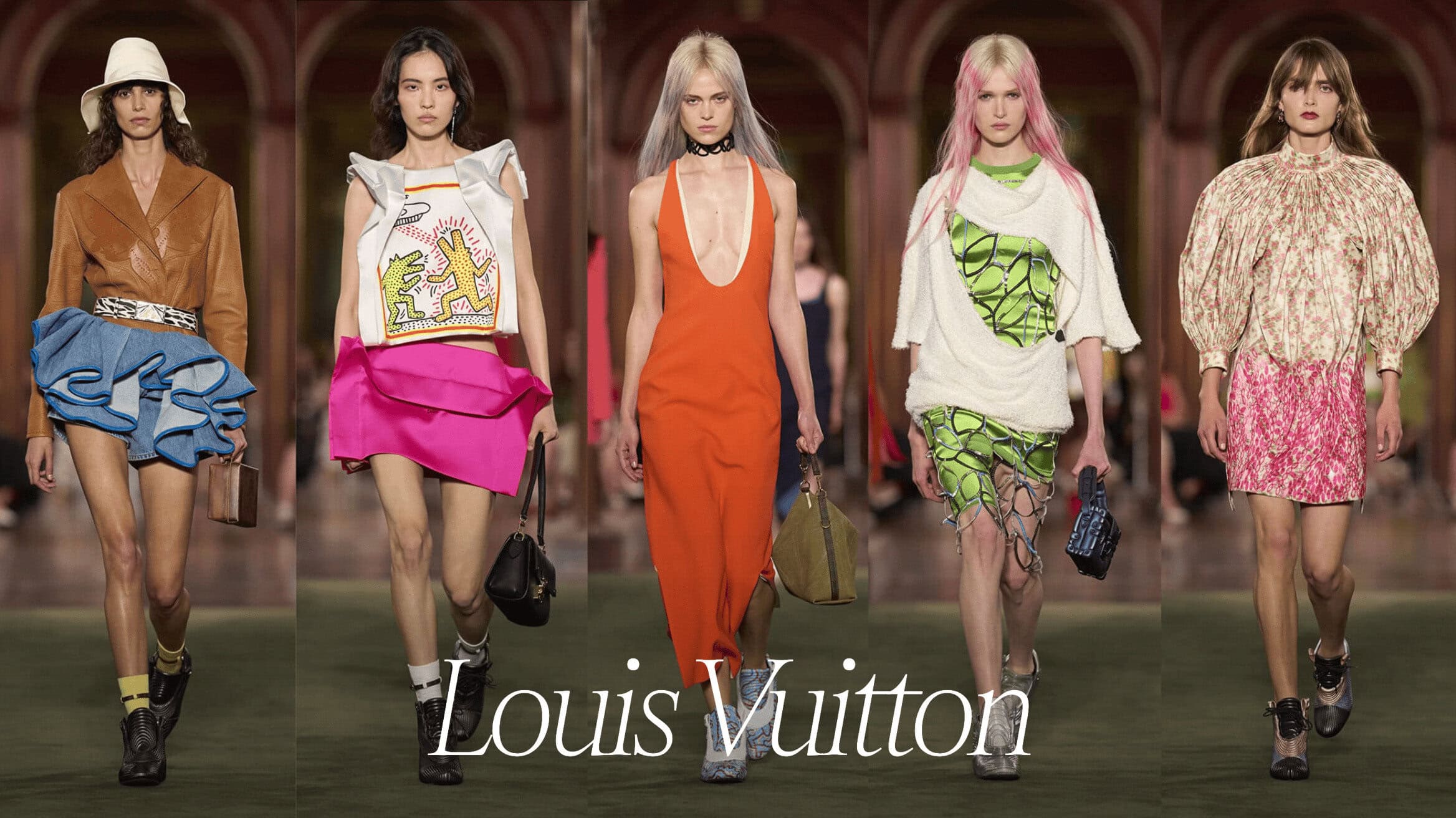
The Architecture of Oddness
Review of Louis Vuitton Cruise 2027 Fashion Show
By Mackenzie Richard Zuckerman
Nicolas Ghesquière’s Louis Vuitton has always been at its strongest when travel becomes more than destination dressing—when it operates instead as a state of mind. Over the course of his tenure, he has consistently treated movement as something temporal, emotional, historical, and aesthetic all at once, building silhouettes that sit somewhere between futurism and memory.
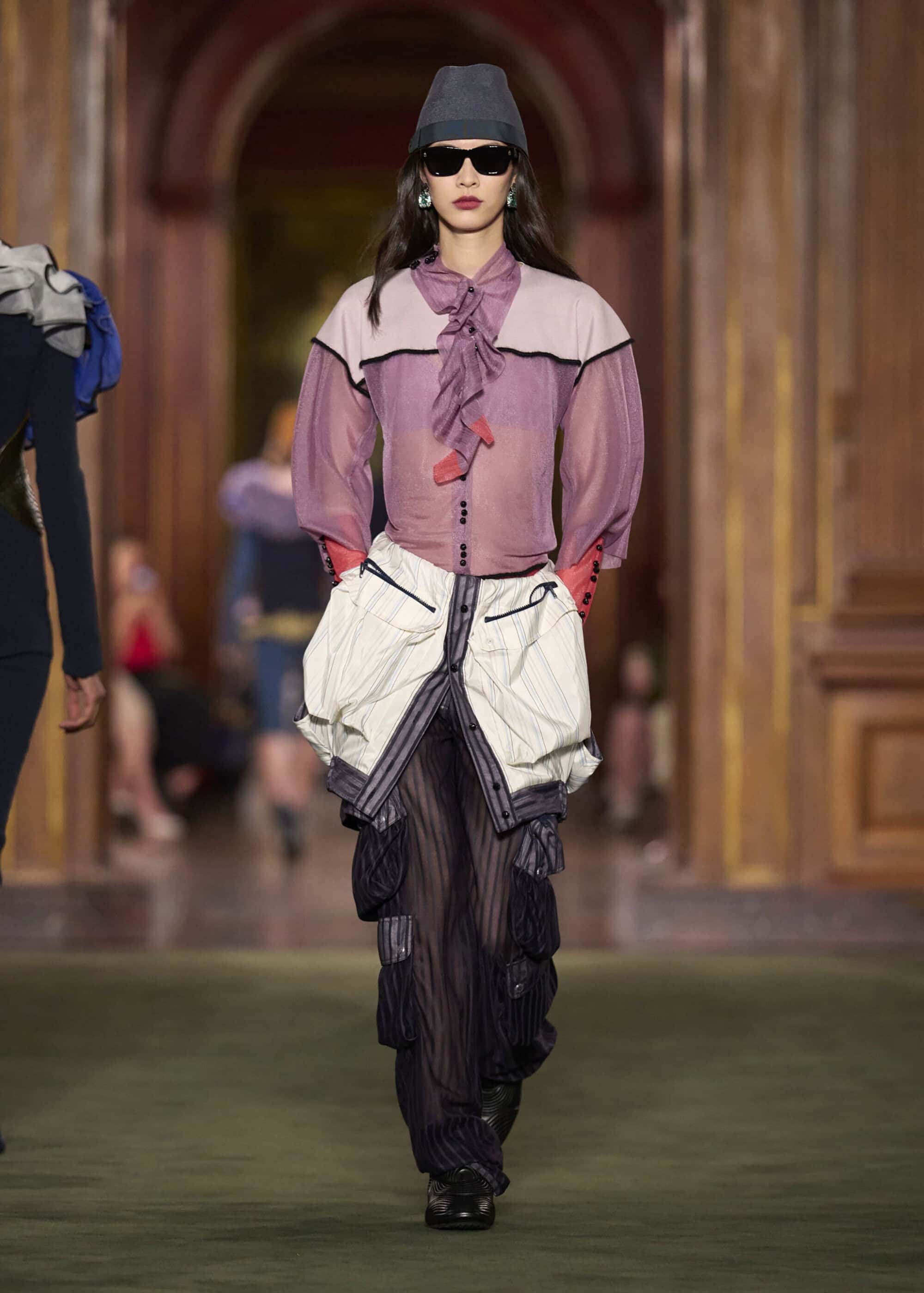
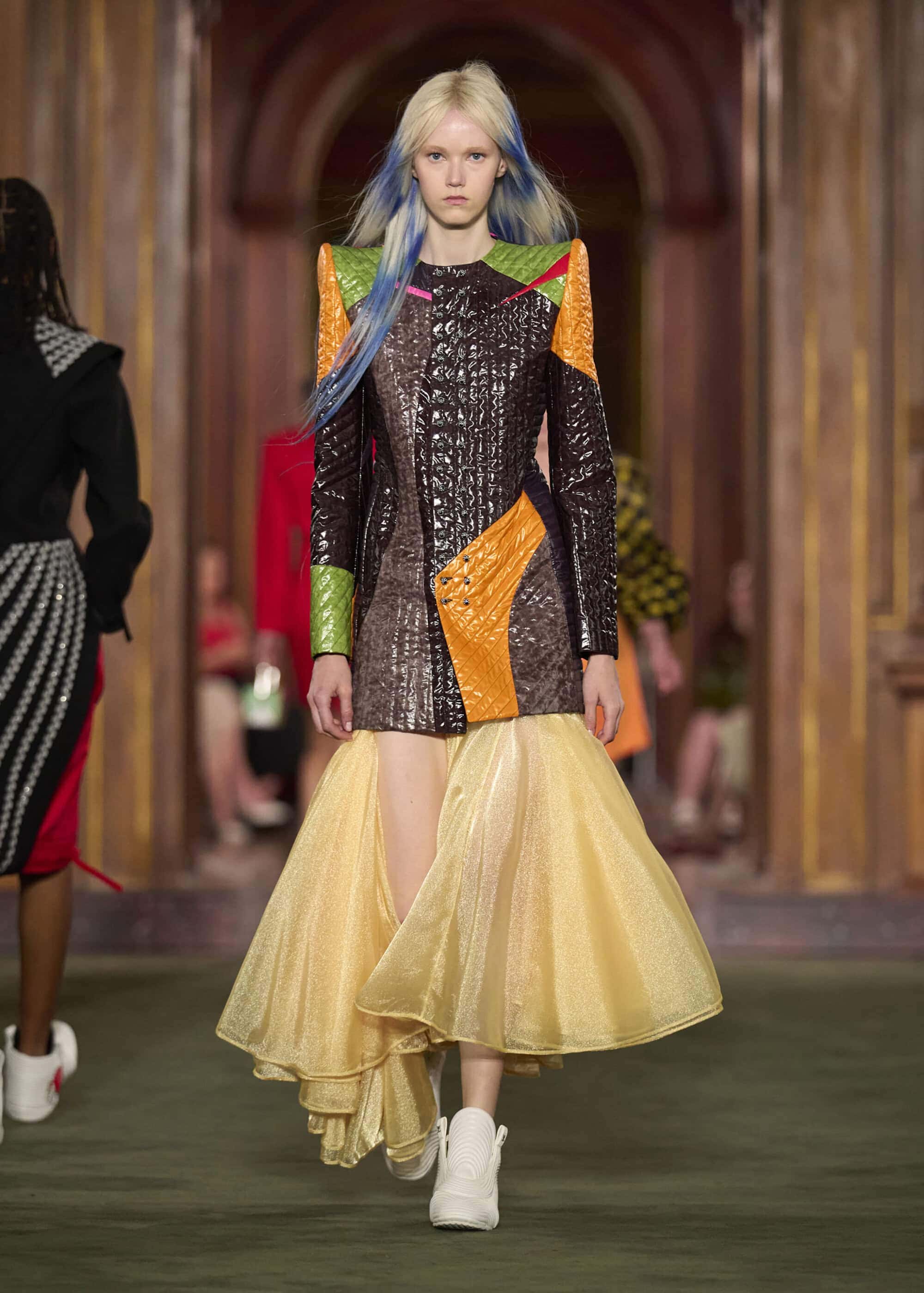
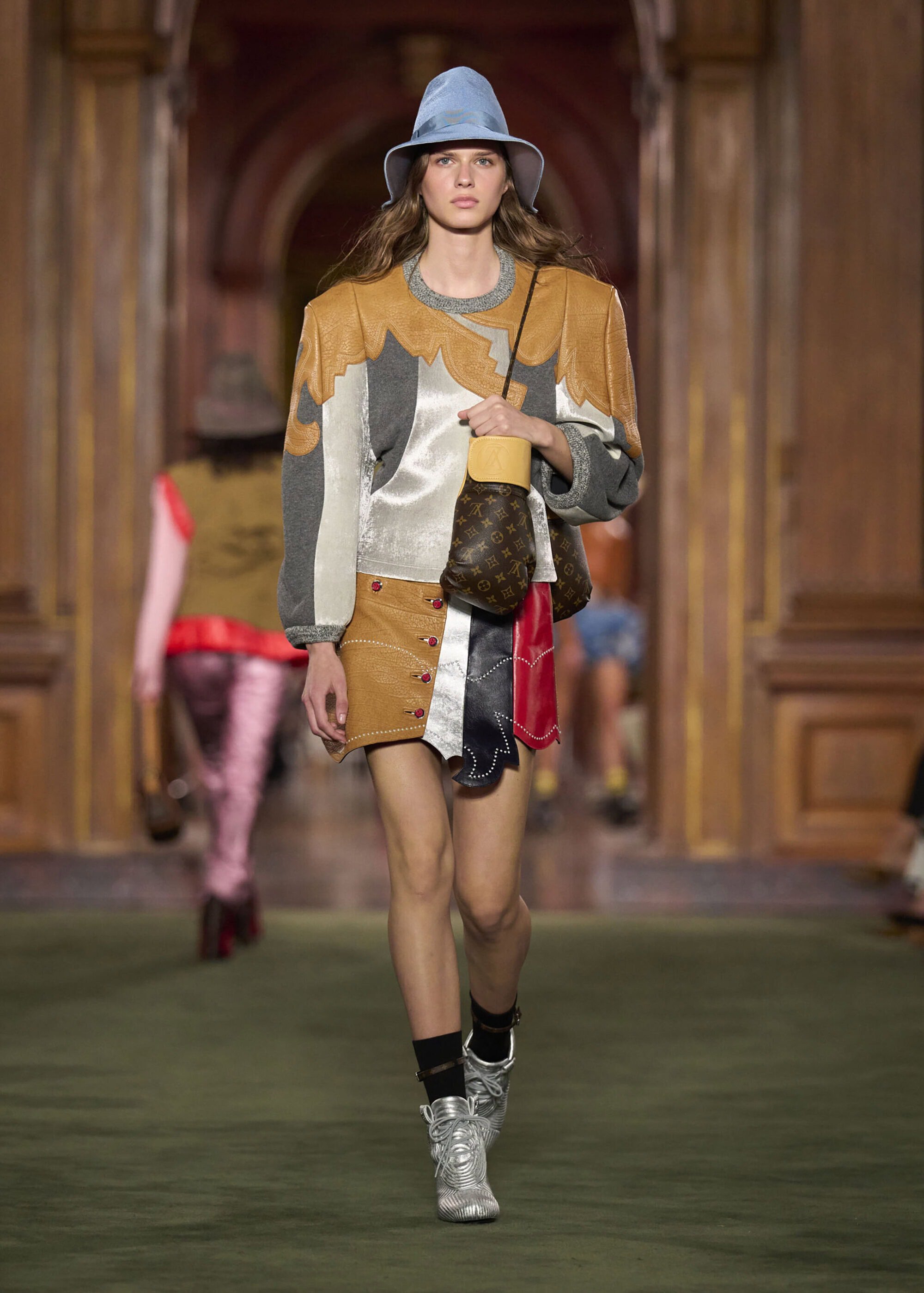
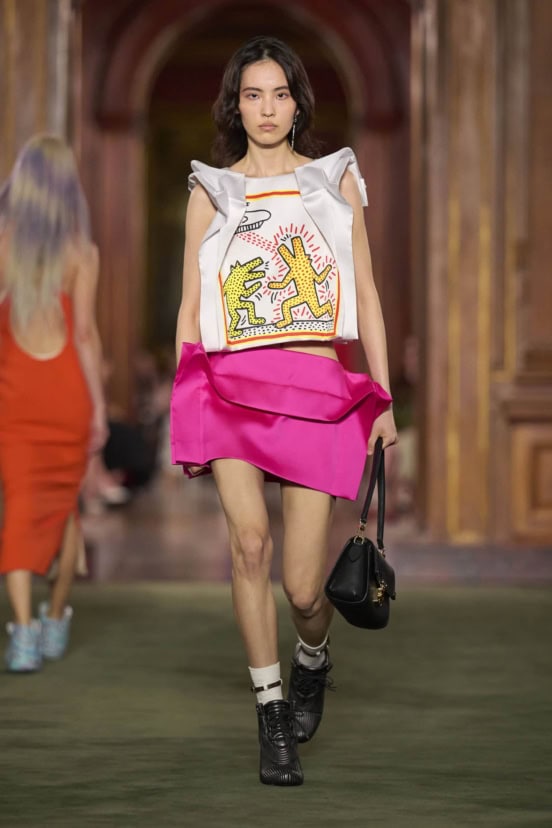
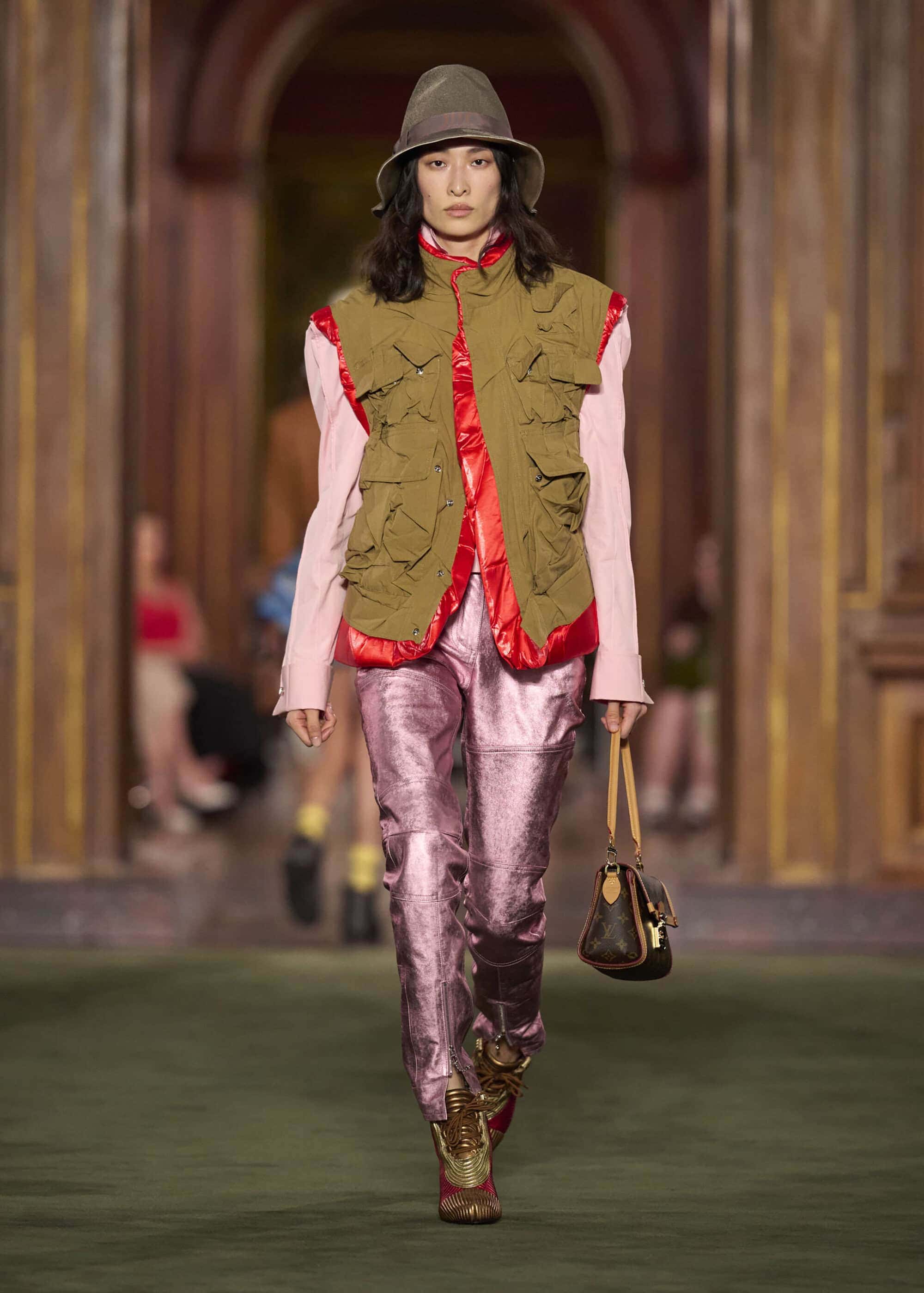
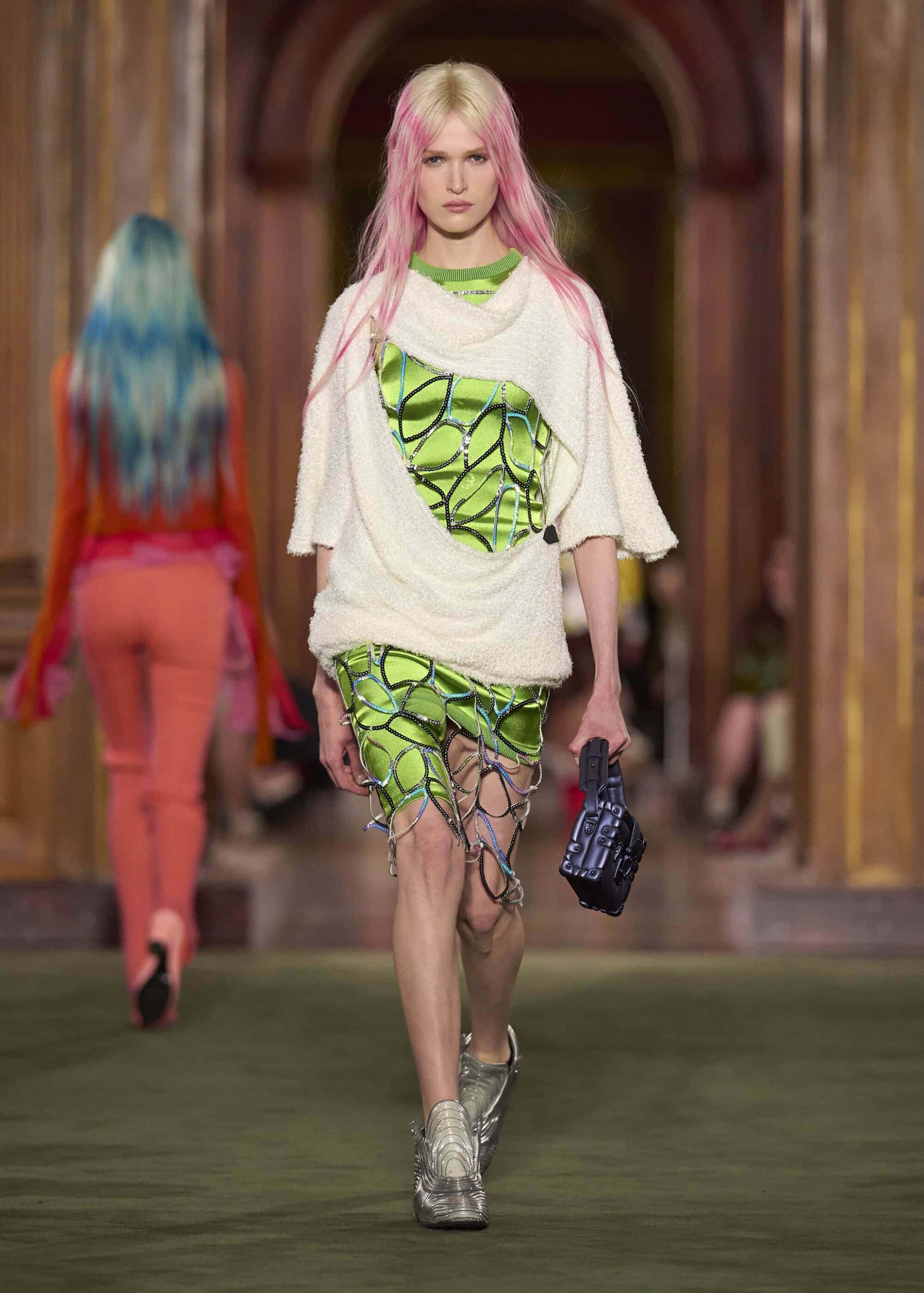
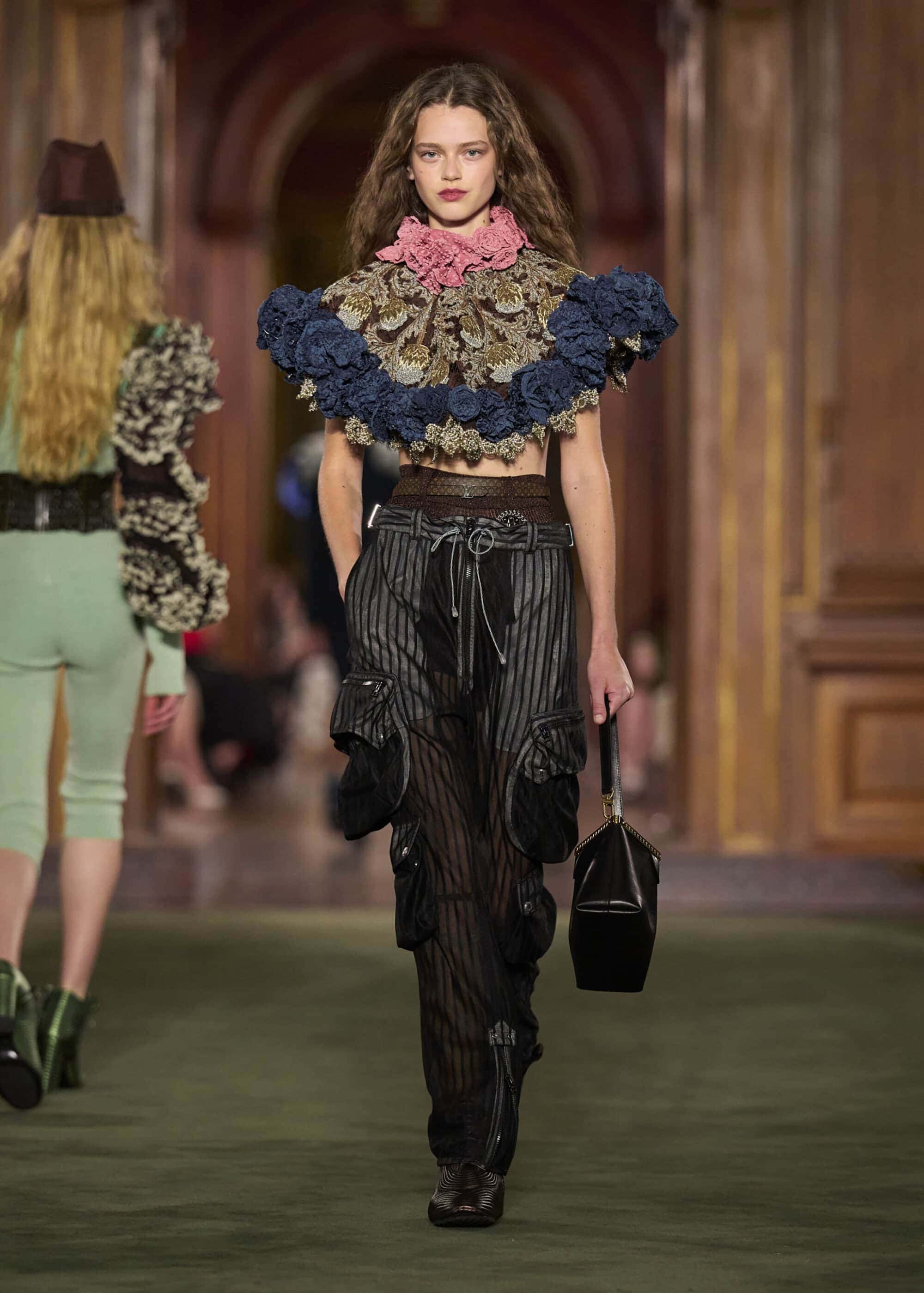
For Cruise 2027, staged inside The Frick Collection, Ghesquière appeared to approach New York through the tension between uptown refinement and downtown eccentricity. The setting itself became part of the proposition: old-world grandeur meeting a wardrobe filled with Pop gestures, sculptural leather, exaggerated collars, bold clashes of color, and deliberately awkward proportions. In theory, it is fertile territory for Vuitton—a house whose identity is deeply tied to movement, collection, and cultural collision.
At its best, the collection suggested a more mischievous Vuitton woman. Less polished, more idiosyncratic. A woman interested in collecting references rather than projecting perfection. Yet the broader question underlying the season felt especially relevant here: how do luxury houses make heritage feel alive and contemporary without allowing the styling exercise to overpower the clothes themselves?
THE COLLECTION
THE VIBE
Eccentric Luxury, Pop Gesture & Historical Collision
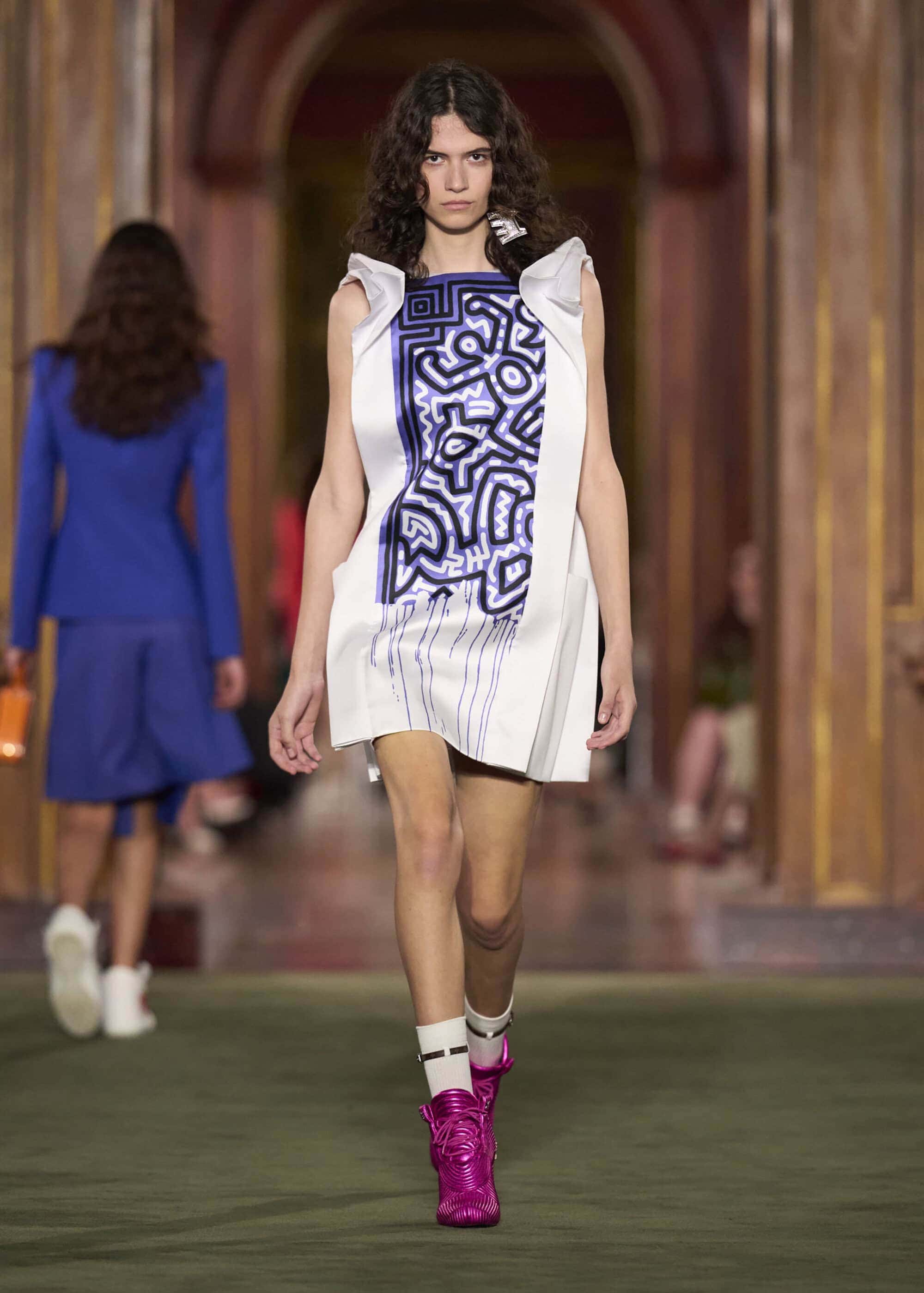
What Ghesquière seemed to be pursuing was a kind of eccentric New York wardrobe filtered through the Vuitton lens—one that brought together museum grandeur, street-level wit, craft, Pop graphics, and his longstanding fascination with historical-futurist dressing.
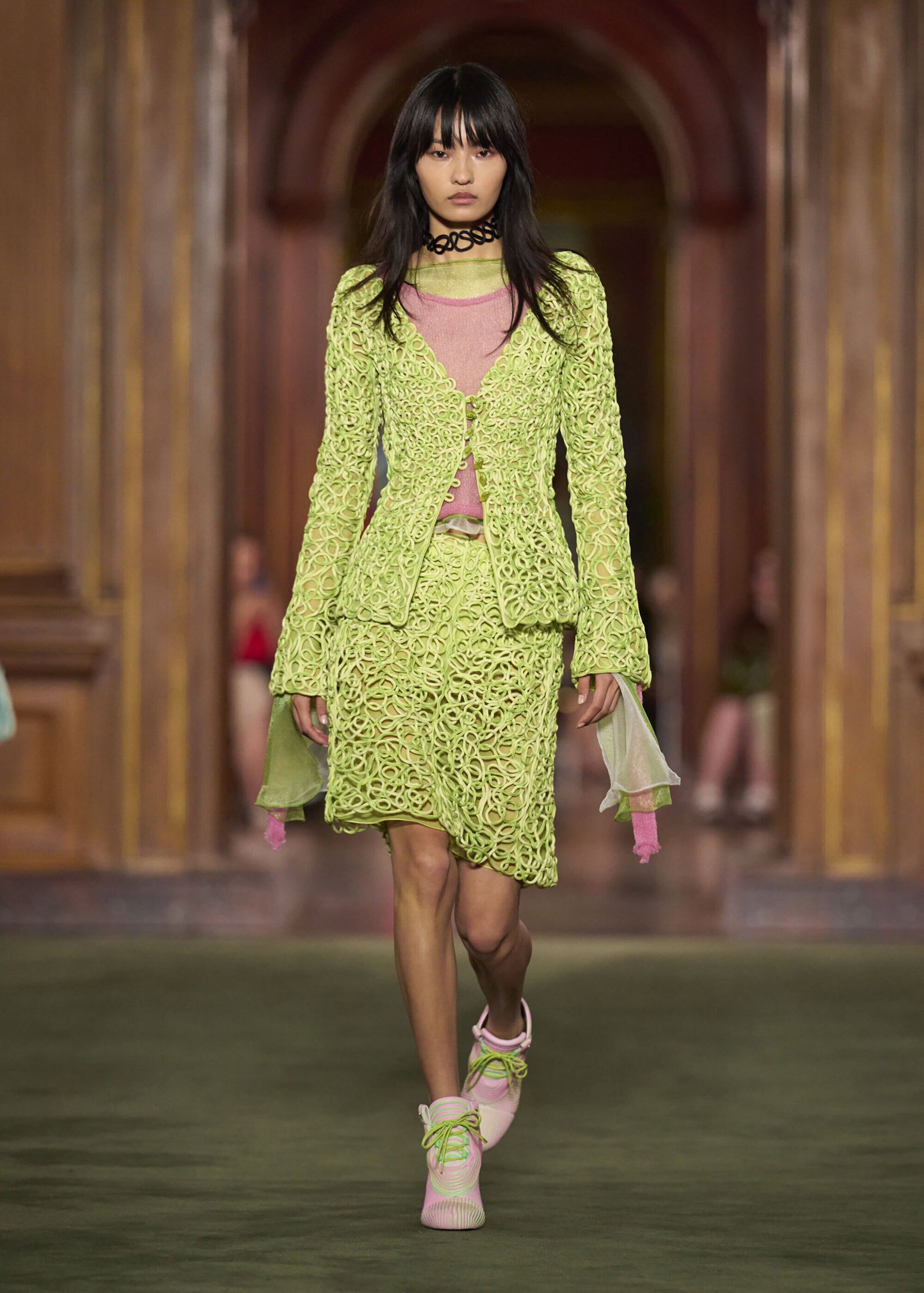
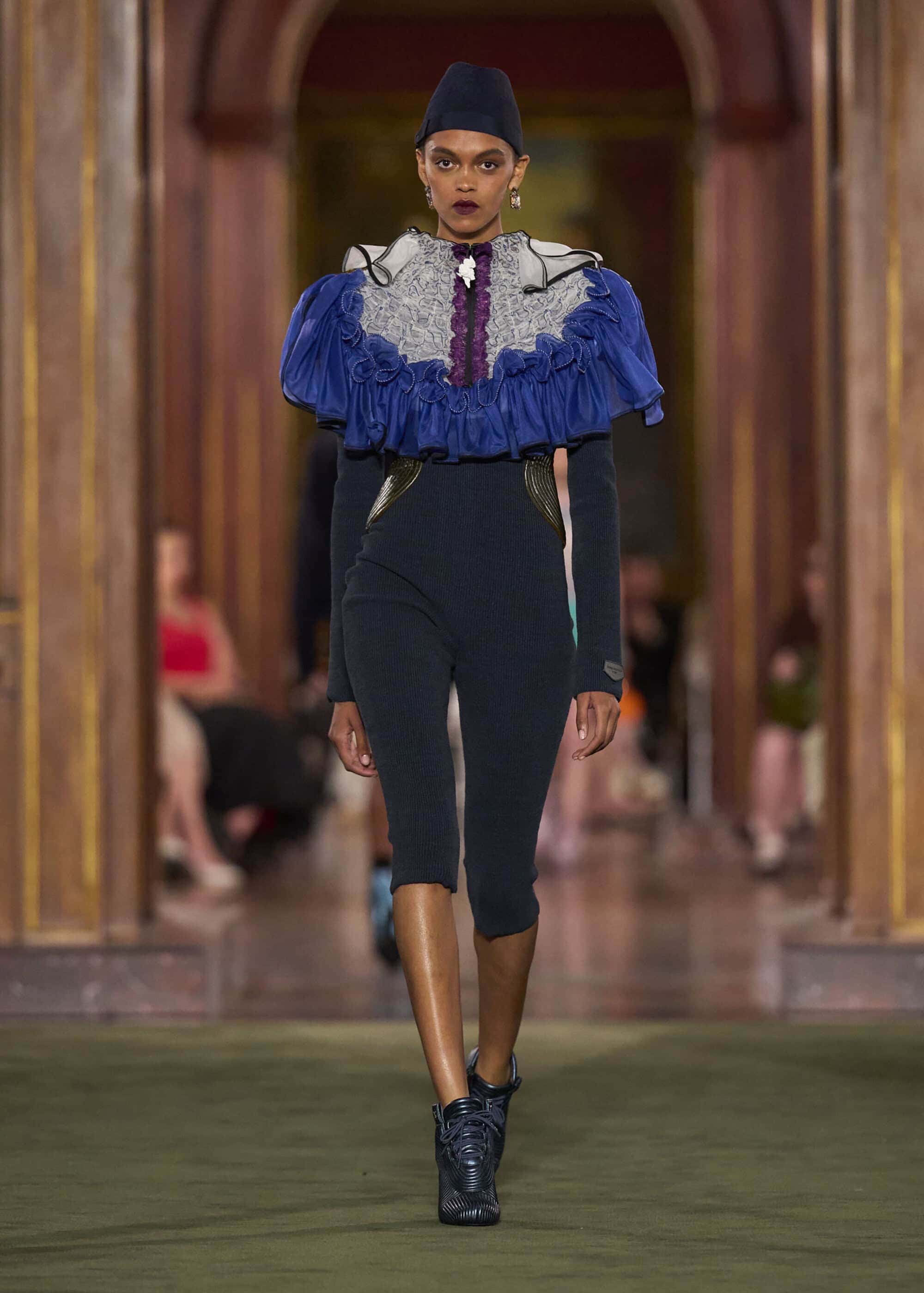
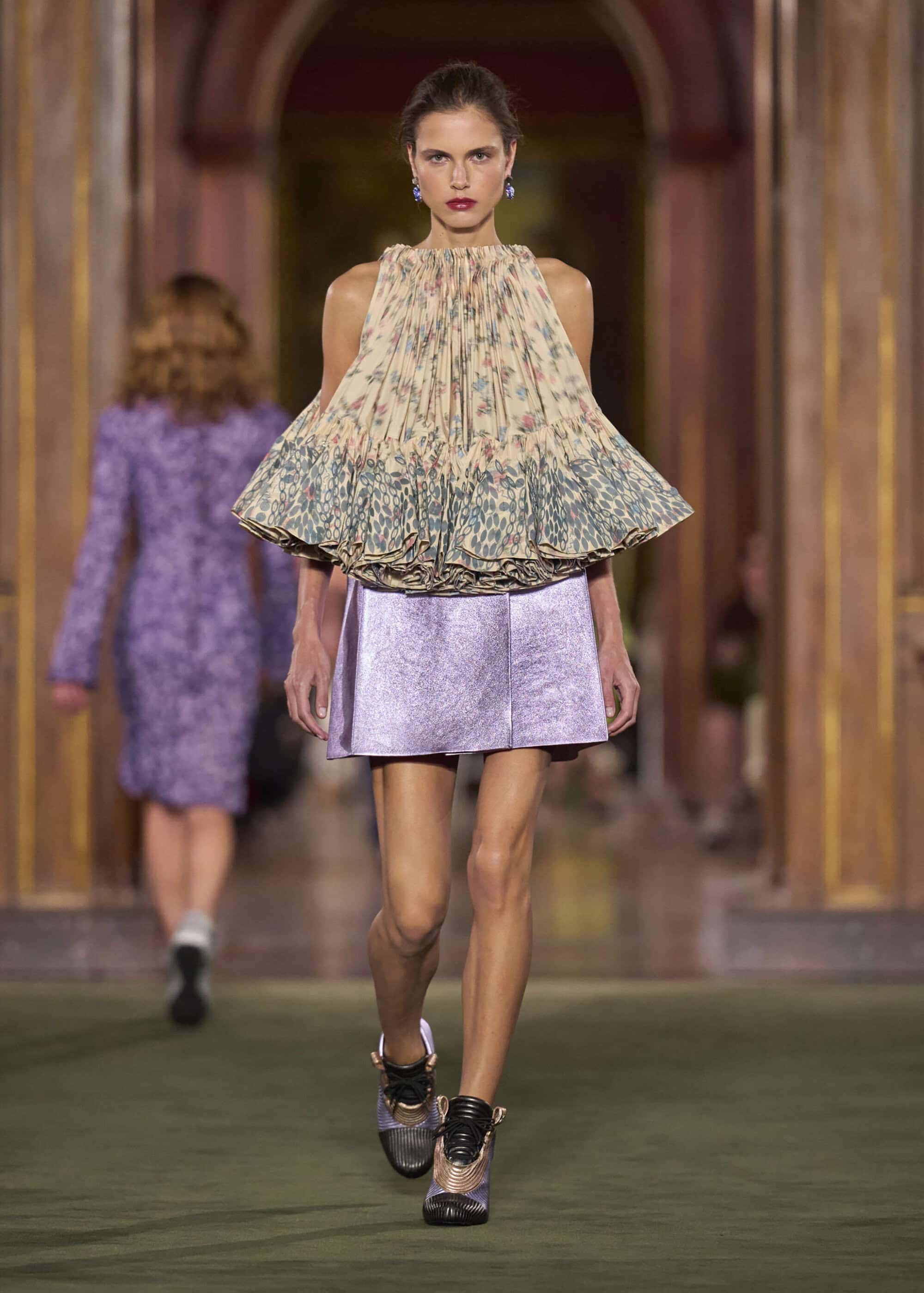
The collection’s strongest moments emerged when construction anchored the eccentricity. Sculptural leather jackets, abbreviated silhouettes, sharp coats, and the ruffled finale looks carried the authority of Ghesquière’s best Vuitton work. These pieces understood tension. They allowed craft, oddness, and modernity to coexist within a clear design language rather than competing against one another.
Elsewhere, the collection occasionally struggled to establish hierarchy. Bucket hats became overly insistent, color clashes sometimes overwhelmed the silhouette, and certain layered looks drifted closer to character styling than fully resolved design.
The issue was not a lack of ideas – there were many worth admiring – but rather the feeling that too many references were operating simultaneously without fully consolidating into one cohesive argument.
That tension is perhaps inevitable within Ghesquière’s work at Vuitton, where his instinct for collage and juxtaposition often produces collections that feel intentionally unstable. But here, the balance occasionally tipped too far toward gesture. The clothes became less about how women move through the world and more about the personalities being constructed around them.
Still, there were flashes throughout the collection that felt genuinely compelling. Moments where eccentricity softened into charm, where the tension between uptown and downtown, refinement and awkwardness, historical reference and graphic modernity produced something distinctly Vuitton.
THE WRAP UP
Cruise 2027 proved that Ghesquière remains willing to loosen the language he has spent years building at Louis Vuitton. That willingness matters, particularly at a house of this scale, where repetition can easily calcify into formula.
The risk here was allowing quirk, character, and graphic intervention to lead a collection that is often strongest when precision carries the emotional weight. The safer elements remained the familiar Ghesquière signatures beneath it all: the sculpted jacket, the hybrid silhouette, the historical flourish, the accessory used as punctuation rather than decoration.
The collection had moments of real charm and undeniable craft, yet it never fully arrived at the clarity that makes his strongest work feel inevitable. Its most compelling passages suggested an evolution toward a stranger, warmer, and slightly more imperfect form of Vuitton glamour. Its weaker moments revealed how quickly eccentricity can lose focus when structure recedes.
For a designer whose work has always relied on tension, the experiment itself remained compelling. The final argument, however, still felt slightly out of reach.