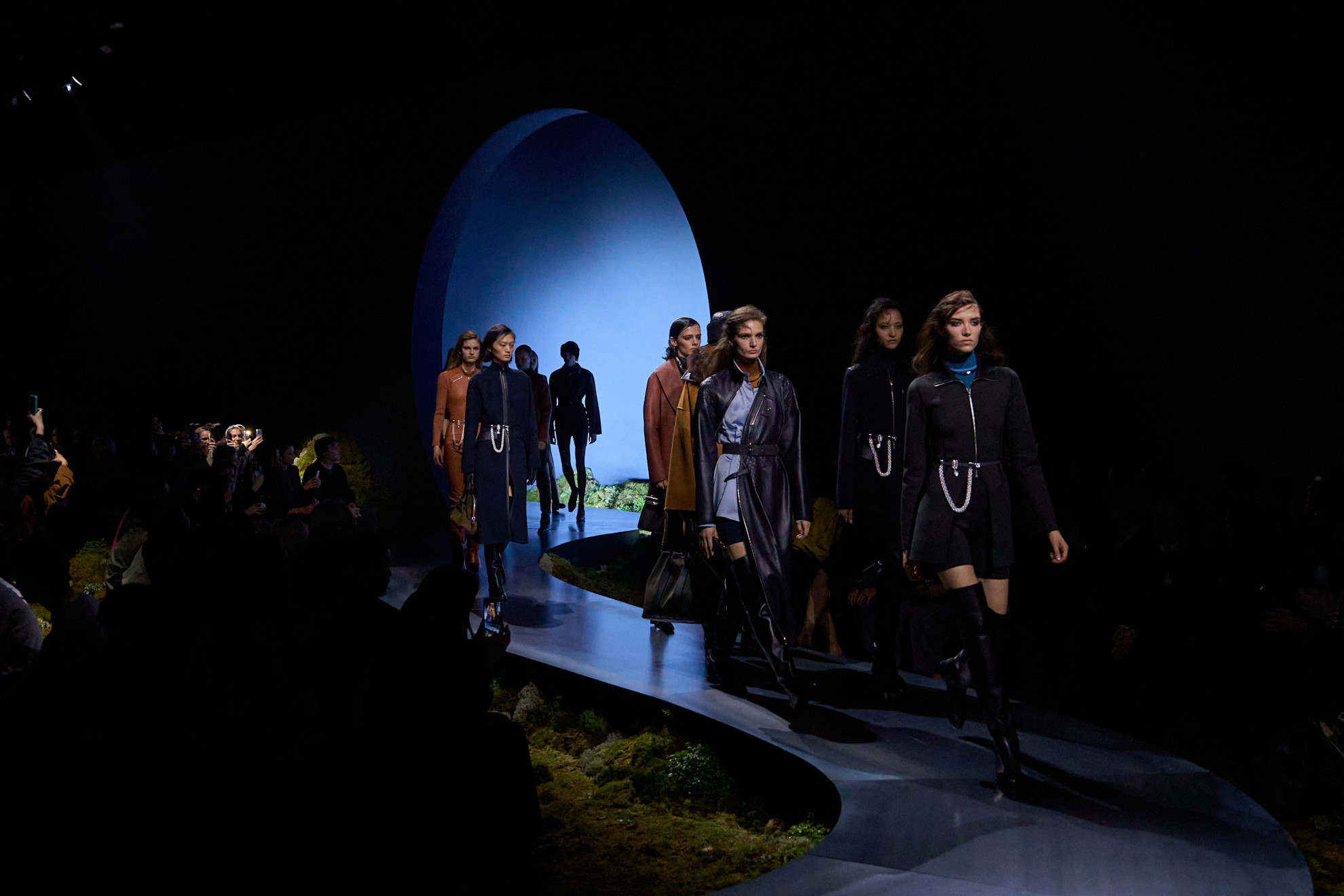
Leather goods and the Americas lead a 7% constant-currency gain as the house sustains a 41% first-half operating margin.
Key Takeaways
- Adjusted free cash flow rose 18% to €2.182 billion, while the restated net cash position reached €12.926 billion.
- Second-quarter revenue reached €4.1 billion, rising 7% at constant exchange rates and 5% at current rates.
- First-half revenue increased 6% at constant rates and 2% as reported to €8.163 billion.
- Leather Goods and Saddlery grew 10% and represented 46% of first-half revenue.
- The Americas led regional growth at 15%, followed by Japan at 11% and Europe excluding France at 9%.
- Recurring operating income increased 1% to €3.351 billion. The operating margin reached 41%, compared with 41.4% a year earlier.
Hermès accelerated slightly in the second quarter of 2026, extending its growth across core leather goods, major Western markets and Japan.
Quarterly revenue reached €4.1 billion, rising approximately 7% at constant exchange rates and 5% at current rates. The performance strengthened from the first quarter, with improved momentum in France, Japan and the Middle East and across Leather Goods and Saddlery, Ready-to-wear and Accessories, Silk and Textiles, and Watches.
For the first half, revenue reached €8.163 billion, up 6% at constant rates and 2% at current rates, according to Hermès’s official results presentation. The four-point gap illustrates the extent of the currency pressure facing euro-denominated luxury groups.
Leather Goods Remains the Engine
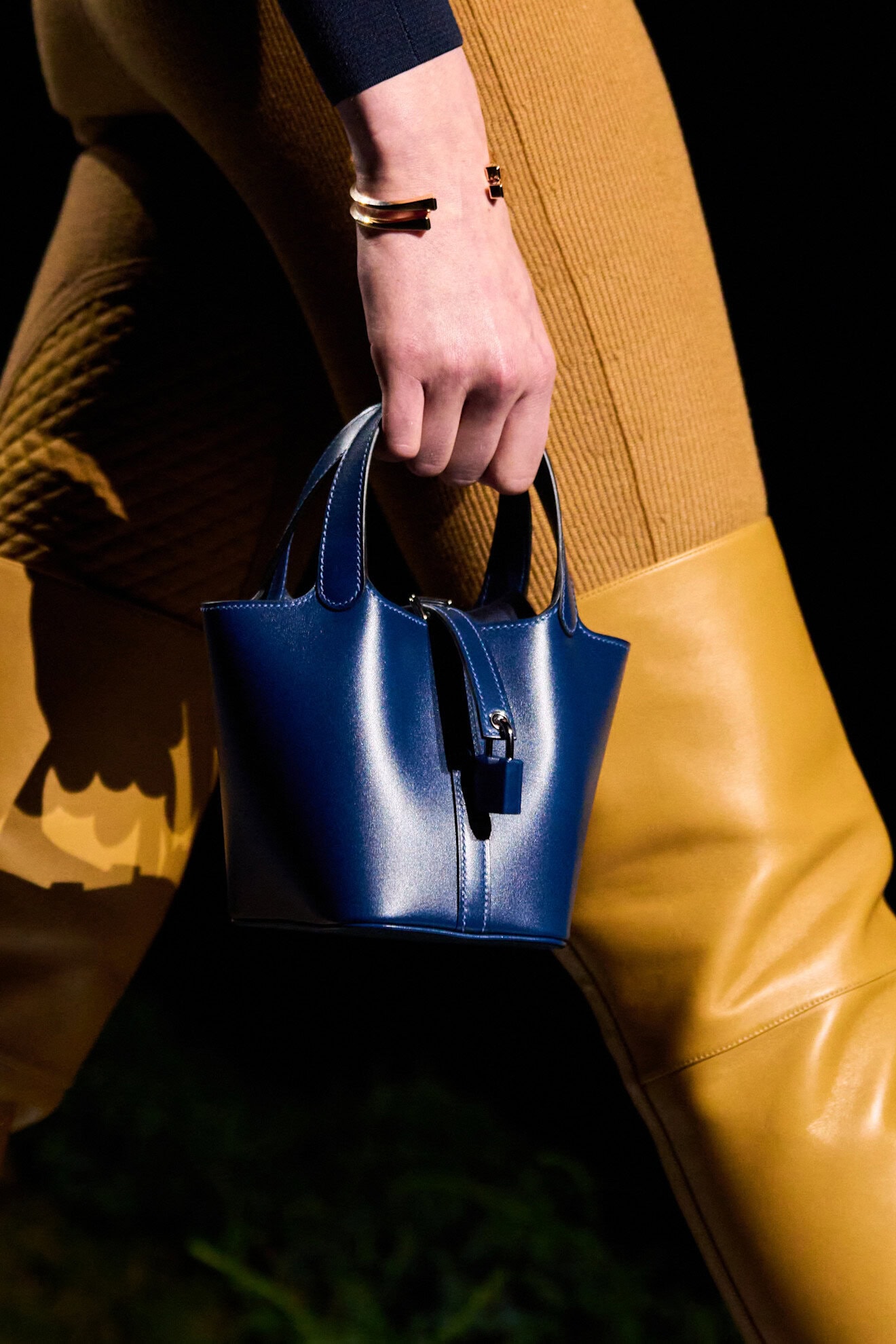
Leather Goods and Saddlery generated €3.761 billion in first-half revenue, an increase of 10% at constant rates. The métier represented 46% of group sales, up from 45% a year earlier.
Growth was supported by additions including the Cliquetis, Kelly Hobo and Double Longe bags. The product expansion is being matched by long-term investment in artisanal capacity.
Hermès opened its 25th leather goods workshop in Loupes, France, during April. Three additional workshops are planned in Charleville-Mézières in 2027, Colombelles in 2028 and Les Andelys by 2030.
The sequence captures a defining element of the Hermès model: demand growth is supported through gradual, internally controlled capacity expansion. The approach protects craftsmanship, supply and distribution while increasing the volume available to clients over time.
Silk and Textiles also grew 10% to €469 million. Other Hermès sectors, which include jewelry and home products, advanced 5% to €1.065 billion.
Ready-to-wear and Accessories rose 2% to €2.198 billion. The métier remained the group’s second-largest business, contributing 27% of revenue.
Performance was more restrained across accessible categories. Perfume and Beauty declined 4% to €233 million, while Watches were flat at €269 million. Other products increased 3%.
The Americas Set the Pace
The Americas delivered Hermès’s strongest regional growth, rising 15% at constant rates to €1.585 billion. The region increased its share of first-half revenue to 19% from 18%.
Japan grew 11% to €798 million, while Europe excluding France advanced 9% to €1.165 billion. France increased 2% to €753 million.
Asia-Pacific excluding Japan, Hermès’s largest regional market, grew 2% to €3.533 billion. The region accounted for 43% of group revenue, compared with 44% a year earlier.
The Middle East declined 4% to €330 million, reflecting the disruption that affected luxury retail and international travel during the period. Hermès reported sequential improvement in the region during the second quarter.
The geographic mix reveals a widening gap between markets. The Americas, Japan and Europe supplied the strongest momentum, while Asia-Pacific outside Japan advanced at a measured pace. Hermès’s multi-local distribution model helped preserve group growth across that uneven environment.
A 41% Margin Funds Expansion
Recurring operating income increased 1% to €3.351 billion. The first-half operating margin reached 41%, easing from 41.4% in the prior-year period.
Gross margin expanded to 71.1% from 70.7%, demonstrating continued strength in product economics. Investment across retail, capacity, technology and organizational development contributed to the modest compression further down the income statement.
Net income attributable to owners of the parent was broadly stable at €2.238 billion. Excluding the exceptional contribution, net income reached €2.508 billion, also level with the prior year.
Adjusted free cash flow increased 18% to €2.182 billion. Cash flow from operating activities rose to €2.699 billion, supported by a significant improvement in working capital.
Hermès closed the half with a restated net cash position of €12.926 billion, compared with €10.723 billion at the end of June 2025. The balance sheet gives the house considerable capacity to fund production, retail and creative development internally.
Capacity and Distribution Advance Together
Operating investments reached €344 million during the half. Stores and distribution accounted for €197 million, while production and métier investments totaled €75 million. Real estate and group projects represented €71 million.
Hermès opened a new maison at 166 New Bond Street in London, spanning six buildings and almost 2,000 square meters. New stores also opened in Beijing’s Sanlitun district and Nagoya’s Sakae area, with renovations and expansions completed in Berlin, Osaka, Hong Kong and Hanoi.
The house continued investing across its wider production base, including planned developments in tableware, watchmaking and metal components. Hermès employed 27,107 people at the end of June, an increase of approximately 600 during the half.
Capacity, distribution and creative development are progressing in parallel. That coordination remains central to Hermès’s ability to expand without weakening control over production or the client experience.
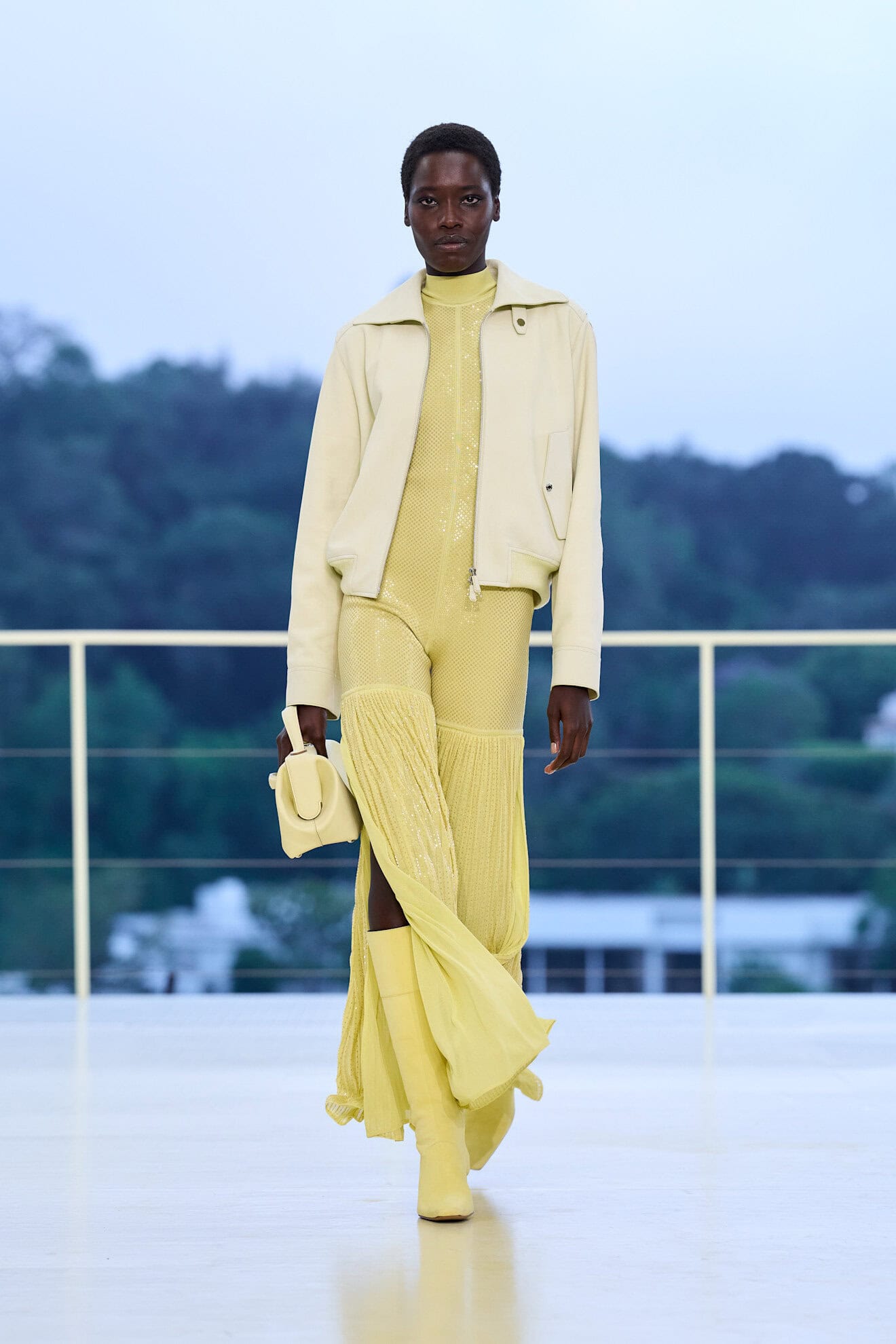
Creative Succession Enters Focus
The next phase also carries significant creative change. Grace Wales Bonner will present her first men’s ready-to-wear collection for Hermès in January 2027, following Véronique Nichanian’s final fall-winter collection.
The house is also preparing a first couture collection from Nadège Vanhée for January 2027. These projects give Hermès new opportunities to extend its cultural relevance while preserving continuity across its established métiers.
Hermès maintained its medium-term objective of ambitious revenue growth at constant exchange rates. Its first-half performance shows the model operating with familiar discipline: leather goods are expanding alongside production, regional growth remains diversified, and cash generation continues to support long-term investment.
The pressure points are visible in slower Asia-Pacific growth, weakness in Perfume and Beauty, and modest operating-margin compression. The wider result remains one of controlled expansion, grounded in manufacturing capacity and an unusually strong financial position.