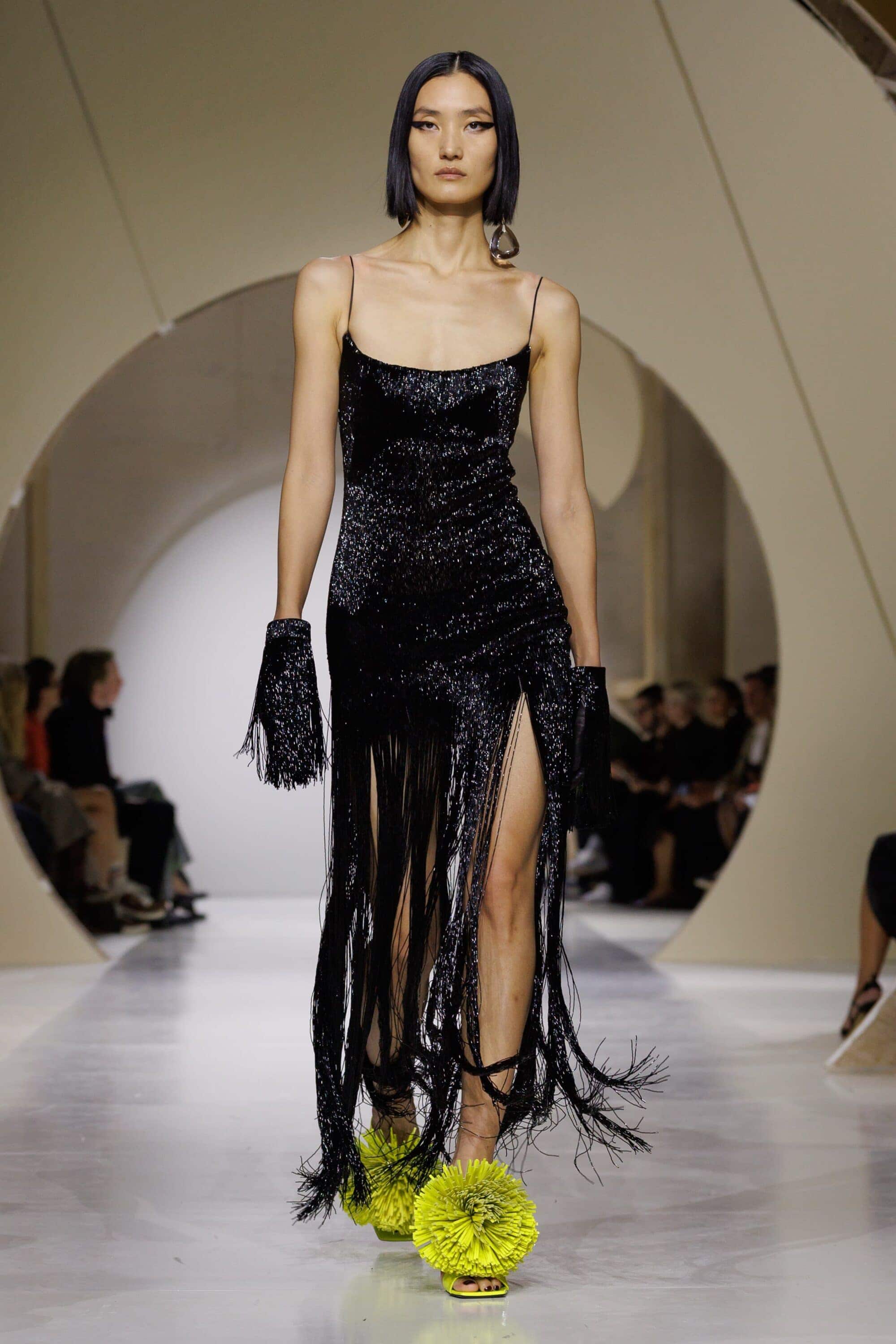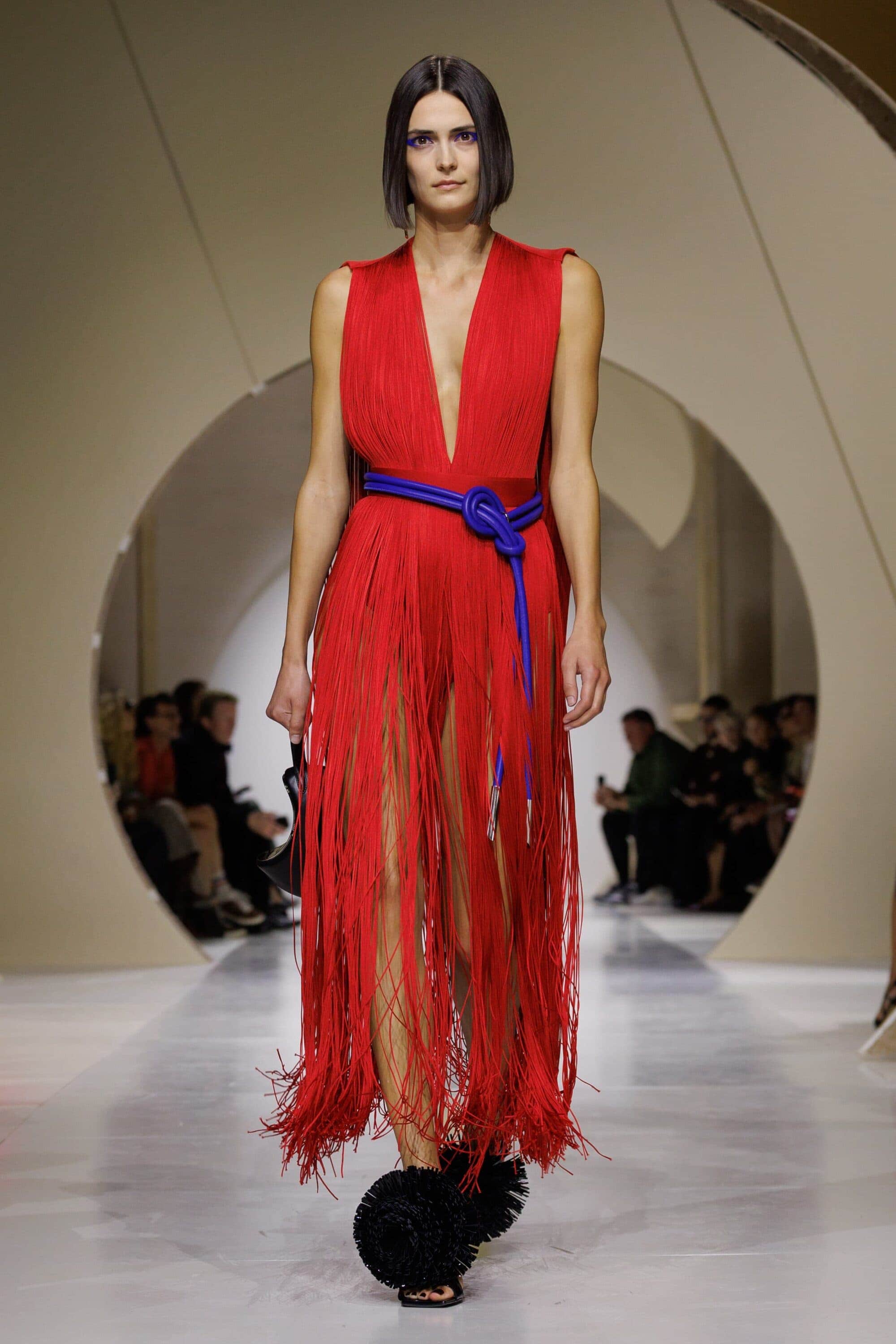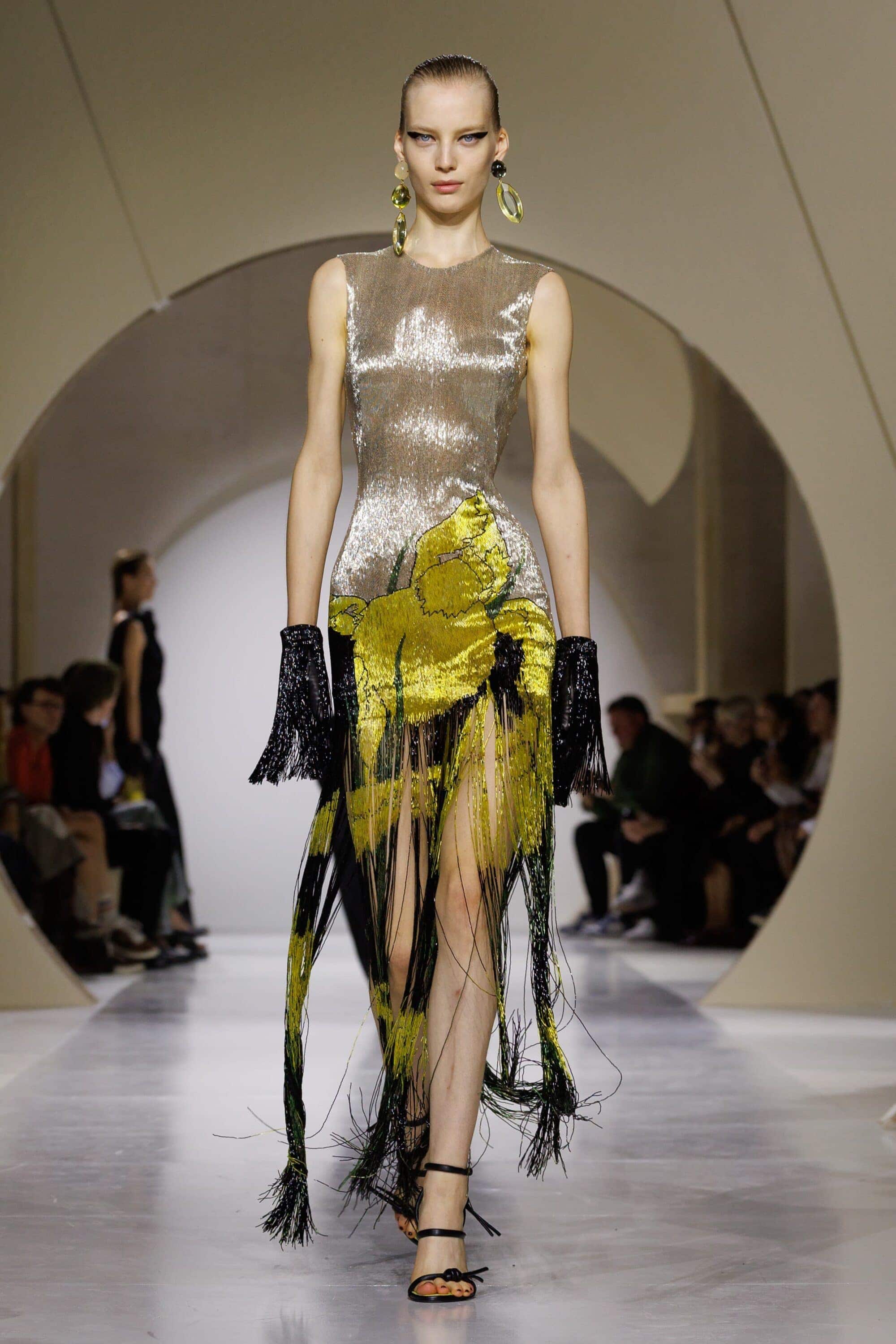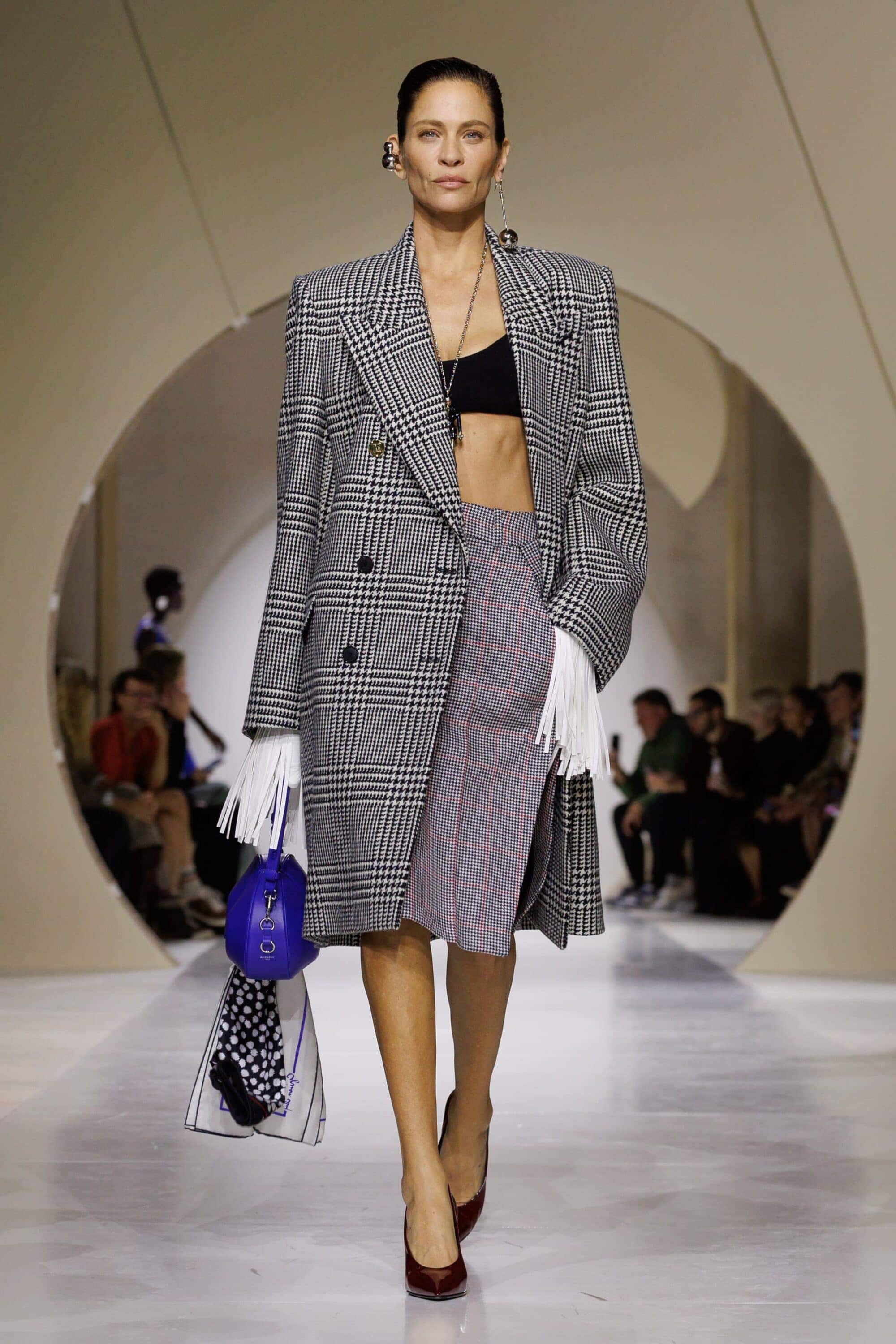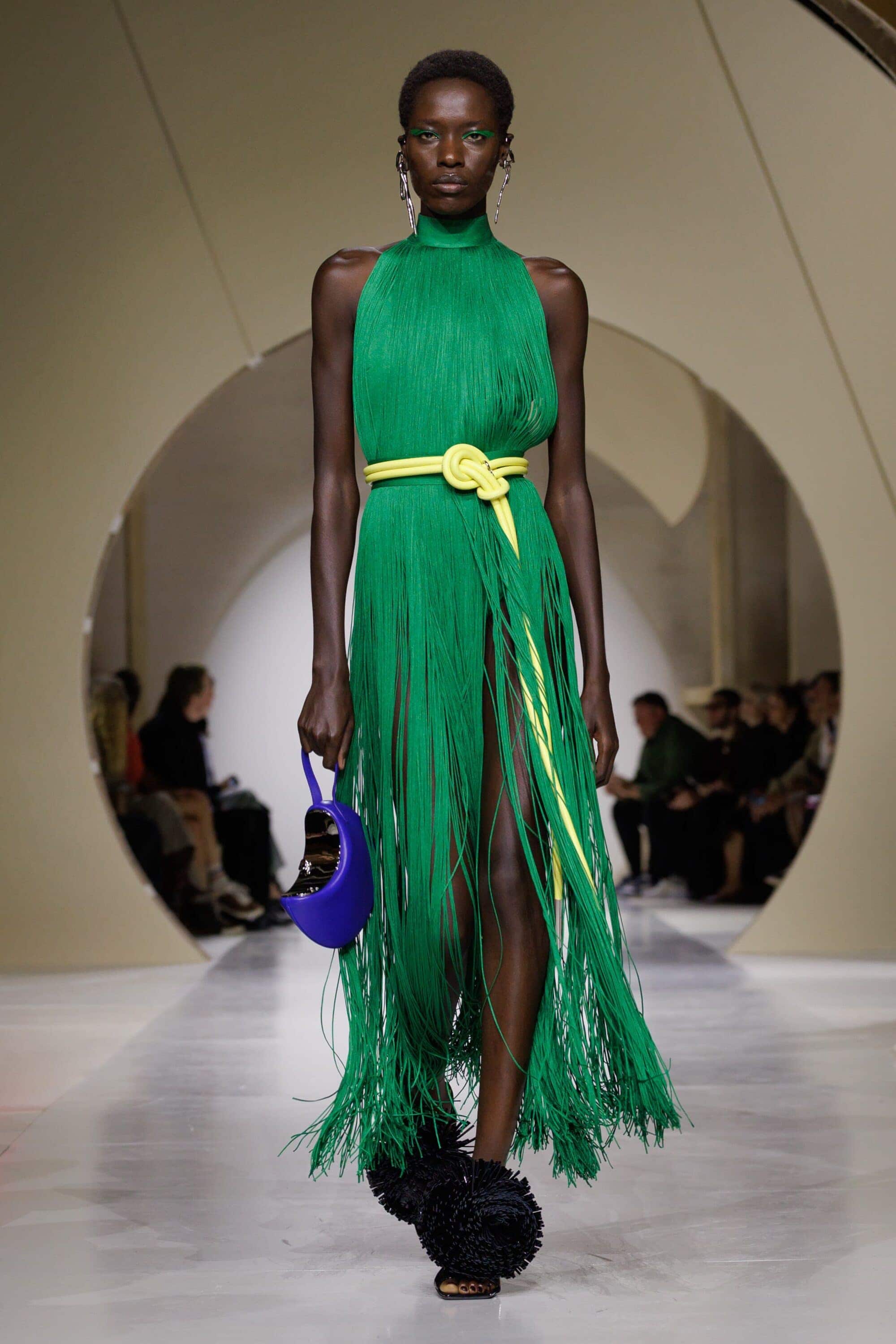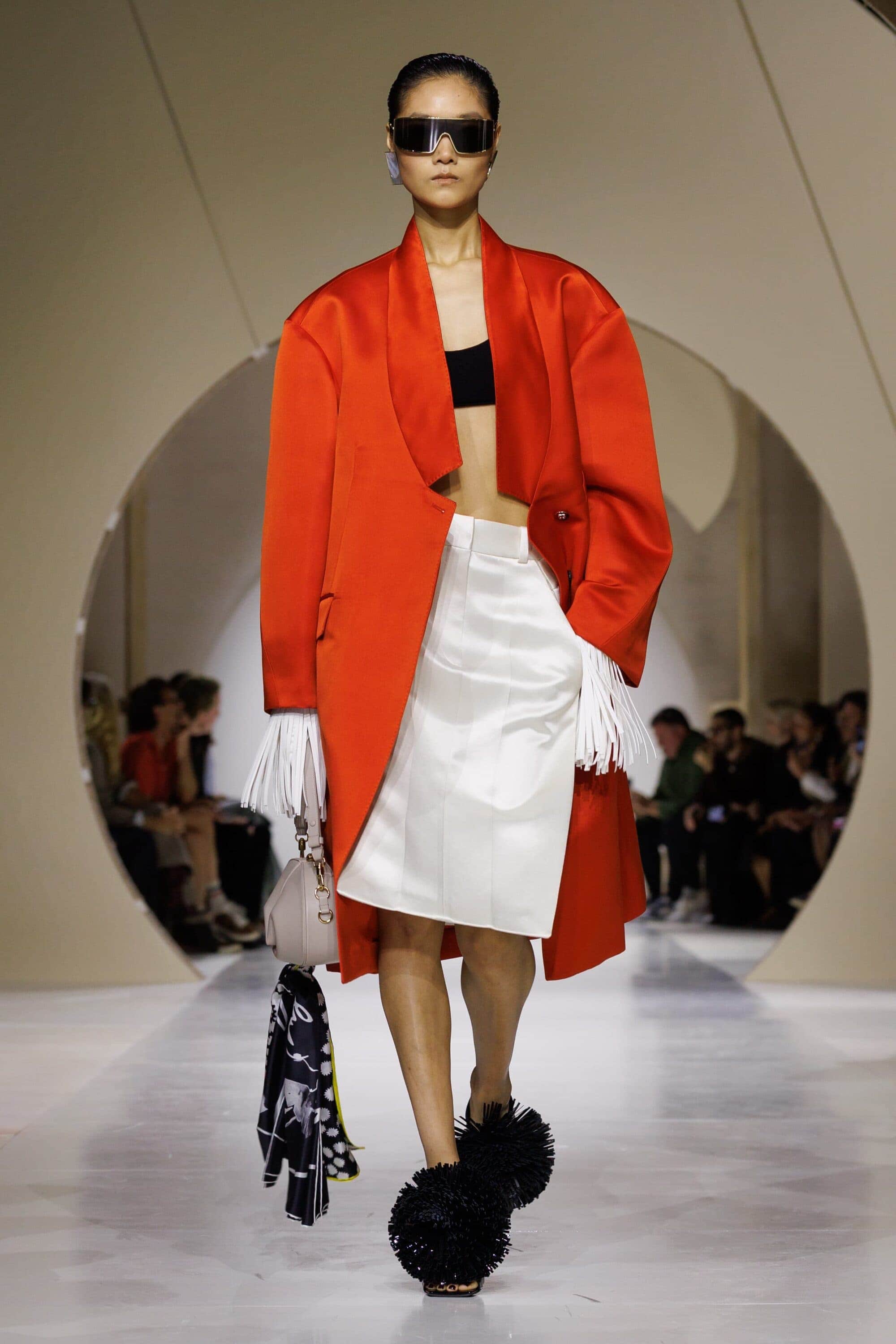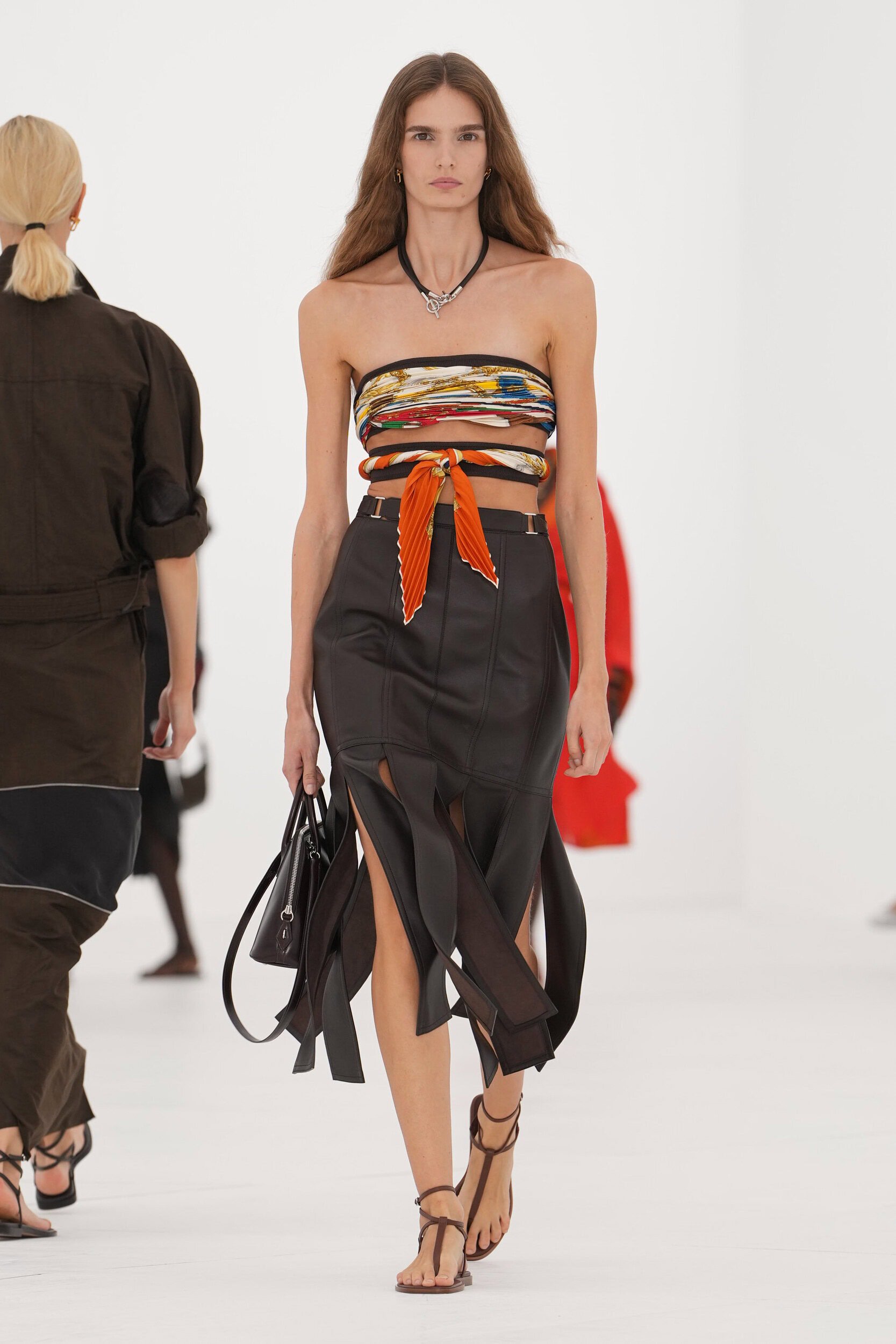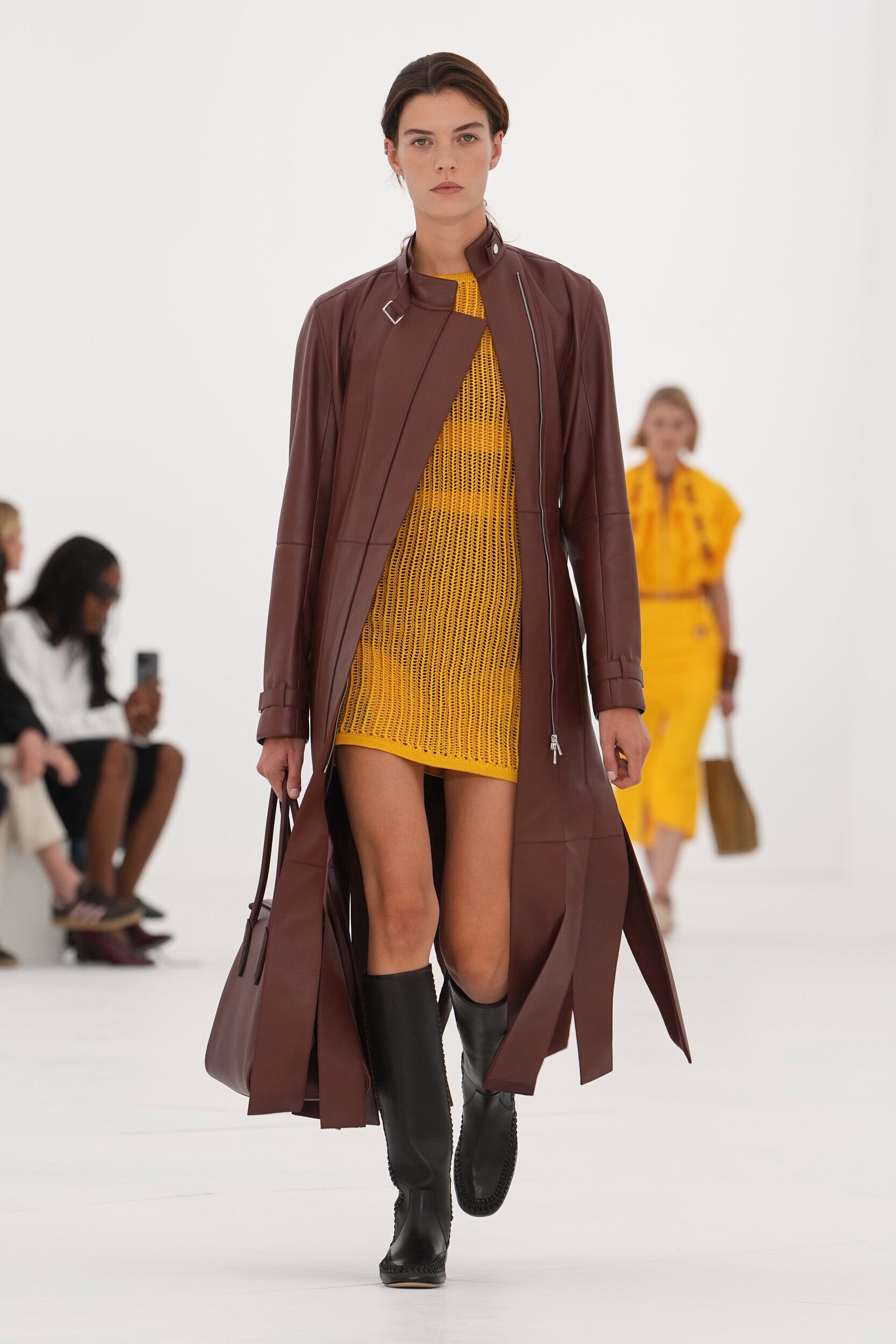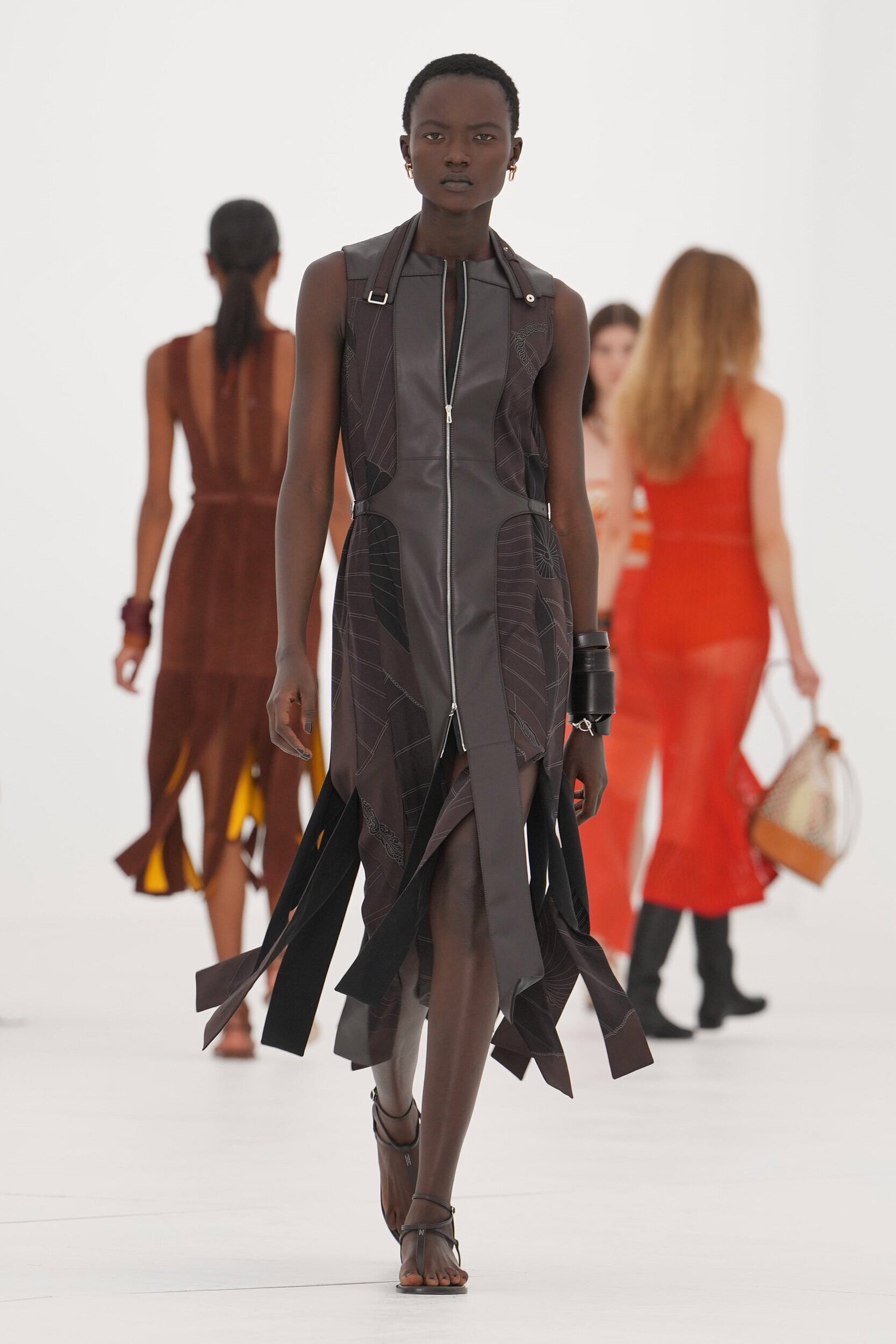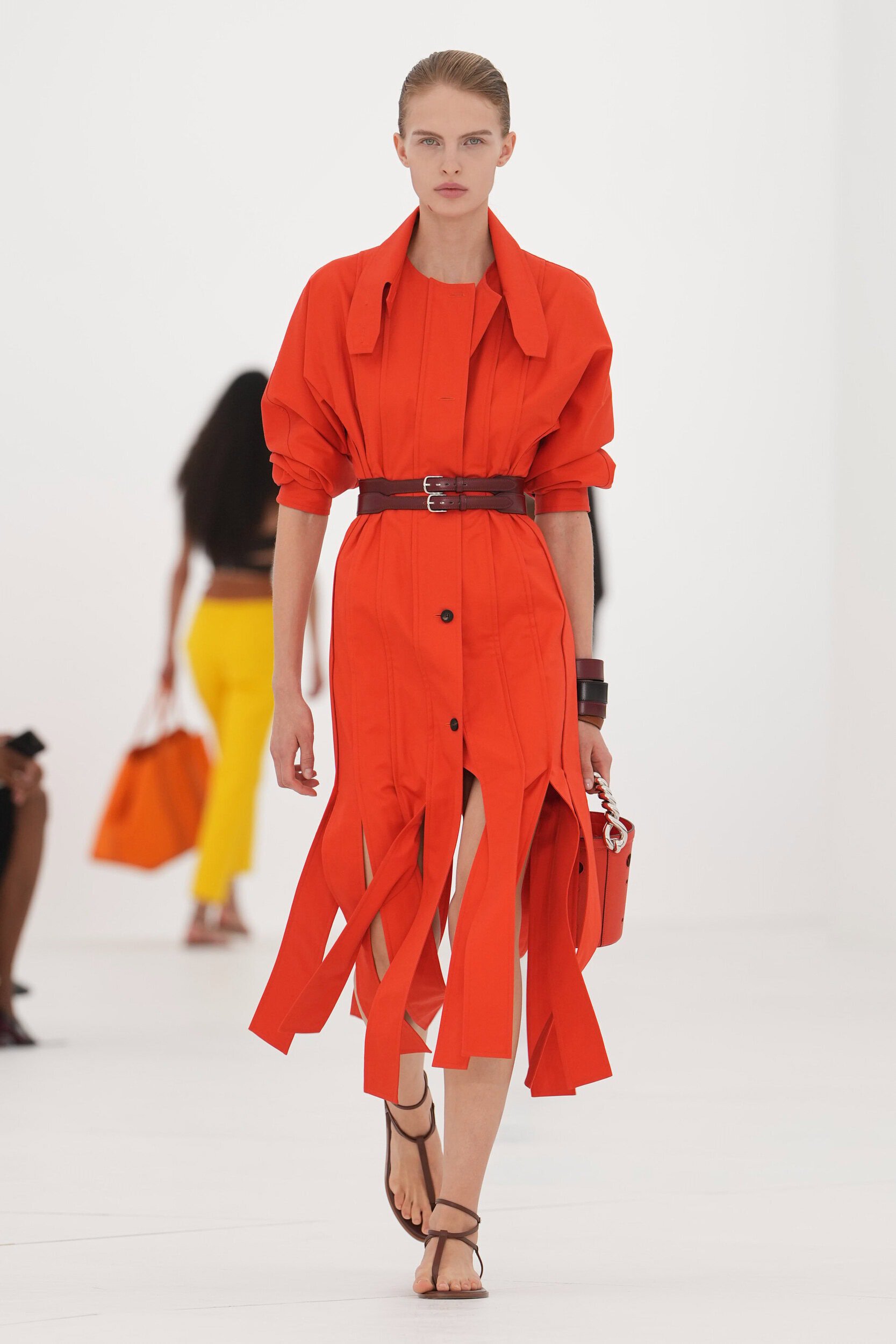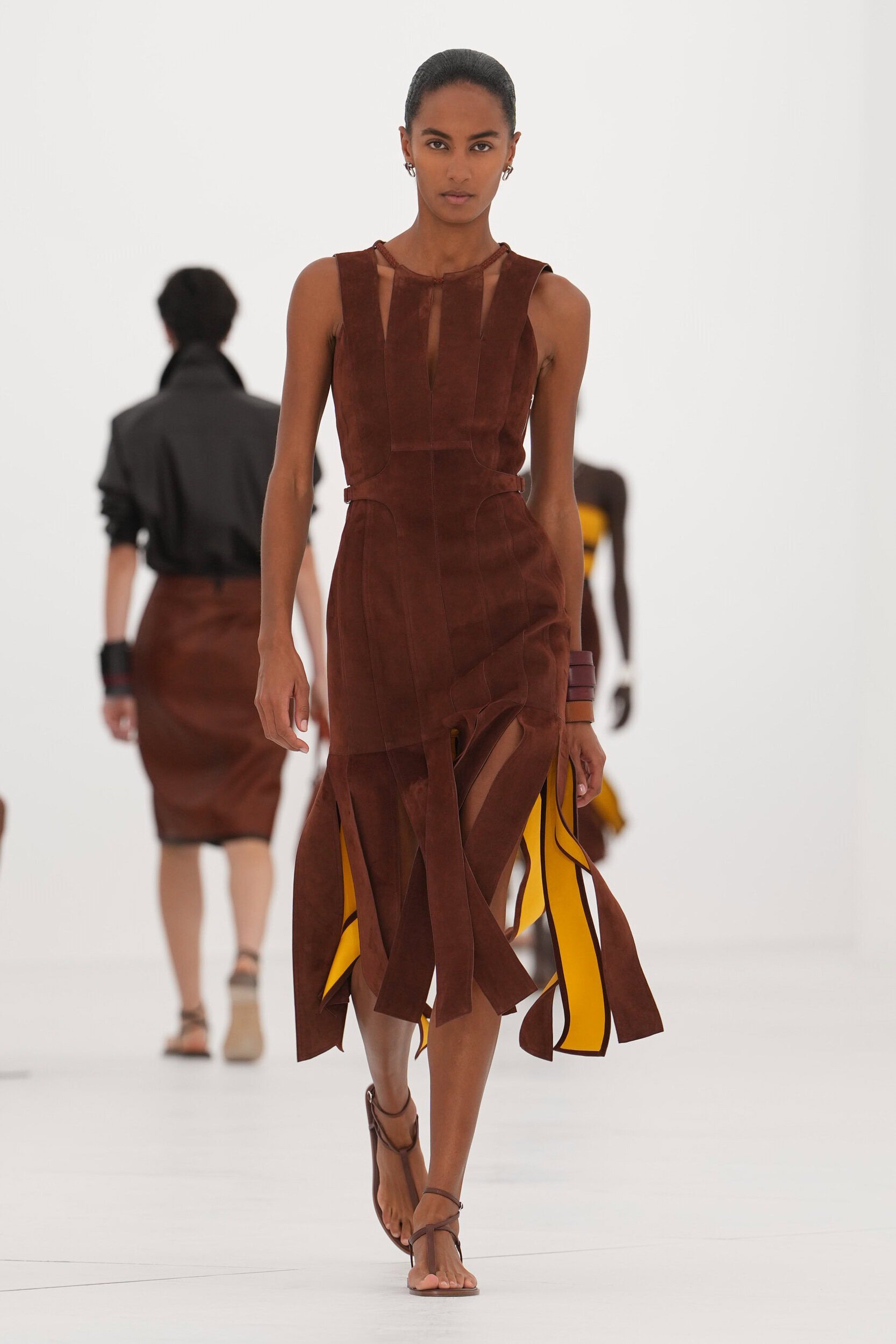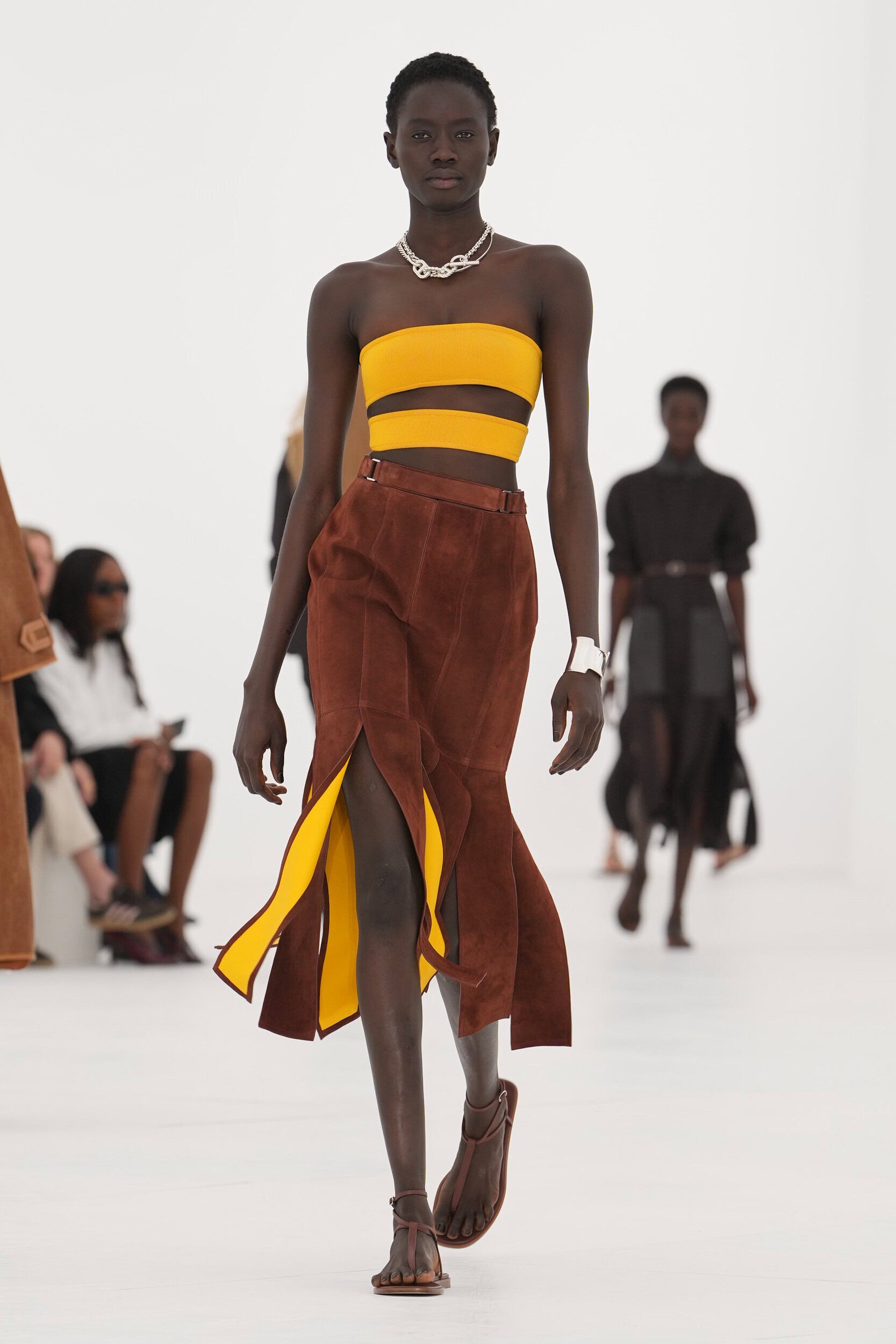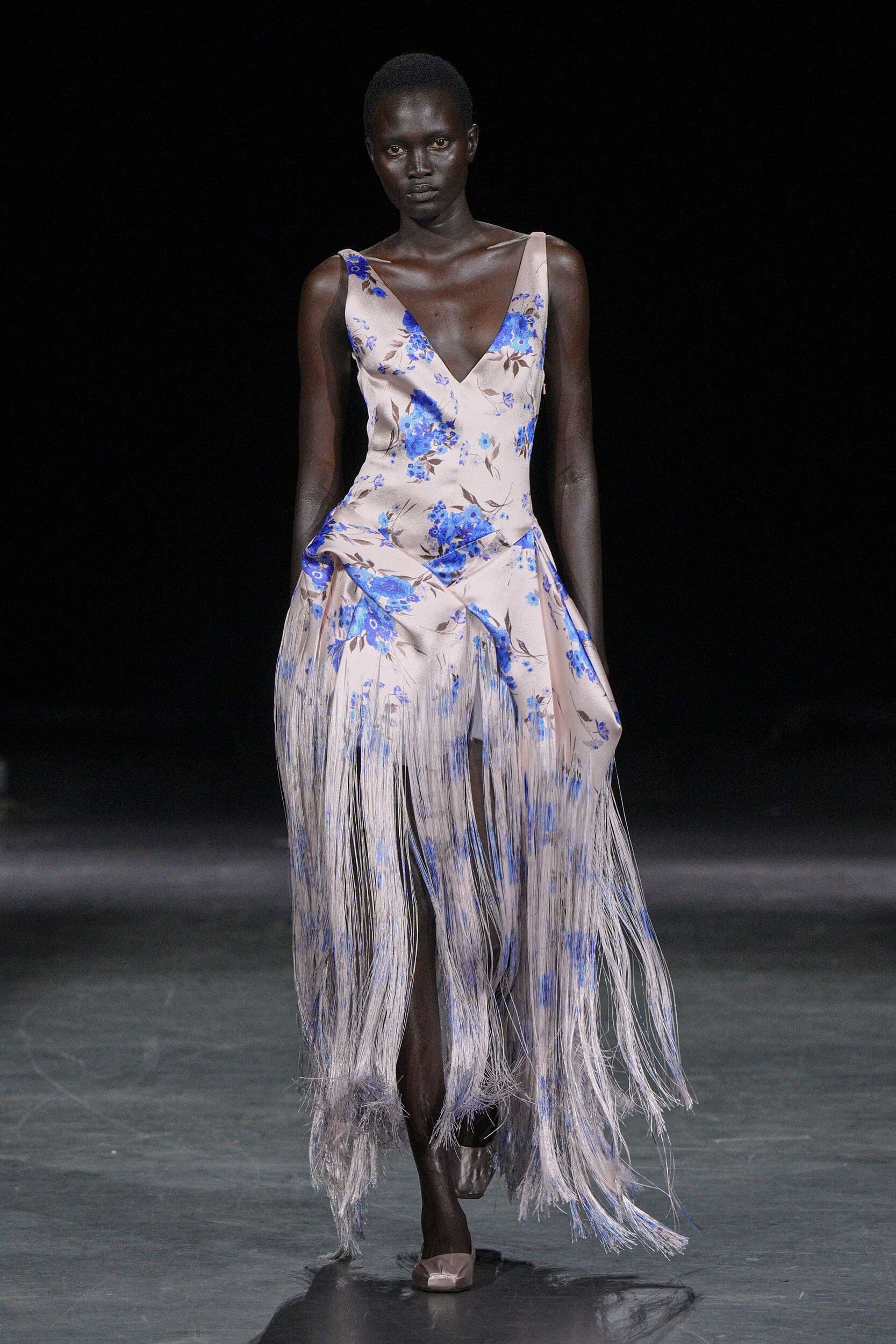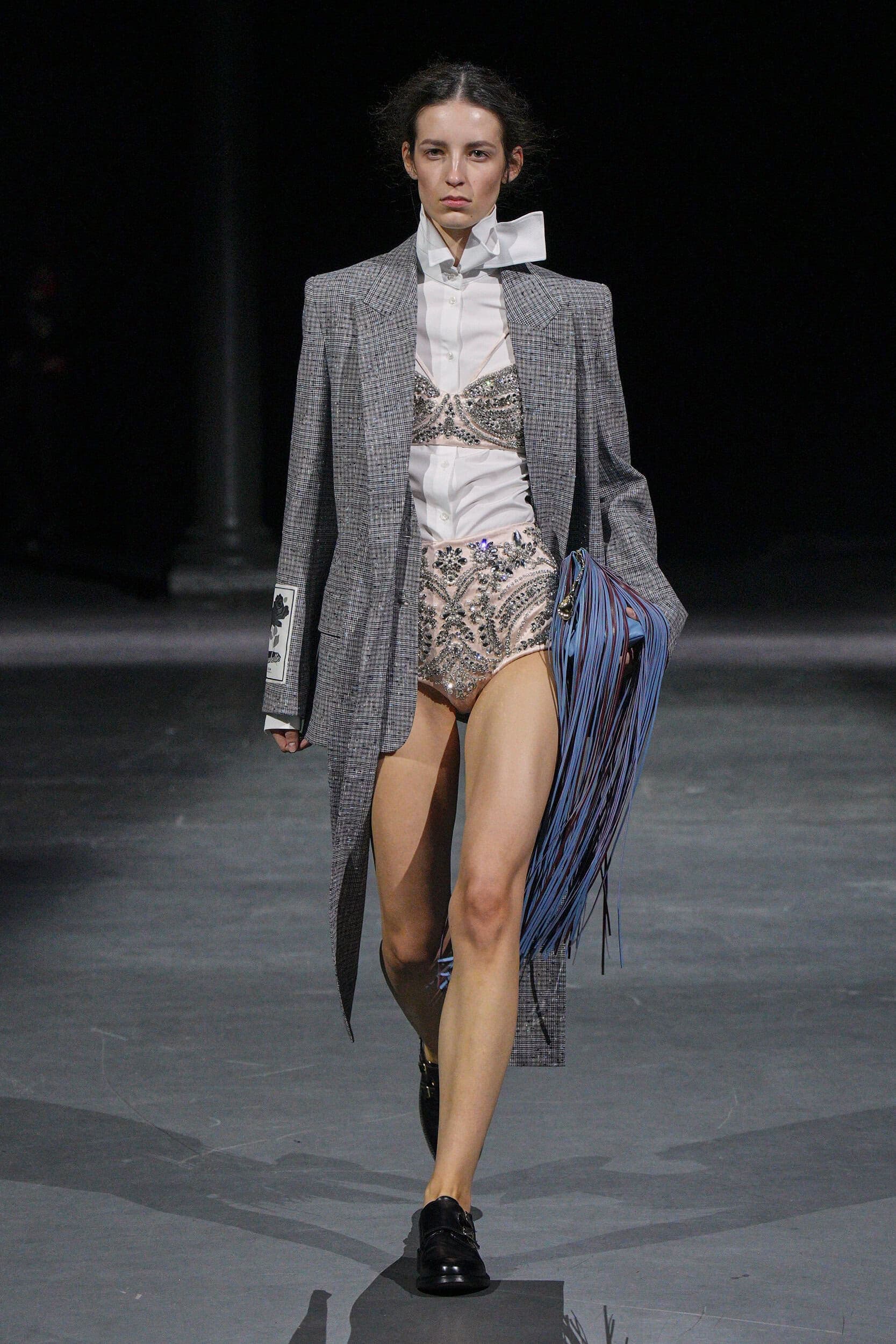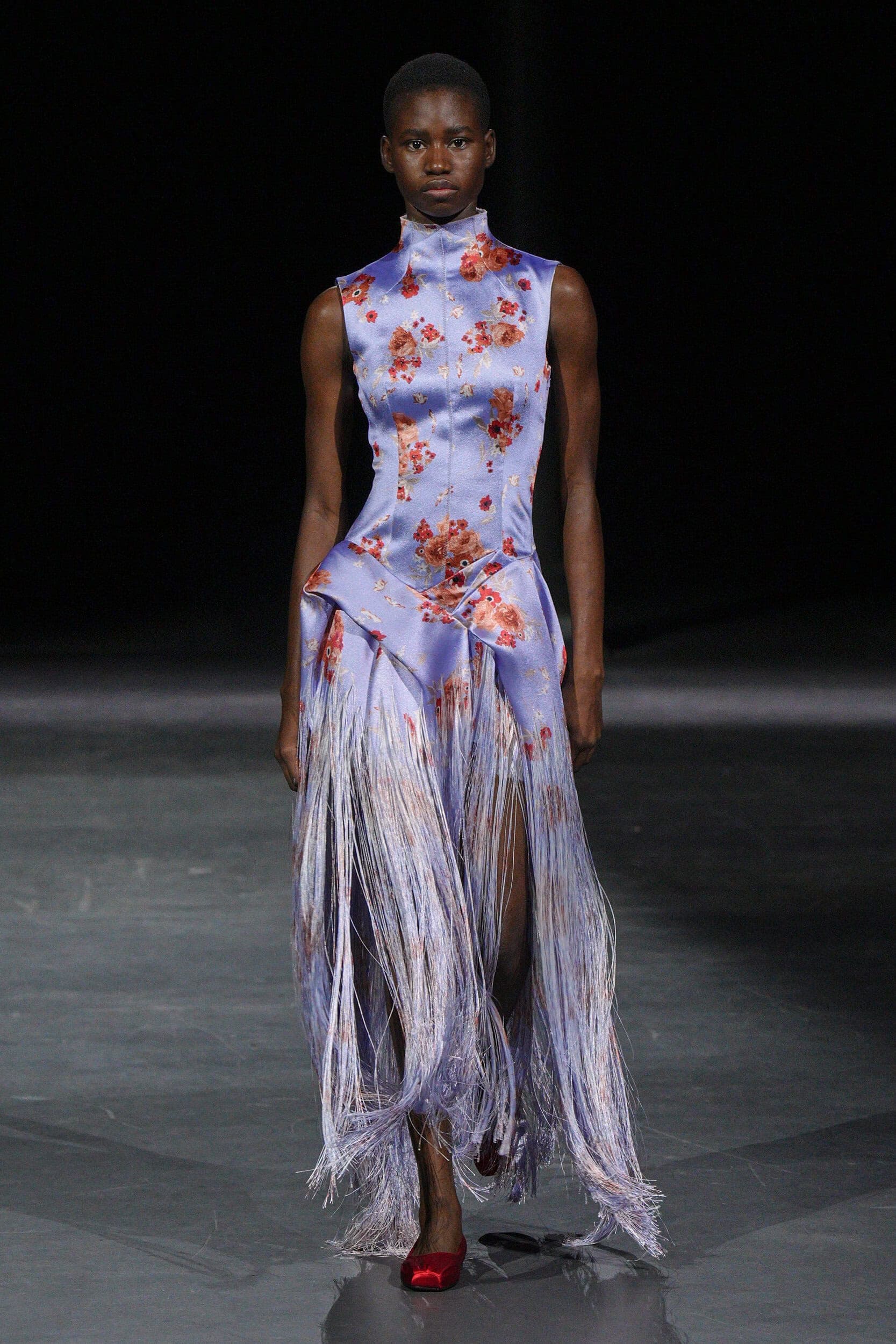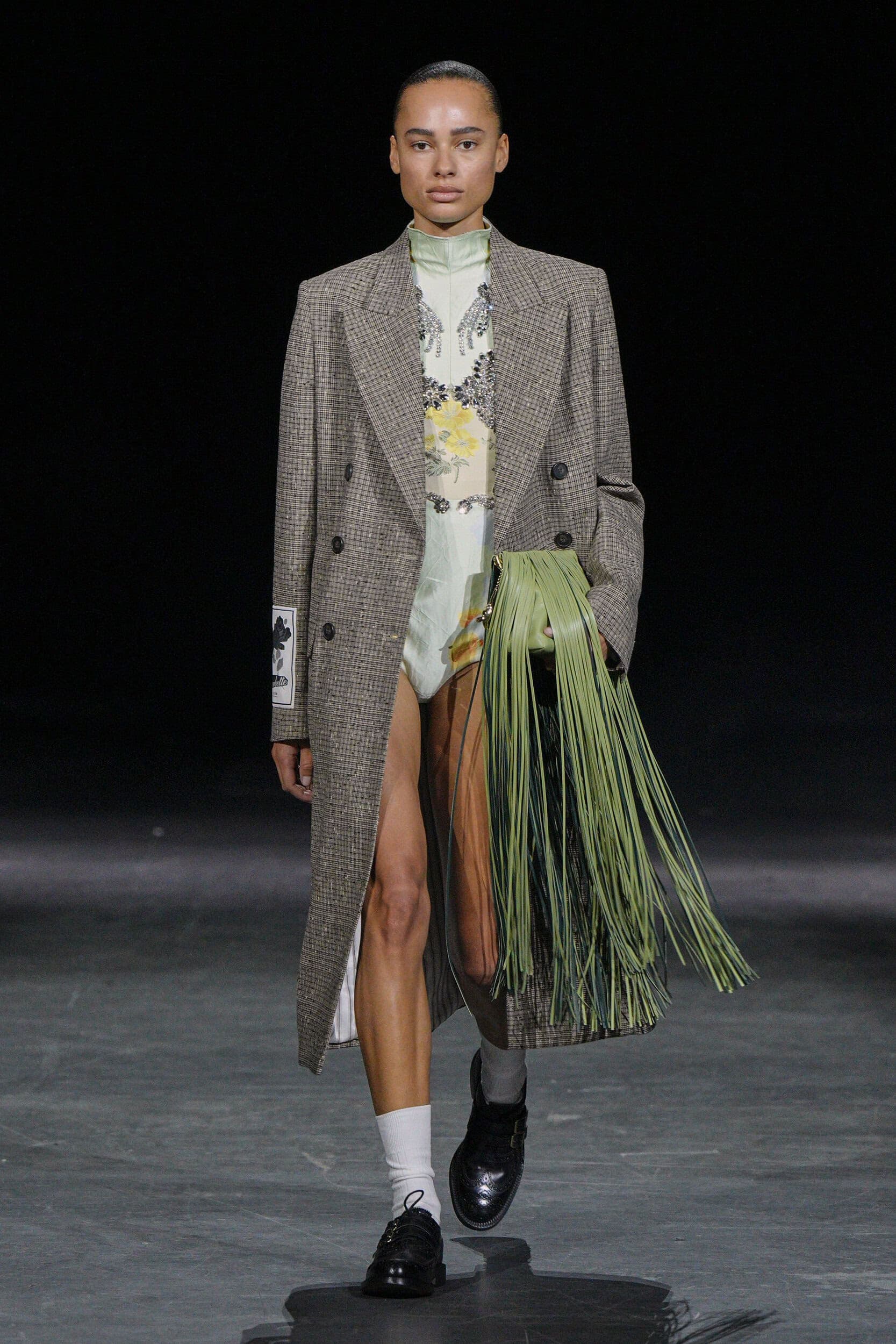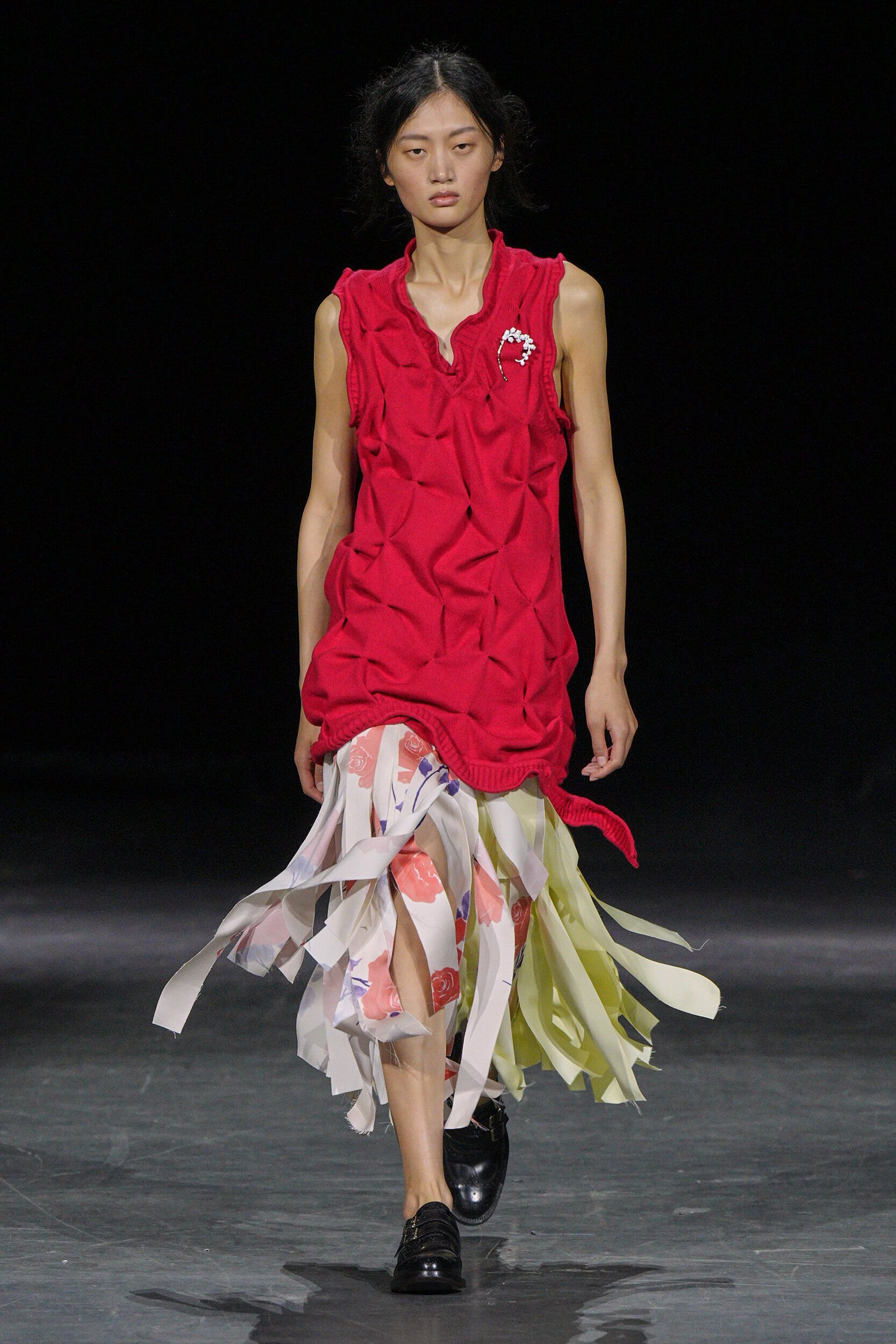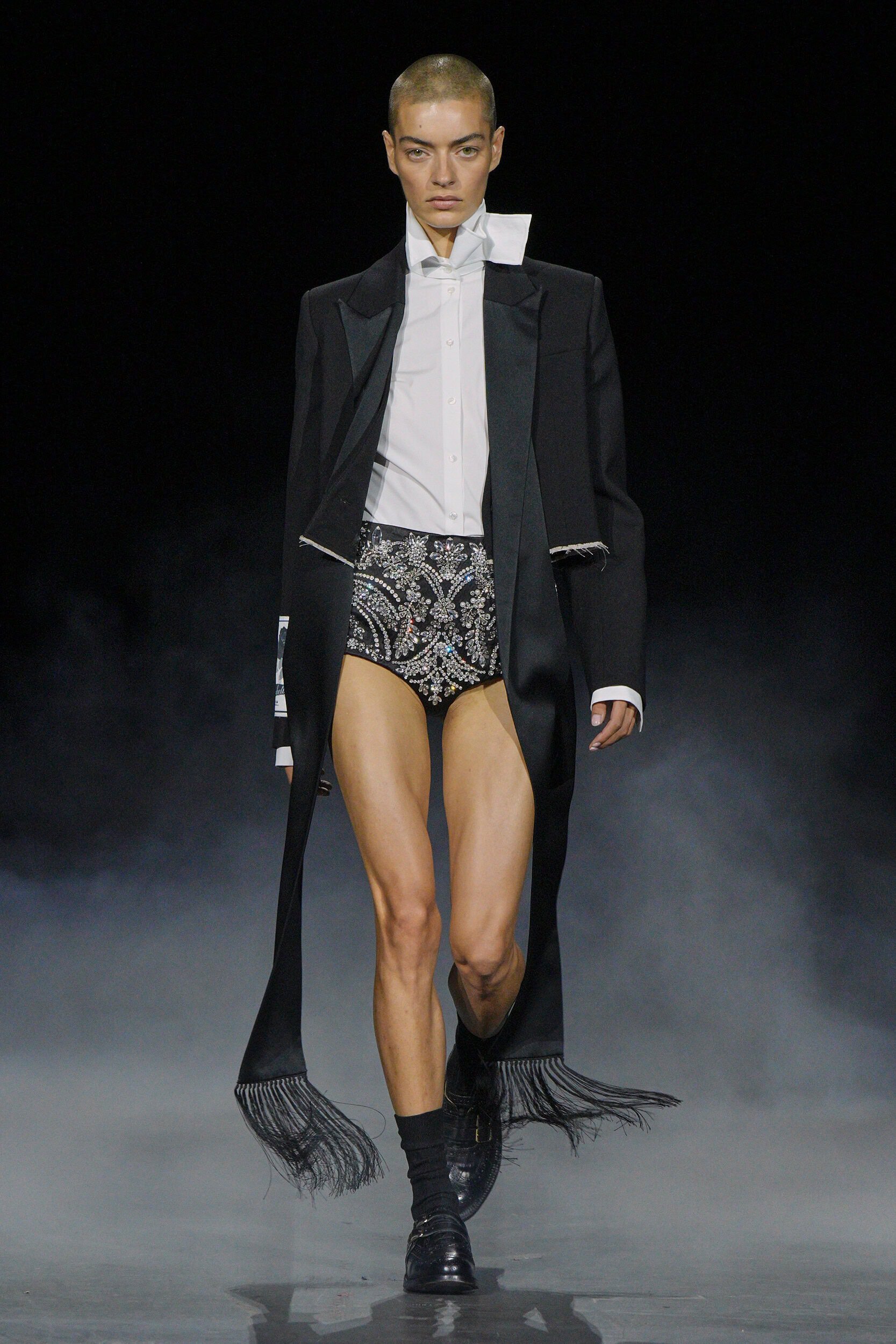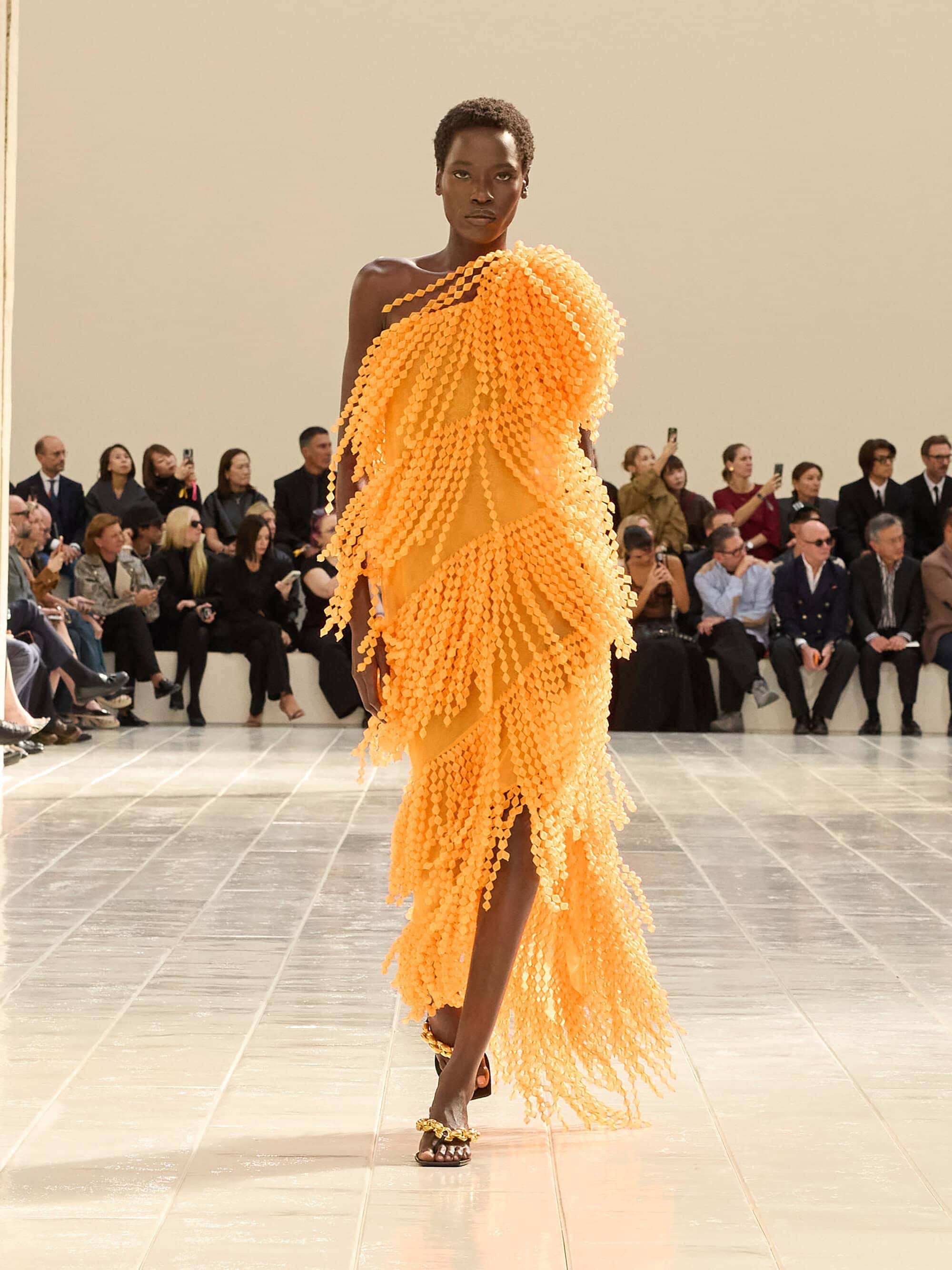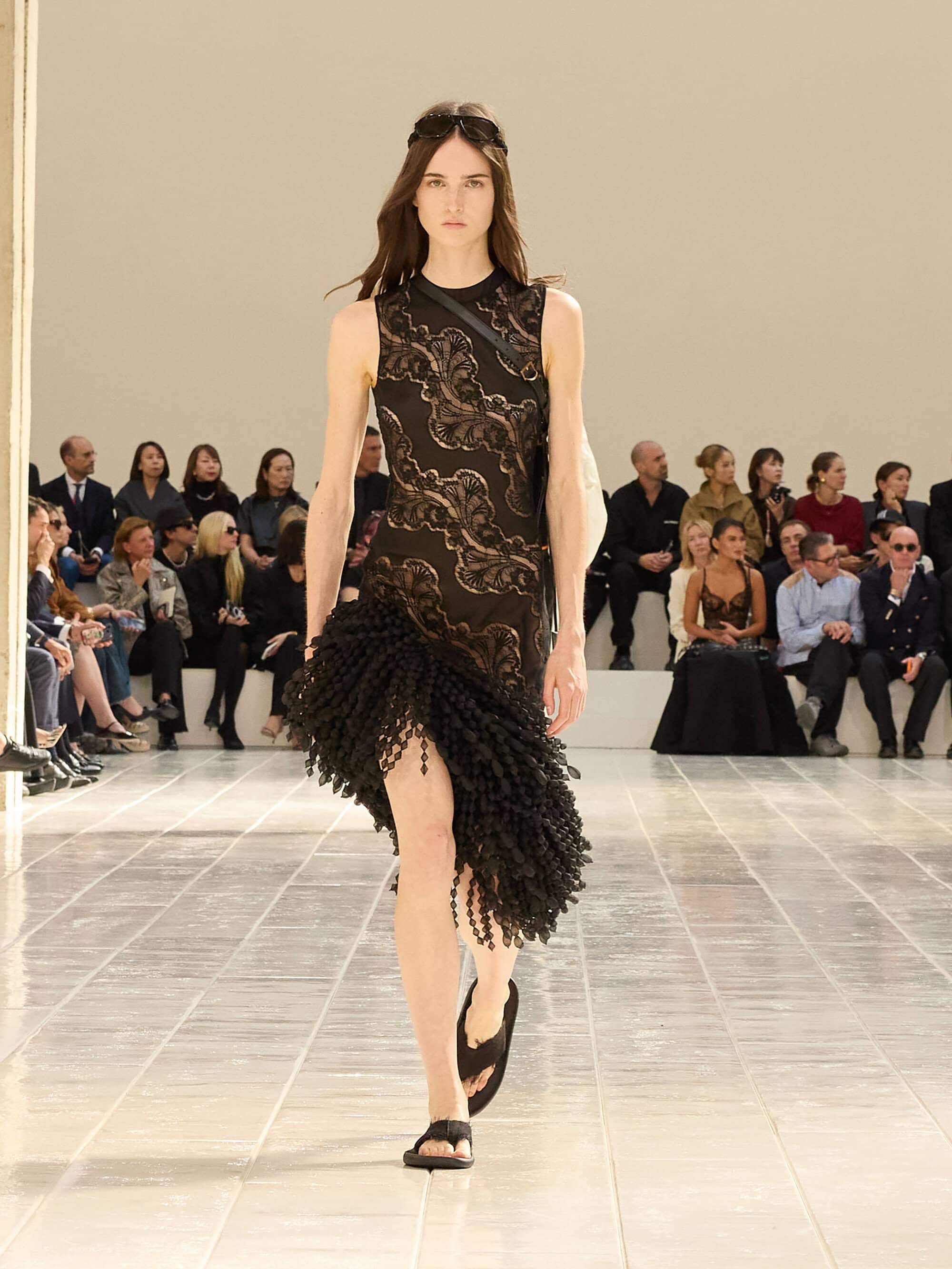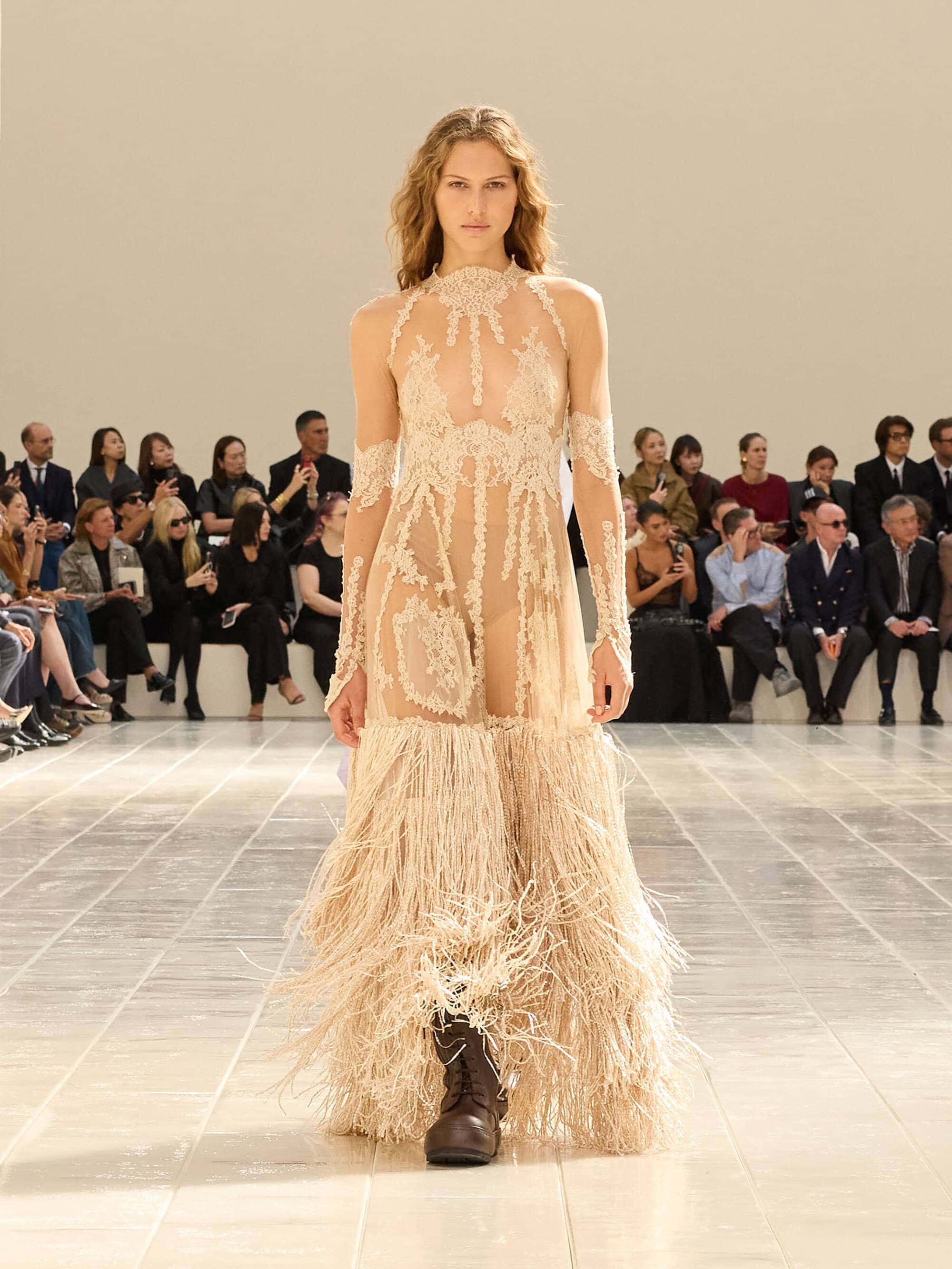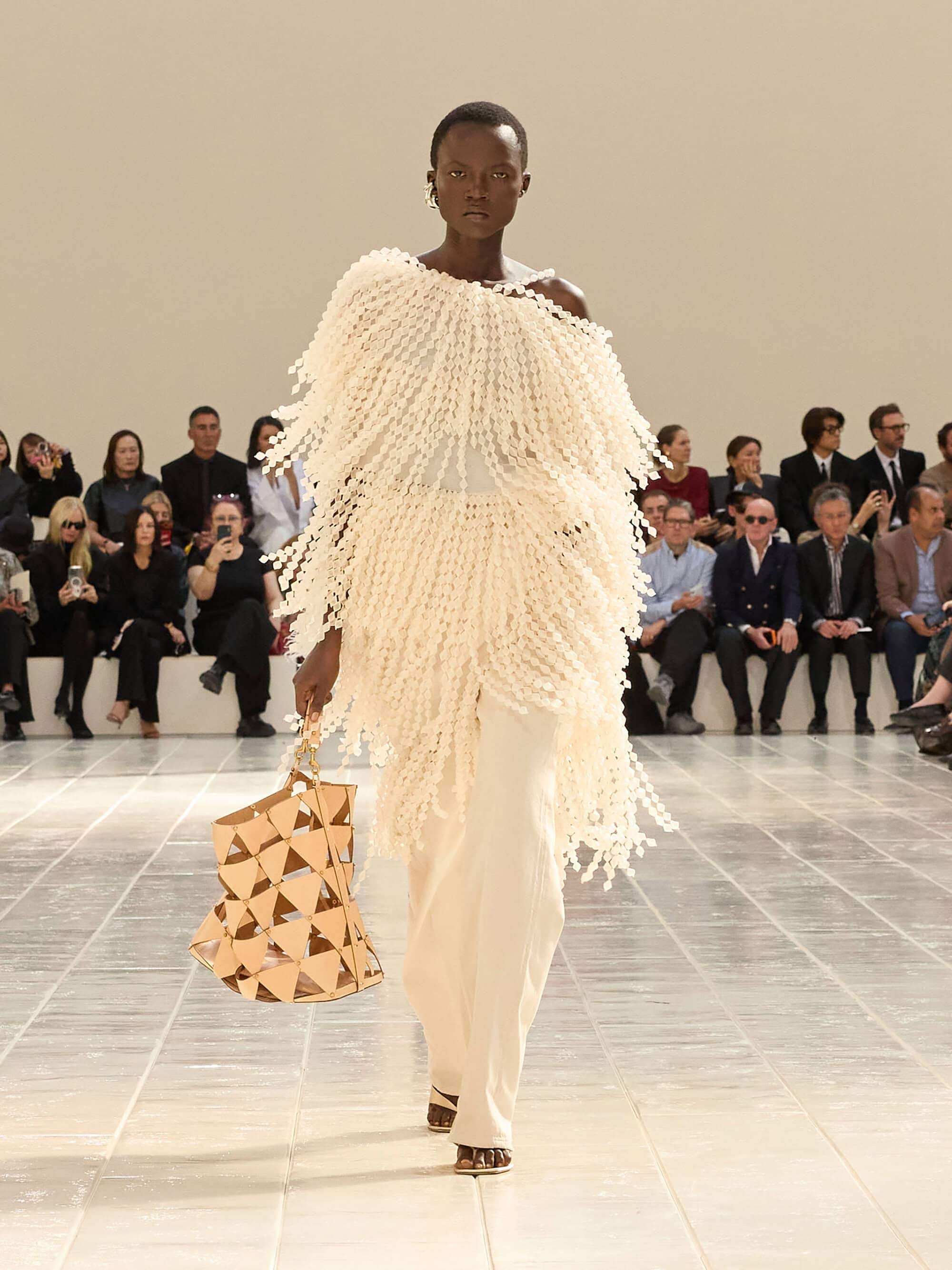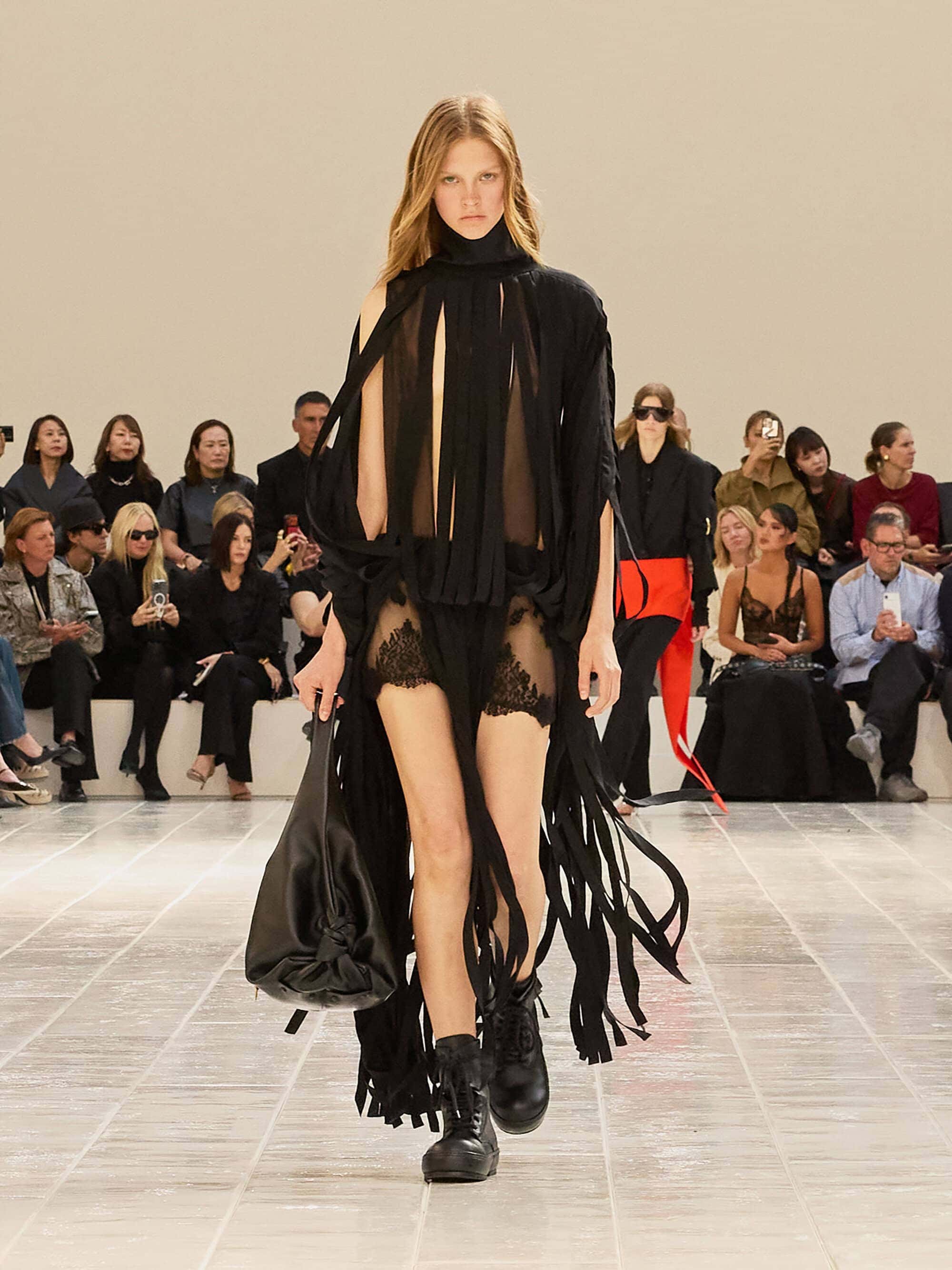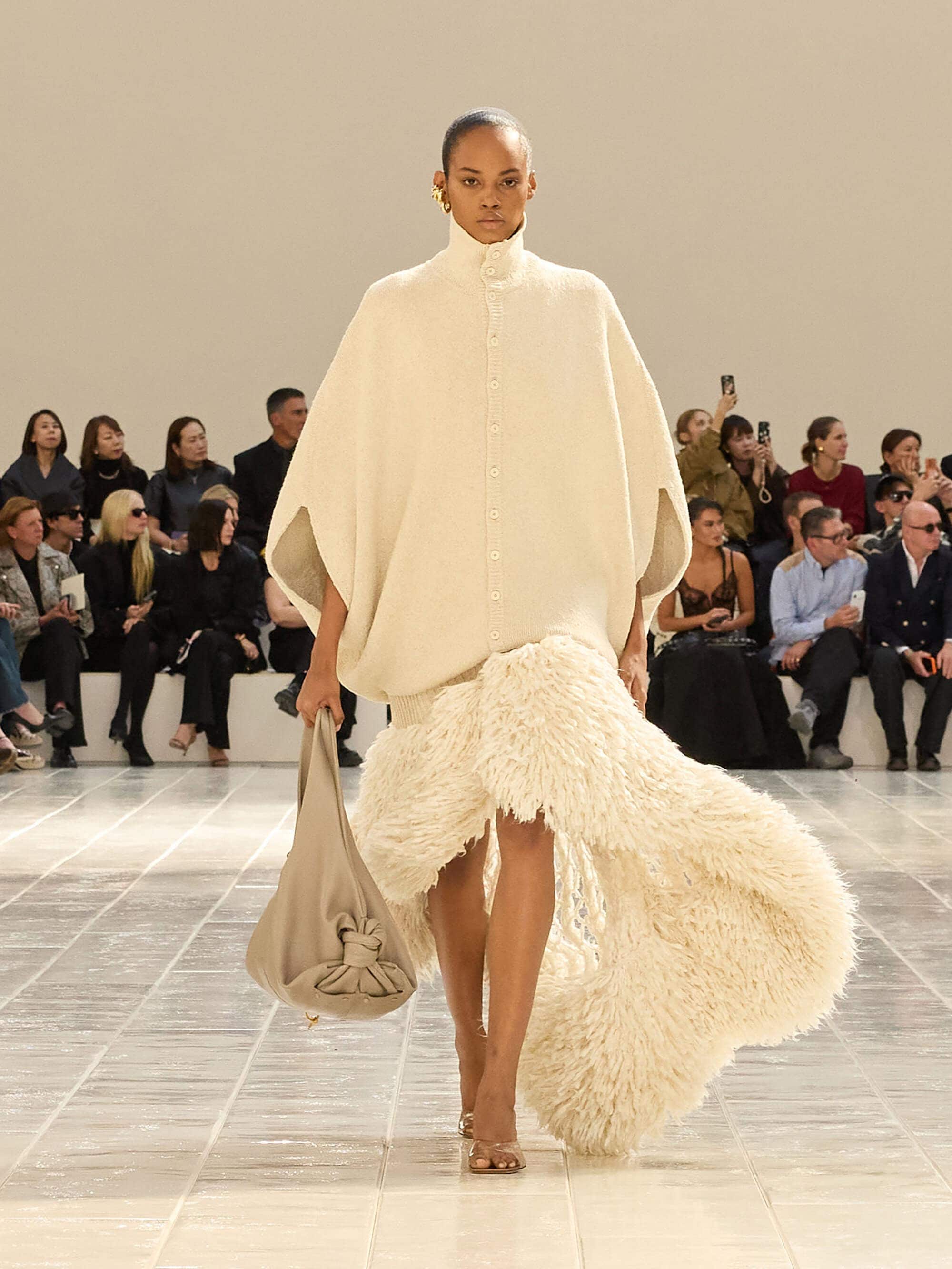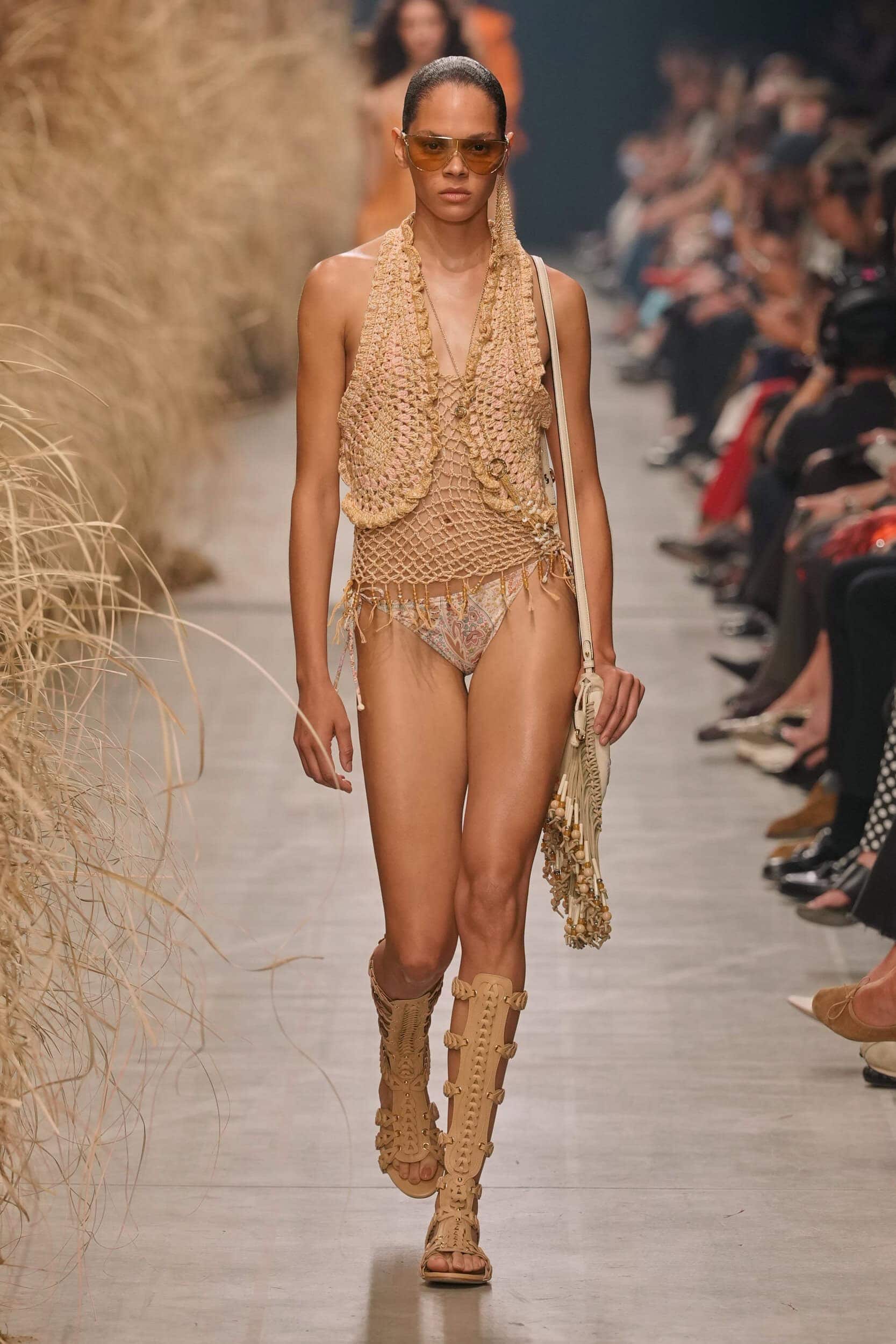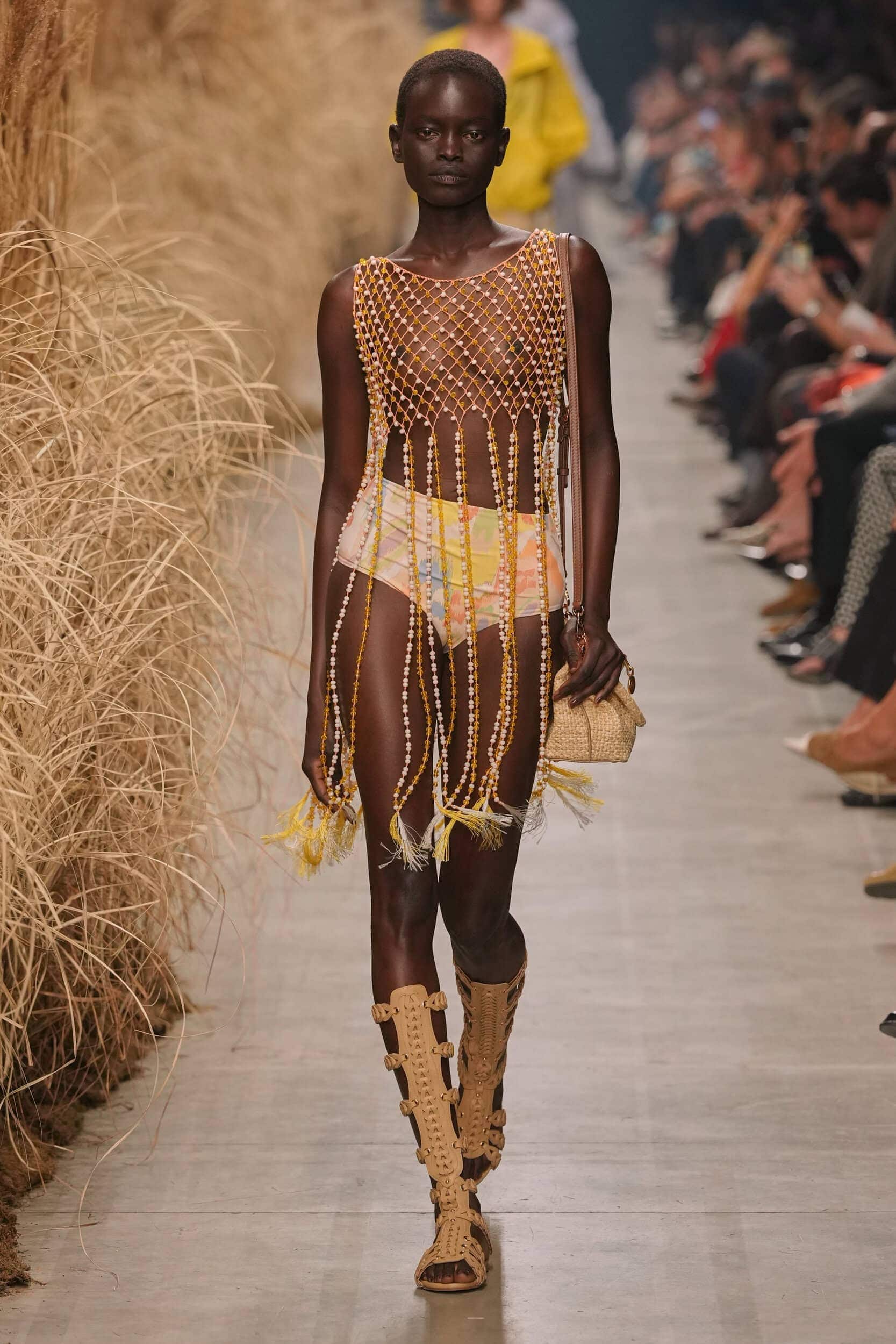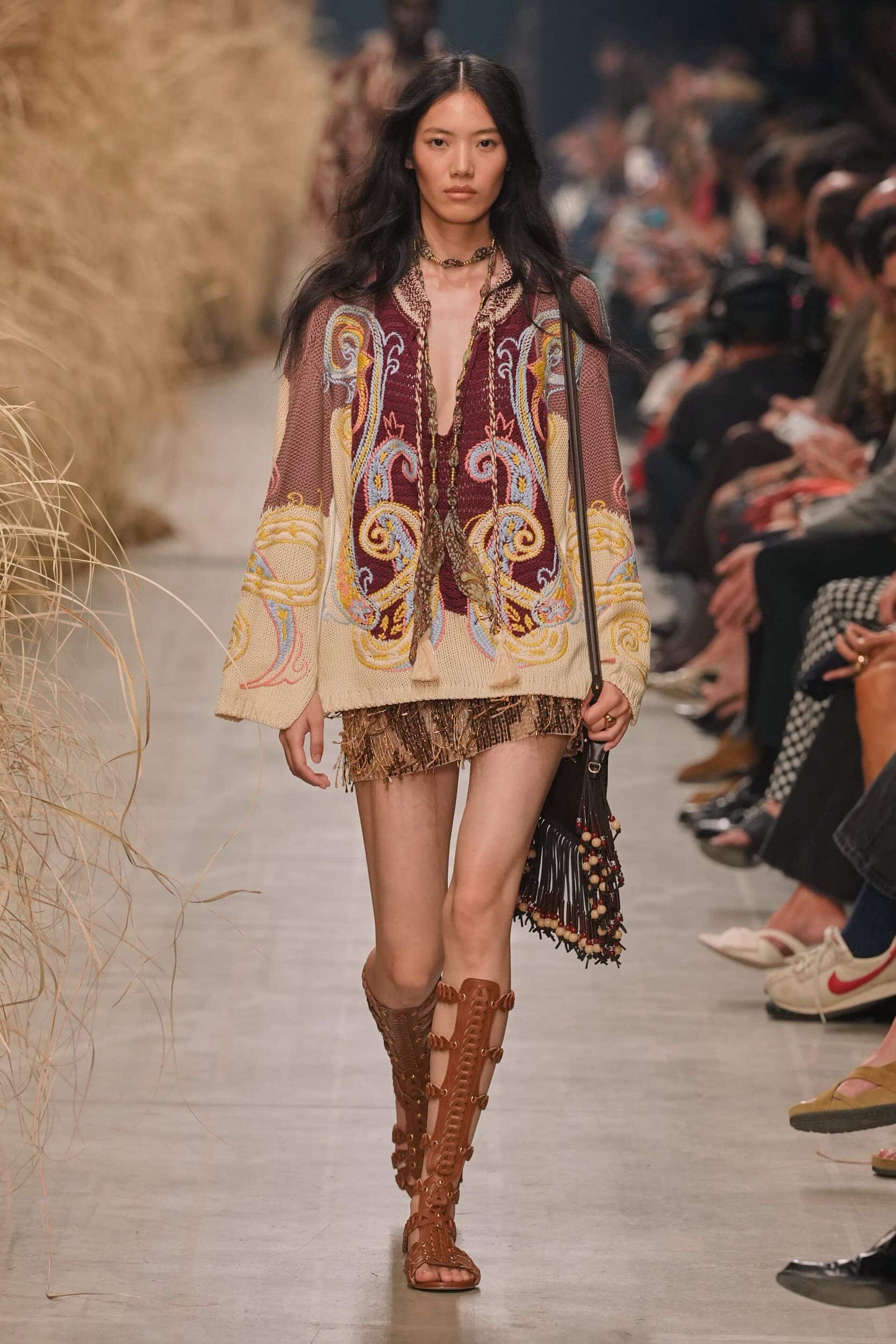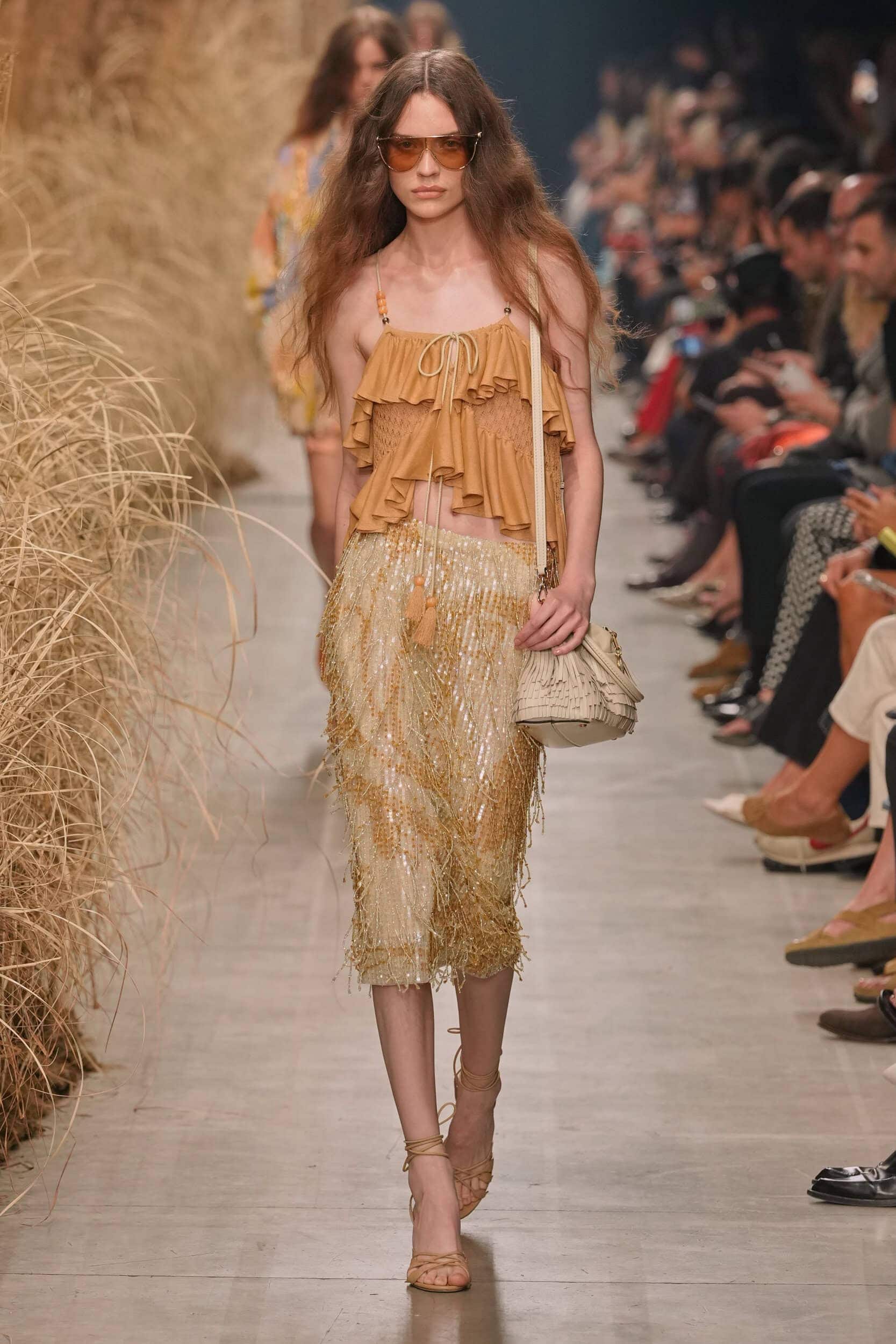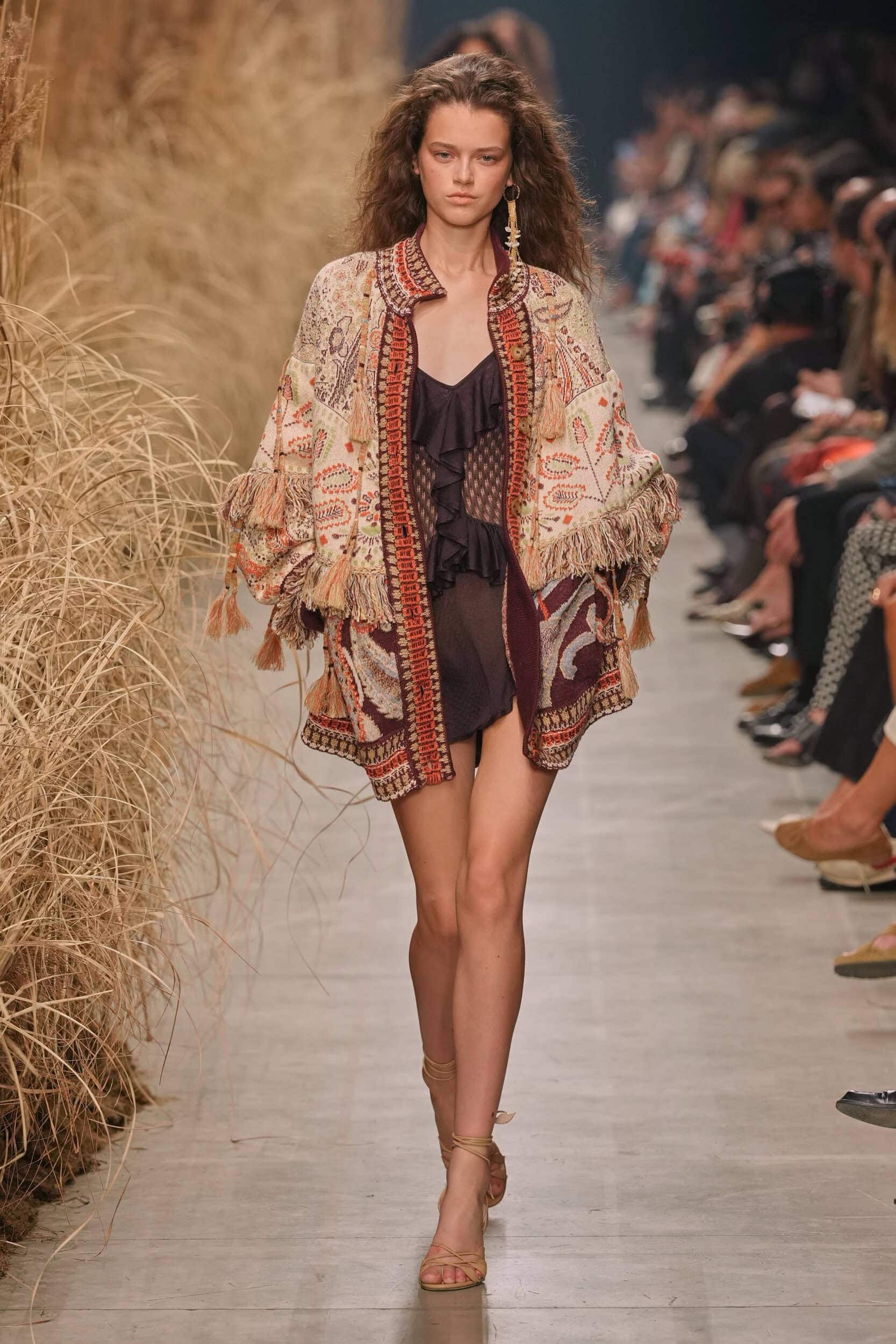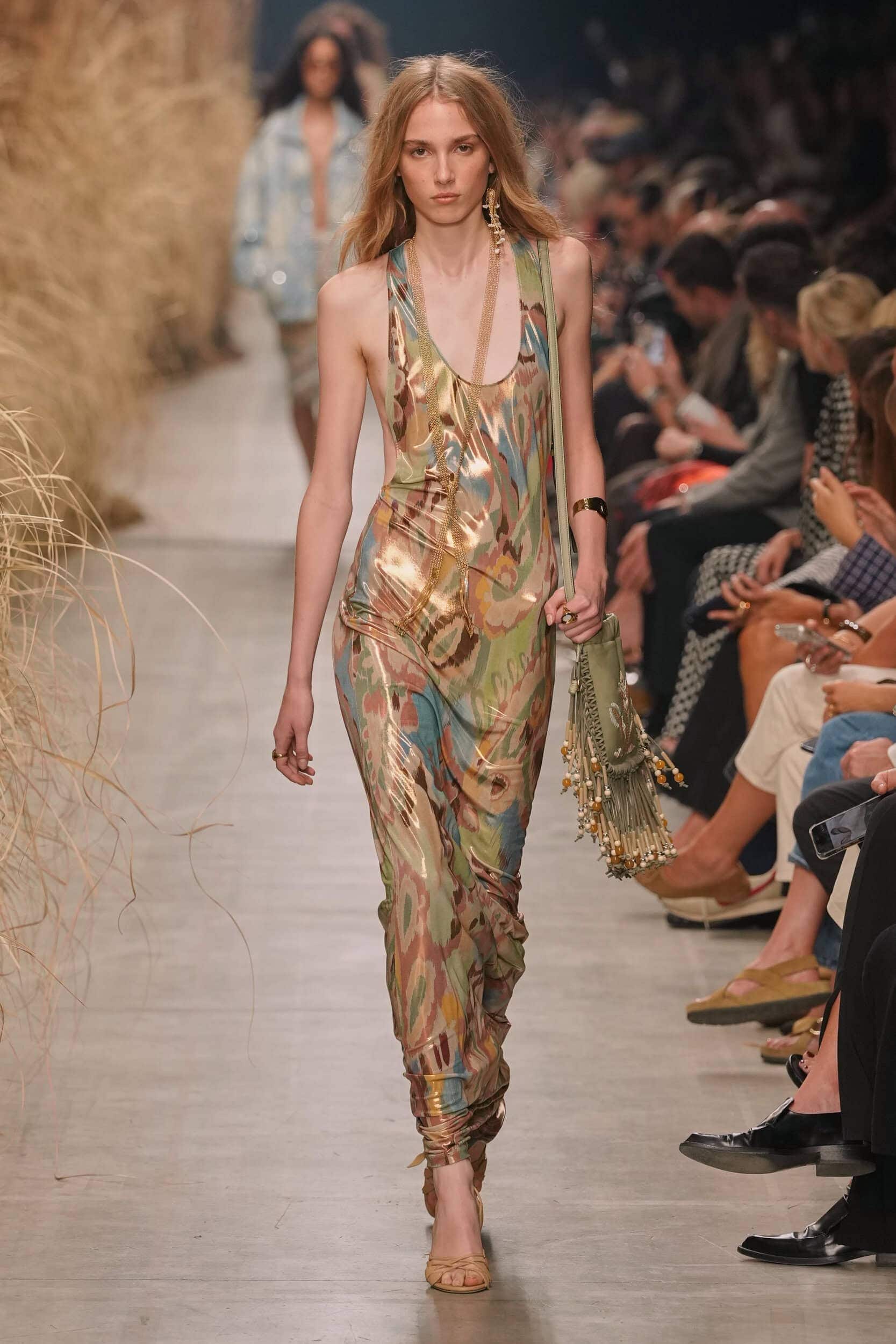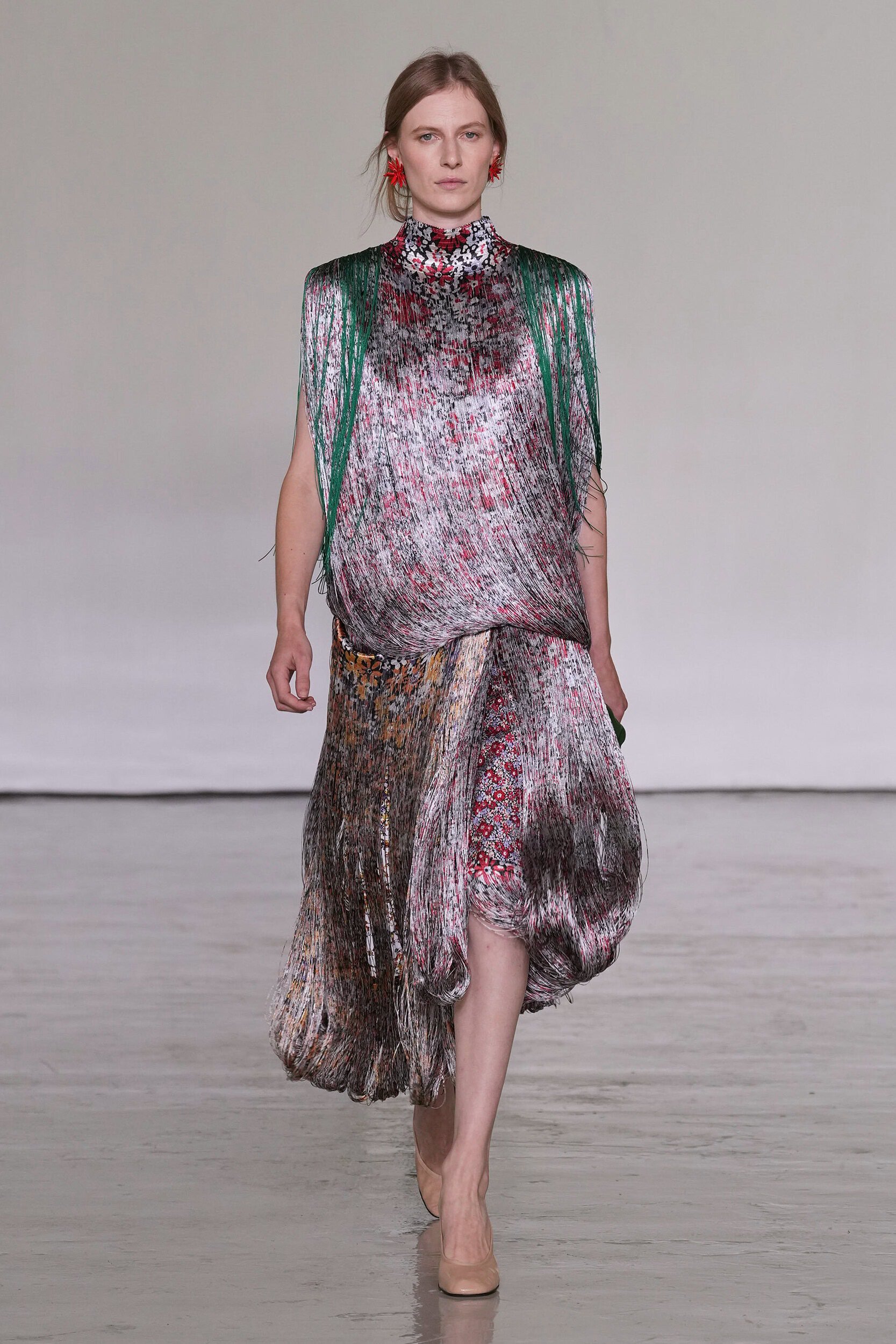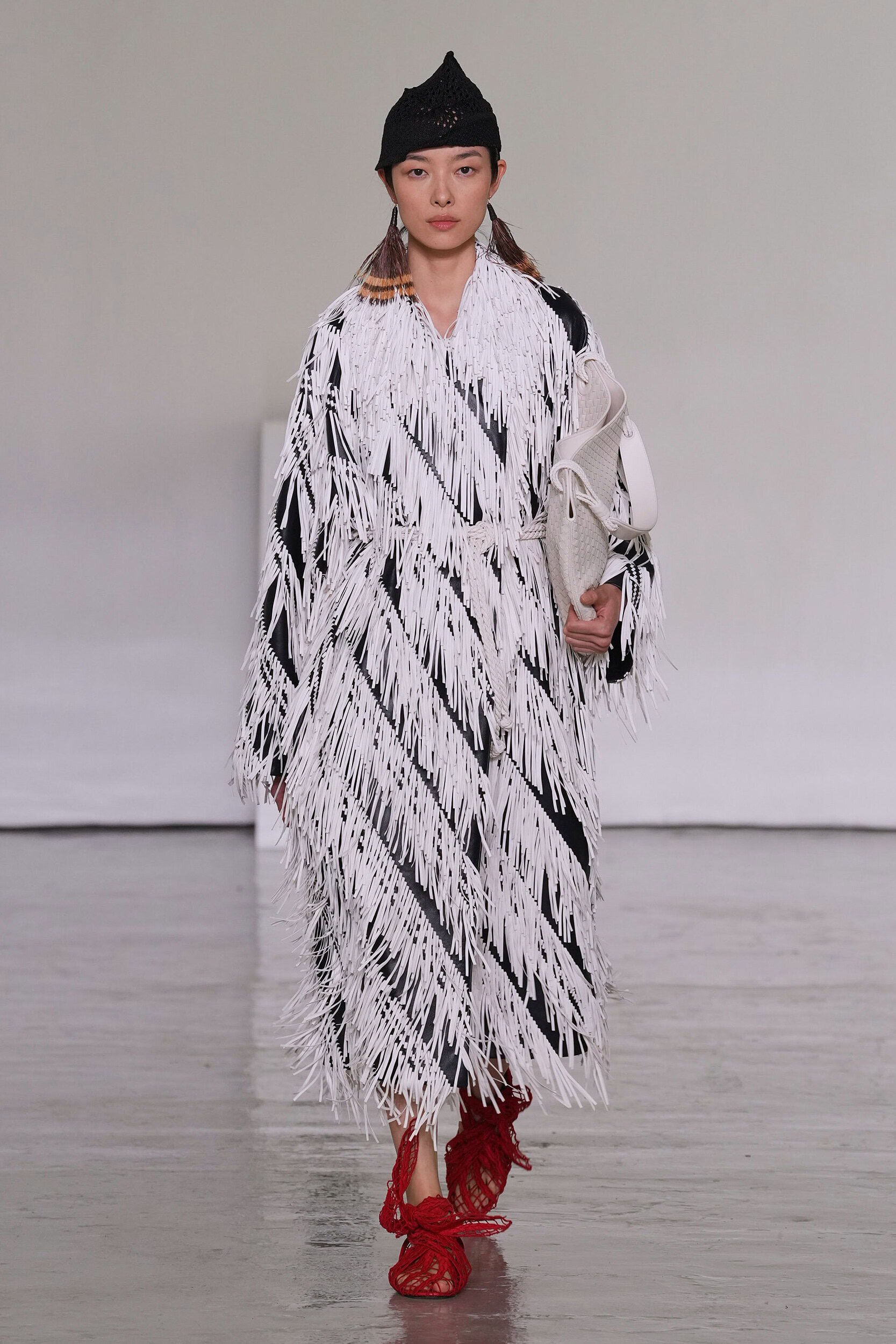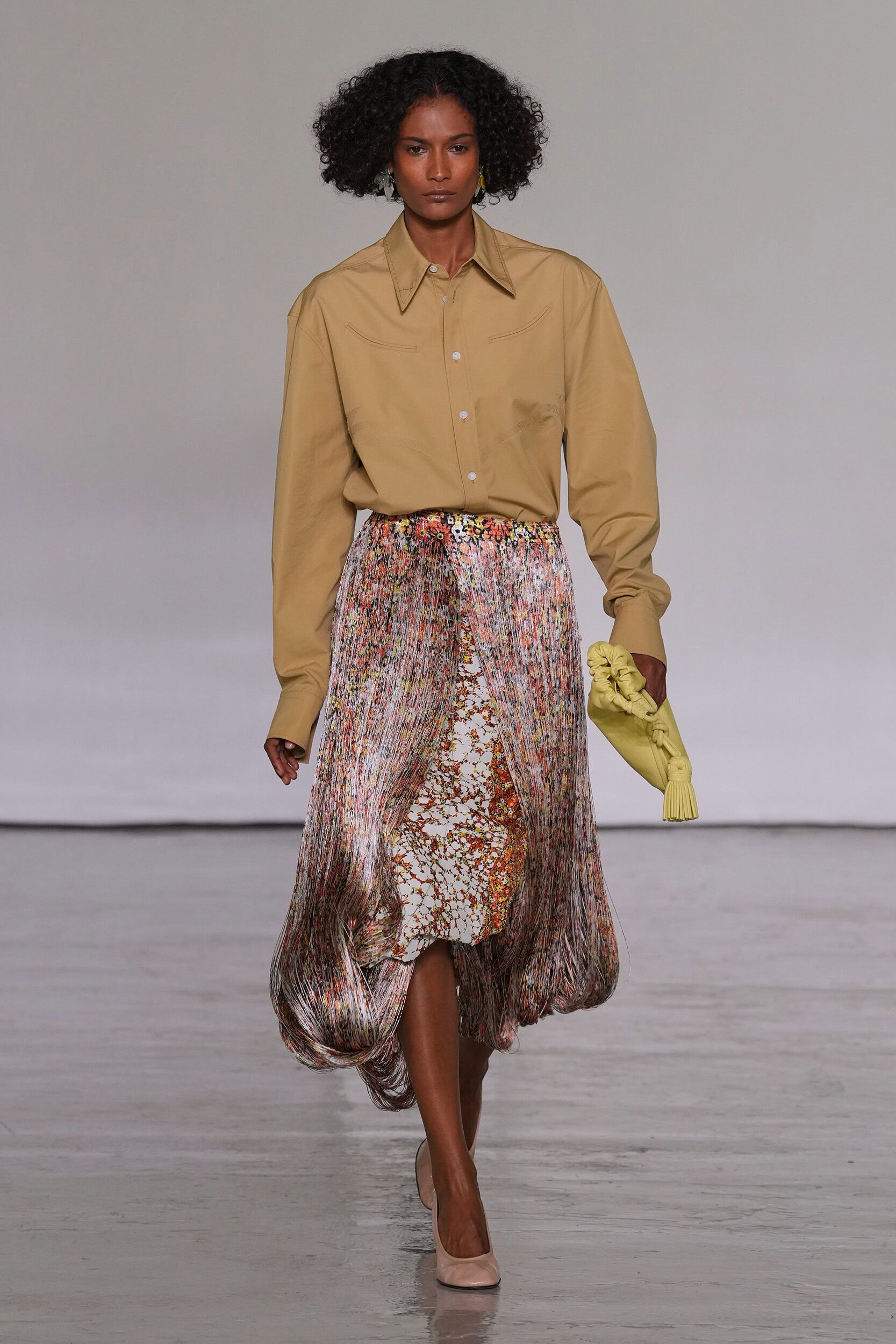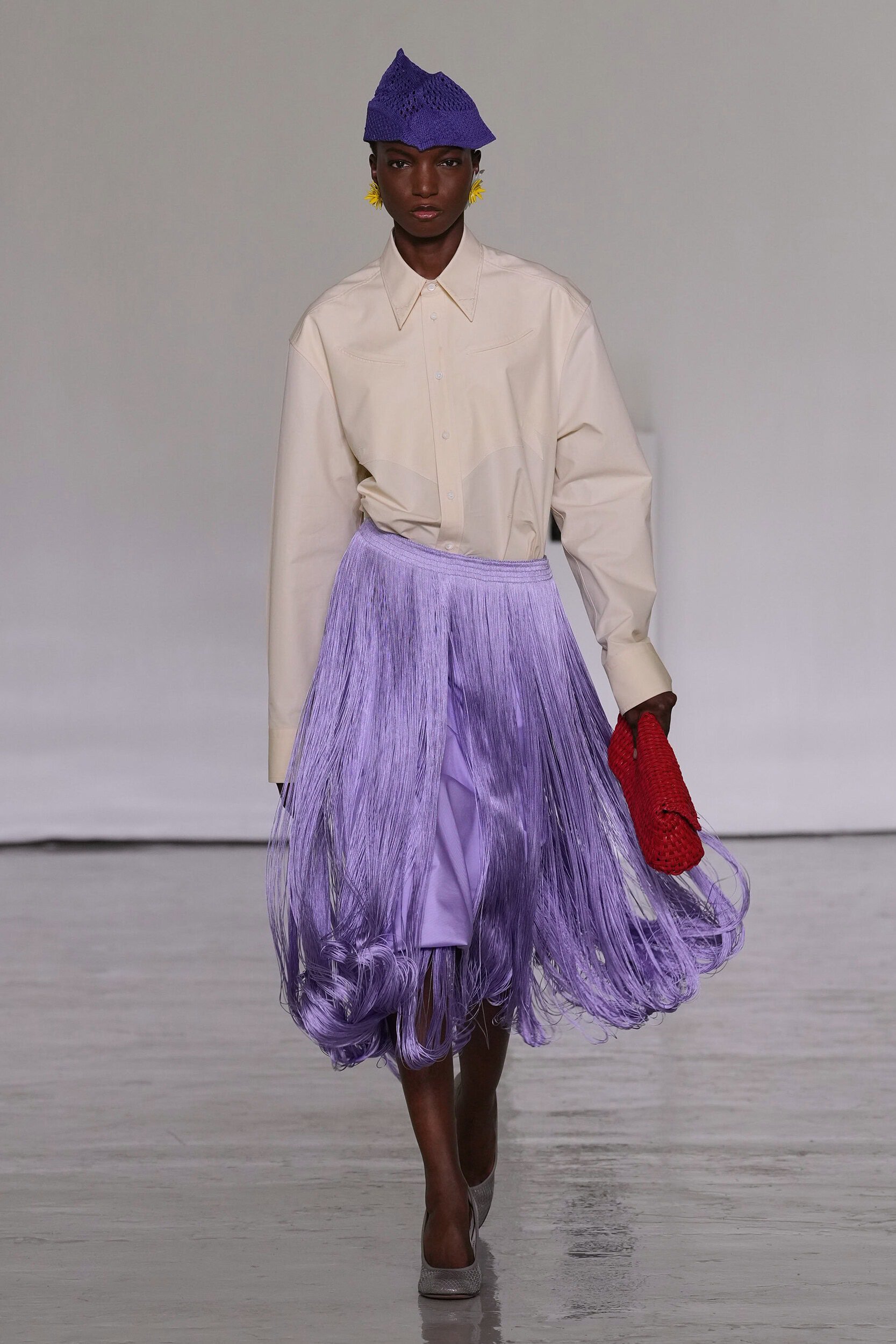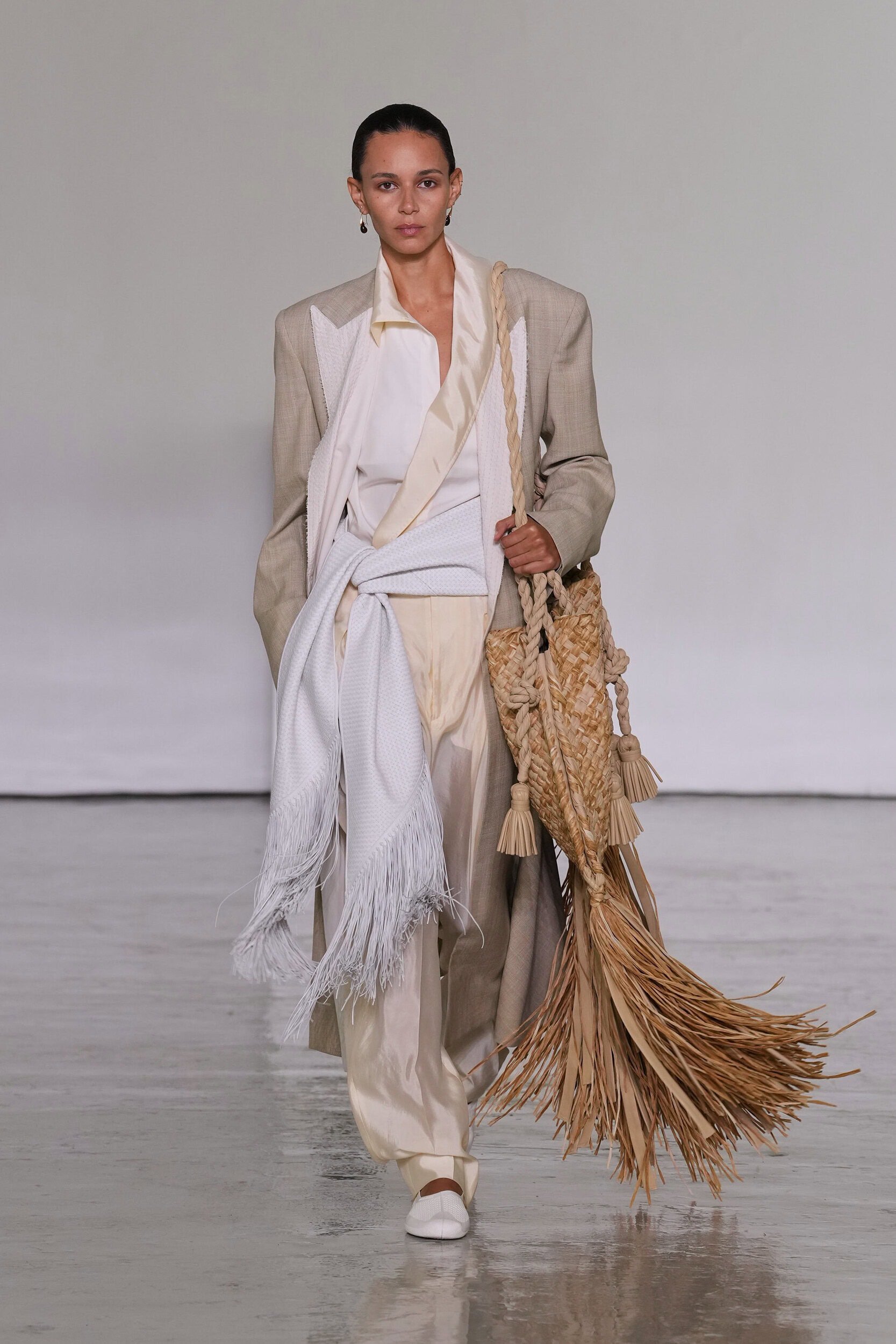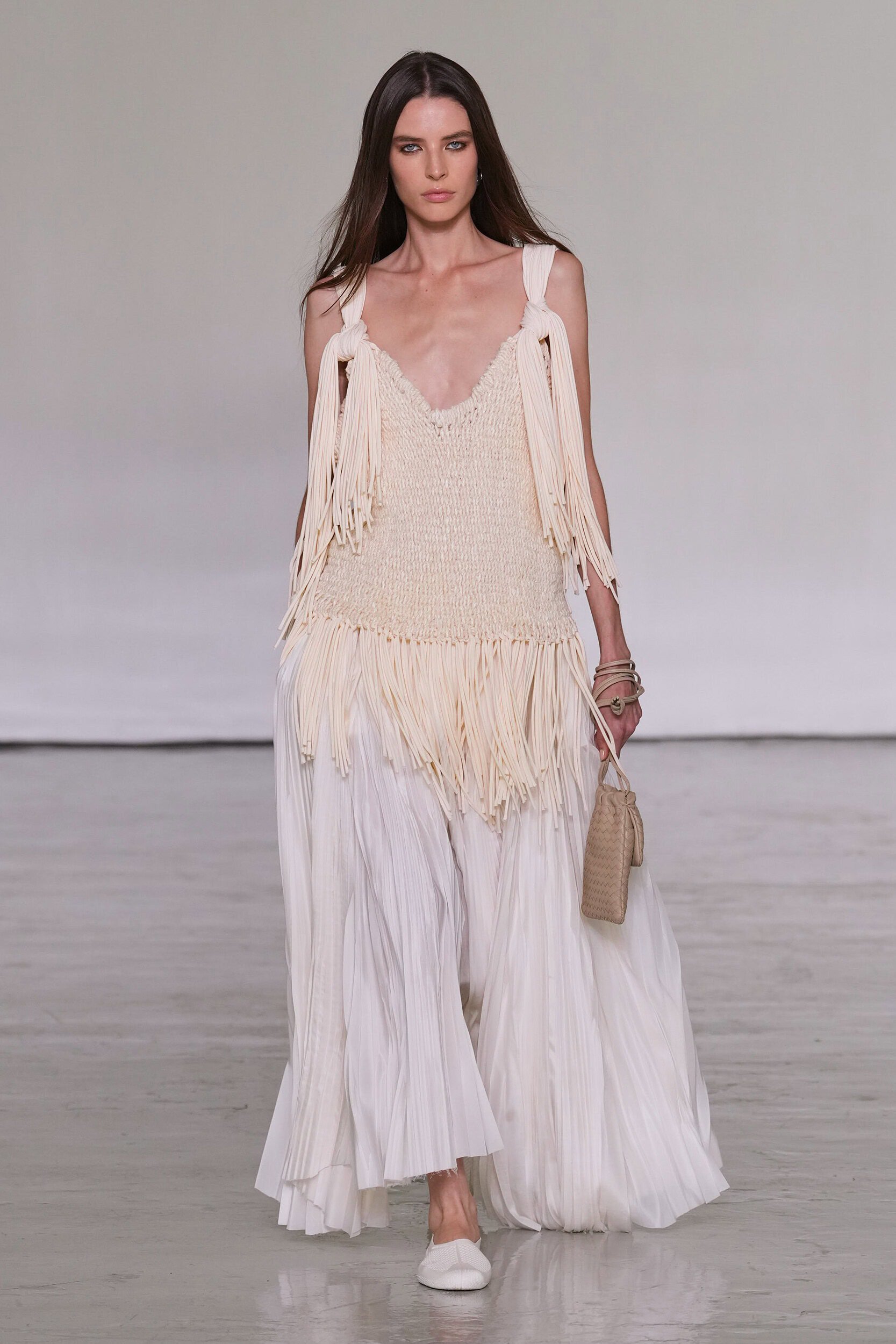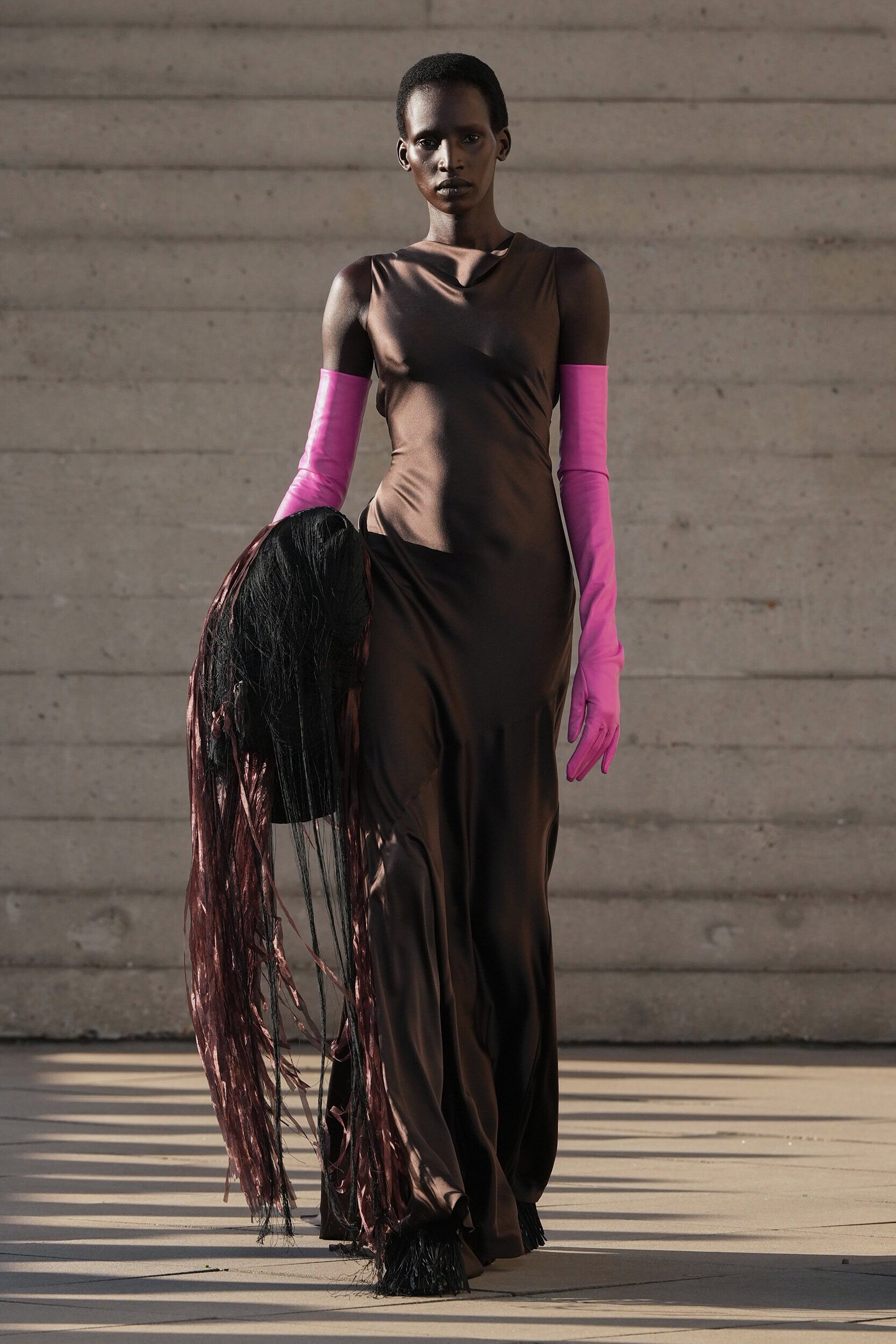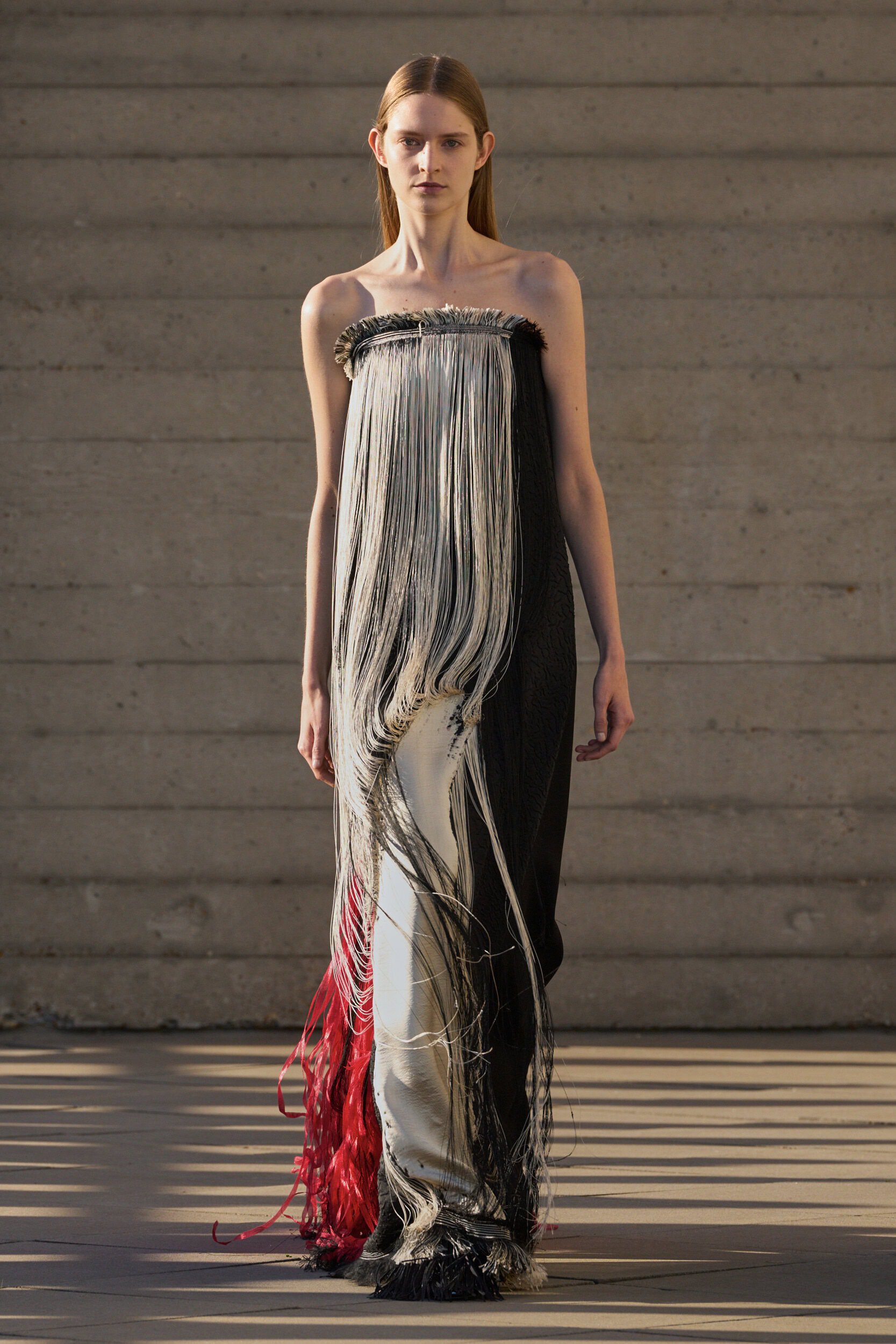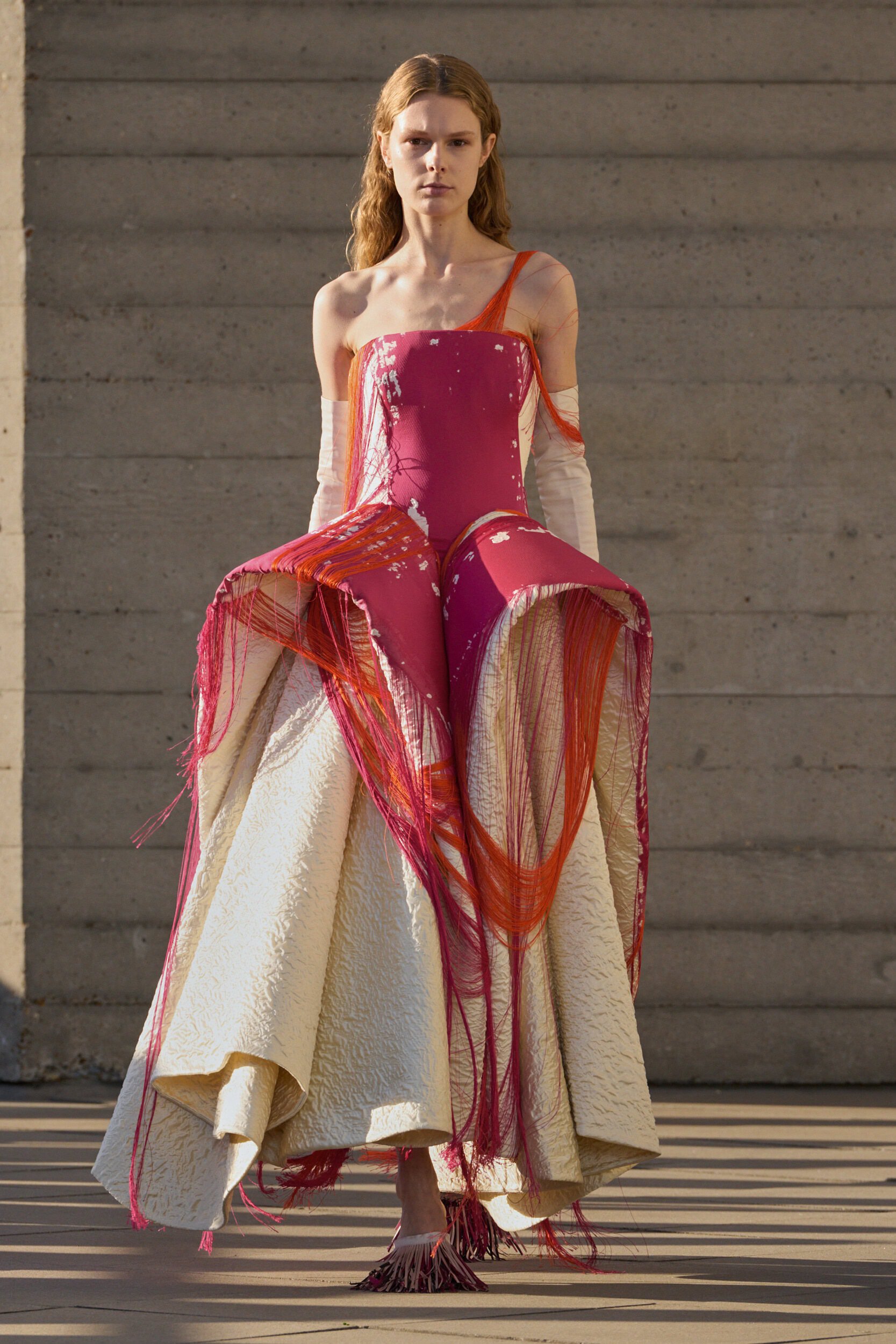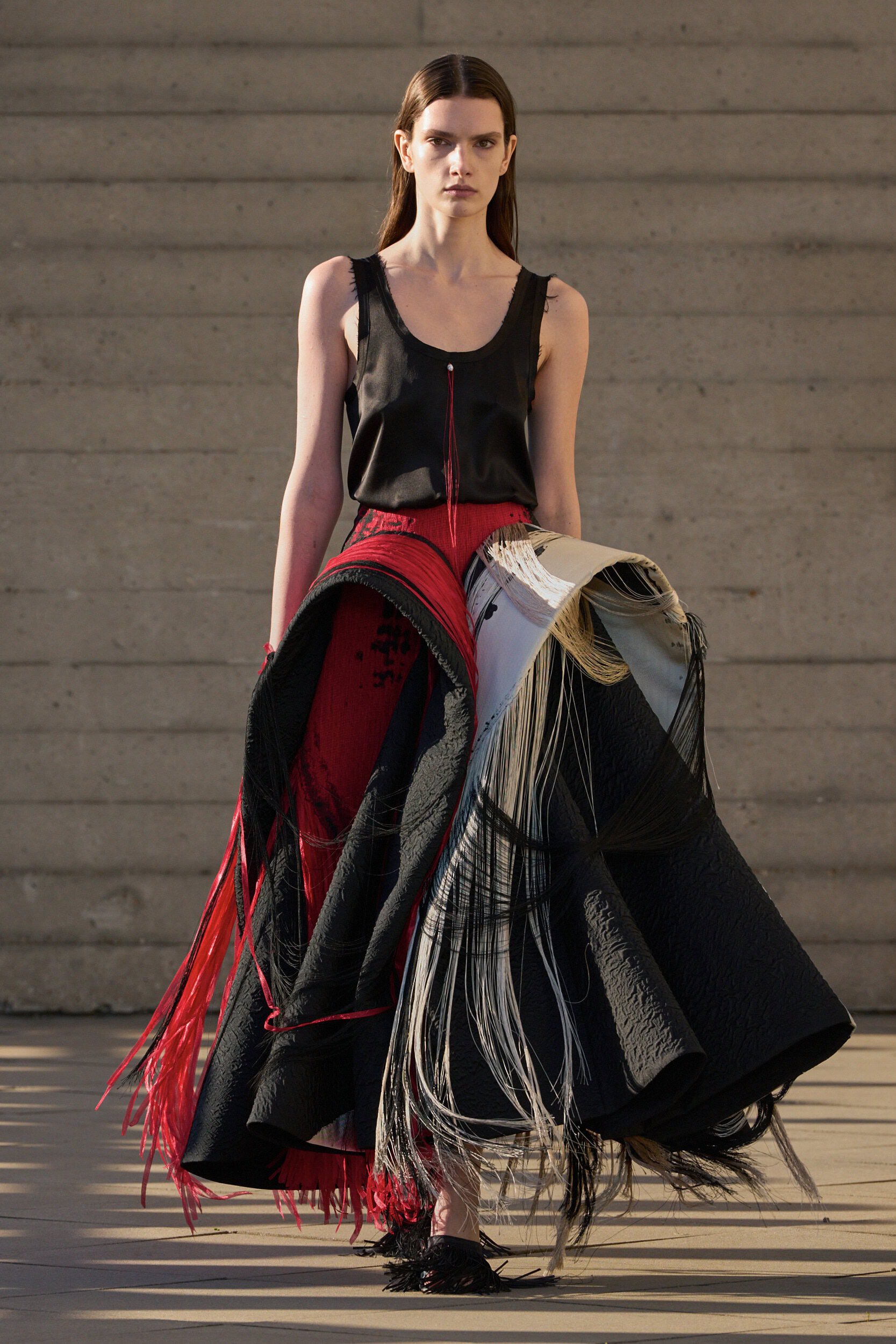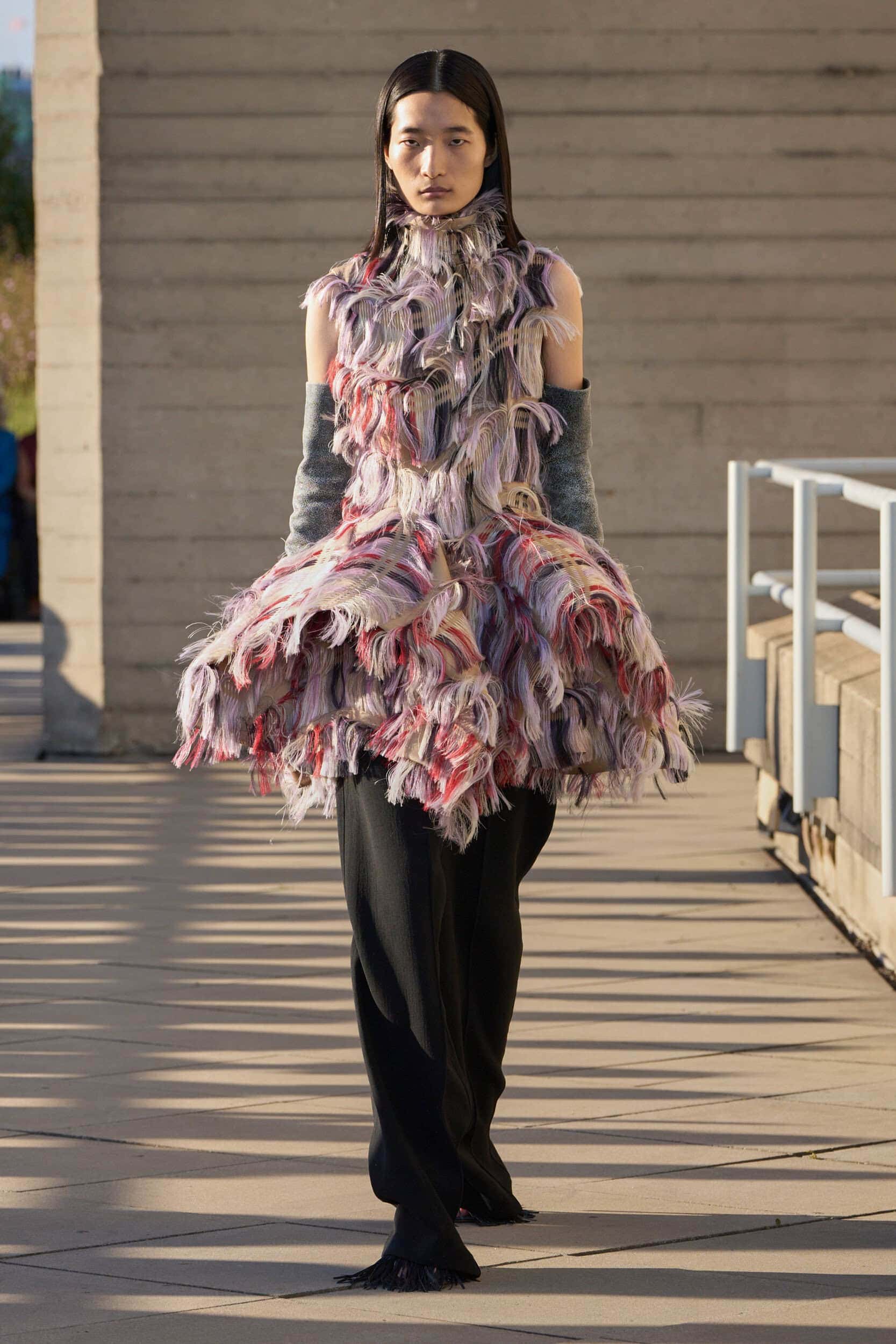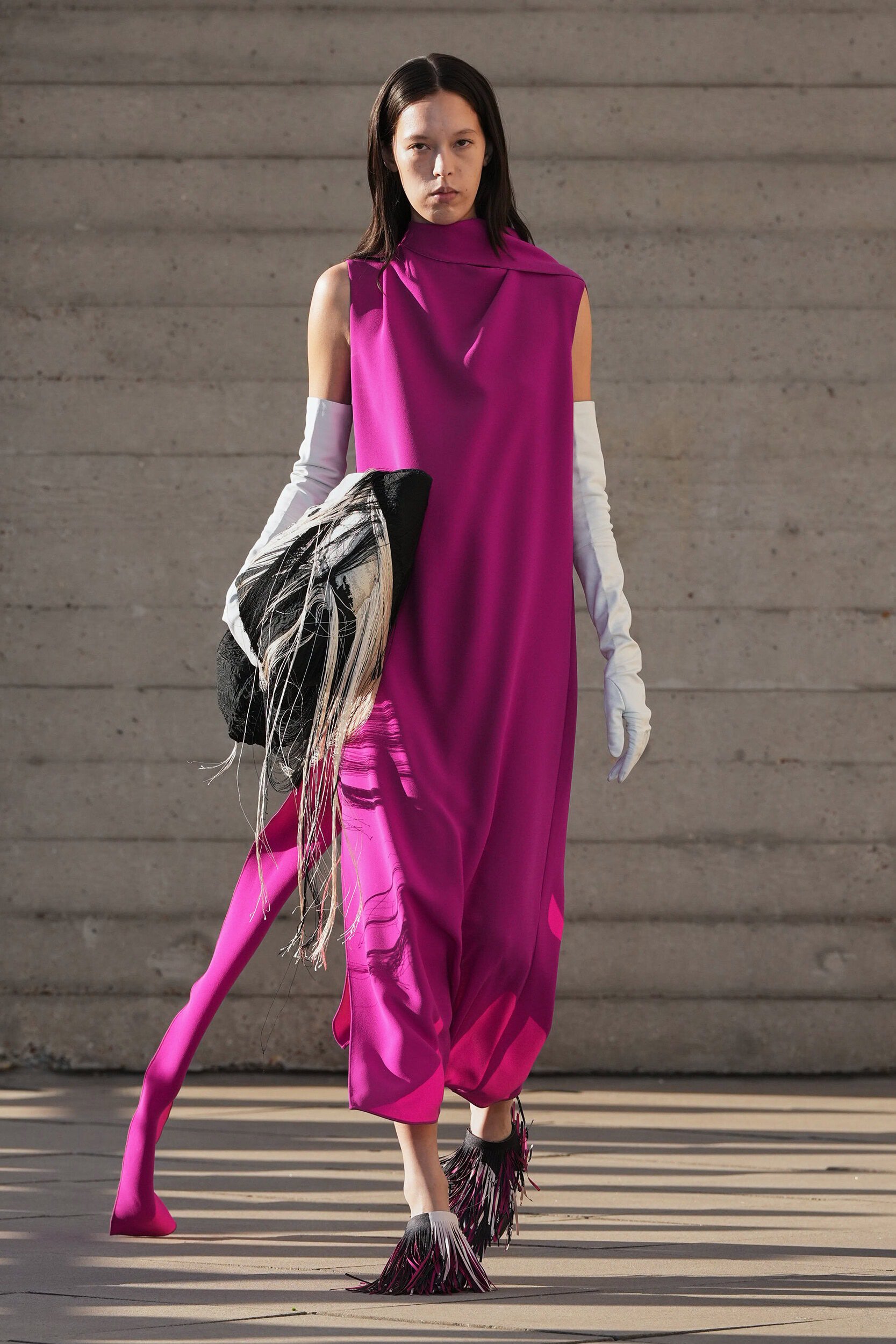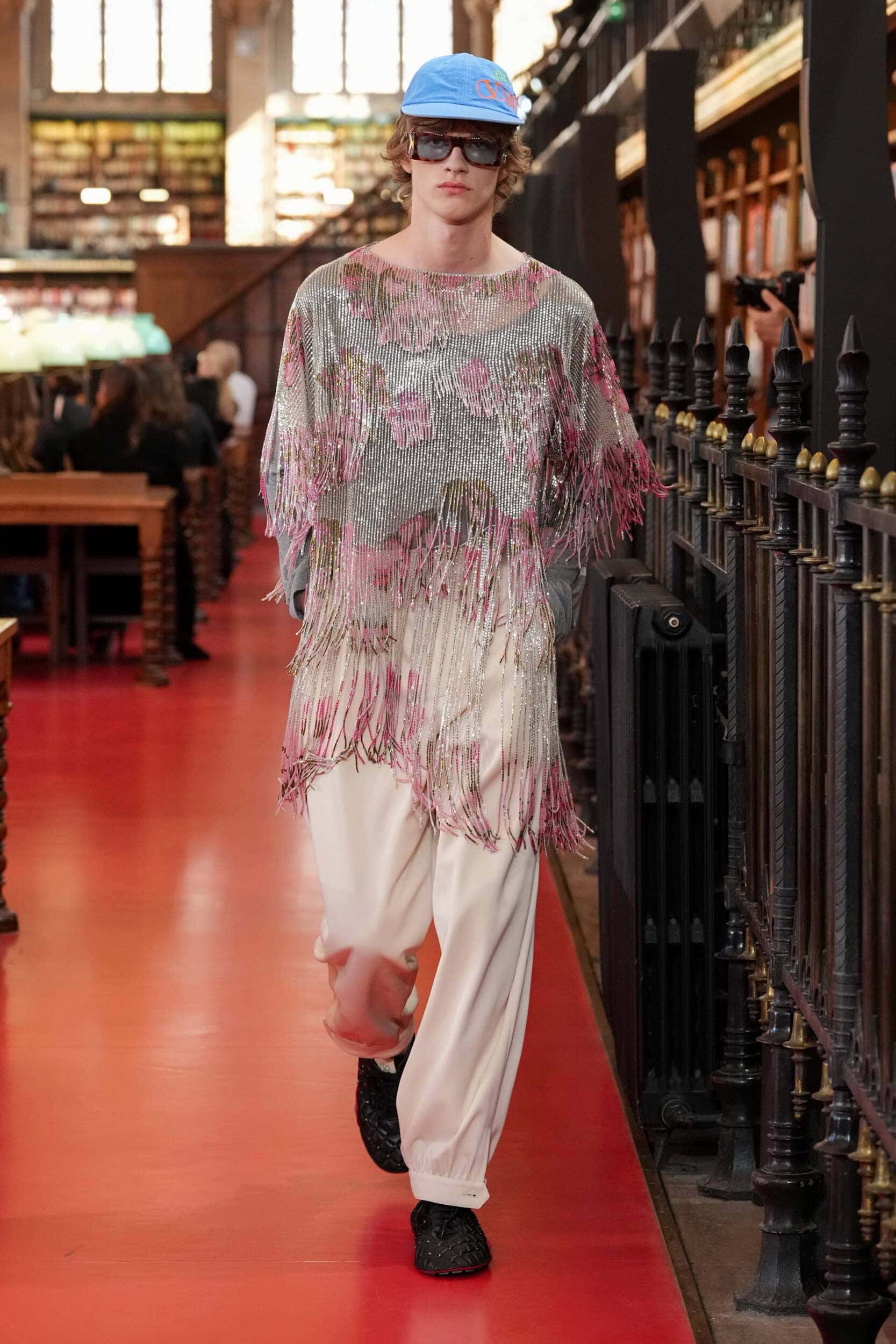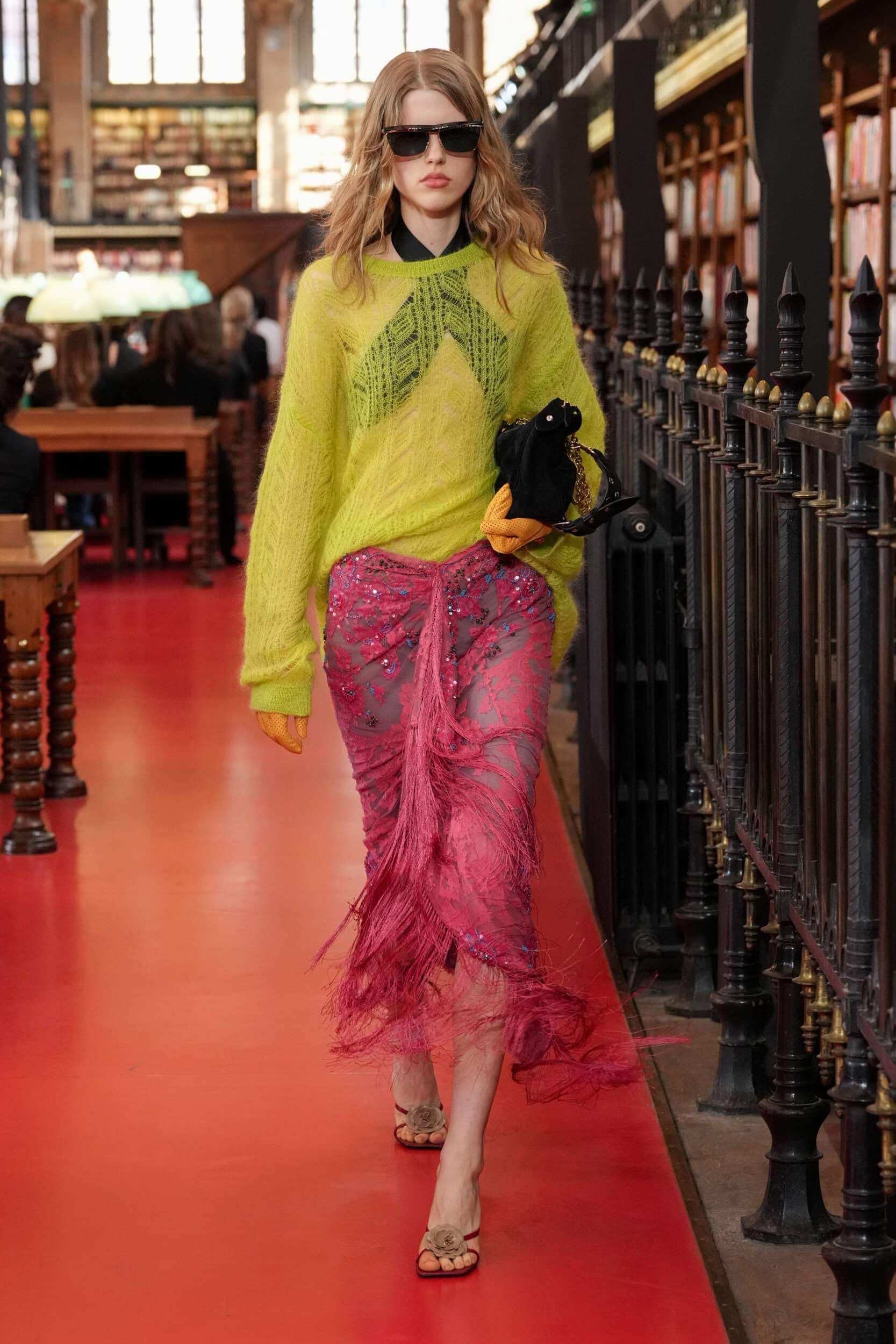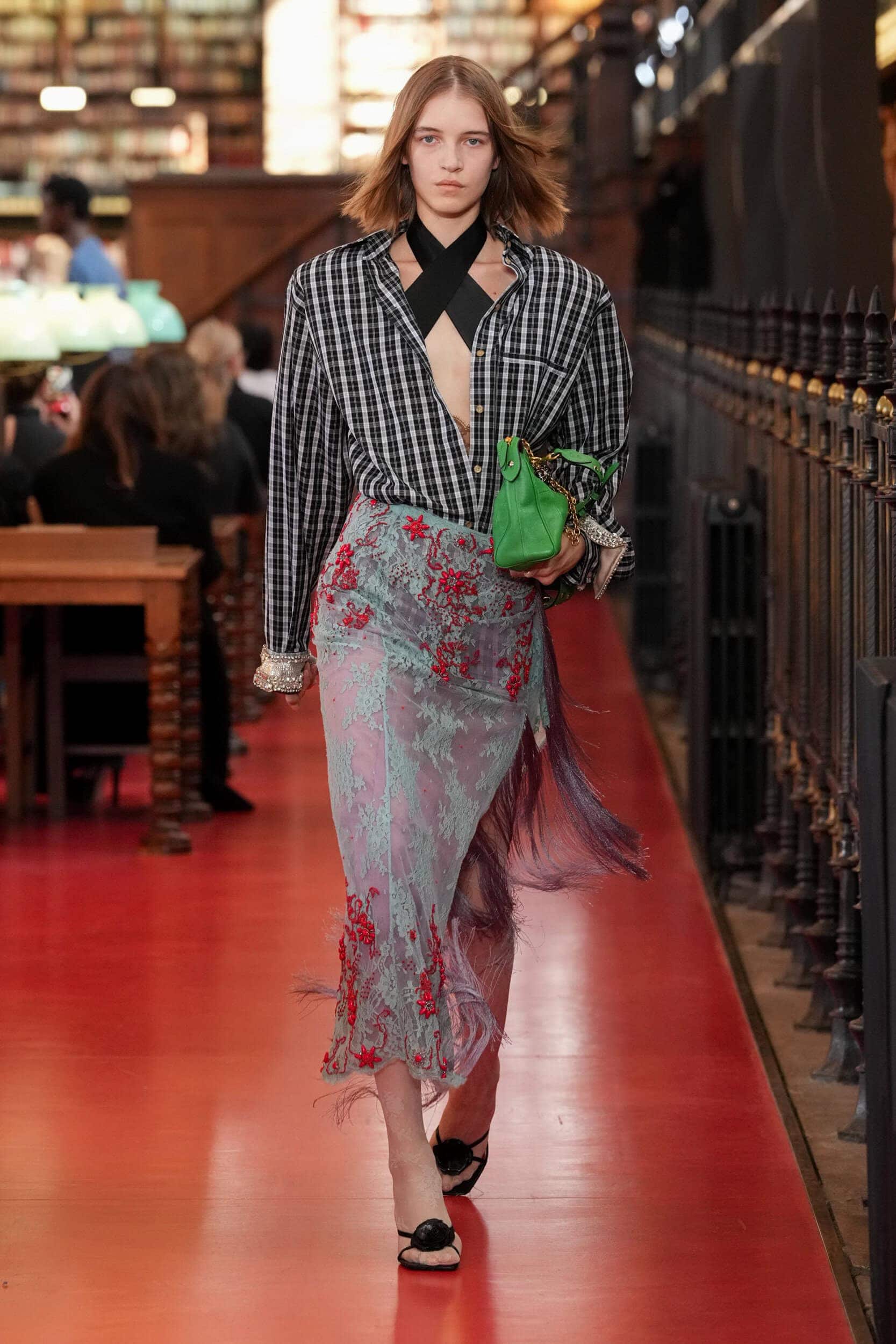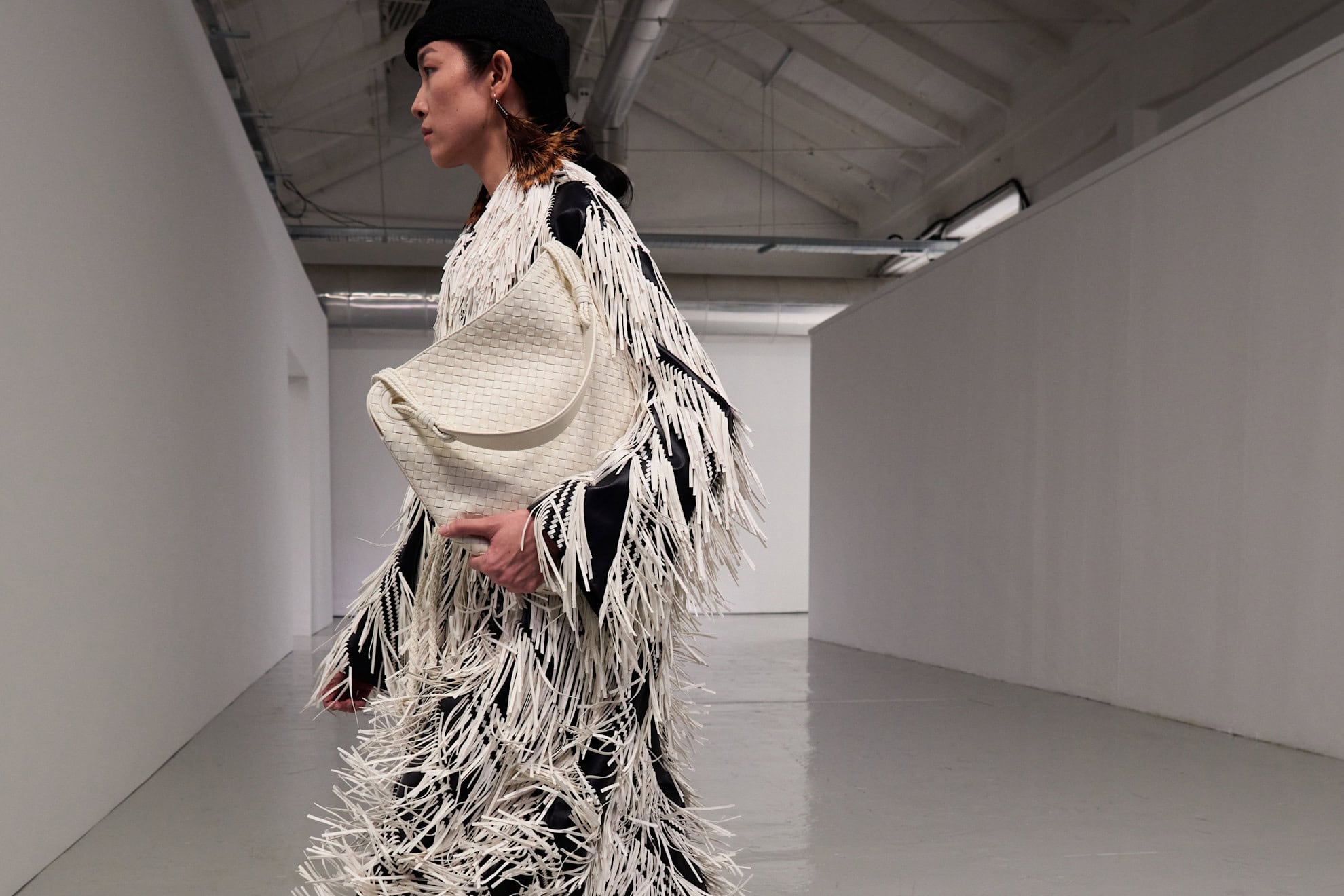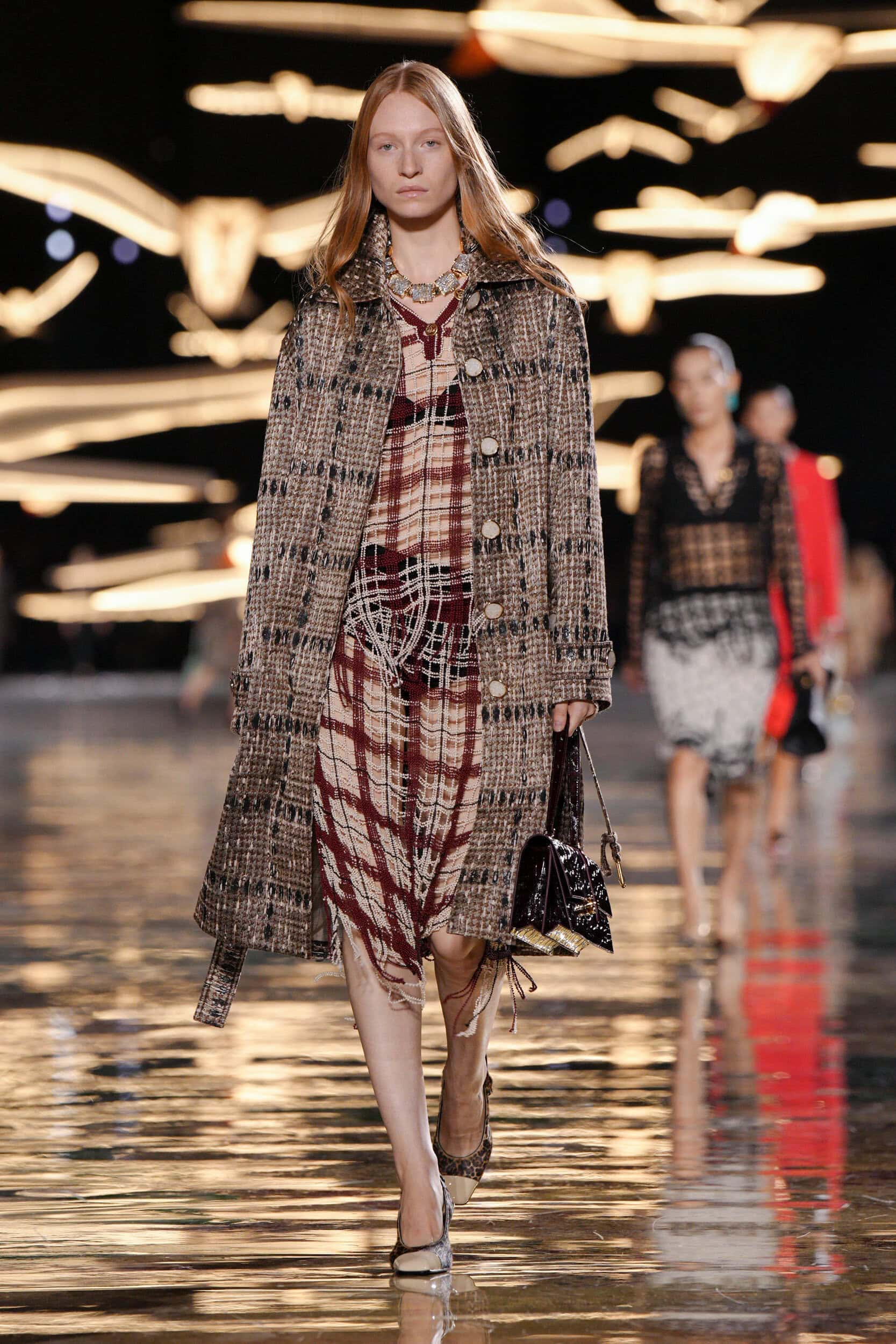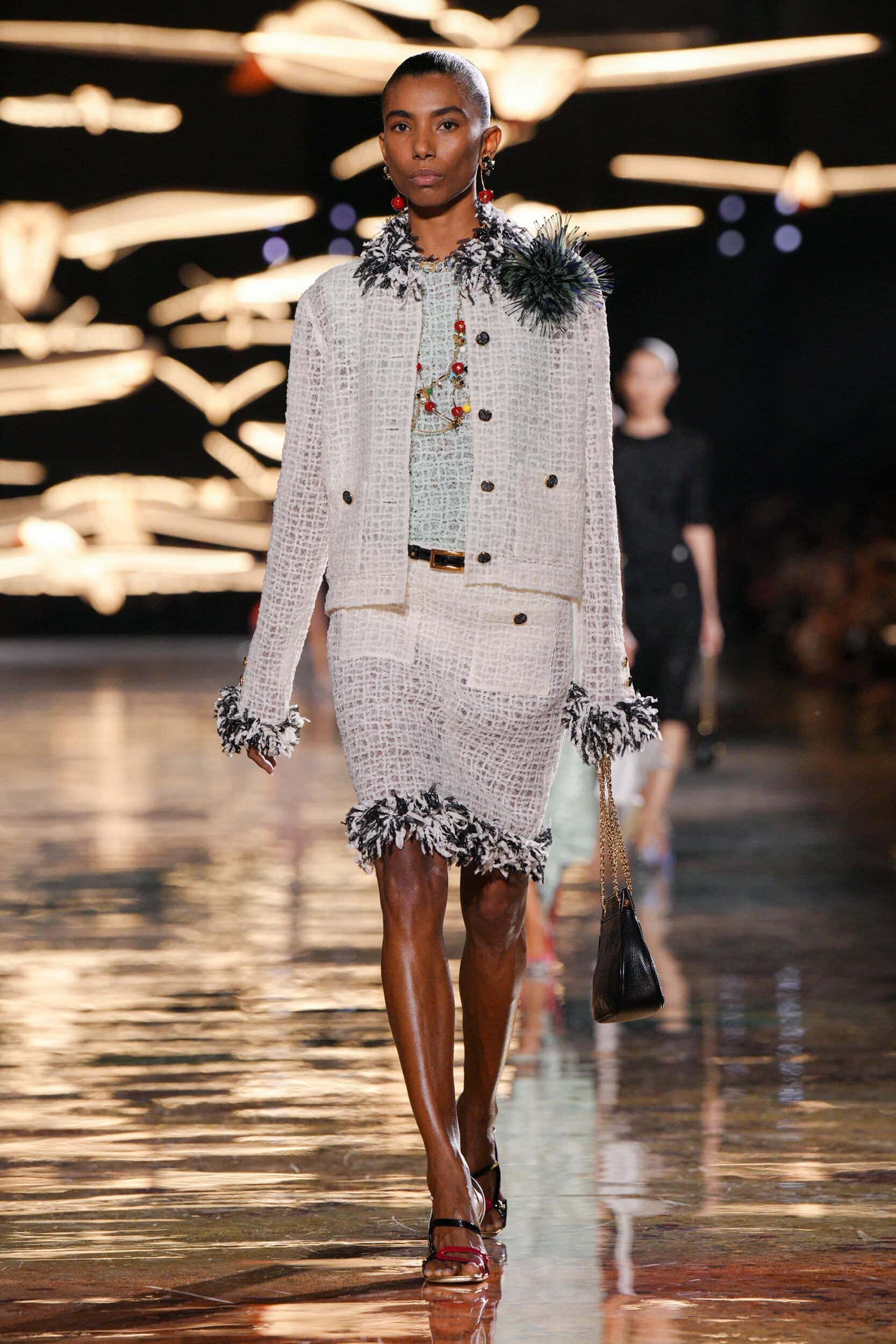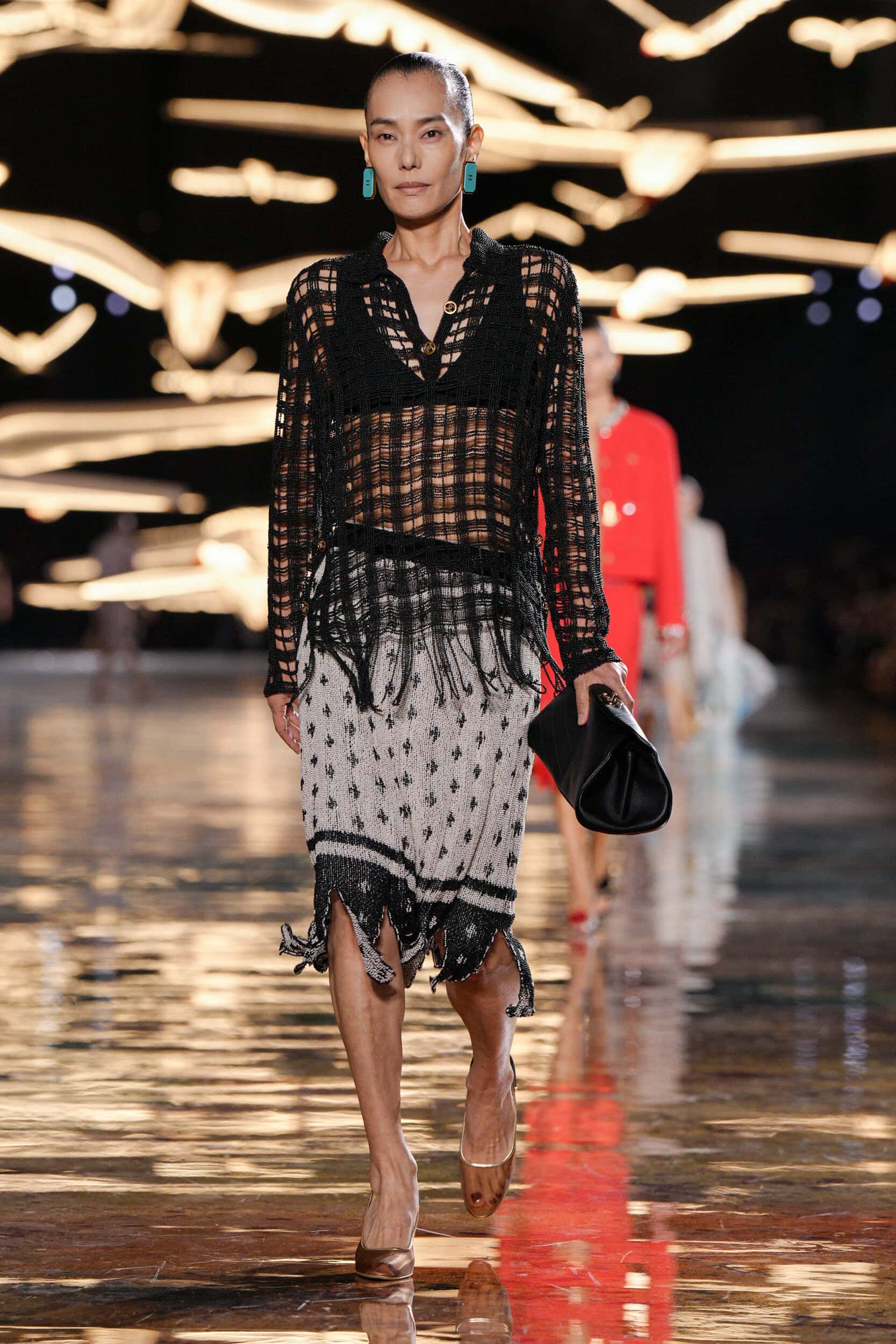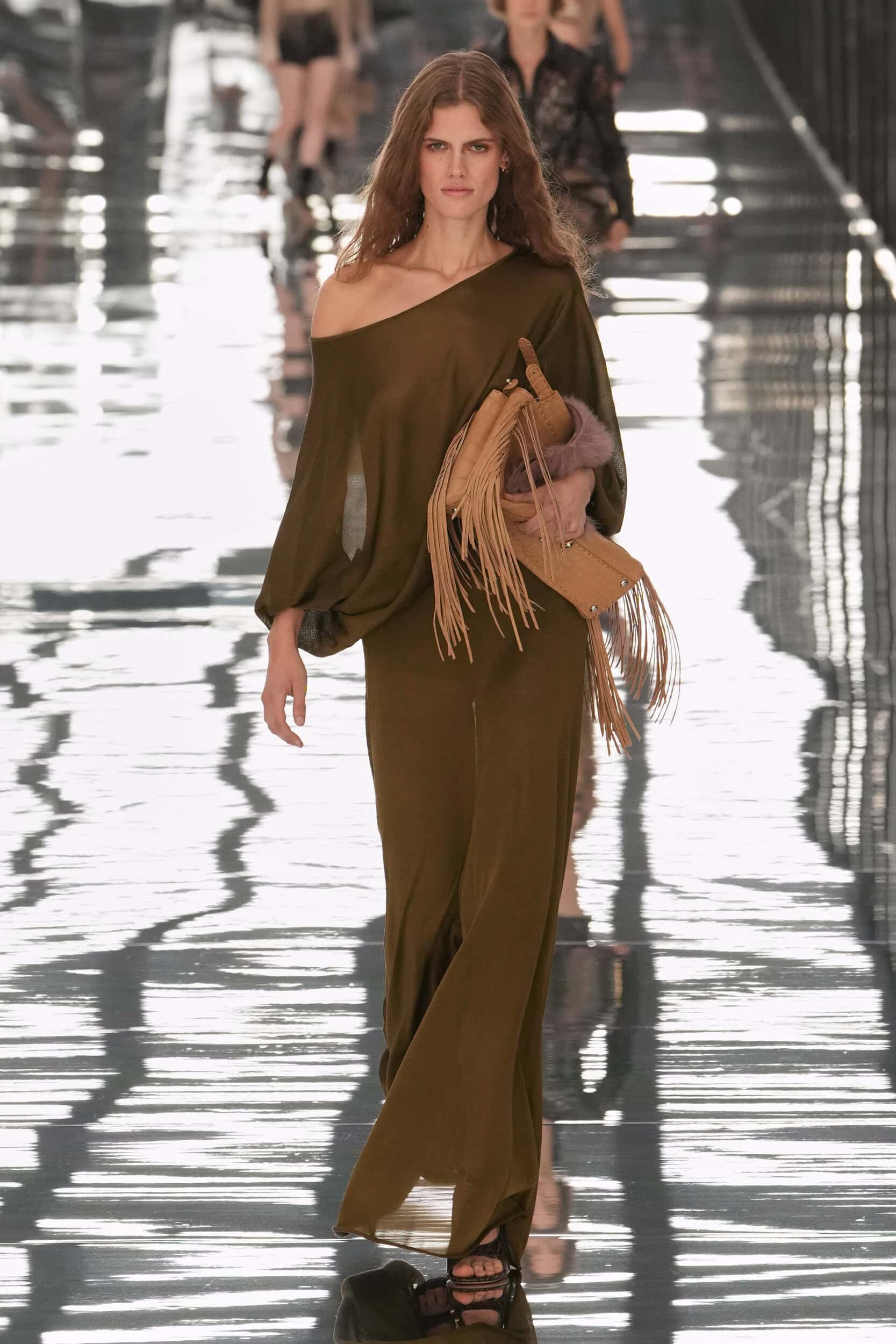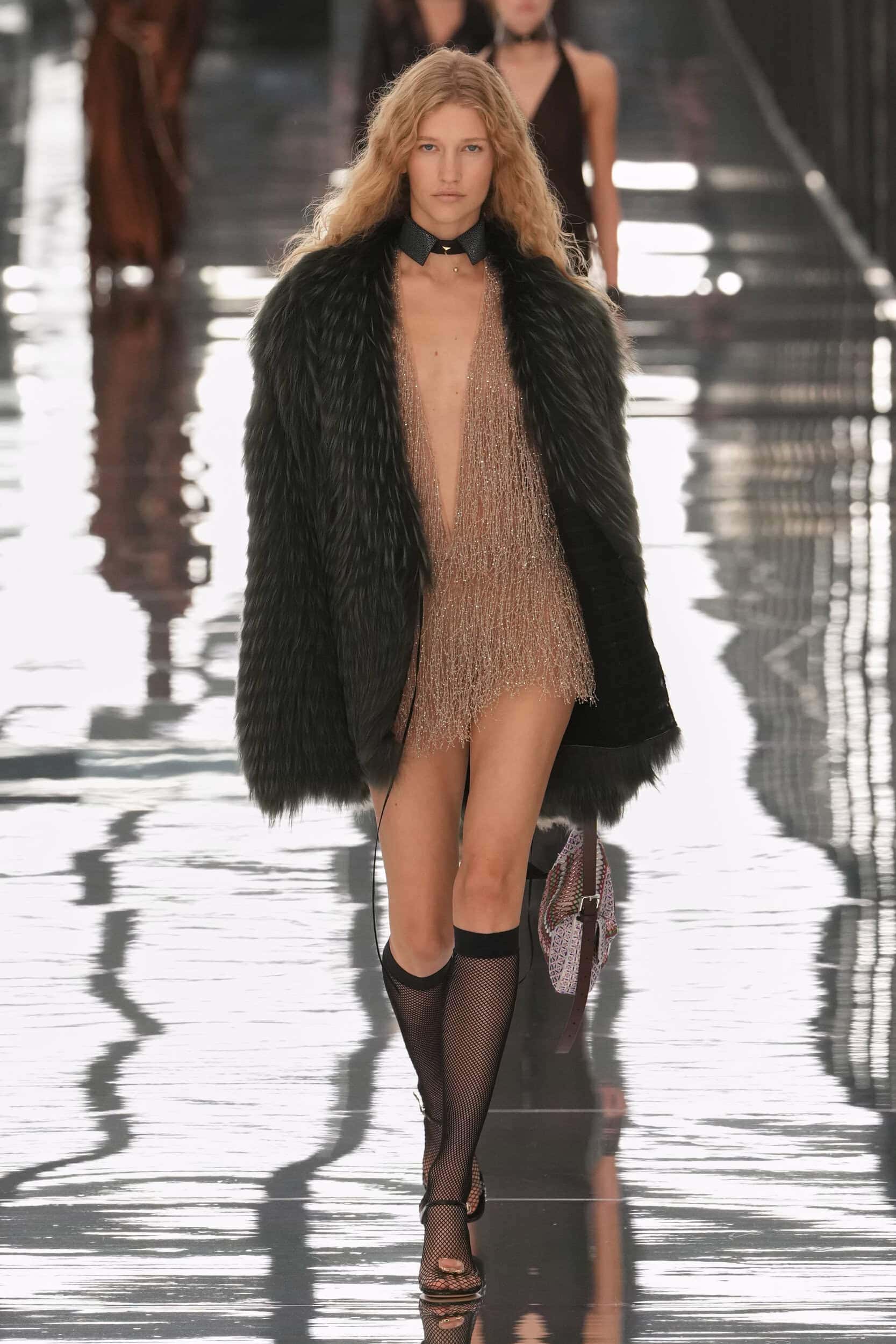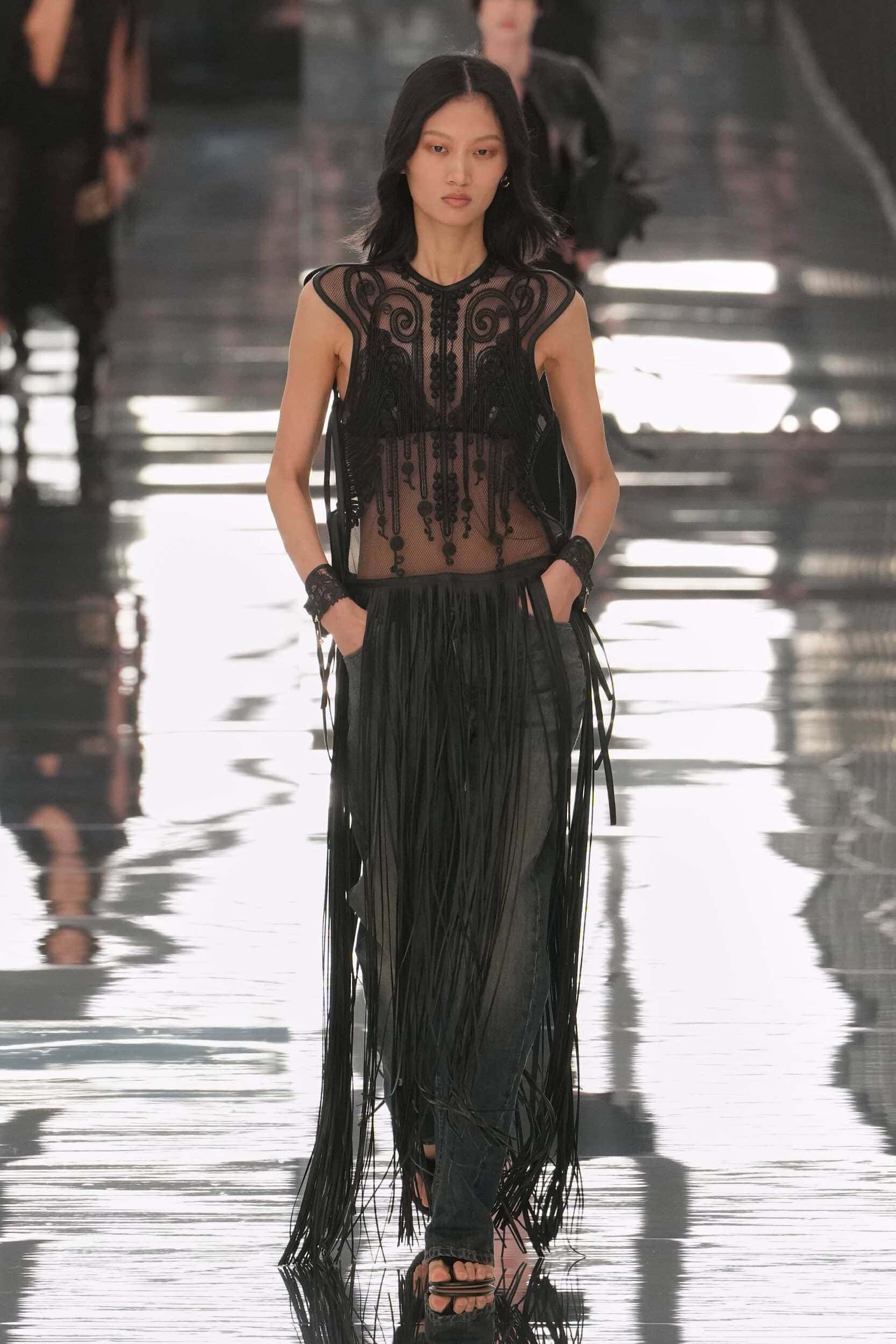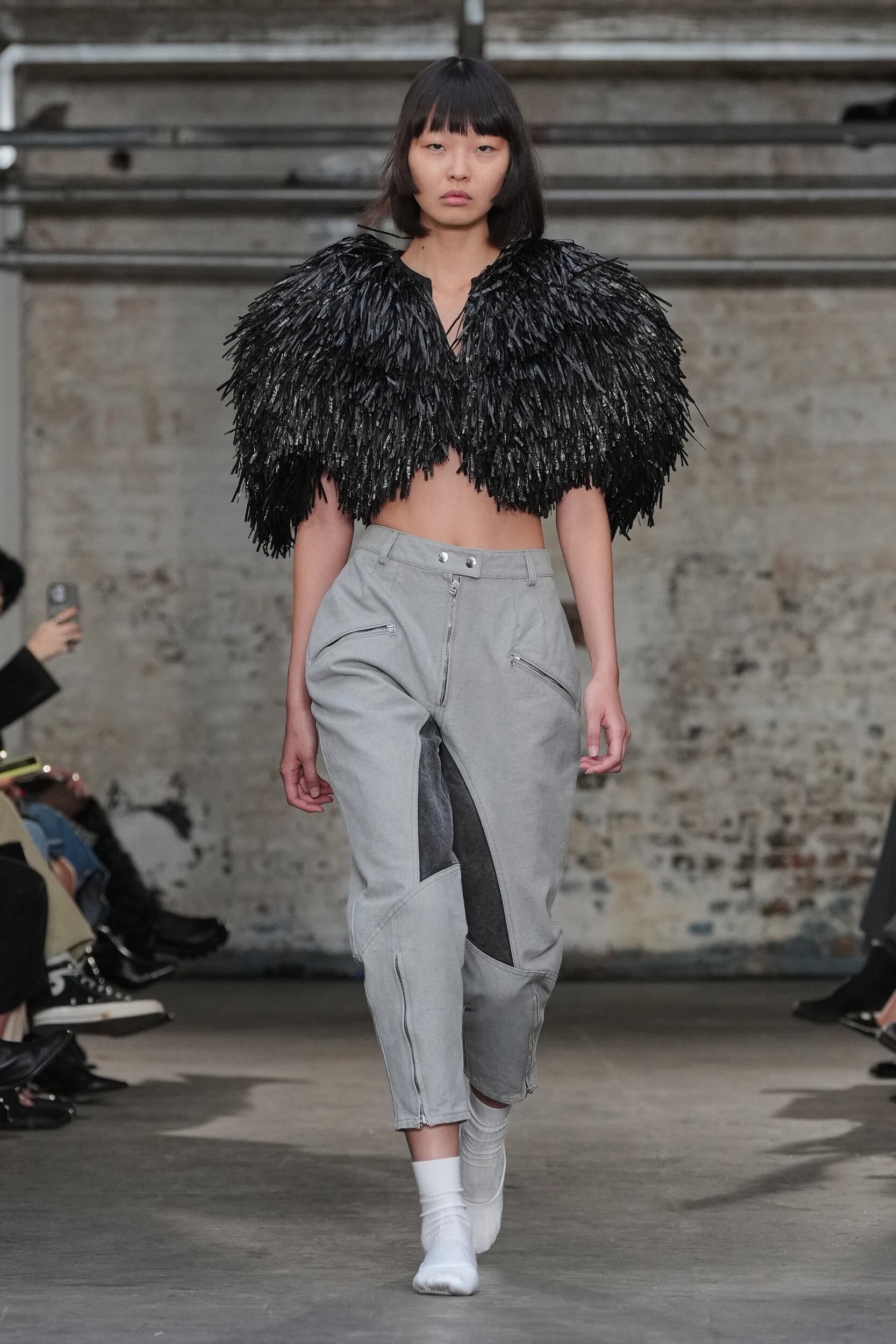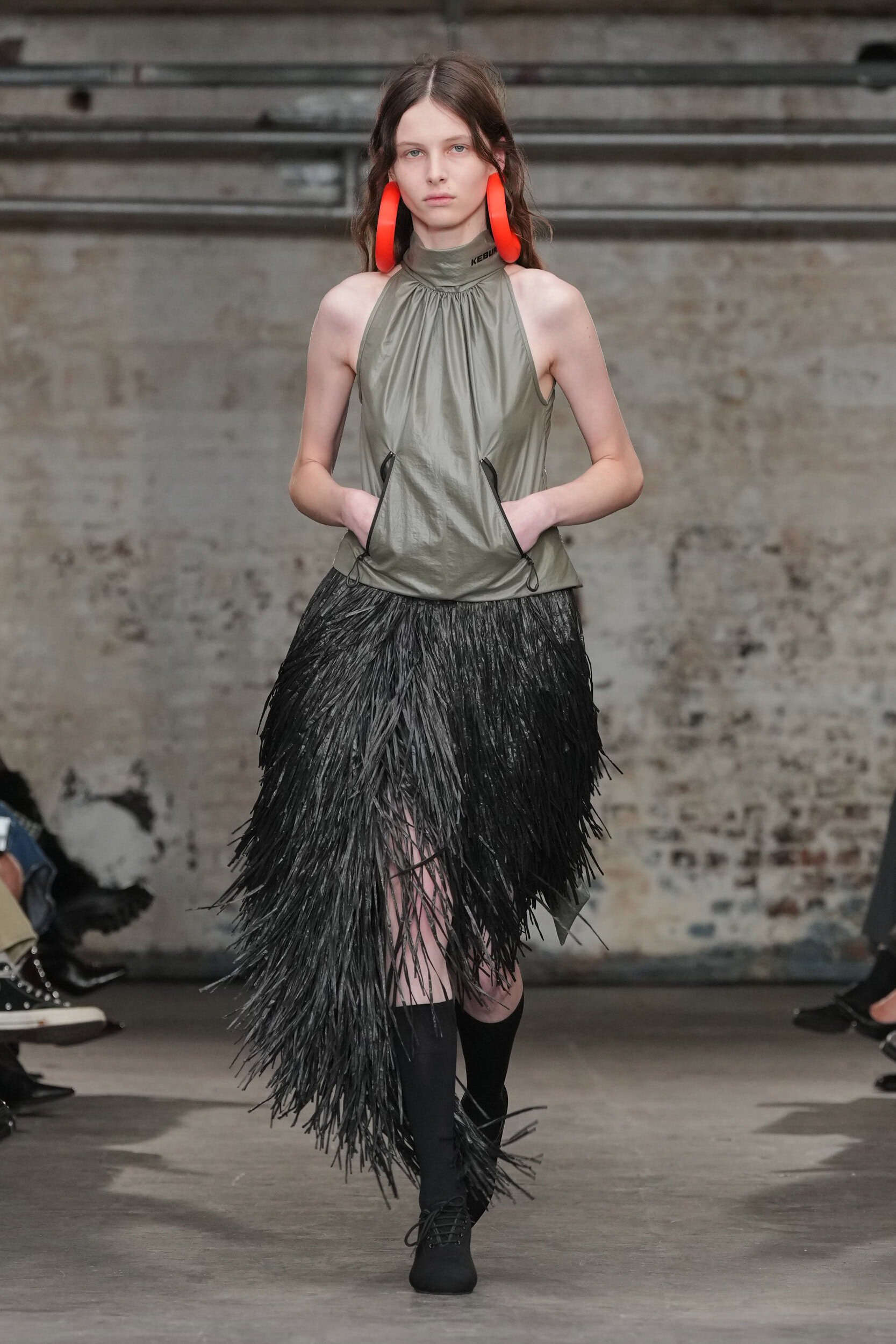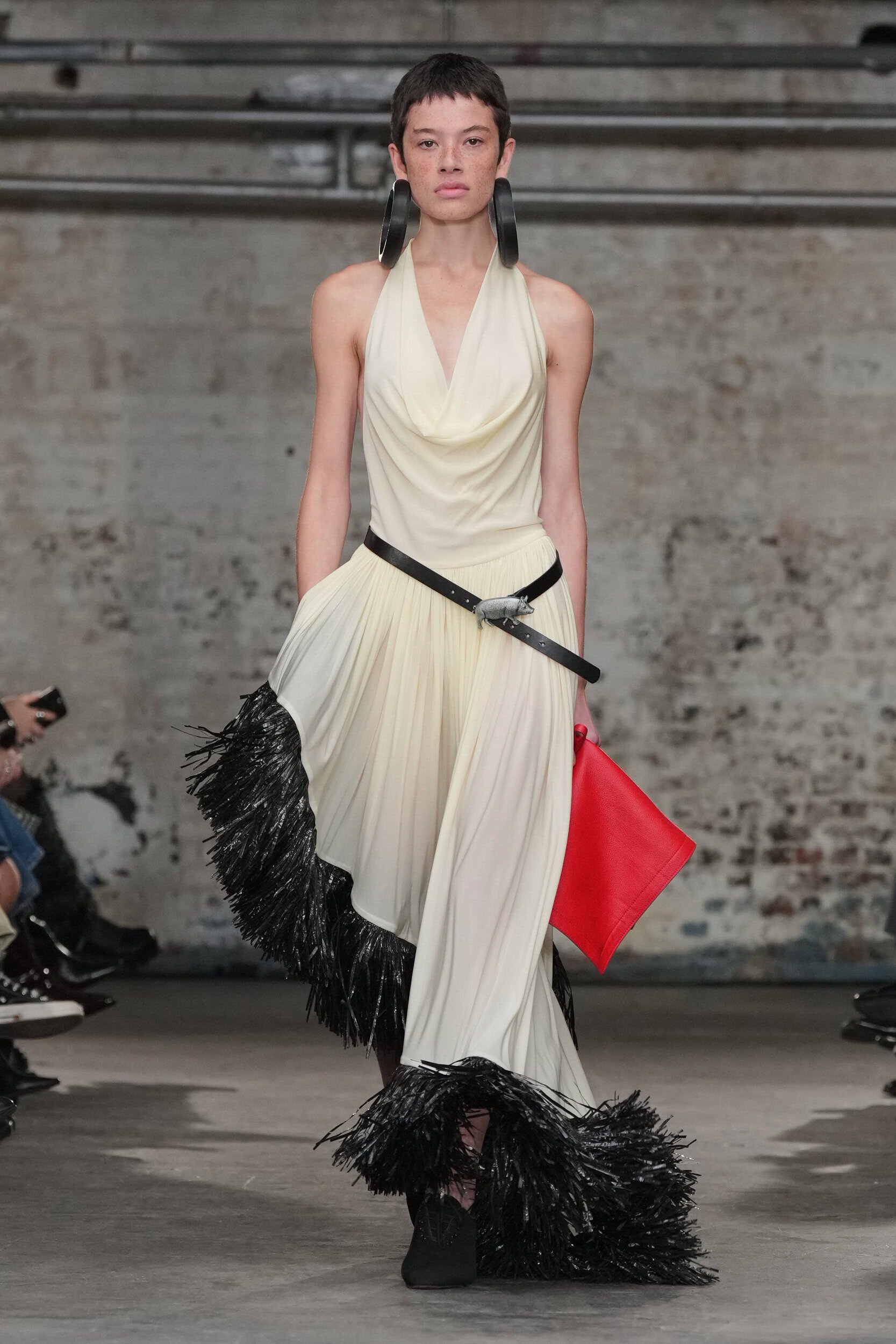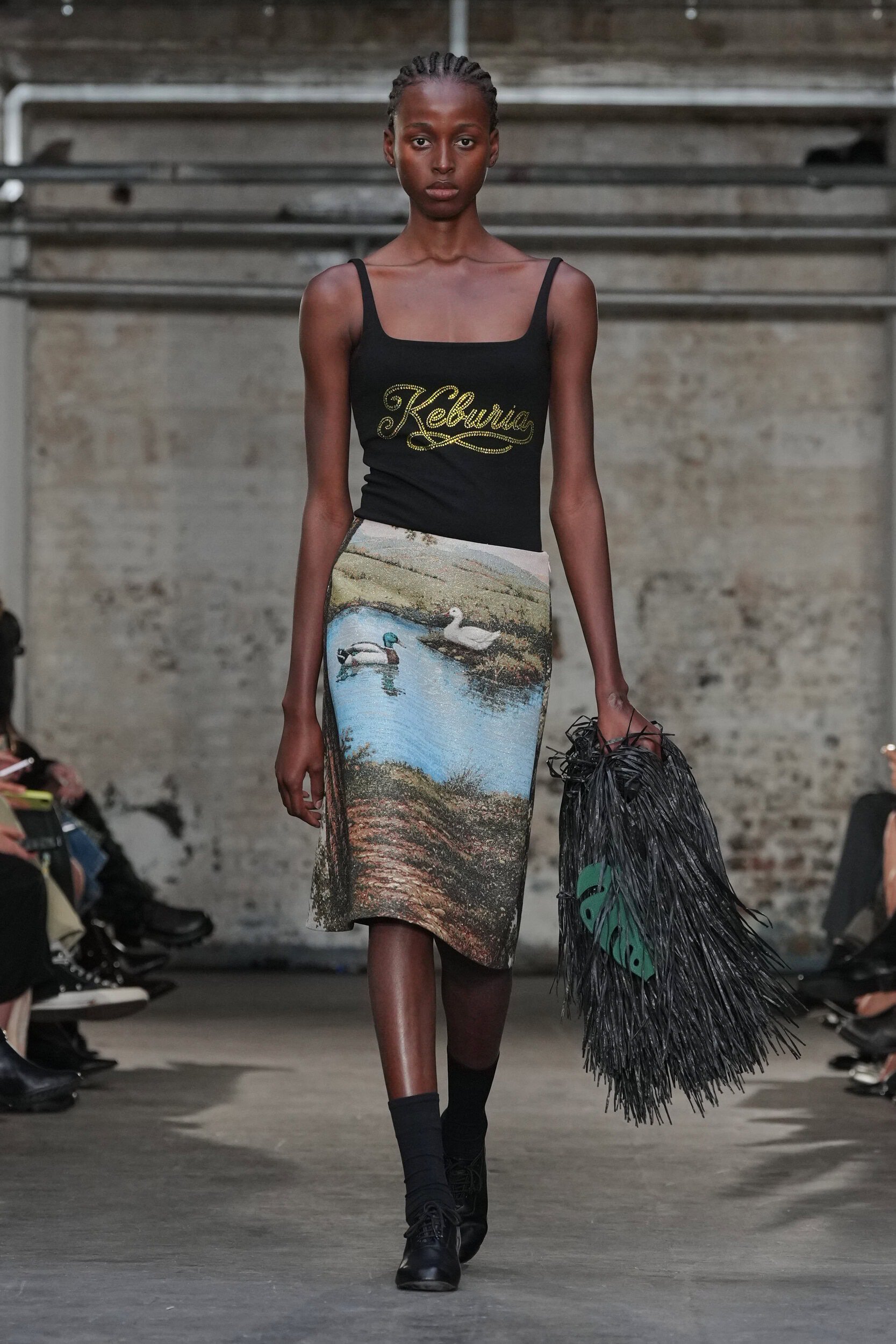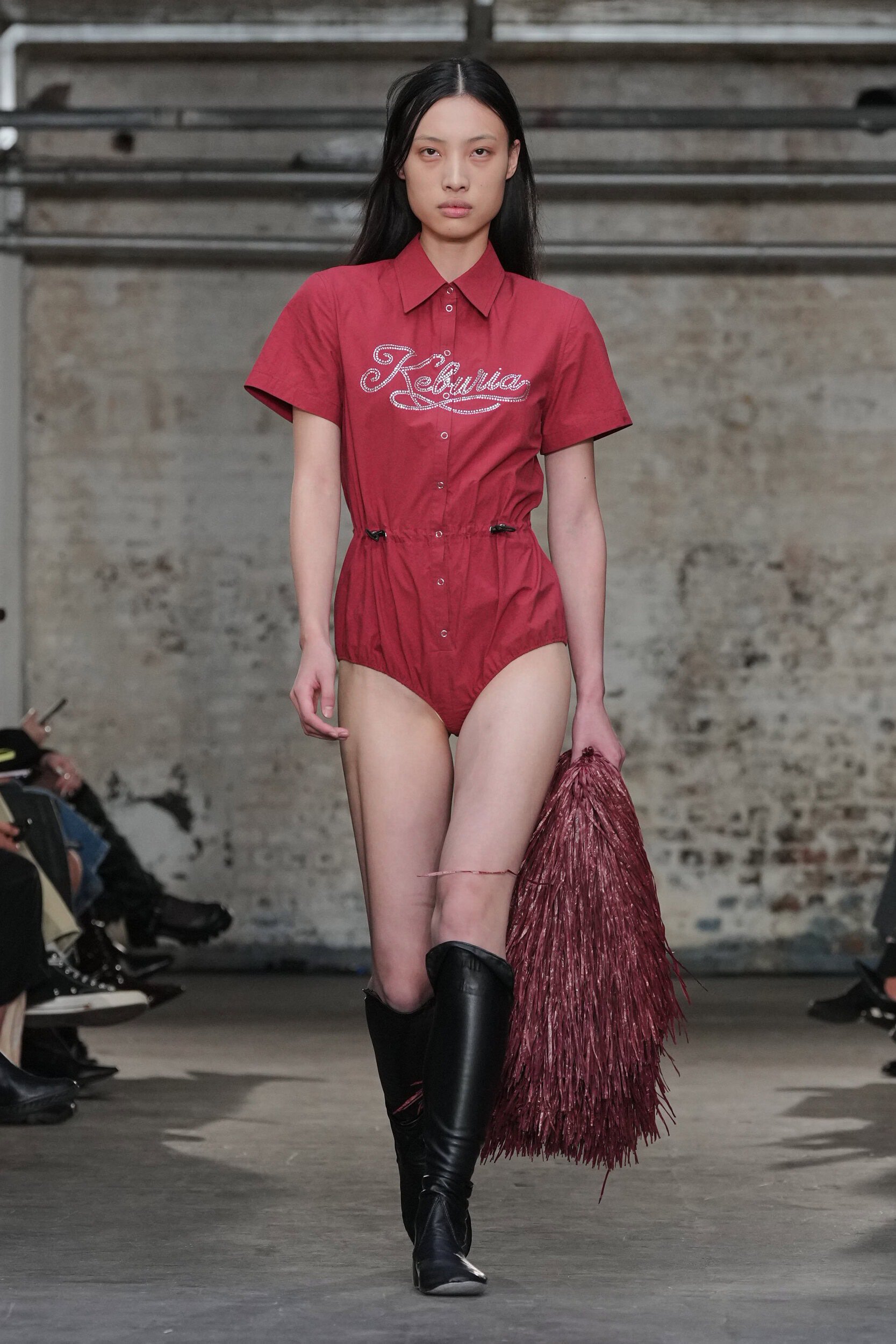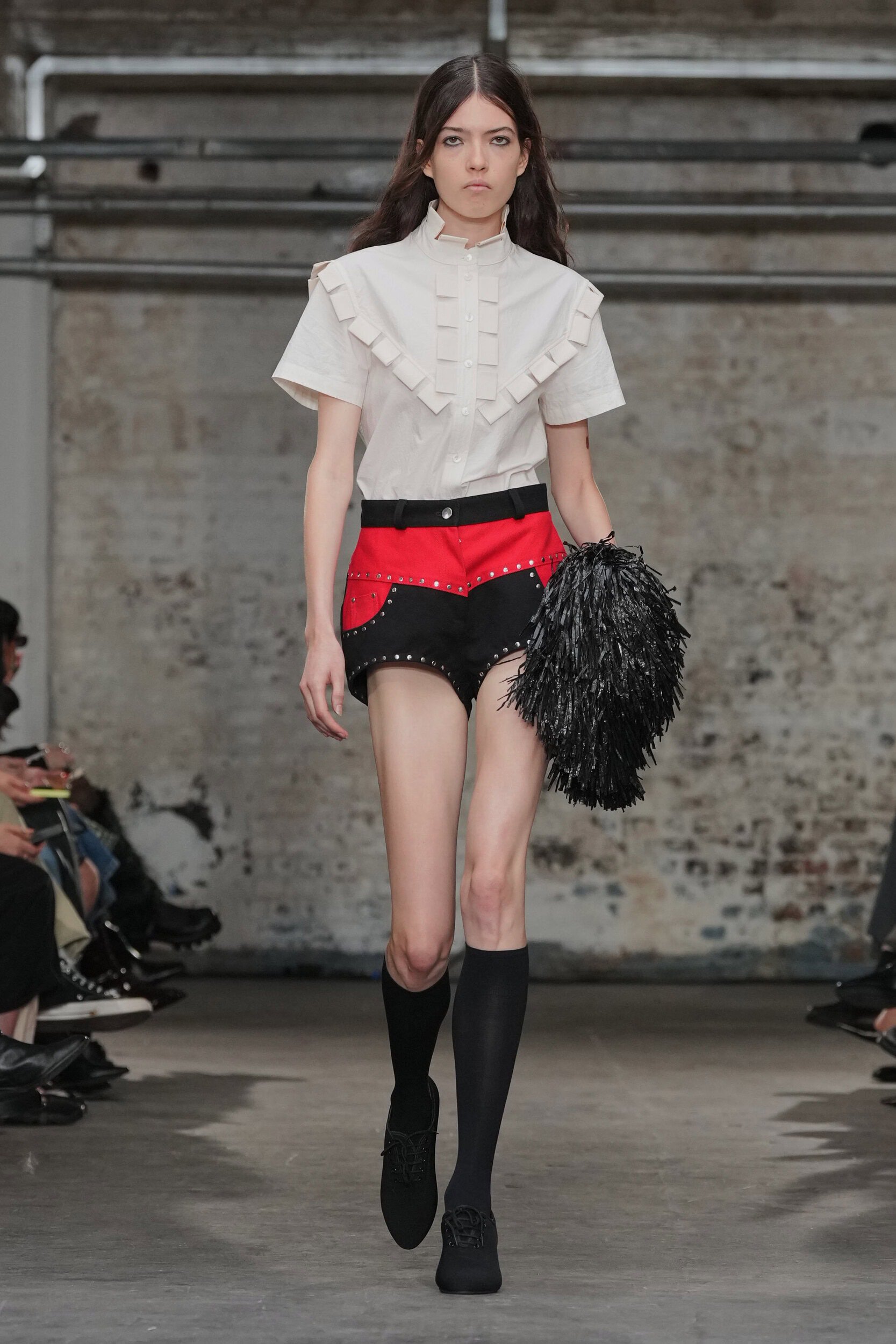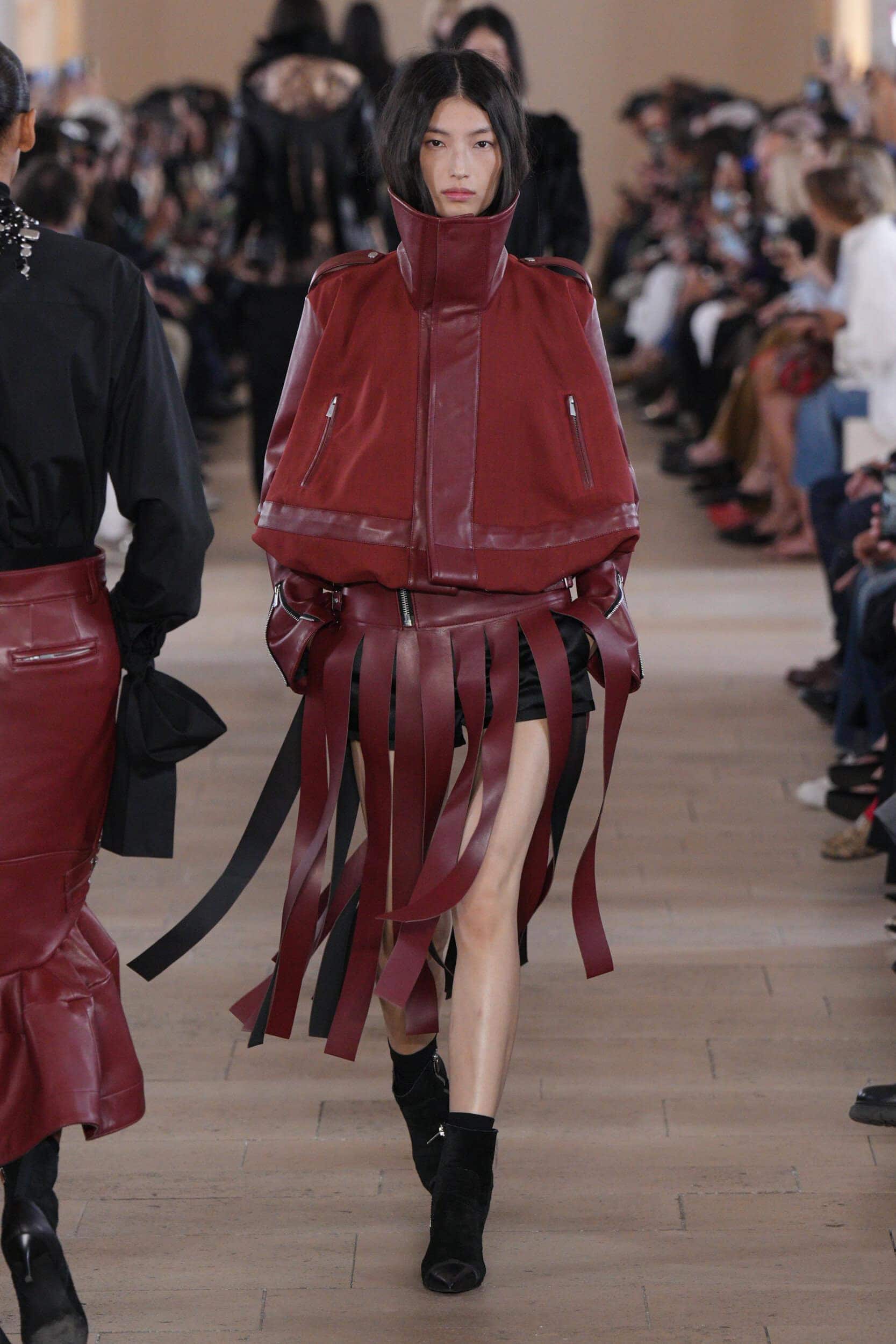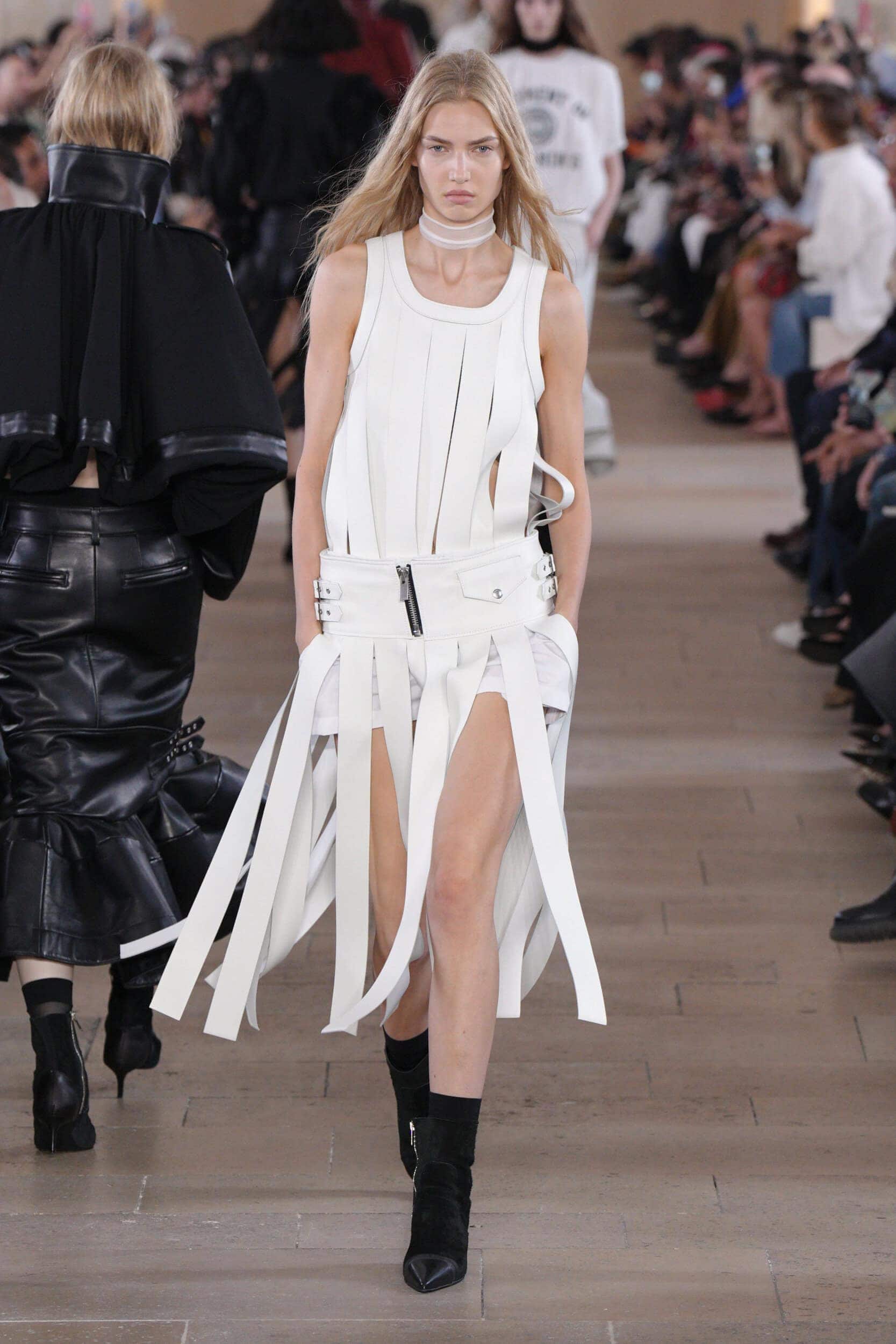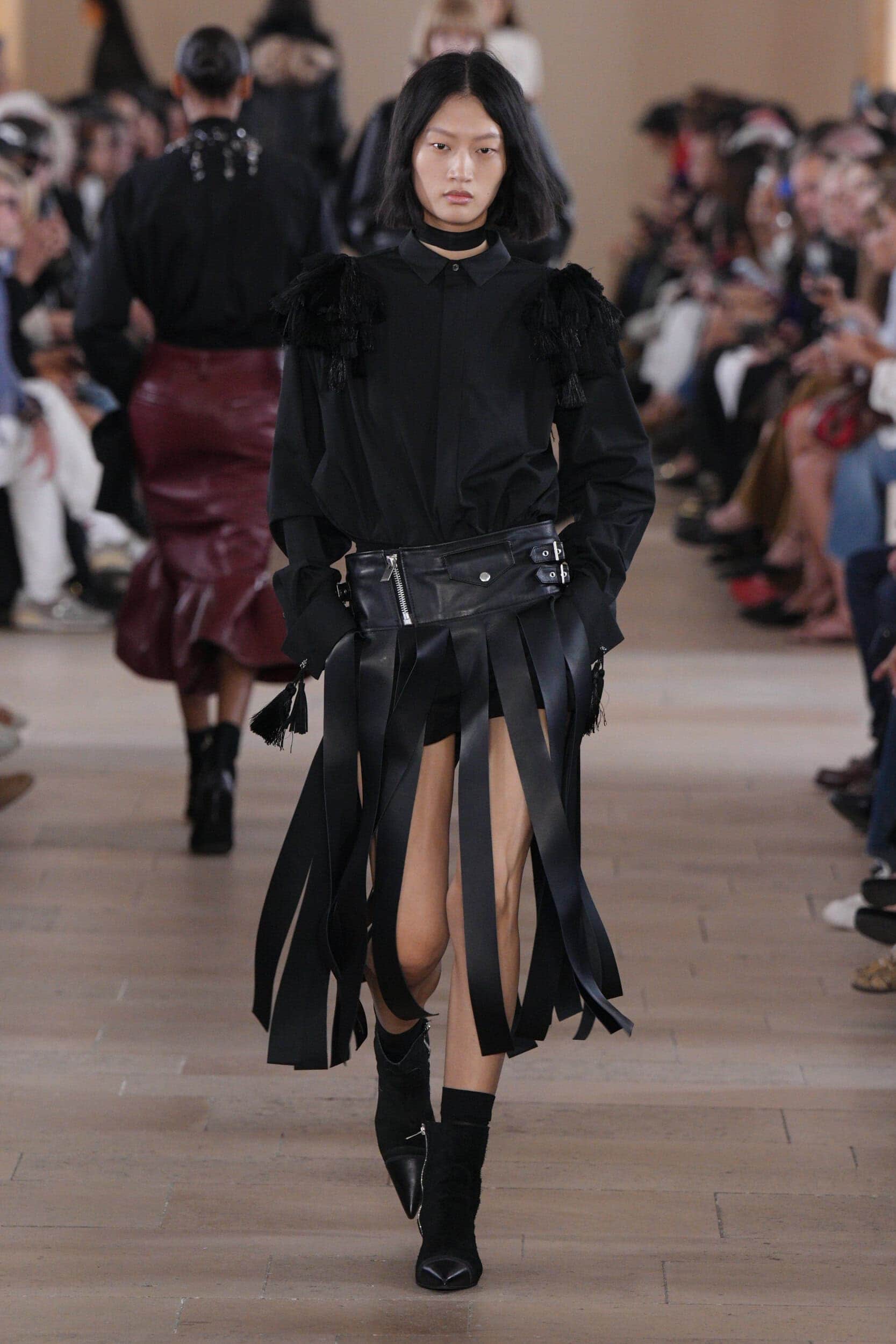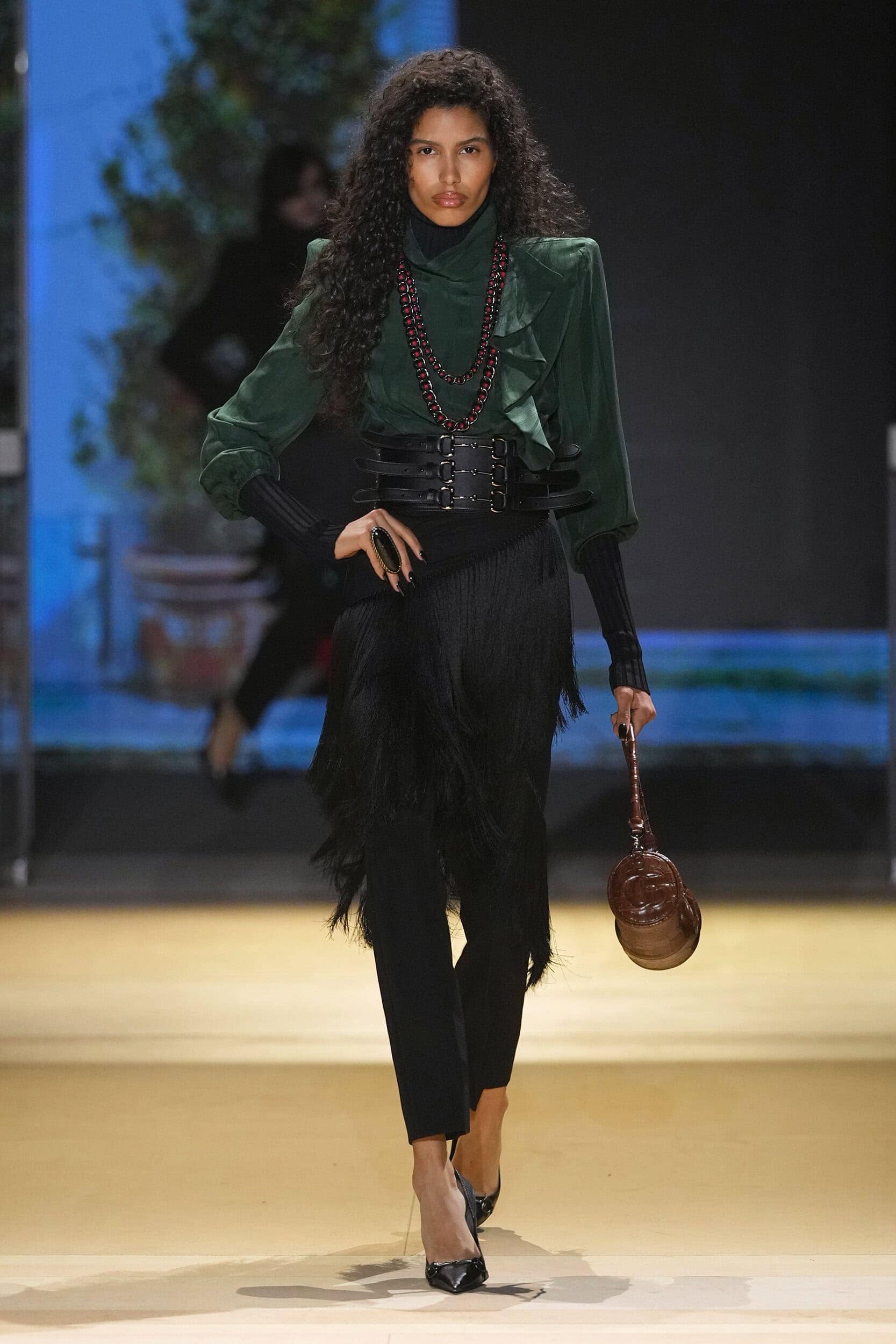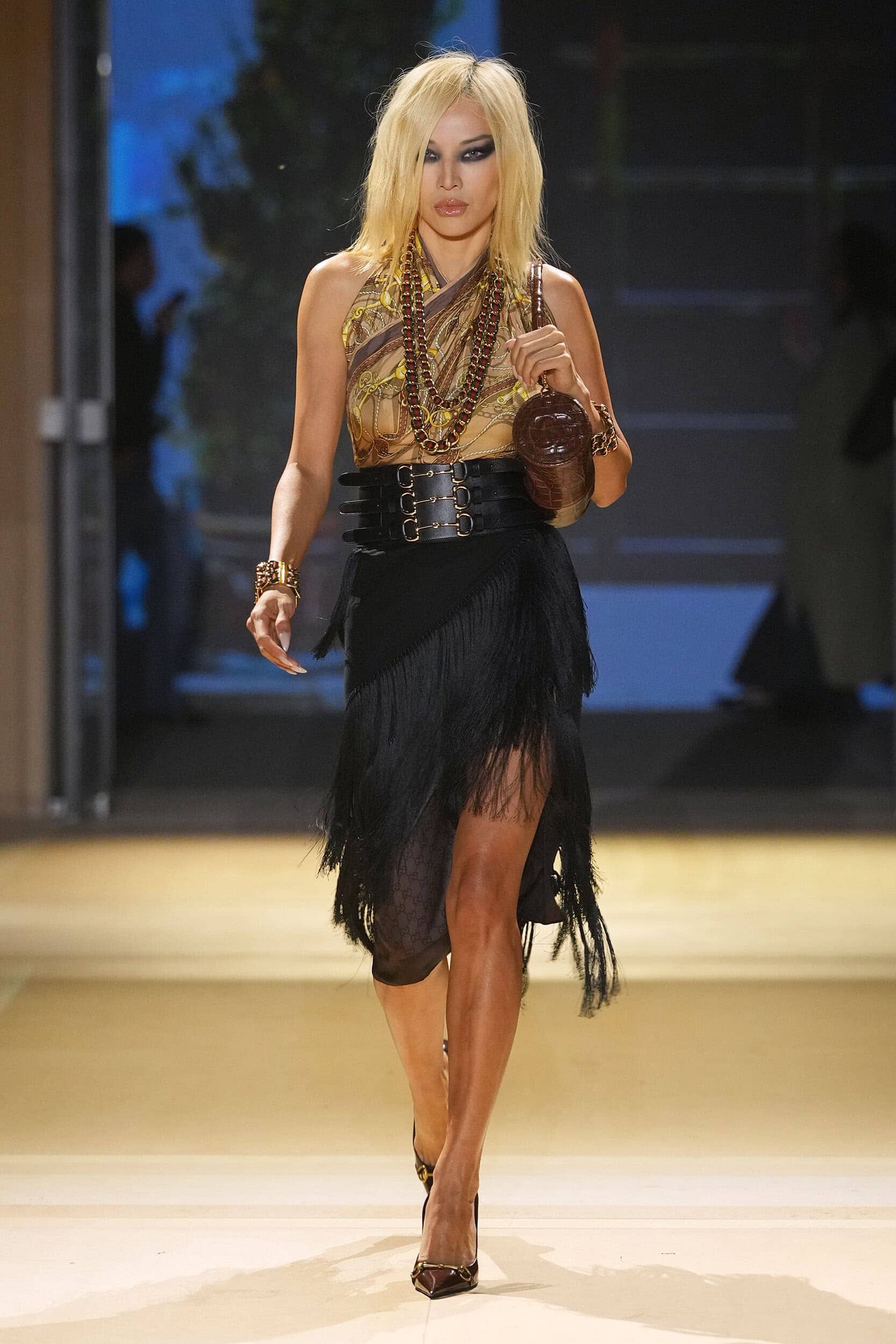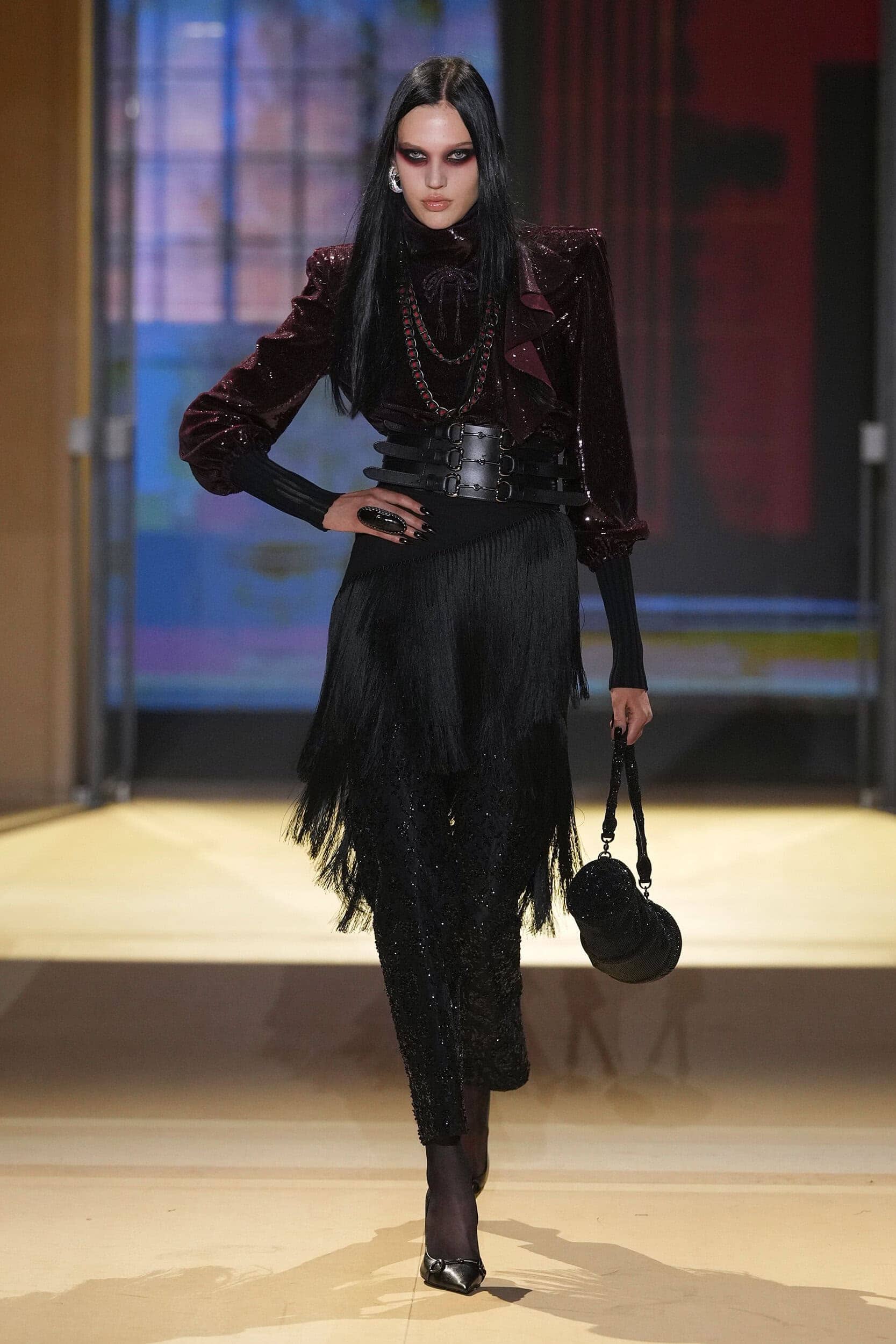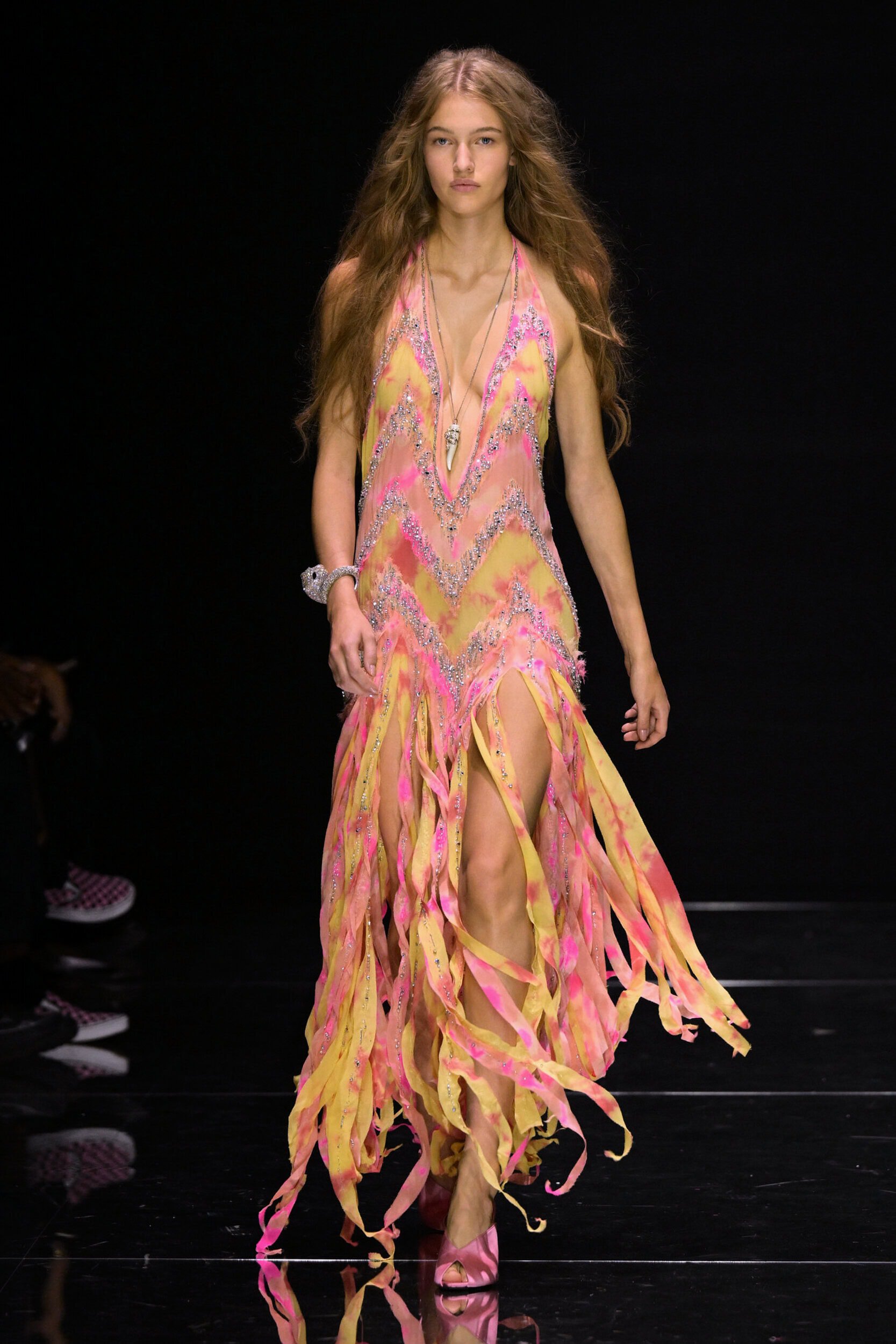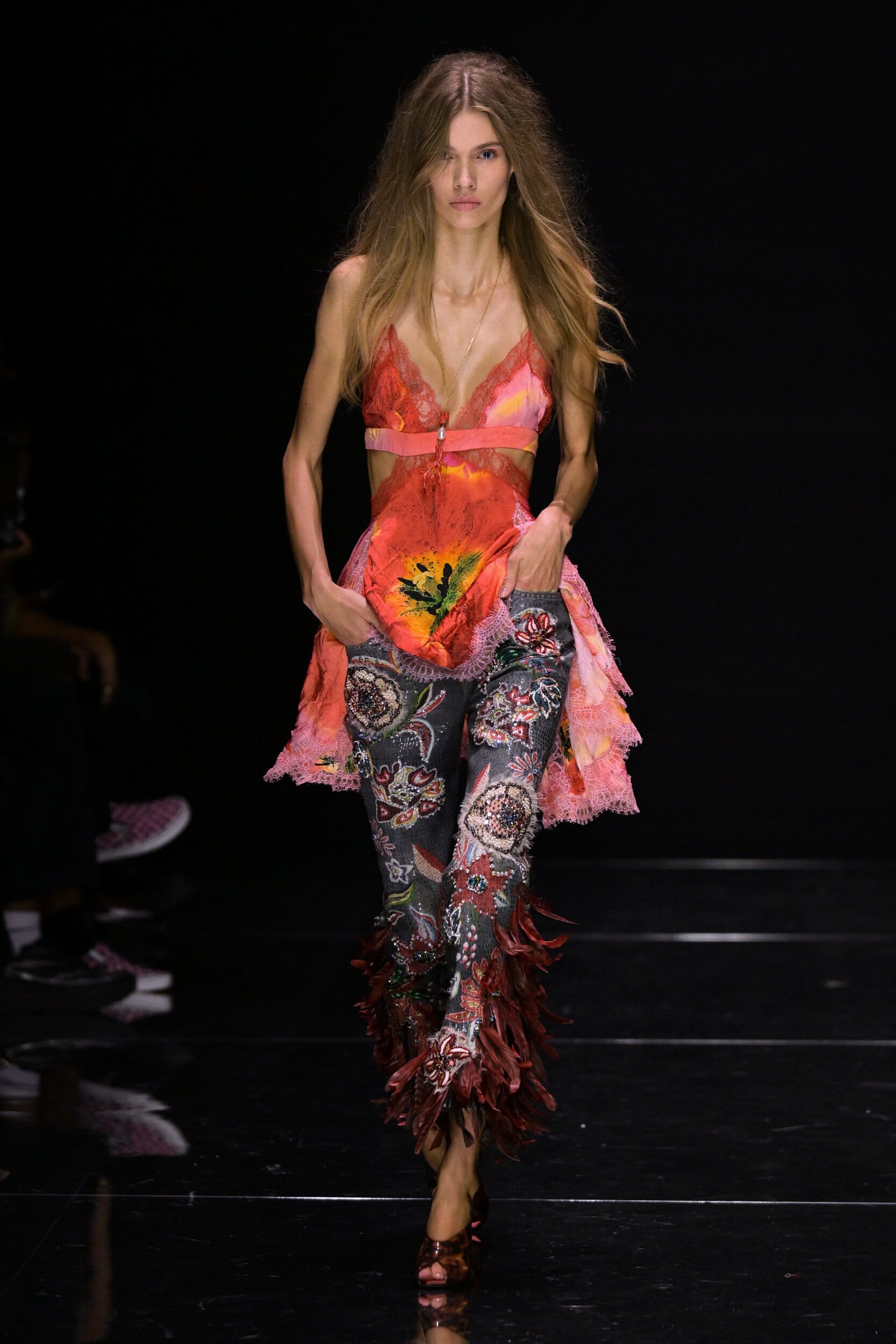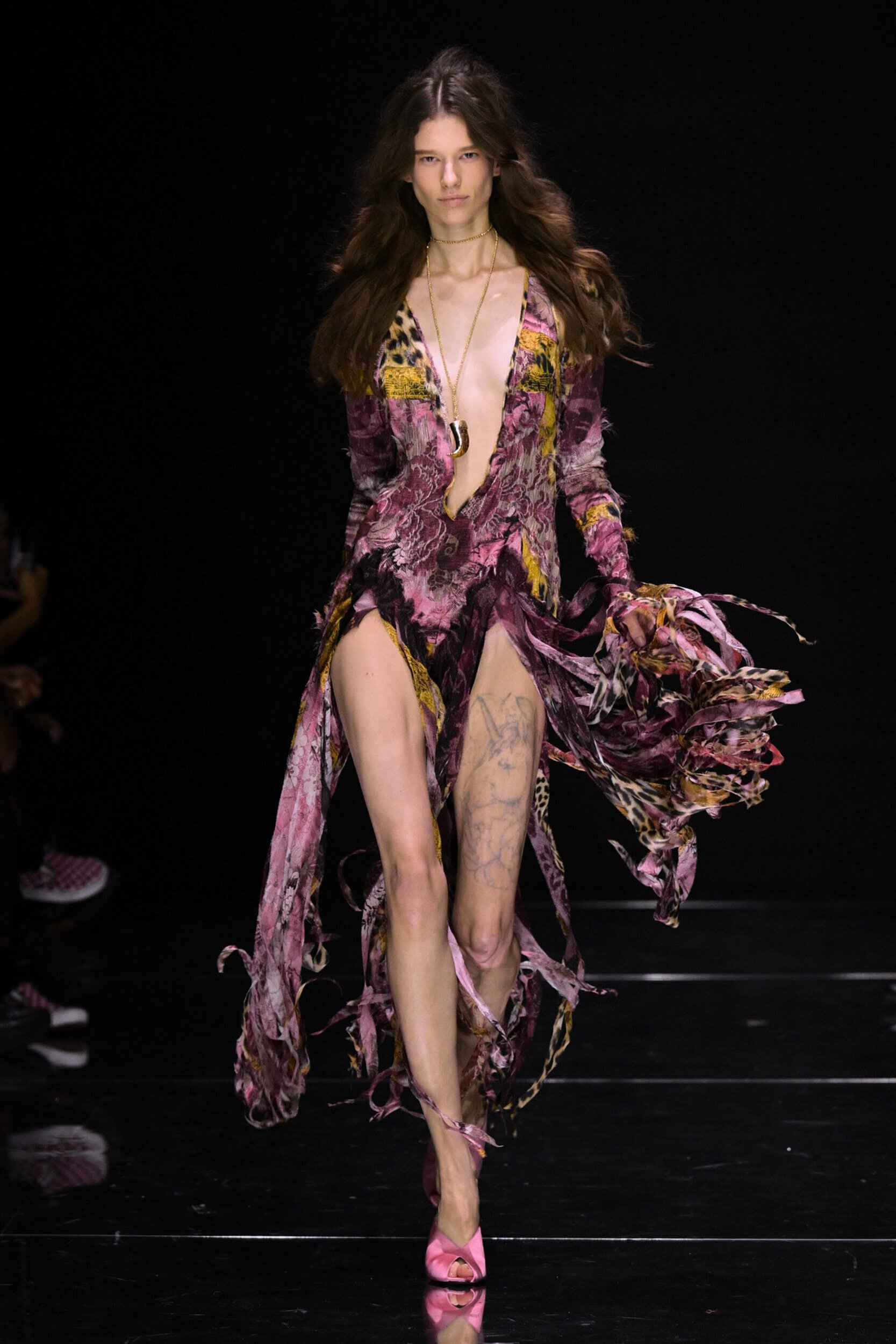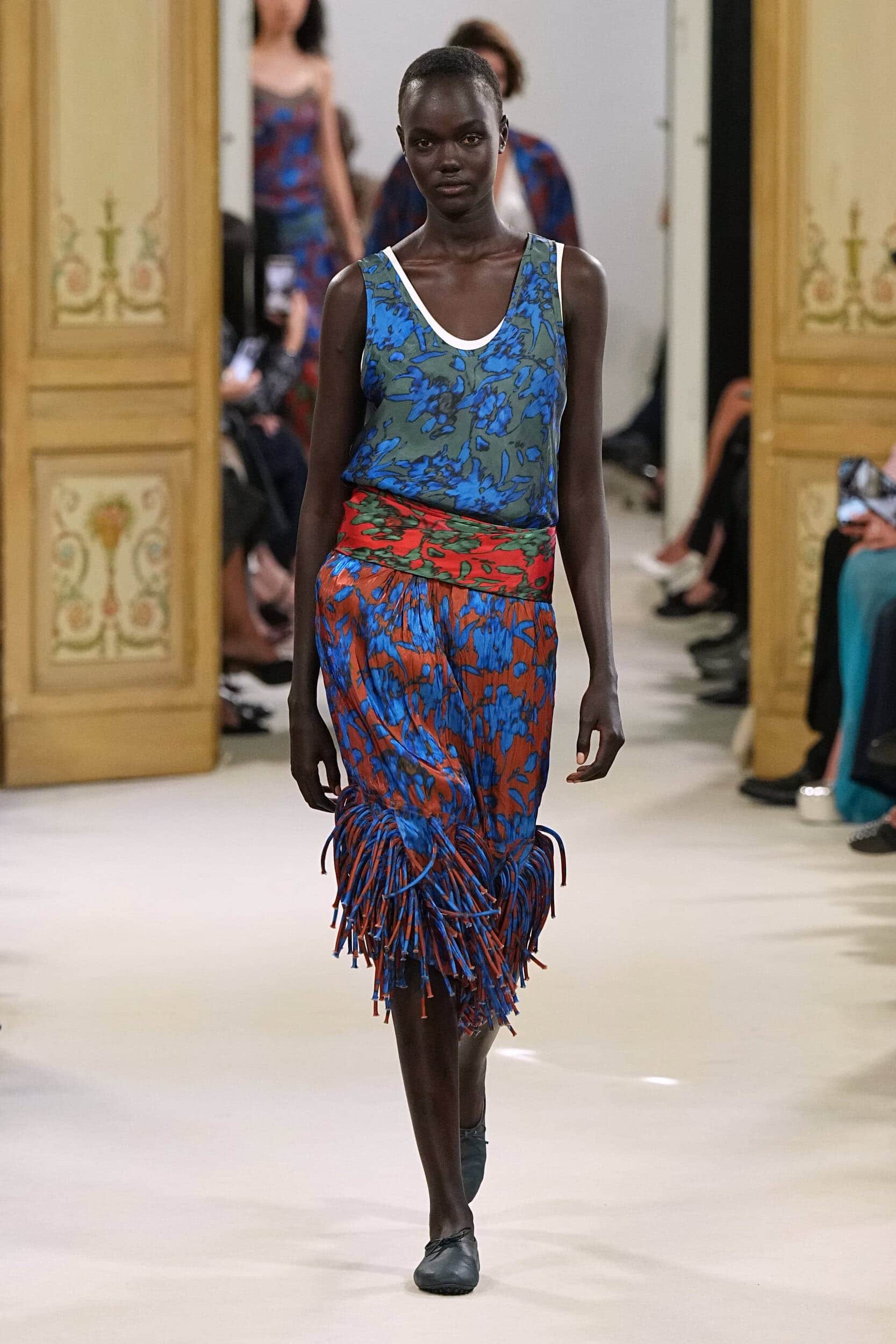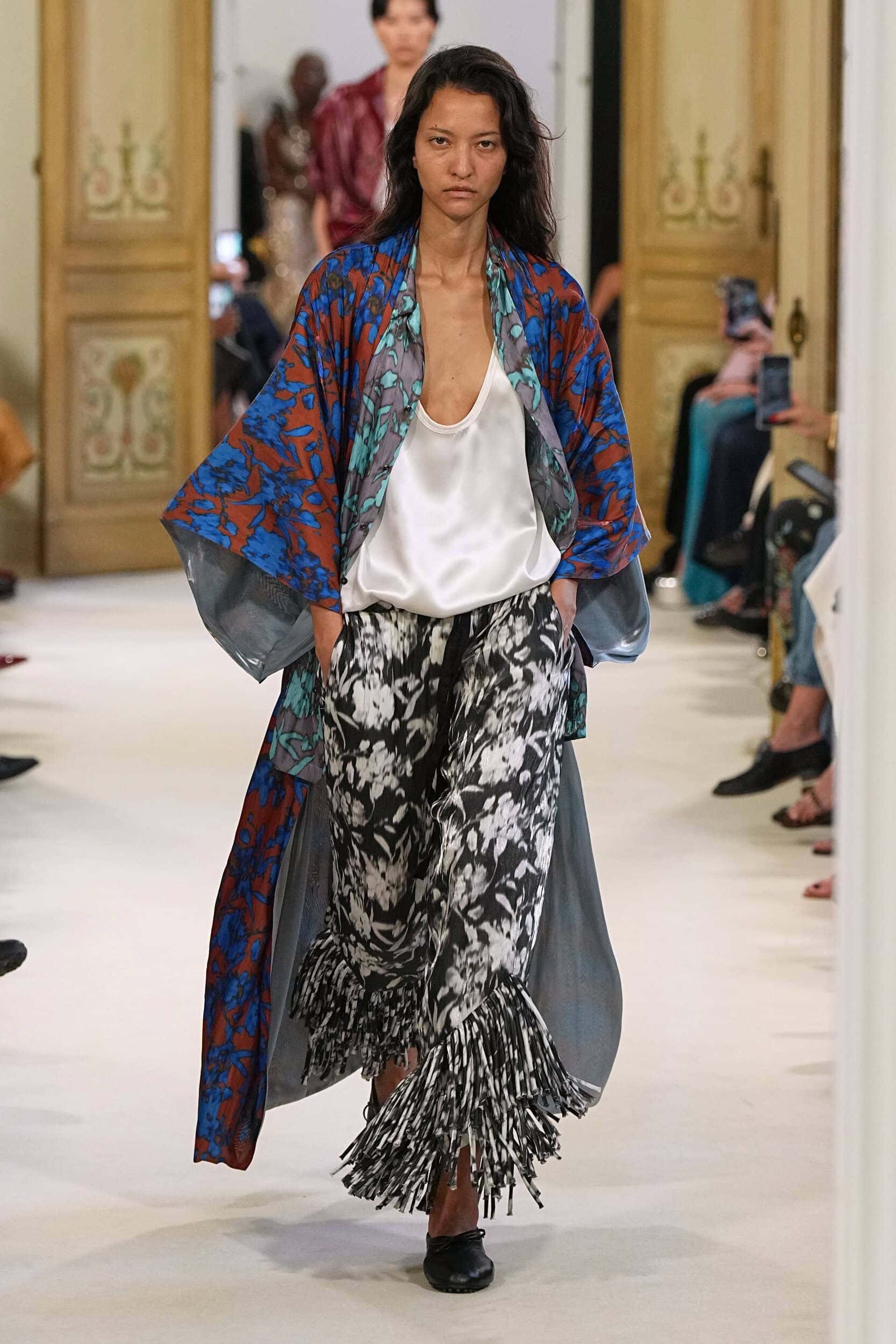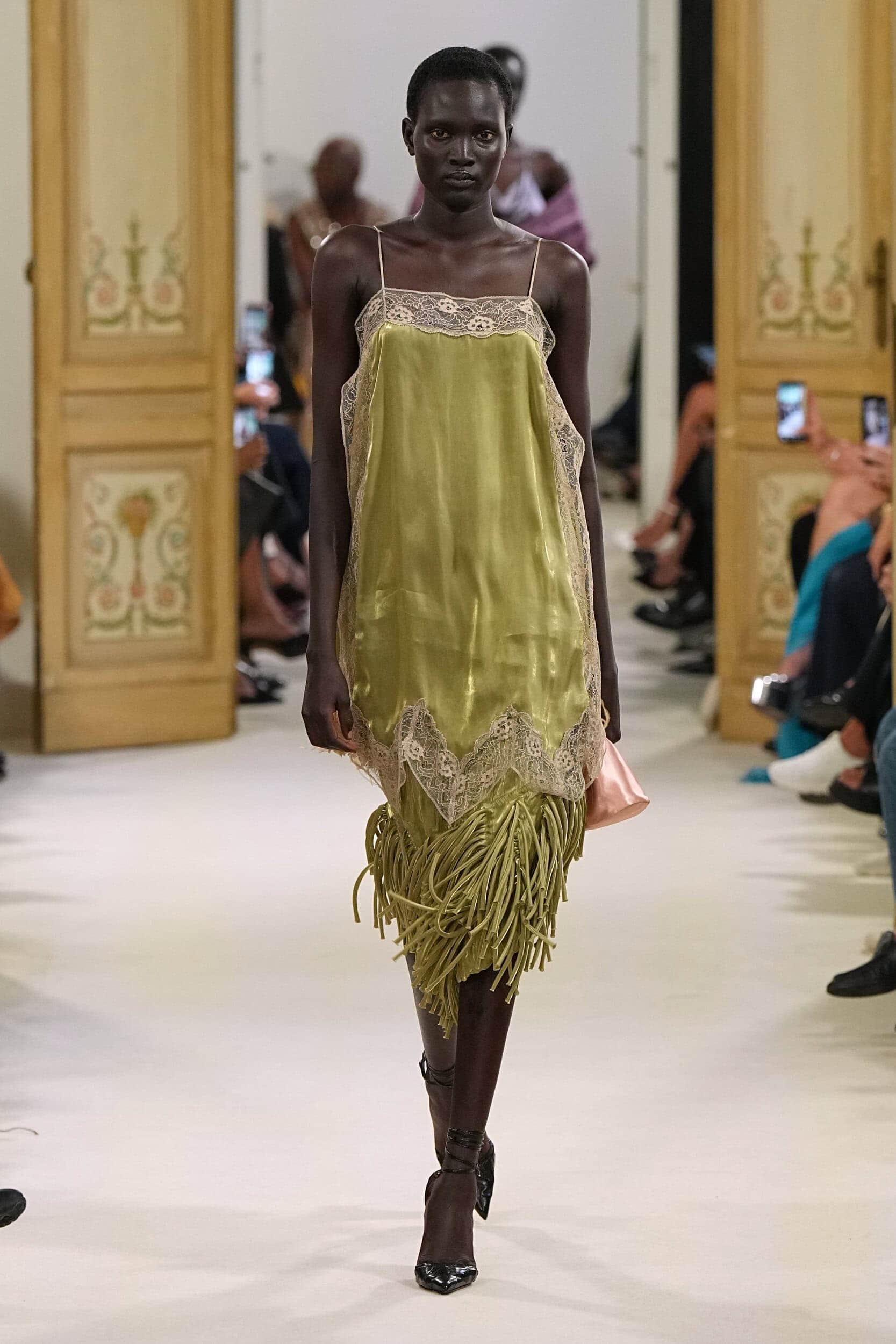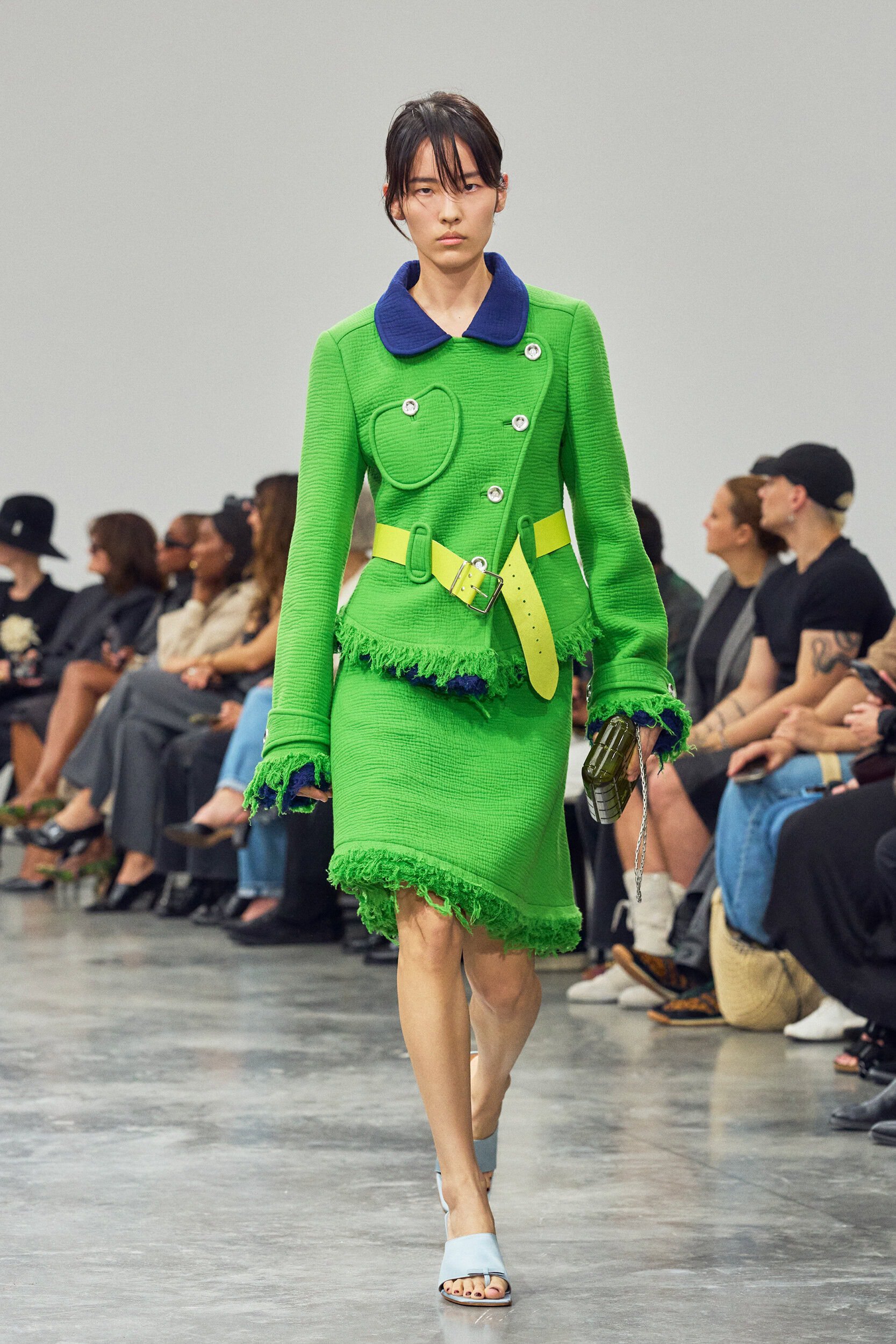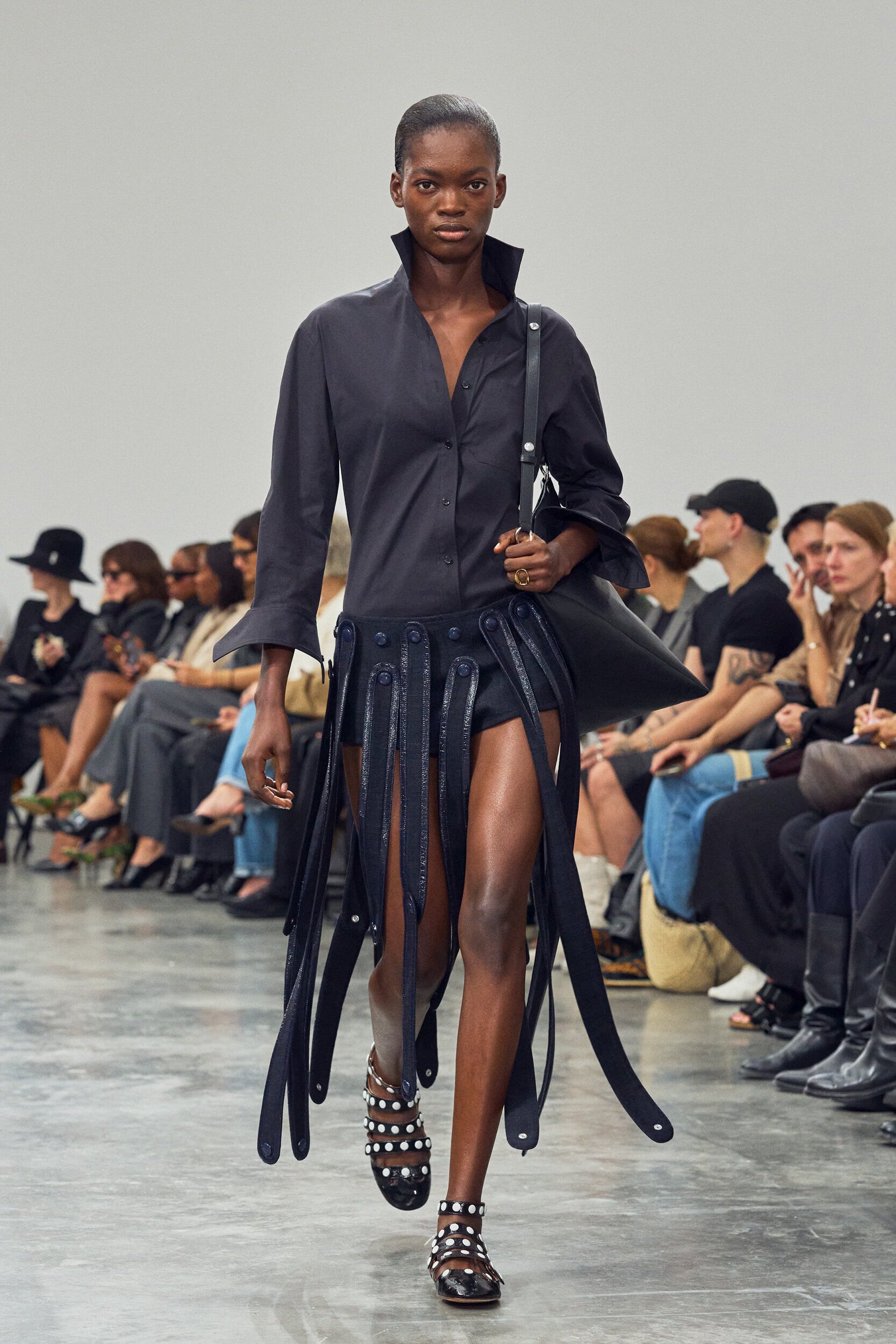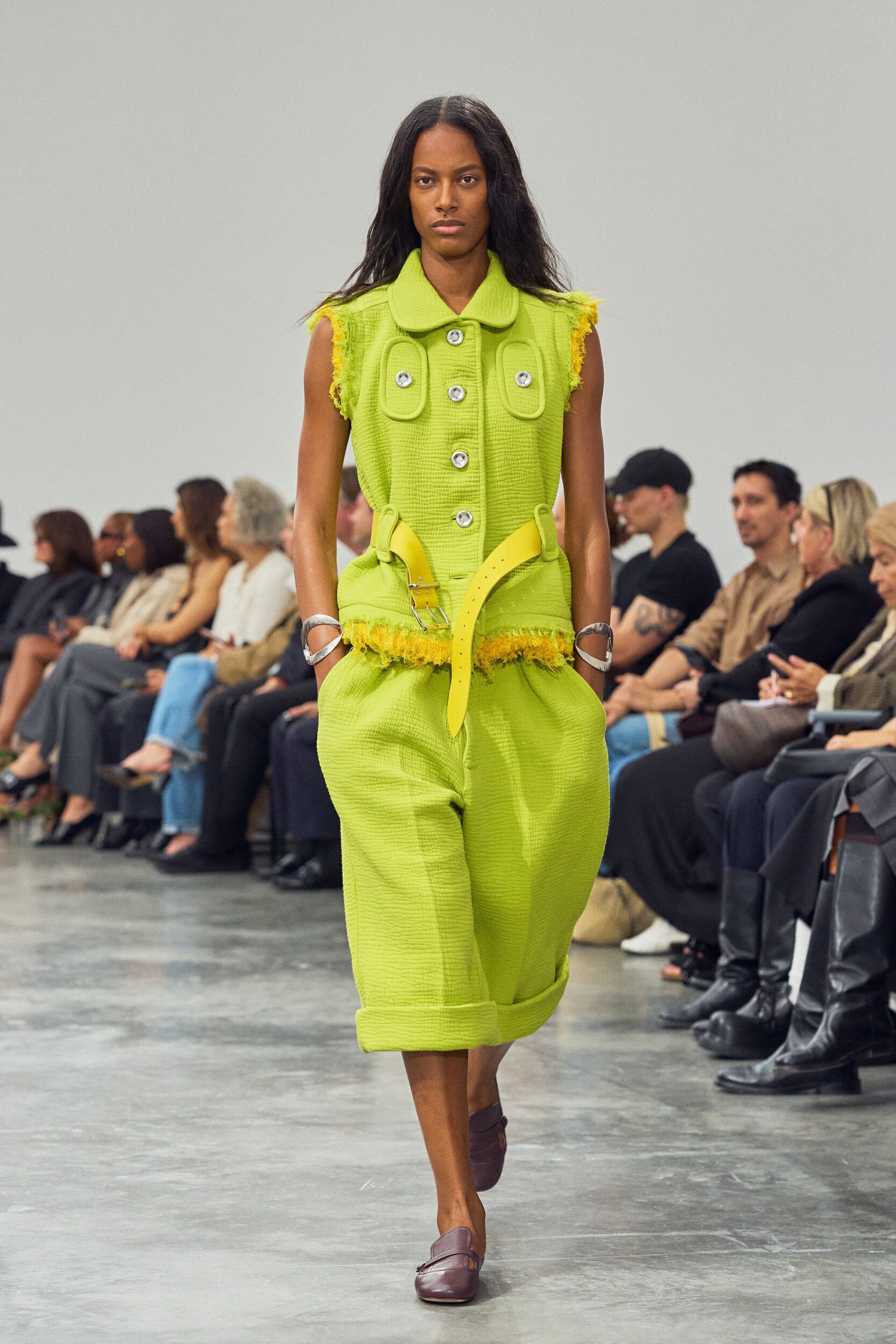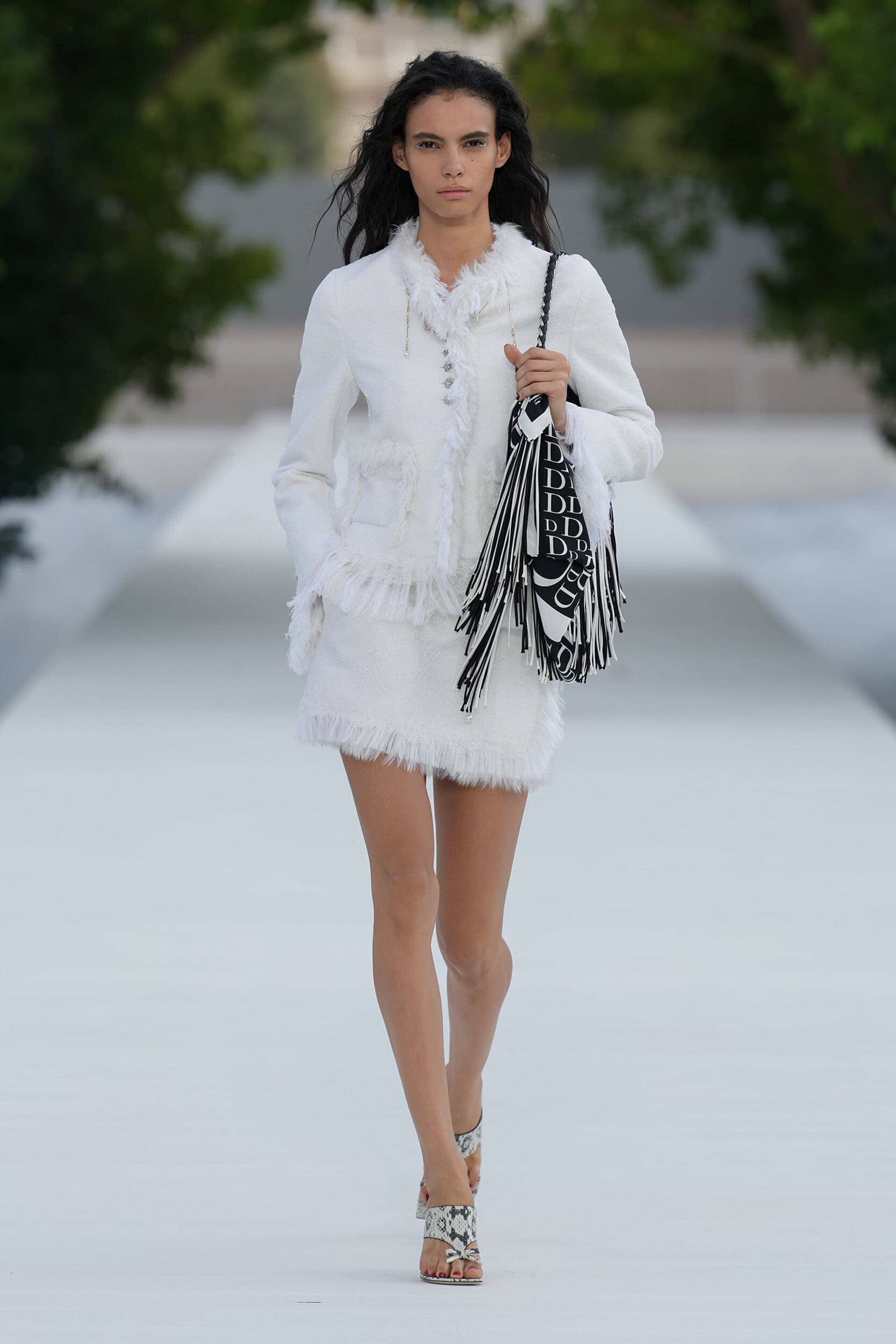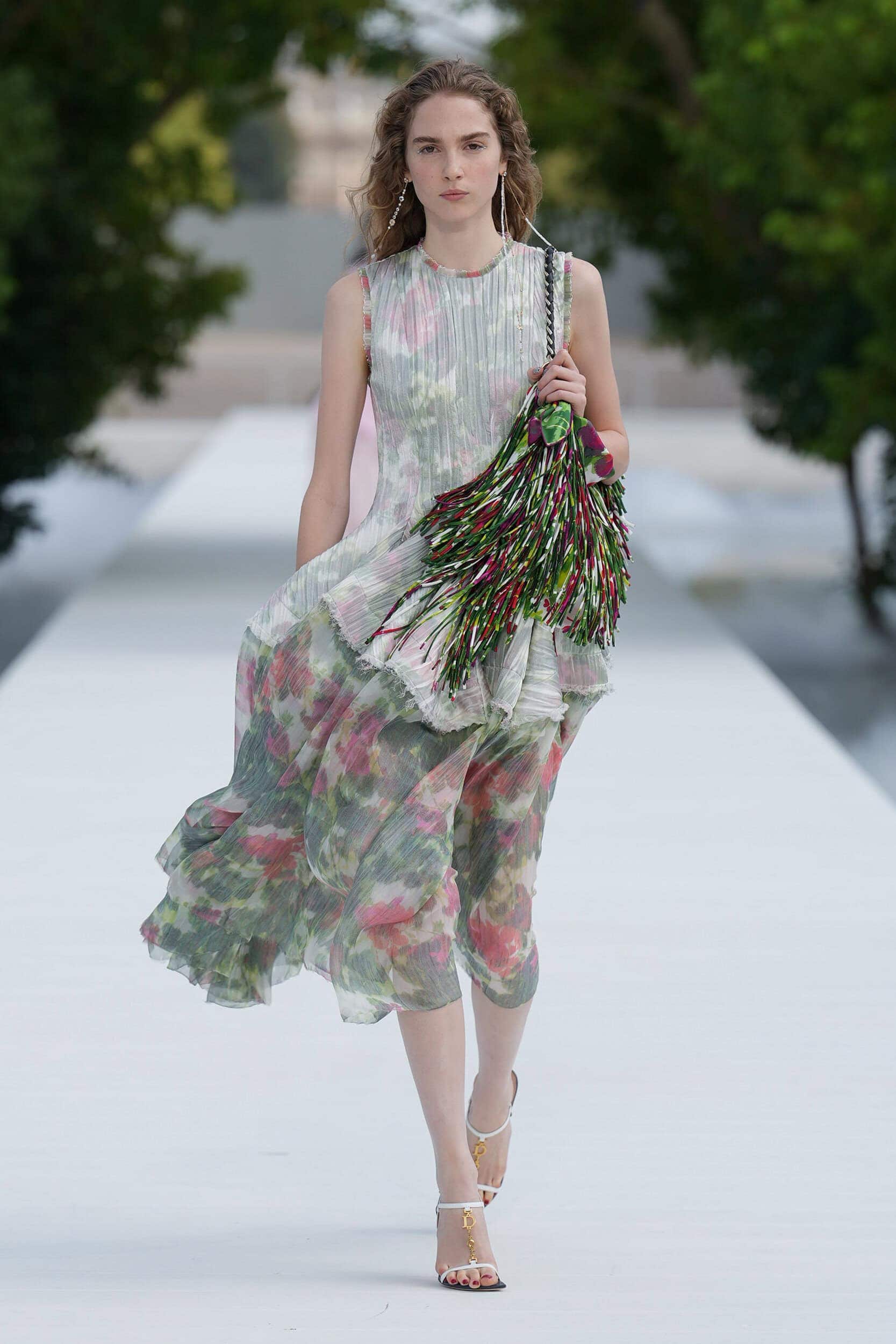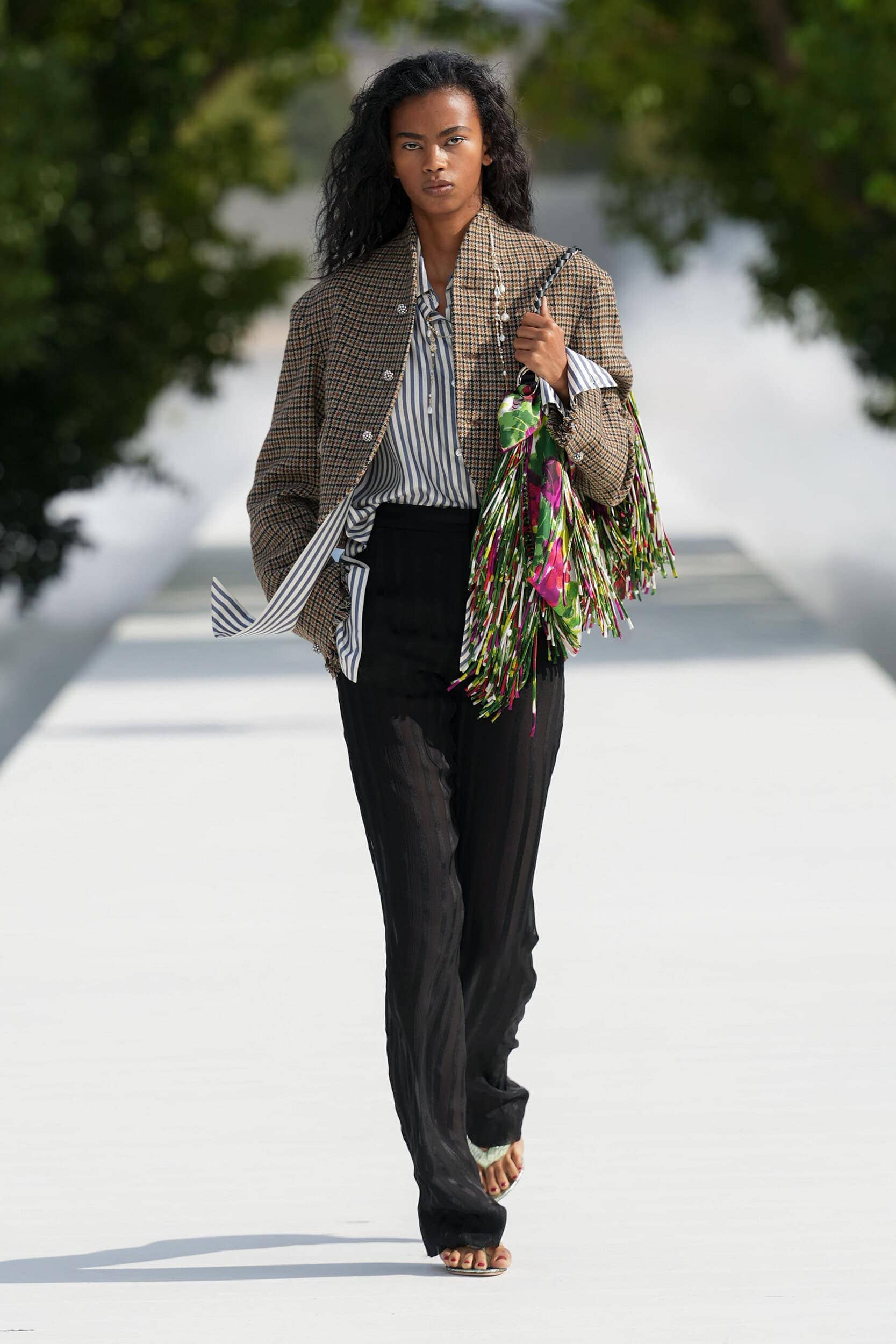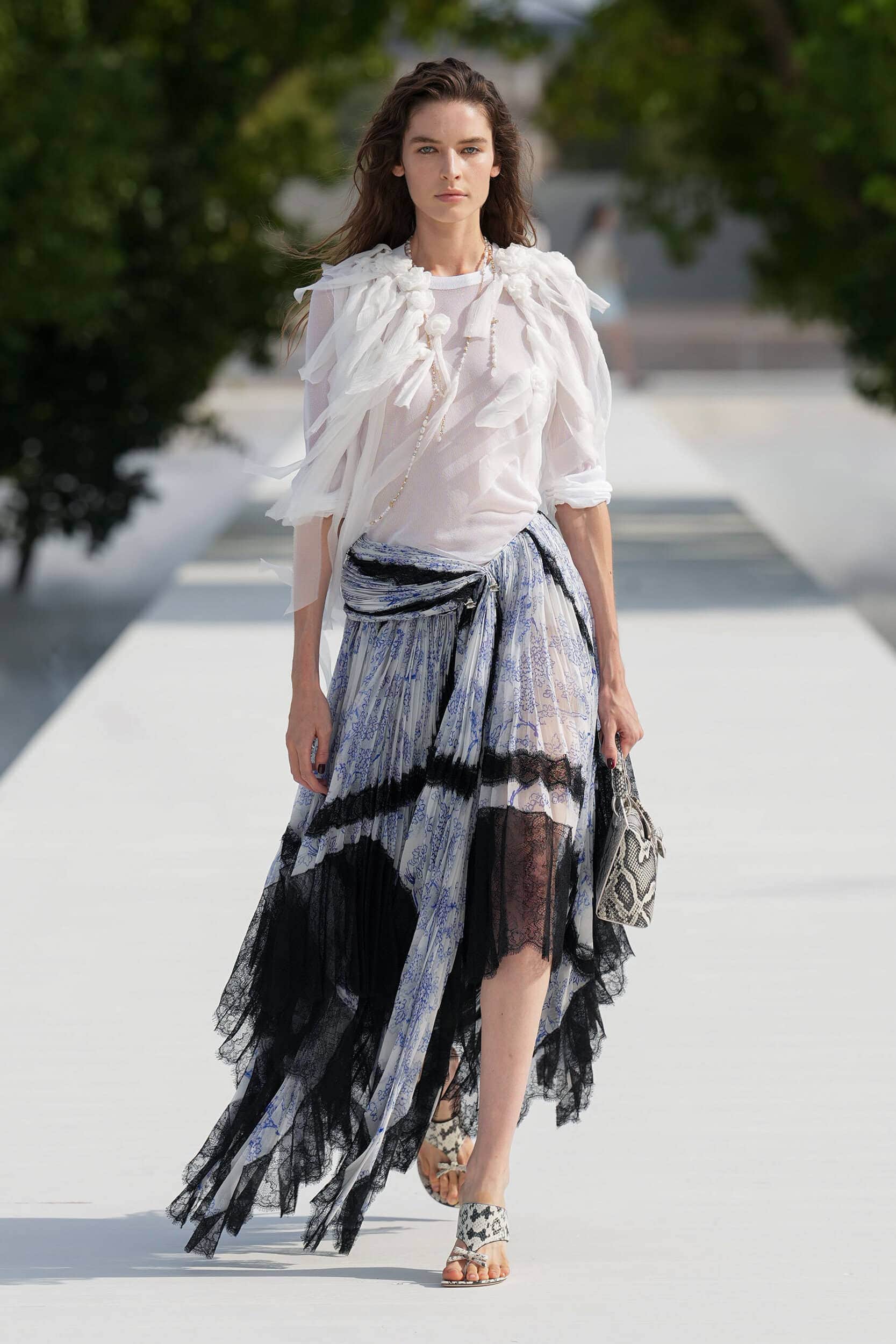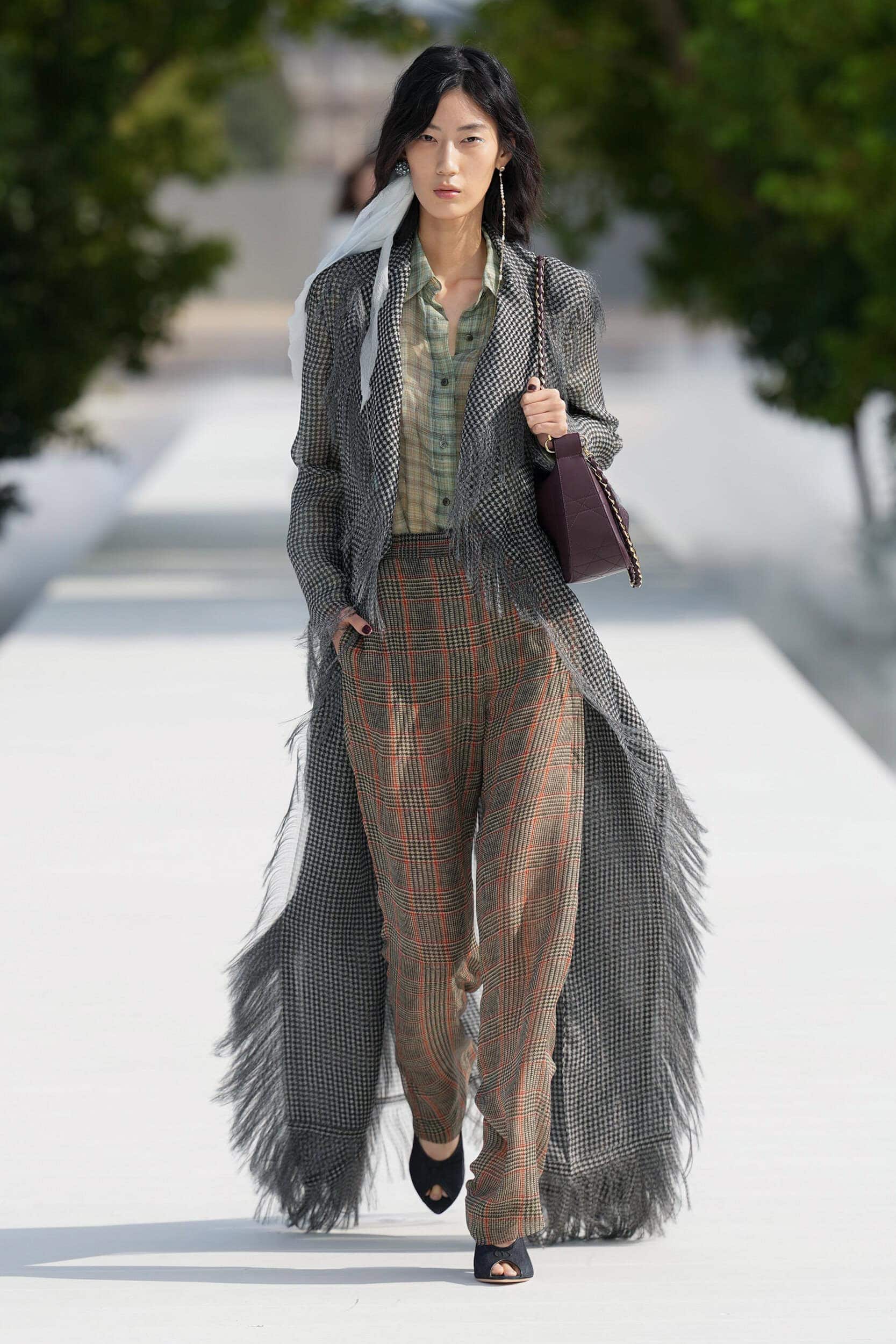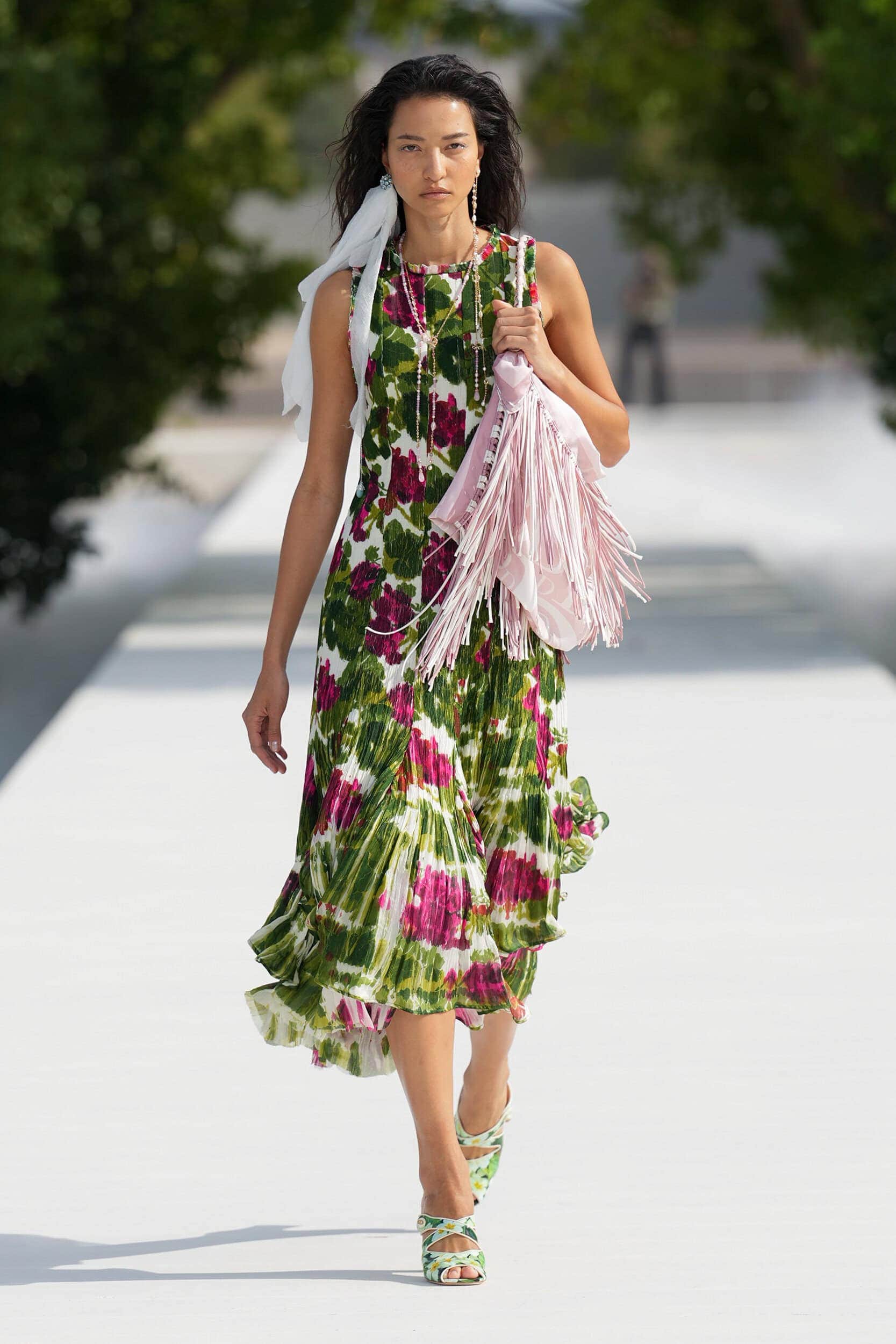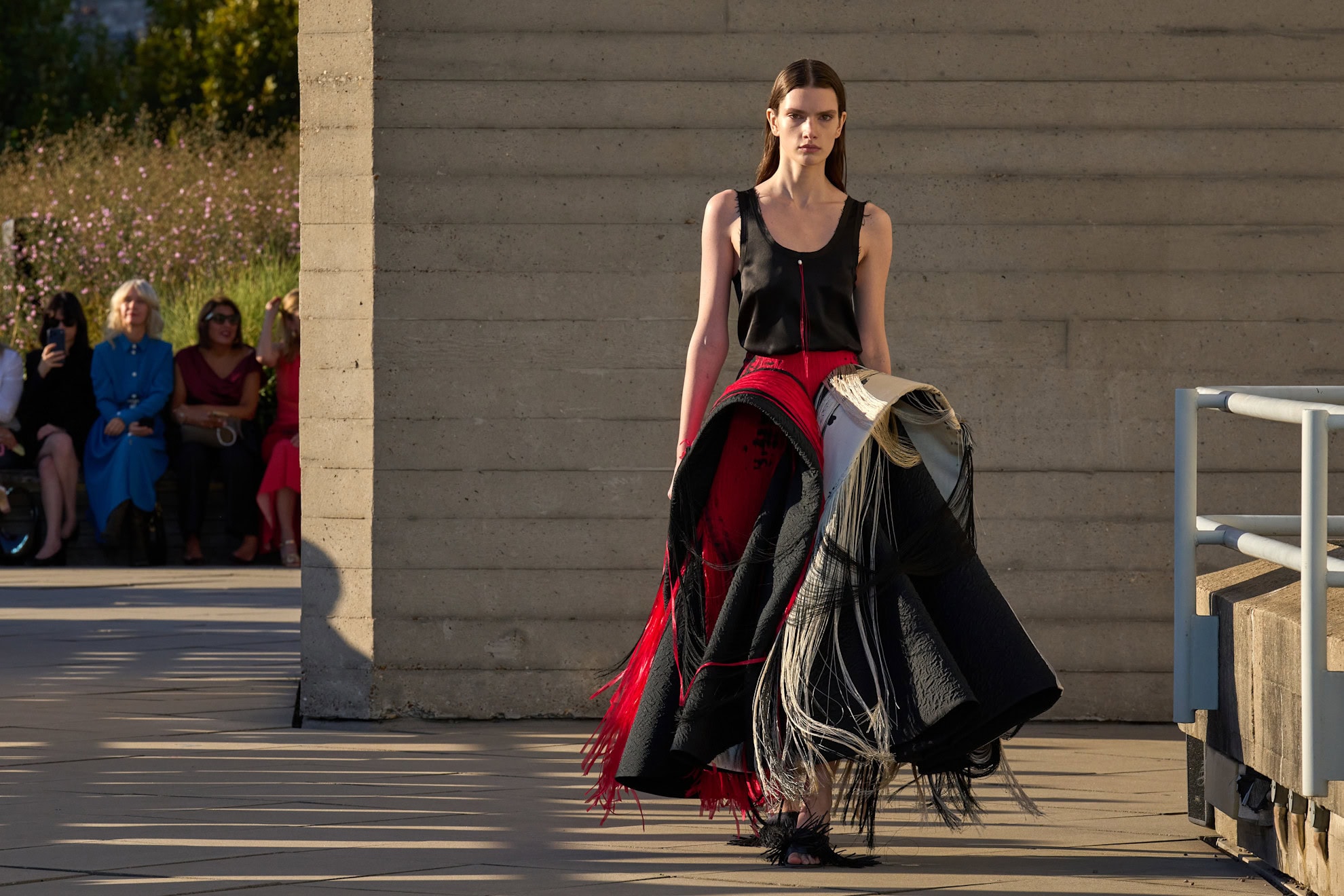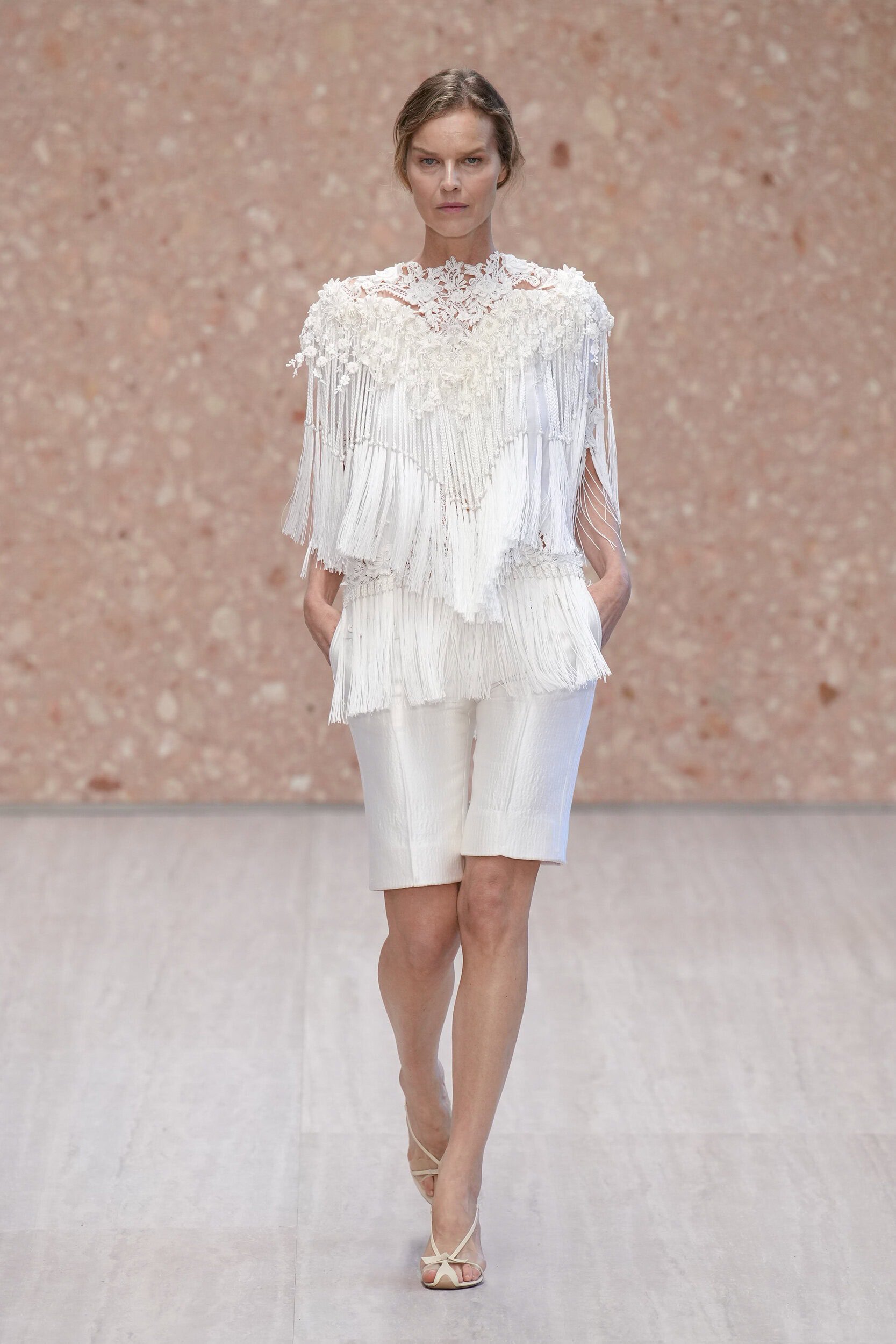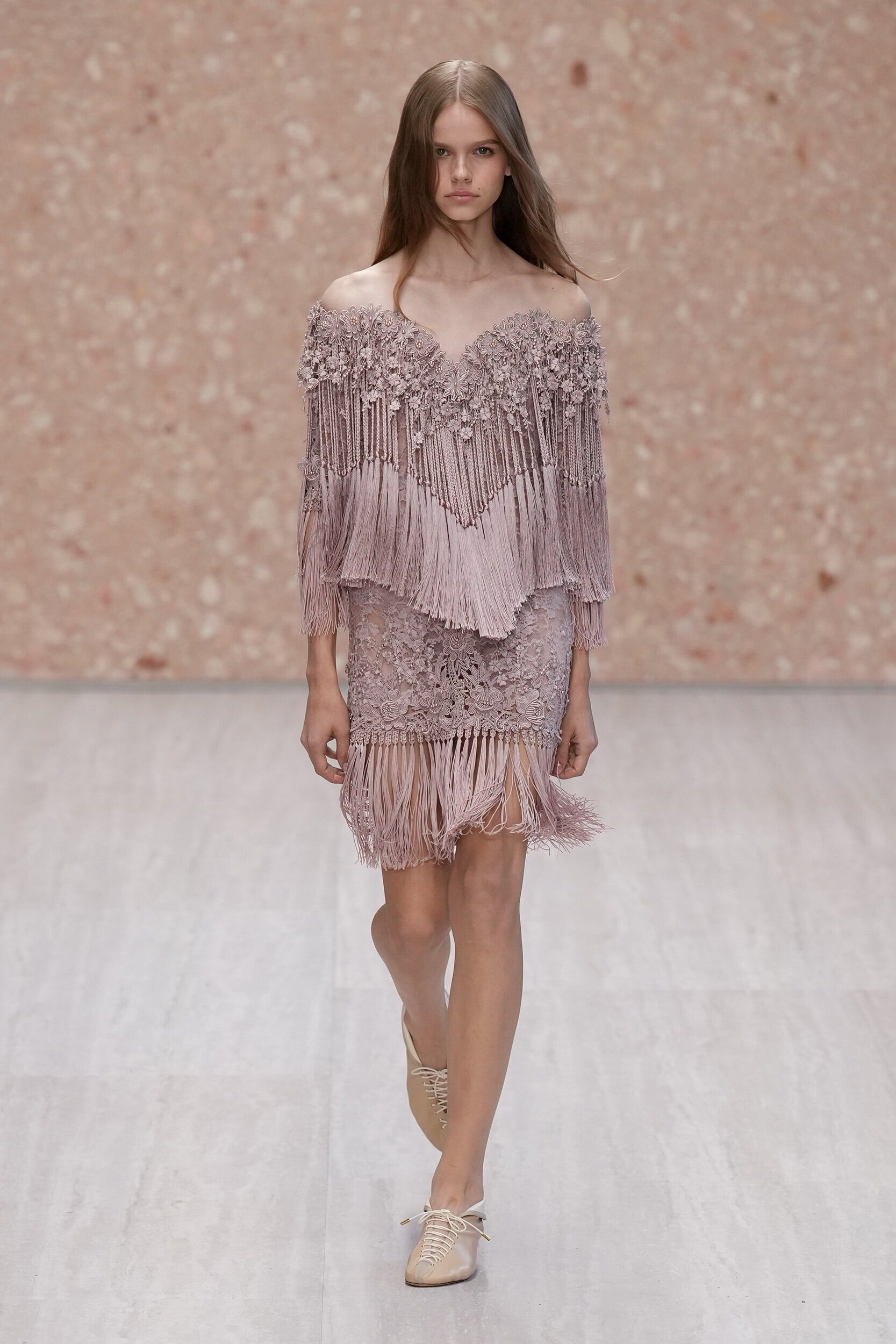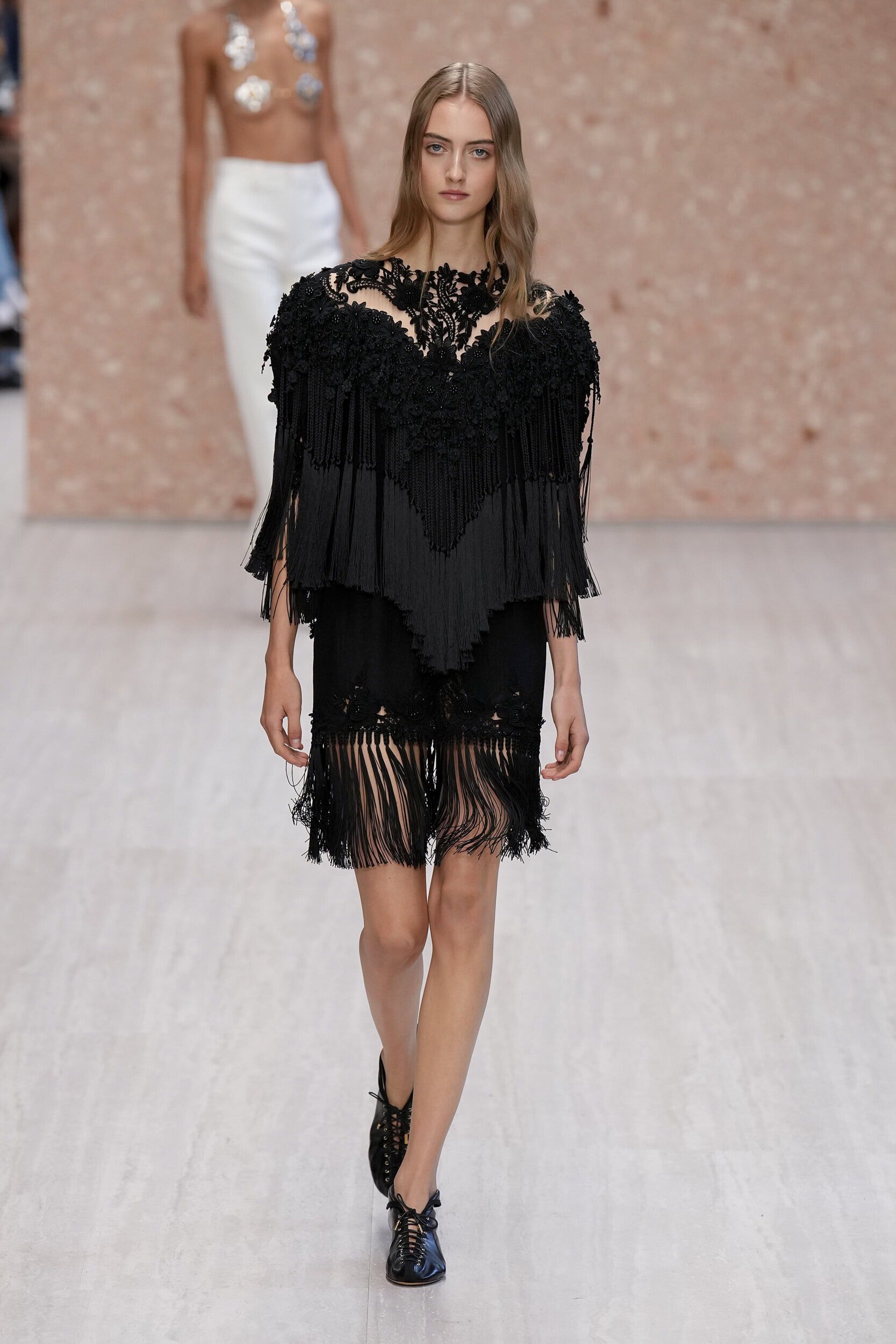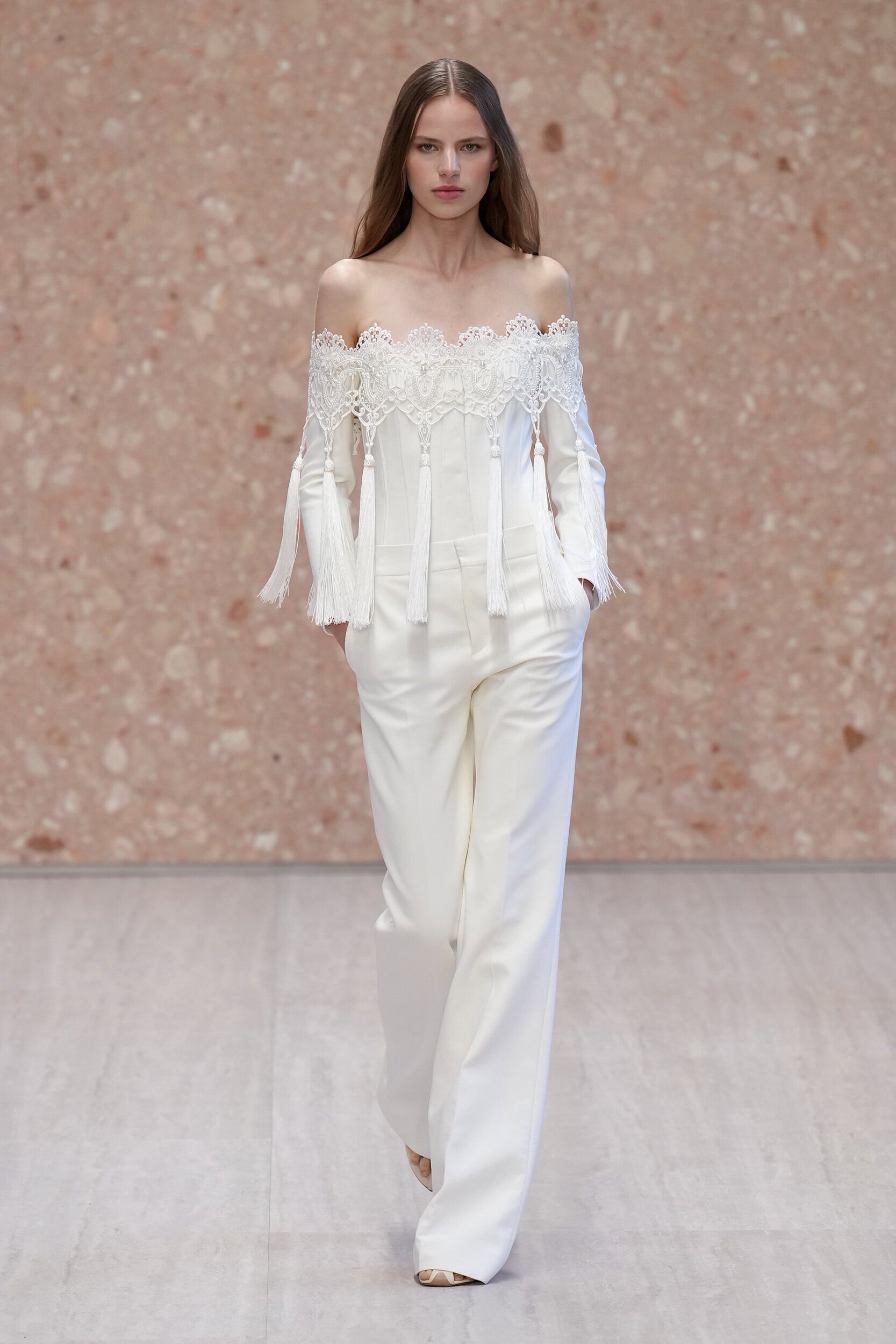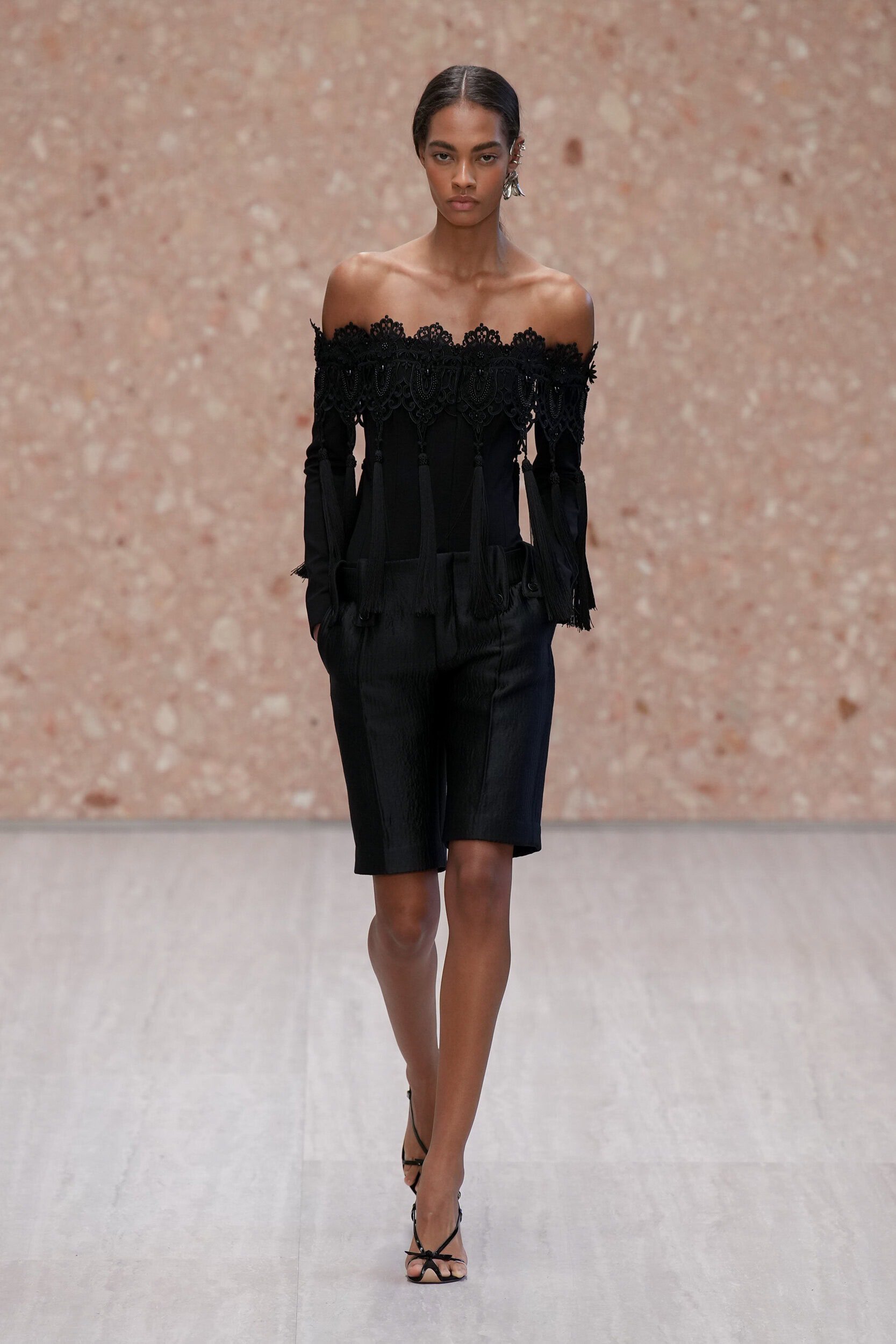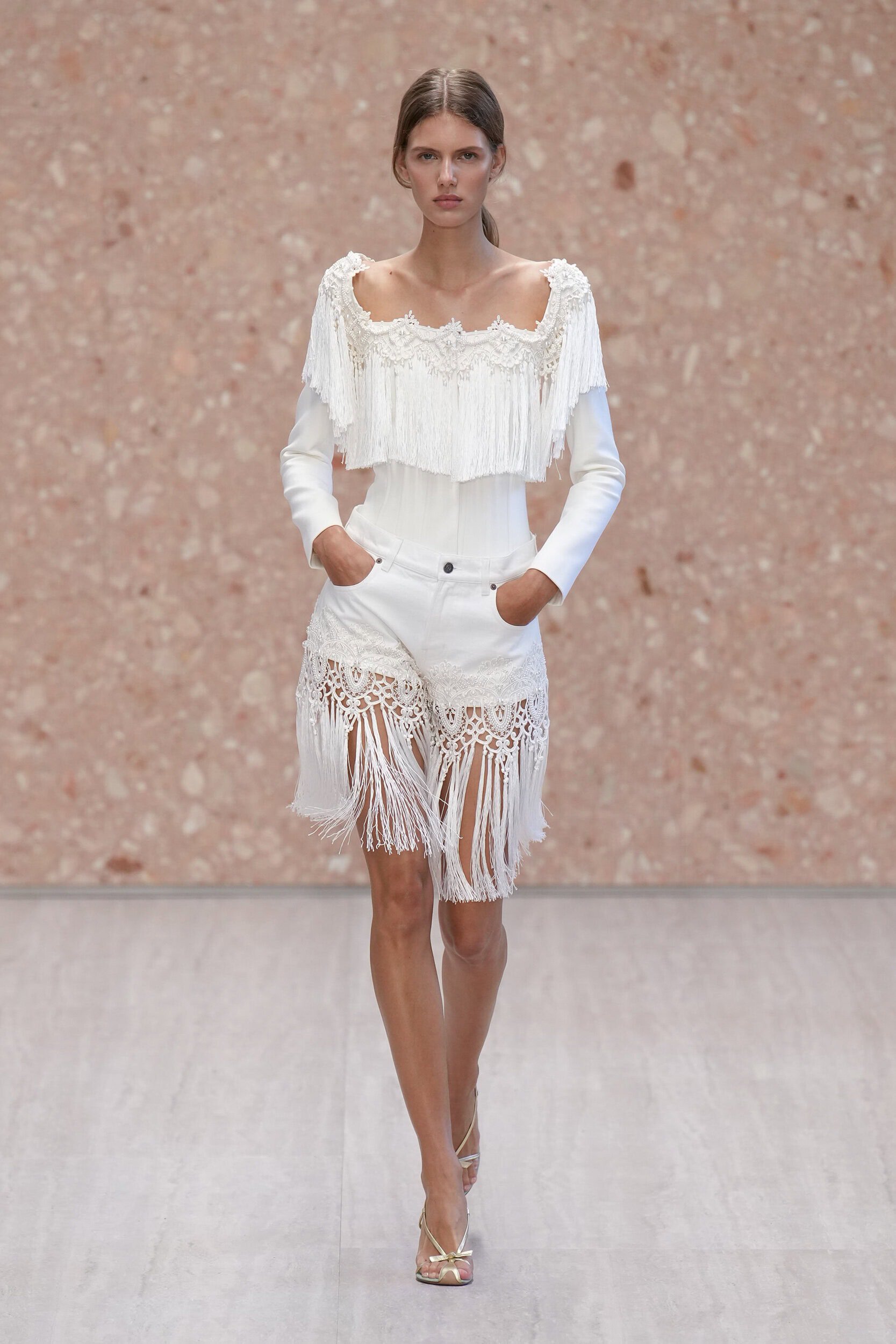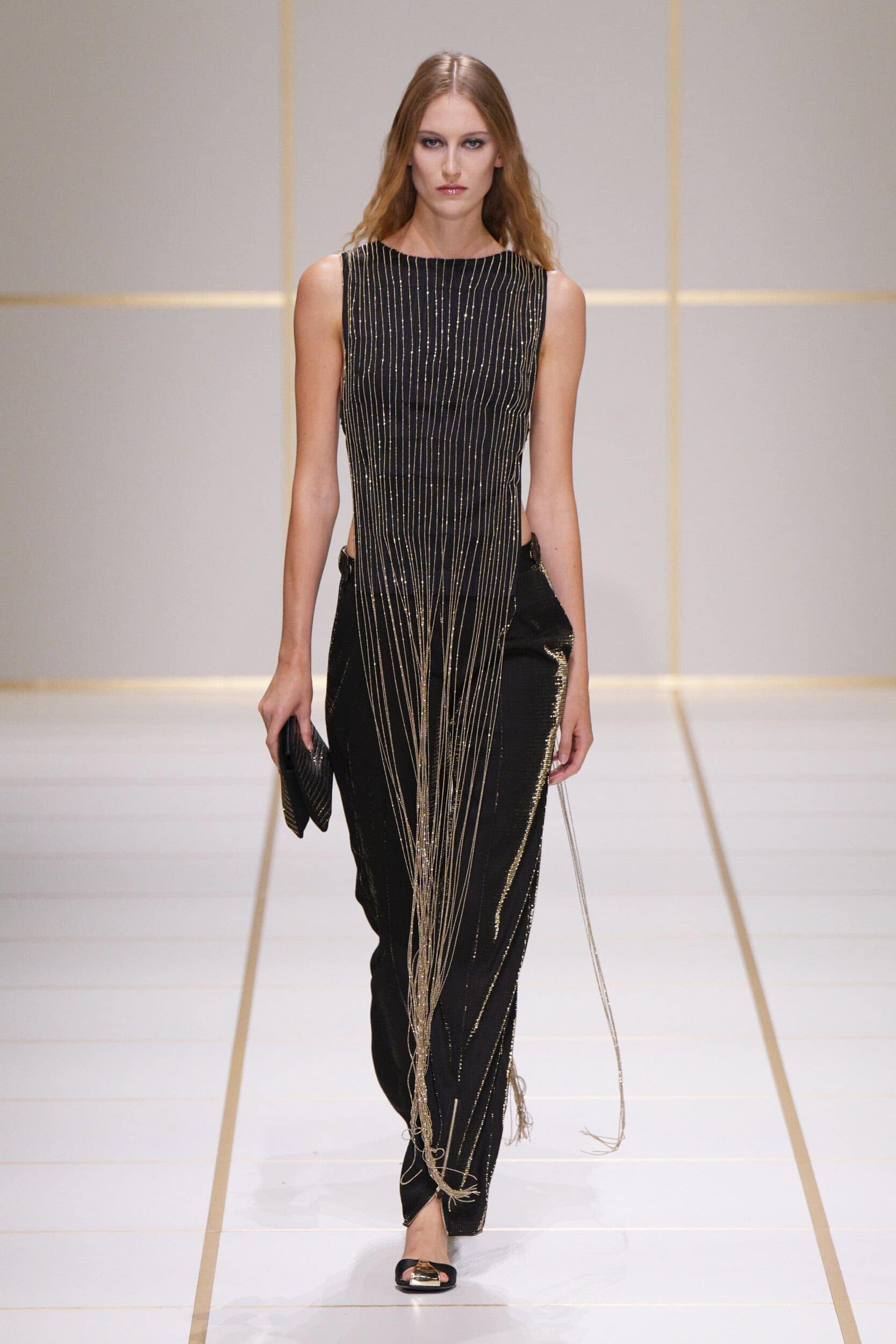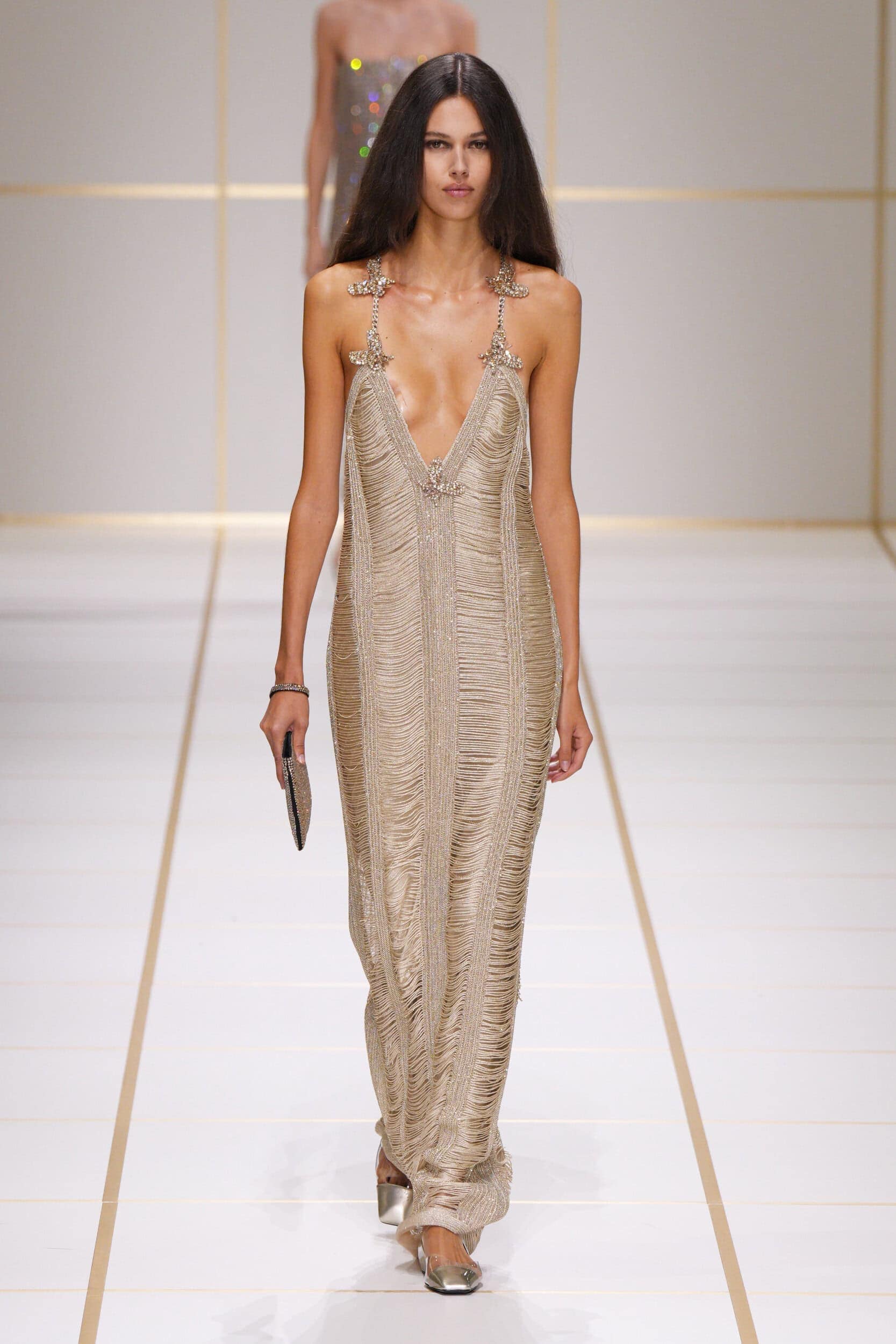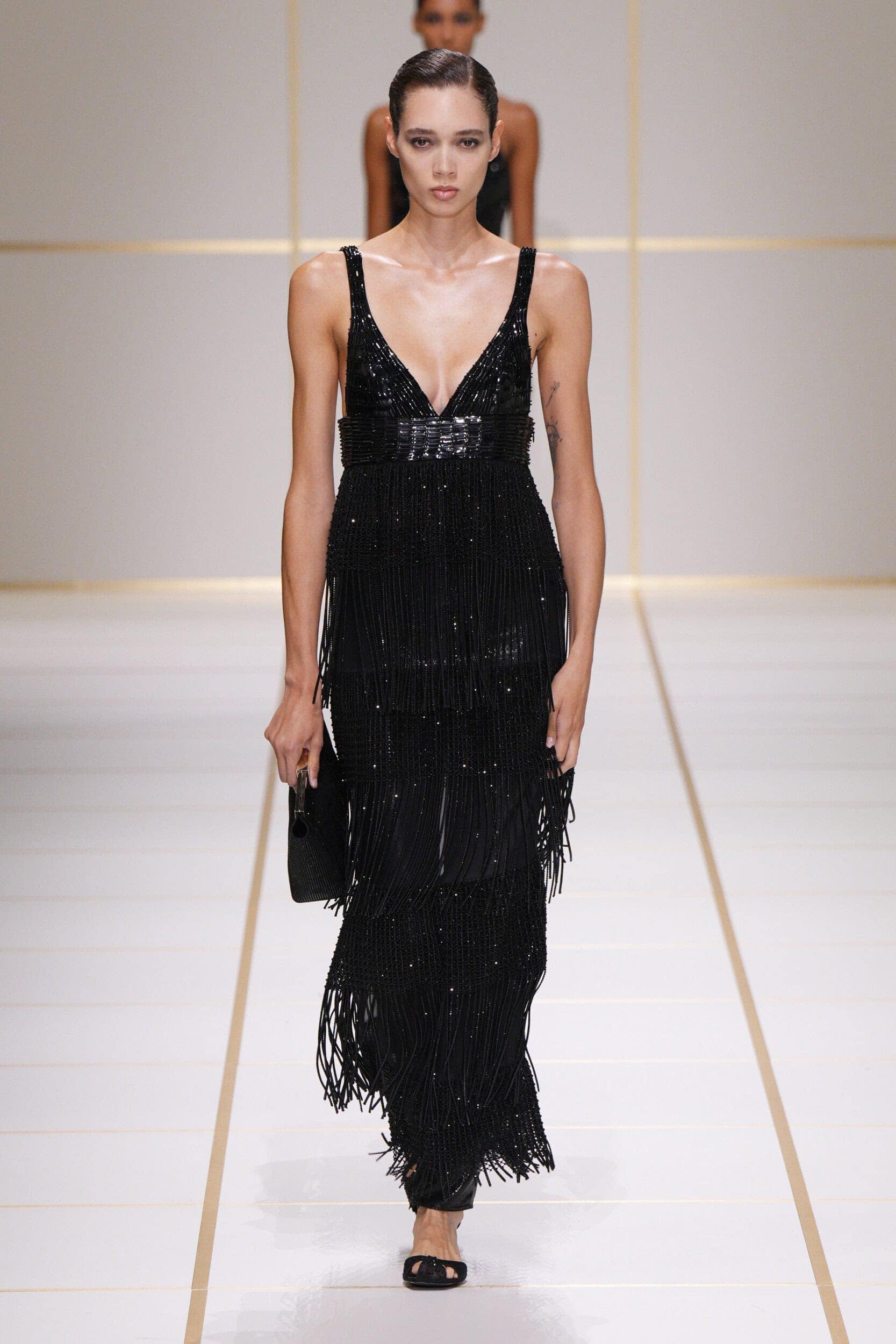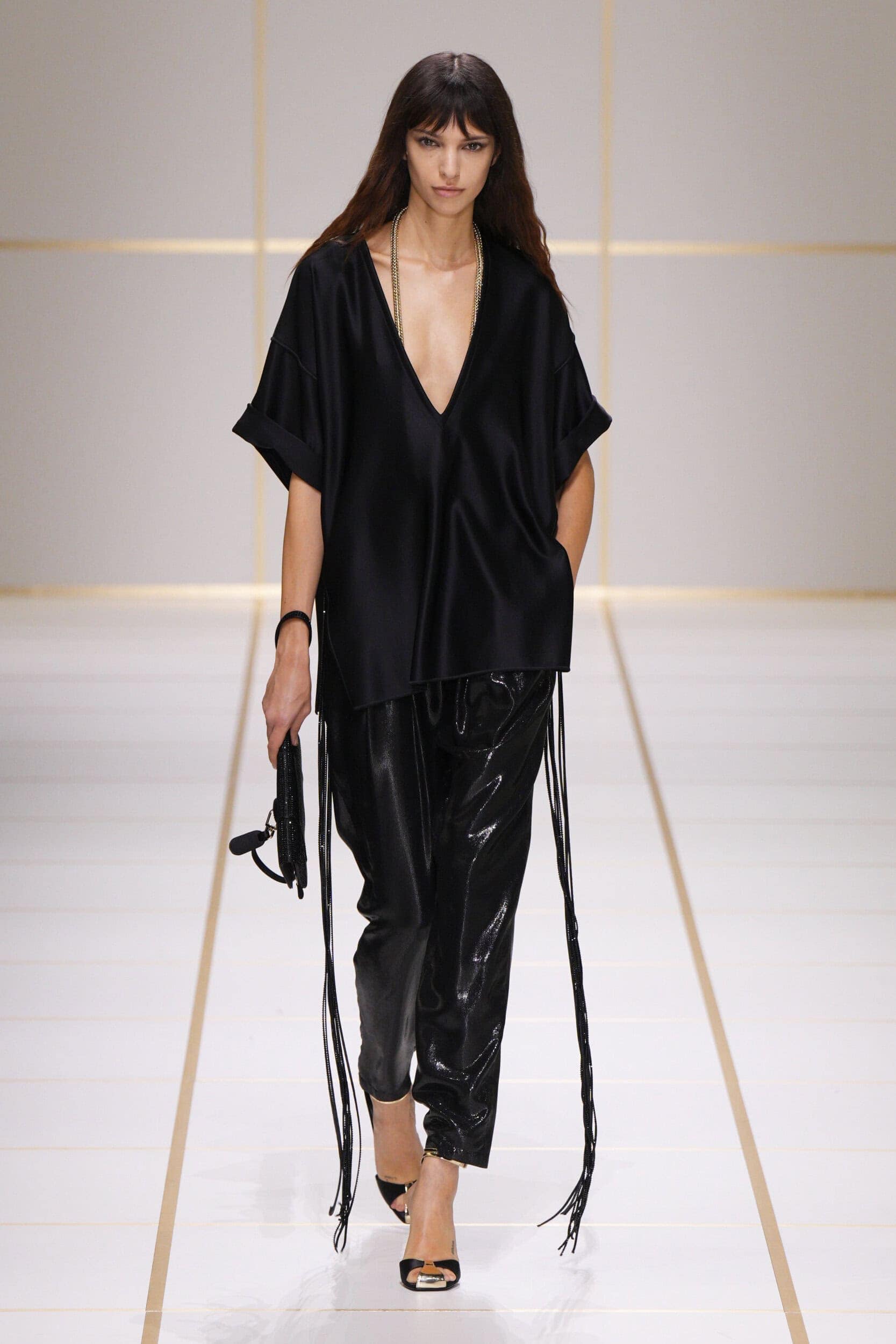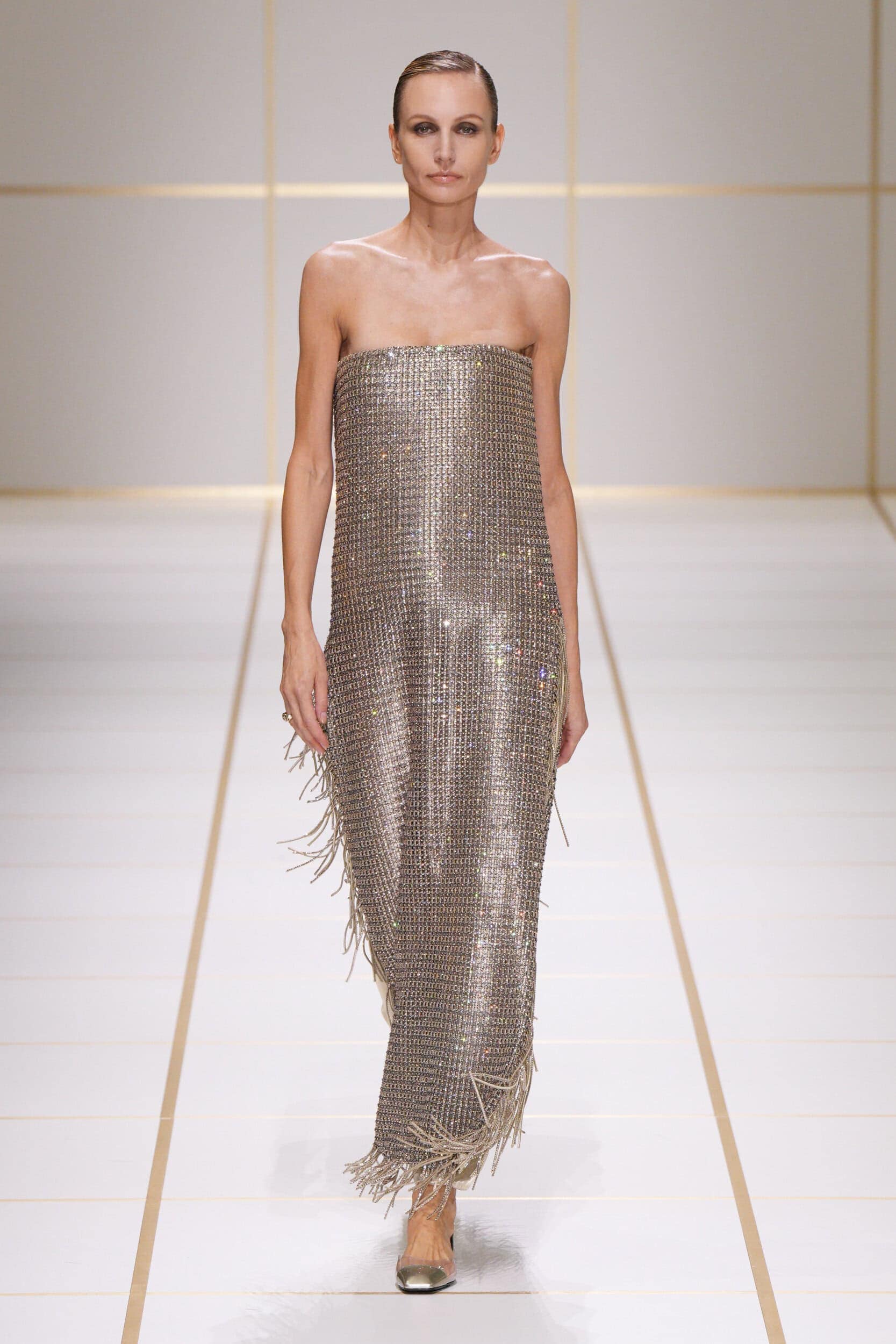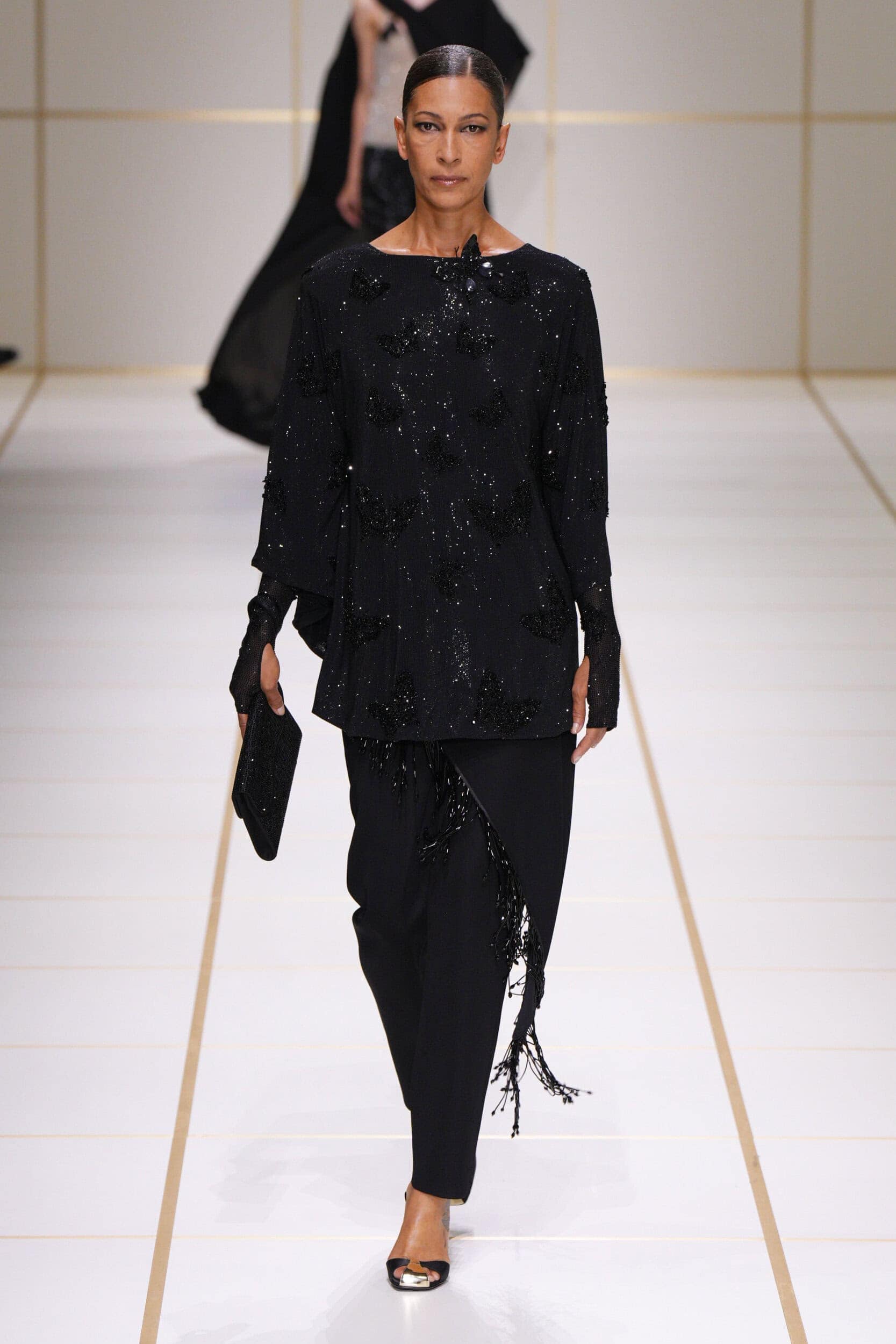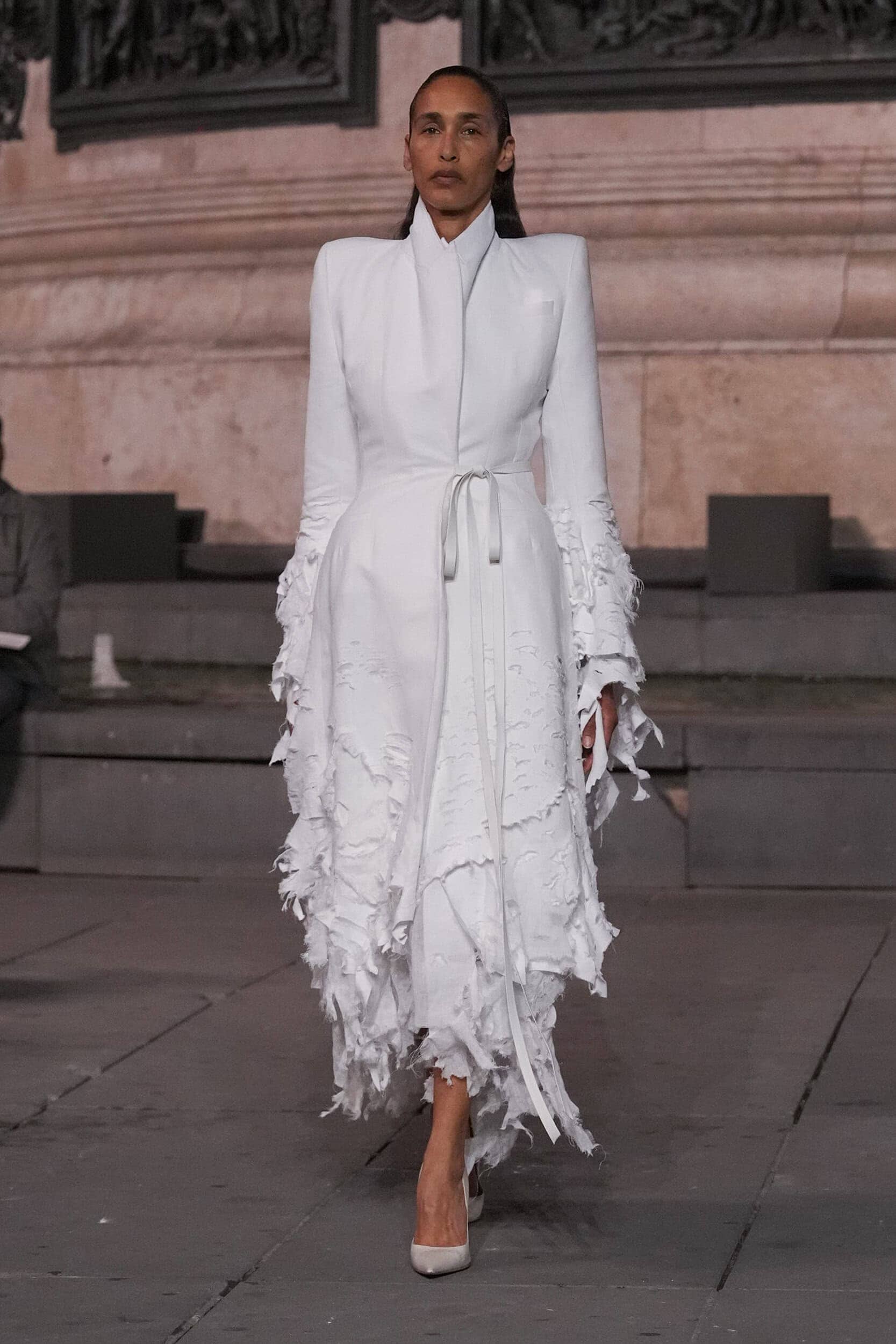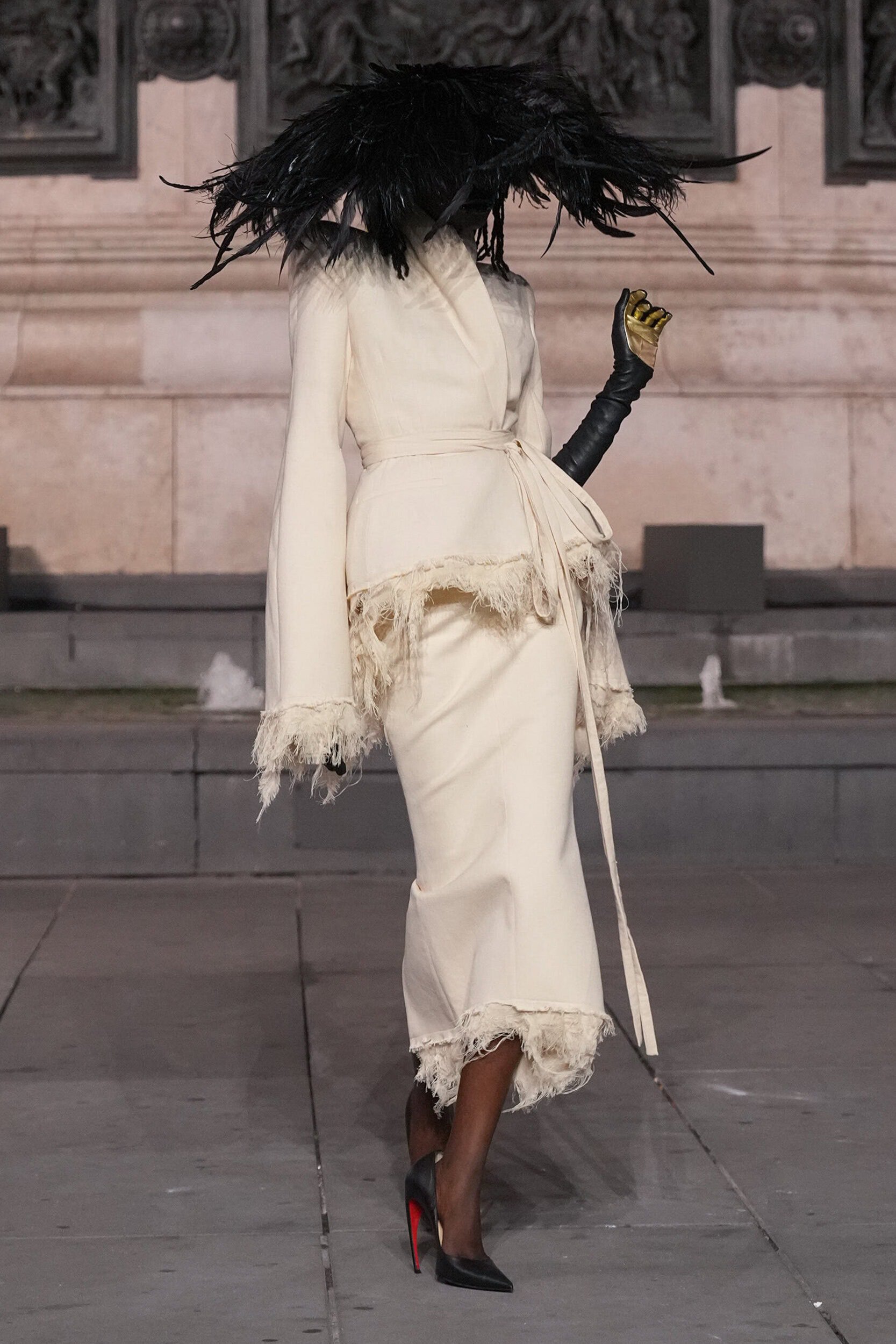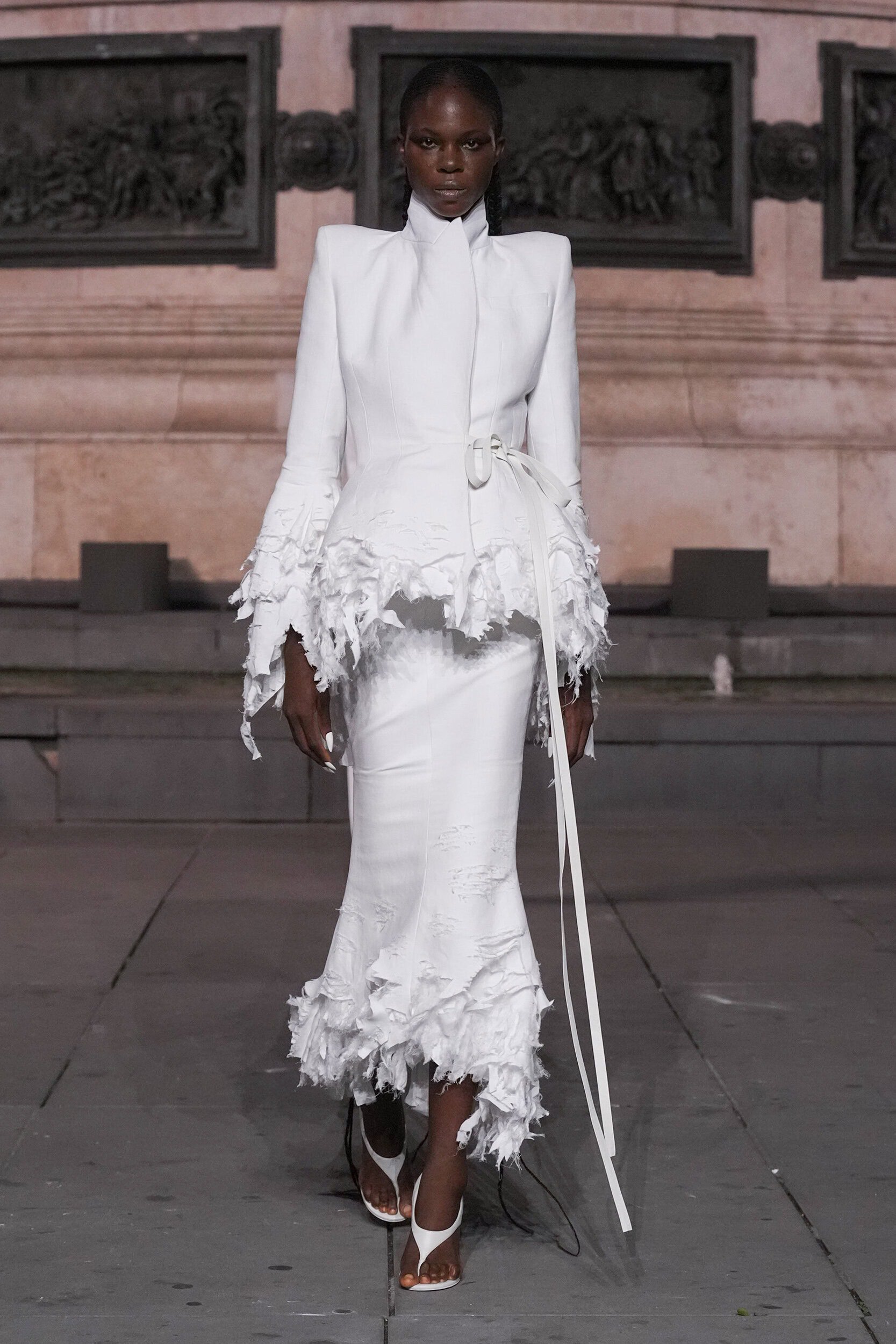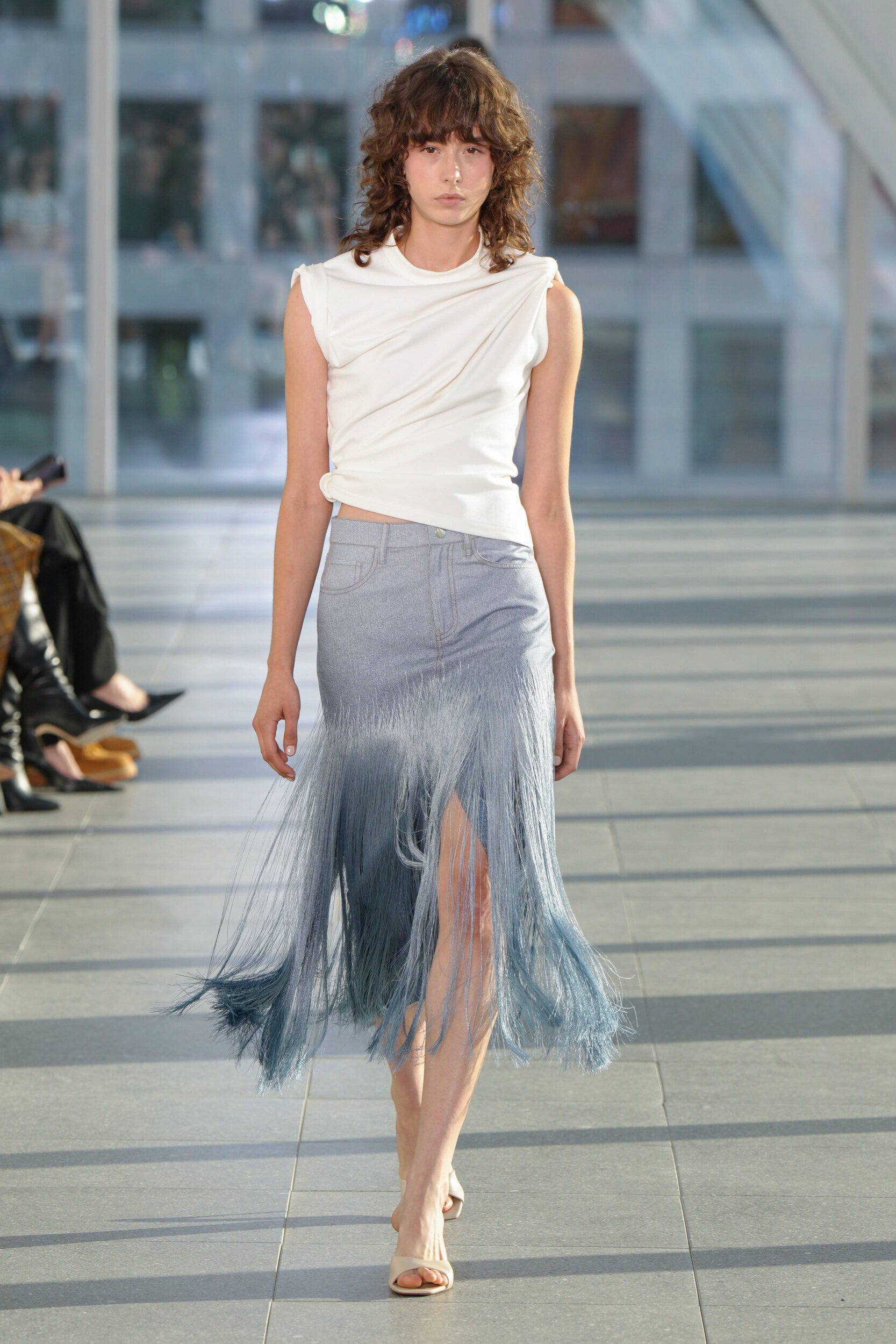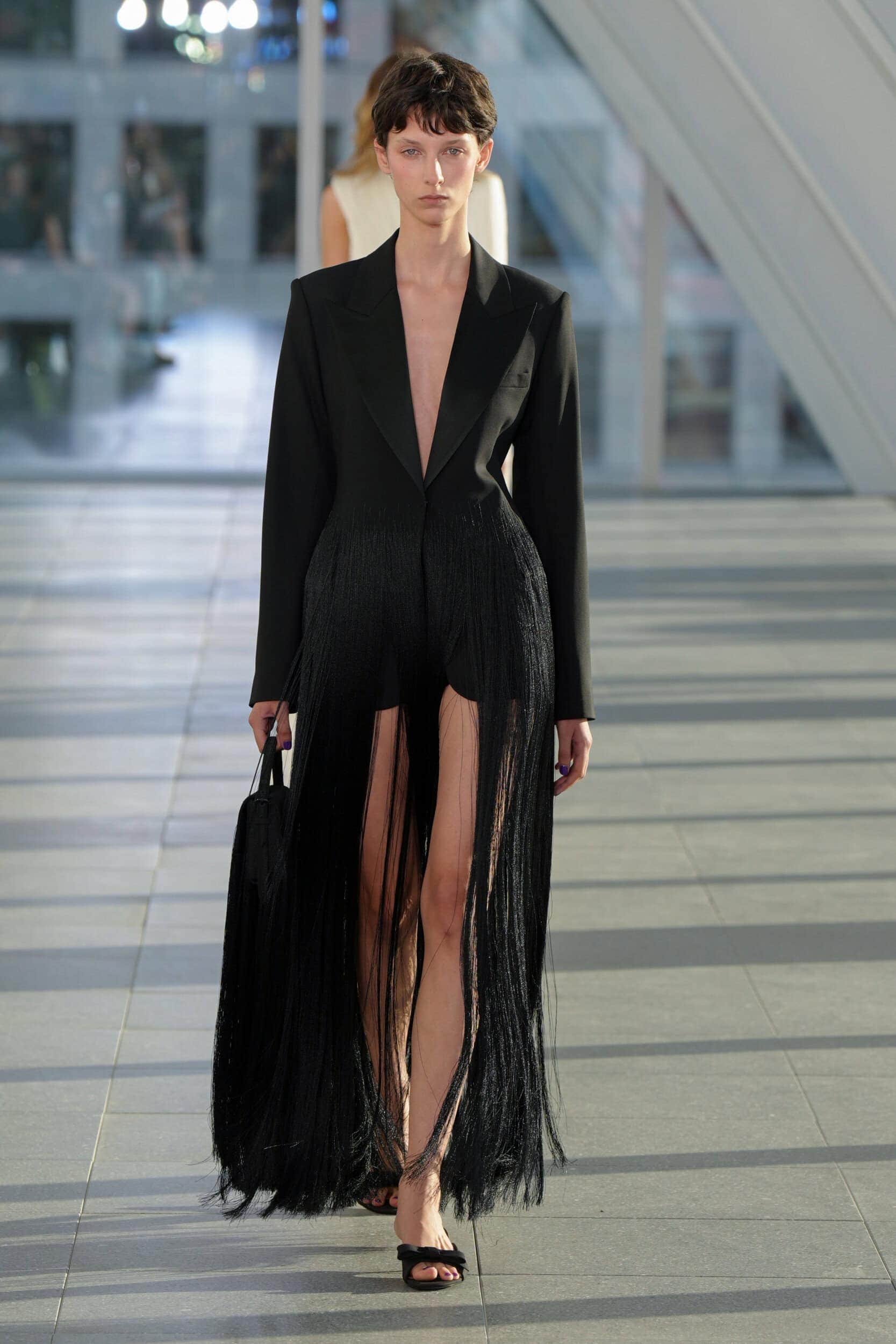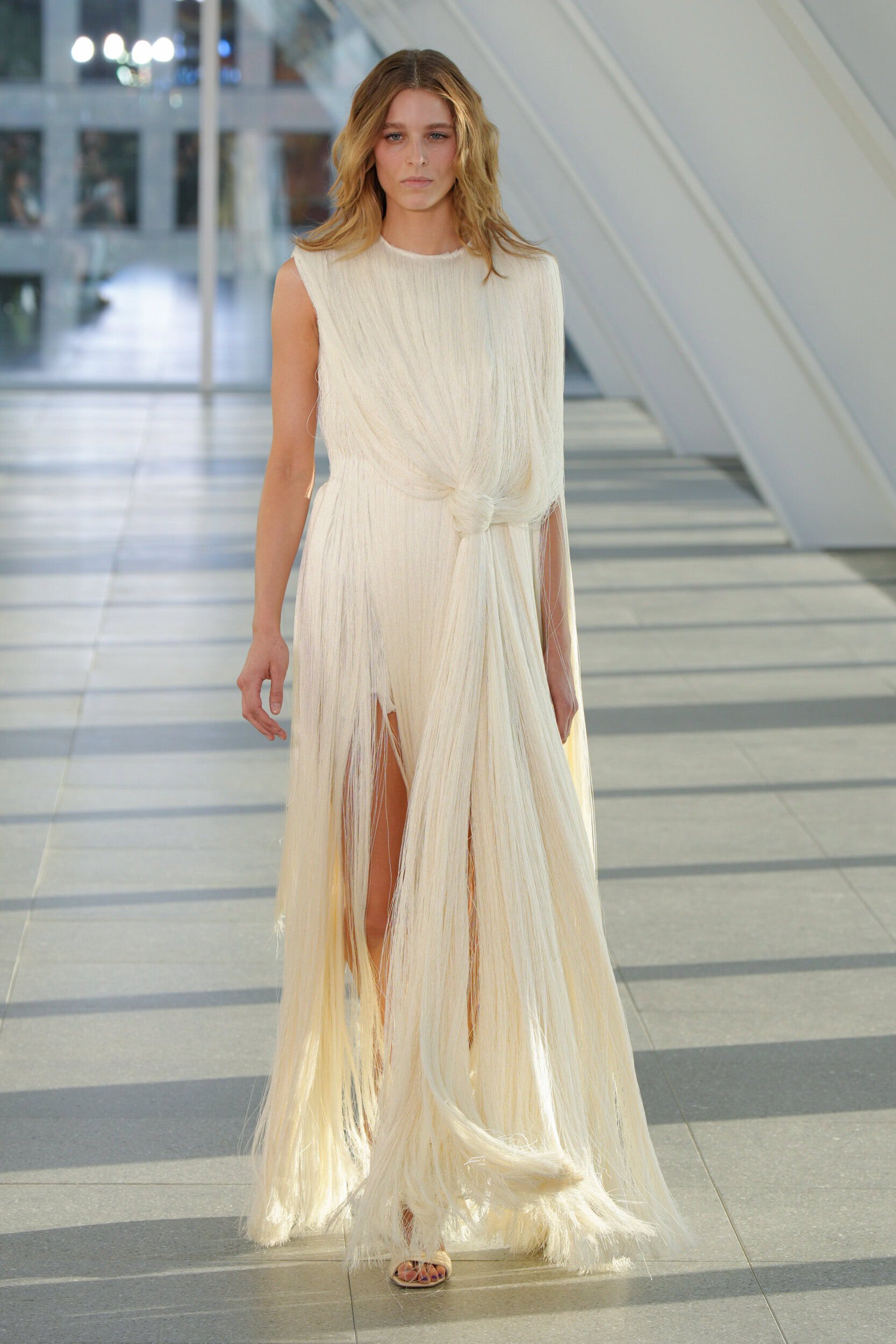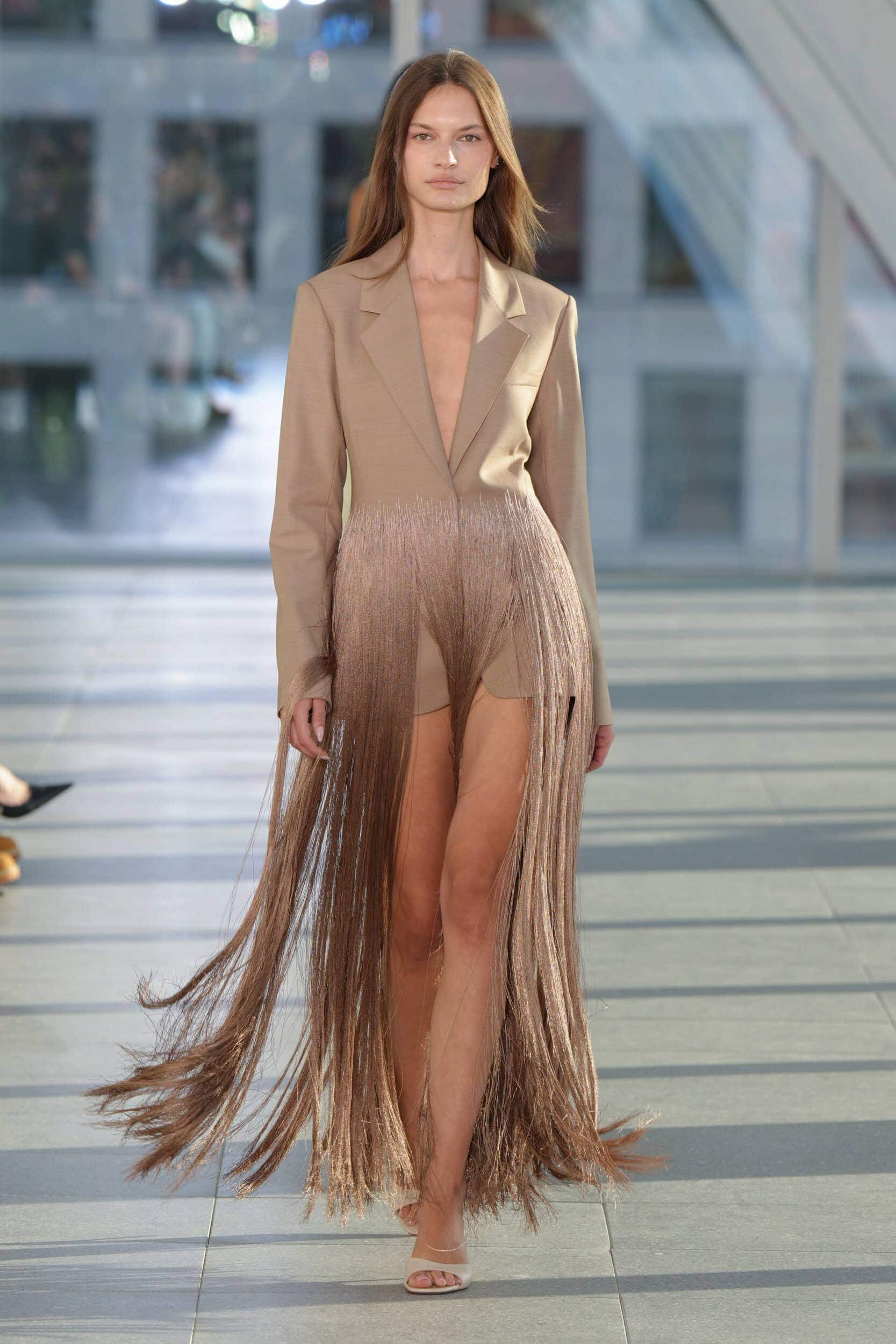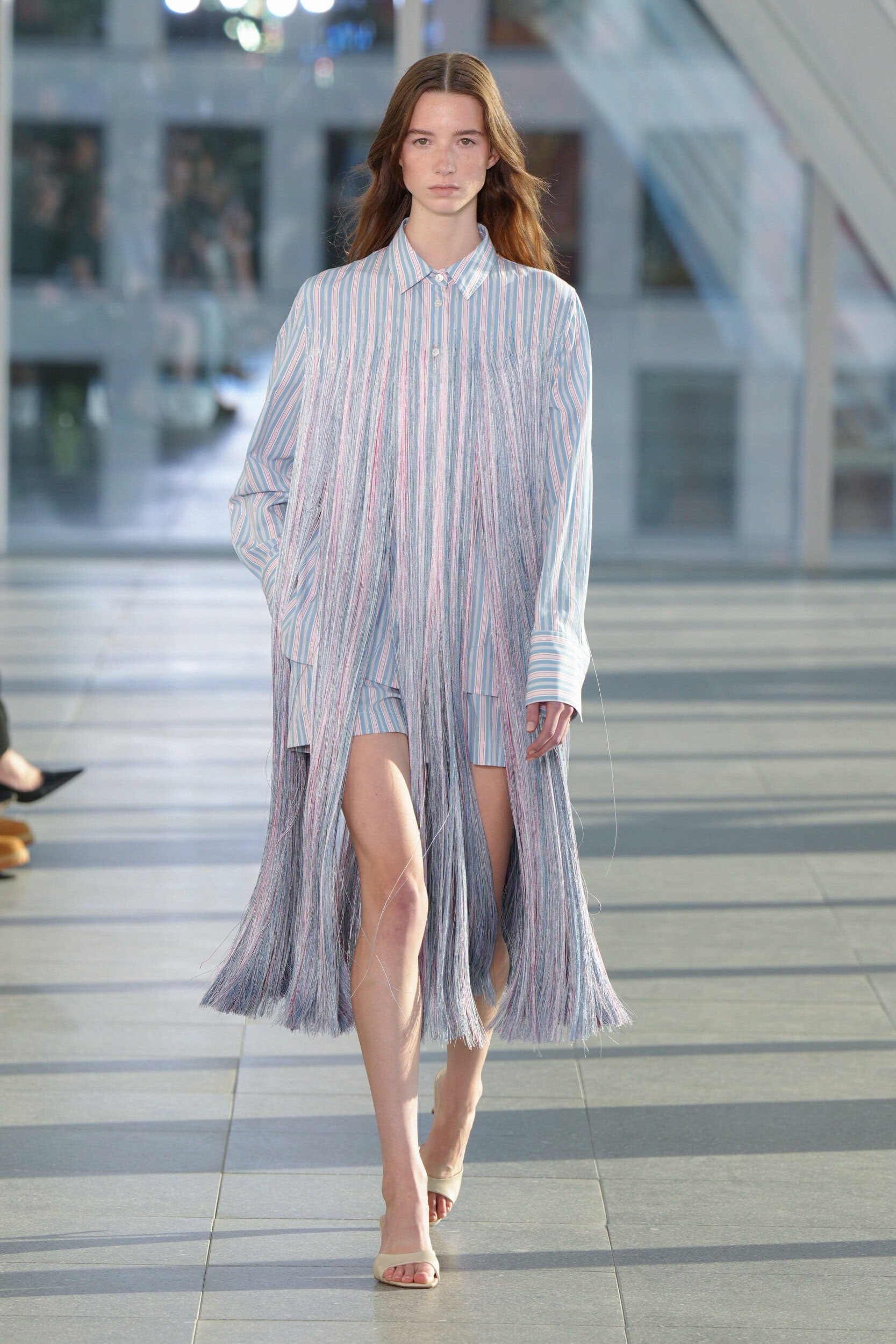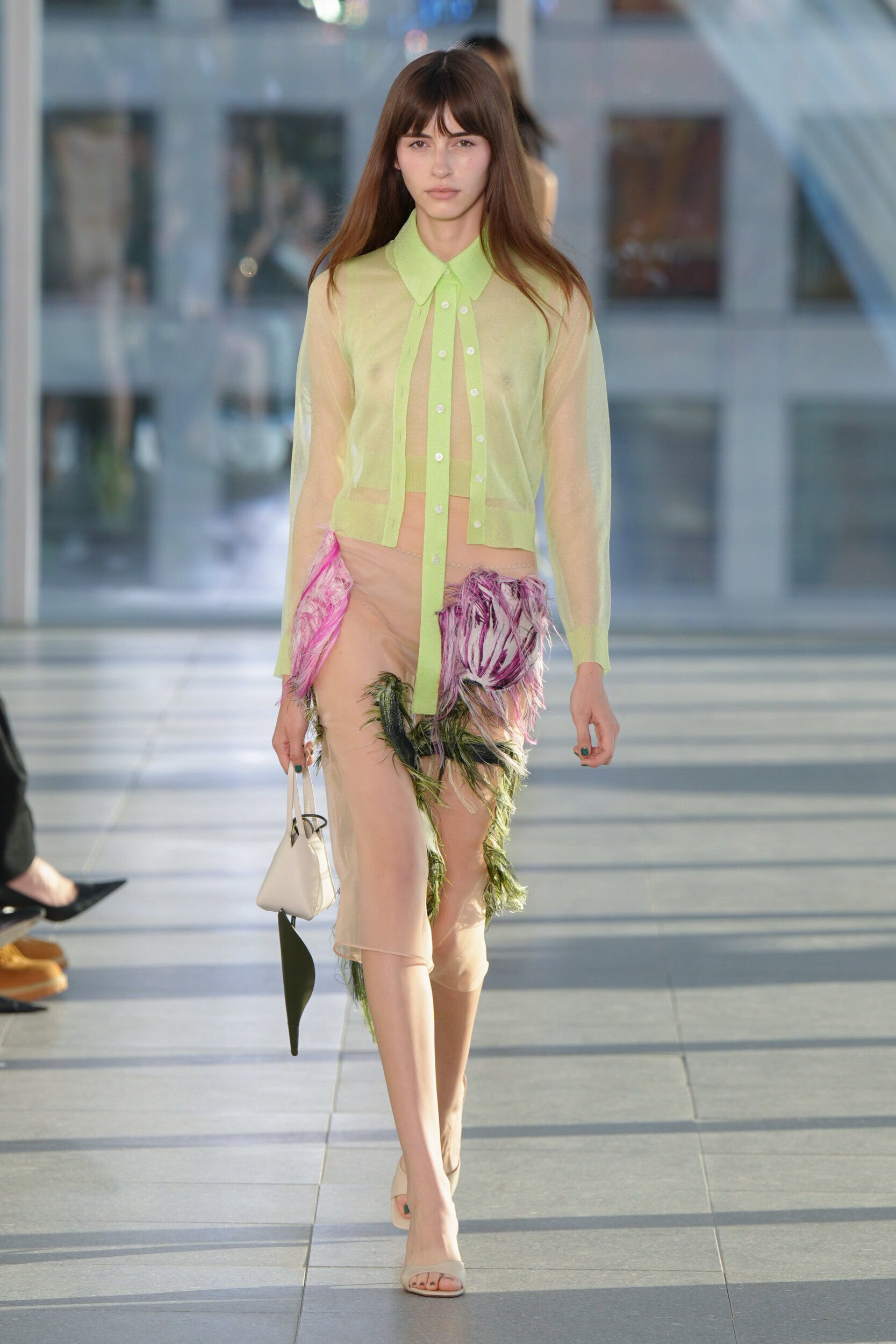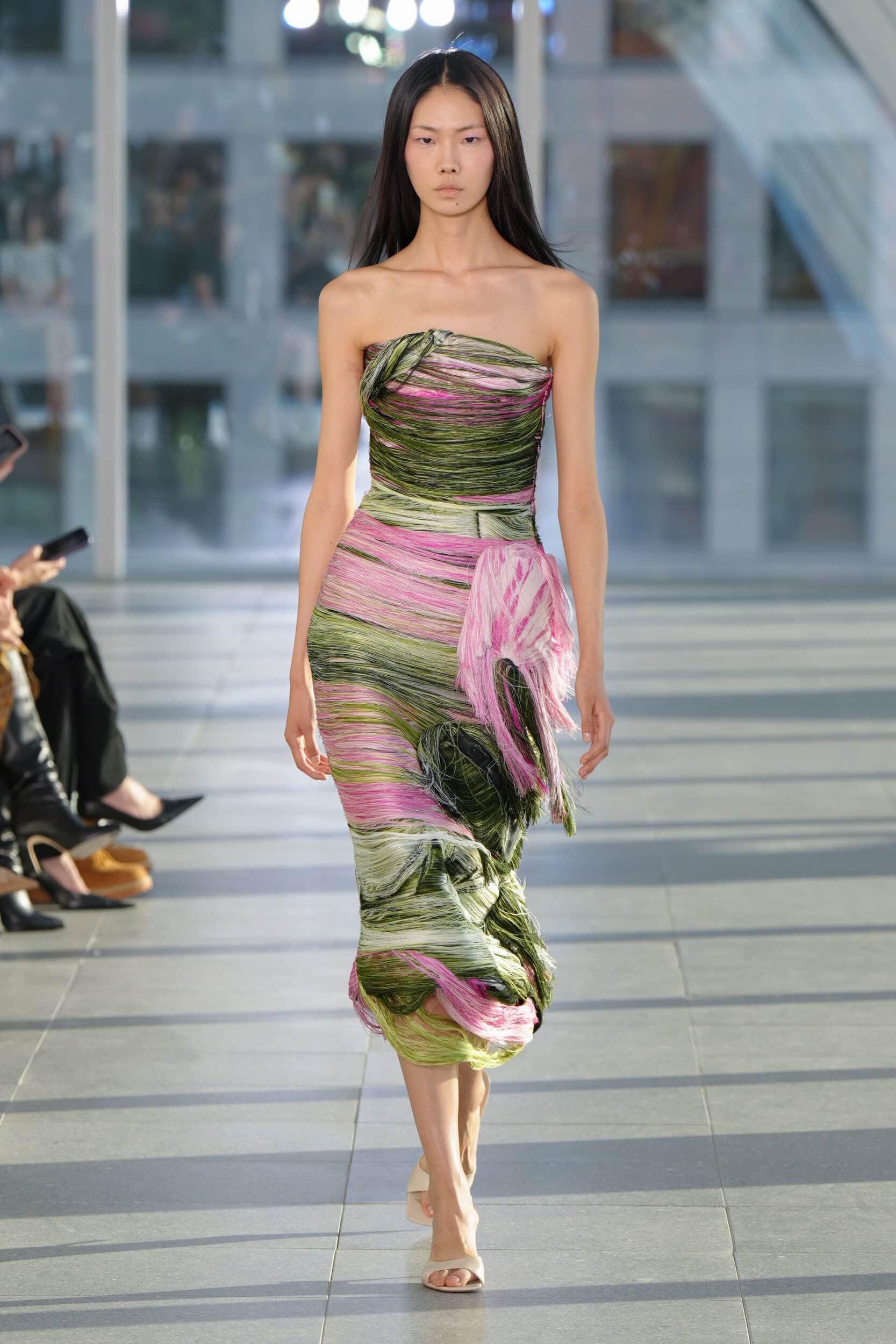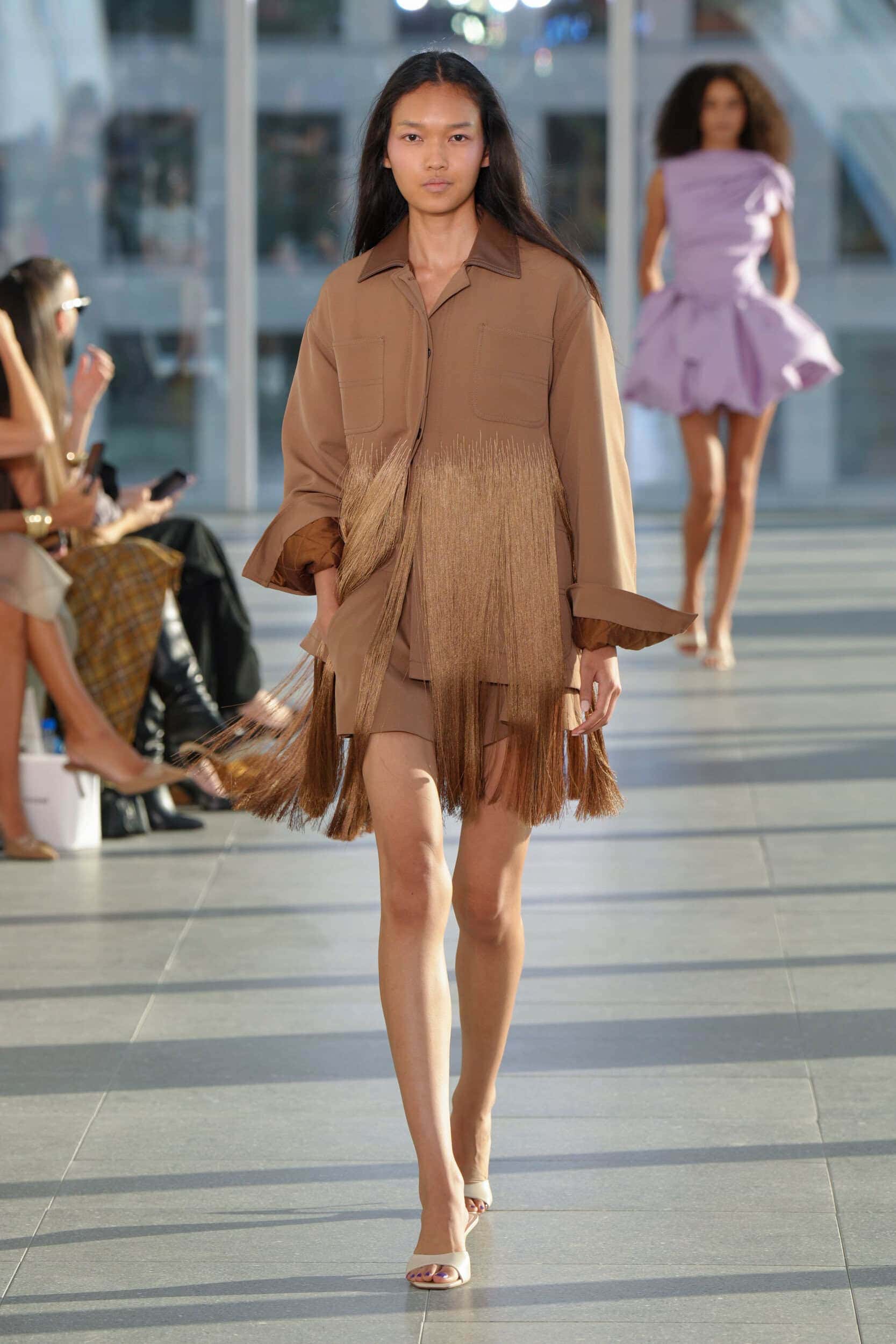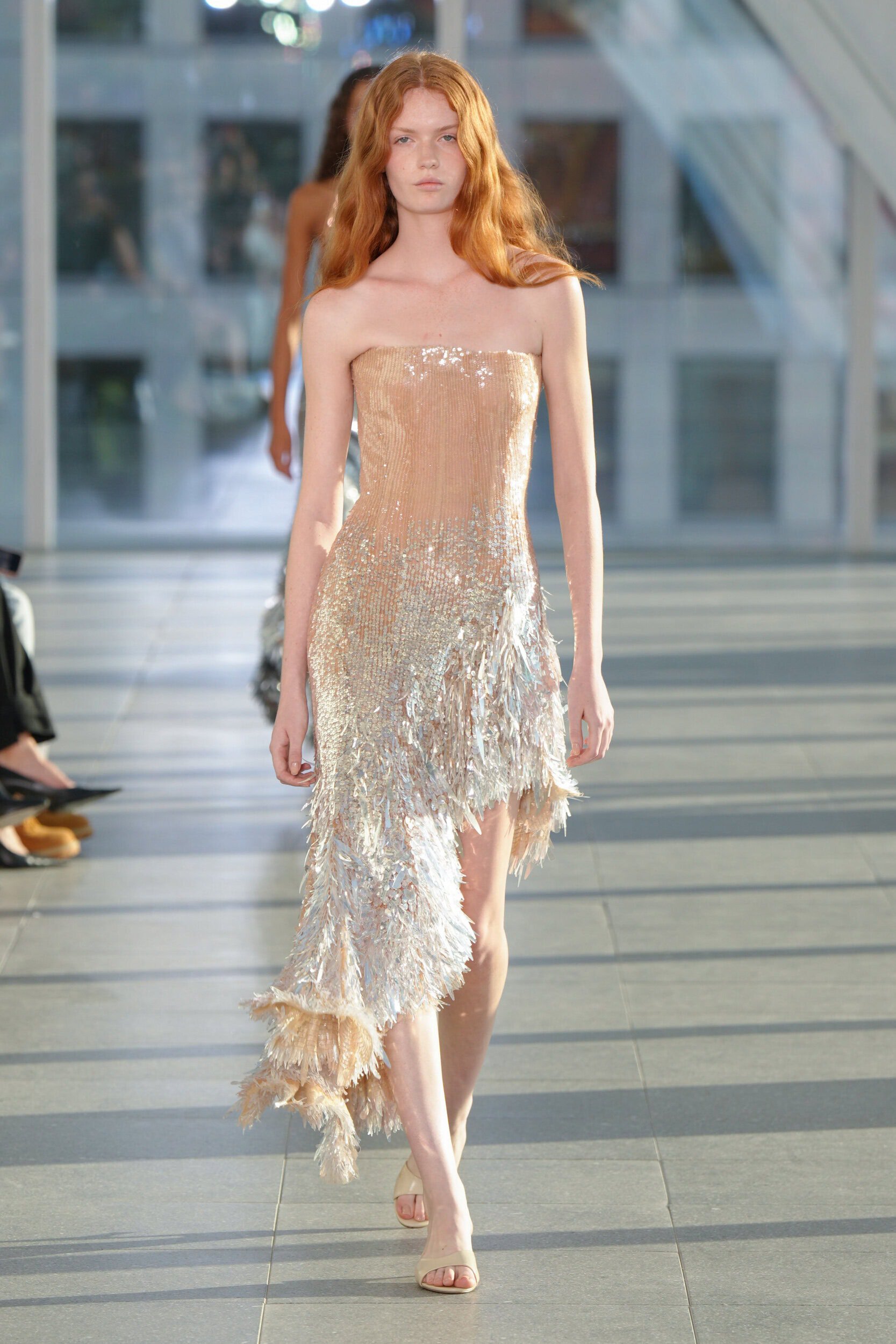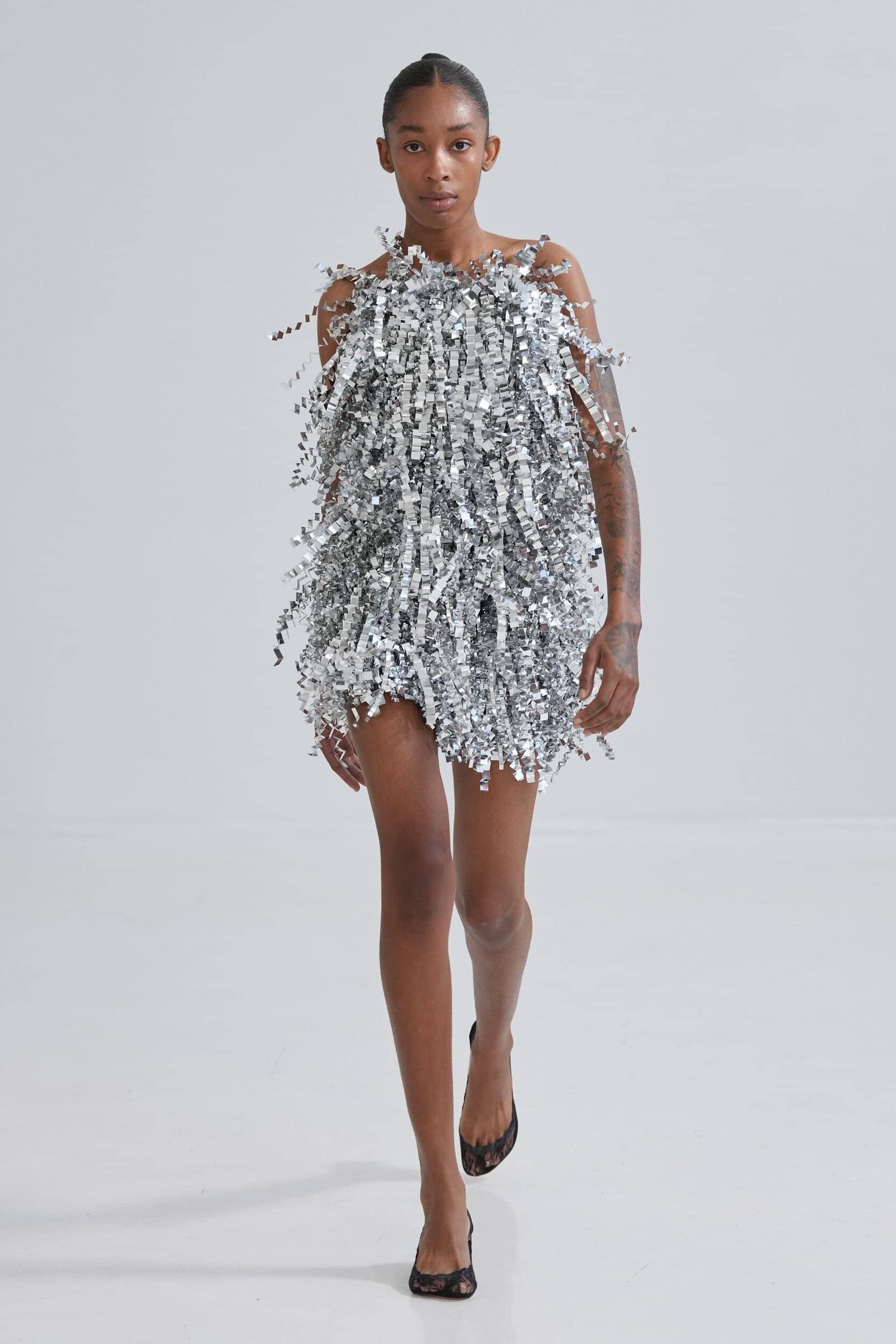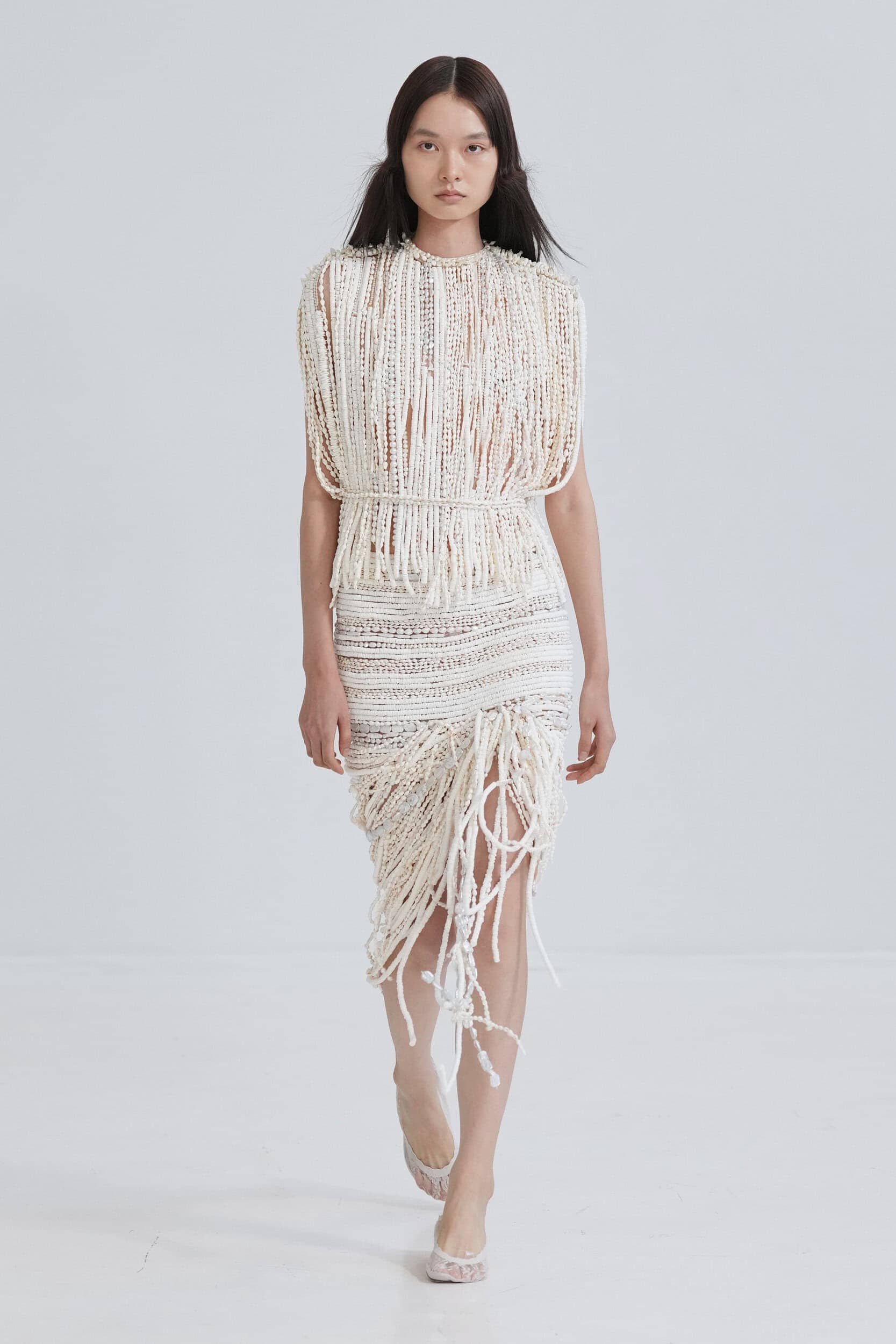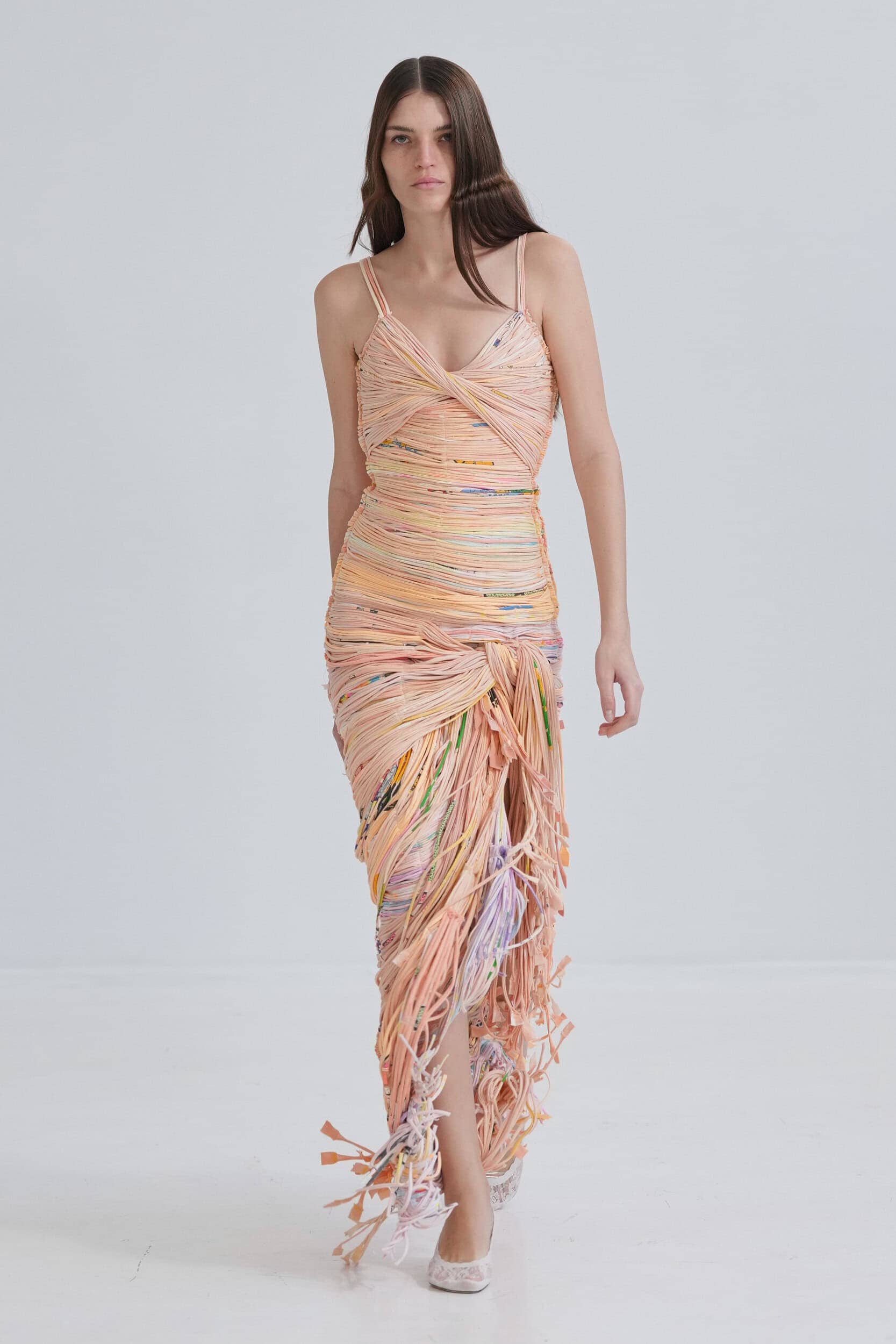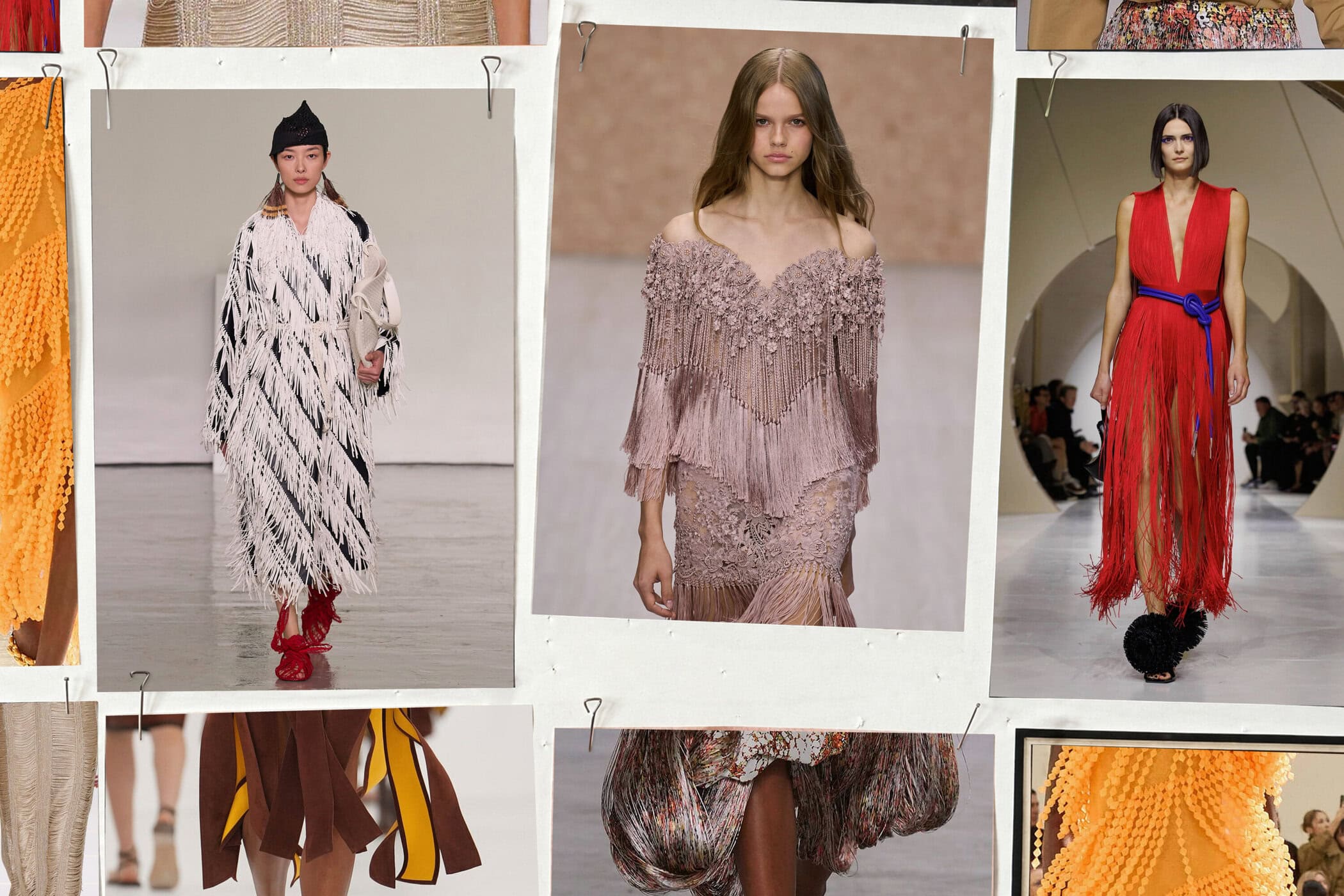
Fringe emerged as one of Spring 2027’s most consistent decorative themes, bringing a renewed sense of movement and texture to the runway. From delicate strands that followed the contours of the body to exaggerated tassels that transformed entire silhouettes, designers explored its capacity to give clothing a life of its own. While fringe has long carried associations with everything from traditional craftsmanship to the glamour of the Jazz Age, this season’s interpretations demonstrated its versatility, allowing even relatively simple garments to become more expressive through the addition of movement.
At Bottega Veneta, Louise Trotter offered one of the season’s most compelling interpretations, incorporating fringe into knitwear, accessories, and sculptural skirts engineered to respond dynamically to the body. Roksanda approached the technique through cascading strands and dramatic proportions, while Erdem’s elongated, fragmented embellishments introduced an element of theatricality to eveningwear. At Valentino, Alessandro Michele drew upon the decorative richness of Art Deco, embracing fringe as part of a more elaborate vision of glamour. Elsewhere, Monse brought the technique into a more casual context, applying kinetic fringe to shirting and outerwear, demonstrating how the detail could enliven familiar wardrobe staples.
There’s something particularly relevant about this emphasis on physical movement at a moment when fashion is so frequently consumed through static imagery and digital media. Fringe introduces a dimension that can only be fully appreciated when a garment is worn, making its movement, weight, and construction integral to the experience. For a luxury industry increasingly concerned with communicating the value of craftsmanship and creativity, such details offer a tangible expression of the work involved in making clothes. They also speak to a broader appetite for individuality and embellishment, where ornament serves a purpose beyond decoration, becoming part of how a garment behaves and interacts with its wearer.
The commercial appeal of fringe lies in its adaptability. While more elaborate interpretations naturally lend themselves to eveningwear and occasion dressing, fringed hems, tasseled accessories, and textured knitwear offer a more approachable way to introduce the idea into an everyday wardrobe. Perhaps the enduring appeal of fringe comes down to something quite simple: its ability to make clothing feel animated, introducing an element of spontaneity and pleasure into the experience of getting dressed.