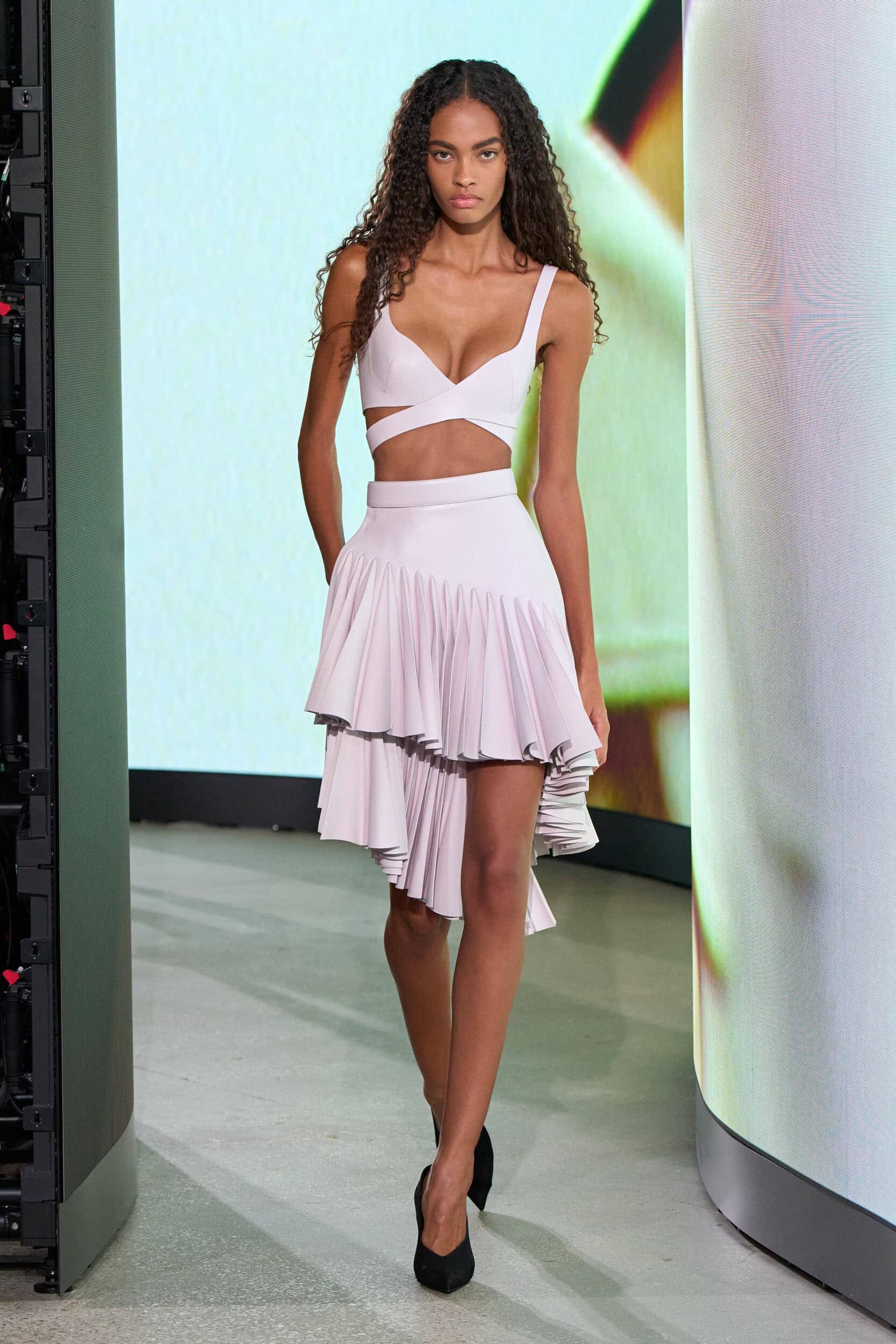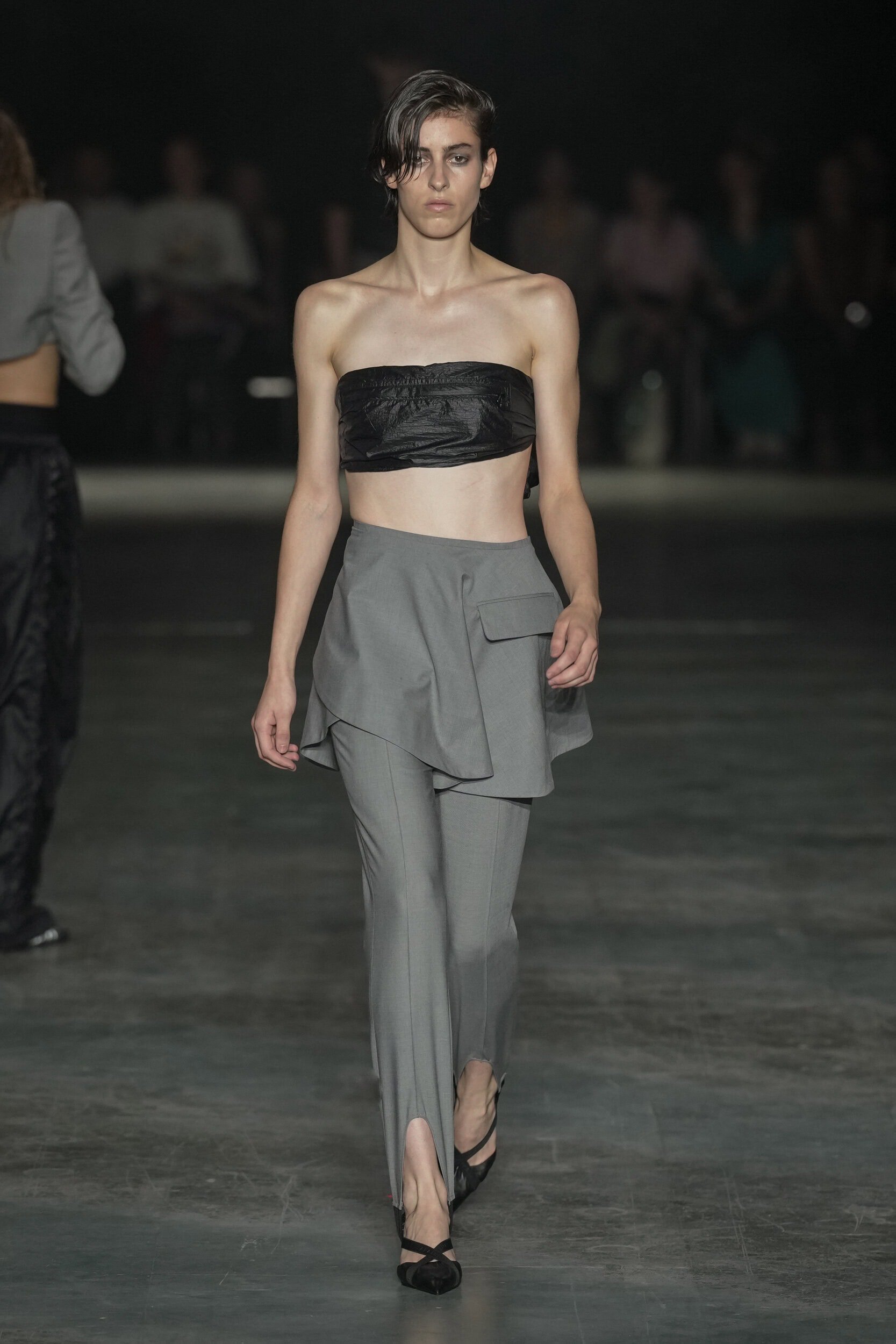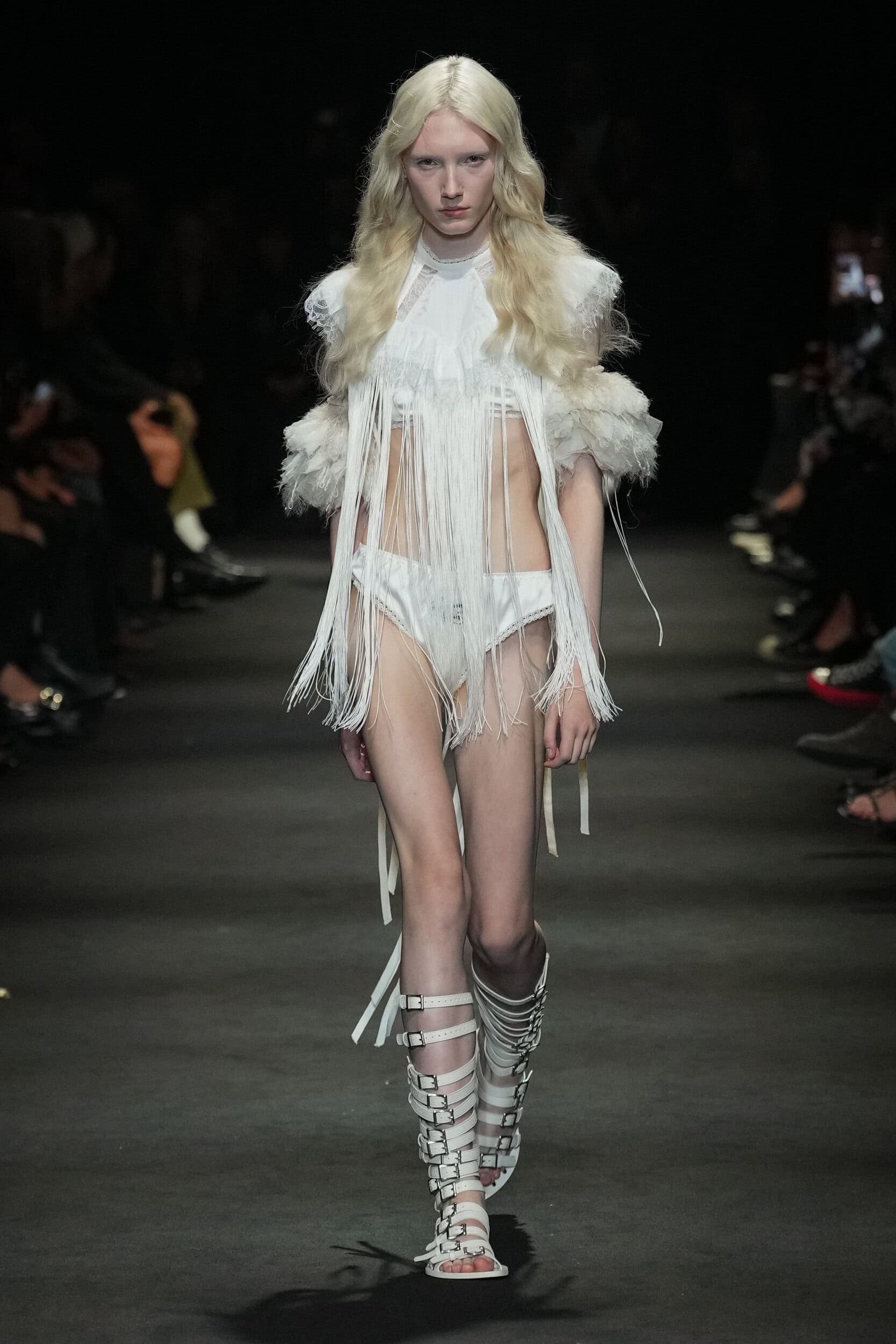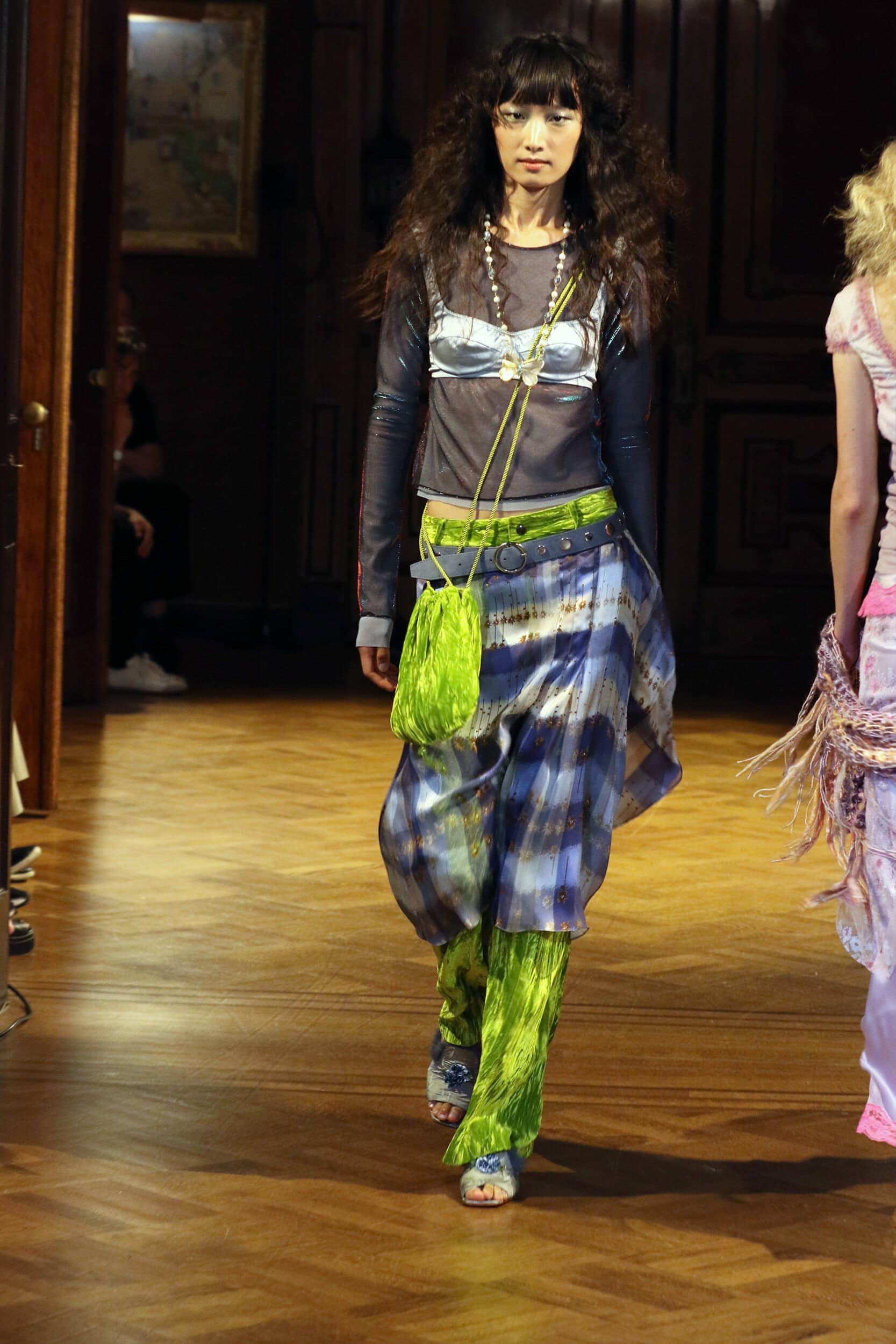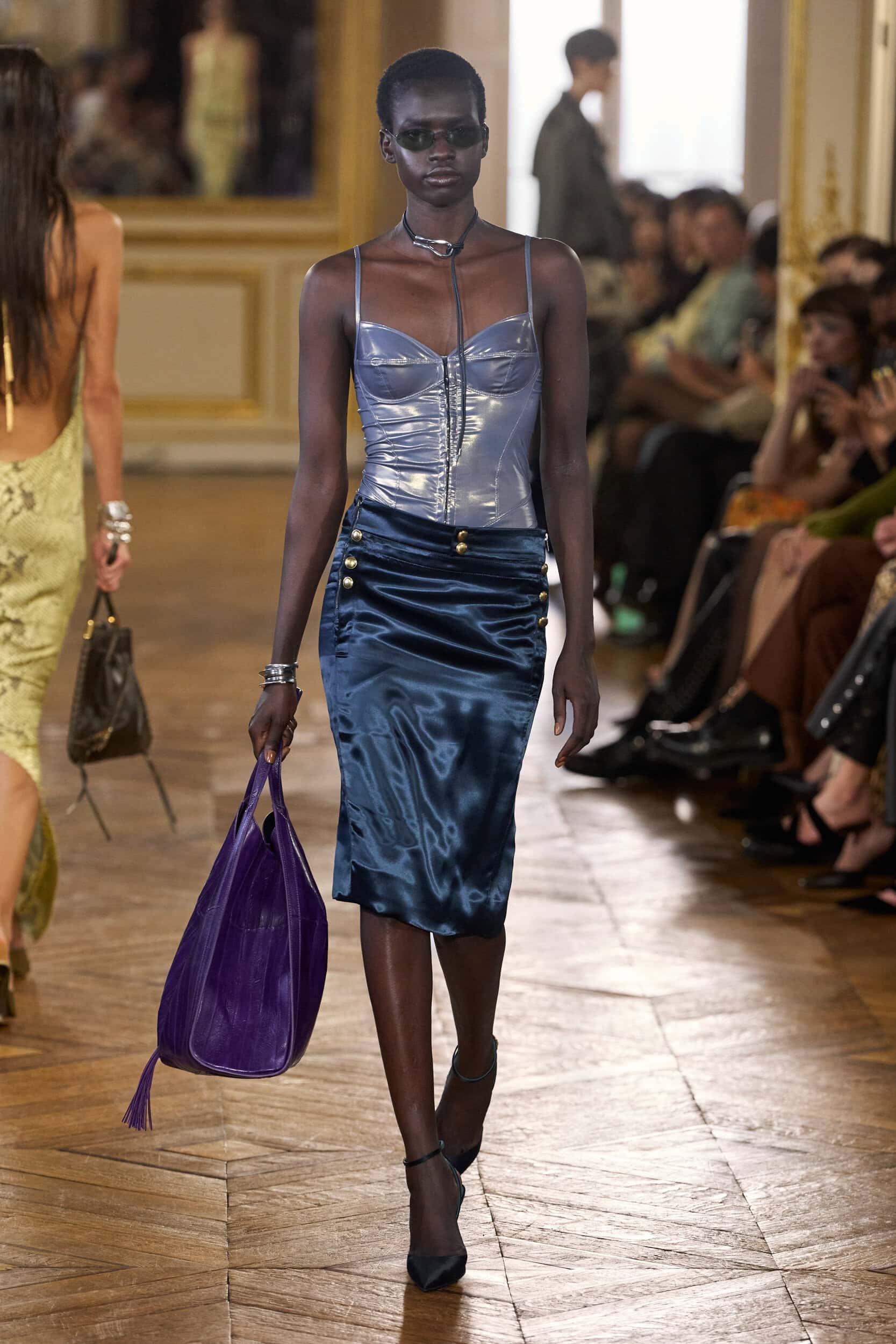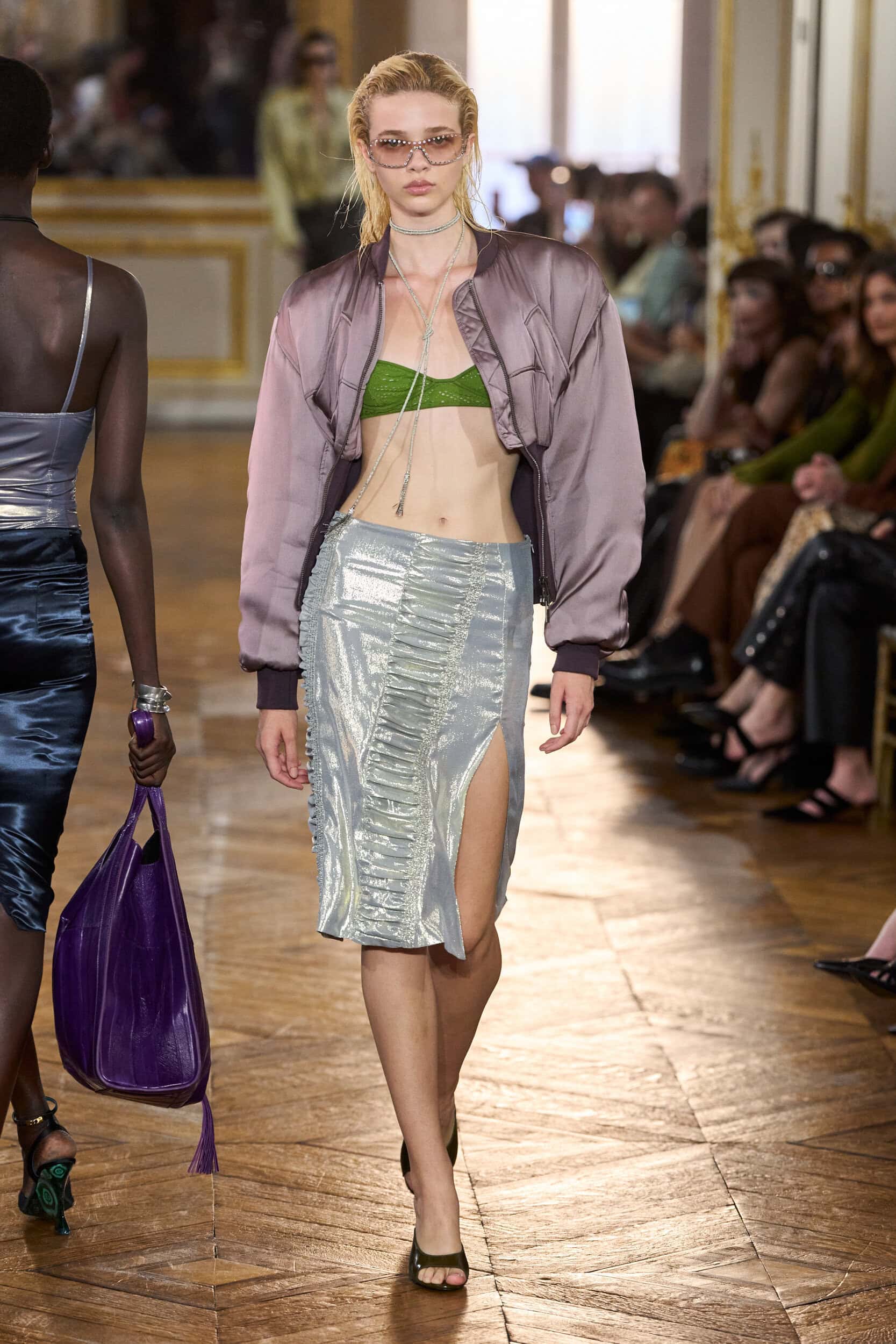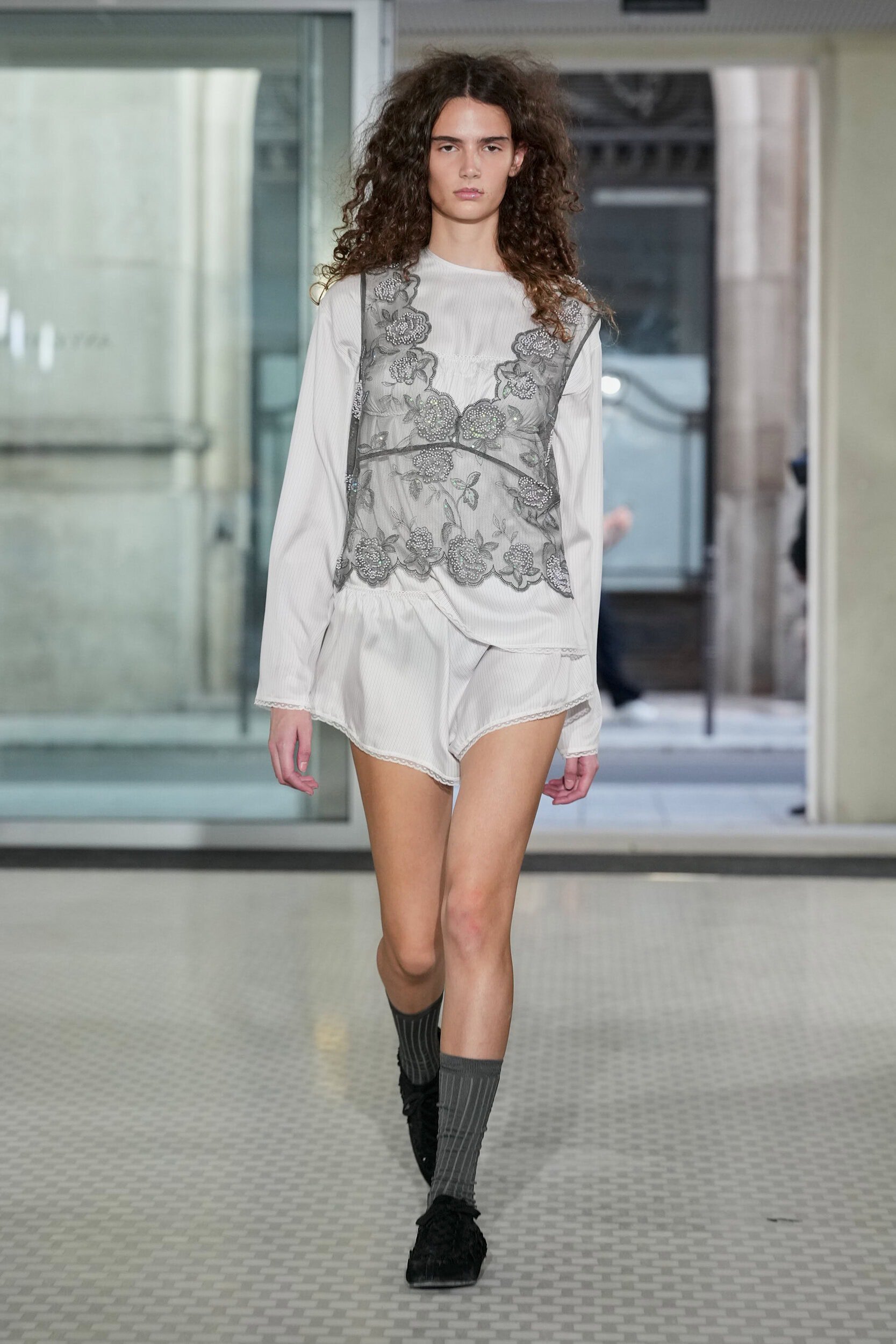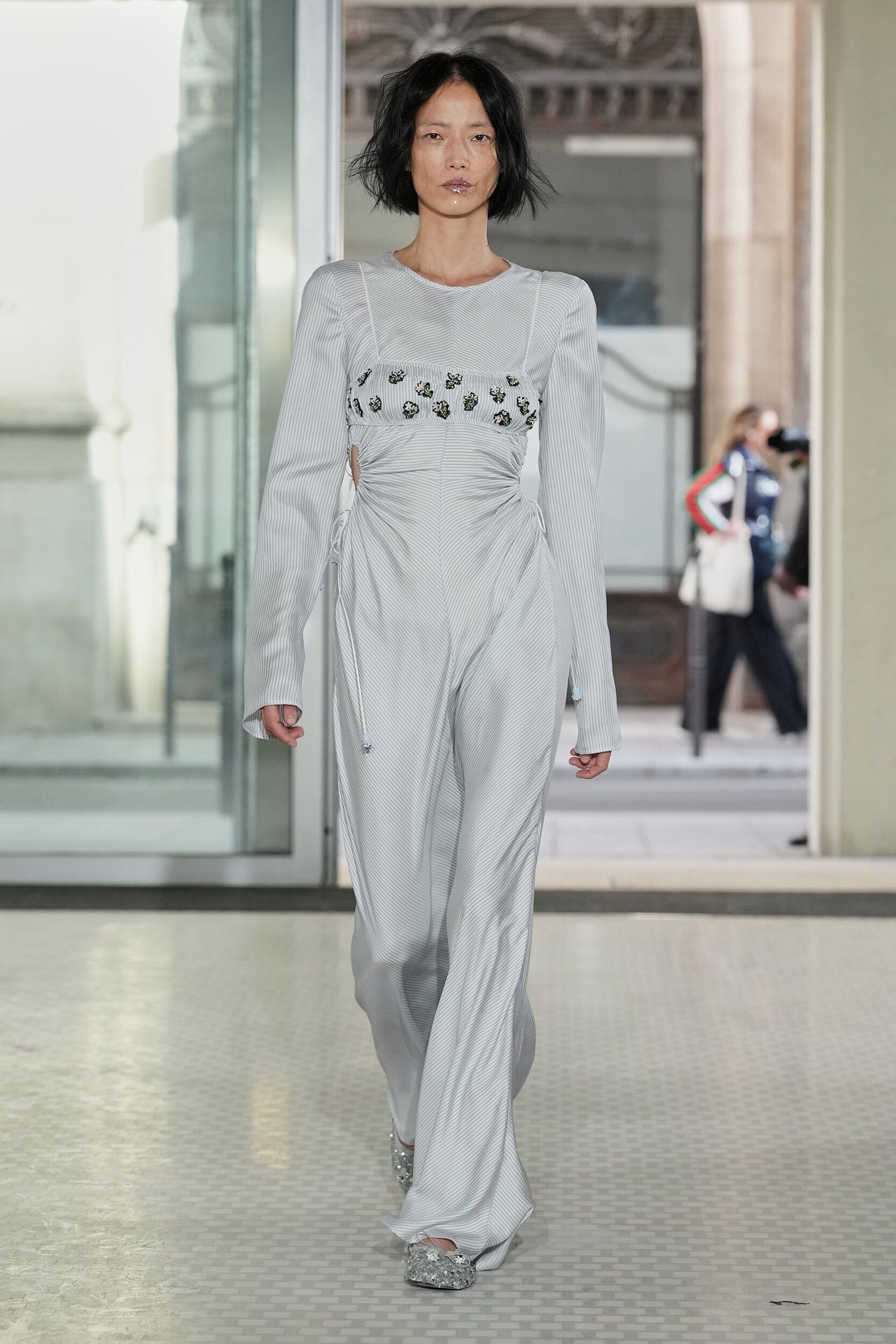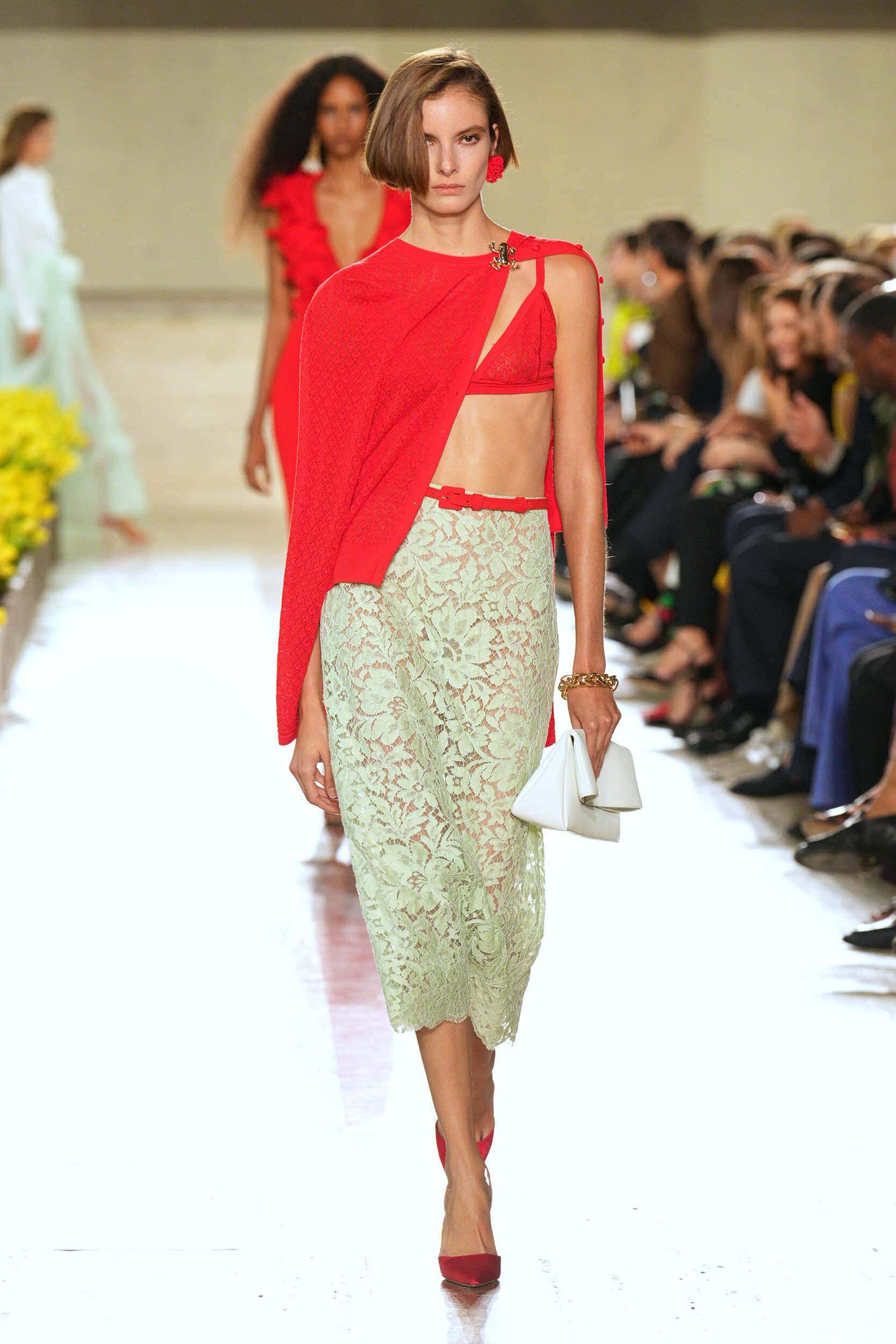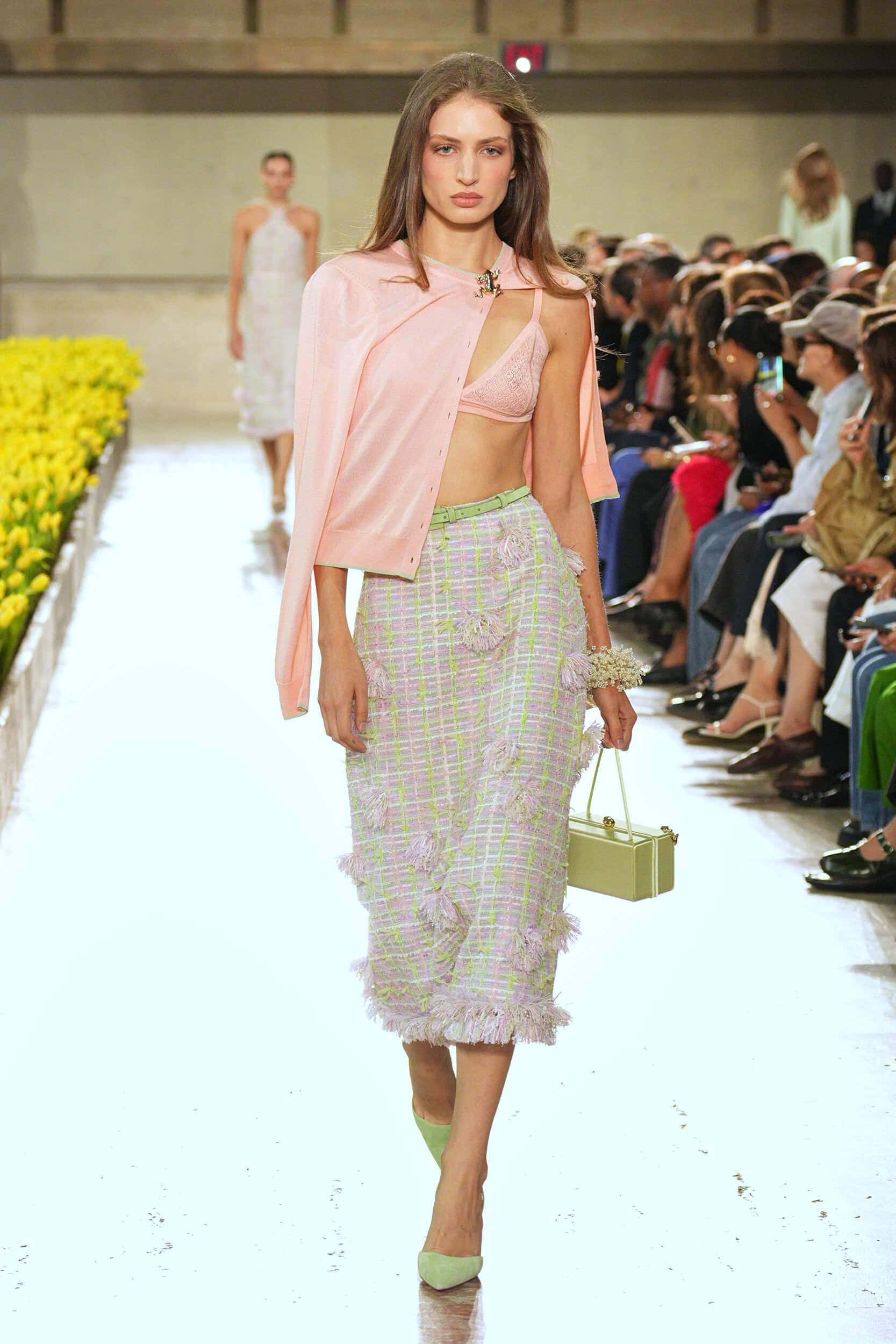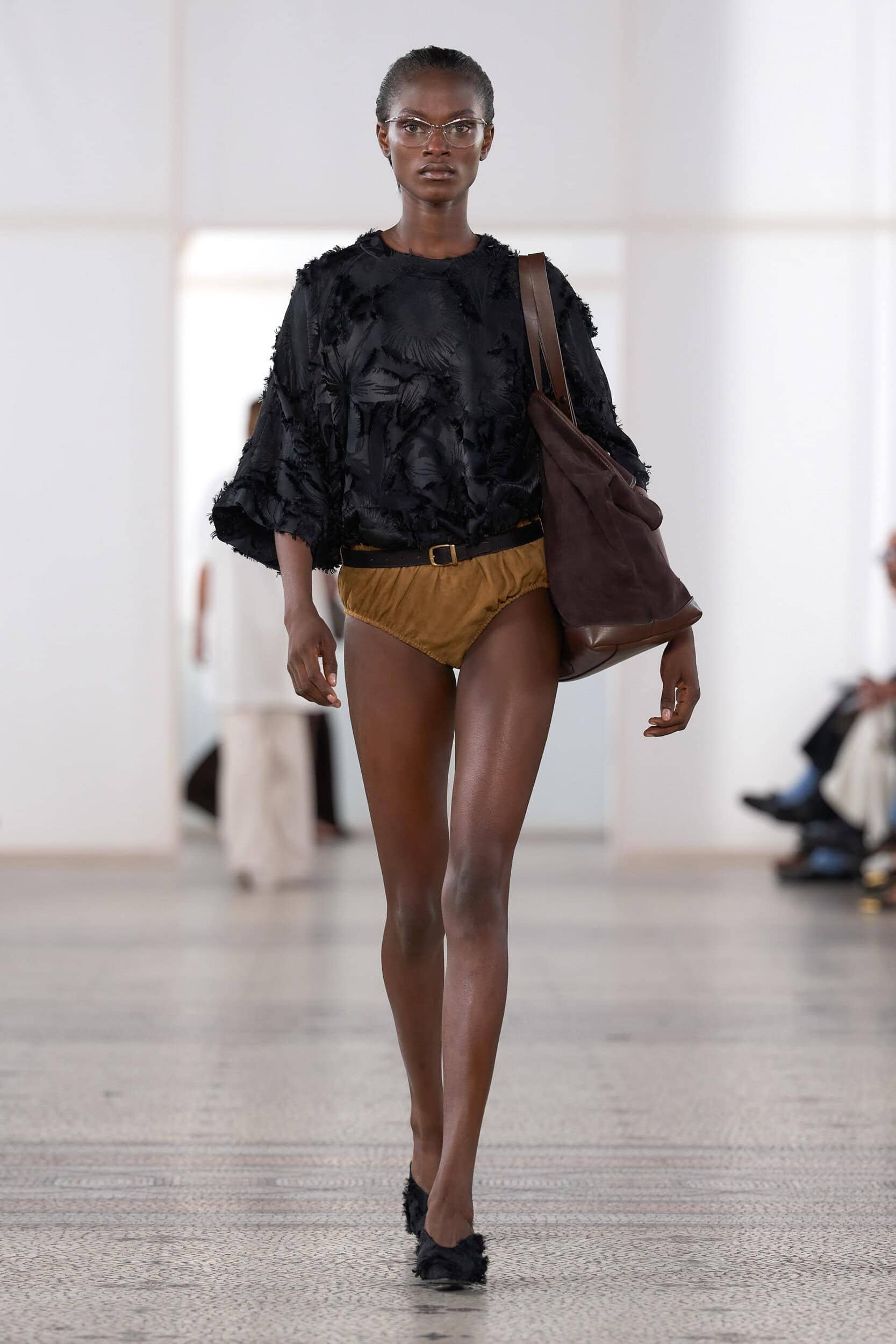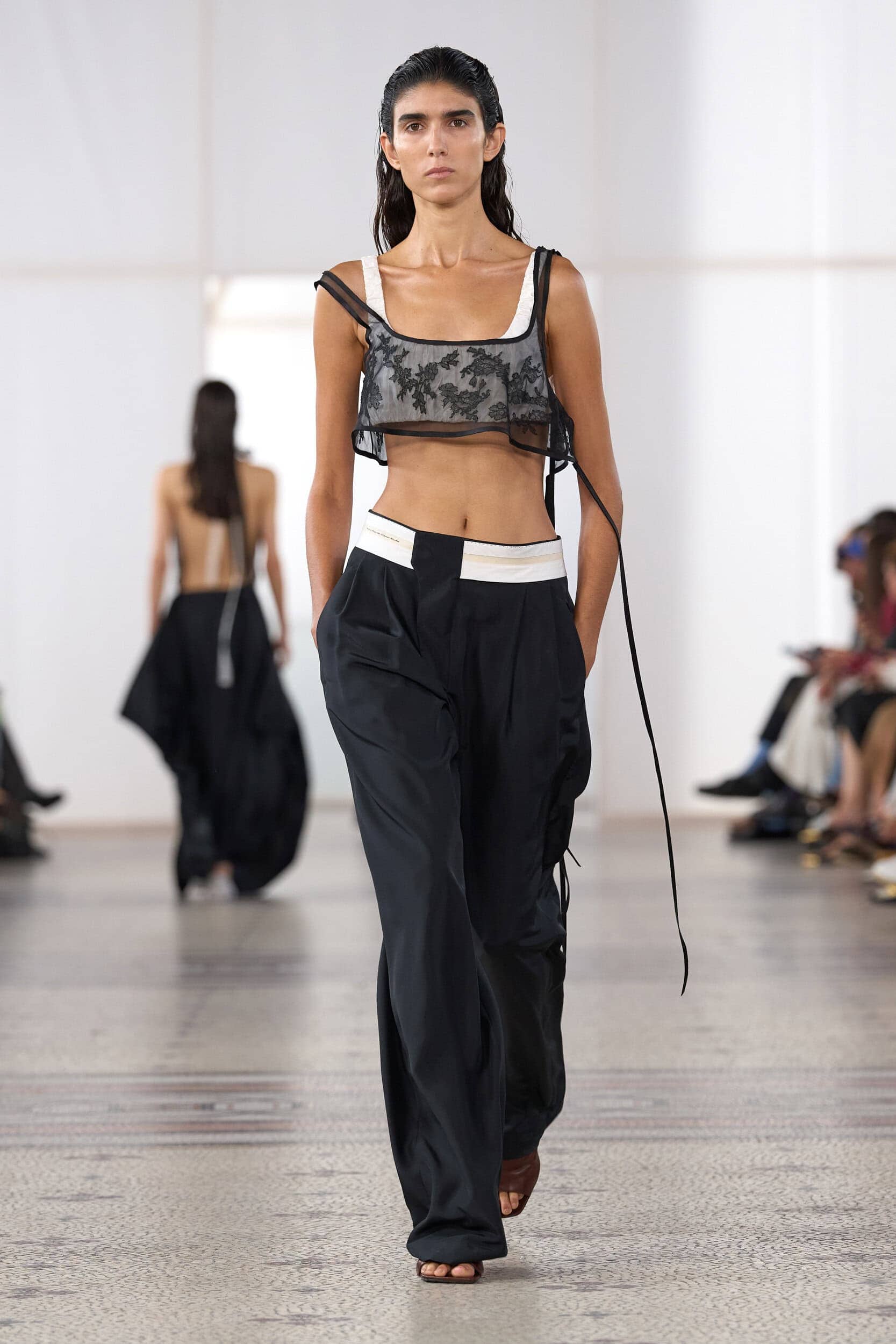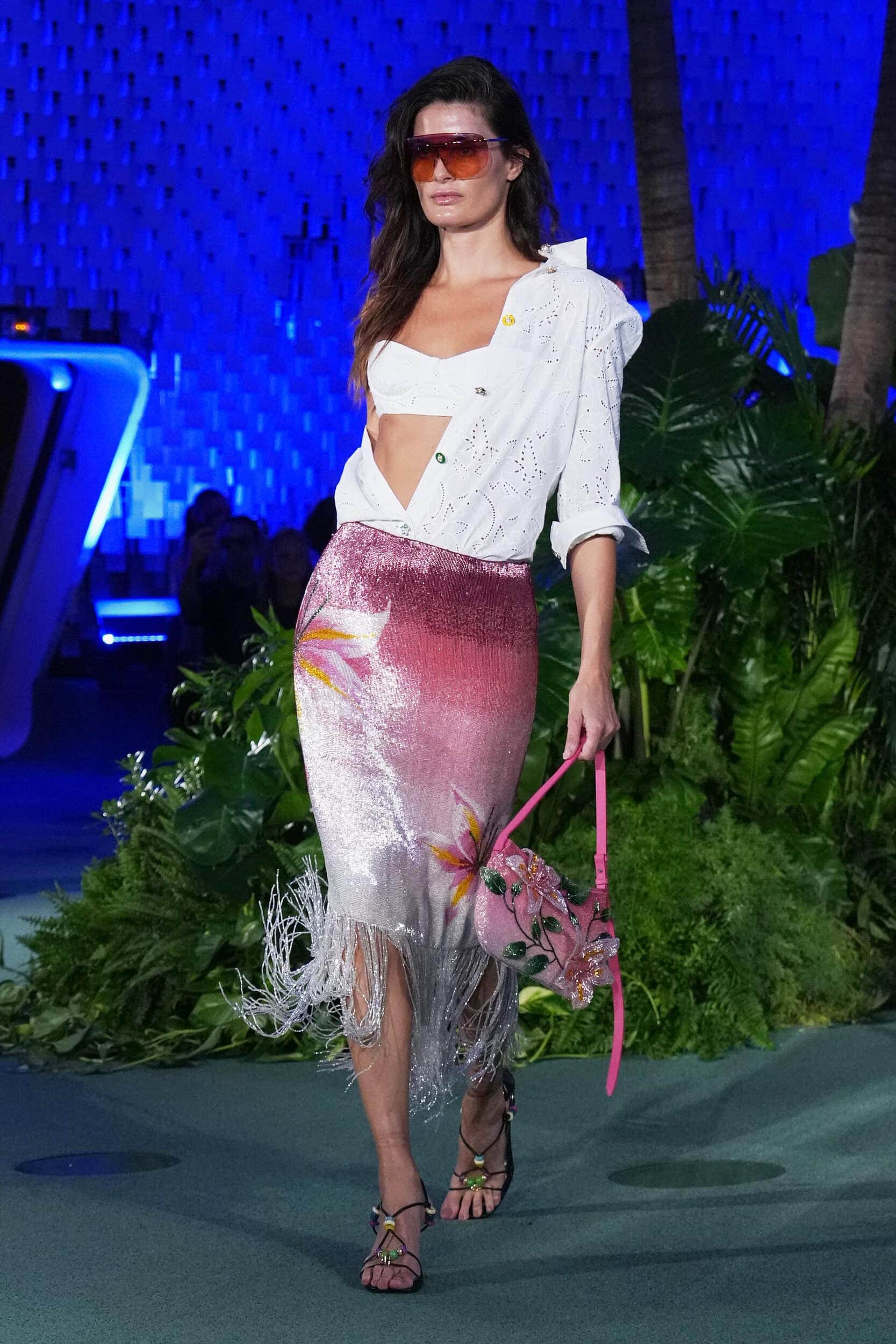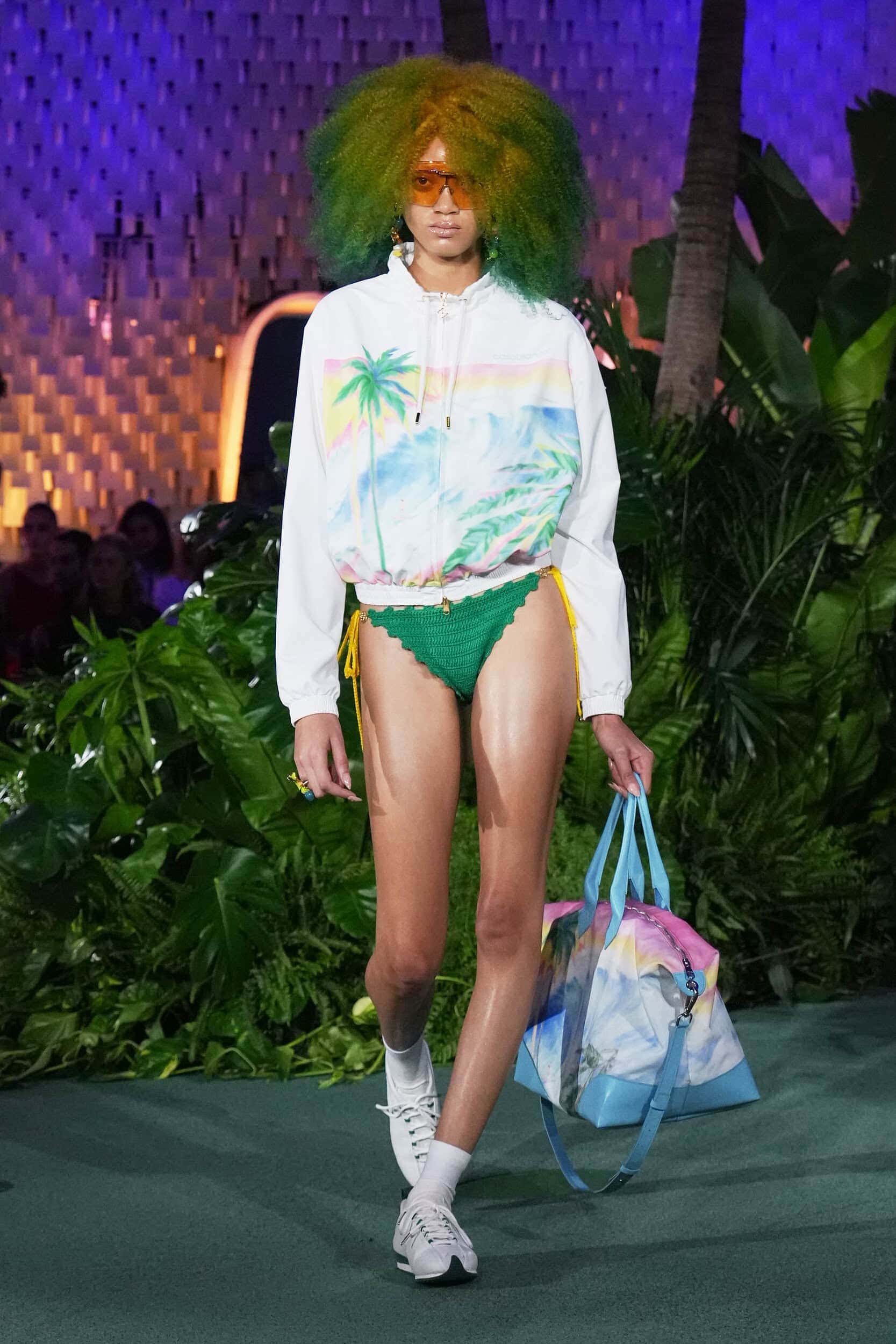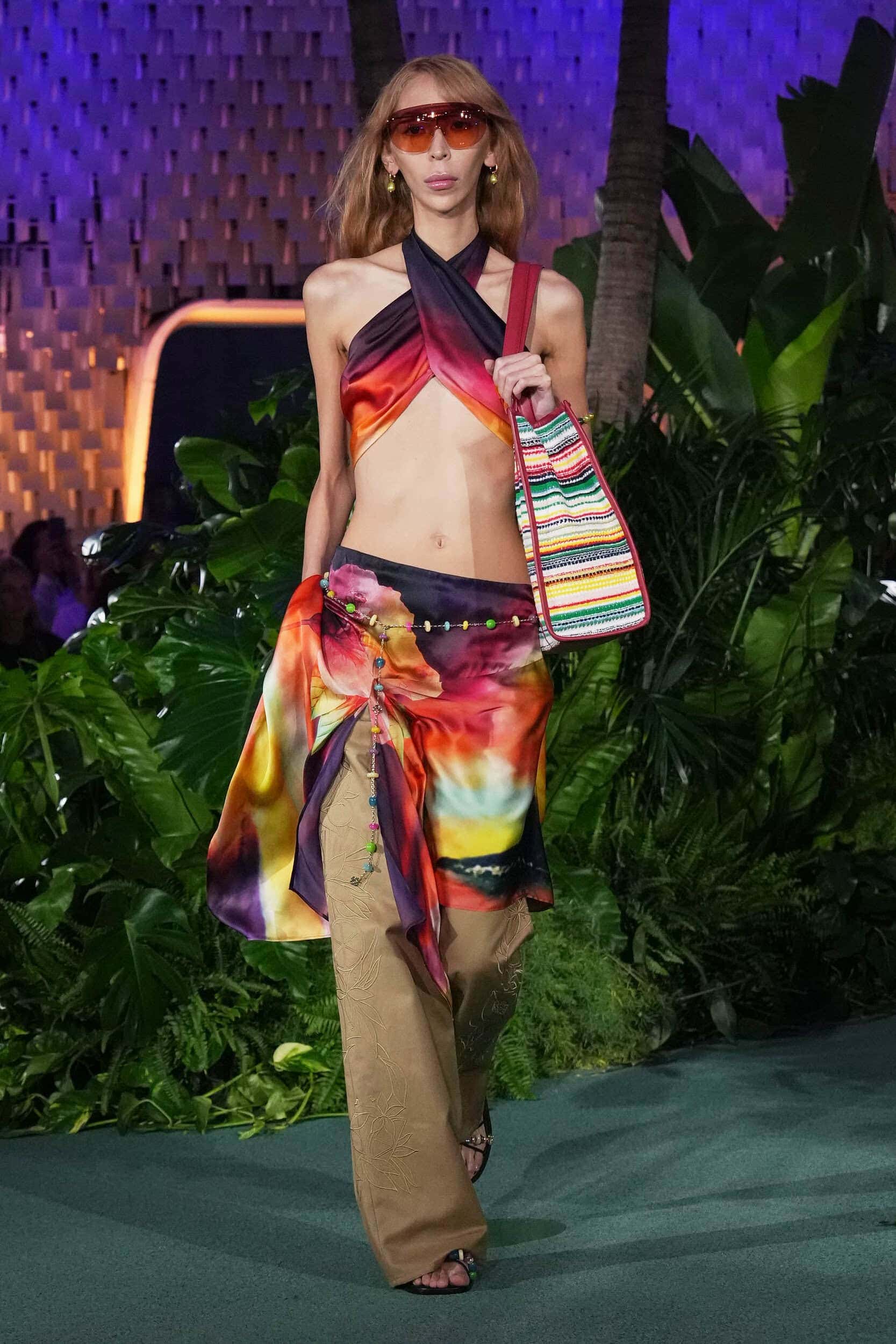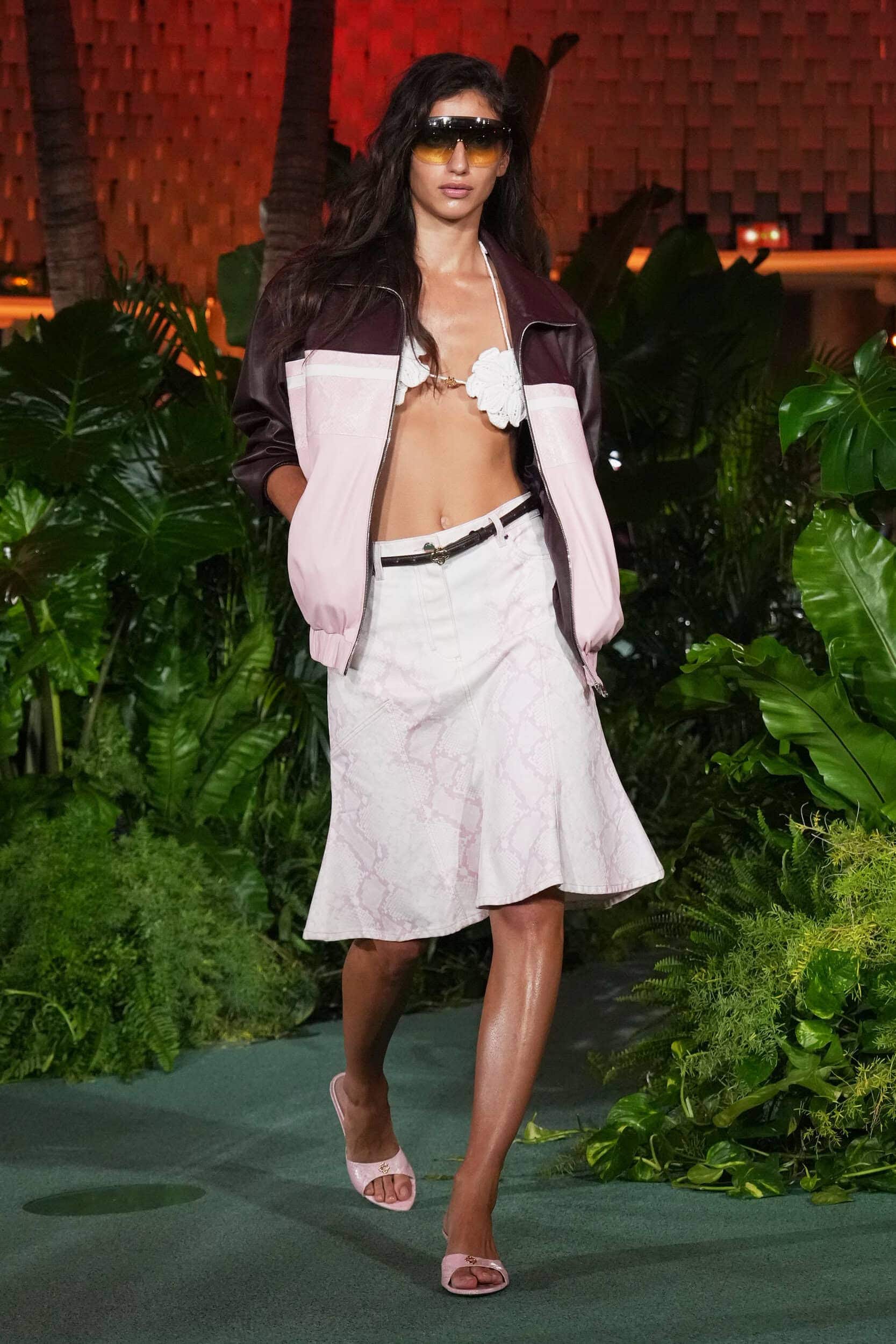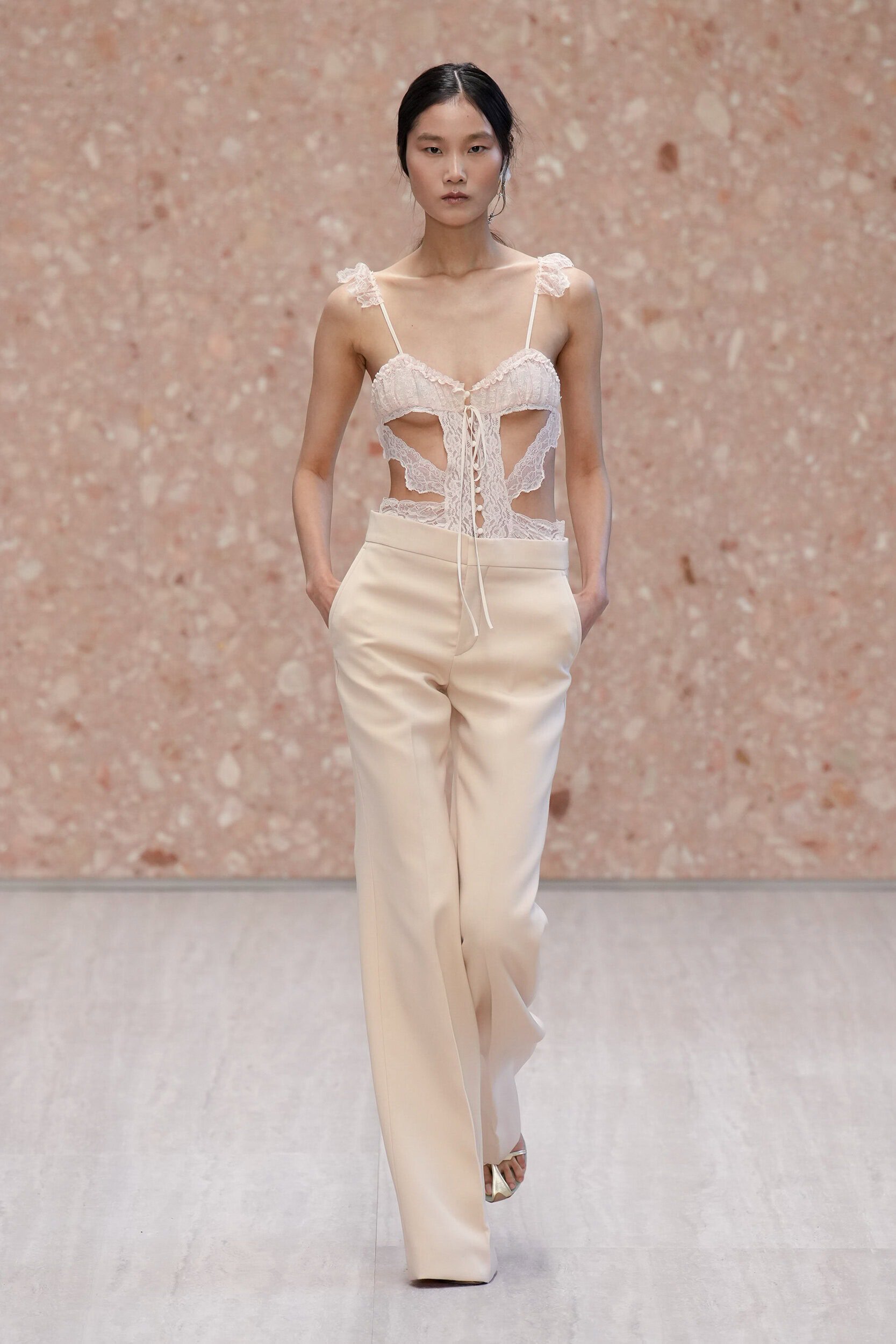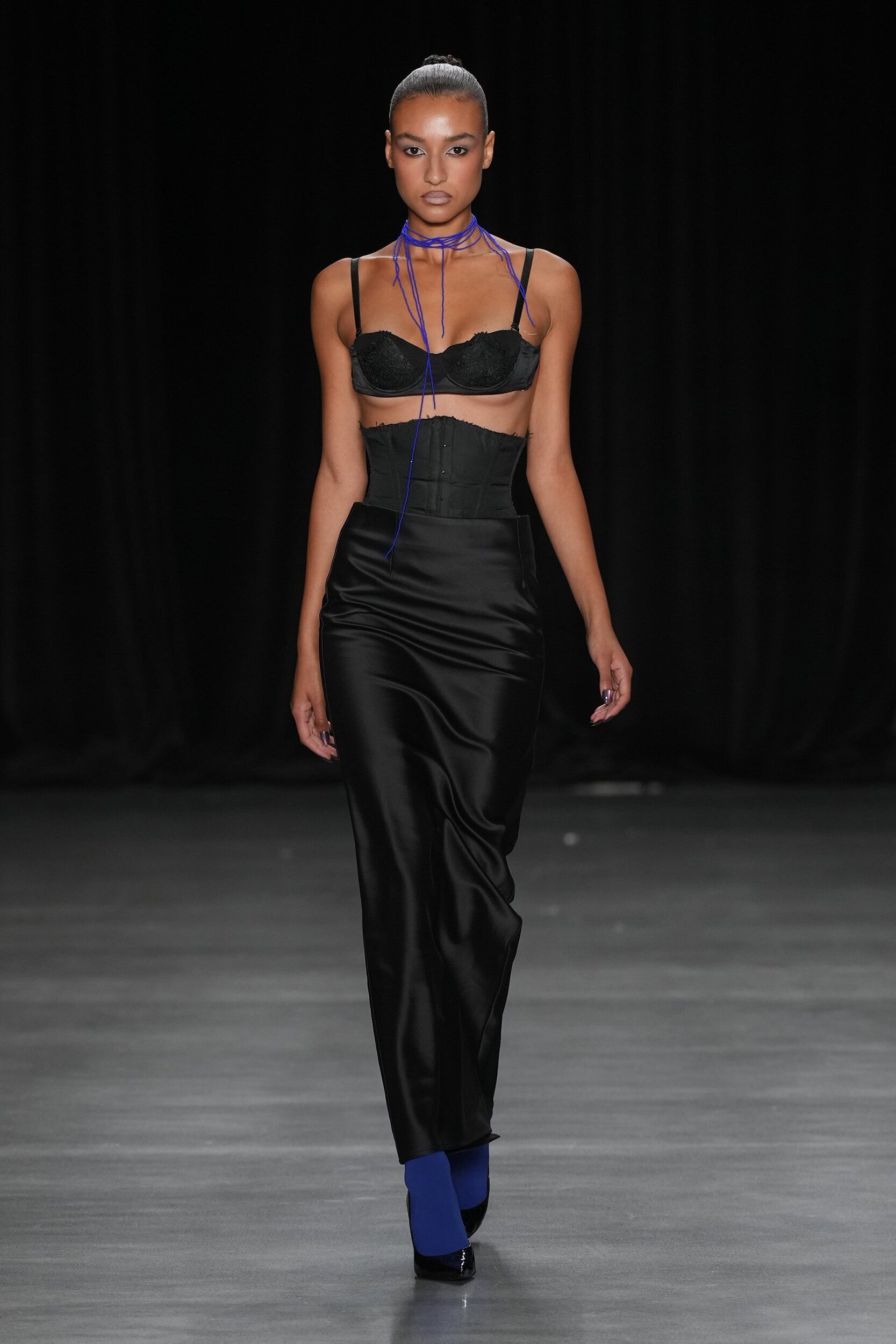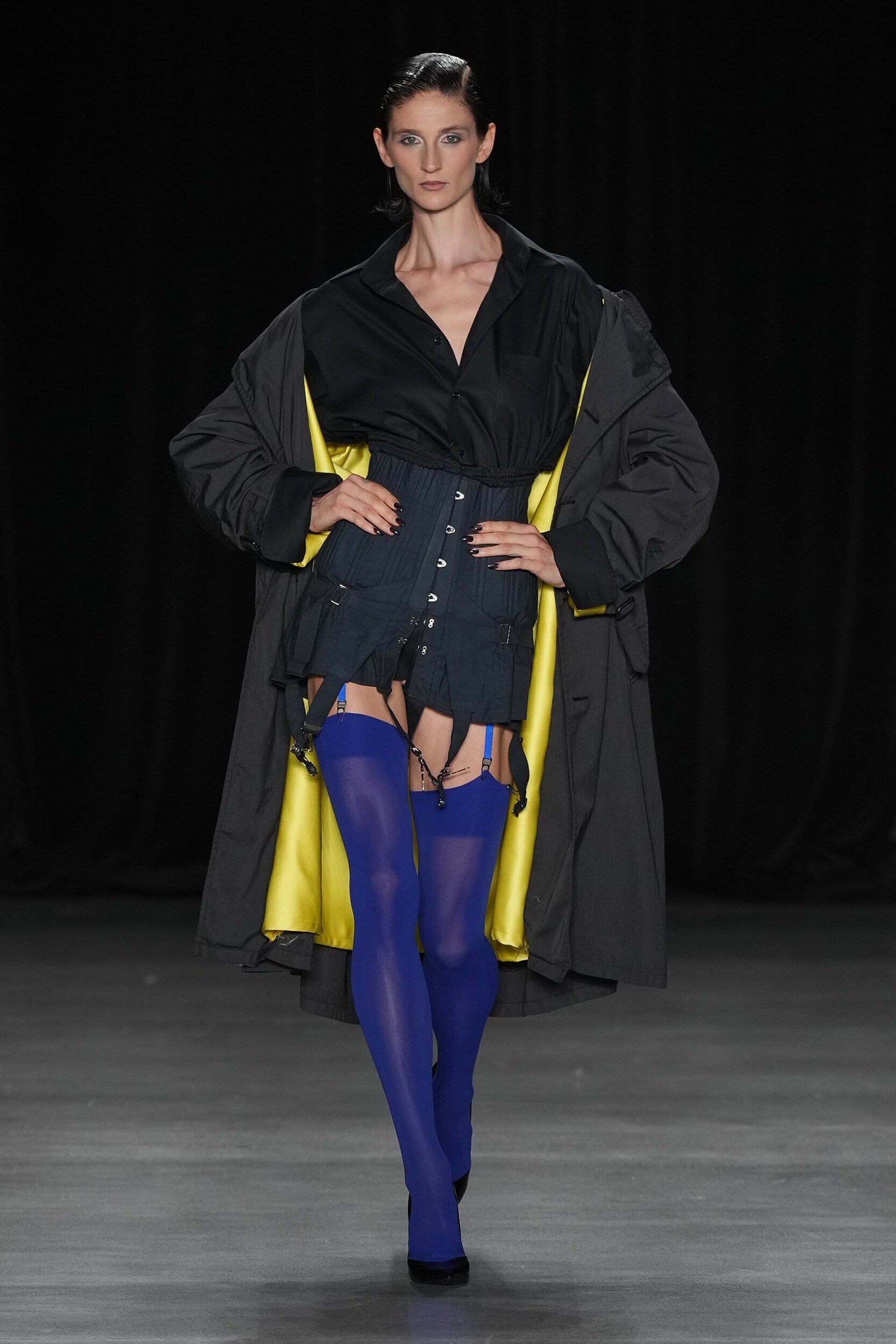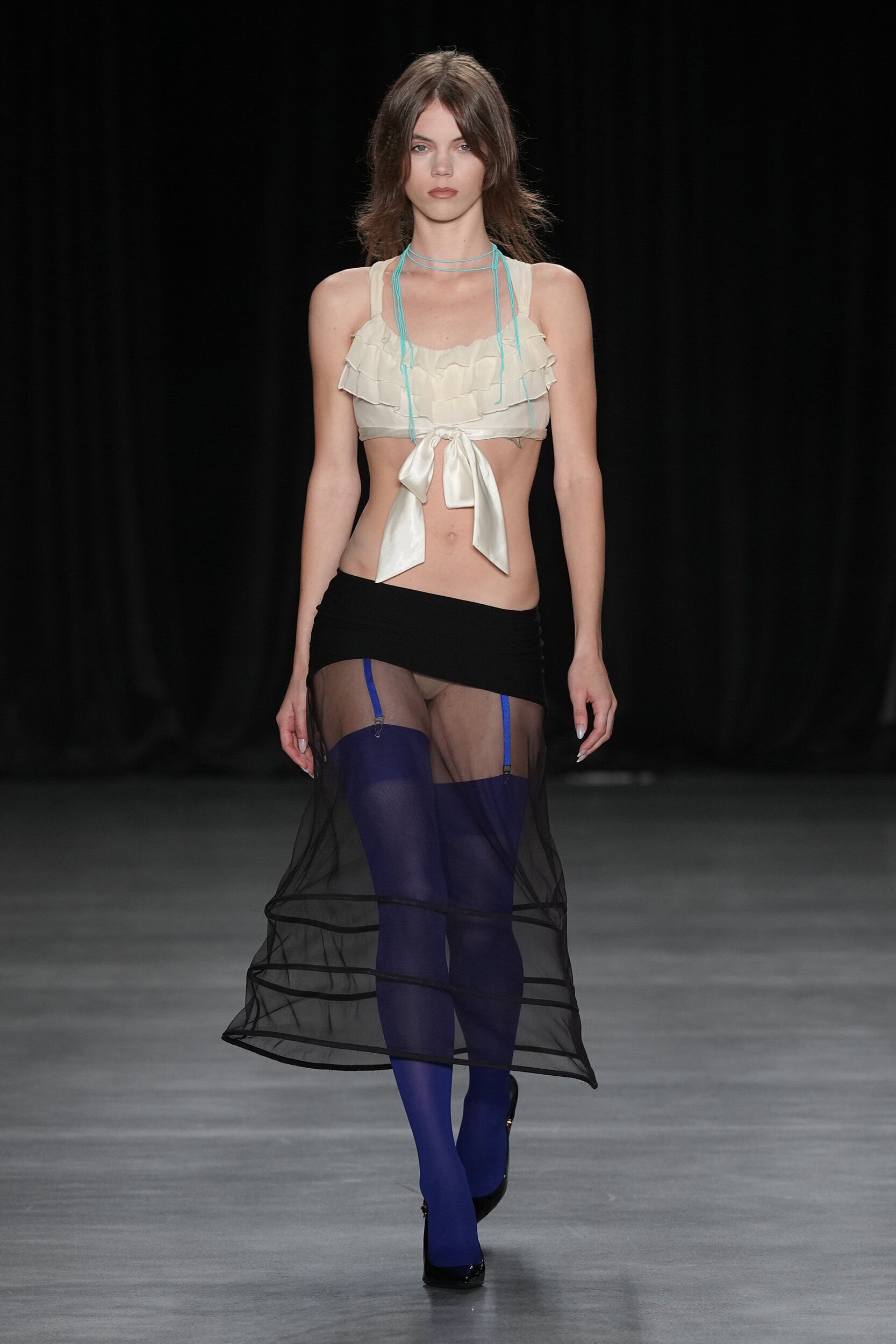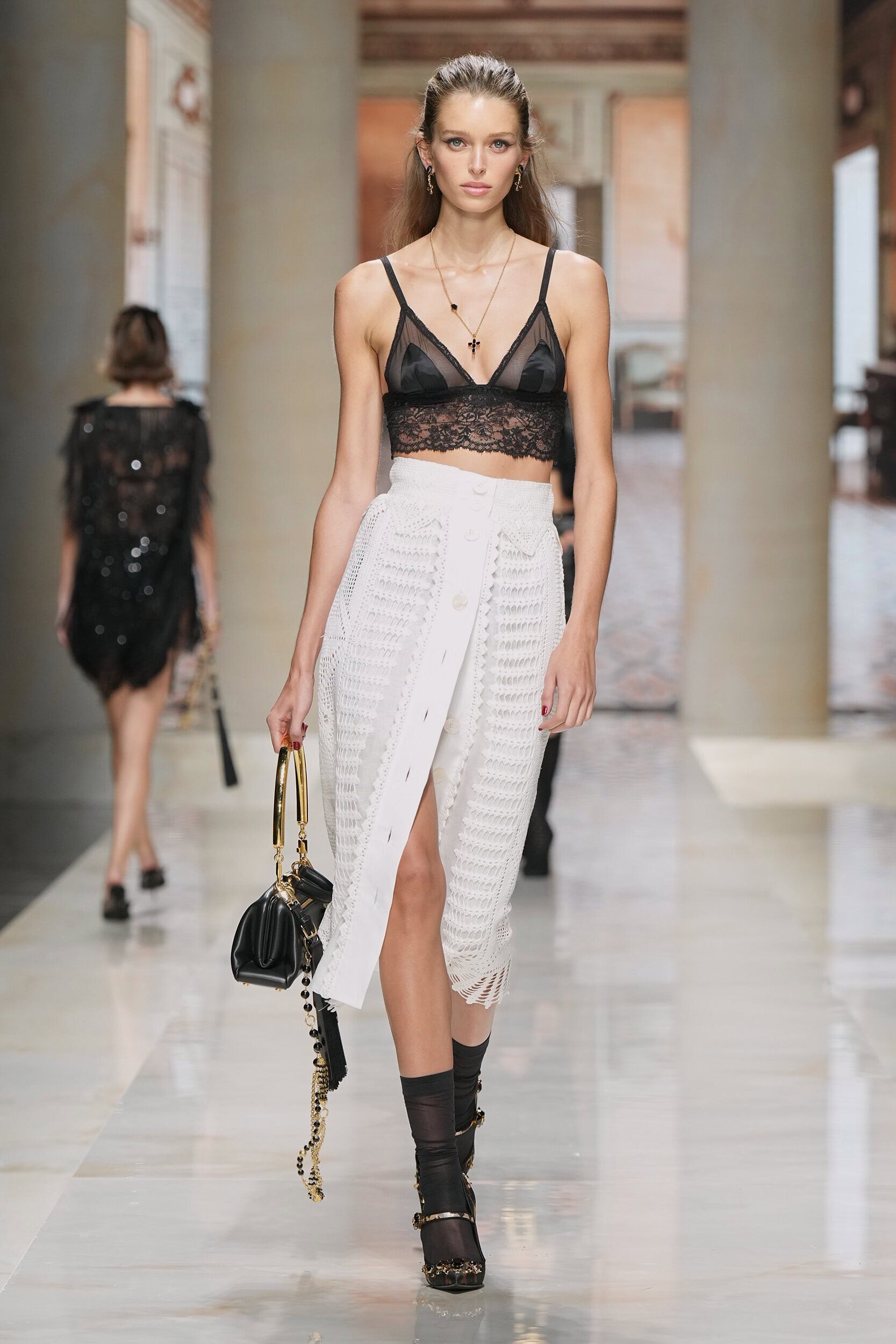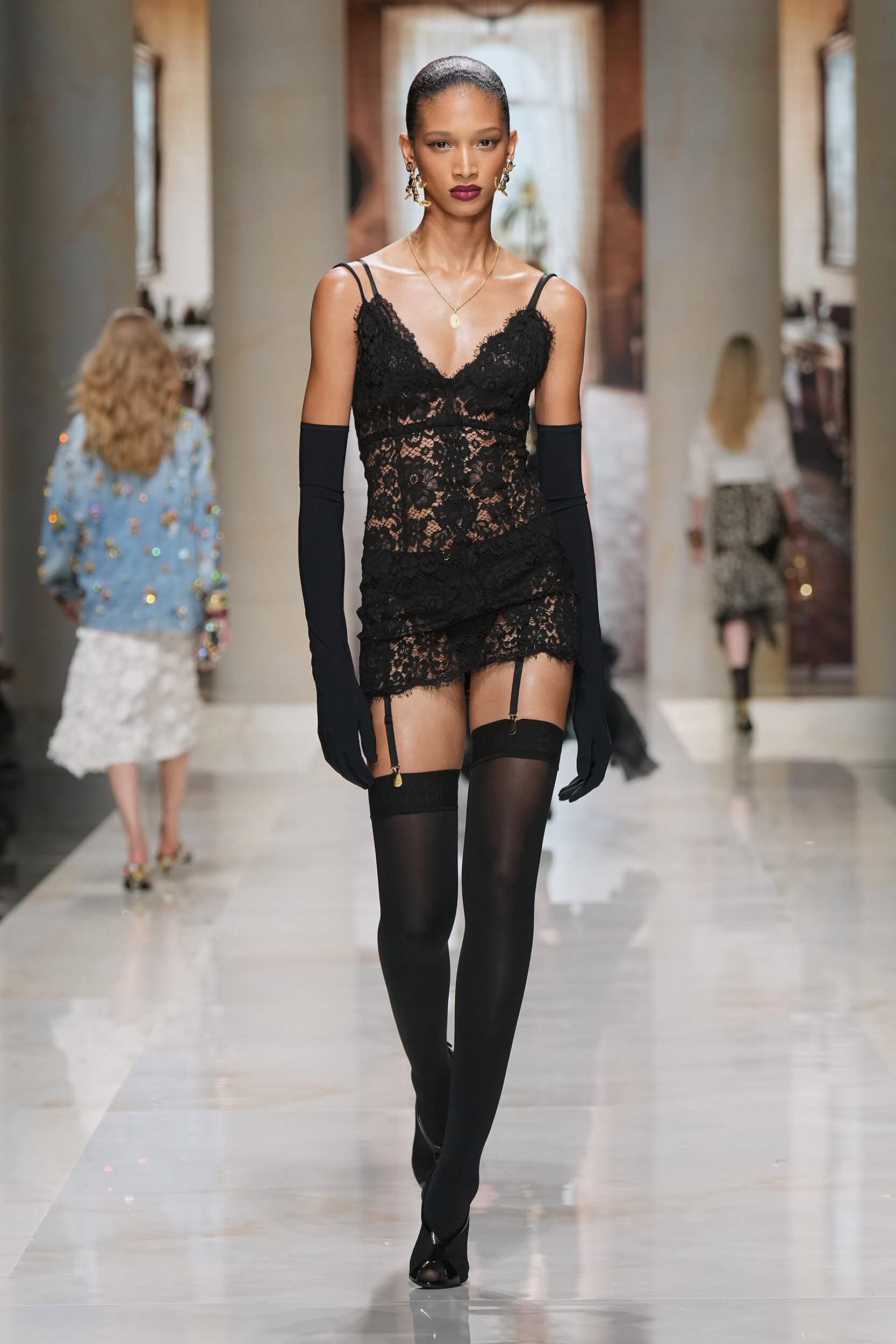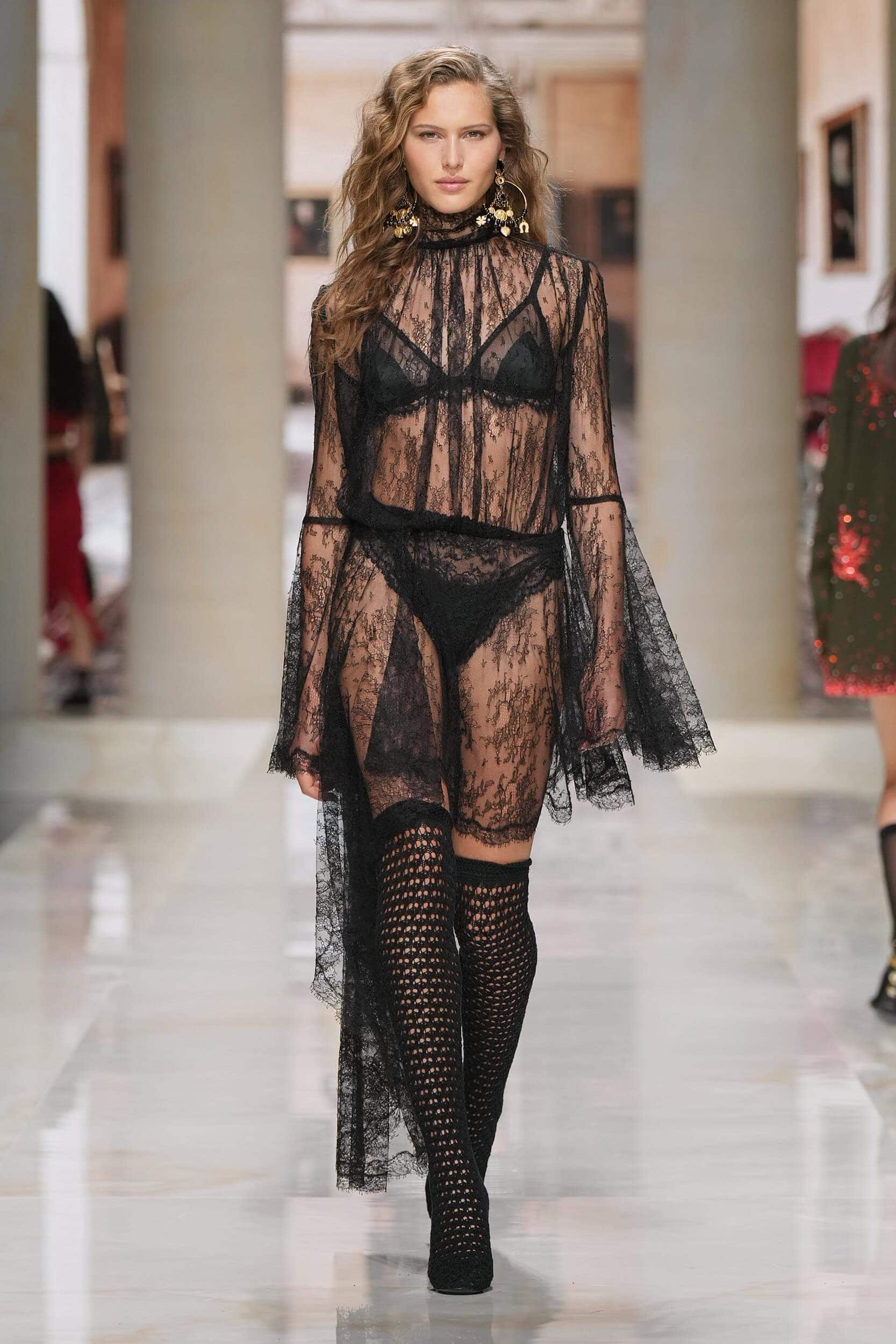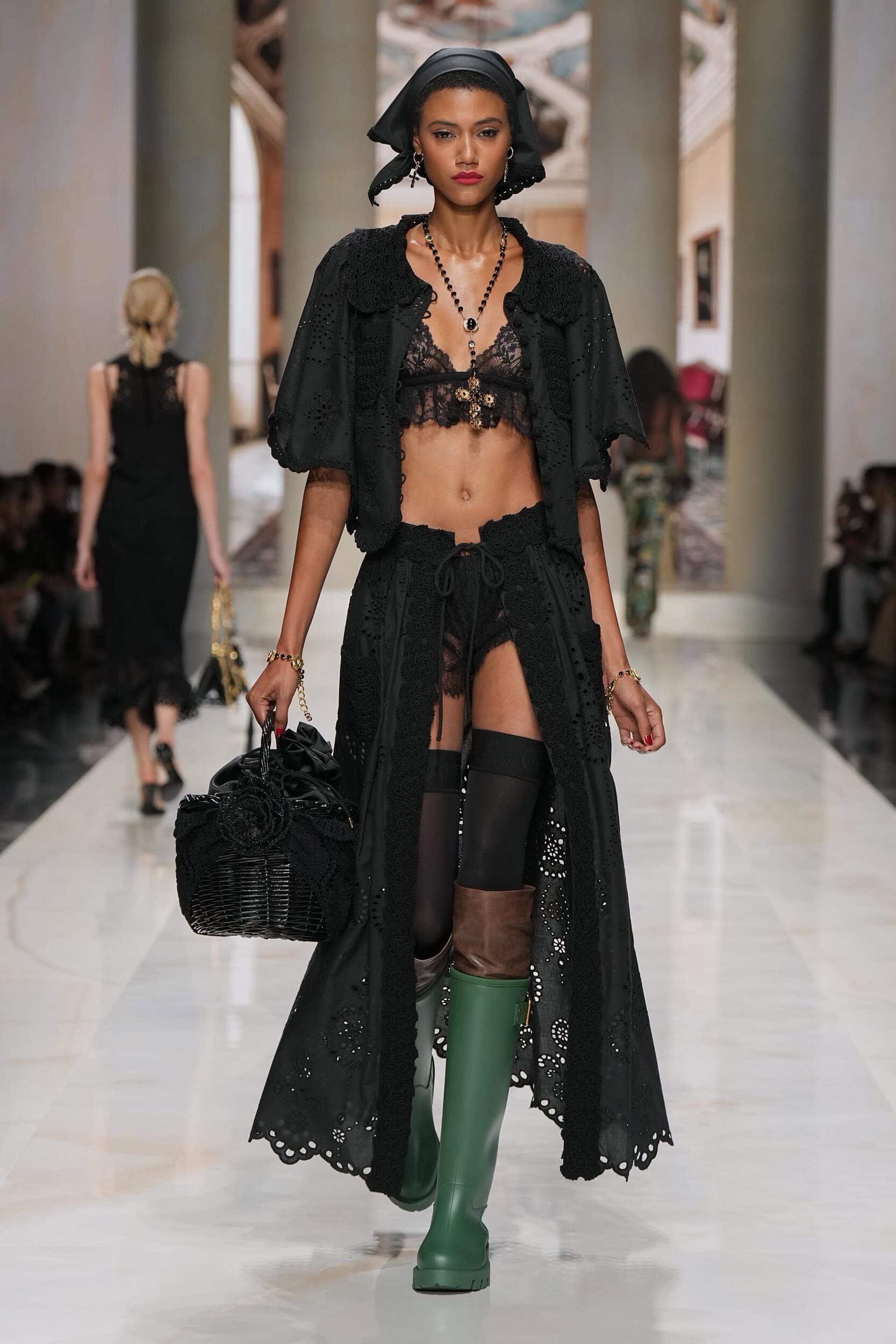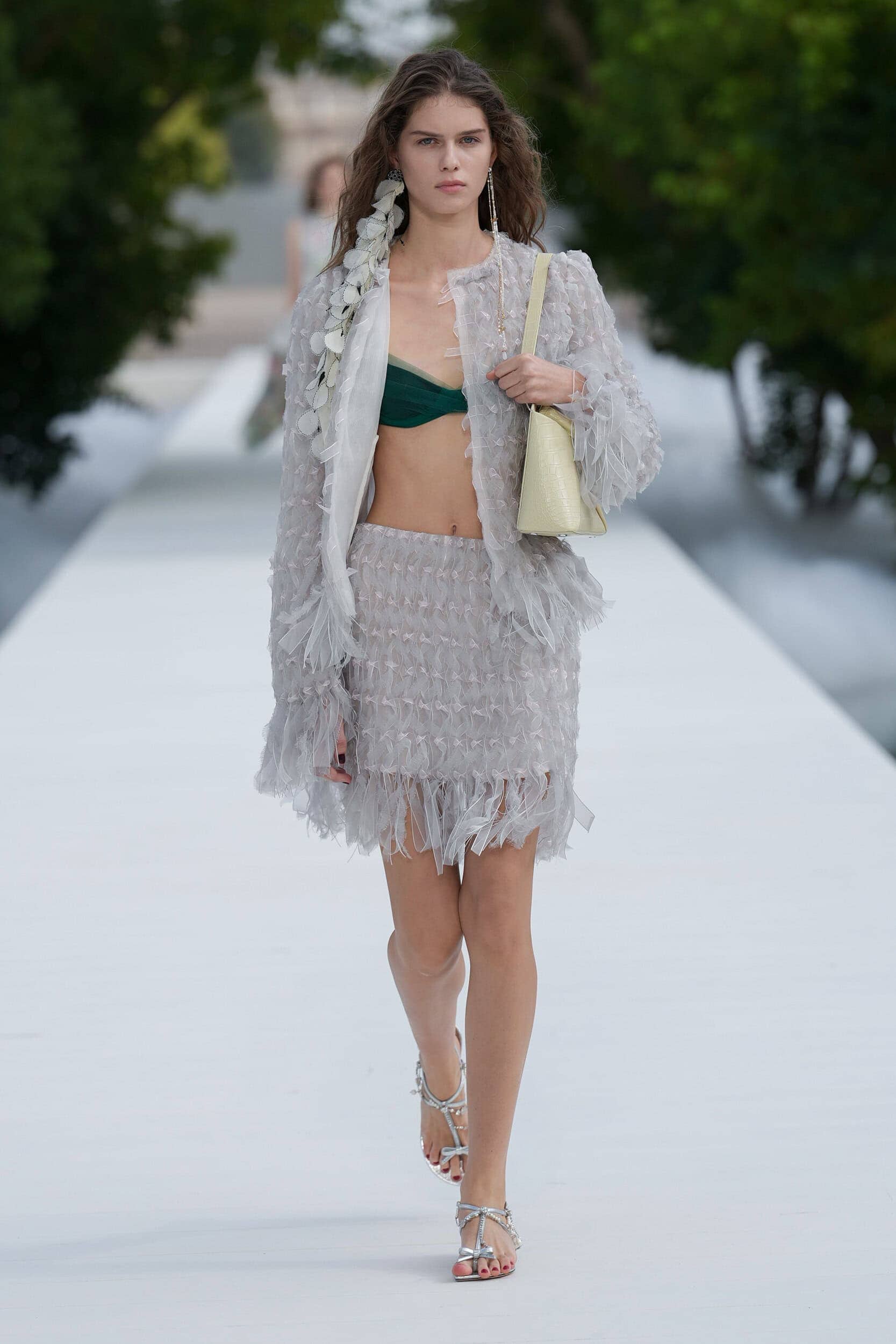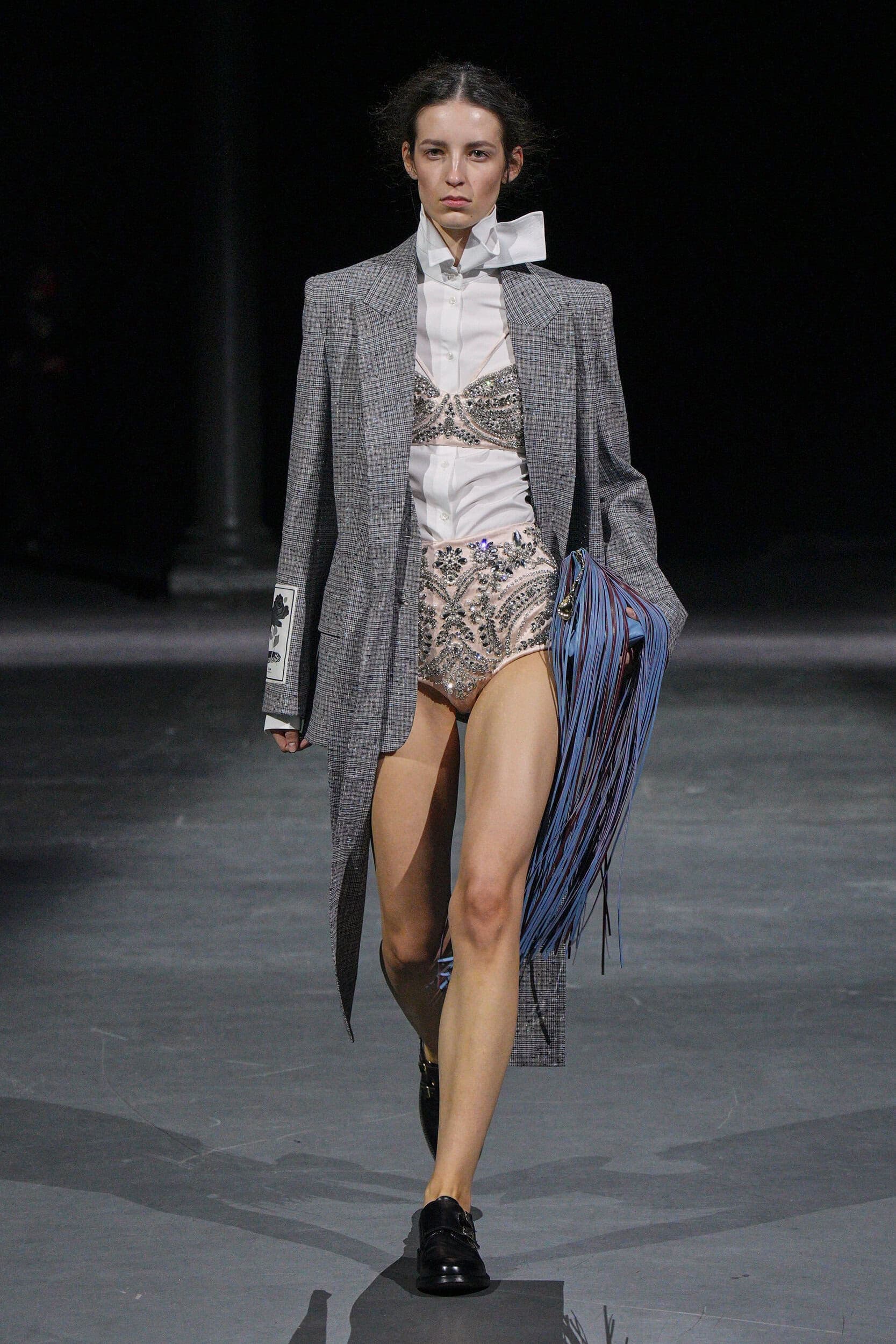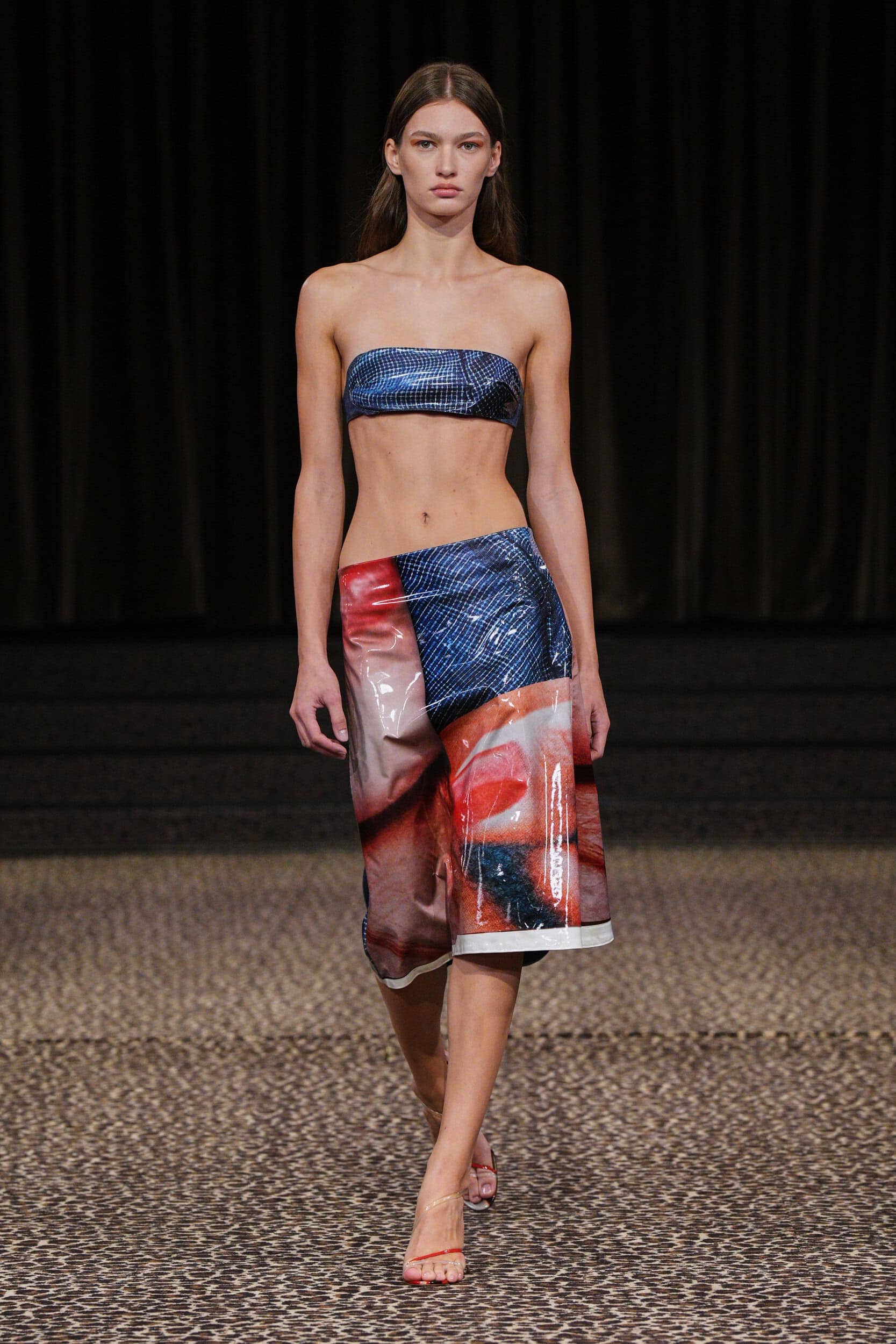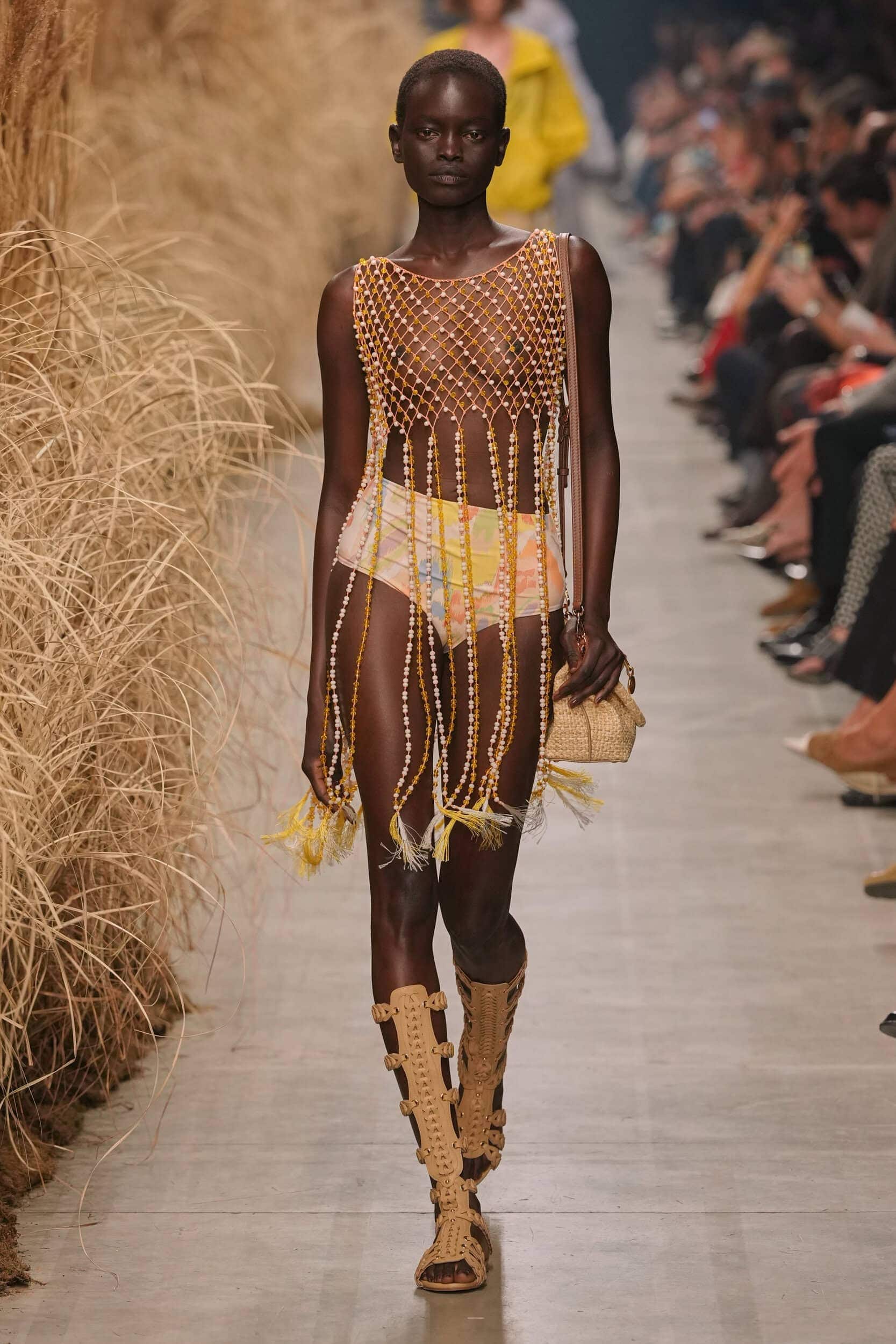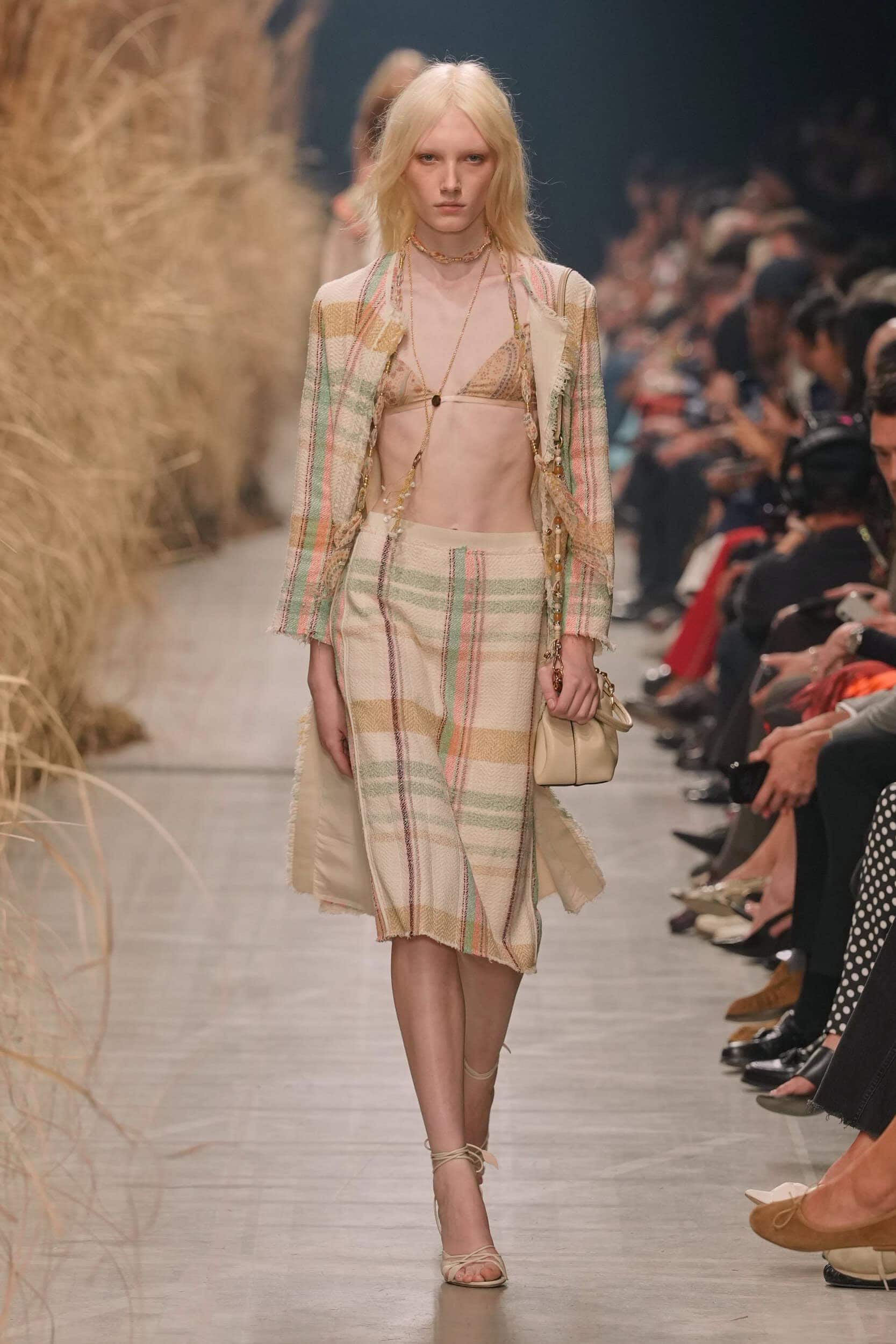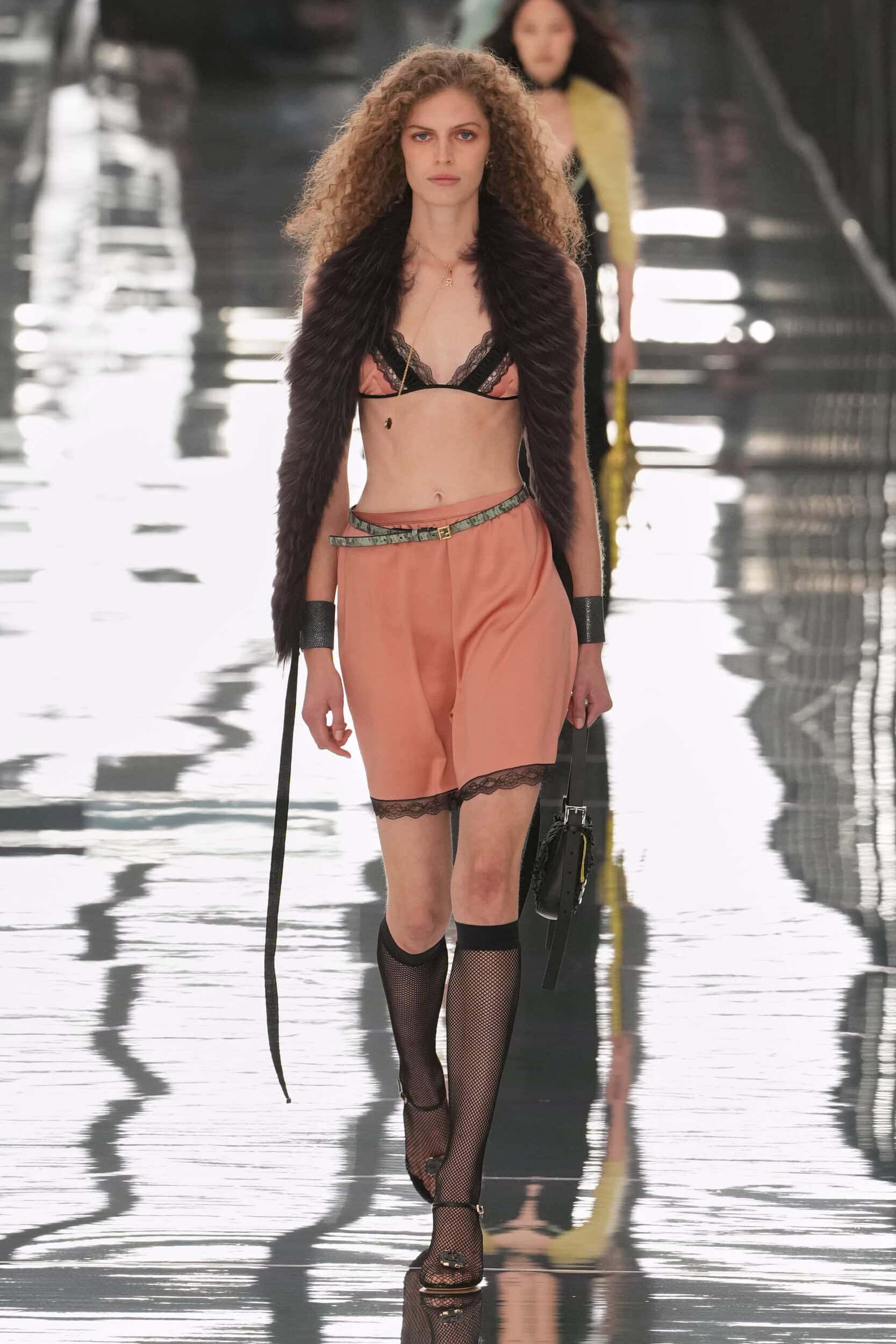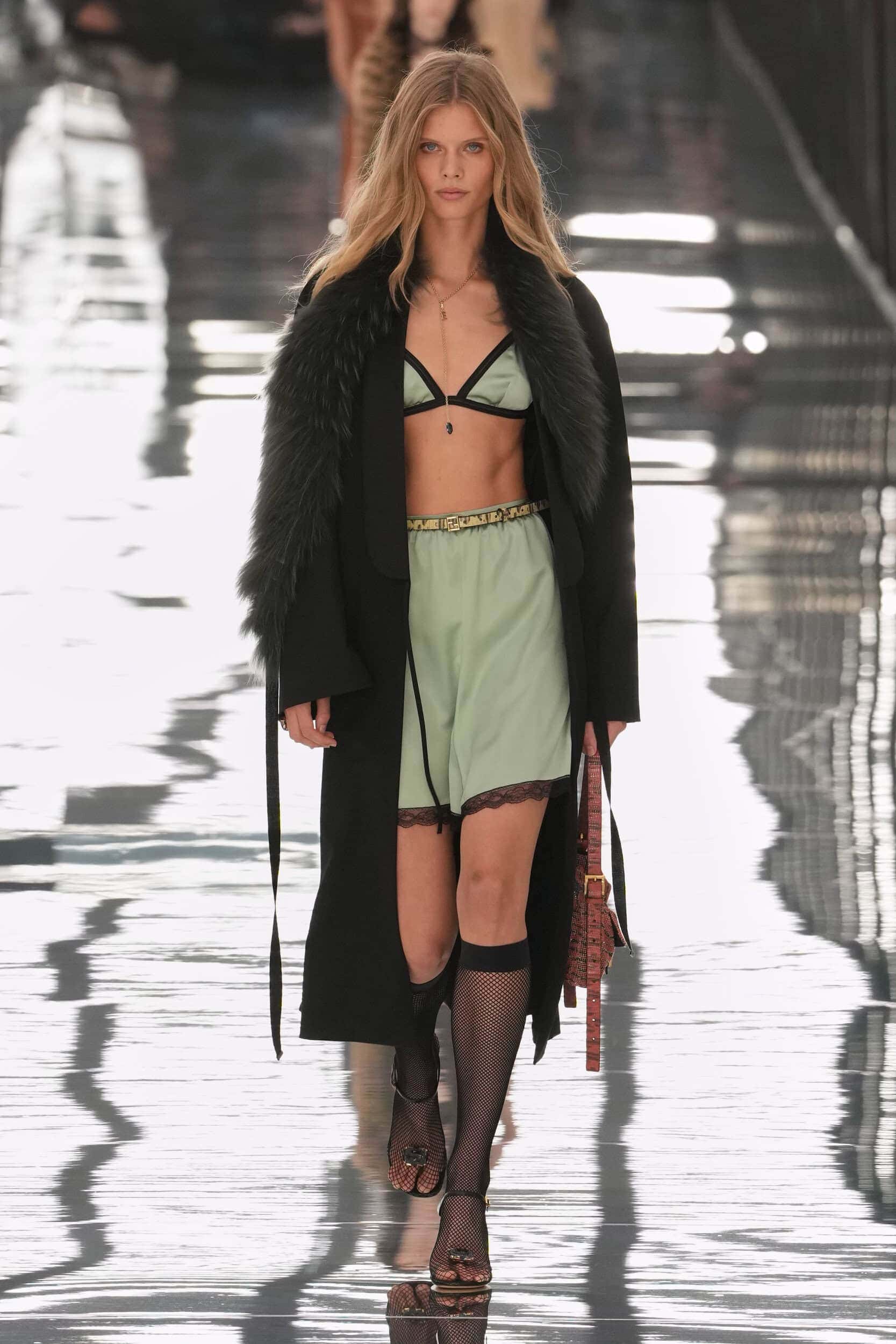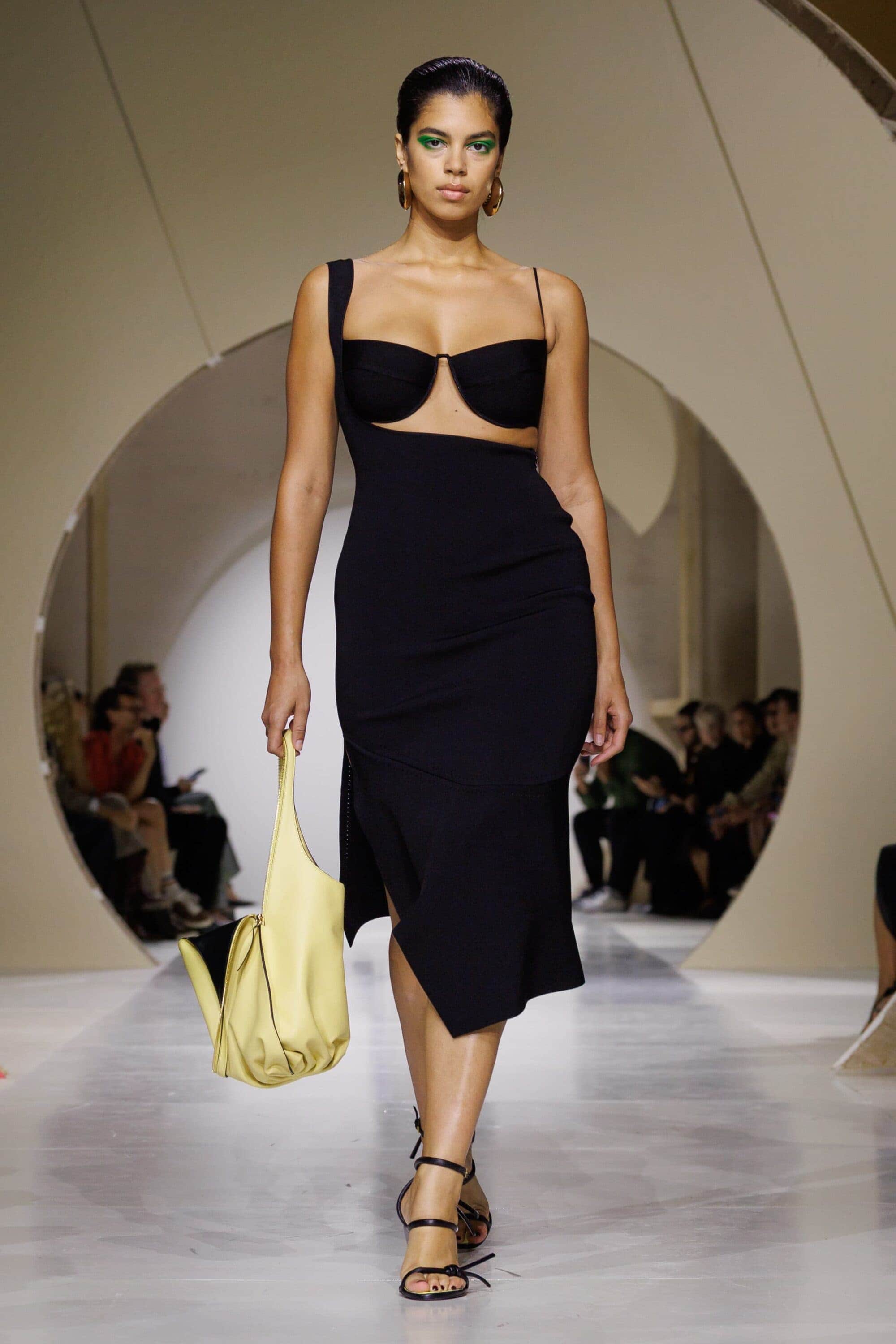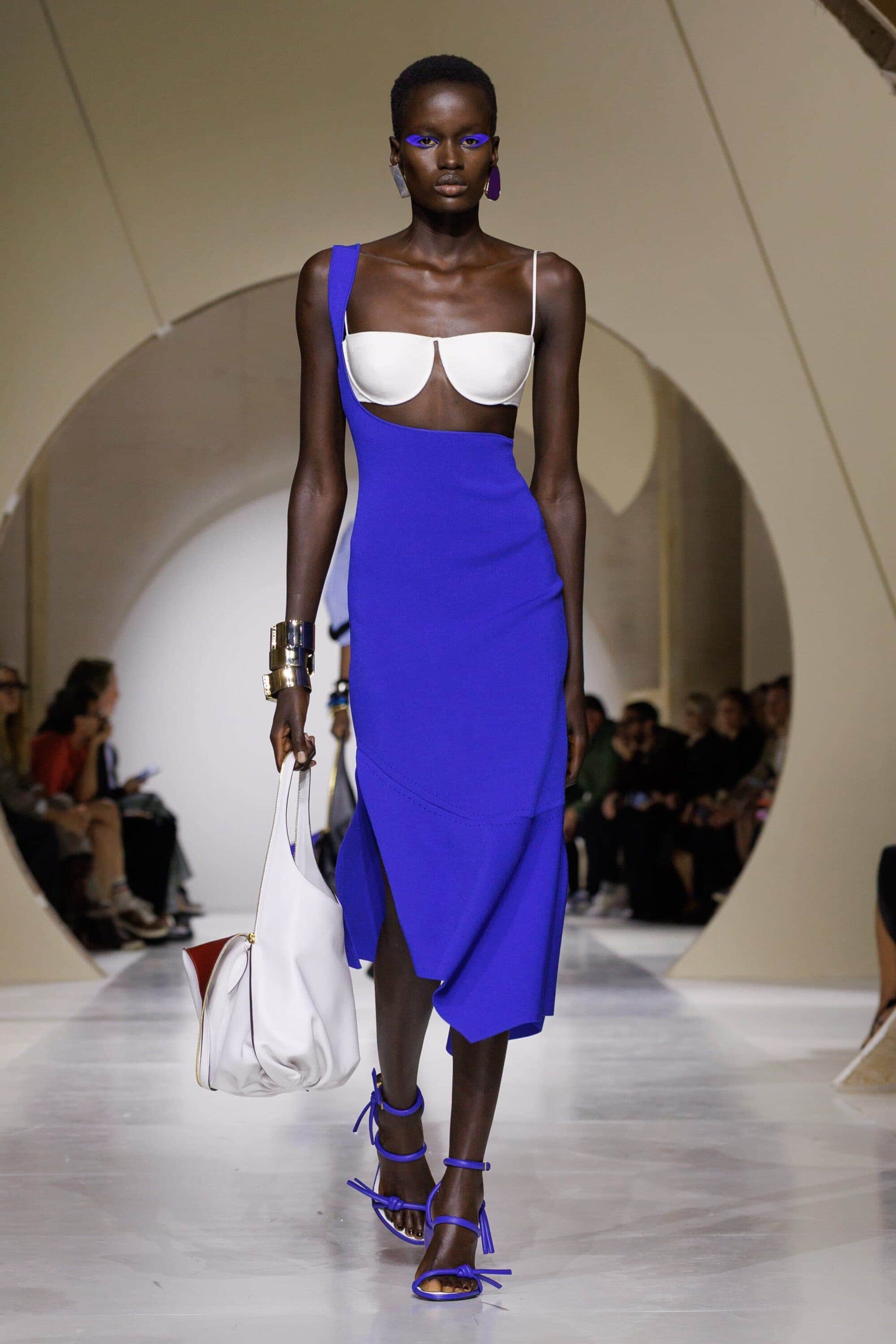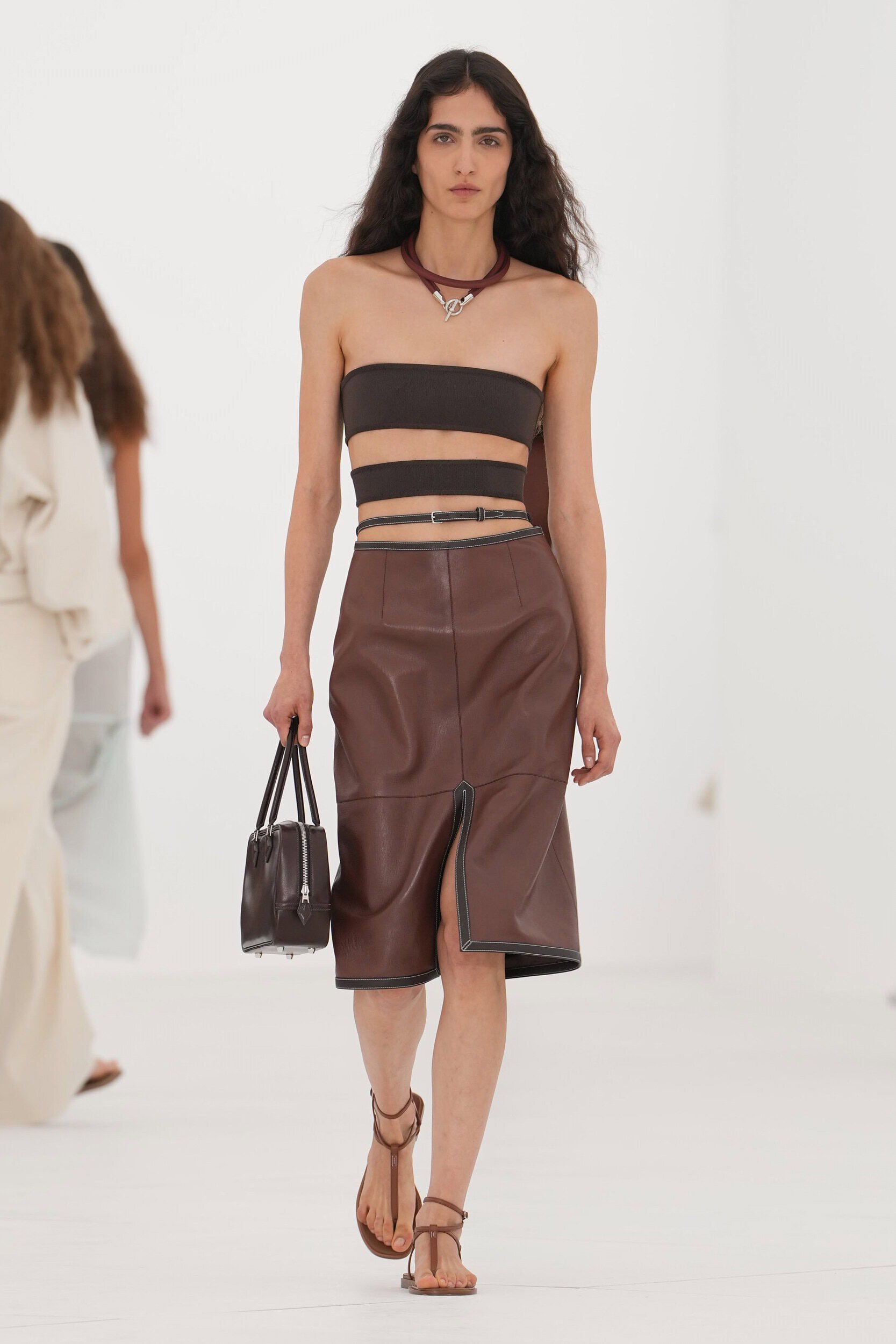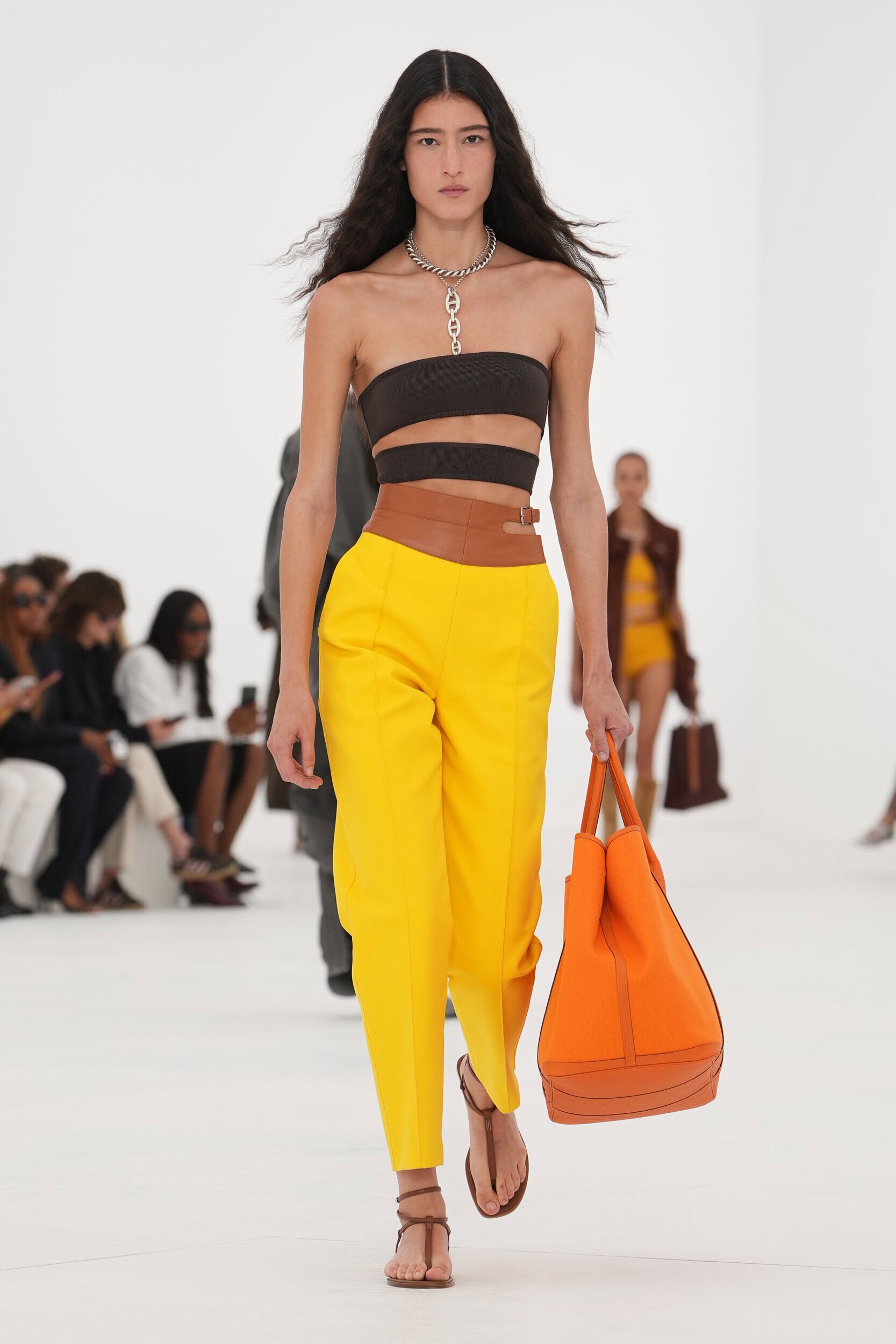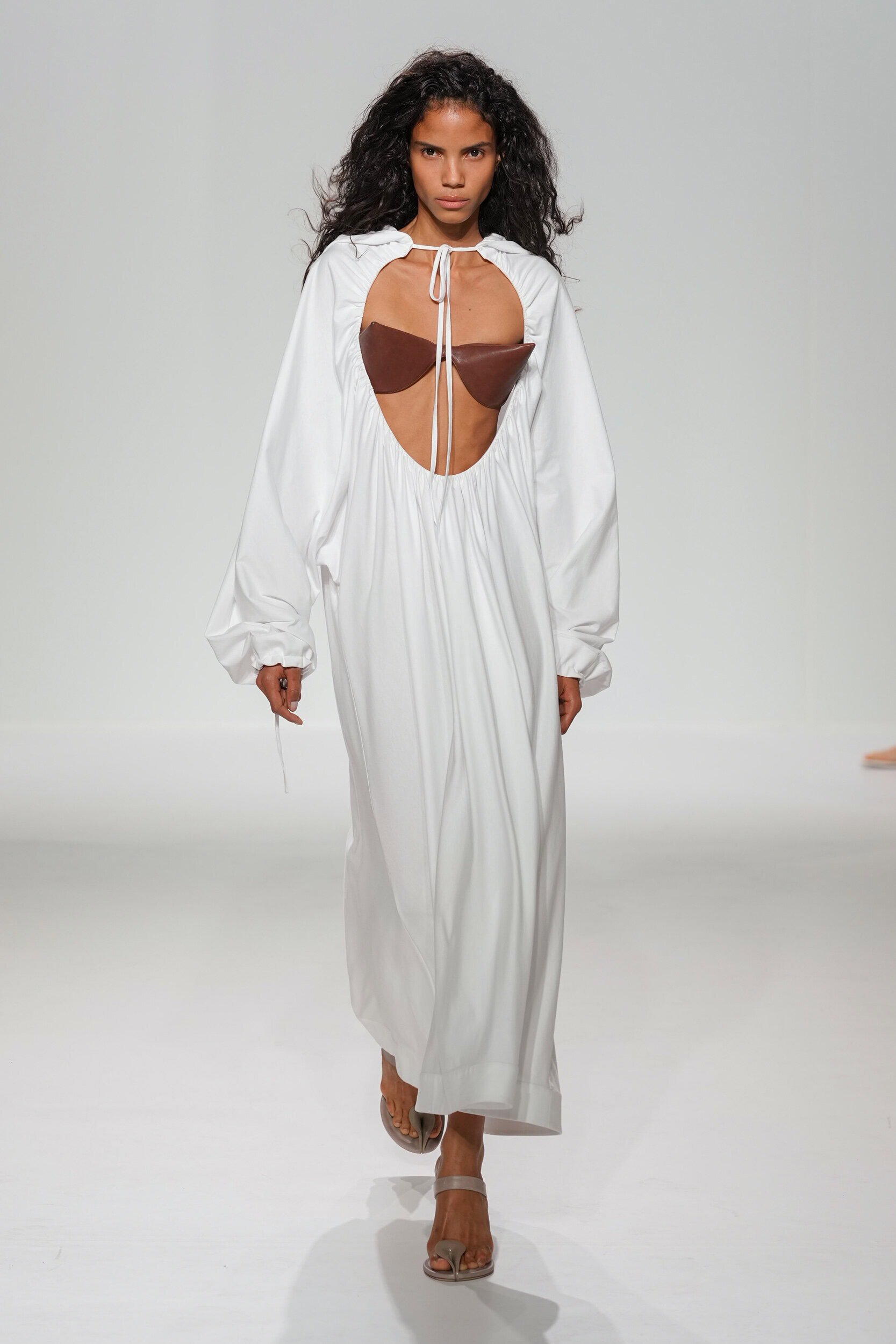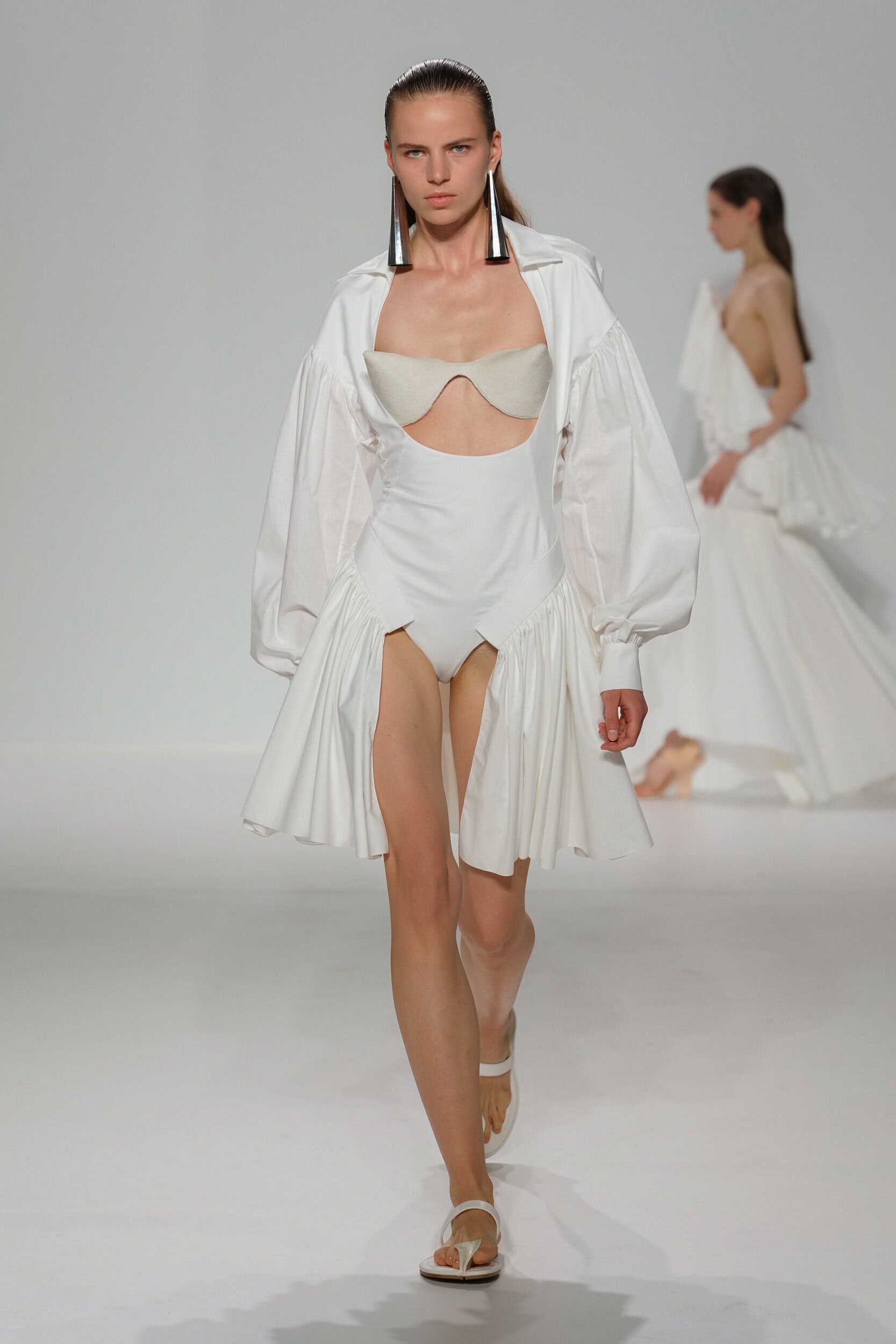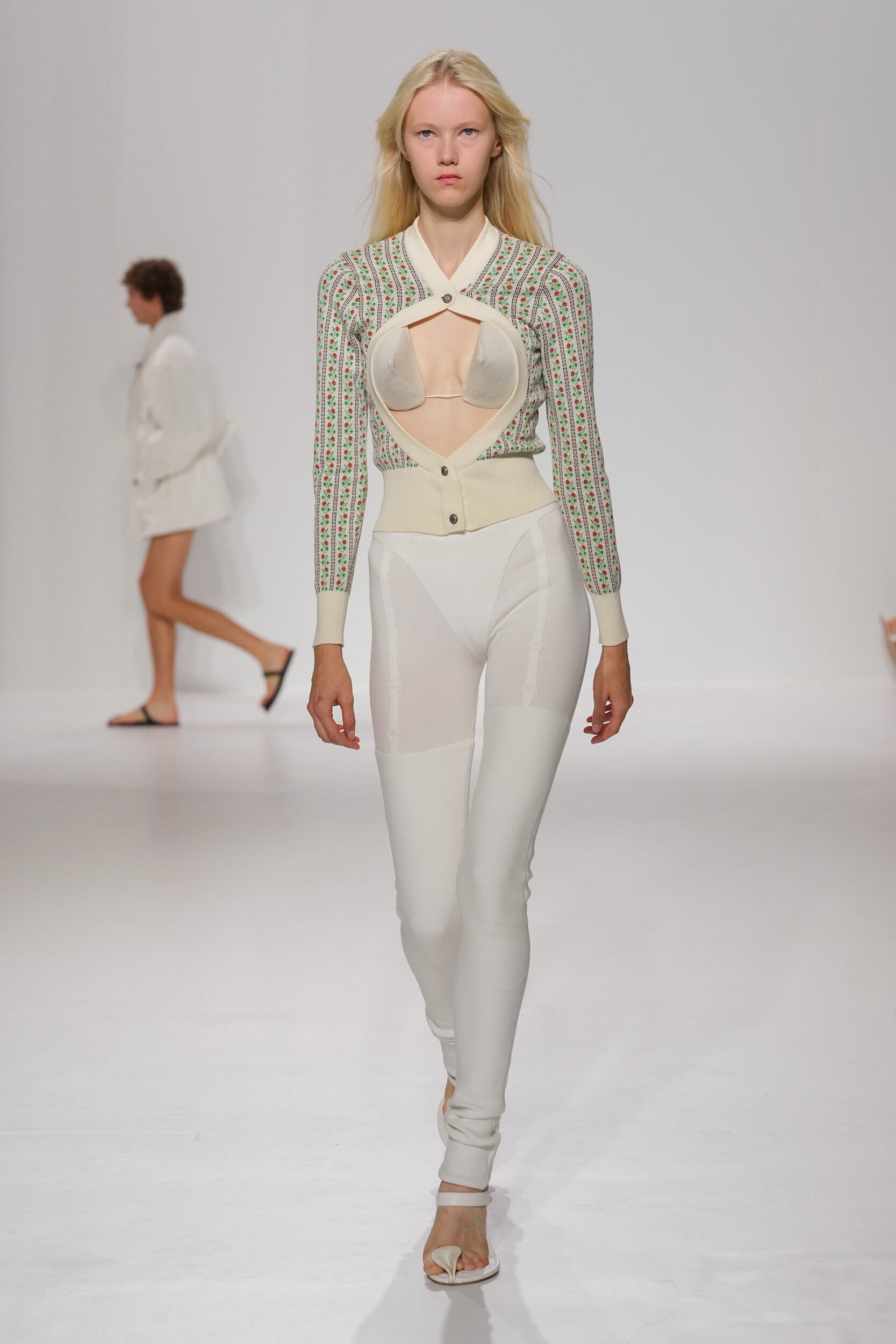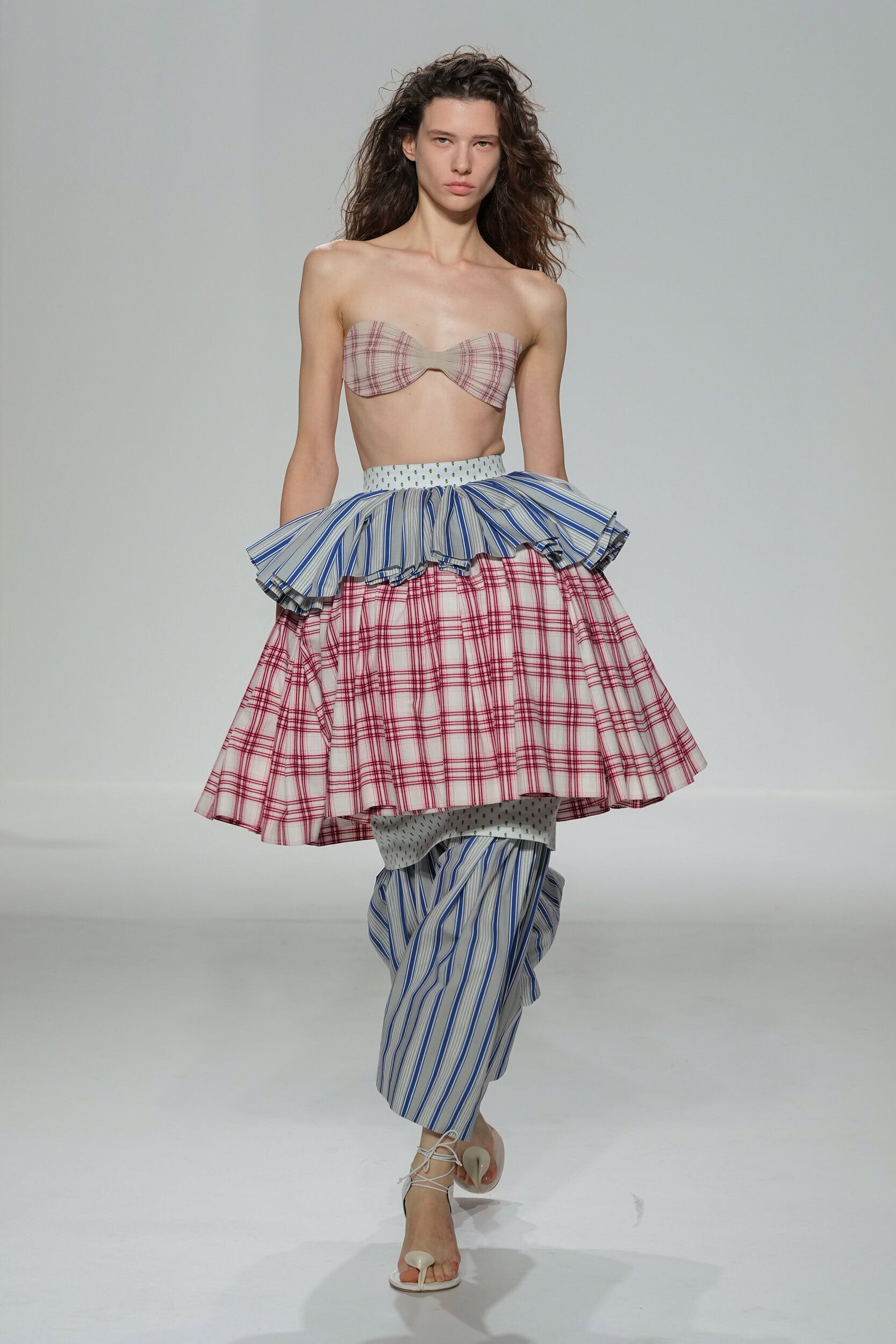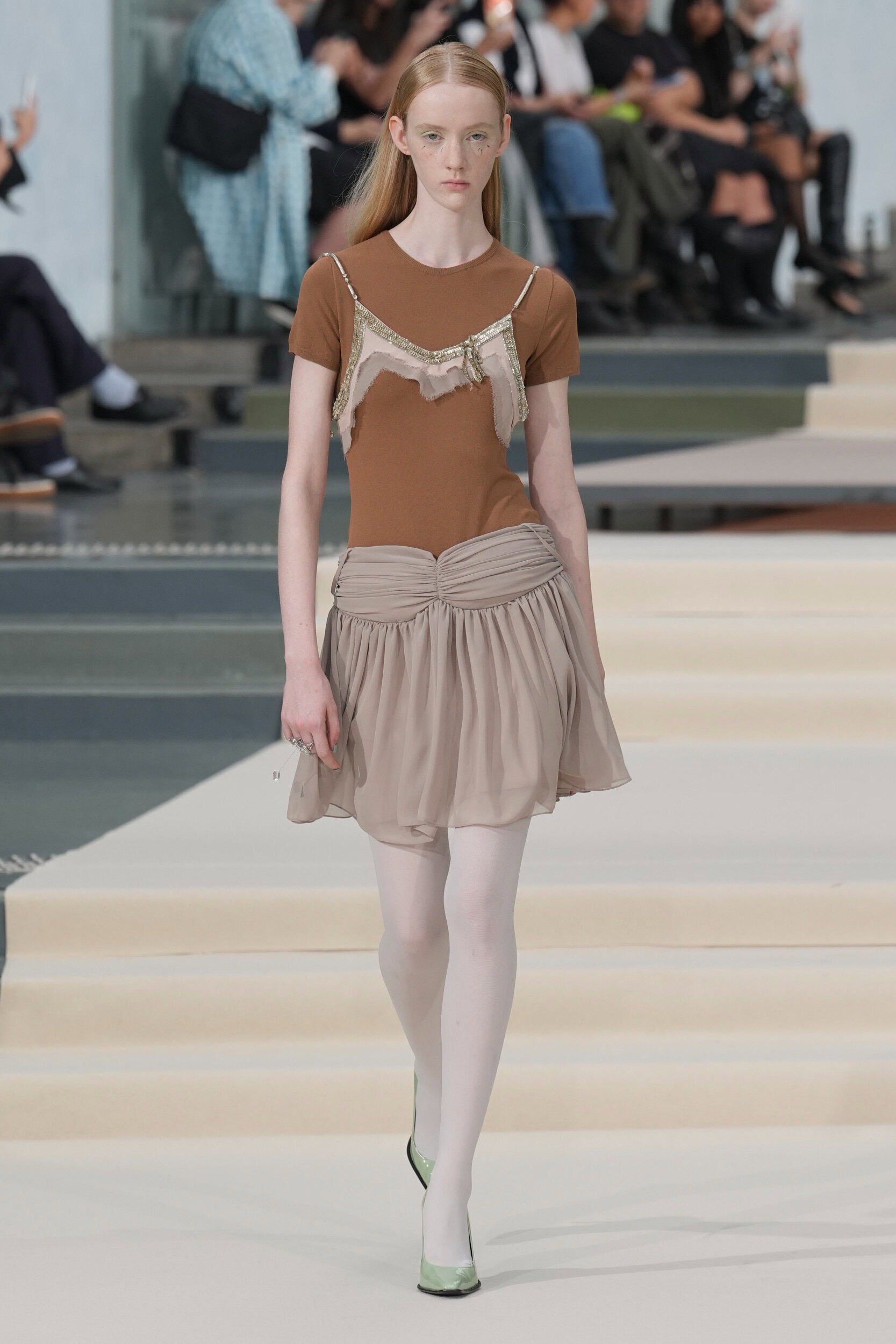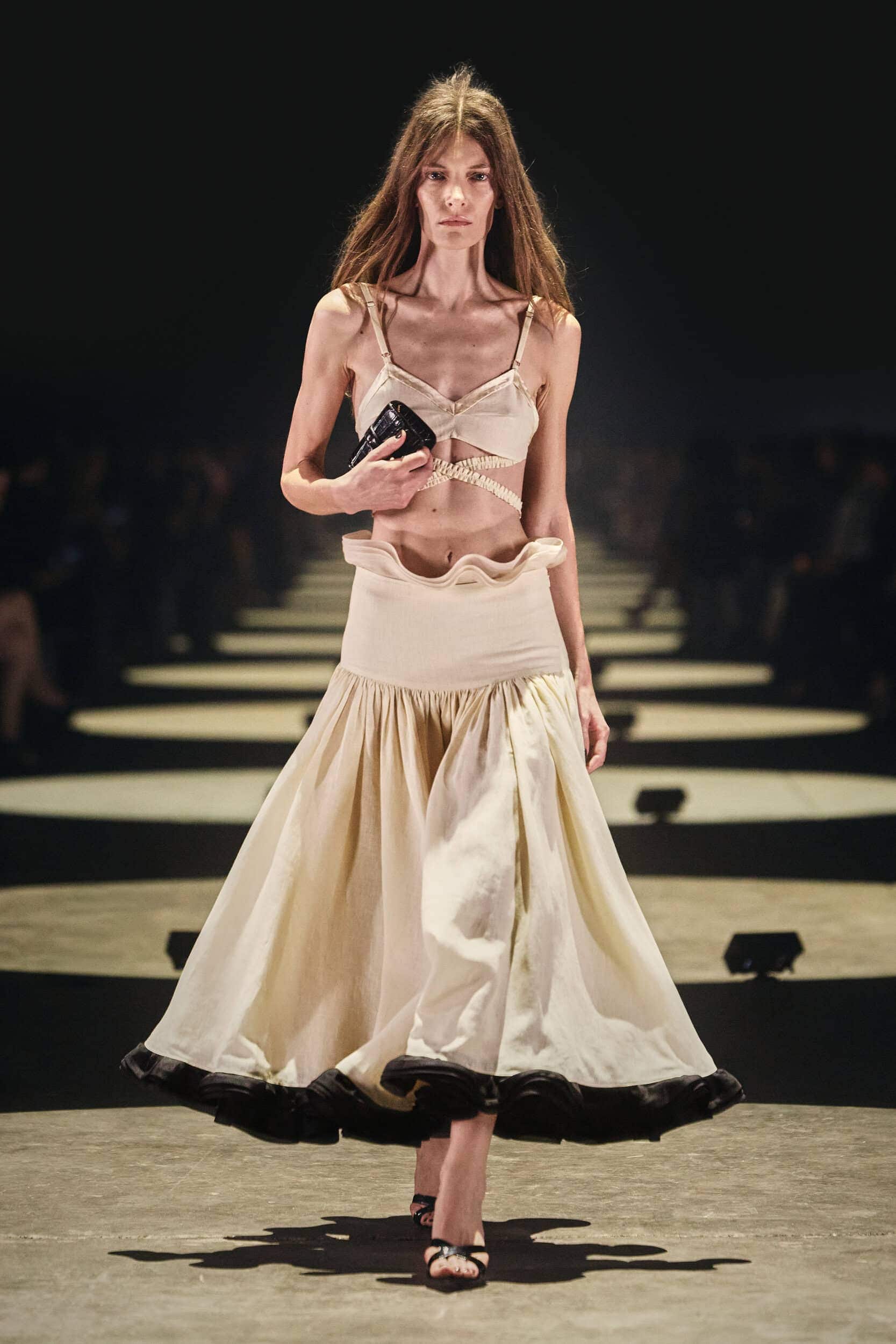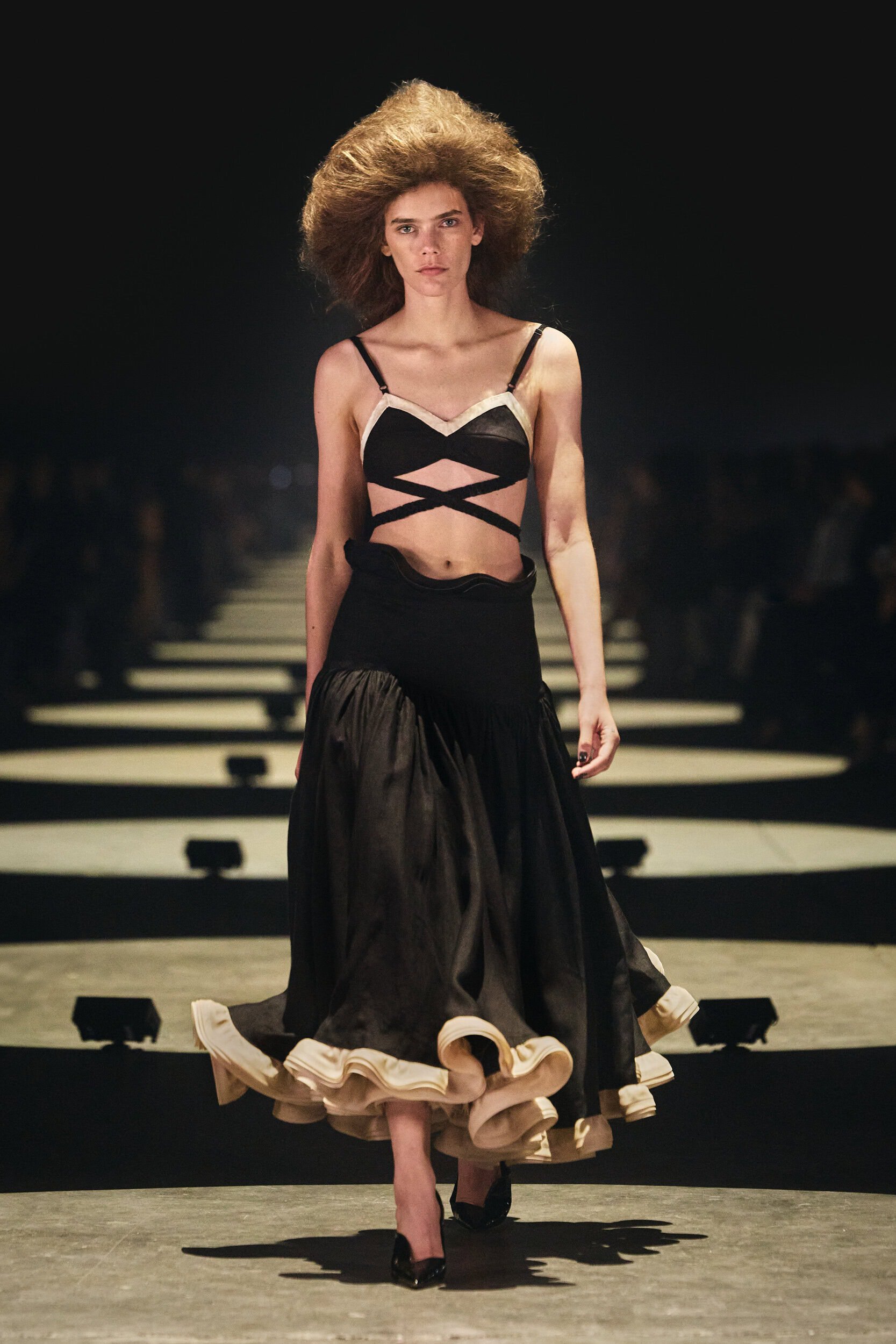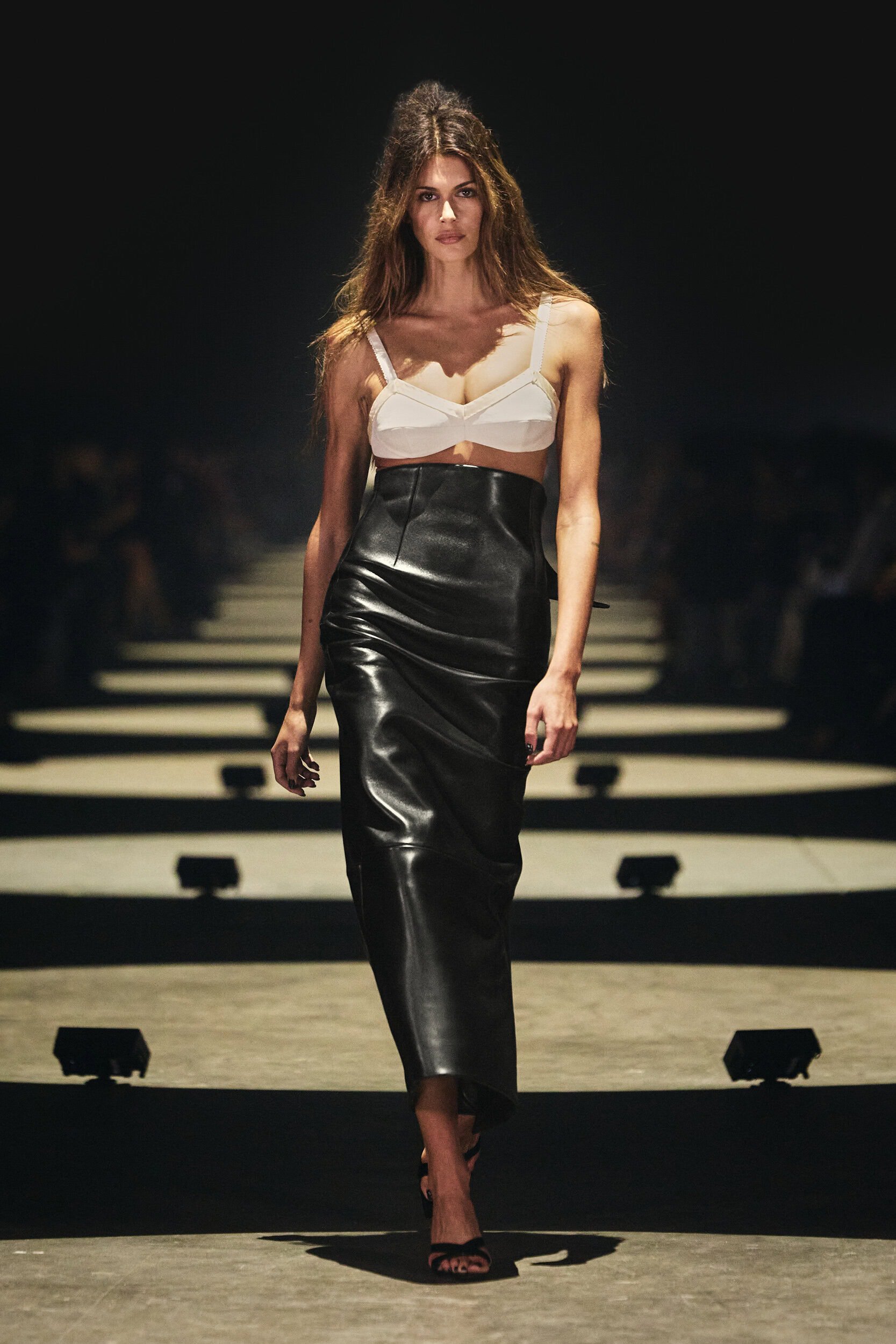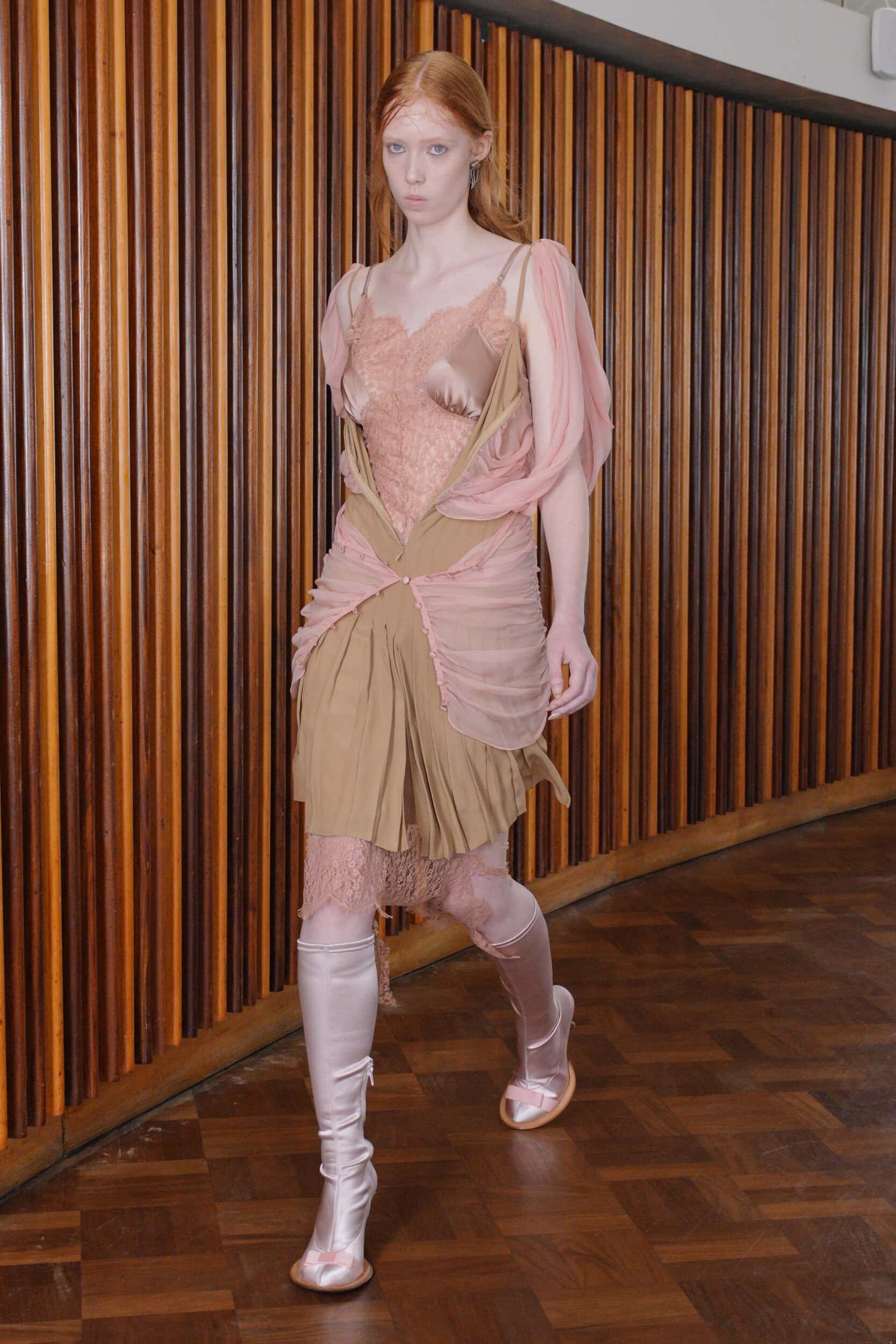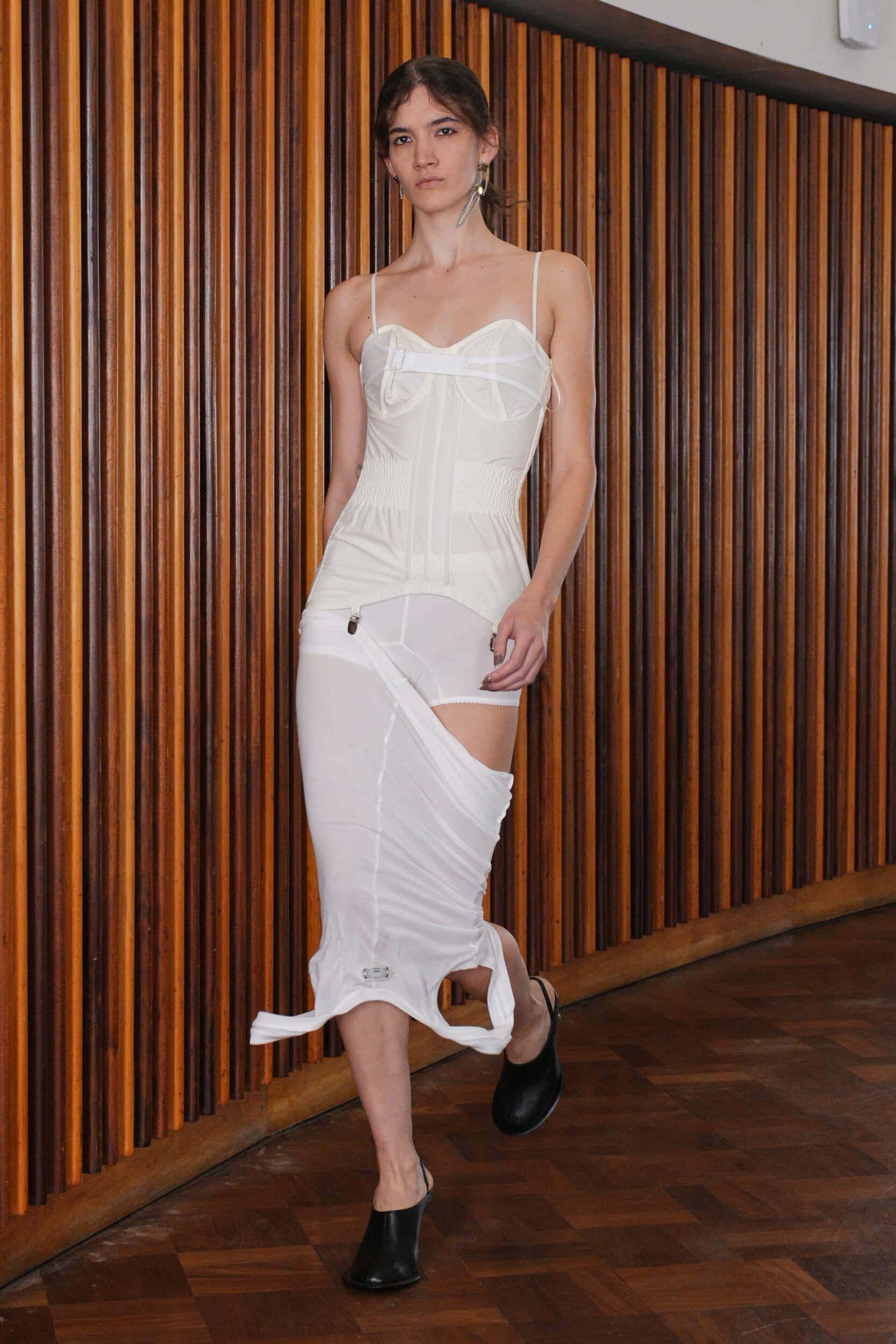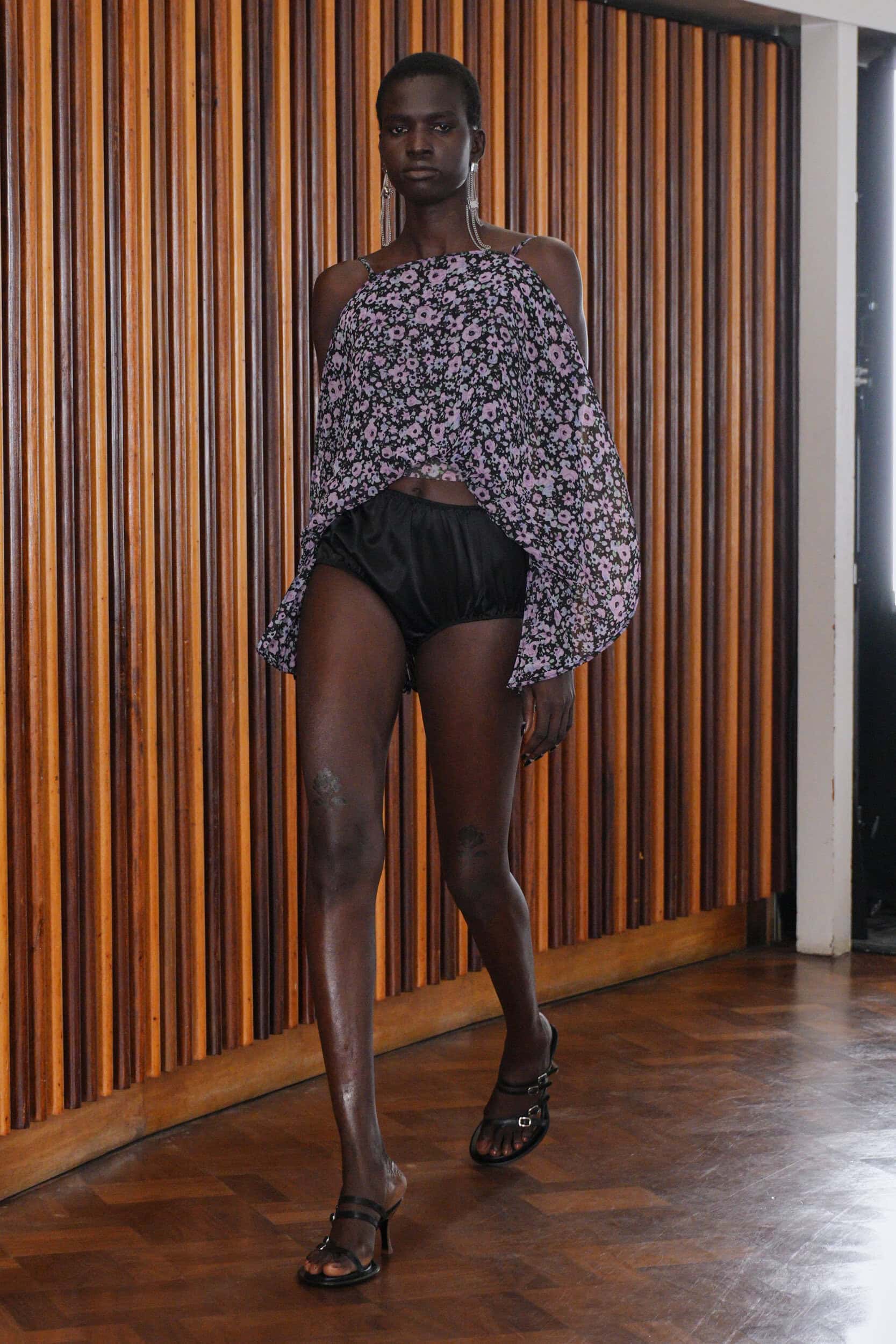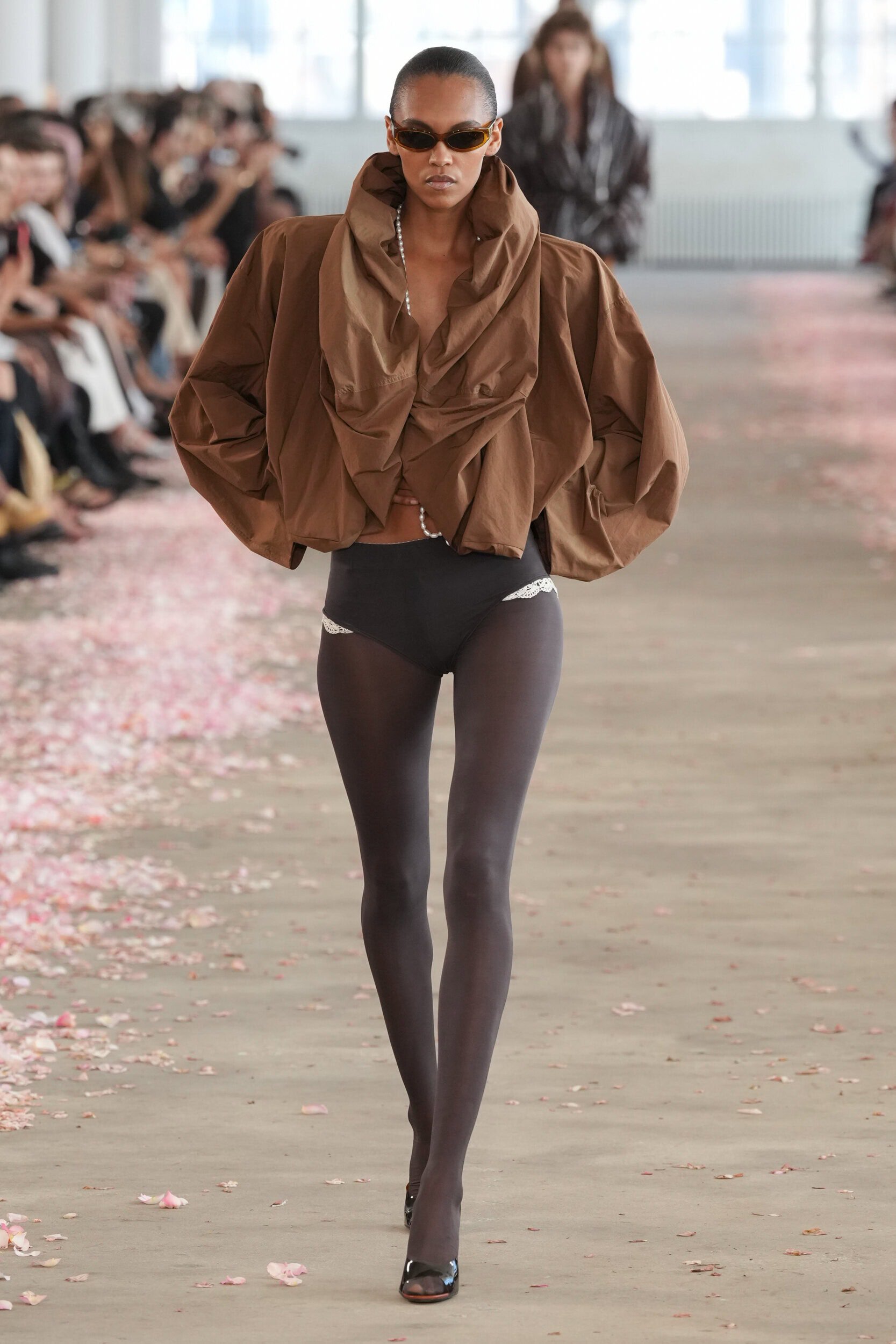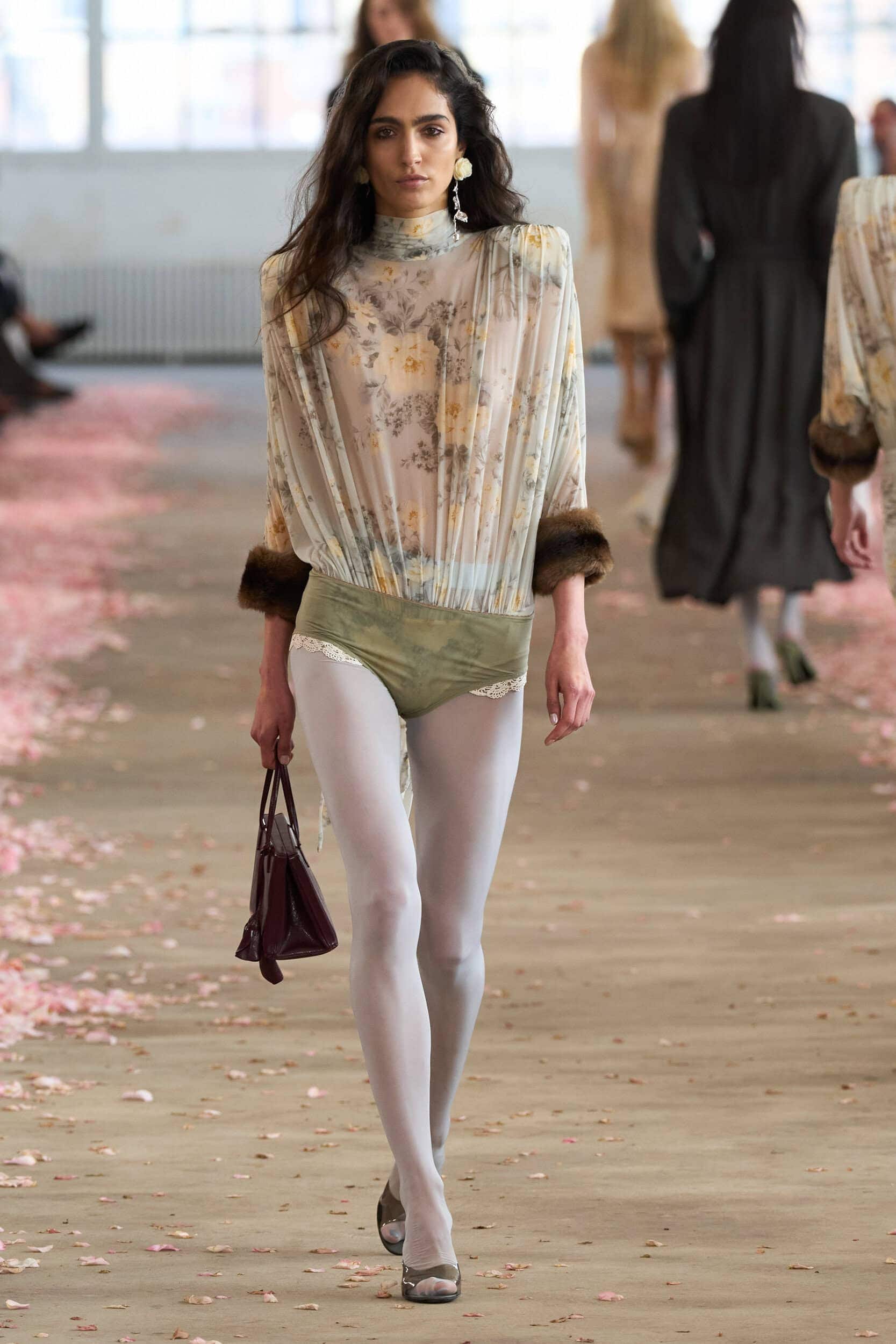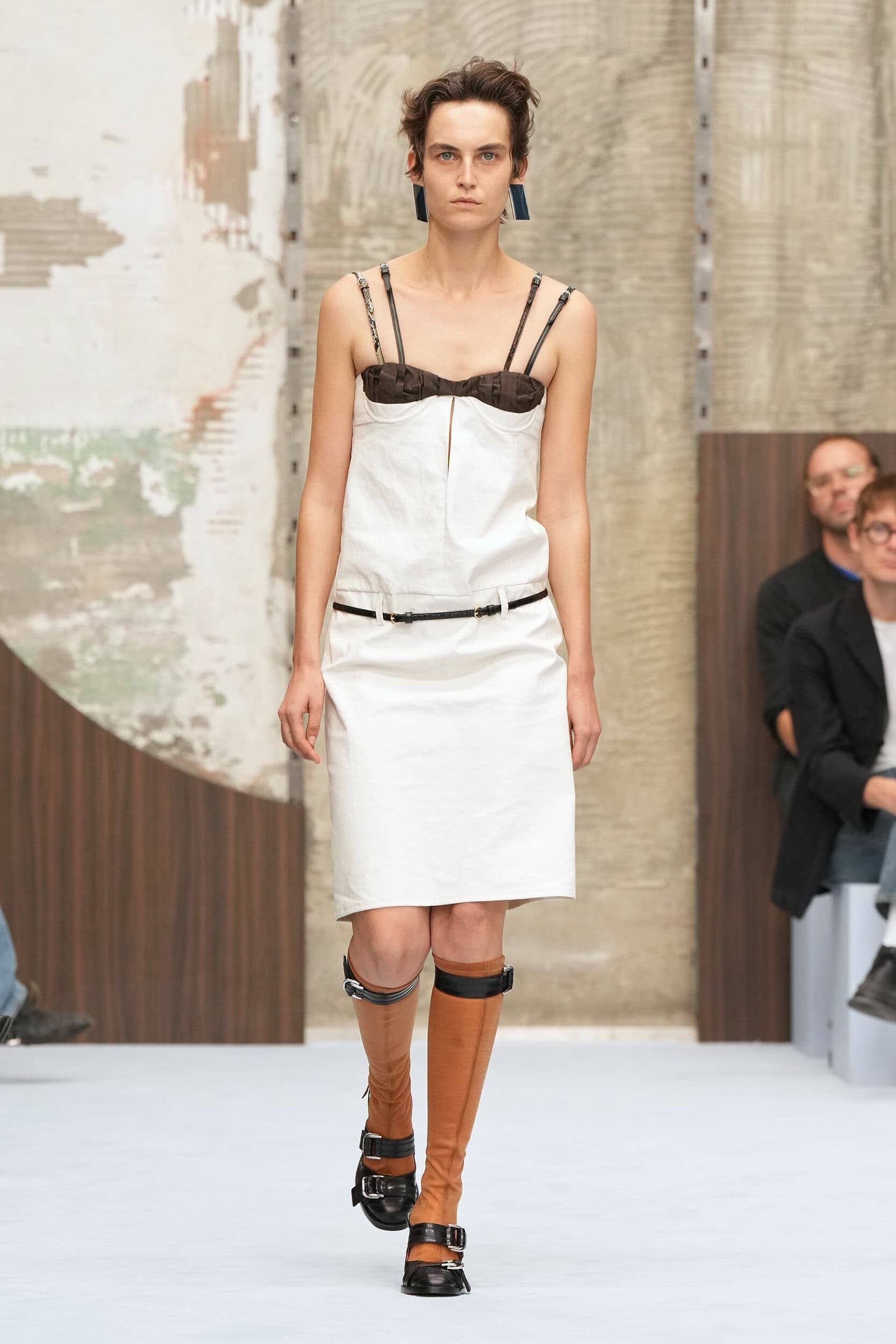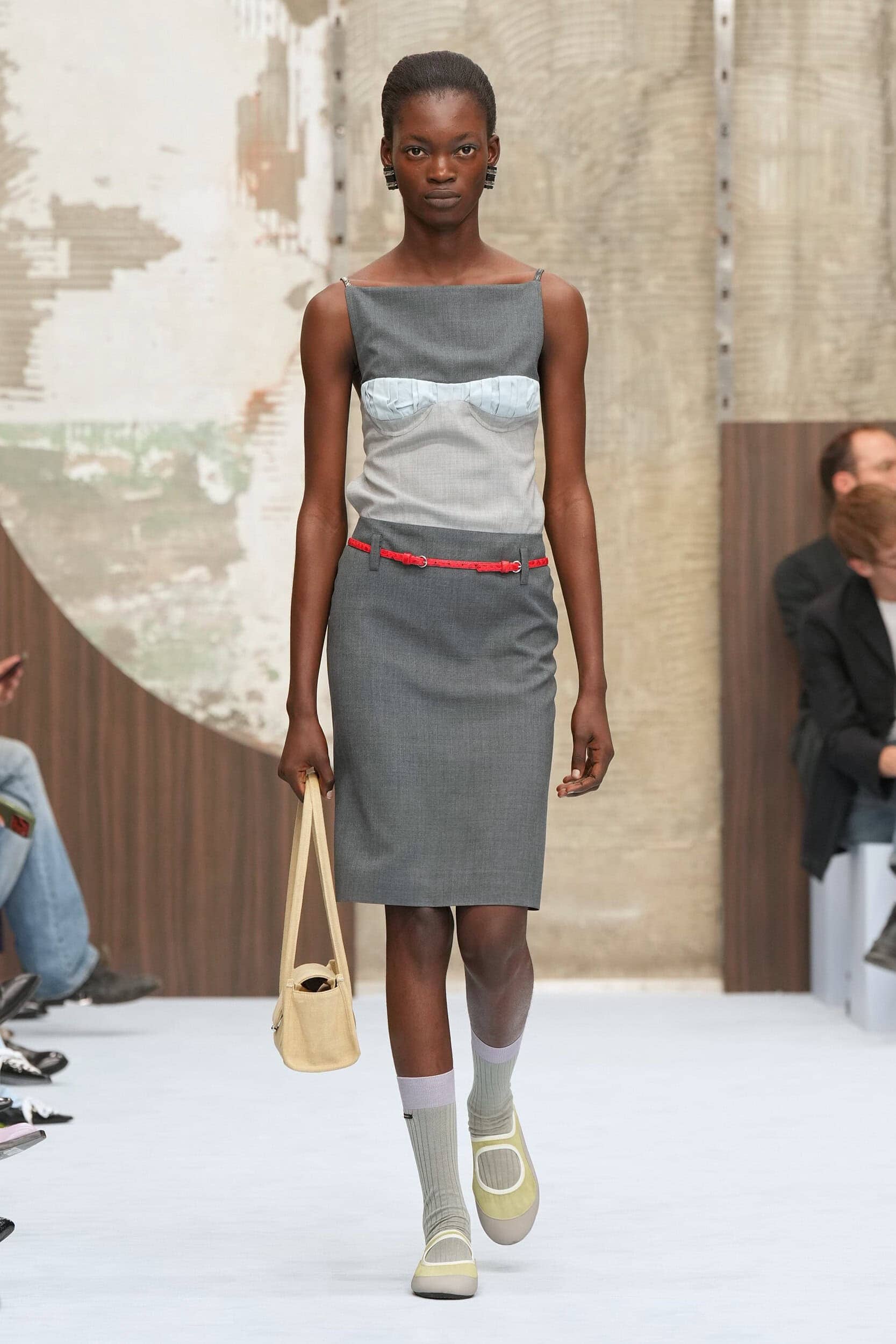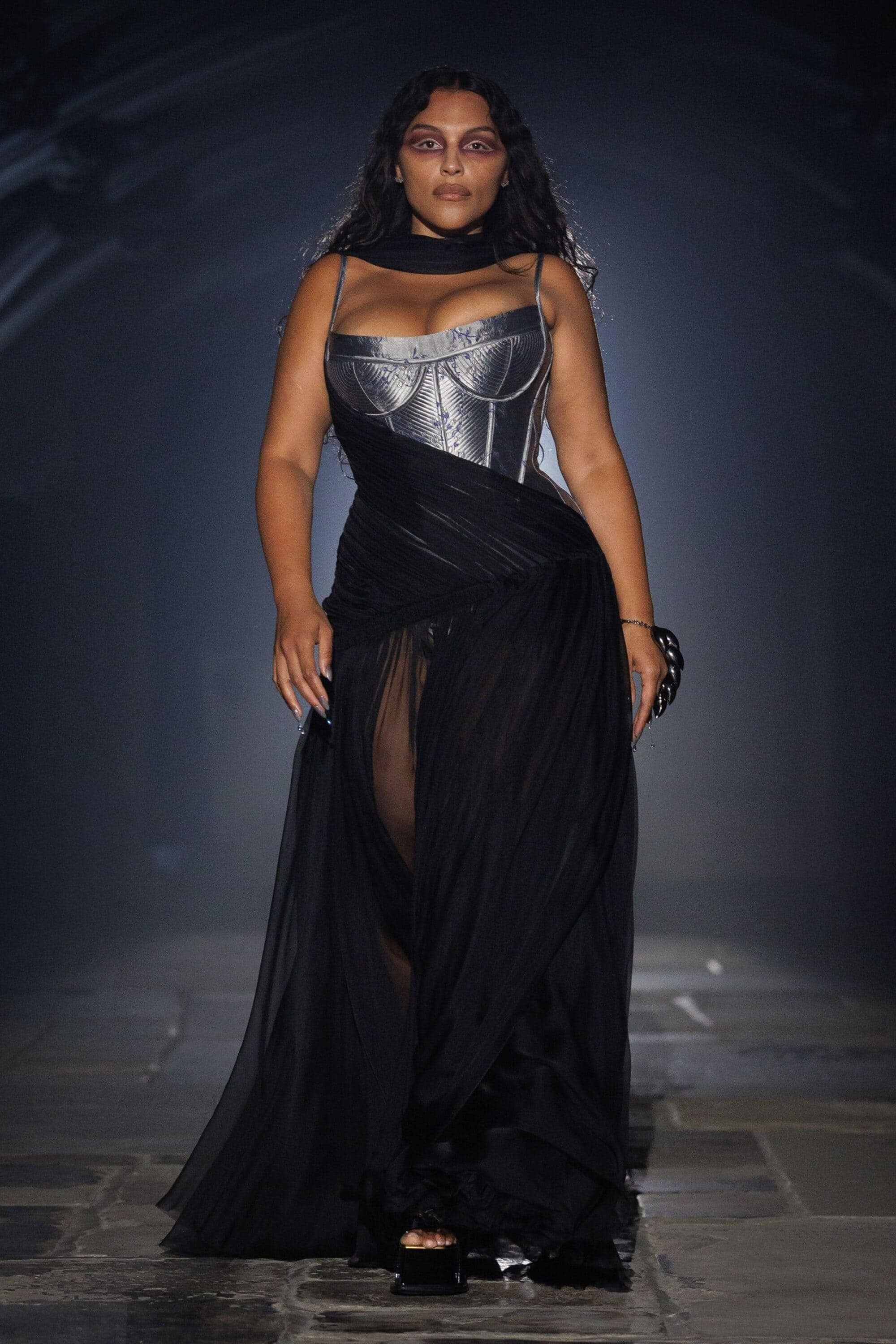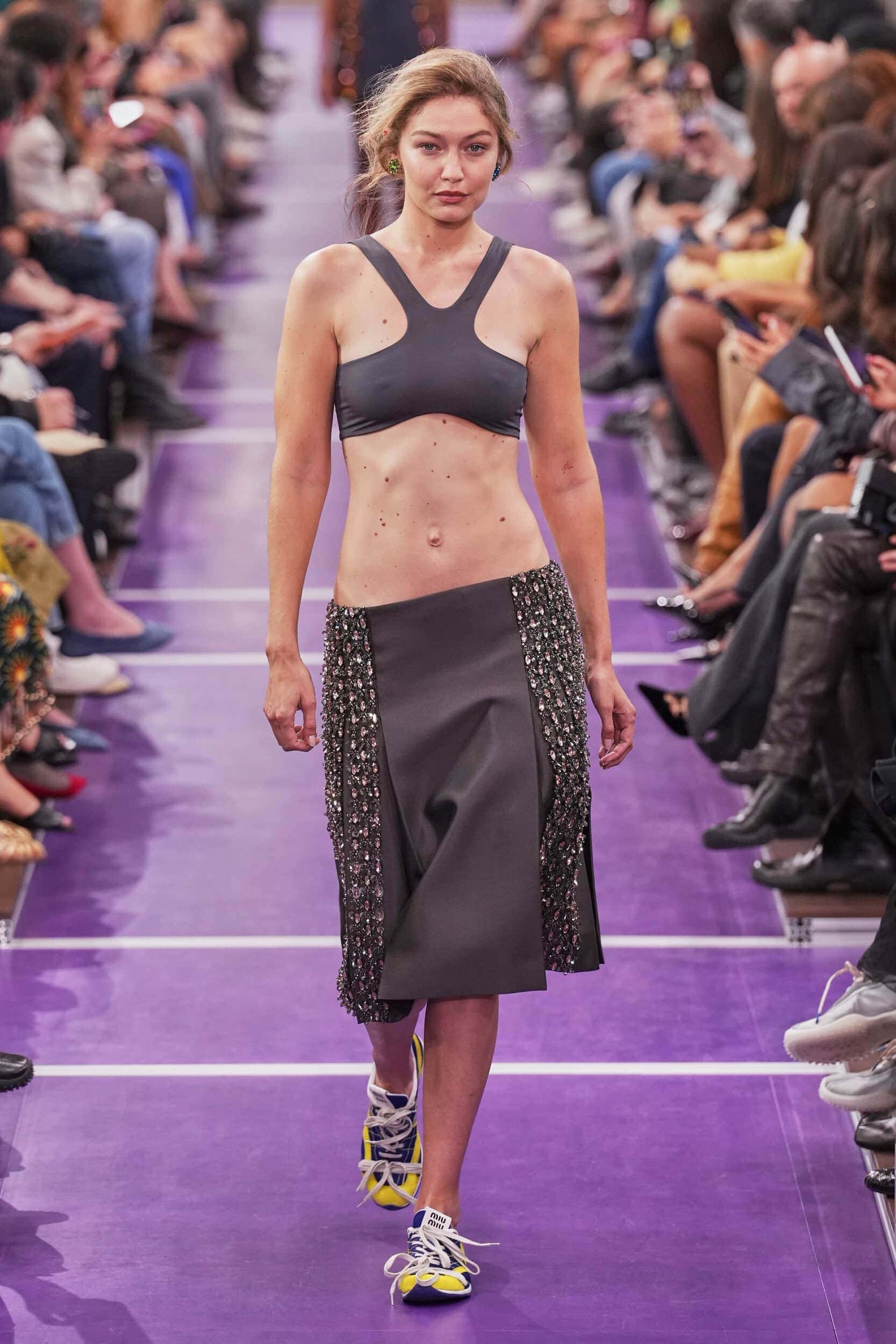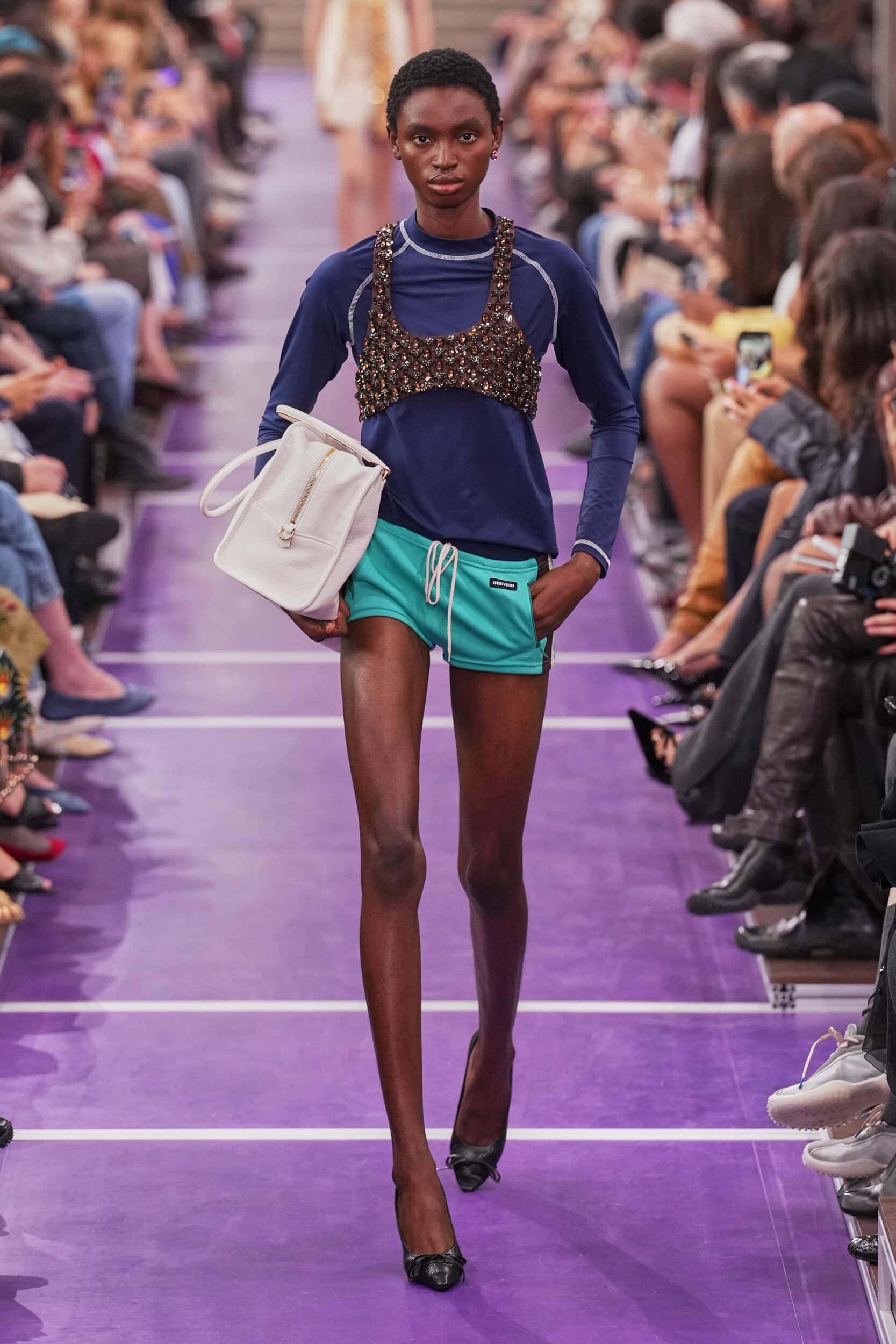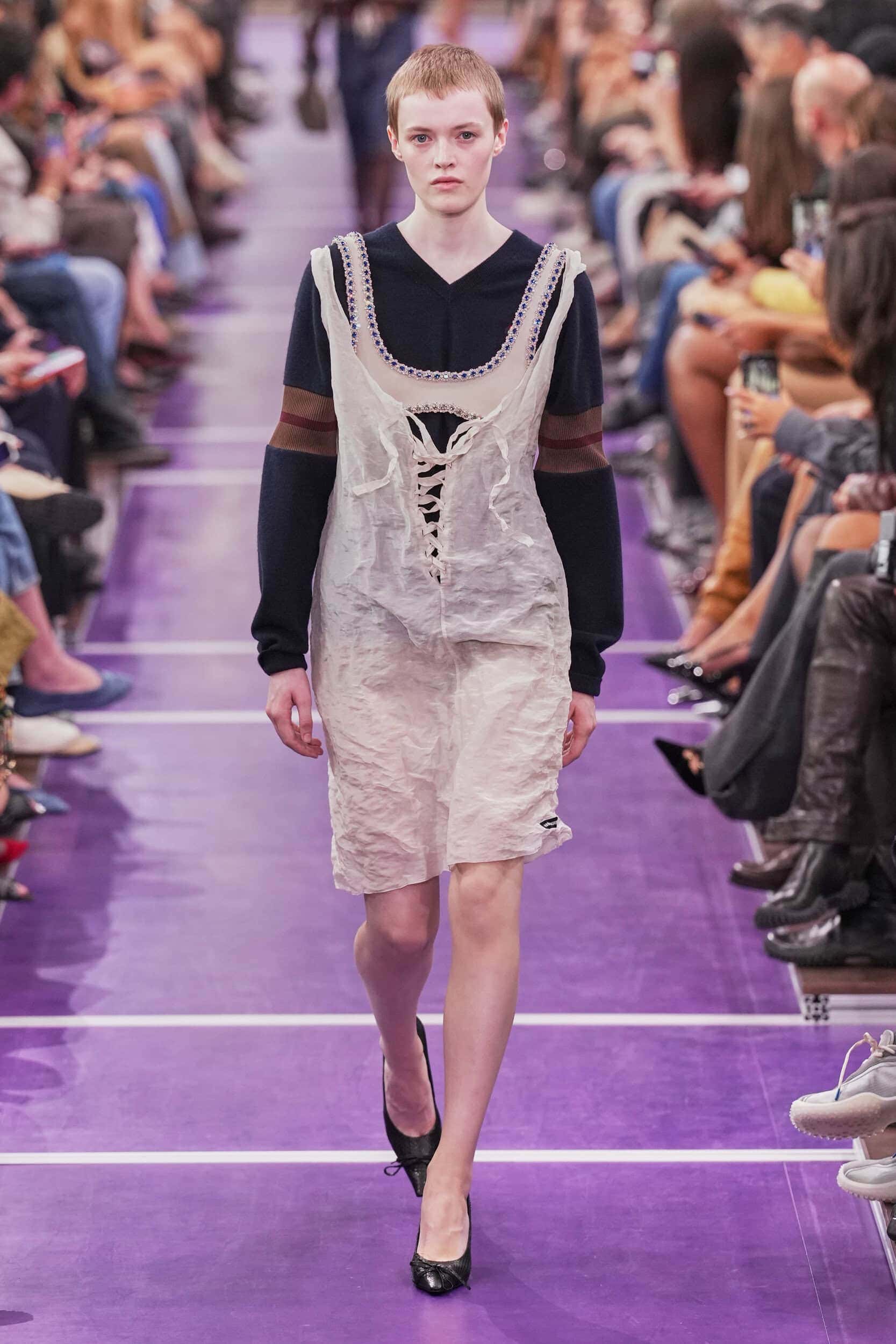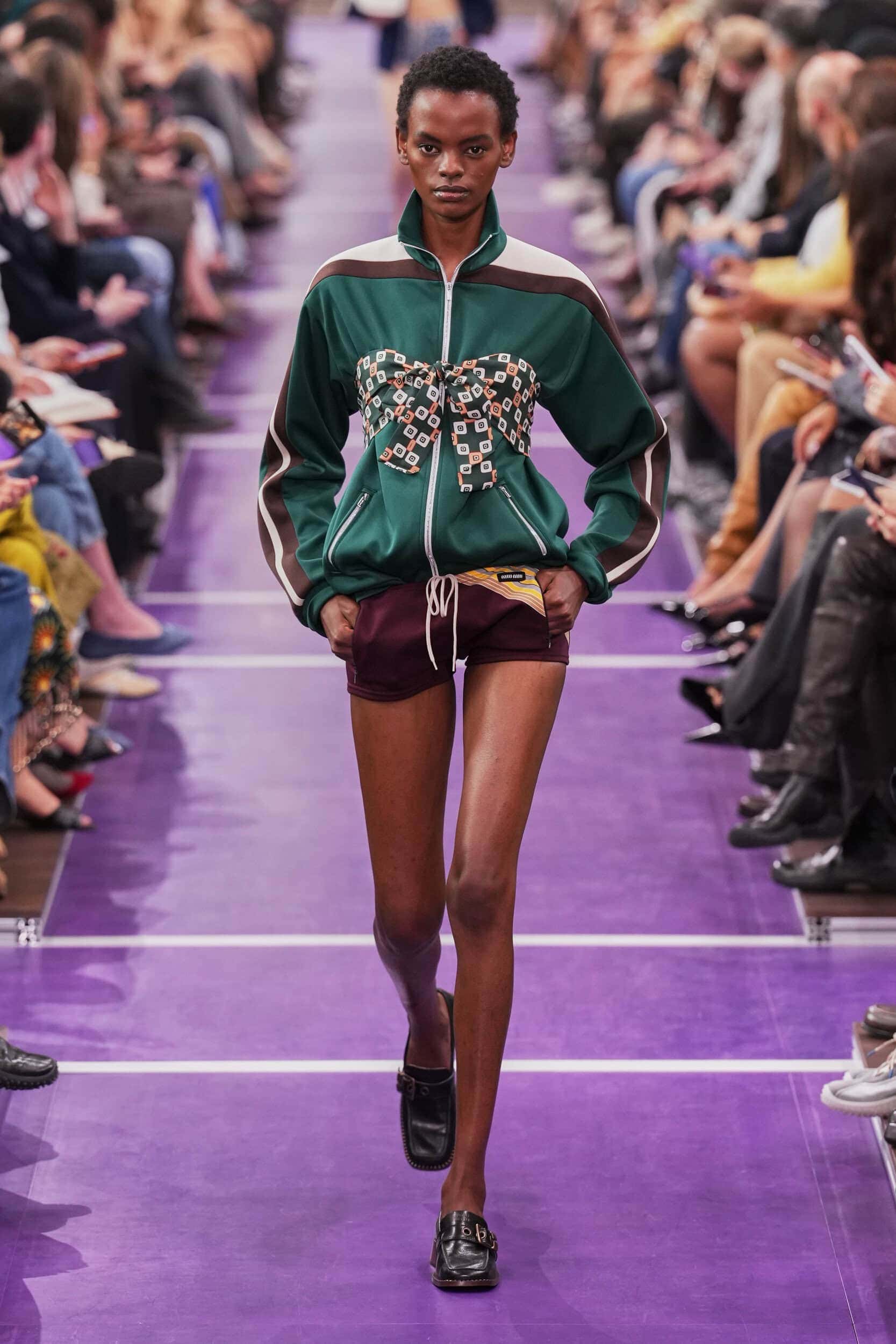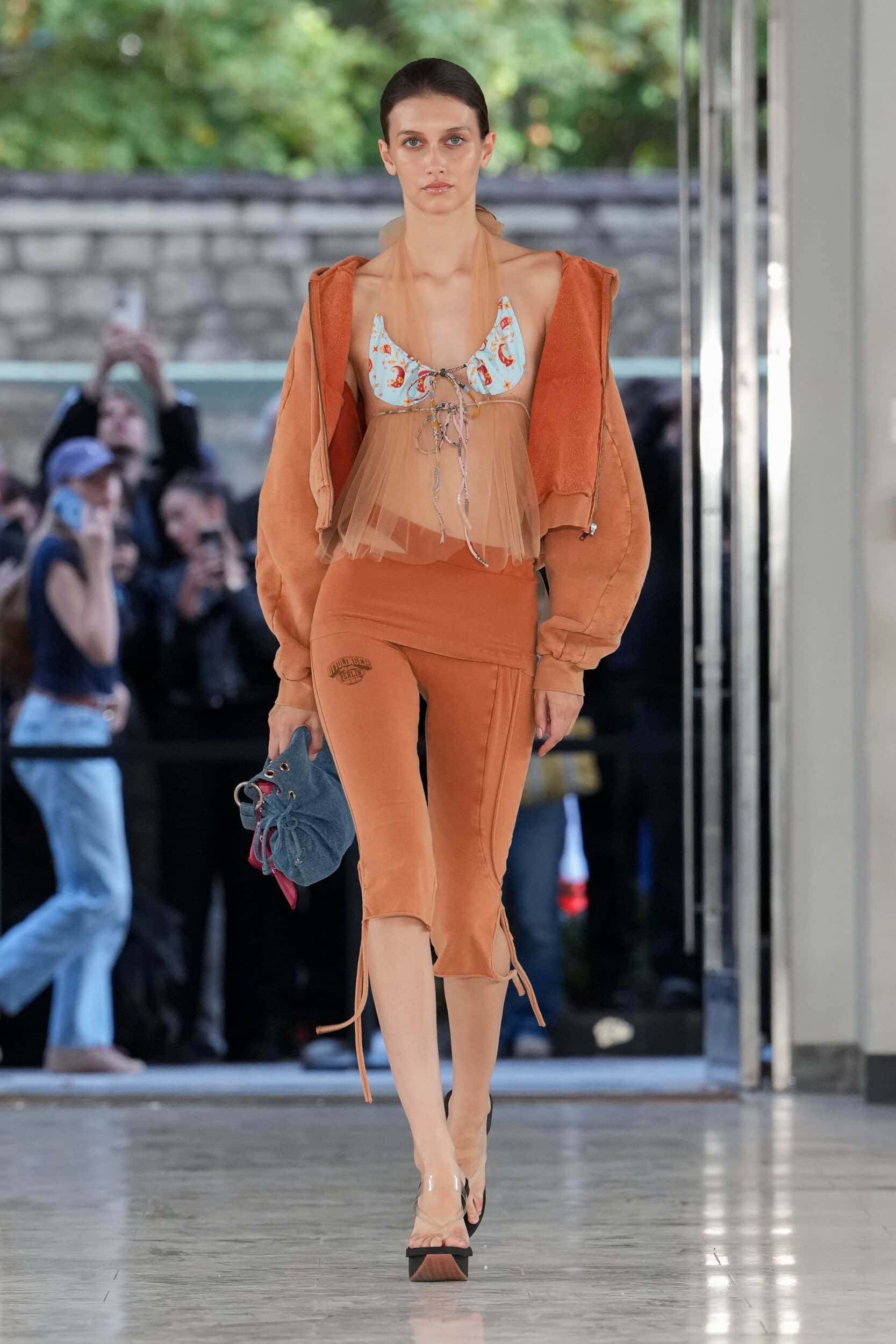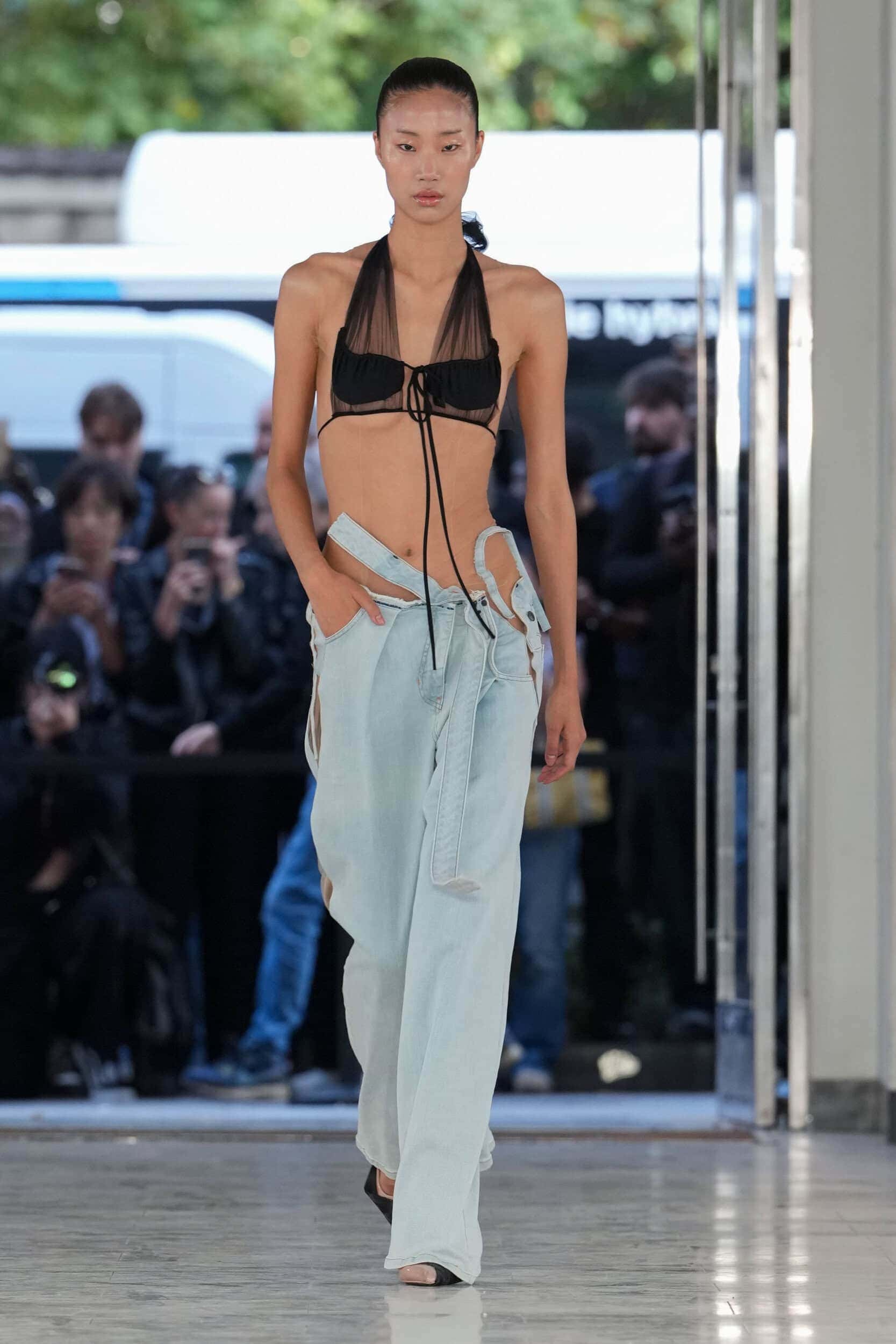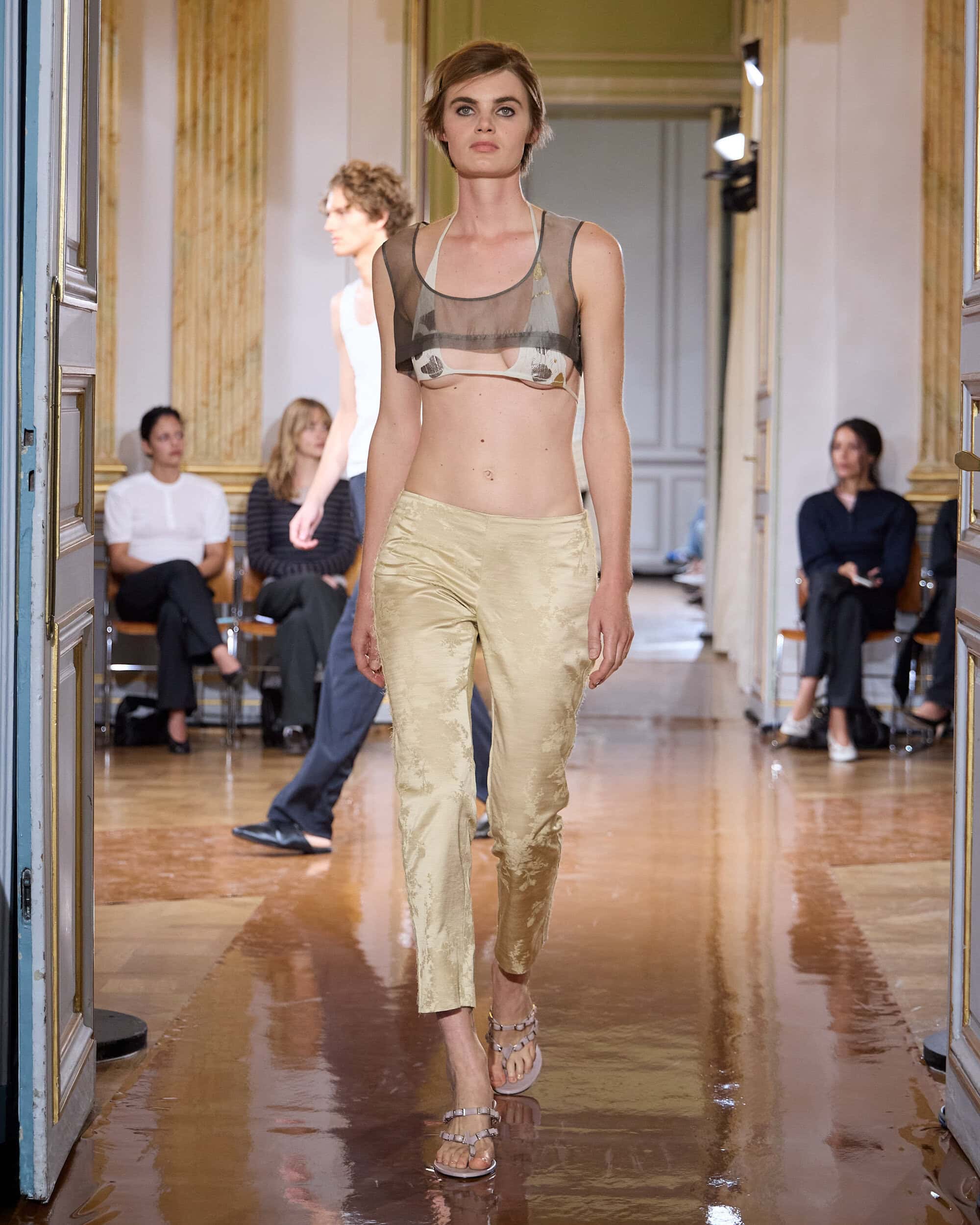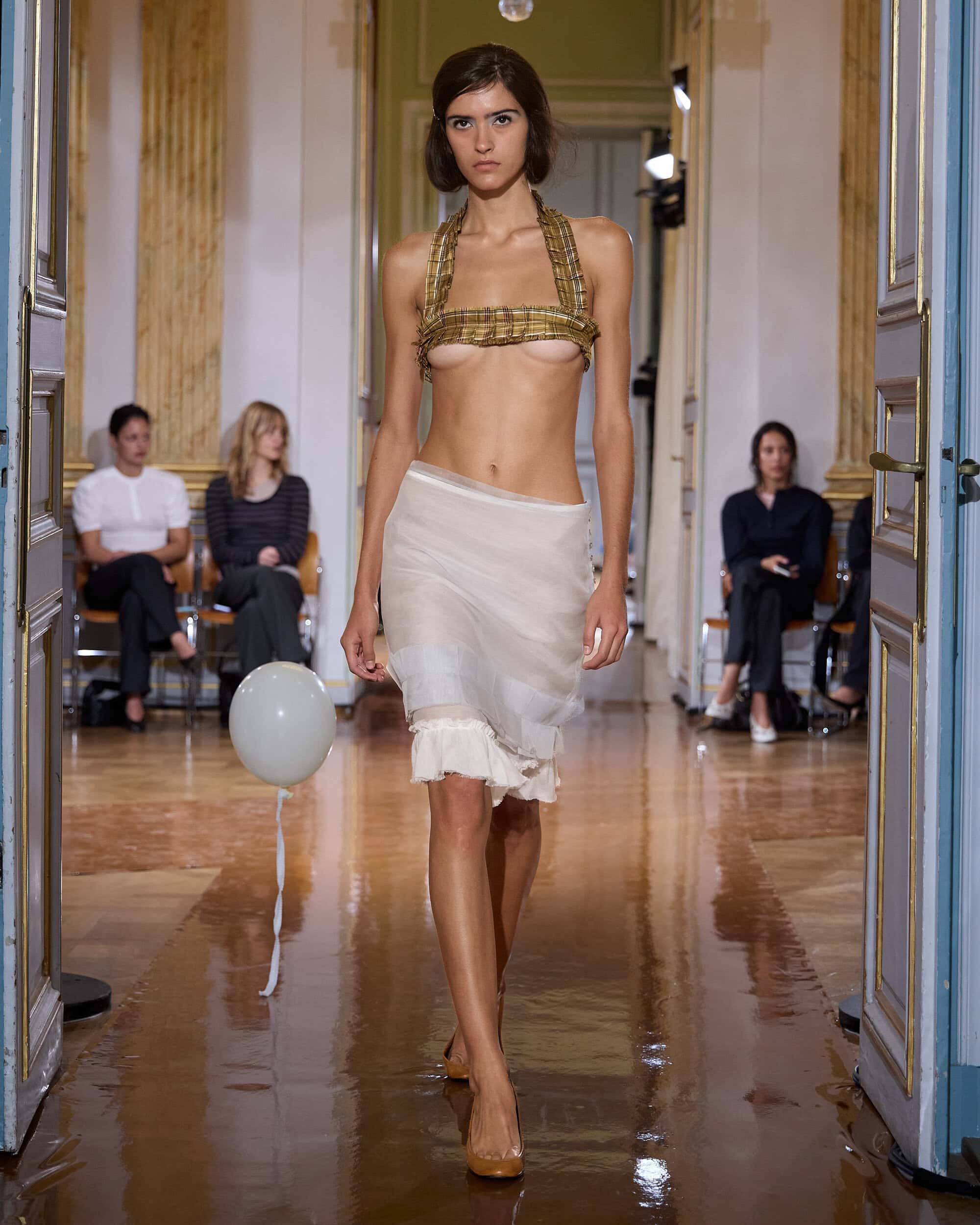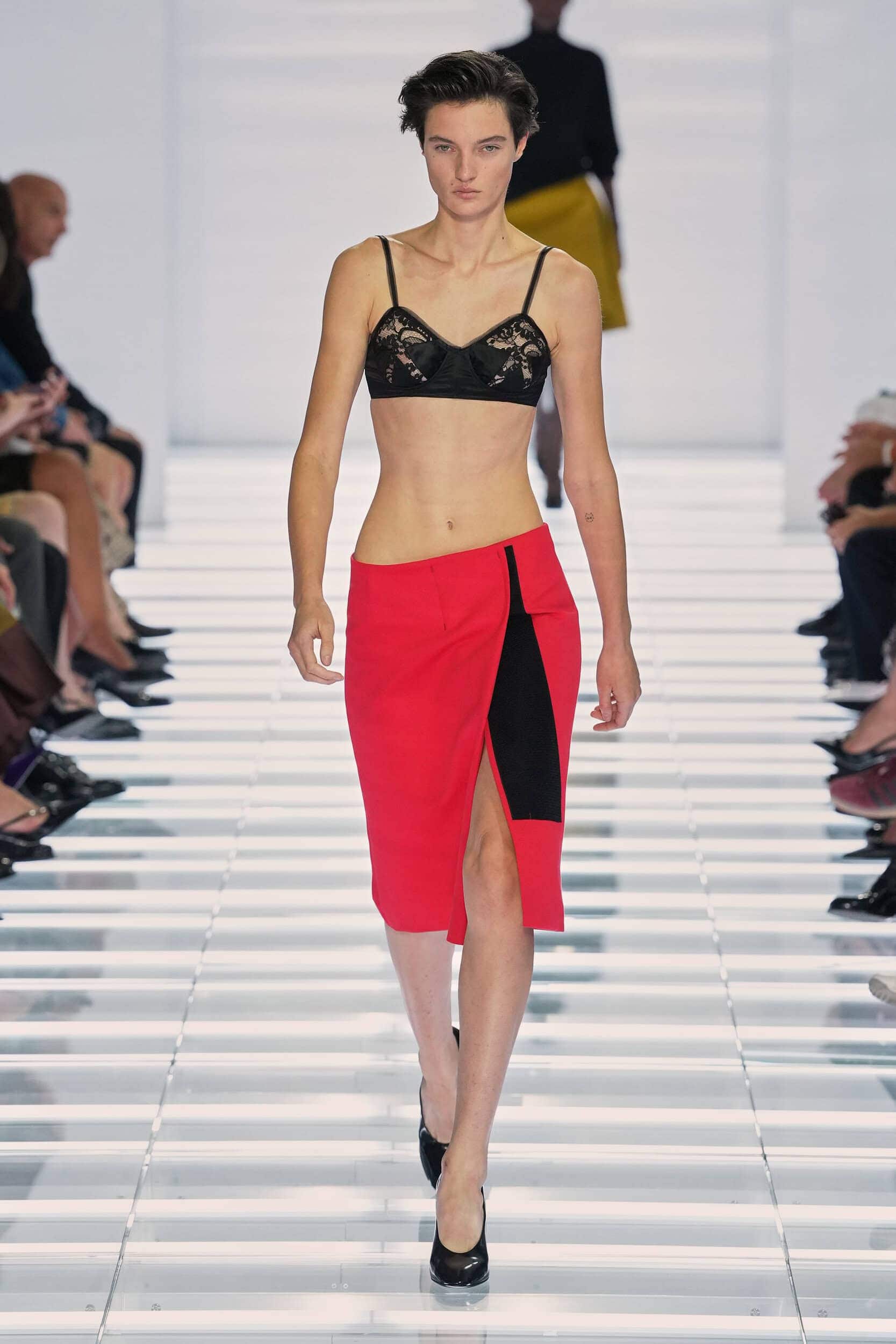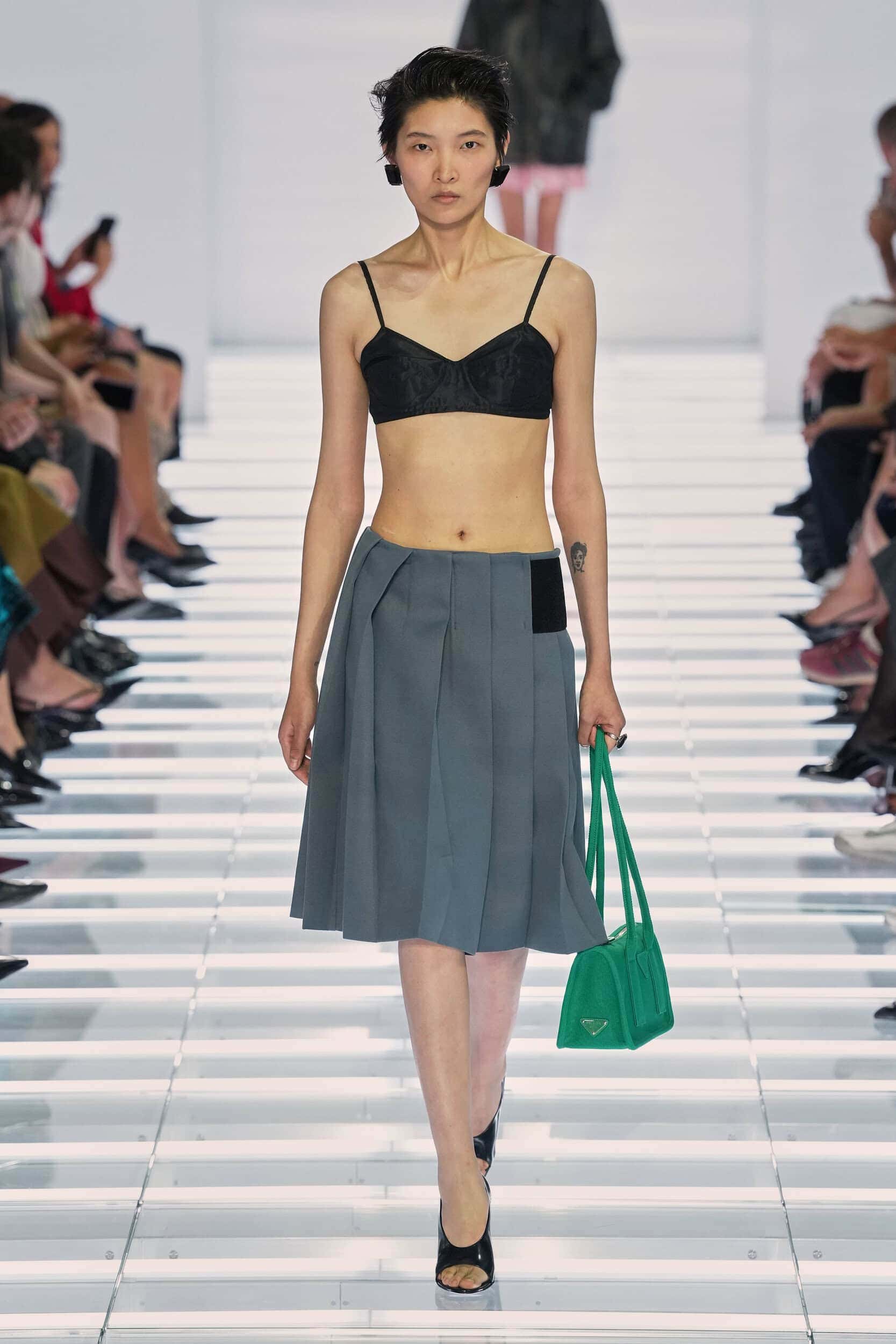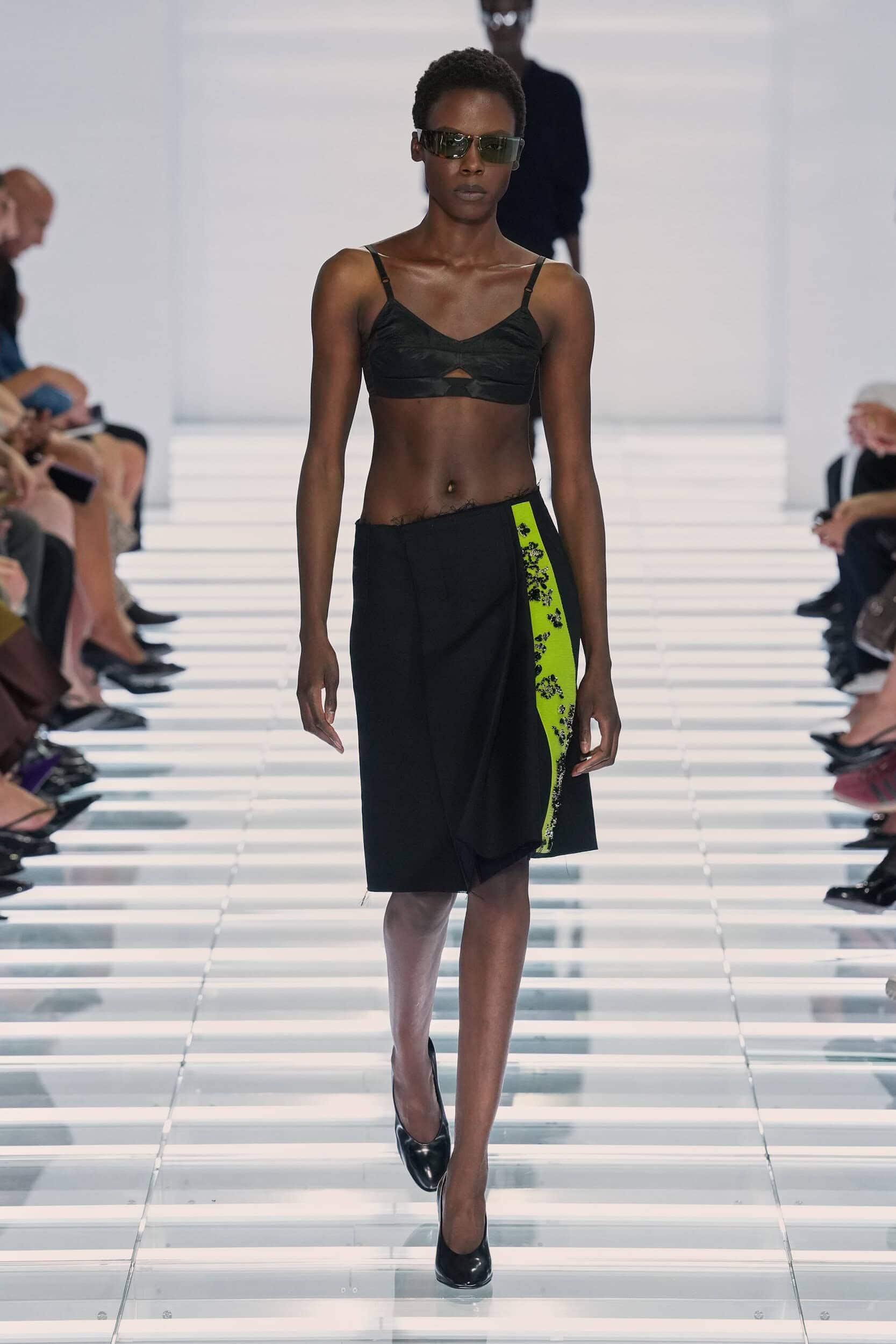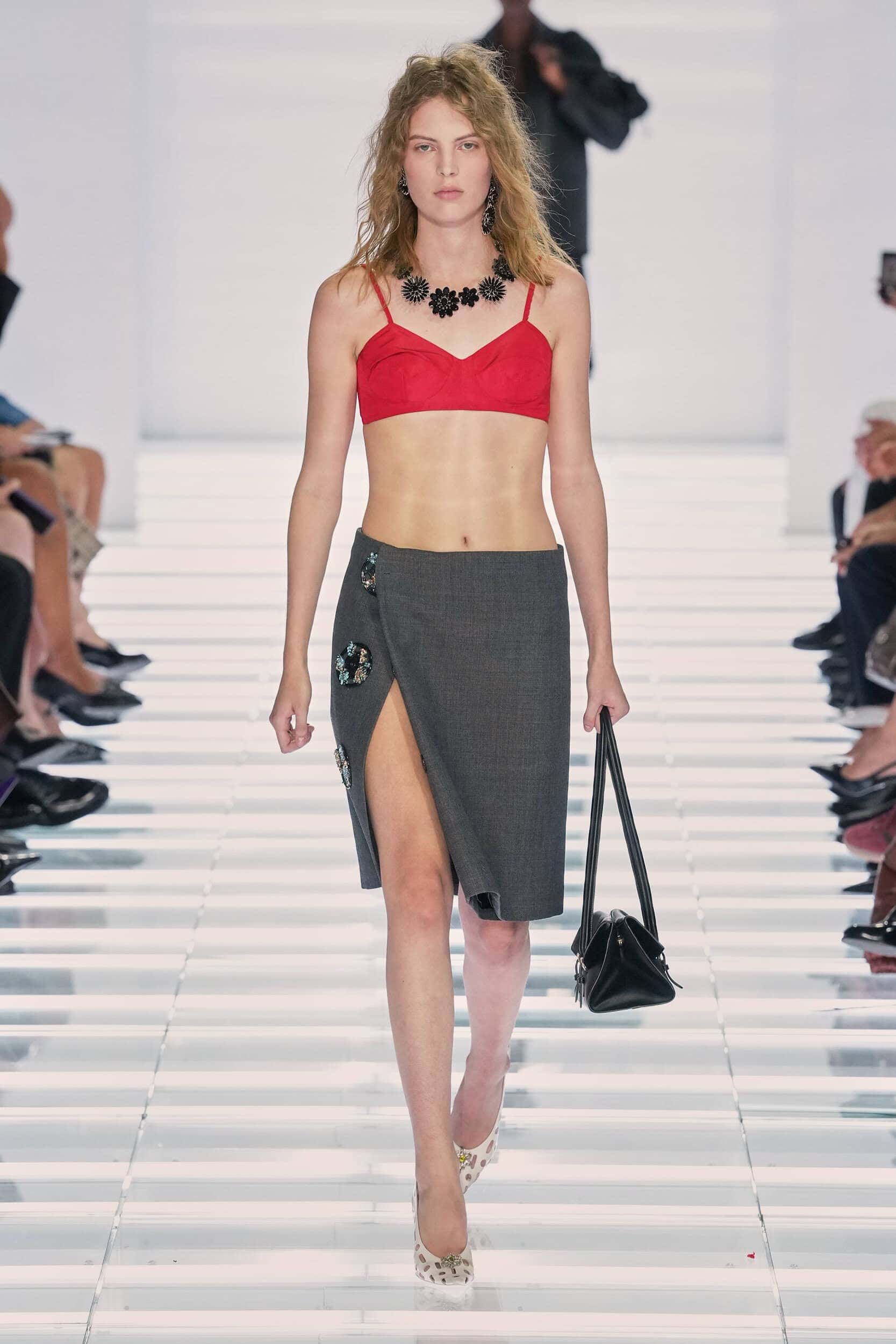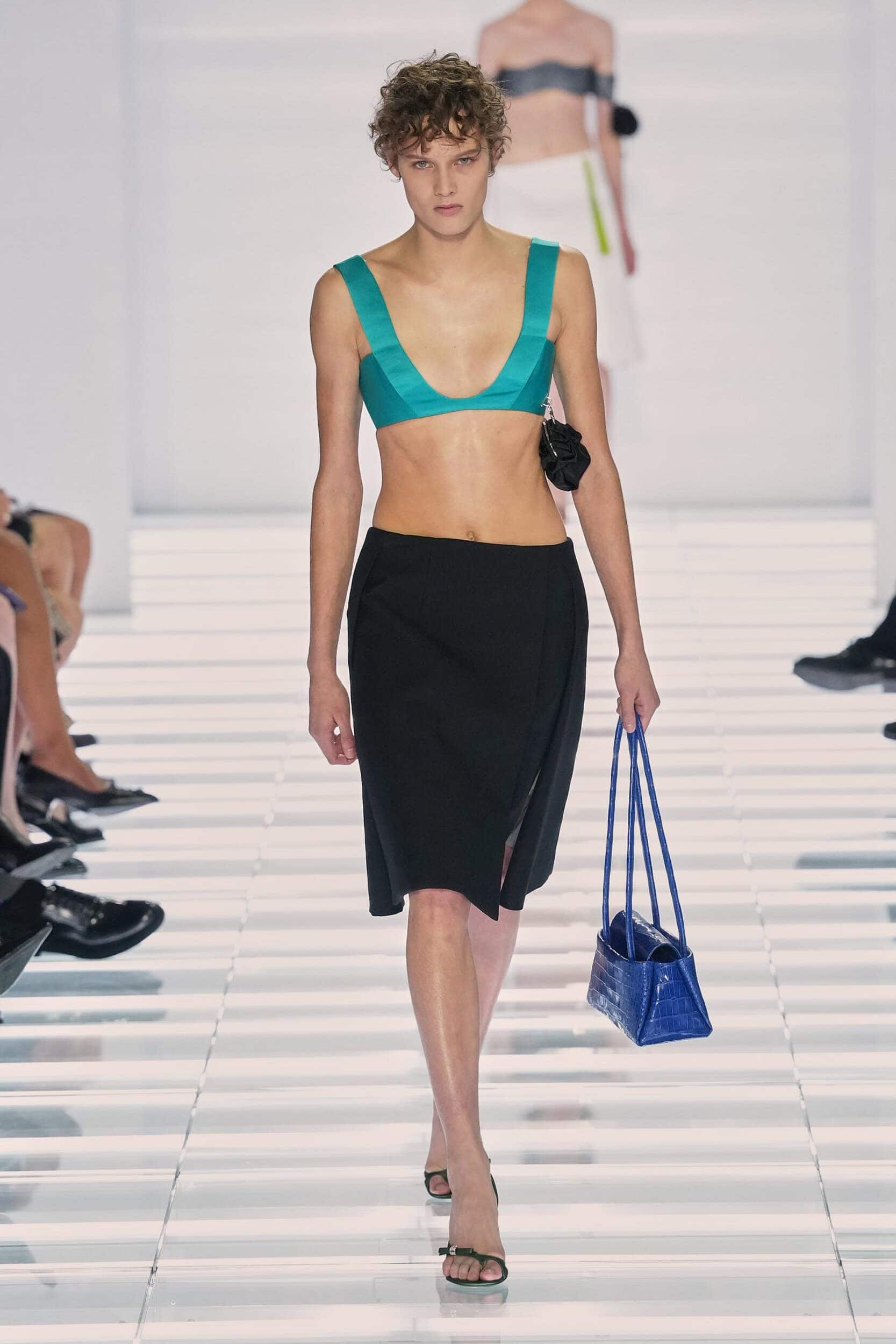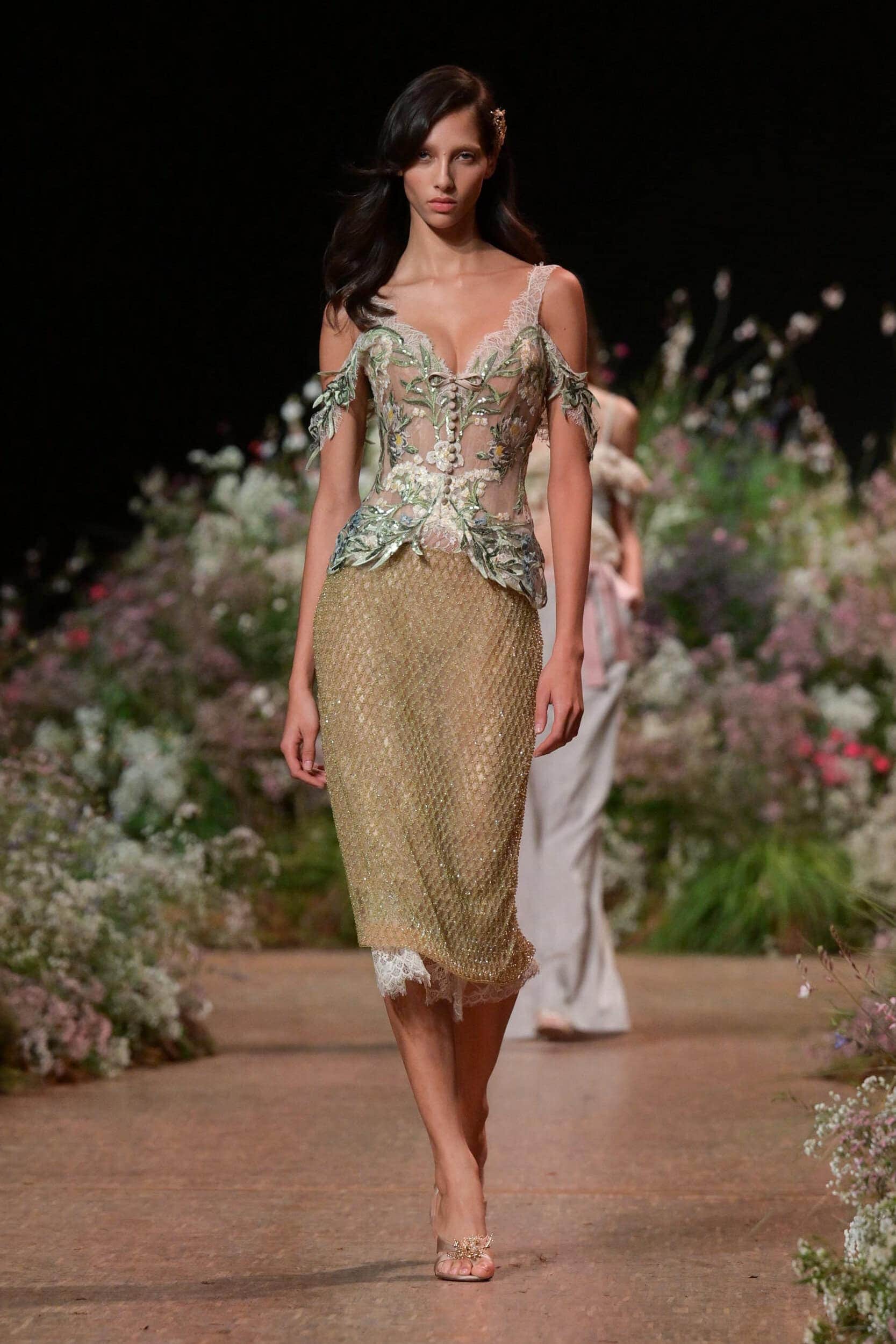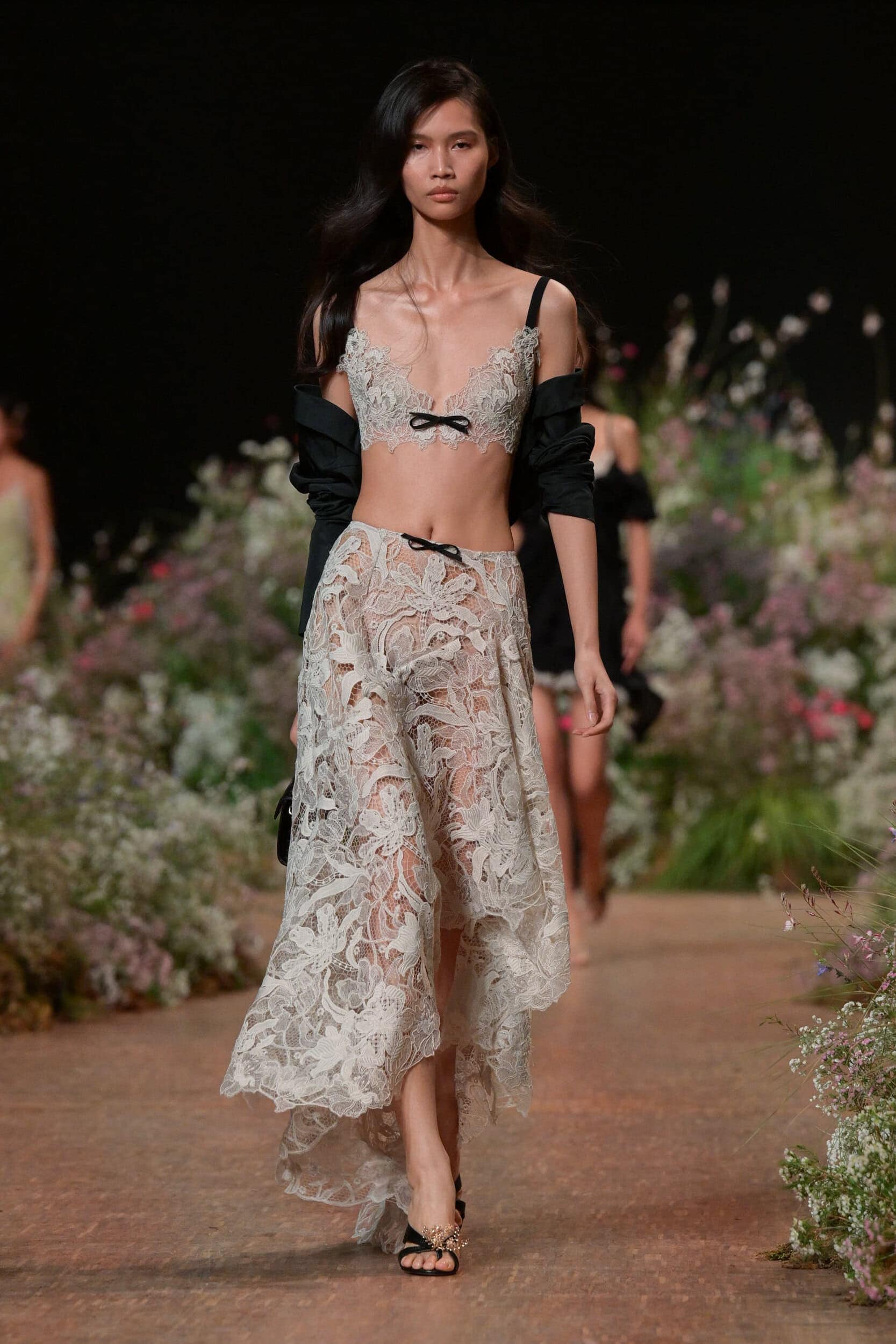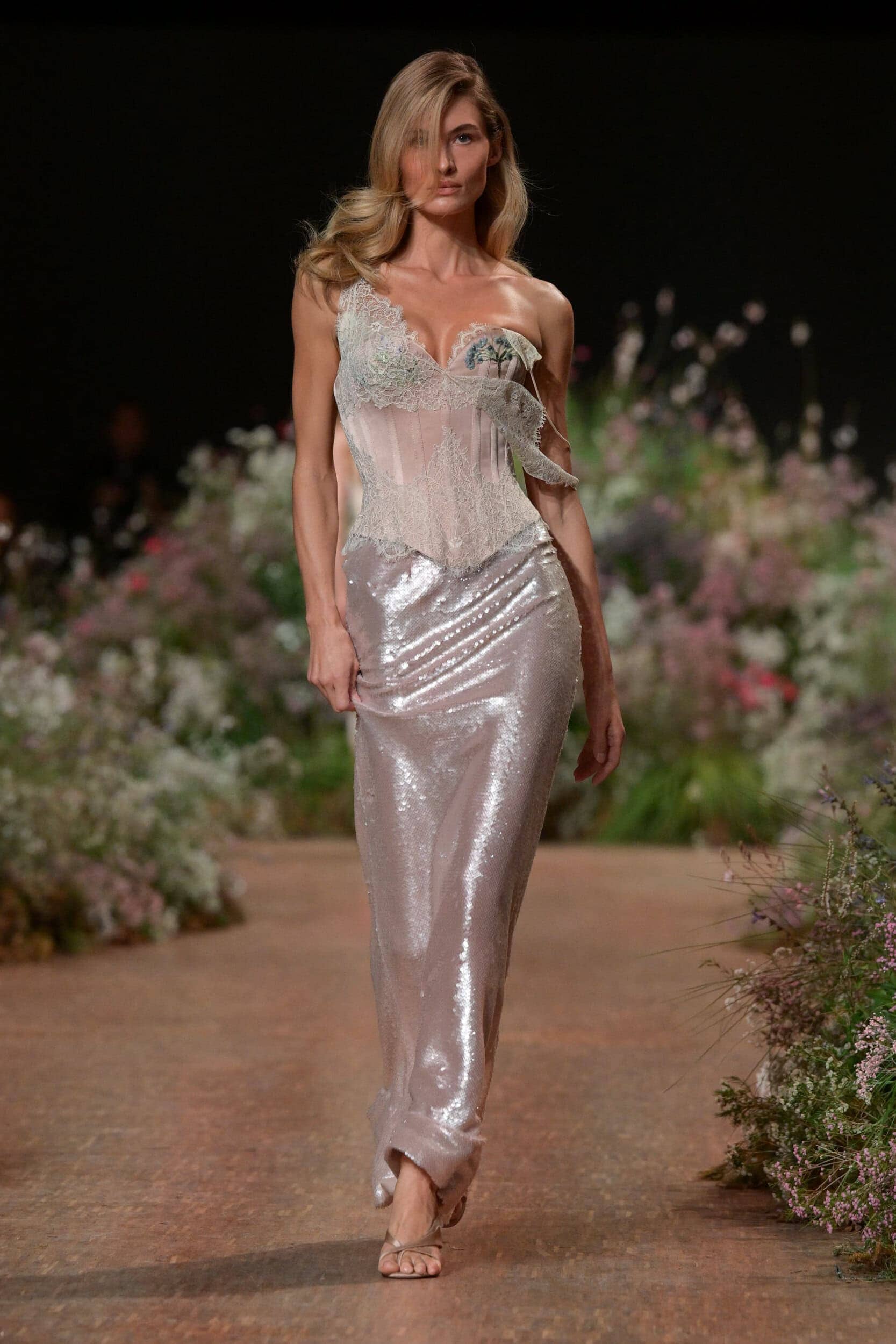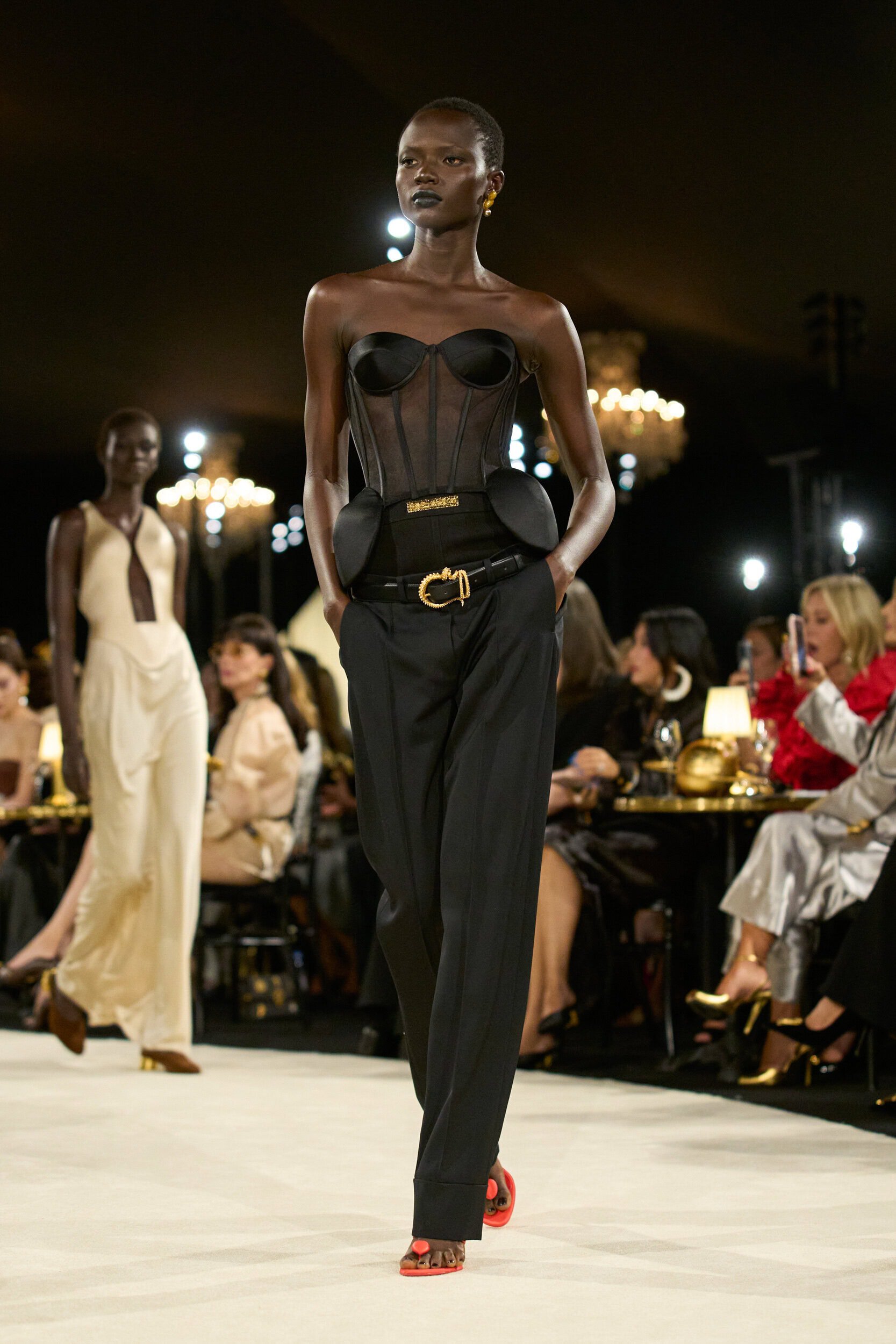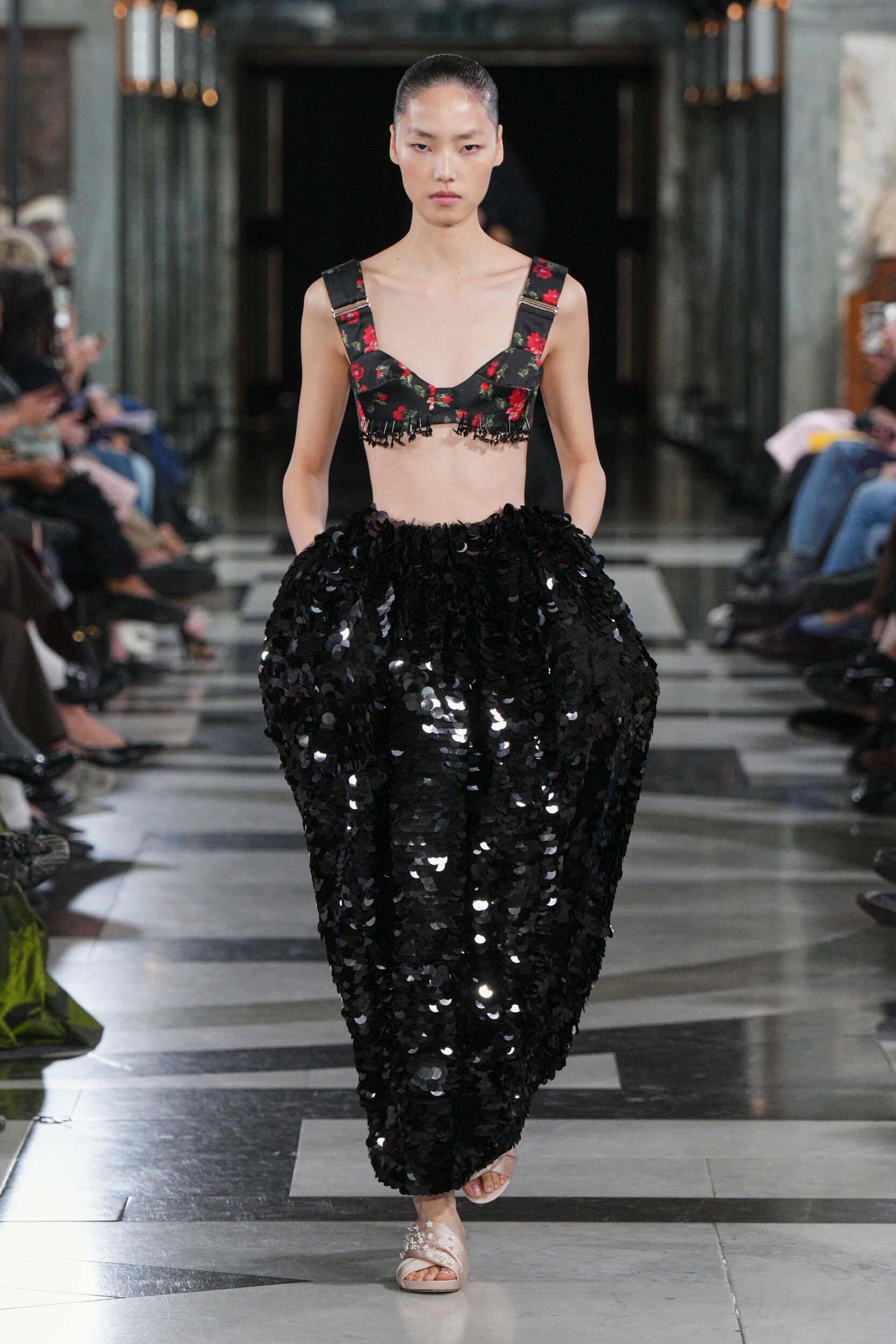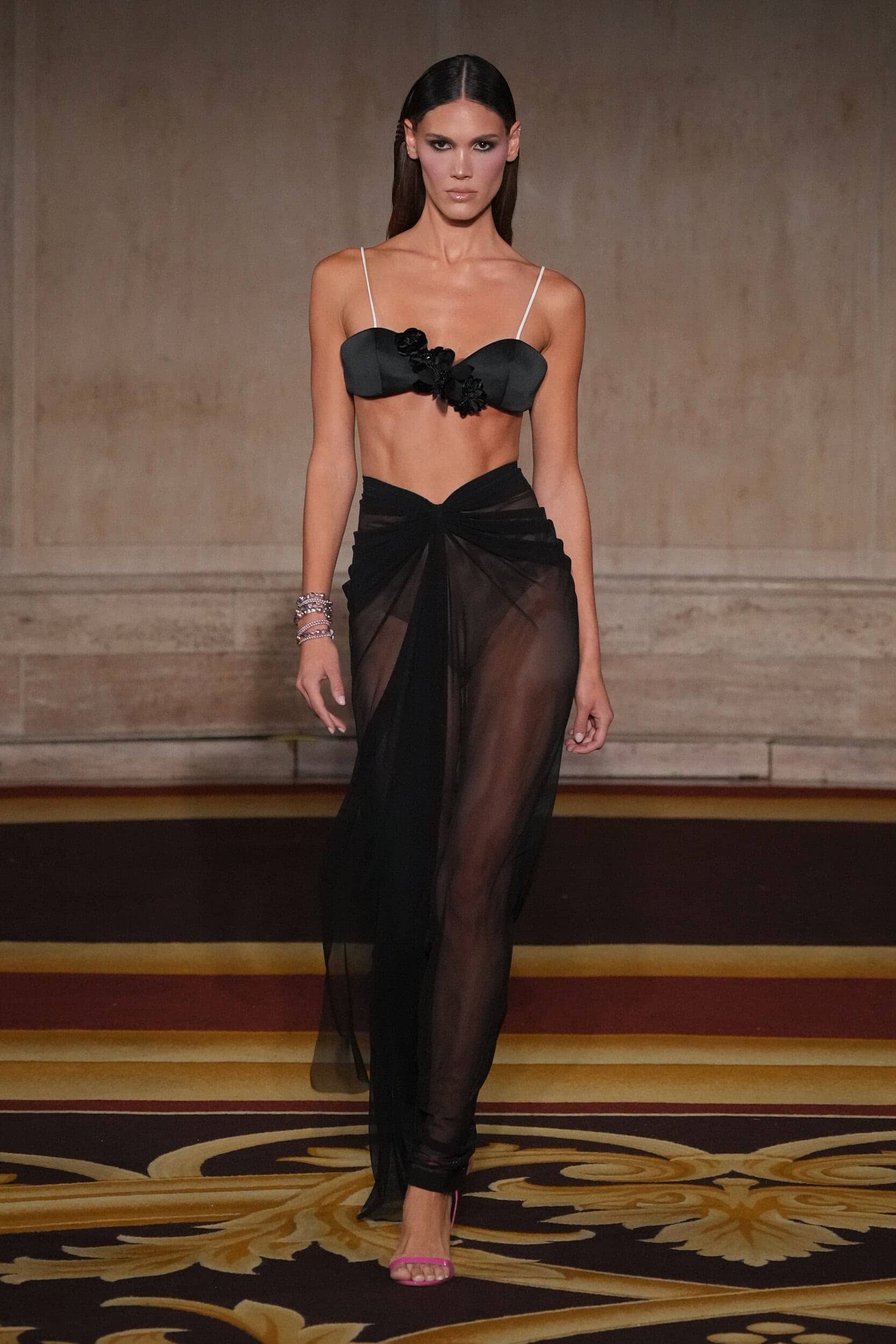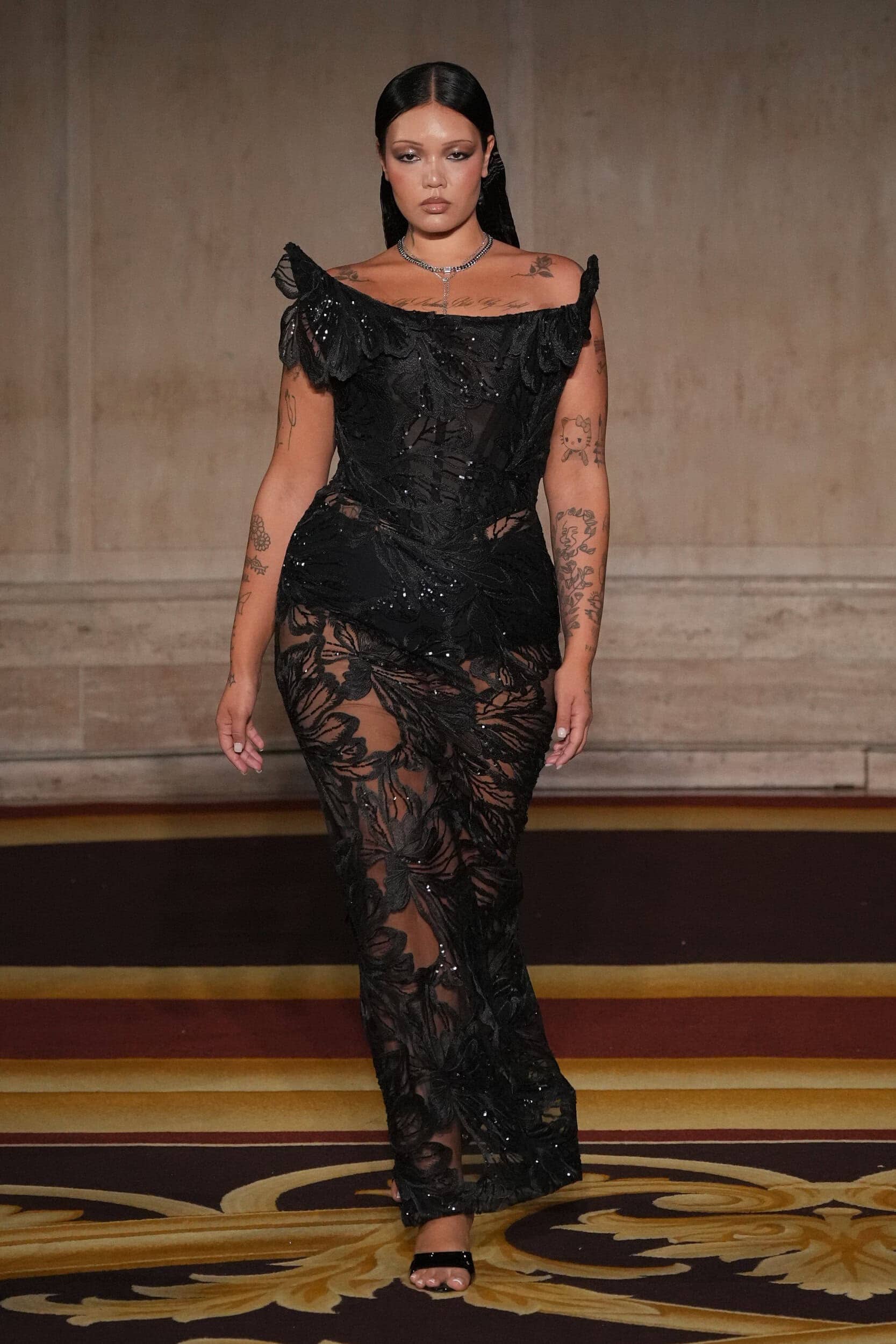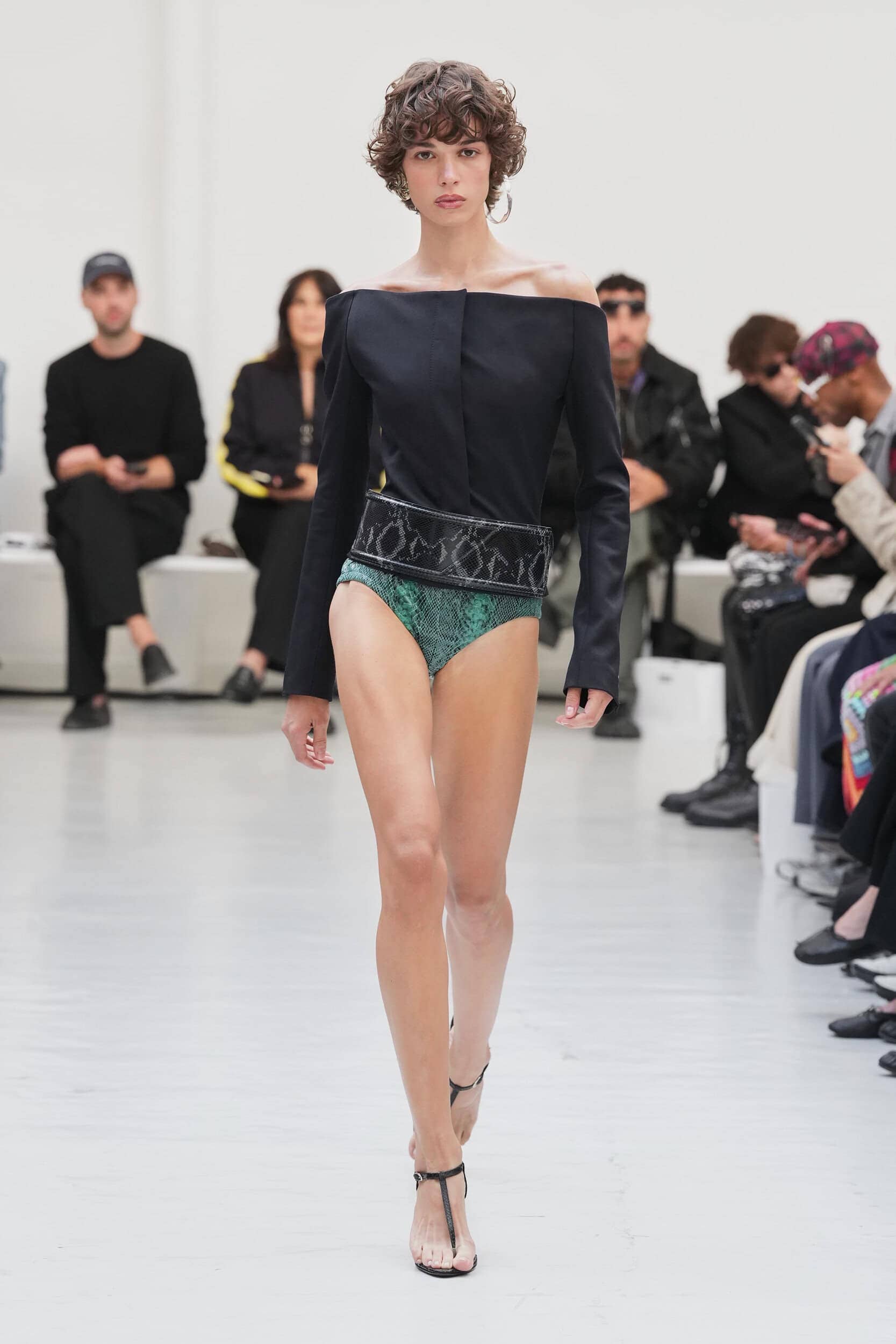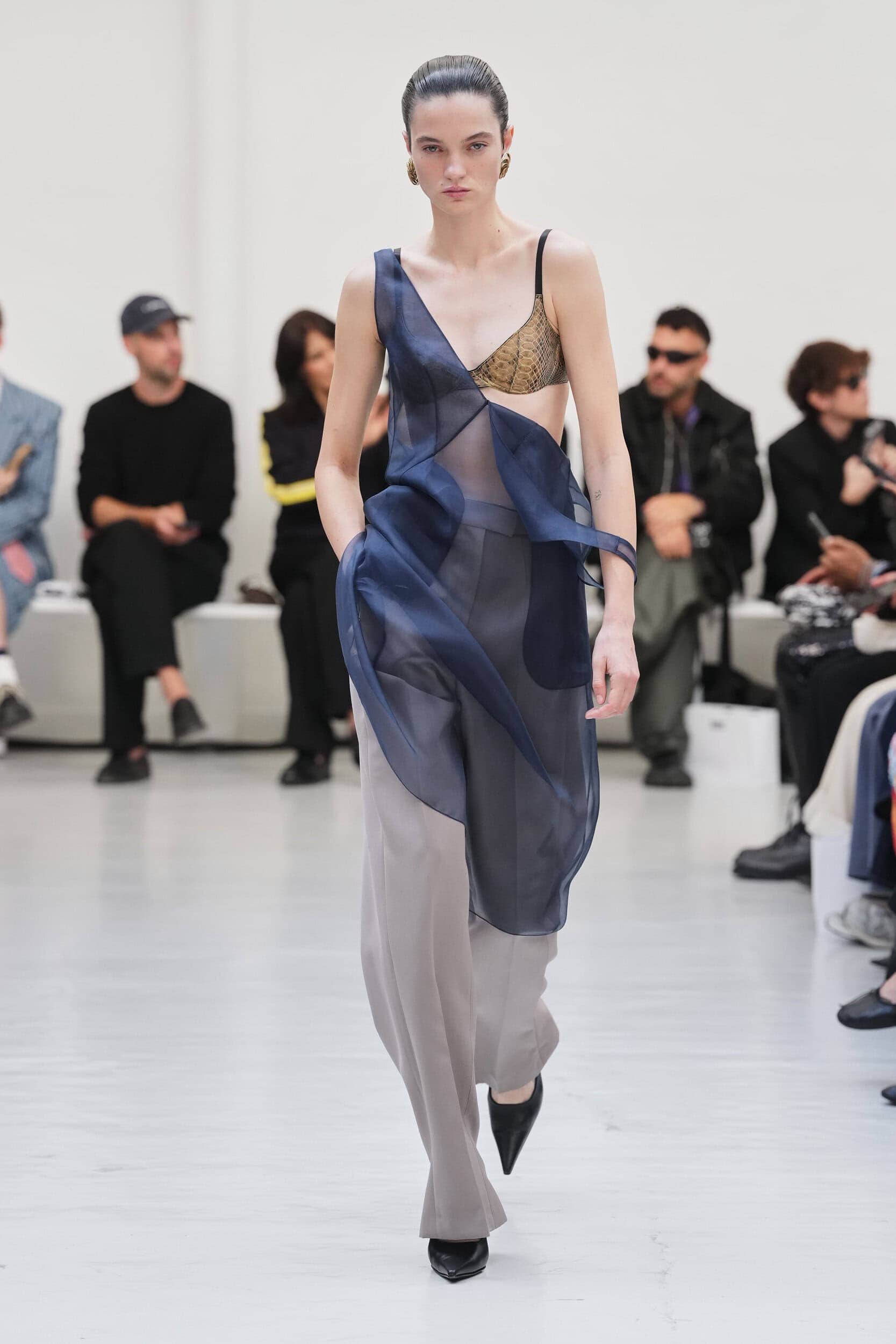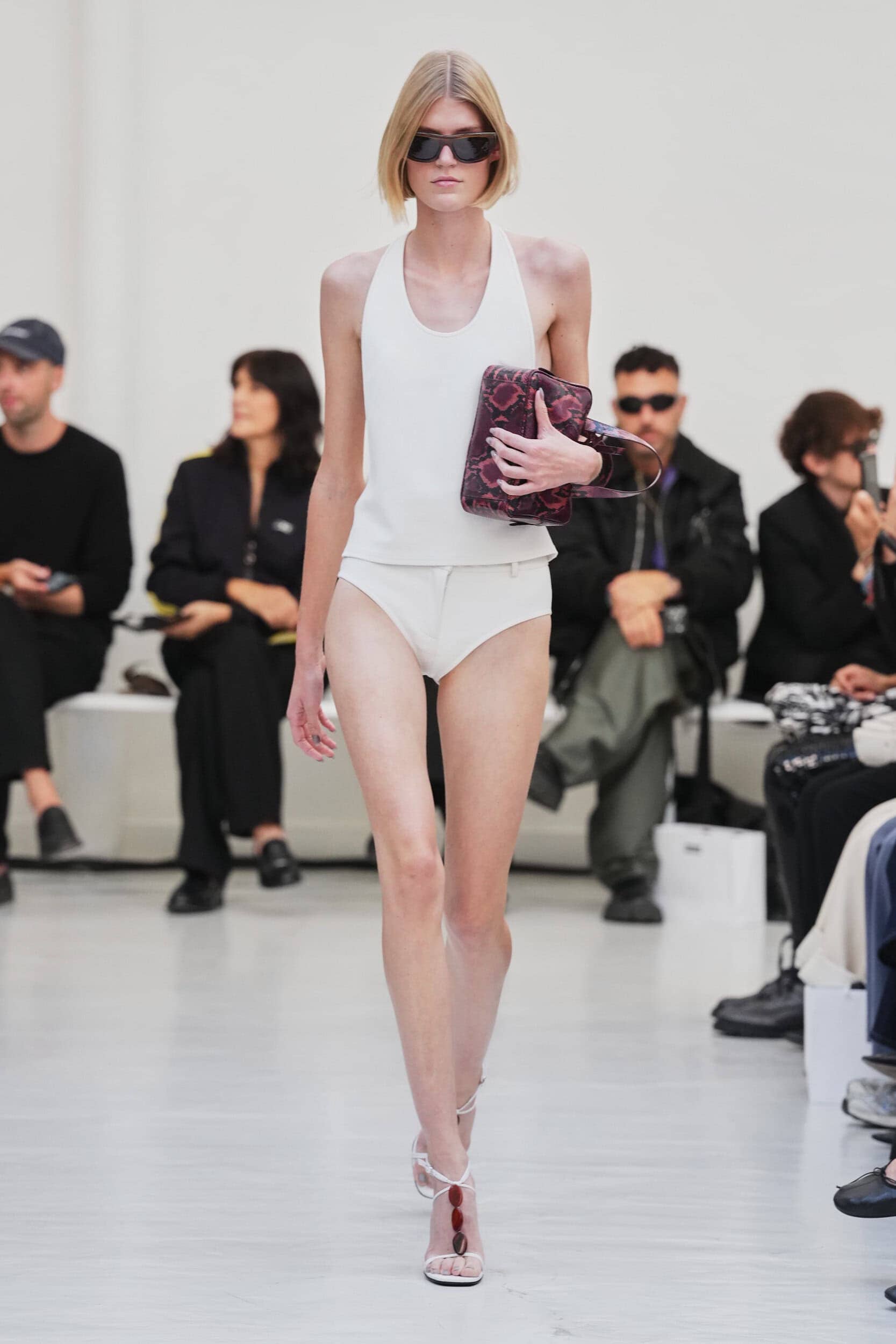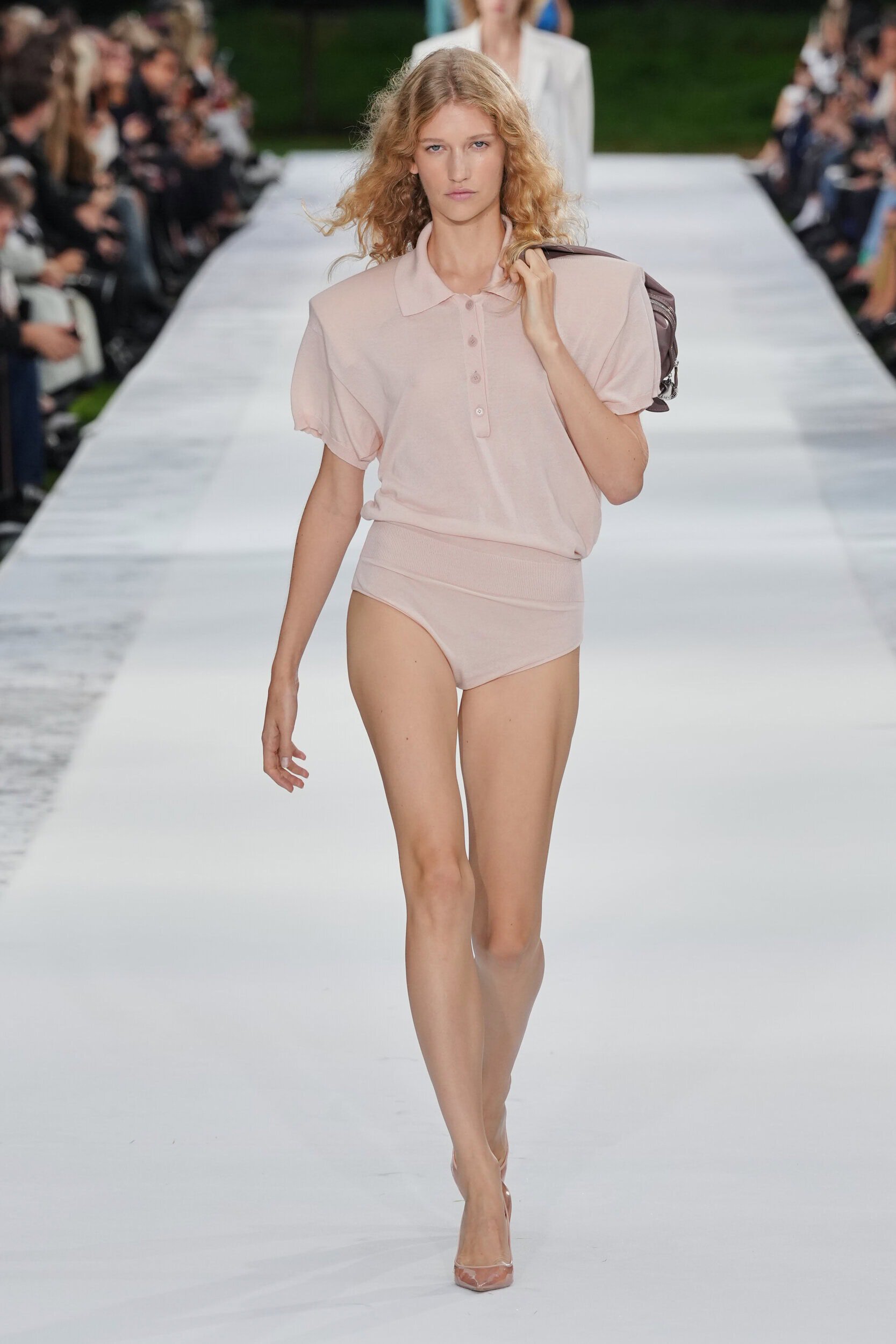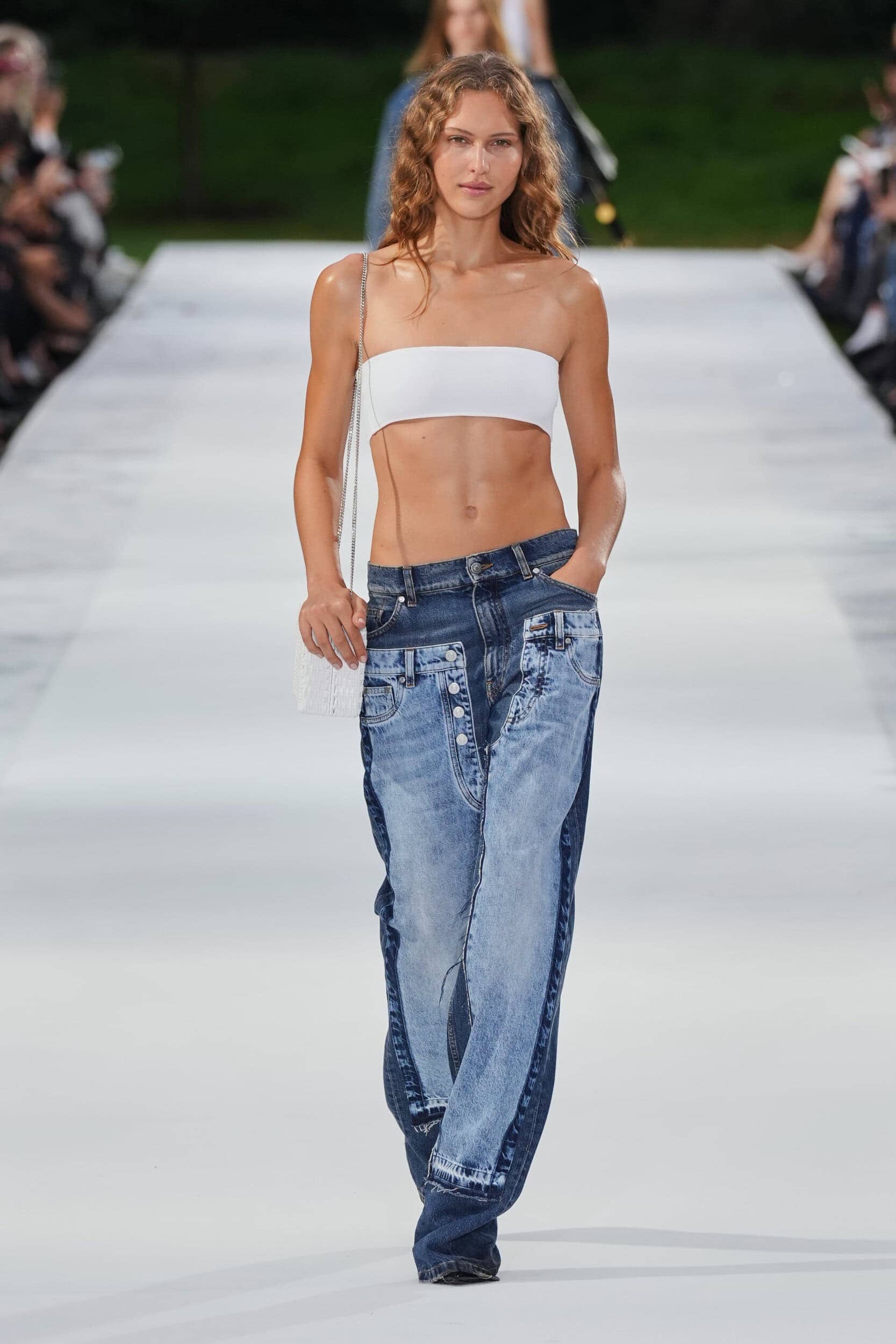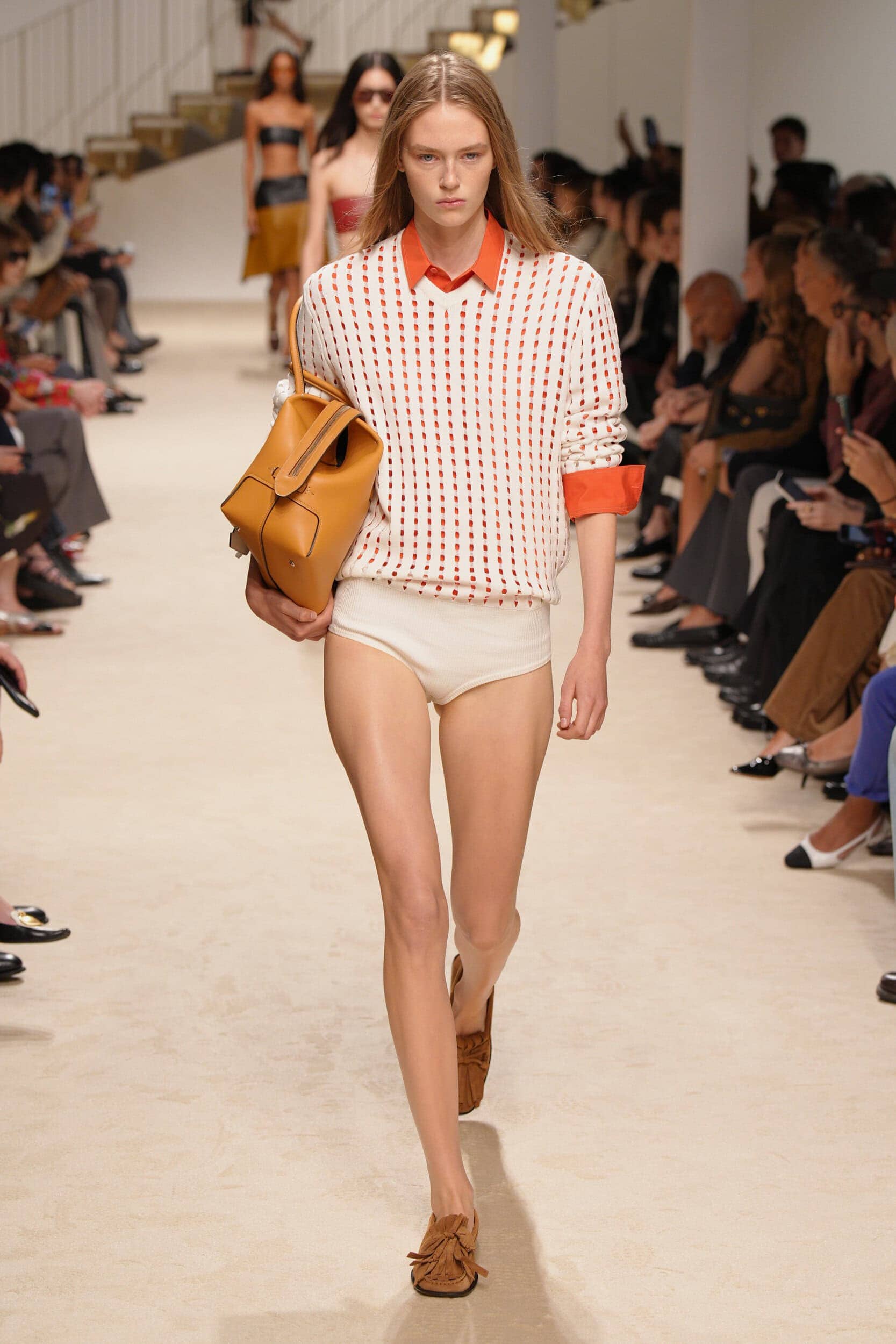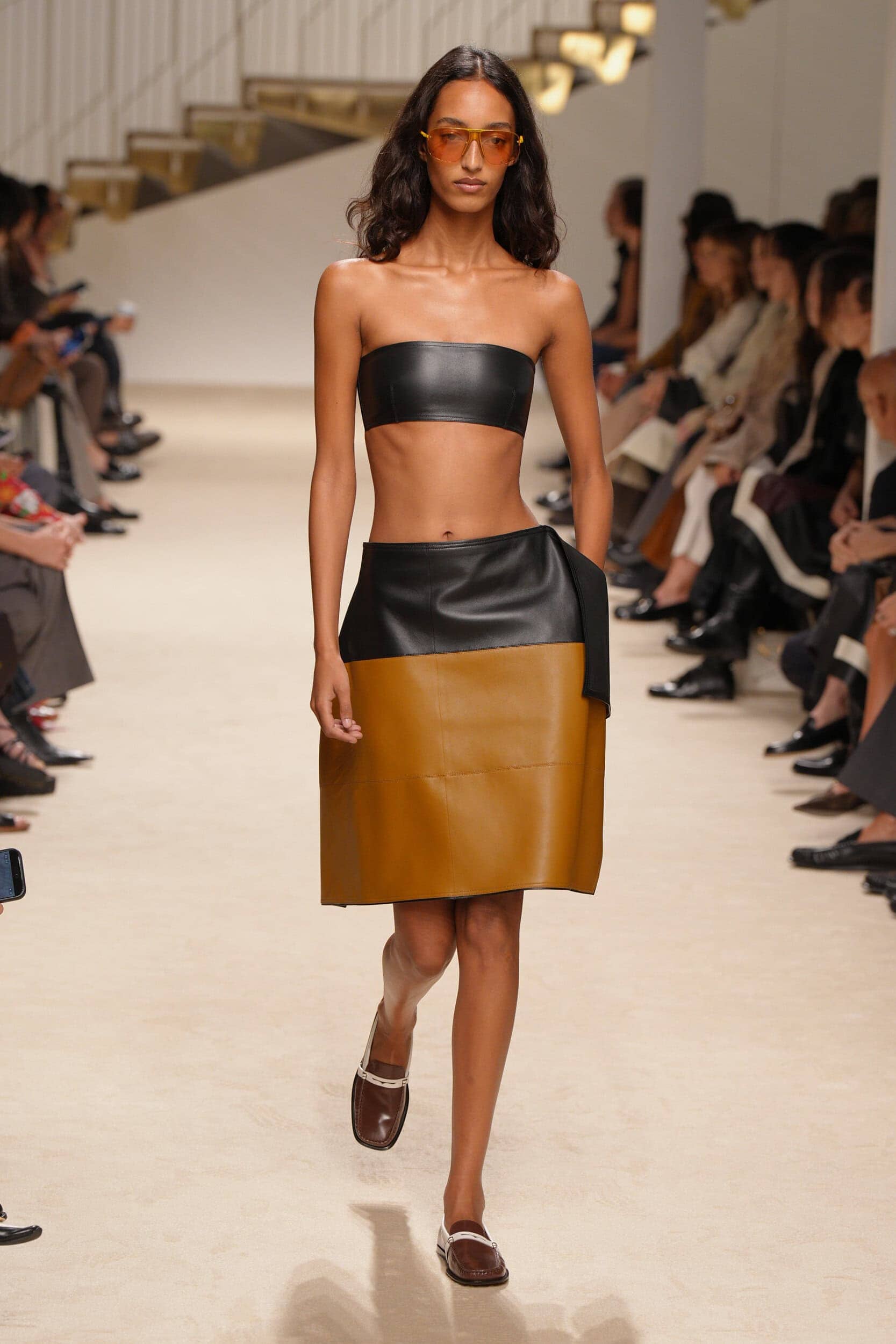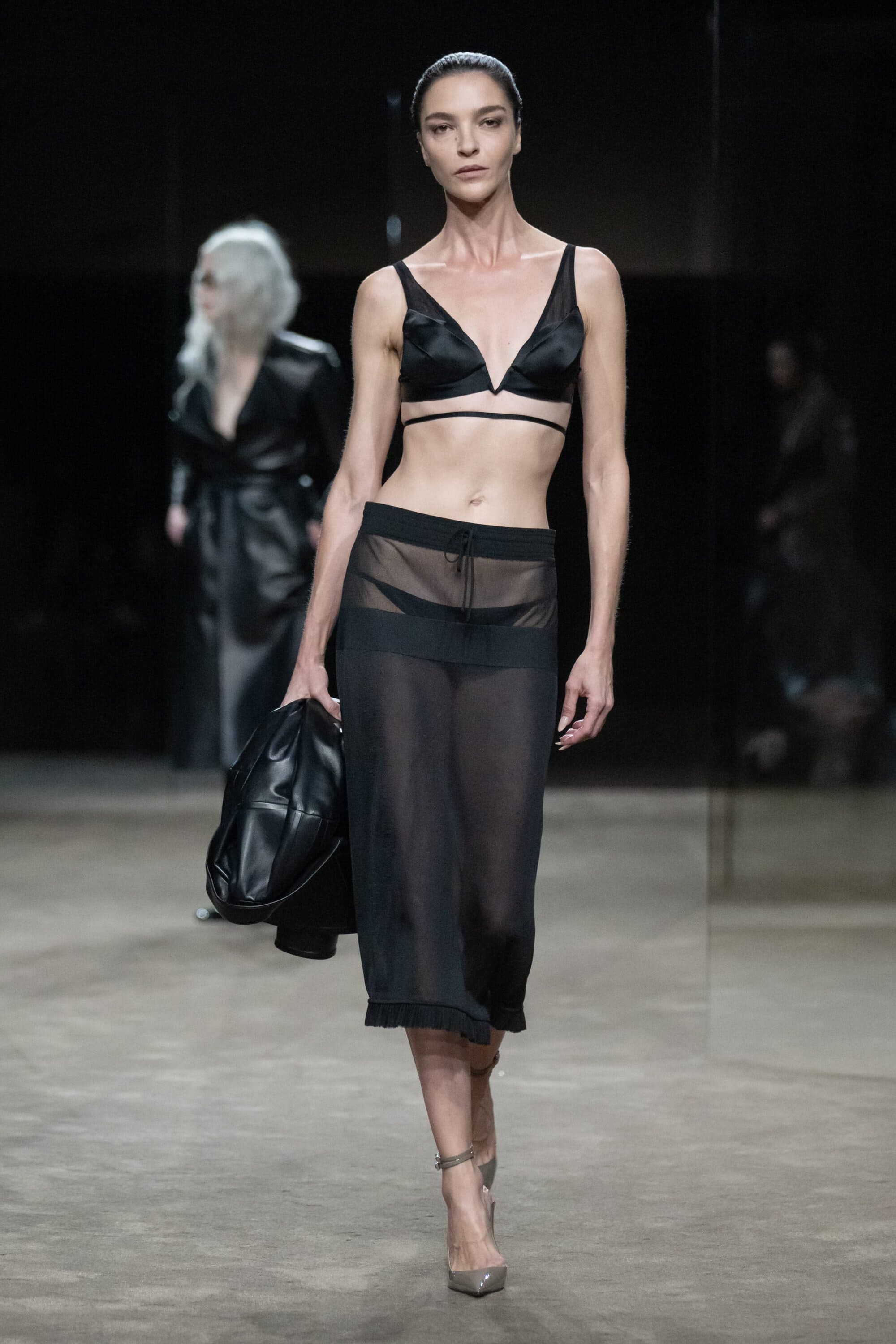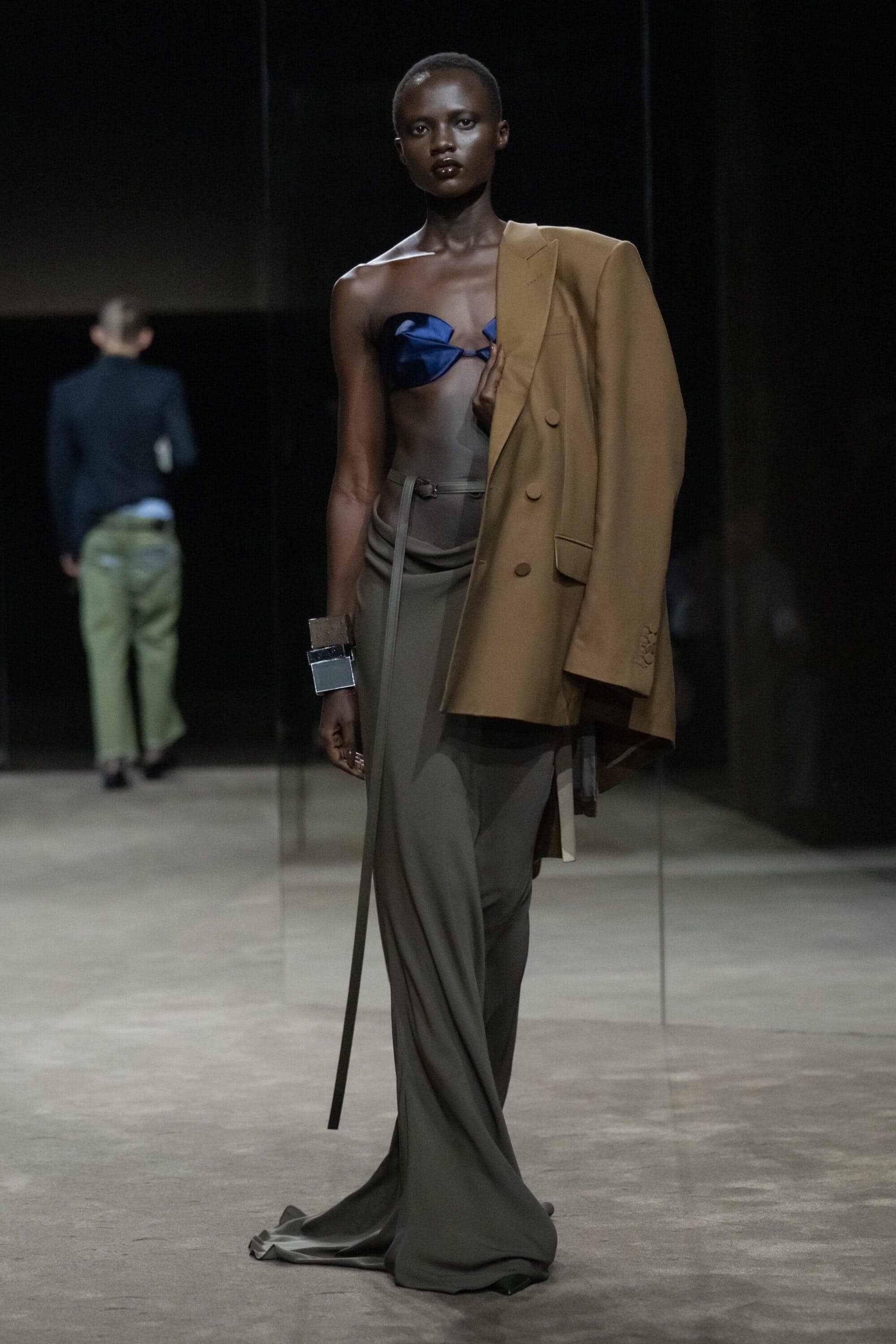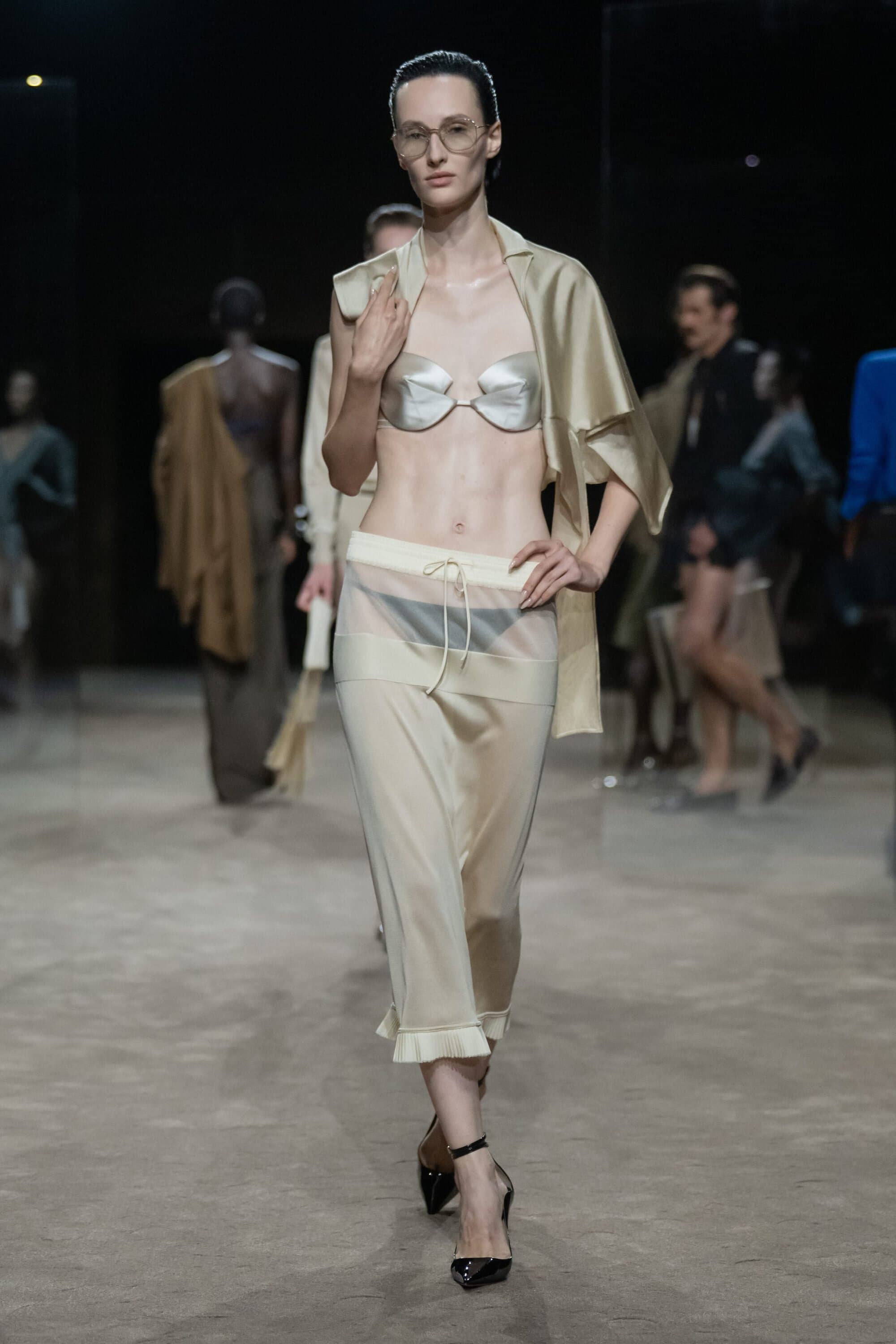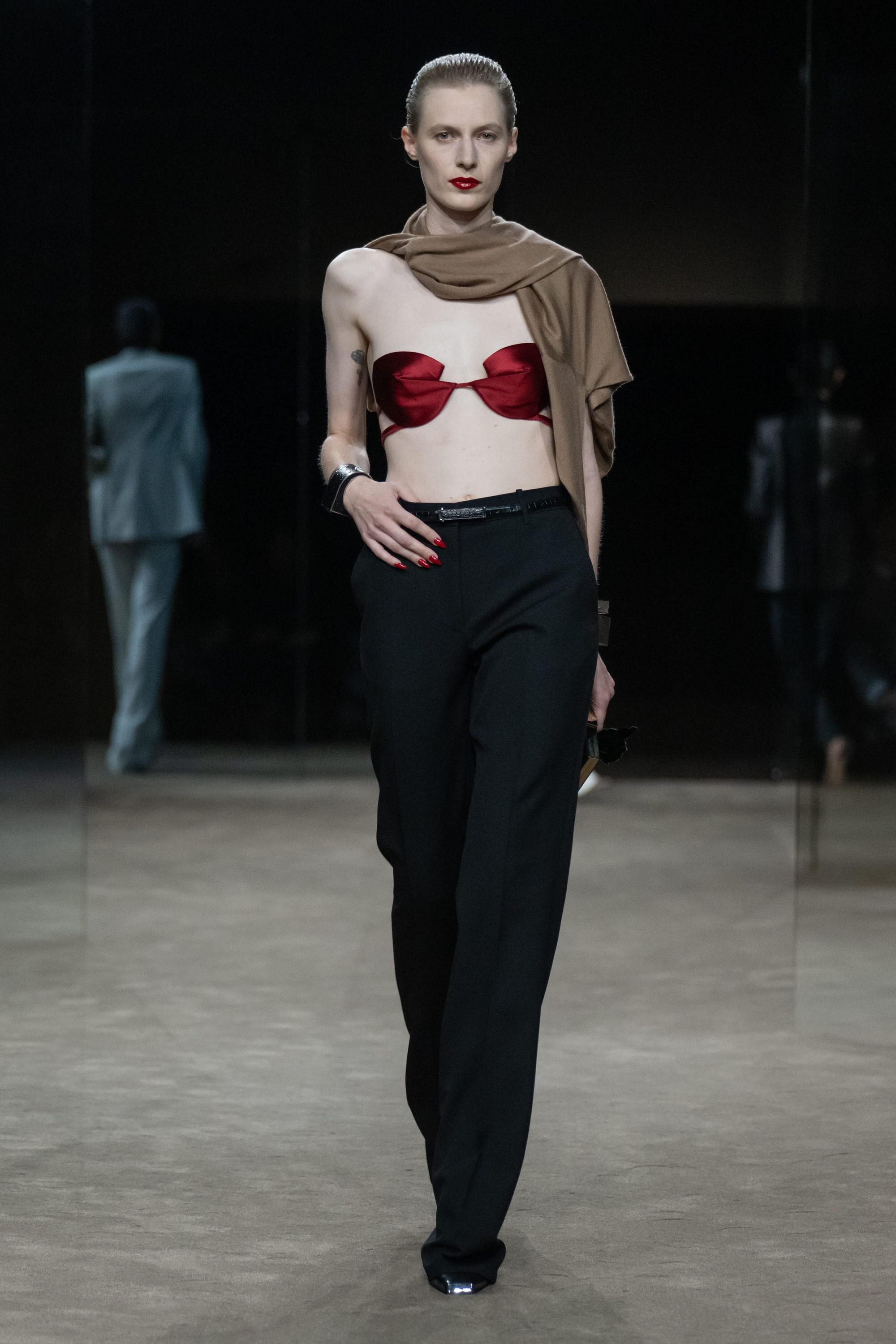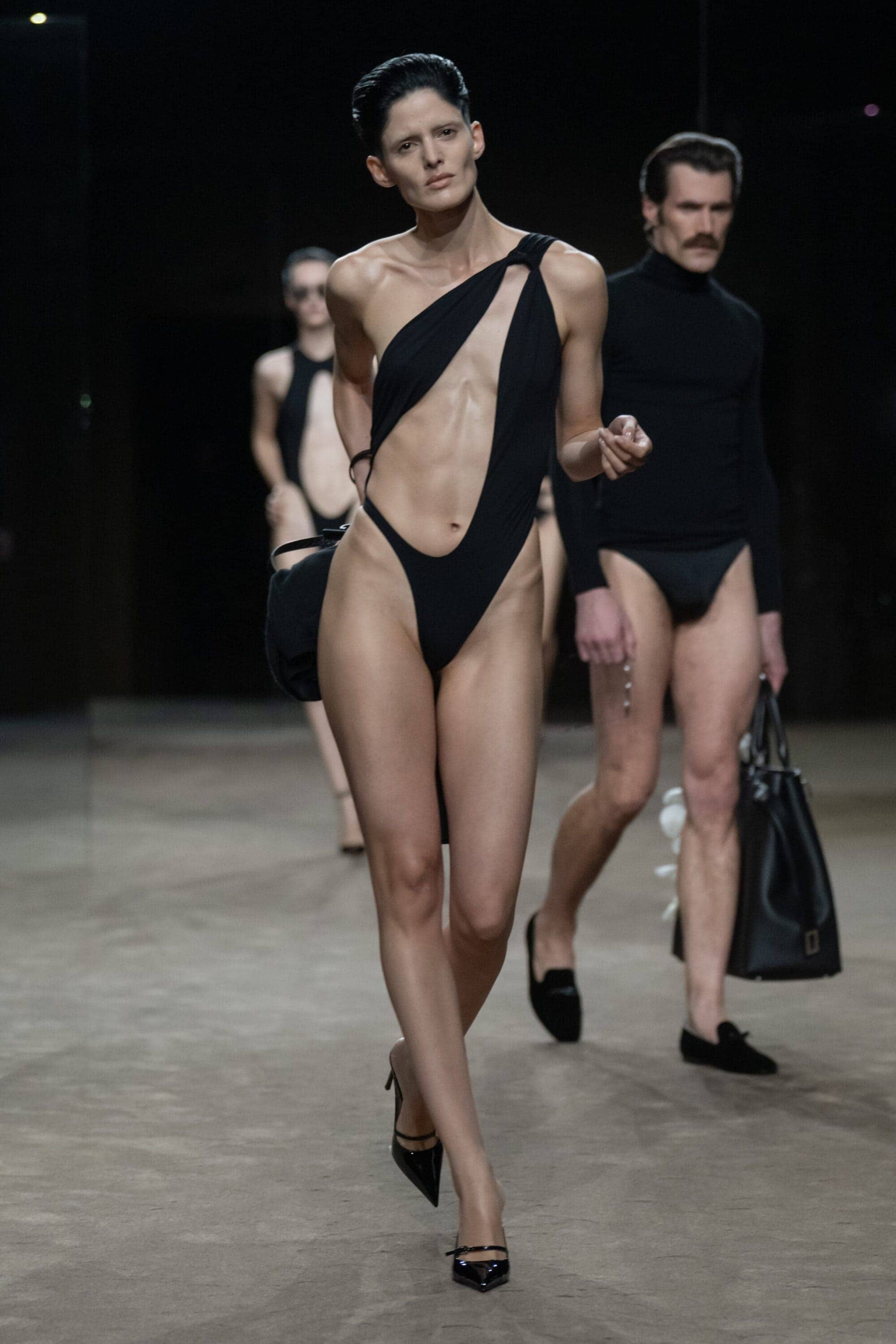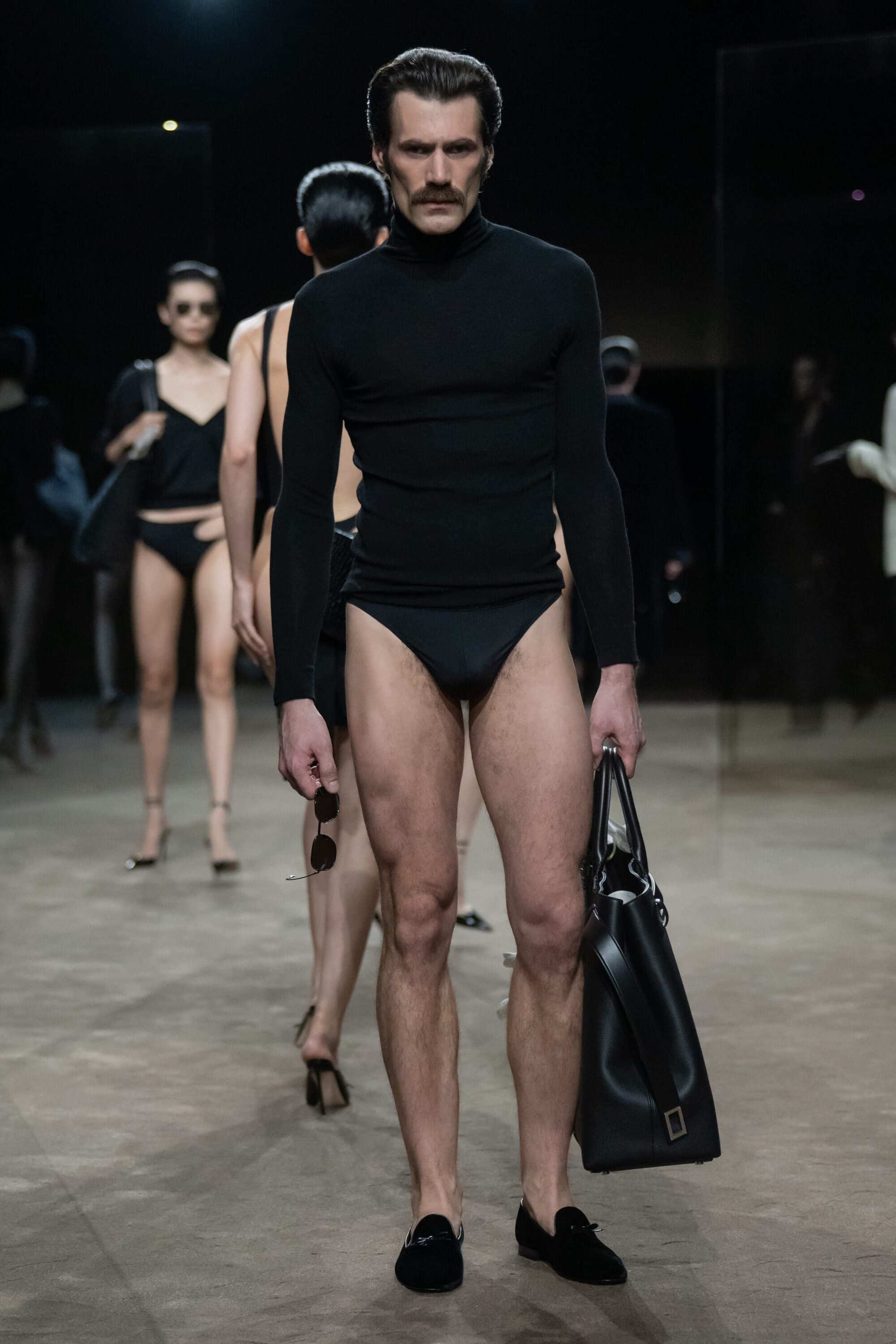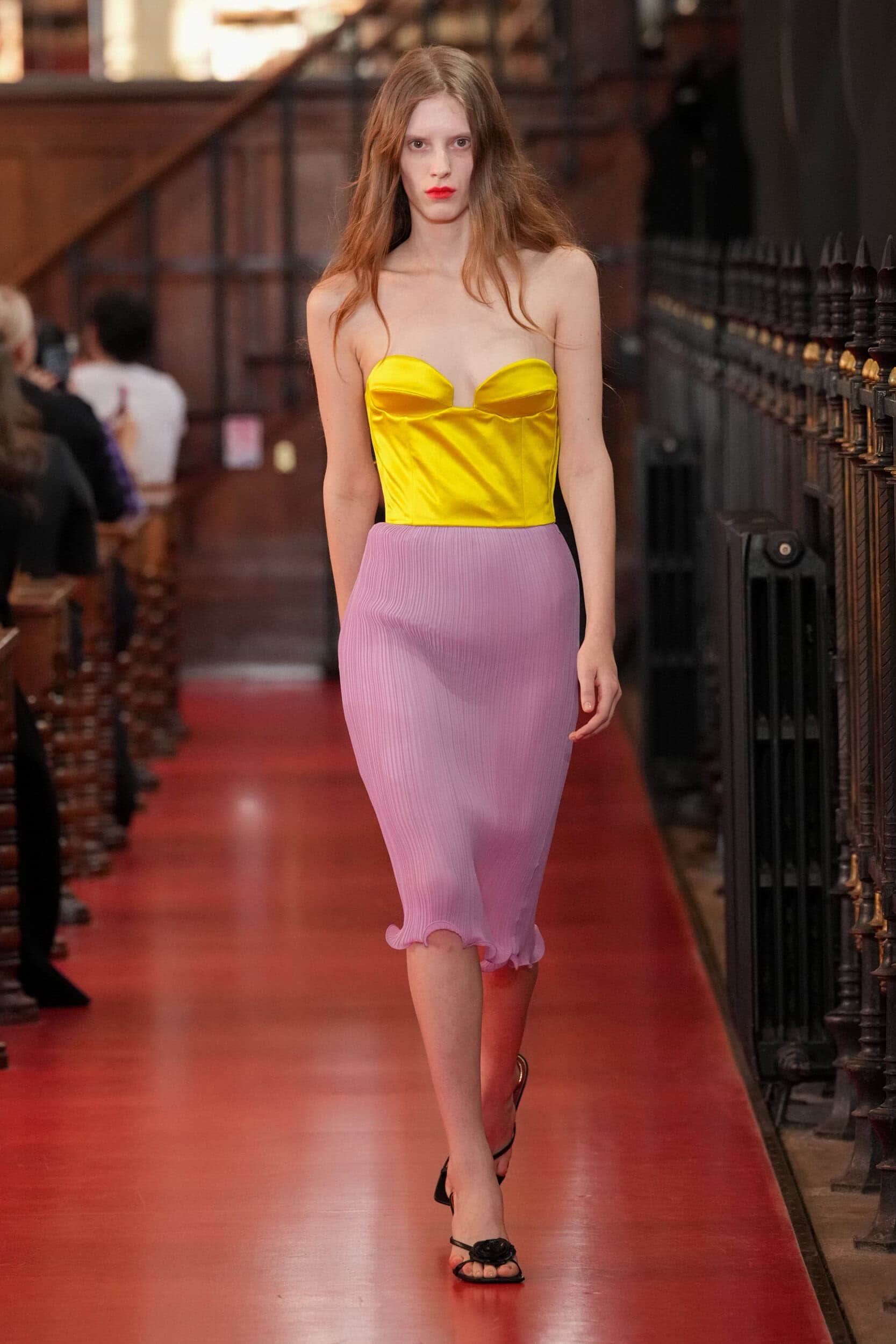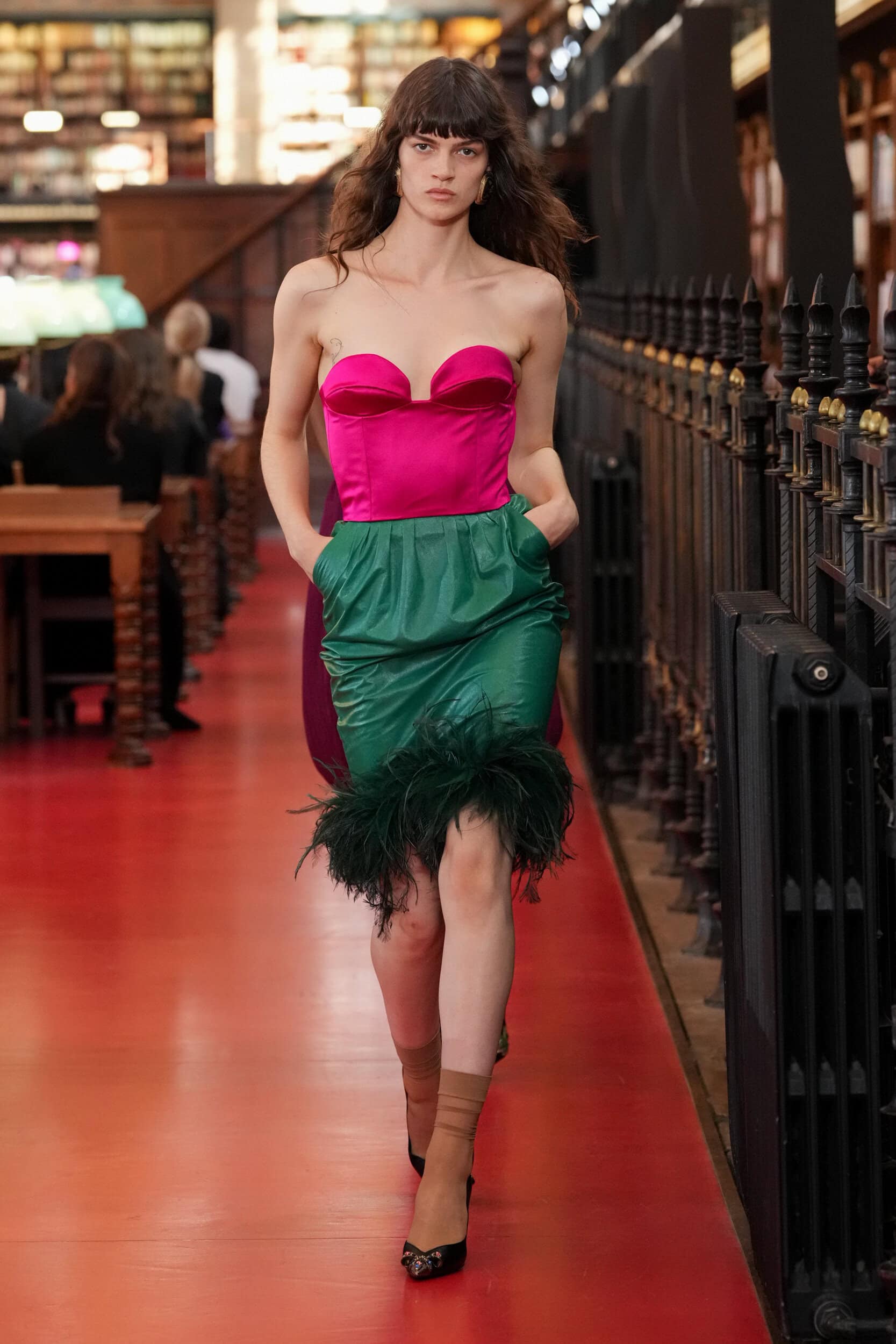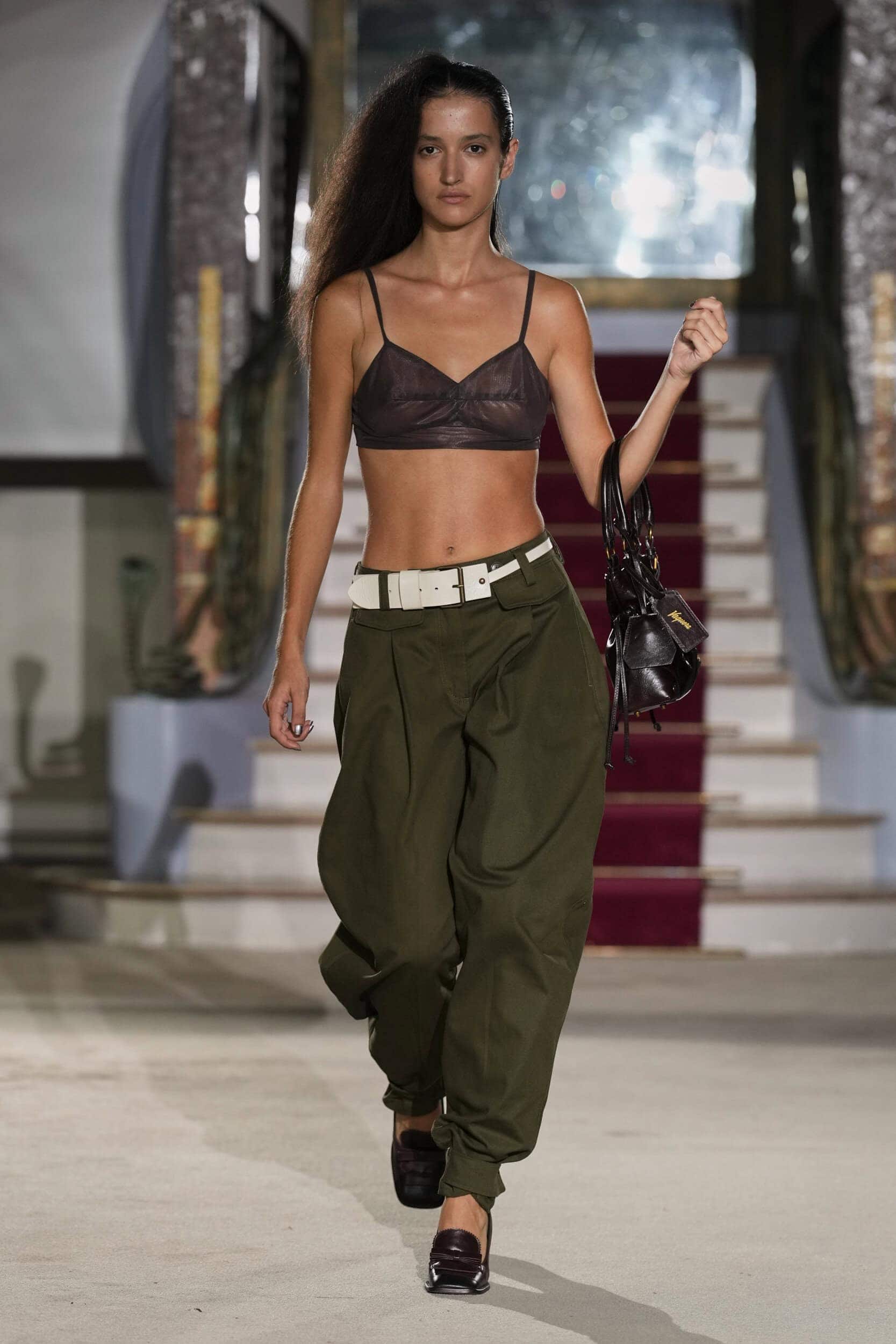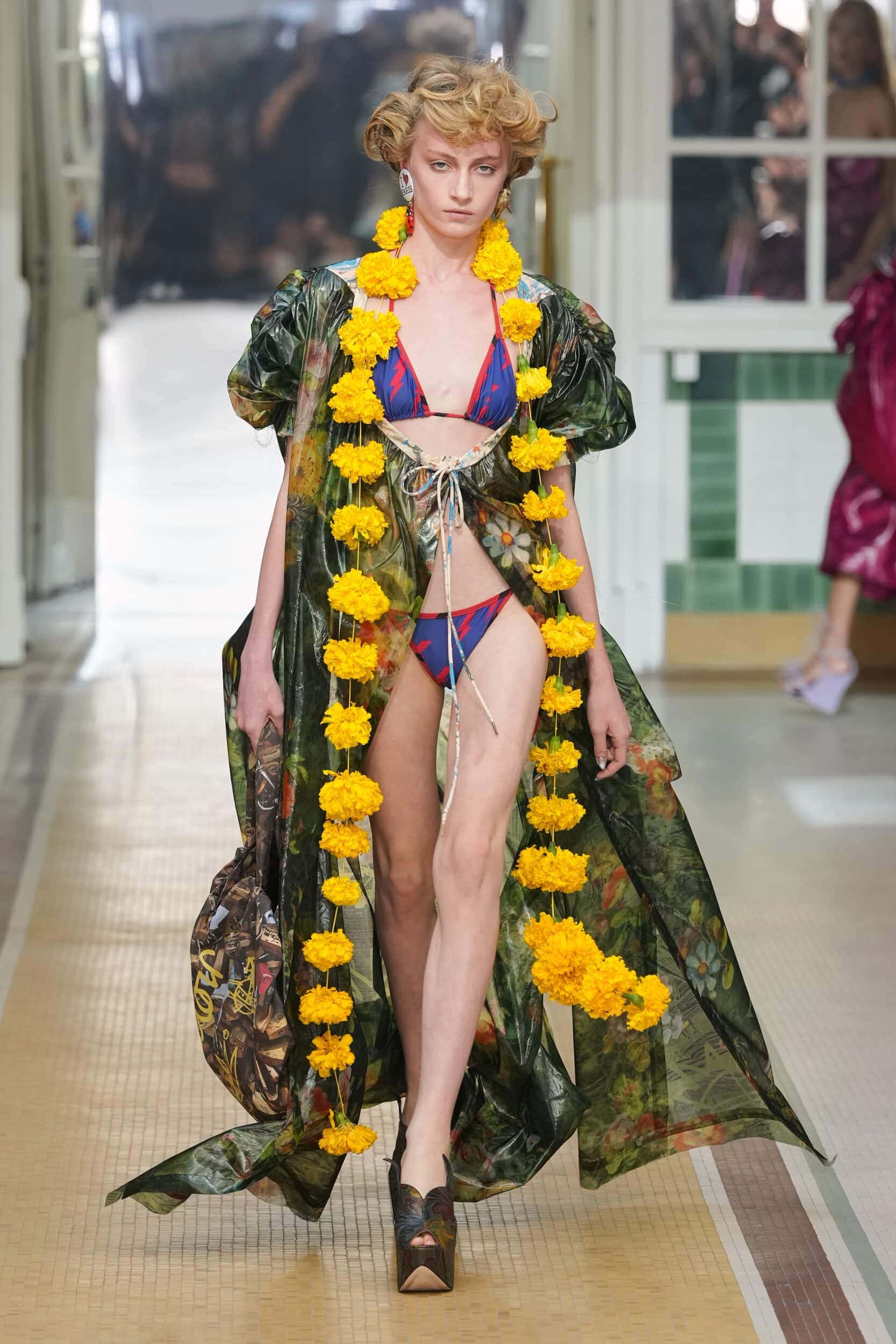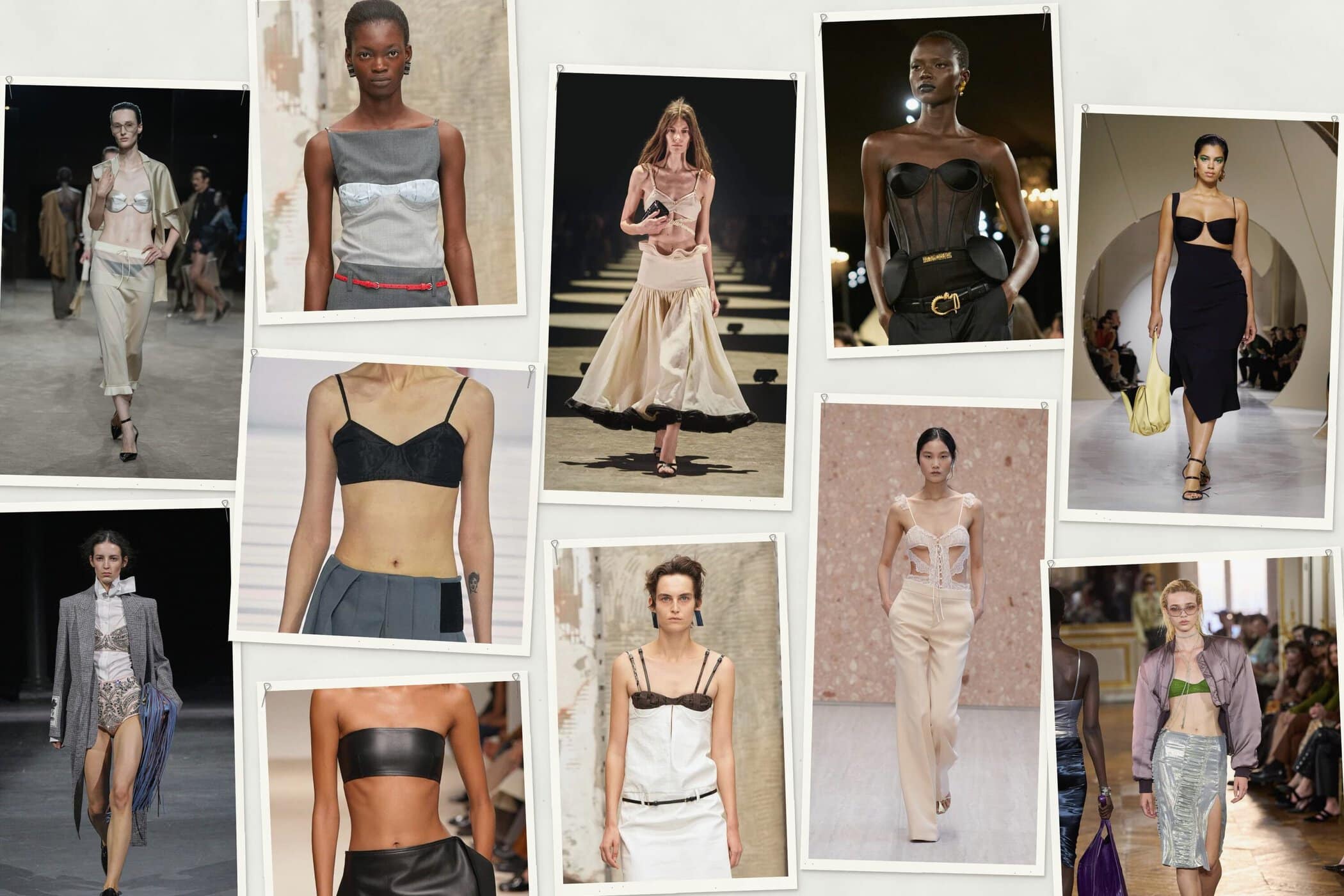
The bra top is hardly a new proposition, but its return for Spring 2027 suggests a shift in how designers are approaching the relationship between lingerie and everyday dressing. For decades, underwear as outerwear has derived much of its appeal from the tension between private and public, turning exposure into an act of provocation or liberation. This season, however, designers seemed less interested in making a statement than in allowing the garment to exist on its own terms.
Prada made perhaps the most compelling case for this reconsideration. Miuccia Prada and Raf Simons incorporated bra tops into looks built around skirts, placing something traditionally associated with intimacy alongside one of the most familiar elements of the wardrobe. The result was neither straightforwardly seductive nor entirely practical, and that ambiguity was precisely what made it interesting. Prada has always been particularly adept at finding tension between the conventional and the unexpected, and here that instinct challenged the notion that femininity must subscribe to any singular definition.
Elsewhere, Givenchy, Elie Saab, and Tom Ford offered distinctly different interpretations. At Givenchy, Sarah Burton explored the relationship between the body and the construction of clothing, while Elie Saab embraced the romantic delicacy of lingerie and Tom Ford leaned into its unapologetic sensuality. Together, these approaches demonstrated the expressive range of a seemingly simple garment.
There’s something particularly relevant about this multiplicity at a moment when women’s bodies remain subject to extraordinary cultural scrutiny, and when showing skin is so often interpreted as either an assertion of power or an invitation to judgment. Perhaps the more meaningful development isn’t the visibility of the bra itself, but the suggestion that revealing the body need not carry any prescribed meaning at all.