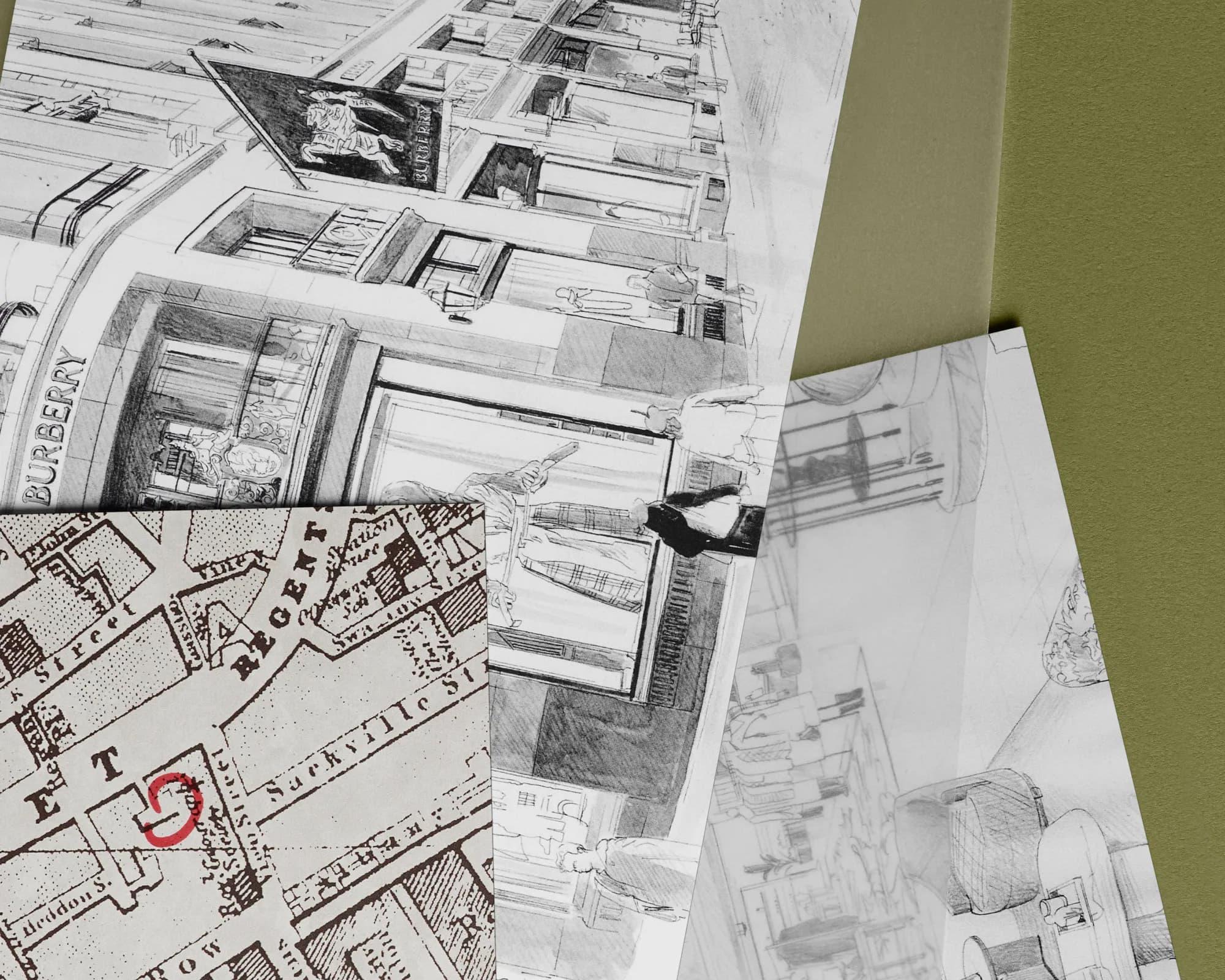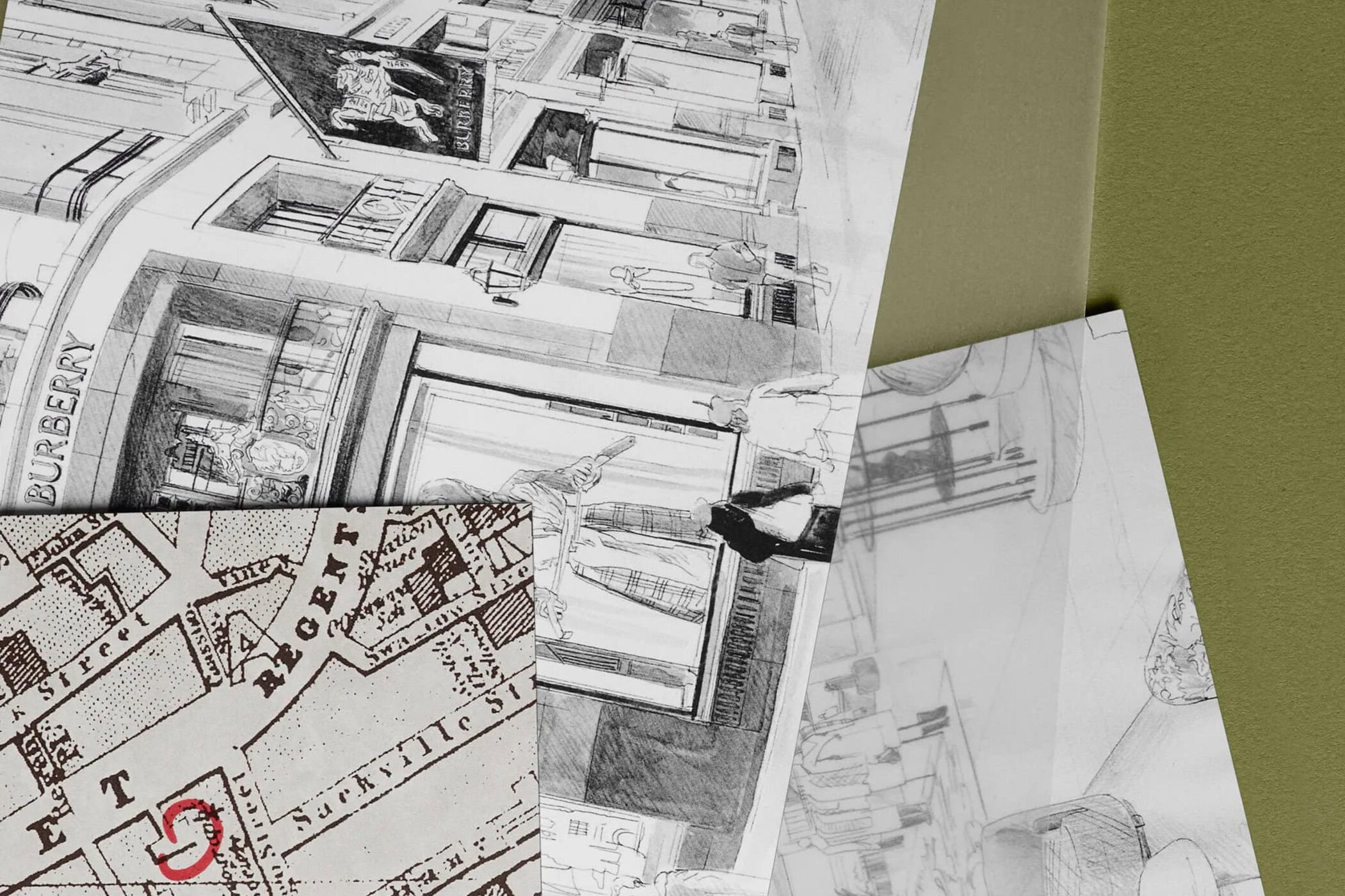
The London flagship will combine retail, archival exhibitions, hospitality and immersive experiences as part of a broader update to the brand’s global store design
Burberry will transform its Regent Street flagship in London into Burberry House, a destination combining retail, brand heritage, cultural programming and hospitality, with the grand opening scheduled for fall 2027. The project will introduce the Regent Concept, a new global retail design language developed with interior designer Peter Mikic, as the British luxury house expands the role of its stores beyond traditional shopping.
The redesign will bring together Burberry’s collections, archival materials, artwork and client services within an environment inspired by the character of a British home. The concept combines traditional craftsmanship with contemporary design and individual furnishings, using a more intimate approach to retail. Burberry Chief Executive Officer Joshua Schulman said the restoration would create “a place of discovery and inspiration,” bringing experiential, archival and hospitality elements together under one roof.
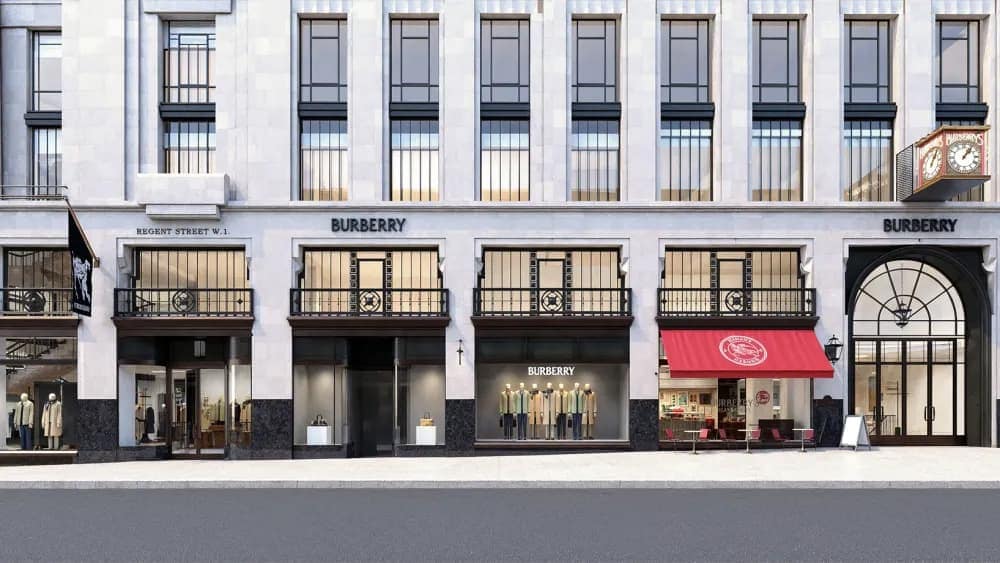
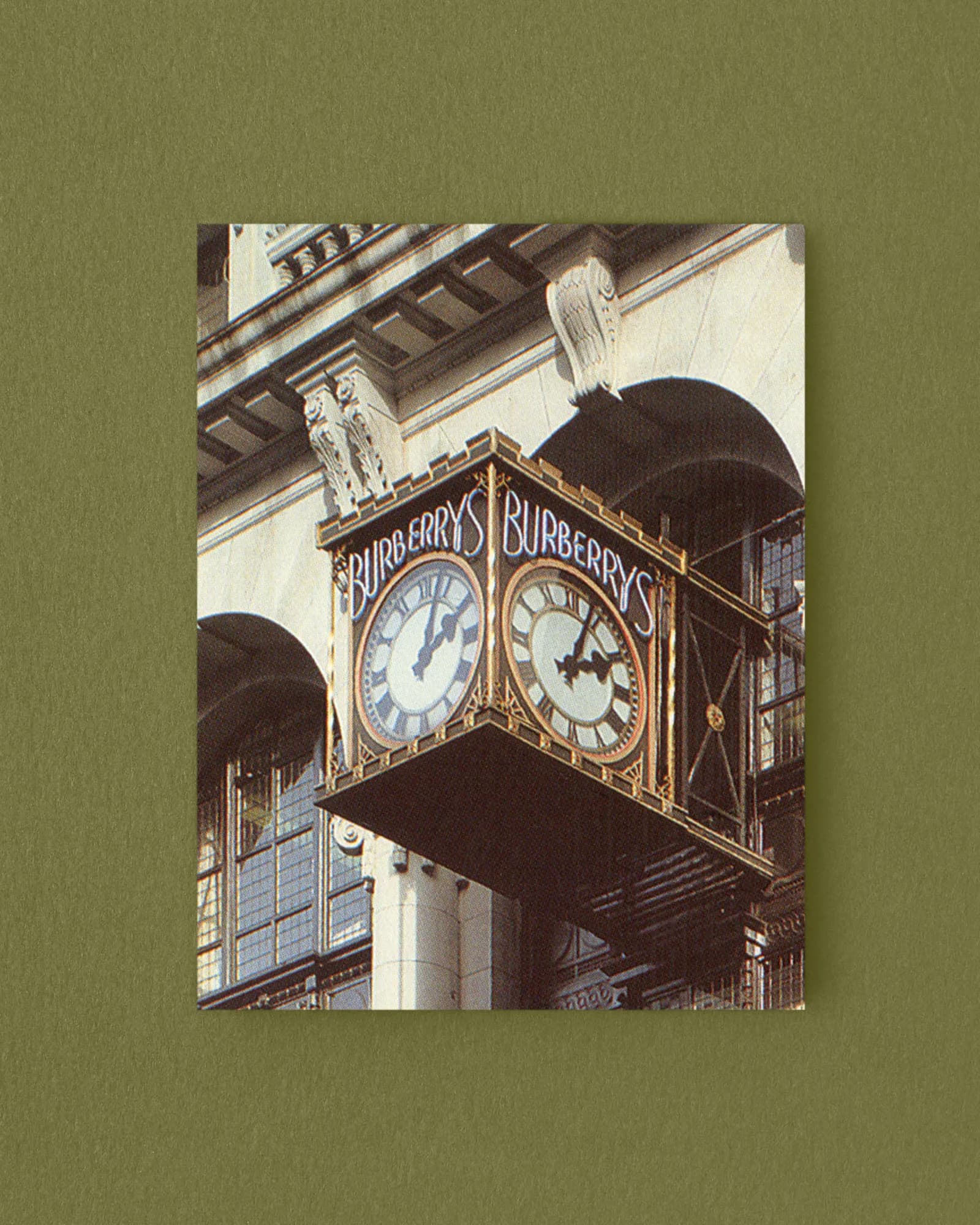
A central feature of the project will be the return of the historic “Burberrys” clock, which stood outside the brand’s former Haymarket headquarters and store for decades. Made from cast iron, opal glass and decorative gold leaf, the timepiece combines Victorian and late-1930s design elements and has been restored by specialist horologists. It was most recently displayed in the lobby of Burberry’s Horseferry House headquarters in Westminster.
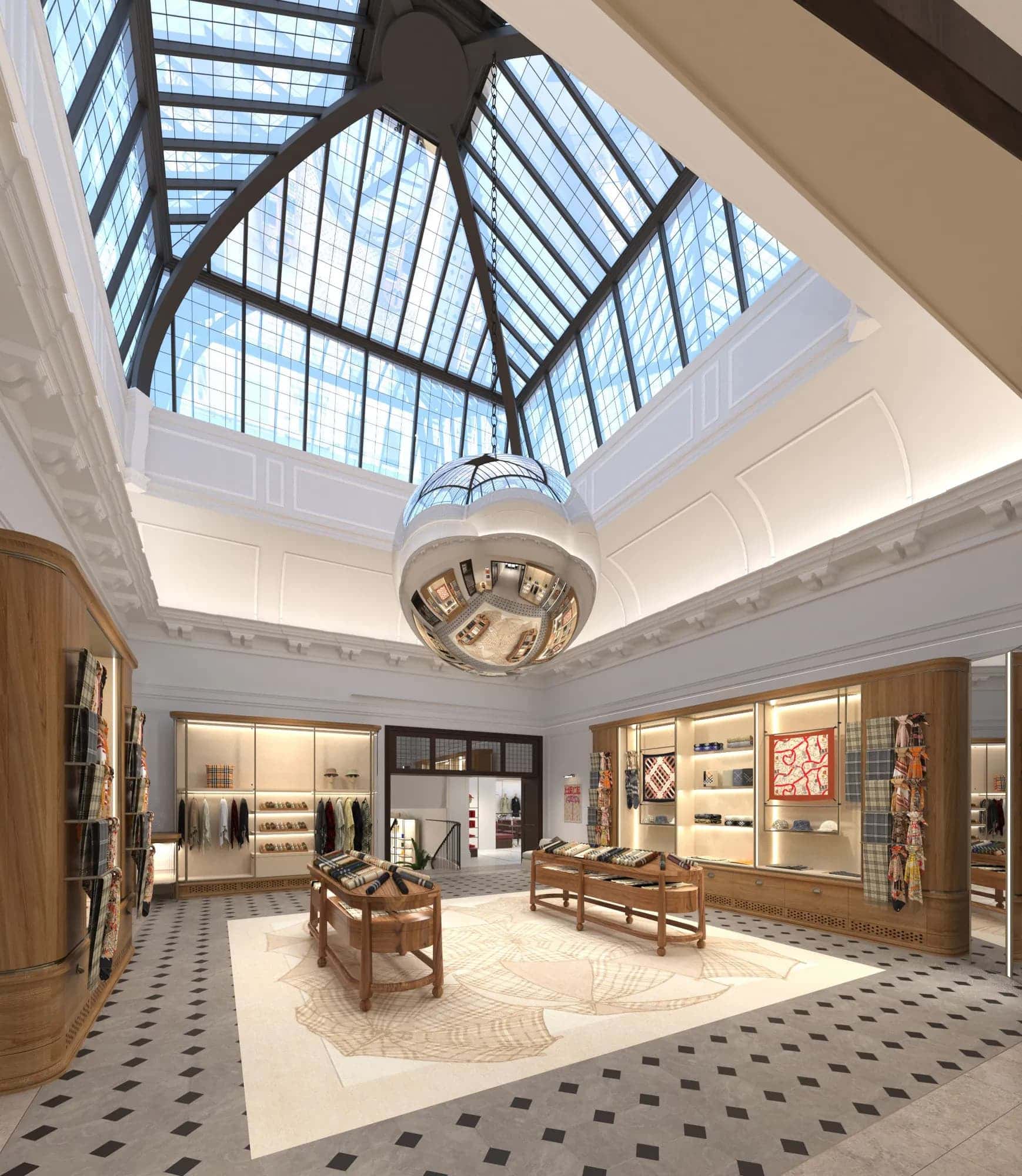
The flagship’s interiors will incorporate references to the brand’s British identity and product heritage. An earth-toned palette will draw on the English countryside and the beige associated with Burberry’s trenchcoat, while accents of the red “raker” line from its signature check will appear throughout the store. Timber chevron floors will reference the twill weave of gabardine, and bespoke rugs will reinterpret prints from the brand’s scarf archive. The entrance dome will also be restored to recreate its golden appearance from the 1920s, when the building operated as a cinema.
Dedicated spaces will give greater prominence to Burberry’s craftsmanship and history. The Trench Arcade will showcase the house’s signature outerwear, including heritage and seasonal designs, alongside bespoke trench services for restoration, preservation and personalization. On the mezzanine, the 1856 Gallery will present rotating exhibitions of archival designs and objects tracing the brand’s development, from its invention of gabardine to the evolution of the trenchcoat. Private areas, including the Drawing Room, will accommodate client appointments, personalized products and specialist aftercare.
The store will also include a children’s department, Knight’s Tale, whose castle-inspired furnishings and oversized Thomas Bear reflect a more playful interpretation of British heritage. A Tea & Coffee offering will introduce light meals based on traditional British favorites, extending the flagship’s hospitality proposition. Artworks and distinctive objects placed throughout the building will further connect the retail environment with British creativity and the arts.
The Regent Concept will be introduced in phases across Burberry’s international retail network, establishing a consistent design framework while allowing individual locations to respond to their architecture and local character. The Regent Street restoration will likewise proceed in stages, with the flagship remaining open to customers during construction.
Located at 121 Regent Street, the Grade II-listed building was originally designed in the early 19th century for the Prince Regent and has served as an art gallery, cinema and theater. Burberry moved its London flagship there in 2012 after nearly a century on Haymarket. The redevelopment places the historic site at the center of the brand’s retail strategy, using its archive, services and cultural identity to create a destination that extends beyond product sales.