The Desire Question
Review of Proenza Schouler Spring 2027 Fashion Show
By Mackenzie Richard Zuckerman
Rachel Scott’s Spring 2027 collection for Proenza Schouler feels like the work of a designer beginning to settle into the house. Now into her second full collection developed as creative director, Scott appears increasingly comfortable with the vocabulary she inherited: cerebral construction, material experimentation, sophisticated femininity, and that particular balance of polish and rawness that has long given Proenza its edge. What stood out here was the ease with which she spoke that language. The collection felt recognizably Proenza while allowing glimpses of Scott’s own hand to surface through craft, texture, and a more tactile relationship with the body.
That fluency is an achievement, especially for a label whose identity spent more than two decades intertwined with its founders. With Jack McCollough and Lazaro Hernandez now beginning a highly visible chapter at Loewe, Proenza occupies an unusually interesting position. Their continued prominence brings renewed attention to the design culture they built in New York, while Scott has the opportunity to demonstrate how that culture can evolve beyond its founding generation. Her task involves continuity, authorship, and eventually a reason for audiences to desire Proenza with renewed urgency.
And desire feels like the more consequential question now. Scott has already shown that she understands the intelligence of the house. Spring 2027 confirms that compatibility with increasing confidence. In a market crowded with sophisticated, design-conscious womenswear, however, fluency alone only takes a brand so far. Once a creative director has proven she understands a house’s language, what transforms that fluency into desire?
THE COLLECTION
THE VIBE
Fluency Into Authorship · Crafted Femininity · The Desire Question
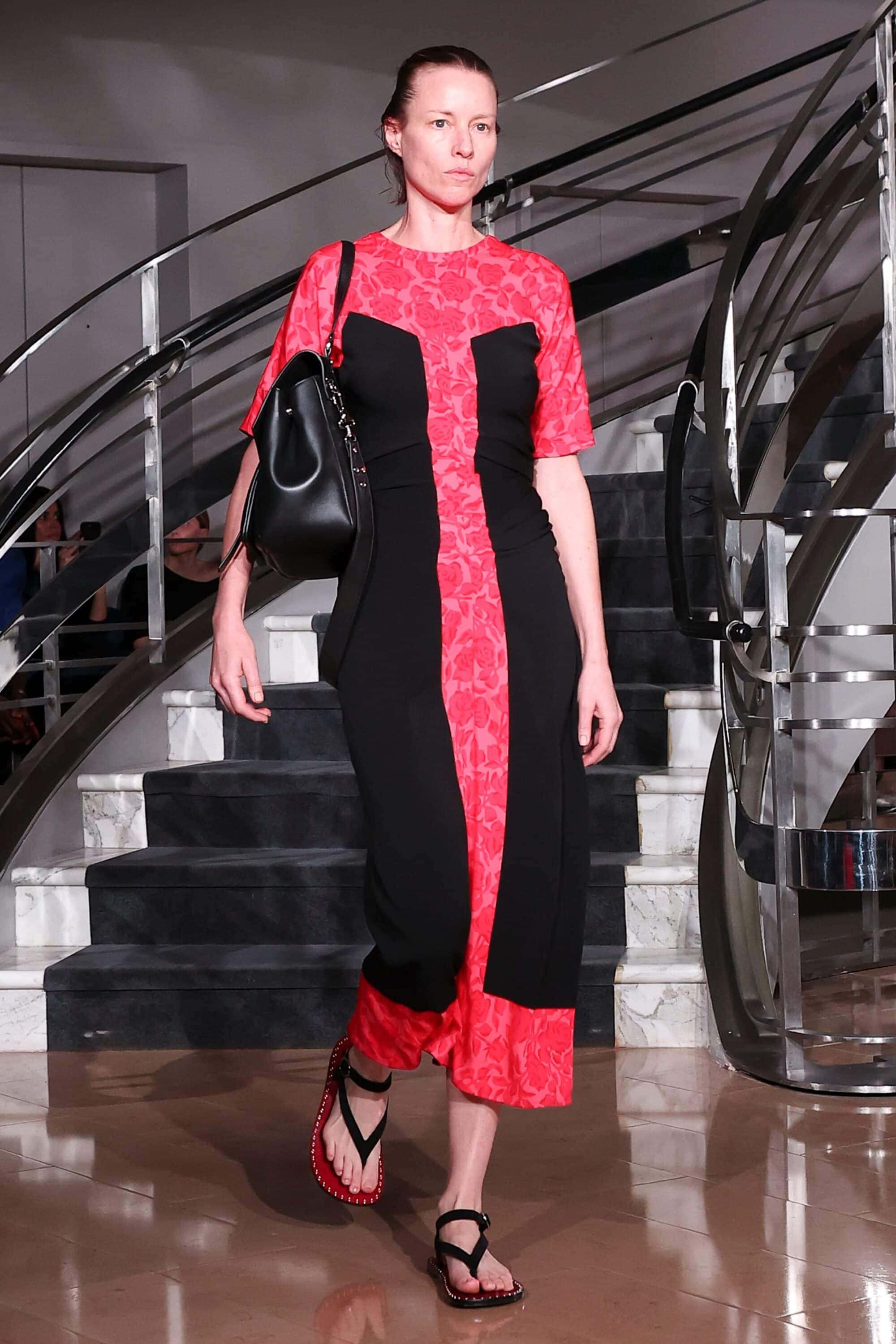
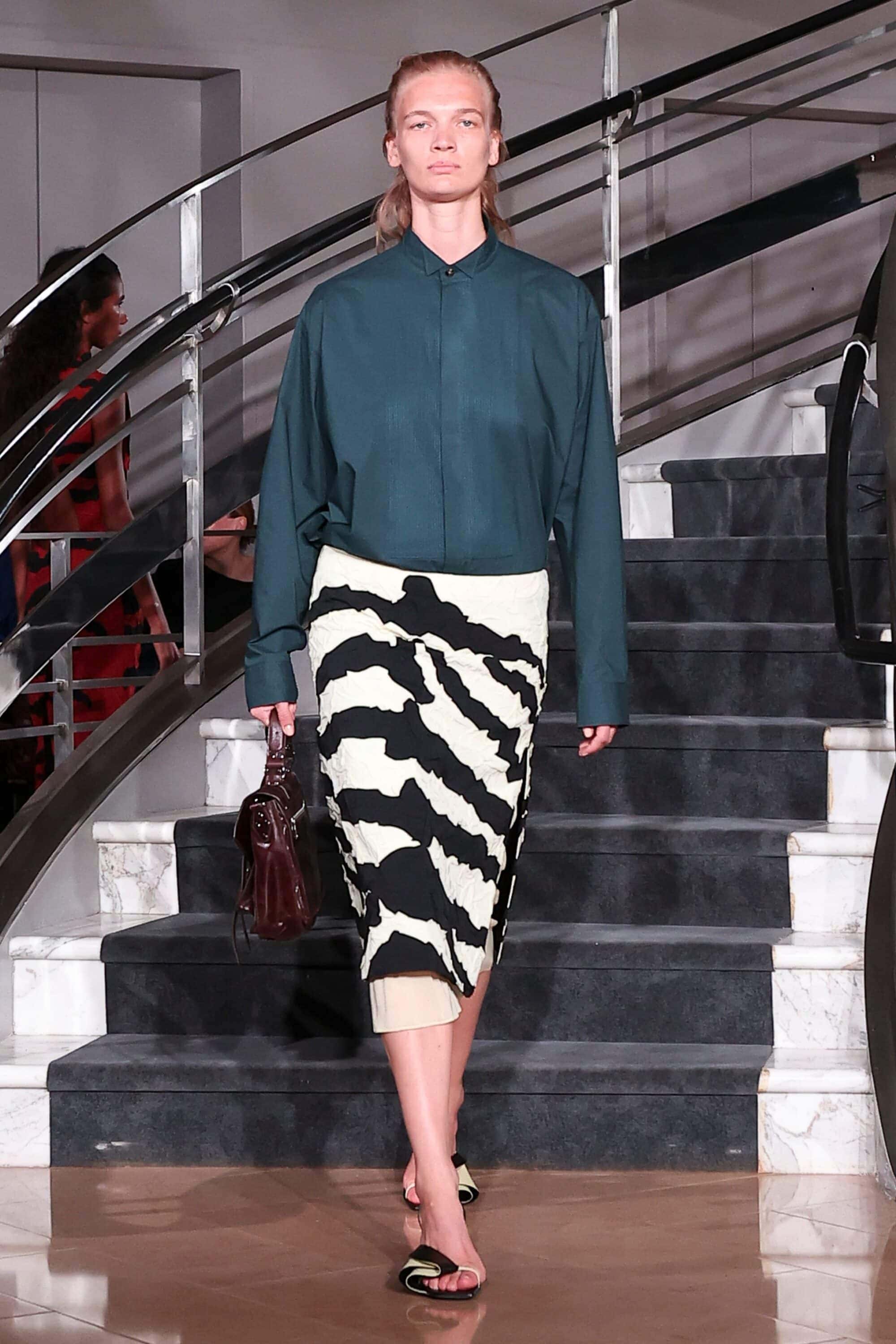
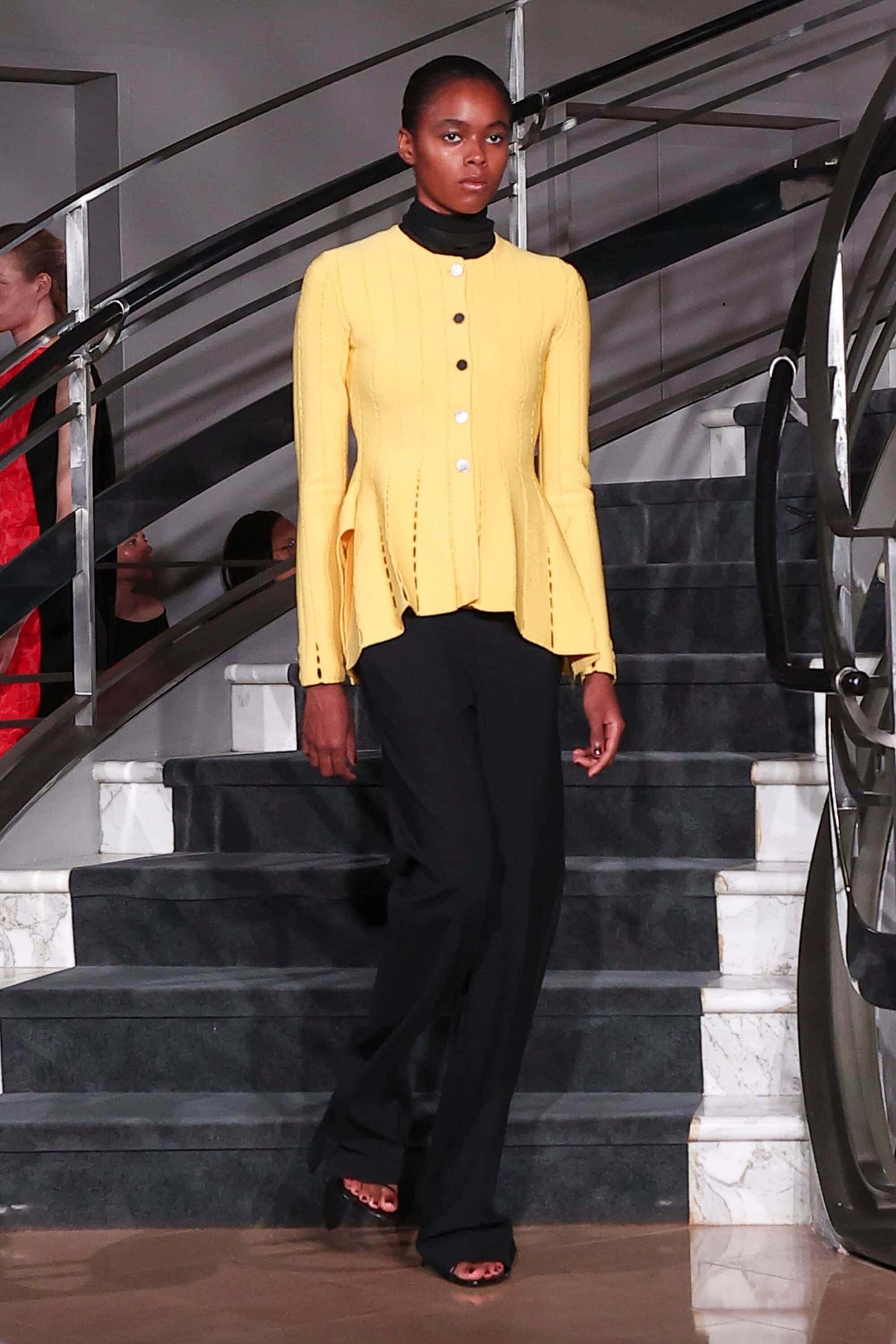
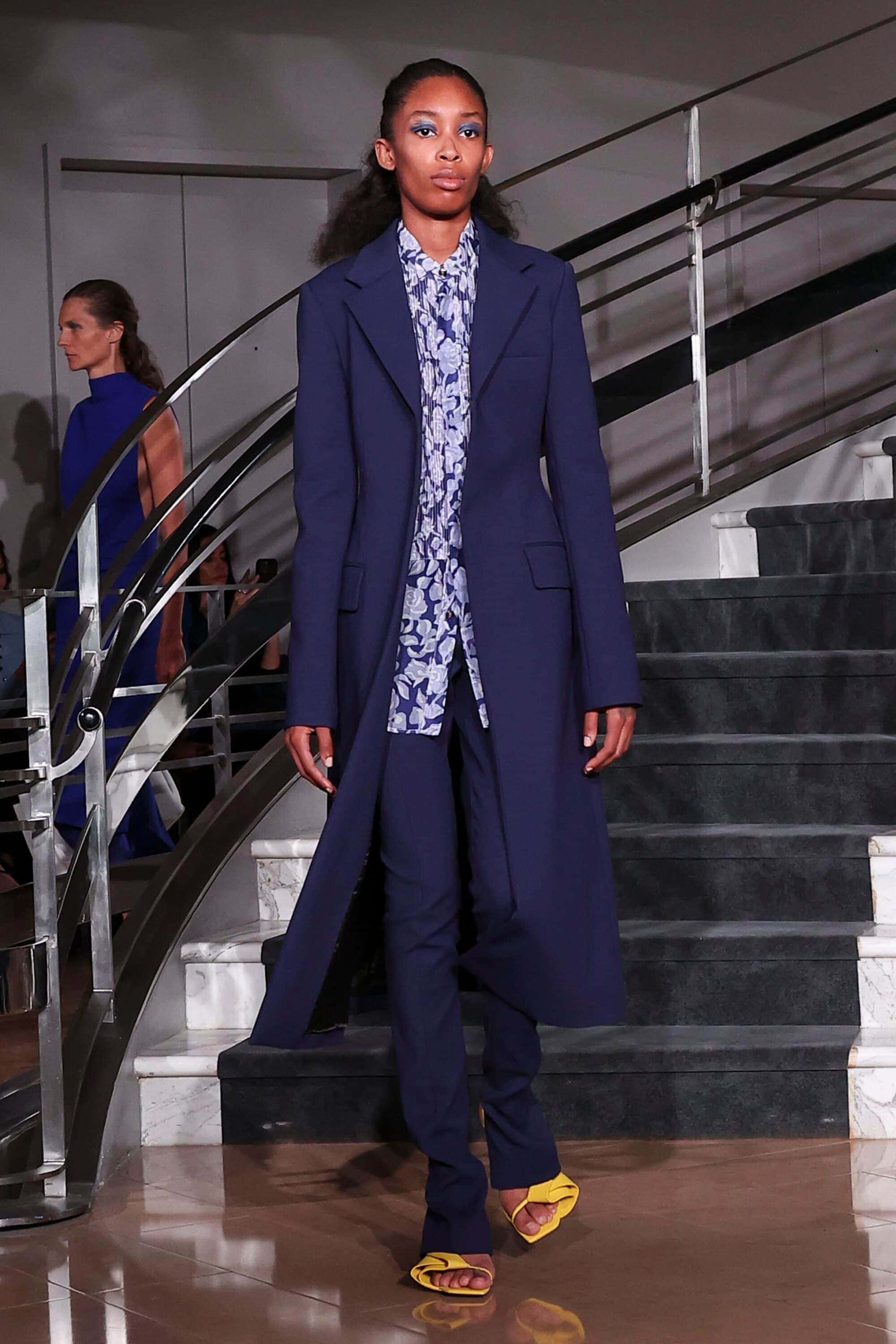
Scott began with the freedom of New York dressing, where categories collapse easily and instinct often overrides convention. That idea manifested through clothes responsive to the women inside them. Cowling softened sharper lines, rounded hips interrupted linear silhouettes, and seaming followed the female form. Knits twisted around the body; pointelle opened into angular shapes; stripes curled and shifted across silhouettes. The collection remained cerebral while gaining sensuality through movement, with precision deliberately loosened around the edges.
That balance between polish and rawness is where Scott appears particularly at home. Proenza has always found energy in tensions between finish and experimentation, and Scott brings a slightly different tactile intelligence to that proposition. Her own work at Diotima has made craft central to her design process, and here that instinct entered in measured doses. Handwork and irregularity softened the collection’s sophistication without diminishing its rigor.
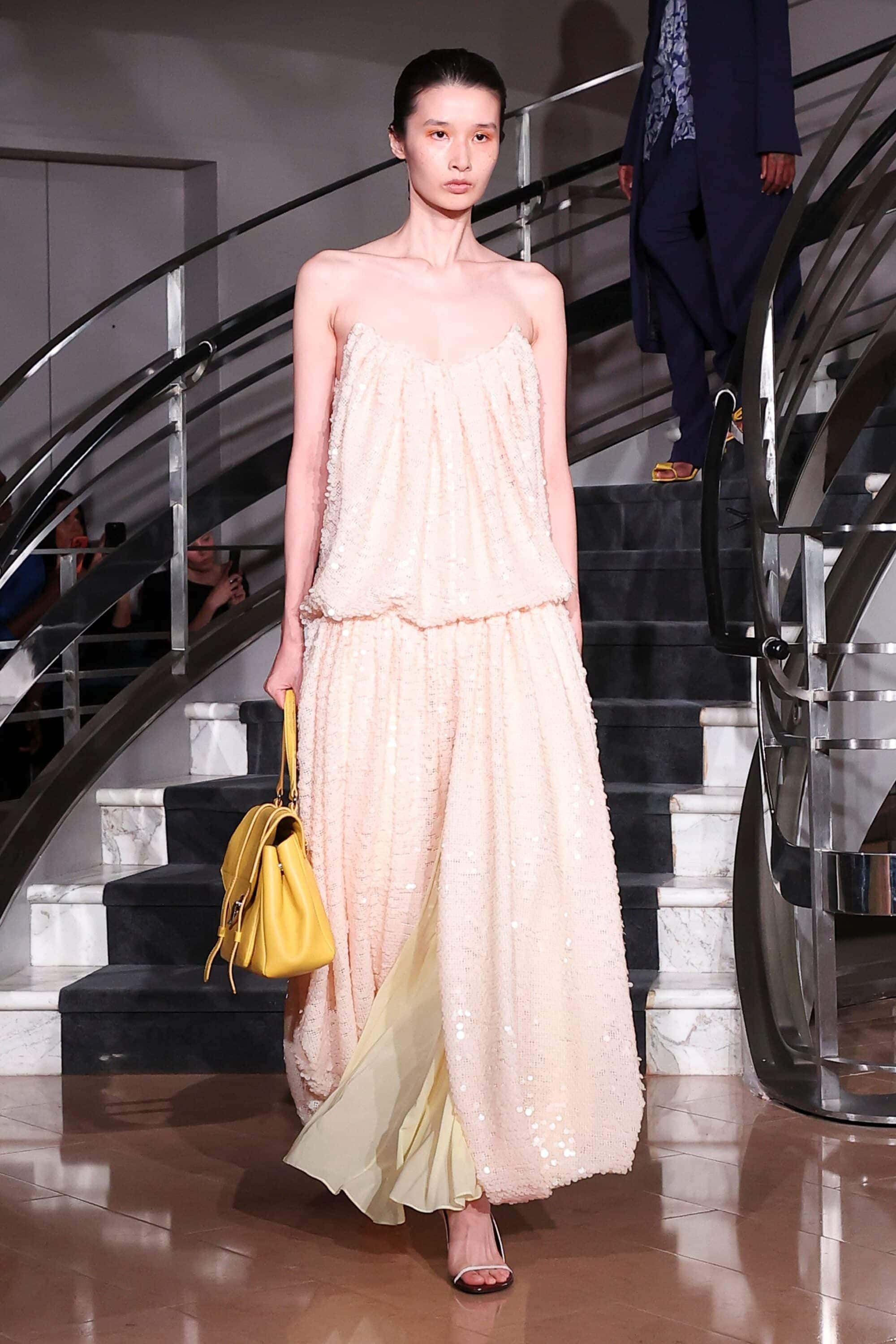
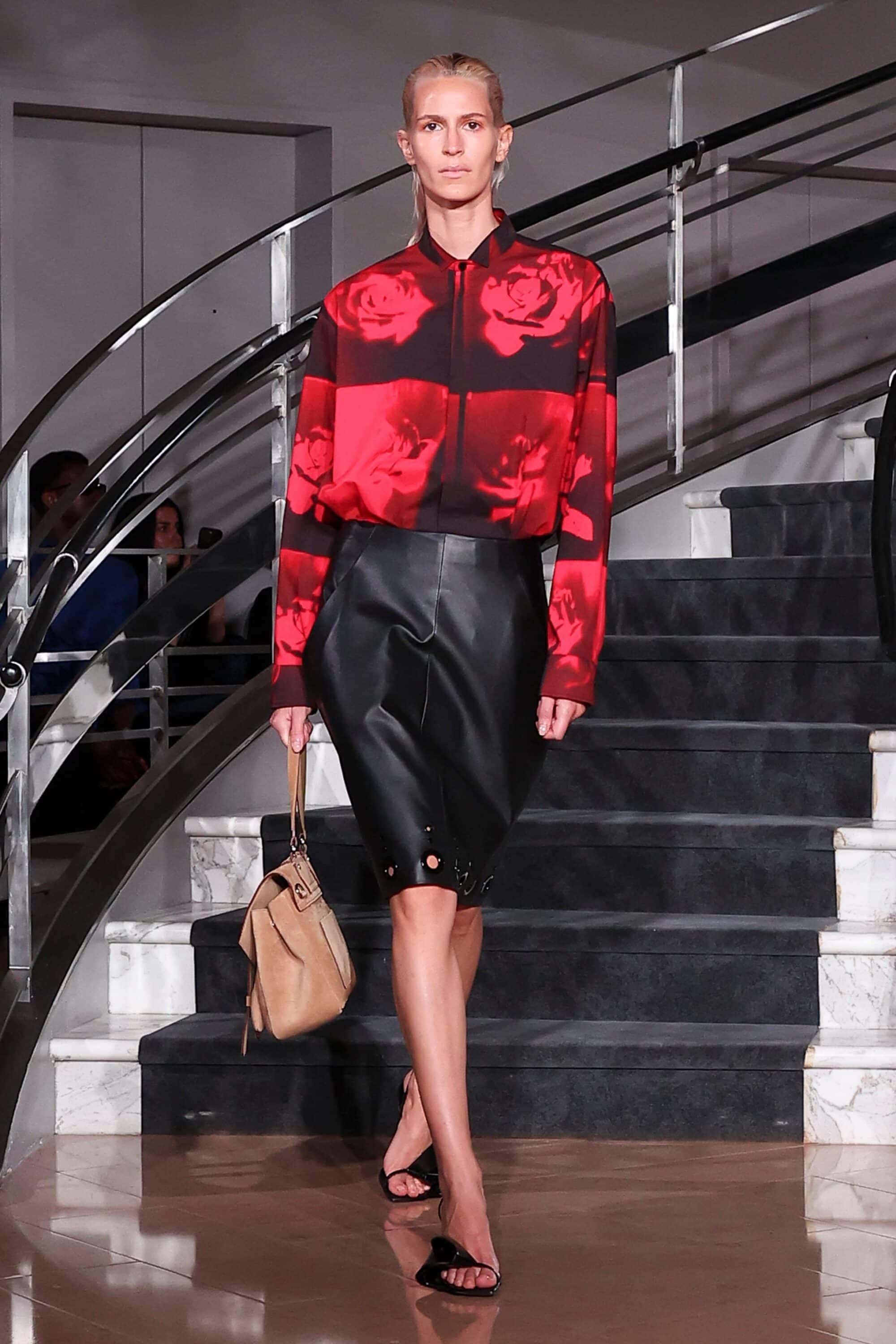
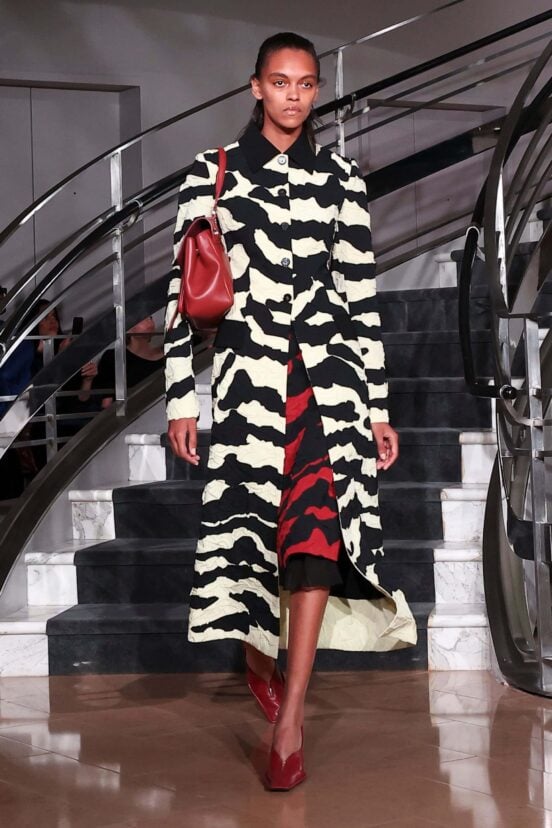
Pattern became one of the season’s most persuasive tools. Tigers moved through silk plissé, hand-knit intarsia, and sequined tufting, lending an almost feral energy to otherwise controlled forms. Roses shifted between political symbol and decorative motif through manipulated cyanotypes and pigment printing. Even denim became a canvas for archival garment-printing techniques. Pattern served as more than visual interruption; it gave Scott a way to bring another register of emotion and craft into Proenza’s traditionally controlled design language.
The strongest pieces lived somewhere within that convergence. Structure remained apparent, though surfaces became richer and more unpredictable. Feminine shapes carried an irregularity that kept them from becoming overly polished. Craft existed within a sophisticated urban wardrobe rather than standing apart as an artisanal gesture. That blending is important because Scott’s Proenza currently works best when it becomes difficult to identify exactly where the inherited language ends and her own instincts begin.
The accessories offered perhaps the clearest example of how that evolution can work. Scott’s PS1 Walker softened and rounded one of Proenza’s most recognizable signatures while preserving enough of its identity to remain immediately legible. It is a relatively simple intervention, yet strategically revealing: heritage is treated as material available for adjustment rather than something frozen in place. The same approach could become increasingly significant across the ready-to-wear as Scott develops a clearer set of signatures for her tenure.

THE WRAP UP
Spring 2027 makes a strong case for the creative compatibility between Rachel Scott and Proenza Schouler. She understands the intelligence of the house, its fascination with construction and material complexity, and its particular way of making femininity feel considered and cerebral. Her own sensibility enters most convincingly through craft and tactility, where handwork, pattern, and irregular surfaces give familiar Proenza ideas a different pulse. The succession now feels credible; the more interesting question concerns how far Scott intends to take it.
The risk lies in how comfortably the collection inhabits territory Proenza already understands. This is an increasingly saturated part of the market, filled with sophisticated clothes for women who value design intelligence, strong fabrication, and understated distinction. Scott offered plenty to admire. Immediate necessity was more elusive. There were strong clothes, intriguing surfaces, and pieces an existing customer could easily imagine folding into her wardrobe. Fewer moments seemed poised to become new cultural shorthand for the house.
That distinction matters in luxury. Intellectual credibility can sustain admiration; desire asks for another degree of specificity. Scott now has the opportunity to establish the silhouette, fabrication, accessory, or image that makes this period of Proenza instantly identifiable. The PS1 Walker provides one clue: take something the house already owns, understand why it matters, and move it far enough forward that familiarity acquires fresh urgency.
There is also unusual opportunity in Proenza’s current position within American fashion. McCollough and Hernandez’s ascent at Loewe reinforces the significance of the label they created, while Scott can prove that Proenza’s design authority has a life beyond its founders. That demands products, silhouettes, and ideas with gravitational pull of their own. The broader achievement would be transforming Proenza from an important founder-led label into an American house capable of sustaining distinct creative chapters.
Scott has already demonstrated that she can speak Proenza fluently. Spring 2027 suggests she is becoming increasingly comfortable with her accent. The next stage will depend on how confidently she allows it to grow louder. For a house whose credibility is already established, the next measure of progress may be more precise: what will make this new chapter not only intelligent, but unmistakable?