A Compass Set To Quiet Luxury
Review of Dior ‘New Rose des Vents’ 2026 Ad Campaign with Photographer Alasdair McLellan with models Mia Goth, Ever Anderson, Sophie Wilde
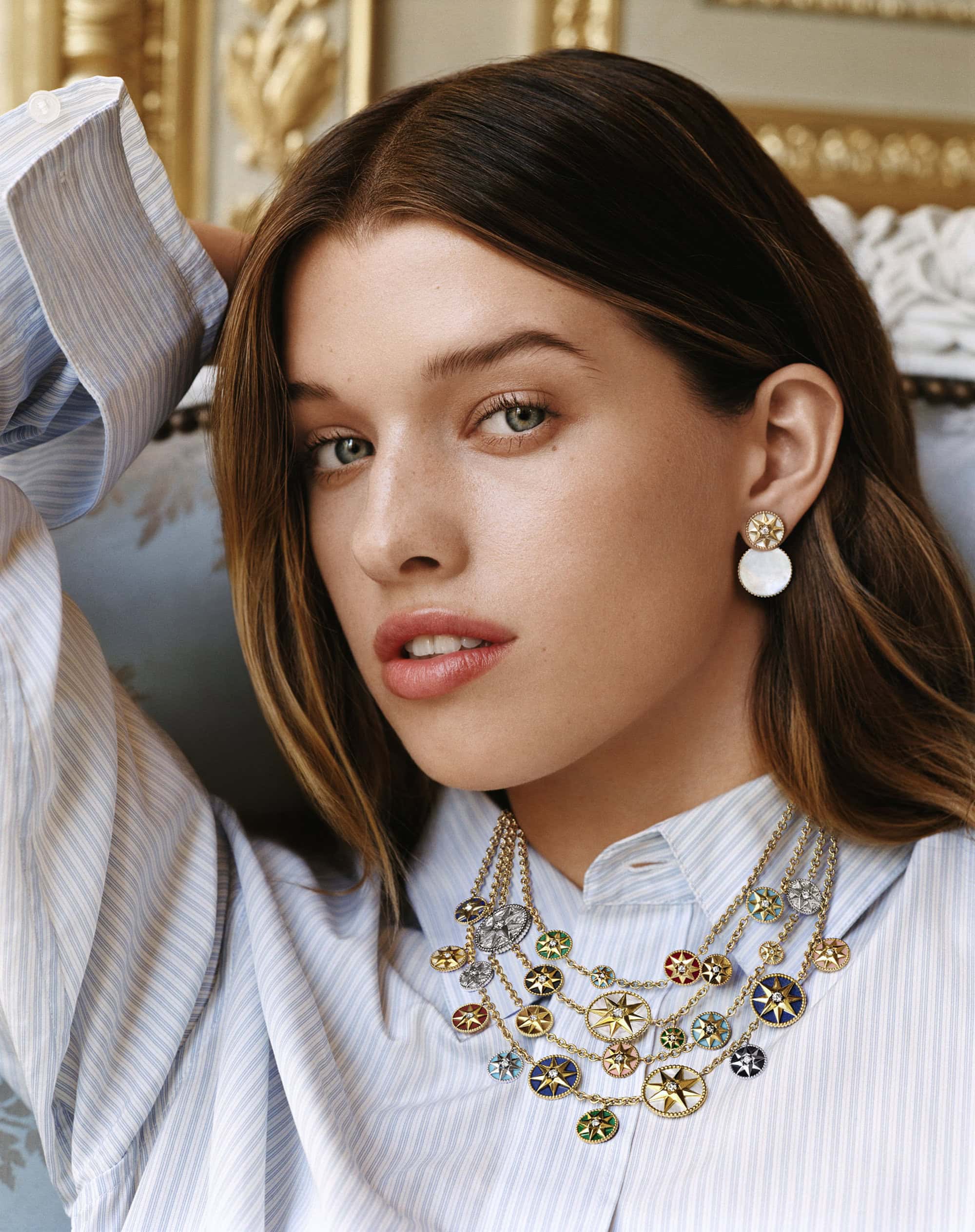
Dior’s New Rose des Vents 2026 campaign arrives with the kind of poised restraint that feels almost radical in today’s visual economy. Under the creative direction of Jonathan Anderson, with Victoire de Castellane continuing her poetic authorship of Dior Joaillerie, and Alasdair McLellan behind the lens, the House offers not spectacle, but serenity. The hook is subtle yet compelling: when jewelry is inspired by navigation, what does it mean to chart a course inward rather than outward?
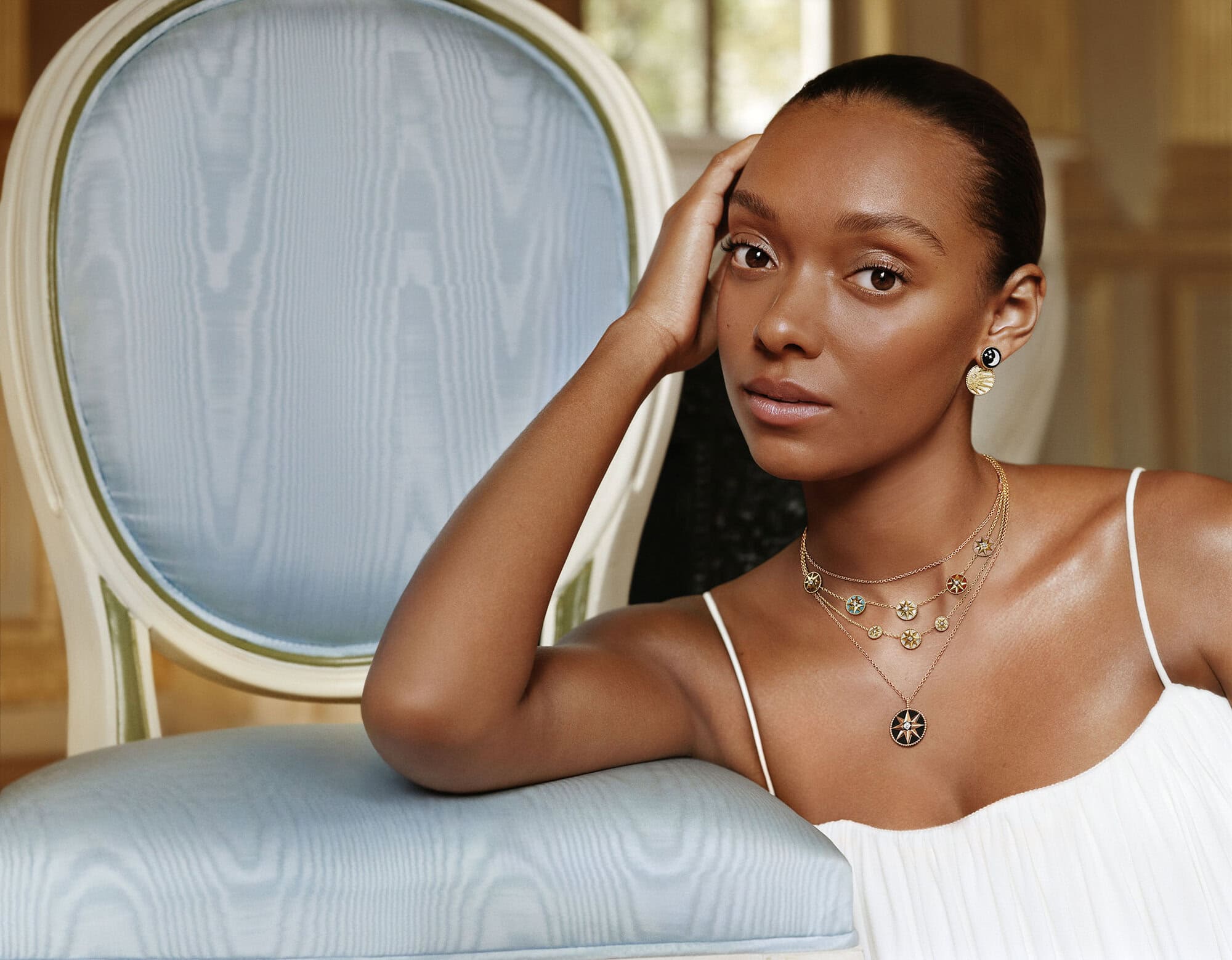
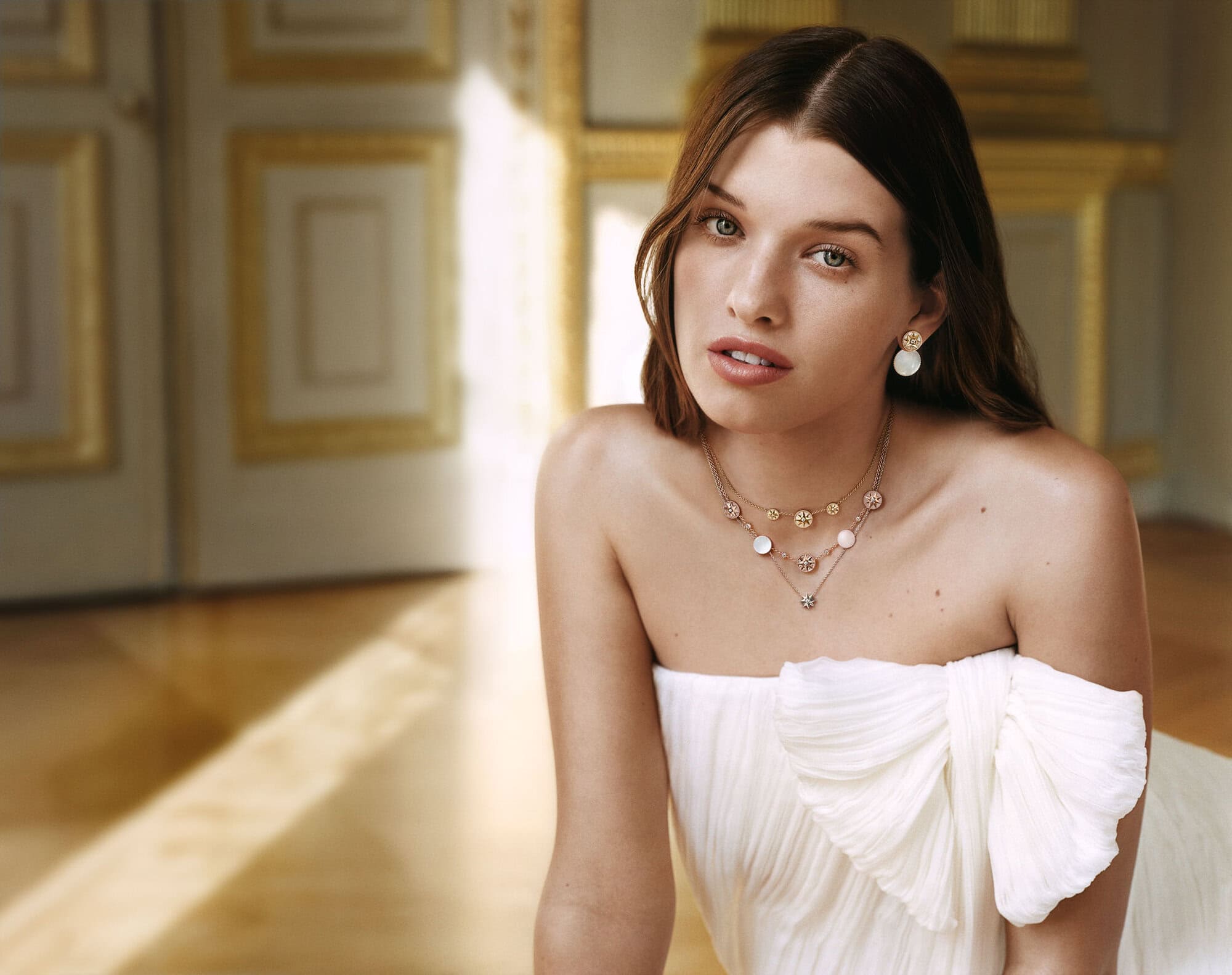
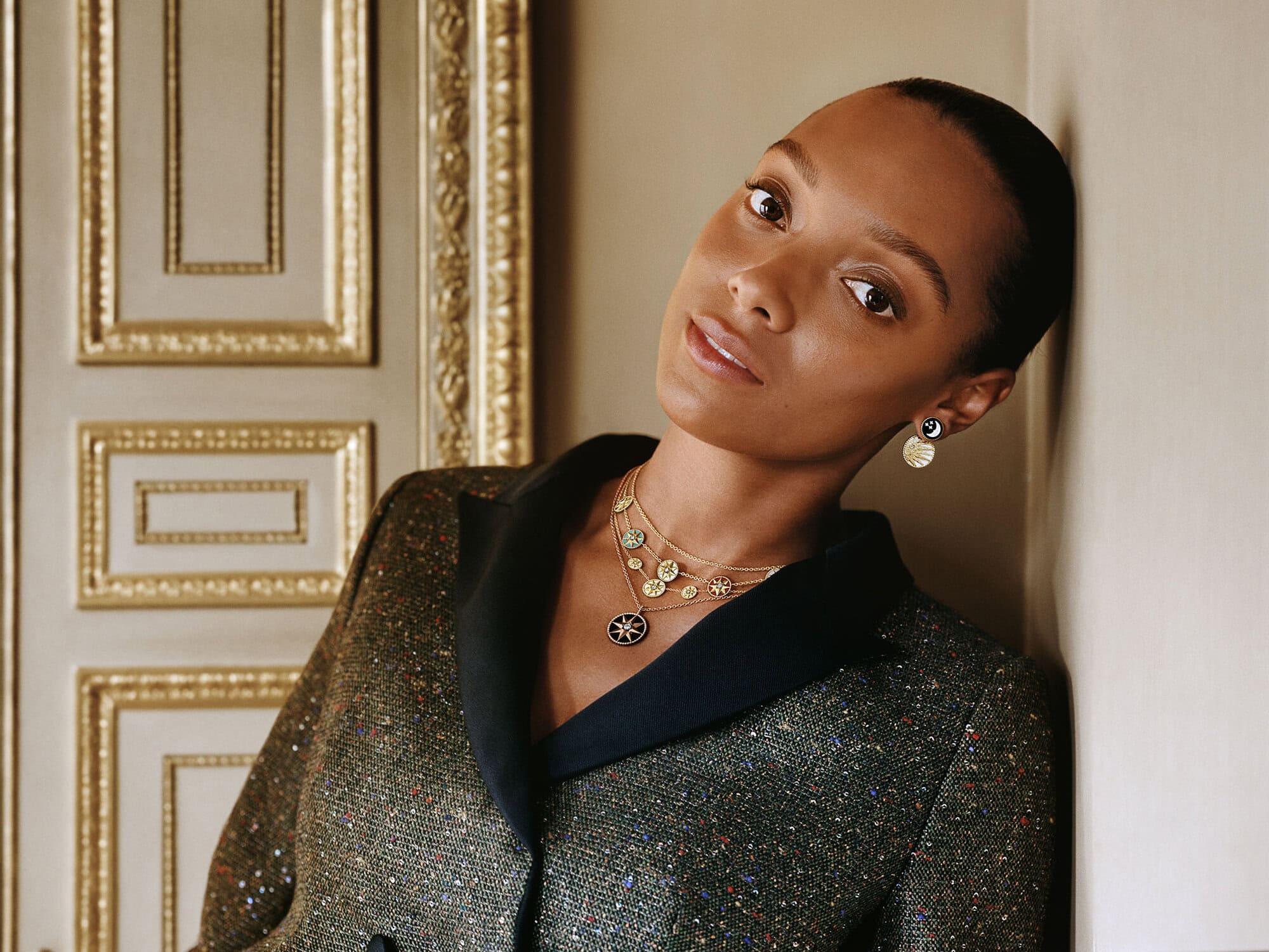
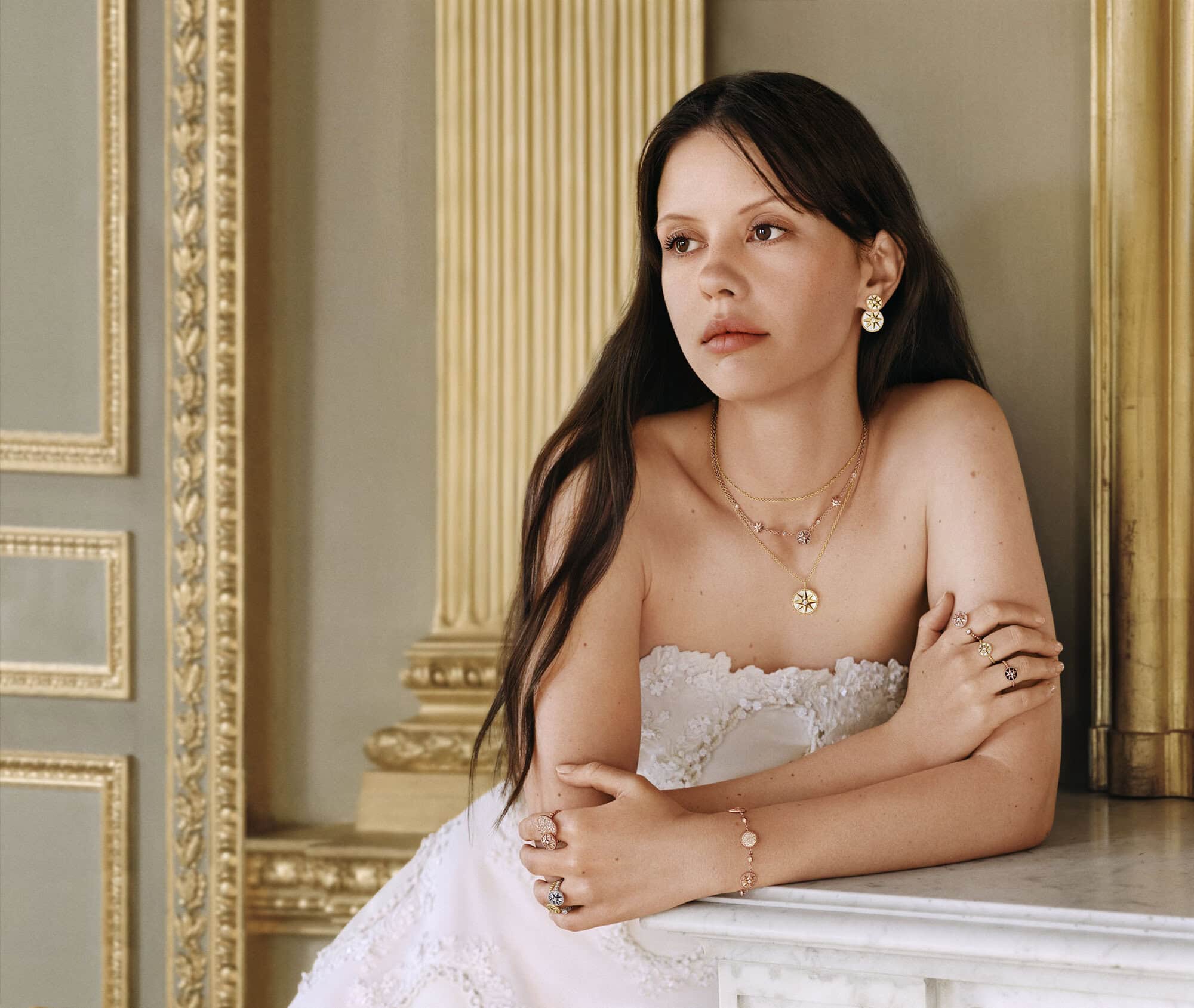
Set against a backdrop of gilded interiors that feel lifted from a Parisian hôtel particulier, the imagery leans into a dialogue between ornament and ease. Mia Goth, Ever Anderson, and Sophie Wilde are not styled as distant muses, but as women inhabiting a space—lounging, leaning, pausing. There is a softness to their presence, a studied nonchalance that allows the jewelry to emerge organically rather than announce itself. The Rose des Vents medallions—those delicate, compass-like talismans—rest lightly against skin, layered with an effortlessness that mirrors the House’s enduring fascination with movement and destiny.
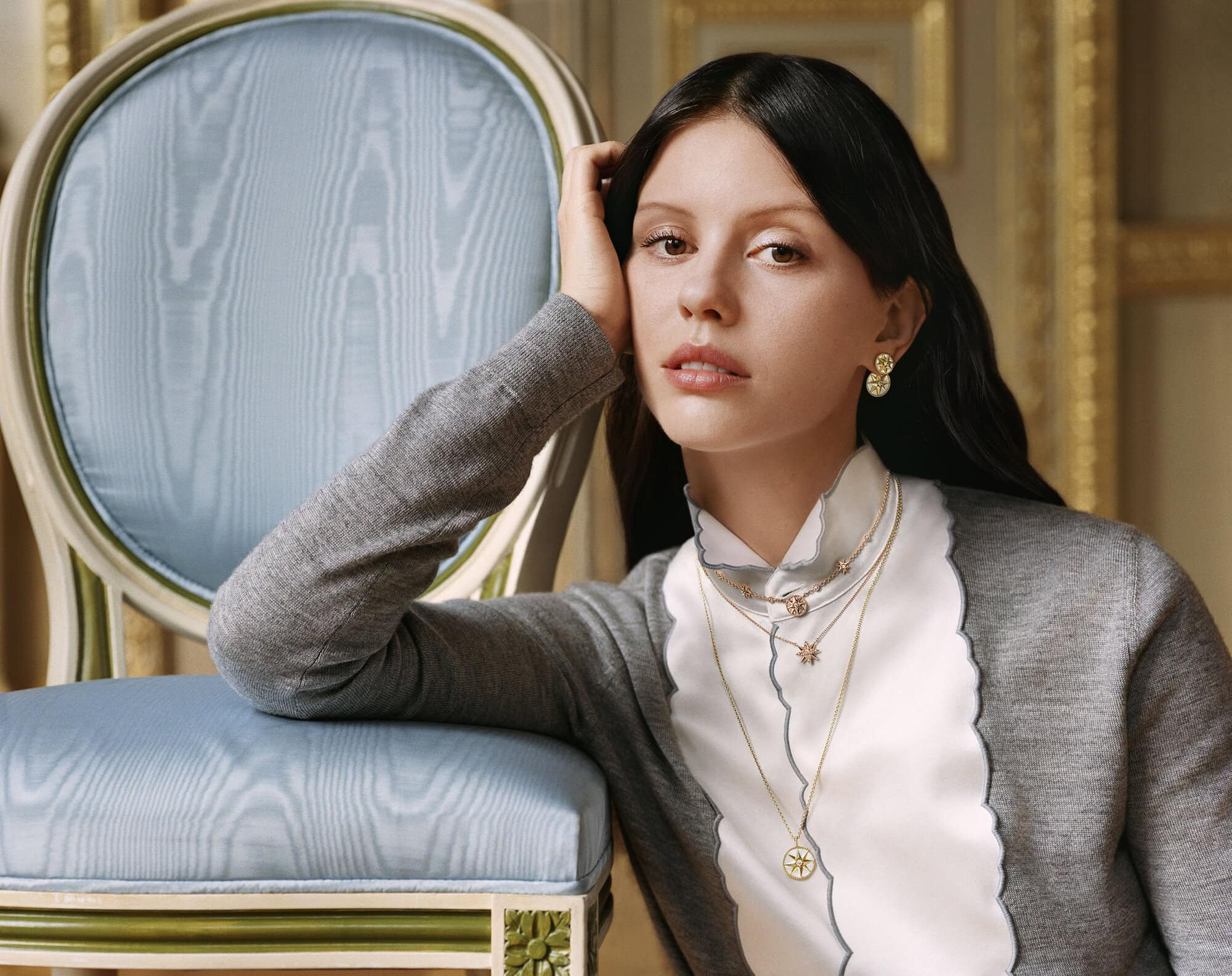
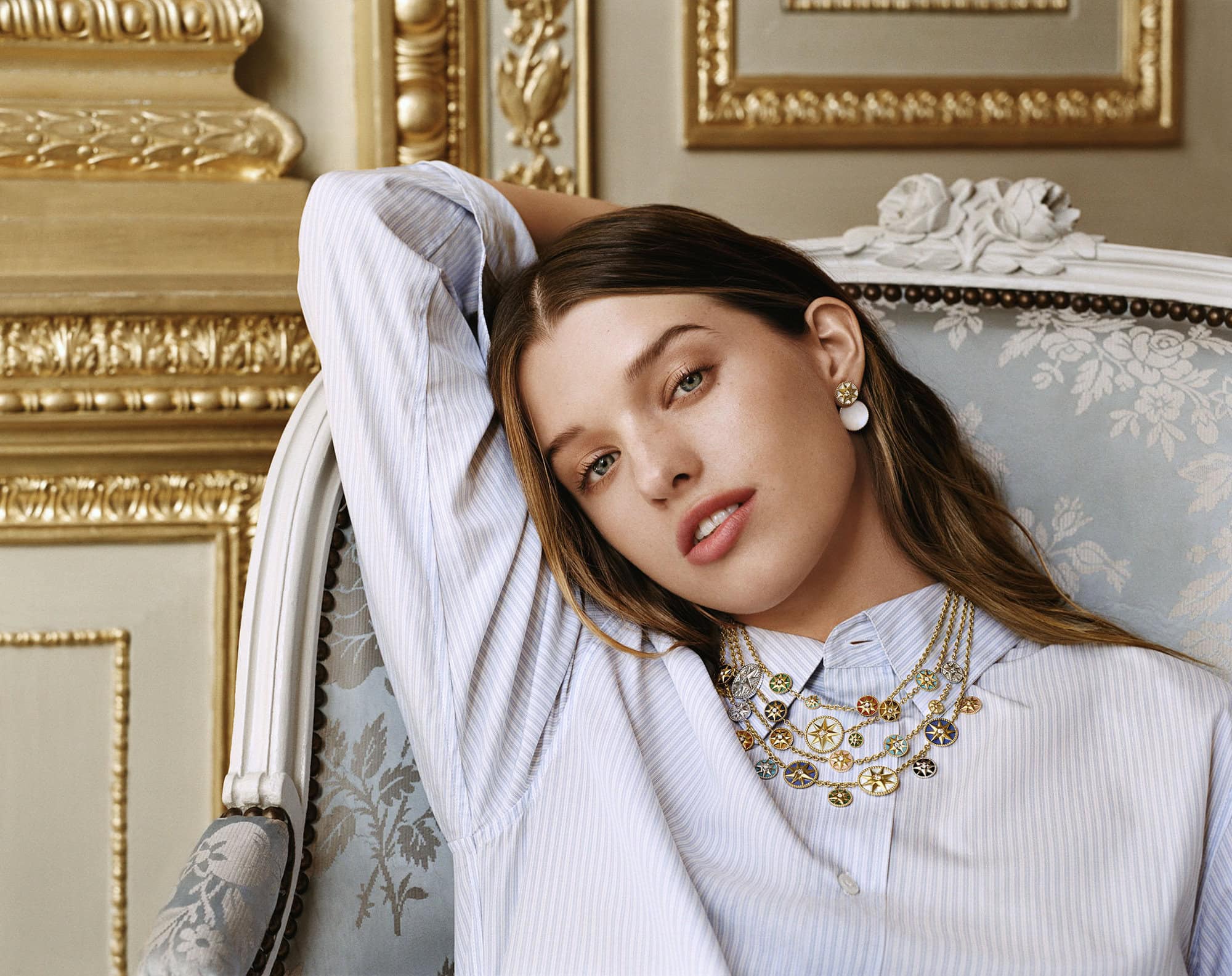
McLellan’s photography plays a careful balancing act between intimacy and polish. The light is warm, almost golden, echoing the tones of the jewelry while gently diffusing the opulence of the surroundings. The set design, with its ornate moldings and pale blue upholstery, frames the pieces without overwhelming them. It is a masterclass in tonal harmony—nothing jars, nothing competes. Even the styling, under Benjamin Bruno, resists overstatement, favoring clean lines and quiet luxury that allow Castellane’s designs to remain the focal point.
Where the campaign truly succeeds is in its understanding of Dior’s jewelry language as something deeply personal. These are not pieces that shout status; they whisper sentiment. The compass motif becomes less about direction in a literal sense and more about emotional orientation—memory, luck, intuition. In this way, the casting feels particularly astute. Each model brings a distinct energy, yet all share a kind of introspective calm that reinforces the narrative of jewelry as intimate companion rather than decorative excess.
If there is a note of critique, it lies in the campaign’s very perfection. The images are so harmonious, so resolved, that they risk blending into the broader visual lexicon of luxury jewelry advertising. One might long for a moment of disruption—a tension, a shadow, a gesture that unsettles the symmetry. Dior has the codes, unquestionably; the question is whether those codes could be pushed just slightly further without losing their elegance.
Still, there is something quietly persuasive in Dior’s refusal to overcomplicate. In a market that often equates impact with volume, this campaign chooses precision. It doesn’t demand attention—it earns it, slowly, like a compass needle finding true north.
And perhaps that is the point. When your symbols are built on navigation, you don’t need to rush—you simply trust that, eventually, everyone will find their way to you.
Dior Creative Director | Jonathan Anderson
Jewelry Designer | Victoire De Castellane
Jewelry Designer | Victoire de Castellane
Photographer | Alasdair McLellan
Models | Ever Gabo Anderson, Mia Goth, Sophie Wilde
Stylist | Benjamin Bruno
Makeup | Lynsey Alexander
Manicurist | Elsa Deslandes
Set Designer | Sophear Van Froment