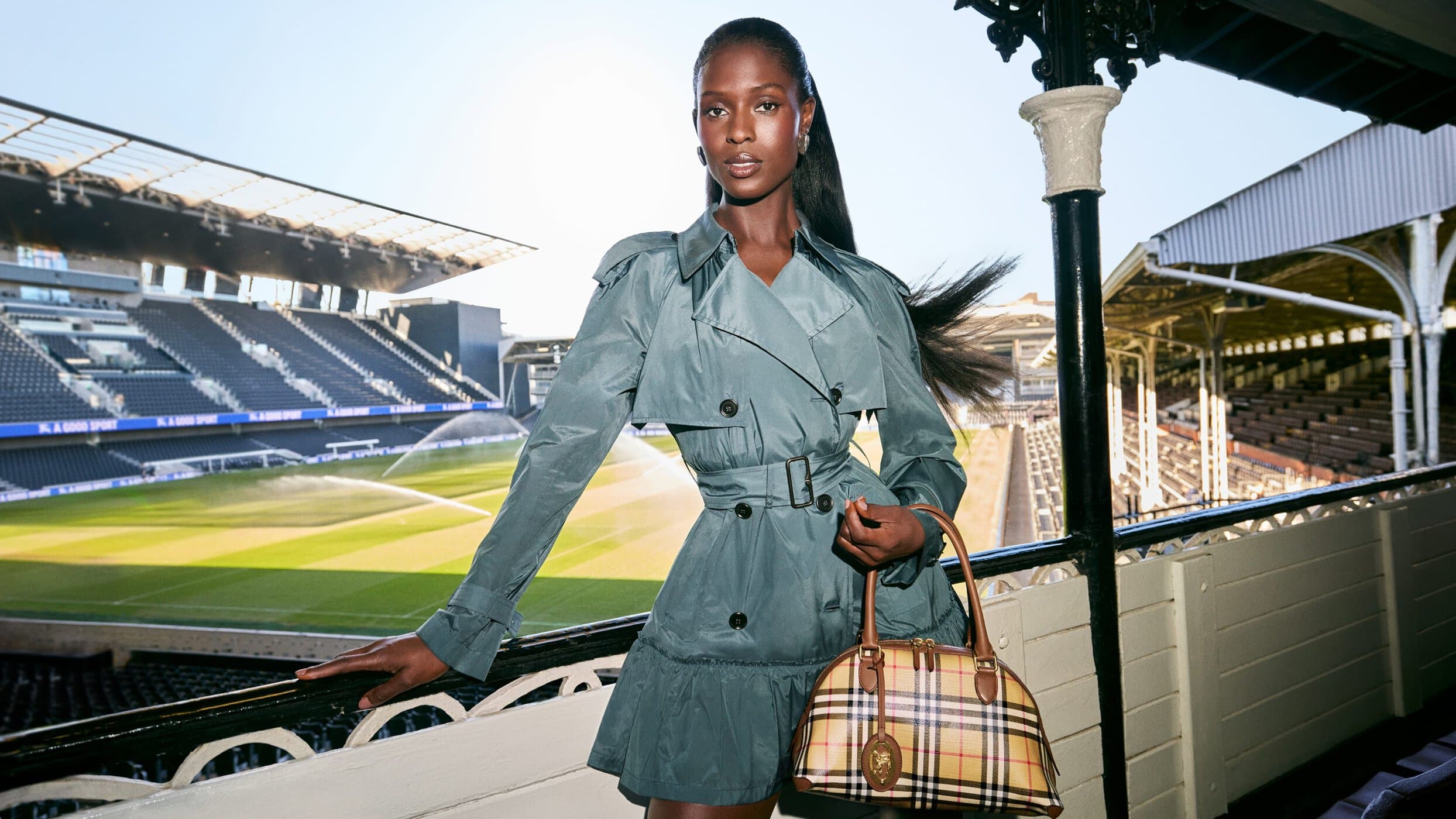
Match Day Heritage
Review of Burberry Fall 2026 Ad Campaign by Photographer Mario Sorrenti and Videographer Elliott Power with models Jason Sudeikis, Romeo Beckham, Bright, Jodie Turner-Smith, Lucy Punch, Stephen Graham, Rosie Huntington-Whiteley, Neelam Gill, Declan Rice, Eberechi Eze, Leah Williamson, Naomi Girma, and Son Heung-min
For Autumn 2026, Burberry trades polished refinement for the restless energy of football culture, presenting “A Good Sport” as both a celebration of British fandom and a reaffirmation of the house’s long-standing relationship with the outdoors. Under Daniel Lee’s direction, the campaign reframes Burberry’s heritage codes through the lens of match-day rituals: crowded terraces, muddy pitches, burger vans, wind-whipped sidelines, and the emotional highs and lows that orbit the game itself. Rather than treating football merely as aesthetic inspiration, the campaign attempts to position Burberry within the social fabric surrounding the sport.
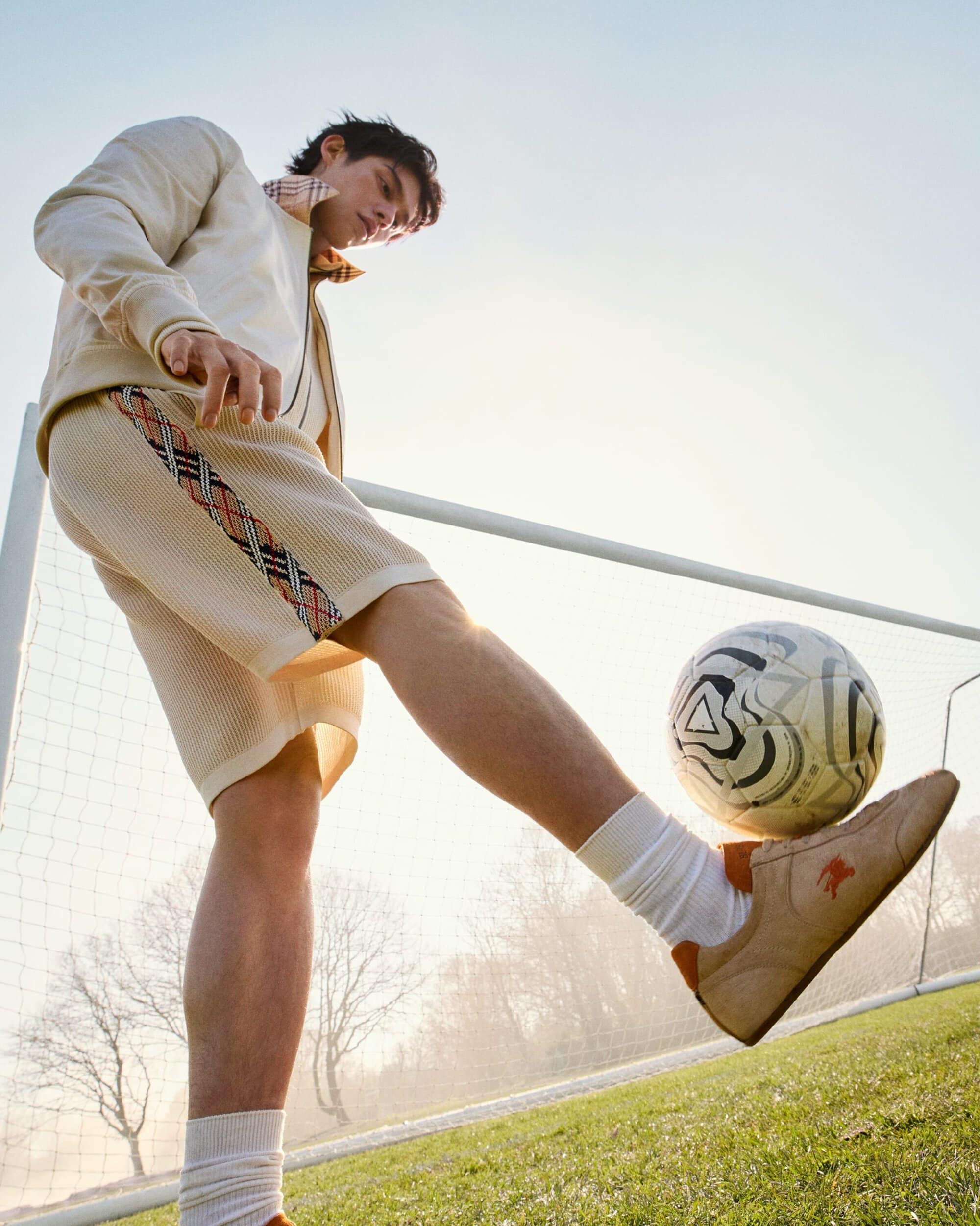
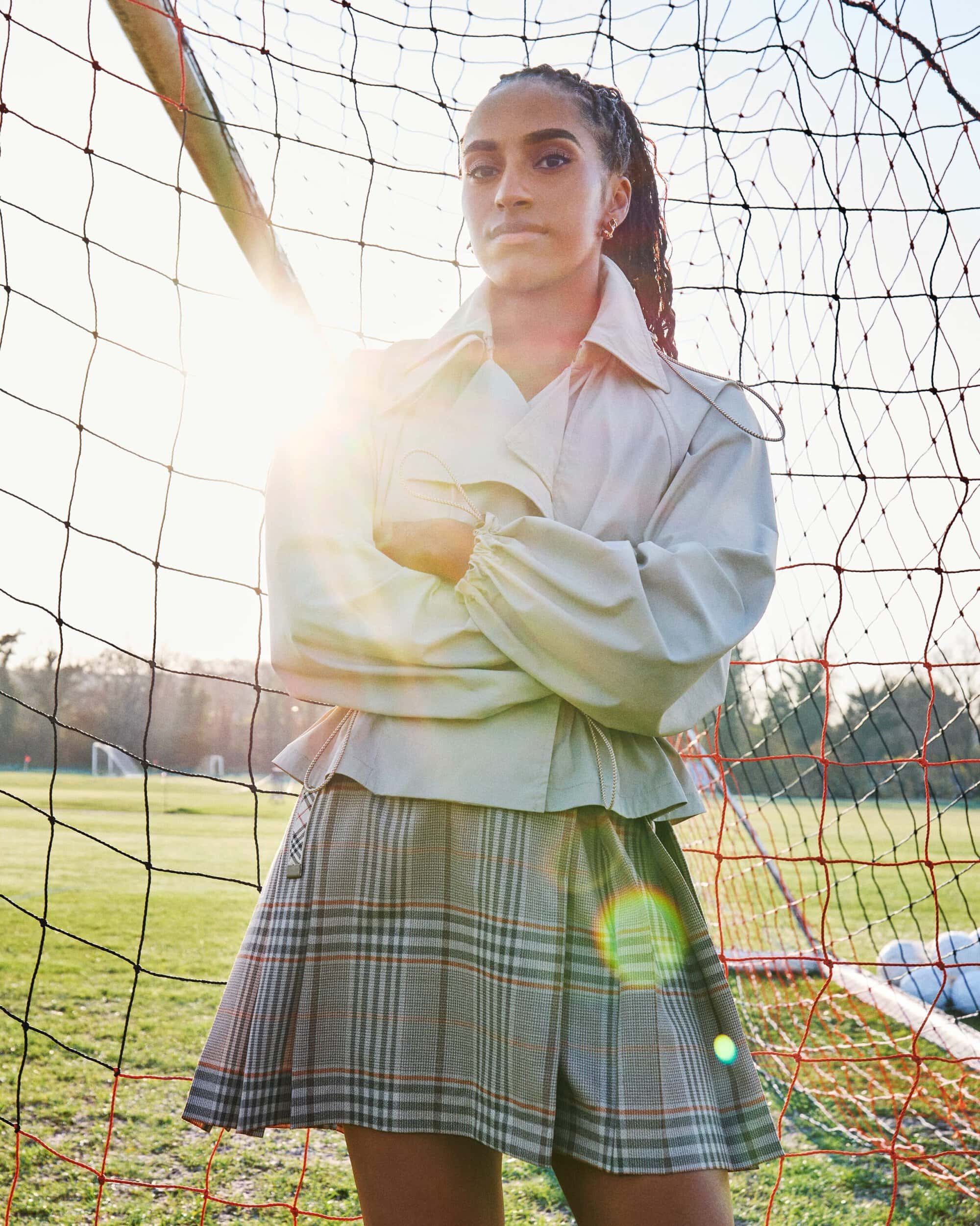
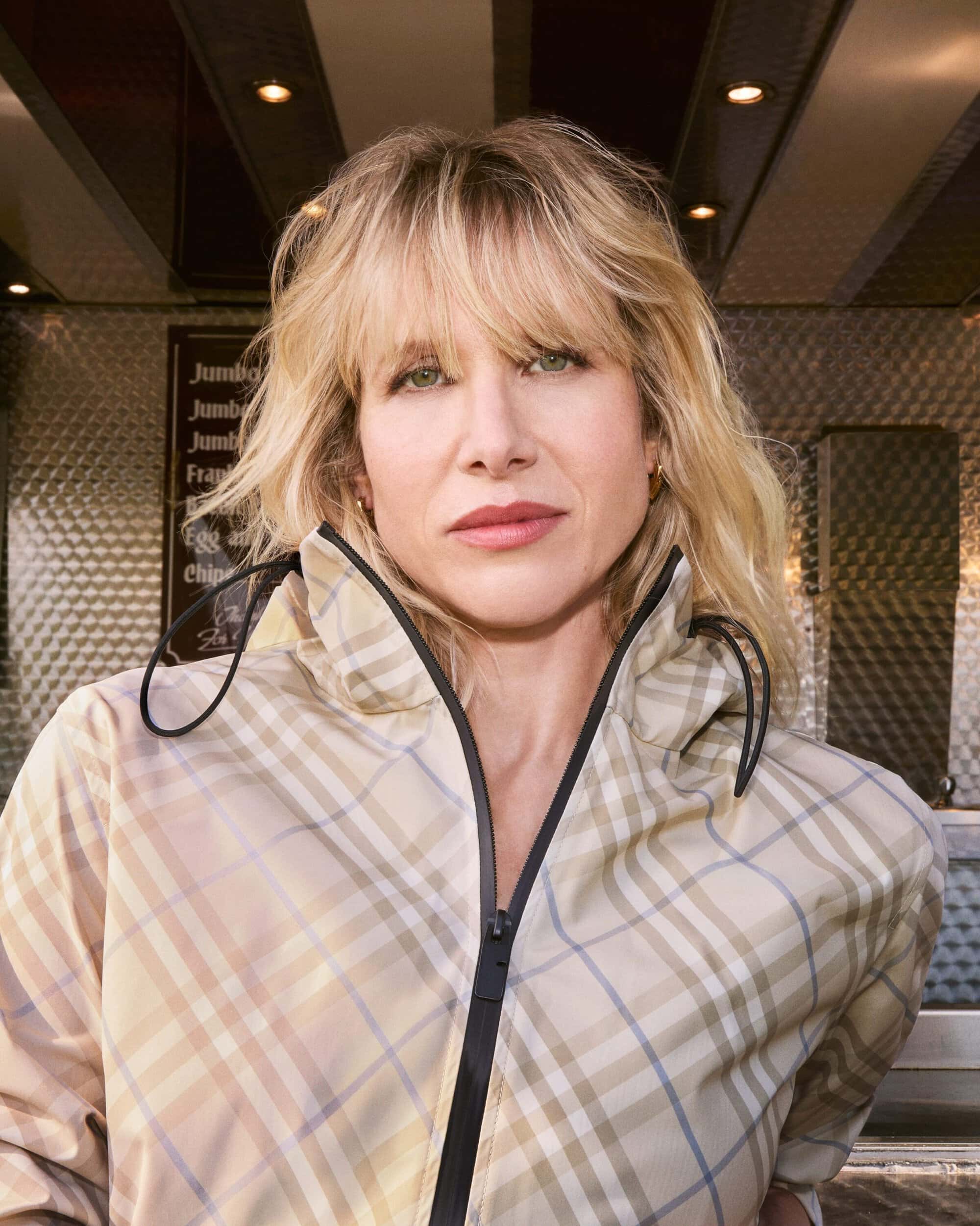
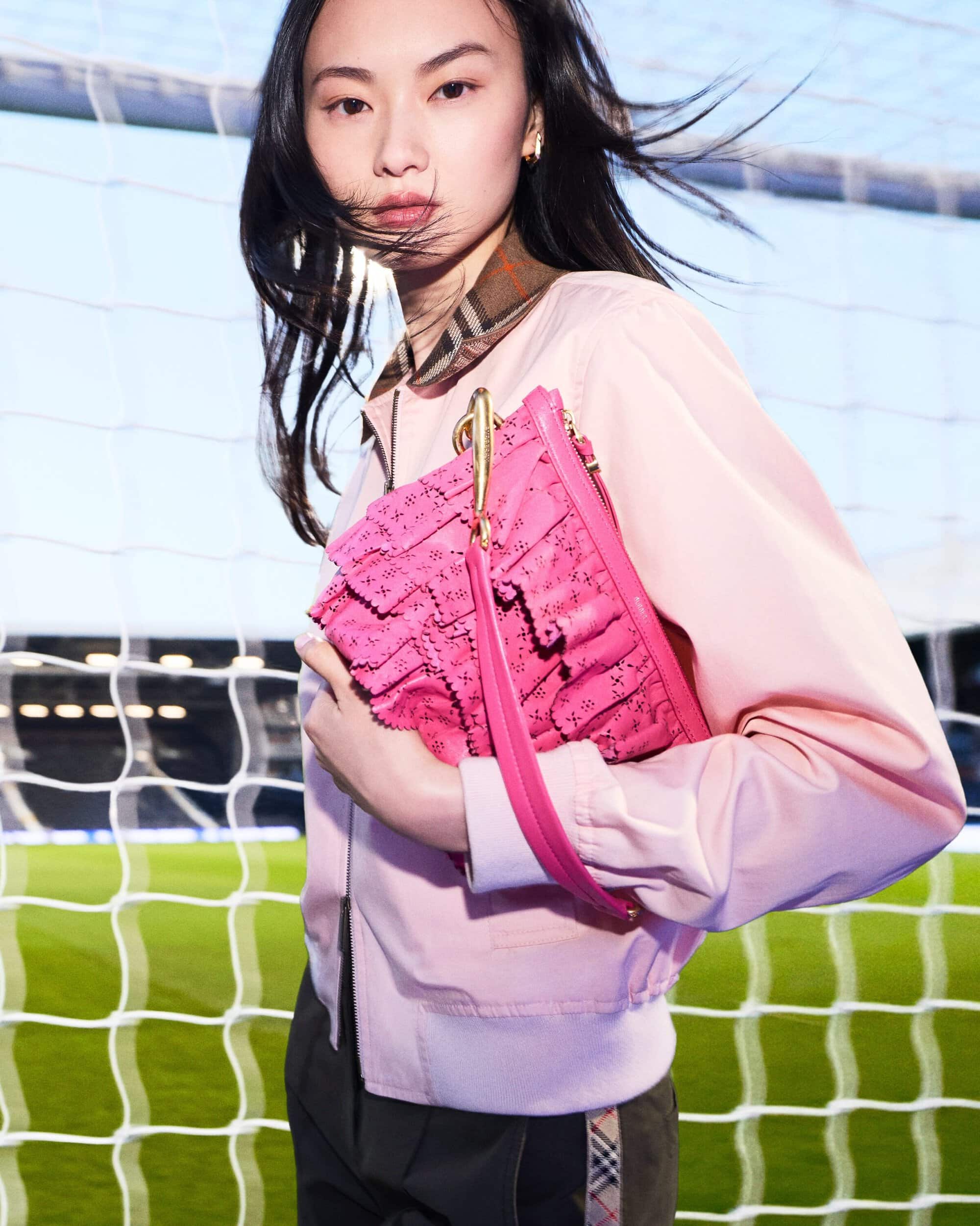
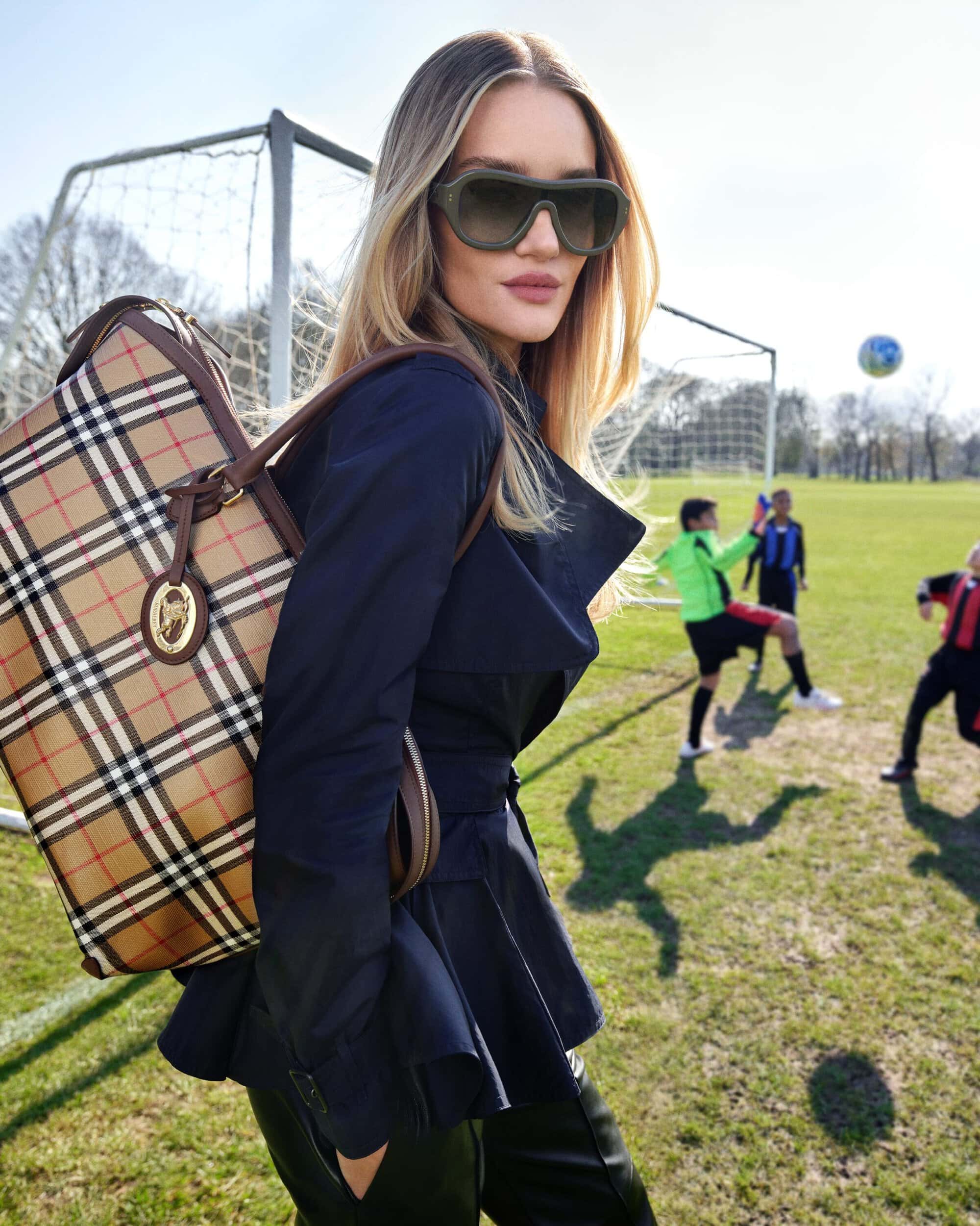
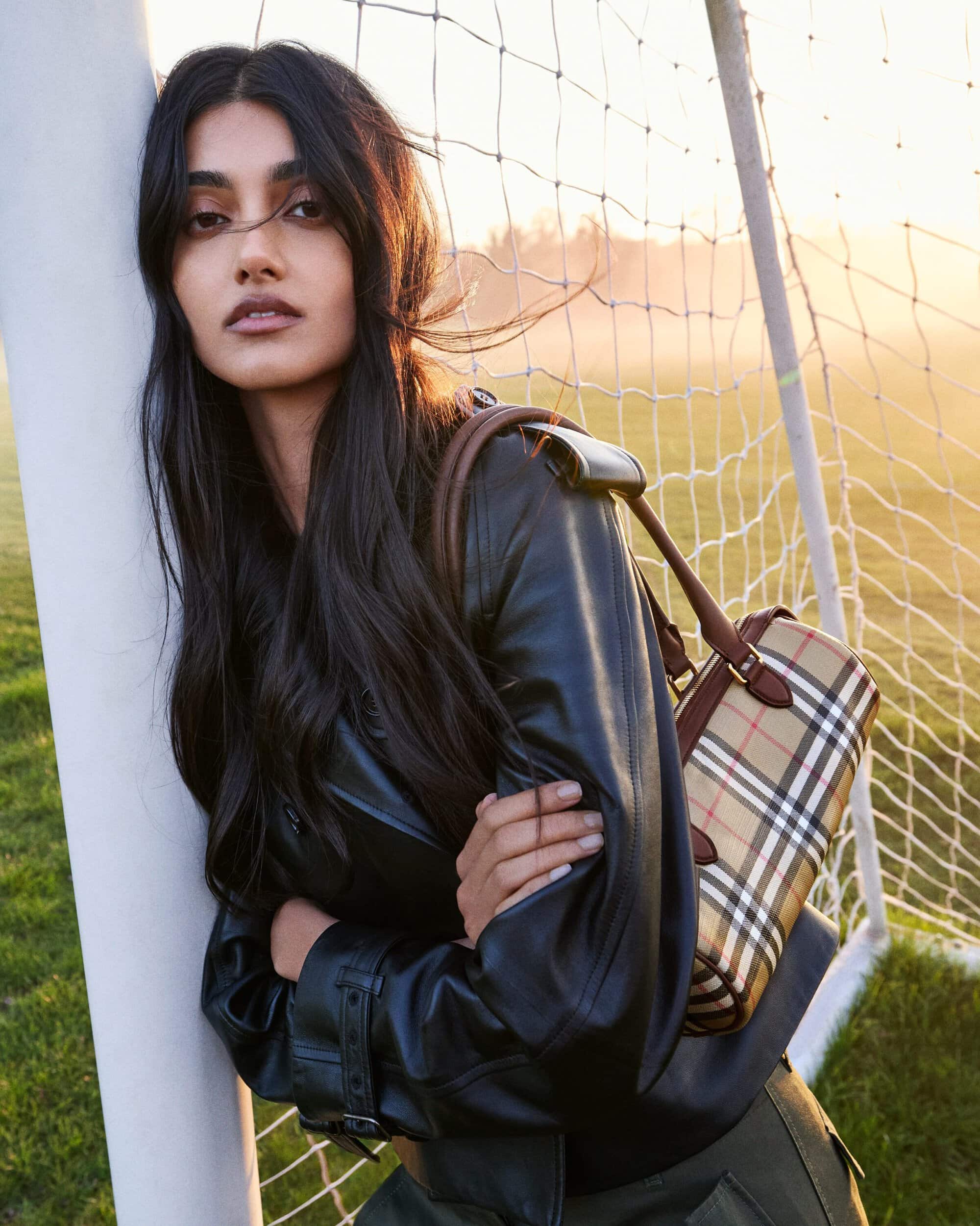
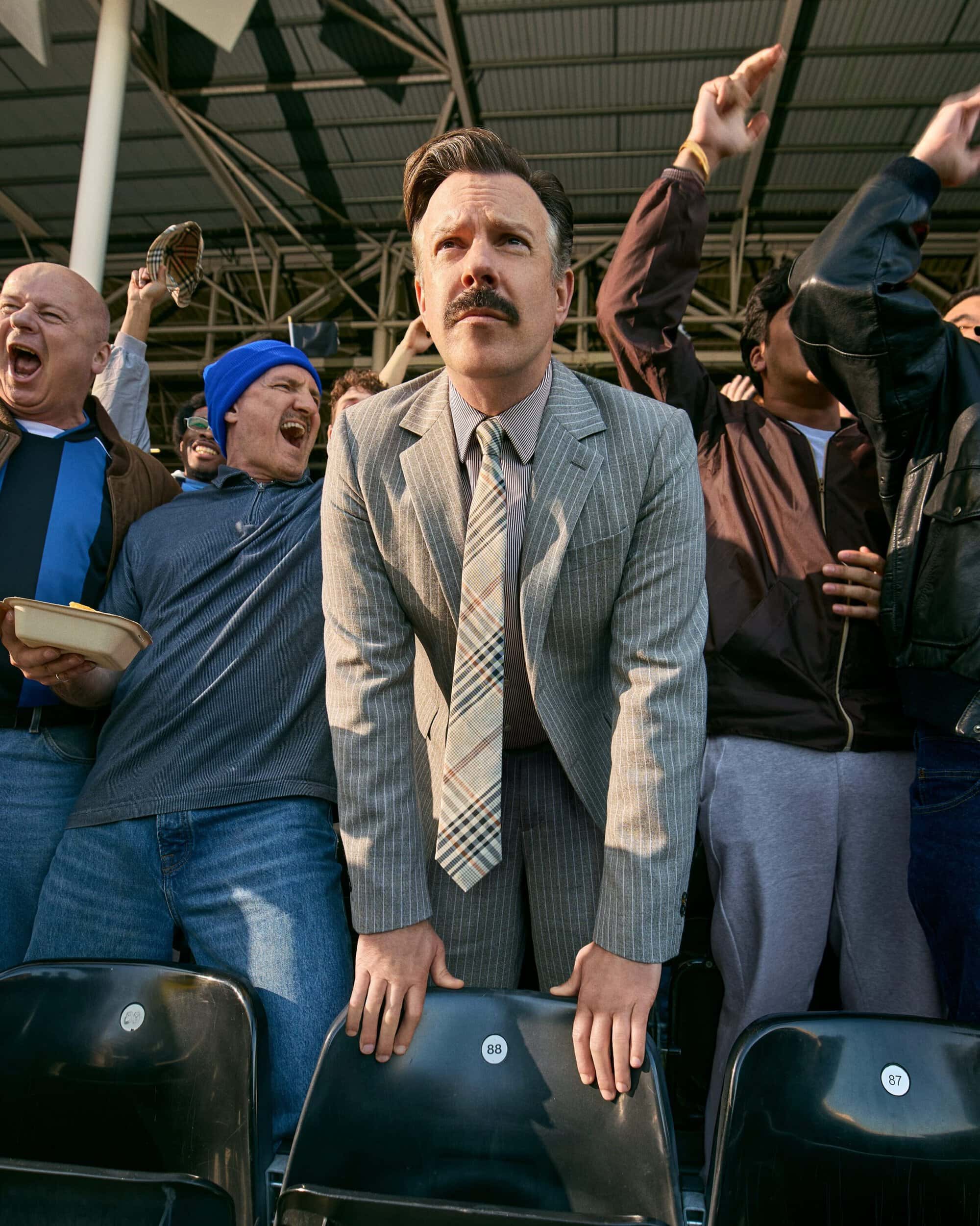
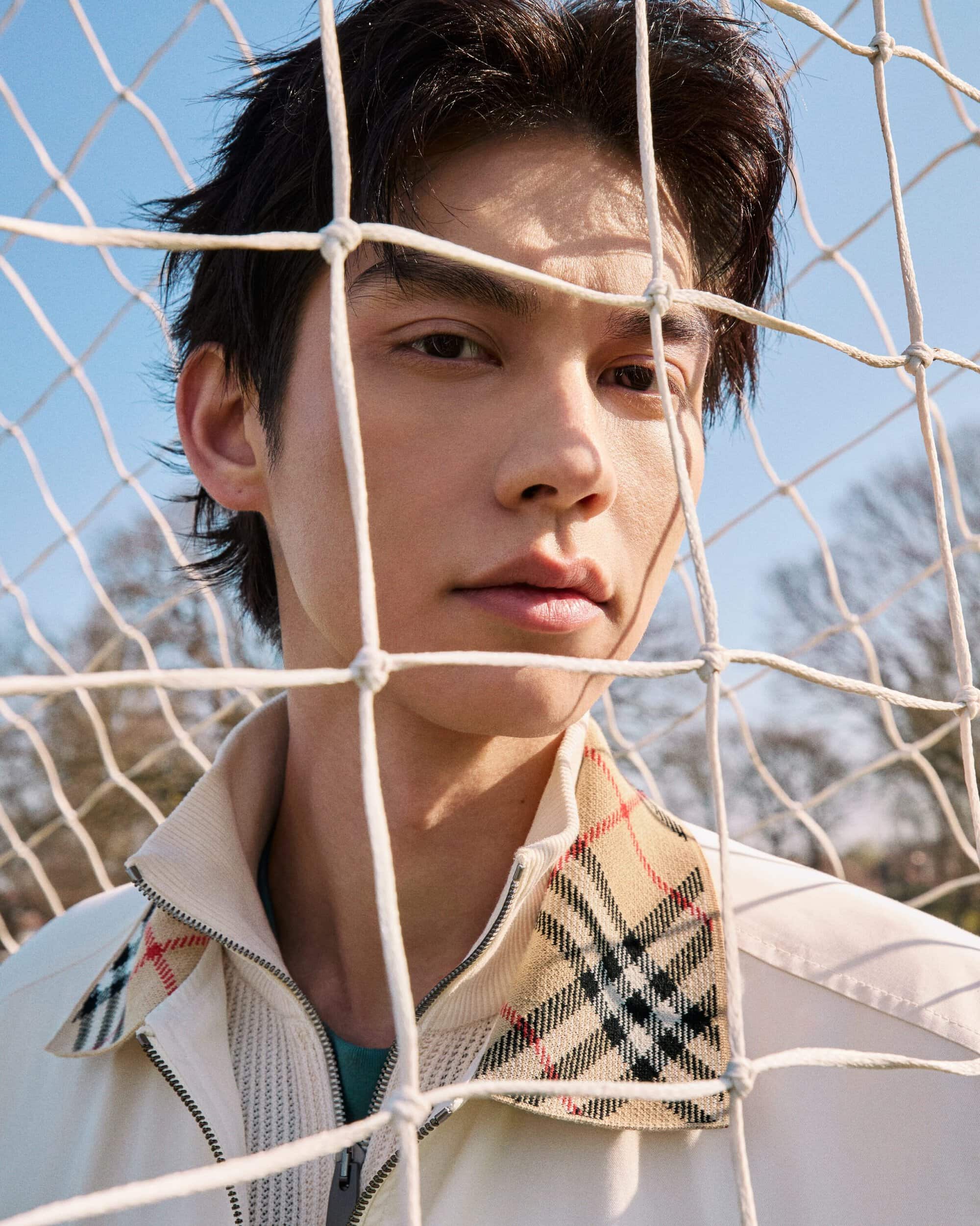
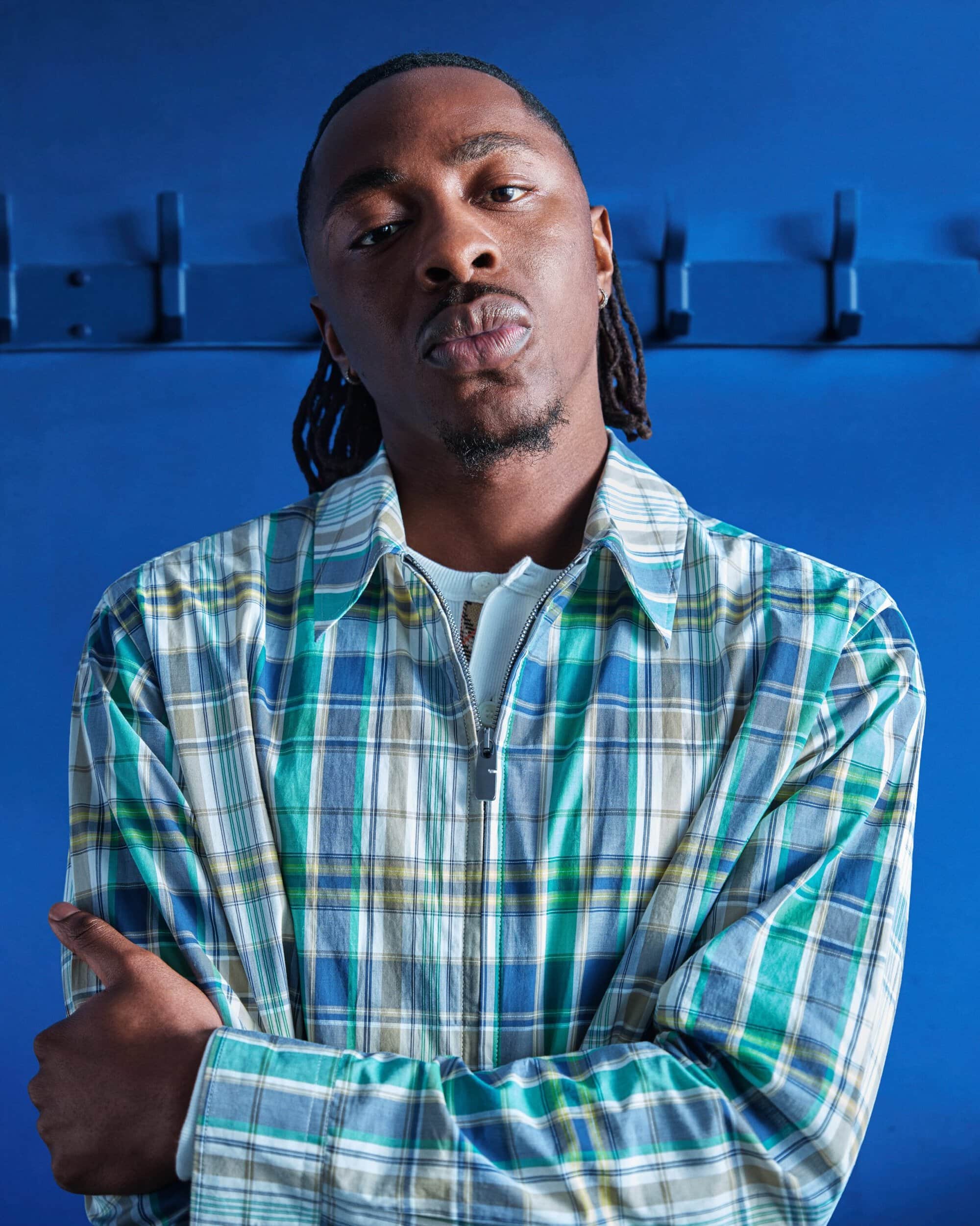
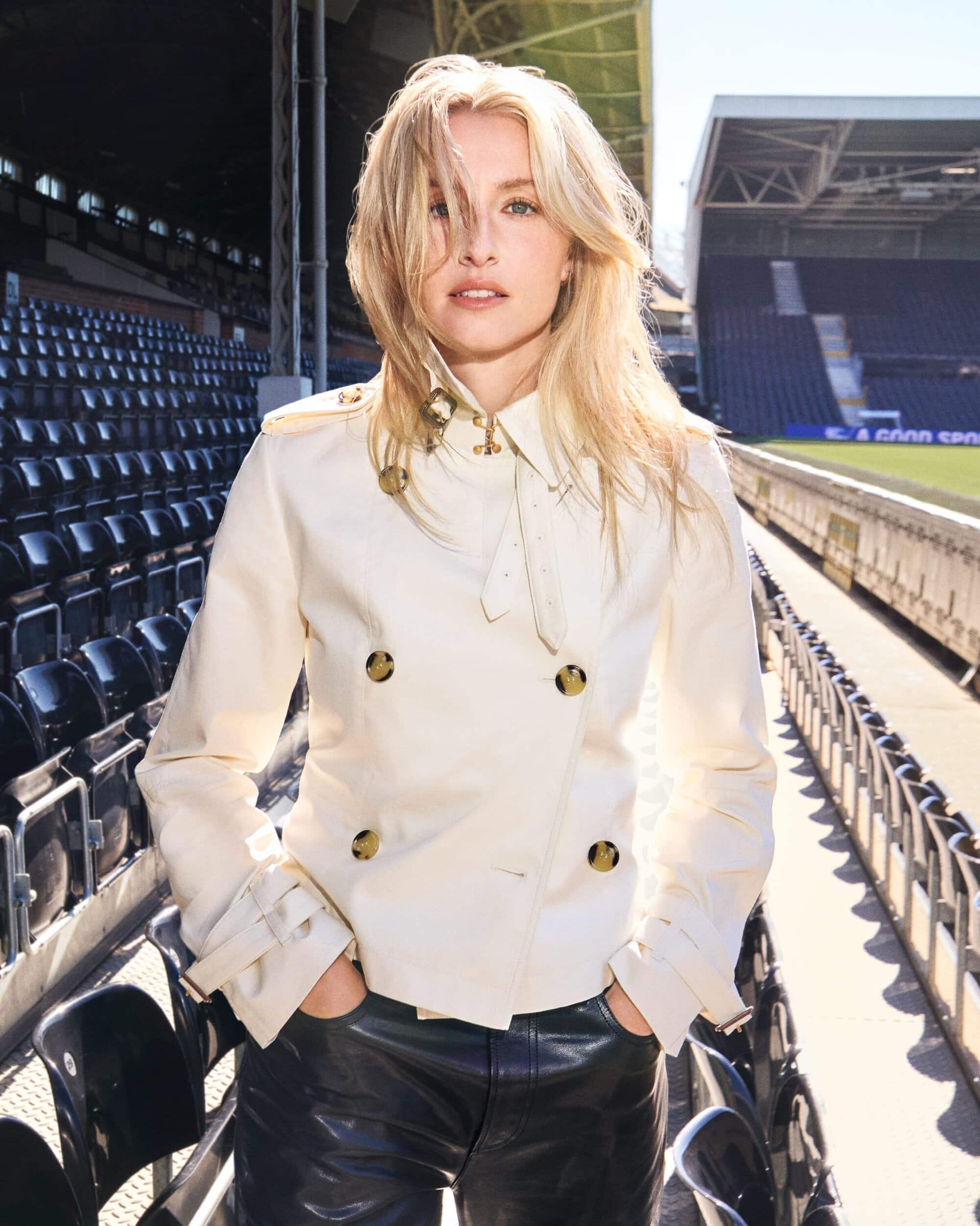
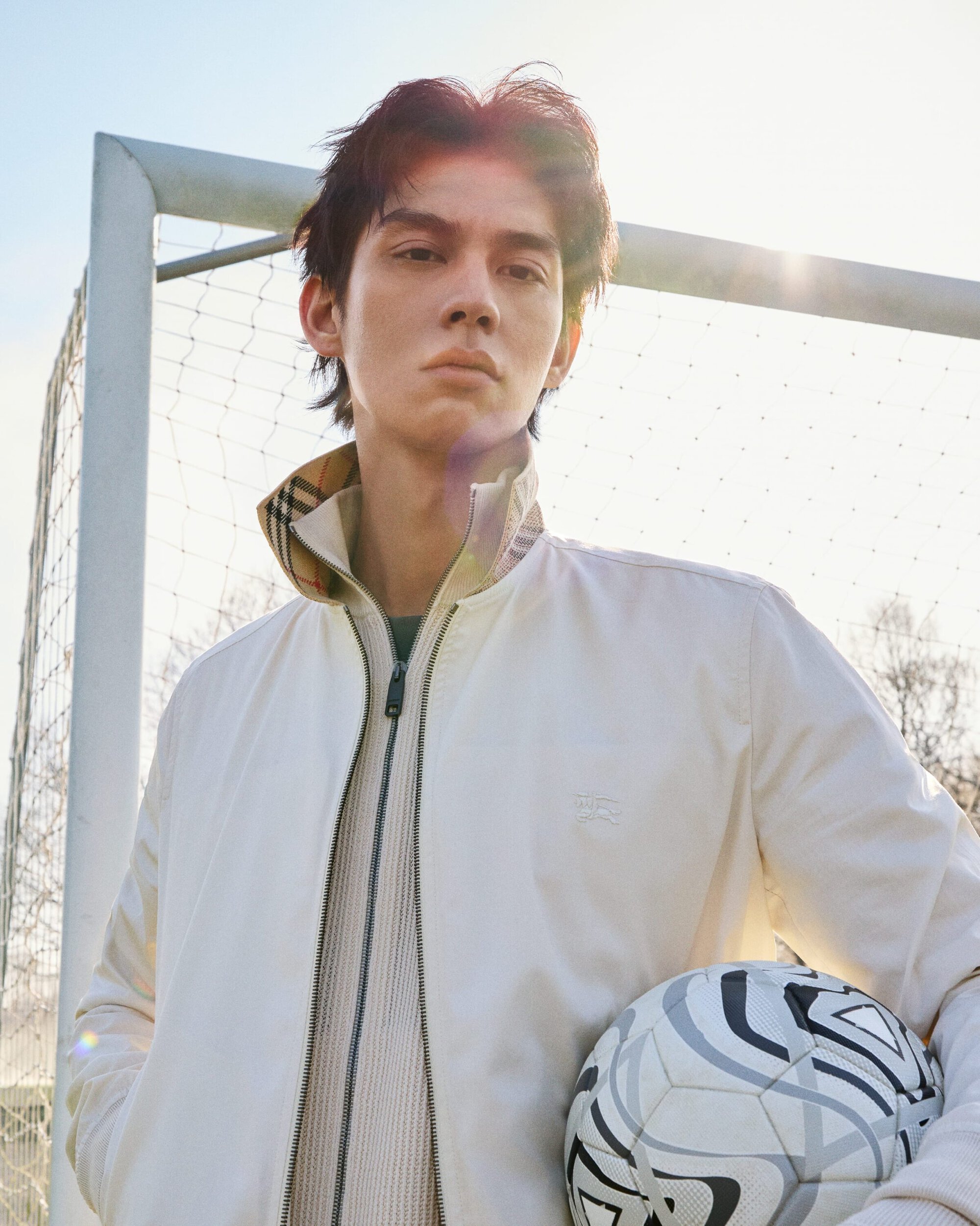
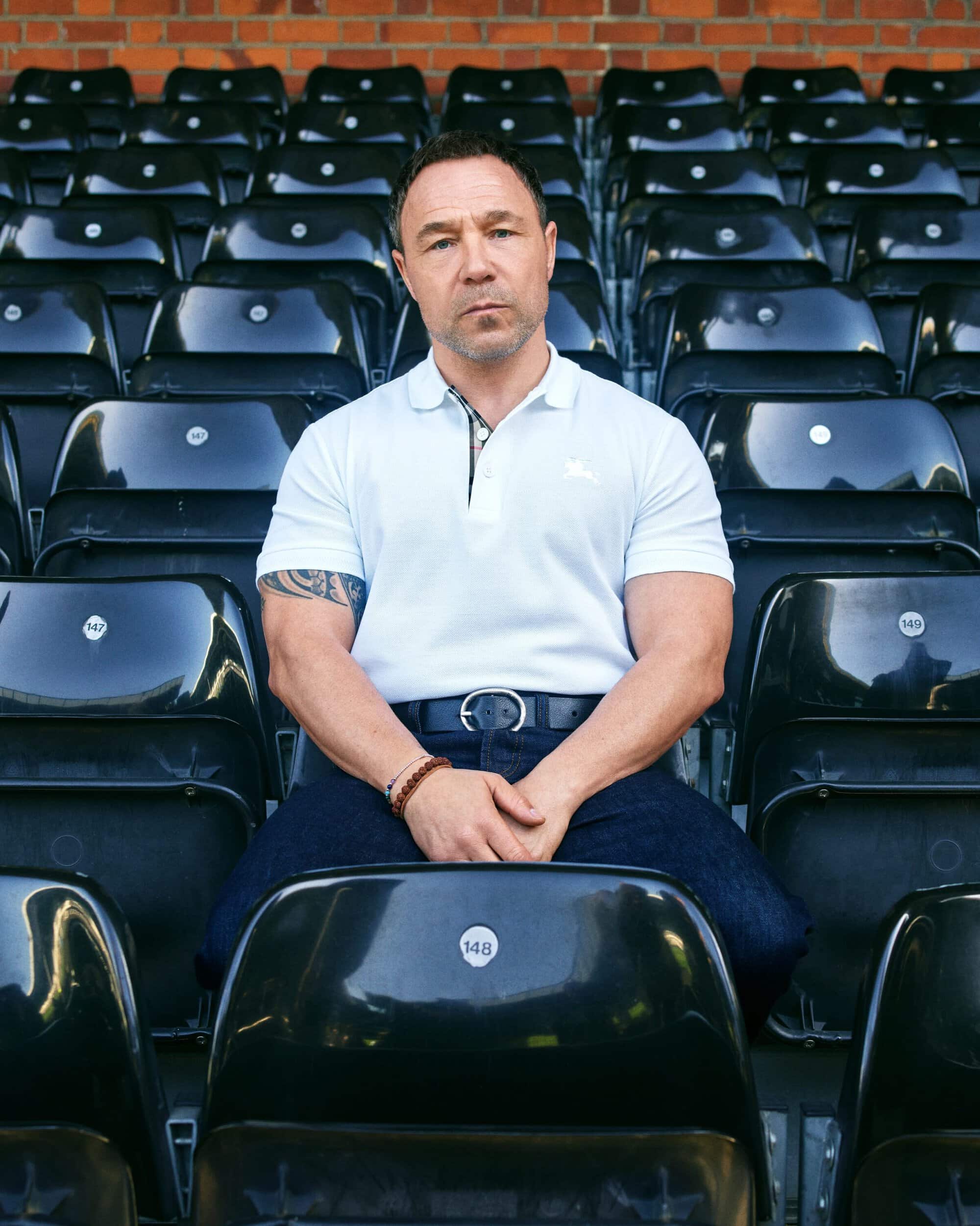
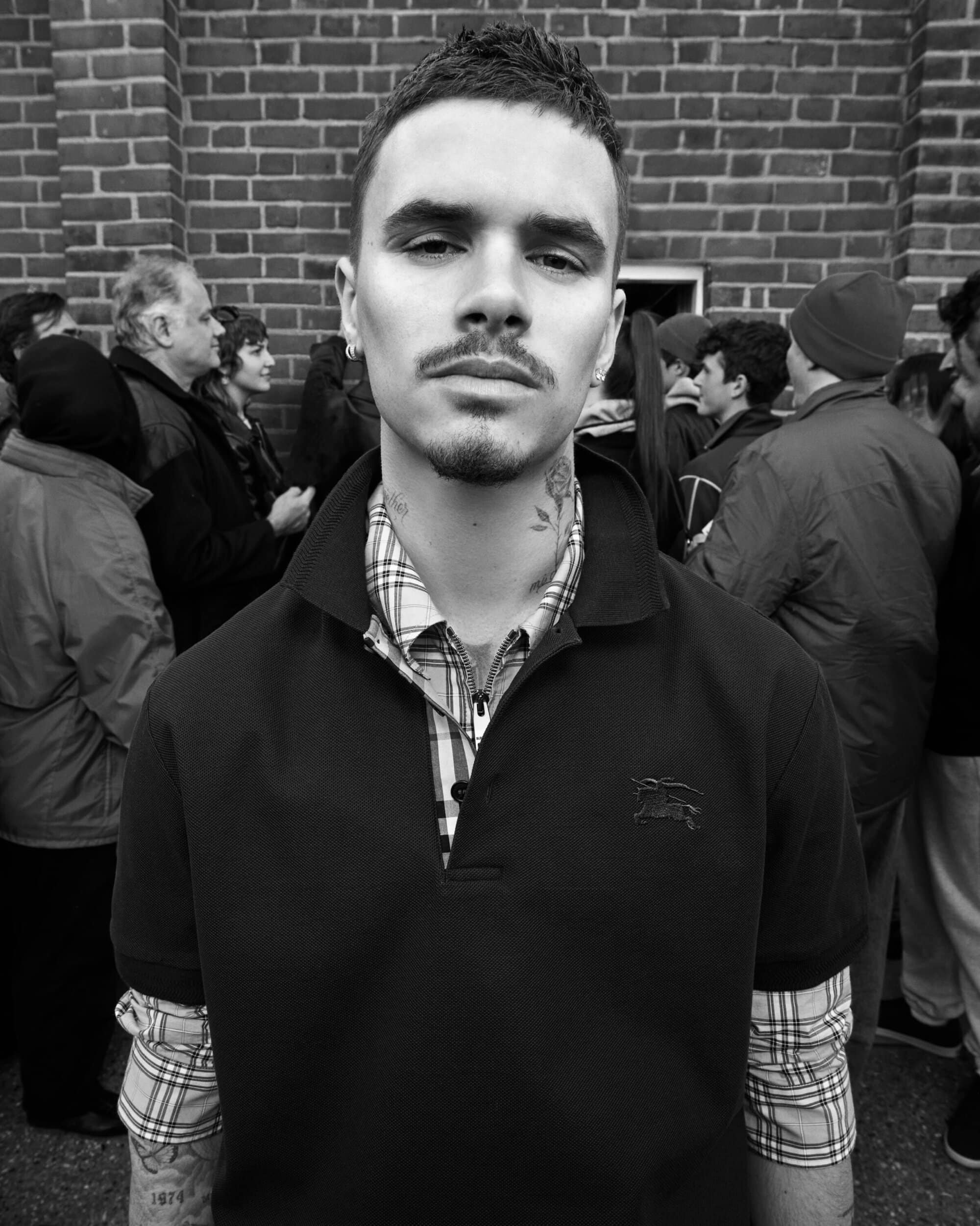
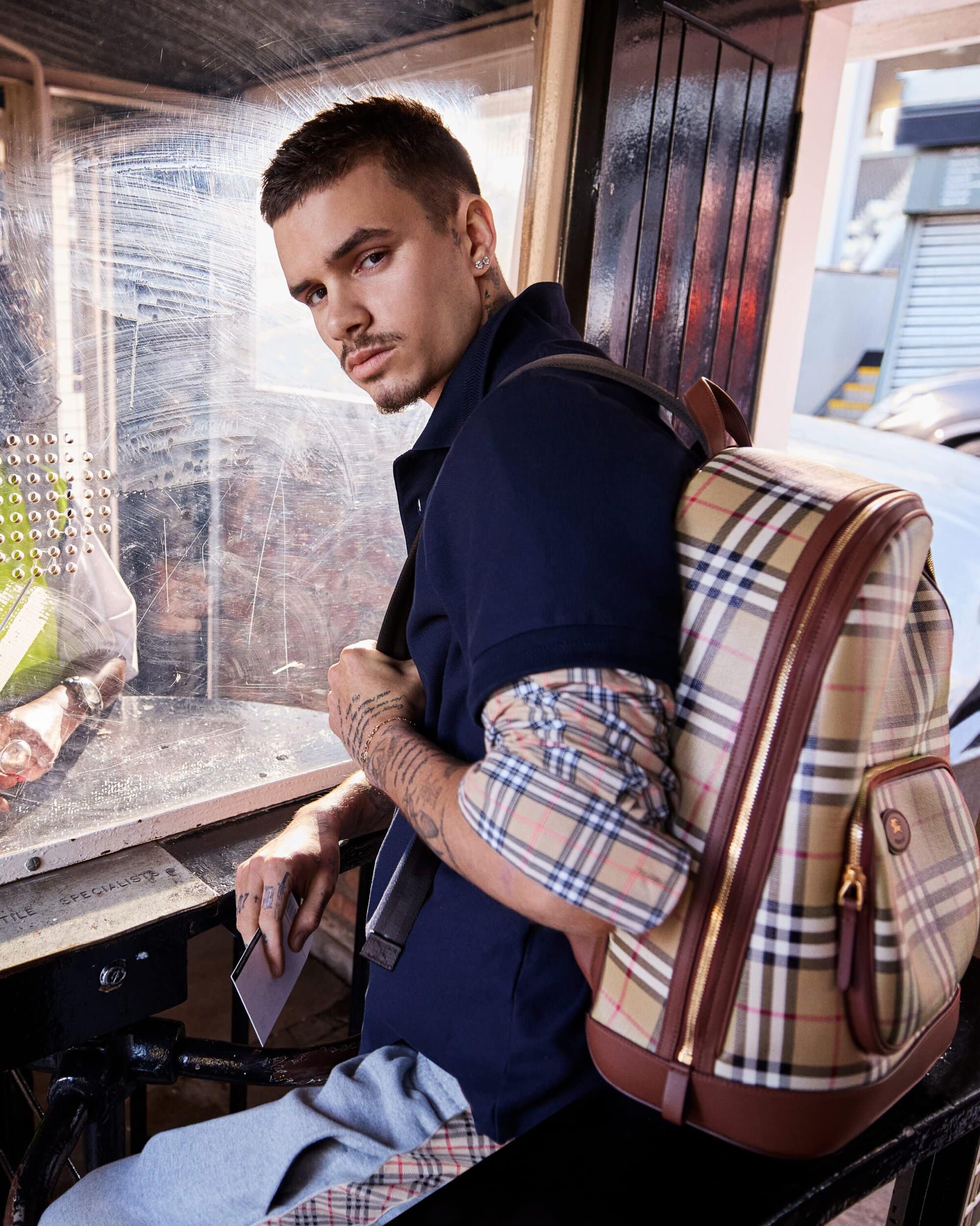
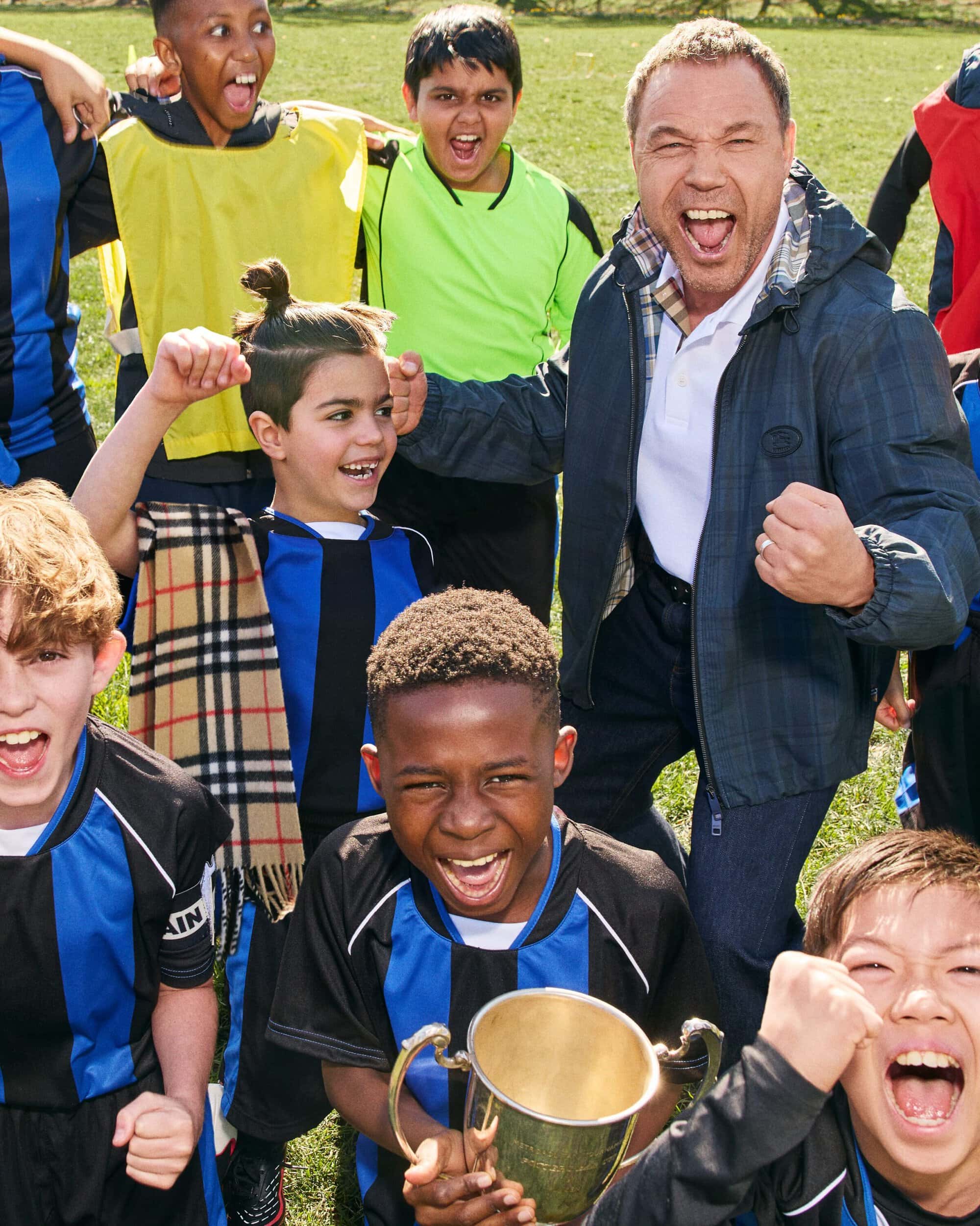
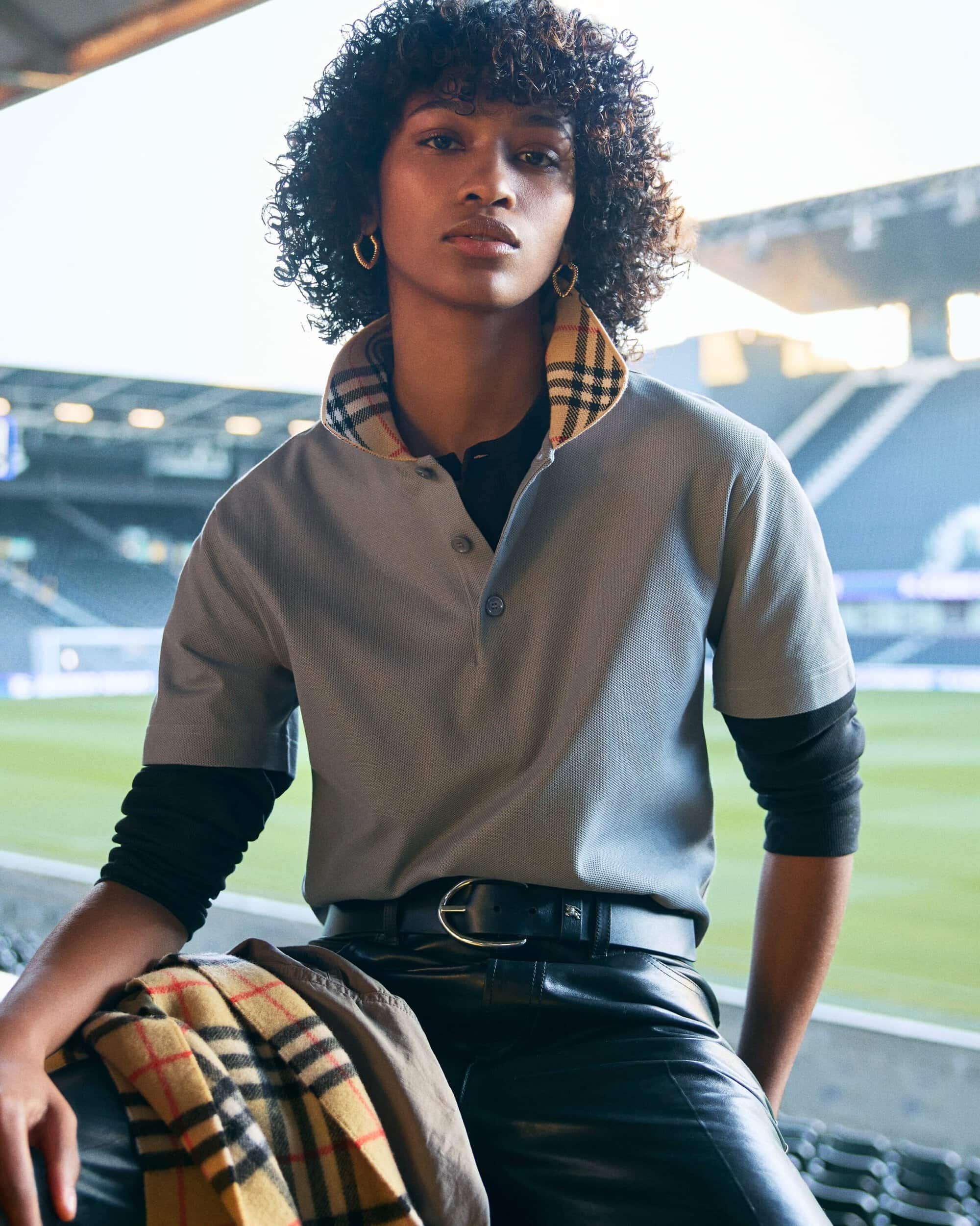
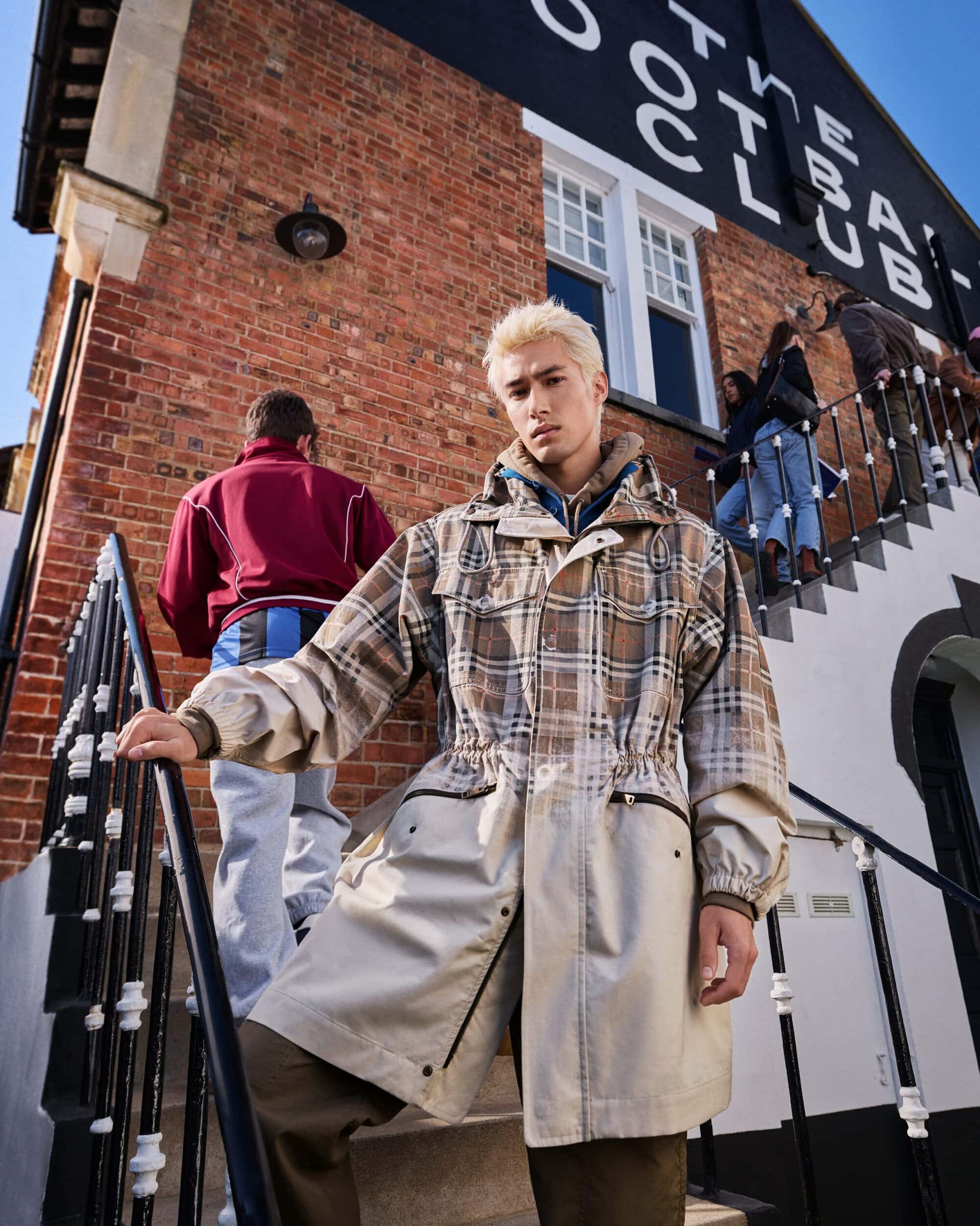
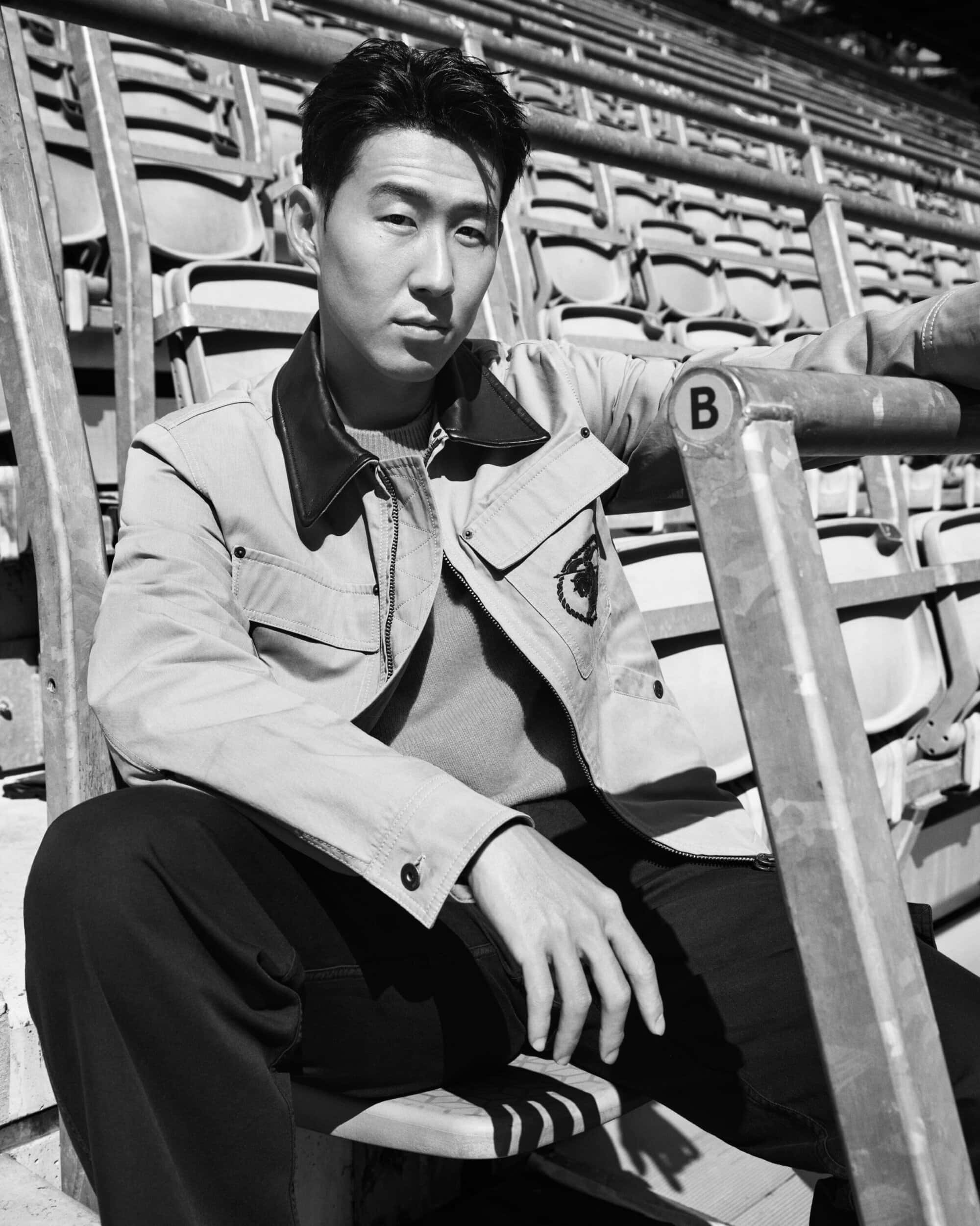
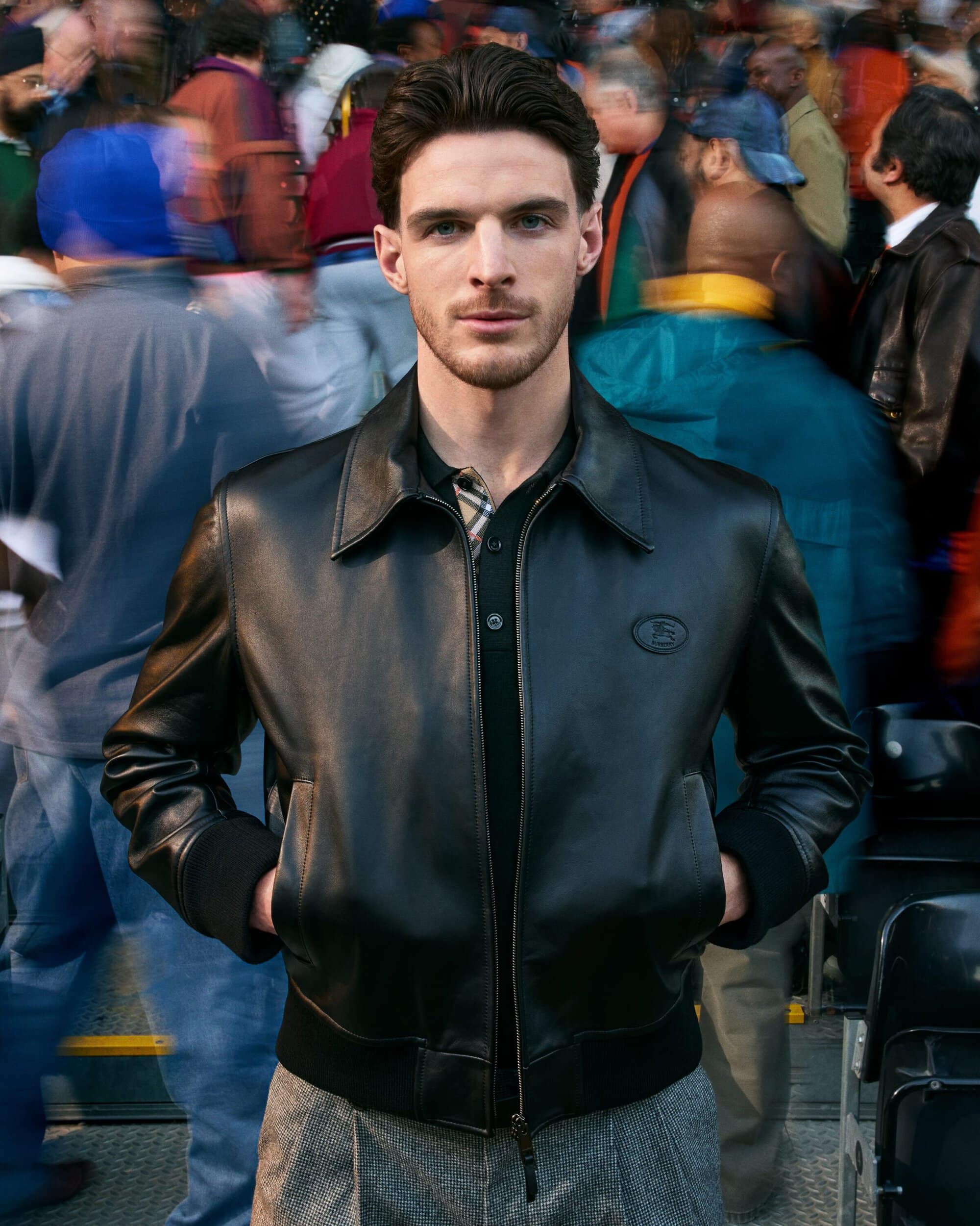
Mario Sorrenti’s photography captures that atmosphere with immediacy and movement. Sun flares cut across goal nets, models lean against posts in oversized outerwear, and spectators crowd stadium seating with an almost documentary looseness. The styling embraces recognizable football-adjacent archetypes — the overcommitted parent on the sidelines, the sharply dressed supporter, the terrace regular wrapped in check scarves — while maintaining enough polish to preserve Burberry’s luxury positioning. Jason Sudeikis standing tensely among shouting fans becomes one of the campaign’s strongest images, balancing humor, Britishness, and character in a way that feels natural rather than overly staged.
The football setting also gives Daniel Lee’s Burberry a clearer cultural framework than some of the brand’s previous outings. Since taking over, Lee has consistently mined British identity through class signifiers, regional references, and everyday dress codes. Here, football becomes the connective tissue binding those ideas together. The campaign moves fluidly between celebrity casting, sport, and street-level familiarity, presenting Burberry less as an aspirational fantasy removed from ordinary life and more as a participant within it. That grounding helps the collection feel lived-in rather than purely editorial.
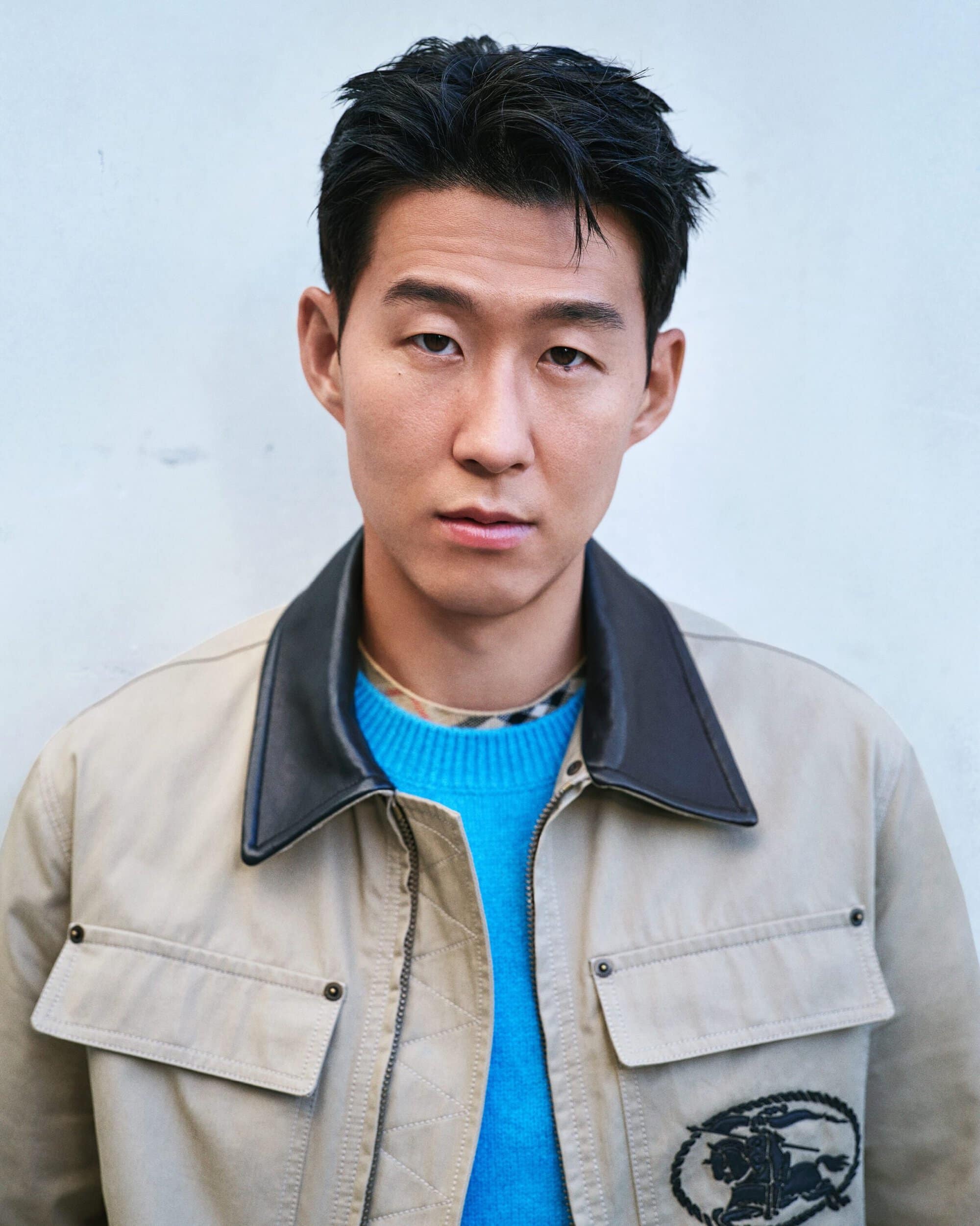
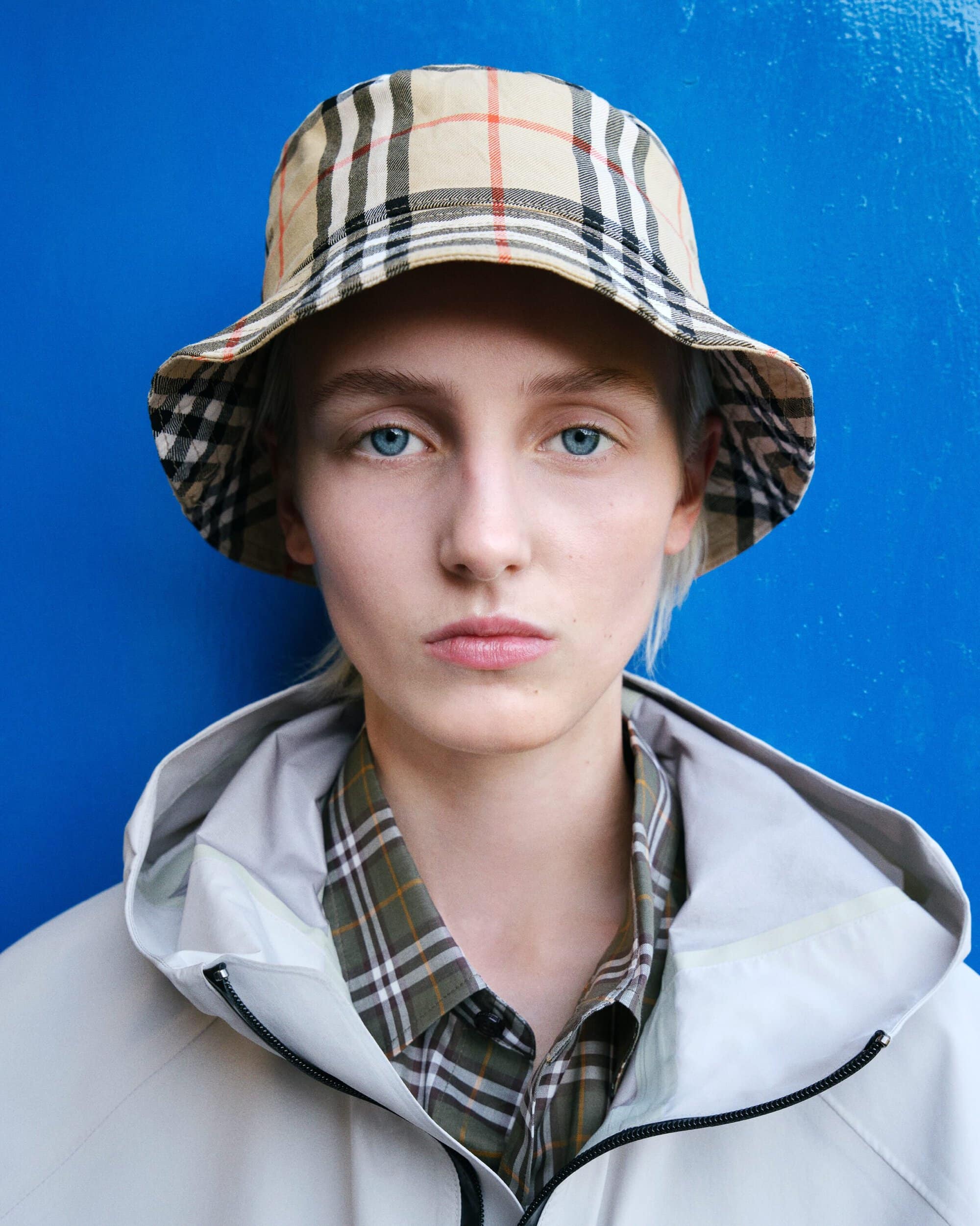
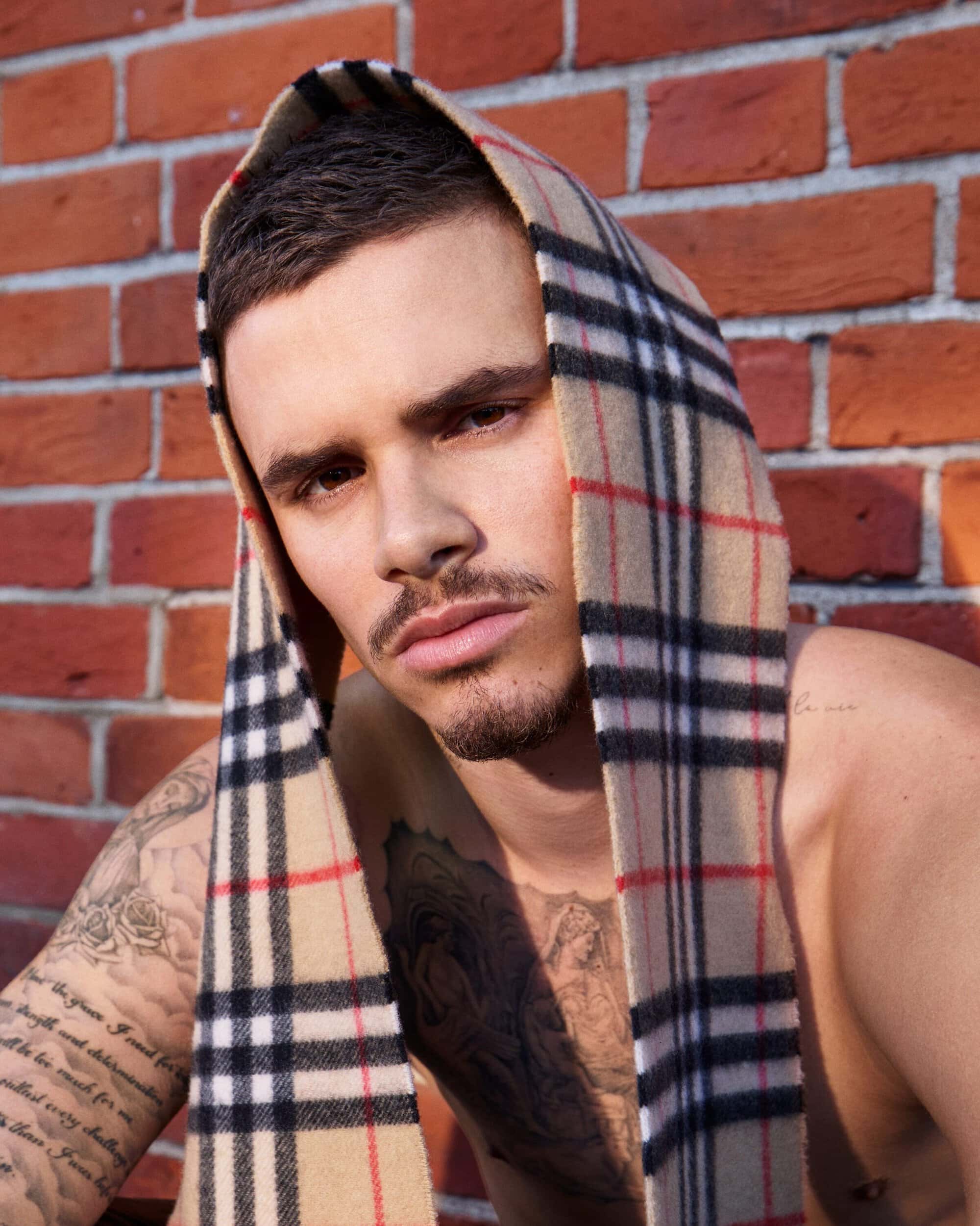
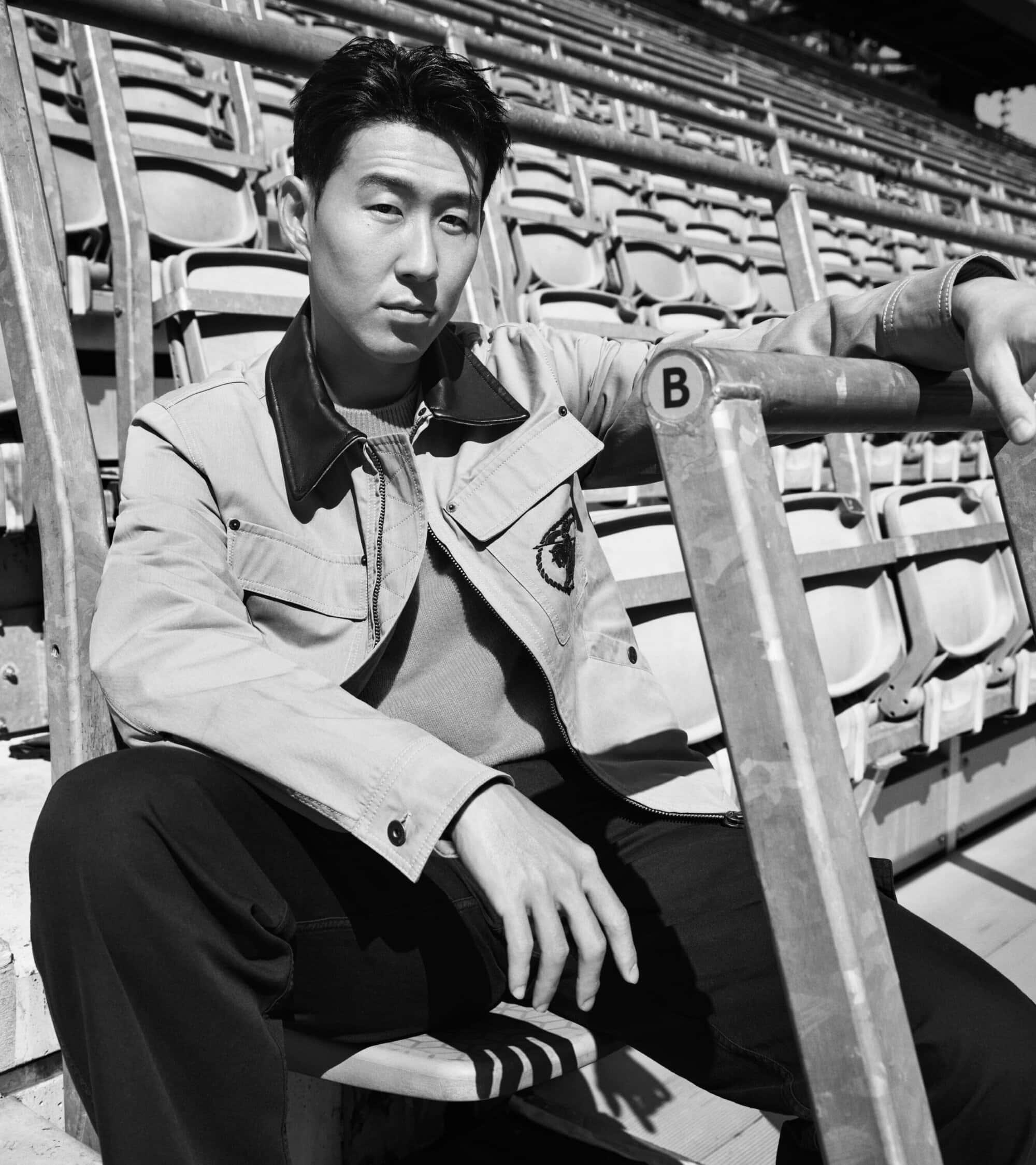
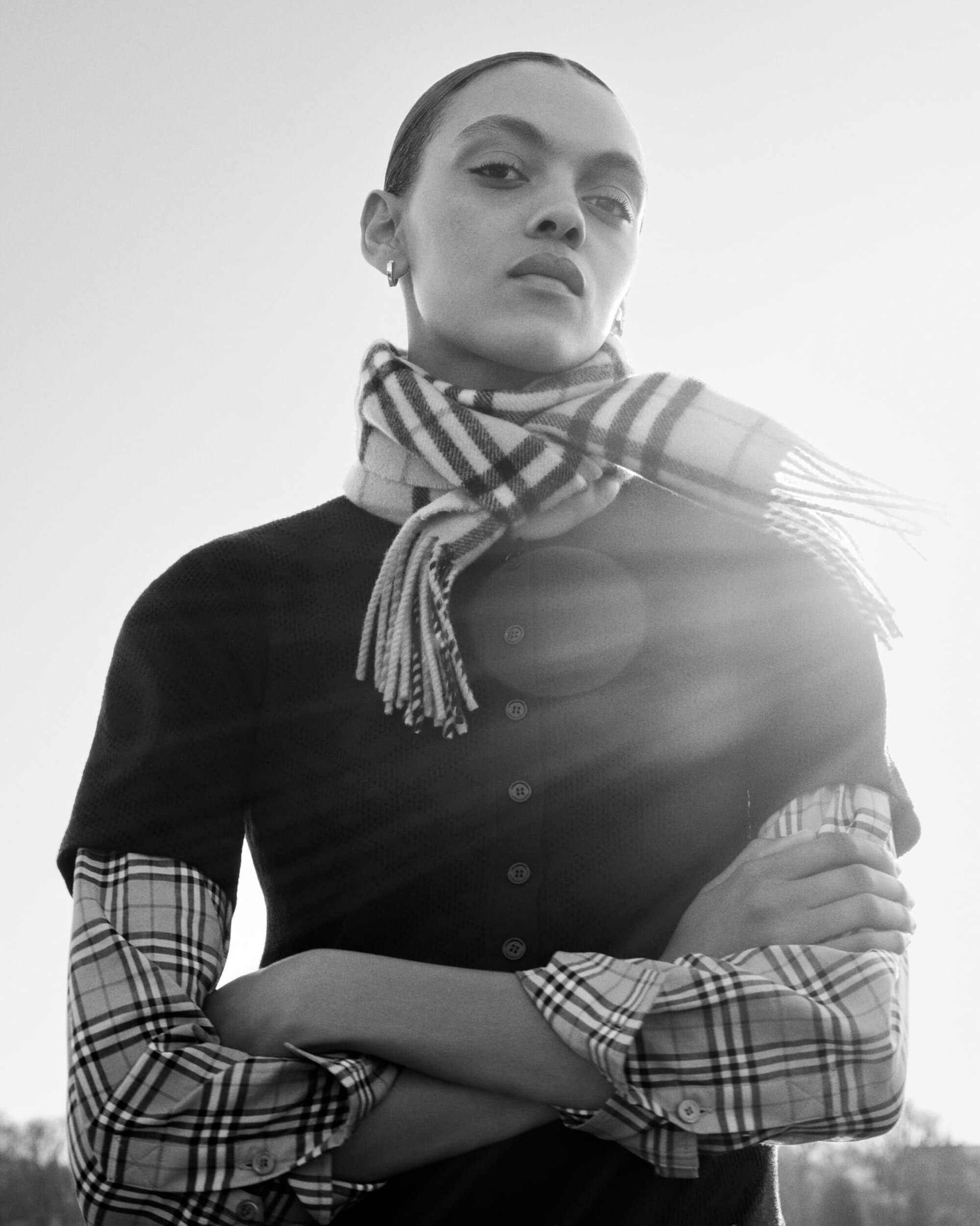
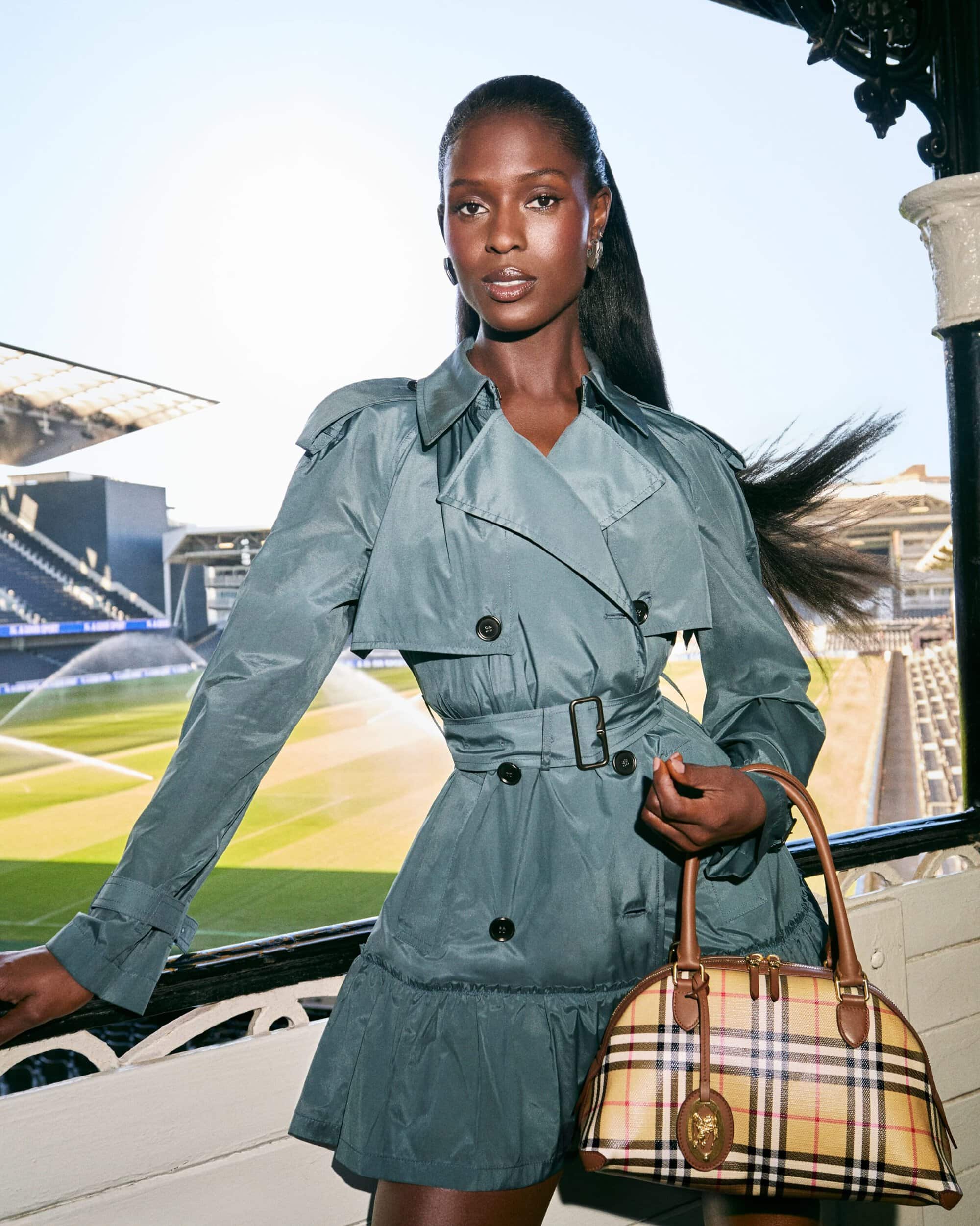
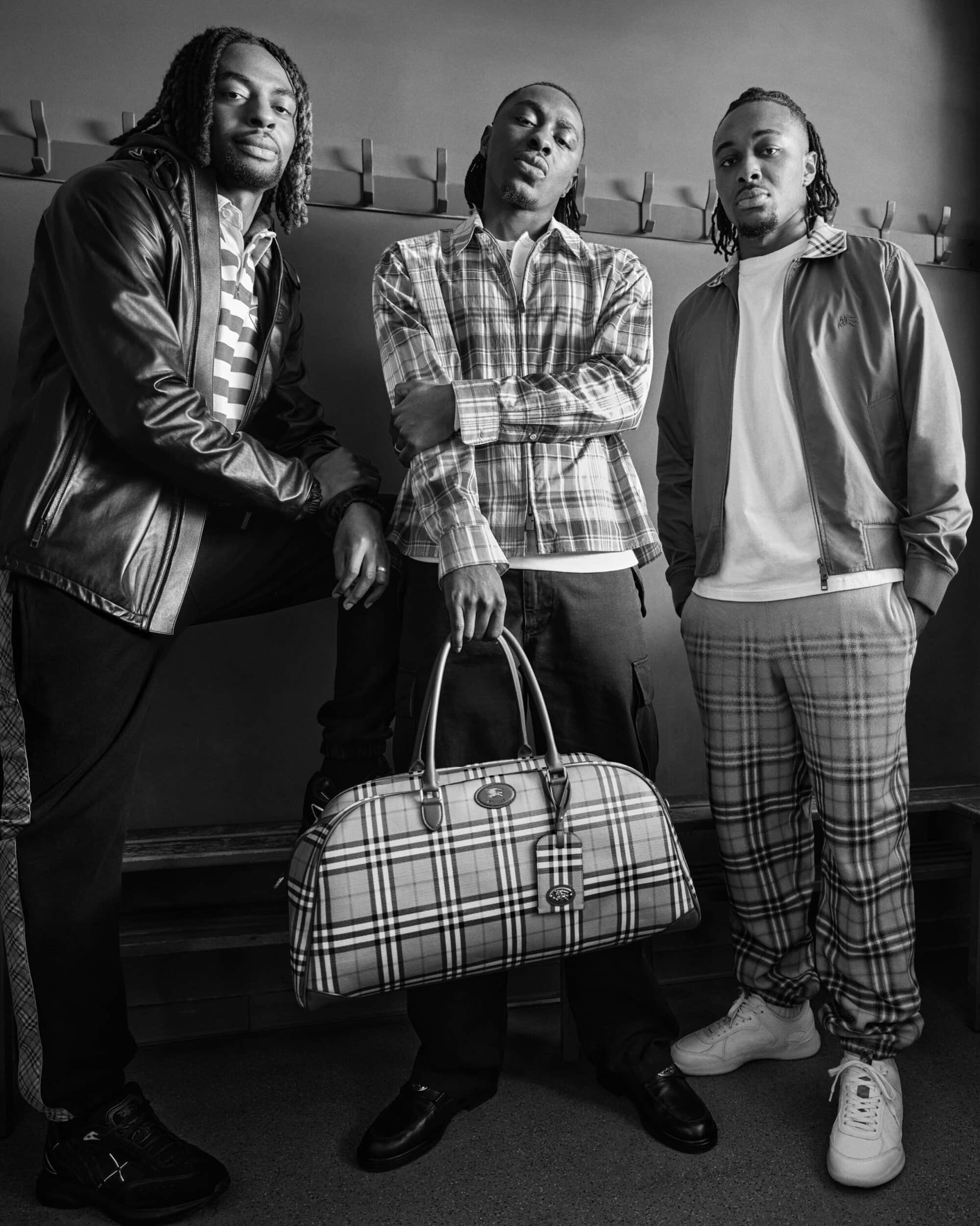
Visually, the campaign succeeds most when it allows the clothing to interact naturally with the environment. The check-lined jackets, lightweight trenches, and Harrington silhouettes feel particularly convincing against fences, stadium seating, and open fields, where their functionality becomes part of the narrative rather than simply a styling device. The recurring use of House Check — on scarves, bags, bucket hats, and trims — reinforces Burberry’s recognizable visual identity without becoming overwhelming. The newly introduced Primrose bag integrates especially well, its curved silhouette offering a softer counterpoint to the sportier outerwear and terrace-inspired styling.
At times, however, the campaign leans heavily on familiarity. Football culture has become increasingly prevalent within luxury fashion imagery over the last several years, and some of the visual cues here — goal nets, dramatic sideline posing, retro terrace styling — can feel expected rather than revelatory. The reliance on celebrity cameos occasionally fragments the storytelling as well, making certain images feel more like isolated portraits than part of a cohesive narrative. While the cast is expansive and culturally broad, not every appearance contributes equally to the emotional atmosphere the campaign is trying to create.
Still, the strongest moments reveal why the concept works. There is a distinctly British understanding of social ritual embedded throughout the imagery — the layering for unpredictable weather, the emotional investment of spectatorship, the strange elegance of dressing up for sport. Burberry taps into that tension effectively, positioning luxury not in opposition to ordinary life, but woven through it. Even the soundtrack choice of Bloc Party’s “Banquet” reinforces this sense of mid-2000s British cultural memory, adding momentum and nostalgia without feeling forced.
The campaign also subtly expands Burberry’s current visual language. Previous Daniel Lee campaigns often emphasized surrealism, eccentricity, or stylized British oddness; “A Good Sport” feels more grounded and emotionally accessible. There is humor here, but also affection. The campaign understands that football culture is not solely about athleticism or competition, but about community, identity, routine, and belonging — themes that align naturally with Burberry’s longstanding focus on outerwear designed for movement through everyday life.
“A Good Sport” may not radically reinvent fashion’s relationship with football imagery, but it does sharpen Burberry’s own perspective within that space. By centering fandom rather than glamour, and atmosphere rather than spectacle, the campaign delivers one of Daniel Lee’s more cohesive articulations of modern British luxury: practical, emotional, slightly eccentric, and deeply tied to cultural ritual.
Burberry Creative Director | Daniel Lee
Artistic Direction | Lane & Associates
Photographer | Mario Sorrenti
Videographer | Elliott Power
Models | Jason Sudeikis, Romeo Beckham, Bright, Jodie Turner-Smith, Lucy Punch, Stephen Graham, Rosie Huntington-Whiteley, Neelam Gill, Declan Rice, Eberechi Eze, Leah Williamson, Naomi Girma, and Son Heung-min
Music | “Banquet” by Bloc Party