Light Within Shadow
Review of Balenciaga Fall 2026 Fashion Show
By Mackenzie Richard Zuckerman
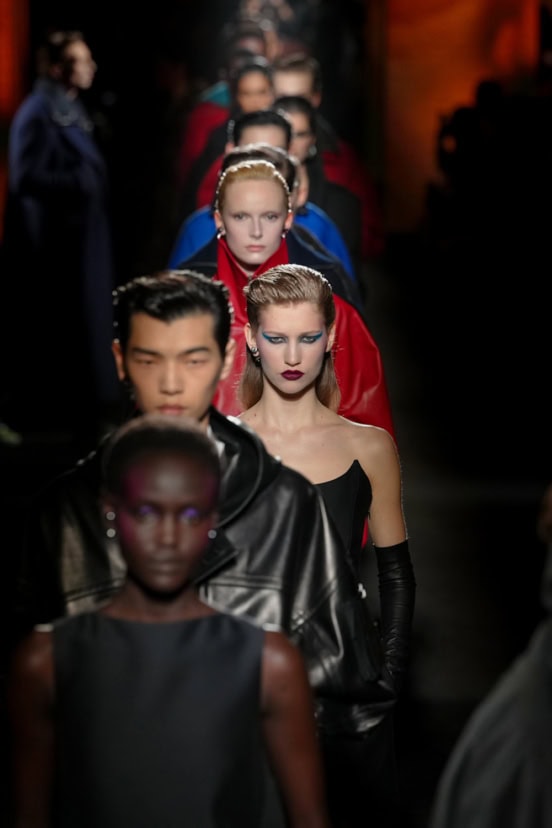
In his second collection for Balenciaga, Pierpaolo Piccioli continues the process of defining his relationship with one of fashion’s most architecturally revered houses. Rather than leaning into spectacle or disruption, Piccioli approaches the label through reflection—this season turning to the High Renaissance artistic technique of clair-obscur, the interplay of light and darkness used by painters to give form and dimension to their subjects.
For Piccioli, the concept extended beyond aesthetics. He described the collection as a kind of “fresco of humanity,” a portrait of contemporary life shaped by the tension between shadow and illumination. In collaboration with Euphoria director Sam Levinson, he sought to capture something of the emotional complexity of a generation—clothes acting as portraits of individuals navigating the modern world.
It is an ambitious premise. The question on the runway was how seamlessly that philosophical framework would translate into clothing—and how it might continue to define Piccioli’s evolving vision for Balenciaga.
THE COLLECTION
THE VIBE
Architectural, Humanist, & Divided
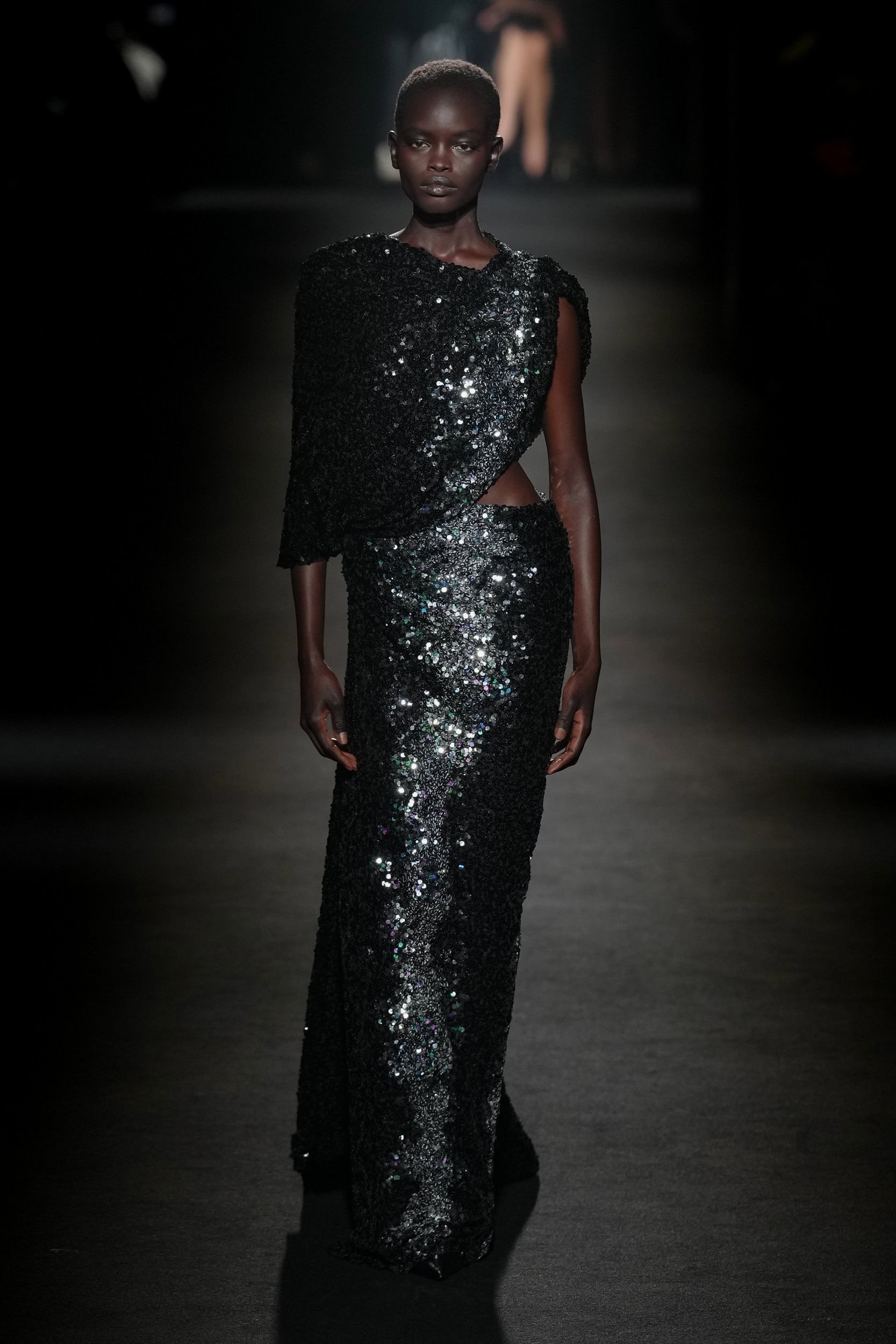
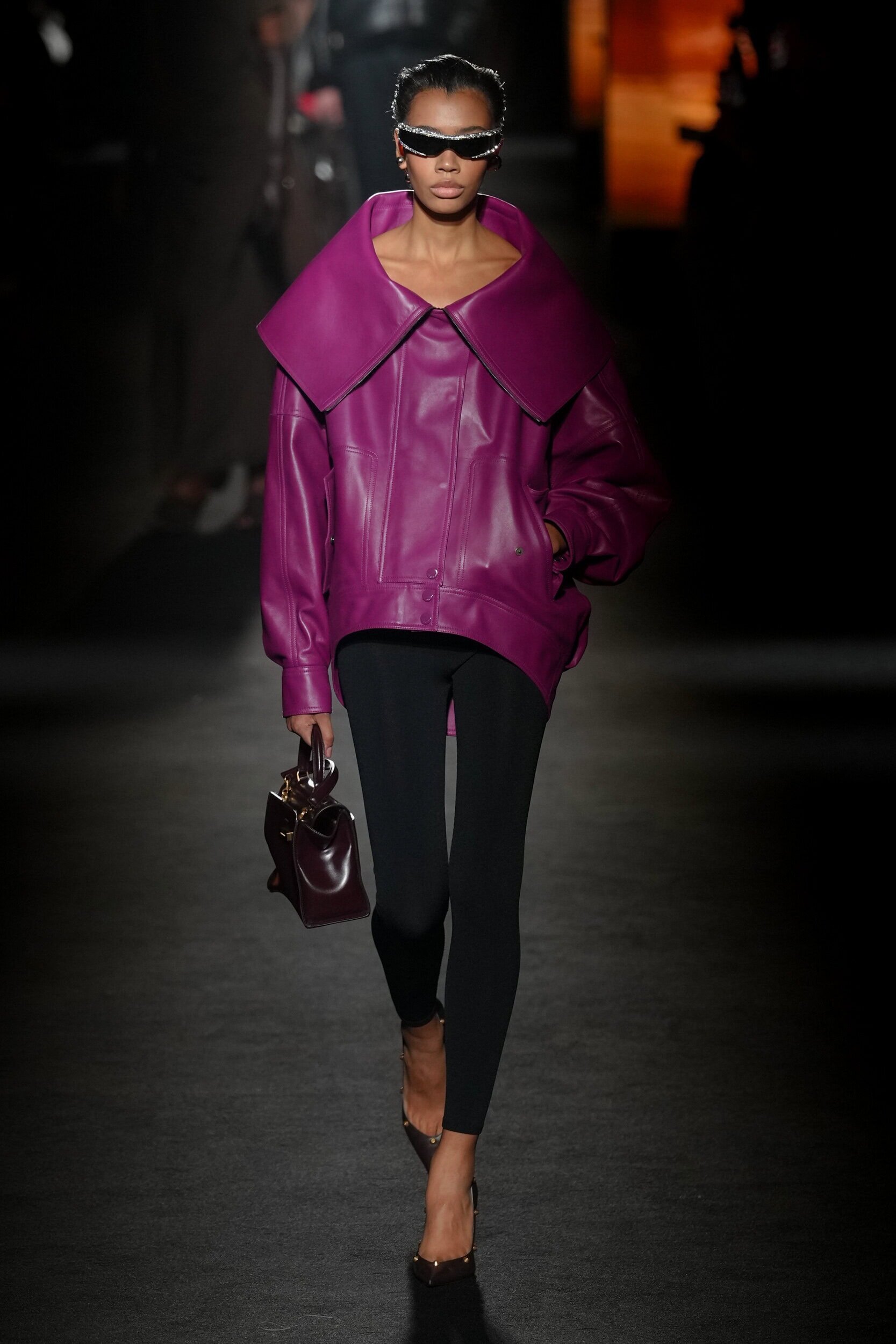
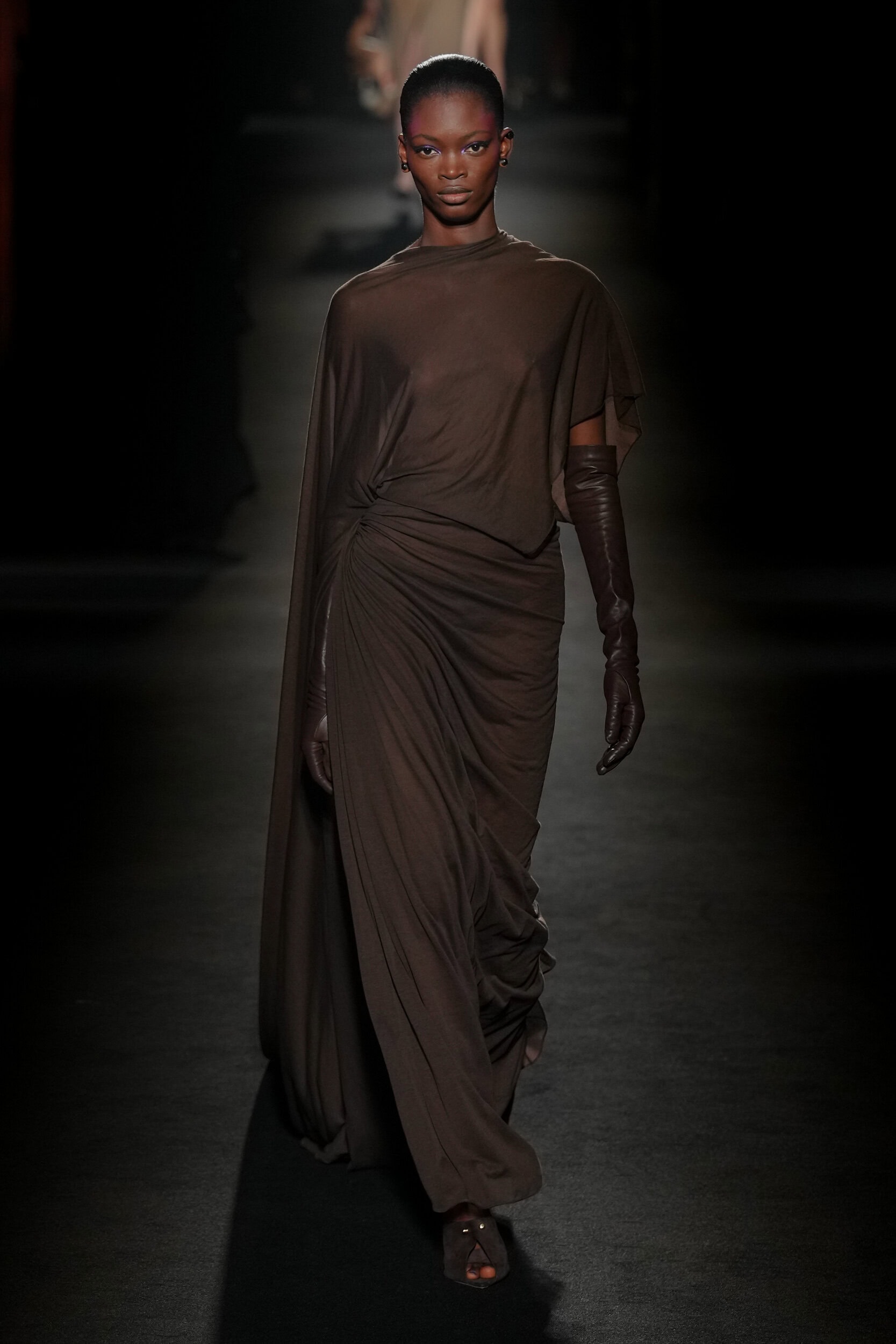
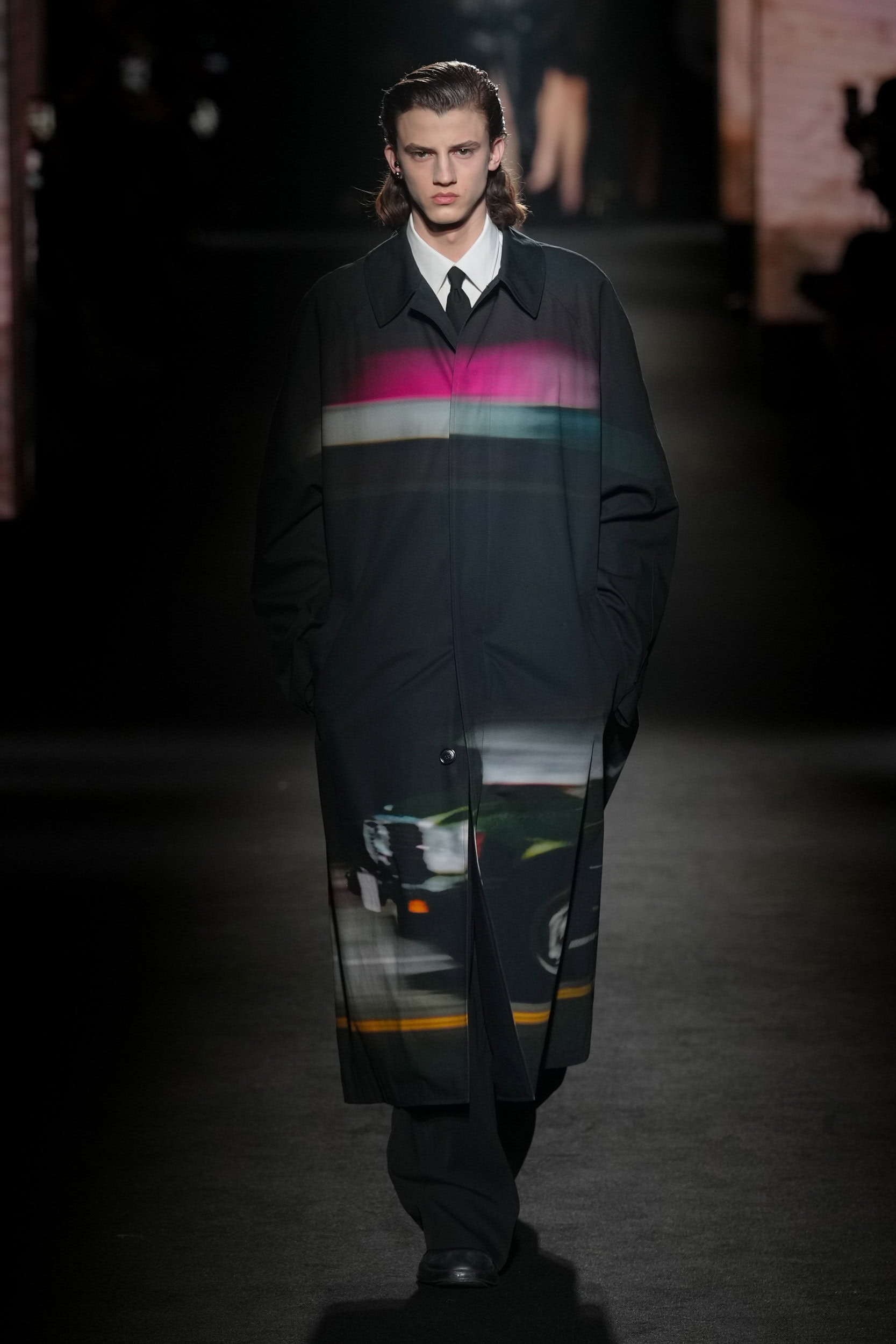
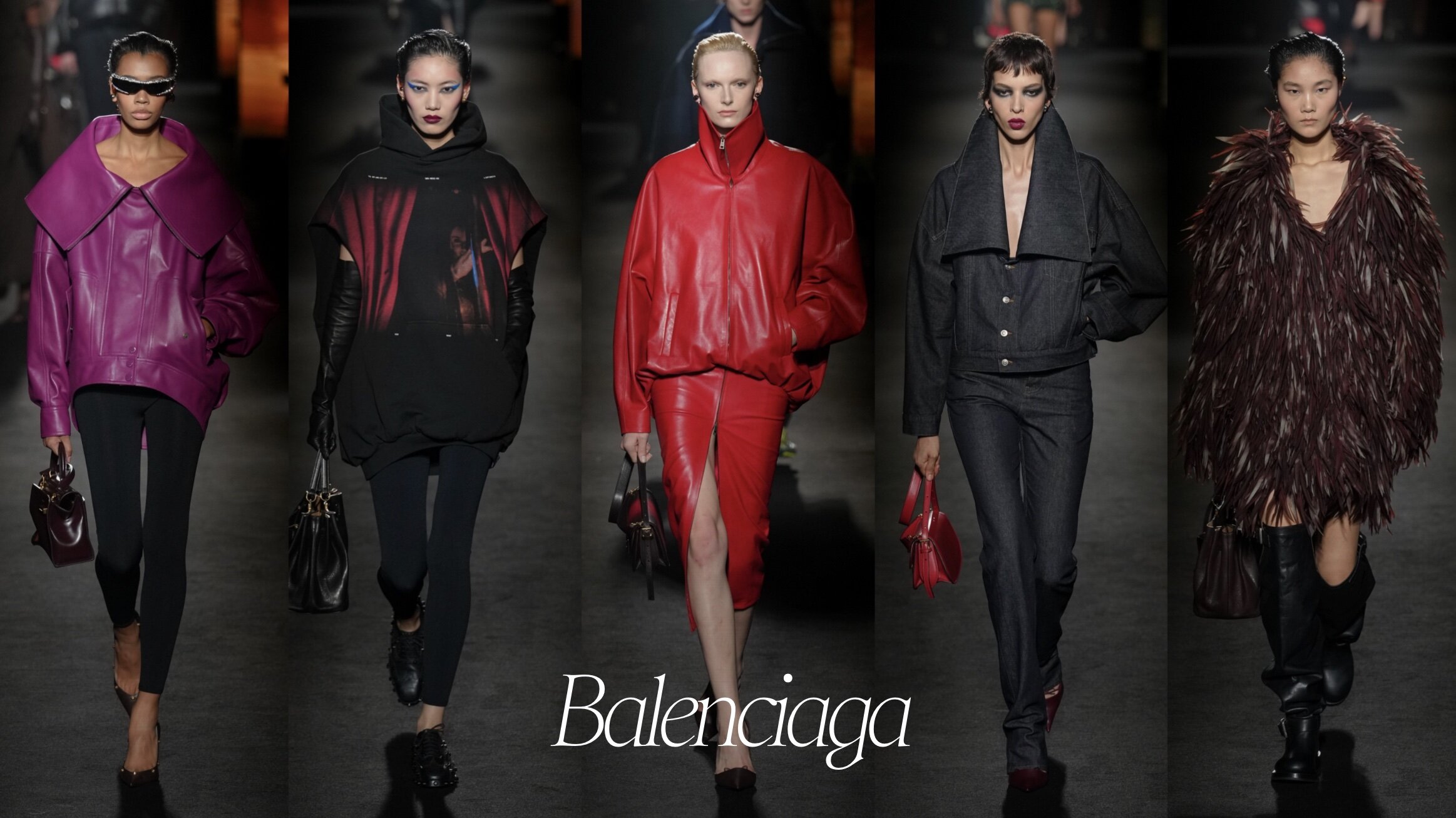
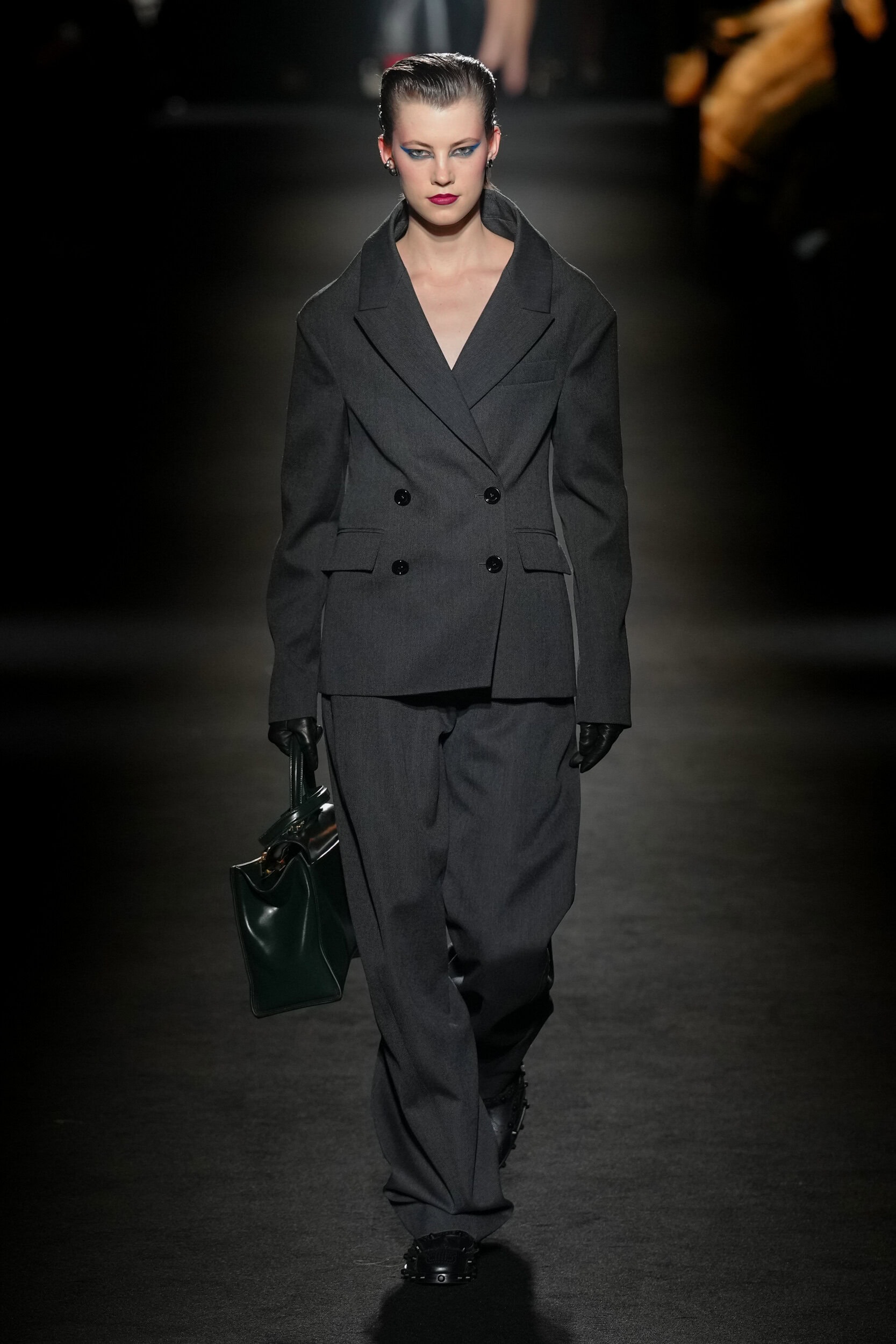
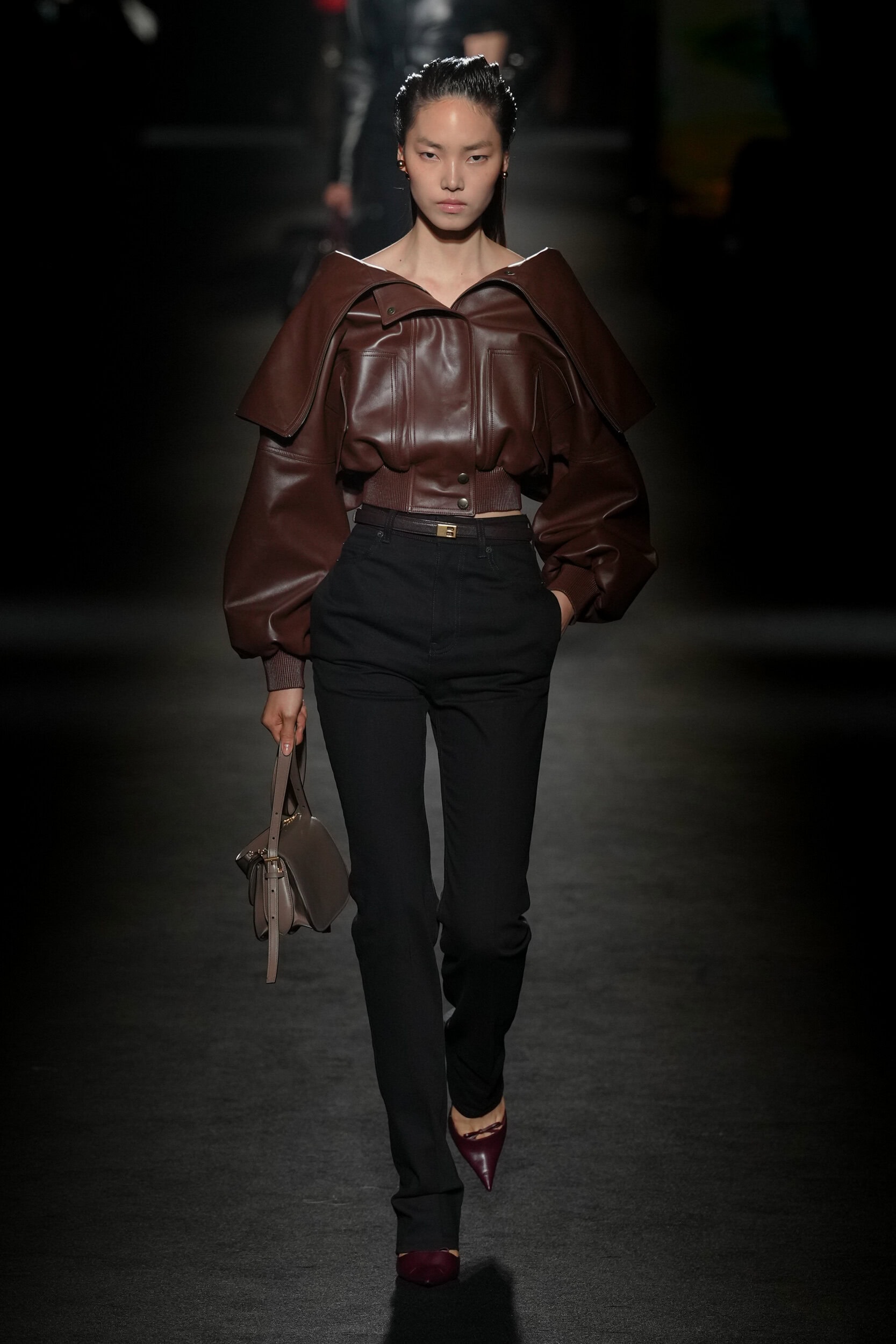
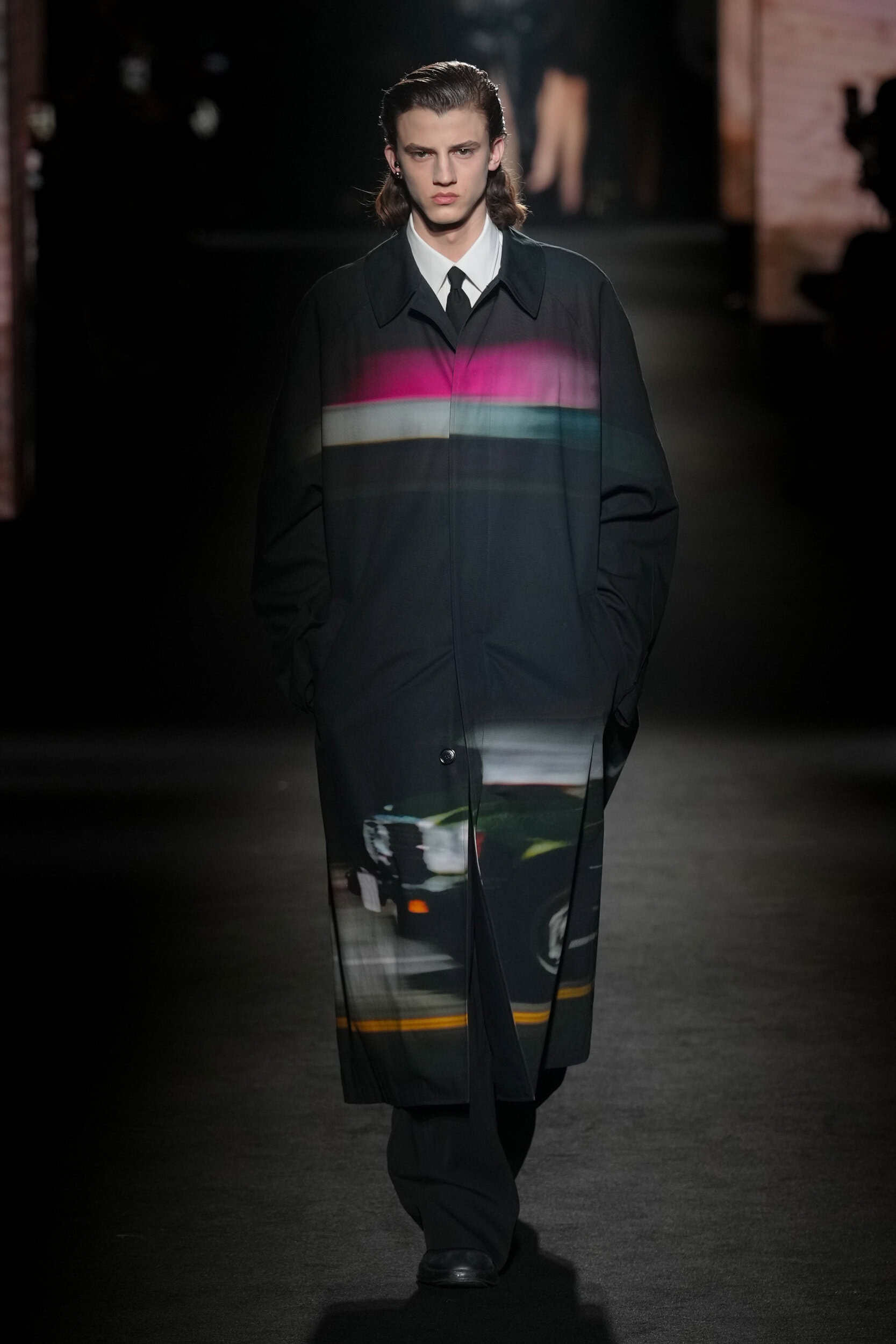
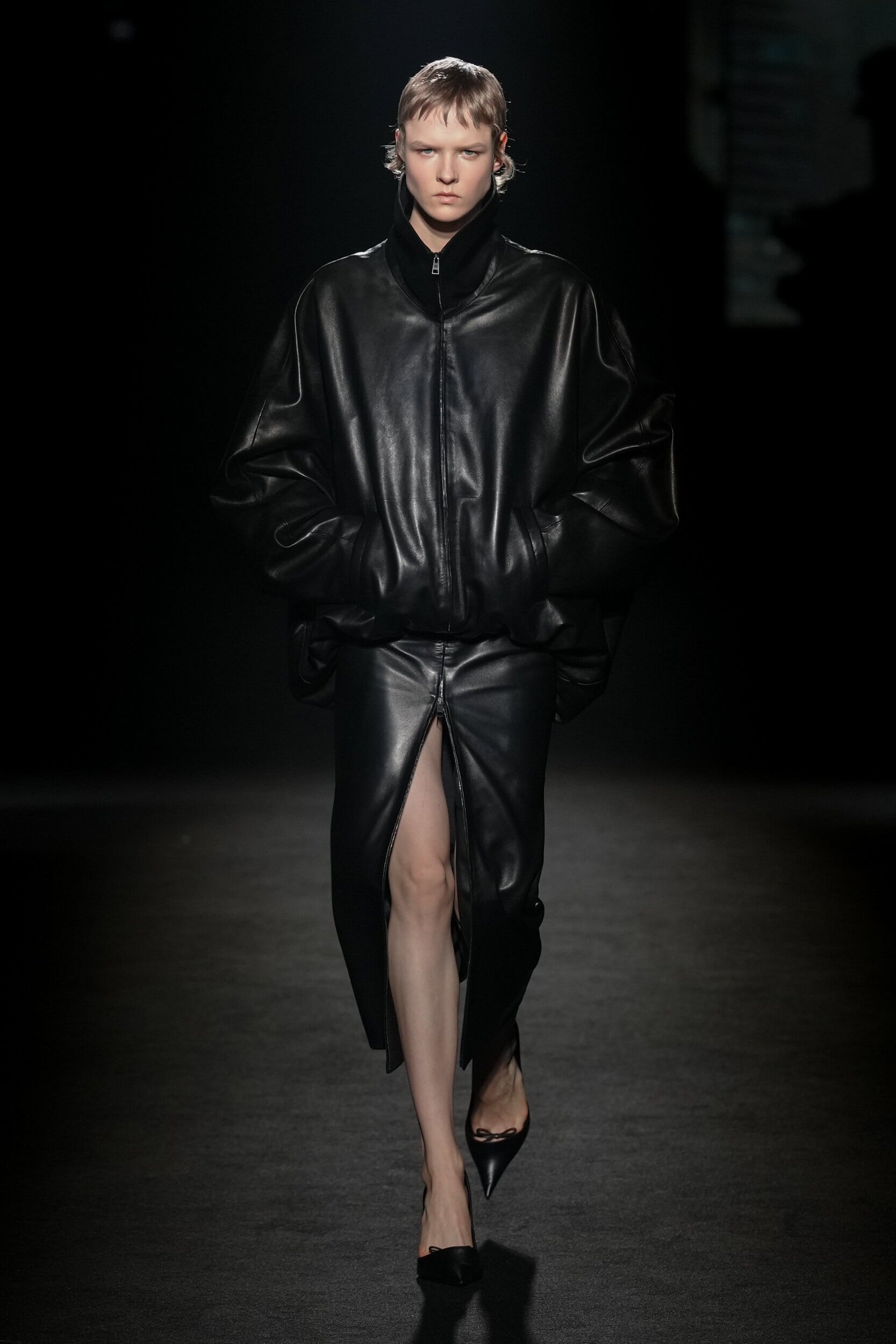
At its strongest, the collection leaned into the sculptural language that has long defined the house. Monumental overcoats, cocoon silhouettes, and sharply structured tailoring evoked the architectural discipline of Cristóbal Balenciaga himself. These pieces framed the body with authority, emphasizing proportion and volume while allowing fabric to carve space around the form.
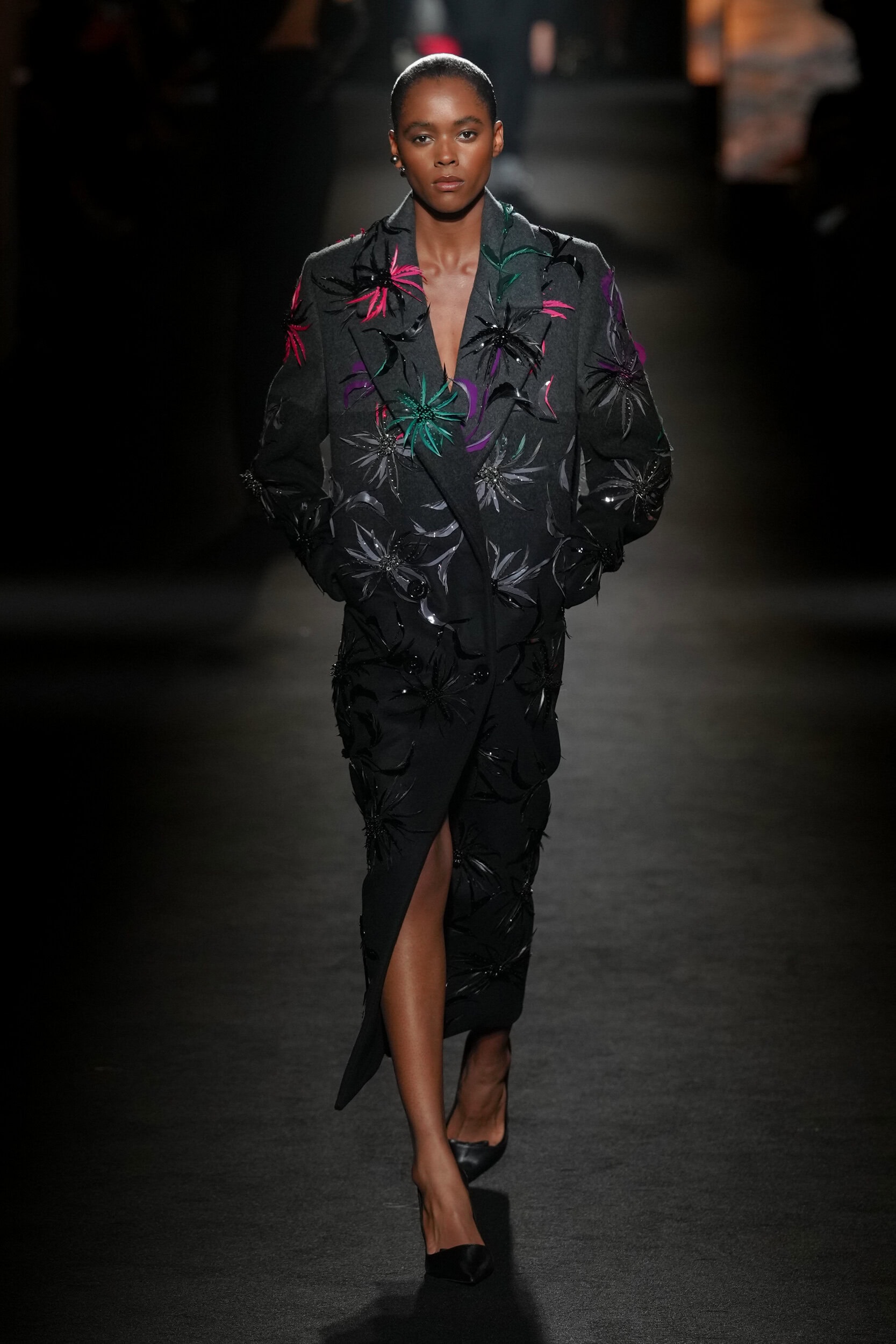
Outerwear emerged as a particular highlight. Oversized wool coats, leather jackets, and elongated tailoring established silhouettes that felt both imposing and refined. In these moments, Piccioli’s interpretation of Balenciaga appeared assured—connecting his own instinct for elegance with the house’s historical mastery of structure.
Alongside this architectural direction, however, the collection introduced a second narrative. Sweatshirts, graphic elements, and more casual silhouettes—connected to Piccioli’s collaboration with Levinson—appeared as expressions of the generational portrait he described backstage. These pieces suggested a contemporary youth presence within the collection, emphasizing fashion as a reflection of everyday people rather than distant archetypes.
Yet while both directions carried conceptual weight, they did not always converge visually. The sculptural coats and couture-inflected silhouettes spoke in one language, while the youth-coded garments operated in another. The tension between these approaches occasionally disrupted the architectural rhythm that the strongest looks established.
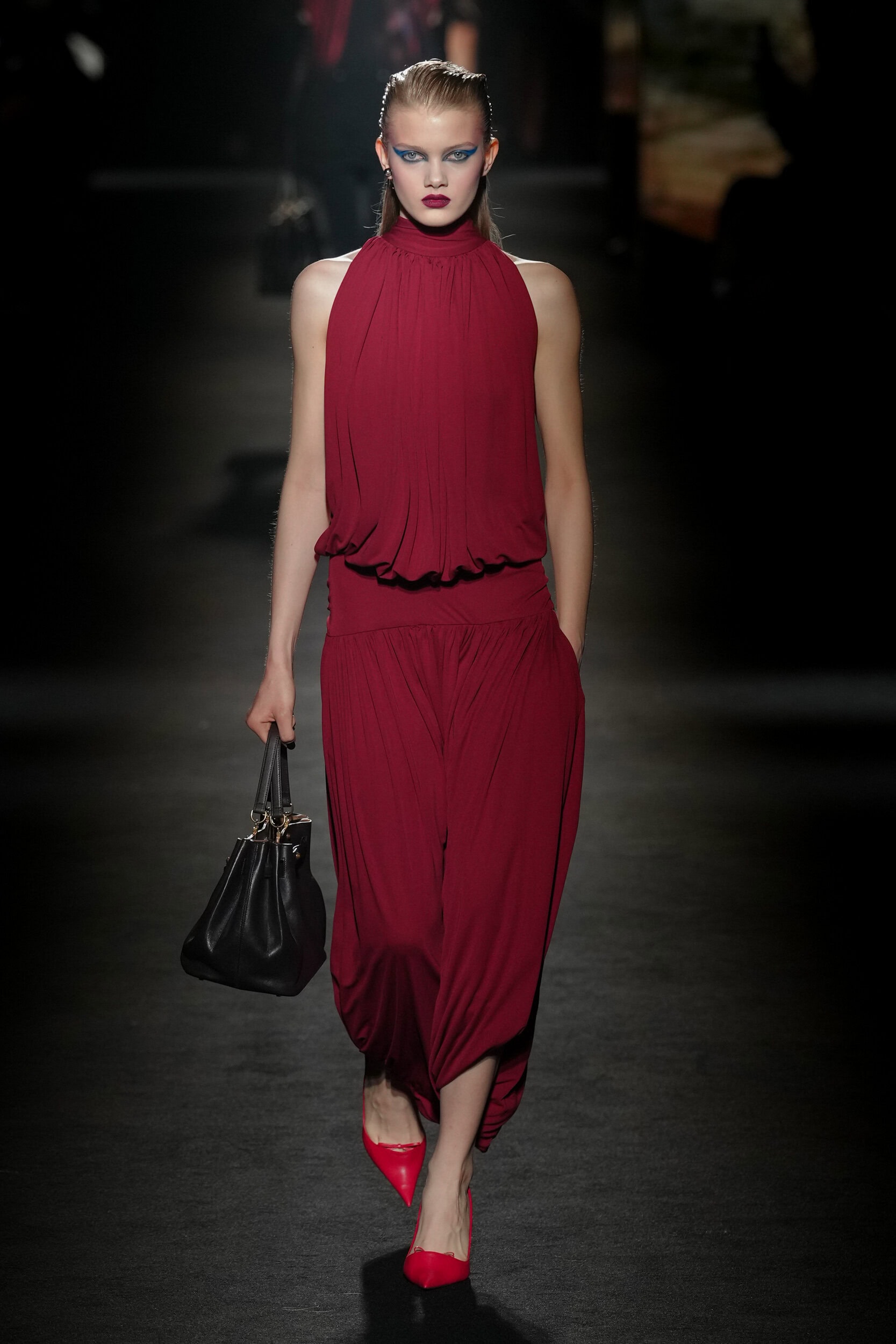
Color reinforced the collection’s central metaphor. Deep blacks and charcoals dominated the palette, punctuated by sudden bursts of vivid color—electric pink, cobalt blue, acid green, and crimson appearing almost like flashes of light emerging from shadow. The effect echoed Piccioli’s exploration of clair-obscur, using color as a symbolic illumination within darkness.
Even in these moments of contrast, the designer’s emphasis remained on the body itself as structure. Collars framed the face like portraiture, draped fabrics followed the natural movement of the body, and silhouettes often seemed to hover between softness and control.
THE QUOTE
I wanted to create a fresco of humanity — a portrait of this moment and this generation. Fashion can capture that tension between darkness and light, and within that tension you find the truth of people.
– Pierpaolo Piccioli
THE WRAP UP
If Piccioli’s first Balenciaga collection introduced the tone of his approach, this sophomore outing continues to expand the conversation. His vision for the house appears rooted less in provocation than in humanism—an attempt to frame fashion as a portrait of contemporary life rather than an abstract spectacle.
Where the collection felt most convincing was in its architectural outerwear and sculptural silhouettes. In those pieces, Piccioli seemed to discover a natural dialogue between his own sensibility and the structural heritage of Cristóbal Balenciaga.
The generational portrait concept, meanwhile, offers intriguing possibilities, though its visual language has yet to fully merge with the monumental architecture that defines the house at its strongest. Bringing those narratives into clearer conversation may become one of the defining challenges of Piccioli’s Balenciaga moving forward.
Still, the intention is clear. Through shadow and illumination, volume and restraint, Piccioli continues to search for the light within Balenciaga’s legacy—revealing, piece by piece, the contours of his own vision for the house.