A New Wave at Chanel
Review of Chanel Cruise 2027 Fashion Show
By Kenneth Richard
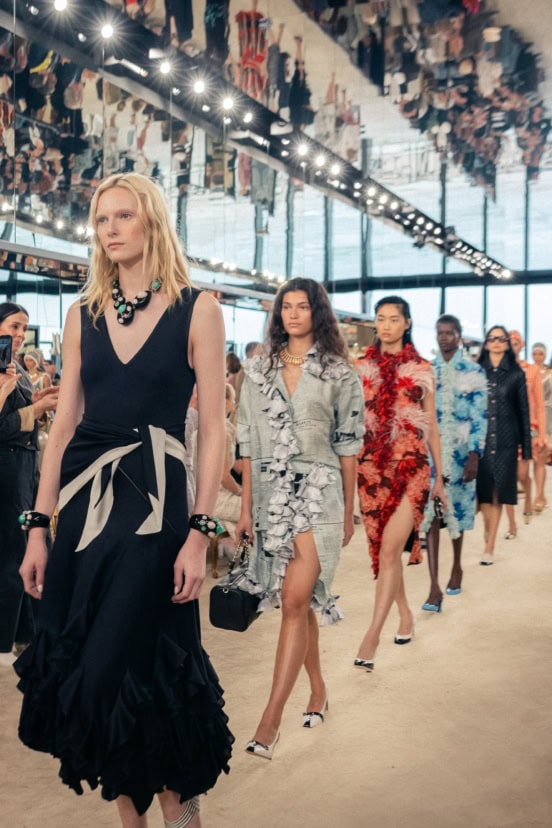
Biarritz does not lend itself to subtlety, and Chanel did not try to force it. Outside the Casino Municipal, surfers cut through the Atlantic on black boards stamped with the interlocking C’s—less a stunt than a reminder that this was not just a destination show, but a return to origin. Inside, Sofia Coppola and Nicole Kidman took their seats as the light shifted over the water, and Matthieu Blazy presented his first Cruise collection for Chanel in the very town where Gabrielle Chanel first reshaped fashion in 1915.
It is one thing to take the reins of Chanel. It is another to begin at the place where its codes were first loosened, where jersey replaced rigidity and elegance first learned how to move. For his Cruise 2027 debut, Blazy chose not to compete with that history, but to work within it—quietly, deliberately, and with just enough confidence to let the setting do part of the talking.
THE COLLECTION
THE VIBE
Kinetic Elegance, Recalibrated Codes & Fluid Craft
Blazy didn’t try to reinvent Chanel—he reminded it how to move again. And that’s a far more intelligent proposition.
Chanel returned to Biarritz not to reminisce, but to remember how it once learned to move.
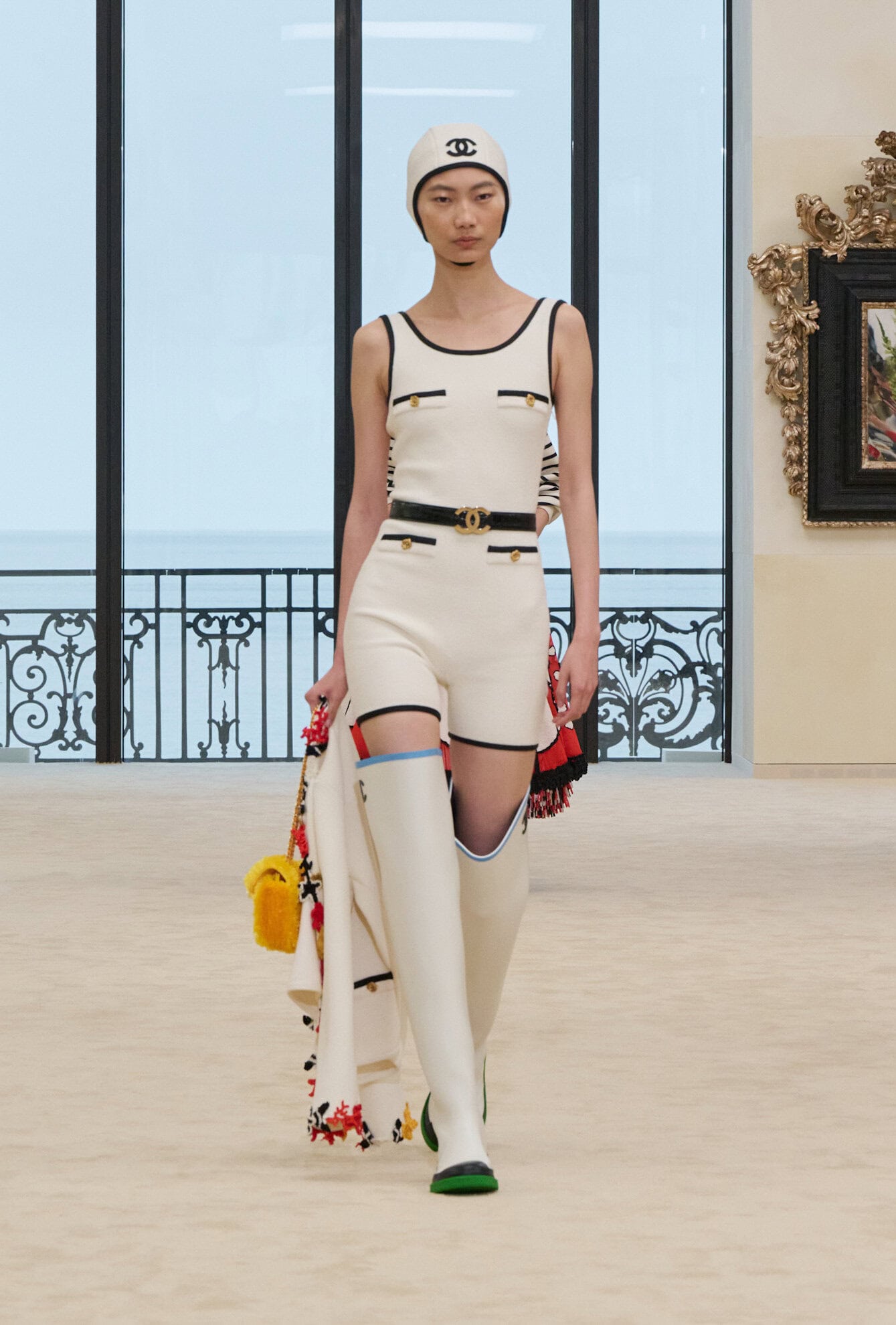
“What struck me about Biarritz was the power of the ocean, the elements, and nature… Everything here is about movement, there’s a sense of speed and intensity,” said Blazy.
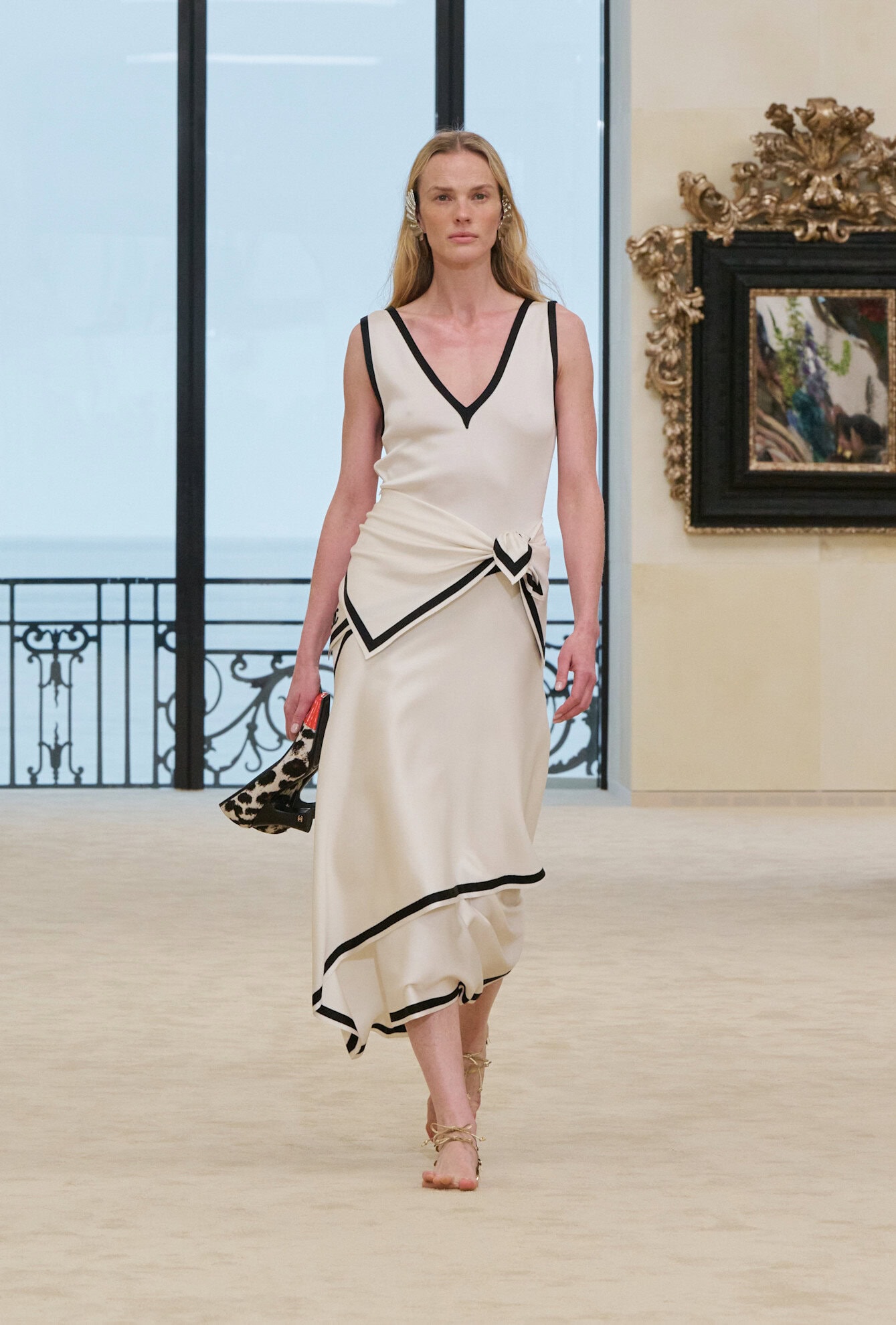
Blazy’s collection unfolded with a kind of restraint that felt almost radical in a season often defined by overstatement. There was no need for overt declarations. Instead, there was a steady accumulation of ideas—about motion, about ease, about how clothes behave once they leave the runway and enter real life. If anything, the collection suggested a designer more interested in how clothes move than how they declare—a subtle but significant shift for a house so often defined by its symbols.
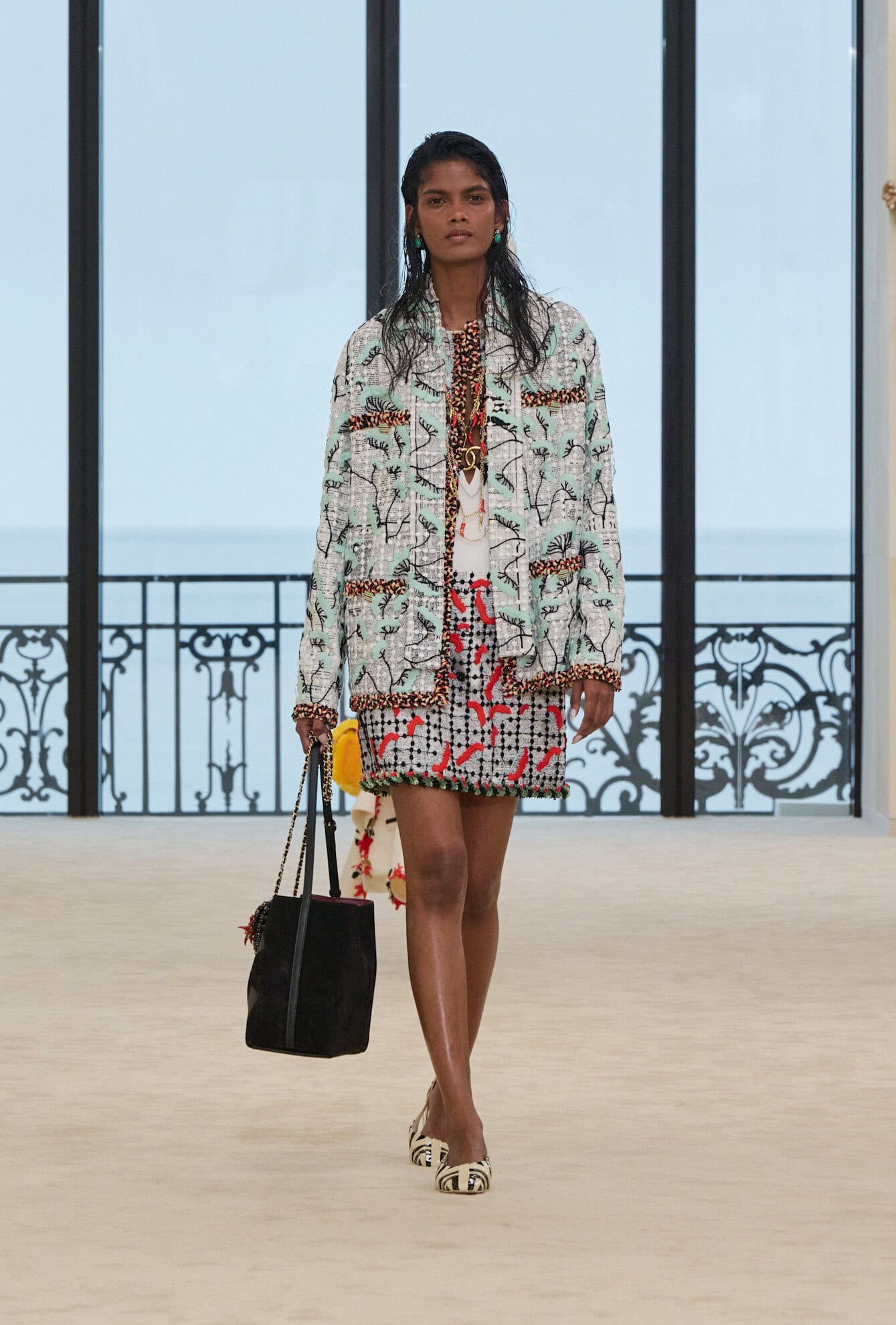
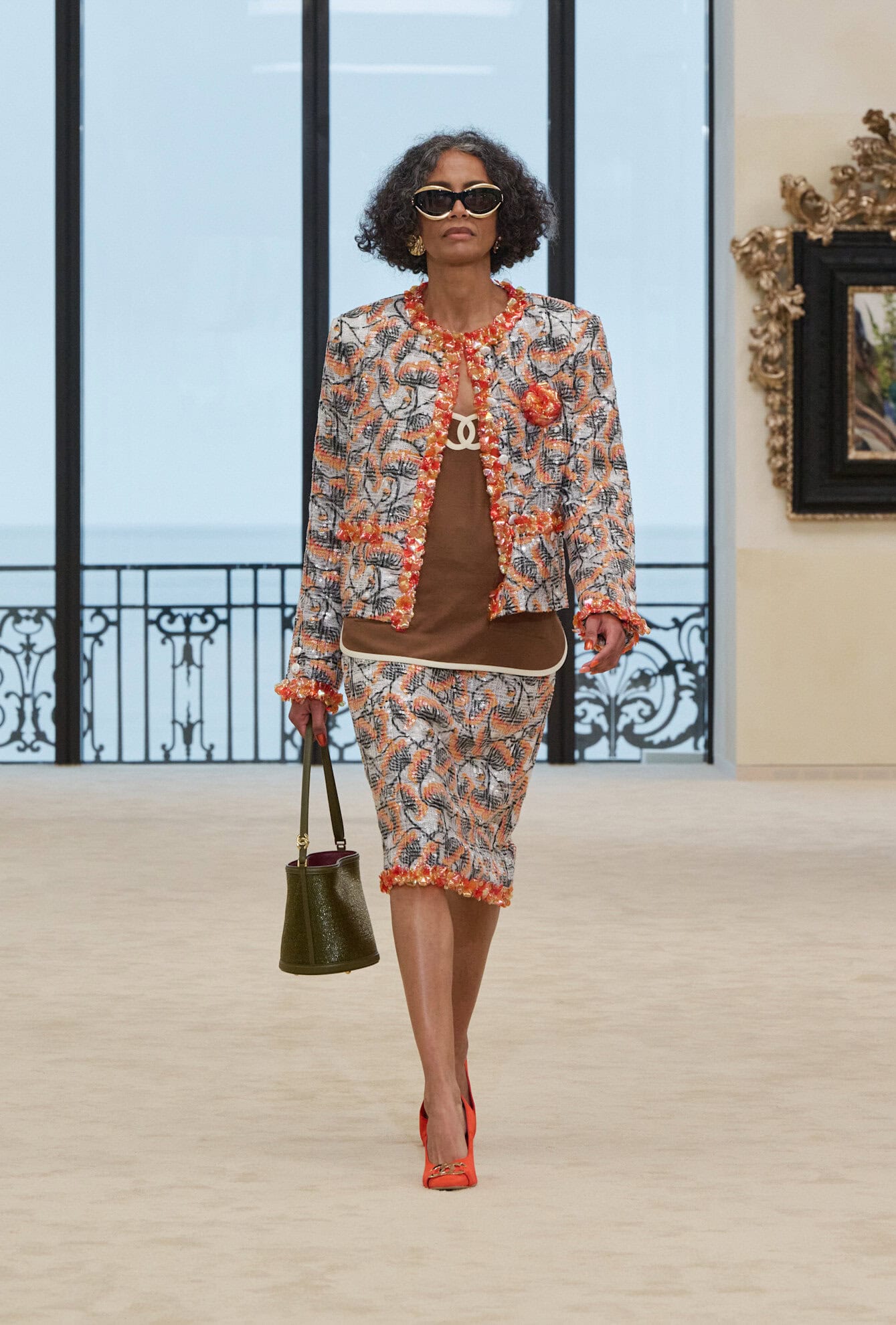
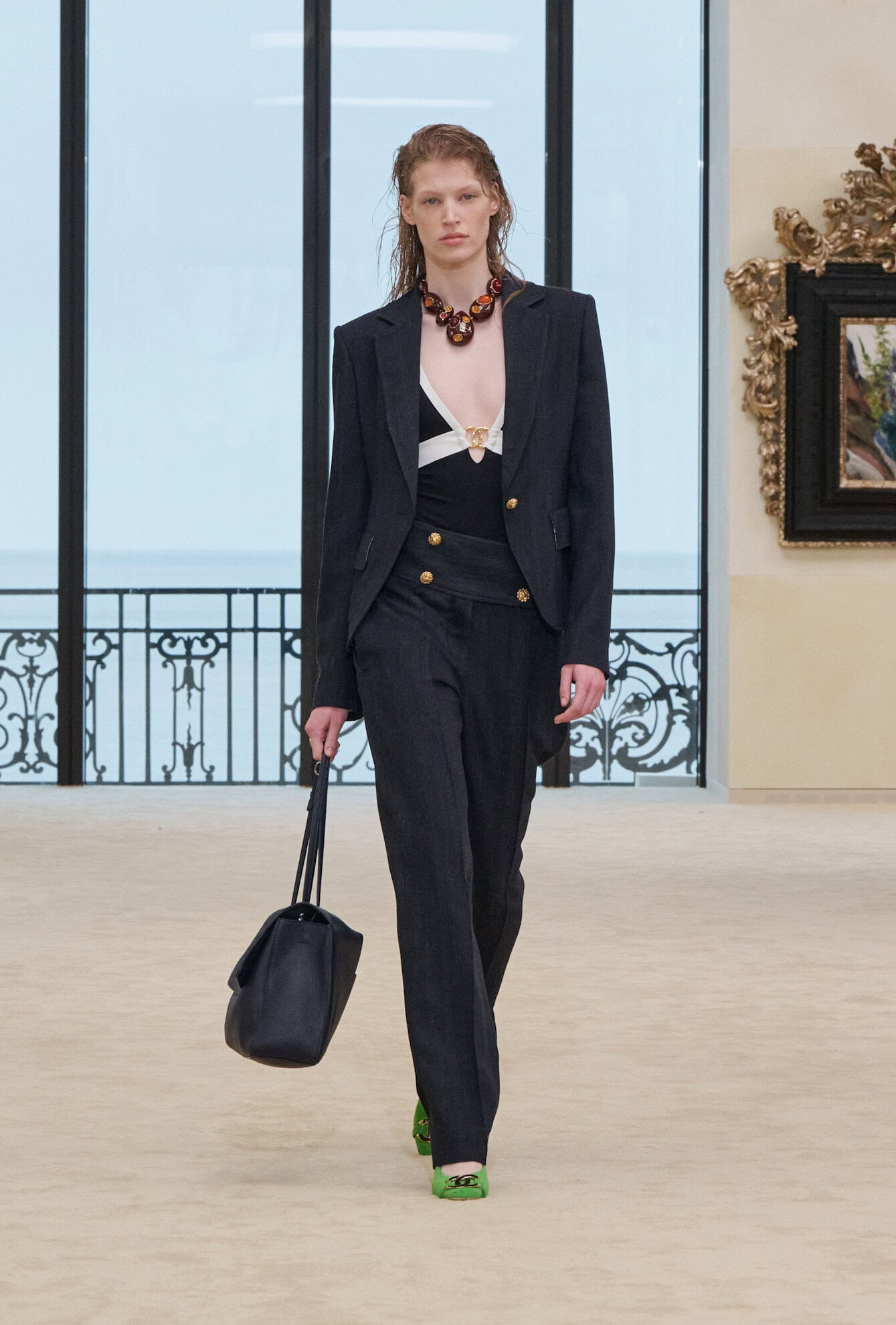
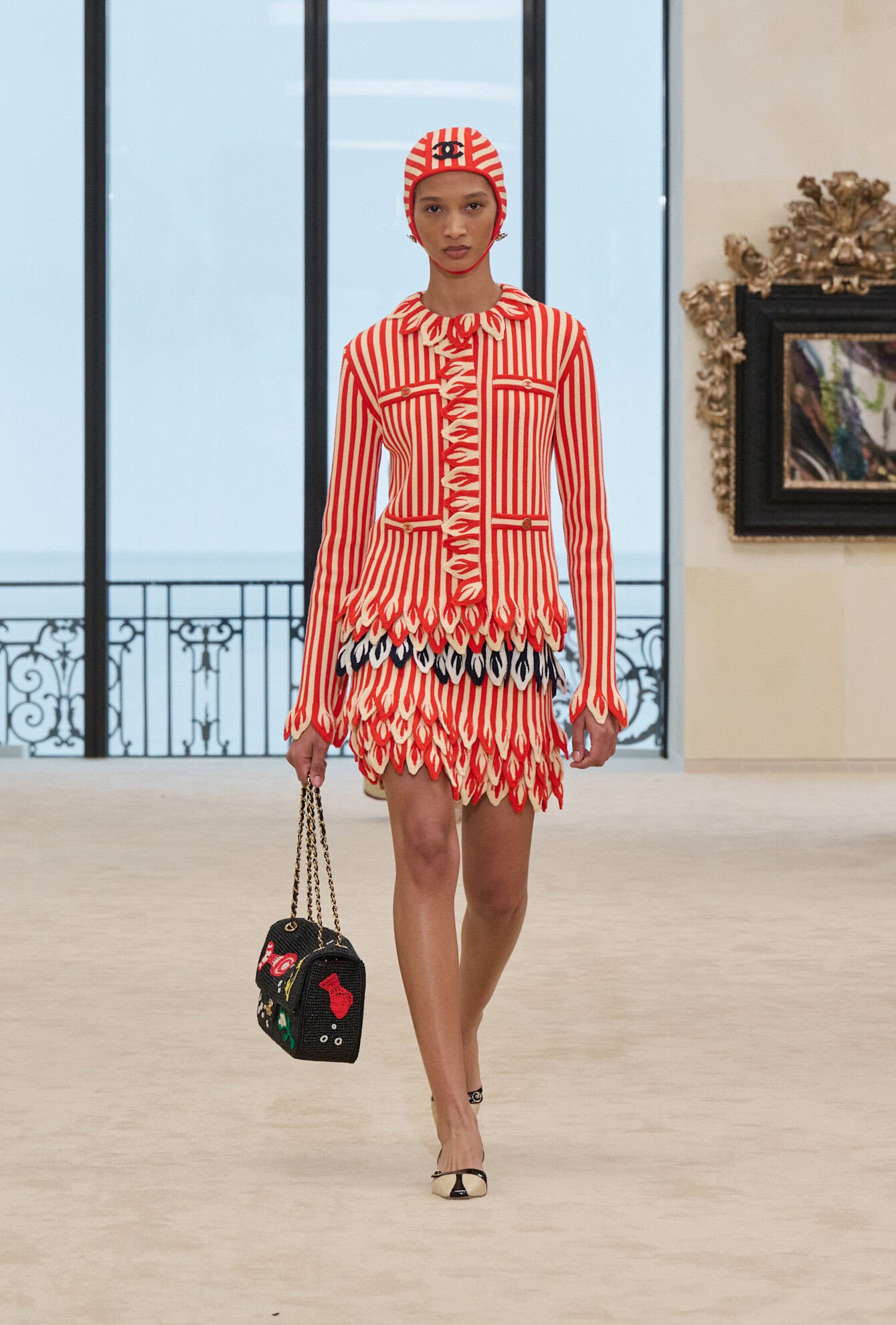
The Chanel suit, so often treated as a monument, was gently brought back down to earth. Jackets softened, skirts swung, and proportions relaxed just enough to suggest they belonged to a woman with somewhere to be. It was Chanel without stiffness, though never without structure. The discipline remained—it simply stopped announcing itself.
That shift extended outward. Accessories leaned practical without losing their polish: oversized striped totes, bucket bags, jewelry that felt instinctive rather than inherited. These were not finishing touches; they were part of a life being proposed.
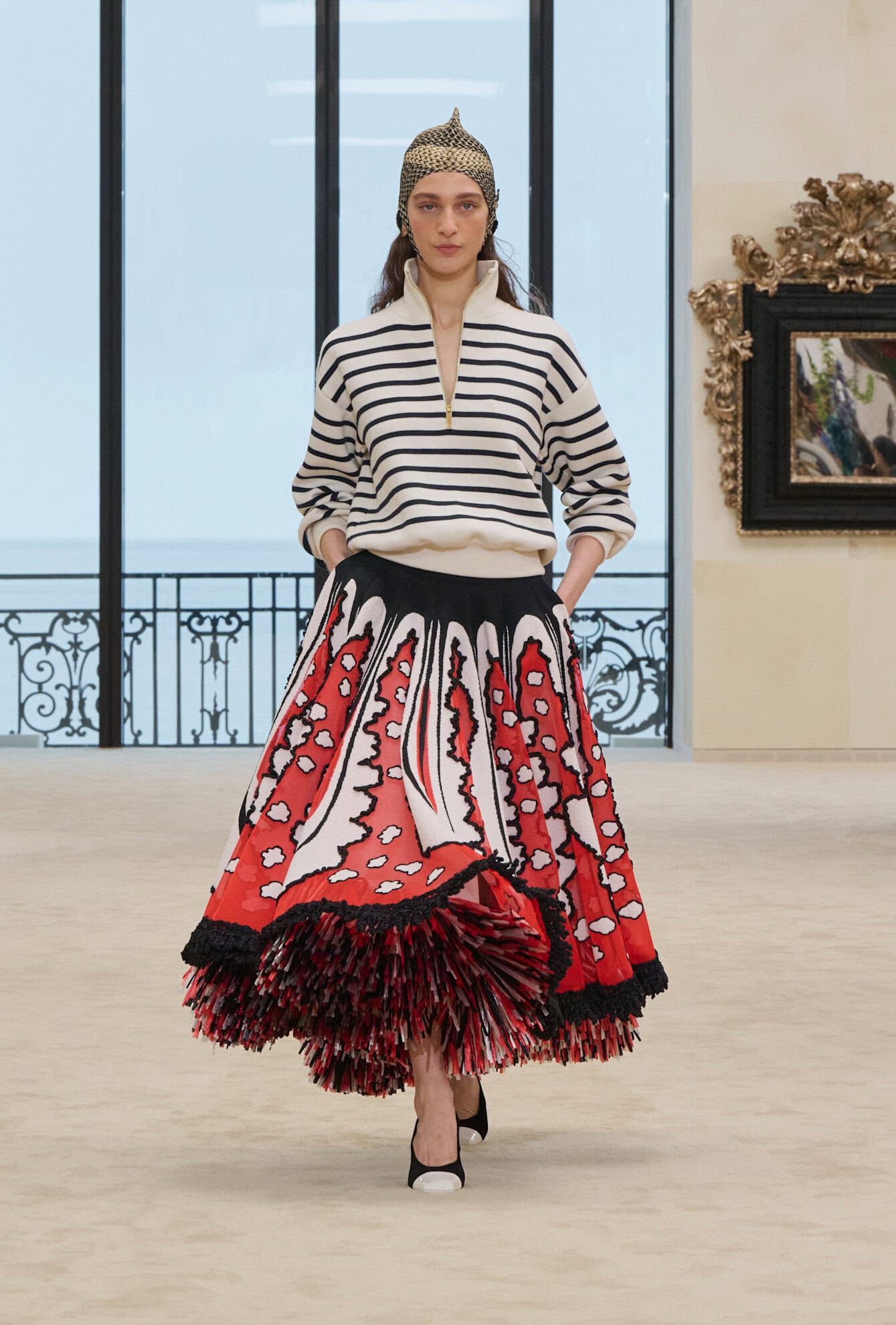
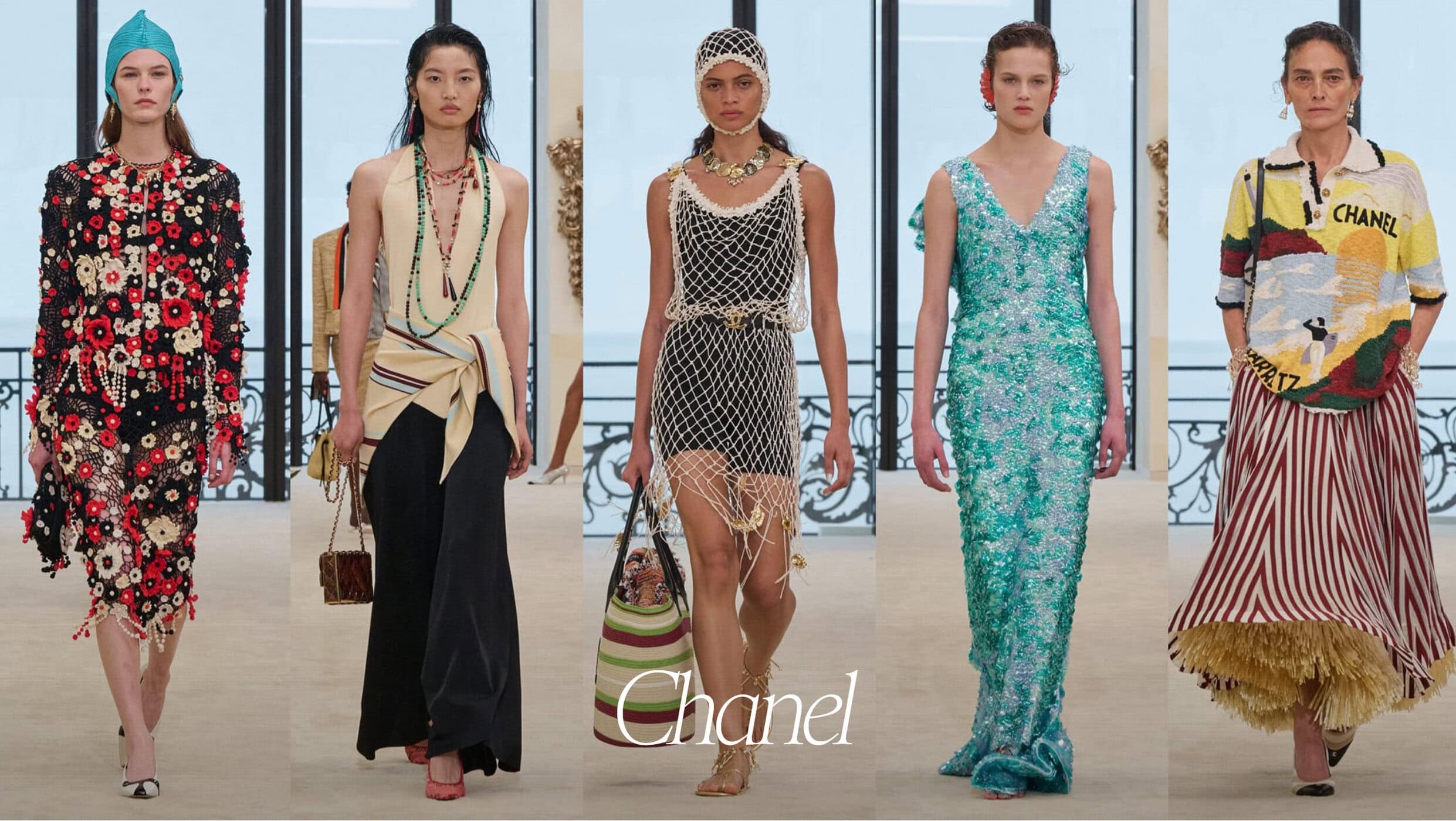
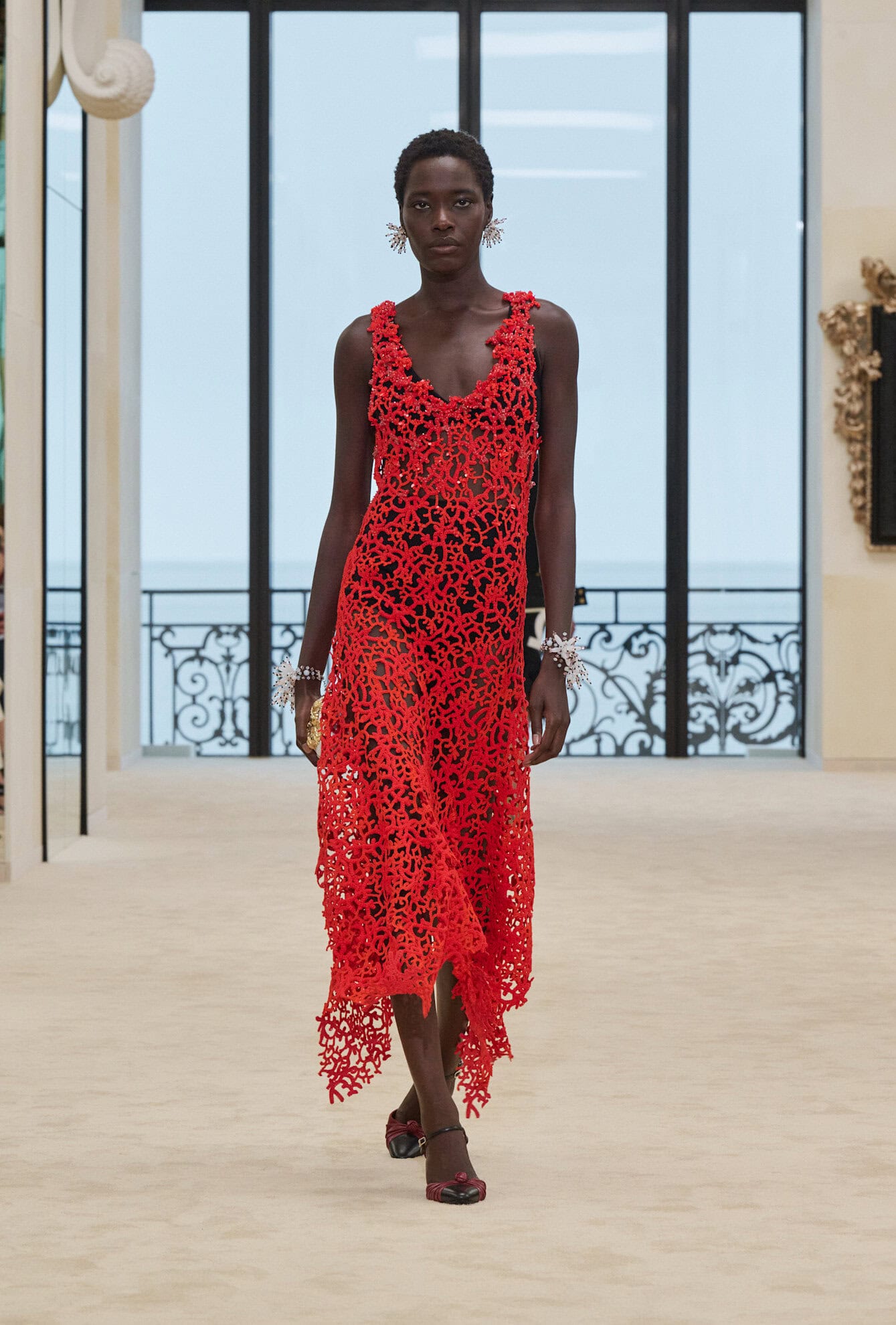
And then, just as the collection settled into that ease, it shifted. A crocheted red dress that moved like air caught in thread. Black ruffles layered to the point of near abstraction. Graphic prints and seaside gestures that occasionally edged toward the literal—souvenir dressing flirting, briefly, with illustration. Blazy allows these moments of play, though never entirely loses control of them.
What emerges is not a redefinition of Chanel, but a recalibration of how it behaves. This is a Chanel that breathes more freely, that moves with less effort, that feels less posed and more lived in. It doesn’t reject its history; it simply stops performing it so earnestly.
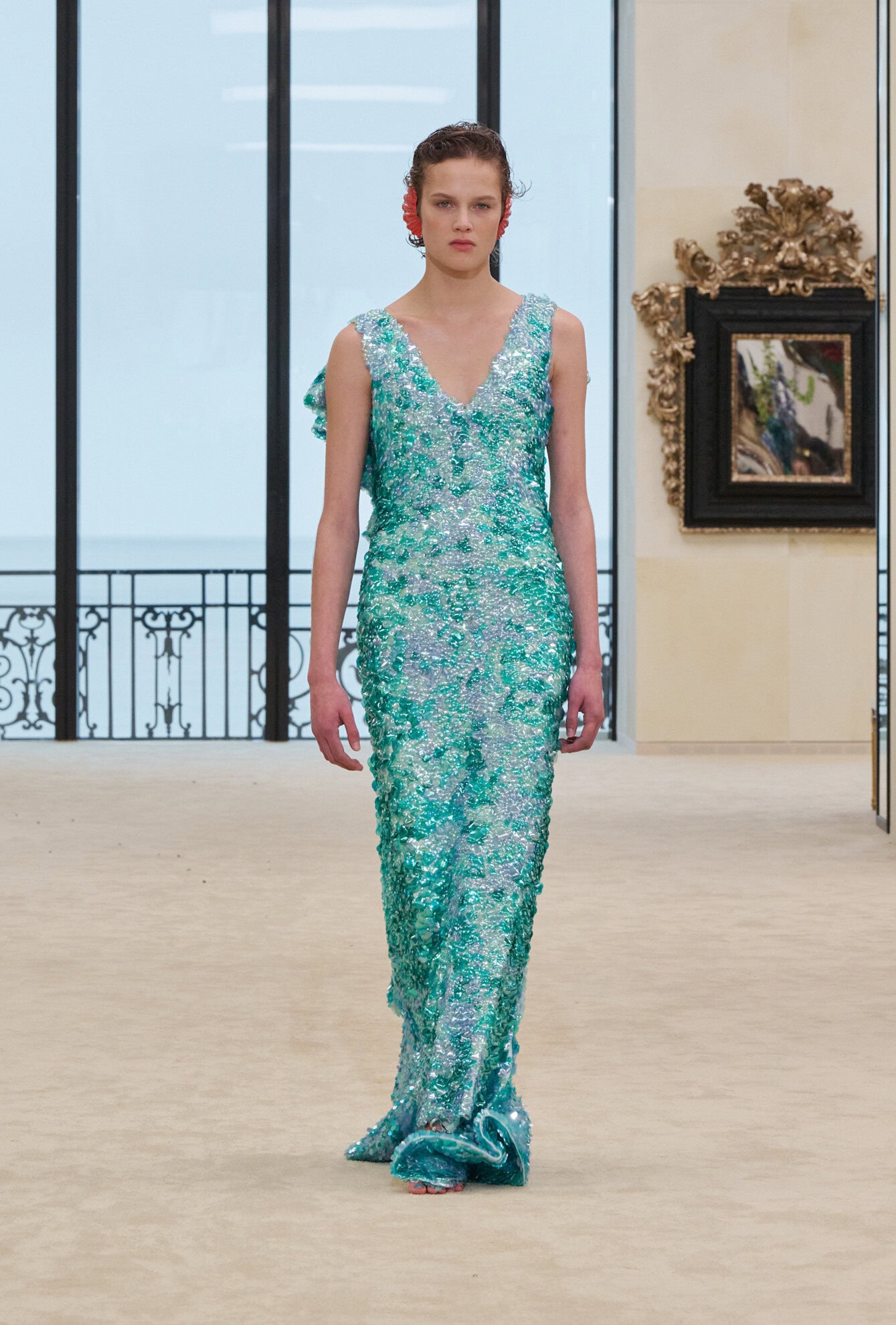
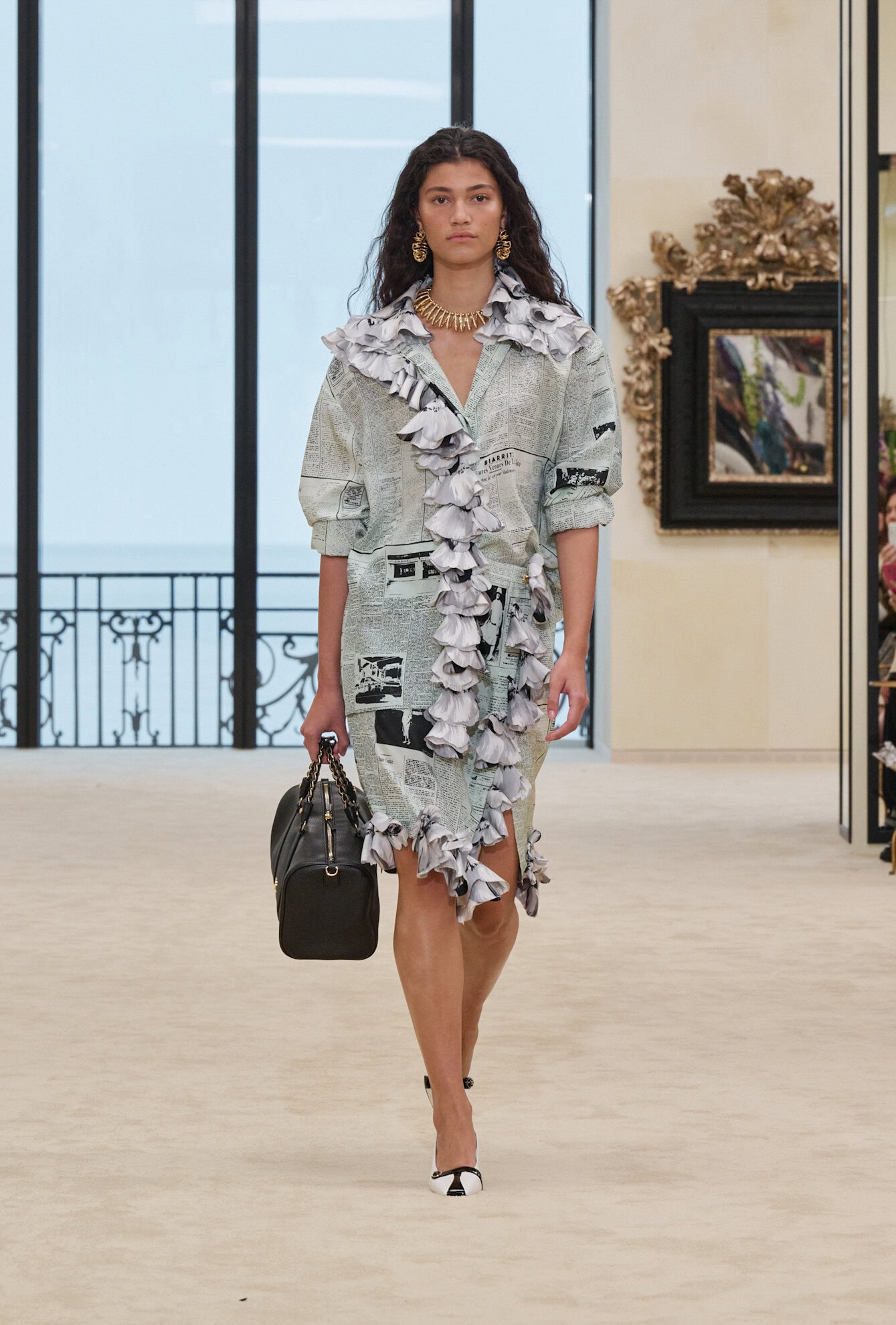
By evening, the argument widens. A sculptural newspaper gown nods to the archive without becoming beholden to it. Tweed reasserts itself with quiet authority, grounding the collection just as it begins to drift. And then come the release valves: molten reds, liquid sequins, a turquoise dress that exists almost entirely to catch light and return it.
The collection moves continuously—between city and sea, discipline and ease, day and night—never settling long enough to feel fixed. That, perhaps, is its strongest idea.
If there is a critique, it sits in those moments where the narrative becomes slightly too visible, where the Biarritz references tip from instinct into illustration. But even there, the craftsmanship and control pull the collection back before it fully slips.
Blazy is not simplifying Chanel. He is making it more fluid. And that is the more difficult proposition.
THE WRAP UP
Just before the show, Chanel CEO Leena Nair described this moment as “just the beginning.” It is the kind of line that could easily read as corporate optimism. Here, it felt more like a quiet understatement.
Blazy’s focus on movement—on materials that respond, on silhouettes that release rather than hold—feels less like a seasonal idea and more like a framework. One that returns Chanel to its original proposition: elegance not as posture, but as ease.
Because what Blazy has done—across two outings now—is something the industry talks about constantly and rarely achieves. He has entered one of fashion’s most codified houses without flattening it into reverence or fracturing it in the name of reinvention. Instead, he has found a way to move within it.
This was not a designer announcing himself. It was a designer understanding where he is—and more importantly, where the house can still go.
If this is only the beginning, Chanel is not being rebuilt. It is being recalibrated—patiently, intelligently, and with a sense of purpose that feels less imposed than discovered.
It may also be one of the most seamless and intelligent designer integrations in recent memory—not because it demands attention, but because it earns it.