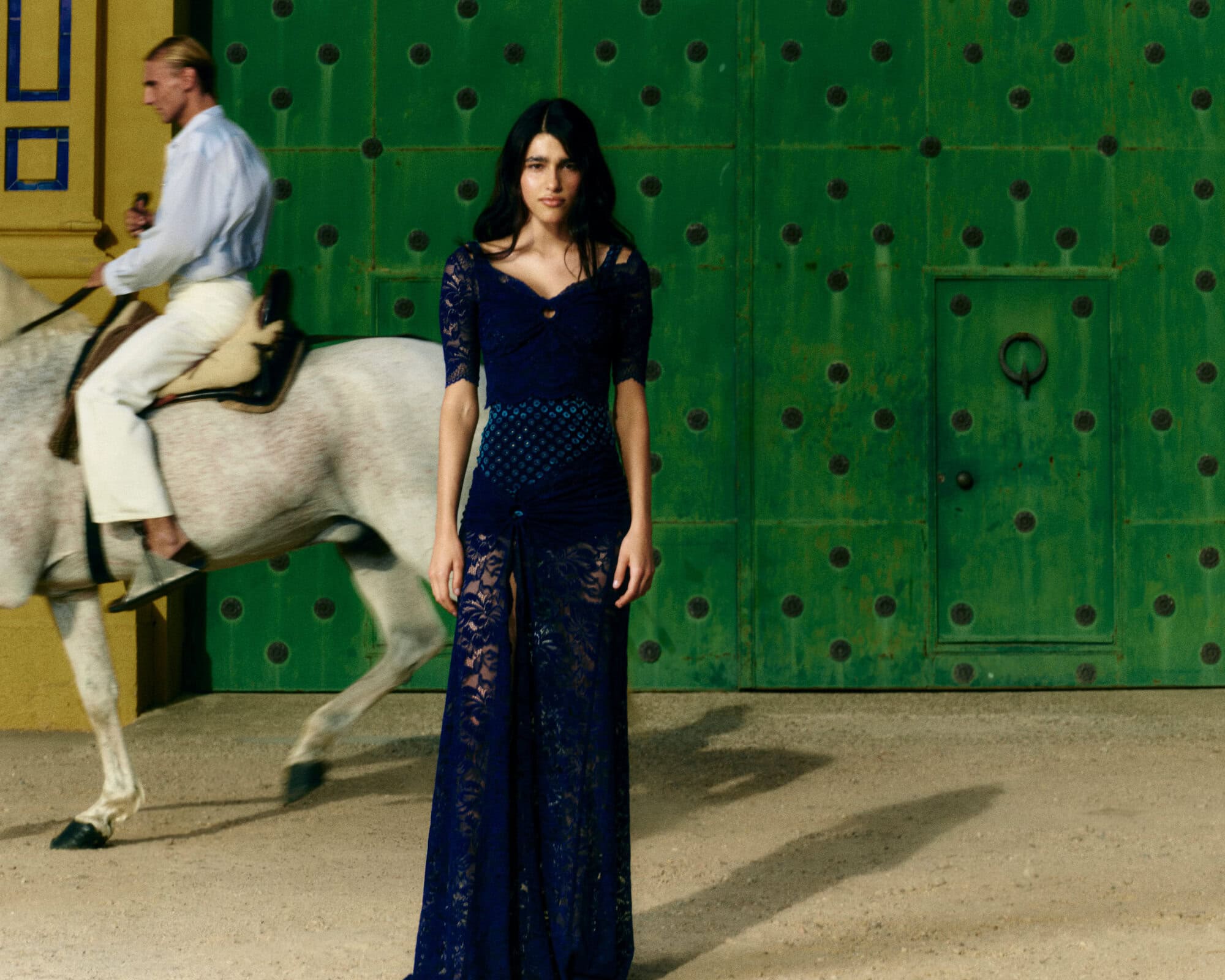
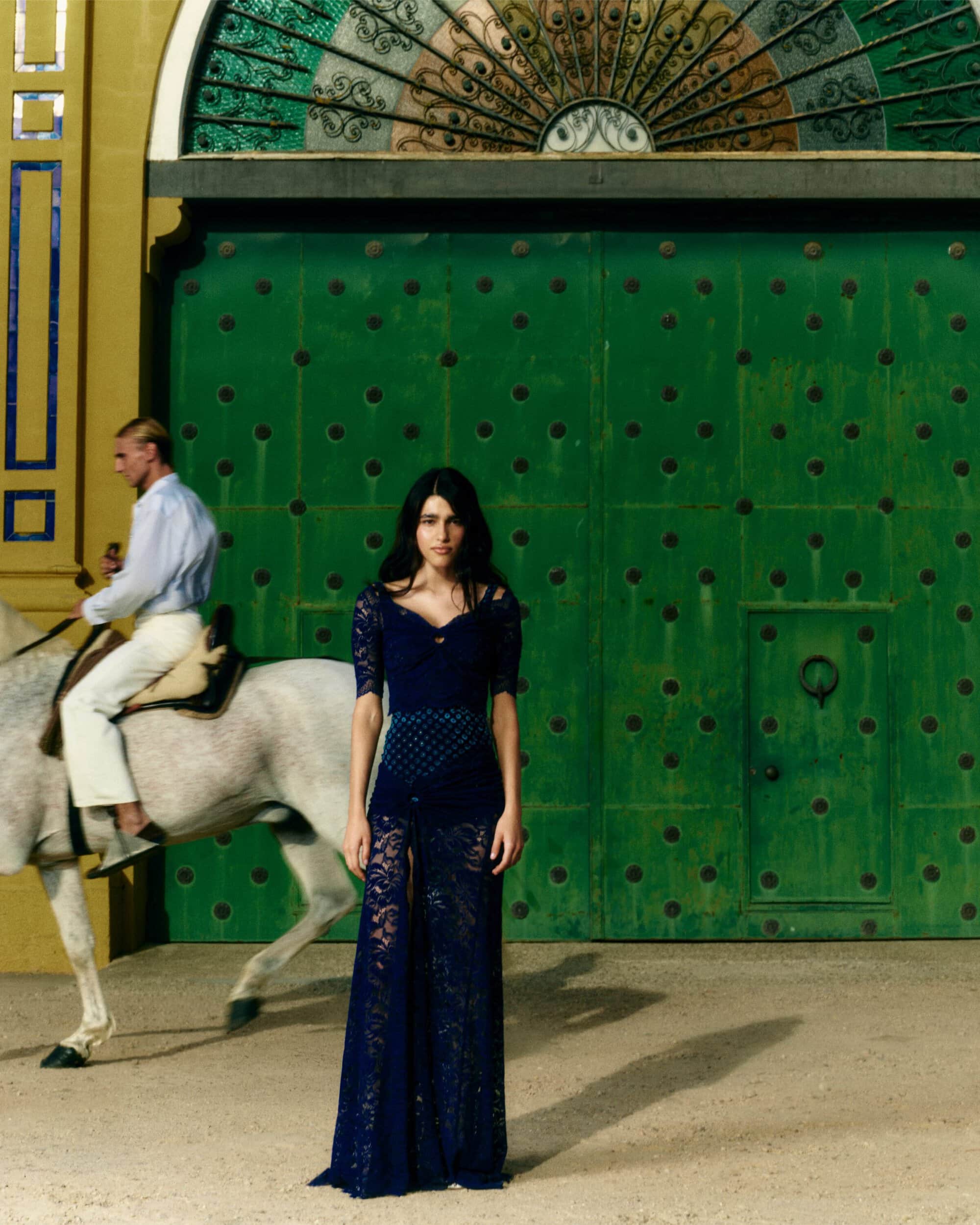
Review of Rabanne Pre-Fall 2026 Ad Campaign by Creative Director Alexia Niedzielski and Photographer Aitor Laspiur
Rabanne’s latest chapter, The Pulse, arrives less like a campaign and more like a held breath. Following the kinetic warmth of Sunset to Sunrise, the house pivots from the looseness of Rio to the emotional density of Andalucía, trading tropical spontaneity for something slower, sharper, and more ceremonial. In many ways, it feels like Rabanne returning home — not nostalgically, but rhythmically. After all, few brands understand the drama of tension quite like a house built on metal, movement, and skin. Some labels chase the pulse of culture; Rabanne, characteristically, prefers to dance with it.
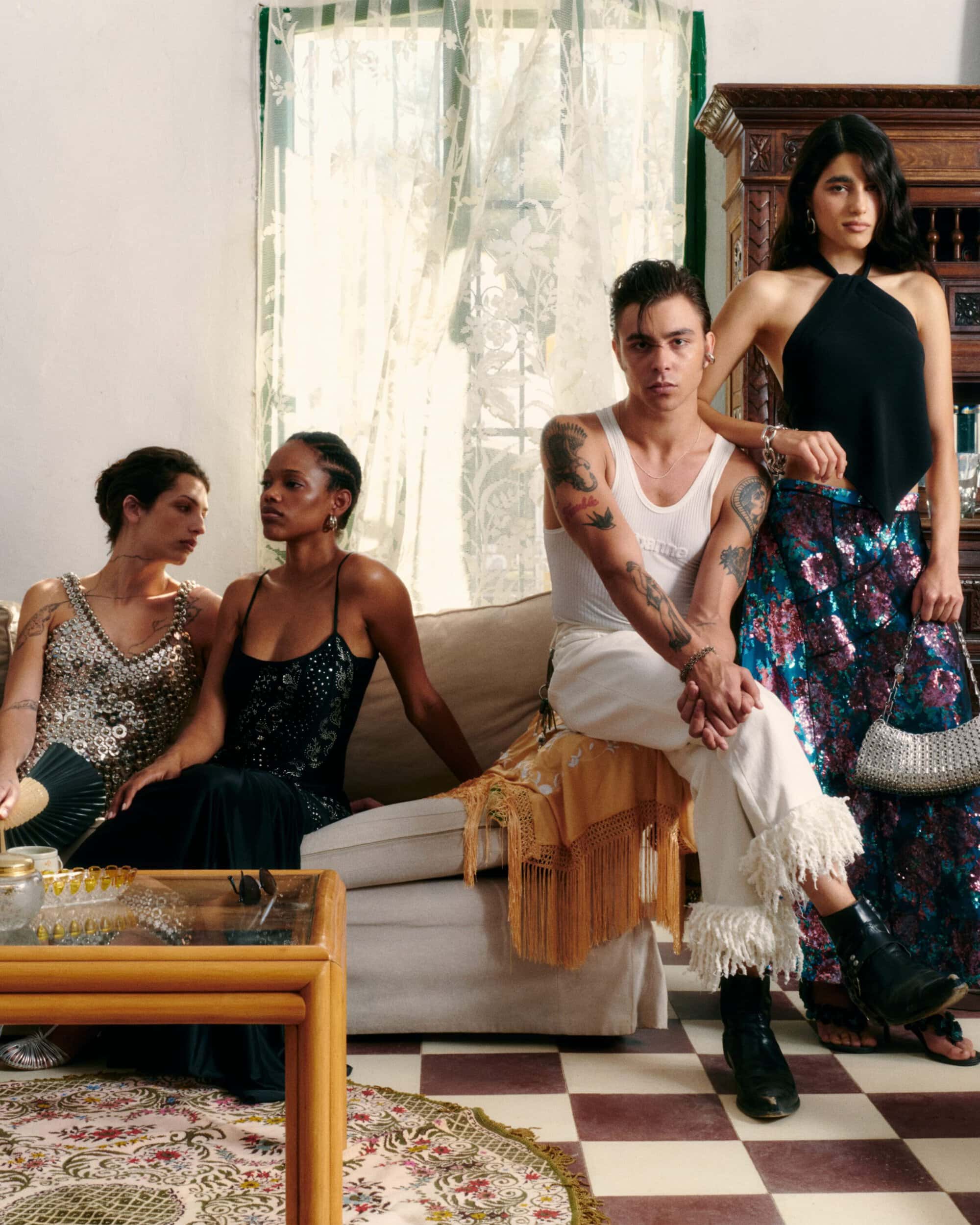
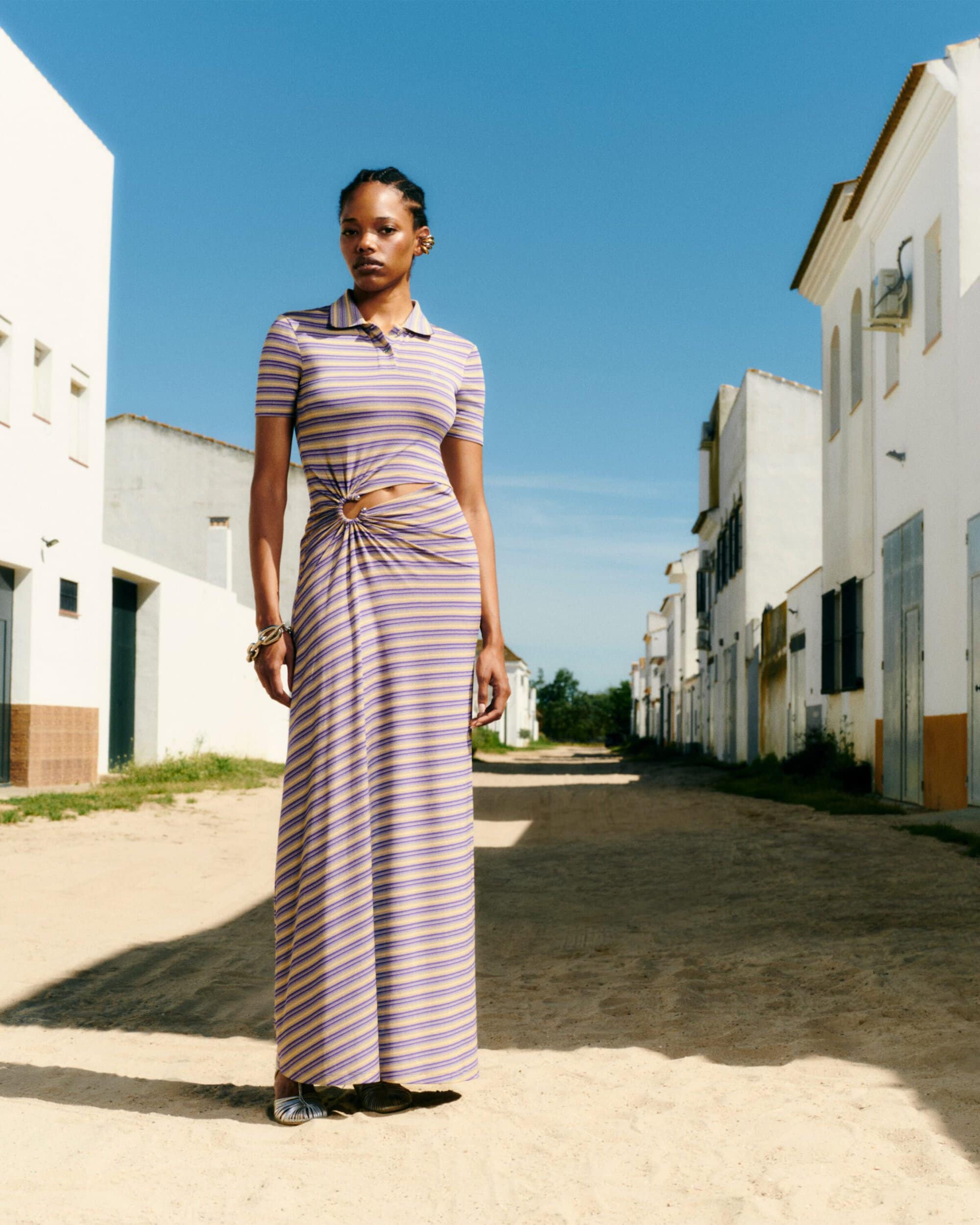
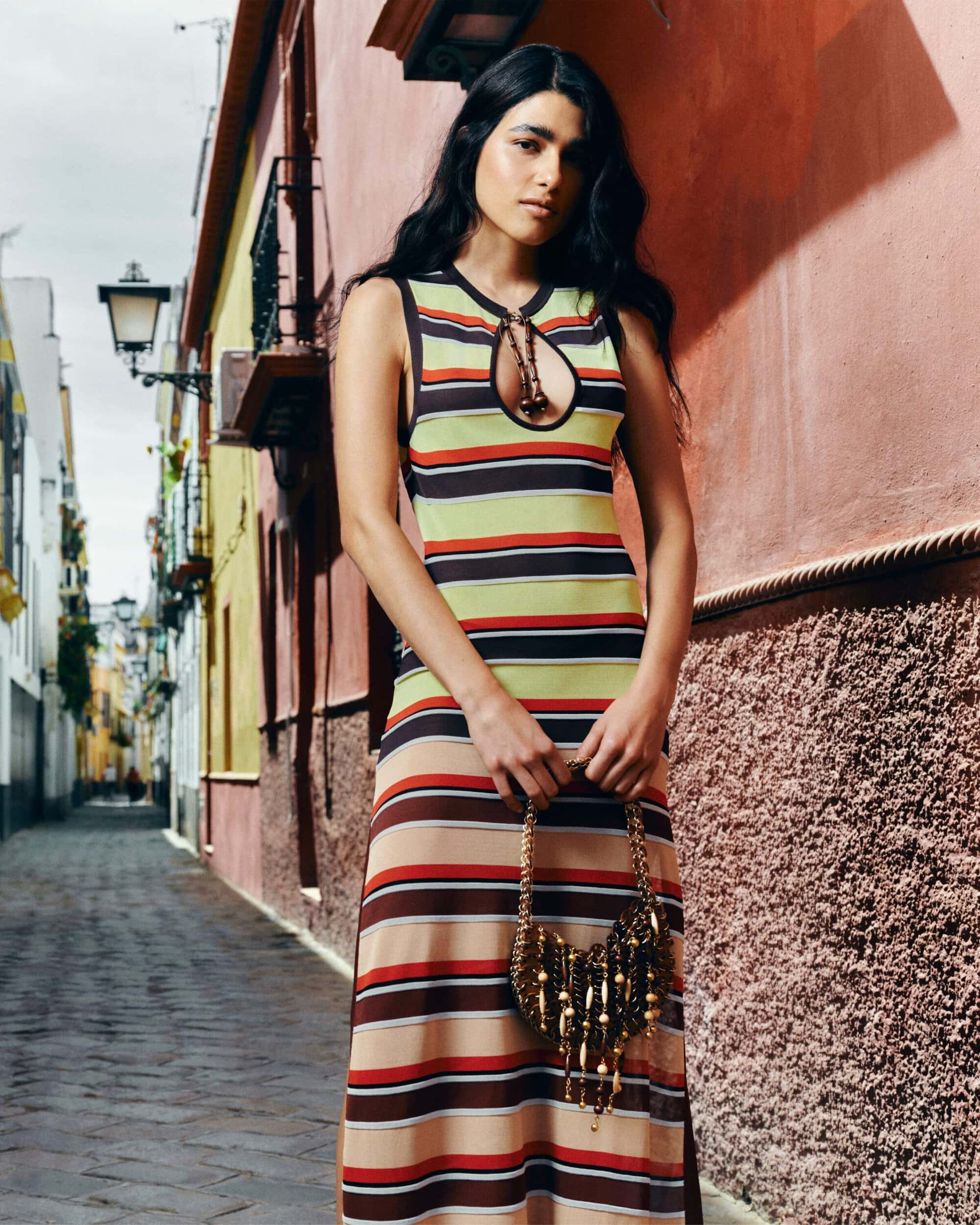
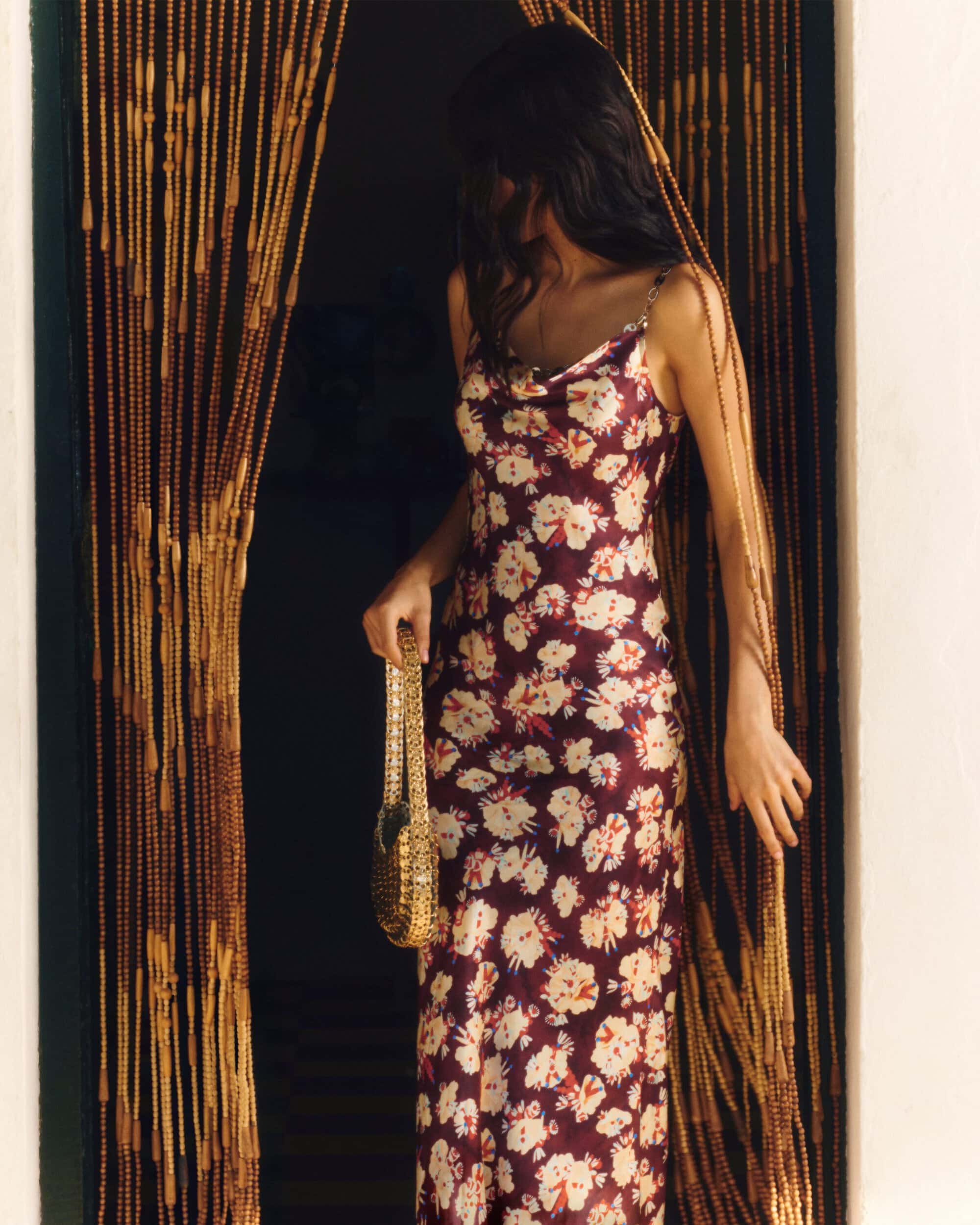
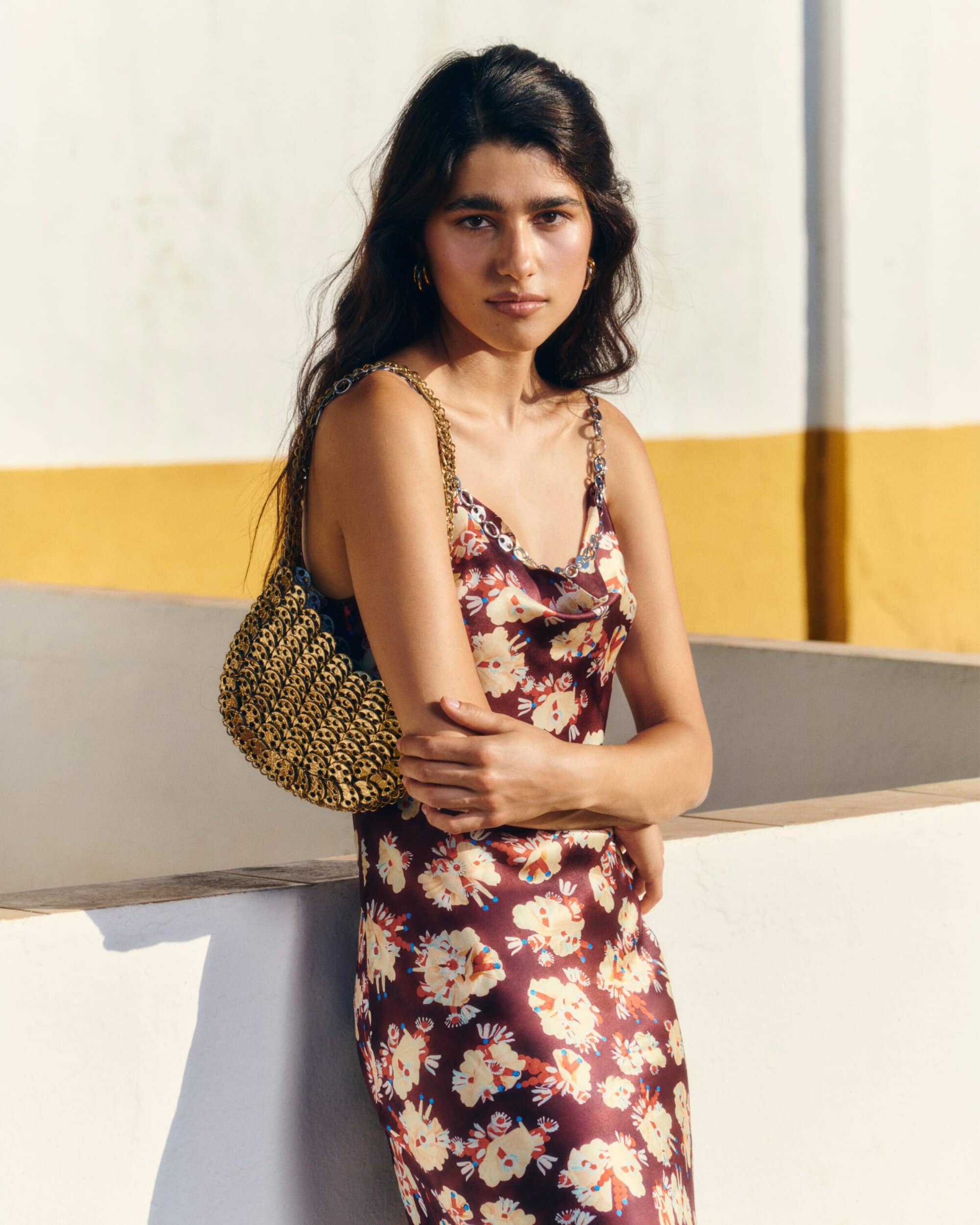
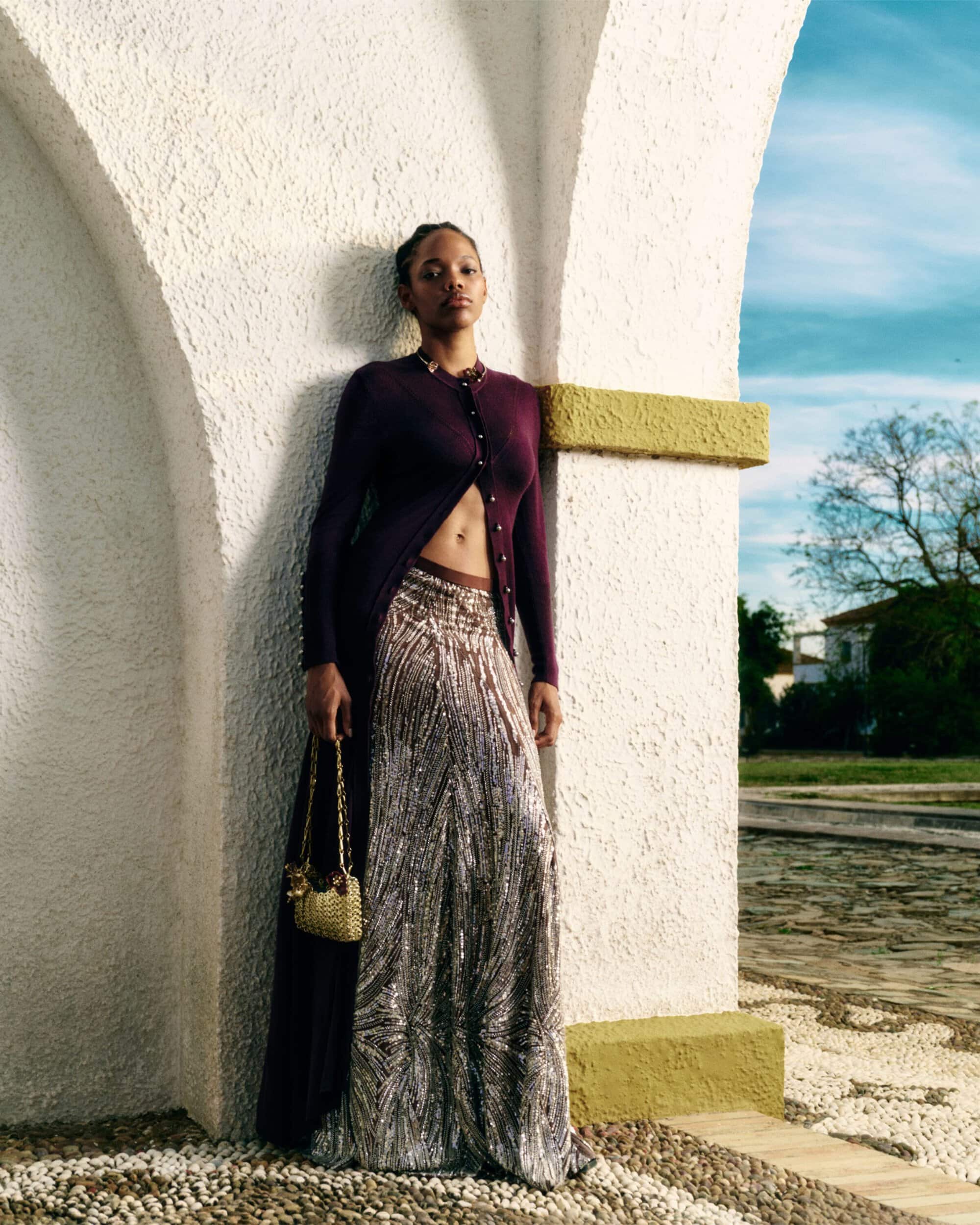
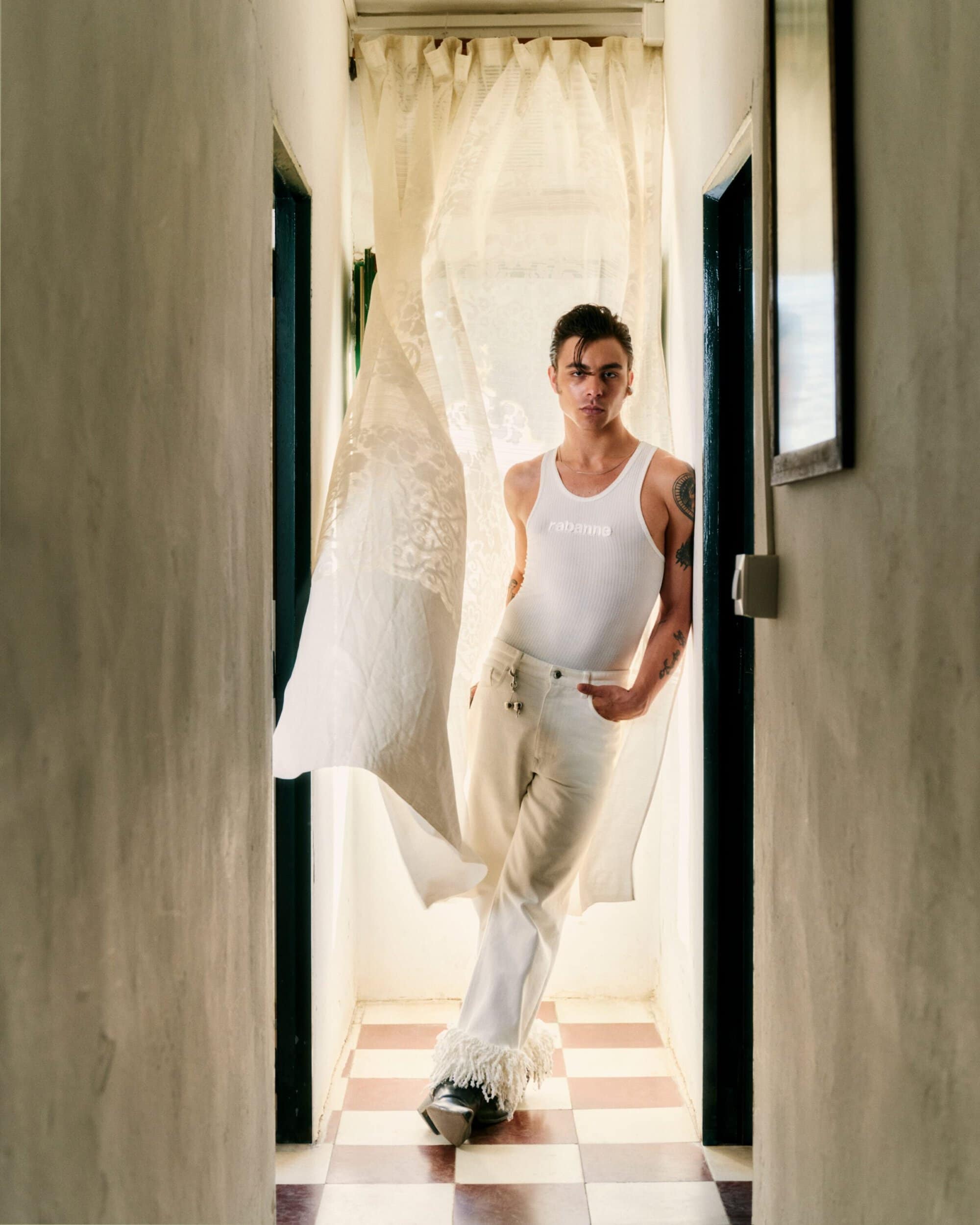
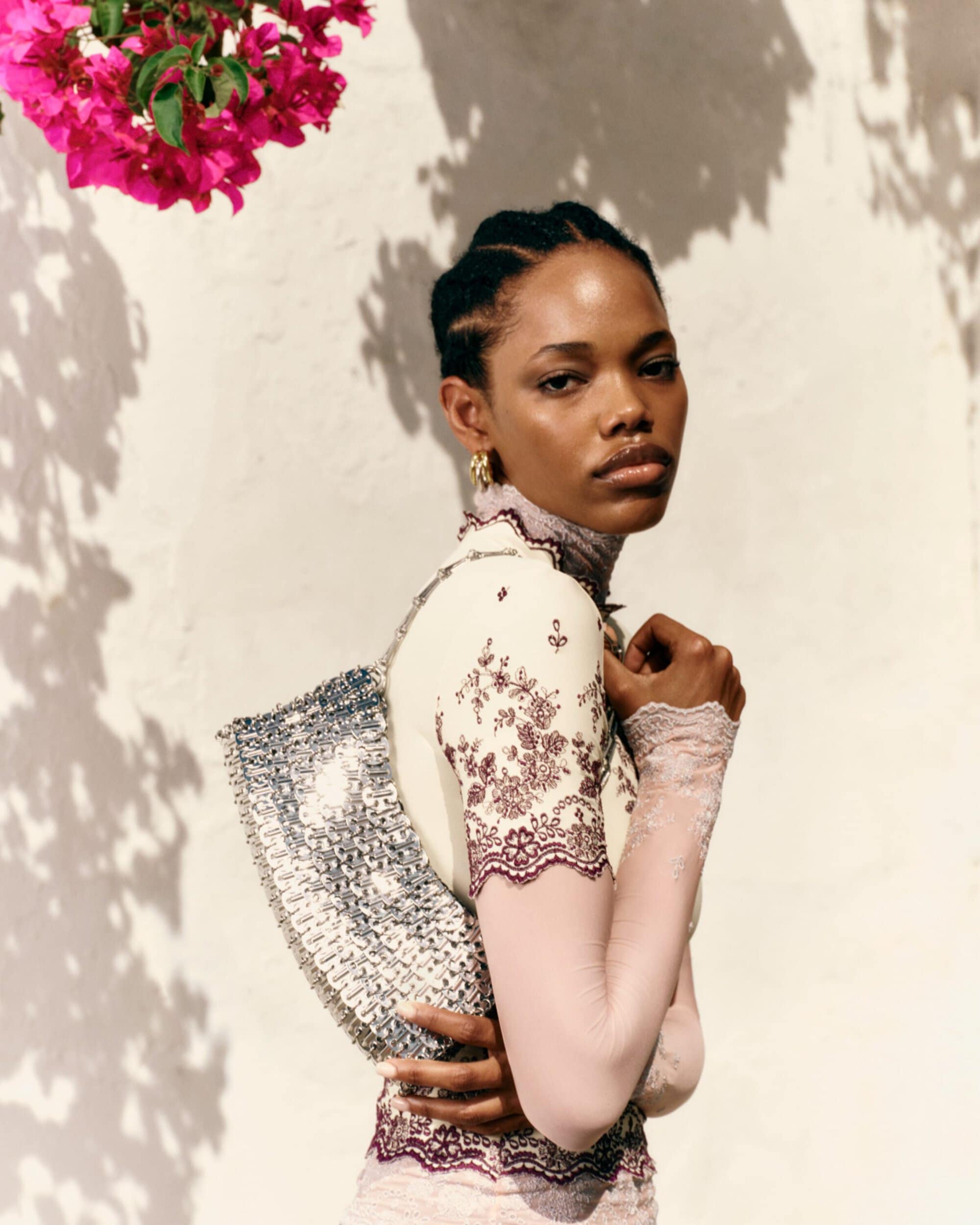
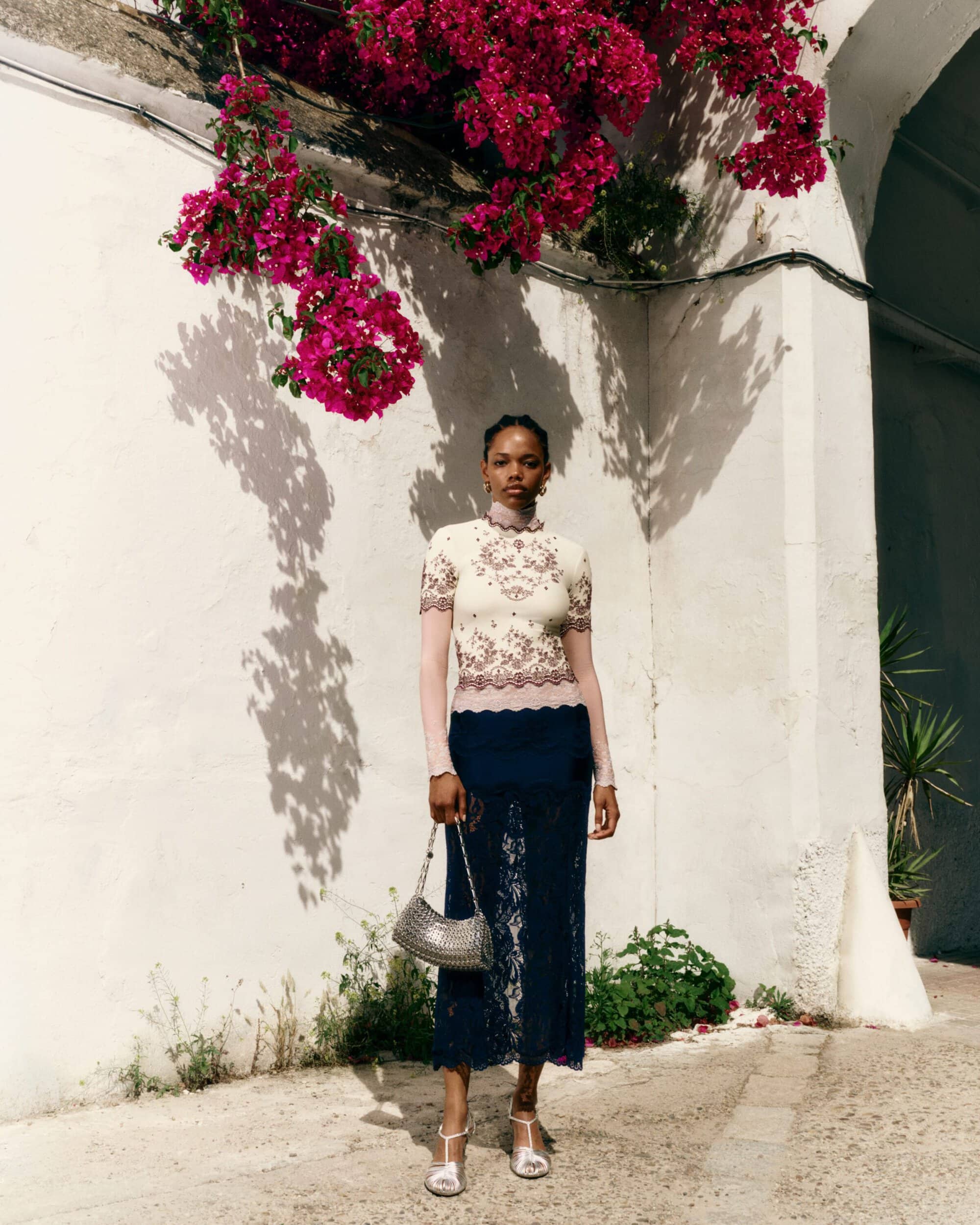
Set against the heightened atmosphere of Southern Spain during spring festivities, the campaign draws deeply from flamenco’s emotional architecture — anticipation, restraint, release. The imagery leans into shadow and proximity rather than spectacle. Bodies gather closely, gestures feel loaded, and every glance appears suspended between invitation and confrontation. There is heat here, certainly, but it is controlled heat, the kind that simmers rather than erupts.
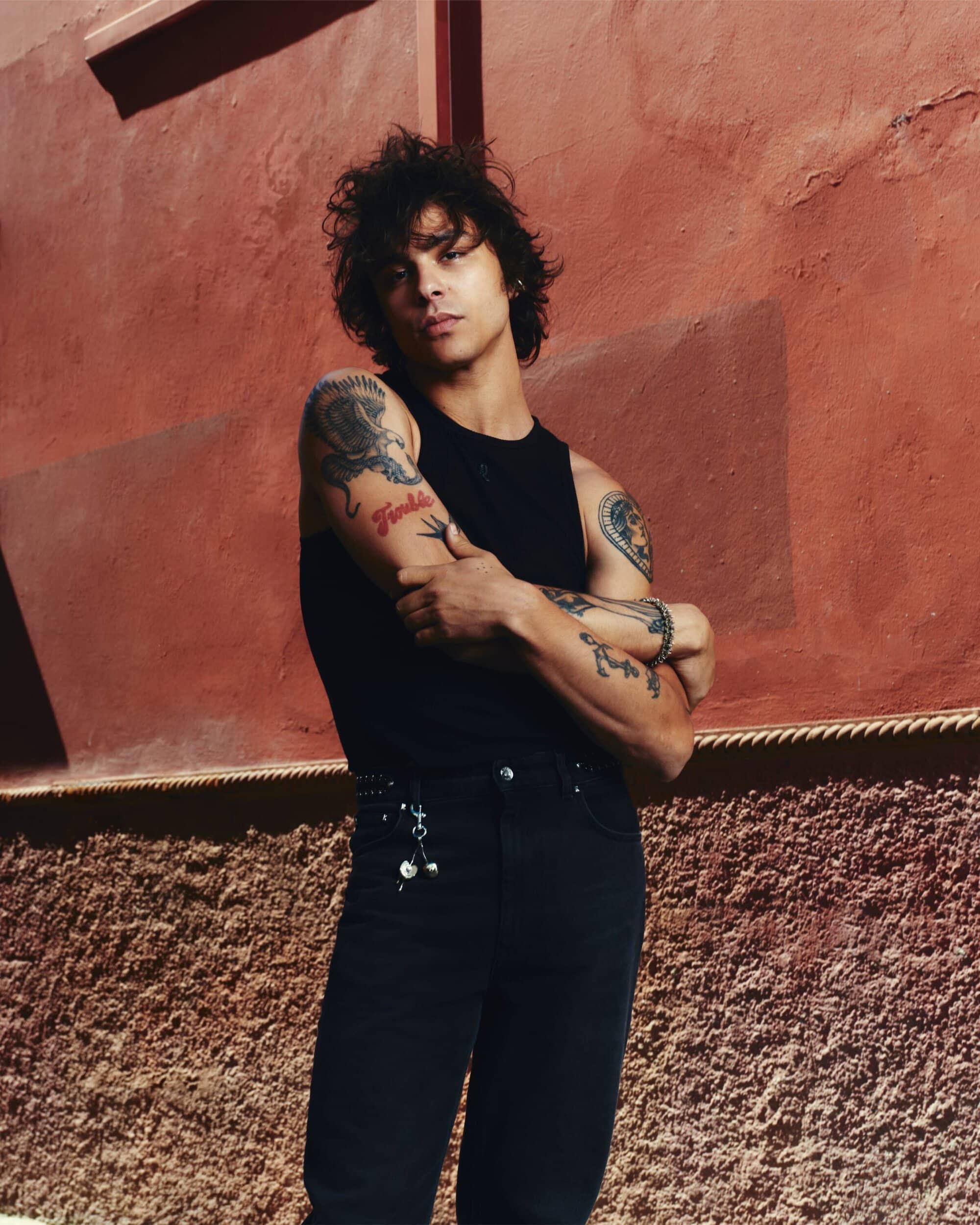
At the center is flamenco dancer Carmen Avilés, whose presence anchors the narrative with remarkable clarity. Alongside the Farruquito lineage and a younger generation of Andalusian artists, the cast creates a sense of continuity that feels lived rather than styled. Mitch, bringing a more instinctive and unresolved energy, serves as an effective counterbalance to the campaign’s otherwise highly disciplined emotional register. Together, they create a visual ecosystem where tradition and youth culture are not positioned as opposites, but as parallel rhythms sharing the same room.
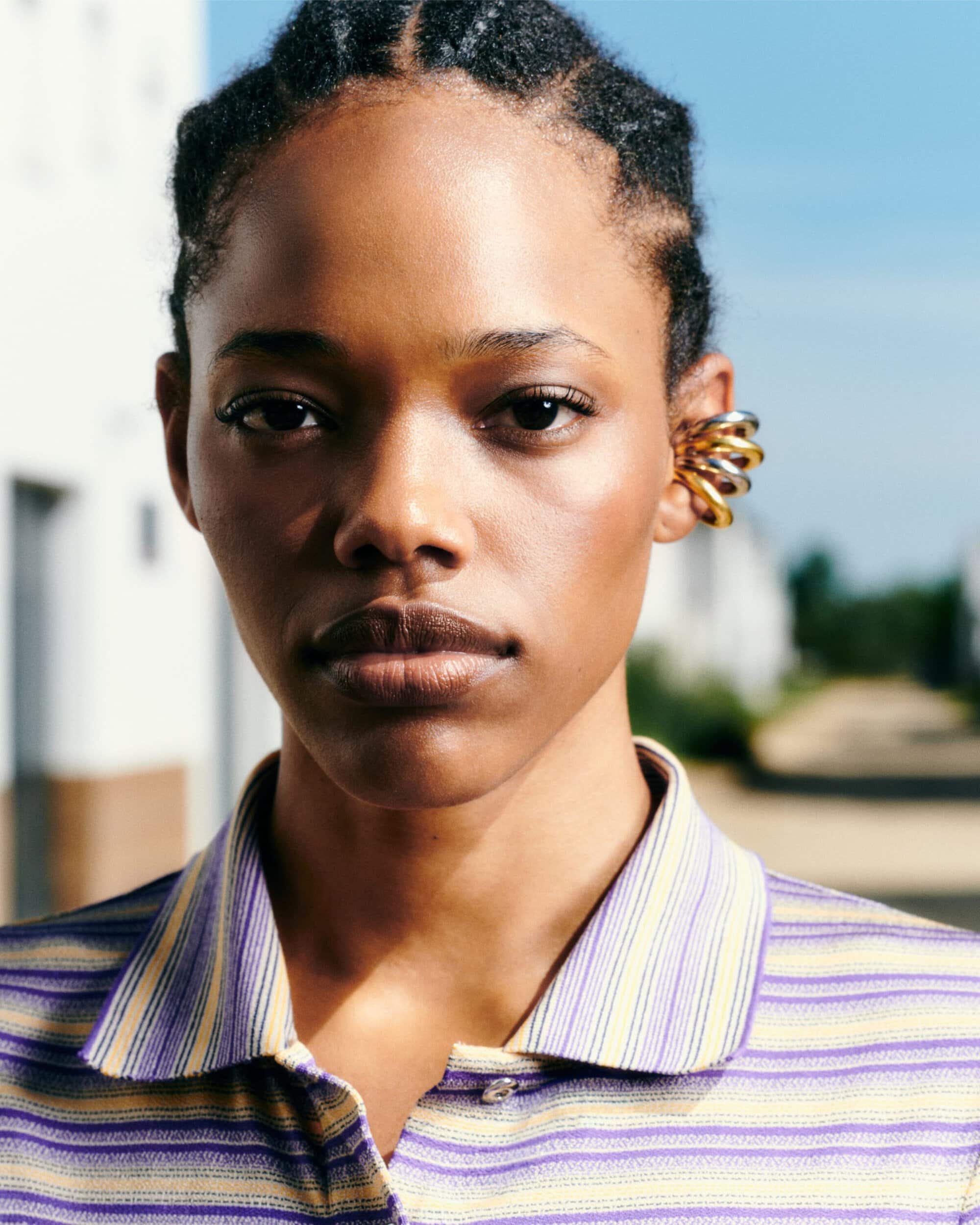
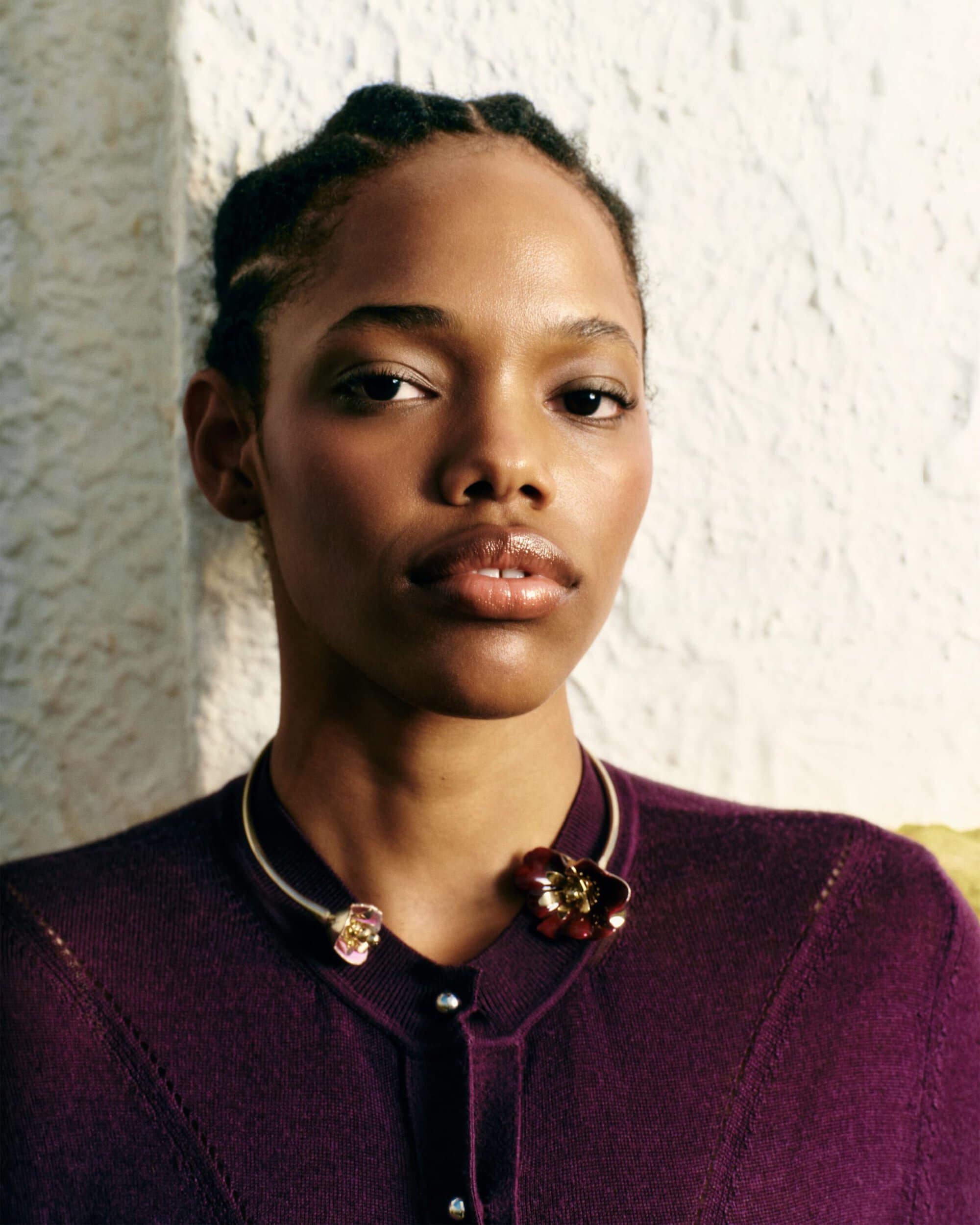
What works especially well is Rabanne’s understanding that cultural references are strongest when treated as atmosphere rather than costume. The campaign avoids flattening flamenco into aesthetic shorthand. Instead, it focuses on physicality — the tightening of posture, the friction of movement, the emotional labor of performance itself. This aligns naturally with Paco Rabanne’s long-standing fascination with the body as both object and instrument. The house’s historic language of metallic textures and reflective surfaces quietly echoes throughout, even when the clothing itself takes a subtler role.
There is also restraint in the filmmaking and pacing that deserves recognition. In an era when many luxury campaigns feel obligated to over-explain themselves through cinematic excess, The Pulse trusts silence, rhythm, and gesture to carry meaning. The collaboration with Yerai Cortés strengthens this considerably; the music does not simply soundtrack the campaign, it structures it. You feel the build before you understand it intellectually — which, frankly, is often the mark of successful fashion storytelling.
If there is a slight limitation, it lies in the campaign’s devotion to mood over distinction. At moments, the emotional consistency becomes so controlled that certain visual beats begin to blur together. A sharper variation in composition or tension might have elevated the progression from intimacy to collective release even further. But perhaps that, too, is part of the point. The Pulse is not interested in climax as much as continuity. It lingers in sensation rather than resolution.
And ultimately, that is where Rabanne succeeds most convincingly. Sixty years on, the house still understands that fashion is rarely about stillness — it is about what happens when fabric, music, memory, and the body briefly fall into sync. The pulse remains indeed. Conveniently for Rabanne, so does the magnetism.
Rabanne Creative Director | Julien Dossena
Creative Concept | Sunbelt
Creative Director | Alexia Niedzielski
Director | Emmanuel Cossu
Photographer | Aitor Laspiur
Stylist | Laura Vandall and Laguille
Music | Yerai Cortés
Production | Iconoclast