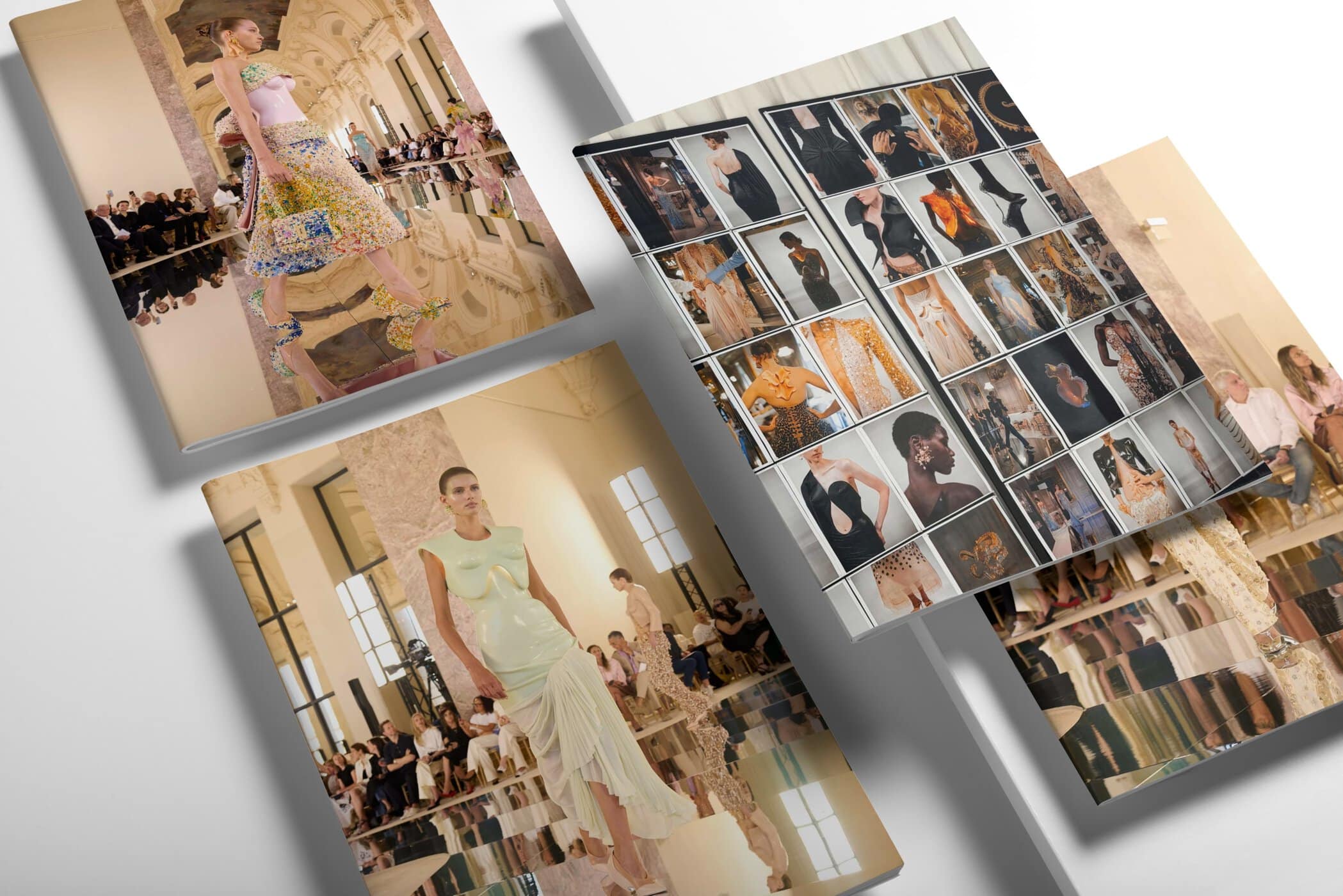
As marathon training reshapes his body, the Schiaparelli creative director reflects on surrender, risk, and why smaller fashion houses still offer the greatest creative freedom.
By Kenneth Richard
Daniel Roseberry looked different.
As we settled into our conversation following Schiaparelli’s Fall 2026 Haute Couture presentation, I joked that the collection had somehow down-aged him. He laughed immediately and credited the New York City Marathon. Months of training, he explained, had changed more than his physical condition. They had given him a different rhythm.
It turned out to be an unexpectedly fitting way to begin a conversation about couture.
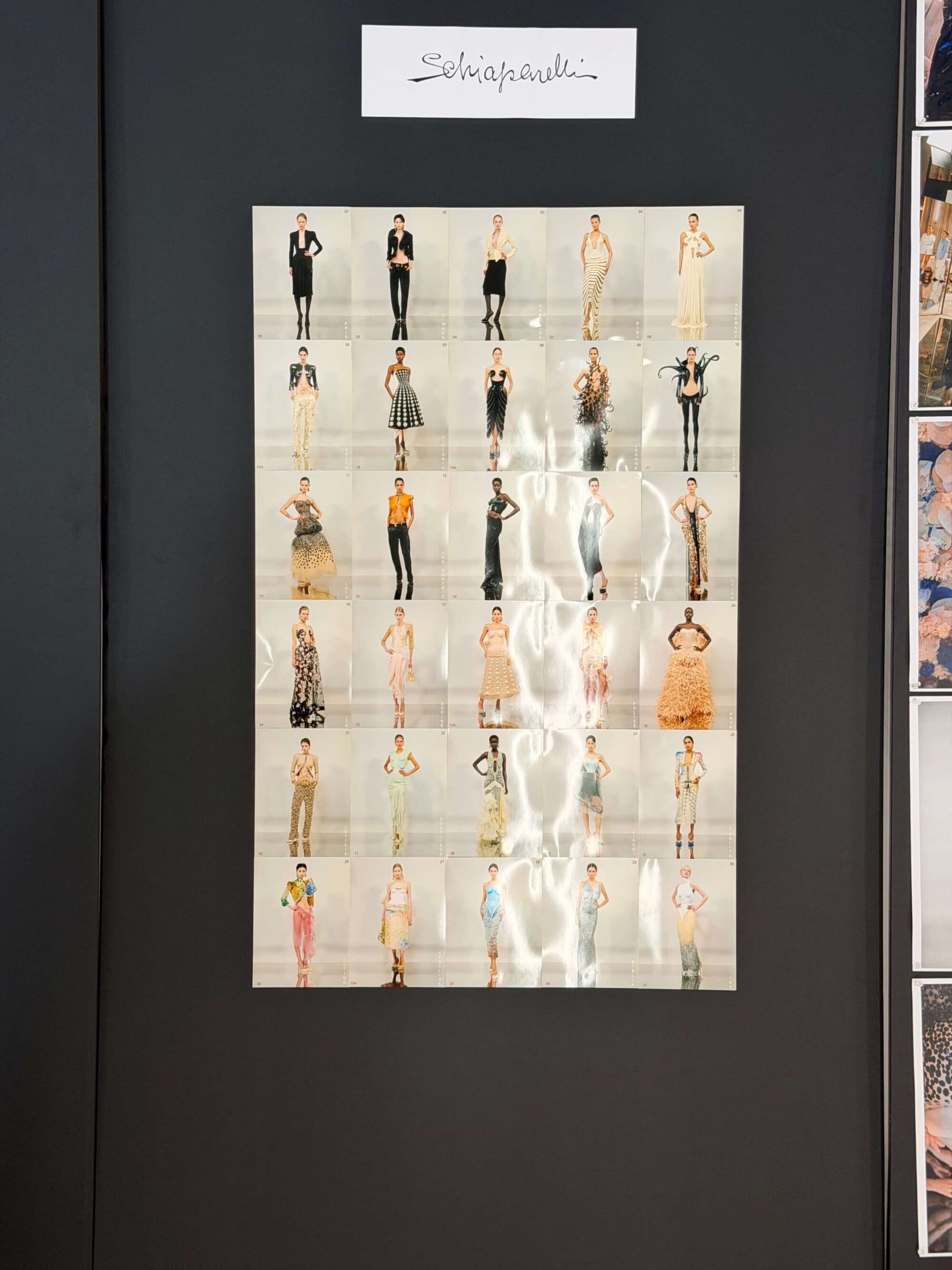
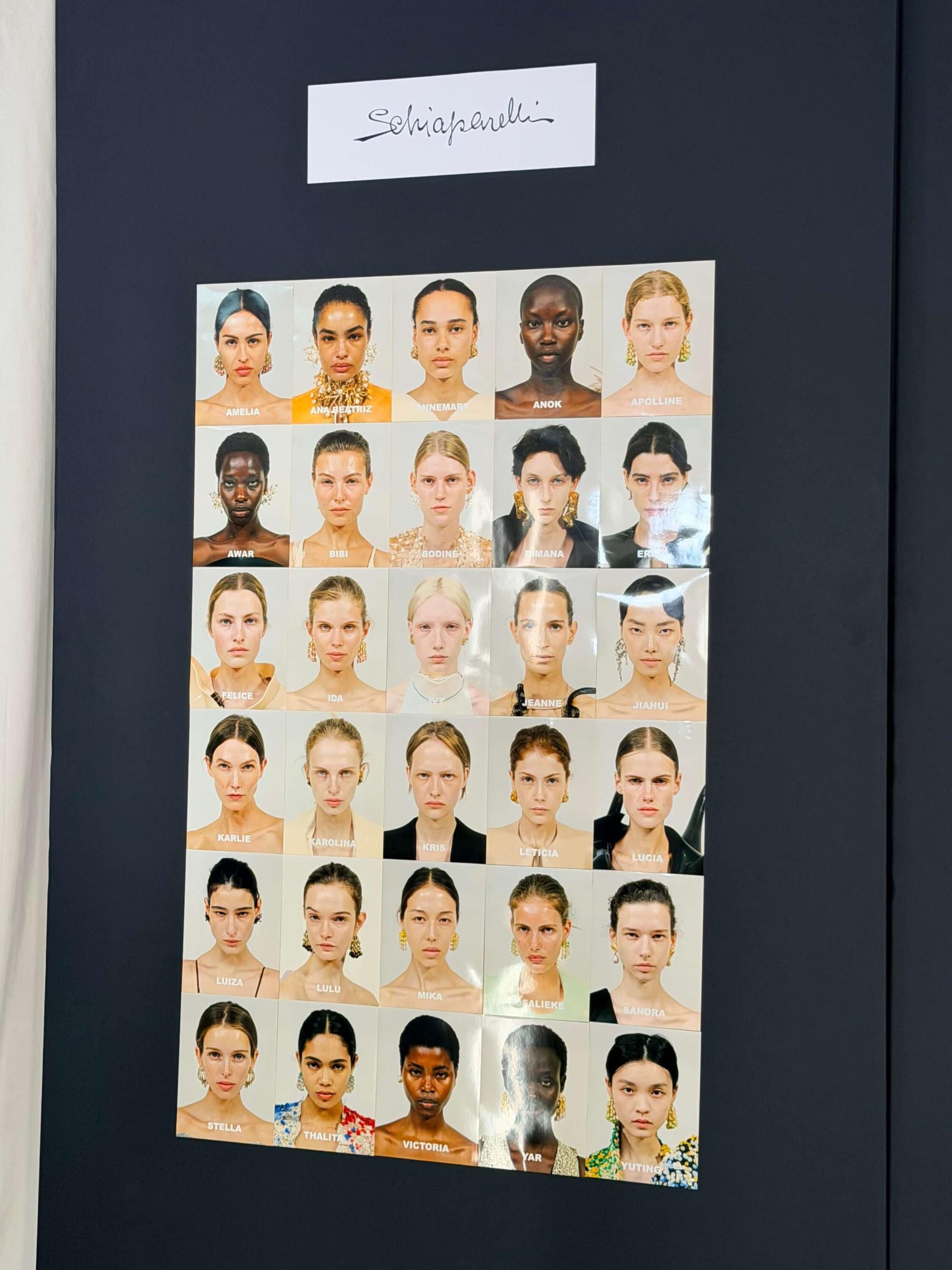
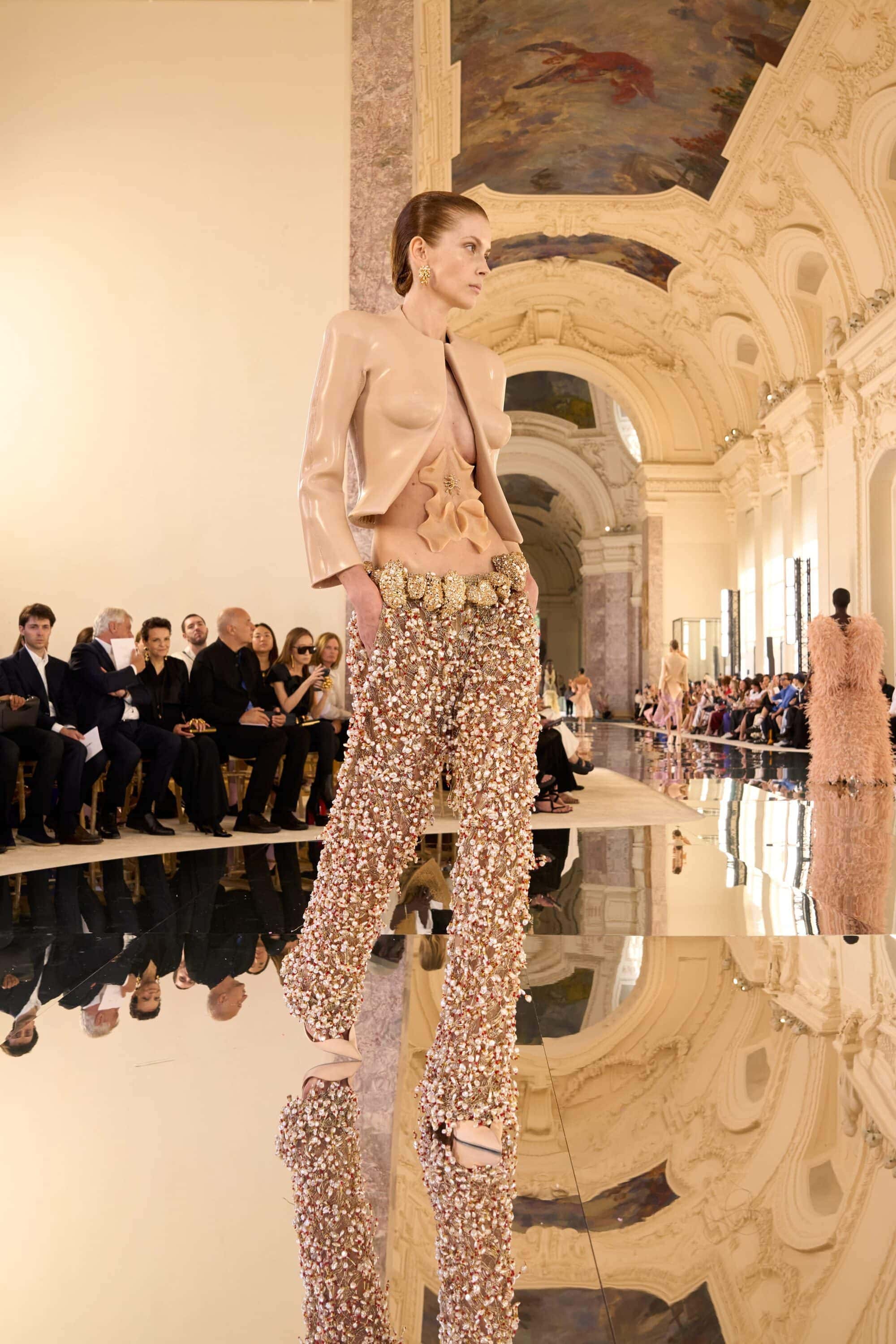
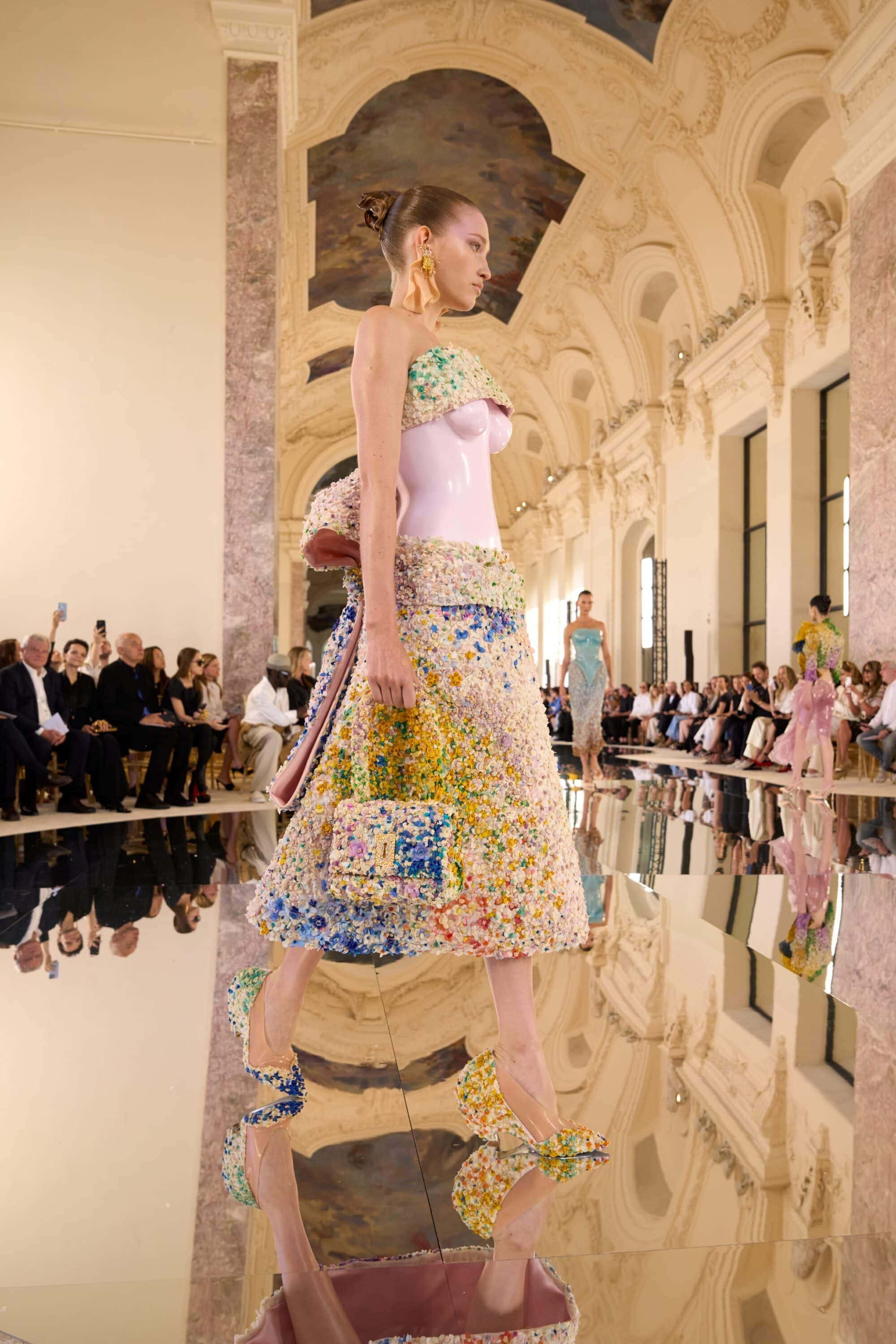
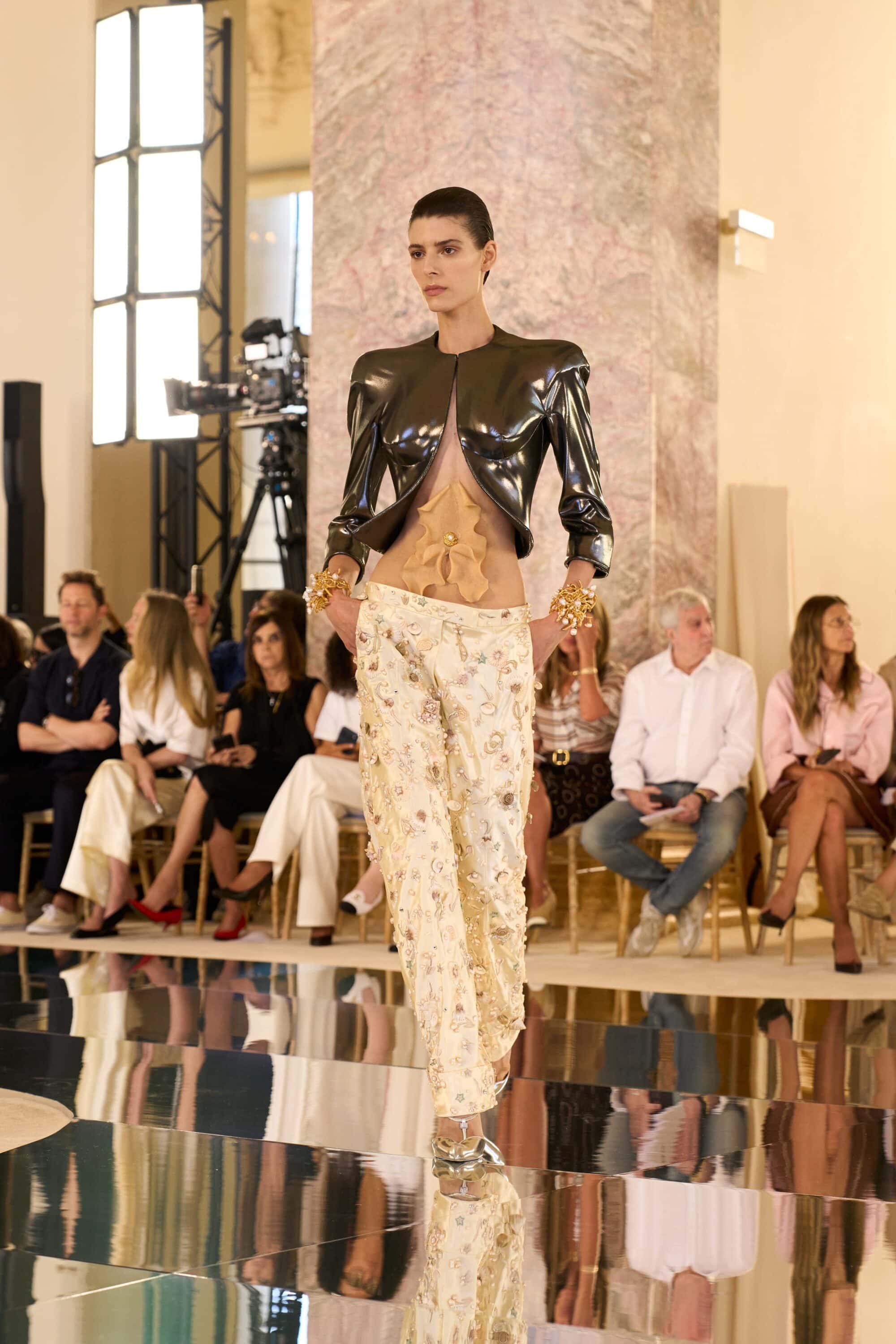
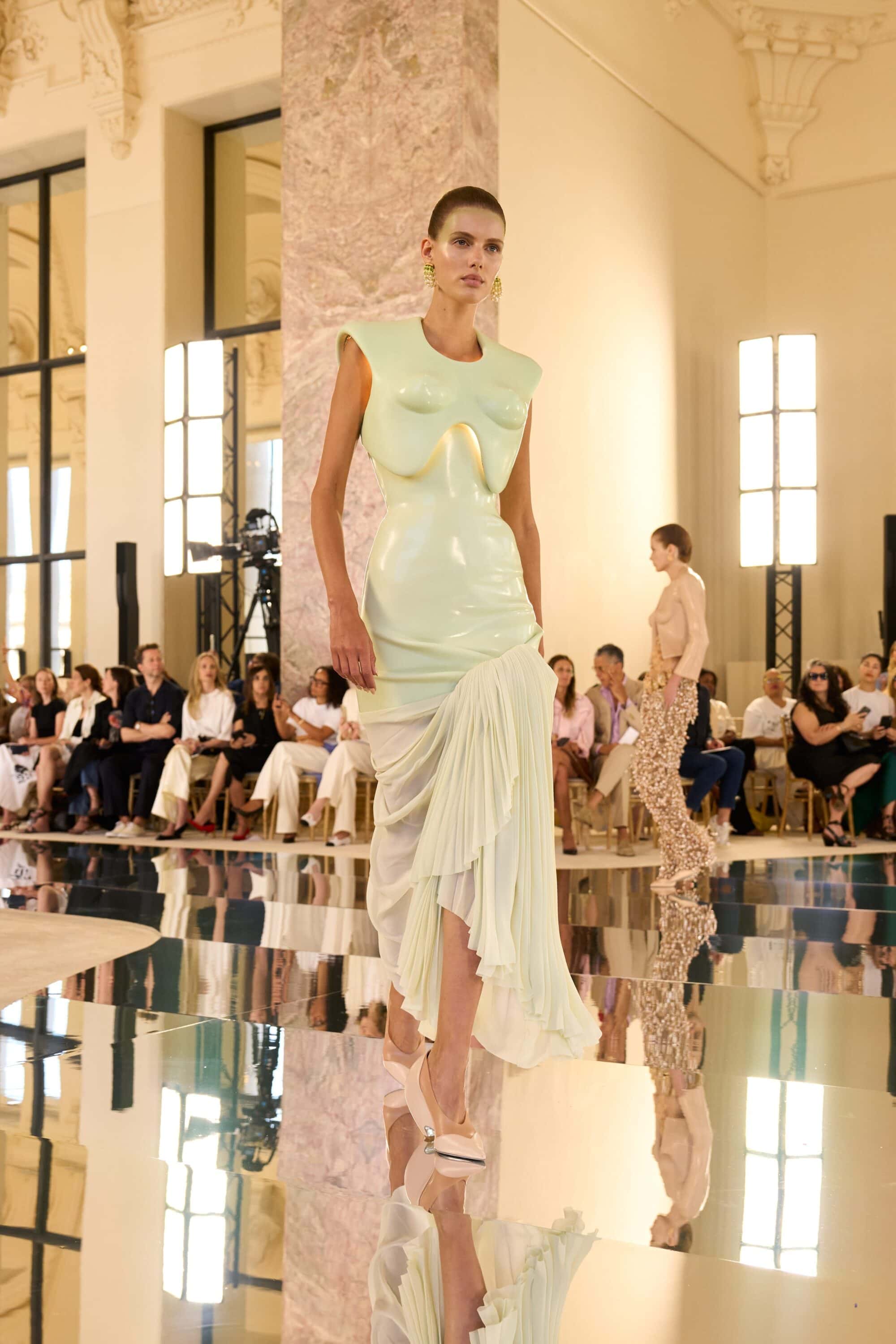
For most designers, the body is something they study from the outside, dressing clients, celebrities, and runway models while rarely thinking about their own. Marathon training had quietly reversed that relationship. It reconnected Roseberry with his own body at the same time he was creating one of his most physically expressive collections to date, where silicone, sculpted forms, flowers, shells, and couture craftsmanship blurred the boundaries between garment and anatomy.
“Last season felt like a reset for me and for the team,” he says. “In seeking to recreate that creative process, I had such a mental block. ”
The only solution was really to surrender to things that we had never done before.
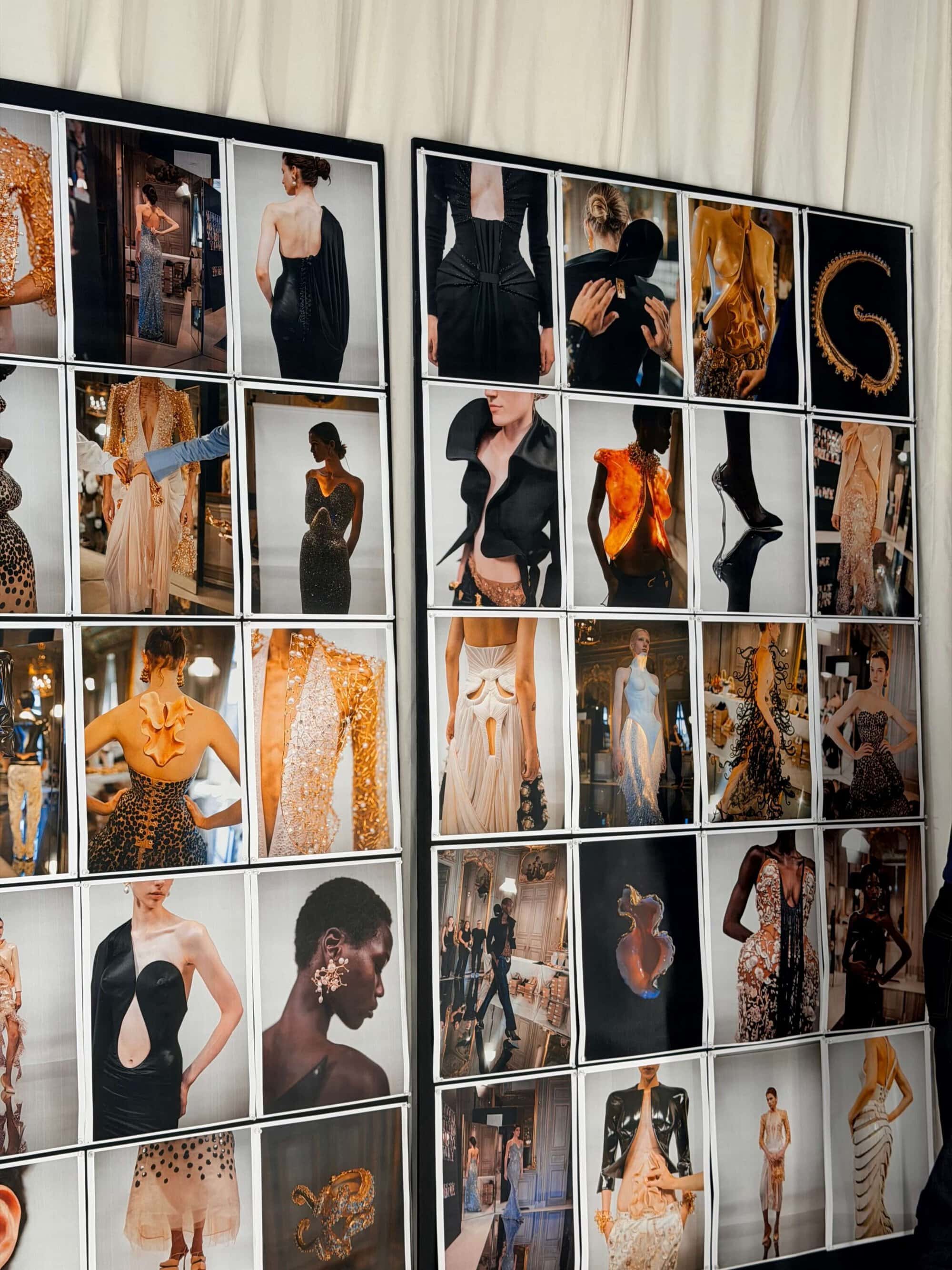
That surrender became the collection’s foundation.
Rather than beginning with traditional couture techniques, Roseberry found inspiration in unexpected places. He visited a workshop outside Paris that creates photorealistic silicone babies for the film industry. Together they experimented with pouring silicone into sheets that could behave like fabric. The atelier dried real flowers using sugar water to preserve their color. Natural seashells and baked fish scales found their way into couture. Clay replaced conventional moulage. Artificial and natural materials became collaborators rather than opposites.
Listening to Roseberry describe the process, what stood out wasn’t a fascination with novelty. It was curiosity. Every discovery seemed to unlock another possibility, allowing the collection to evolve through experimentation rather than certainty.
“I think it’s really been a story of surrendering to what’s happening today,” he says. “Surrendering to this unknown, the digital part, the hand part. It’s this collision that happens in couture right now, which is really fascinating.”
That openness extends beyond materials. It shapes the way he thinks about beauty itself.
There can never be a one-dimensional beauty here. There’s always a subversion. There’s always an edge.
That tension has become one of the defining characteristics of his Schiaparelli. Beauty and discomfort coexist. Couture embraces both precision and unpredictability. Rather than chasing perfection, Roseberry seems increasingly interested in complexity, finding elegance in contradiction.
The conversation naturally turned to technology, particularly artificial intelligence. His answer was thoughtful rather than reactionary. Having recently reviewed student portfolios, he admitted he sometimes struggles to understand where AI ends and the designer begins. The concern, however, isn’t the technology itself.
“You don’t feel like you’re getting a reflection of the person that you would be considering for a job,” he says. “But again, it’s trying not to resist. It’s trying to allow and to embrace.”
That idea of embracing rather than resisting surfaced repeatedly throughout our conversation. It echoed in the collection, in his creative process, and even in the way he spoke about dressing women.
For Roseberry, couture isn’t simply about creating extraordinary garments. It’s about revealing something already present.
“I have a business coach, and one of her phrases is, ‘We are all just light beings having a human experience,’” he says. ” When we dressed Bella at Cannes, it was pure essence projected out. That’s the goal of couture.”
When we dress a celebrity or a client in couture, it’s all about capturing their essence.
It is a remarkably human way of describing one of fashion’s most extraordinary disciplines. Rather than transforming someone into a fantasy, he speaks about amplifying who they already are.
Perhaps the most revealing moment came when the conversation shifted from creativity to the business itself.
Roseberry reflected on the privilege of leading a house like Schiaparelli, one that has achieved remarkable cultural relevance without becoming so large that experimentation becomes impossible.
“I realized all of the fantasies I had about fashion were when houses were this size,” he says.
There’s a huge luxury and privilege of being small right now too, because we can really maneuver and pivot.
It was an observation that felt refreshingly honest in an industry where growth is often treated as the ultimate measure of success. Roseberry wasn’t celebrating scale. He was celebrating agility, the freedom to take creative risks without losing the intimacy that makes those risks possible. His gratitude for his team was equally evident. They had followed him into unfamiliar territory, trusting a process that offered few guarantees beyond curiosity itself.
There is a quiet confidence about Daniel Roseberry today that feels different from previous seasons. Not louder. Not more certain. Simply more comfortable with uncertainty itself. Marathon training may have strengthened his body, but it also seems to have reinforced something equally important: the endurance to trust the long creative journey rather than searching for immediate answers.
As our conversation came to a close, it struck me that the qualities required to run a marathon and to lead a house like Schiaparelli are not so different. Neither can be sustained through speed alone. Both require patience, discipline, resilience, and the confidence to find a rhythm that is entirely your own. Judging by both the collection and the man sitting across from me, Daniel Roseberry has found exactly that.