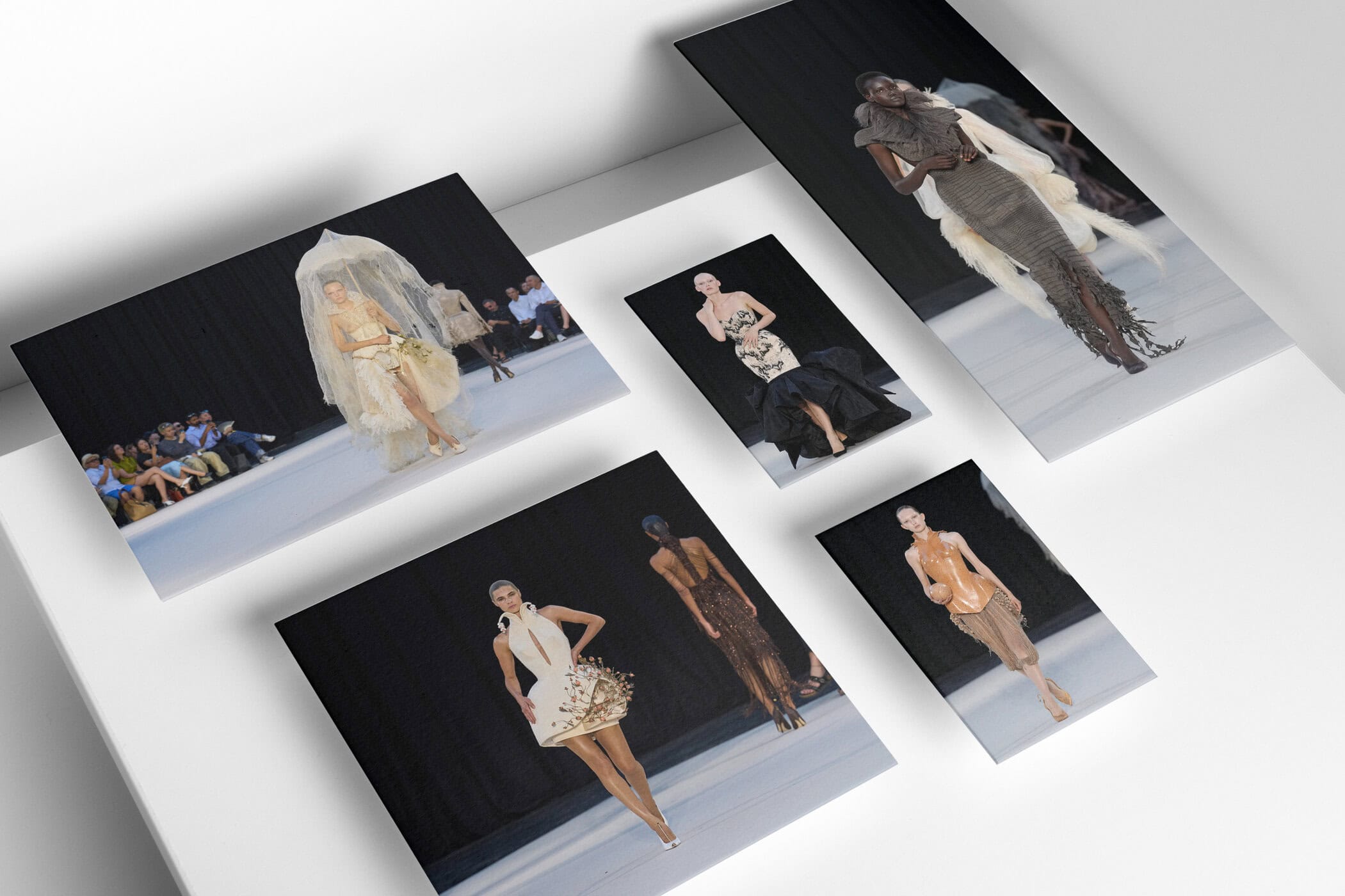
Twenty years after founding his couture house, Mohammed Ashi reflects on research, architecture, illustration, and why the most enduring fashion still begins with curiosity
By Kenneth Richard
There is something wonderfully unfashionable about the way Mohammed Ashi begins a collection. While much of fashion moves at the pace of the algorithm, chasing the next image before the previous one has finished circulating, Ashi prefers to disappear into libraries. He collects rare books, studies forgotten histories, sketches obsessively by hand, and allows ideas to mature long before they become garments. It is a slower rhythm than the industry often rewards, yet it is precisely that patience that has given his couture such remarkable clarity over the past two decades.
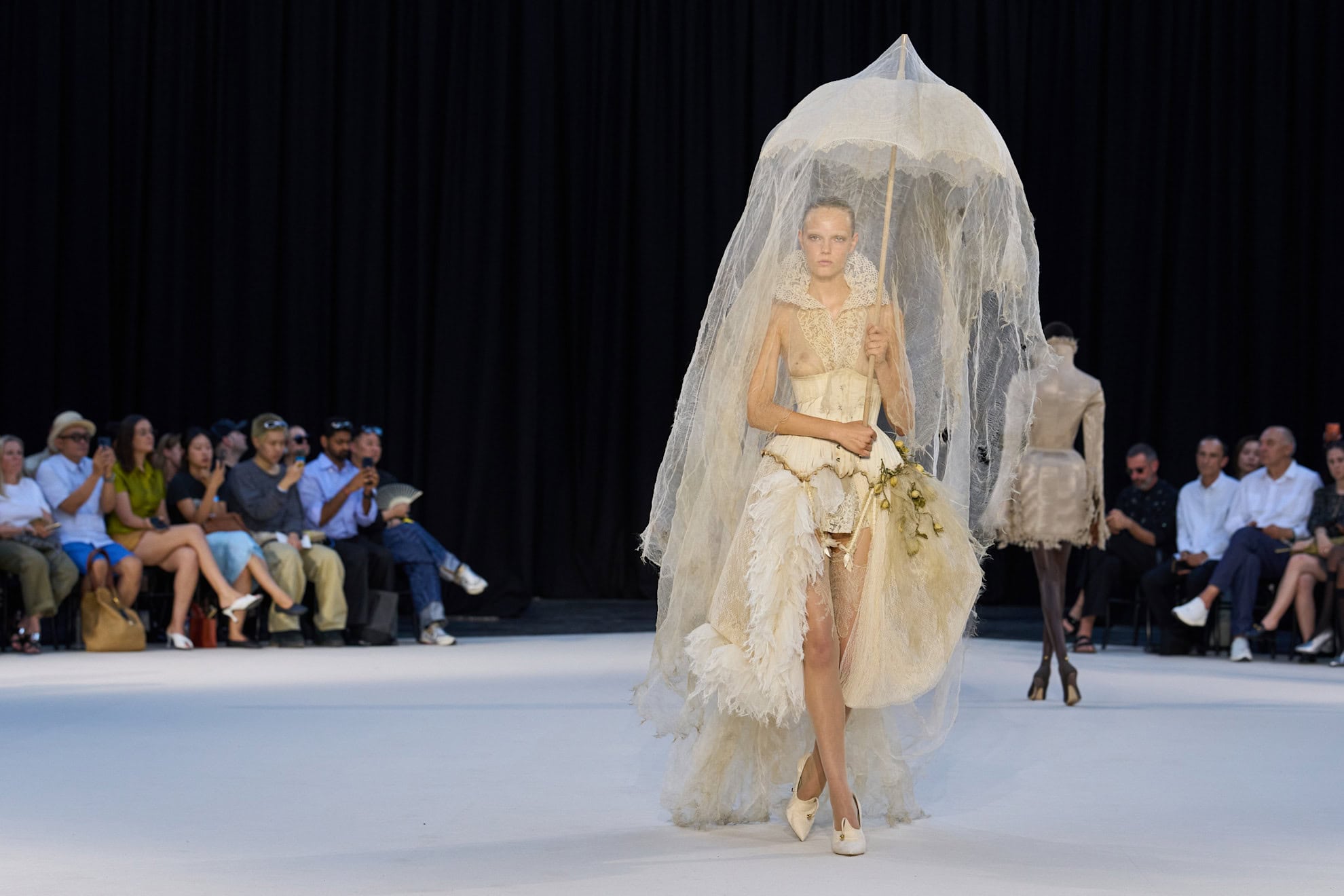
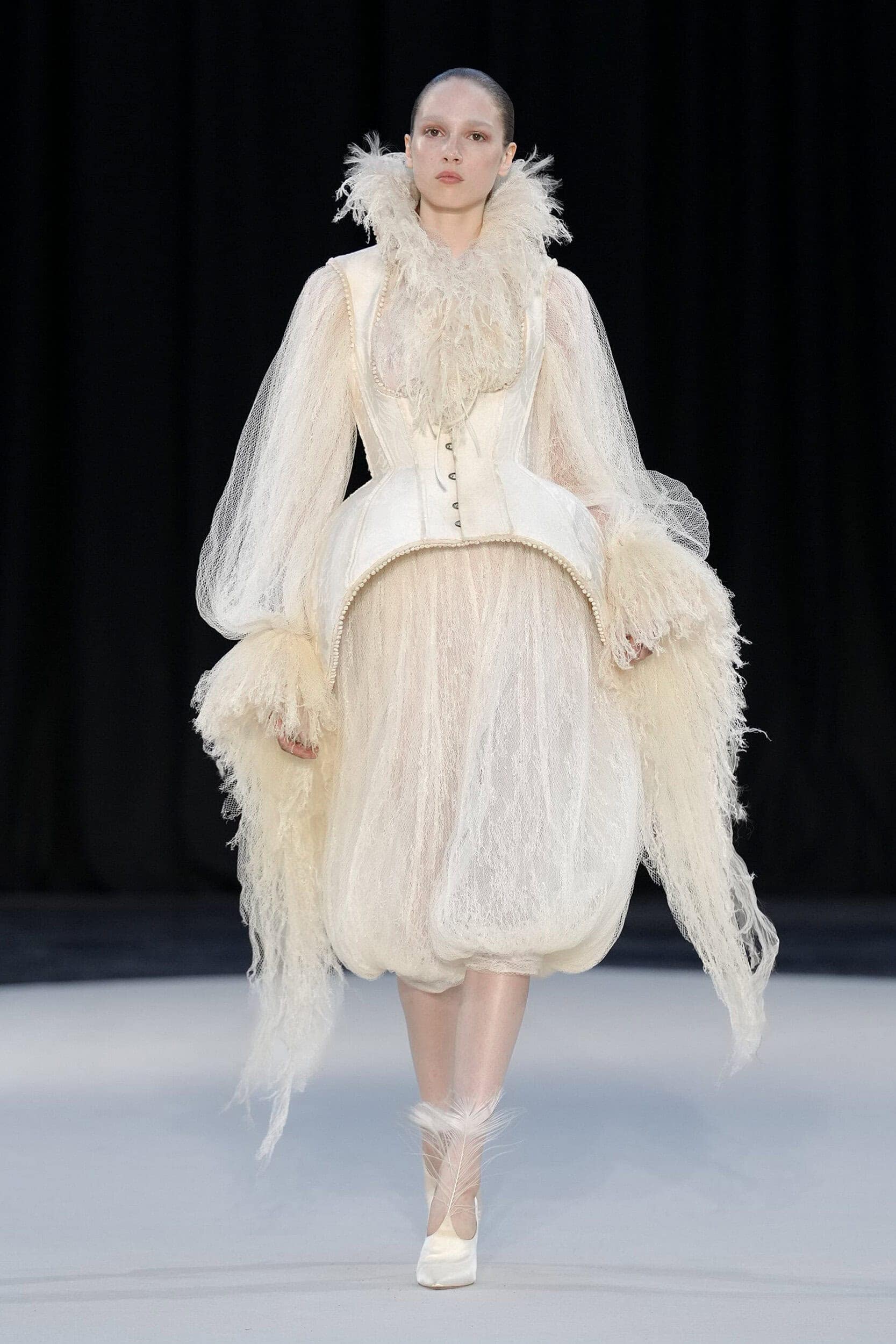
His Fall 2026 Haute Couture collection arrived as a celebration of twenty years since he established his house, but Ashi never approached the anniversary as an opportunity to look backward. Instead, he staged his own magnificent masquerade. Inspired by the legendary Rothschild Surrealist Ball of 1972, he transformed one of society’s most extravagant evenings into an exploration of romance, illusion, and identity. Victorian silhouettes collided with surrealist gestures. Women appeared behind carved masks, wings swept dramatically through the room, and richly distressed surfaces blurred the boundary between beauty and mystery. It was spectacular without becoming spectacle because every detail could be traced back to an idea.
“My research always starts in the library,” he said backstage. “It never starts on the internet. I’m still a book person.”
The remark is revealing because it explains far more than where Ashi finds references. It reveals the temperament behind the work. Research, for him, is not about collecting visual inspiration but understanding context. The collection began with an extraordinarily rare copy of The Legendary Ball, a publication documenting the Rothschild masquerade, with only a few hundred copies ever produced. Owning the book was only the beginning. He wanted to understand the evening, the people who attended it, the surrealist language that shaped it, and the emotions that lingered beneath its elaborate costumes.
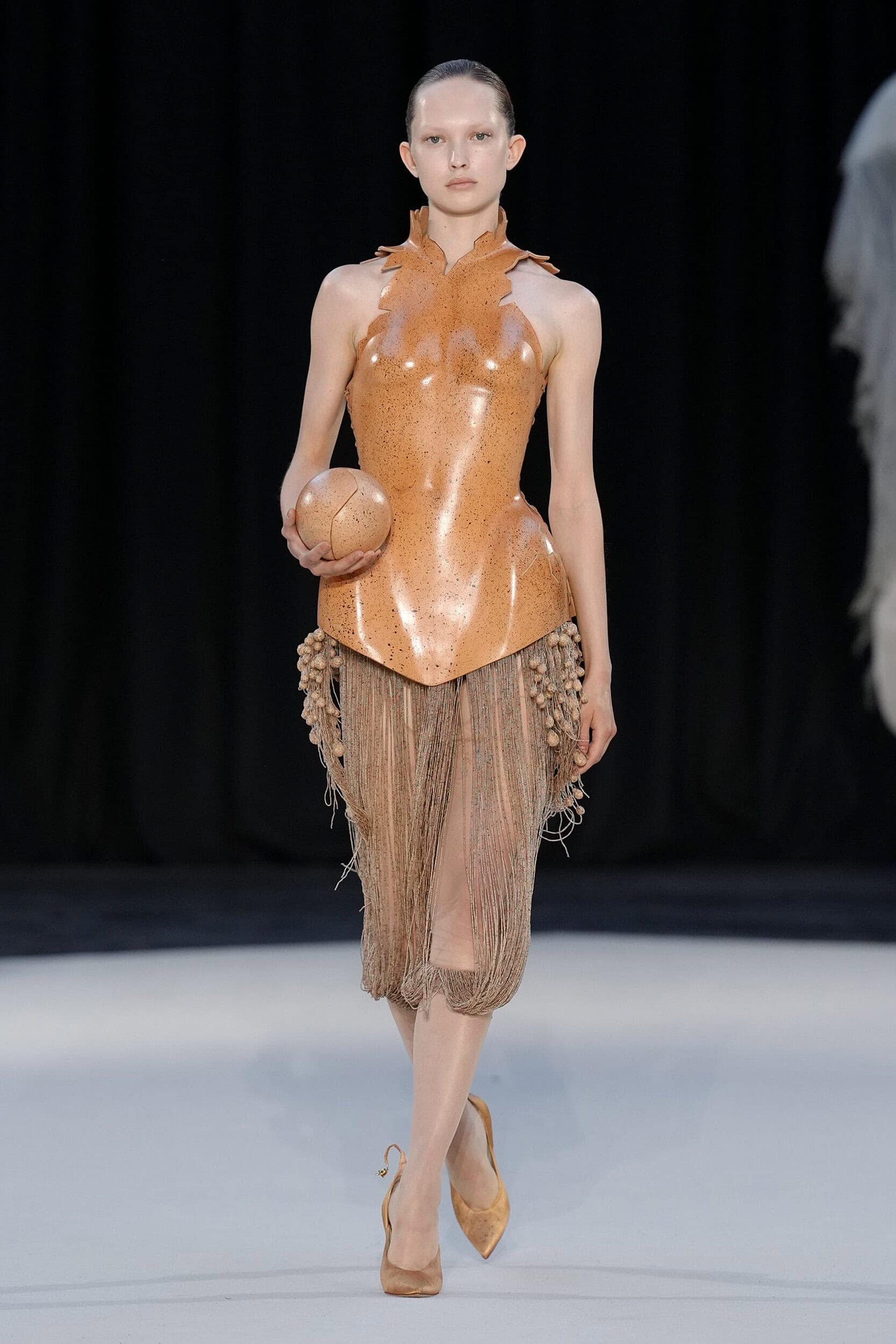
As he dug deeper, the collection gradually revealed itself.
“We all know about this ball,” he explained. “But when I went deeper into the research, I discovered things I didn’t know. I wanted to express that through my own language.”
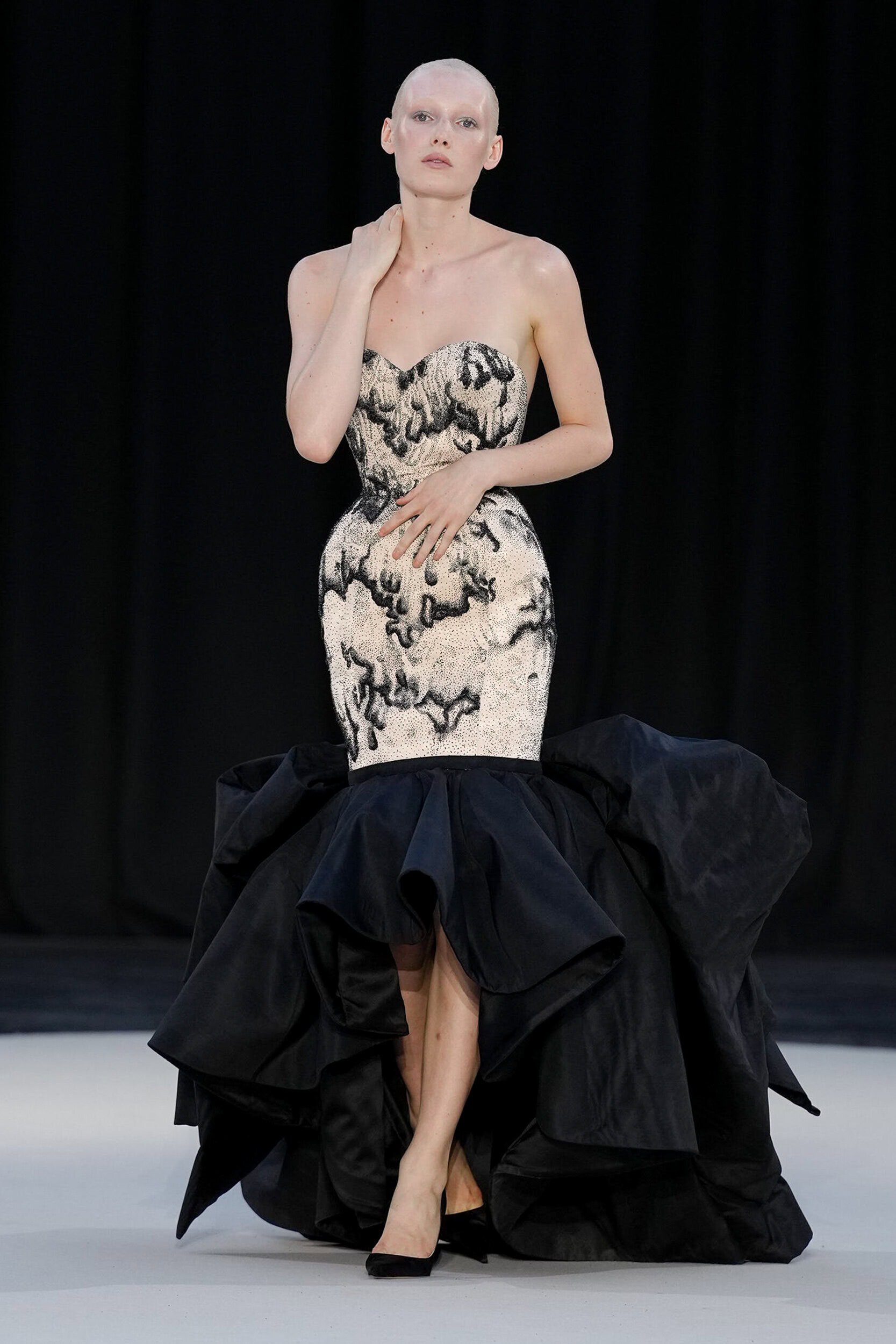
That distinction feels important. Ashi was never interested in recreating history. Instead, he translated it. Salvador Dalí’s surrealism became filtered through Victorian romanticism. Traditional masquerade masks migrated away from the face and onto garments themselves. Tiny sculpted faces, created by a Parisian artist, became buttons and jewelry, suggesting that identity can be concealed in many places, not only behind a mask.
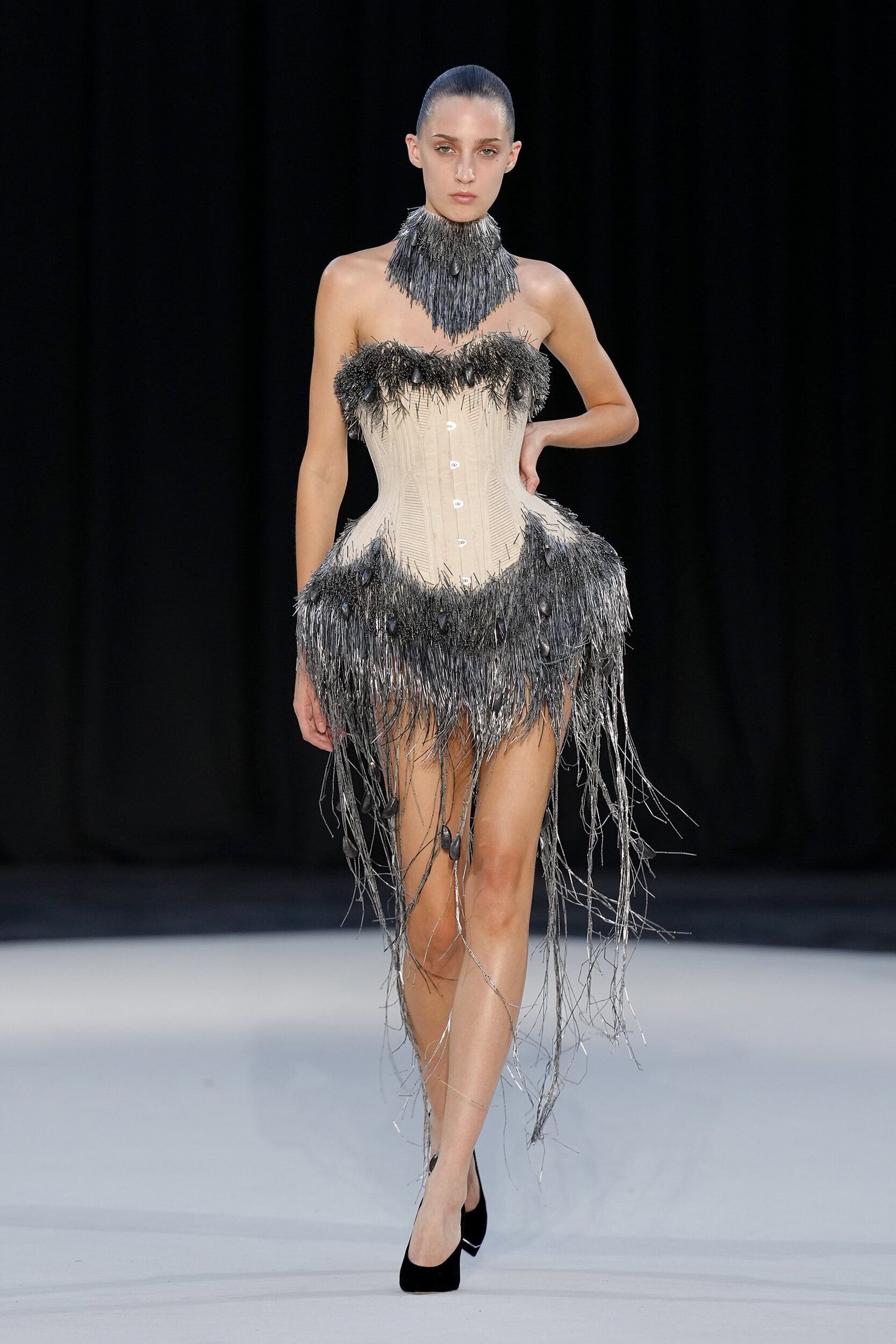
The extraordinary craftsmanship served those ideas rather than distracting from them. Wooden masks were painstakingly carved before being feathered by hand. Leather was treated until it resembled porcelain. Embroidered lemons, hand-painted shells, and richly textured fabrics rewarded close inspection, revealing themselves layer by layer rather than announcing their complexity from across the room.
Even the shells carried their own story. Rather than sourcing decorative materials, Ashi quietly collected discarded shells from restaurants over time before having each one painted by hand and transformed into couture embellishments. Sustainability entered the collection not through marketing language but through thoughtful practice, allowing beauty and responsibility to coexist naturally.
Long before these ideas become garments, however, they first exist as drawings. Ashi remains an exceptional illustrator, and sketching continues to anchor his creative process. His drawings are not simply technical exercises but another form of research, allowing architecture, proportion, and emotion to evolve together before the atelier begins its work.
That architectural thinking has defined Ashi since the beginning.
“Architecture is how I started,” he said. “I’ve modernized it over the years, but I’ve stayed true to who I am.”
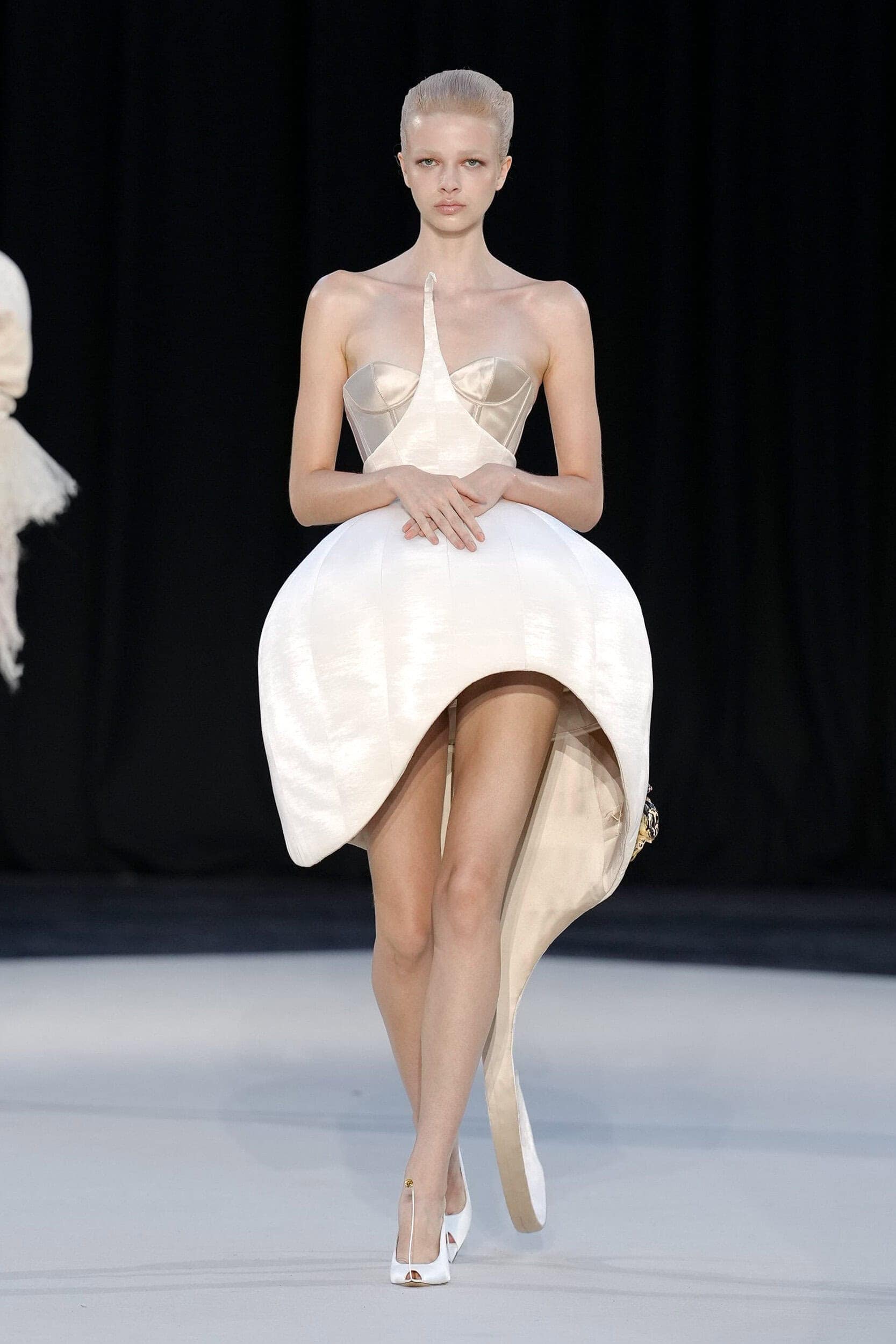
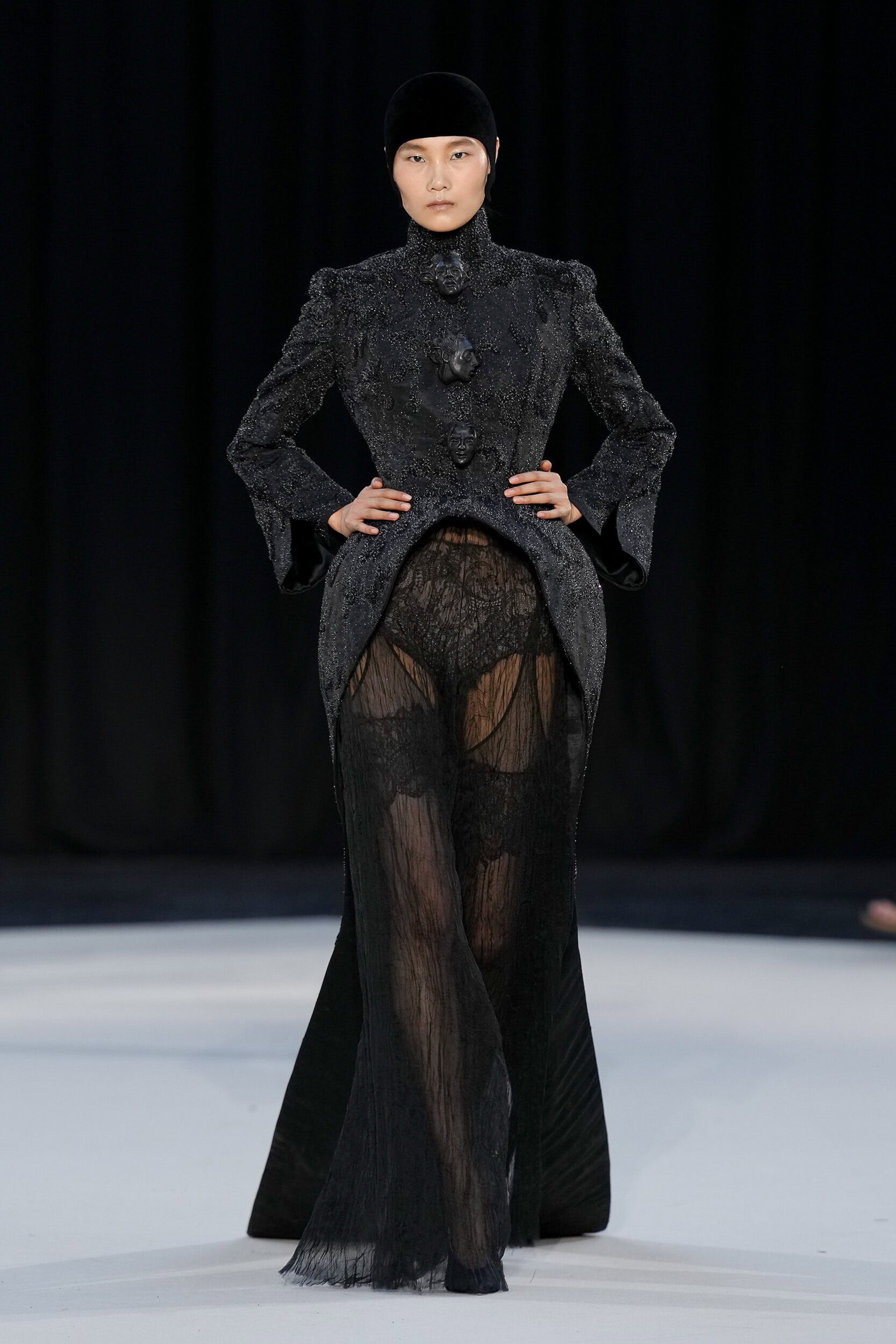
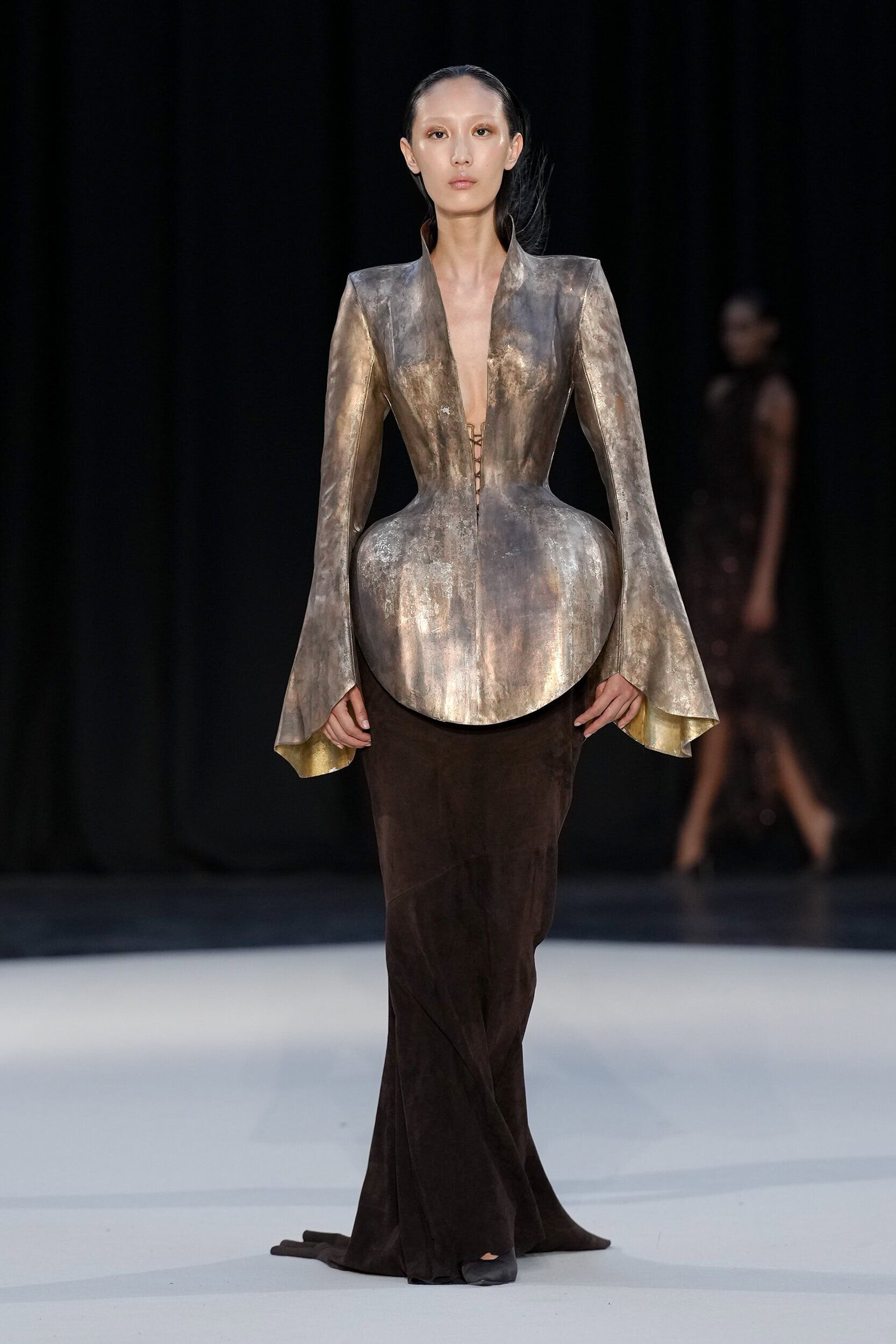
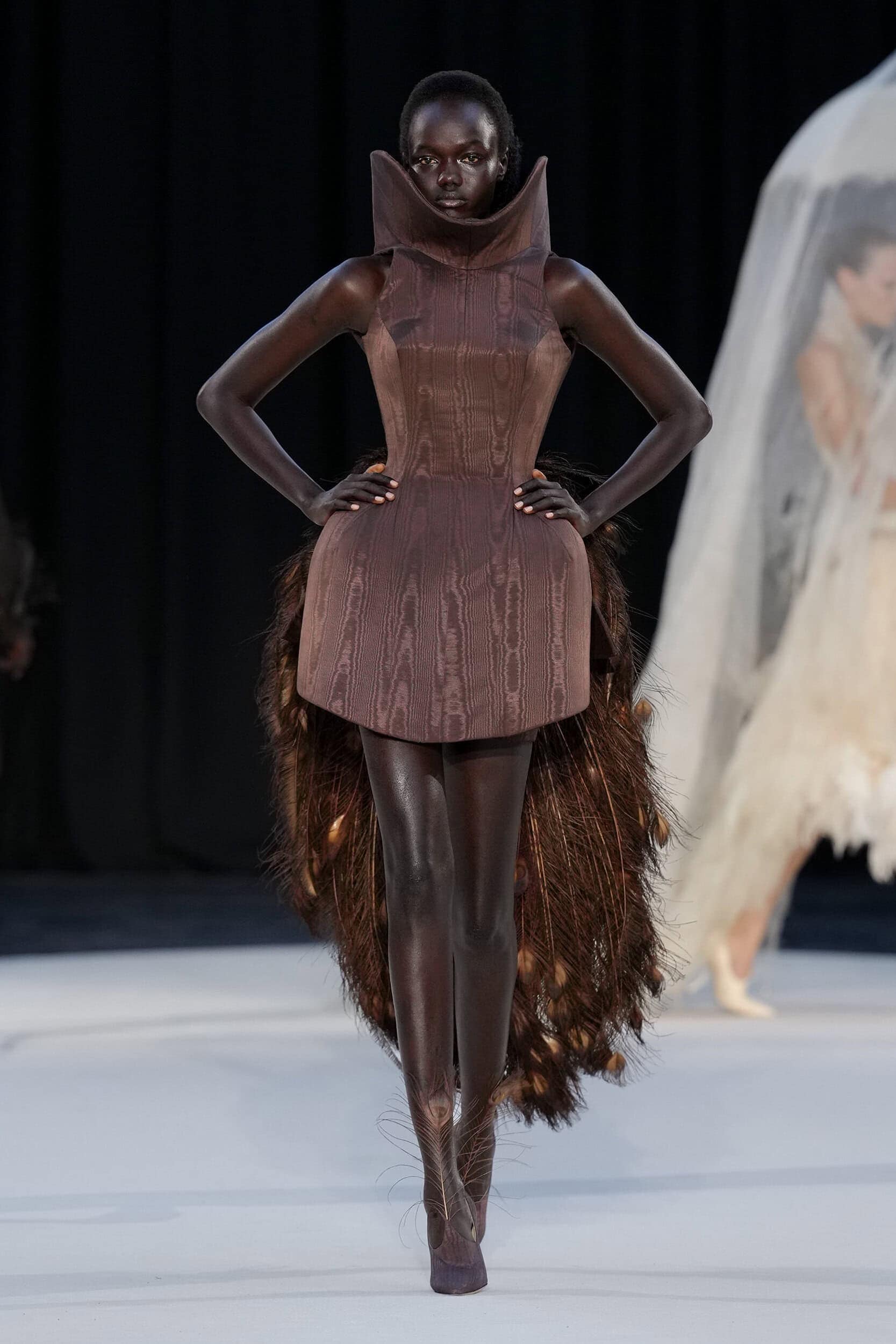
Perhaps that consistency is his greatest achievement after twenty years. Fashion often celebrates reinvention, yet Ashi has demonstrated that evolution can be just as compelling. Rather than abandoning his visual language every few seasons, he has patiently expanded it. His silhouettes remain sculptural, his fascination with romance continues, and his appreciation for craftsmanship has only deepened, yet each collection finds new emotional territory to explore.
This season, romance acquired sharper edges. Animalistic tails interrupted otherwise elegant gowns. Winged figures floated through the collection like mythical creatures. Distressed finishes introduced a sense of age and memory, while masks suggested that beauty and mystery often exist together. Ashi describes himself as “a sucker for romance,” yet he deliberately pushed that romance somewhere darker, allowing tenderness and unease to coexist.
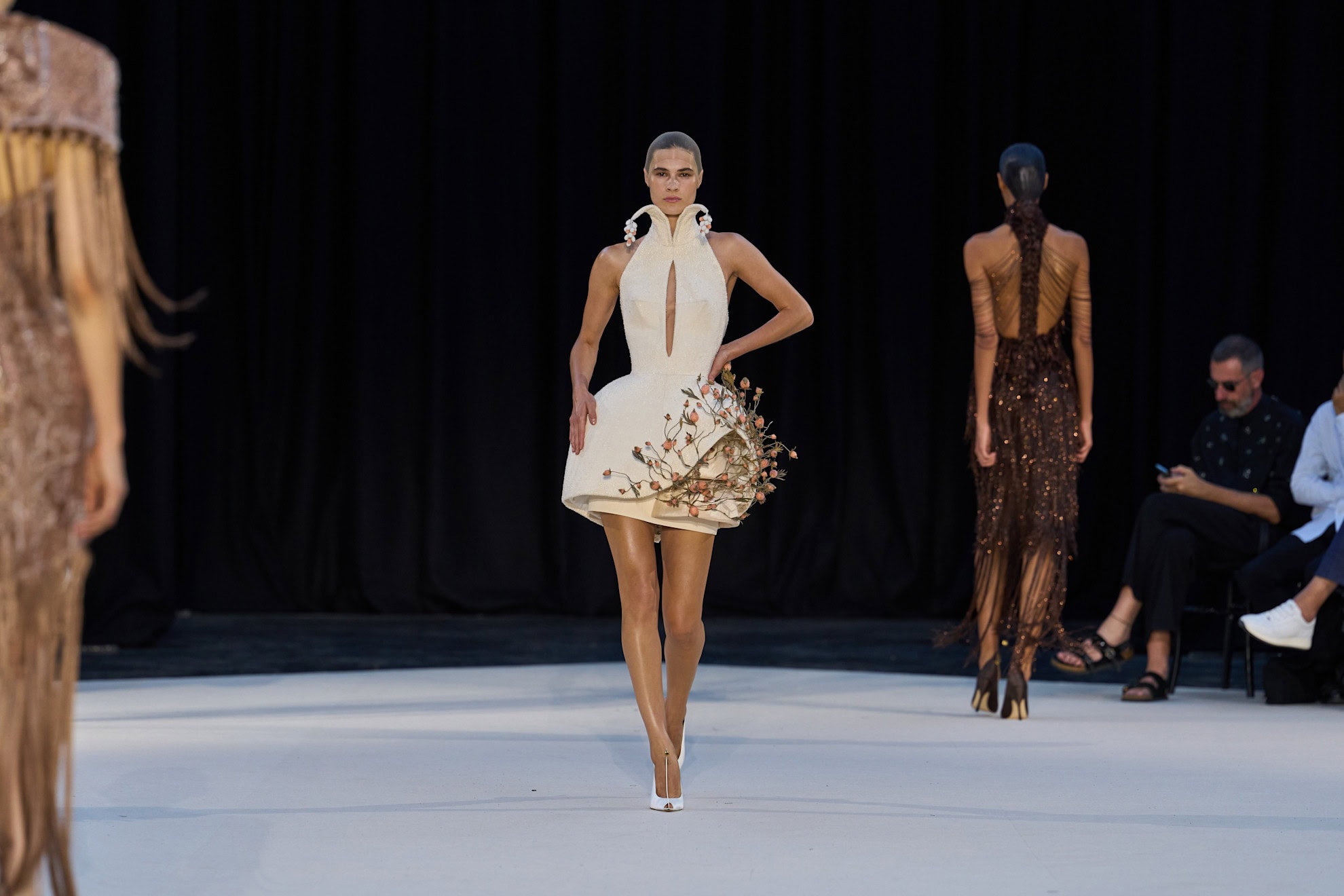
As the first couturier from the Gulf to join the official Paris Haute Couture calendar, Ashi has also quietly expanded the definition of contemporary couture. His heritage informs his work, but he resists allowing it to become its only lens.
“There is a lot of my culture inside what I do,” he reflected. “But I’m a global citizen as well.”
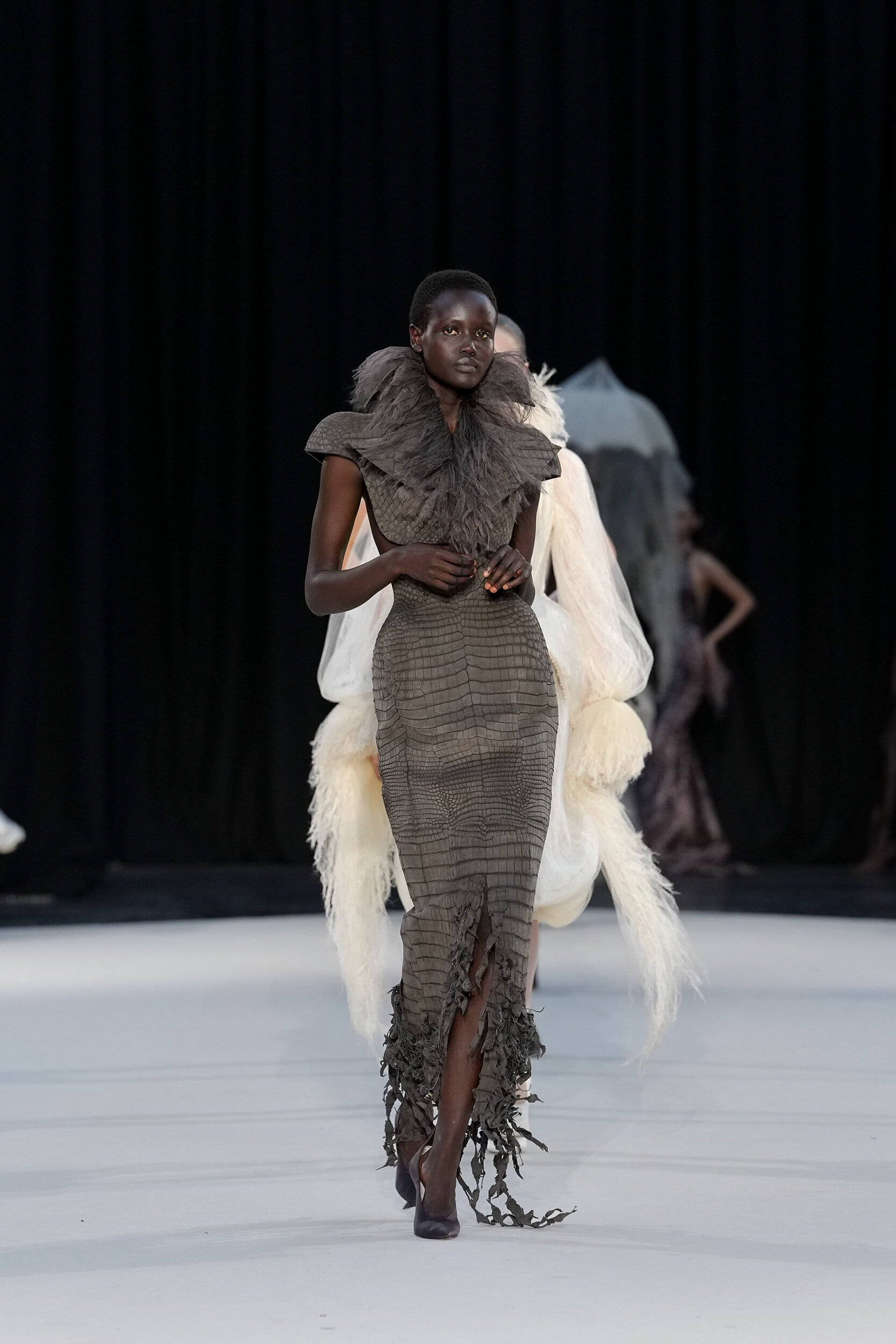
That openness feels central to understanding both the man and his work. Ashi’s collections borrow freely from architecture, literature, history, art, and travel, yet they never feel derivative because everything passes through his own disciplined process of observation and refinement. He is less interested in references themselves than in what those references reveal.
When asked what continues to inspire him after two decades, his answer was remarkably simple.
“The world we live in has given me a lot,” he said. “I have to give back.”
It is a generous way to think about fashion. Mohammed Ashi creates extraordinary couture, but he is equally devoted to preserving something increasingly precious: the belief that beautiful clothes begin with ideas worth pursuing. In an age that rewards speed, he continues to trust curiosity. In an industry captivated by novelty, he still believes knowledge is the greatest luxury. Twenty years after founding his house, that quiet conviction may be his finest creation of all.