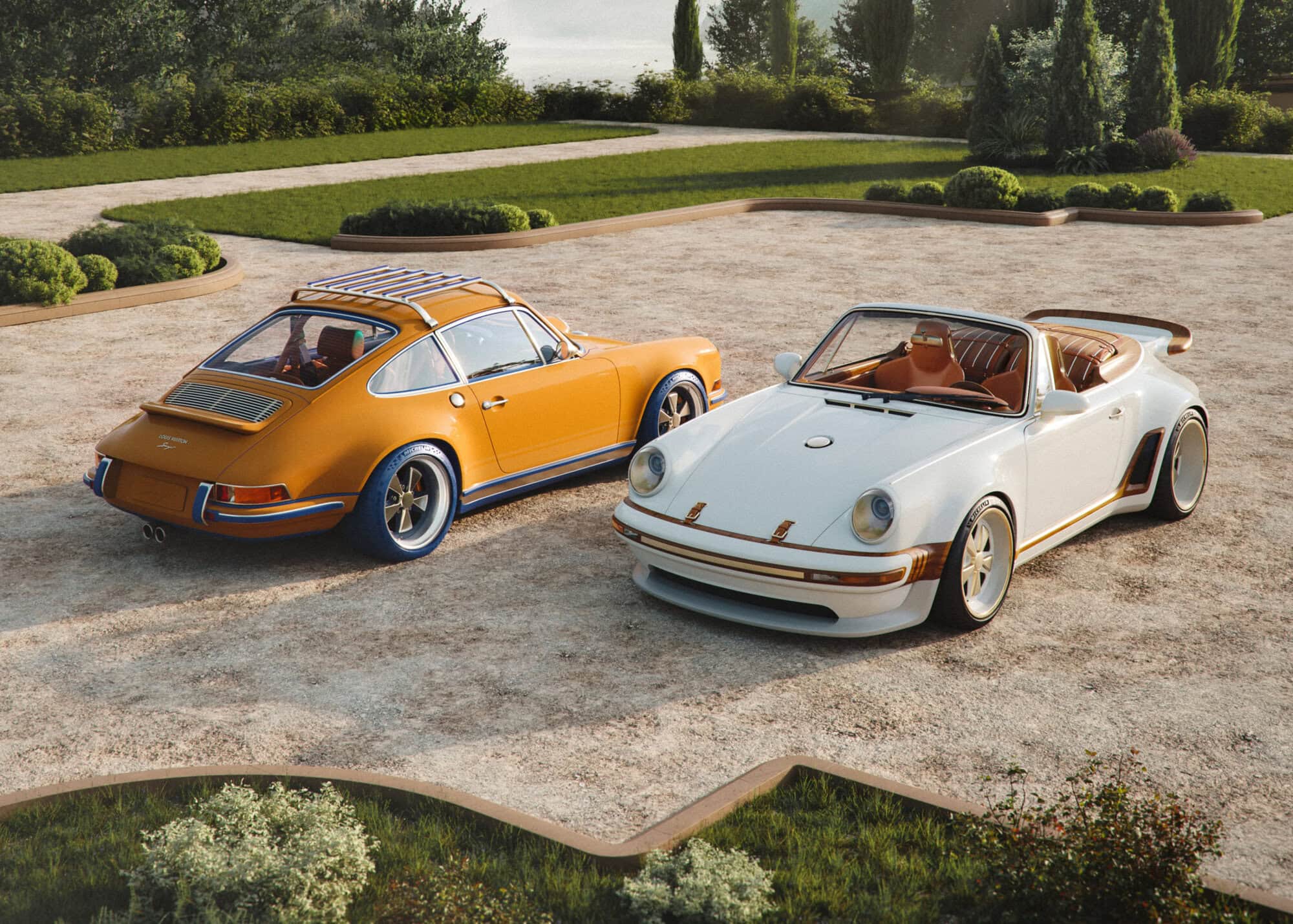
The House joins Singer for an unprecedented project spanning bespoke automobiles, luggage, watches, and driver wardrobes
Louis Vuitton is taking its Art of Travel philosophy onto the open road through a landmark collaboration with Singer, the California-based specialist known for restoring and reimagining classic Porsche 911s. The project brings together the two companies’ respective expertise in craftsmanship, engineering, leatherwork, watchmaking, and personalization through two highly customized automobiles: a Porsche 911 Reimagined by Singer – Classic and a Porsche 911 Reimagined by Singer – Classic Turbo. The partnership represents the first co-branded creation in Louis Vuitton’s history, as well as a first for Singer.
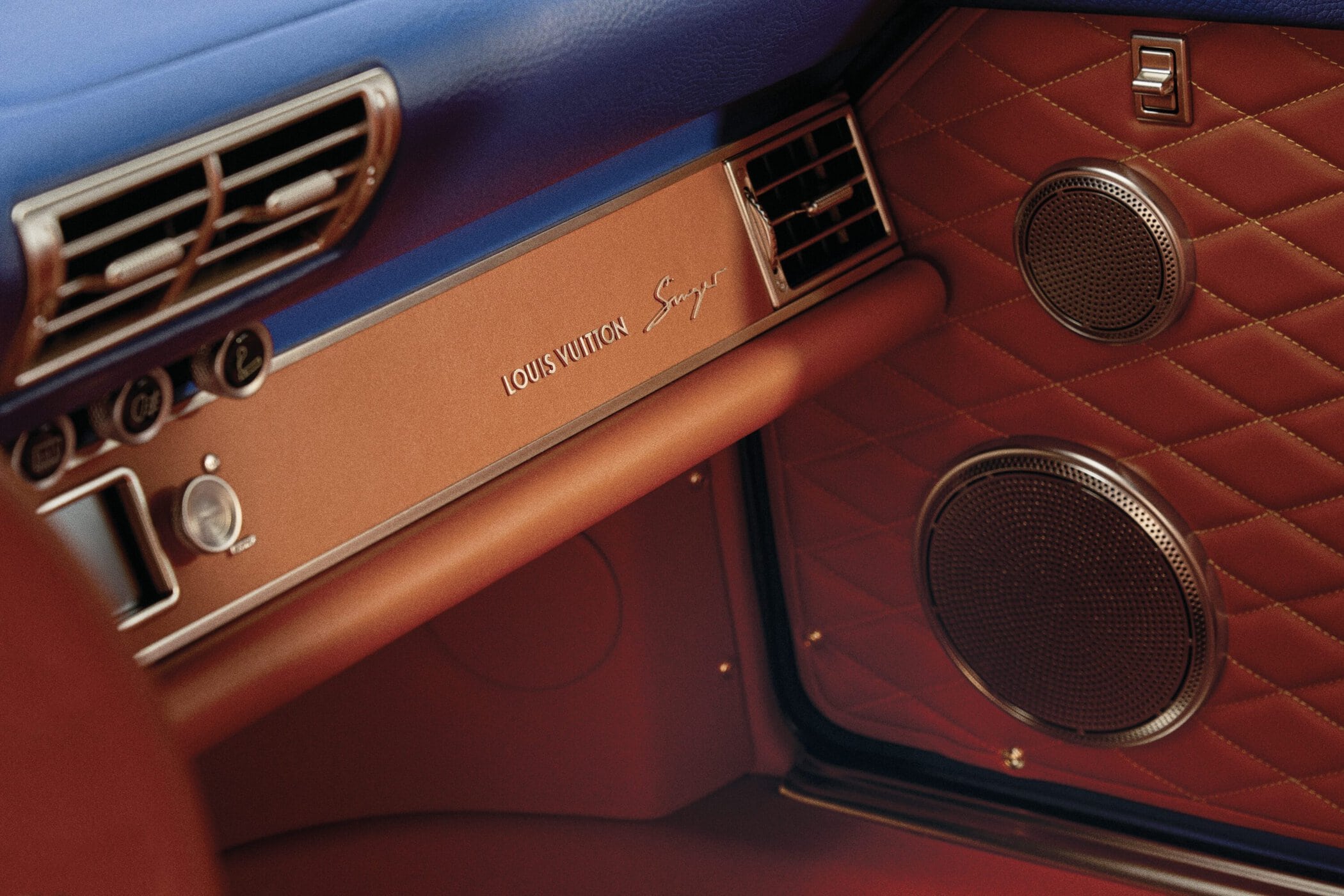
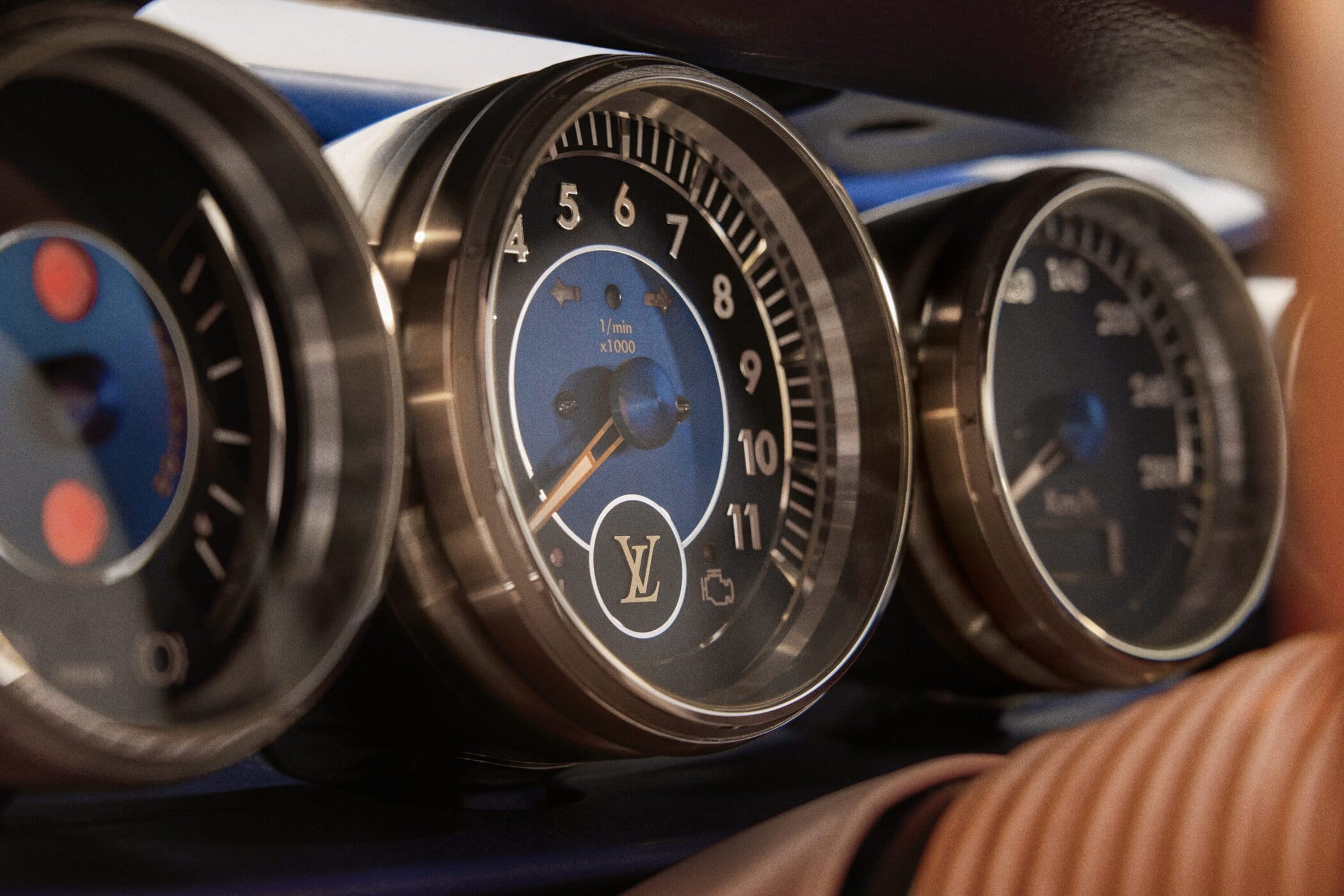
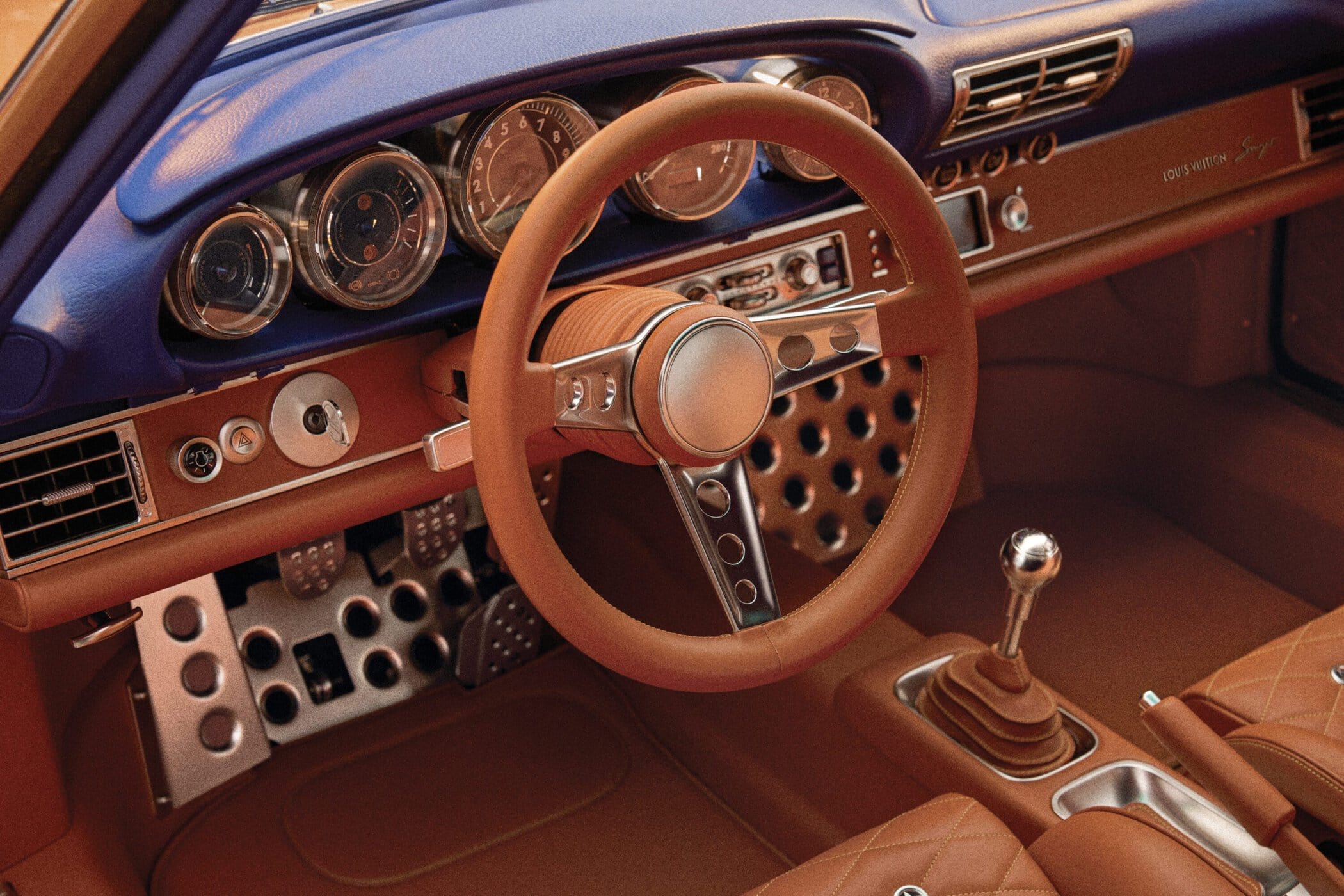
The collaboration began on a considerably smaller scale. Louis Vuitton was initially approached to create a dashboard clock for a car reimagined by Singer, leading La Fabrique du Temps Louis Vuitton to develop a detachable mechanical timepiece inspired by the House’s Tambour watch. From there, the project expanded into a comprehensive reconsideration of the vehicle’s interior, including its speedometer, rev counter, gauges, switches, vents, leatherwork, and other functional details. Louis Vuitton’s watchmaking codes informed everything from dial graphics to polished and satin-finished metal components, while Singer translated the House’s material language into a functional automotive environment.
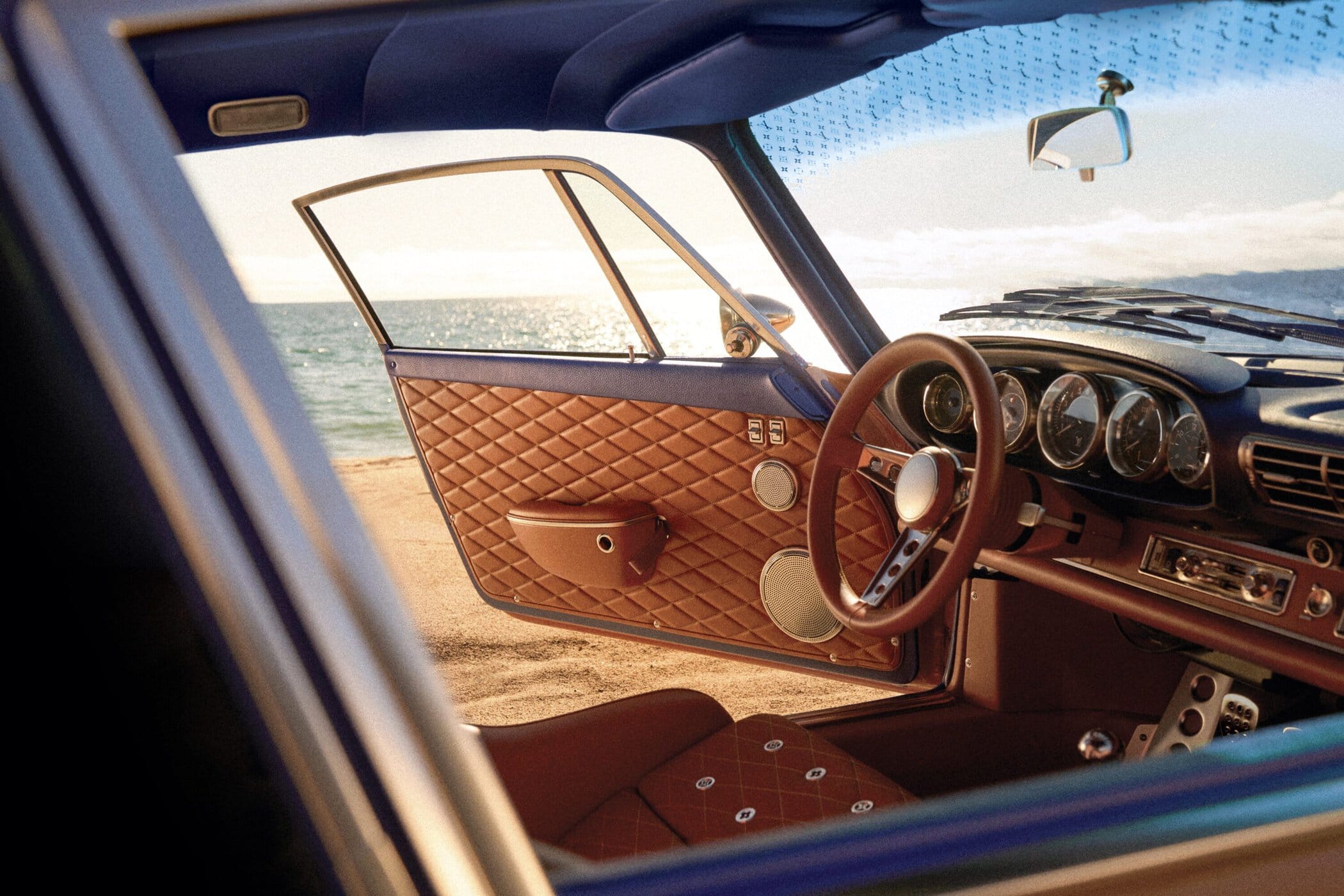
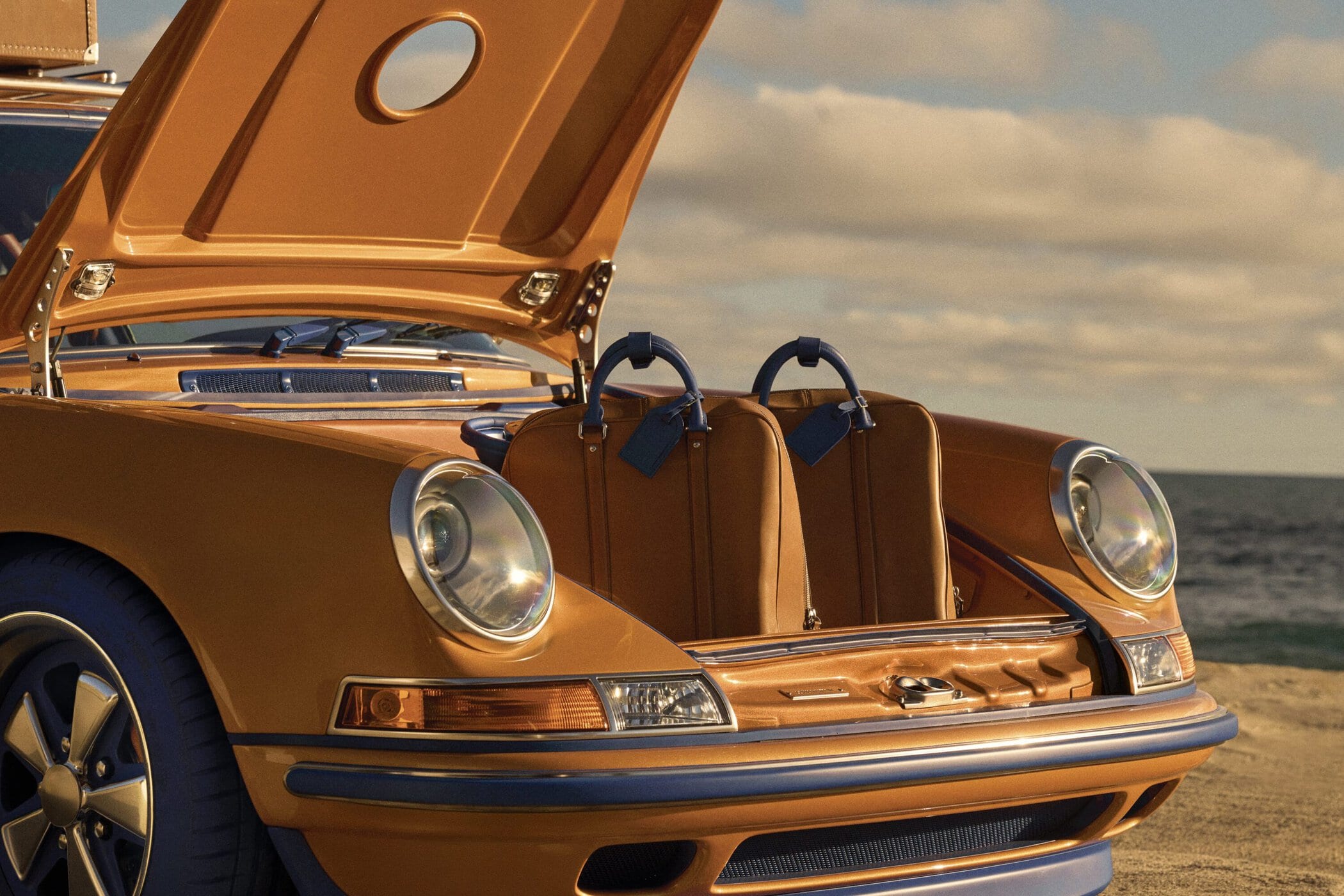
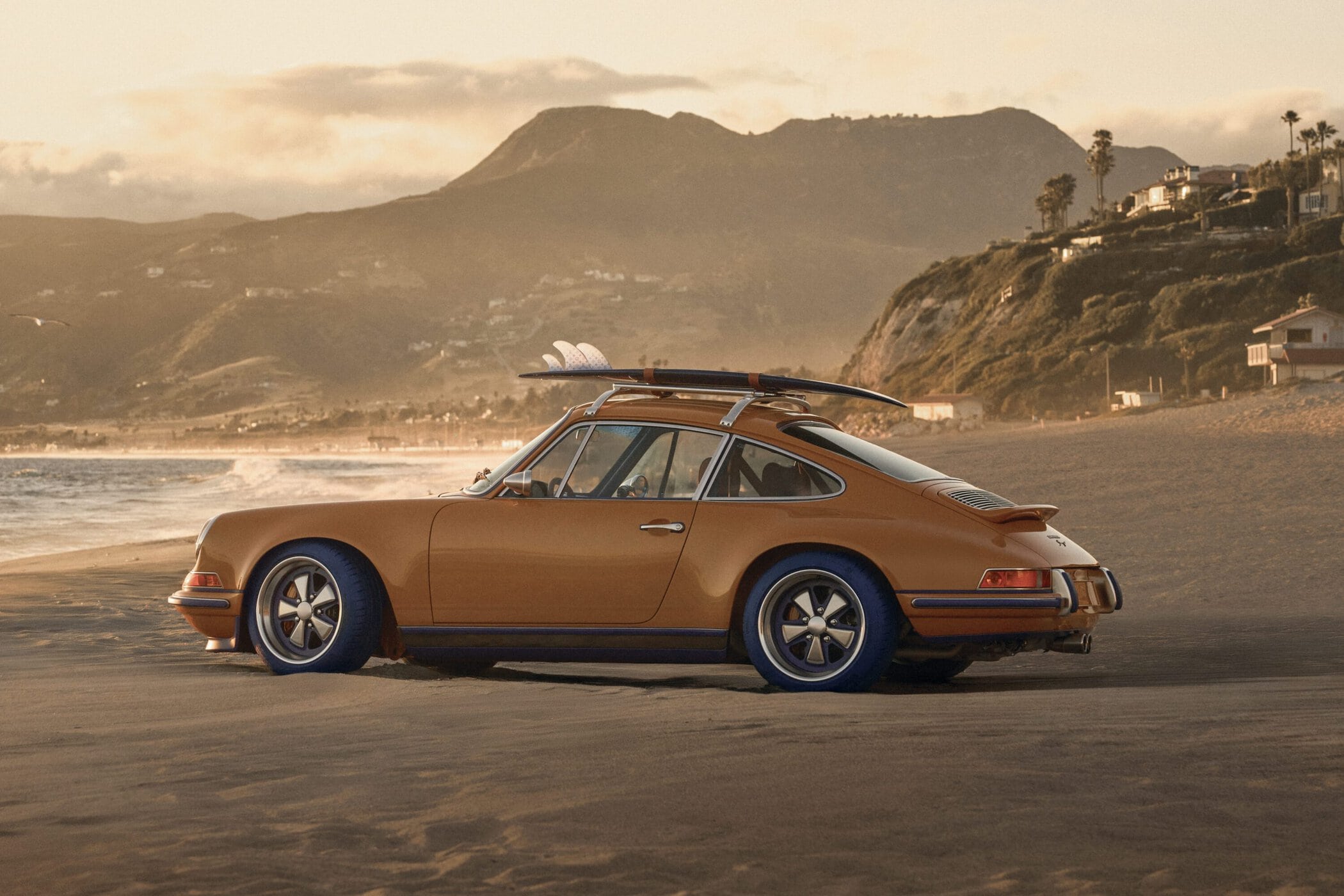
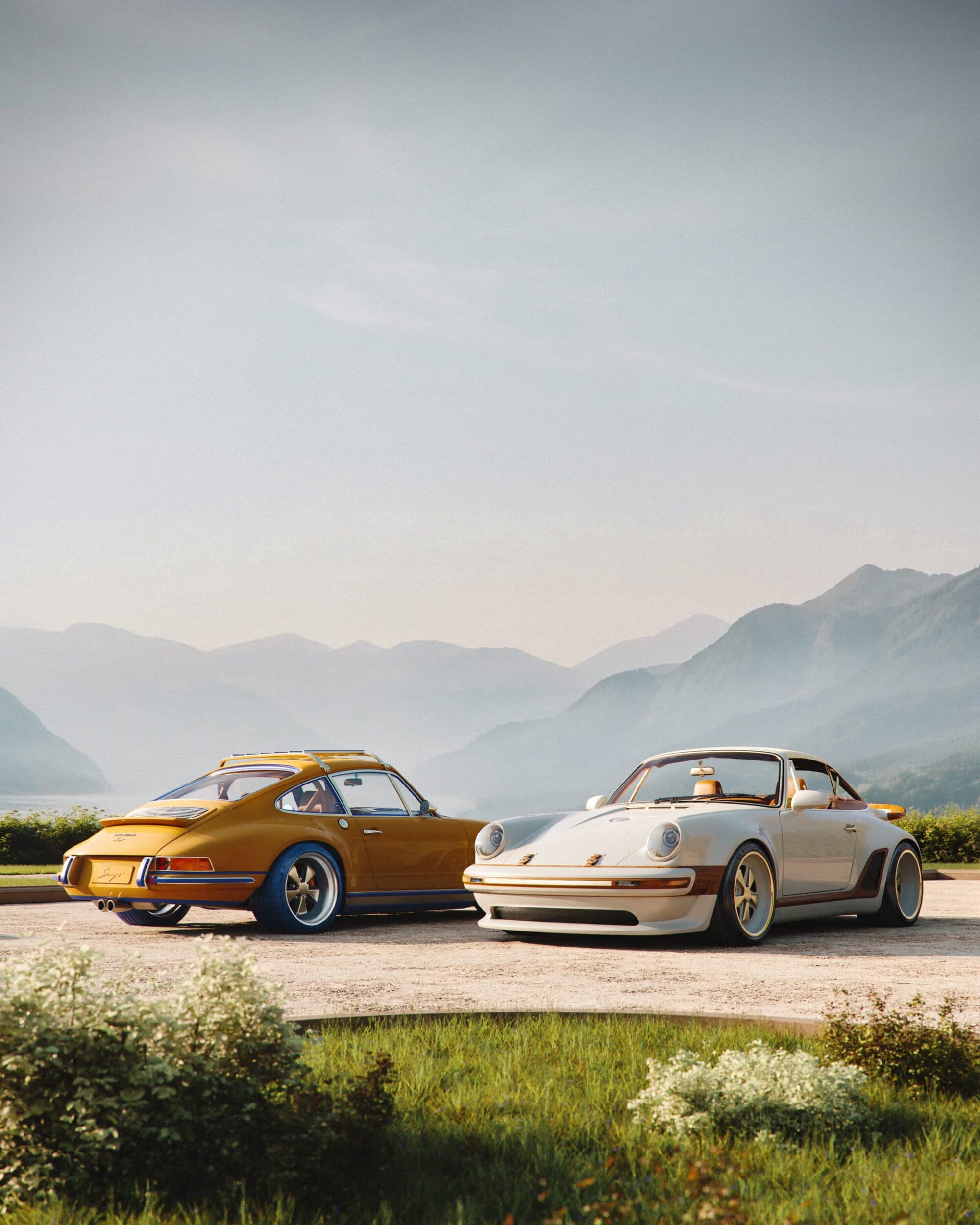
The first car, a Porsche 911 Reimagined by Singer – Classic, takes a particularly graphic approach. Its saffron and cobalt-blue palette connects Louis Vuitton’s historic packaging with Singer’s own automotive vocabulary, while details including bright yellow saddle stitching, cobalt demonstration tires, an LV-patterned rear grille, and natural leather inspired by the House’s VVT leather extend the dialogue throughout the vehicle. Inside, diamond-pattern embossing references the malletage found within Louis Vuitton trunks, while Monogram flowers appear across ventilation eyelets, headrests, and other details. Even typically utilitarian components have been reconsidered, replacing conventional plastic fittings with individually finished metal elements informed by fine watchmaking techniques.
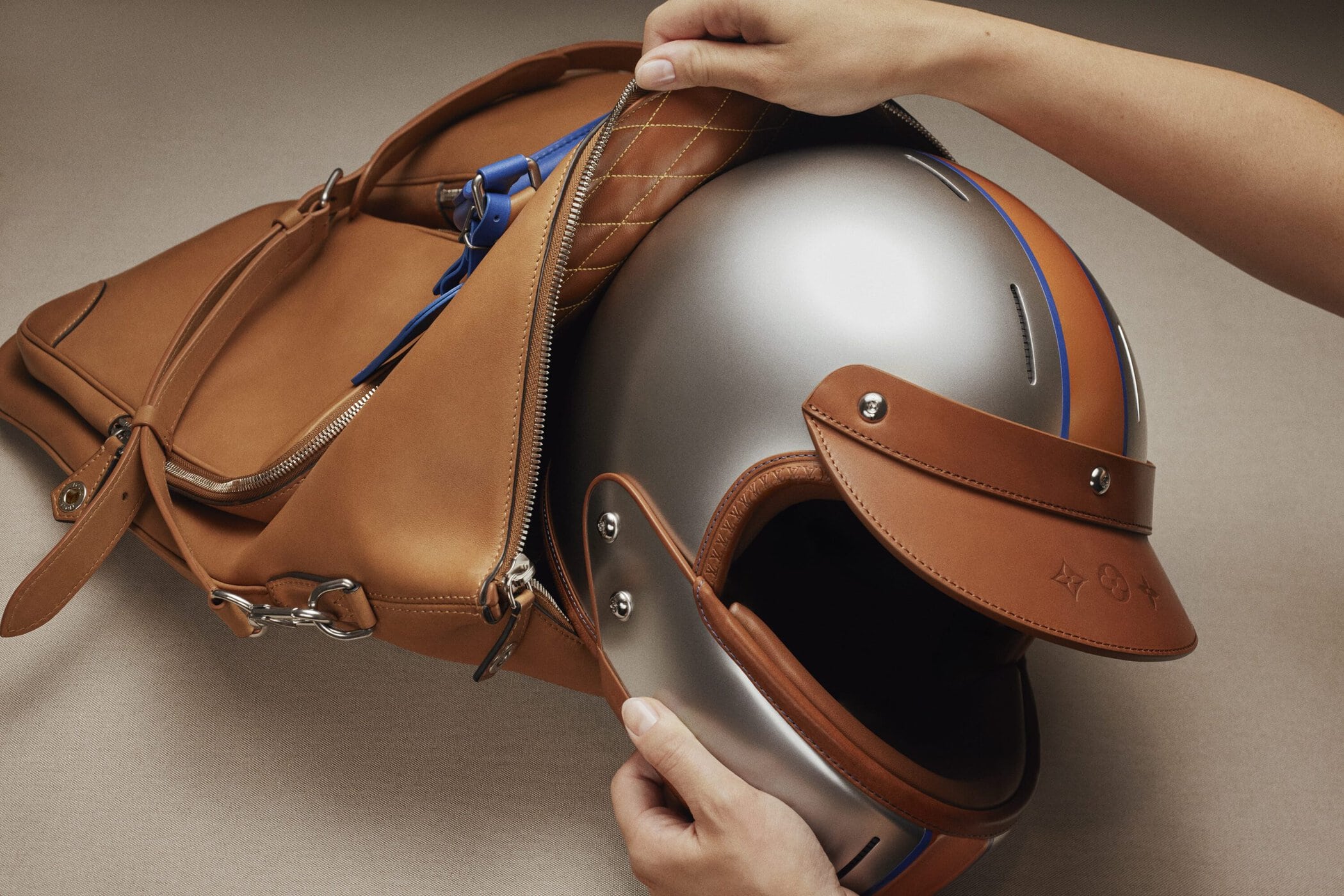
Louis Vuitton’s historic relationship with luggage makes the partnership particularly convincing once the project moves beyond decoration. The Classic is equipped with a bespoke roof rack capable of carrying a trunk, surfboard, or skis, while custom luggage has been shaped specifically around the architecture of the car. A coordinating capsule extends the concept to its driver through a leather racing jacket, jeans, driving shoes and gloves, helmet, key holders, and travel accessories. Rather than simply placing Louis Vuitton branding onto a Porsche, the project revives the House’s early role in designing luggage around emerging forms of transportation: Georges Vuitton was already creating automobile-specific trunks by the end of the 19th century.
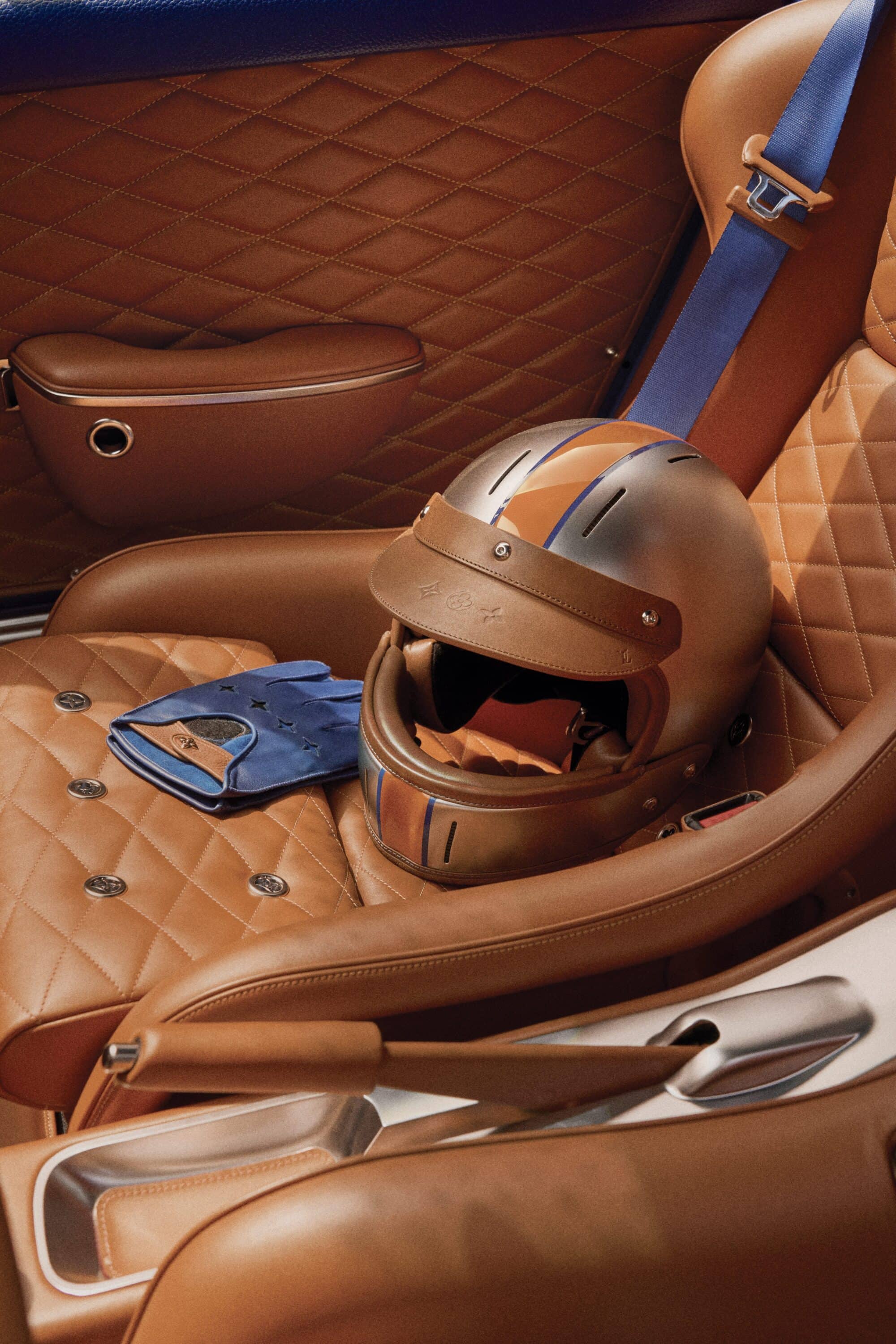
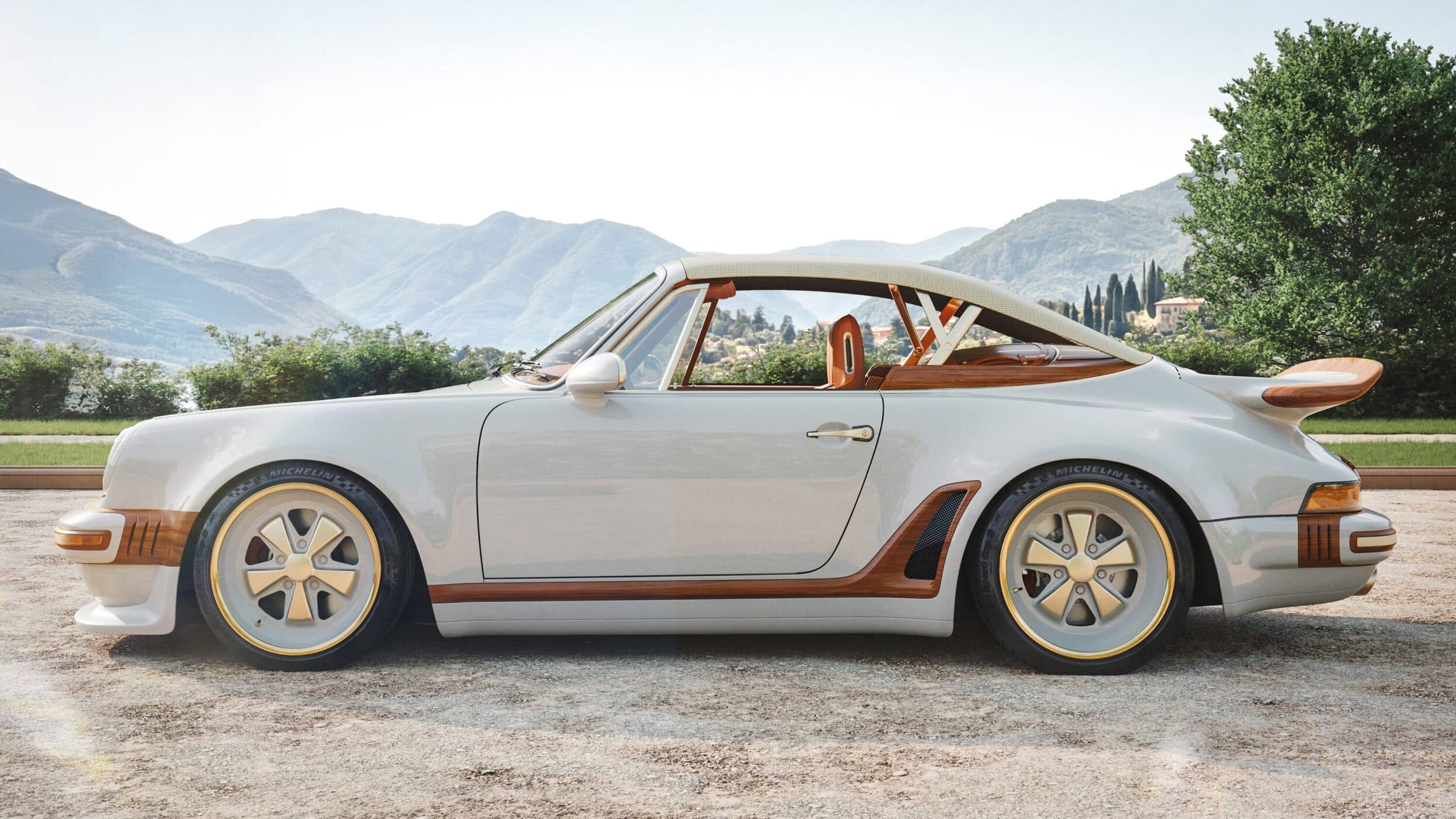
The second vehicle gives Nicolas Ghesquière a more personal canvas. The Artistic Director of Women’s Collections conceived the Porsche 911 Reimagined by Singer – Classic Turbo as an ivory-white cabriolet combining automotive and nautical references. Calcaire Lutétien-inspired bodywork is paired with natural leather, gold-toned details, and extensive woodwork recalling the decks of classic motorboats. The wooden rear luggage compartment, leather hood straps, centrally positioned Tambour-inspired clock, Noé-referencing gearshift trim, and bespoke luggage create an unusually coherent environment in which fashion, product design, and automotive engineering overlap. Ghesquière also designed a corresponding capsule encompassing a made-to-measure parachute-silk suit, LV Sneakerina, driving gloves, sunglasses, helmet, Tambour Automatic watch, and specialized luggage.
What gives the collaboration weight is the extent to which both partners have resisted treating the automobile as another surface for recognizable logos. Louis Vuitton’s contribution reaches into the functional architecture of the cars, while Singer’s engineering requirements force the House’s familiar codes into unfamiliar territory. The result feels less like luxury-fashion merchandising than an unusually elaborate exercise in applied design, one that reconnects Louis Vuitton’s contemporary ambitions with a surprisingly relevant piece of its own history. From custom automobile trunks in the early 20th century to two comprehensively reimagined Porsche 911s today, the mode of transportation may have changed, but the underlying proposition remains remarkably consistent: if the journey matters, everything surrounding it can be designed accordingly.