The Brand’s Second Open Studio Transforms Henri Matisse’s 1953 Masterwork Into Pleated Garments, Dance and an Immersive New Collaboration With Tate
Homme Plissé Issey Miyake brought its experiments with clothing and movement into the museum on Wednesday, staging the second edition of its Open Studio at Tate Modern in London with a performance inspired by Henri Matisse’s The Snail.
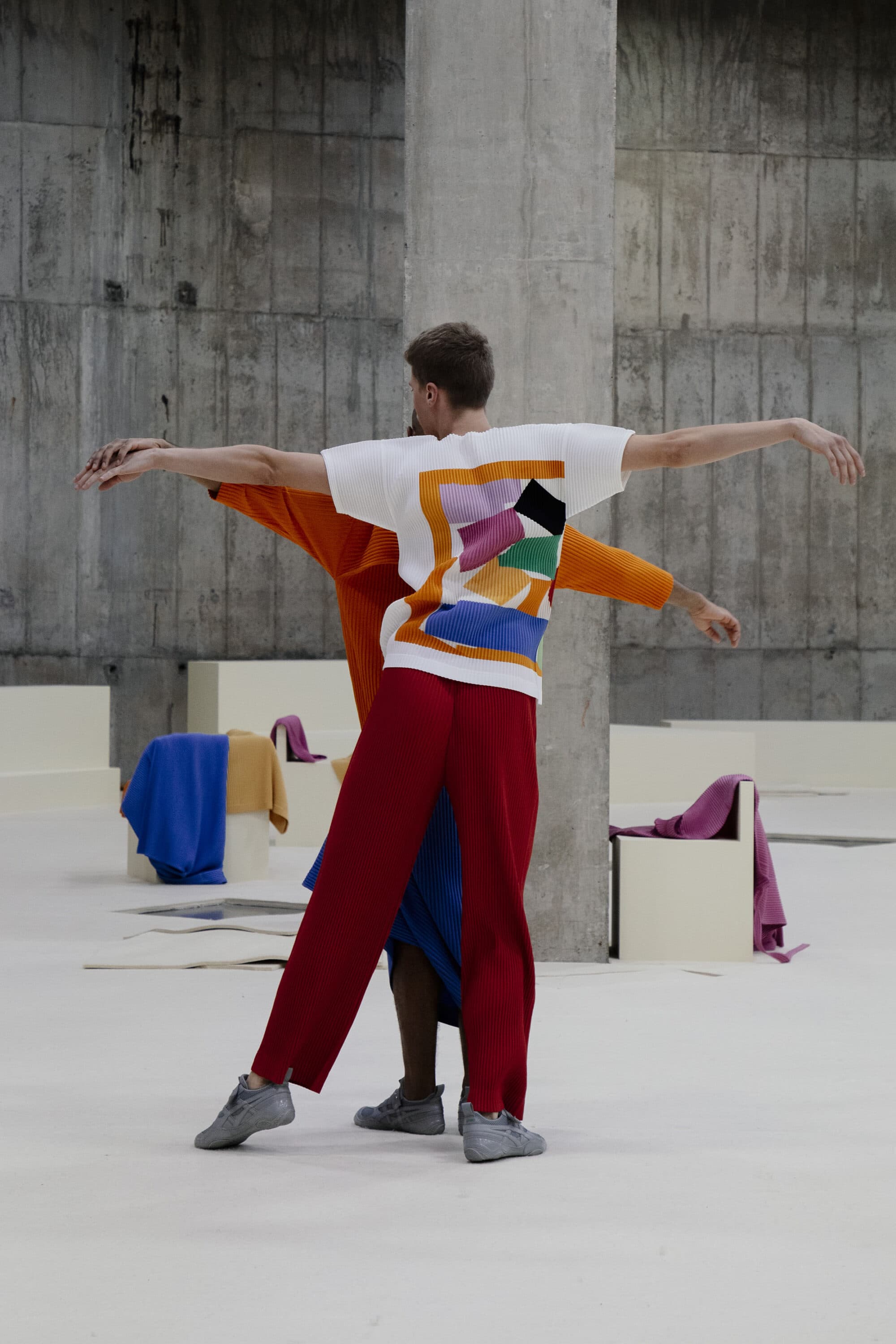
Presented inside The Tanks, the project was both performance and product unveiling, introducing a capsule collection created with Tate that translates the color and abstract forms of Matisse’s 1953 paper cut-out into the pleated language of Homme Plissé Issey Miyake.
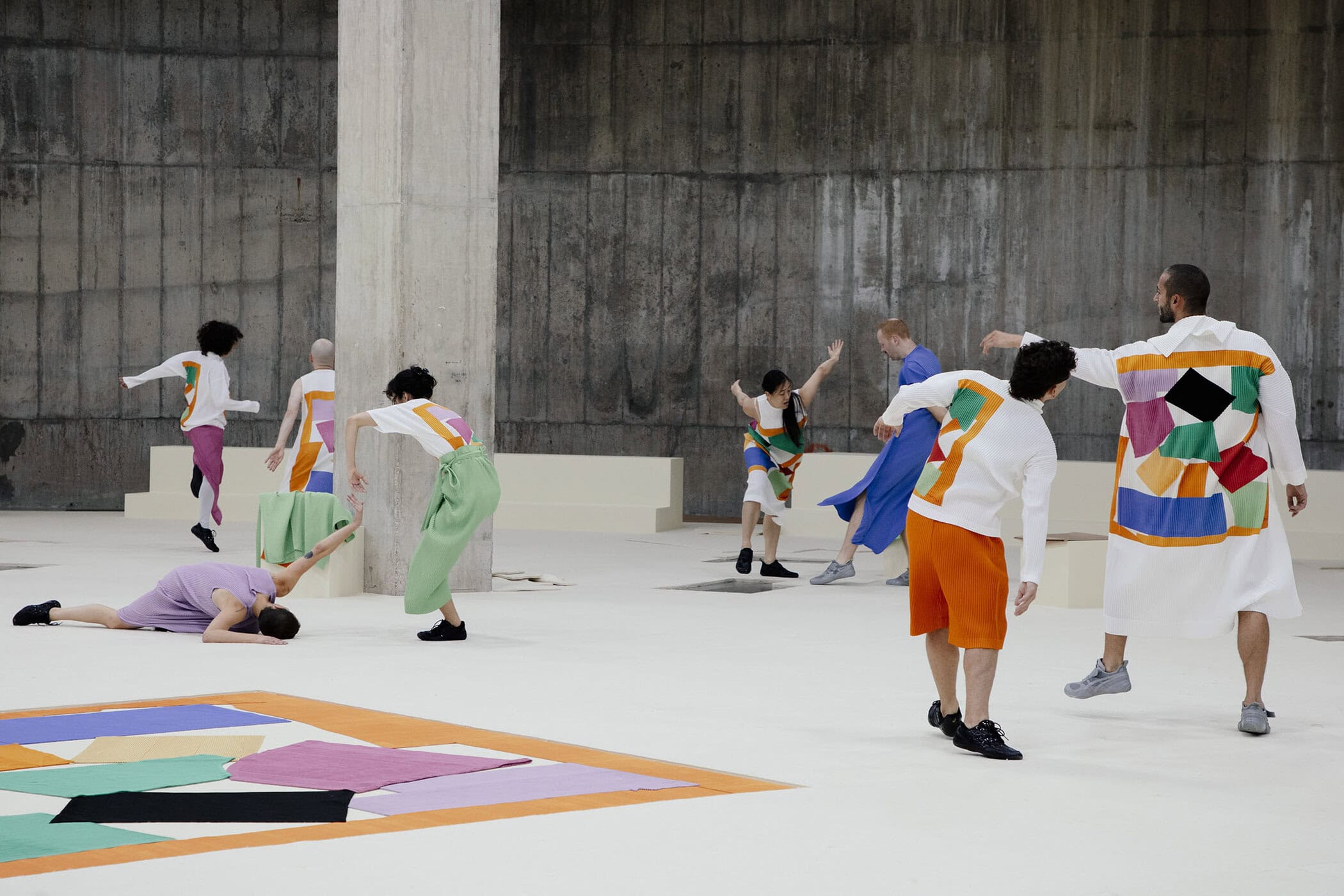
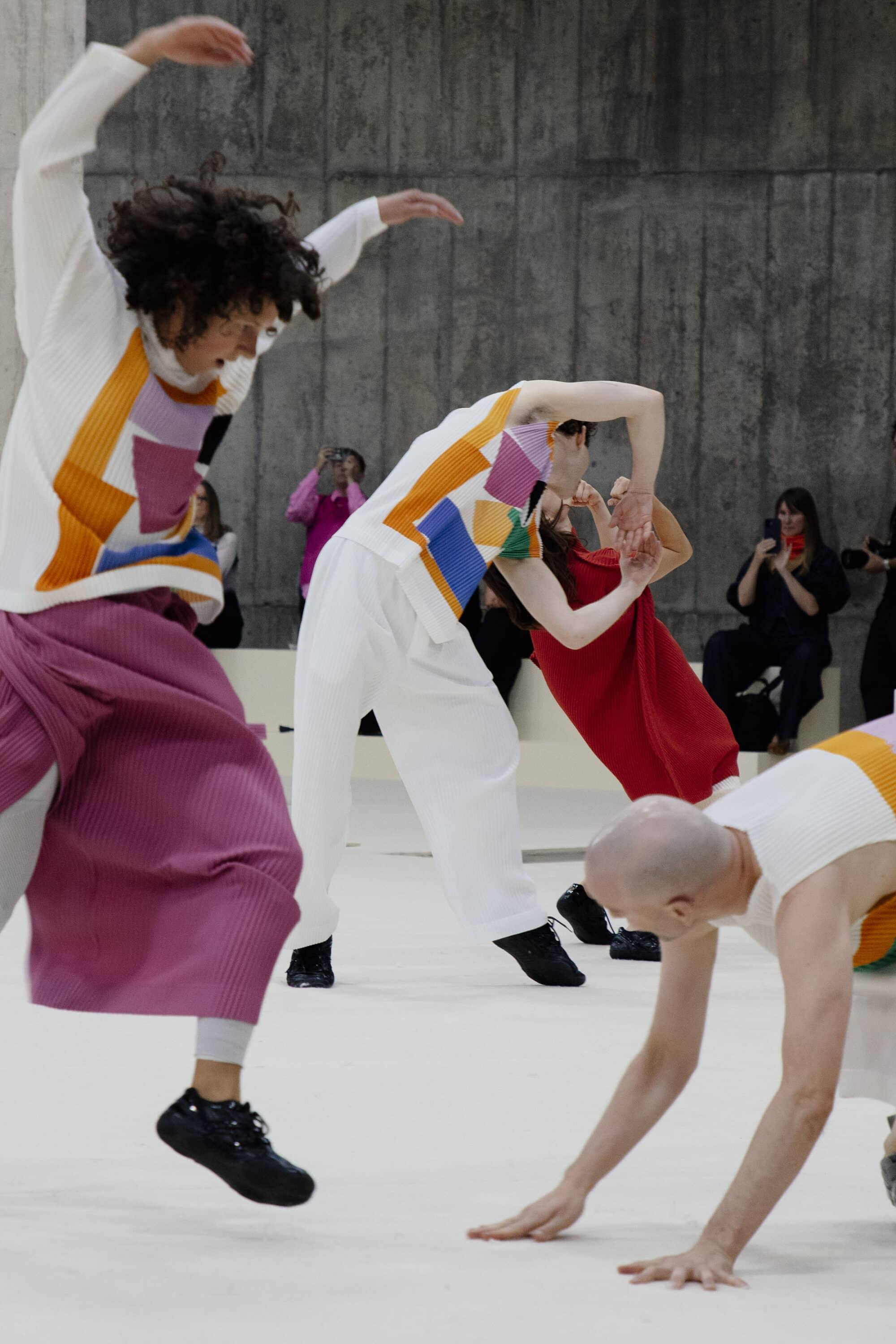
Rather than simply reproducing the artwork as a print, the design team approached its individual paper shapes as potential garments — effectively taking Matisse’s composition apart, giving its pieces volume and allowing them to move.
The connection is particularly apt. The Snail belongs to the late period in which Matisse increasingly worked with paper cut-outs, using painted sheets that were cut and arranged into compositions. Homme Plissé Issey Miyake has similarly built its identity around the possibilities that emerge when apparently simple forms encounter the human body and movement.
That relationship became the basis for the performance.
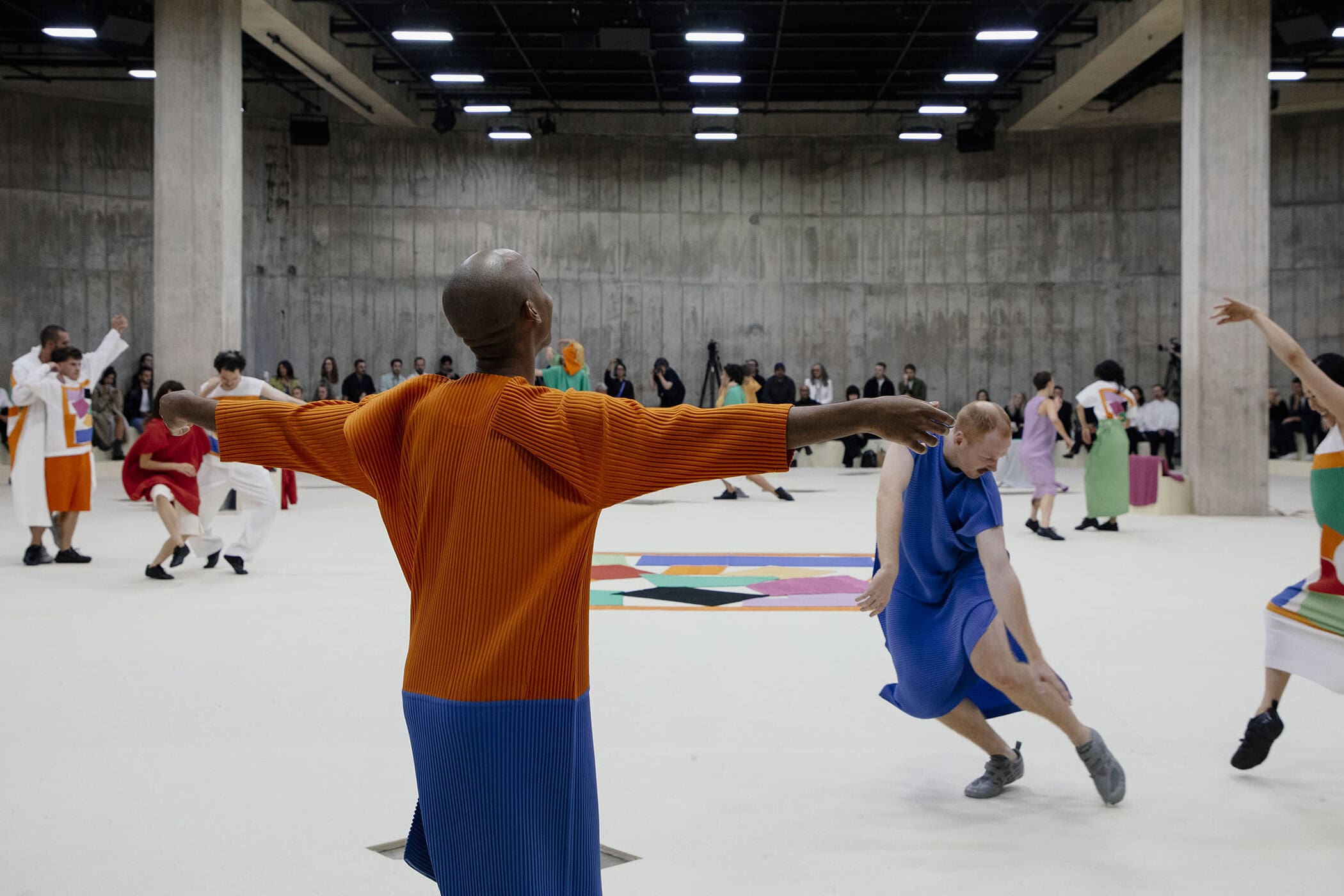
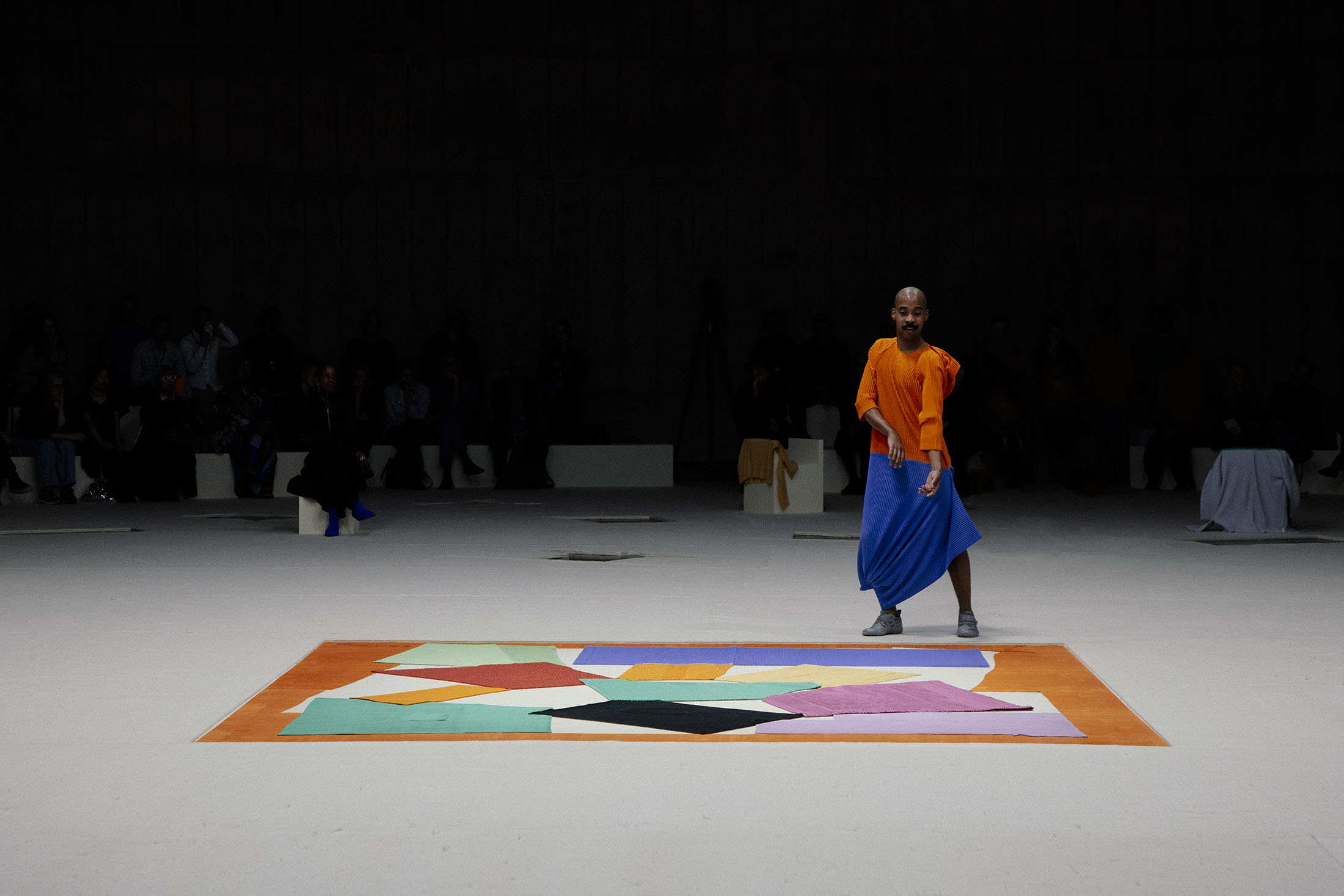
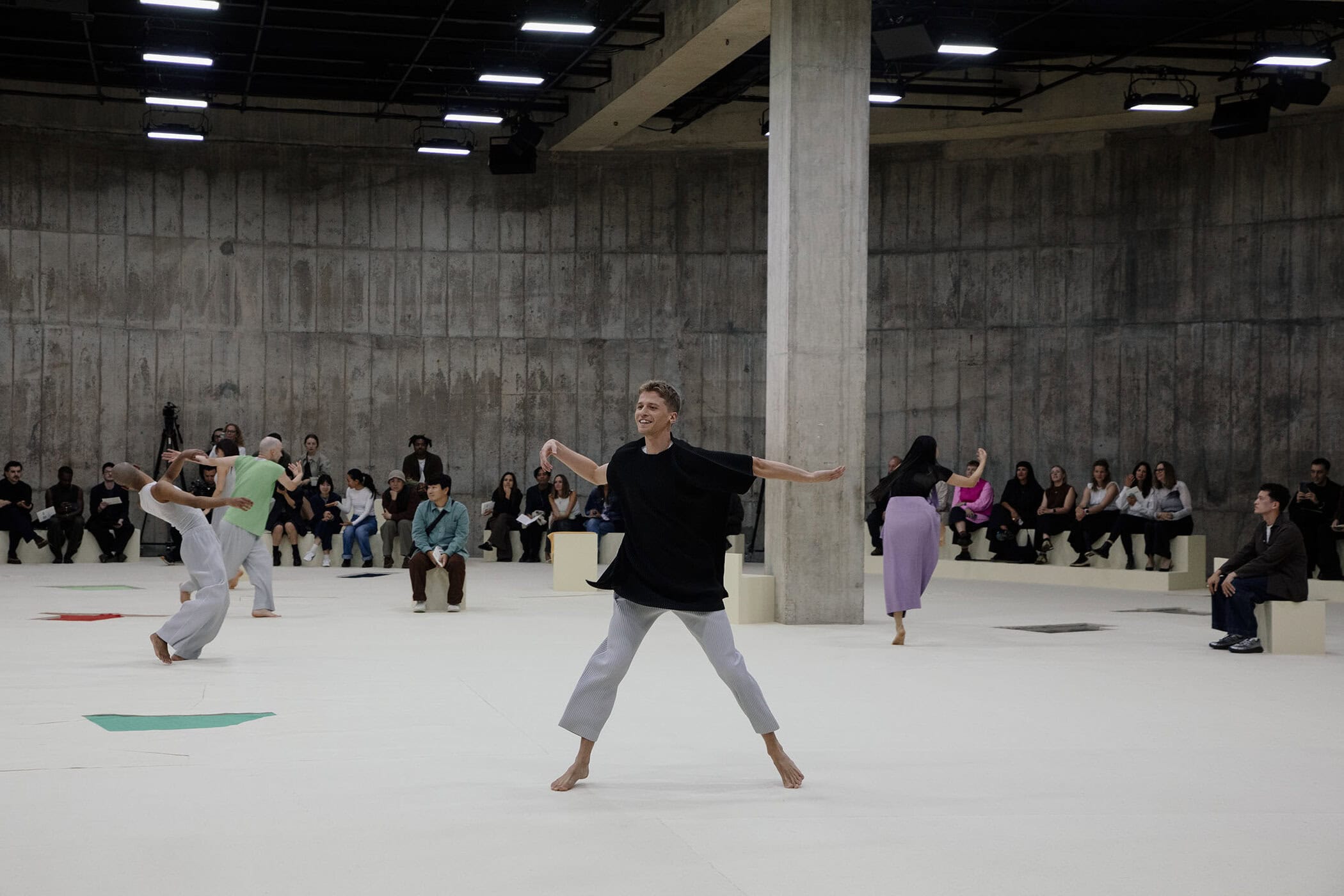
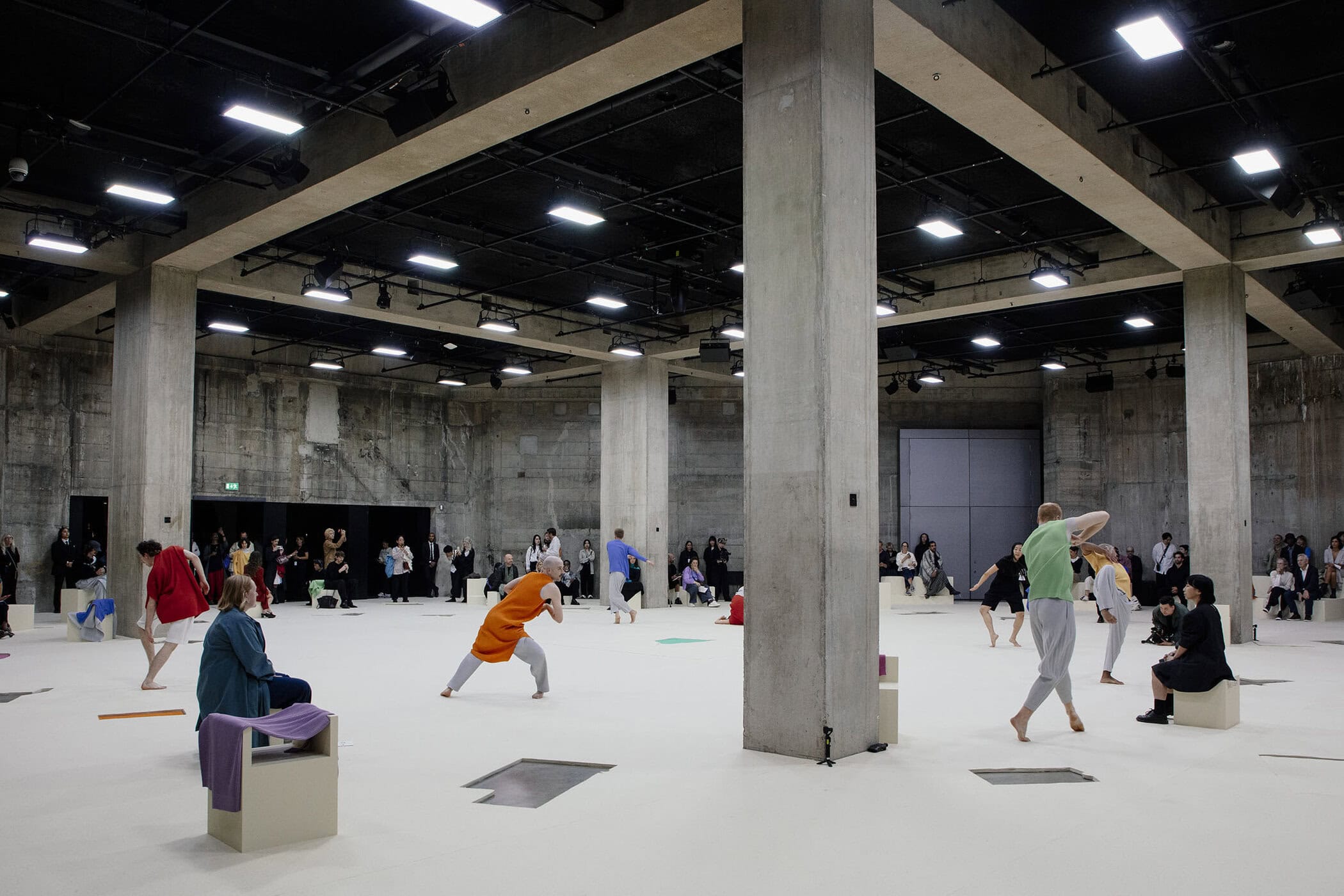
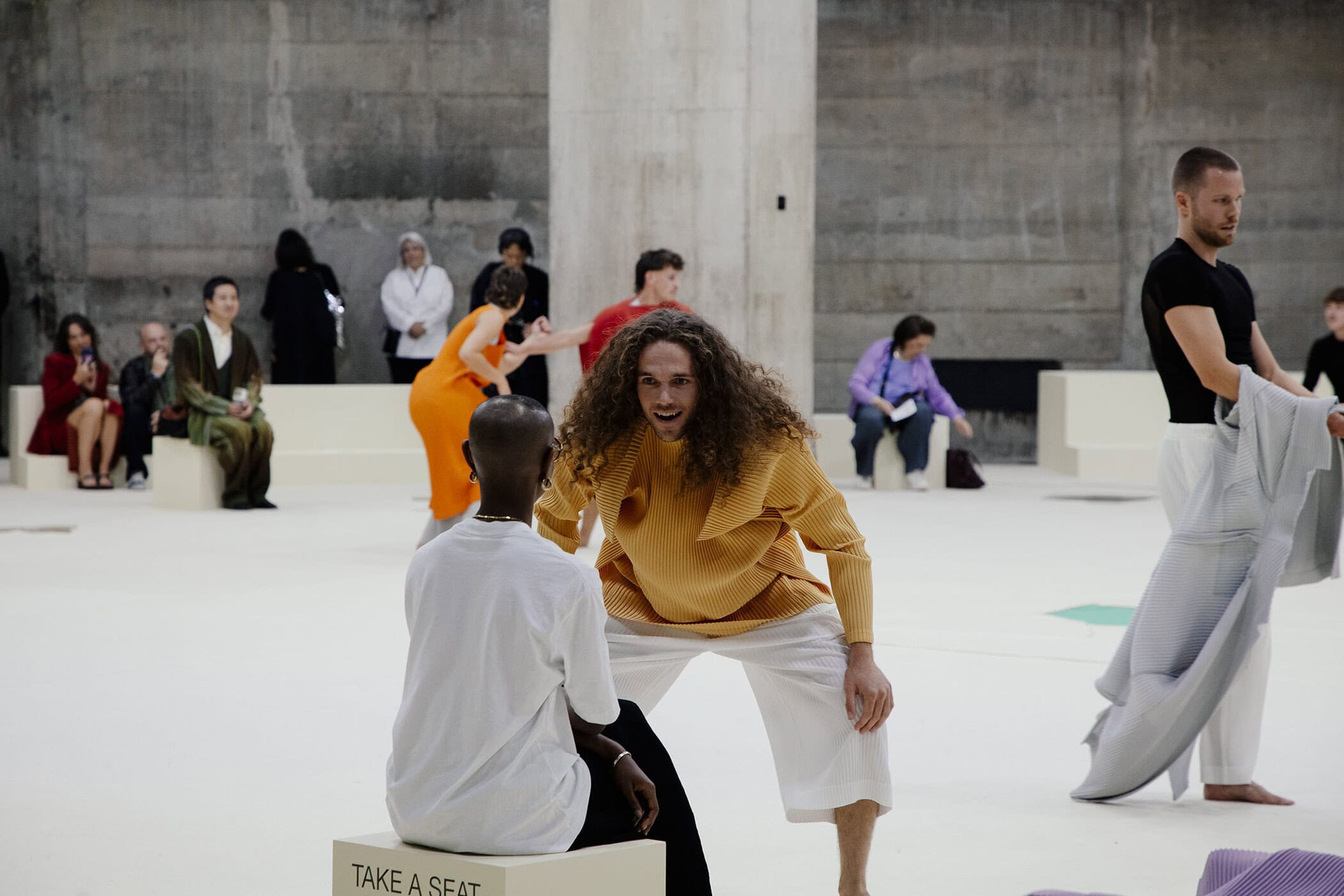
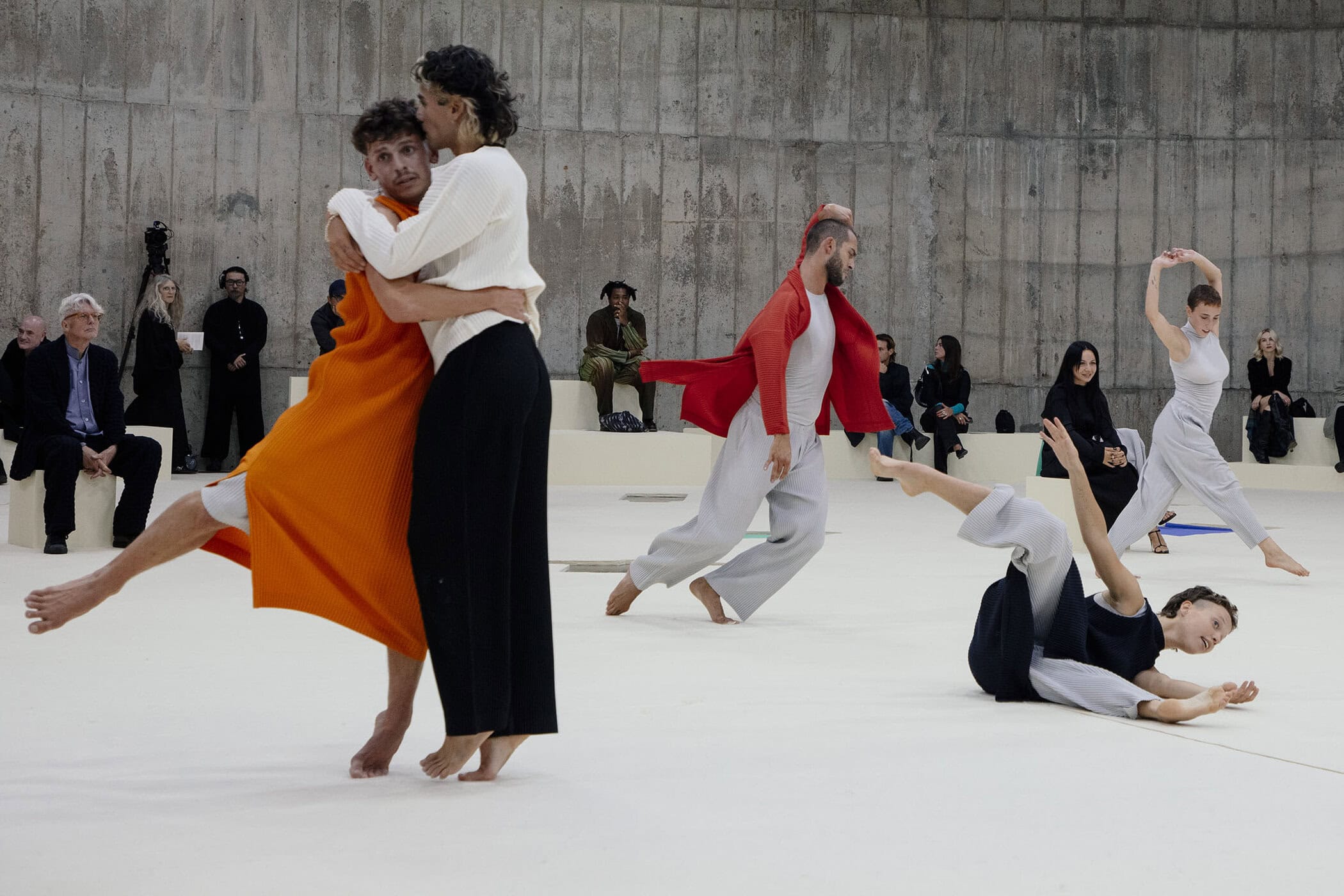
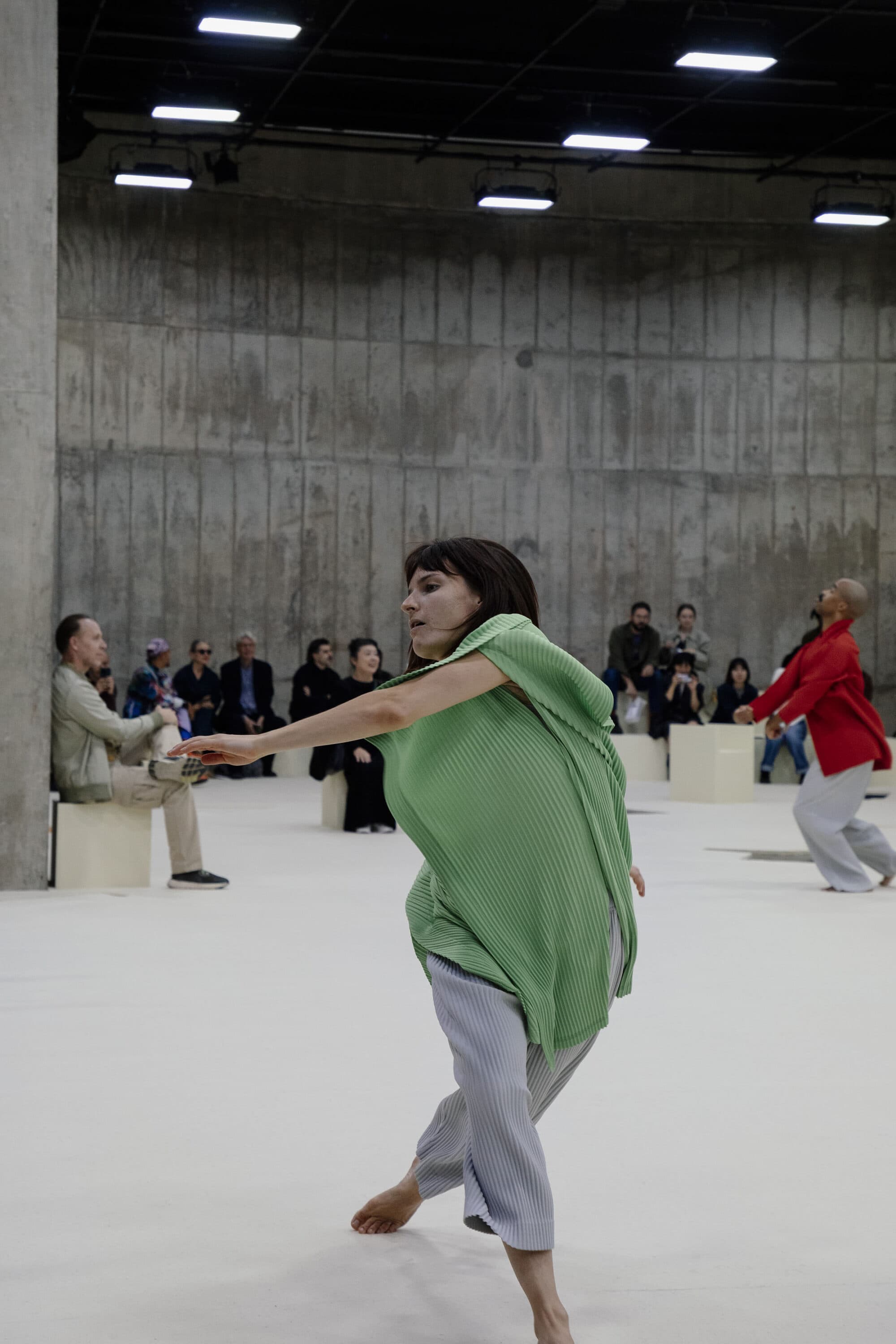
The south tank was transformed into a largely empty space, with benches following its circular outer wall and individual seats positioned across a felt-covered floor. At its center lay a pleated garment shaped like one of the colored forms from The Snail.
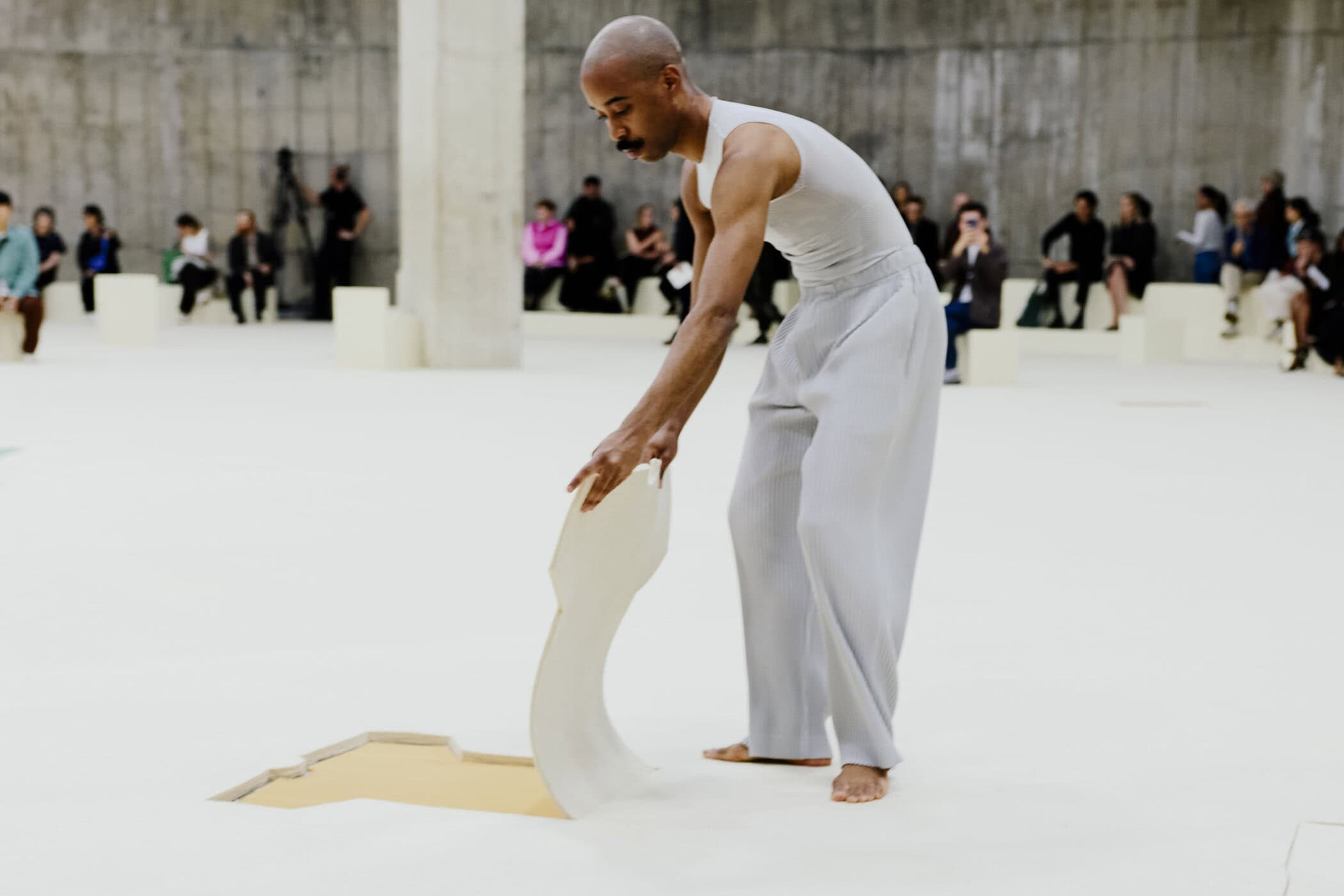
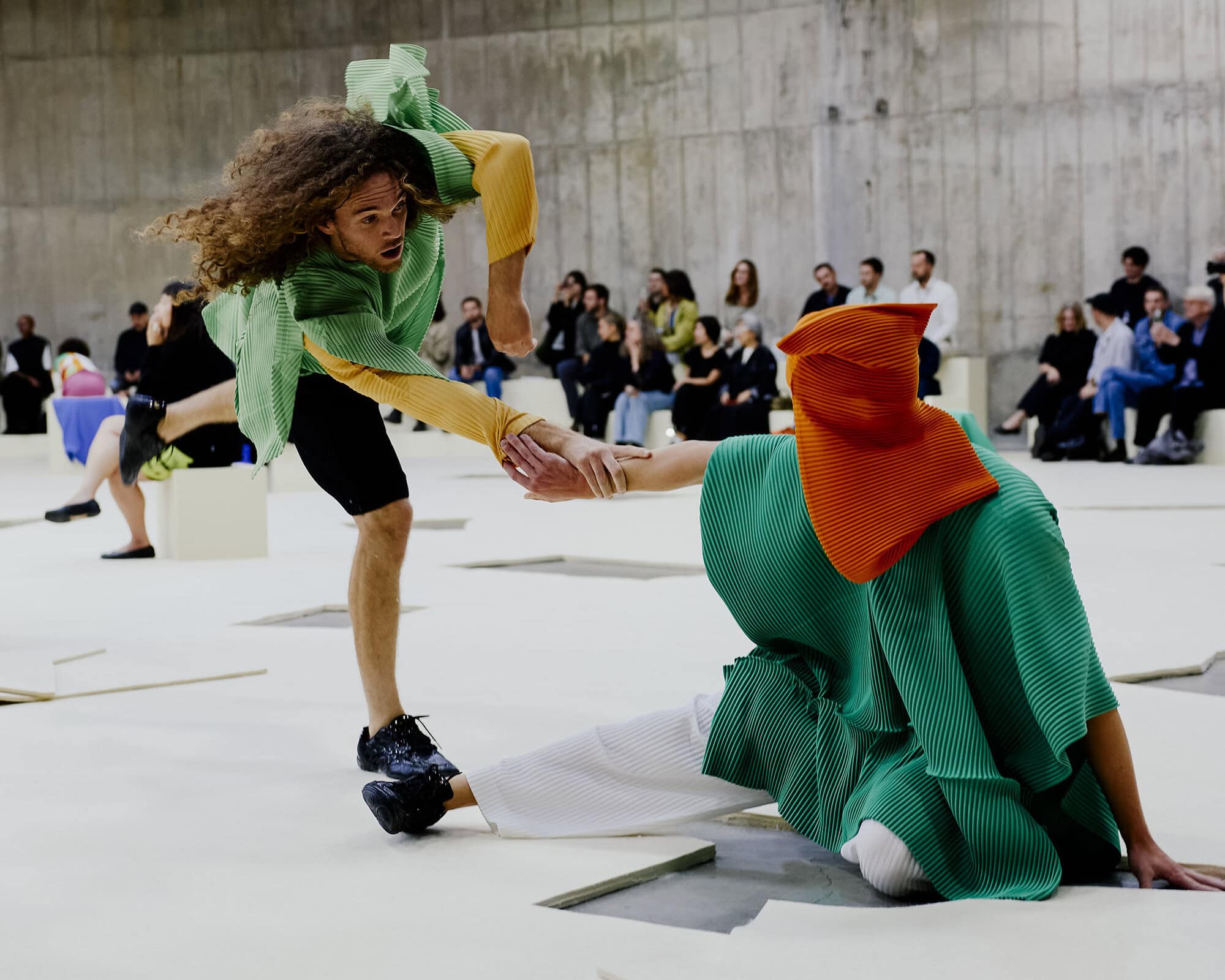
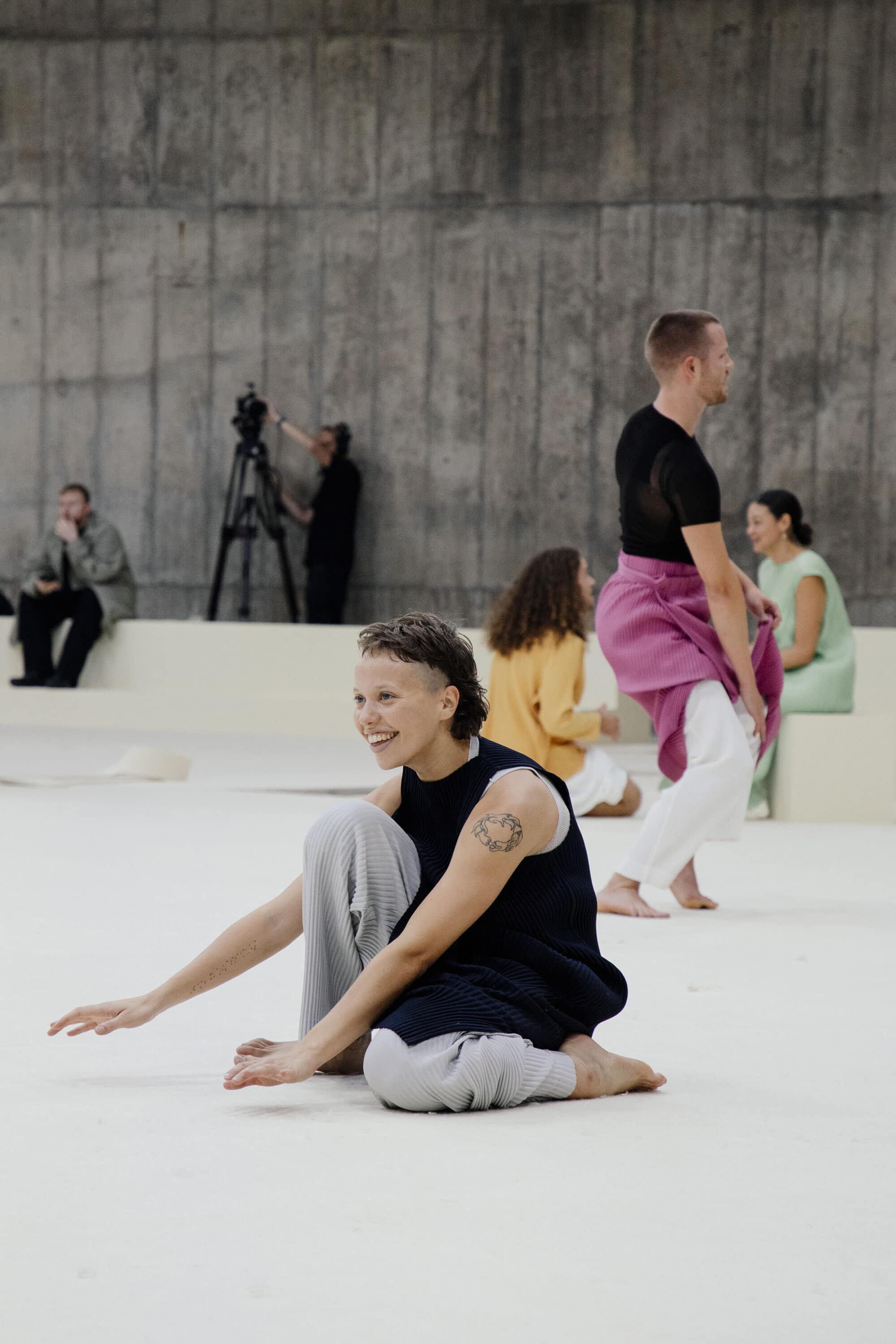
As guests entered, a performer began lifting sections of the felt to reveal additional garments hidden beneath the floor. Other dancers initiated performances of One One One, an improvisational format that connects a single dancer with a single spectator through movement and sustained eye contact.
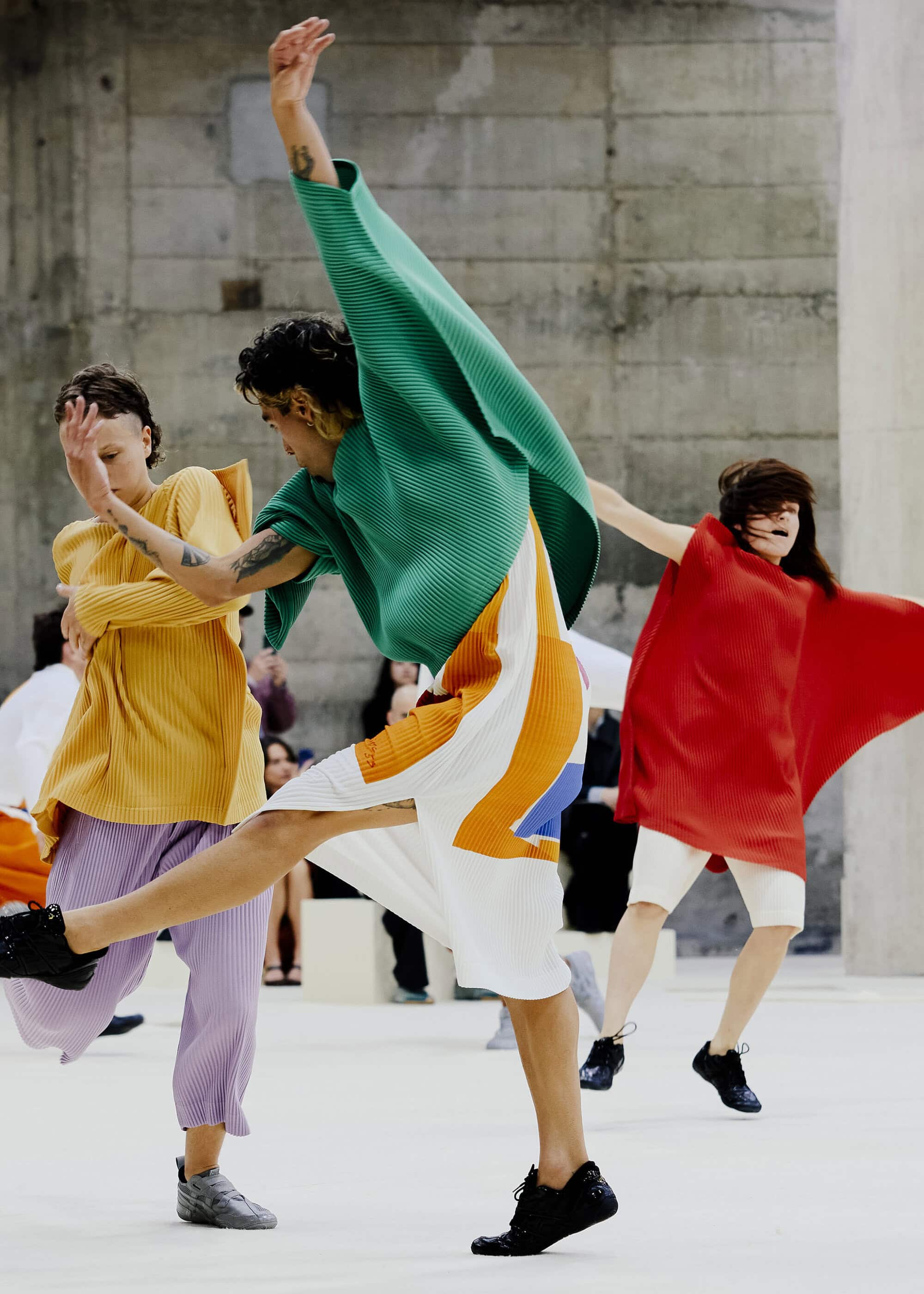
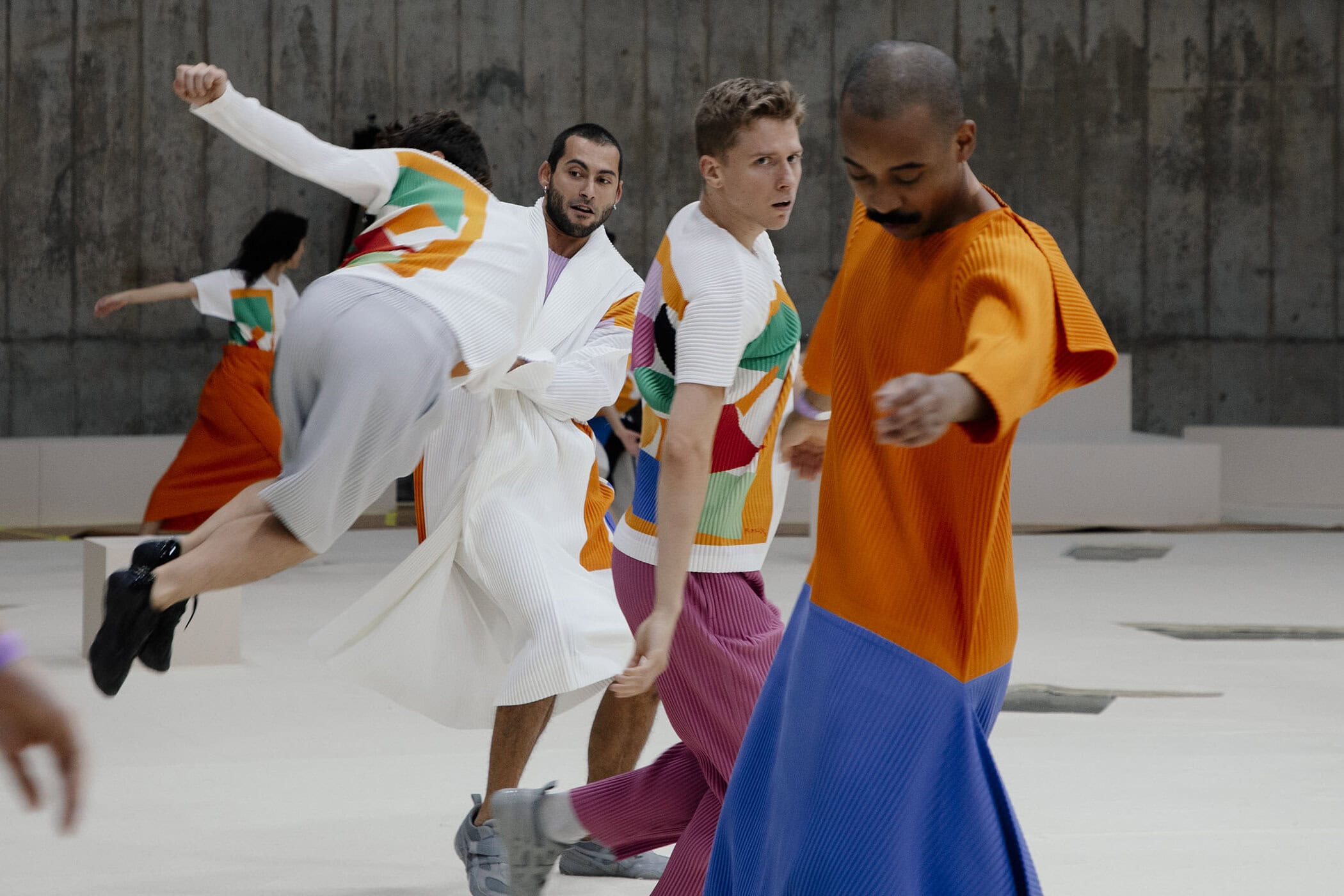
As these encounters unfolded around the room, more garments emerged from beneath the set. Once worn, Matisse’s static paper shapes became moving forms, with the dancers changing between pieces and placing them across the floor as the performance progressed.
The staging also referenced Matisse’s working process, with colorful shapes accumulating around the performers in an echo of an atelier filled with paper cut-outs. But it was the finale that made the relationship between artwork and clothing most explicit.
The performers uncovered a full-scale recreation of The Snail beneath the felt at the center of the room. Instead of paper, however, its composition had been constructed from pleated garments corresponding to the shapes of Matisse’s original cut-outs. The dancers then moved around the reconstructed work, temporarily turning its geometry back into motion before the garments returned to a composition.
For Homme Plissé Issey Miyake, that transformation gets to the heart of the project.
“This Open Studio presentation is a direct, genuine realization inspired by our first encounter with The Snail,” the design team said, explaining that the project began with the idea of animating each paper cut-out by translating it into a garment.
That premise also gives the Tate collaboration more substance than a conventional art-meets-fashion capsule. The artwork is not merely applied to clothing as decoration; its construction becomes part of the clothing’s construction, while Homme Plissé’s pleating technology gives Matisse’s flat shapes dimensionality and movement.
The accompanying Homme Plissé Issey Miyake for Tate capsule takes a more direct approach to the source material, translating the palette and forms of The Snail into printed pleated clothing. Together, the collection and performance extend the work from the gallery wall onto the body — and, fittingly for a Matisse work so charged with movement, set it in motion.
For Tate, the project offers another way into a familiar work.
“Matisse’s The Snail is an extraordinary expression of colour, movement and creative freedom,” said Elizabeth Lovatt, Head of Merchandise at Tate, adding that the collaboration allows audiences to experience an iconic work from the museum’s collection “through a different lens.”
It is that change in perspective that ultimately makes Open Studio interesting. Homme Plissé Issey Miyake did not simply bring fashion into Tate Modern. For an evening, it took an artwork apart, dressed bodies in its component pieces, let them dance — and then put it back together again.