Terminal State
Review of Jil Sander Fall 2026 Ad Campaign by Jil Sander Creative Director Simone Bellotti, Art Directors Carina Frey & Stefanie Barth of Frey & Barth, with Photographer Moni Haworth and models Daisuke Ueda, Edie Campbell
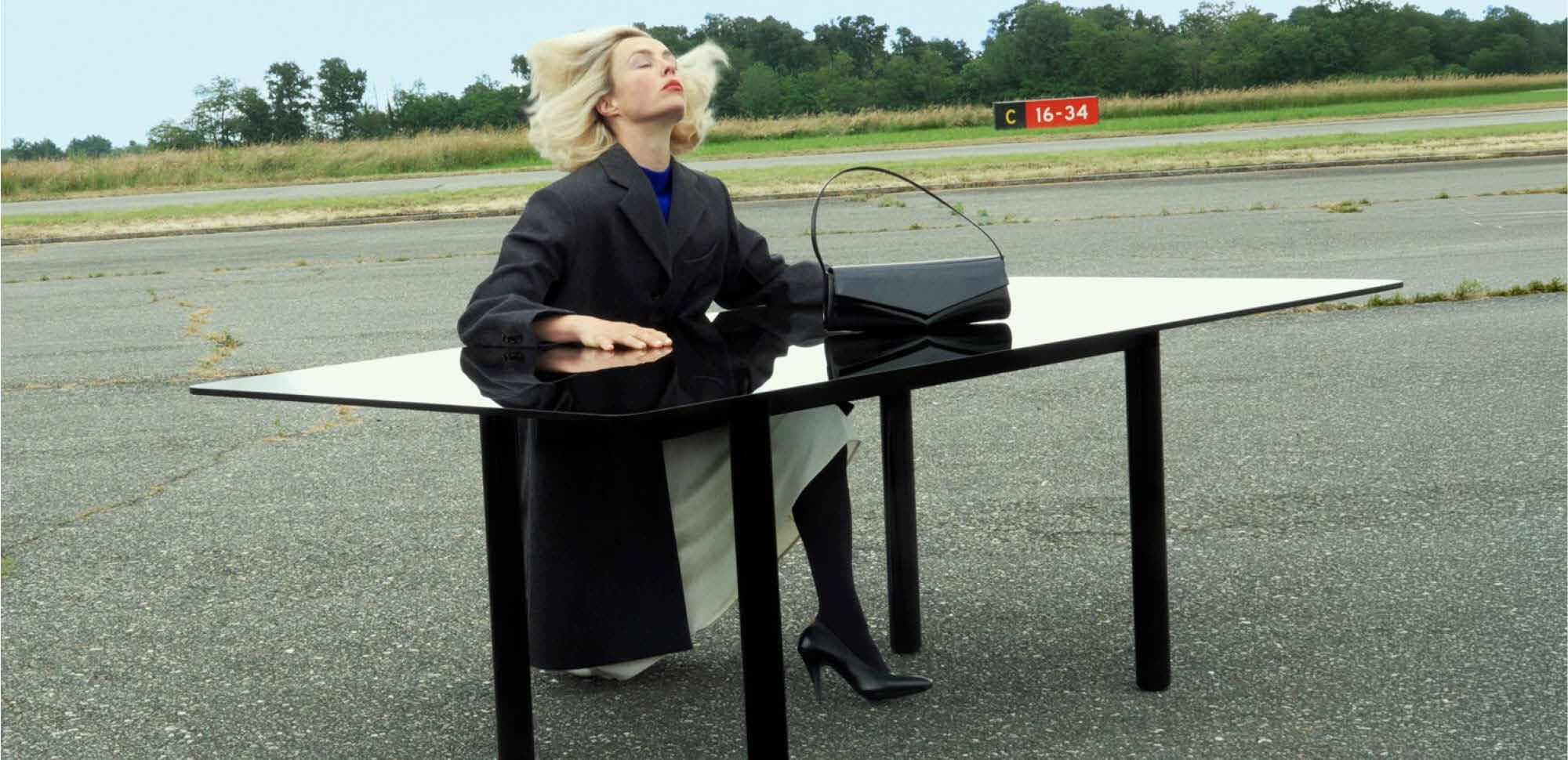
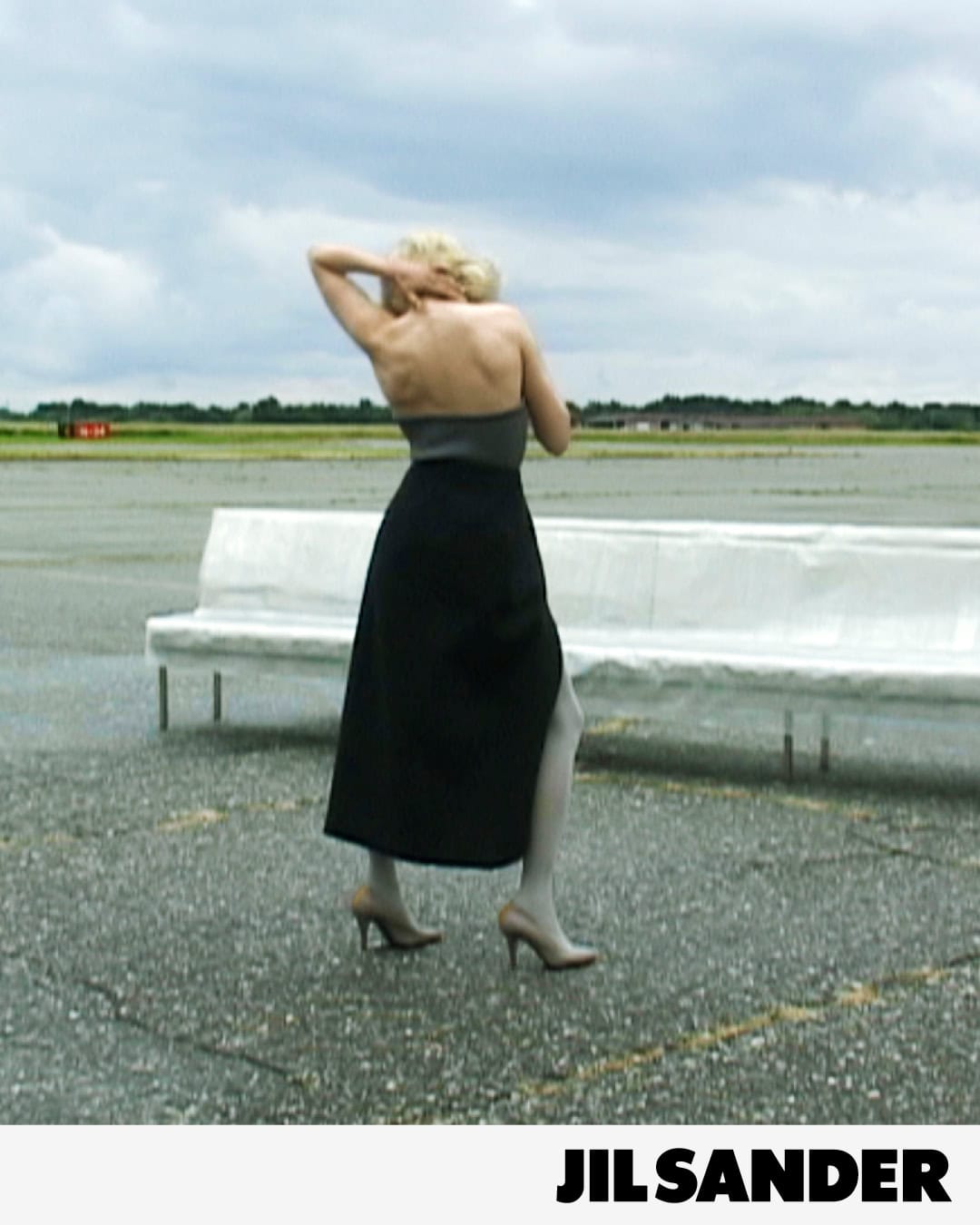
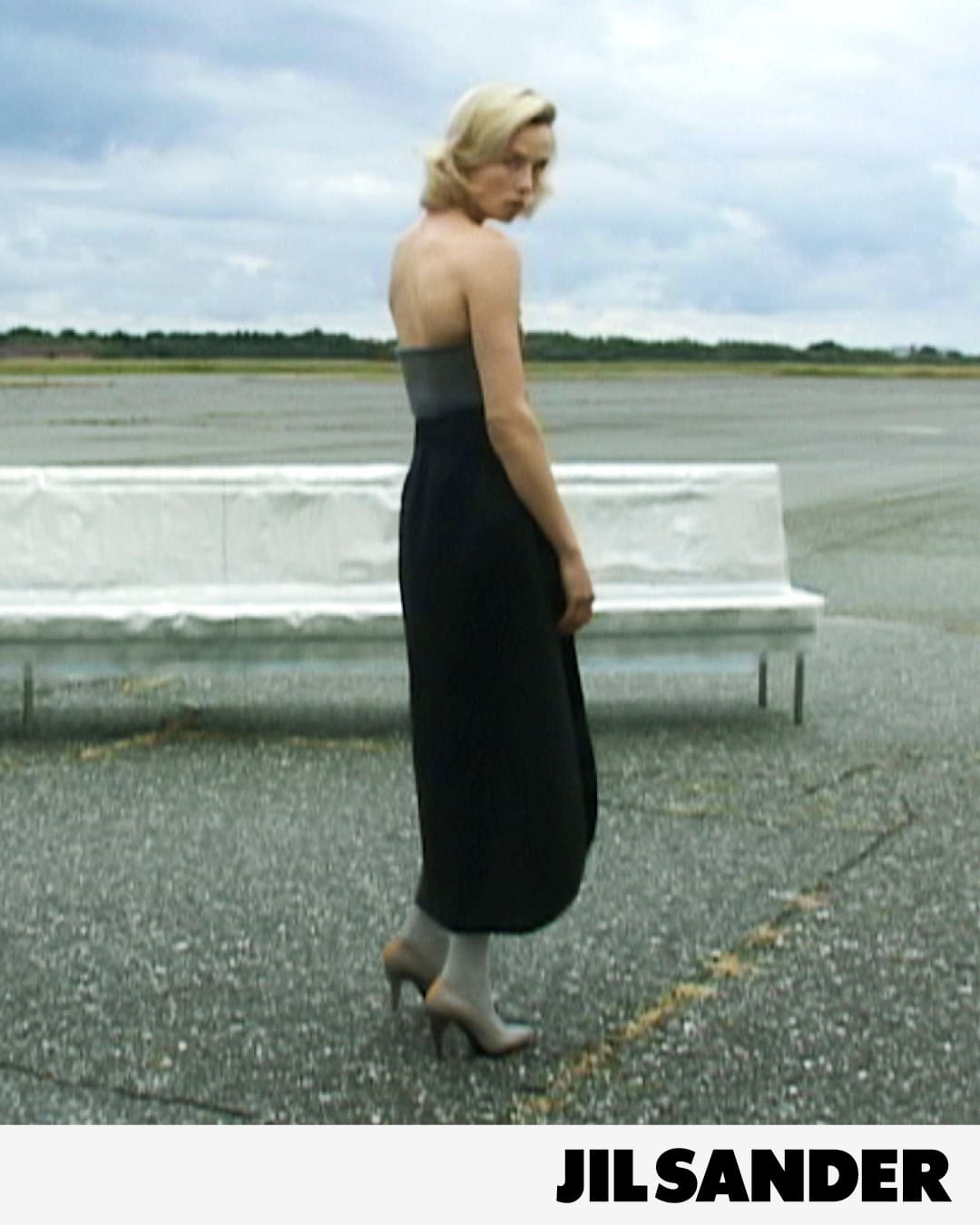
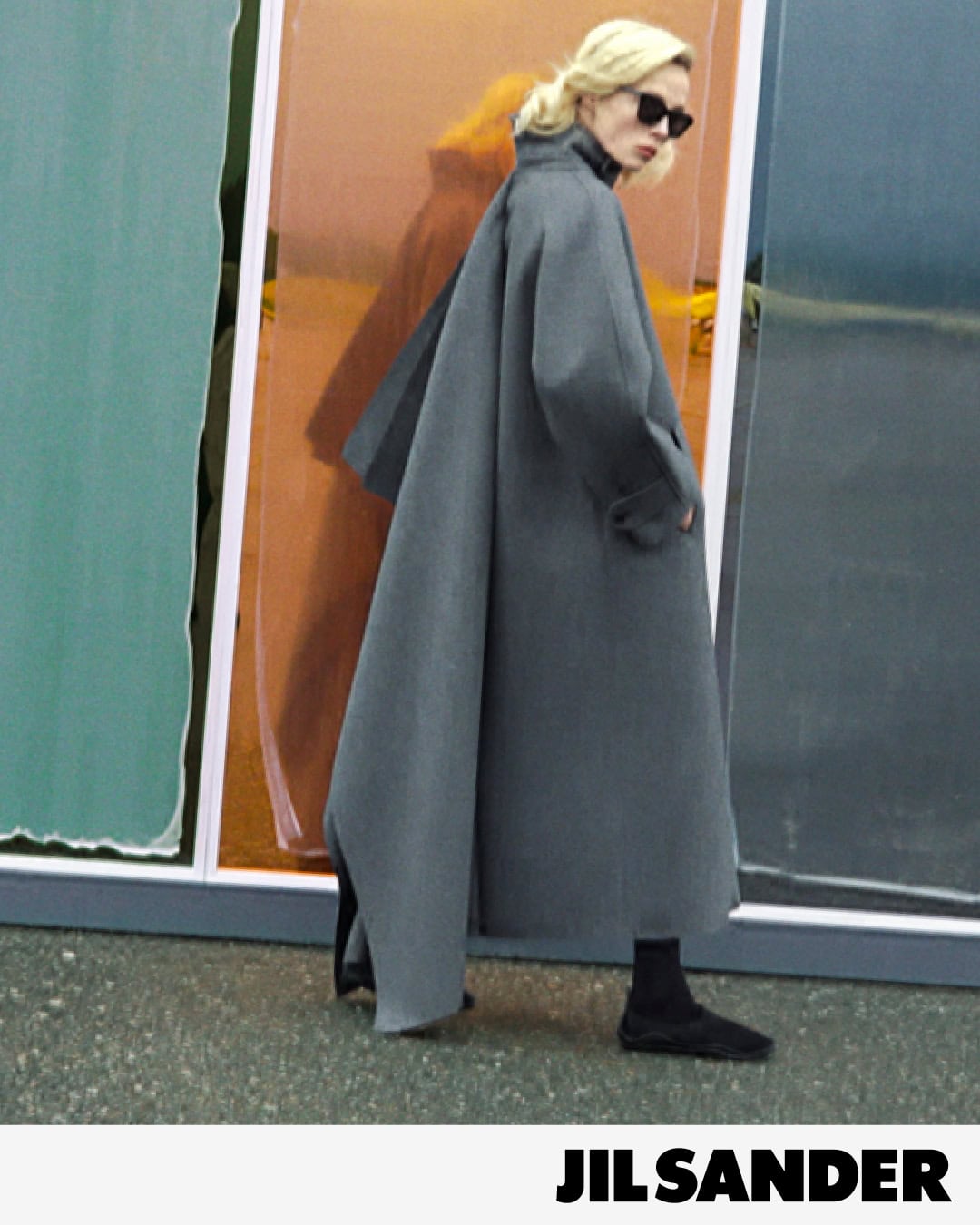
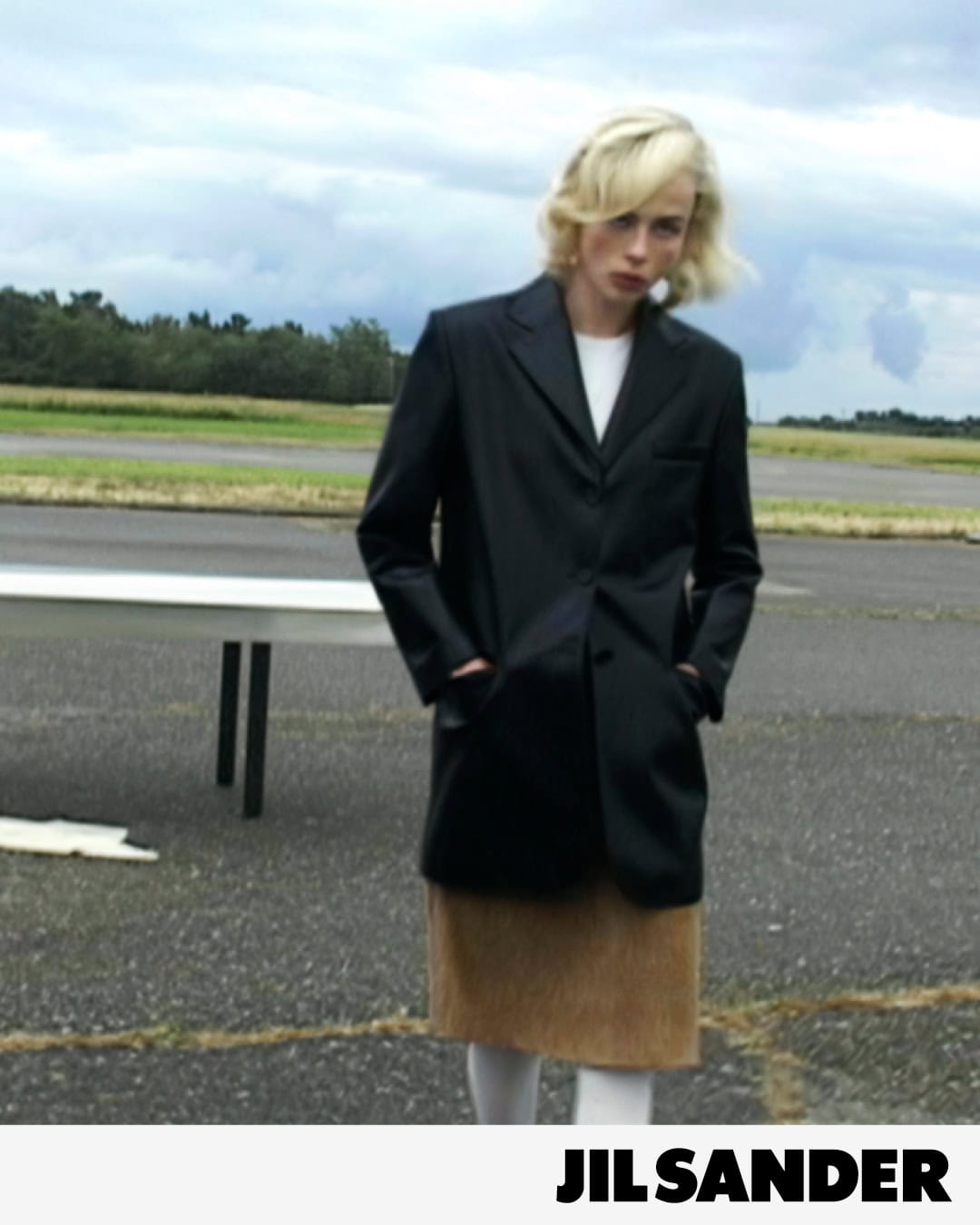
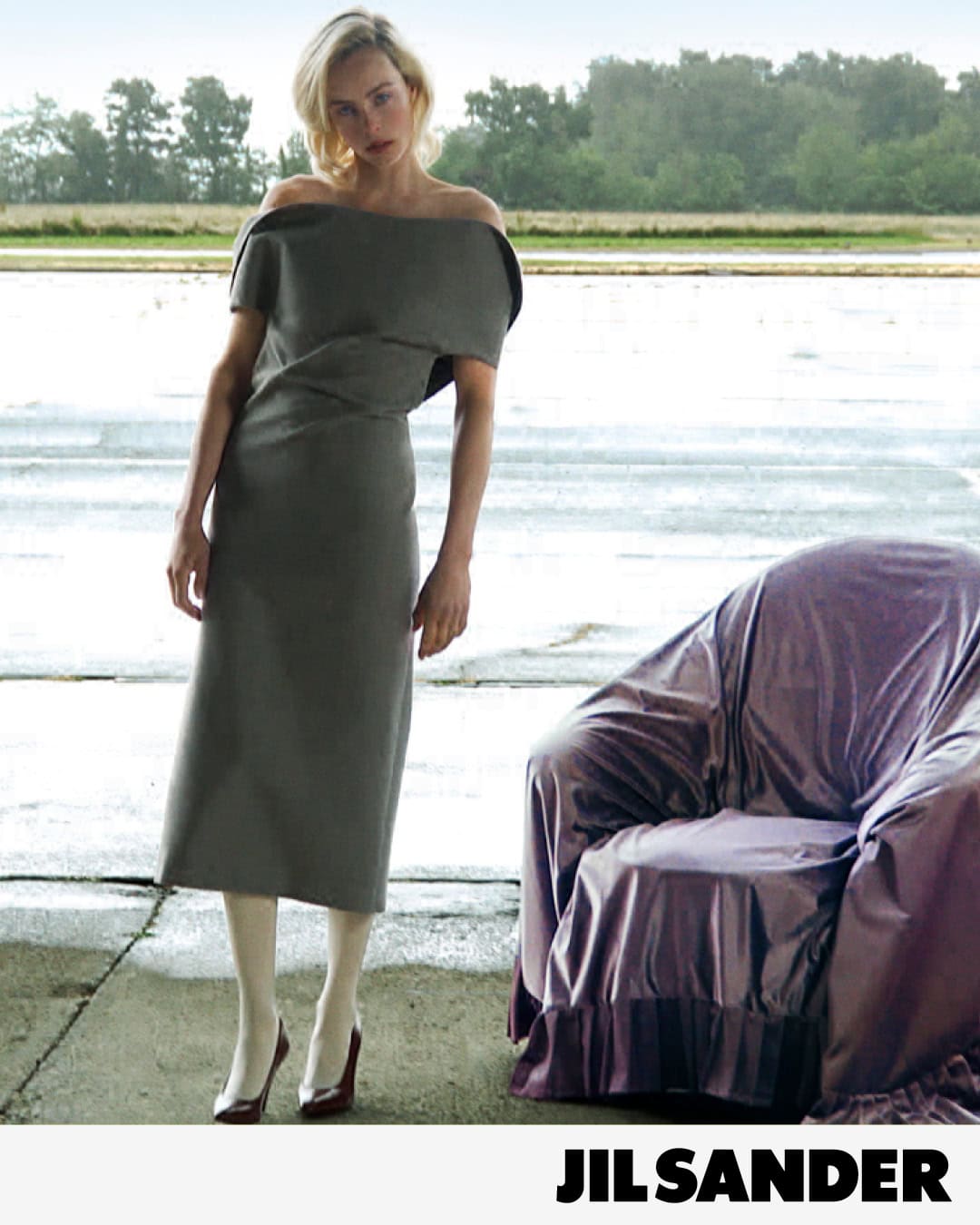
Jil Sander’s Fall 2026 campaign begins somewhere between arrival and departure, which is precisely where Simone Bellotti seems happiest leaving us. Working with photographer and director Moni Haworth, and art directors Carina Frey and Stefanie Barth, Bellotti relocates the familiar furnishings of domestic life onto the runway of a private airfield. A sofa, table, chair, flowers, and other fragments of home sit exposed beneath unsettled skies as Edie Campbell and Daisuke Ueda drift through the landscape. Nothing has technically gone wrong, yet everything feels slightly wrong. Welcome to Terminal State.
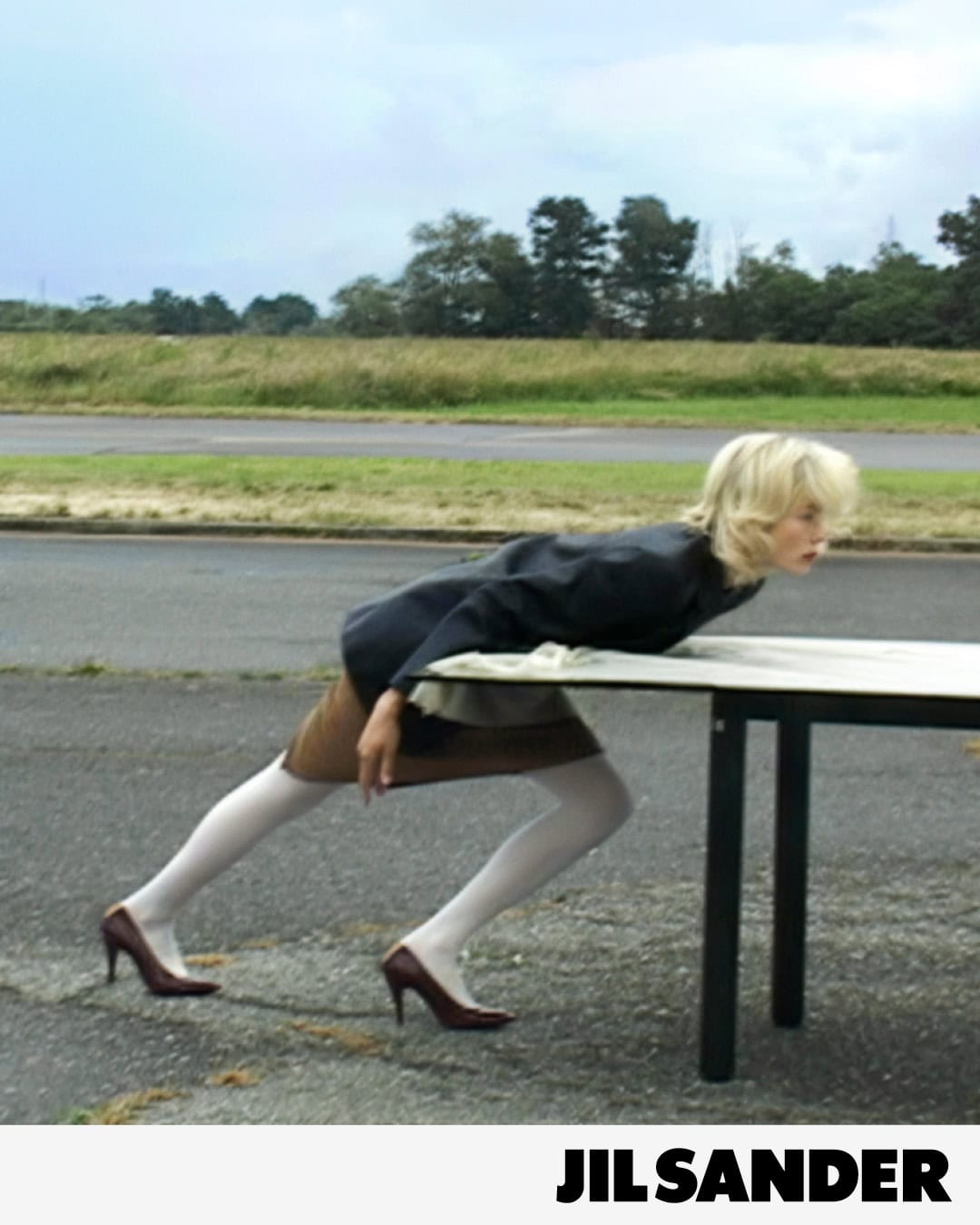
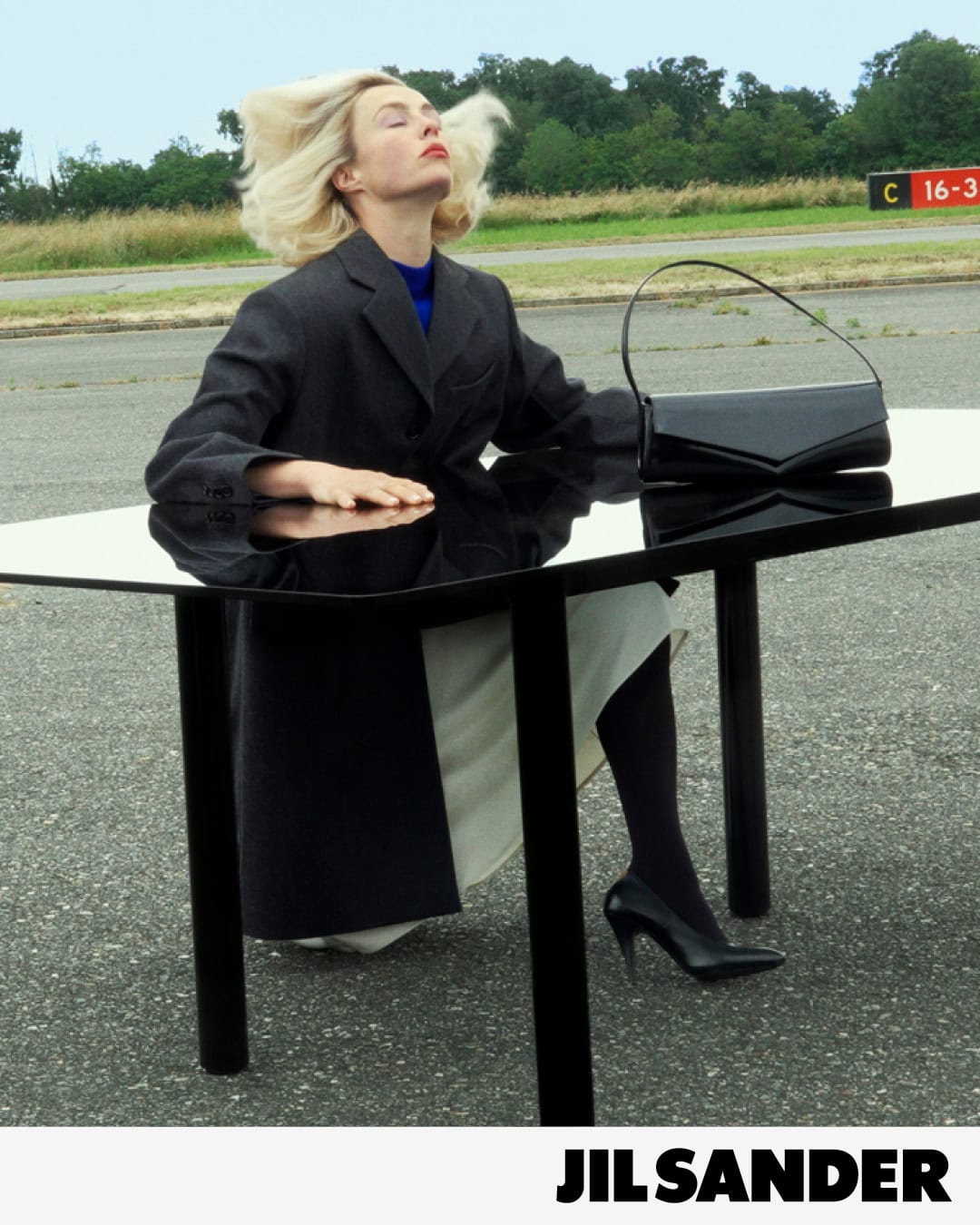
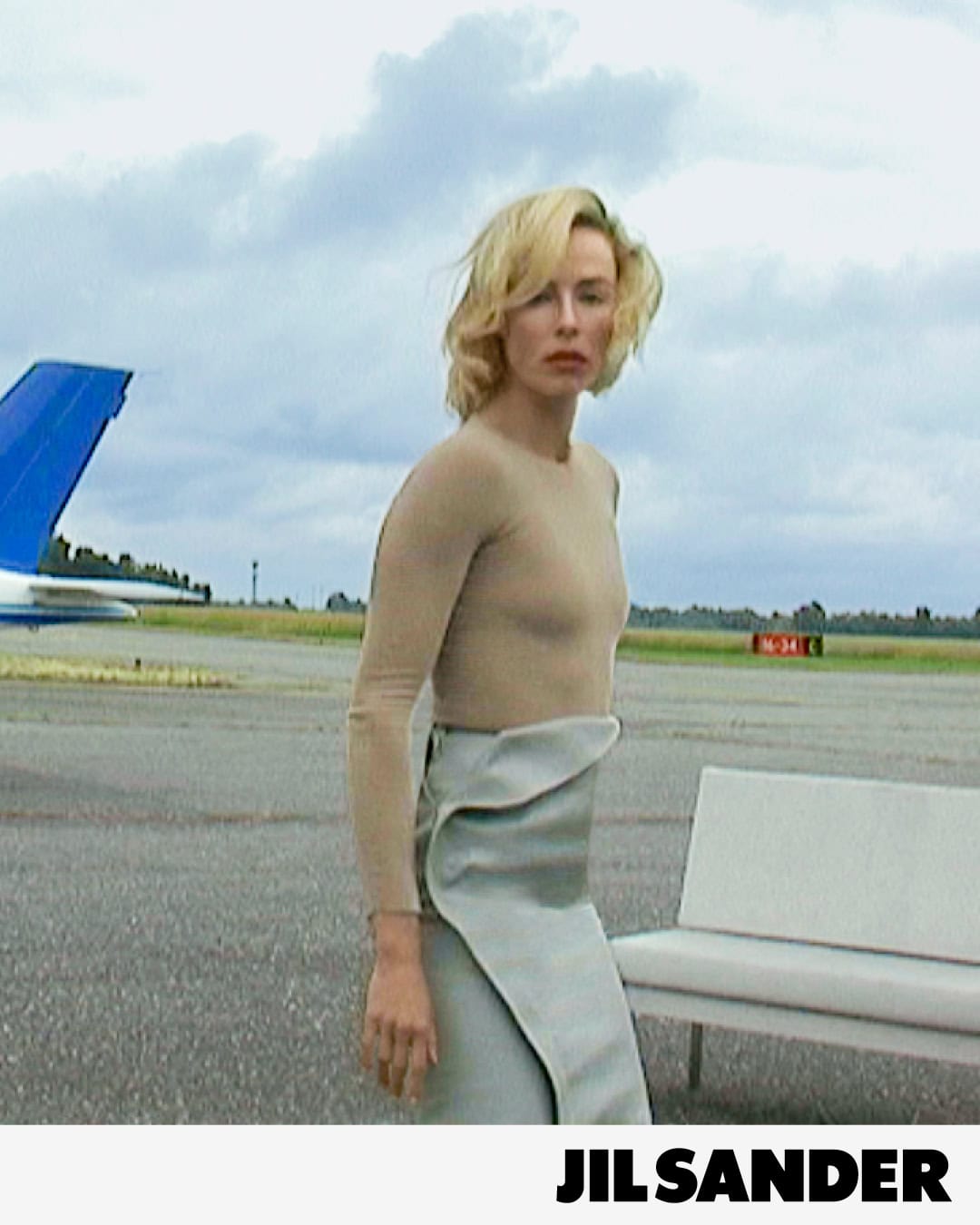
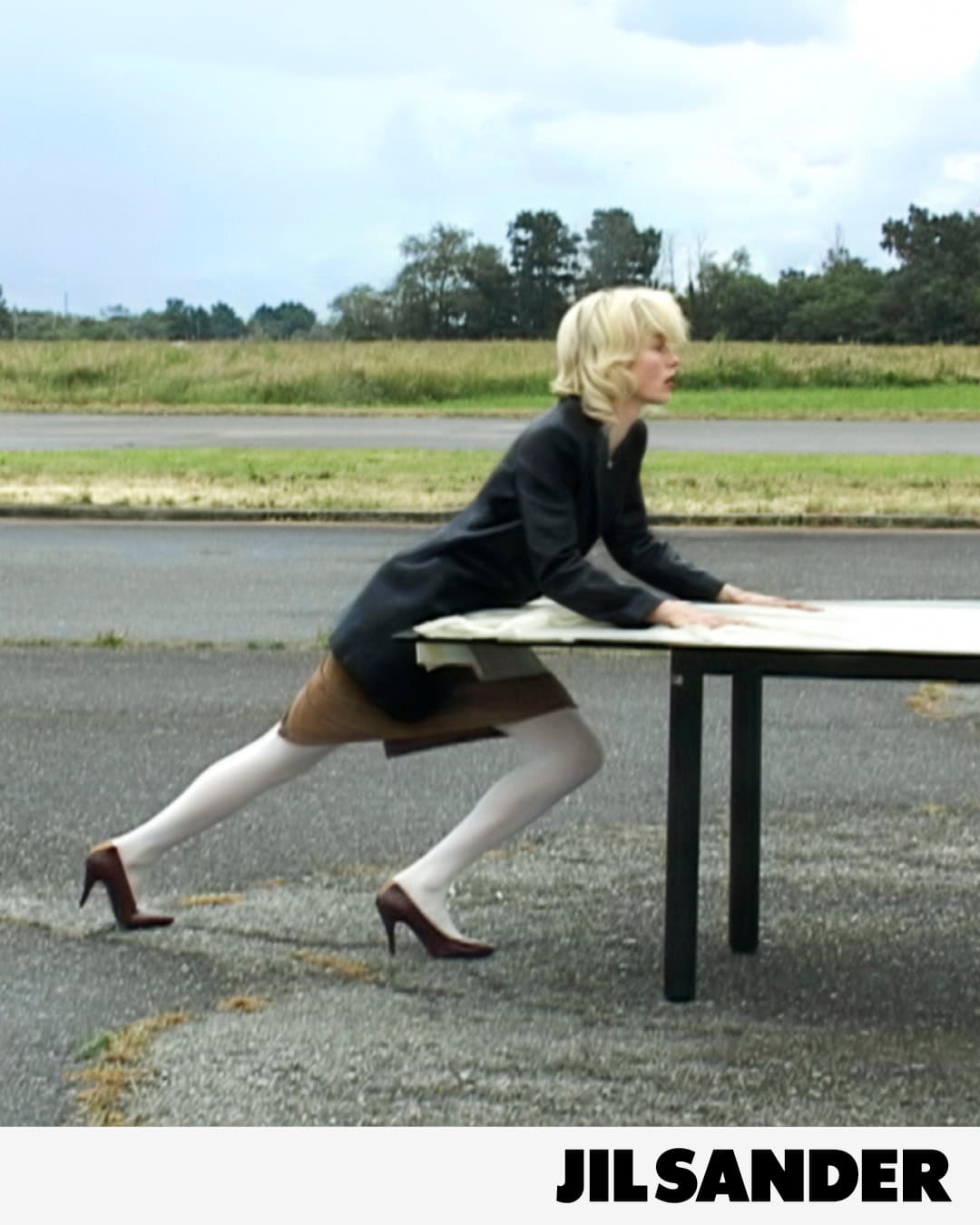
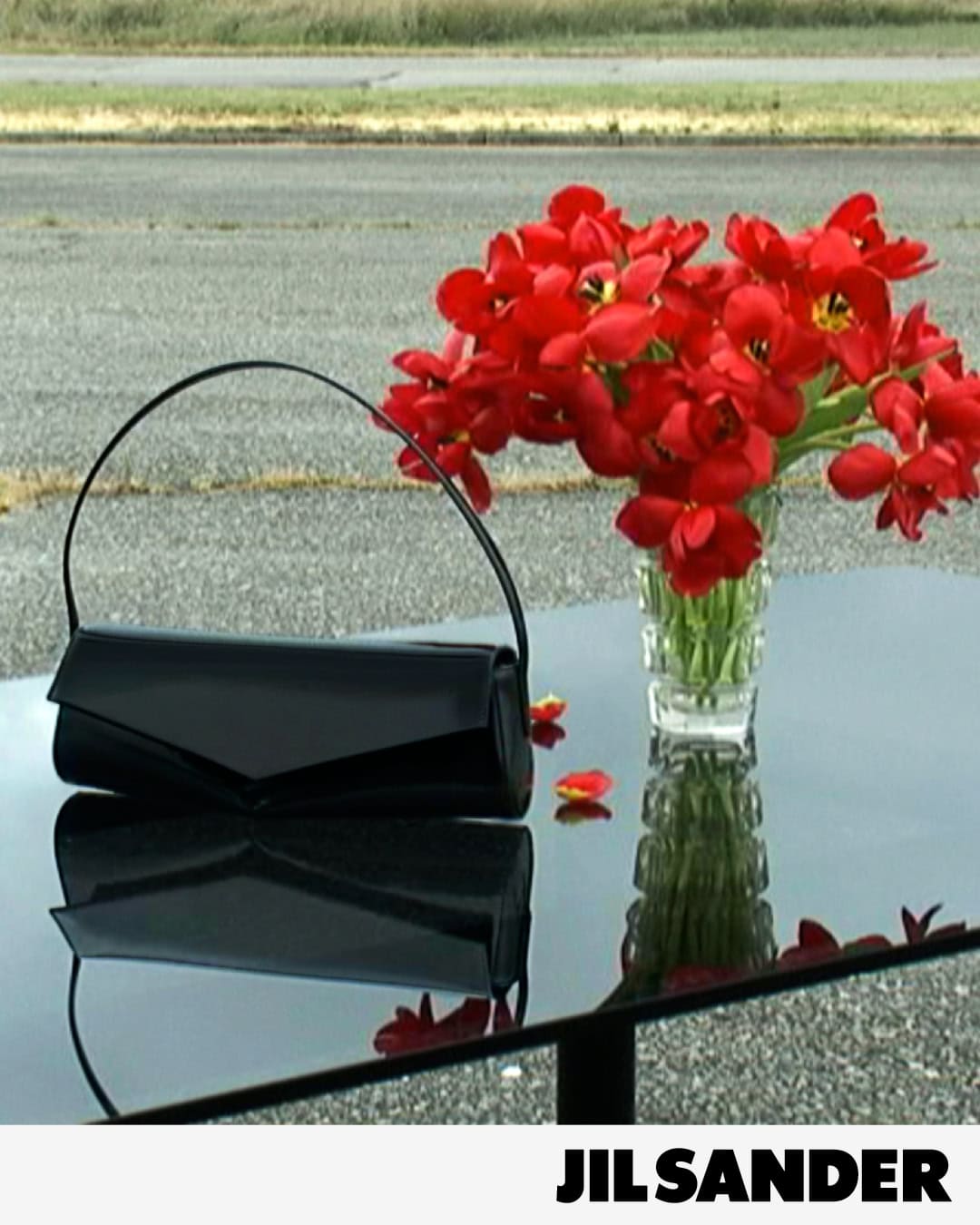
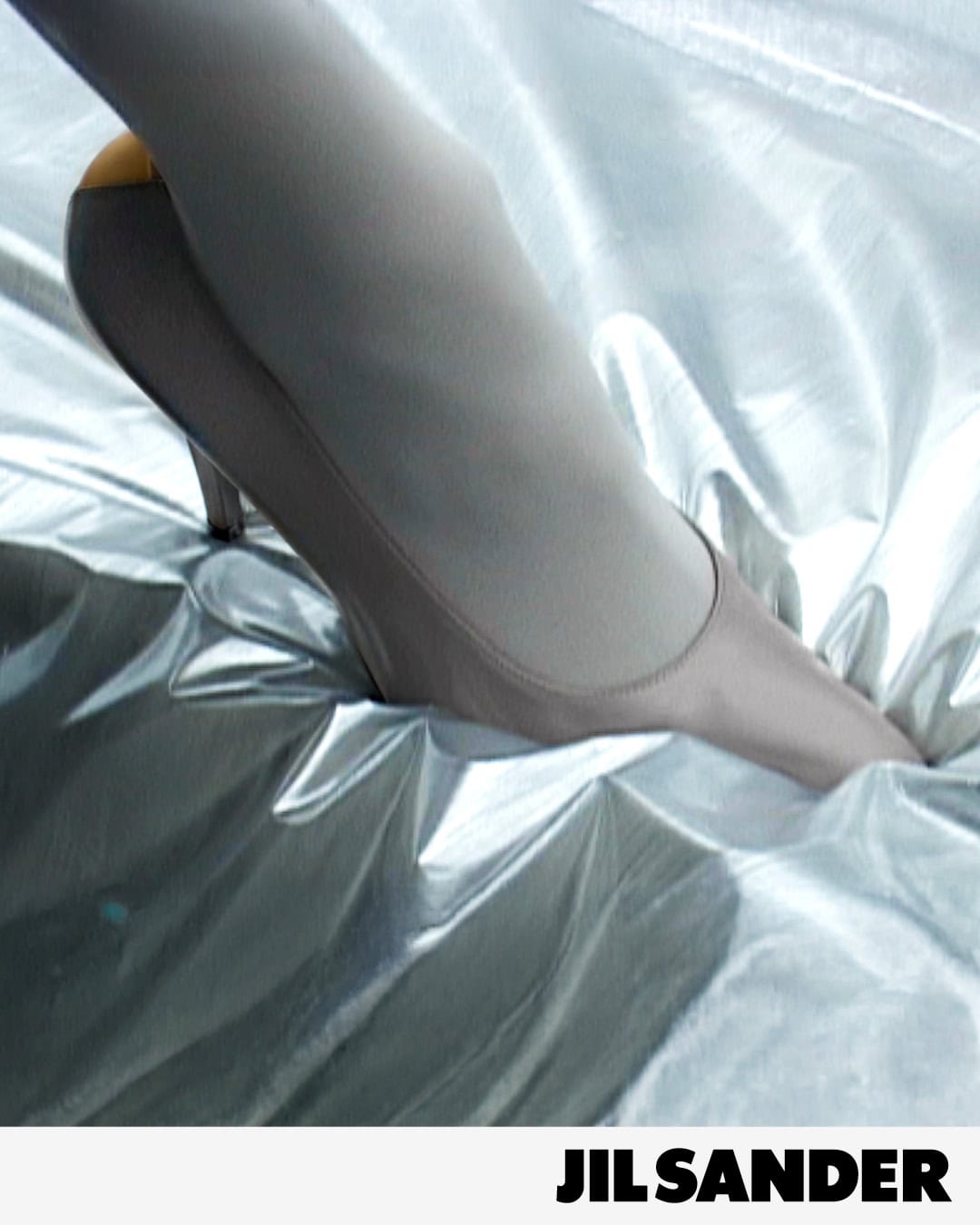
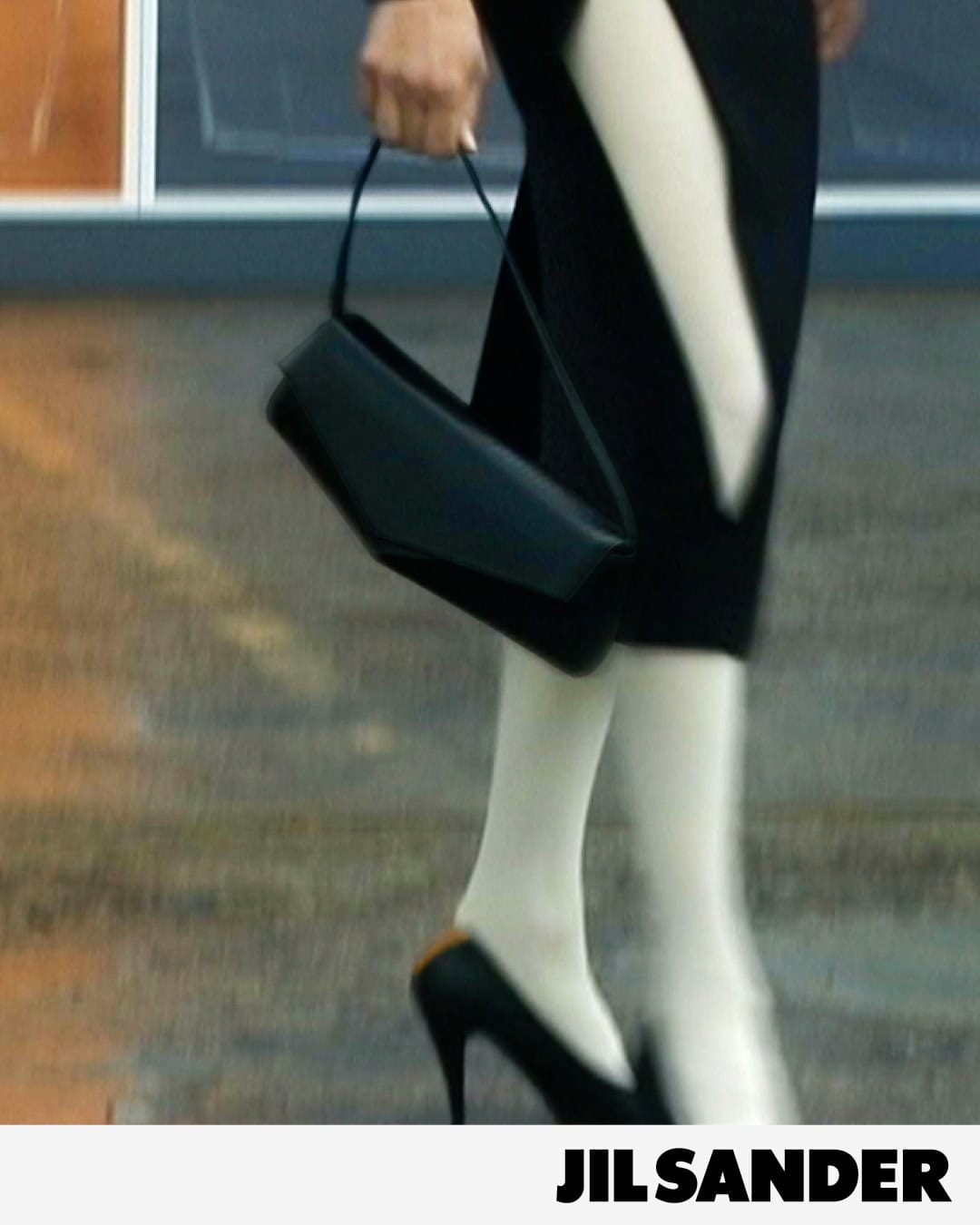
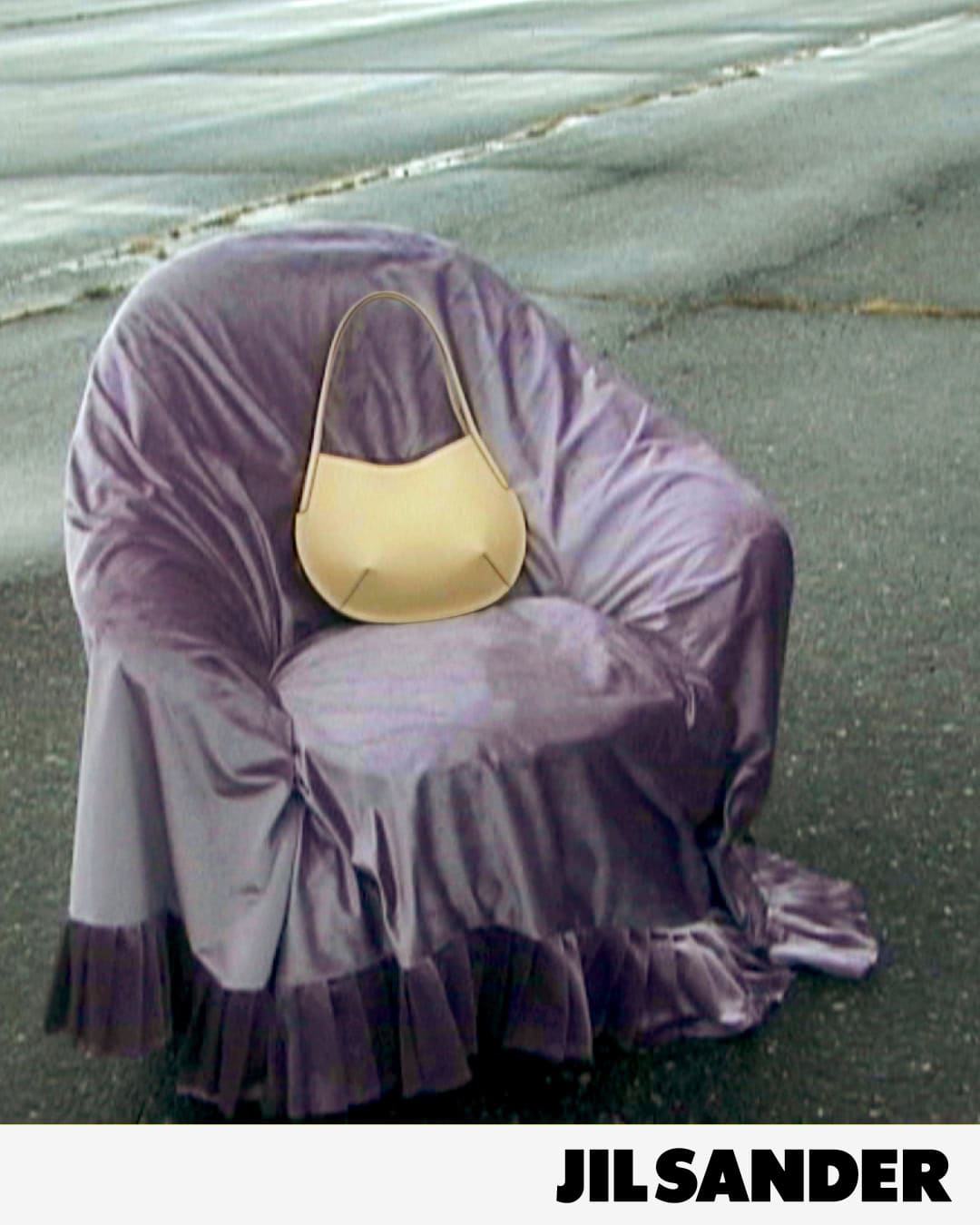
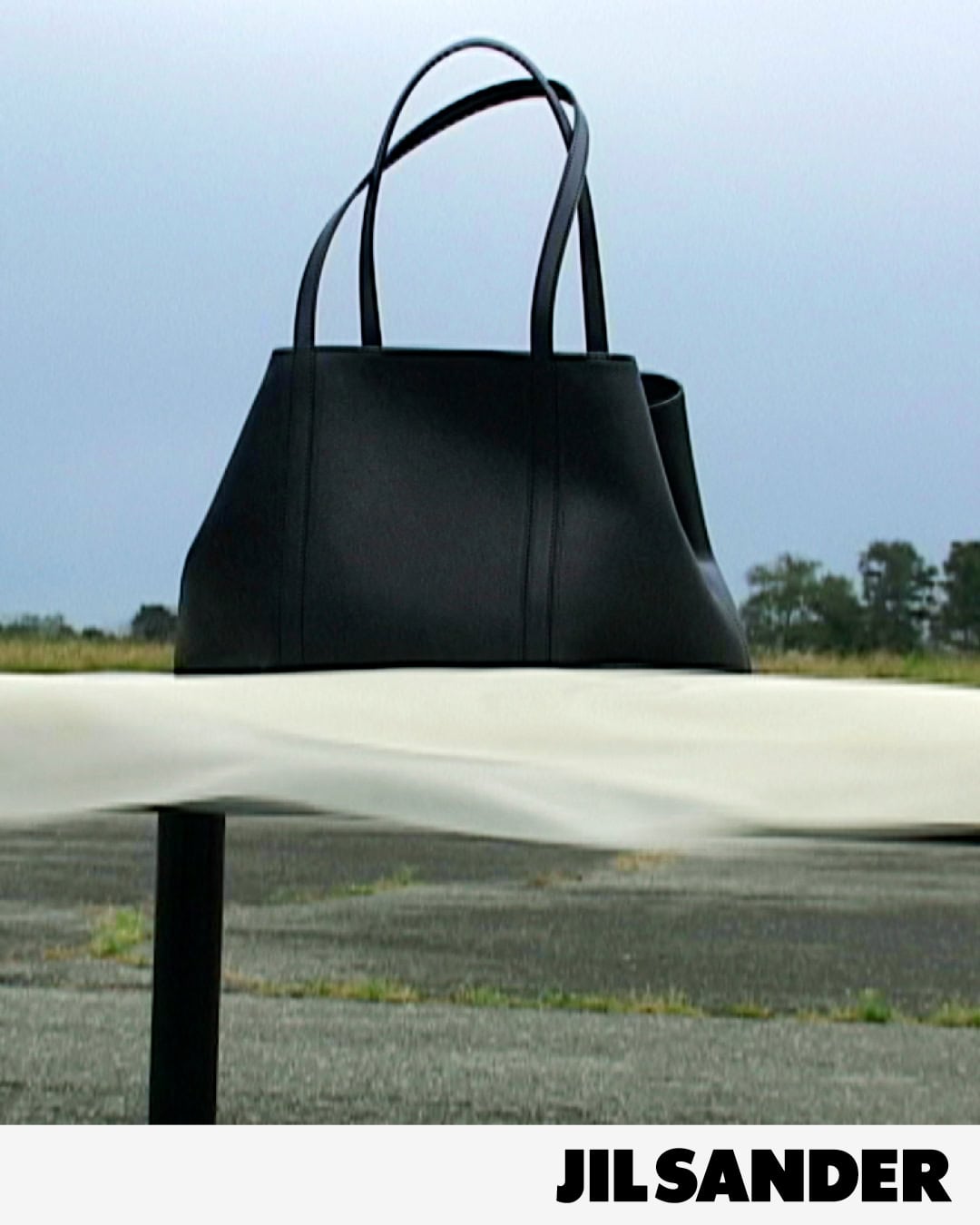
The airfield is more than an eccentric location. It is a landscape built around transition: nobody is supposed to remain there. Bellotti turns that transience inside out by furnishing it with objects associated with permanence and domestic comfort. A pristine sofa stretches across the tarmac. A reflective table stands absurdly without a room around it. Red flowers bloom beside a severe black handbag. Furniture wrapped in unexpected materials begins to resemble sculpture or abandoned stage scenery. The effect is less “interiors outside” than a domestic dream whose architecture has disappeared overnight. There are faint echoes of Hitchcock and Fassbinder, as the campaign itself acknowledges, but they remain atmospheric rather than literal.
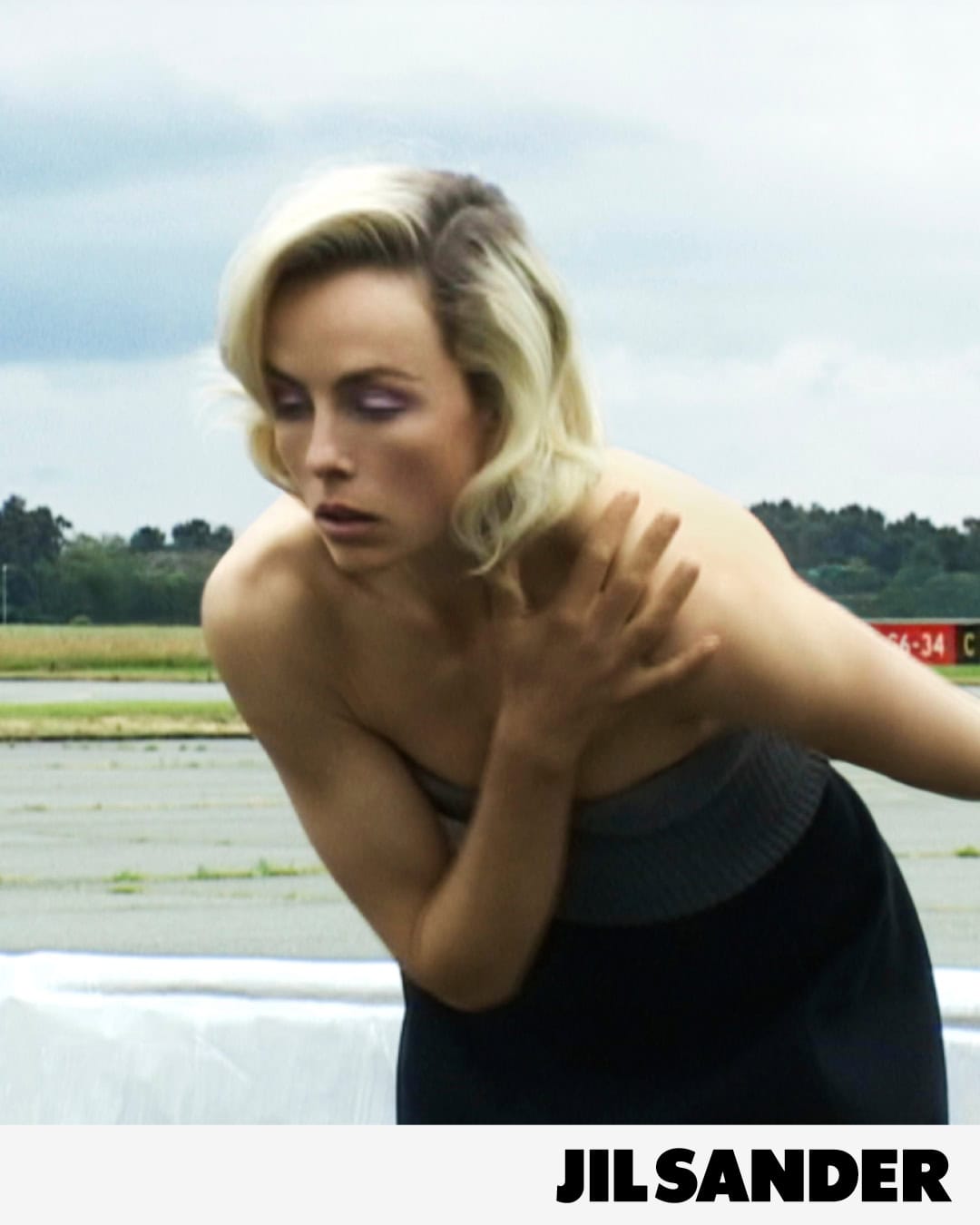
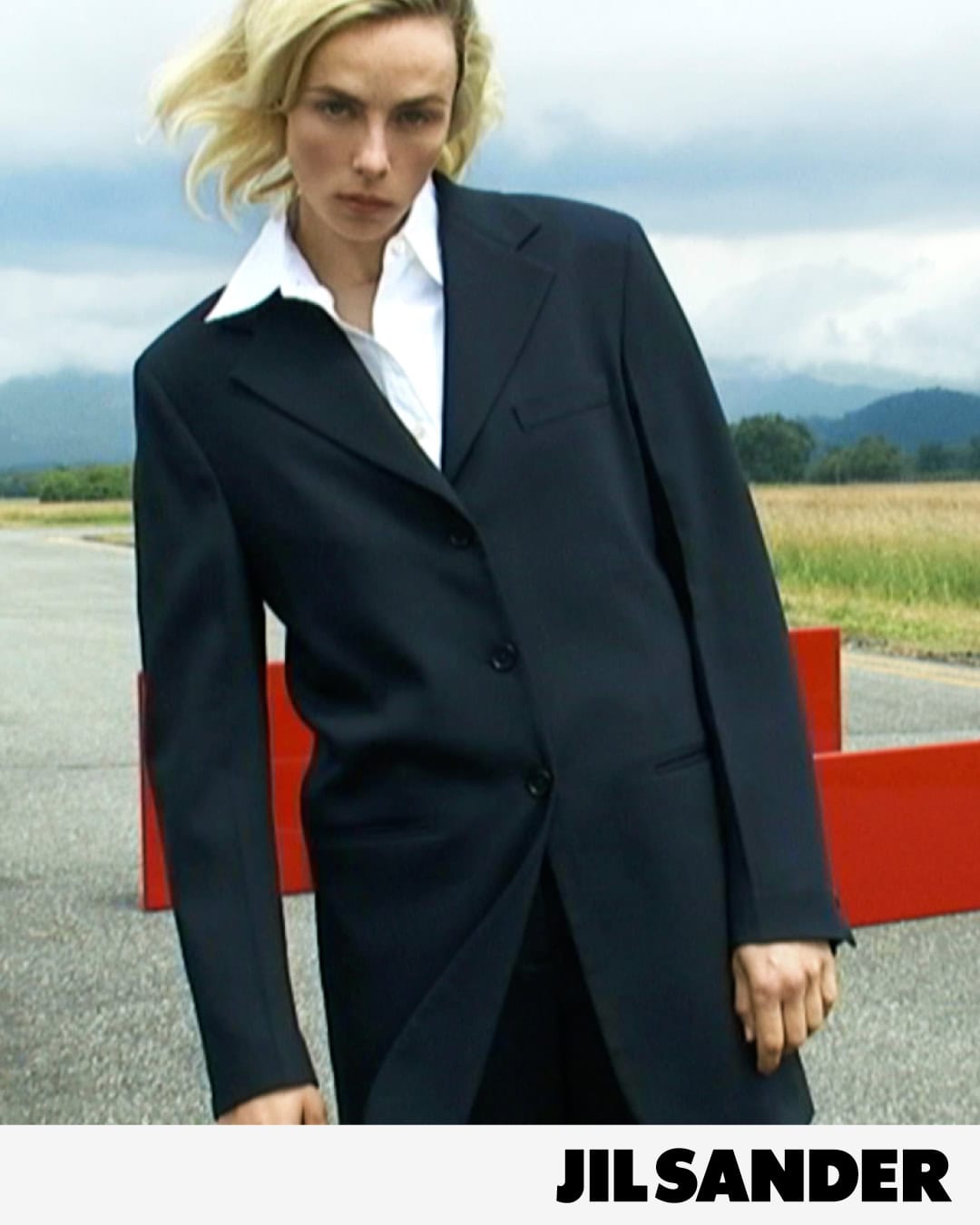
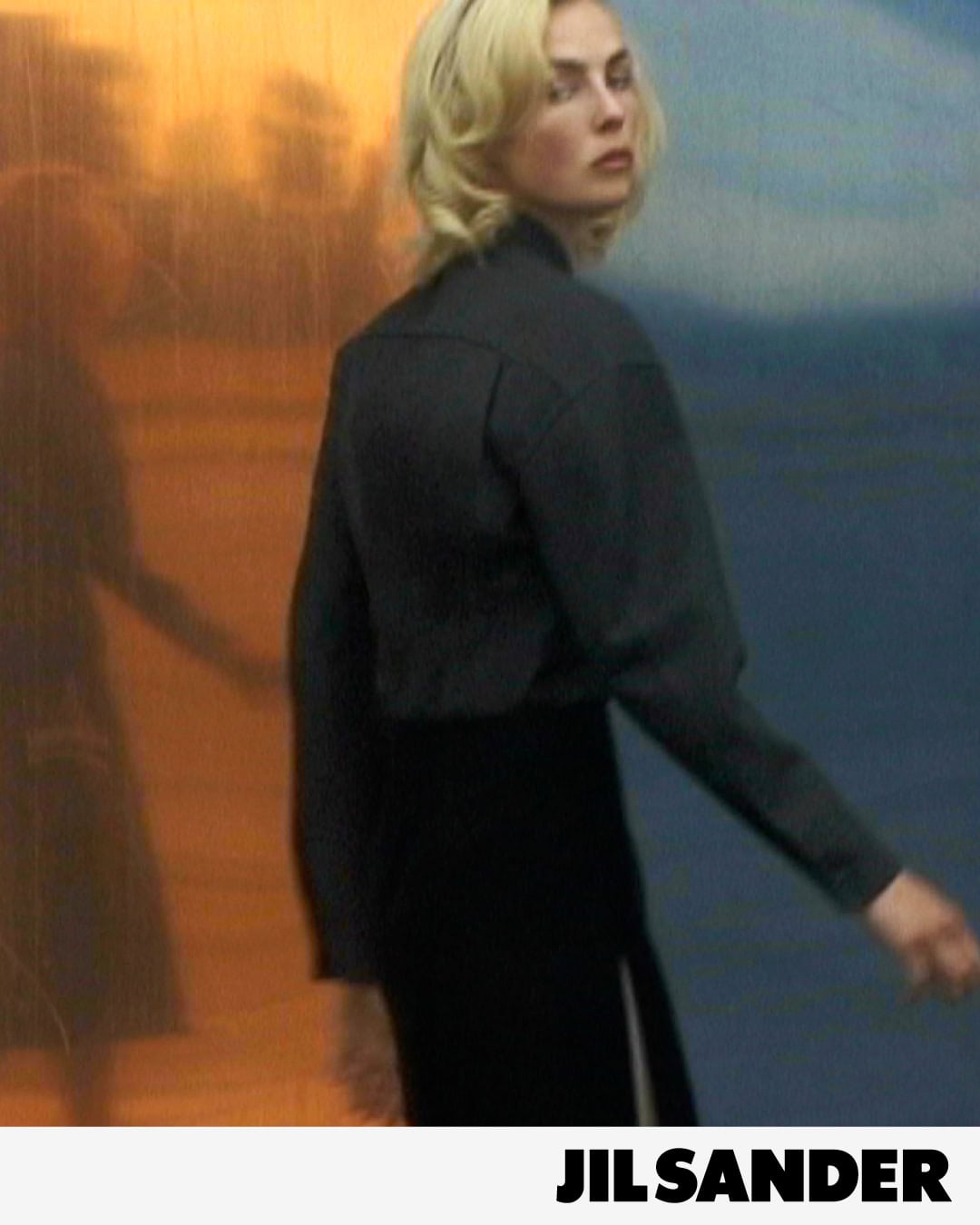
Haworth amplifies the unease through imagery that feels deliberately retrieved rather than perfected. Grain, blur, desaturated color, VHS softness, and awkwardly intimate framing give the photographs the quality of film stills from a movie whose beginning and ending have been misplaced. That visual imperfection is important. A more pristine photographic language would have turned the surrealism into set design; Haworth makes it psychological. The airfield appears real enough, but Campbell and Ueda seem caught inside some altered version of it, as though they are remembering the place rather than occupying it.
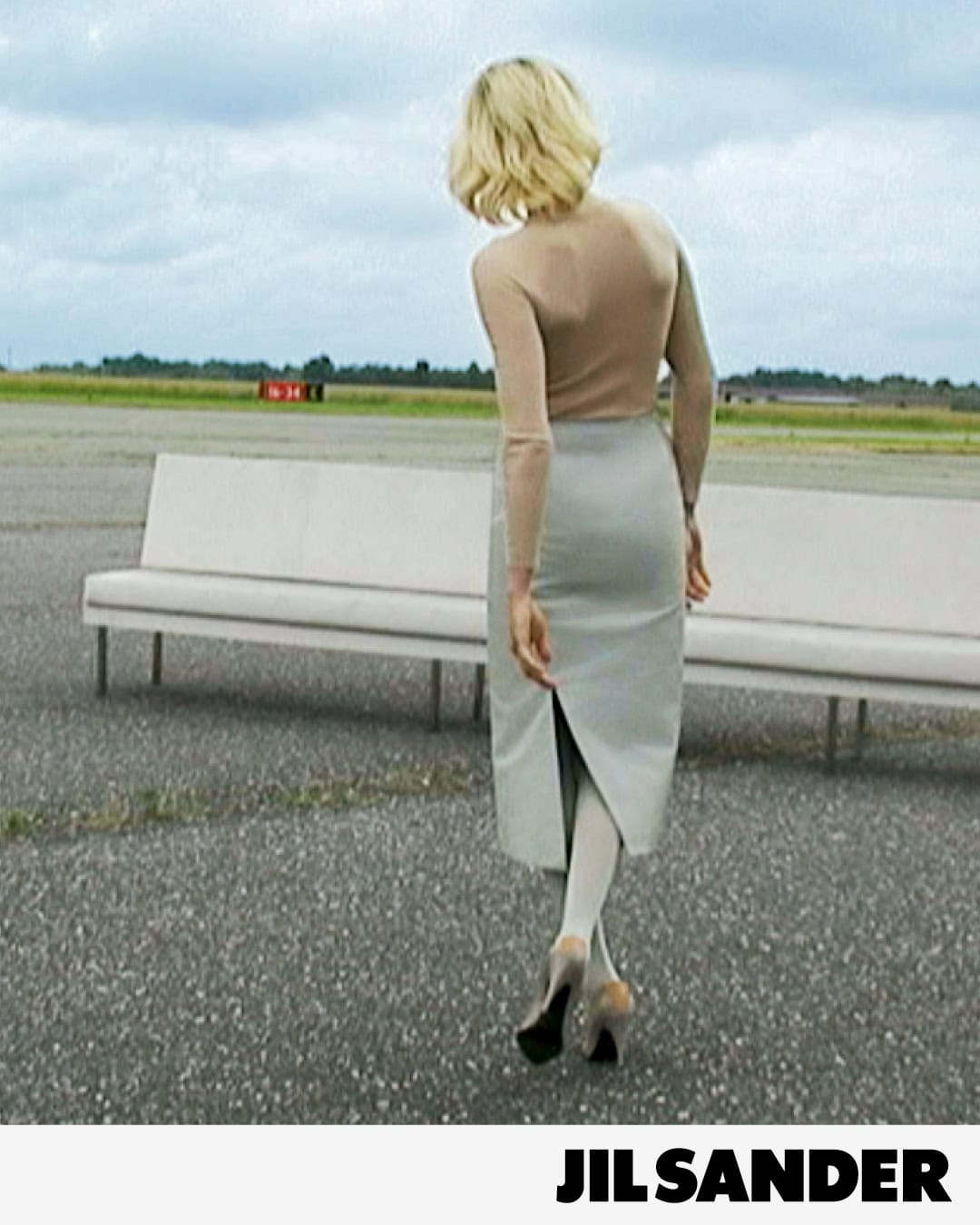
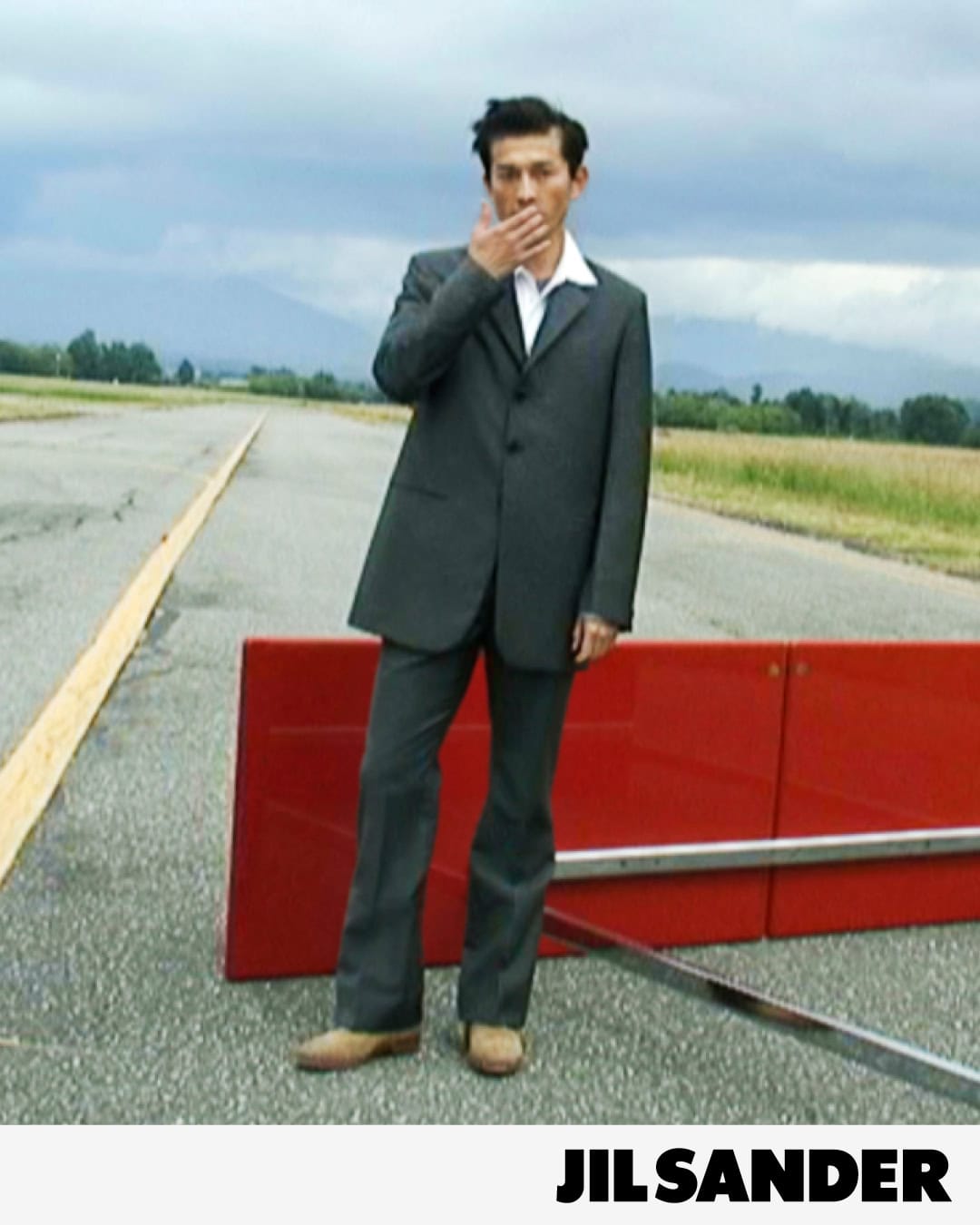
Campbell becomes the campaign’s wonderfully restless center. She leans over tables, braces herself against furniture, twists, bends, wanders, and occasionally appears to surrender to whatever strange logic governs this place. Her physicality is particularly effective against Bellotti’s controlled tailoring. The clothes attempt to impose order while the body keeps escaping it. Ueda provides a quieter counterweight, appearing composed but equally enigmatic. There is no conventional relationship established between them and no obvious narrative progression. Have they landed? Are they leaving? Do they know one another? Bellotti wisely declines to issue boarding passes with answers.
The film pushes that ambiguity further. Space Afrika’s “If This Is Hell,” featuring Deuén, unfolds as a feverish stream of consciousness rather than a conventional soundtrack. Thoughts appear, interrupt one another, double back, disappear, and re-emerge as something else. Phrases about movement, memory, shadows, reflections, bicycles, cameras, and losing one’s train of thought accumulate without settling into a fixed narrative. Paired with figures wandering through an airfield populated by displaced furniture, the words feel like the internal monologue of someone halfway between waking and dreaming. The campaign becomes cerebral without becoming academic because its ideas are experienced emotionally before they are understood intellectually.
That distinction is important to Bellotti’s developing language at Jil Sander. Minimalism has too often been reduced in fashion imagery to subtraction: fewer objects, cleaner architecture, quieter colors, less information. Here Bellotti approaches restraint more imaginatively. He introduces what he calls “moreness with meaning,” allowing addition and subtraction to operate simultaneously. A table is still a table, except there is no dining room. A sofa suggests comfort, except it is stranded on an airport runway. A beautifully controlled suit communicates composure, while the person wearing it seems psychologically elsewhere. Bellotti describes wanting “tension and surprise with the least means possible,” and the campaign succeeds precisely because its surrealism comes from displacement rather than spectacle.
There is also something refreshingly artisanal about the execution. Haworth’s grain and visual noise resist the frictionless perfection that has become almost automatic in luxury advertising. Set designer Hella Keck’s interventions feel constructed rather than digitally conjured, giving the absurdity physical weight. You can sense the latex, foil, glass, upholstery, asphalt, wind, and slightly damp atmosphere. Even when the imagery becomes dreamlike, it never loses contact with material reality. That tension between the handmade and the cerebral feels particularly right for Jil Sander: an intellectual proposition that still understands the pleasure of an object.
The risk, of course, is that atmosphere occasionally wins over product. Some frames function more persuasively as pieces of an art film than as individual advertisements, and viewers looking for a conventional fashion narrative will find precious little assistance. But Bellotti’s decision not to resolve the mystery is also the campaign’s strength. Fashion advertising does not always need to explain the fantasy it is selling. Sometimes creating a world compelling enough to enter is the more sophisticated commercial gesture.
What emerges most clearly is a new emotional temperature for Jil Sander. Precision remains, but serenity has been replaced by tension. Restraint has acquired desire, anxiety, humor, and what Bellotti rather perfectly calls “erotic electricity.” The clothes remain controlled while everything around them feels fractionally unstable. It is an intriguing direction for a House so closely associated with order: Bellotti is discovering that the most interesting way to demonstrate control may be to place it directly beside chaos.
And so Terminal State proves an apt description of more than the location. Campbell and Ueda inhabit a psychological holding zone where domesticity and departure, elegance and unease, stillness and movement coexist without explanation. The planes may eventually take off. The passengers may eventually go somewhere. But Bellotti understands that the interesting part is not necessarily the destination. Sometimes it is what happens while you are waiting on the runway.

Jil Sander Creative Director | Simone Bellotti
Agency | Frey & Barth
Art Direction | Carina Frey & Stefanie Barth
Photographer/Director | Moni Haworth
Models | Edie Campbell, Daisuke Ueda
Stylist | Charlotte Collet
Set Designer | Hella Keck
Original Music | “If This Is Hell” by Space Afrika ft. Deuén