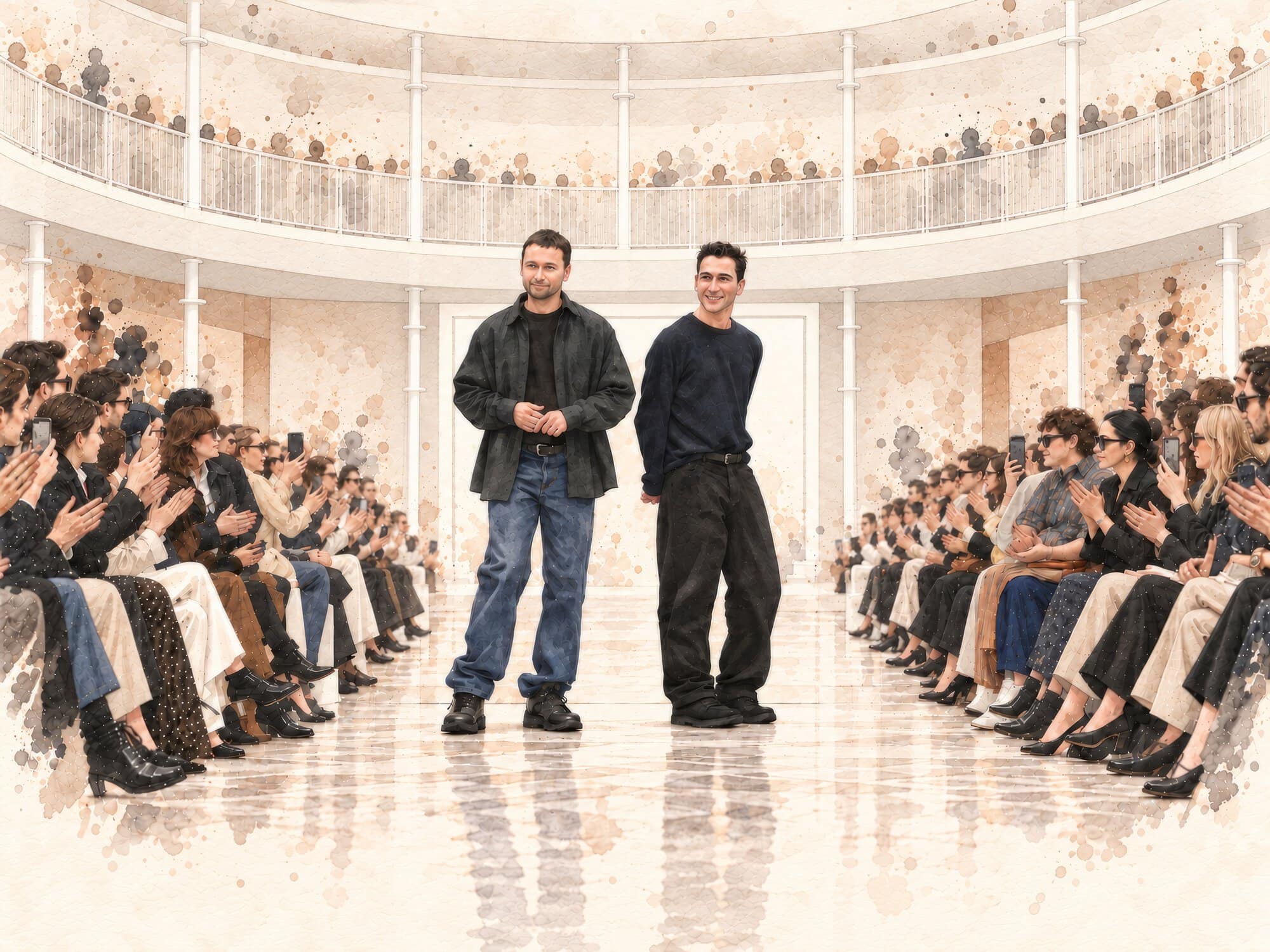
The Designers Talk Desire, Emotion, And The World They’re Building At Loewe
By Mackenzie Richard Zuckerman
In Conversation With The Impression
Speaking with The Impression following Loewe’s latest collection, creative directors Jack McCollough and Lazaro Hernandez discuss the desire driving their evolving vision for the house, looking to Loewe’s Spanish past while bringing their own American instincts, and why music, mood, and emotion matter as much as the clothes themselves.
The Impression Intelligence
Creative Directors: Jack McCollough and Lazaro Hernandez
House: Loewe
Collection: Spring/Summer 2027
Presented: Paris Fashion Week
Interview: Mackenzie Richard Zuckerman for The Impression
Key Themes: Desire, softness, femininity, Spanish heritage, American sportswear, Loewe archive, music, mood
See the Spring 2027 Collection
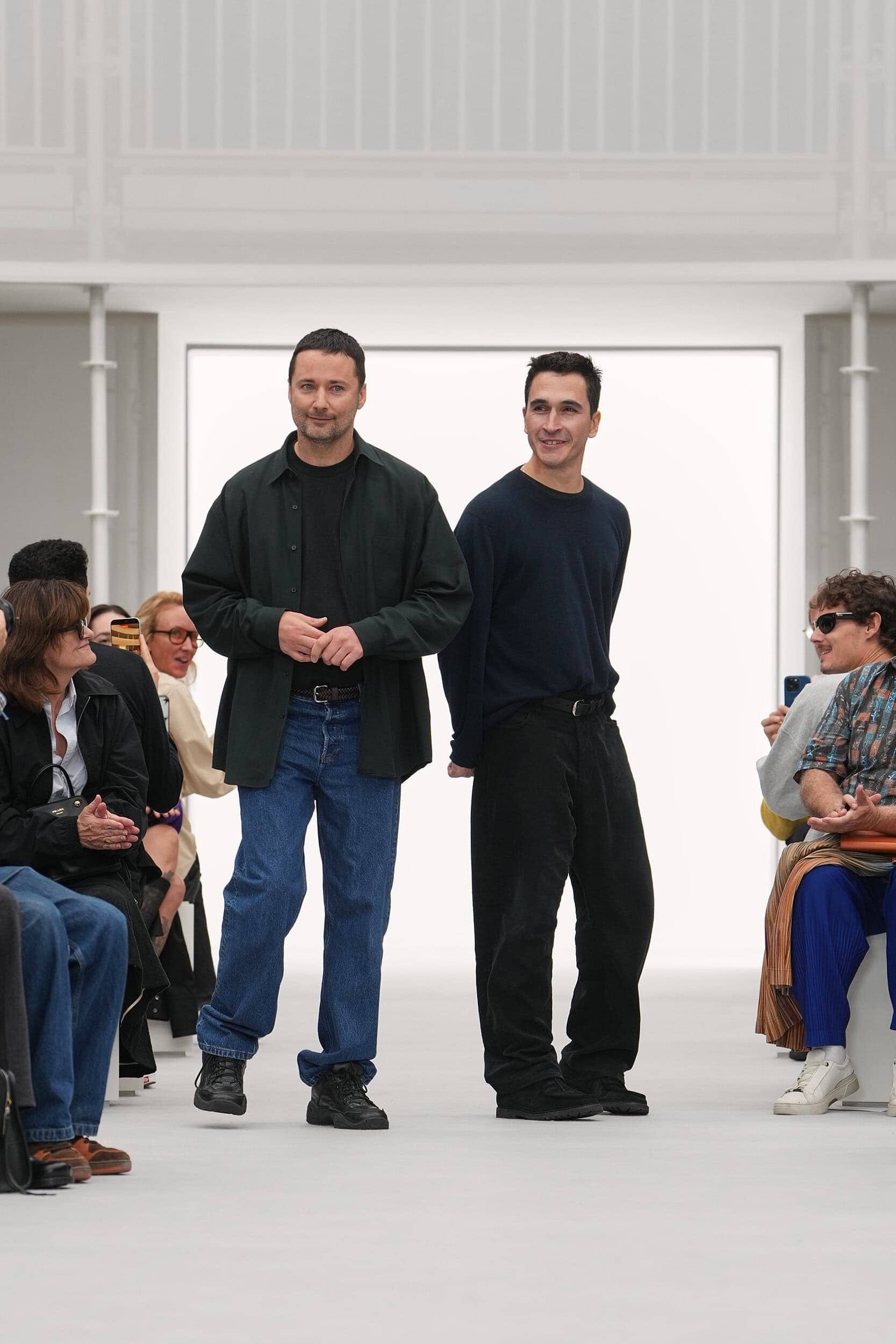
Three collections in, Jack McCollough and Lazaro Hernandez are no longer standing at the door of Loewe wondering quite how to introduce themselves. The introductions have been made. The first collection established the thesis, the second found pleasure in craft and play, and now something more seductive is beginning to happen. They are settling in.
Or, perhaps more accurately, getting in the mood.
Speaking together with Mackenzie Richard Zuckerman, the designers described these first chapters at Loewe almost as stages of discovery. Their debut confronted the question every designer inheriting a house eventually faces: What exactly do we want to say here? Their answer began with Spanishness, establishing a relationship to the country, its culture, and the identity of a house approaching two centuries of history. The second collection loosened things up, exploring craft through joy, humor, technology, and the sheer pleasure of making.
This time, the question became less cerebral and considerably more emotional.
“How do we take some of these languages we’ve started to develop and translate that into something that feels very wearable?” McCollough and Hernandez said. “The idea of just saying: desire. A softness, a femininity, a fluidity.”
Desire is a wonderfully uncomplicated word for two designers who have spent much of their careers thinking deeply about how clothes are constructed. It also says something about where their Loewe is heading. The intellectual framework is still there, as is the technical curiosity, but neither needs to announce itself quite so loudly anymore. Increasingly, the point is how all of that thinking makes someone feel.
And feeling, in this case, required looking backward.
Loewe is 180 years old, yet McCollough and Hernandez had not previously gone deeply into the house’s Madrid archive. This time they did, encountering the fragments, objects, garments, and wonderfully peculiar remnants that accumulate when a house has been around long enough to possess not simply an archive, but a memory.
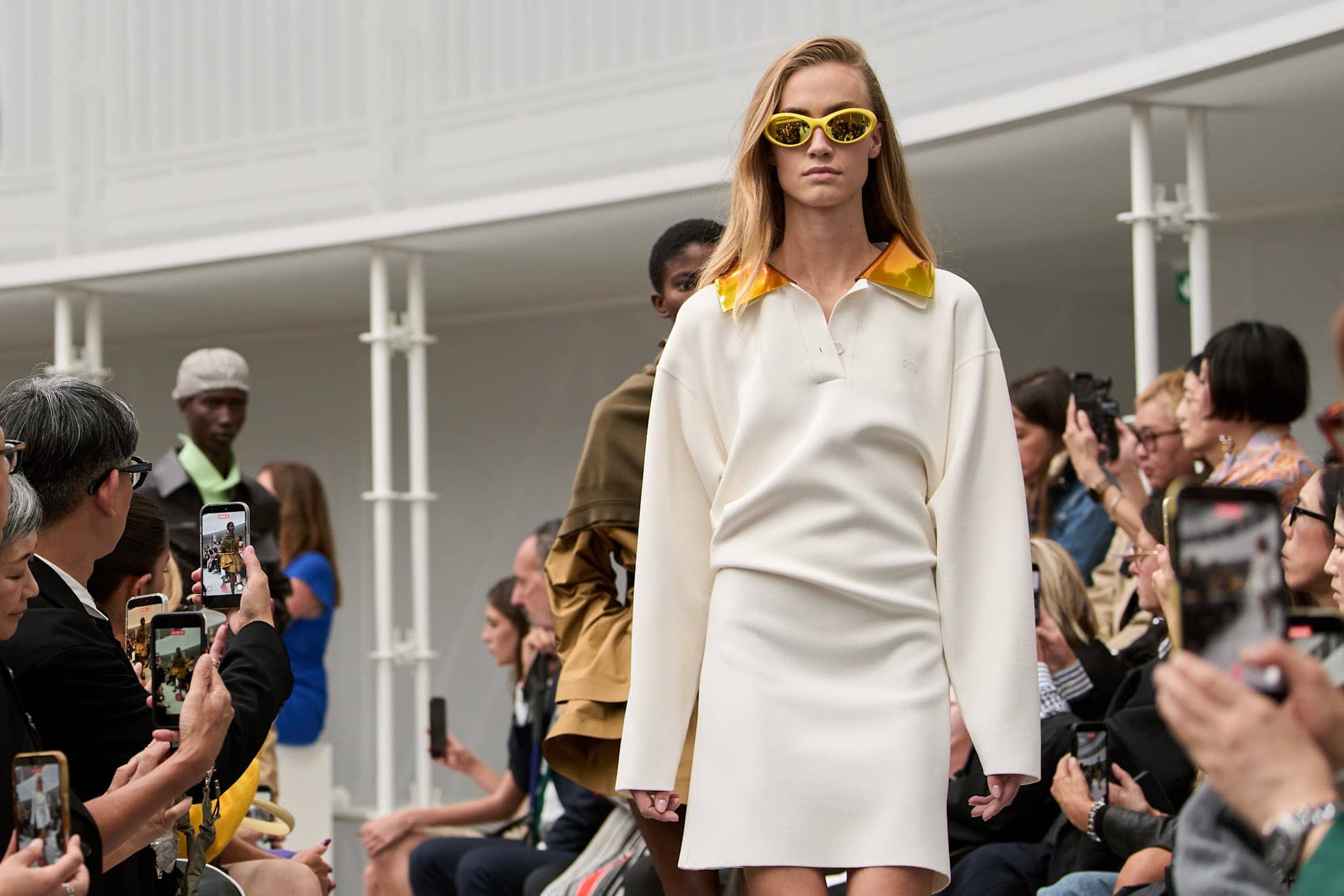
“We dug into the archive in Madrid, which we had not done before,” they said. “We were looking at Velázquez paintings and Goya paintings.”
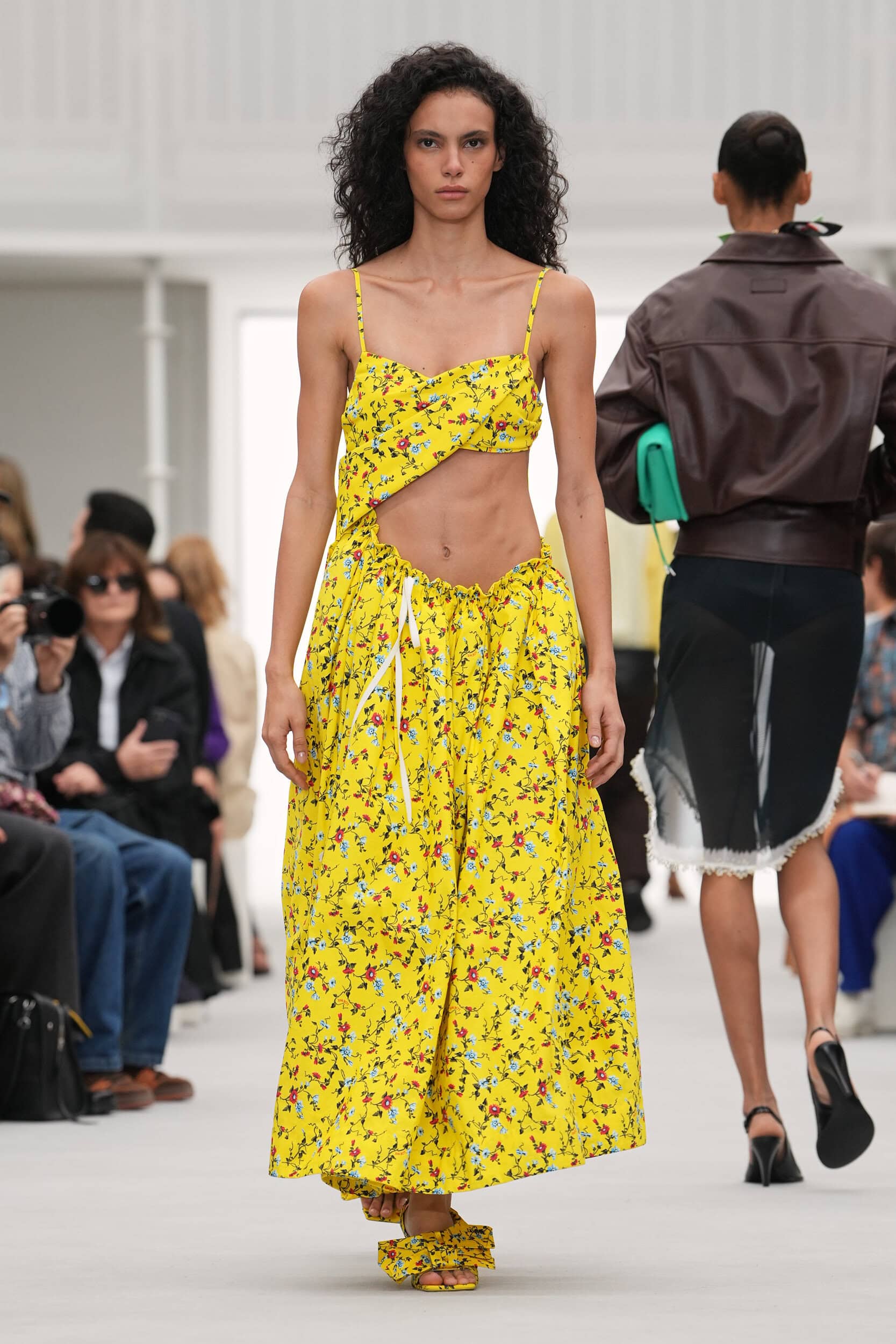
The temptation might have been to become overly reverential. Instead, the designers allowed old-world Spain to collide with something they know instinctively: America.
“You’re just hopping into this old-world Spanish historical tone and mixing it with that girl — American sportswear, the ’90s.”
There is something revealing in “that girl.” McCollough and Hernandez can discuss history, technique, and references at length, but ultimately they are imagining a person. The distance between a Goya painting and a woman in ’90s American sportswear is enormous on paper. In their hands, that distance becomes the interesting part.
It also reflects the duality the pair bring to Loewe. They are American designers working inside one of Spain’s great houses, looking at European history through eyes formed by a very different clothing tradition. Rather than disguise that tension, they are beginning to enjoy it.
Even the show space became part of the conversation. Instead of treating architecture simply as a container for clothes, they constructed an arena within it, something that suggested a coliseum, the Globe Theatre, and a sports stadium all at once.
“There are elements of sports. There are elements of theatrics,” they said. “We always build this box, but this time, to create a piece of architecture within the architecture.”
It was an apt setting for designers increasingly interested in atmosphere. The soundtrack matters enormously to them, too. Both describe themselves as music people, though emphatically not pop-music people; their tastes wander toward the obscure, the strange, and the things that might prompt someone else to ask what, exactly, they are listening to.
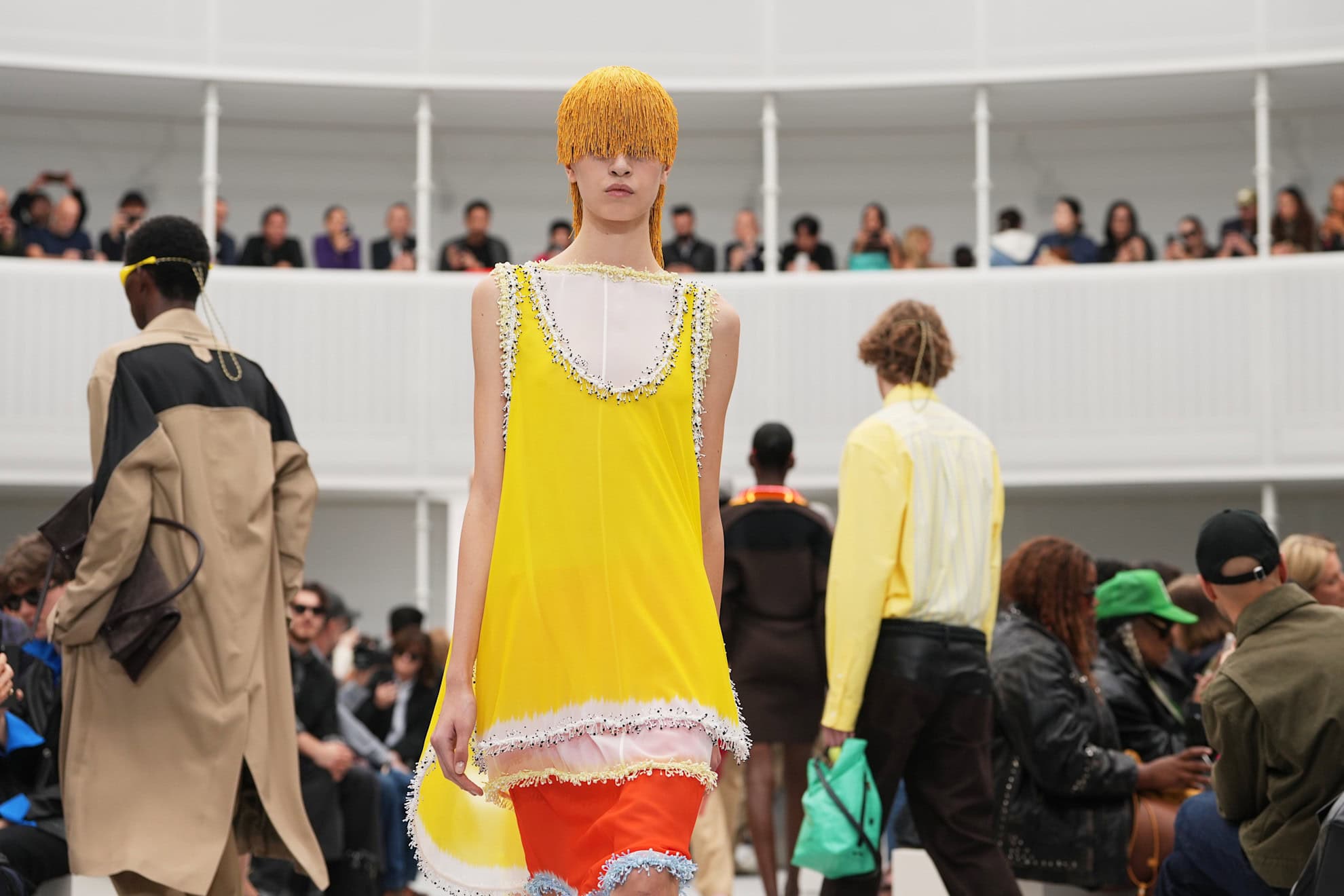
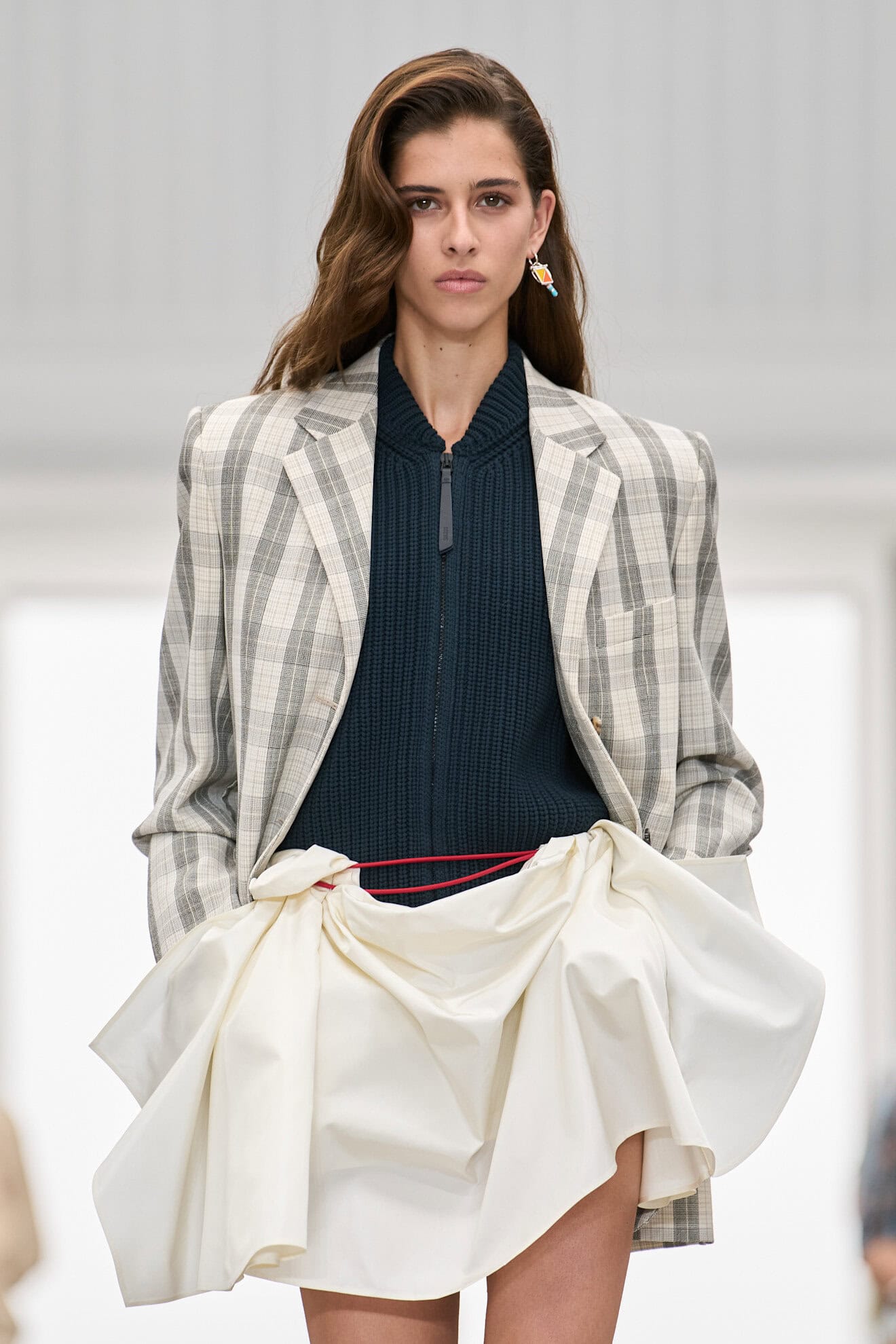
For McCollough and Hernandez, music is less accompaniment than emotional architecture.
“It’s so important. It sets the tone,” they said. “It’s like the score of a movie. You can have a great movie with a horrible score and it can totally ruin the movie.”
Then came the considerably less precious corollary: “Or you could have kind of a shit movie, but an amazing soundtrack.”
That exchange gets rather close to understanding the two of them. There is seriousness about the work without an insistence on being serious about themselves. Their conversations can move from Goya to a joke, from a 1960 archival blazer to backstage fussing, without much ceremony between the two. That looseness increasingly seems to be entering Loewe as well.
Color, which had been emphatic across their first two collections, was deliberately quieted. The designers moved toward an earthier register of golden khakis and muted tones, allowing the act of dressing to come forward. Even here, cultural differences provided amusement: what an American calls khaki, they discovered, is not necessarily what a European means by khaki.
The archive also produced a particularly useful encounter with Loewe’s relatively short history in ready-to-wear. Among the pieces they examined was a suede blazer from 1960, which they described as the house’s first ready-to-wear piece.
Rather than reproduce it, they did what they increasingly seem comfortable doing at Loewe: disturb it a little.
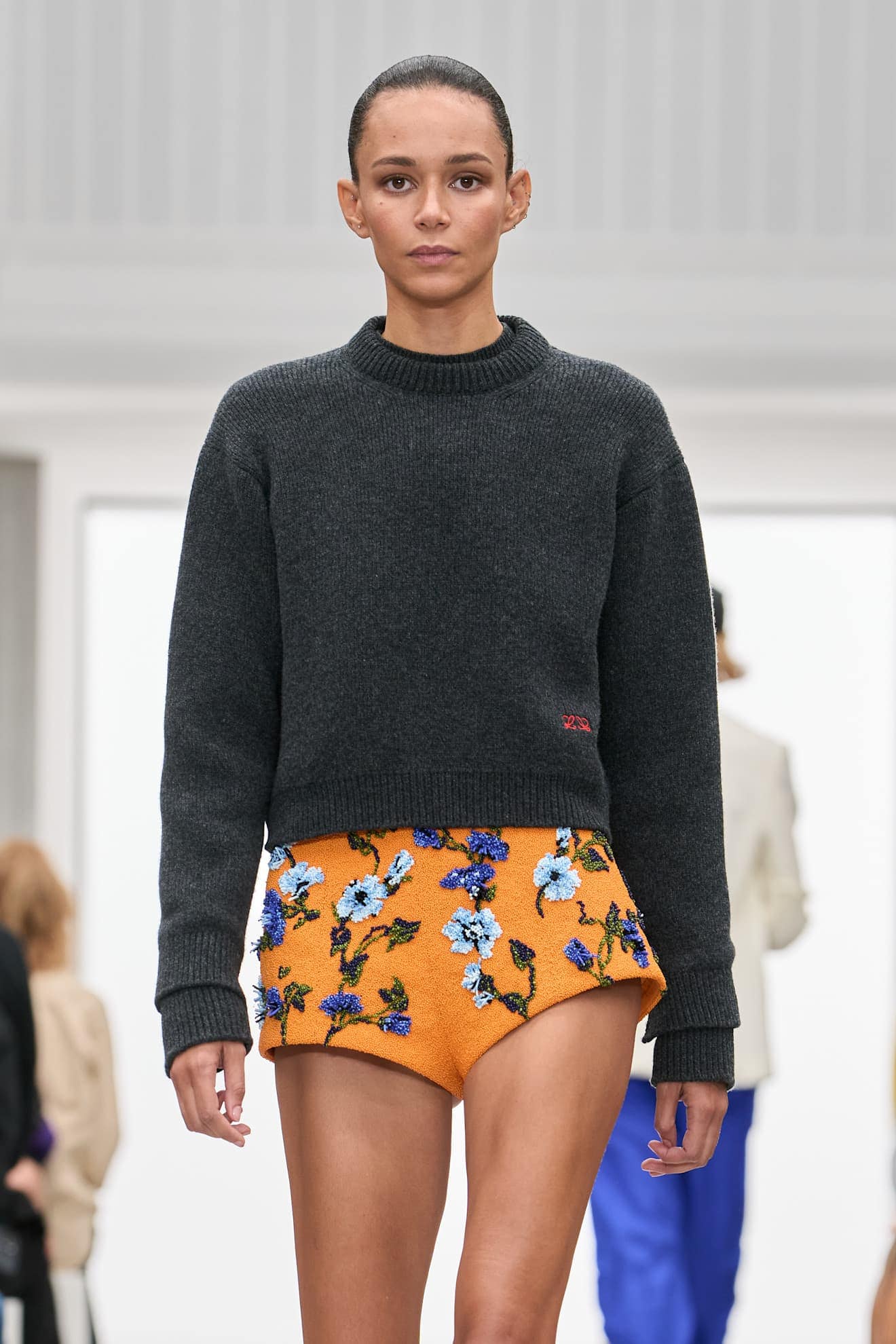
“We thought it was interesting to kind of take that piece and amp it up, twist the proportions of it, kind of pump the color up into our color world, but still kind of leaning into that place.”
That may be the more interesting story taking shape around McCollough and Hernandez at Loewe. They are neither trying to erase what came before nor allowing history to dictate what comes next. The archive is becoming material rather than instruction. Spain is a source rather than a costume. American sportswear is something they no longer need to apologize for bringing along.
And the progression across three collections feels telling. First came identity. Then experimentation. Now comes desire.
When designers arrive at a house with 180 years behind it, there is enormous pressure to define the future immediately. McCollough and Hernandez appear increasingly comfortable allowing theirs to reveal itself season by season. They are building through collections, campaigns, spaces, sound, people, and the accumulation of instinct that eventually turns a collection into a world.
The thesis got them through the door. Desire may be what makes Loewe feel like home.