For Keeps
Review of Graff ‘Jewelry’ 2026 Ad Campaign by Creative Director Robert Lussier of Agency The Style Council with Photographer Nicolas Kantor with models Stella Hanan, Parker Van Noord, Milo
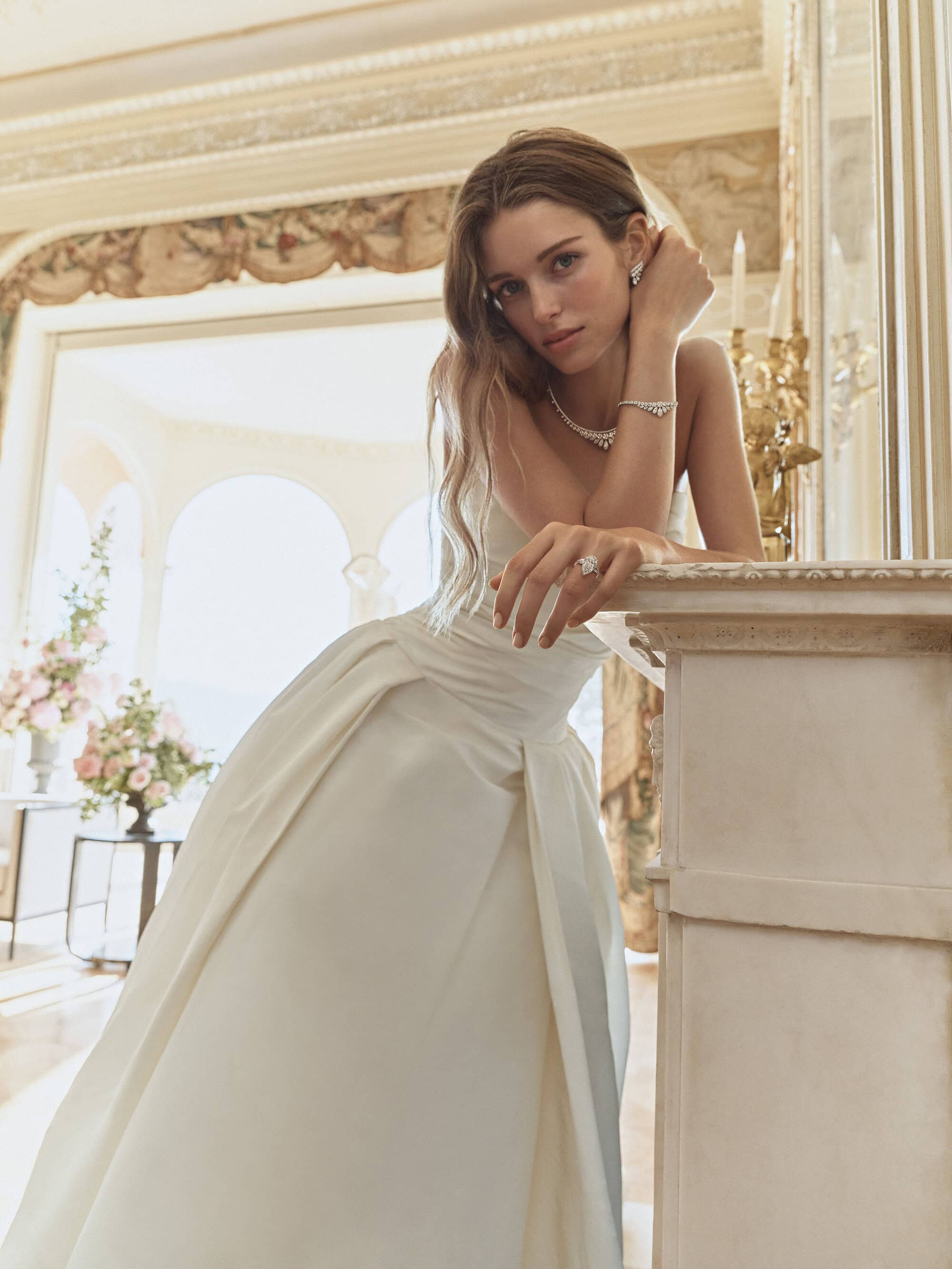
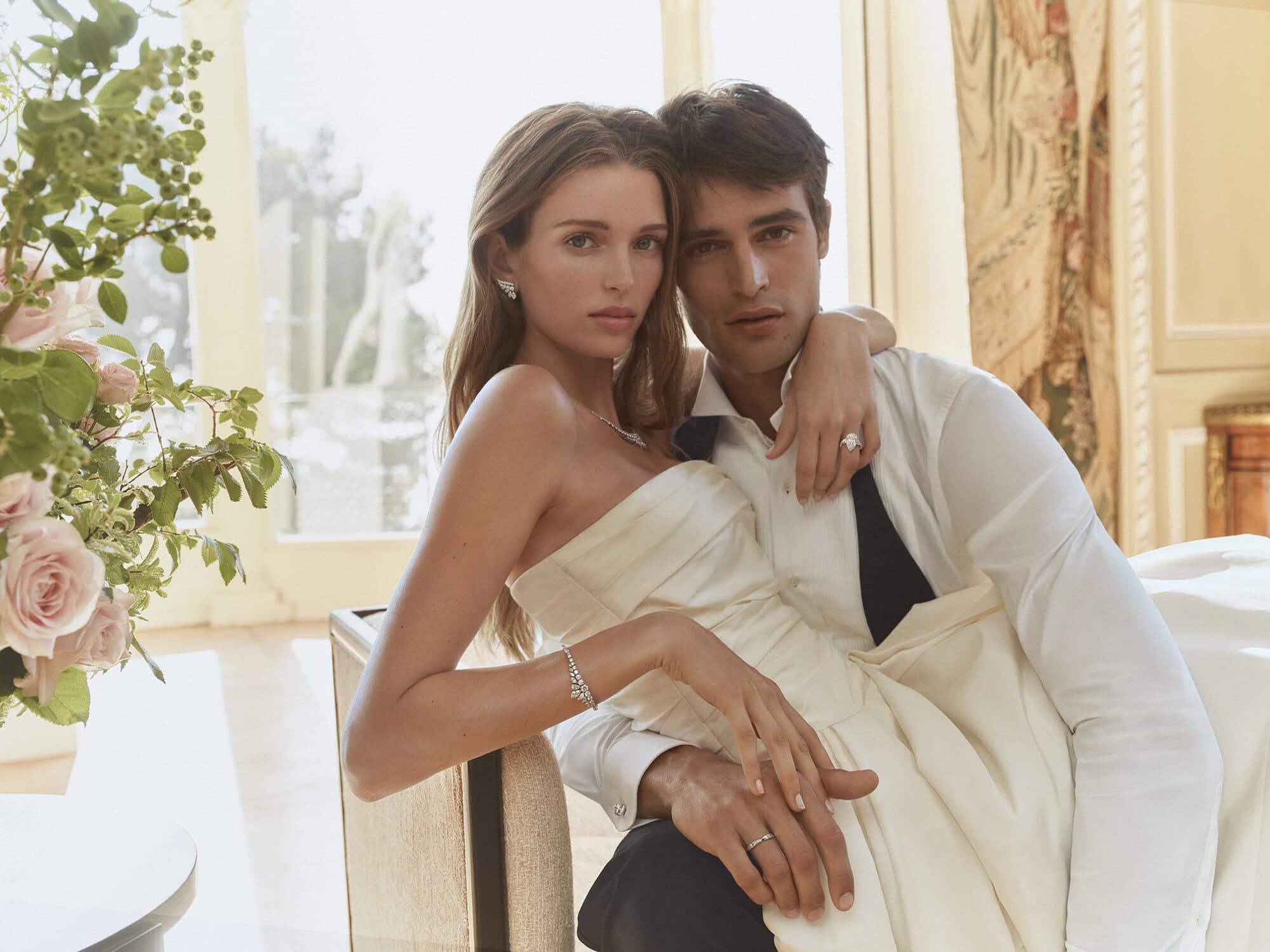
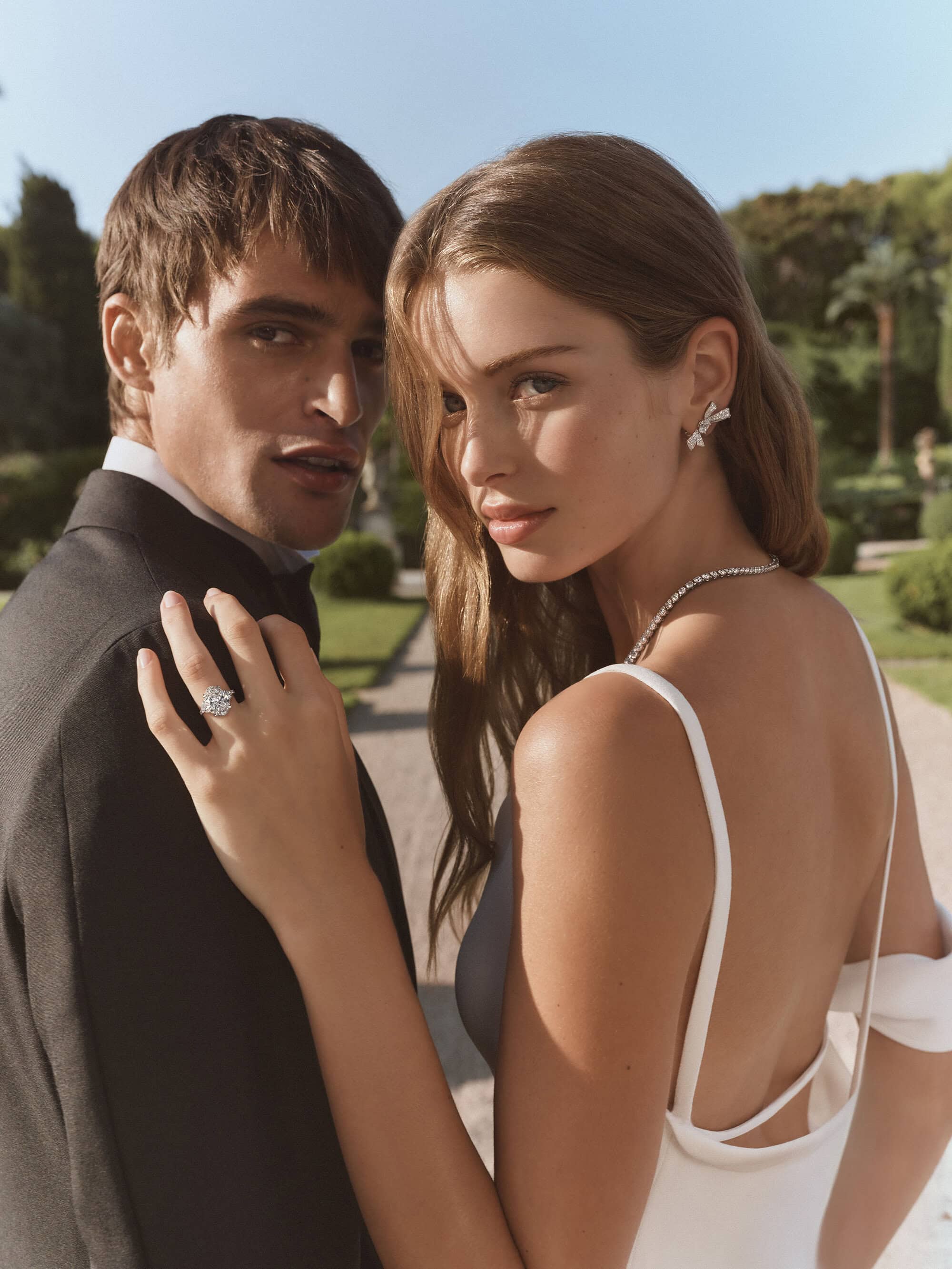
Graff has never had much reason to be coy about diamonds. For its latest campaign, however, Creative Direction by The Style Council x Robert Lussier turns the house’s extraordinary stones into something more elusive: supporting actors in a love story. Working with photographer and director Nicolas Kantor, Lussier builds “The Most Romantic Jewels in the World” around Stella Hanan and Parker Van Noord, with Villa Ephrussi de Rothschild in Saint-Jean-Cap-Ferrat providing the sort of setting where even a proposal might reasonably require a dress code. The result is unabashedly romantic, beautifully controlled and, importantly, remarkably good at selling the ring.
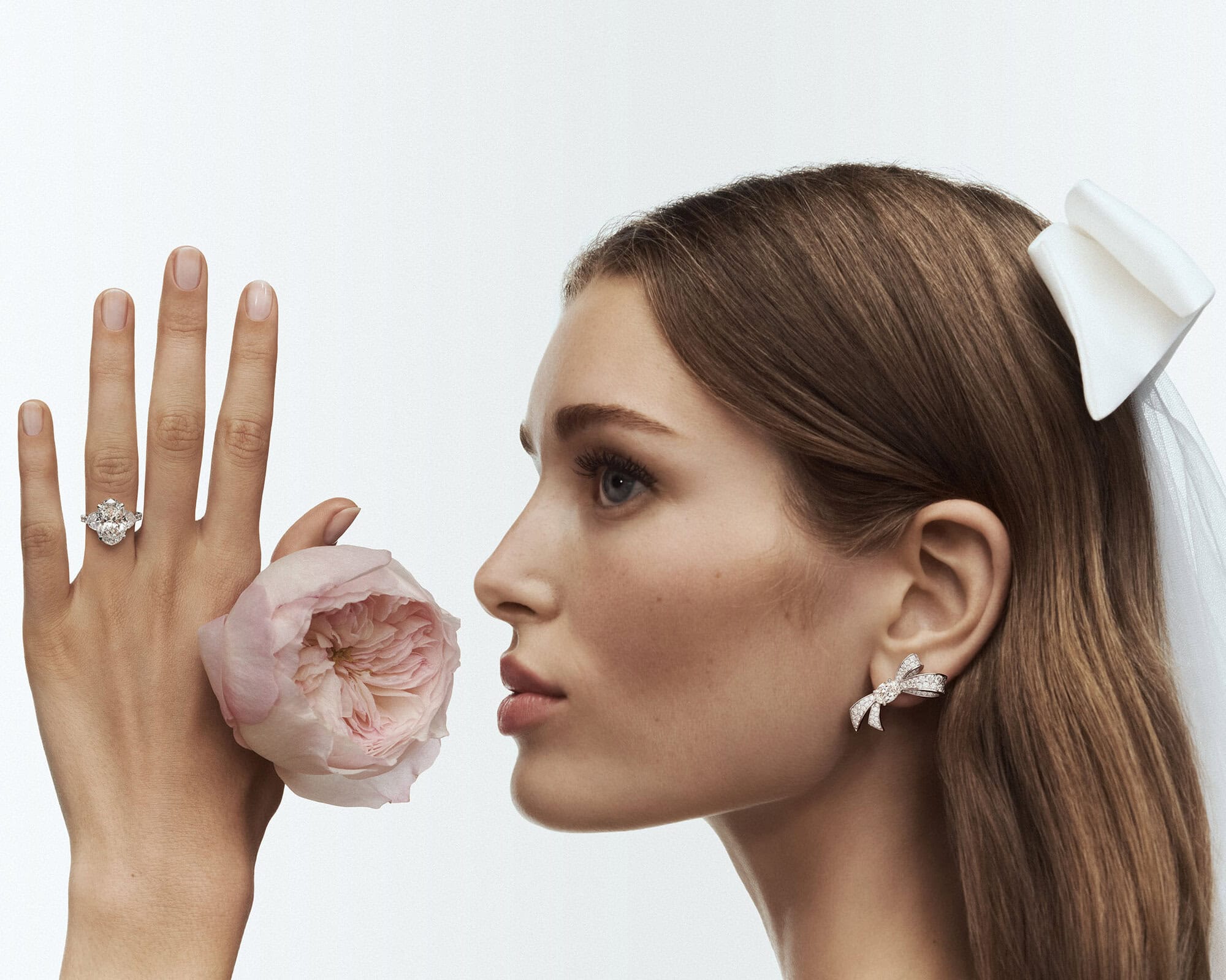
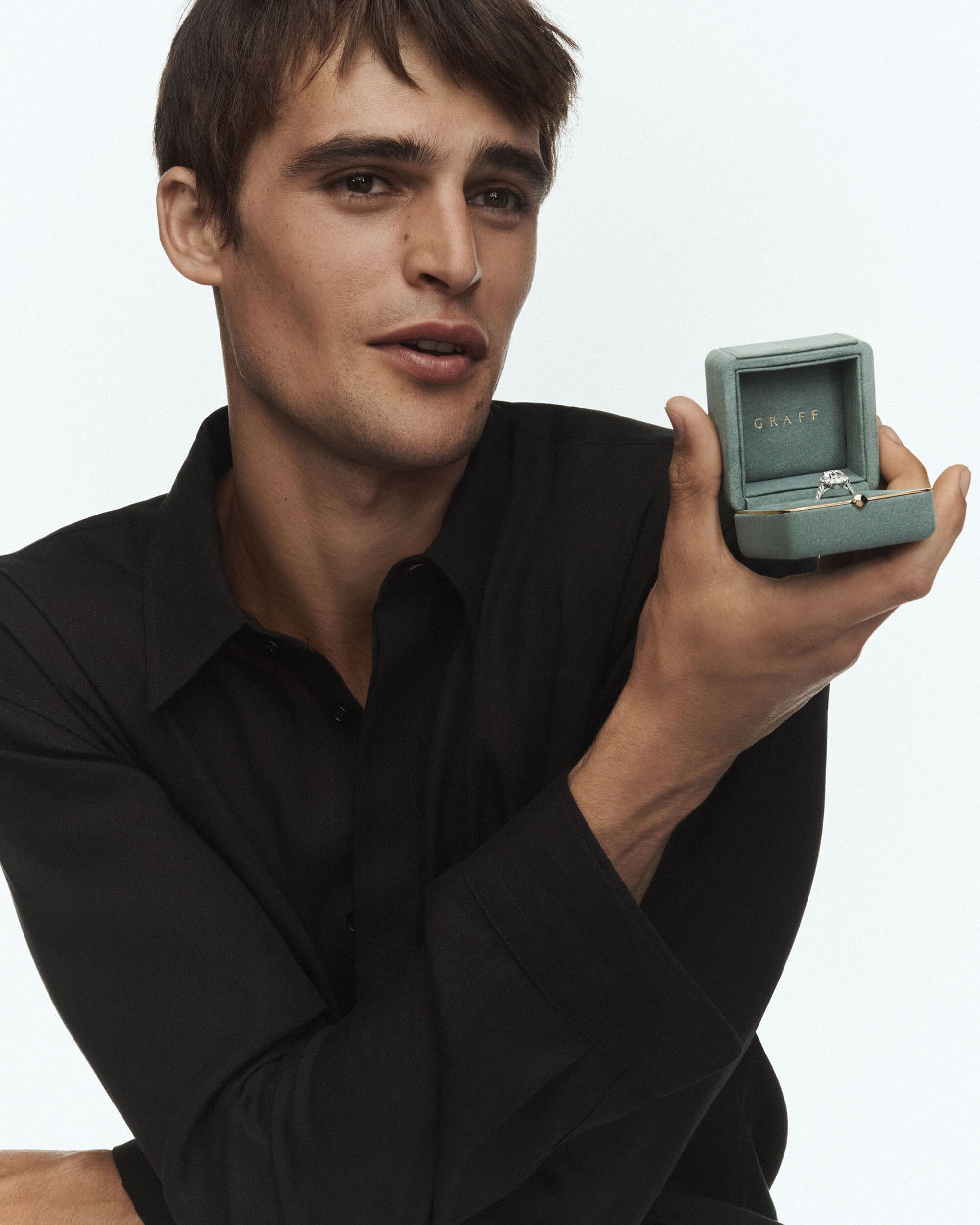
That last point is more sophisticated than it sounds. Jewelry advertising has long struggled with a basic contradiction: the product must be shown clearly enough to inspire desire, yet desire rarely begins with a product shot. Lussier understands the difference. Across a nearly four-minute film structured in seven chapters, the Graff diamond becomes part of a sequence of anticipation, flirtation, proposal, ceremony and intimacy. We see hands, skin, glances, flowers, veils, a ring box, a groom’s grin and a bride who appears to be enjoying the occasion rather than merely modeling it. Graff is selling the diamond, certainly, but first it sells the reason someone might want one.
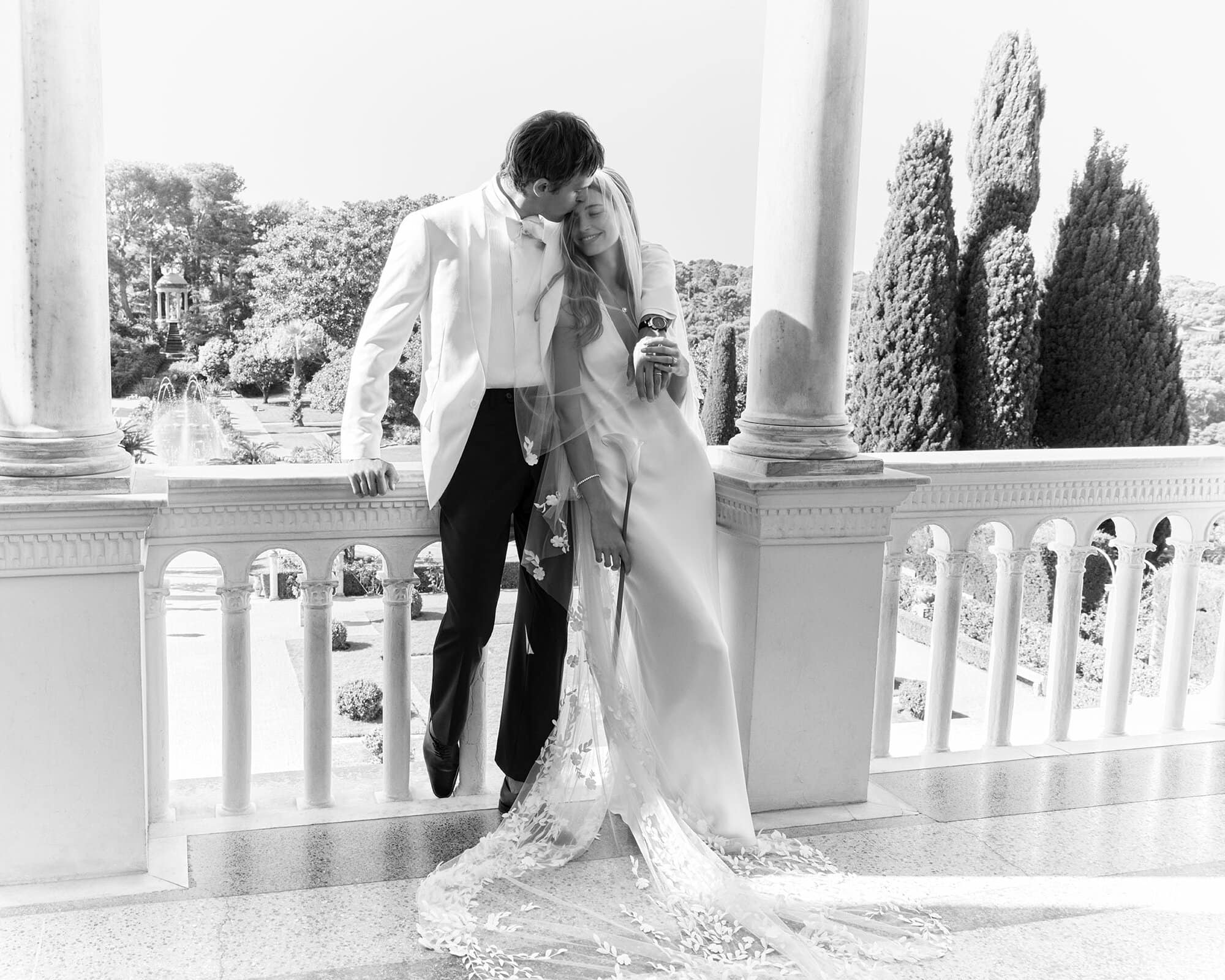
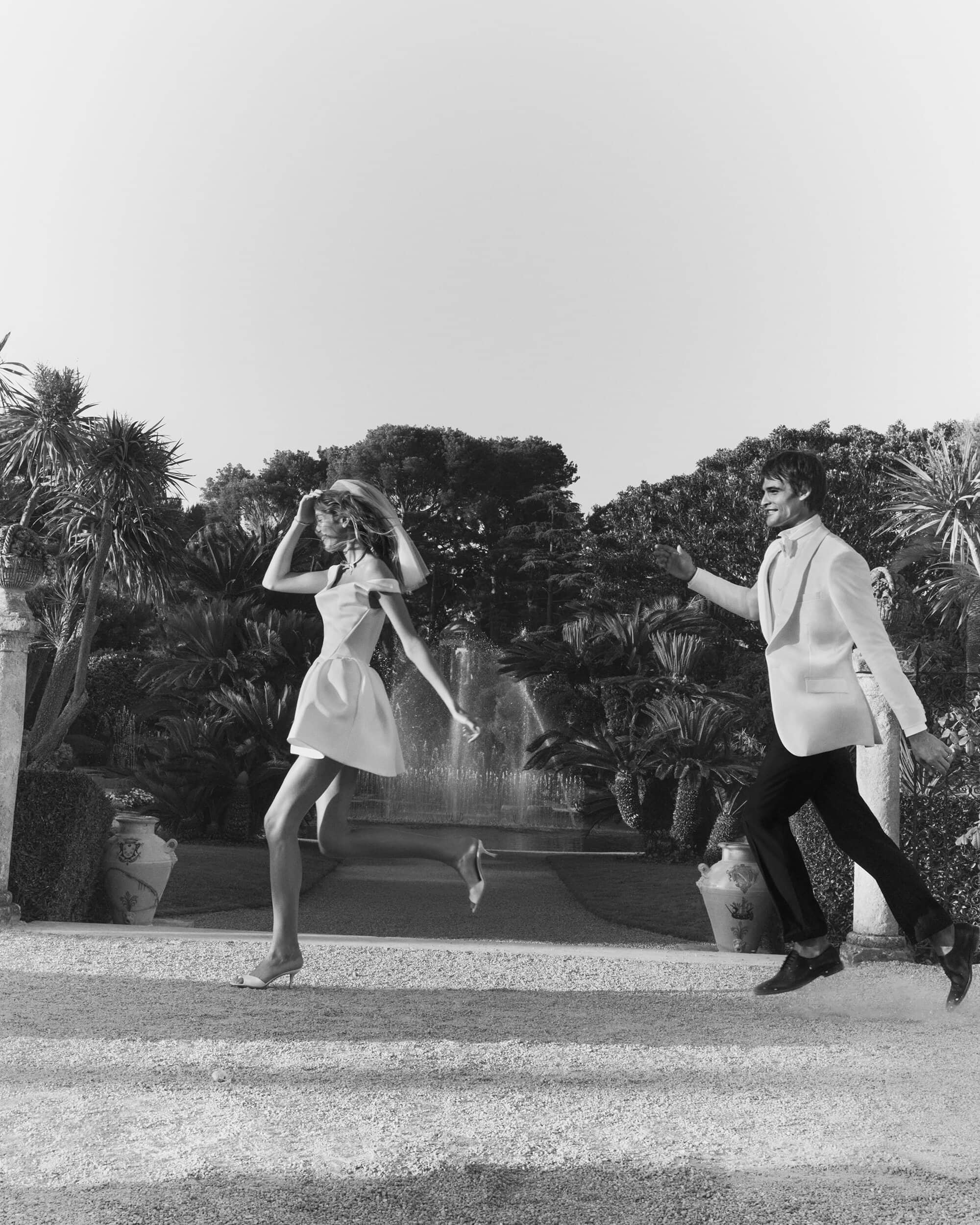
The approach reflects a storytelling instinct Lussier has developed across more than three decades, including his work on Dior’s “Secret Garden” films at Versailles: create the world first and allow the luxury object to acquire meaning within it. Here, Villa Ephrussi de Rothschild is more than expensive scenery. Its gardens, fountains, terraces, columns and Temple of Love create a progression of spaces through which the romance can unfold. Kantor and cinematographer Luke Palmer move between architectural scale and extreme intimacy, alternating the grand gesture with the private one. Color gives the Riviera its sun-drenched seduction; black and white turns certain moments into memory before they have even finished happening.
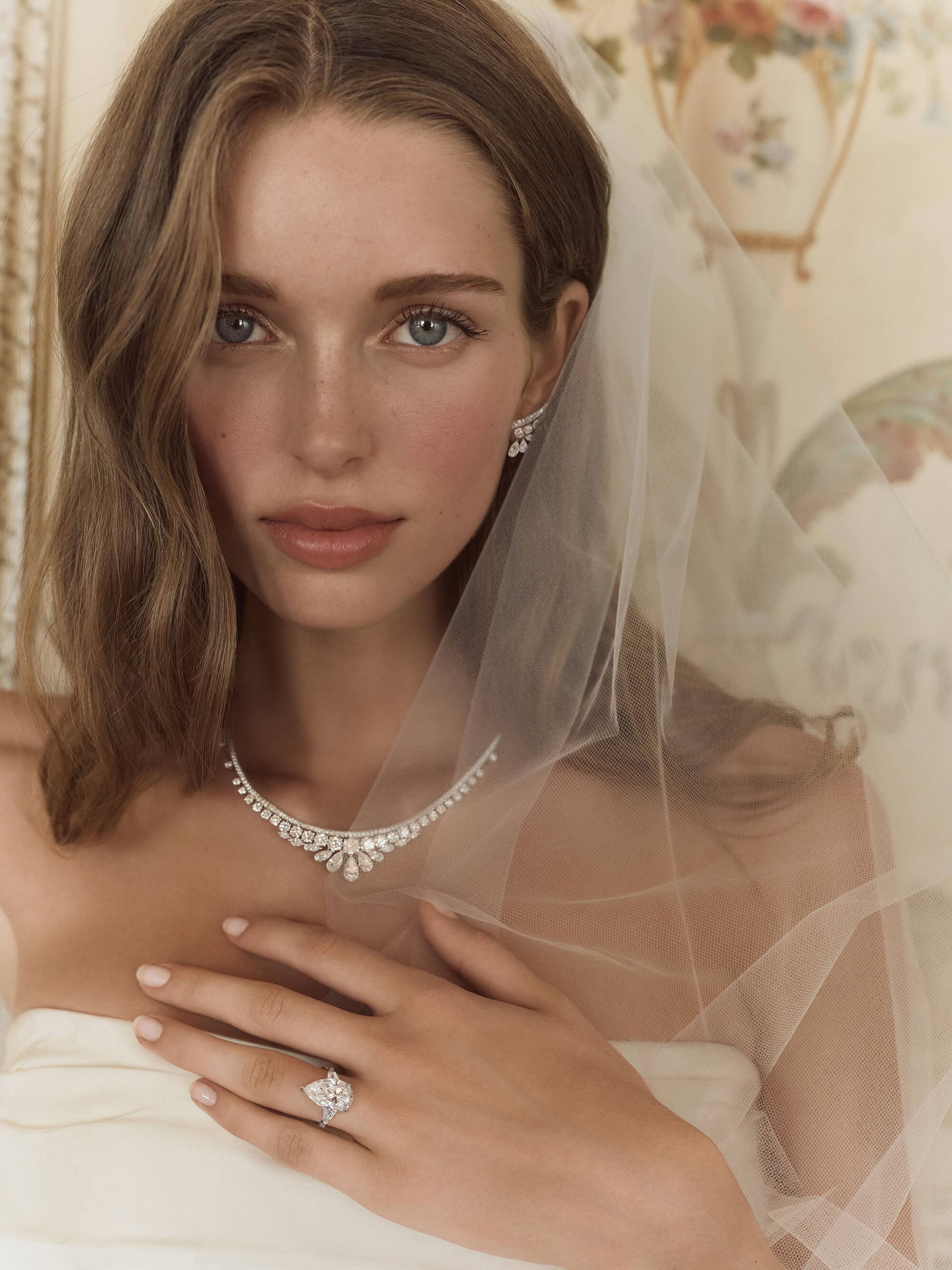
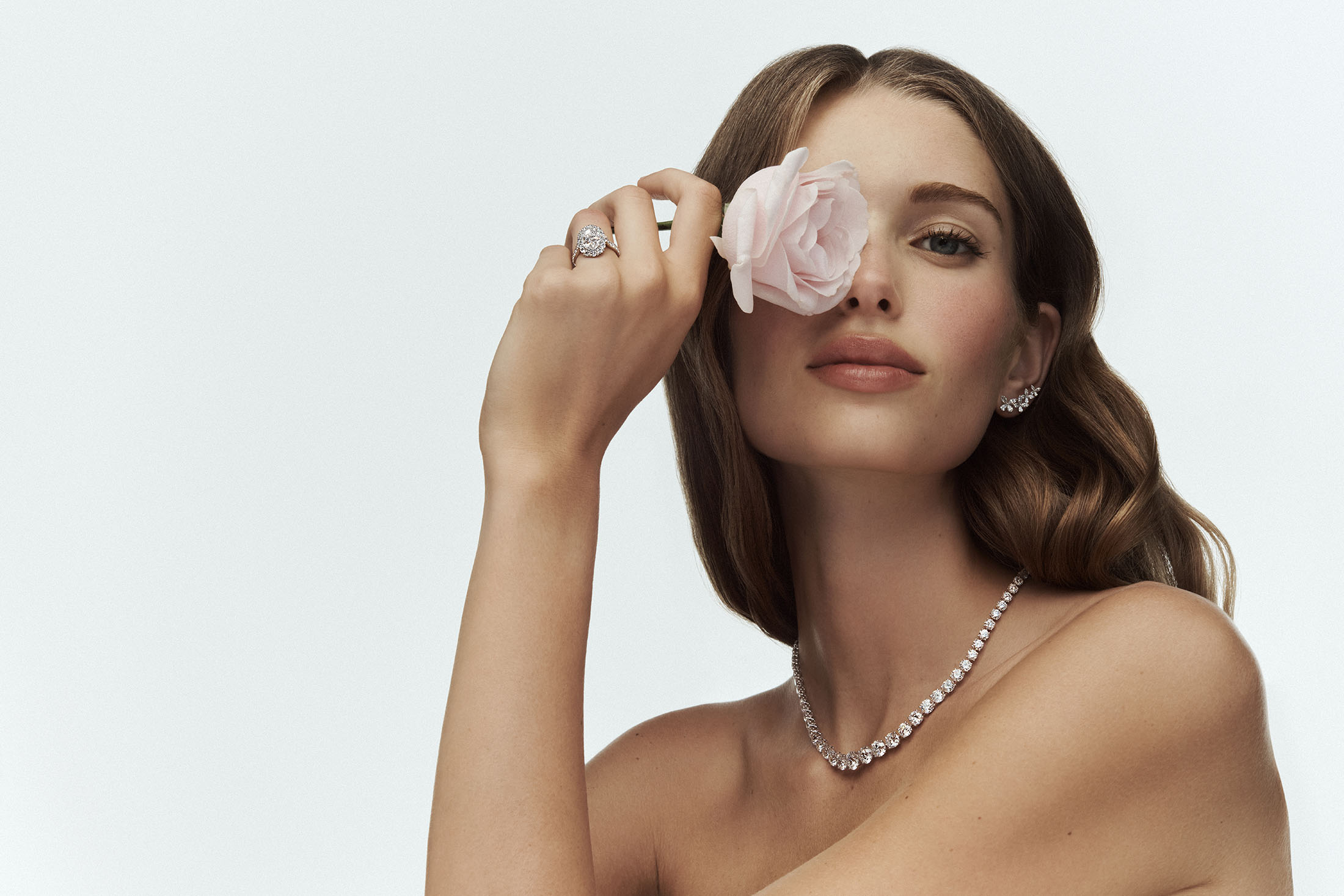
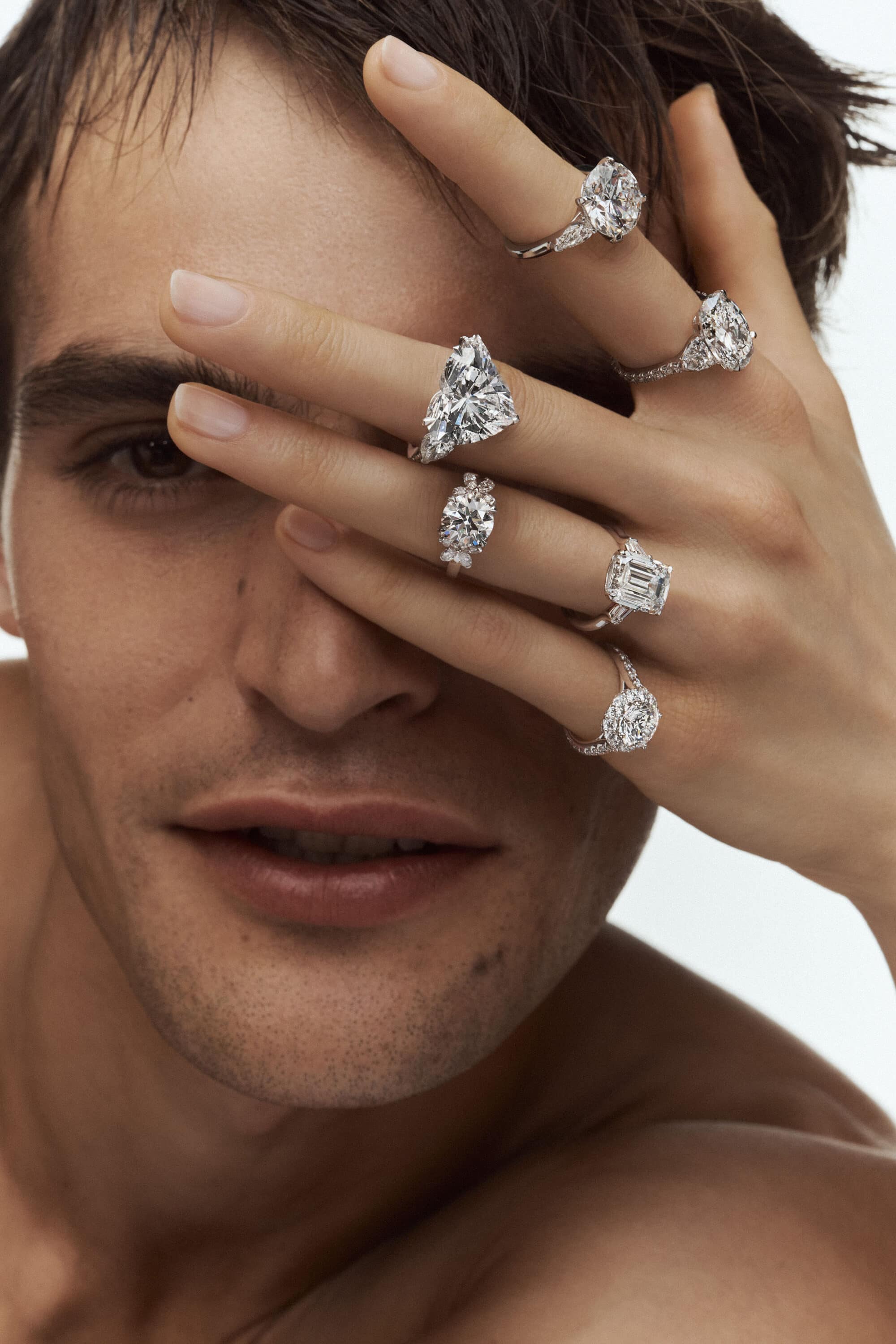
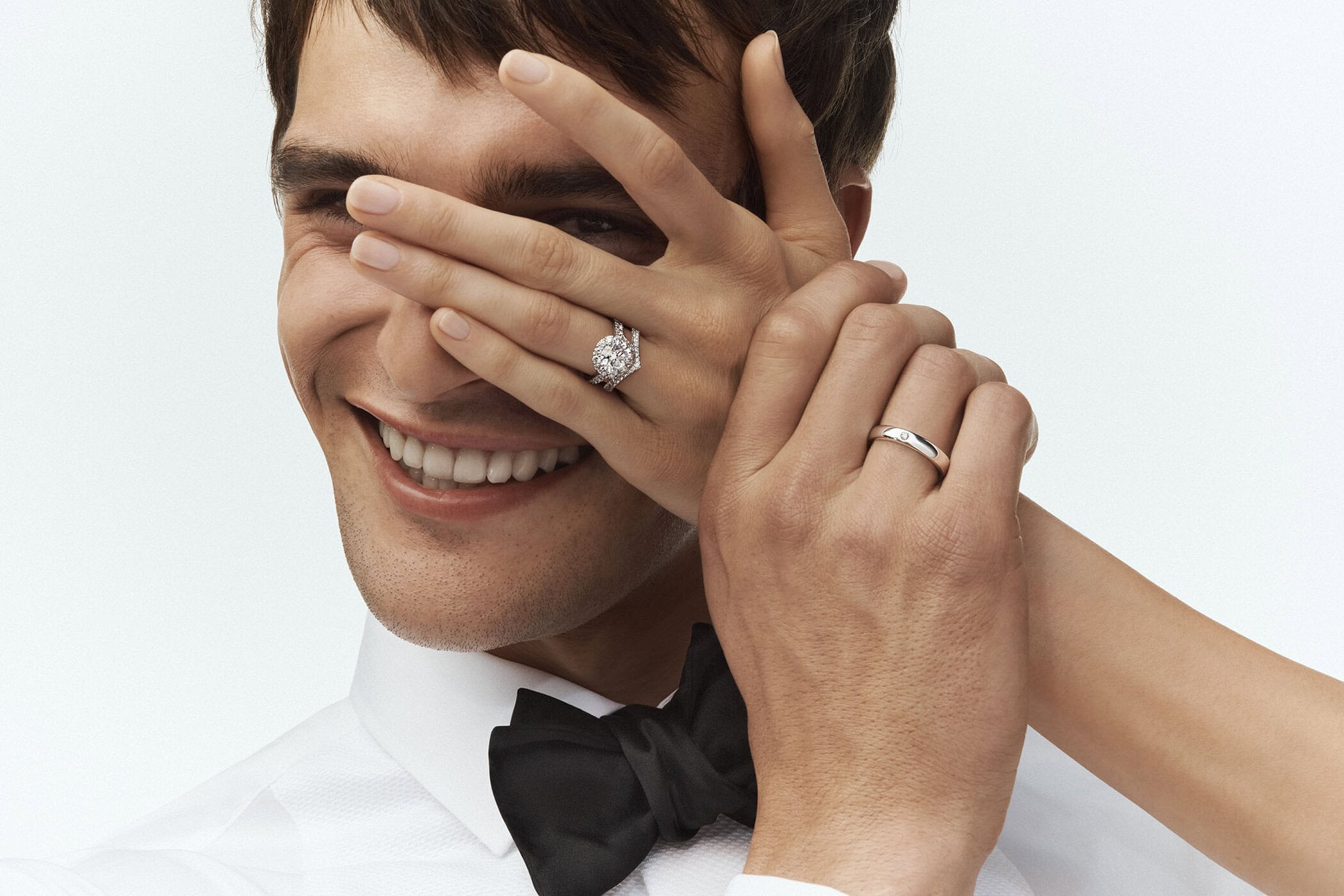
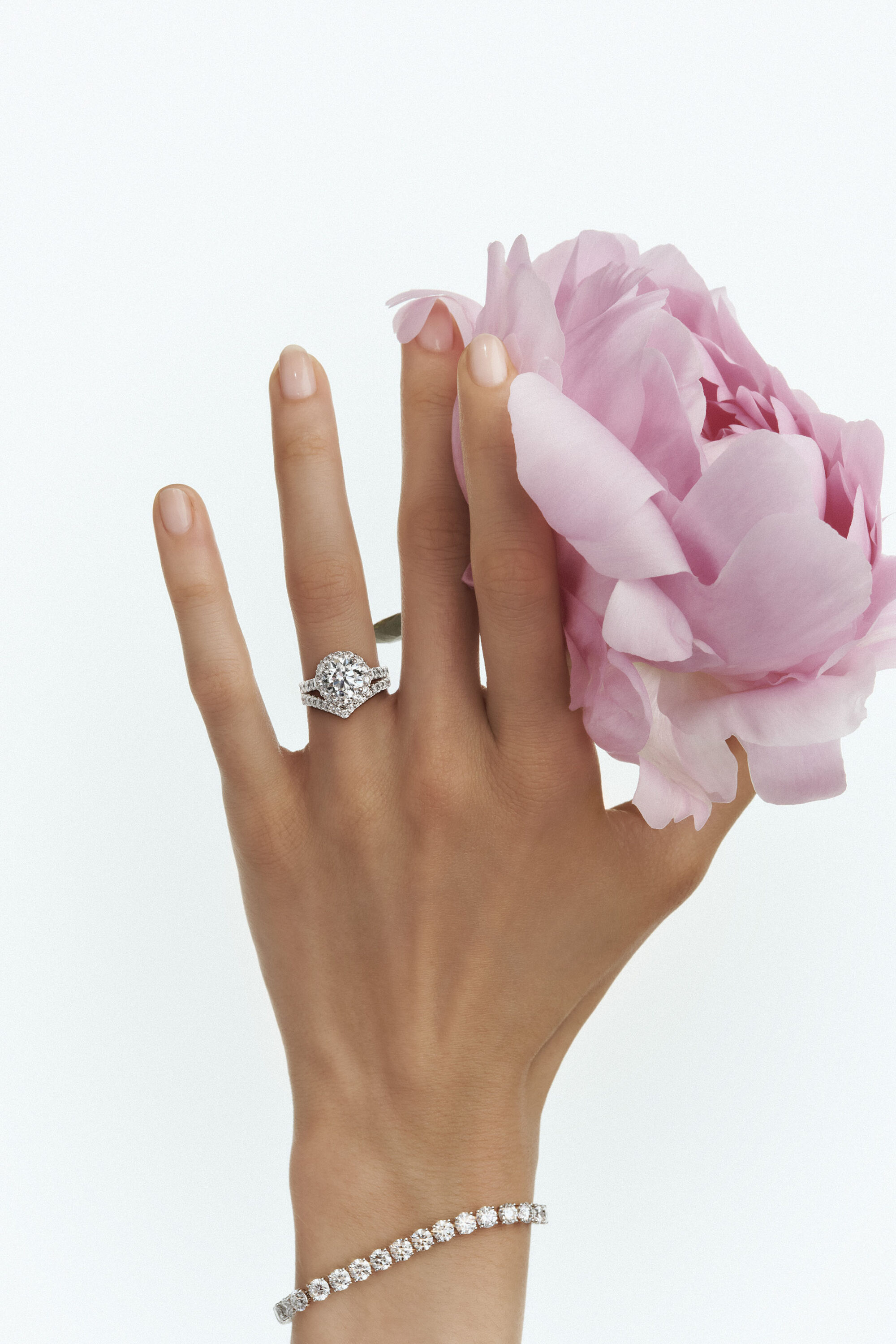
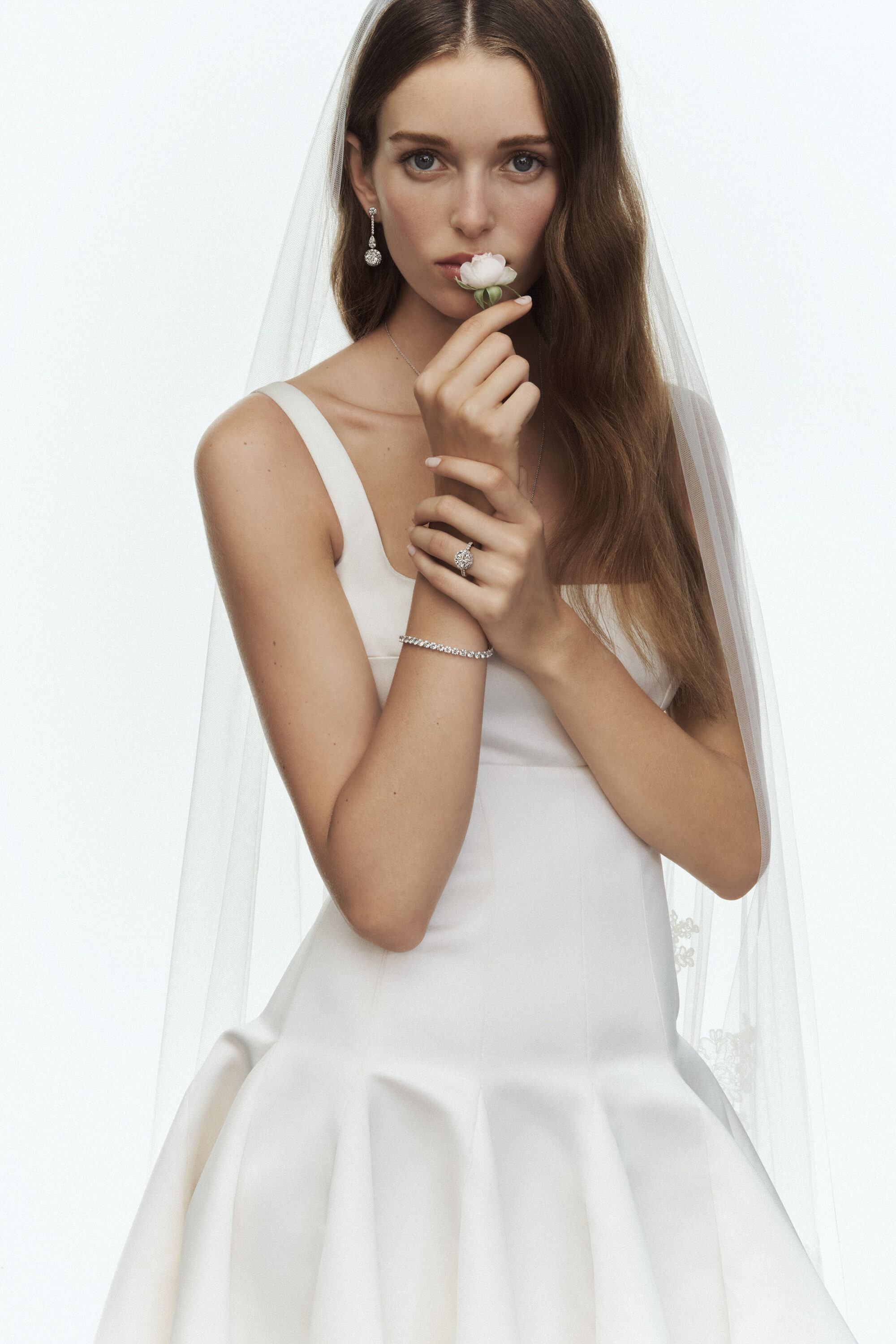
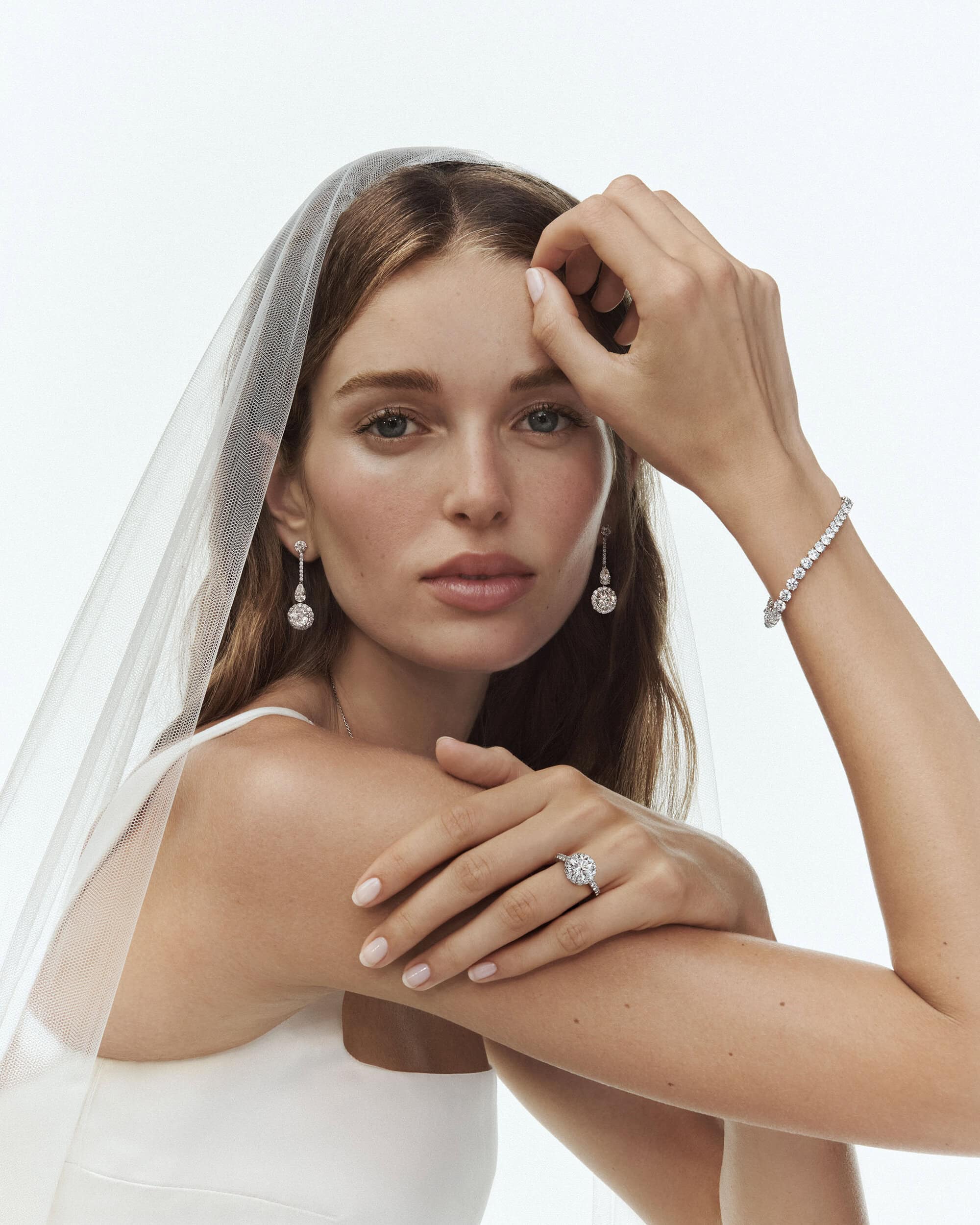
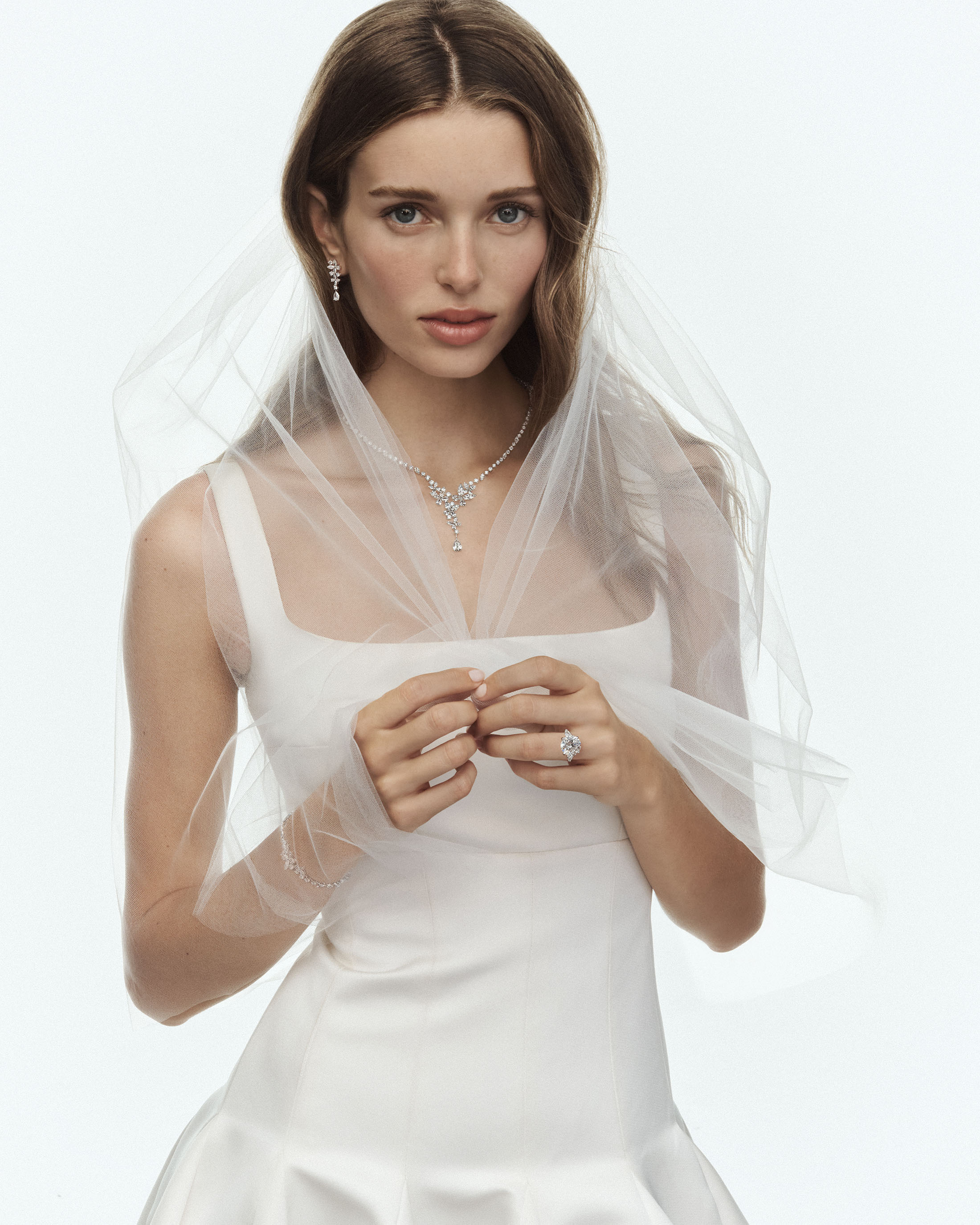
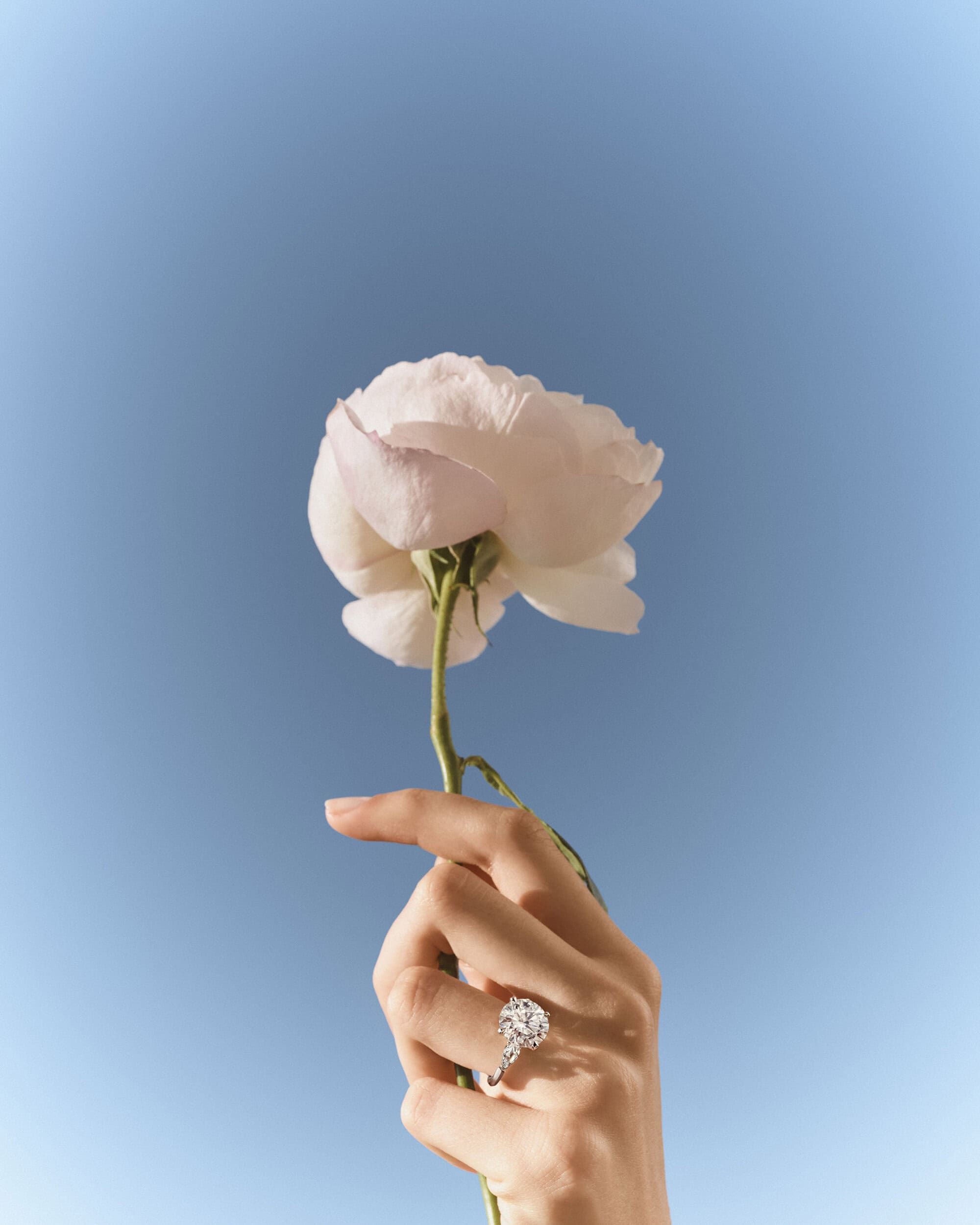
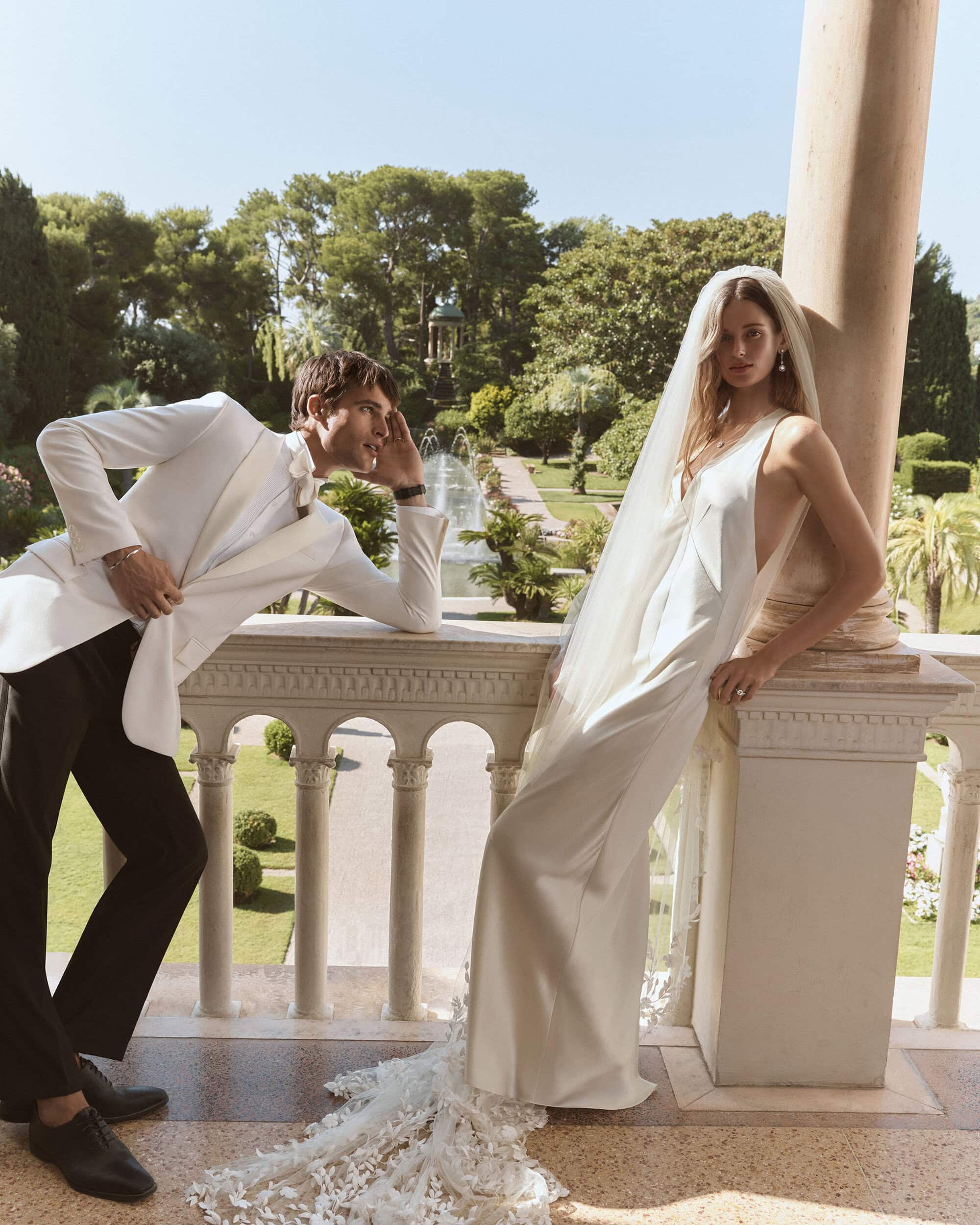
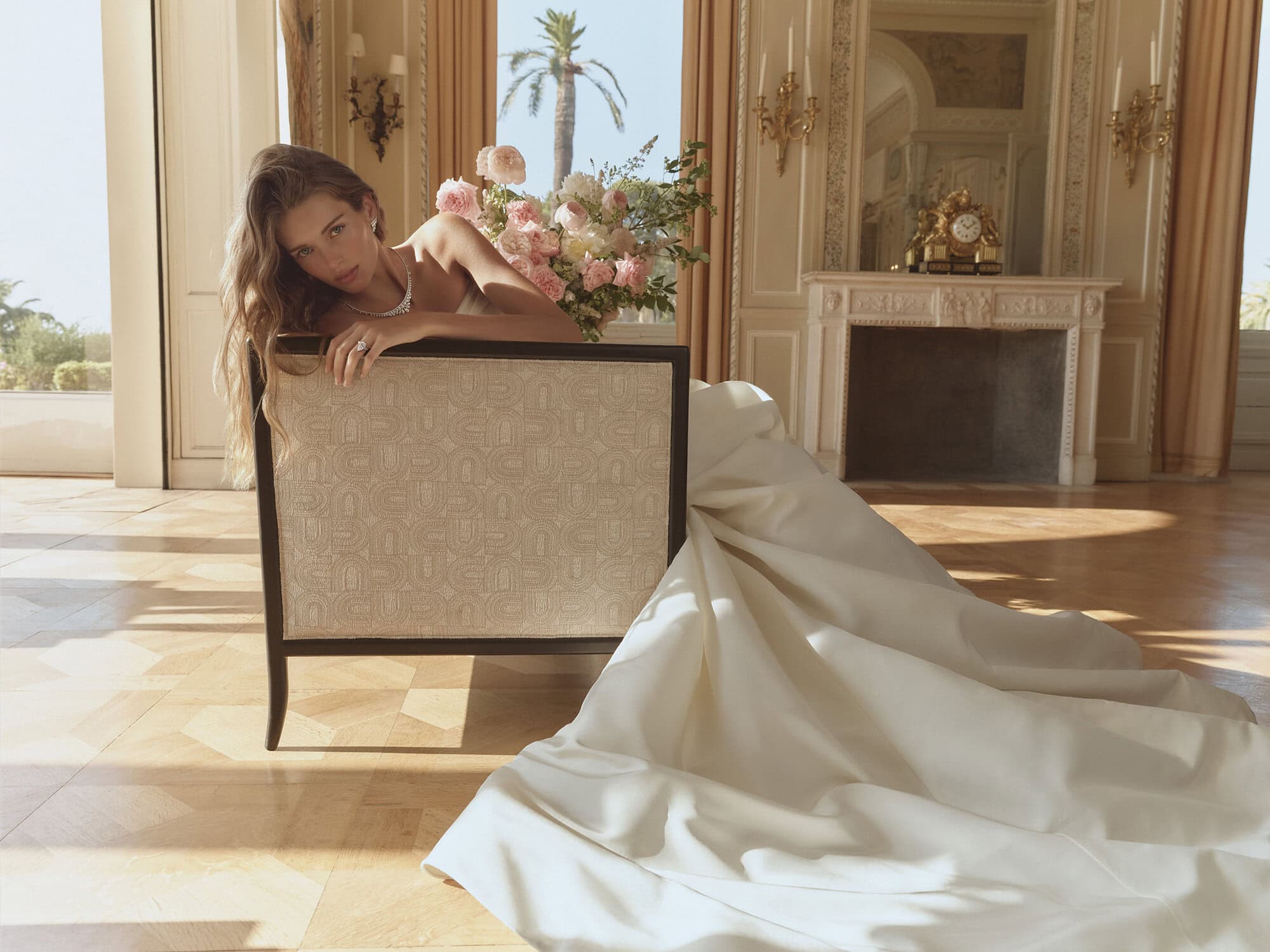
That interplay carries beautifully into Kantor’s still photography. The studio images are almost diagrammatically clean: hands against white, diamonds juxtaposed with blush-pink flowers, a bride framed by translucent tulle, and an especially clever portrait in which multiple diamond rings spread across a hand covering Parker’s face. They give Graff the necessary product clarity without collapsing into catalogue photography. On location, the visual language loosens. Hanan reclines across furniture, the couple lean into one another on a balcony, sunlight flares across an embrace, and the gardens provide a romantic grandeur that feels cinematic rather than simply picturesque. Across more than 60 campaign images, the ability to move between product, portraiture, fashion and narrative gives Graff an unusually broad visual vocabulary.
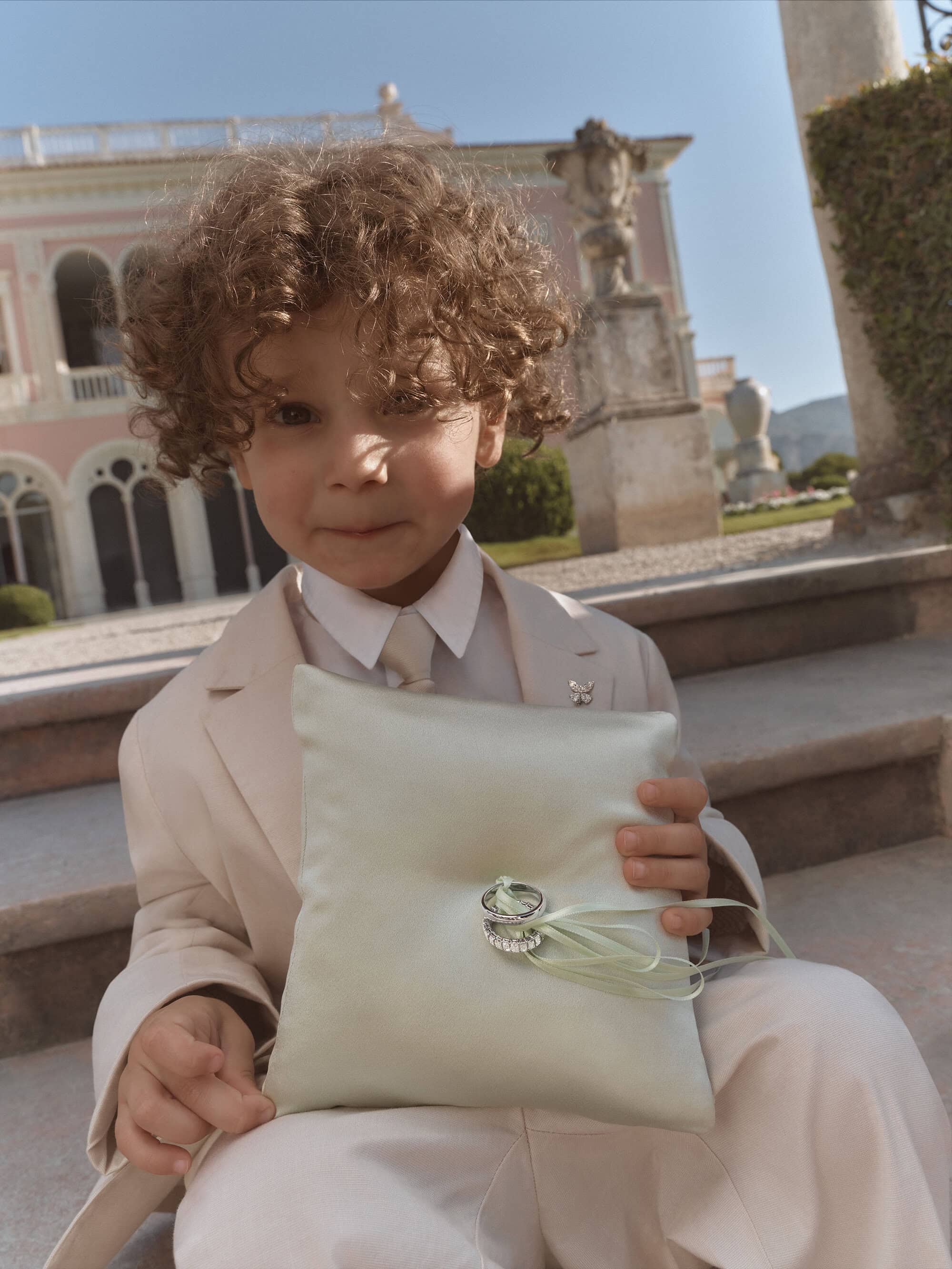
The wedding itself is particularly well handled because it avoids becoming oppressively bridal. Hanan’s veil, white dresses, flowers and the villa establish the fantasy immediately, while Van Noord brings a useful playfulness to proceedings. One of the campaign’s smartest decisions is allowing him to participate in the jewelry story rather than functioning merely as handsome scenery. The images of intertwined hands, exchanged rings and the open Graff box make jewelry something moving between two people. Even Milo, impeccably dressed and entrusted with the rings on a satin cushion, contributes a note of charming ceremony. Romance may be serious business at Graff, but thankfully nobody has told the wedding party.
There is also something shrewd about the soundtrack choice. “Melody of a Fallen Tree” by Windsor for the Derby, drawn from Sofia Coppola’s 2006 Marie Antoinette soundtrack, brings an airy melancholy to all this perfection. Twenty years after Coppola’s film, the music still carries its distinctive collision of historical grandeur and contemporary youth. That same tension serves Graff well. The villa could easily push the campaign toward old-world luxury, but the casting, photography and music keep disturbing the formality. The fantasy is traditional; the emotional temperature is younger and less ceremonious.
If there is a risk, it lies in the very perfection the campaign so confidently constructs. The French Riviera, magnificent villa, impossibly beautiful couple, couture-like bridal imagery and exceptional diamonds assemble almost every ingredient in luxury’s established recipe for romance. Lussier’s achievement is not reinventing those ingredients so much as understanding how to sequence them. The seven-chapter structure, shifts between color and black and white, intimate gestures and moments of humor prevent the campaign from becoming another beautiful bride in another beautiful house wearing another beautiful diamond. A little more narrative friction might have made the film more surprising, but perhaps Graff is entitled to recognize that marriage proposals are one category where consumers generally prefer the suspense to end well.
More importantly, The Style Council and Lussier have given Graff something larger than a collection of advertisements. The 60-plus images and film constitute a visual world capable of being separated into product stories, bridal stories, social content, portraits and cinematic moments without losing the central idea. That is the difference between producing campaign assets and building a campaign platform. Kantor’s images supply elegance and consistency, while Lussier provides the connective tissue that makes them mean something together.
“The Most Romantic Jewels in the World” is an audacious title because it makes a claim no diamond certificate can verify. Wisely, Graff doesn’t attempt to prove it with carat weight. It makes us watch two people fall toward marriage instead. By the time the ring finally gets its close-up, the campaign has already done the important work: it has given the diamond a story worth remembering. After all, the most effective way to sell an engagement ring may still be the oldest one. Make someone want to say yes.

Creative Direction | The Style Council x Robert Lussier
Photographer/Director | Nicolas Kantor
Cinematographer | Luke Palmer
Models | Stella Hanan, Parker Van Noord, Milo
Stylist | Alex White
Hair | Joe Burton
Makeup | Manu Kopp
Manicurist | Elsa Deslandes
Casting Director | Rosie Vogel
Set Designer | Elena Seegers
Editor | Brando Pacchiano
Production | JN Production
Post Production | INK
Graf CMO | Isabel Waterstone
Soundtrack | “Melody of a Fallen Tree” by Windsor for the Derby, 2004
Location | Villa Ephrussi de Rothschild, Saint-Jean-Cap-Ferrat