Between Takes
Review of Fendi ‘My Peekaboo’ 2026 Ad Campaign by Photographer Laura Sciacovelli with models Monica Bellucci, Valeria Golino, Tang Yan, and Yara Shahidi
Fendi’s Fall 2026 My Peekaboo campaign goes backstage with a cast that already knows something about the difference between being watched and simply being. Starring Monica Bellucci, Valeria Golino, Tang Yan, and Yara Shahidi, and photographed in Rome by Laura Sciacovelli, the campaign introduces Maria Grazia Chiuri’s new expression of the Peekaboo through the language of cinema. It is an especially fitting stage for Chiuri’s first collection since returning to Fendi: an iconic bag revisited by a designer with her own history at the house, carried by women whose lives have unfolded, quite literally, in front of the camera. The cast is excellent. The setting is right. And appropriately enough, some of the best moments happen between takes.
The concept begins from a genuinely compelling proposition. Rather than presenting its actresses purely as screen icons, Fendi imagines the pauses surrounding performance: waiting, rehearsing, thinking, moving from character back toward oneself. Each woman carries a My Peekaboo personalized with her initials, a discreet gesture that transforms one of the house’s most recognizable designs into something ostensibly private. It also extends the psychology already contained within the Peekaboo itself. This has always been a bag built around concealment and revelation, its distinctive opening allowing the interior to become part of the exterior expression. Here, the person and the object are engaged in much the same game.
Sciacovelli wisely leaves the apparatus of cinema exposed. Lights blaze directly into the lens, cables snake across floors, flight cases become furniture, ladders lean against soundstage walls, director’s chairs wait for occupants, and artificial haze hangs in the air. Rather than taking us behind the scenes, the photographs turn “behind the scenes” into the scene itself. The distinction is subtle but important: these women are still performing, only now they are performing the supposedly private moments between performances.
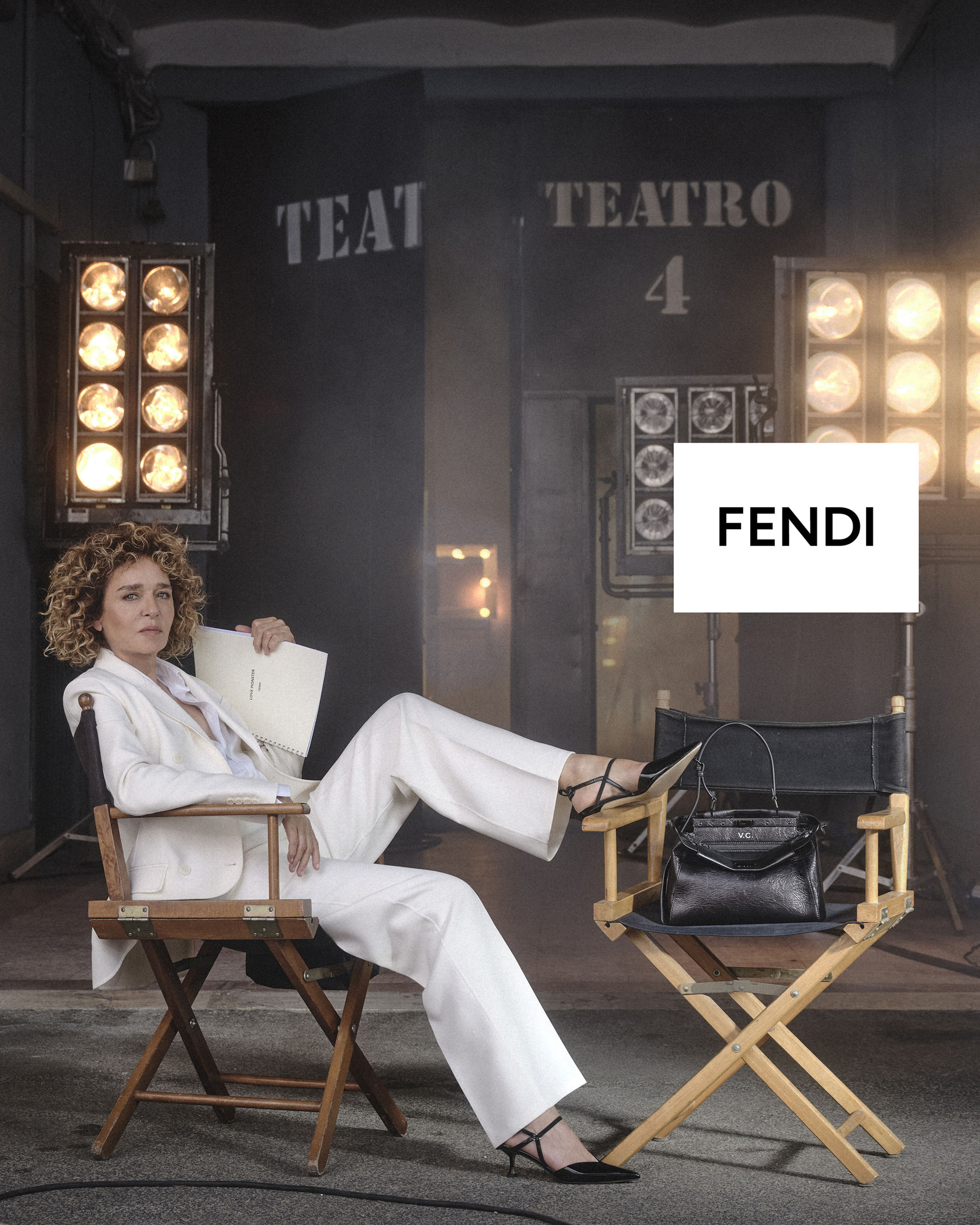
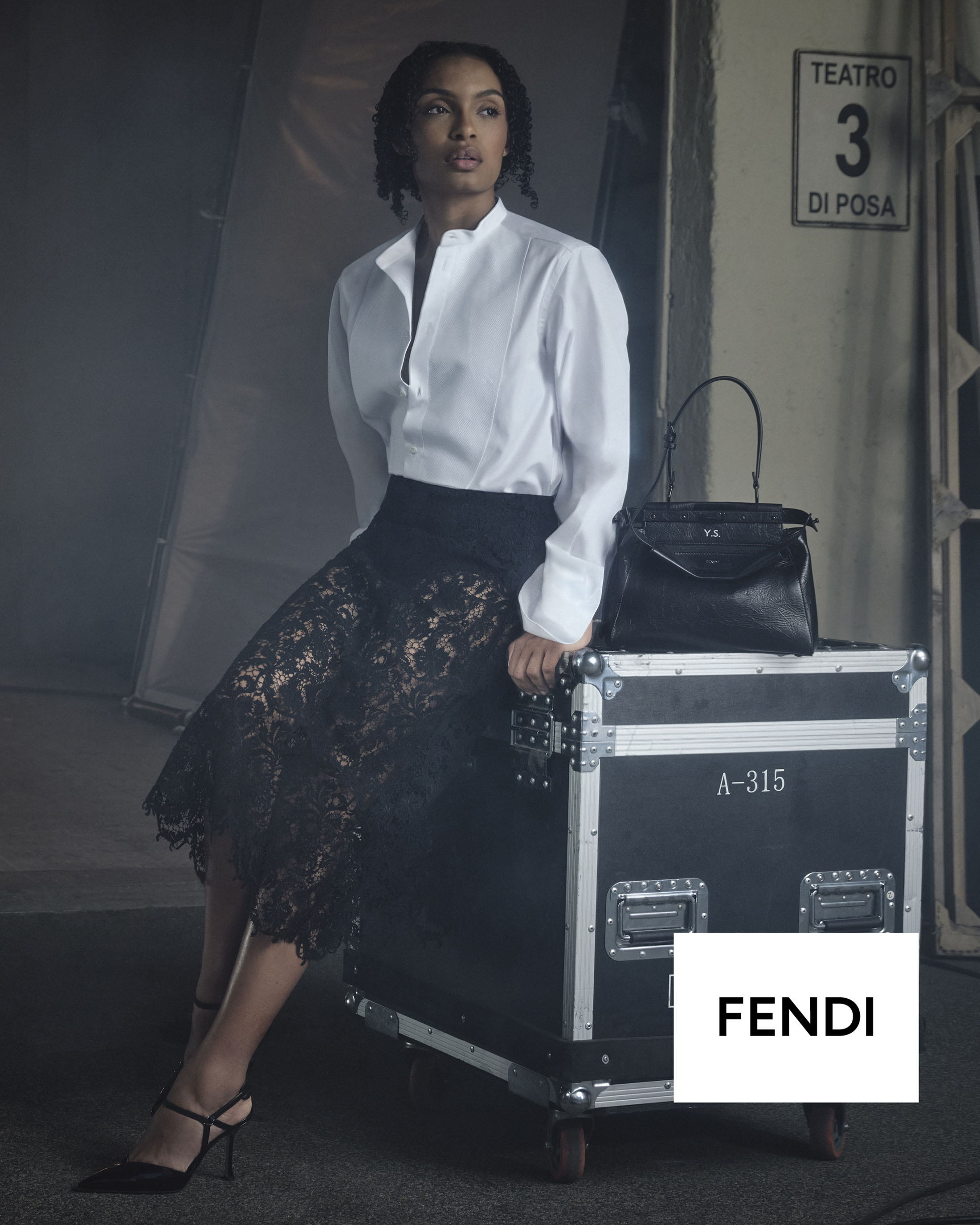
The casting gives that conceit dimension. Bellucci brings decades of European screen mythology, while Golino’s wonderfully assured portrait in a white suit finds her reclining in a director’s chair, script in hand, with her personalized Peekaboo occupying the neighboring seat. Is she waiting for direction, considering the next scene, or perhaps giving the direction herself? The ambiguity makes the photograph. Shahidi, seated beside a flight case in a crisp white shirt and black lace, projects a quieter authority, while Tang’s sharply tailored portrait plays against the smoke and industrial darkness of the soundstage. Four women, four initials, four variations on the same interval between public image and private presence.
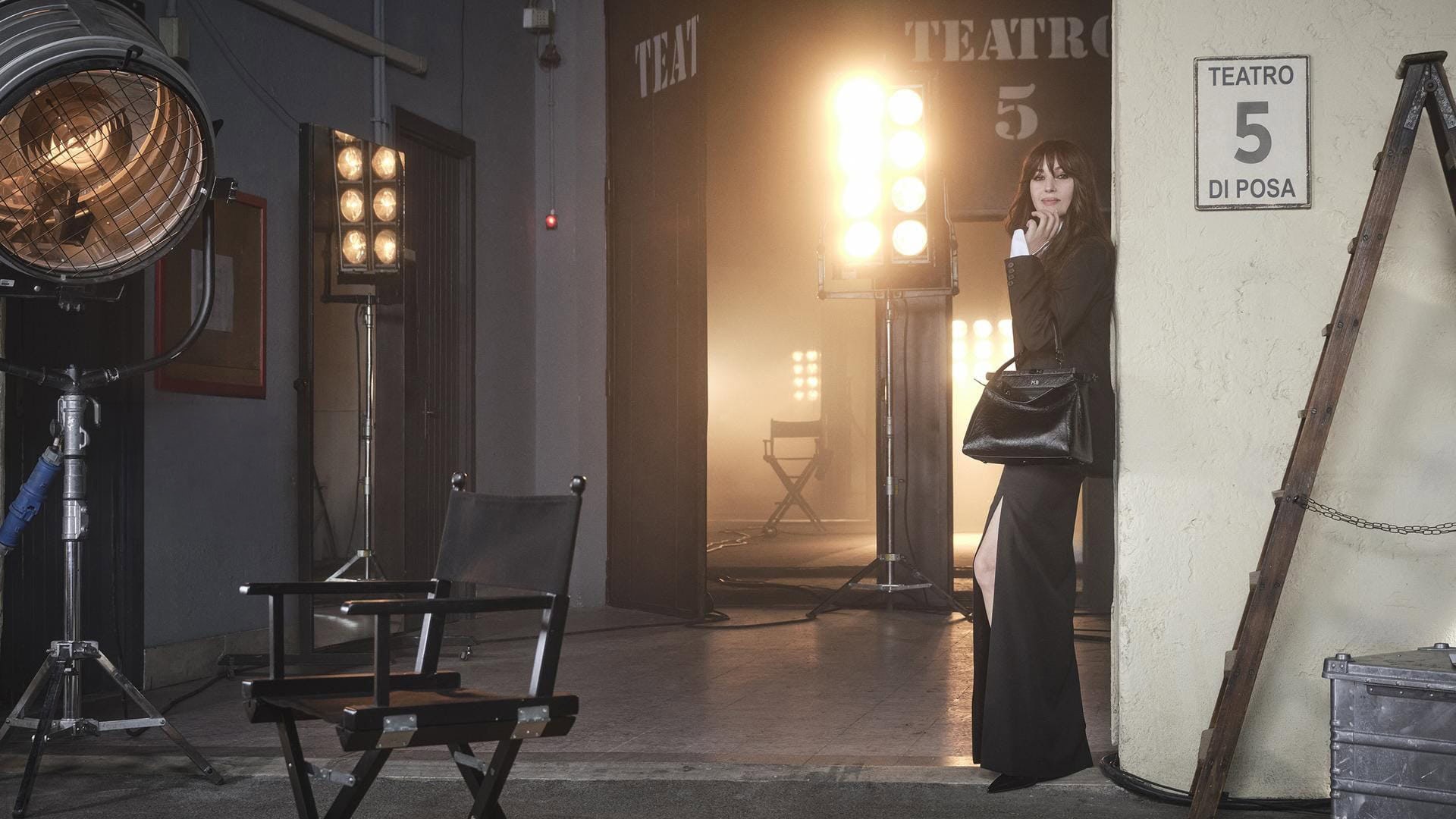
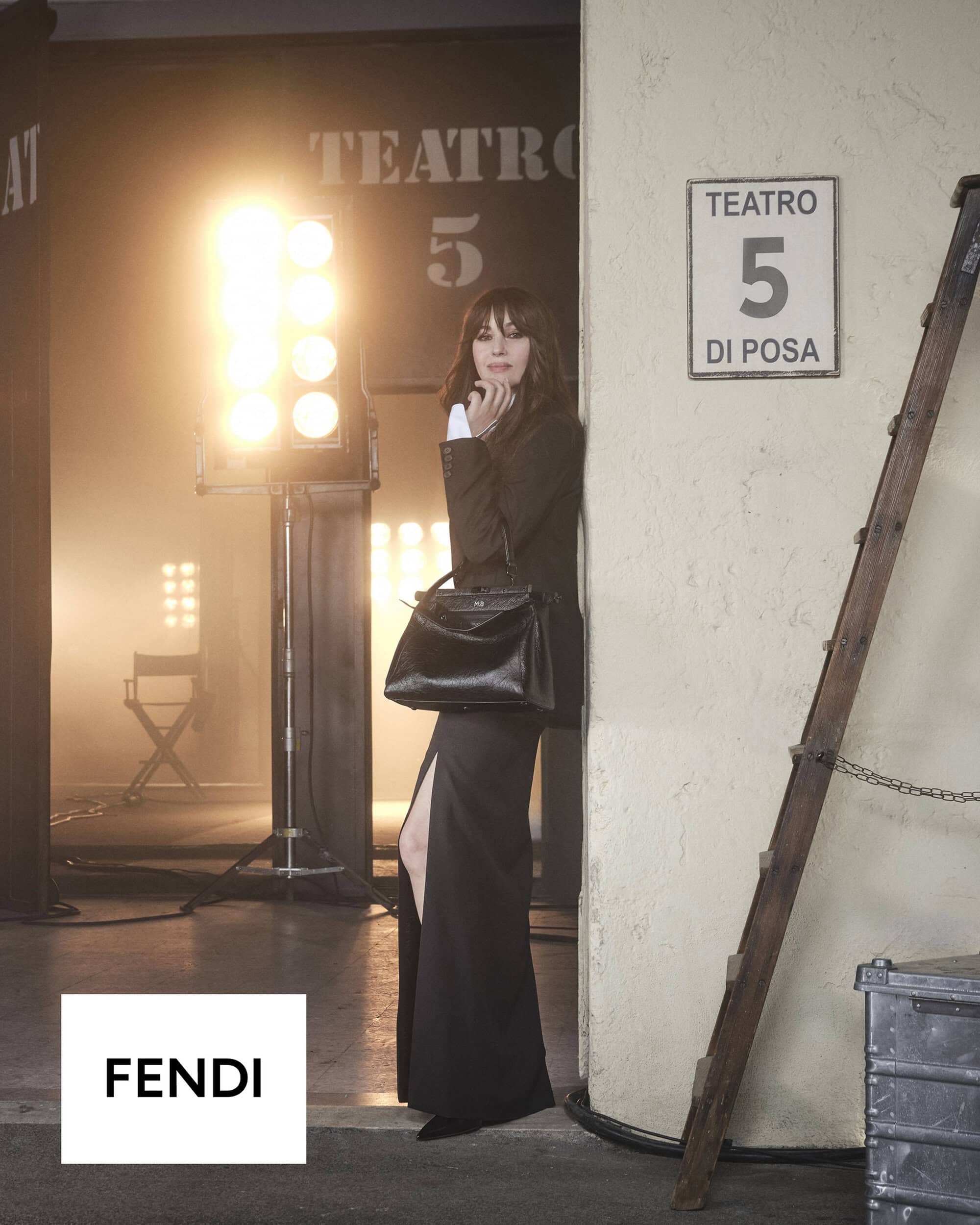
Bellucci’s portrait is particularly clever in its wider composition. She appears almost tentatively at the edge of a soundstage entrance as enormous lamps flare behind her, while an empty director’s chair occupies the foreground. Her M.B.-marked Peekaboo hangs naturally at her side. Nothing about the image is truly candid, of course, and that is precisely the point. Sciacovelli isn’t attempting documentary intimacy. She is constructing the idea of backstage, allowing the equipment, architecture, and performers to participate equally in the fiction.
That makes the campaign an astute setting for Chiuri’s reconsideration of the Peekaboo. For Fall 2026, she returns to the bag’s original silhouette and reasserts its signature opening rather than radically redesigning an object whose familiarity is precisely its strength. The personalization service adds another layer. Initials are a tiny intervention, but psychologically they move the bag from recognizable luxury icon toward personal possession. In an industry endlessly concerned with creating icons, Fendi asks a more interesting commercial question: how does an icon become yours?
The film, however, doesn’t quite exploit the richness of that idea. In the very brief Bellucci sequence, she enters the set and retrieves the bag from a traditional director’s chair. It communicates celebrity, cinema, and product with impressive efficiency, but efficiency isn’t necessarily storytelling. For a campaign promising to explore the space “between acting and living, performance and reality,” the moving image gives us surprisingly little time to inhabit either condition. The still photography is more curious. It allows a look, a posture, an empty chair, or an illuminated doorway to remain unresolved.
That feels like a missed opportunity because the Peekaboo offers an almost suspiciously perfect metaphor for cinema. Its name promises a glimpse of something usually hidden. Its construction reveals an interior while maintaining an exterior. Backstage culture makes much the same promise, inviting us to see the person behind the performance. Chiuri, meanwhile, is reopening an established Fendi design from the house’s past while personalization places individual identity onto it in the present. Public and private, actor and self, exterior and interior, archive and reinvention: there is practically an entire screenplay sitting inside the handbag.
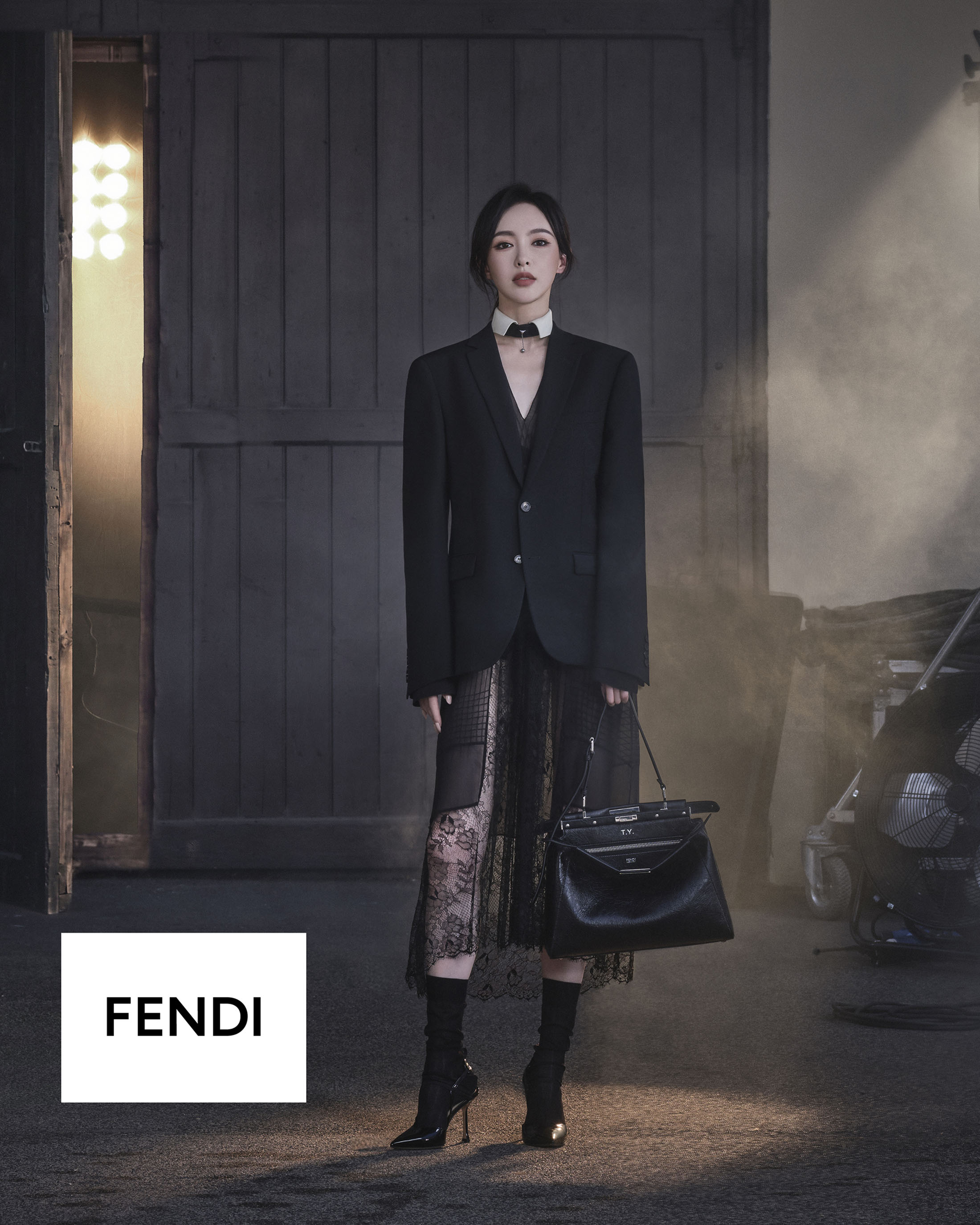
Still, the slightness of the film shouldn’t overshadow the intelligence of the campaign as a whole. Sciacovelli has produced a handsome and unusually coherent series of portraits, while the personalization is handled with welcome restraint. The initials are something one discovers rather than a monogramming message shouted across the image. And importantly, the Peekaboo remains recognizably itself. Chiuri understands that revisiting an icon does not necessarily require making it unrecognizable in order to demonstrate authorship.
Between Takes ultimately works best when it stands still. Sciacovelli finds possibility in the pauses, giving four women, four personalized bags, and the familiar machinery of cinema enough room to suggest stories we never quite see. The film is less curious, resolving much of that ambiguity into the simple act of retrieving a handbag. Fendi has the location, the icon, and a cast most directors would envy. The stills understand that sometimes the most interesting scene is the one that happens before anyone calls action.
Designer | Maria Grazia Chiuri
Creative Consultant | Rachele Regini
Photographer | Laura Sciacovelli
Talent | Monica Bellucci, Valeria Golino, Tang Yan, Yara Shahidi
Location | Rome