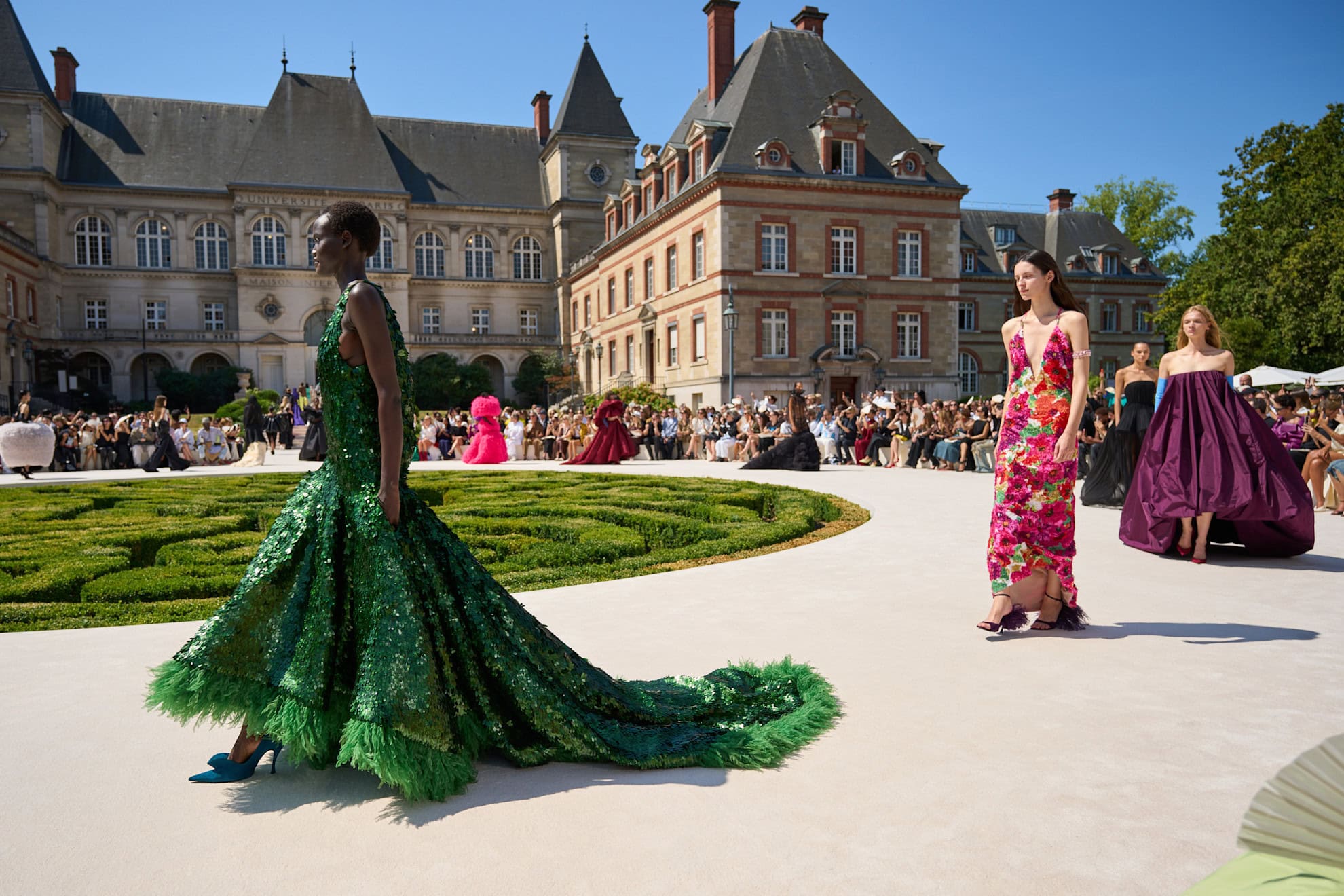
Gucci narrows its retail decline as jewelry, eyewear, store rationalization and asset sales reshape Kering’s recovery.
Key Takeaways
- Net debt fell from €8 billion to €3.3 billion, aided by proceeds from beauty and real estate transactions.
- Second-quarter revenue rose 2% on a comparable basis and 1% as reported to €3.652 billion, following flat comparable revenue in the first quarter.
- Gucci revenue declined 2% comparably in Q2. Directly operated retail improved by seven percentage points from Q1, narrowing its decline to 2%.
- Jewelry grew 18% comparably in Q2, while Eyewear advanced 8%, giving Kering a broader base of growth.
- Recurring operating income held steady at €921 million as the group’s margin expanded 40 basis points to 12.8%.
- Kering completed 84 net store closures during the half, placing it close to its full-year target of 100.
Kering returned to comparable growth in the second quarter of 2026, offering its clearest evidence yet that operational restructuring is beginning to stabilize the luxury group.
Revenue reached €3.652 billion, up 2% at constant scope and exchange rates and 1% as reported. The quarter improved from flat comparable revenue in the first three months of the year. Directly operated retail sales rose 2%, a four-point sequential improvement, while wholesale and other revenue advanced 3%.
For the first half, Kering reported revenue of €7.220 billion, up 1% on a comparable basis and down 3% as reported. Currency movements reduced second-quarter growth by approximately one percentage point.
The improving trajectory arrived during a rapid contraction of Kering’s physical footprint. The group completed 84 net store closures during the first half, equal to 5% of the directly operated network it held at the end of 2025. That places Kering close to its full-year target of 100 closures, following 75 in 2025.
The combination of growth and a smaller network offers an important early read on the ReconKering transformation plan. Management is concentrating resources, reducing fixed costs and tightening distribution while seeking stronger productivity from the stores that remain.
Gucci Narrows the Gap
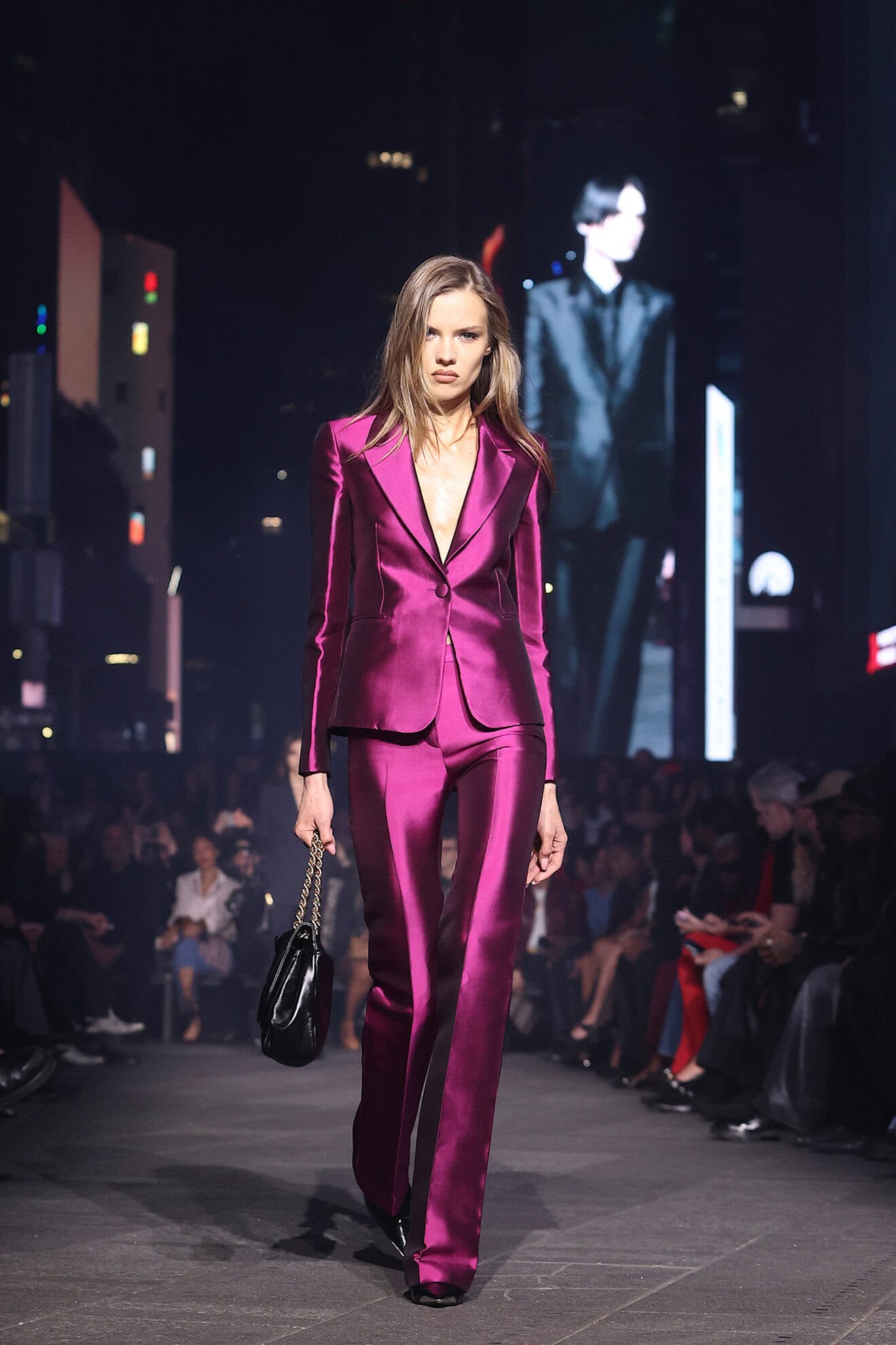
Gucci recorded second-quarter revenue of €1.410 billion, down 2% on a comparable basis and 3% as reported. Sales through directly operated stores also declined 2%, improving by seven percentage points from the first quarter.
The shift gives Kering its strongest sequential improvement at Gucci in several quarters. North America remained the principal growth driver, while Western Europe and Asia-Pacific improved. Mainland China continued to face pressure, with trends strengthening during the quarter.
Kering attributed the improvement to renewed client engagement, greater visibility for recent collections and the launch of the Borsetto and Paparazzo lines. The Gucci Core presentation in New York also supported the brand’s commercial momentum.
For the first half, Gucci revenue fell 5% comparably and 9% as reported to €2.757 billion. Direct retail sales declined 6%. Recurring operating income decreased 4% to €468 million, though Gucci’s operating margin expanded to 17% from 16%.
The margin improvement reflects tighter cost management ahead of a complete sales recovery. Gucci still generated approximately 38% of group revenue and just over half of Kering’s recurring operating income during the period, keeping the house at the center of the group’s financial outlook.
Fashion Stabilizes as Margins Improve
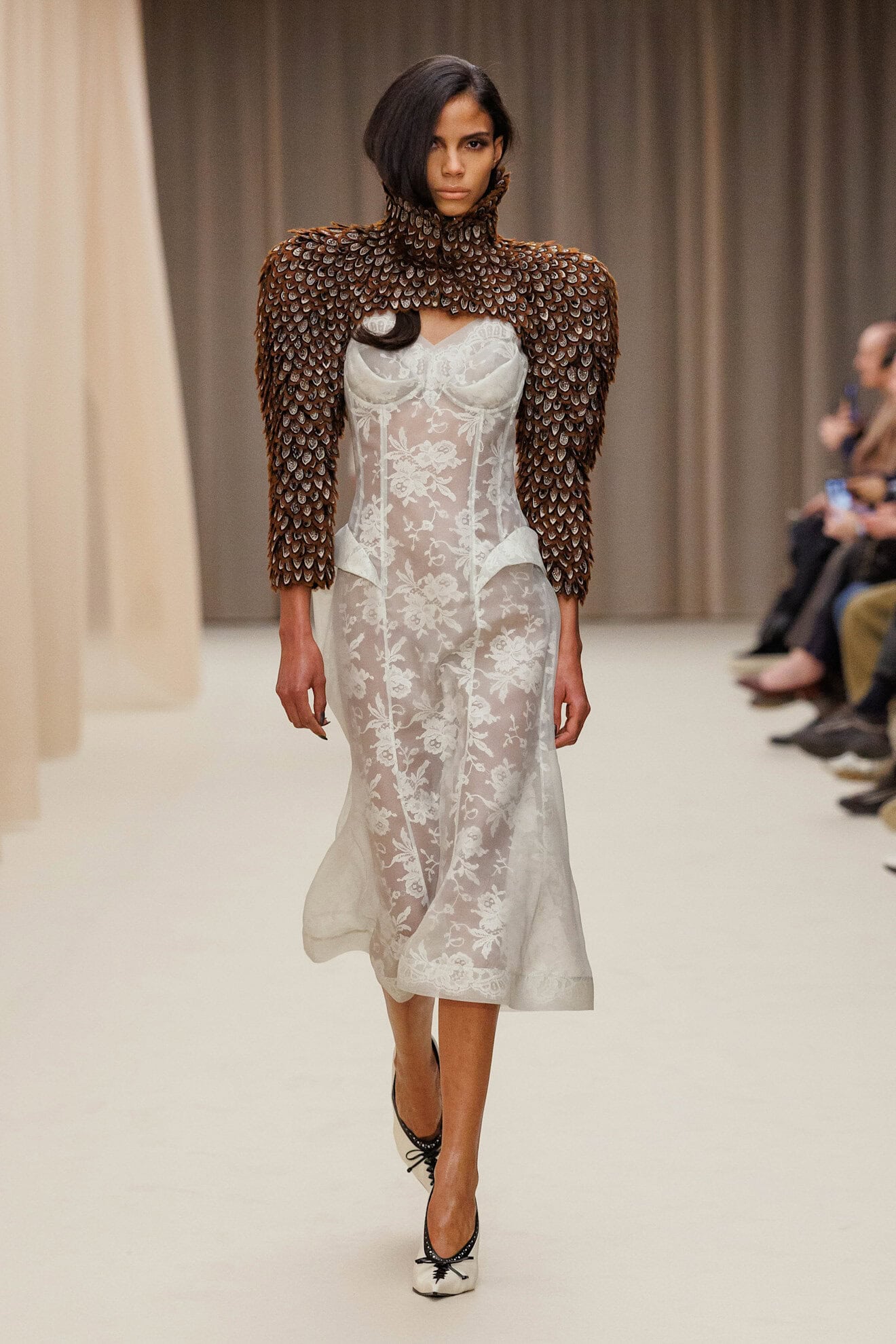
Kering Fashion & Leather Goods generated €2.948 billion in second-quarter revenue. Comparable sales were flat, improving three percentage points from the first quarter. Reported revenue declined 1%.
Saint Laurent returned to growth across the first half, supported by North America and Western Europe. Kering also reported sequential acceleration at Bottega Veneta, led by leather goods, and continued strength at Brioni.
Balenciaga remained under pressure during its creative transition. McQueen advanced its repositioning around British tailoring and occasion wear while continuing to reduce its distribution footprint under newly appointed chief executive Gianfranco D’Attis.
Fashion & Leather Goods revenue reached €5.8 billion for the half, down 1% comparably and 5% as reported. Recurring operating income was broadly stable at €828 million. Its margin increased 70 basis points to 14.3%.
The margin progression carries strategic significance. Fashion remained slightly below the prior year, yet cost discipline and distribution changes strengthened the economics of the segment.
Jewelry and Eyewear Lead Growth
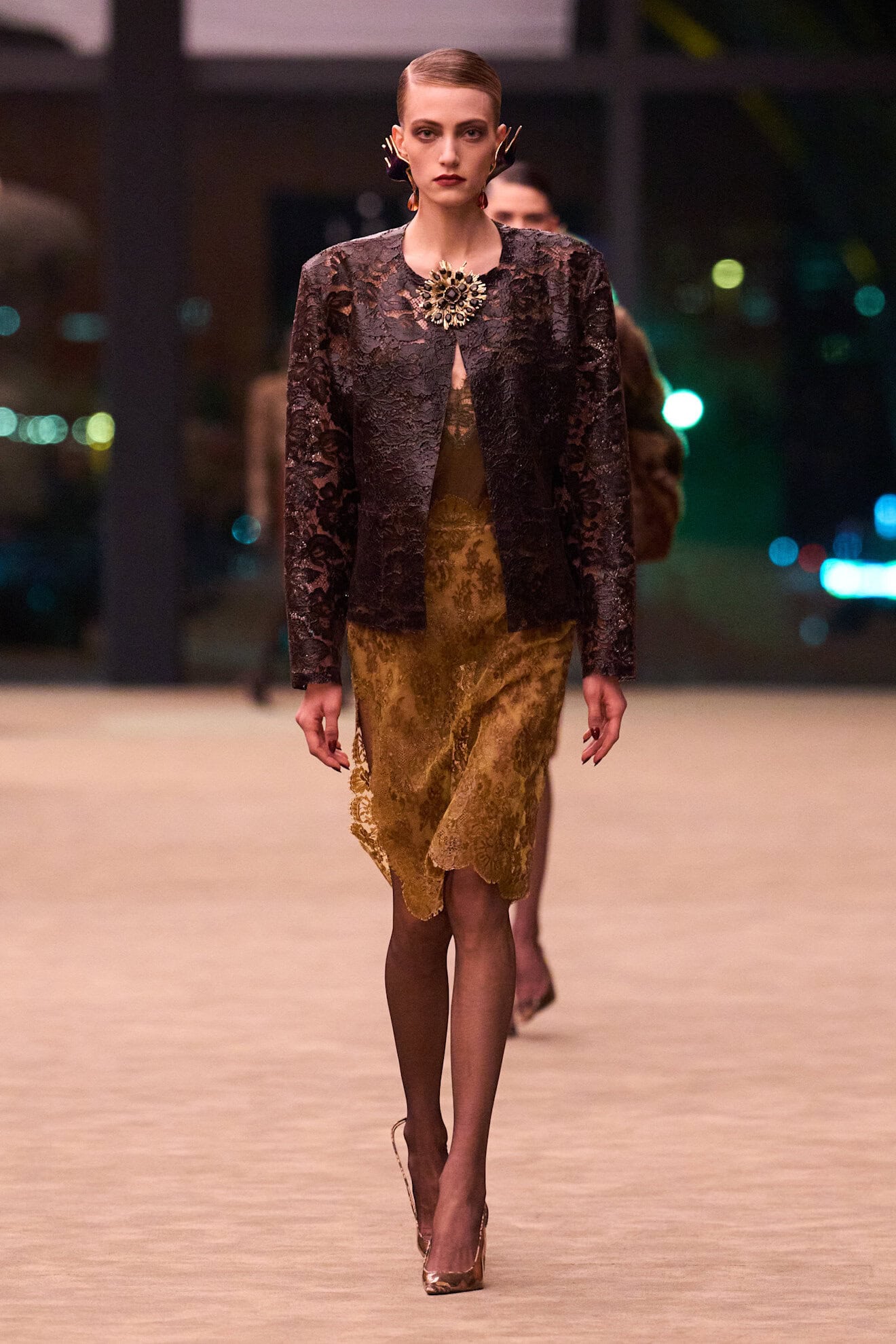
Kering Jewelry delivered the strongest expansion in the portfolio. Second-quarter revenue rose 18% comparably and 15% as reported to €252 million. Direct retail sales increased 28%.
Boucheron reached new revenue highs, supported by Japan, Asia-Pacific and the Quatre collection. Pomellato continued to grow in Japan and North America, while Qeelin maintained its expansion across Asia-Pacific.
First-half Jewelry revenue increased 20% comparably to €521 million. Recurring operating income more than doubled to €32 million, lifting the segment’s margin to 6.2% from 3.5%.
Kering Eyewear recorded second-quarter revenue of €476 million, up 8% comparably and 7% as reported. First-half revenue reached €965 million, also up 8% comparably. Recurring operating income increased 19% to €222 million, producing a 23% margin.
Together, Jewelry and Eyewear represented roughly 21% of first-half revenue and 28% of recurring operating income. Their expansion gives Kering a wider earnings base as its largest fashion houses progress through creative and operational transitions.
Margin Gains Meet Lower Net Income
Group recurring operating income was stable at €921 million. The recurring operating margin improved to 12.8% from 12.4%, demonstrating that cost reductions and mix gains offset the reported revenue decline.
Net income attributable to the group fell 60% to €189 million. Recurring net income from continuing operations declined 12% to €355 million.
The gap reflects €223 million in net non-recurring operating expenses. These included losses associated with the Via Monte Napoleone real estate transaction, distribution-network impairment charges and restructuring costs.
Free cash flow from operations reached €2.6 billion. That figure included €497 million in net real estate proceeds and €300 million connected with the Gucci Beauty agreement. Free cash flow excluding those contributions was €1.8 billion.
Net debt declined by €4.7 billion during the half, reaching €3.3 billion from €8 billion at the end of 2025. Cash and equivalents stood at €8.5 billion, including €4 billion generated by the completion of the Kering Beauté sale to L’Oréal.
The balance-sheet improvement gives Kering greater flexibility to fund brand investment and execute its restructuring. Its composition also matters: disposals and partnership proceeds supplied a meaningful share of the reduction, placing continued operating cash generation at the center of the next phase.
The Strategic Read
Kering’s first-half report shows a group moving from contraction toward controlled stabilization. The earliest gains are visible in retail productivity, margins, store rationalization and financial capacity. Gucci’s seven-point sequential improvement adds commercial evidence, even as the house remains below the prior year.
The next test is demand-led growth. Gucci must convert improving engagement into positive retail sales, Saint Laurent and Bottega Veneta must sustain their momentum, and Jewelry and Eyewear must preserve their current pace.
Kering enters the second half with a stronger balance sheet, a leaner network and early progress across its largest houses. The foundations of the reset are becoming visible; its lasting value will depend on translating operational discipline into sustained brand growth.