Review of Marc Jacobs Spring 2026 Ad Campaign by Art Director Lina Kutsovskaya and Photographer Marili Andre
Marc Jacobs turns the bathroom into a stage for its Summer 2026 campaign, extending its evolving storytelling universe with a distinctly girlish, intimate, and culturally attuned look at the everyday rituals that happen just beyond the party. The campaign follows the brand’s earlier scripted micro-drama, The Scene, and brings together runway, pre-fall, accessories, and beauty in an effort to present a more complete picture of the Marc Jacobs world.
The premise is immediately familiar in the best possible way. Bathrooms have long served as unofficial headquarters for friendship, transformation, gossip, and last-minute beauty emergencies, and Marc Jacobs recognizes their particular theatrical potential. Models are seen touching up their makeup, talking on the phone, sharing secrets, and searching through their handbags, creating a series of small, recognizable moments that feel more observed than staged. Olivia Petersen, daughter of Marc Jacobs chief marketing officer and chief digital director Kristin Patrick, is among those featured, adding another layer of personal proximity to a campaign built around intimacy and connection.
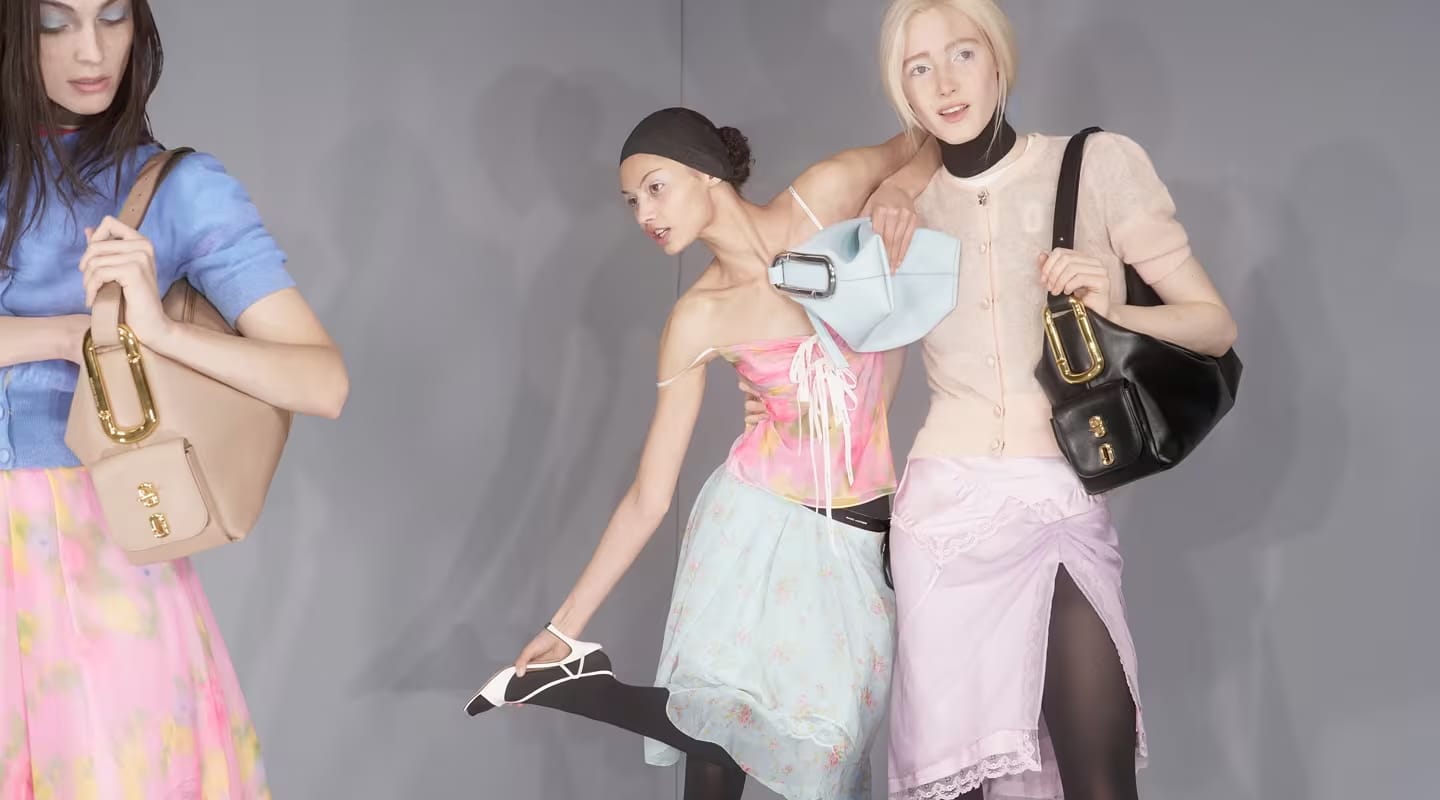
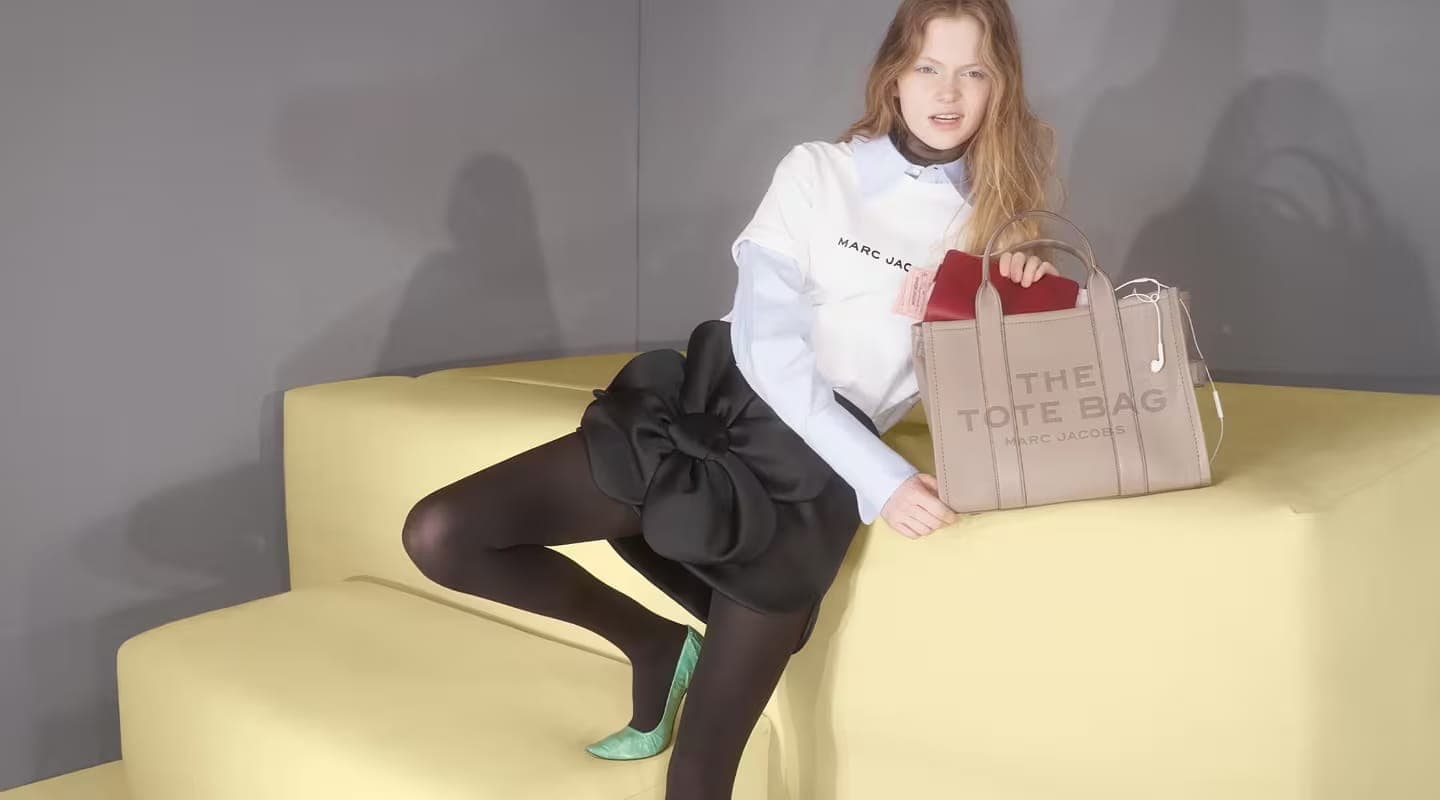
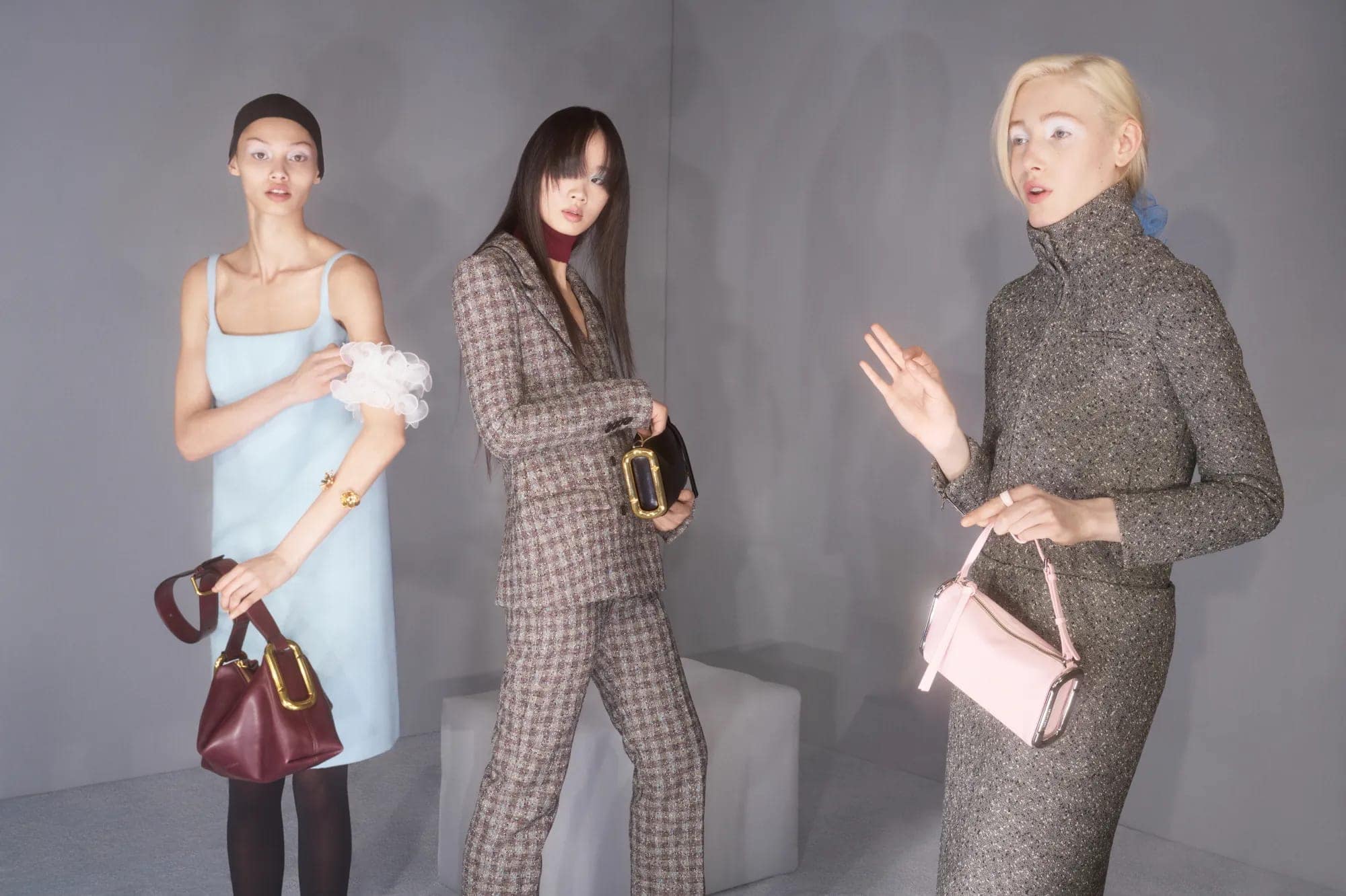
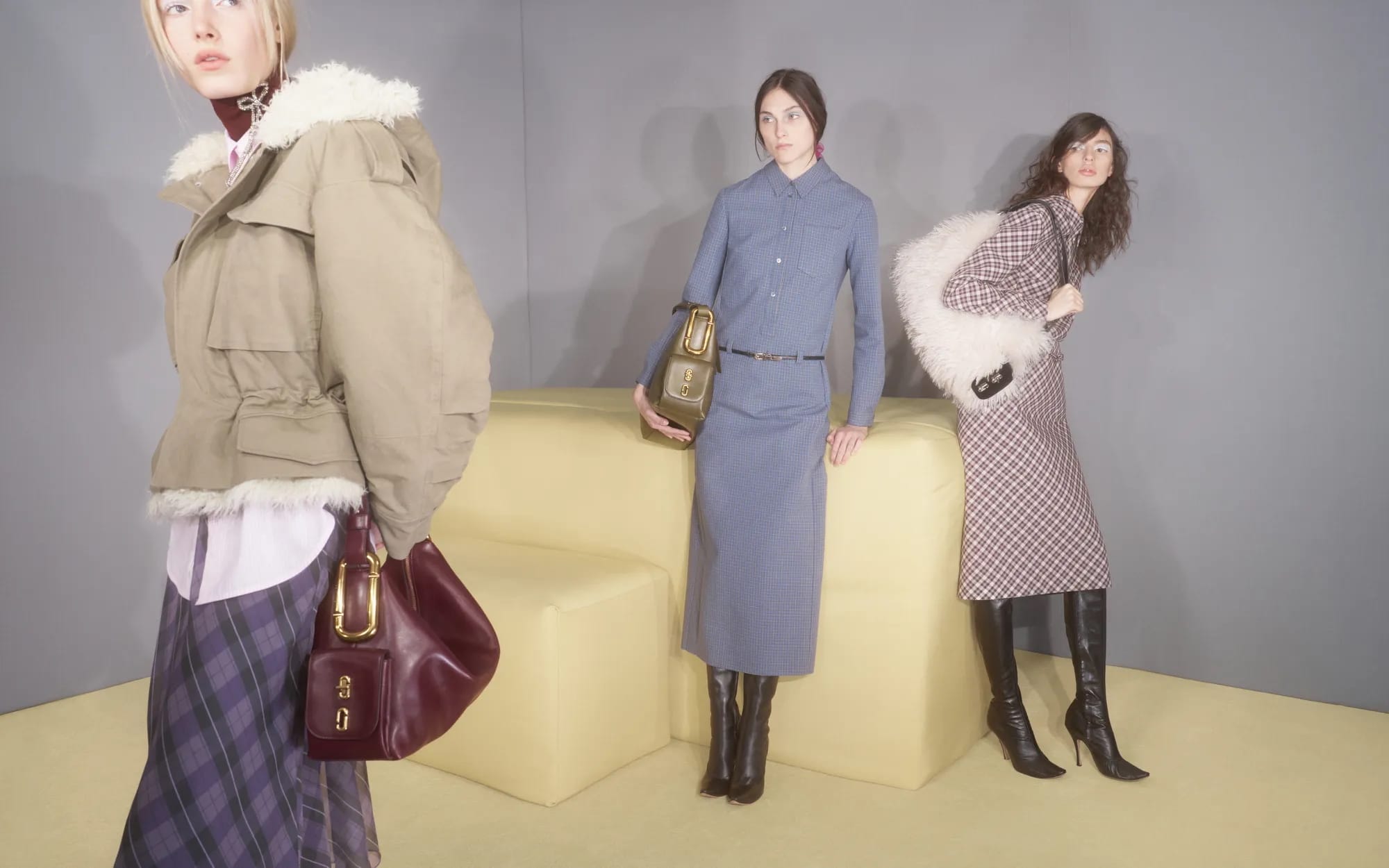
Visually, the campaign’s strength lies in this tension between polish and familiarity. The clothes, bags, and beauty products are unmistakably commercial objects, yet they are placed within moments that resist the stiffness of traditional advertising. The Scene handbag and the brand’s signature Tote appear not as isolated trophies but as accessories embedded within the lives of their wearers. The approach makes sense for a brand whose identity has often existed somewhere between downtown irreverence, pop-cultural fluency, and fashion fantasy. Marc Jacobs has rarely been interested in presenting clothes as museum pieces; here, they are part of the conversation, sometimes quite literally.
The campaign also demonstrates a smart understanding of how fashion imagery now competes for attention. Rather than asking a single photograph to carry an entire seasonal message, “Question Marc” unfolds as an episodic social-first narrative, allowing the audience to encounter the brand in fragments and return for the next chapter. It is less campaign as proclamation and more campaign as ongoing conversation. That strategy is particularly effective for a brand navigating a moment of transition, with Marc Jacobs Beauty back in the picture and the wider business entering a new chapter. The campaign’s expansive product mix reinforces that sense of a connected ecosystem rather than a collection of separate categories.
If there is an opportunity for the storytelling to grow, it may be in allowing the campaign’s narrative eccentricities to become even stranger. The bathroom setting is rich with possibilities, but its familiarity can occasionally make the concept feel safer than the brand’s famously unpredictable creative history might suggest. Marc Jacobs at its best has always understood that glamour benefits from a little disorder. The campaign captures the sweetness and sociability of girlhood beautifully; one can only imagine what might happen if future chapters allowed a little more mess to enter the room.
Still, the Spring campaign succeeds because it understands that intimacy can be its own form of spectacle. By bringing fashion, beauty, and accessories into the small rituals between going out and coming home, Marc Jacobs makes a persuasive case for storytelling that feels lived in rather than simply looked at. The girls’ room, after all, has always been where the real plot develops—and Marc Jacobs is wise enough to know that the mirror is only part of the story.

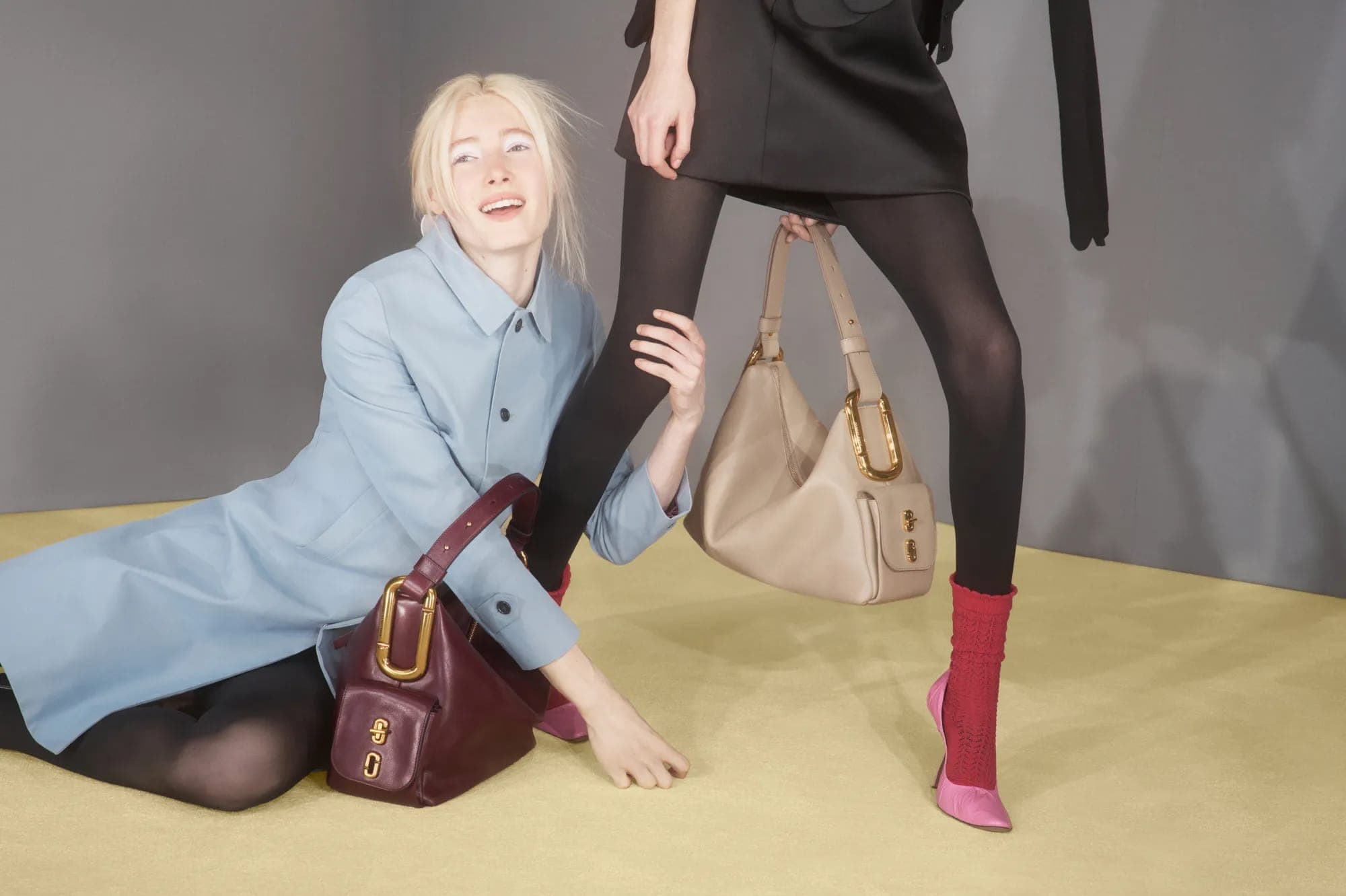
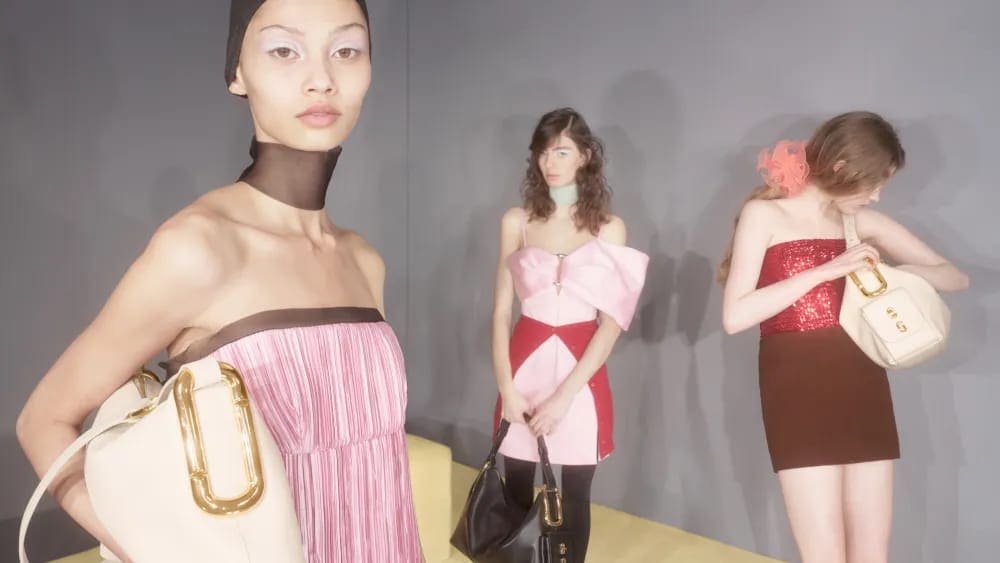
Marc Jacobs Creative Director | Marc Jacobs
Art Director | Lina Kutsovskaya
Photographer | Marili Andre
Stylist | Spencer Singer
Video | Little Legs Productions