
The Spanish Beauty Group Reported Record Quarterly Revenue While Maintaining Focus On Profitable Growth And Niche Fragrance Expansion
Puig confirmed that merger discussions with Estée Lauder are continuing, though the company stressed that no agreement has yet been reached.

Speaking during his first earnings call since becoming chief executive officer in March, José Manuel Albesa addressed speculation surrounding a potential deal between the Spanish fragrance and fashion group and the U.S. beauty giant. “As of today, we can confirm that conversations are ongoing, but no final decision has been made yet,” Albesa said, adding that the company could not comment further unless an agreement materializes.
The possible combination of Puig and Estée Lauder would create a beauty group with more than $20 billion in combined sales, potentially forming the world’s largest premium beauty player. The talks were first disclosed in March.
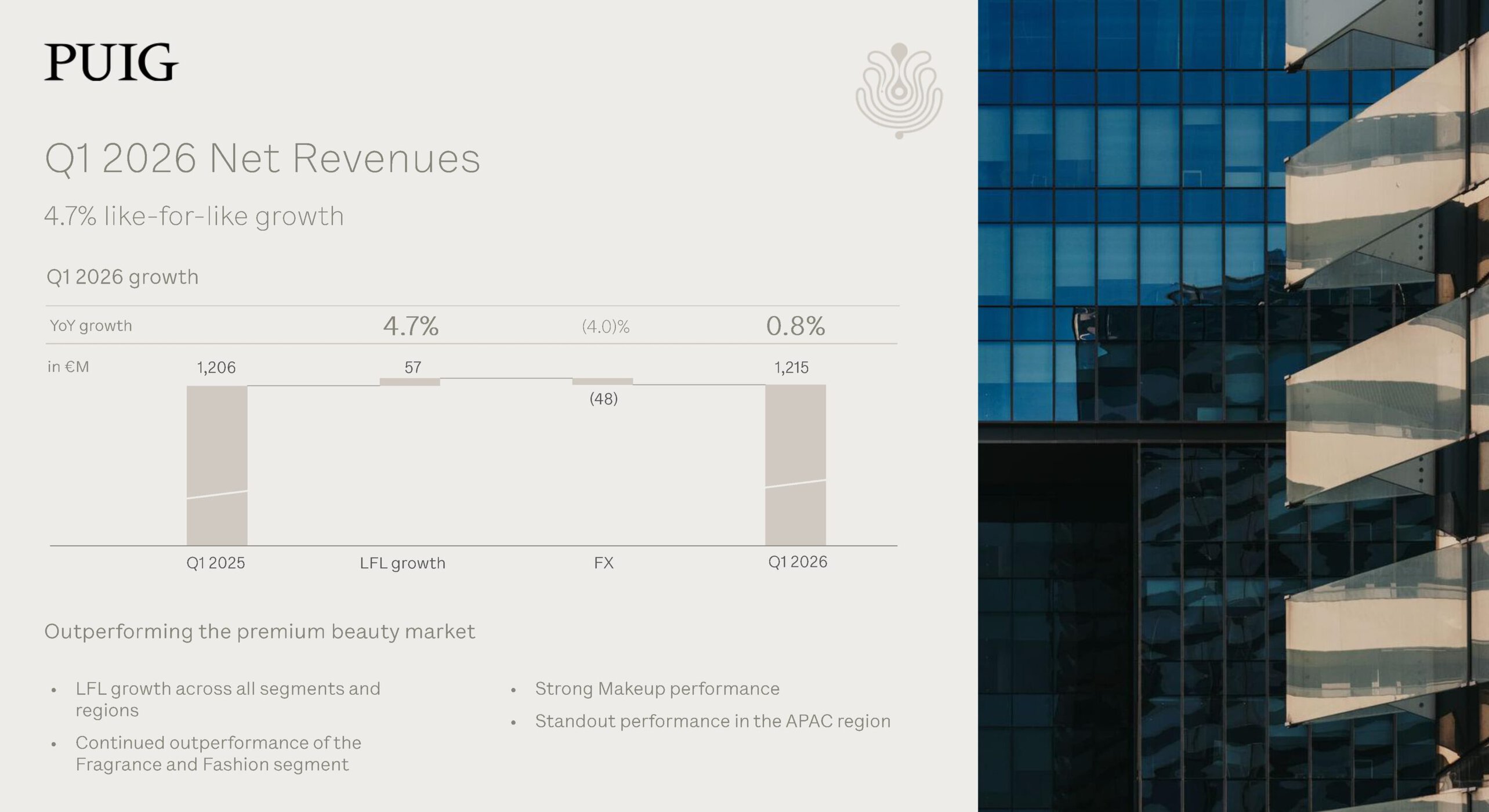
The update came as Puig reported record first-quarter 2026 sales, with revenue reaching €1.22 billion, up 0.8 percent on a reported basis and 4.7 percent organically. The company outperformed broader premium beauty market growth and exceeded analyst expectations, continuing a streak of market-beating performance that has characterized the group’s recent expansion.
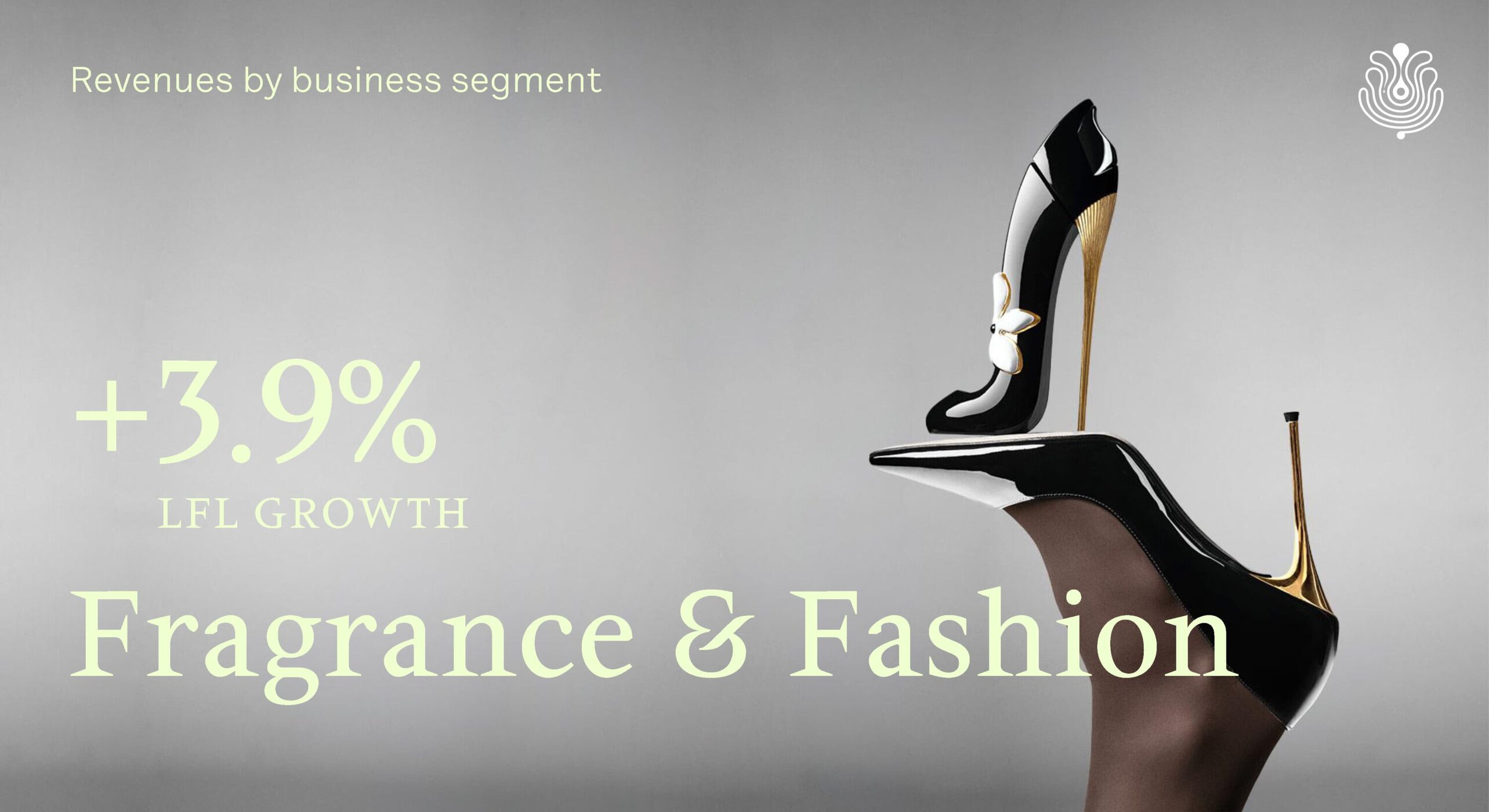
Albesa described the quarter as broadly positive across both categories and geographies. Puig’s core fragrance and fashion division — home to brands including Rabanne, Carolina Herrera and Jean Paul Gaultier — generated €897.2 million in sales, accounting for 74 percent of total revenue. Organic growth in the category reached 3.9 percent despite softer conditions in prestige fragrance overall.
The company highlighted continued momentum in niche fragrances, where brands such as Byredo, Penhaligon’s and L’Artisan Parfumeur delivered double-digit growth. Albesa identified the category as a major long-term opportunity, particularly in North America, where Puig remains underpenetrated relative to competitors.
“We see huge potential for niche,” Albesa said, noting that Puig’s niche brands are currently distributed in only around 150 U.S. retail locations, compared with approximately 600 for leading rivals. The company plans to expand selectively in the market this year while maintaining a productivity-driven approach.
Makeup was Puig’s fastest-growing category in the quarter, with sales up 9.2 percent organically to €170.8 million, driven primarily by Charlotte Tilbury. Albesa said the brand still has substantial room for expansion globally, currently operating in only a fraction of its potential distribution footprint.
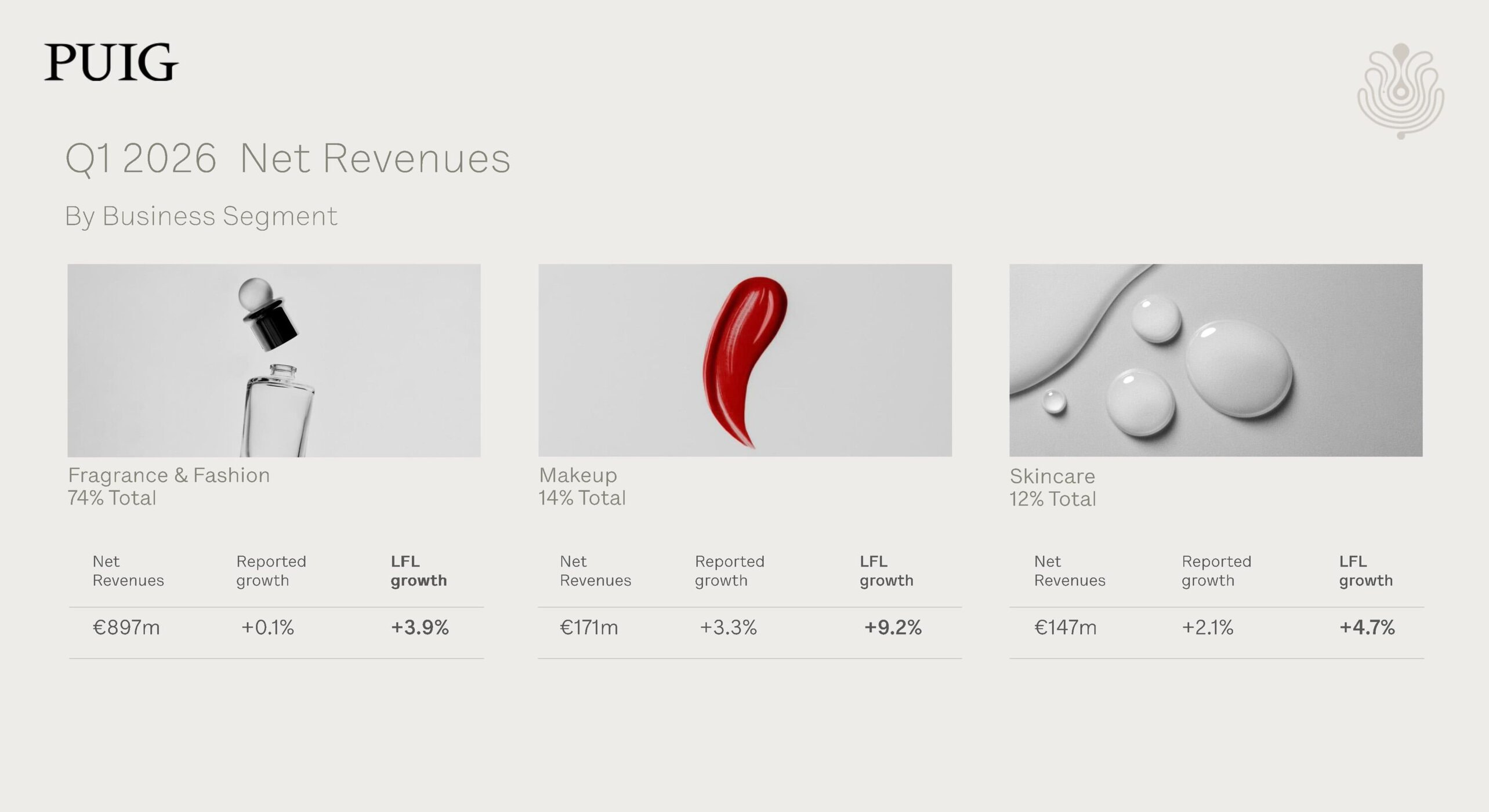
Skin care sales rose 4.7 percent organically to €147.3 million, supported by balanced contributions across the portfolio.
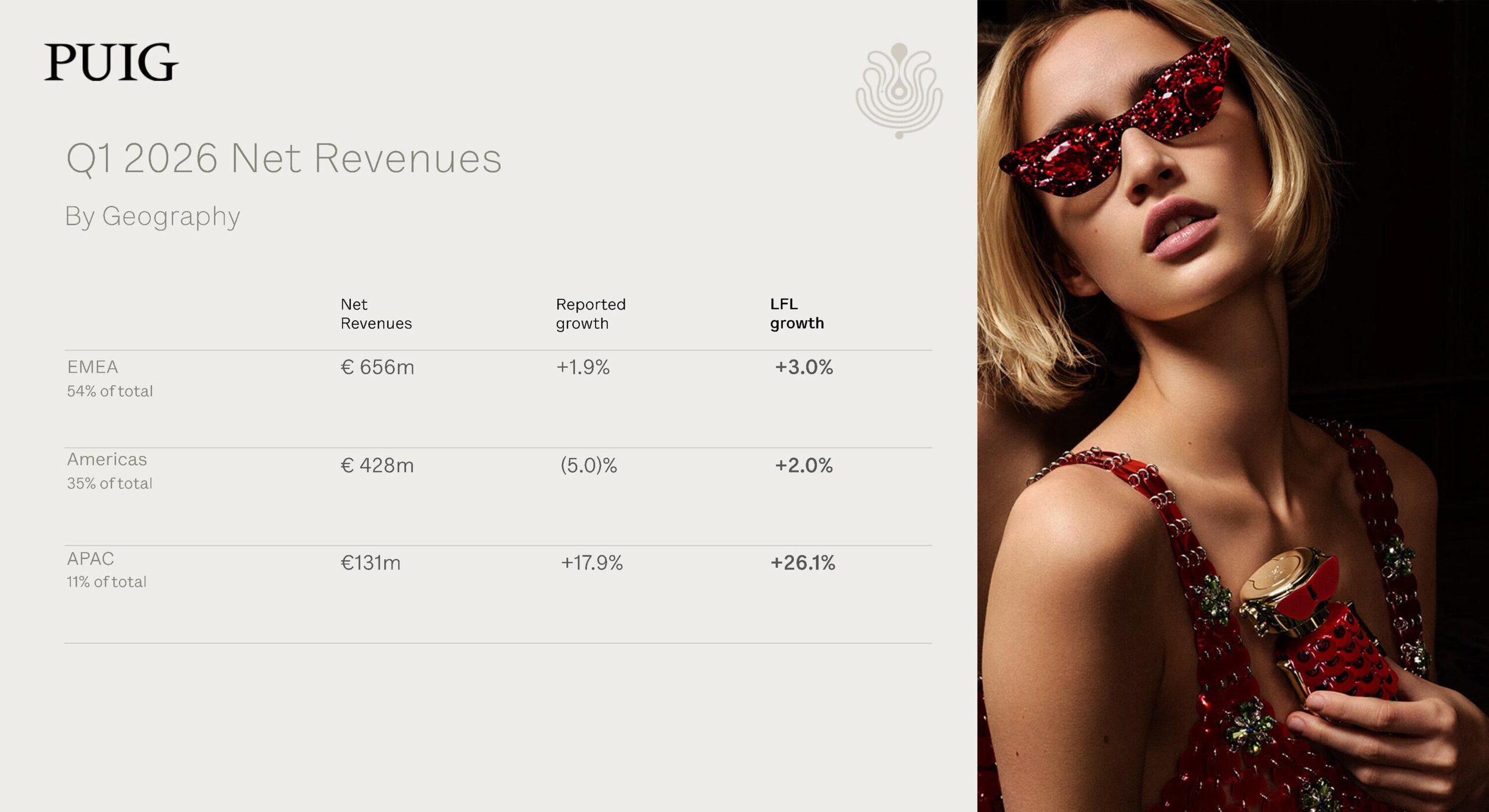
Regionally, Europe, the Middle East and Africa remained Puig’s largest market, generating €643.8 million in sales. However, the company acknowledged softer consumer demand and ongoing disruption related to geopolitical tensions in the Middle East, which had an estimated 1.2 percent negative impact on regional revenue during the quarter.
Sales in the Americas rose 2 percent organically to €428.3 million, supported by continued strength from Carolina Herrera and Byredo. Meanwhile, Asia-Pacific delivered the strongest growth, with organic sales up 26.1 percent to €131 million, fueled by demand for niche fragrance and Charlotte Tilbury.
Albesa identified Asia-Pacific as a major strategic growth area for the company, noting that while the region accounts for more than one-third of the global beauty market, it currently represents only 11 percent of Puig’s revenue.
The company maintained its full-year guidance, expecting to continue outperforming the premium beauty market while keeping adjusted EBITDA margins stable despite a more challenging cost environment.
Albesa also addressed increasing promotional activity across the prestige beauty sector, making clear that Puig does not intend to compete through discounting. “We are not going to play this game,” he said. “We will lean on the strength of our brands, and we remain confident that we will outperform through innovation.”
As merger speculation continues, Puig’s latest results reinforce the group’s positioning as one of the fastest-growing players in global premium beauty — combining strong fragrance leadership with expanding momentum in makeup, skin care, and niche luxury categories.