Cartier, Van Cleef & Arpels, And The Americas Powered Strong Results As Richemont Reported Rising Sales, Profits, And Continued Momentum Across Its Luxury Portfolio
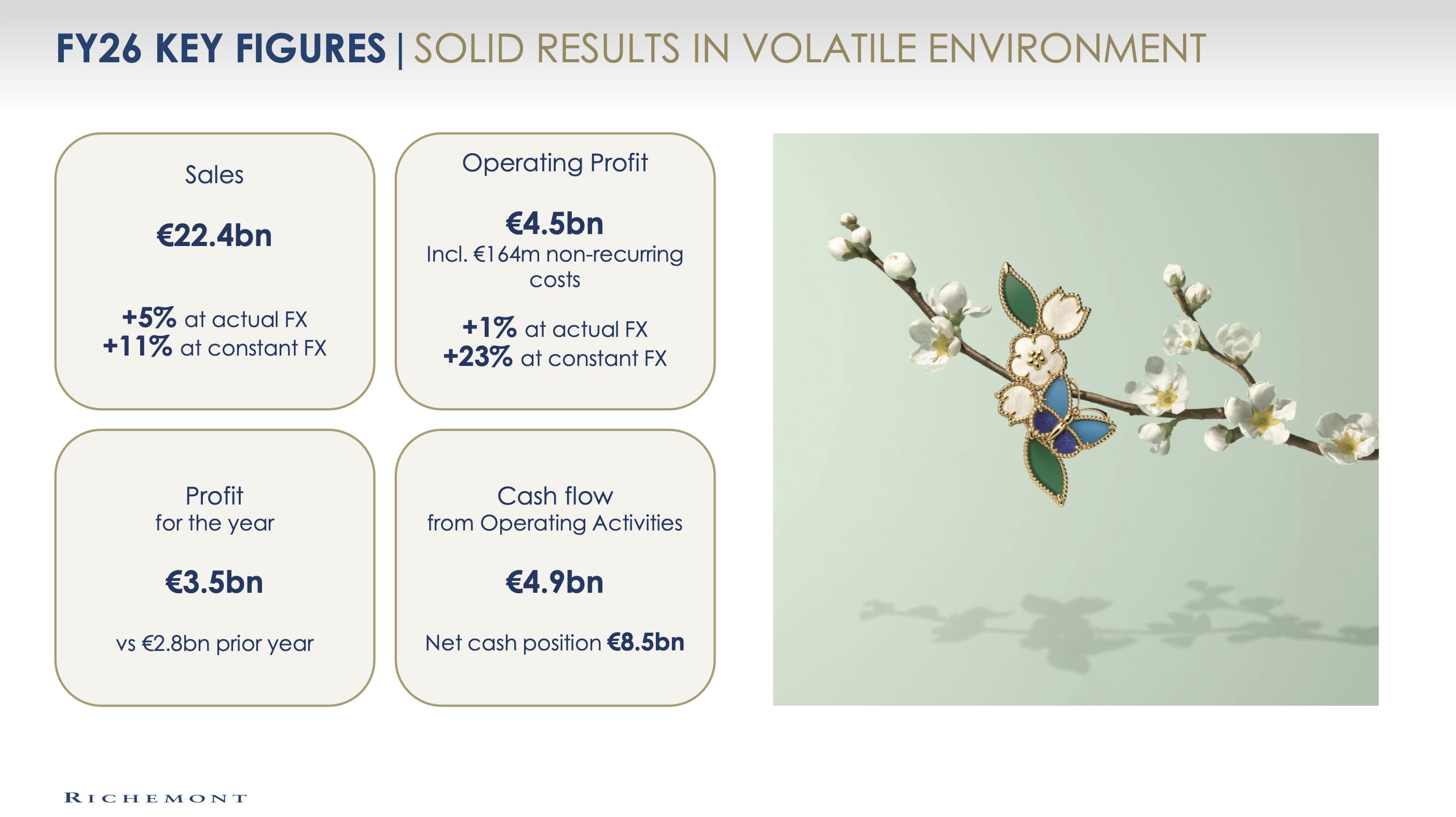
Richemont ended fiscal 2026 with accelerating momentum across nearly every part of its business, reporting double-digit sales growth fueled by continued strength at its jewelry maisons, rising demand in the Americas, and resilient performance across regions despite ongoing geopolitical and macroeconomic uncertainty.
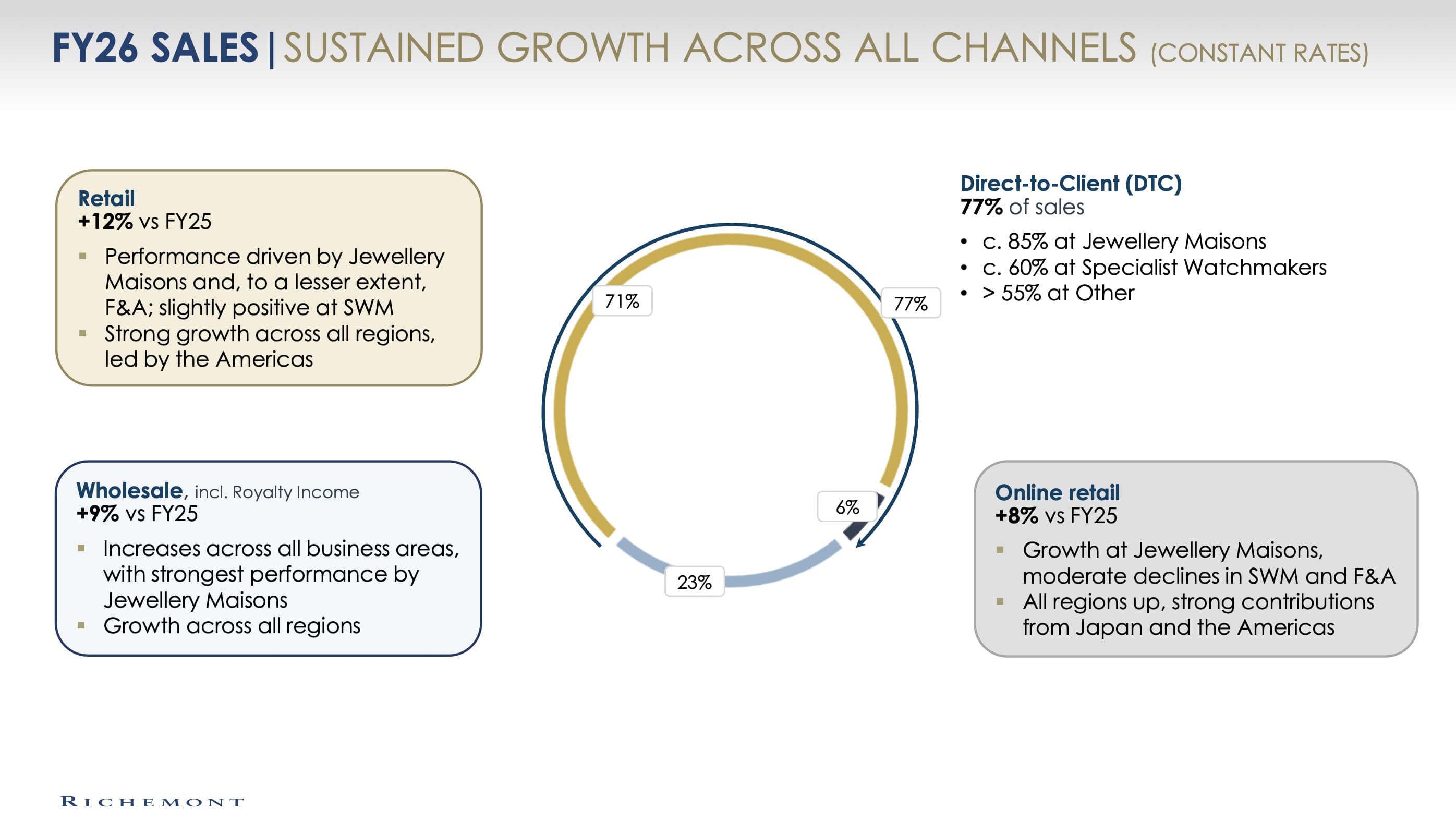
Sales for the year ended March 31 rose 11 percent at constant exchange rates to 22.4 billion euros, while fourth-quarter sales accelerated to 13 percent growth, up from 11 percent in the previous quarter. At actual exchange rates, annual sales increased 5 percent.
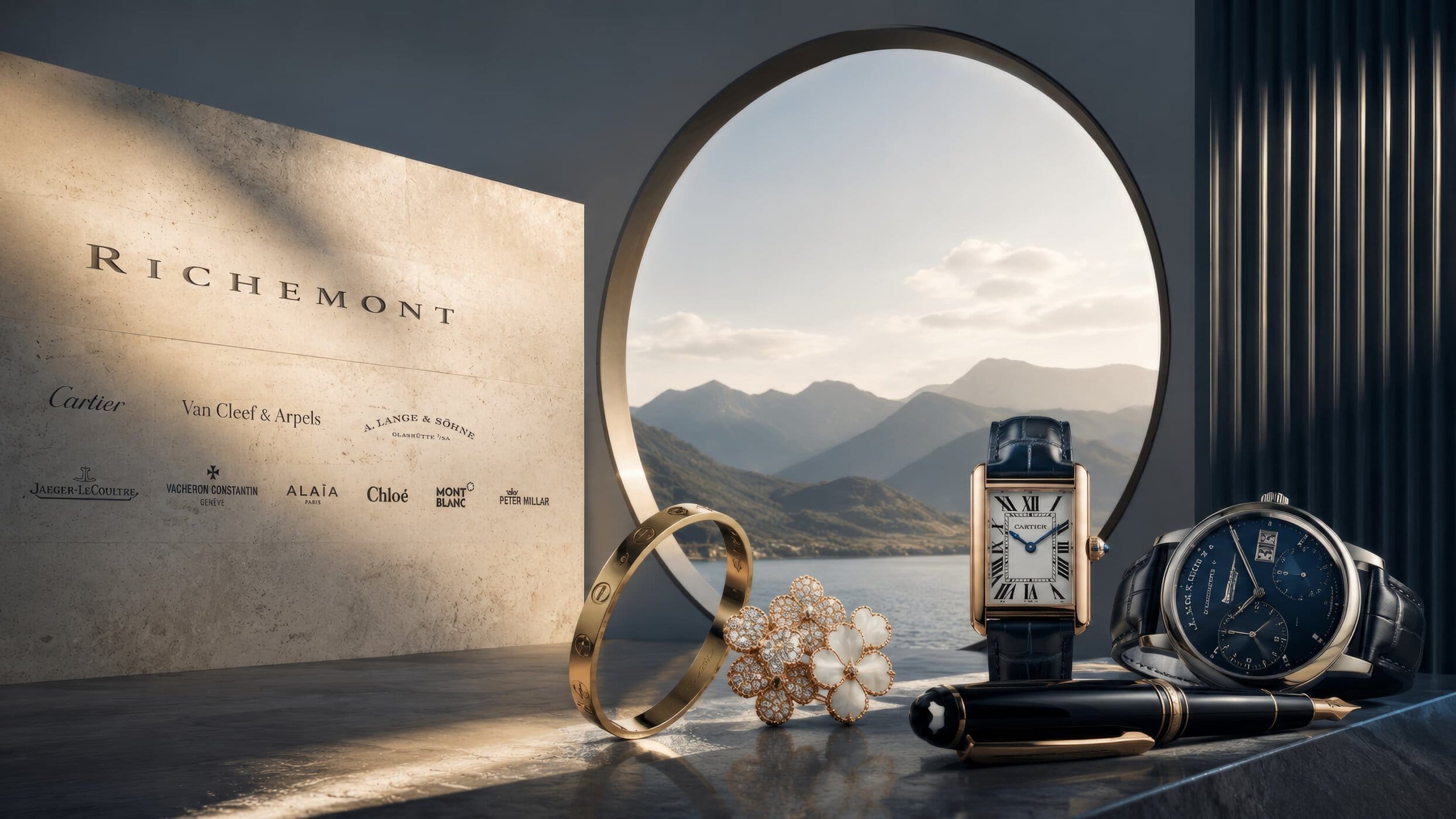
The luxury group, whose portfolio includes Cartier, Van Cleef & Arpels, Chloé, Alaïa, Montblanc, and Vacheron Constantin, said growth was driven across all business areas, regions, and distribution channels at constant exchange rates.
Operating profit rose 23 percent at constant exchange rates to 4.5 billion euros, supported by strong top-line growth and disciplined cost management that helped offset weaker currencies and higher raw material costs. Profit for the year climbed to 3.5 billion euros from 2.8 billion euros in the prior year, aided in part by the absence of the Yoox Net-a-porter write-down recorded previously.
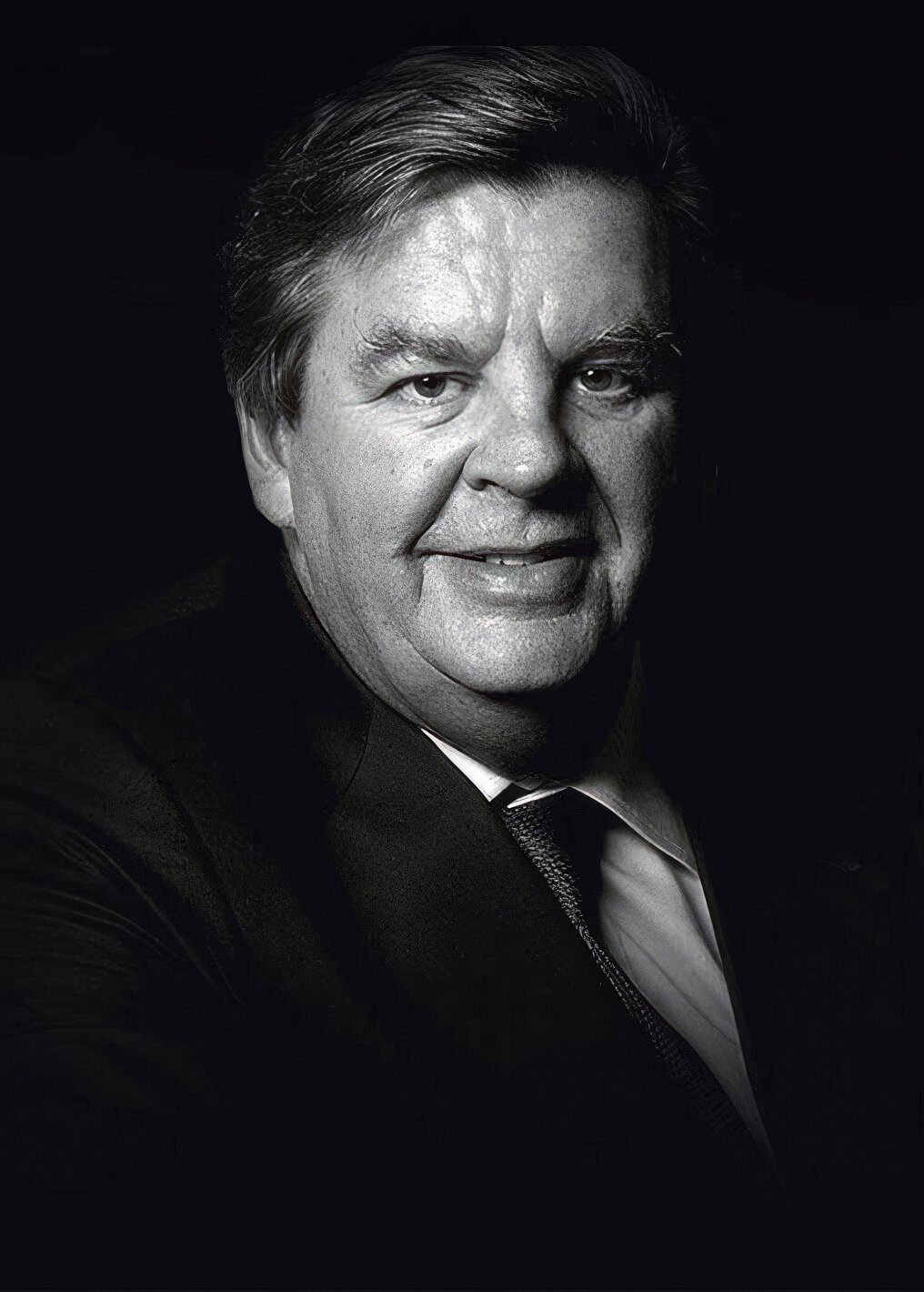
In a statement accompanying the results, Chairman Johann Rupert said the company’s performance demonstrated the resilience of Richemont’s operating model amid continued volatility.
“In a persistently volatile geopolitical environment, the Group delivered strong growth and solid results, reflecting the resilience of its business model, the strength of its Maisons, the enduring agility and creativity of its teams and the benefits of its balanced regional footprint,” Rupert said.
He added that the group’s long-term approach — centered on differentiation, disciplined pricing, and strong brand identity — continued to underpin demand across the portfolio.
Jewelry remained Richemont’s primary growth engine. Sales at the jewelry maisons rose 14 percent at constant exchange rates and 8 percent at actual exchange rates to 16.5 billion euros. Richemont said all four jewelry brands — Buccellati, Cartier, Van Cleef & Arpels, and Vhernier — experienced strong demand across geographies, contributing to additional market share gains in both jewelry and watches.
Despite rising gold prices and unfavorable currency movements, the jewelry division maintained profitability through measured price increases and operational discipline, delivering operating profit of 5 billion euros and an operating margin of 30.5 percent.
The specialist watchmakers division showed early signs of stabilization after a prolonged slowdown in the watch market. Sales rose 1 percent at constant exchange rates to 3.1 billion euros, though they declined 4 percent at actual exchange rates. Richemont said the second half improved meaningfully, led by A. Lange & Söhne, Jaeger-LeCoultre, and Vacheron Constantin.
The company’s fashion and accessories businesses posted more modest gains, with sales in the “other” division rising 3 percent at constant exchange rates. Peter Millar and Alaïa continued their multiyear growth trajectories, while Montblanc showed sequential improvement as its turnaround efforts progressed.
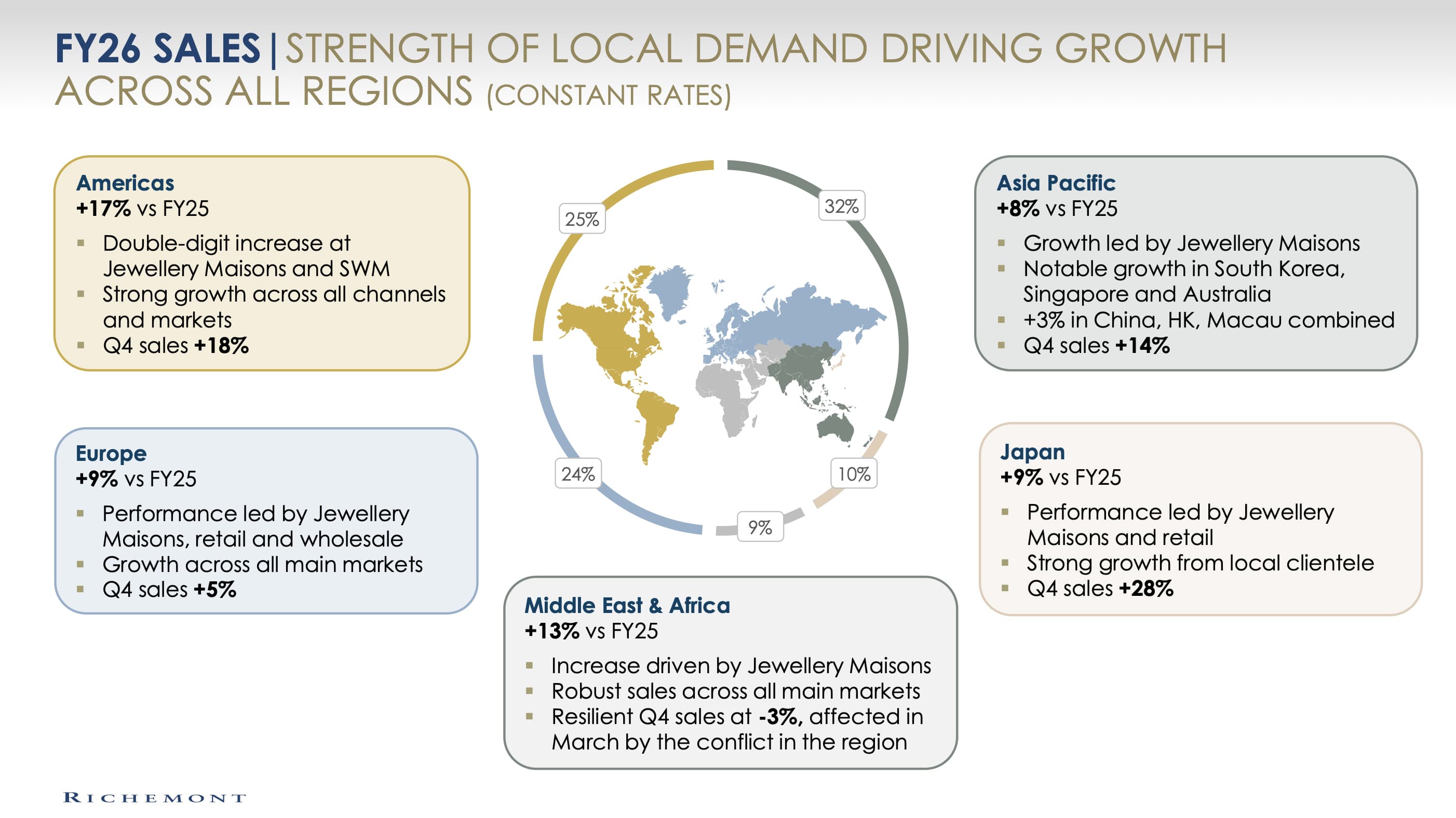
Regionally, the Americas remained Richemont’s standout market, with sales rising 17 percent during the year and 18 percent in the fourth quarter. The Middle East and Africa grew 13 percent overall despite sales disruption in March tied to regional conflict. Europe and Japan each increased 9 percent, while Asia Pacific rose 8 percent, supported by modest improvement in China, Hong Kong, and Macau combined.
Rupert struck an optimistic tone during the company’s analyst presentation, emphasizing the strength of Richemont’s balance sheet and operational infrastructure.
“I can assure you we are in better shape now than I can ever remember, from balance sheet through tech, supply chain, everything traditional that we could foresee. We’re in great shape,” he said.
Even so, the Chairman cautioned that geopolitical instability and broader macroeconomic uncertainty are likely to continue, particularly in relation to developments in the Middle East. Against that backdrop, he said Richemont would continue focusing on long-term brand desirability, disciplined execution, and sustainable value creation.