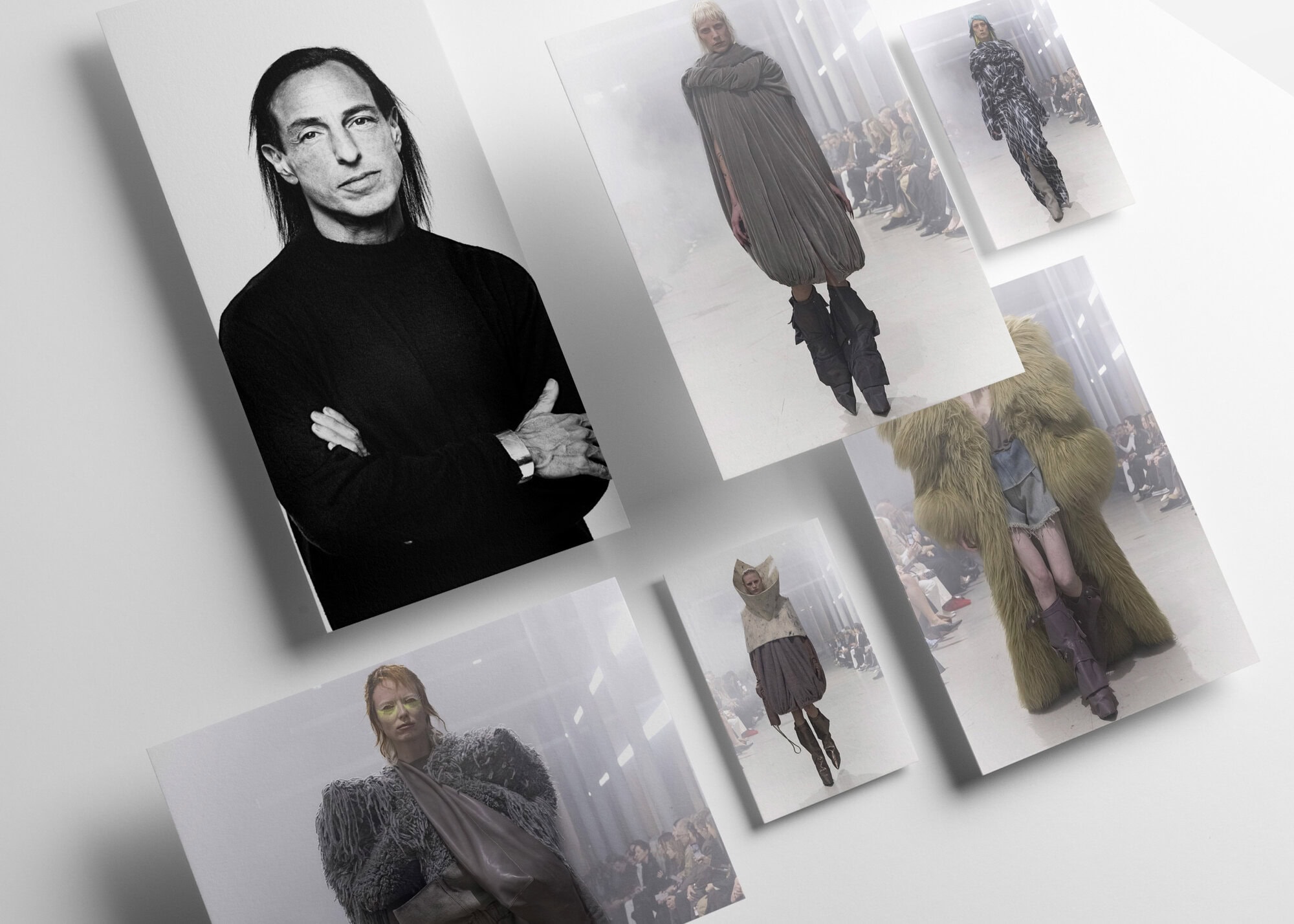
Inspired by Marlene Dietrich’s wartime courage, the designer reflects on dignity, character, and fashion’s response to crisis
By Kenneth Richard
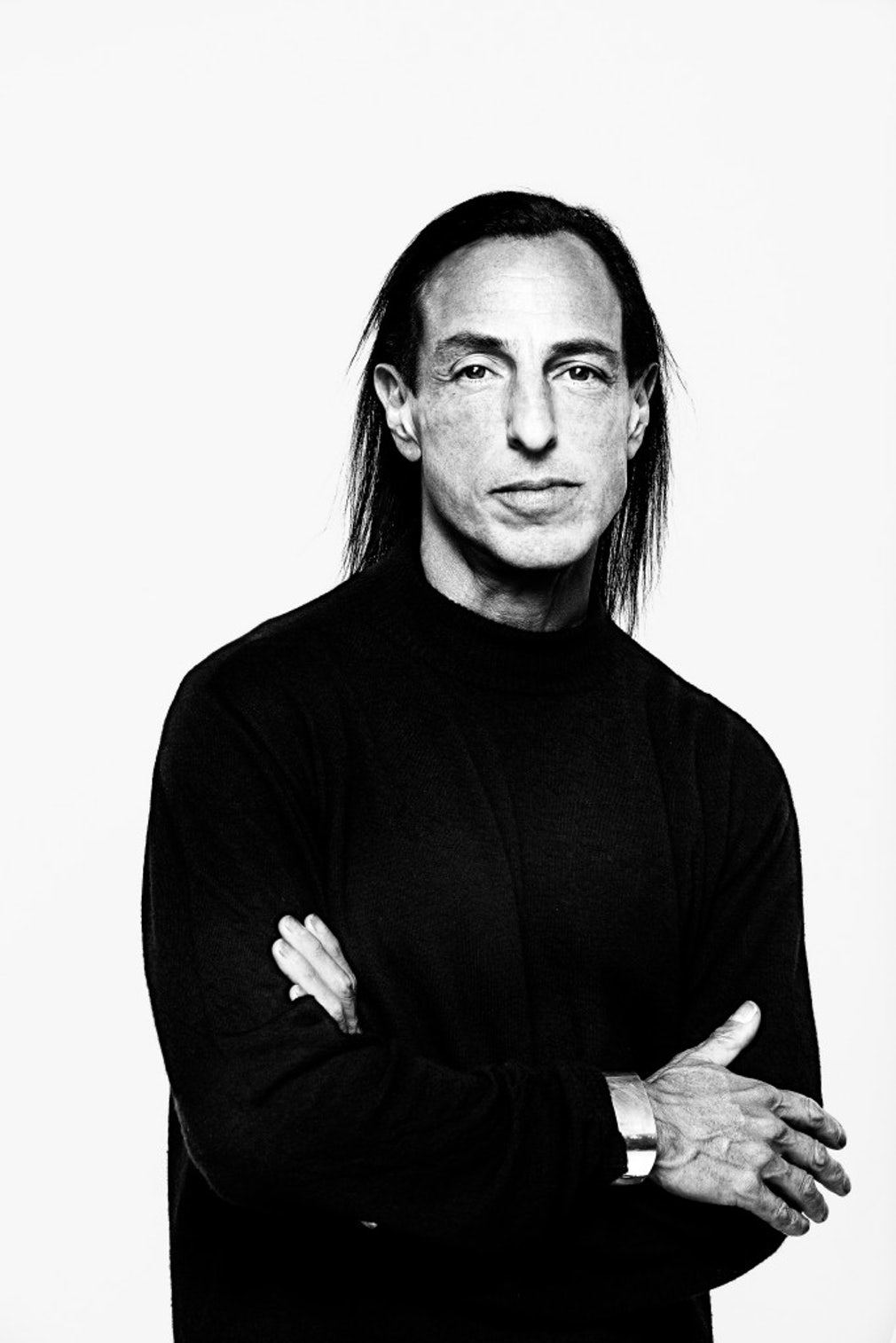
Rick Owens has long cultivated the image of fashion’s high priest of darkness, but spend a few minutes with him and the mood is something far more reflective. Thoughtful, philosophical, and quietly amused by the world around him, Owens speaks about fashion less as spectacle than as a discipline—one shaped by history, character, and the pressure of time.
His latest collection begins with precisely that: pressure.
You step up during times of crisis. And that’s kind of what I feel about when I do a show like this with a lot of hair and makeup, with a lot of effort. Instead of indifference and looking like I’m very pulled back, there is an earnestness to it and a charm.
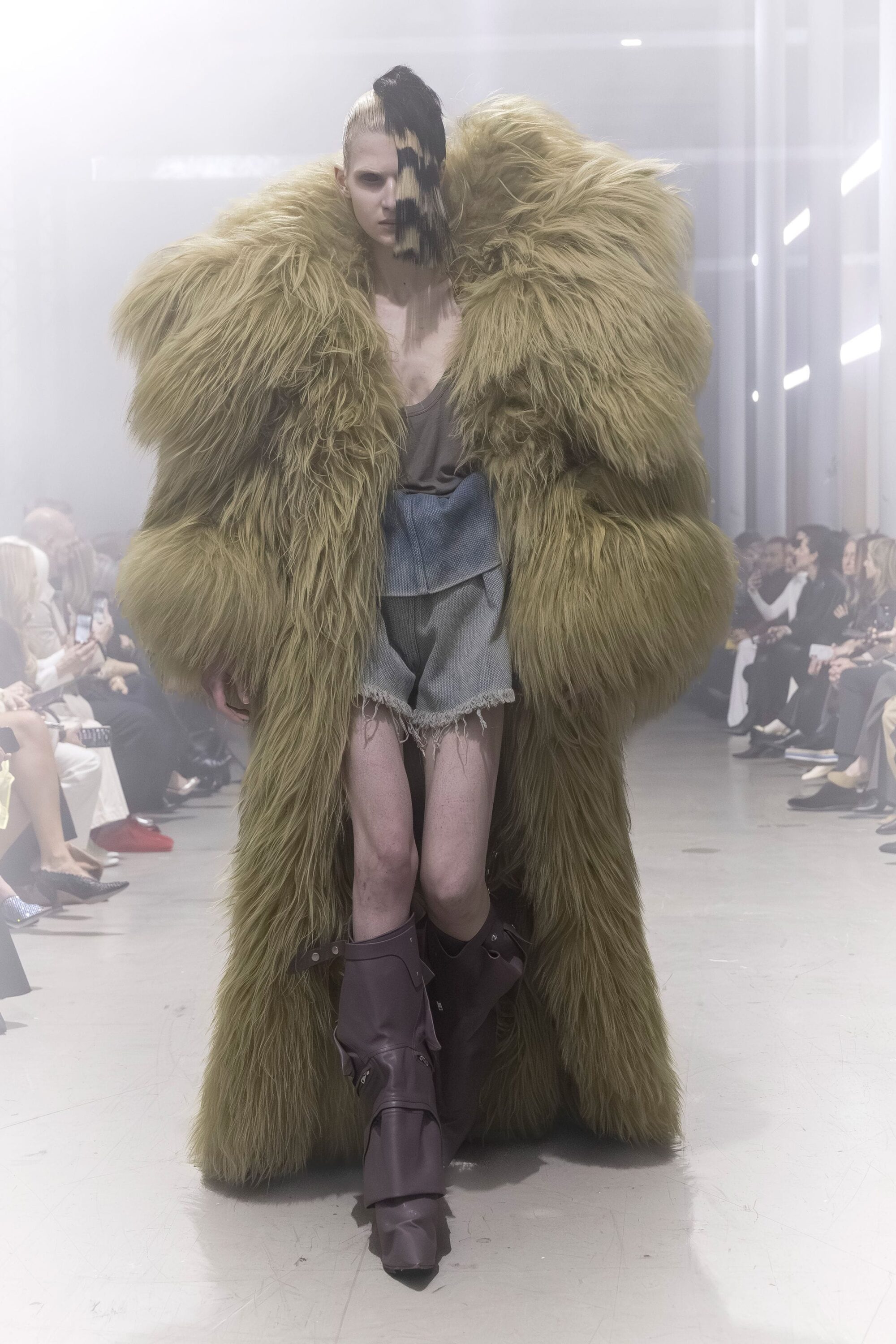
Charm is not typically the first word associated with Owens’ stark, monastic universe. Yet the collection carried a certain theatrical generosity—grand coats, exaggerated drapery, and silhouettes that seemed to collapse and expand at once. The effect recalled the sweeping robes of historical portraiture.
“Crumpling is opulence,” Owens explains. “When you look at paintings at the National Gallery, the most expensive thing you could weave was the robe. It was all about those folds.”
For Owens, opulence is never simply decoration. It is gesture—how fabric moves, how it holds presence, how it frames the body like a stage.
This season’s gesture traces back to one of his enduring fascinations: Marlene Dietrich.
Owens speaks about the actress not only as a cinematic icon but as a figure whose life followed a compelling moral arc. Dietrich began as a provocateur, her sexual ambiguity and cool defiance redefining the image of femininity in early film. But during the Second World War she pivoted dramatically, dedicating herself to entertaining Allied troops and traveling to the front lines.
“She was a nonconforming sexual provocateur,” Owens says. “And then during wartime she committed herself completely to duty and service. She went to the front lines. That is stepping up.”
Dietrich’s story did not end there. In later years, she distilled the grand mythology of her career into something strikingly spare: a traveling cabaret act composed of little more than sheer dresses and a single white swansdown coat.
“That arc fascinates me,” Owens continues. “Taking everything you’ve done and reducing it to a few elements. A couple of dresses and that coat. It’s such a dignified way of ending.”
The coat itself, famously made from swan skin rather than feathers, carried a subtle discomfort beneath its beauty.
“It gives it that extra little bite of ickiness,” Owens notes, with characteristic candor.
That tension—between elegance and unease—has long defined his own work. His garments often feel monumental yet fragile, ceremonial yet strangely raw.
For Owens, studying figures like Dietrich is less about mythmaking than about understanding how artists endure.
How do the best people do it? How do they negotiate getting through life?
The question has become more pressing with time. Owens admits he increasingly gravitates toward biographies and autobiographies, tracing the trajectories of artists who managed to maintain a coherent vision over the course of a lifetime.
“My partner Michèle always laughs at me,” he says. “She says, ‘You only like dead artists.’”
Owens laughs.
“And I say yes—because I want to make sure the story is complete. I want to know they stayed consistent. With contemporary artists, you never know.”
What attracts him, he explains, is the clarity that distance provides.
“There’s something about the patina of time,” he says. “You see the whole arc. Life is over. The whole story is done.”
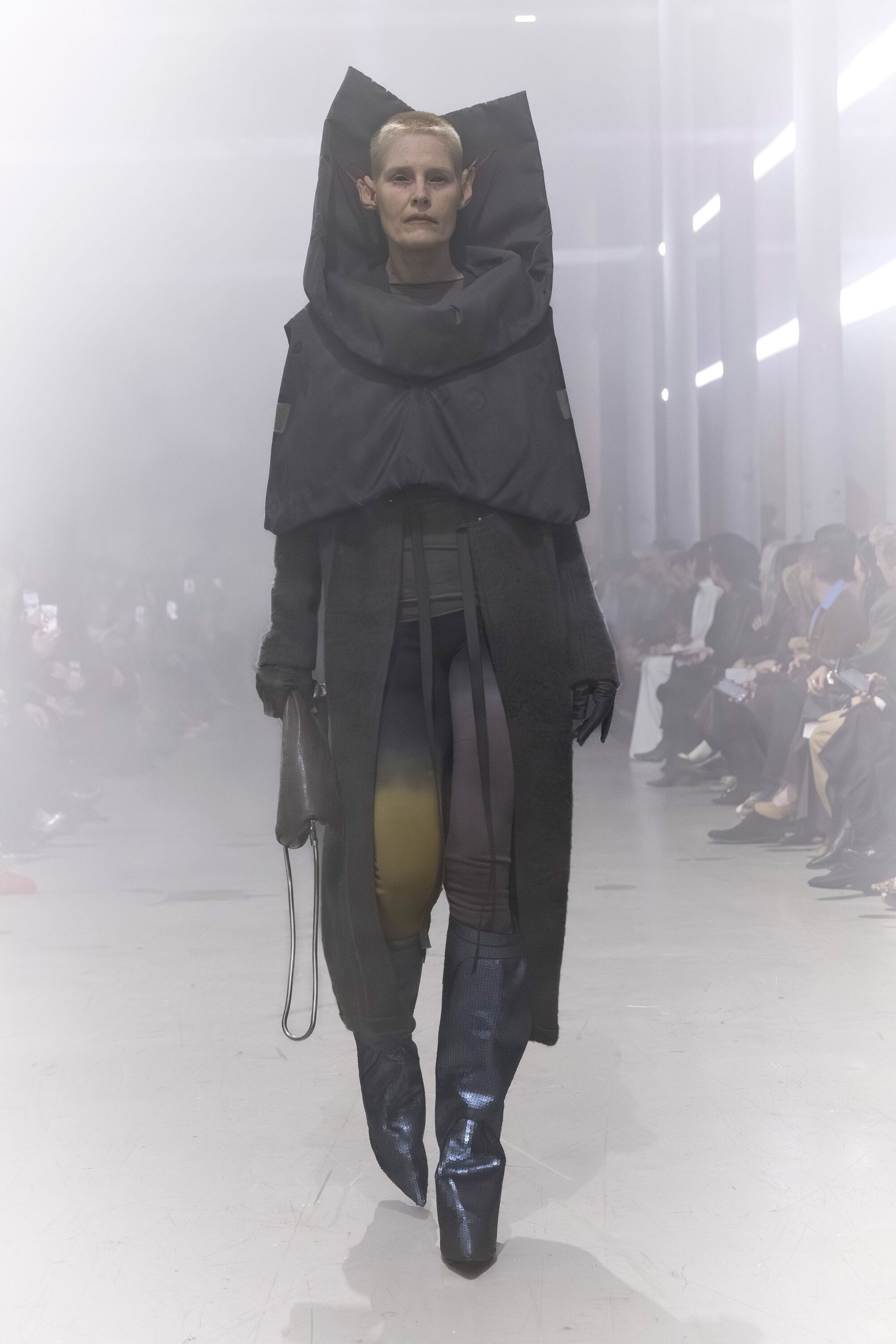
In fashion, where careers are often defined by restless reinvention, Owens has instead built something closer to a sustained worldview. Season after season, the codes evolve—elongated proportions, monumental boots, sculptural outerwear—but the philosophy remains steady.
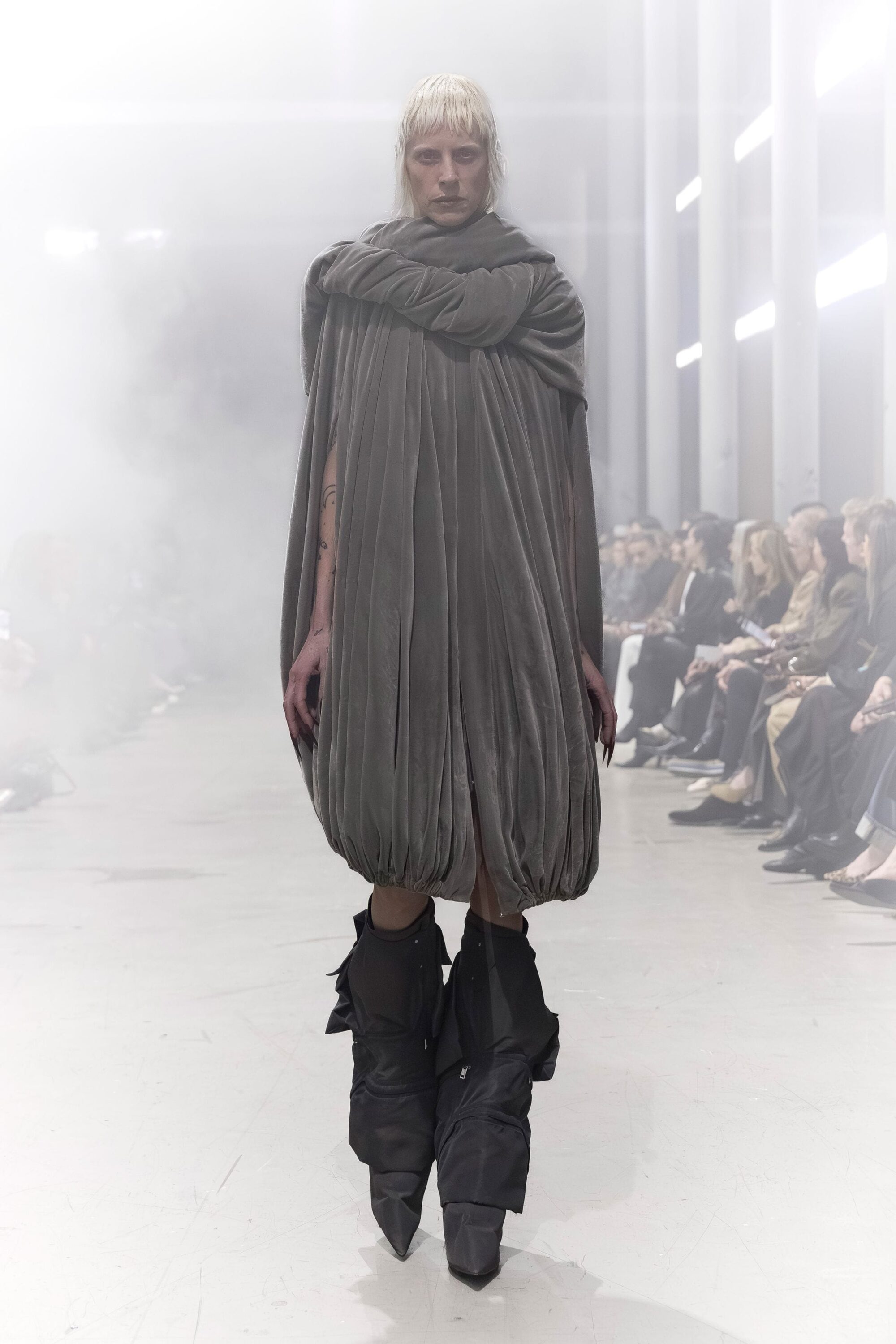
Even the collection’s crumpled boots and collapsed silhouettes, which might appear chaotic at first glance, carry a deeper sense of ceremony.
“Those robes,” Owens says, returning to his earlier thought, “were the most expensive things people could weave. They were symbols of power.”
Fashion, in Owens’ hands, becomes something similar: a visual language of presence and conviction.
Dietrich understood that language well. By the end of her life, she had stripped her image down to its most potent elements—gesture, silhouette, voice. The grandeur remained, but it had been reduced to its essence.
For Owens, that idea holds a certain quiet appeal.
Fashion often celebrates constant beginnings, but Owens seems increasingly interested in endings—how a life’s work might eventually distill itself into a final, perfectly composed image.
The towering silhouettes of the collection may feel monumental, but the philosophy beneath them is almost austere.
In the end, elegance is not spectacle.
It is character.