Making It Personal
Review of Setchu Spring 2027 Men’s Fashion Show
By Angela Baidoo
Expansion and growth are two words that have come to define the current state of the luxury fashion industry, yet LVMH Prize winner Satoshi Kuwata chose to reduce and simplify for his latest Setchu collection.
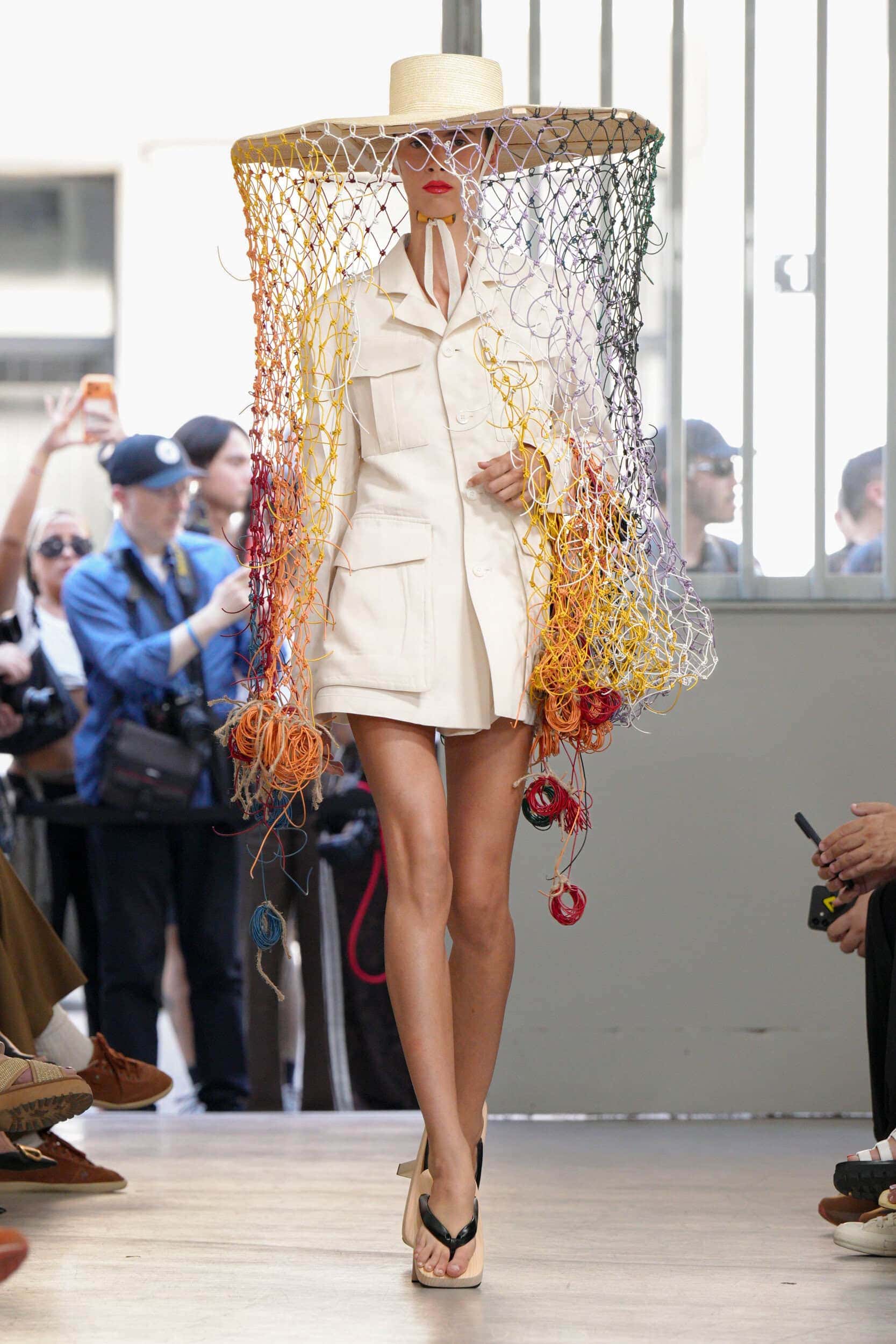
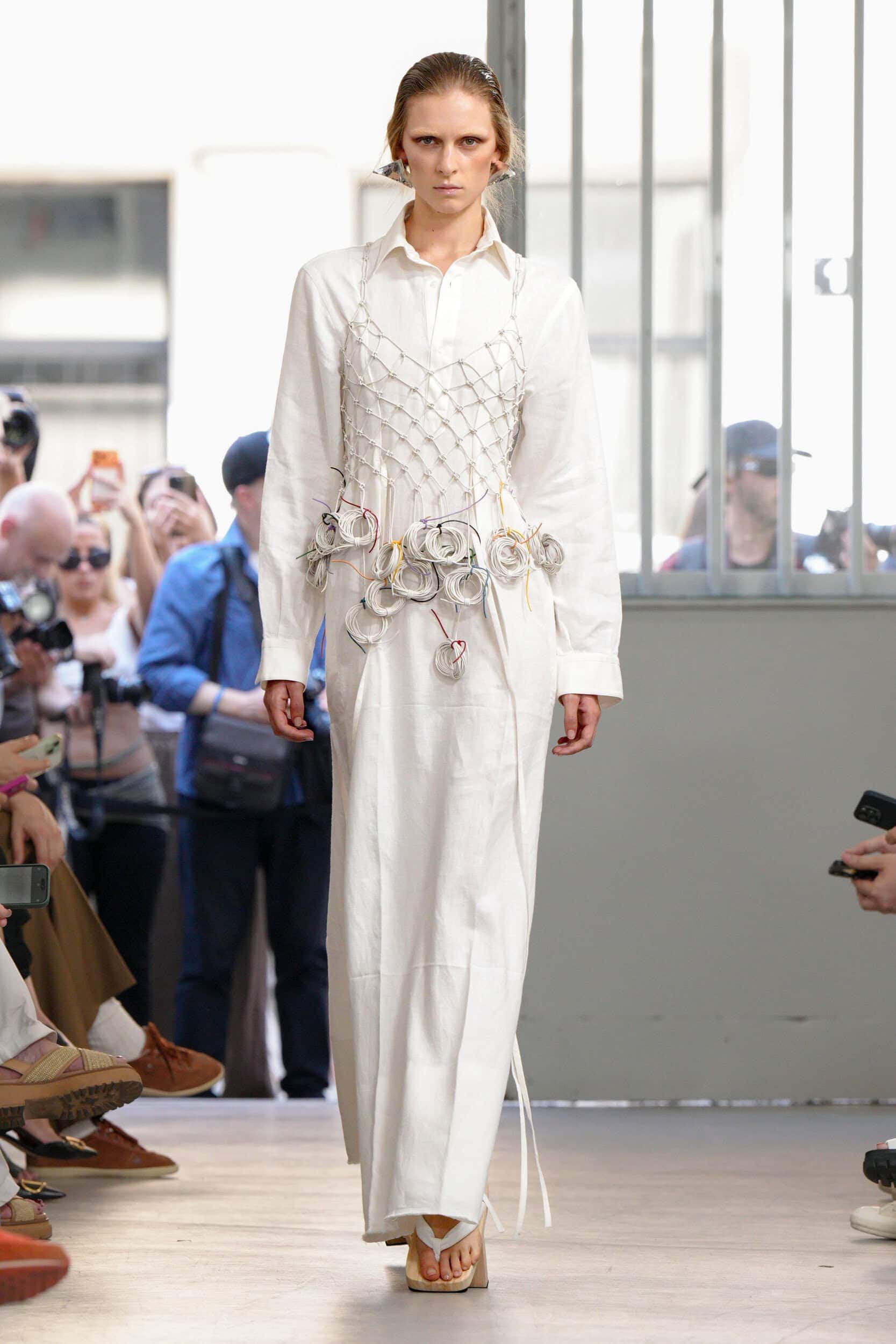
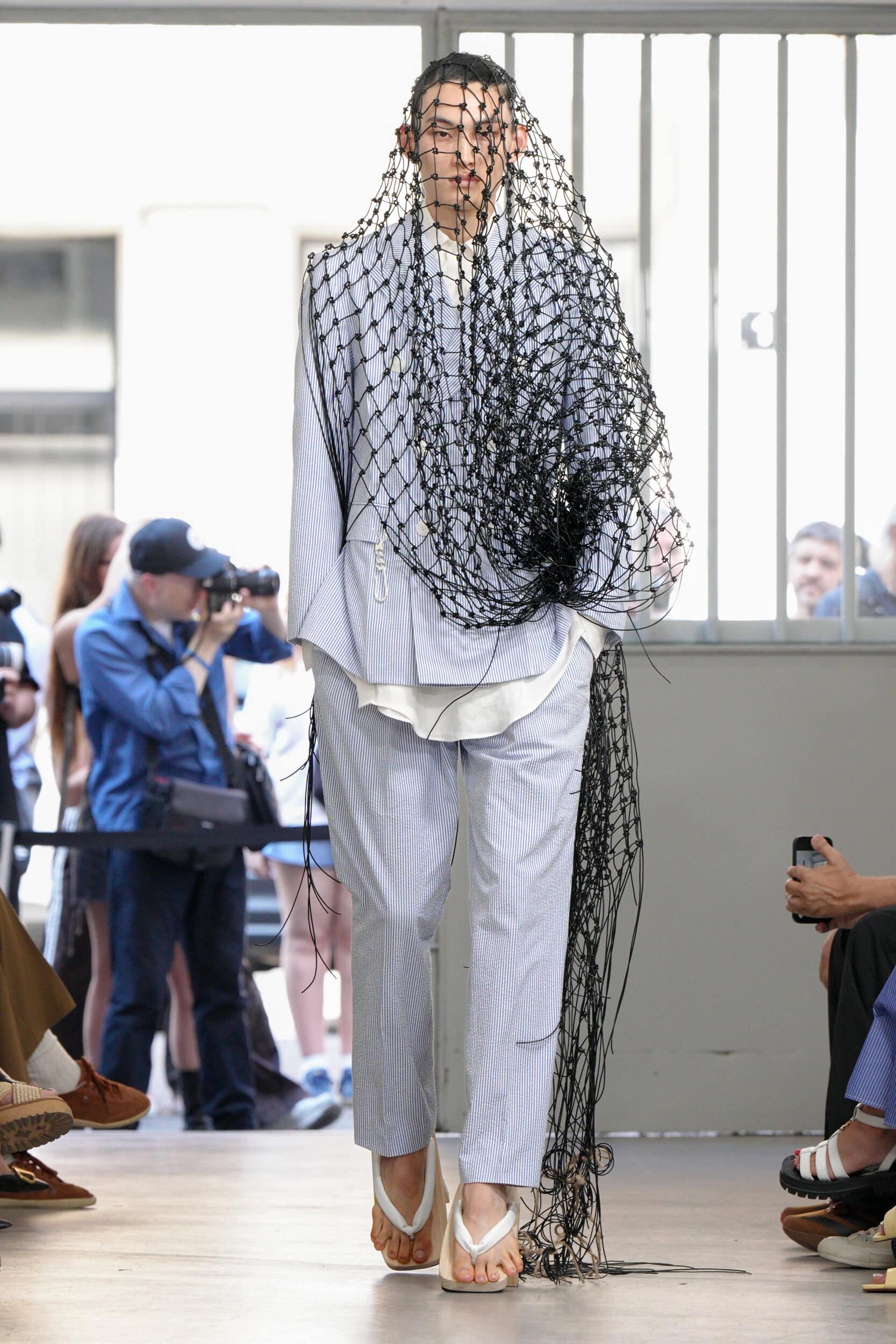
17 looks would comprise a show that sought to start (or return to) a conversation about the importance of craft and the ‘mastery of cut,’ something so often lost when confronted with the current format for more, more, more – so as to satisfy buyers, editors, clients, the commercial and the conceptual. Kuwata’s minimisation served to maximise the humility of the handmade centring something as everyday as the fishing net to drive home the point.
THE COLLECTION
THE VIBE
His Humble Materials, Art of the Edit, Craft In Focus
It was always going to take an independent designer to make the change that has been needed for several years. To put a stake in the ground and say enough! Developing a collection that takes the art of the edit seriously and is a masterclass in reducing your ideas down to their essence.
This season Setchu founder Satoshi Kuwata did away with agonising over a theme and looked to fit, form, and construction to tell his seasonal story, clarifying to The Impression pre-show “Instead of spending too much time on the concept, I went more literal with our approach of how garments should be made and how much time we’re spending on each piece.”
In 2020, there was much talk of the need for the industry to slow down. Yet, once the world reopened, whether due to the demands of the consumer or the logistical realities of de-scaling businesses and shrinking operations, the acceleration of the luxury fashion industry reached speeds that no one could have predicted, and made the round-table promises and willingness to change seem disingenuous.
It is ironic then, that an LVMH prize winner is making the case for slowing down. Even though Satoshi Kuwata undoubtedly has the backing and key business allies to scale his brand. It was encouraging to hear pre-show (a show compromising of only 17 looks) that the designer was more concerned with extolling the virtues of make this season. Not on developing an 80-strong look collection for the purposes of fulfilling the need for editorial placement.
Speaking backstage you gained a sense of the designers humility and gratitude “Something we wanted was a more personal approach. To me it was just as emotional as my graduate collection, at a time when I was making by hand.” Despite his LVMH Prize win in 2023, he still acknowledged to feeling like a small fish in a big pond, and still having the ability to draw a crowd in the face of budget constraints for travel across media. Yet, it is the ripple effects of the Prize which elevates new designers and keeps them among the names to know.
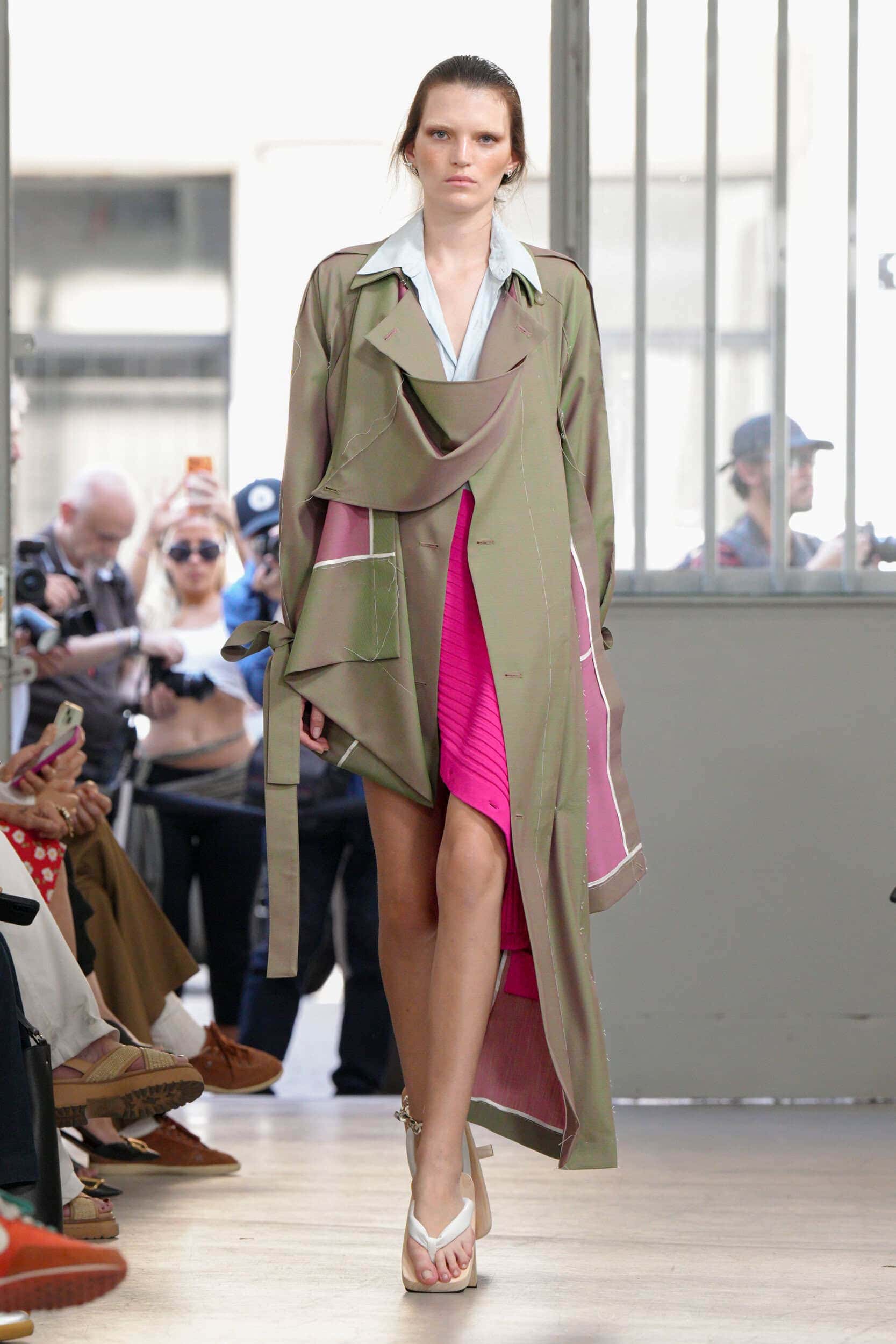
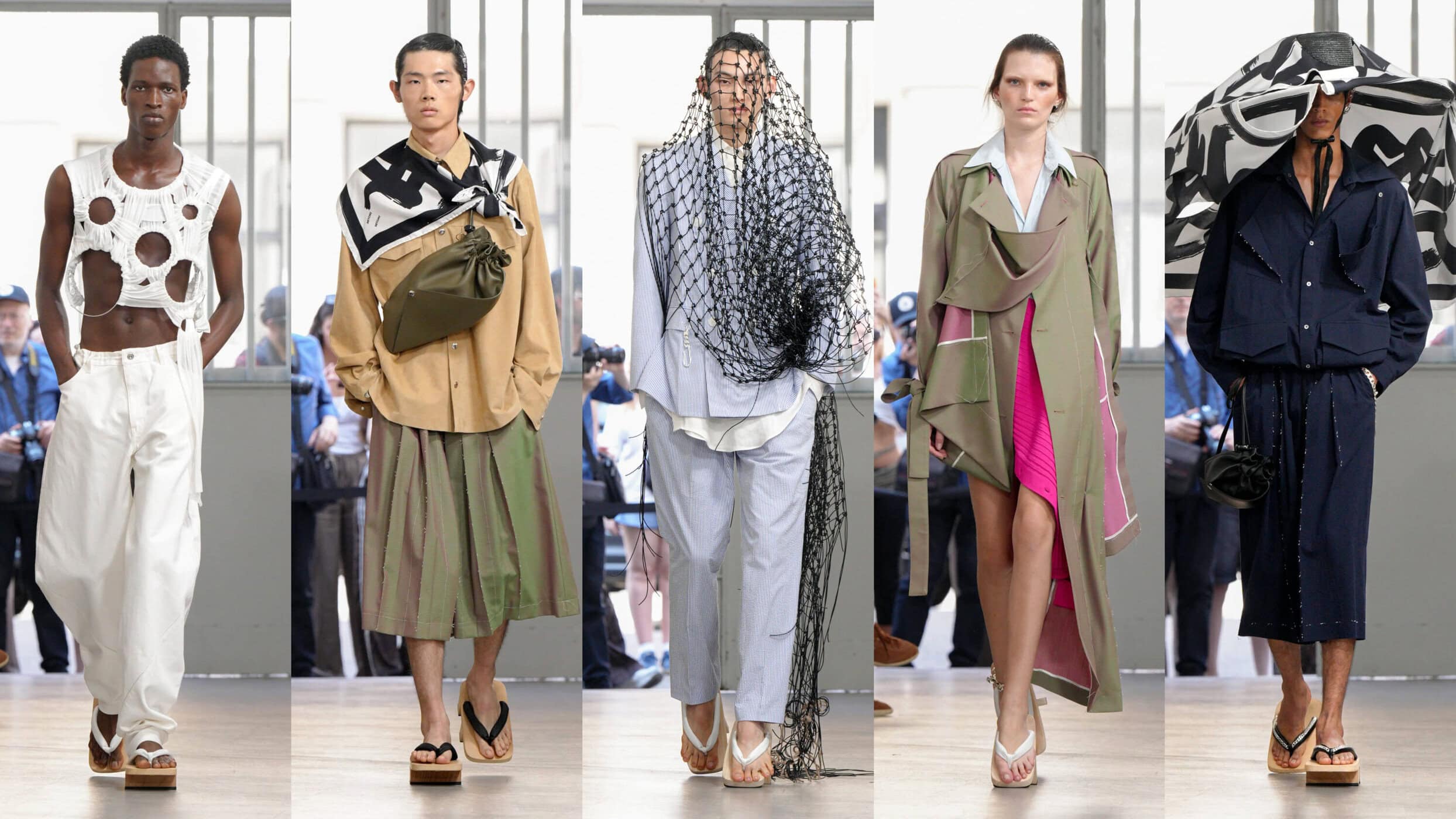
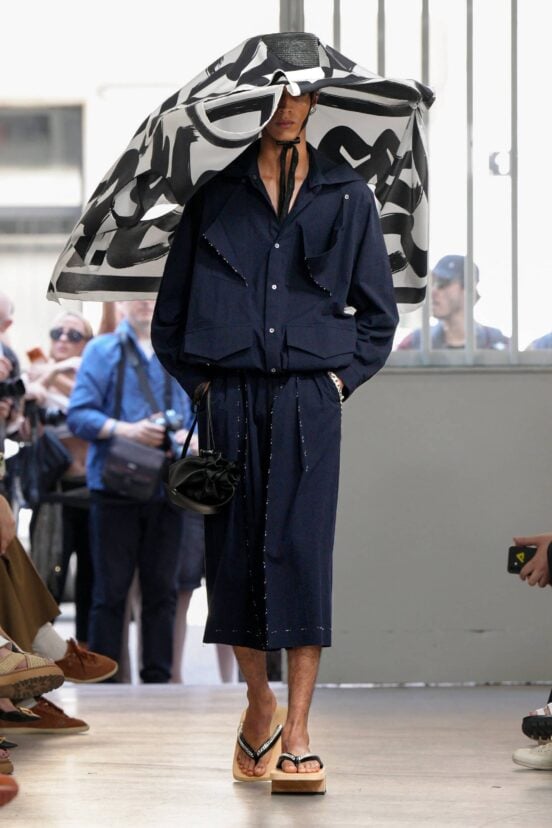
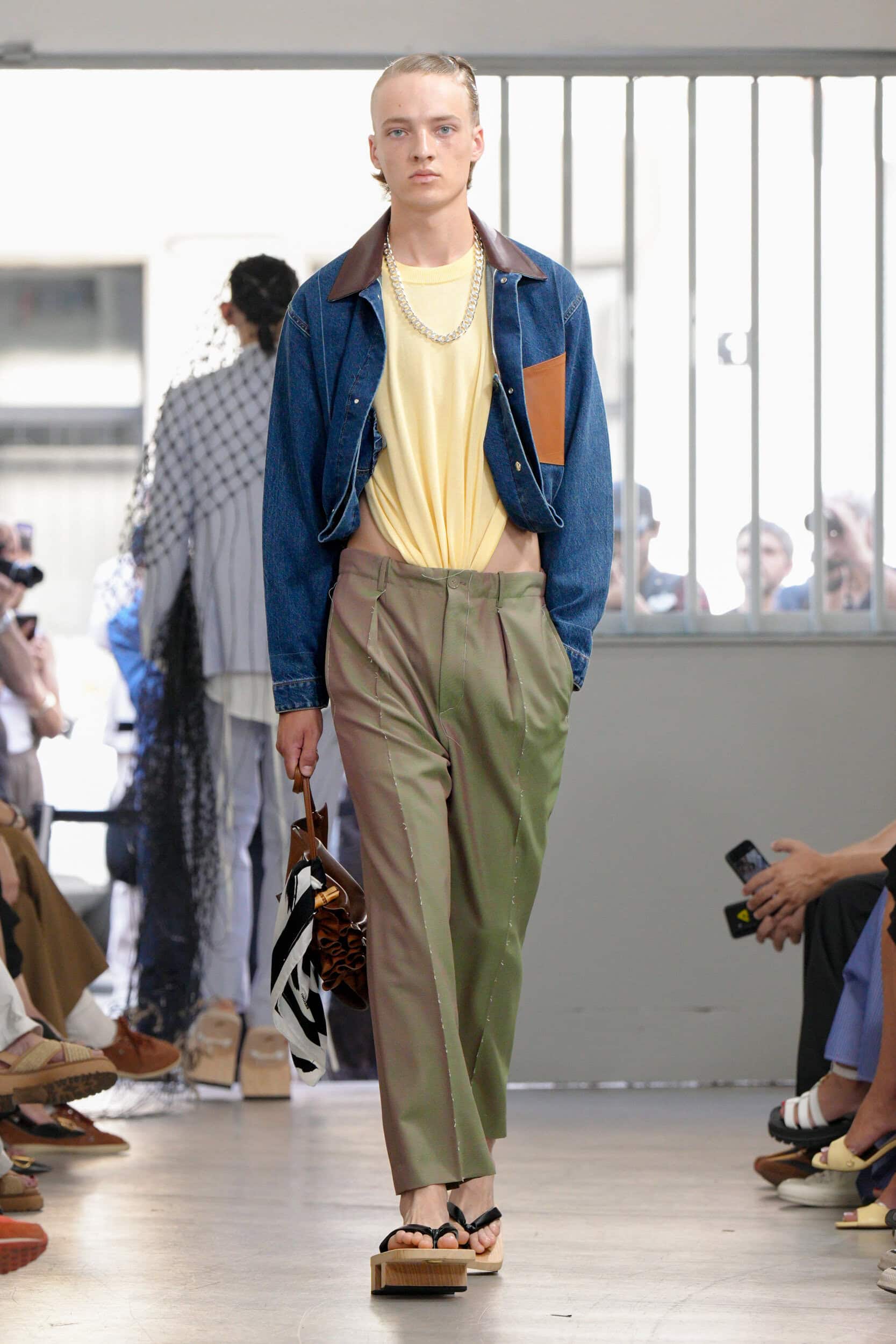
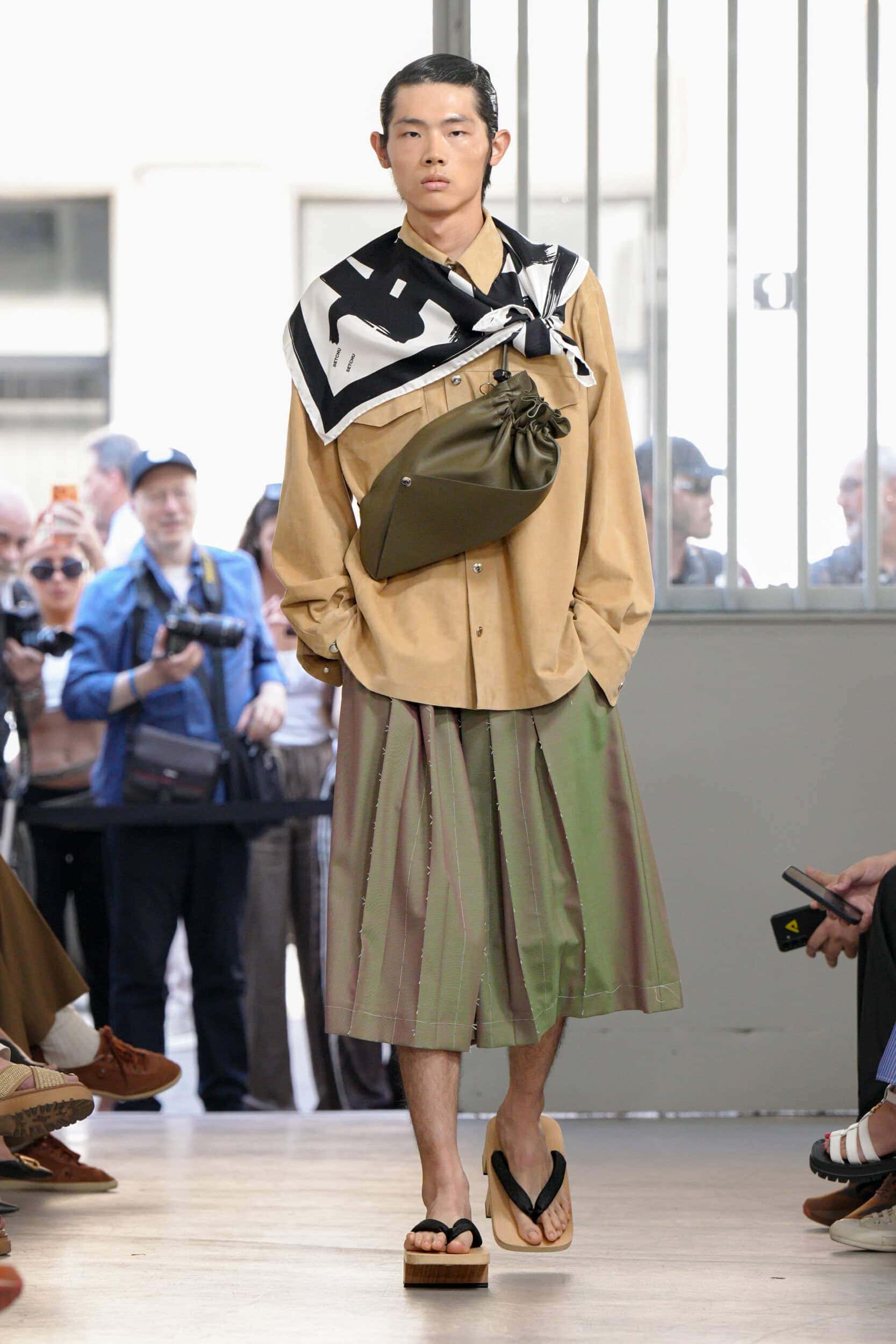
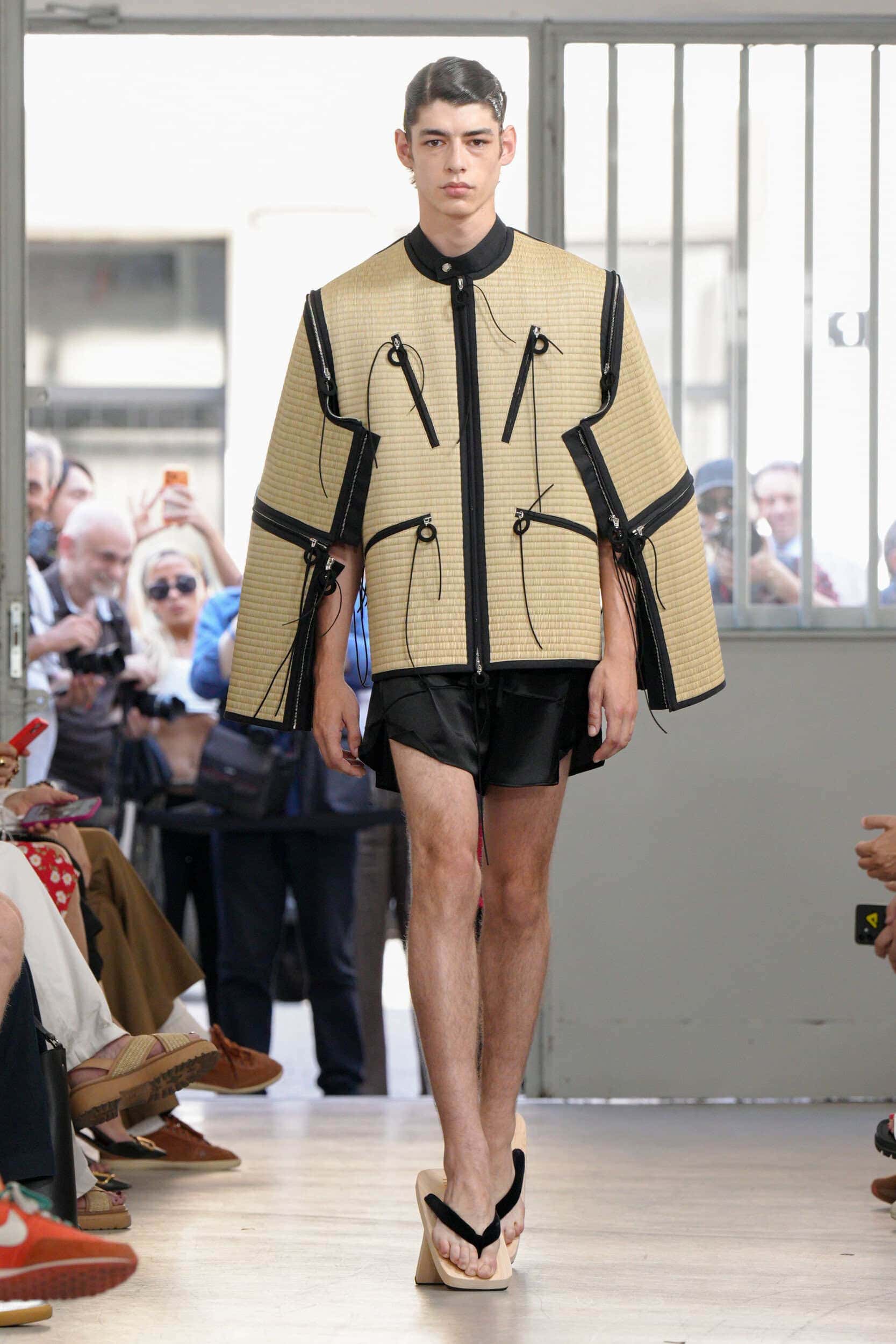
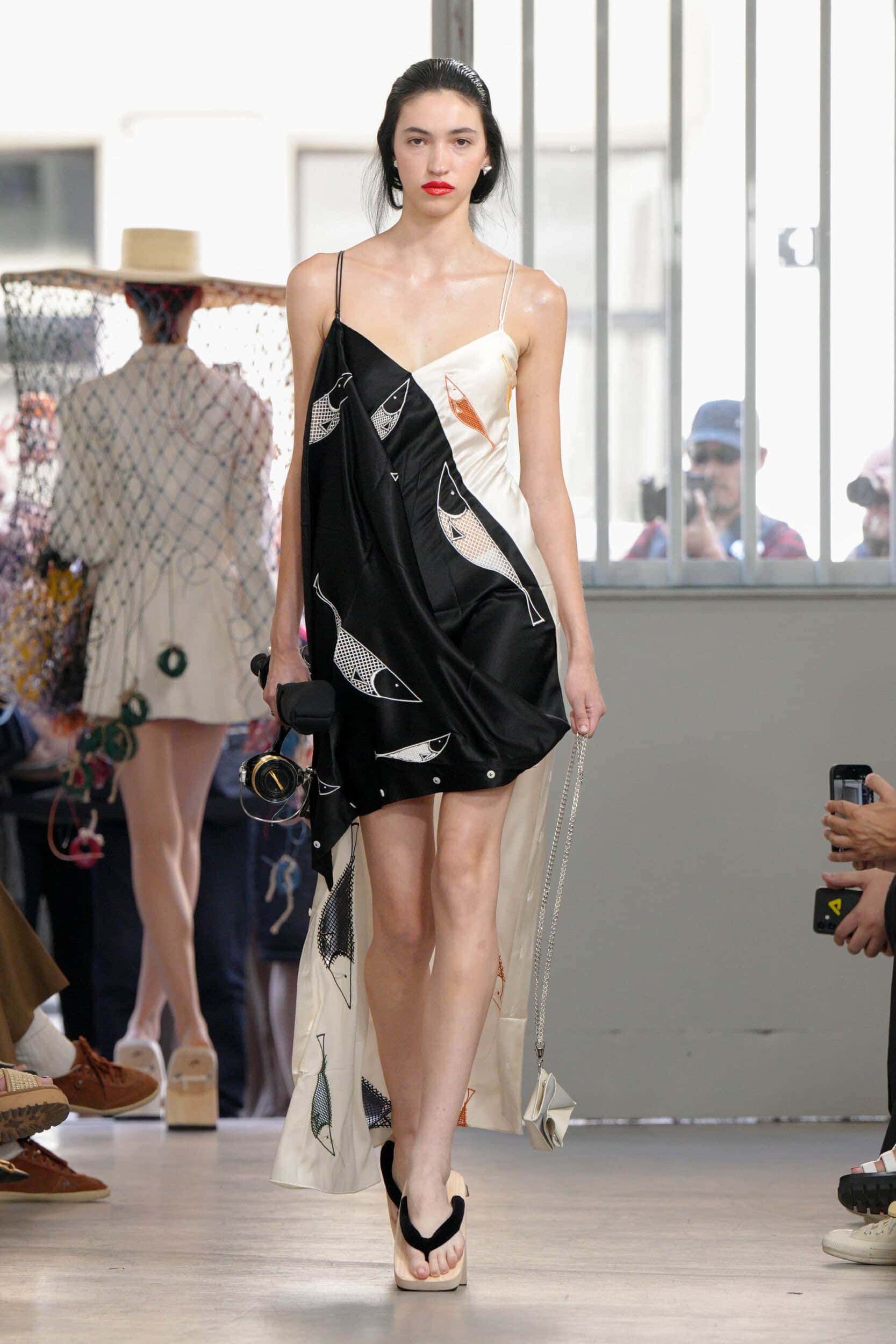
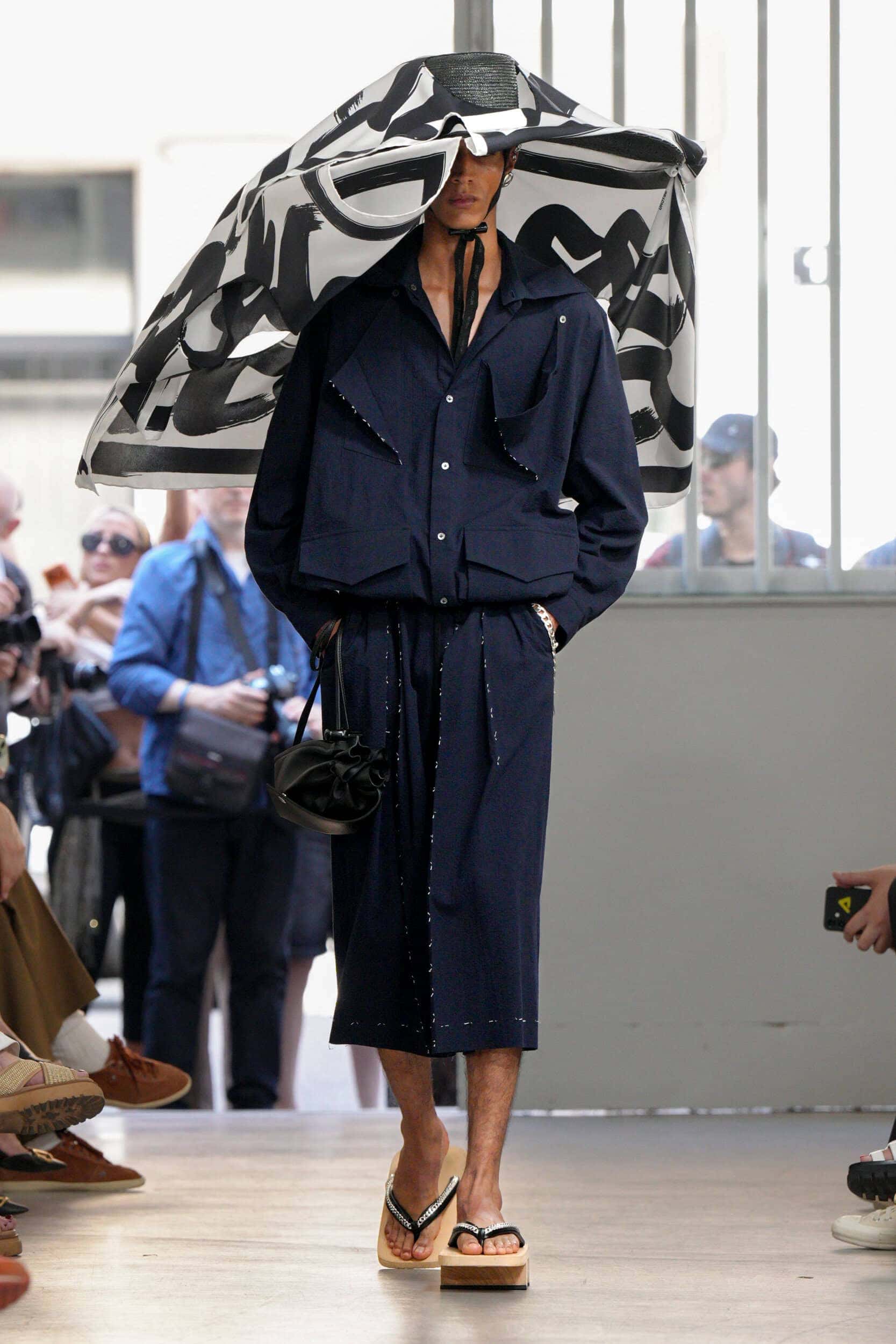
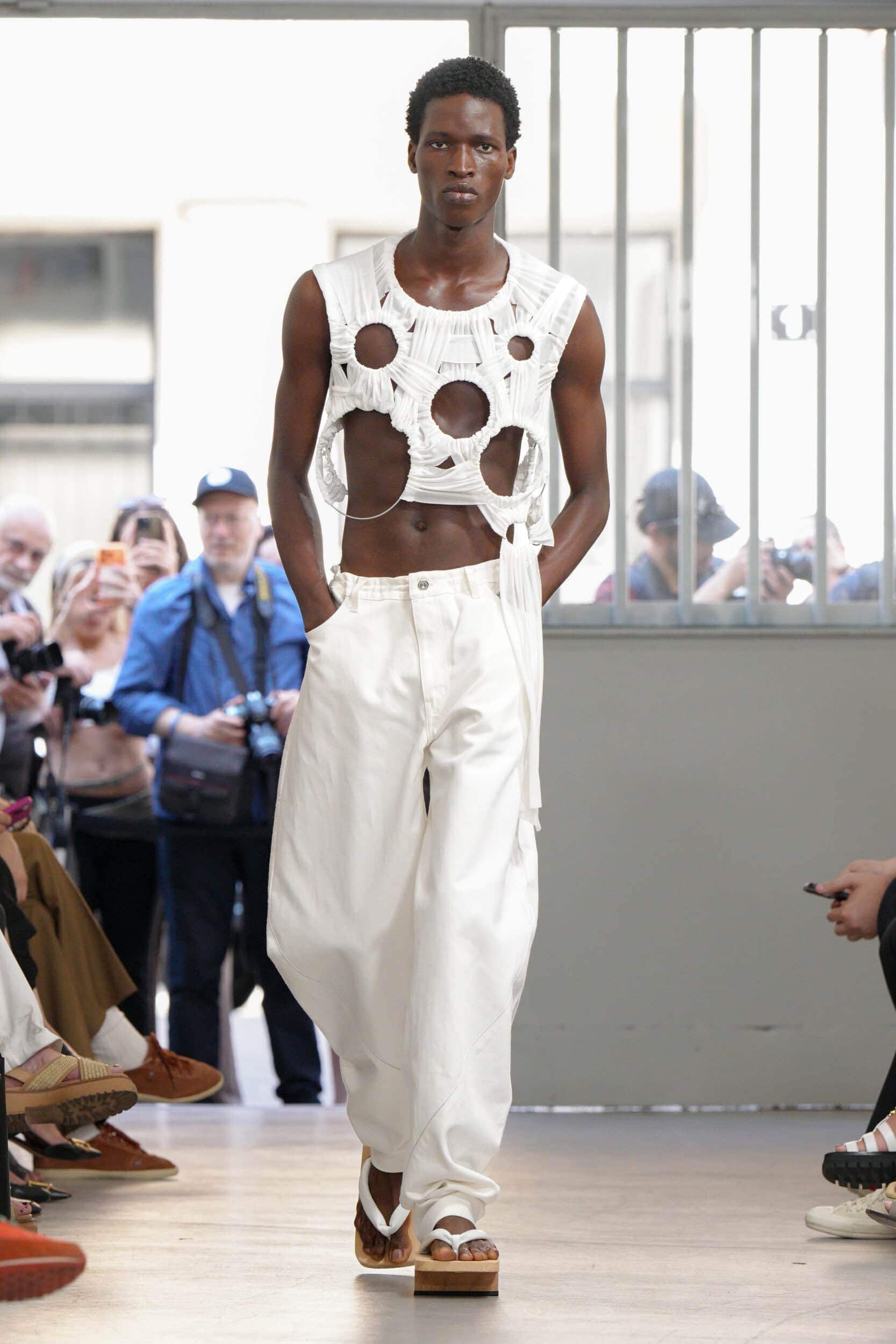
The designers decision to edit down served him well this season, focussing the attention for those in attendance, it demonstrated his ability to cut through the noise and distil down to what mattered most. The narrow runway allowed for each look to be studied, and although the designer encouraged all who would also be in Paris next week to stop by his showroom to experience the expertise that has gone into the make – something he emphasised as his North Star for spring 2027 – his appreciation for the “richness of fabric, richness of detail” was clearly evident. Incorporating a ‘geometric approach’ gleaned from his Japanese heritage, outerwear was folded and draped to reveal their colourful internals, a traditional Tatami mat was reconstructed into a jacket featuring the brands signature split sleeves, culottes crisply pleated, and denim utility jackets were neatly gathered up and fastened to create a casual riff on the tailcoat. Fishing, and its importance to Japanese and African culture (Japan as a country made up of a series of islands and in Gabon, where the designer has journeyed has been an ongoing reference) also provided a rich source of inspiration. Handmade nets were used throughout to shroud tailoring and dresses and were reformed into camisoles and makeshift veils. The everyday device of the fishing net reworked to give it luxury status was purposeful, as he explained “Everything’s becoming more and more expensive, even professional people like us don’t know how things are made sometimes, so we used a lot of hand(craft) this time. Fishing nets that use Japanese knotting, is a square knot that takes a much longer time [to make] than those kind fishing nets that you can buy on Amazon.”
THE WRAP UP
Kuwata’s DNA is in his work that merges both Japan and Italy, culture and craftsmanship, and after 7 seasons having the confidence to pull back, when many would feel the pressure to expand, is telling of a designer sure of exactly what he wants to put out into the world. In a candid moment pre-show, the designer admitted “I’m here to improve myself as well, and I cannot please everyone,” so like it or leave it, we can only hope that the brands reach for something more meaningful, by editing out the superfluous, will encourage others to do the same.